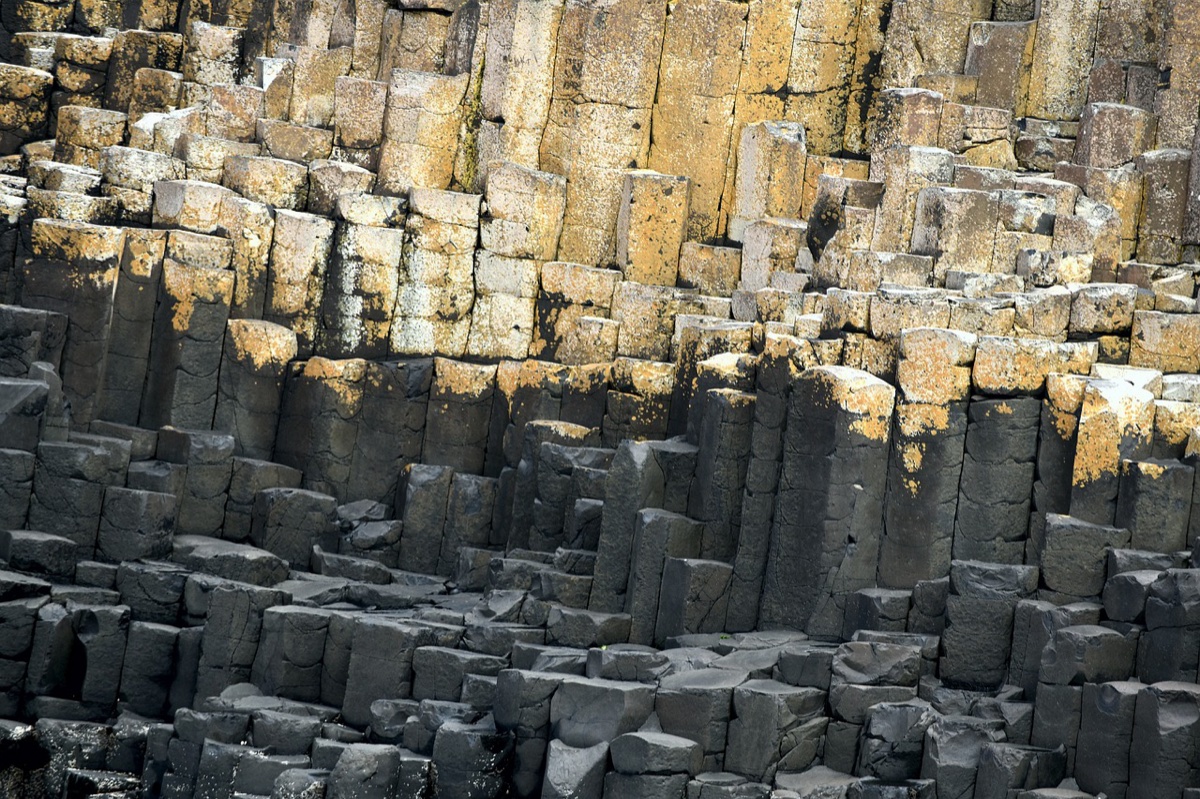
The north Antrim coast of Northern Ireland is home to one of the world’s most remarkable geological sites: the Giant’s Causeway. Stretching out into the Atlantic, the Giant’s Causeway comprises roughly 40,000 interlocking basalt columns that were formed by ancient volcanic activity 60 million years ago, creating a natural wonder unlike any other.
It’s the only UNESCO World Heritage Site in Northern Ireland, and the scale of it when you’re actually standing on those hexagonal columns is hard to prepare for.
This guide covers everything you need to know before you go: tickets, parking, the best trails, what to skip, and how to make the most of your visit.
What Is the Giant’s Causeway?
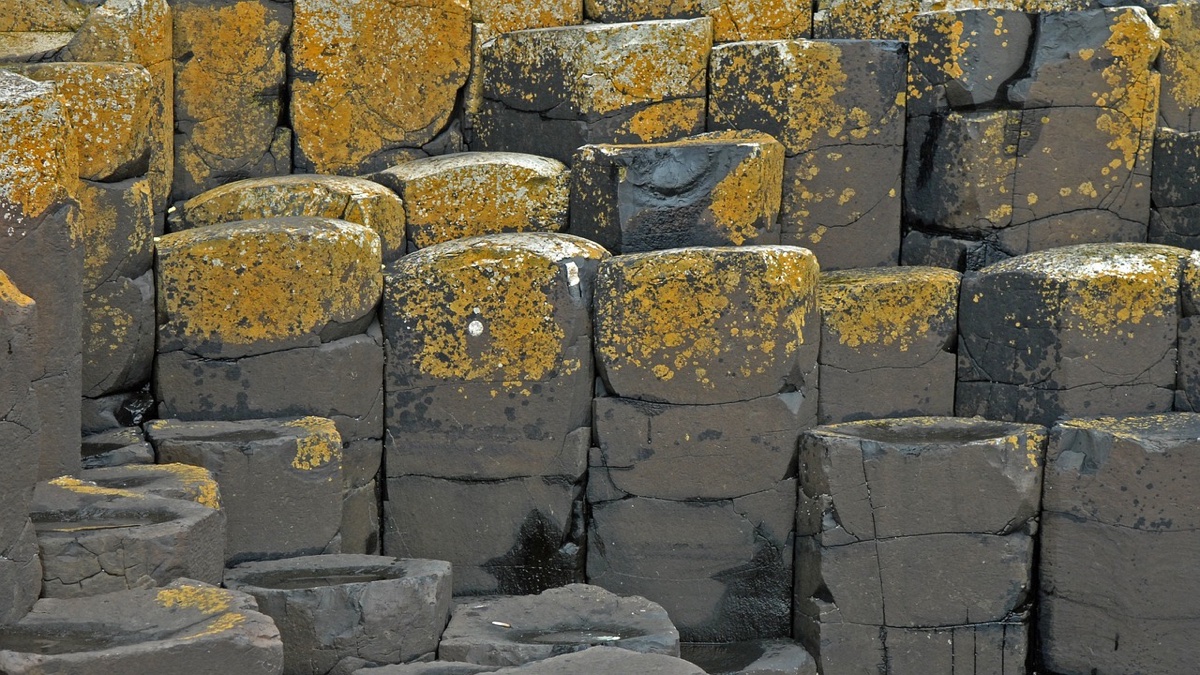
As the lava cooled and contracted, it cracked into the hexagonal columns you see today, stacked so tightly together they look less like a geological accident and more like something that was deliberately built.
It became a UNESCO World Heritage Site in 1986 and it’s consistently ranked as the most visited tourist attraction in Northern Ireland. The science behind it is fascinating, but it’s the Giant’s Causeway legend that most people want to hear first.
The Legend Behind the Giant’s Causeway
The story goes that the Irish giant Fionn mac Cumhaill (Finn McCool) built the Causeway as a bridge to Scotland so he could fight his rival, the Scottish giant Benandonner.
When Finn saw how enormous Benandonner actually was, he panicked, ran home, and had his wife disguise him as a baby. Benandonner crossed the bridge, took one look at the “infant,” figured the father must be absolutely terrifying, and fled back to Scotland, tearing up the bridge behind him as he went.
What gives the legend its legs is Fingal’s Cave on the Scottish island of Staffa, a sea cave made of identical hexagonal basalt columns, sitting right across the water as if the bridge really did connect the two.
The actual science, a volcanic eruption 60 million years ago, lava cooling so slowly and evenly that it cracked into near-perfect hexagons, is every bit as extraordinary as the myth.
How to Visit the Giant’s Causeway
Here’s everything you need to know before you go, tickets, parking, getting there, and one heads-up about summer timing.
Tickets and Entry
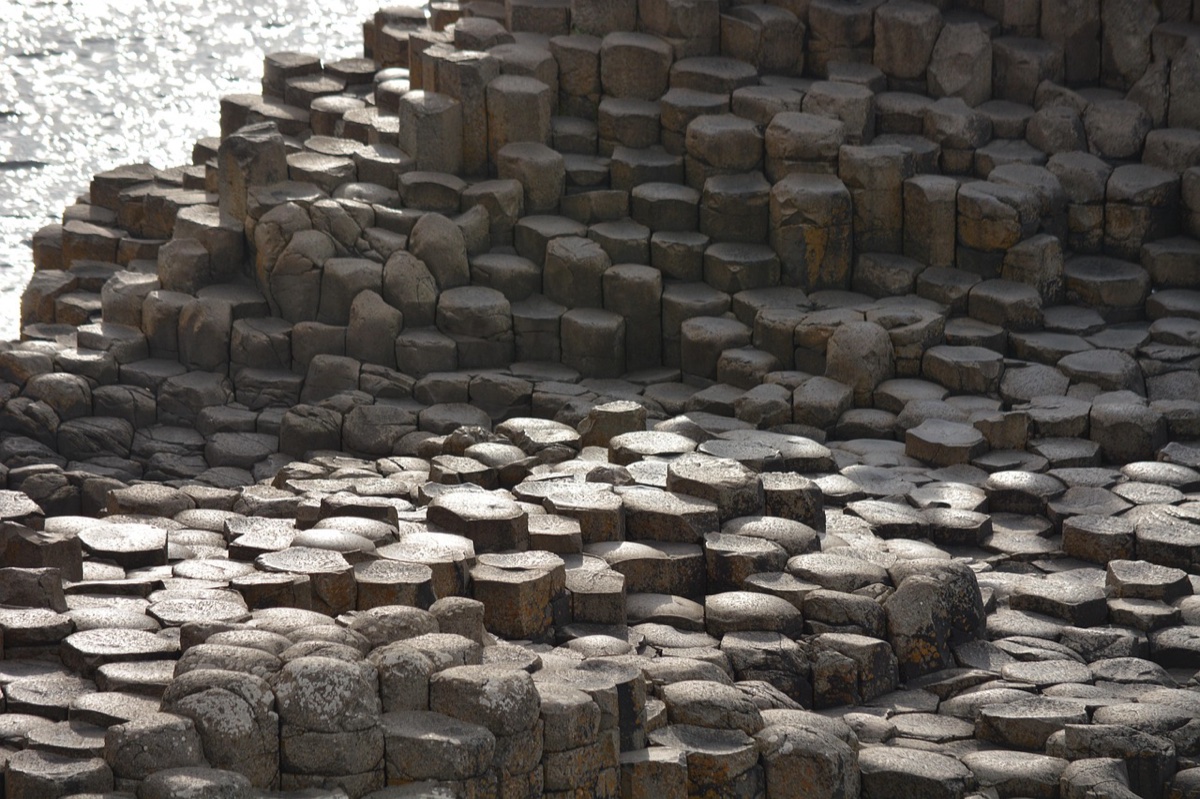
The Causeway itself is free to access, you can walk straight down to the stones without paying a penny.
The National Trust visitor centre is a separate charge. Adult admission is currently £13.50, which includes the audioguide and access to the car park, so if you’re driving, the ticket effectively covers your parking too.
Cards are accepted. The audioguide is worth having, it covers both the geology and the legend, and the walk down to the stones takes about 15 minutes on foot from the centre.
Opening Hours
The visitor centre runs seasonal hours, generally 9am to 5pm outside peak season, with extended hours in summer (sometimes to 7pm in July and August). Check the National Trust website before you go, as hours shift throughout the year.
The Causeway itself has no gate and no closing time. If you want to visit the stones at dawn or dusk without the crowds, you can walk down from the road for free at any hour.
Getting There
Having your own car is the best way to reach the Giant’s Causeway. It gives you flexibility to stop along the Causeway Coast, visit Carrick-a-Rede and Dunluce Castle at your own pace, and avoid waiting for buses in awkward locations. Compare car hire rates for Belfast on Discover Cars – booking ahead is cheaper, especially in summer.
By car from Belfast, it’s roughly 1.5 hours north on the A26, straightforward motorway driving for most of the route, then a more scenic stretch once you’re into County Antrim.
If you’re not driving, Translink runs the seasonal Causeway Rambler bus service connecting Coleraine and Ballycastle, with a stop at the Causeway. It’s a practical option in summer, though the schedule is limited outside peak season, so check ahead.
The nearest train station is Coleraine. From there you’d need the Causeway Rambler bus or a taxi to cover the final stretch.
Parking
The National Trust car park sits right at the visitor centre. If you’ve bought a centre ticket, parking is included in the price.
If you’re arriving just to walk the stones without visiting the centre, you can pay for parking separately.
In July and August, the car park fills up early, sometimes by 9:30am on a clear day. Getting there before 9am, or coming in the late afternoon after the tour coaches have gone, will save you real frustration.
Top Tips for Visiting the Giant’s Causeway
A few things will make a real difference to how much you enjoy this place. Here’s what’s worth knowing before you go.
Go Early or Late
The Giant’s Causeway is one of the most visited sites in Ireland, and the crowds arrive fast once the coaches start rolling in.
Before 9am or after 5pm, the columns are practically yours. That’s when the light is better anyway, and you’re not climbing over other people’s selfie sticks to get a clear shot. The downside: the visitor centre won’t be open at those hours, so you’ll be walking in without facilities.
Walk the Cliff Path, Not Just the Causeway
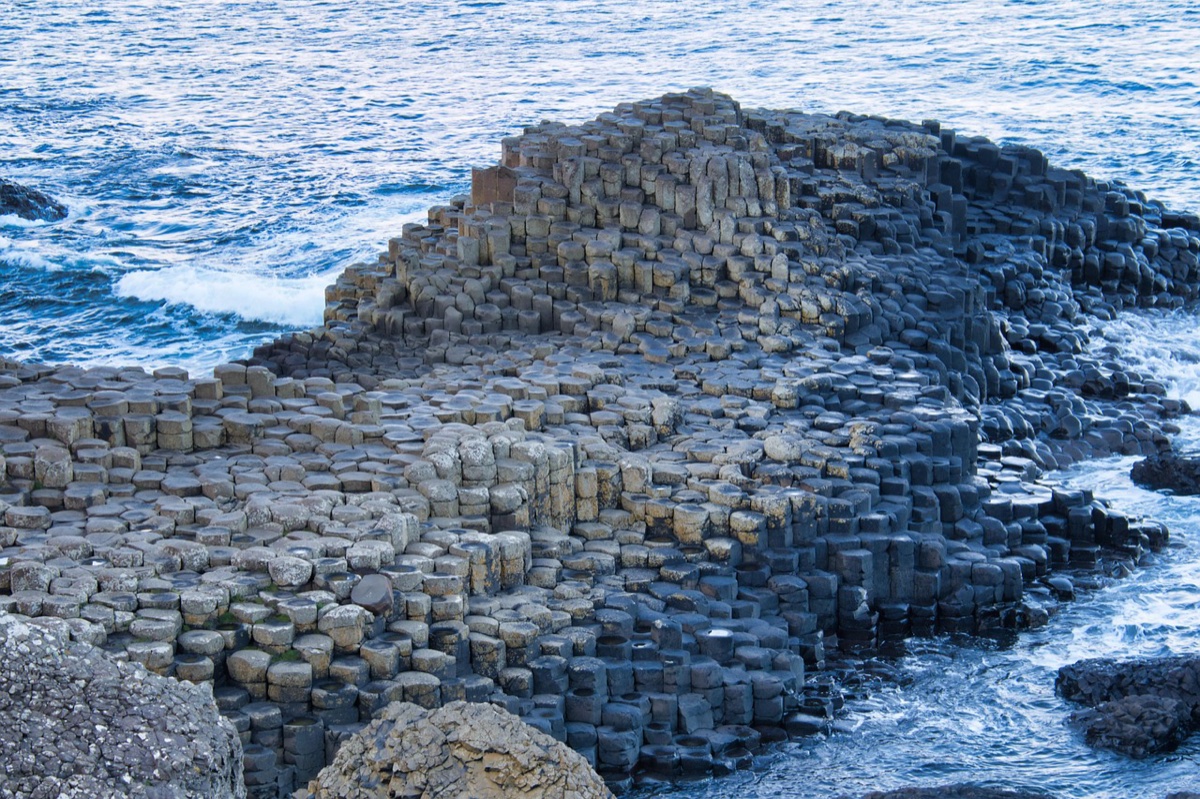
Most visitors walk straight down to the columns, take their photos, and leave. That’s the busiest, most crowded part of the whole site.
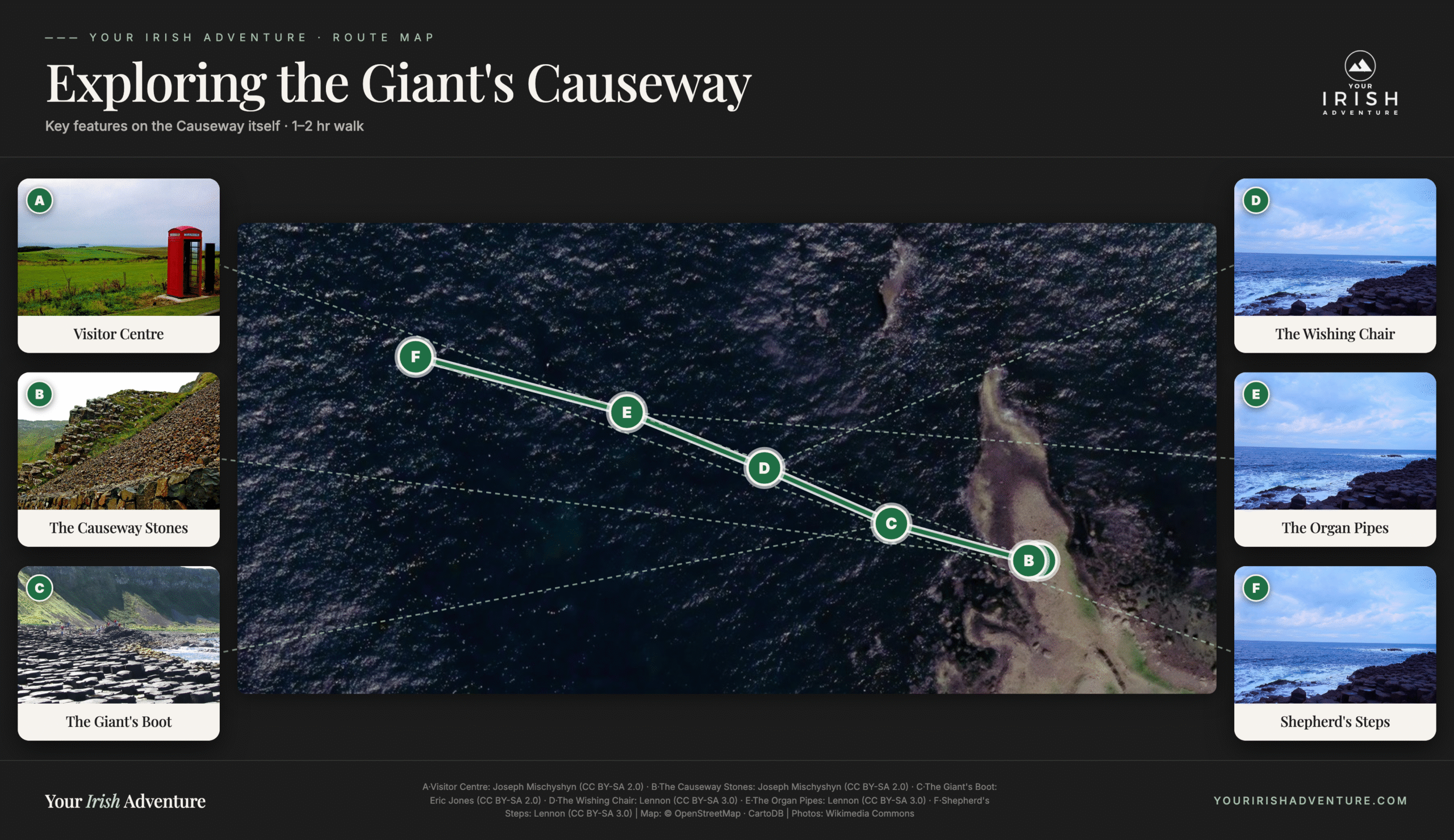
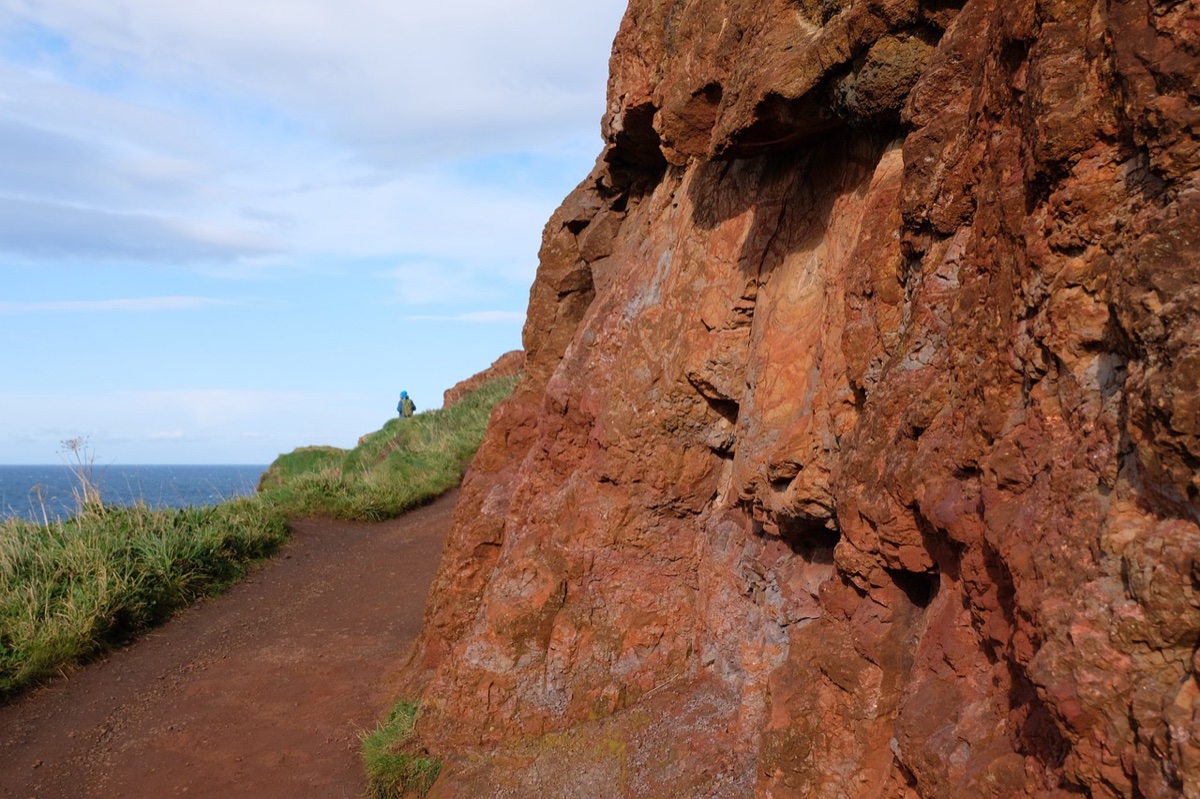
The Shepherd’s Steps route takes you up above the Causeway and gives you the columns from the clifftop looking down. Far fewer people make the climb, and the perspective is genuinely more dramatic. It’s steeper and takes longer, but it’s the version of the Giant’s Causeway that actually stays with you.
Book Your Visitor Centre Ticket Online
In summer, the queues at the visitor centre can eat into a serious chunk of your morning.
Booking online in advance saves you that time and guarantees entry on busy days. the Causeway itself is a UNESCO World Heritage Site and technically free to access – you only pay for the visitor centre and parking. If you’re happy to skip the exhibition and arrive on foot, you can walk straight in without a ticket.
Allow at Least 2 to 3 Hours
People consistently underestimate how much time this place takes if you do it properly.
The columns are about a 15-minute walk from the visitor centre, but that’s just the start. Add the cliff path, the Shepherd’s Steps, a proper look around the different formations, and you’re easily at two hours minimum. Budget three if the weather is cooperating. Rushing the Causeway to catch your next stop is one of the more common regrets people have on a Causeway Coast day trip.
Expect the Weather to Change
Northern Ireland’s north coast has its own weather system, and it moves quickly.
You can arrive in sunshine and be in a horizontal squall within the hour. This matters for what you wear, how long you stay, and whether that cliff walk is actually safe. The next section covers clothing in more detail, but the short version is: waterproof jacket, proper footwear, and layers, regardless of what the forecast says when you leave your accommodation.
The Basalt Gets Slippery When Wet
This is the one that catches people out most often. The hexagonal columns look rough and grippy in photos, but wet basalt is genuinely glassy underfoot.
Trainers with worn soles, sandals, or anything without a real grip will have you sliding around the moment it rains. Wear proper walking shoes or hiking boots. It’s not a dramatic hike, but the surface demands respect – the National Trust records injuries here every year from people who didn’t take it seriously.
What to Wear to the Giant’s Causeway
The North Antrim coast is exposed in a way that catches a lot of visitors off guard, so getting this right matters.
A waterproof jacket is non-negotiable.
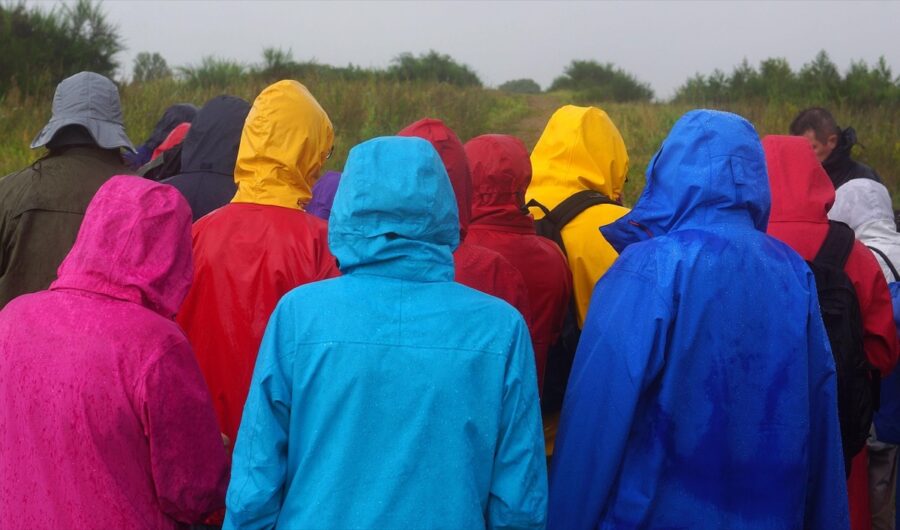
It doesn’t matter what the forecast says when you leave your accommodation – the wind off the Atlantic can bring rain in sideways with almost no warning, and you’ll be out on those columns with nowhere to shelter.
Footwear is the other big one. Trainers with decent grip are fine – but worn soles, sandals, or anything flat-soled will have you in trouble on wet basalt.
The columns look solid underfoot, but they’re uneven and they get slippery fast.
Summer days at the Causeway can be warm and sunny, but the Atlantic wind means it always feels cooler than the temperature suggests – pack a mid-layer you can pull on if needed. A small daypack is worth it too, just for a water bottle and that extra layer.
Giant’s Causeway Tours
Visiting the Giant’s Causeway on your own is great, but a guided tour takes the whole experience up a level.
The best options include transport from Belfast or Dublin, so you can sit back, enjoy the scenery, and let someone else handle the driving.
From Belfast: Giant’s Causeway Full-Day Guided Trip
This is the classic day trip from Belfast – a full-day coach tour with a local guide who knows the mythology and geology behind the basalt columns.
You’ll also travel through the Glens of Antrim and stop at the Carrick-a-Rede rope bridge along the Causeway Coast.
It’s a long day (usually 10–11 hours), but you arrive back in Belfast with a full picture of the entire coastline. Book this tour on GetYourGuide →
Giant’s Causeway Full-Day Tour from Dublin
Not based in Belfast? This tour picks you up right in Dublin city centre and takes you all the way to the Causeway Coast and back.
It’s a long day (around 14 hours) but you’ll see the Giant’s Causeway, Carrick-a-Rede, the Dark Hedges, and Dunluce Castle all in one sweep.
If you’re only in Ireland for a short time and want to tick off the Causeway Coast in a single day, this is the most efficient way to do it. Book this tour on GetYourGuide →
Best Tours of the Giant’s Causeway
If you’d rather leave the driving to someone else, these guided tours cover the Giant’s Causeway as the main destination and depart directly from Belfast.
From Belfast: Giant’s Causeway and Game of Thrones Day Tour
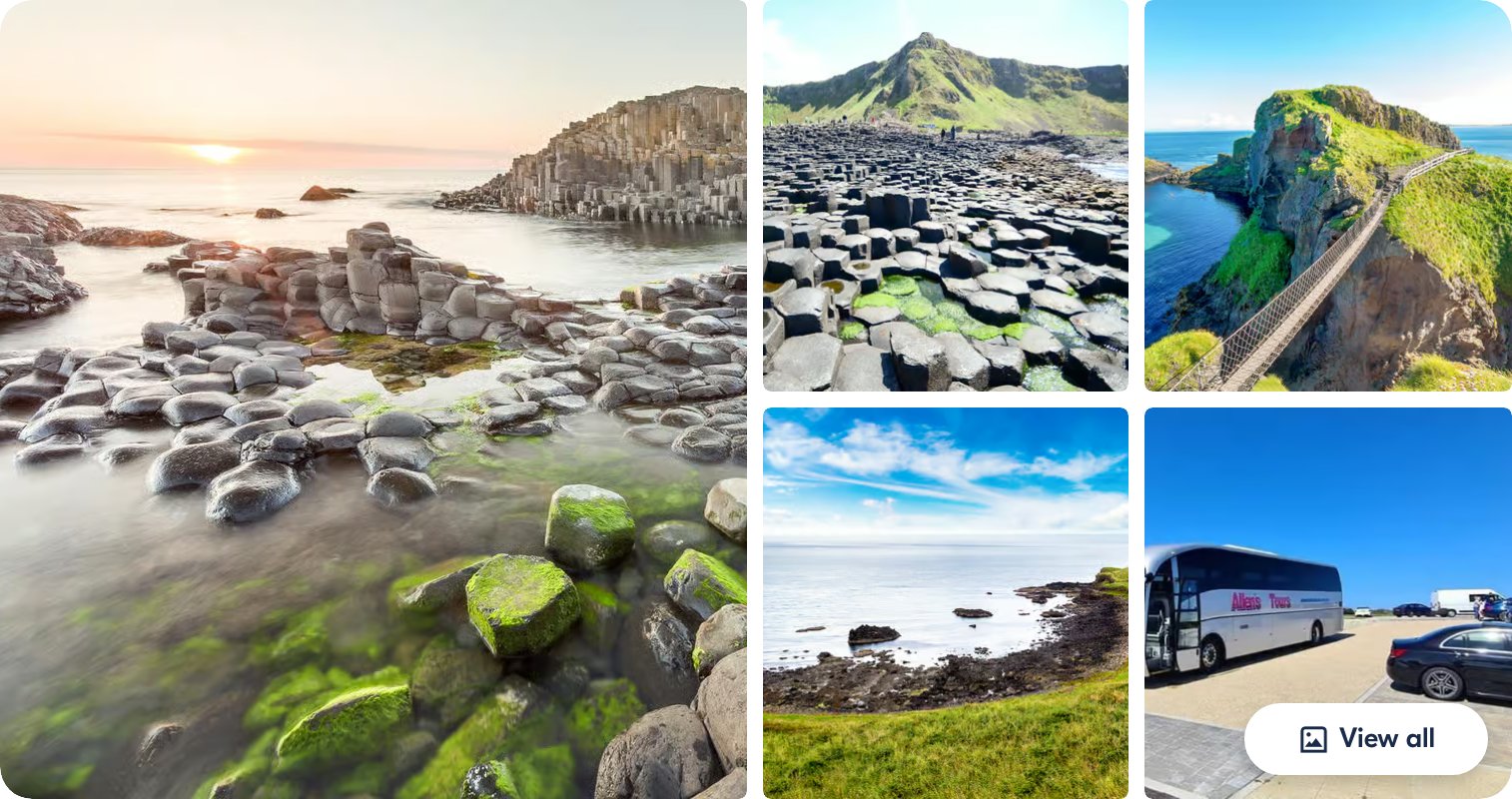
A full-day tour from Belfast covering the Giant’s Causeway, Carrick-a-Rede Rope Bridge, and Dark Hedges filming locations from Game of Thrones. Runs around 10-11 hours with a guided commentary throughout.
👉 Check out this tour on GetYourGuide
From Belfast: Giant’s Causeway Guided Day Tour With Castles
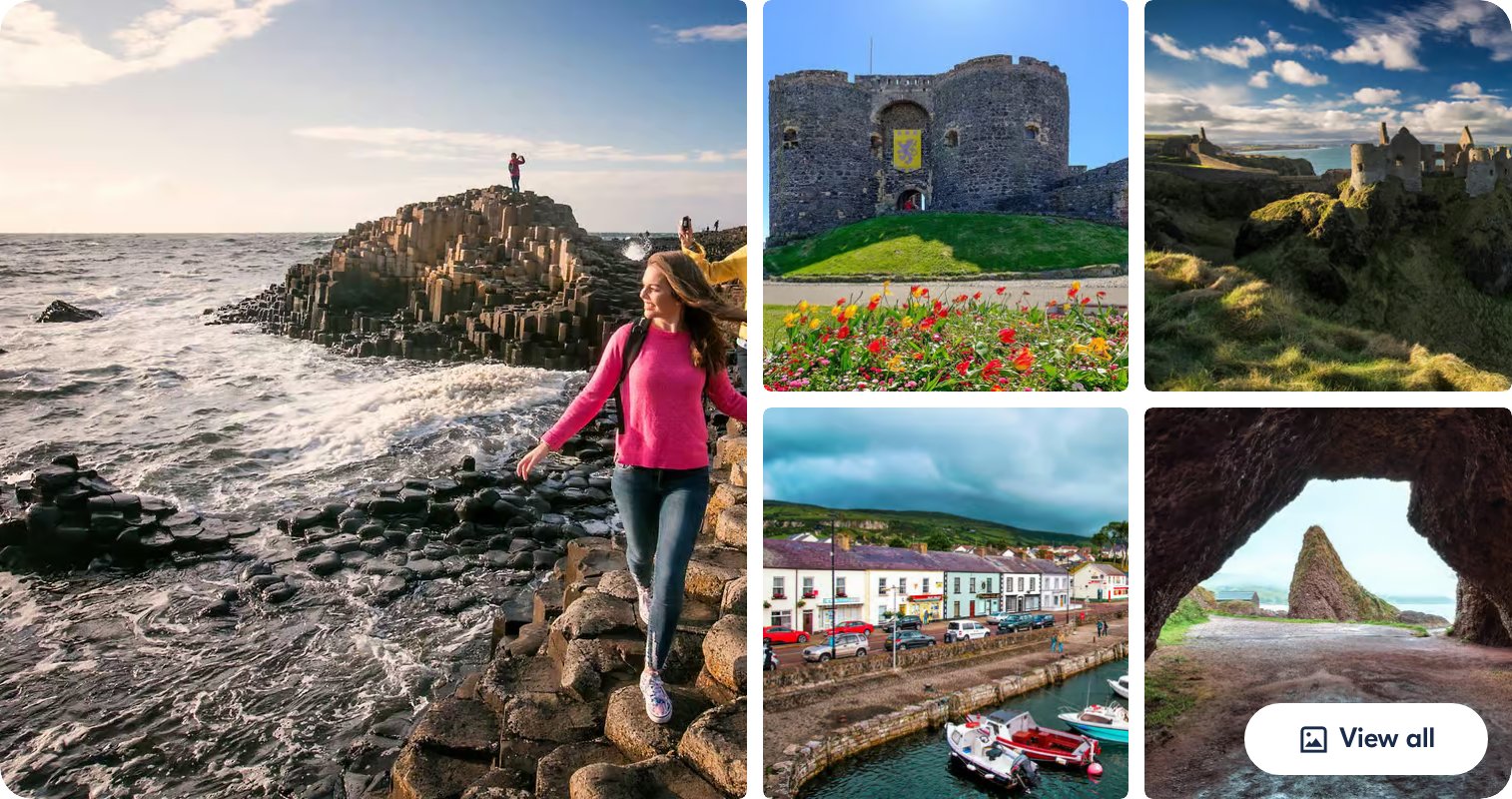
This full-day tour combines the Giant’s Causeway with Dunluce Castle and Carrickfergus Castle, departing Belfast in the morning and covering the main Causeway Coast highlights with a local guide.
👉 See this tour on GetYourGuide
Afternoon Giant’s Causeway Half-Day Tour from Belfast
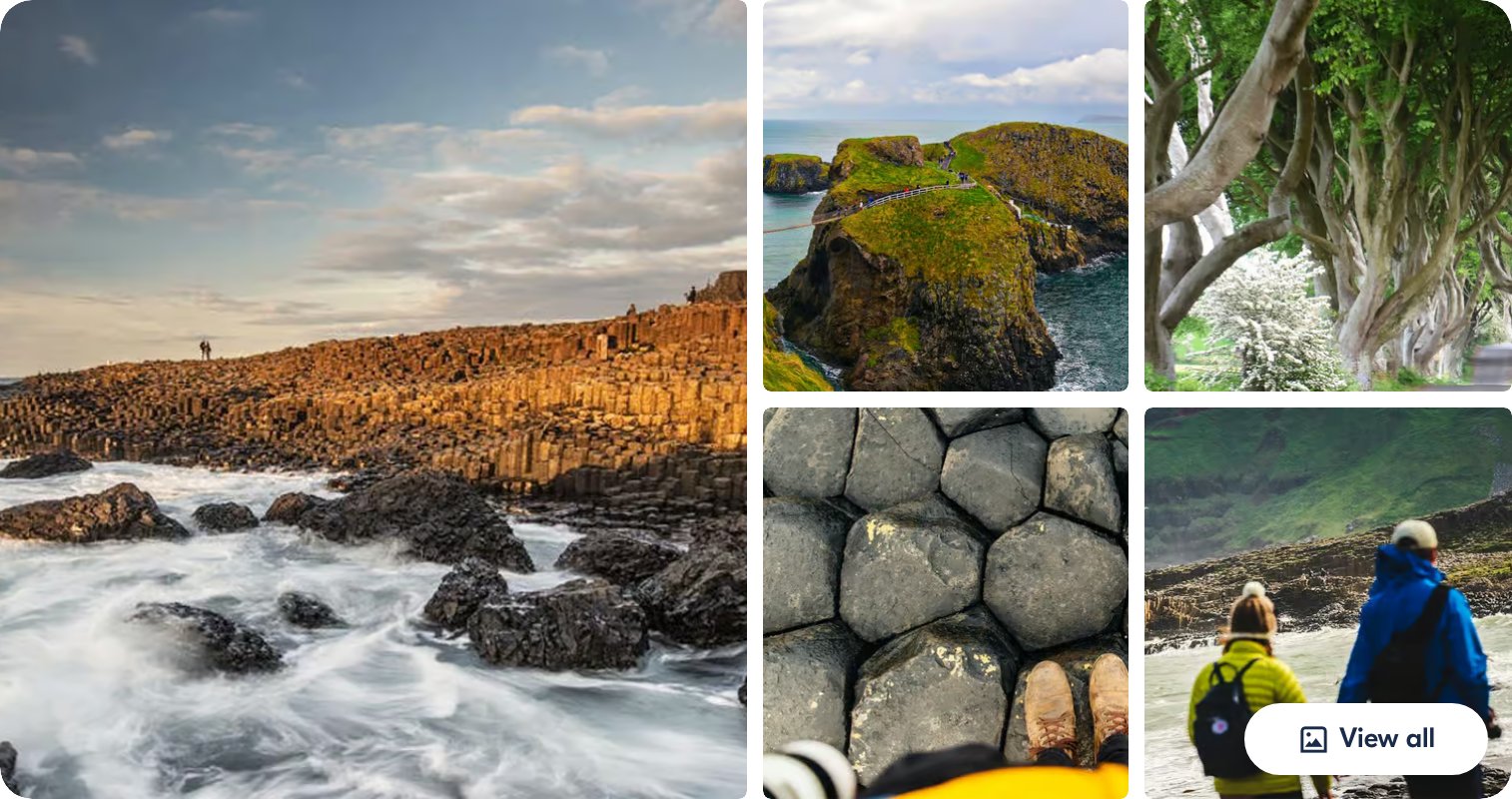
A half-day afternoon option that gets you to the Giant’s Causeway and back to Belfast in around 5 hours. A good pick if you only have part of the day free or want to pair it with a morning in the city.
Nearby Attractions Worth Combining with Your Visit
The Giant’s Causeway sits on one of the most rewarding stretches of coastline in Ireland, and the three attractions below are all within a short drive along the Causeway Coastal Route.
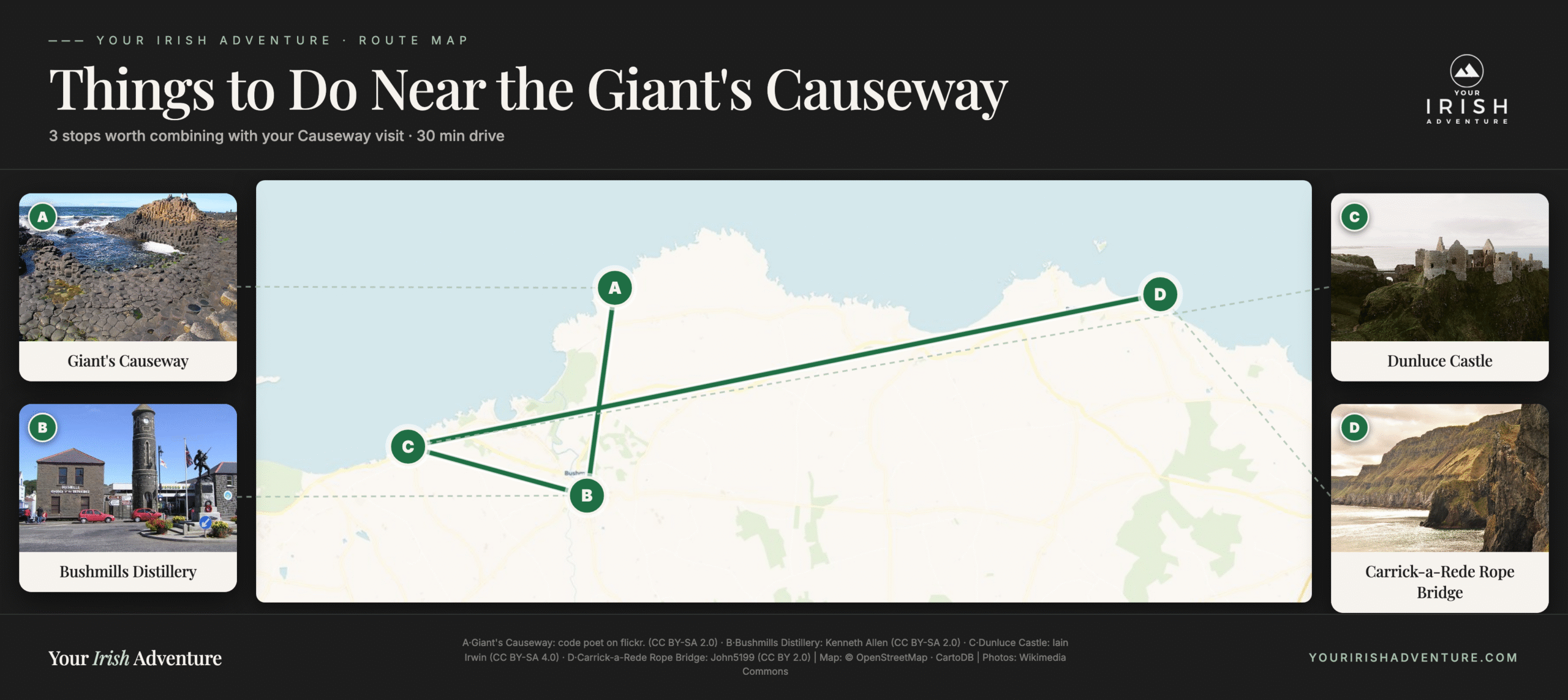
Dunluce Castle (3 miles west, about 8 minutes)
Dunluce Castle is a medieval ruin perched on a basalt sea stack above the Atlantic, and the setting is one of the most dramatic in Ireland.
The castle itself is small – you’ll cover it in 30 to 40 minutes – but the location more than justifies the stop.
Admission is around €5 for adults, and the views back along the cliff face from the outer walls are worth the price alone.
Don’t expect a fully preserved fortress. Do expect to stand on a cliff edge looking out over the North Atlantic and wonder how anyone managed to build anything here at all.
Old Bushmills Distillery (2 miles east, about 5 minutes)
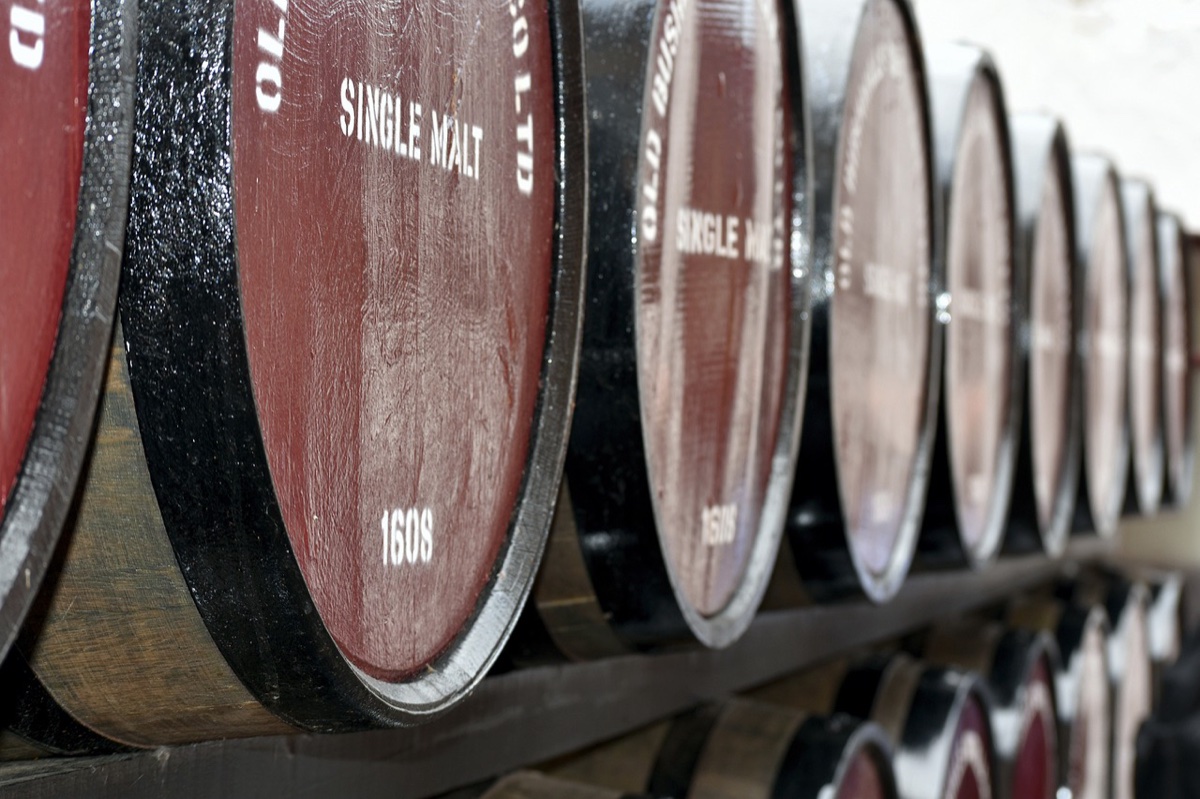
Old Bushmills Distillery holds the world’s oldest licensed whiskey distillery title, with a licence dating to 1608, and the tour reflects that history well.
You’ll walk through the working distillery floor, see the pot stills, and end in the tasting room – the standard tour runs about an hour and costs around £9 per person.
Book ahead in summer. This one fills up fast, and walk-ins are turned away more often than you’d expect for a relatively small attraction.
If you’re a whiskey drinker, this is a no-brainer to pair with the Causeway – the two together make a full half-day on this stretch of coast without any rushing.
Carrick-a-Rede Rope Bridge (7 miles west, about 15 minutes)
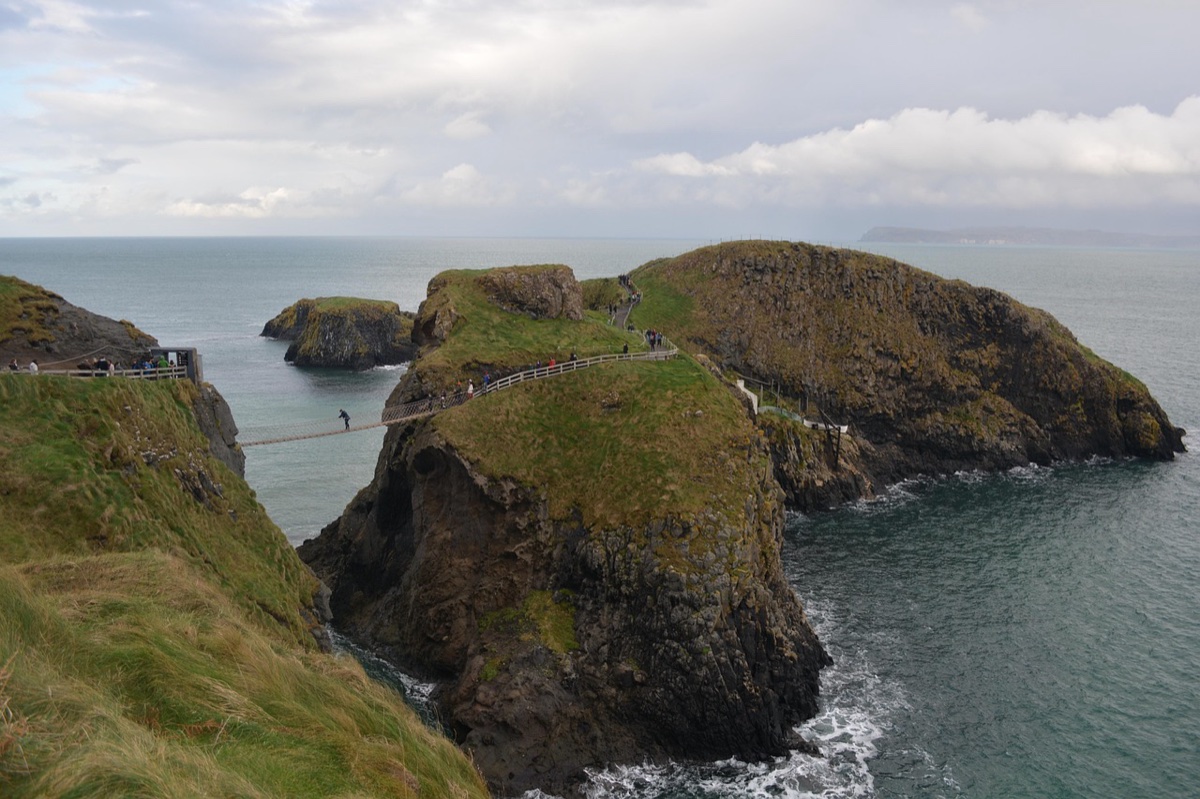
Carrick-a-Rede is a 20-metre rope bridge suspended 30 metres above the sea, originally rigged by salmon fishermen to reach a small island off the Antrim coast.
The walk from the car park to the bridge is easy and takes about 20 minutes each way, with views along the cliff tops that are spectacular even before you reach the bridge itself.
One important thing: tickets must be booked online in advance through the National Trust, and they do sell out, especially on summer weekends.
The bridge crossing takes about two minutes, so manage your expectations on that front – but the coastal walk and the views out to Rathlin Island make it worth the trip even if the bridge itself is brief.
Where to Stay Near the Giant’s Causeway
Staying close to the Giant’s Causeway means you can arrive before the crowds and have the columns almost to yourself first thing in the morning.
The villages of Bushmills and Portballintrae are your best bet – both are within a few minutes’ drive of the site and have some brilliant accommodation options.
Bushmills Inn
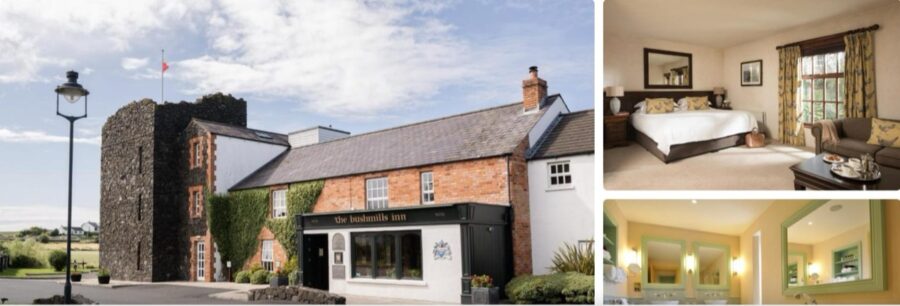
The Bushmills Inn is one of the most iconic places to stay on the Causeway Coast, a 17th-century coaching inn that has been welcoming guests for centuries.
It’s just a 5-minute drive from the Giant’s Causeway, and the restaurant here is genuinely excellent.
The rooms are cosy, full of character, and it makes a brilliant base for exploring the whole stretch of coastline. Check availability at Bushmills Inn on Booking.com →
The Causeway Hotel
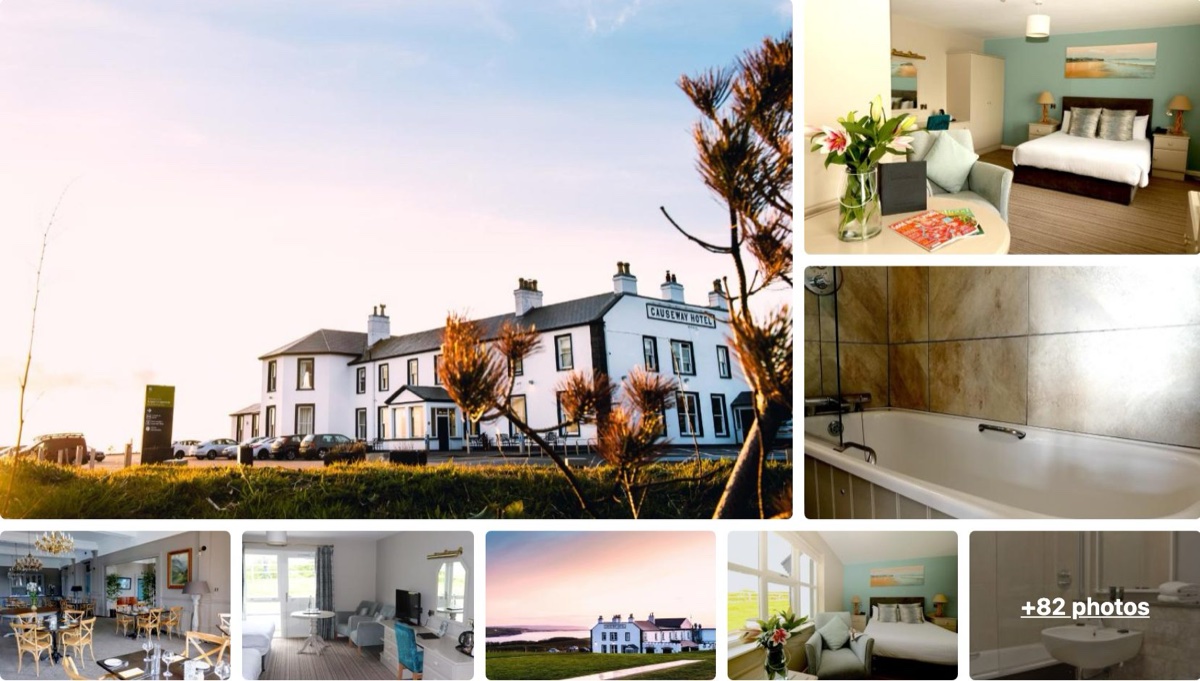
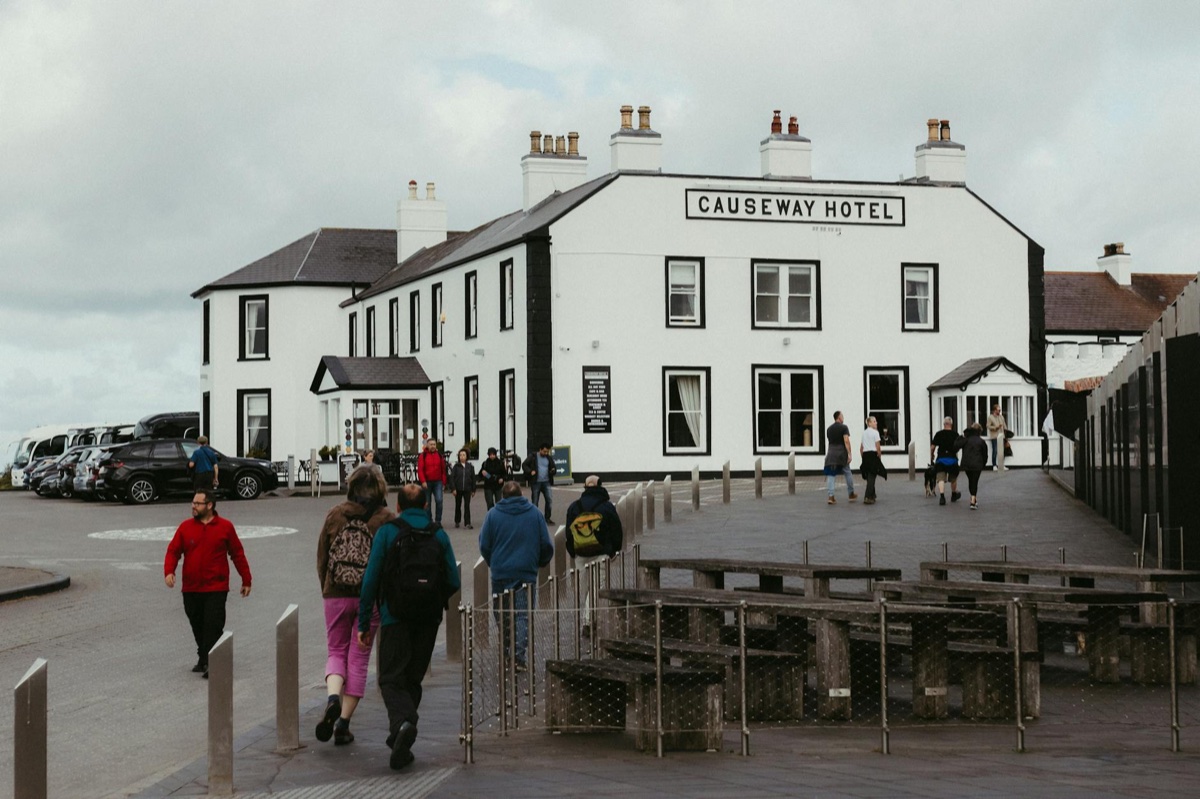
For location, it doesn’t get better than The Causeway Hotel – it sits right at the entrance to the Giant’s Causeway site itself.
You can walk to the columns in under 10 minutes from the front door, and the views from the hotel are spectacular.
It books up fast in summer, so if this is the one you want, get in early. Check availability at The Causeway Hotel on Booking.com →
The Smugglers Inn

The Smugglers Inn is a small family-run hotel in Portballintrae, a quiet village about 2 miles from the Giant’s Causeway.
It’s a more affordable option but still puts you right in the middle of the Causeway Coast with easy access to all the main sights.
The pub downstairs is a great spot for a pint after a long day on the cliffs. Check availability at The Smugglers Inn on Booking.com →
Frequently Asked Questions
Is the Giant’s Causeway free to visit?
The basalt columns themselves are always free – they’re a public site and you can walk right to them without paying anything. The National Trust visitor centre charges admission (around £13.50 for adults at time of writing), which covers the exhibition, audio guide, and parking. You can skip the centre entirely and walk down to the Causeway from the road if you’d rather not pay.
How long should I spend at the Giant’s Causeway?
Budget at least 2-3 hours if you want to do it properly. The columns themselves take 20-30 minutes to explore, but the real payoff is the Cliffs Path above – the coastal walk gives you the full scale of the place in a way that standing on the hexagons simply doesn’t. If you’re short on time, an hour is enough to reach the Causeway and get back. But you’ll be leaving the best part behind.
Can you visit the Giant’s Causeway without a car?
Yes, easily. Translink runs the Causeway Rambler (Route 402) from both Coleraine and Ballycastle, stopping right at the visitor centre. There are also well-reviewed day tours from Belfast that combine the Causeway with Carrick-a-Rede Rope Bridge and the Antrim Coast – a solid option if you’d rather not drive.
When is the best time to visit the Giant’s Causeway?
Early morning or late afternoon in May through September gives you the best combination of light and manageable crowds. Midday in July and August is genuinely hectic – the path to the columns gets bottlenecked and the atmosphere suffers for it. If you can get there before 9am or after 5pm in summer, do it. The place feels completely different without the tour bus crowds.
Is the Giant’s Causeway worth visiting?
Honestly, yes – it’s one of those rare places that actually lives up to the hype. The geometry of the columns is stranger and more impressive in person than any photo prepares you for. The if you arrive at peak summer midday with a thousand other people, the experience is noticeably diminished. Time it right and it’s genuinely extraordinary.
Final Thoughts
The Giant’s Causeway lives up to the hype. The columns are extraordinary, the coastal setting is dramatic, and the geology alone is worth the trip north.
The one thing that can trip it up is timing. Show up at midday in July without booking anything, and you’re sharing those basalt columns with a thousand other people – it’s a very different experience.
Book your visitor centre ticket online before you go, get there early, and don’t just walk down to the columns and back up again. The cliff path above the Causeway is where the scale of the whole coastline opens up – walk it, then drop down to the columns at the end.
Like it? Pin it!
Save this guide for later