Killarney National Park is Ireland’s oldest national park, sitting at the foot of the MacGillycuddy’s Reeks in County Kerry, and it’s one of the best stops on any Ireland trip.
We visited in October, hiked through heavy rain, and still came away thinking Killarney deserves two or three nights minimum, not a rushed afternoon.
This guide covers the best things to do in the park, how to get around, what to expect in each season, and everything else you need to plan a visit.
More guides for your Ireland trip:
- Killarney Ireland Travel Guide: Complete Tips
- Weekend in Killarney: Itinerary For Travelers
- 15 Fun Things To Do in Killarney
- Where to Stay in Killarney
About Killarney National Park
Killarney National Park was Ireland’s first national park, designated in 1932, and covers around 26,000 acres of County Kerry. Three lakes sit at its heart: Lough Leane, Muckross Lake, and Upper Lake.
The terrain mixes ancient oak woodland, open bogland, and mountain terrain that runs up into the MacGillycuddy’s Reeks. It’s also home to Ireland’s only wild herd of native red deer, and holds UNESCO Biosphere Reserve status.
I’ll keep the history short because what you’re really here for is the Killarney National Park attractions and how to make the most of a visit. The one practical thing to know: entry to the park itself is free.
Individual attractions like Muckross House charge separately, but you can walk, cycle, and explore the woodland trails, lakeshores, and abbey ruins without spending a cent on admission.
One thing to keep in mind is that it gets busy in summer, particularly around the main car parks and Torc Waterfall. If you’re visiting July or August, get there early or you’ll spend more time looking for parking than looking at waterfalls.
Getting to Killarney National Park
Killarney National Park is well connected by road, rail, and bus, which makes getting here straightforward from most parts of Ireland.
We had a campervan during our trip to Ireland, but travelling by any sort of independent vehicler is the most flexible option, and honestly the one worth choosing if you want to reach multiple trailheads and attractions in a single day.
The park covers a large area, and having your own a car means you can move between Muckross House, Ross Castle, and Torc Waterfall without doubling back.
The Muckross Road is the main artery running through the estate. Both Muckross House and Ross Castle have large car parks that handle most visitors comfortably.
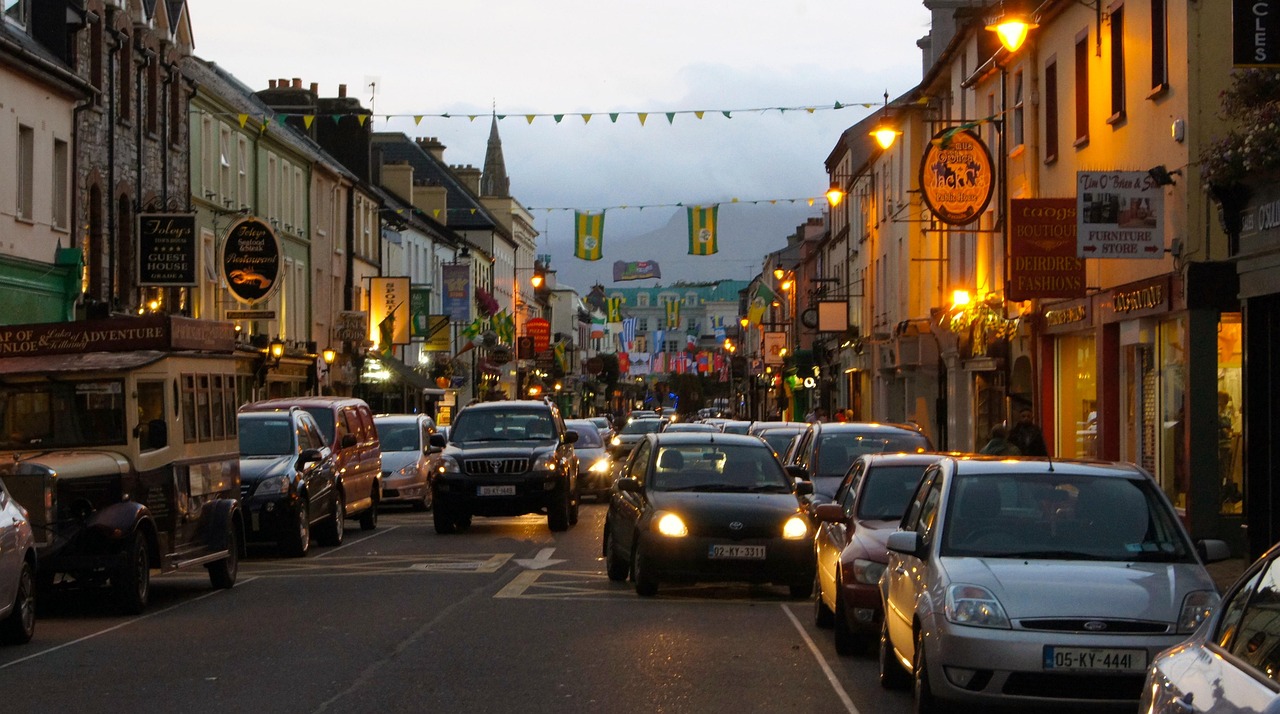
Keep in mind that parking in Killarney town centre with a larger vehicle is awkward. There are tight corners and limited space, so if you’re arriving in anything bigger than a standard hire car, go straight to the Muckross or Ross Castle car parks instead.
By train, Killarney station is a short, walkable distance to the park entrance at Knockreer, making it a solid option if you’re coming from Cork or Dublin. Check the Irish Rail timetables for Killarney station before you travel.
Bus Éireann runs services into Killarney from Cork, Dublin, and Shannon, dropping off in the town centre, a short walk from the park. It works fine for a day visit focused on the areas closest to town, but you’ll need to either hire a bike or join a guided tour to reach the more remote parts of the park without a car.
Things To Do in Killarney National Park
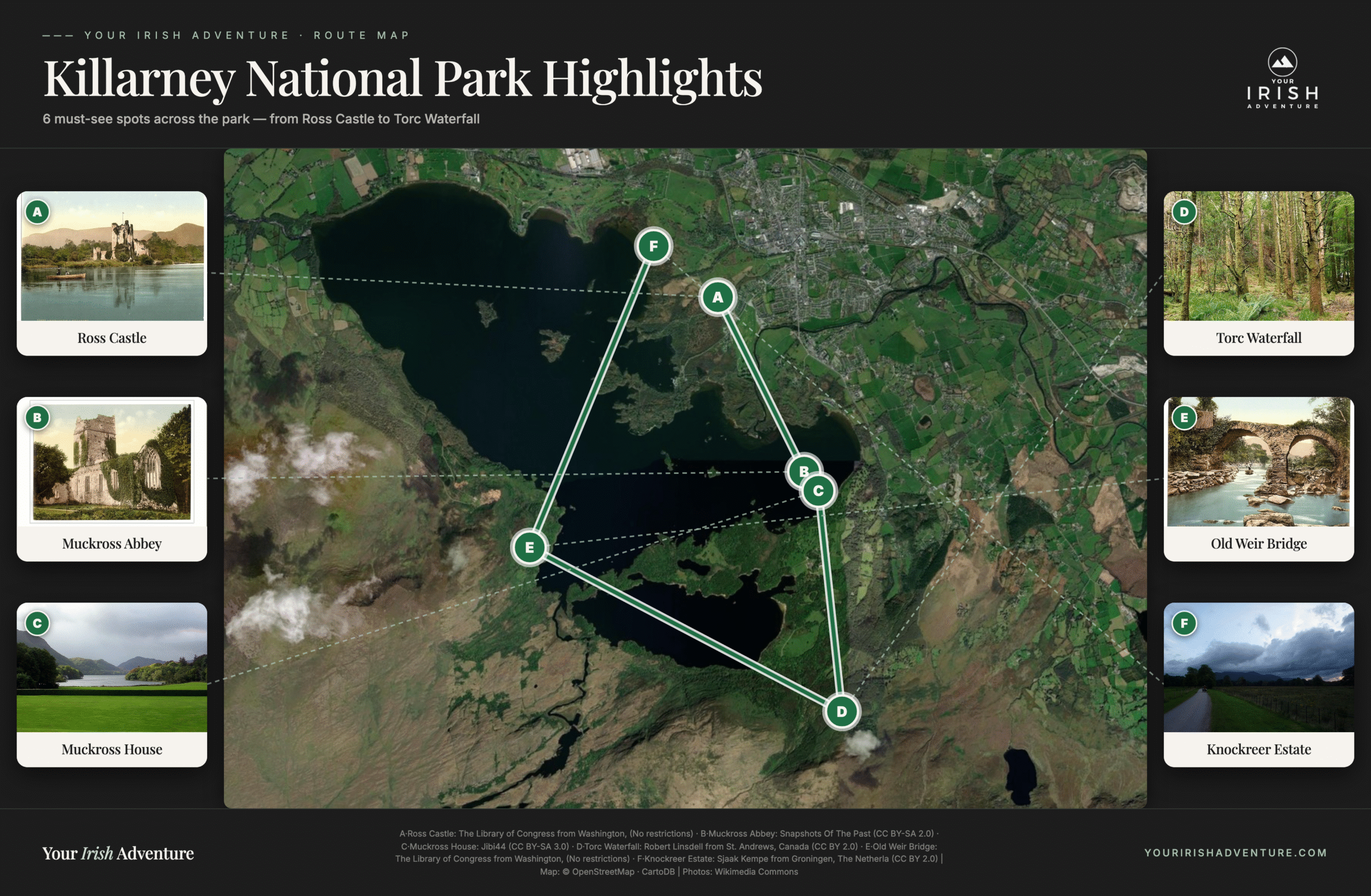
The things to do in Killarney National Park range well beyond a simple walk in the woods, you’re looking at a Victorian manor house, a 15th-century Franciscan abbey, a crashing waterfall, the ruins of a medieval castle, and red deer wandering through ancient woodland, all within a few kilometres of each other.
Whatever the weather throws at you, and it will throw something, there’s enough here to fill a full day easily.
Muckross House and Gardens
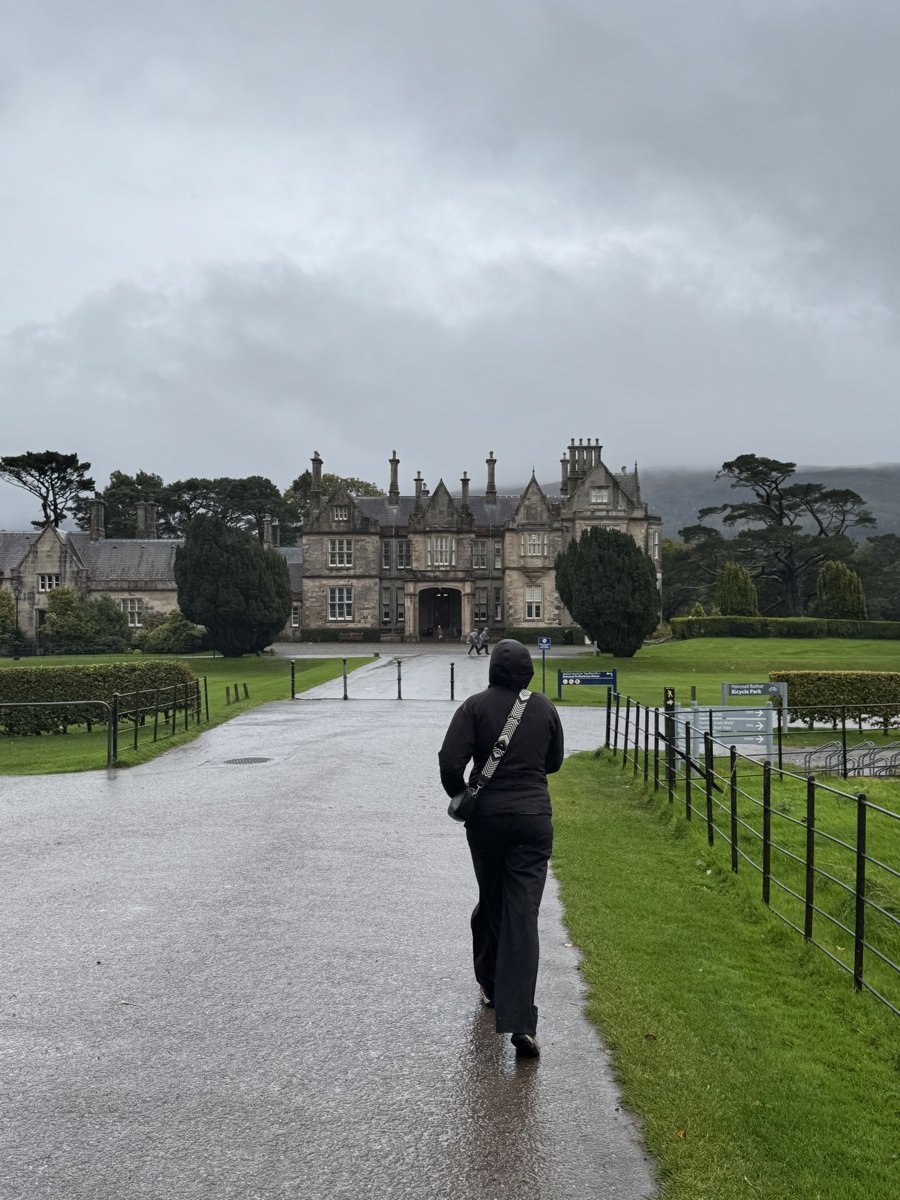
Muckross House and Gardens is a Victorian manor house sitting right on the shore of Muckross Lake, and it’s the reason Killarney National Park exists at all. When the estate was gifted to the Irish state in 1932, it became the foundation of the park.
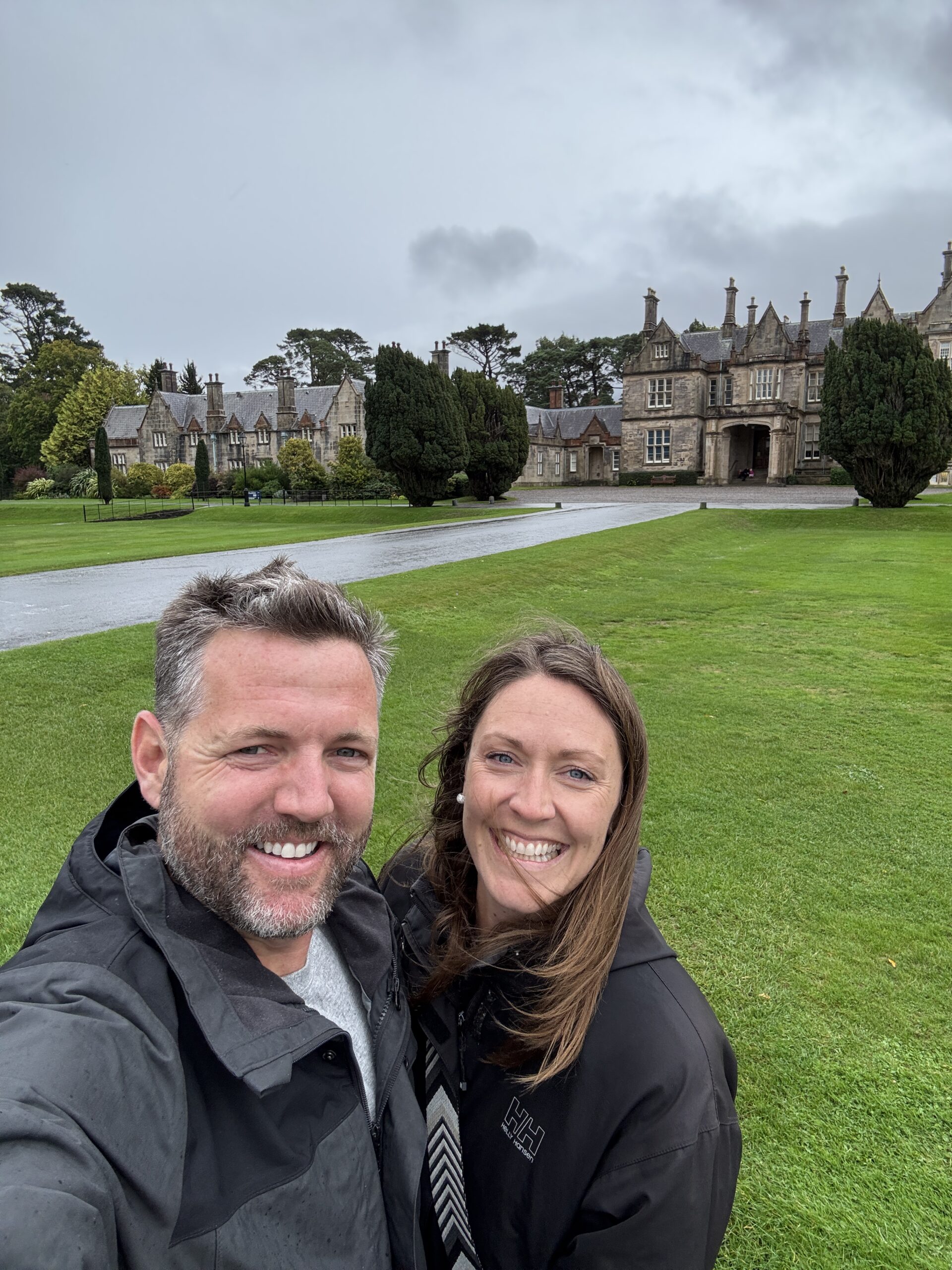
We visited on a day of heavy, persistent rain, and it was actually perfect as the weather just added to the vibe!
The interior tours take you through the house as it would have looked in Victorian times, including the kitchens and servants’ quarters, and it’s the kind of place where wet weather outside only adds to the atmosphere inside.
The gardens are worth your time even in bad weather. There’s a rock garden, a stream garden, and a walled kitchen garden, all free to wander.
On the wider estate, the traditional farms give you a genuine sense of what rural Irish life looked like in the 19th century, with demonstrations that are far more interesting than they sound on paper.
Entry to the house itself costs extra, around €9 for adults at the time of writing, so check current rates before you go. The grounds and gardens are free, which makes it easy to spend a couple of hours here without committing to the full house tour.
If you want to arrive in style and skip the parking hassle, a jaunting car tour to Muckross is a good way to do it – the traditional horse-drawn carriage ride through the park adds something the drive in just doesn’t.
Ross Castle
Ross Castle is a 15th-century tower house sitting right on the shore of Lough Leane, and it’s one of those places that earns its reputation. The setting alone is worth the trip out from town.
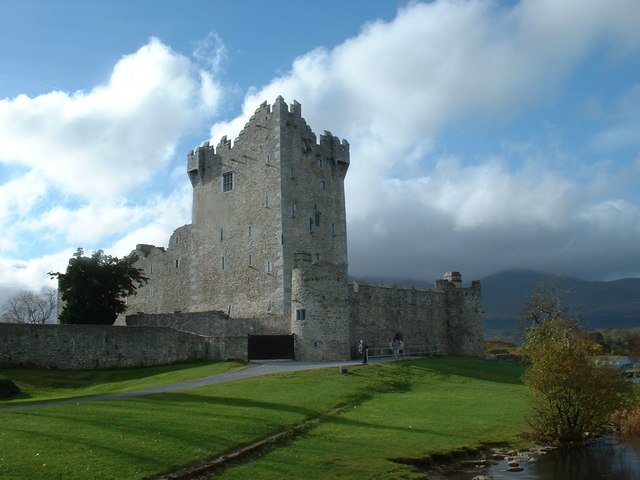
The castle has a serious history to go with the scenery.
It was the last stronghold in Munster to fall to Cromwellian forces, holding out until 1652, and the guided tours inside do a good job of bringing that story to life without turning it into a lecture.
If you want to go inside, Heritage Ireland runs guided tours of the interior. The exterior and lakeshore walk are free, and honestly the views across Lough Leane from the water’s edge are reason enough to come out here even if you skip the tour.
Boat trips on Lough Leane also depart from here, which makes Ross Castle a practical base if you want to reach the island landmarks. Innisfallen Abbey and Library Point are both accessible by boat, and doing it from the water gives you a completely different perspective on the park. Check out this Innisfallen Island boat tour from Ross Castle – it’s one of the better ways to spend a few hours in Killarney National Park.
Parking fills up fast in summer, so arrive early, especially on a weekend, or you’ll end up circling the car park while everyone else is already on the lakeshore.
Torc Waterfall
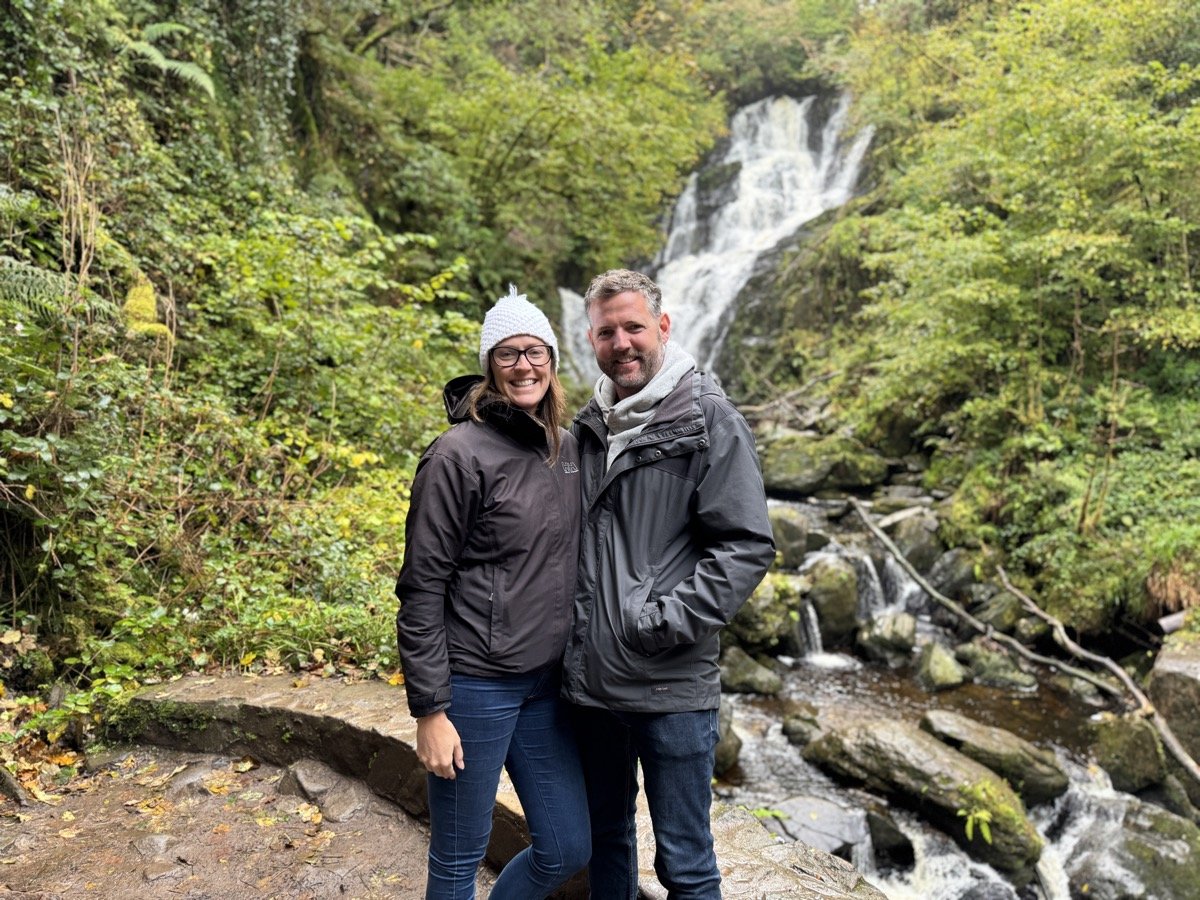
Torc Waterfall is one of the most visited spots in Killarney National Park, and it earns that reputation. The falls drop around 20 metres through old-growth oak woodland, and the whole walk from the Torc car park on the N71 takes about 15 minutes each way.
We went in October, in the rain, and it was brilliant. The wet weather pushes the volume of water up and the mist hangs in the trees around the falls in a way that makes the whole place feel properly dramatic.
I’d take a rainy October morning over a dry August afternoon here without hesitation. Not to mention, in summer this path gets crowded. Go early morning or come in shoulder season if you want any sense of having the place to yourself.
Once you reach the falls, you can continue uphill to a series of viewpoints overlooking the lakes, which adds maybe another 20 minutes and is well worth the extra climb.
Muckross Abbey
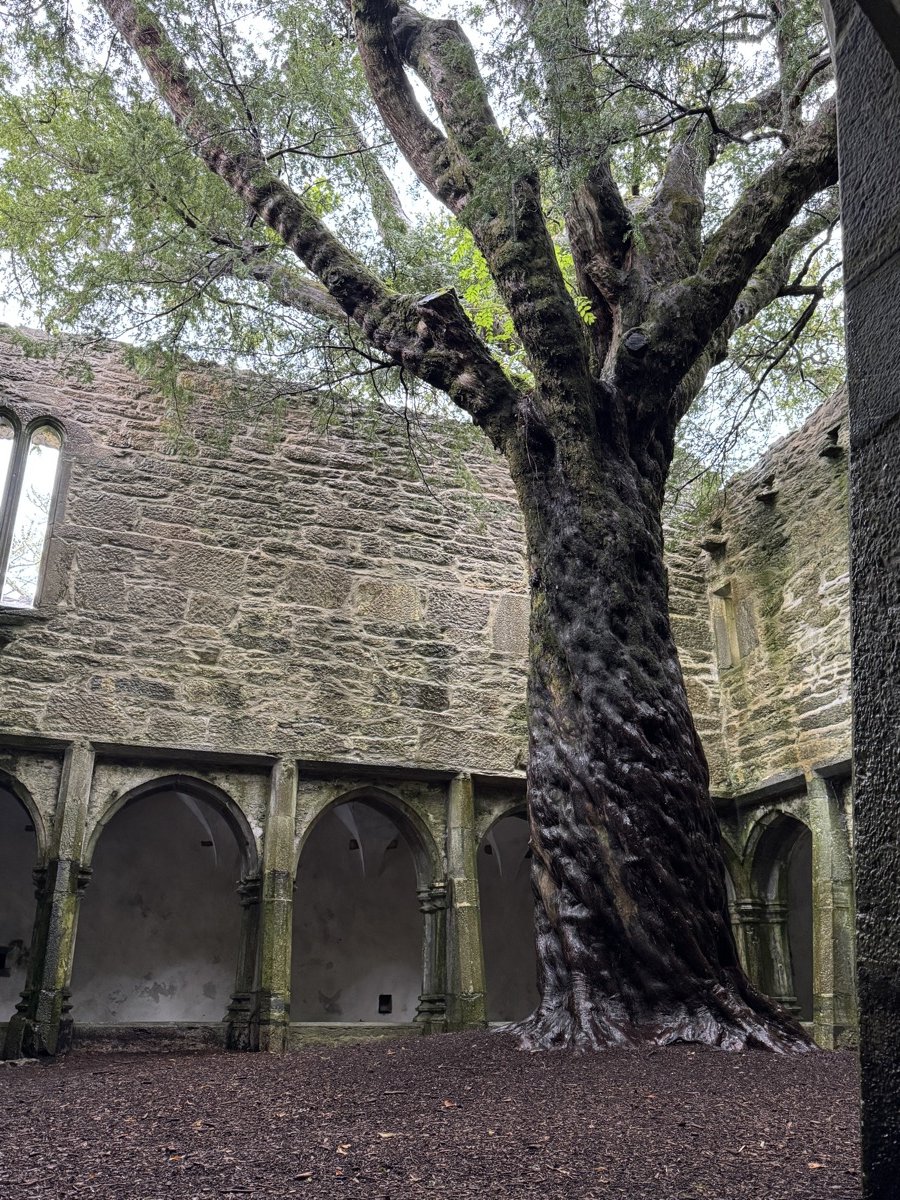
Muckross Abbey is a 15th-century Franciscan friary sitting in the middle of the National Park, and it is one of the best-preserved medieval ruins in Ireland.
There’s no entry fee and no guided tour needed. You just walk in and explore at your own pace. This was our favourite part of the Killarney National Park.
The centrepiece of the friary is an ancient yew tree growing right in the middle of the open cloister, thought to be as old as the abbey itself. Kerry chieftains and 18th-century Kerry poets are buried here, which gives the place a weight that you don’t get from a lot of historic sites.
When we visited, the mist was sitting low over the ruins, the stone was dark from the rain, and the whole place felt properly atmospheric in a way that a clear summer’s day probably wouldn’t deliver in the same way.
The cloister is open to the sky, so the interior of the abbey is fully exposed to the weather. That’s part of what makes it so striking, but it does mean it’s important to bring your rain gear.
Gap of Dunloe (Day Trip from Killarney NP)
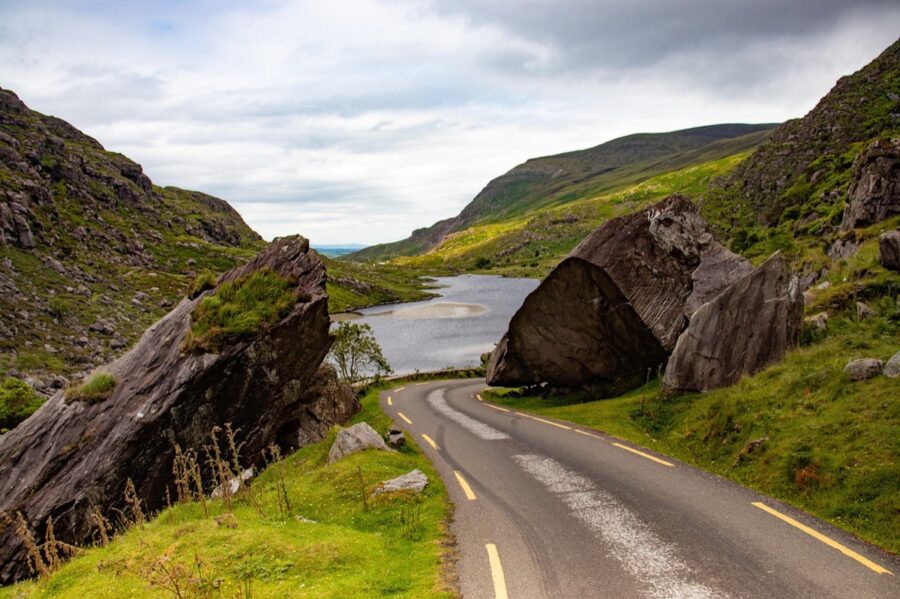
The glacially carved Gap of Dunloe is a narrow mountain pass cutting between the MacGillycuddy’s Reeks and Purple Mountain, about 10km from Killarney town. Glaciers did the heavy work here, and the result is one of the most dramatic stretches of landscape in all of Kerry.
Most visitors tackle it by jaunting car, the traditional horse-drawn carriages that have been running through the pass for generations.
If you’re looking at planning a jaunting car trip through the pass, book ahead in summer, the carriages back up on the narrow road, and with regular vehicle traffic as well, it can get very congested in peak season.
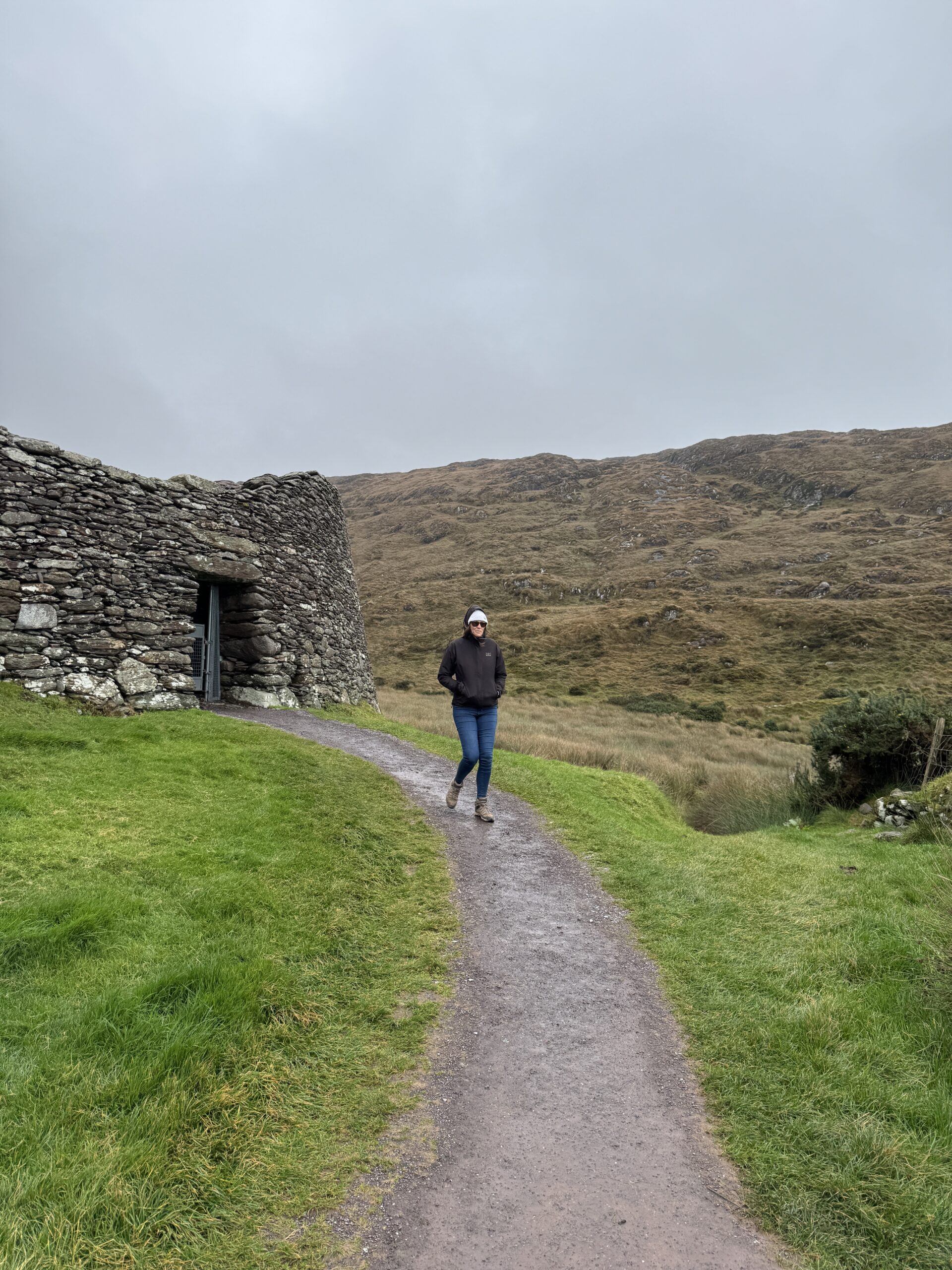
Hiking the pass on foot is also possible. It’s approximately 11km one way (not a loop), starting from Kate Kearney’s Cottage, which sits at the southern entrance and makes for a good base before you head in.
This is a proper hiking situation, wear layers, bring waterproofs, and don’t underestimate the terrain. Honestly, we missed this one on our October visit and I’m still a bit annoyed about it. It’s at the top of the list for next time.
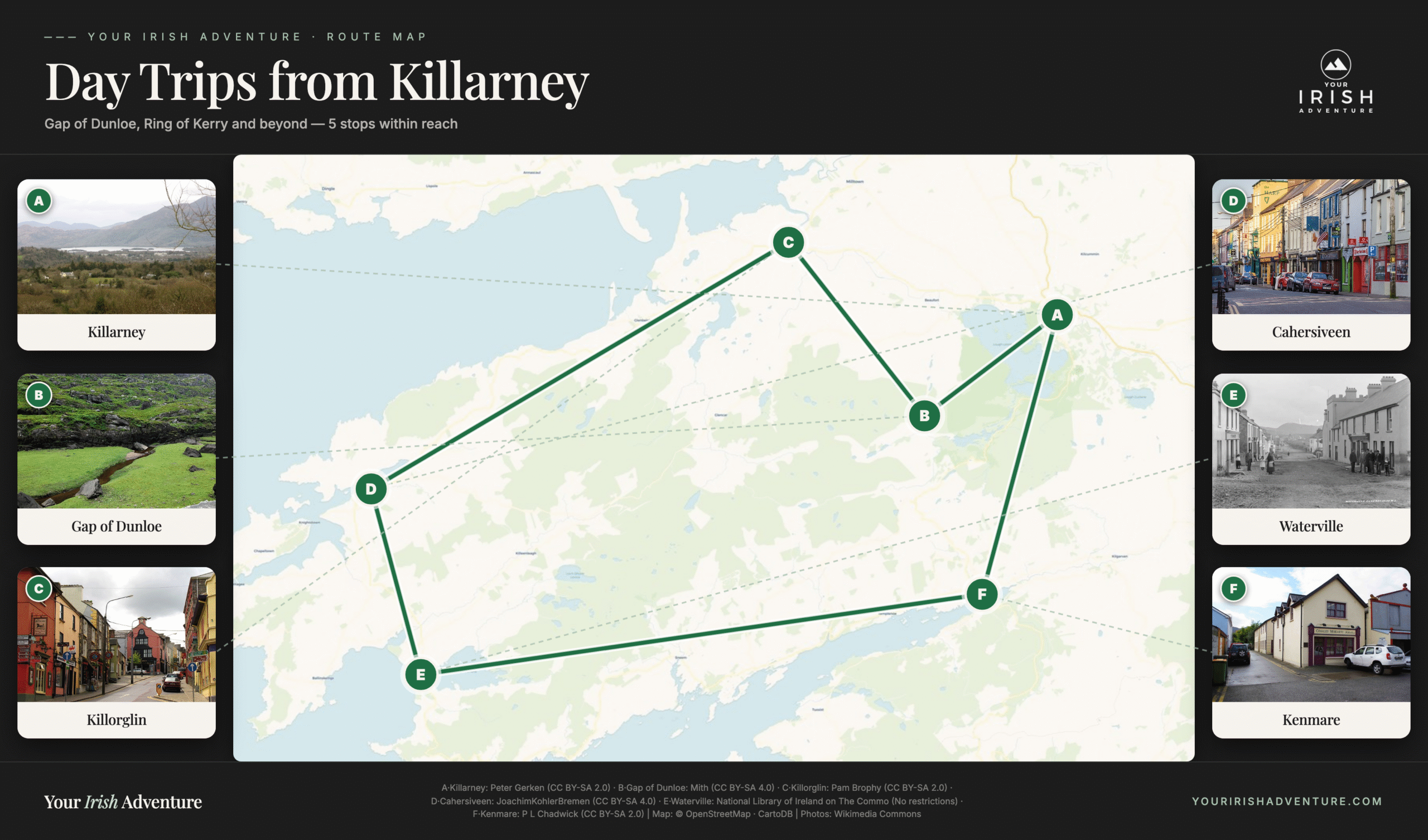
If you’re spending two days in Killarney, don’t make the same mistake, the National Park fills the time easily, but the Gap is in a different league for sheer drama. If you want to cover more ground, this Ring of Kerry day tour pairs the Gap with the wider circuit and is worth considering if you’re short on time.
Red Deer Spotting
Killarney National Park is home to Ireland’s only wild herd of native red deer, around 700 animals that have roamed this landscape for thousands of years.
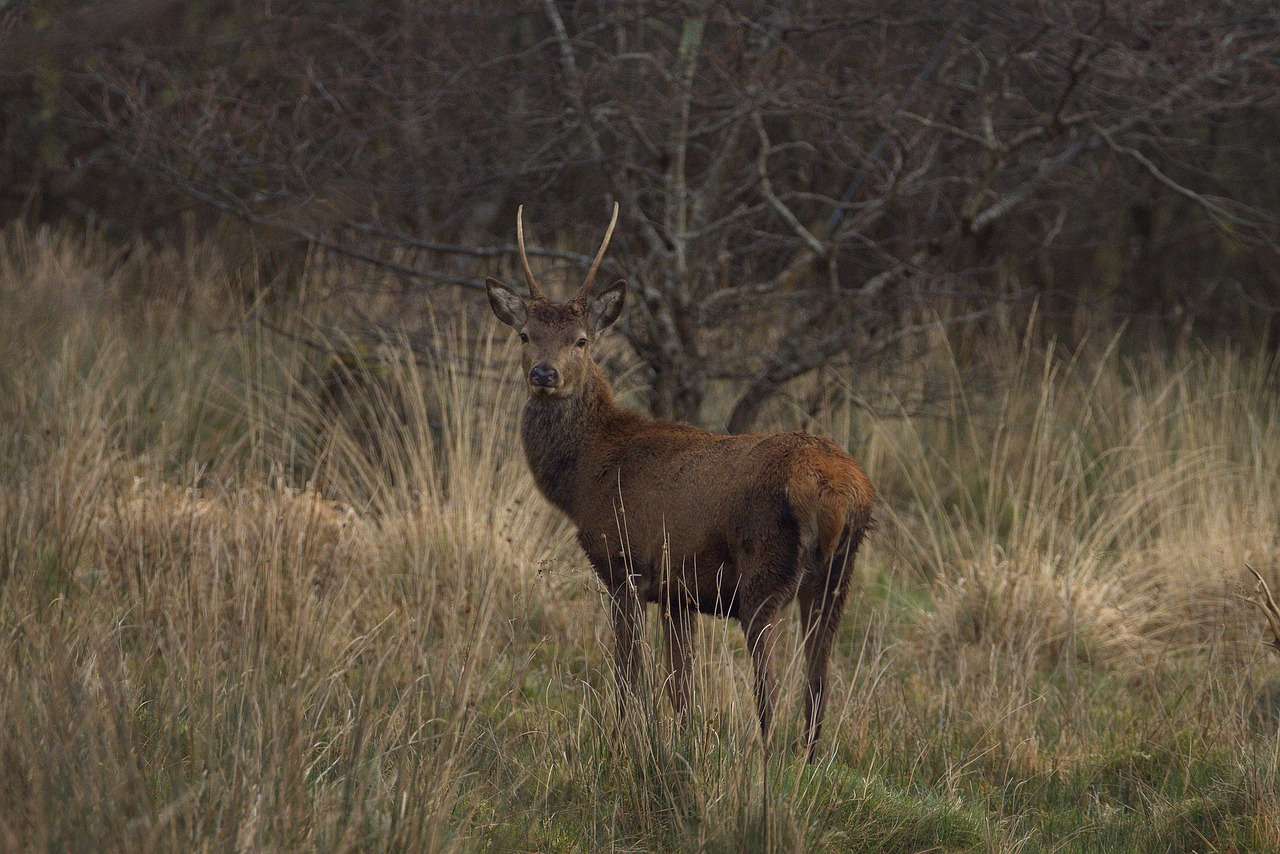
Your best chance of a sighting is early morning or at dusk, particularly on the open Torc fields and around Muckross Lake. The path between Dundag and Torc is worth walking specifically with deer in mind.
There’s no guarantee, obviously. They’re wild animals and they’ll remind you of that.
But sightings are common, and stumbling across a group of red deer in the mist near Muckross is the kind of thing that stops you in your tracks. If you do see them, give them space and don’t attempt to feed them.
This costs nothing and requires no planning. If you’d rather have a local guiding the route and pointing you toward the best spots, a guided photo walk in the park is a solid way to do it.
Killarney National Park Walking Trails
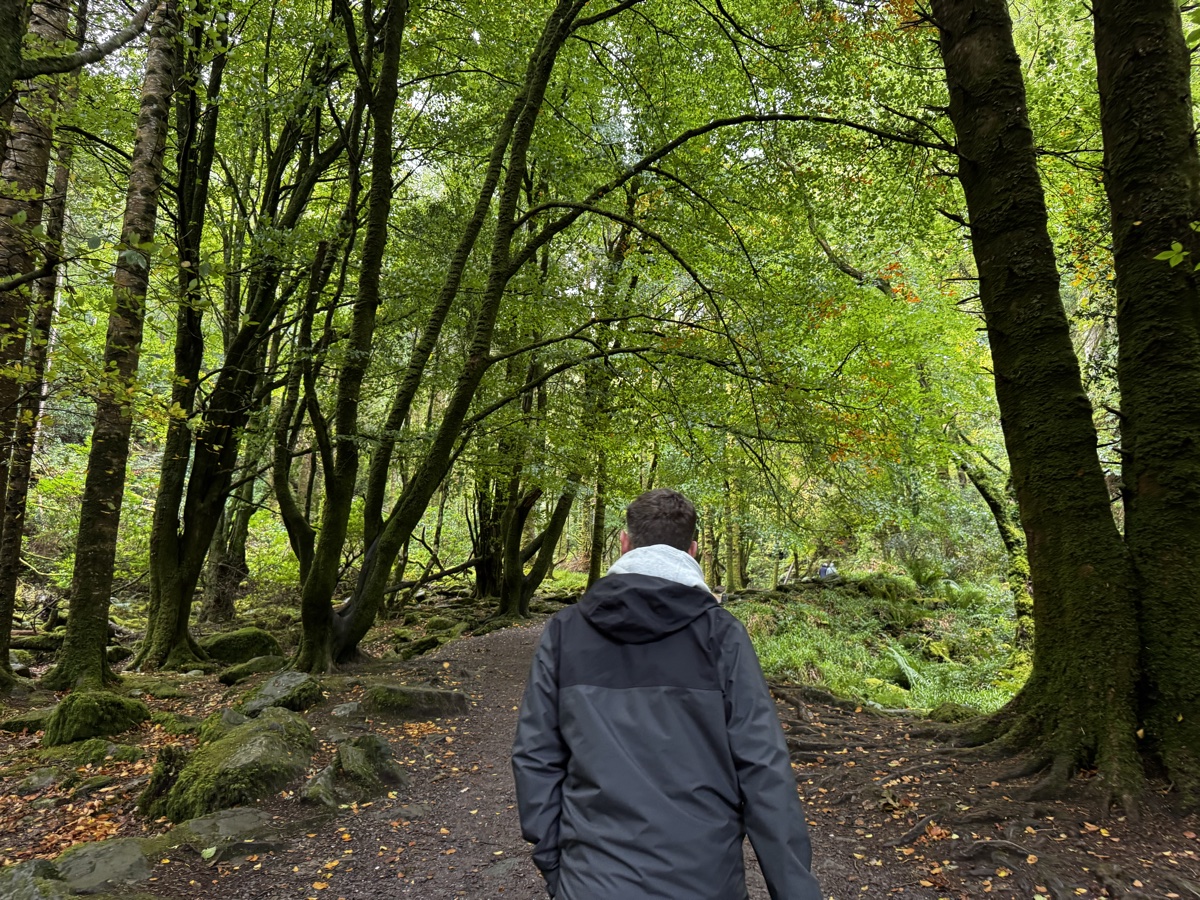
Killarney National Park walking trails cover everything from flat lakeside paths and woodland loops to longer mountain routes up into the MacGillycuddy’s Reeks, and all of them are clearly marked and free to walk.
Whatever your fitness level, there’s a route here that works. If you’d rather have someone show you the highlights and fill in the history, this guided walking tour of the national park is a solid option.
Knockreer Circular Walk
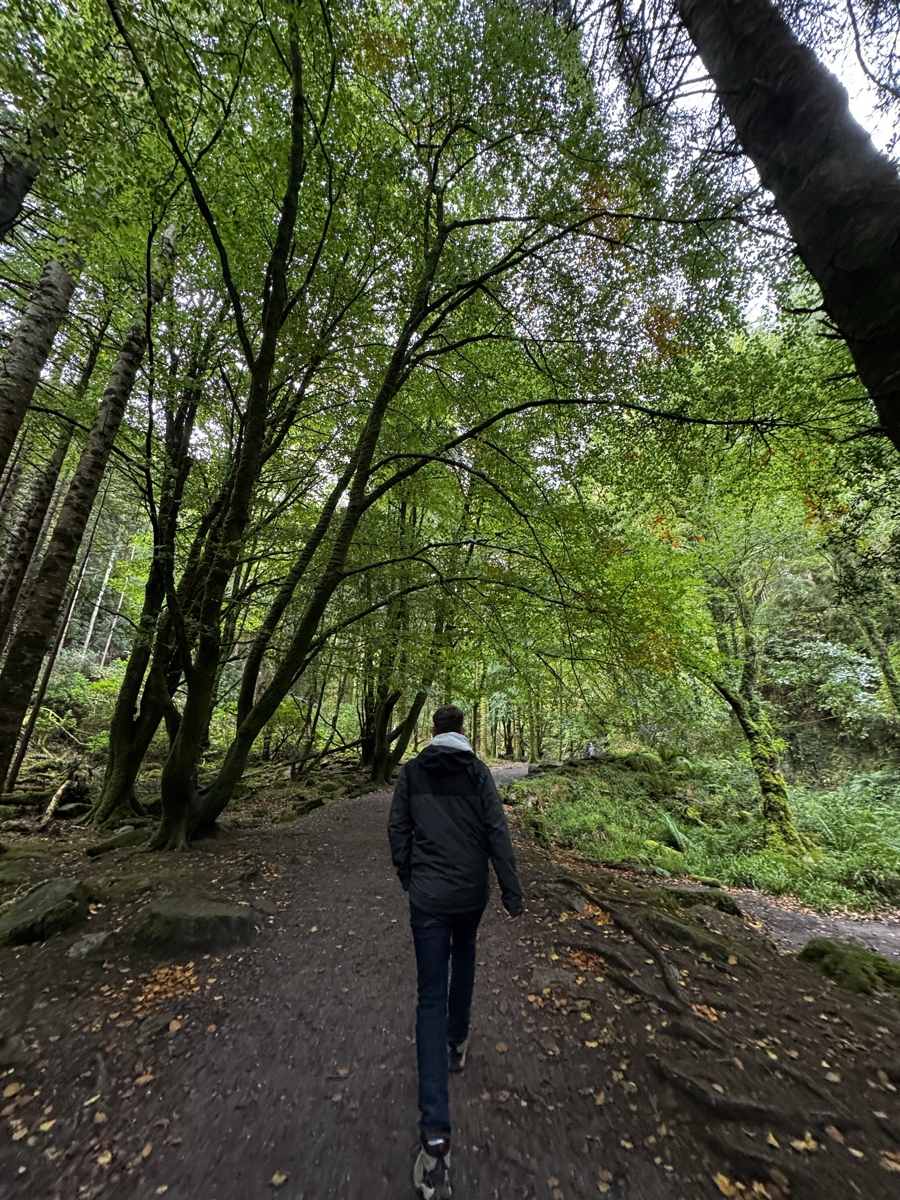
The Knockreer Circular is the easiest walk to add into a Killarney town visit, and it starts right at Killarney House and Gardens, follows the River Deenagh through open parkland, and loops back through the estate in around two hours.
On a clear day, the views across Lough Leane to the mountains are worth stopping for. Here’s the AllTrails link for the route.
Distance
Approximately 4 km.
Grade
Easy. The elevation gain is only around 45m, so it’s accessible for most fitness levels.
Terrain
A mix of gravel paths and open grassland. After rain, sections of the parkland can get muddy, so waterproof footwear is worth it, not just a precaution.
Starts
The walk begins at Killarney House and Gardens, which is a short walk from the town centre.
Return
The route loops back through the Knockreer estate, returning to the same starting point. Allow around two hours at an easy pace.
Mining Trail (Copper Mines Loop)
This loop is one of the more interesting routes in the National Park, combining lakeshore walking with a bit of industrial history.
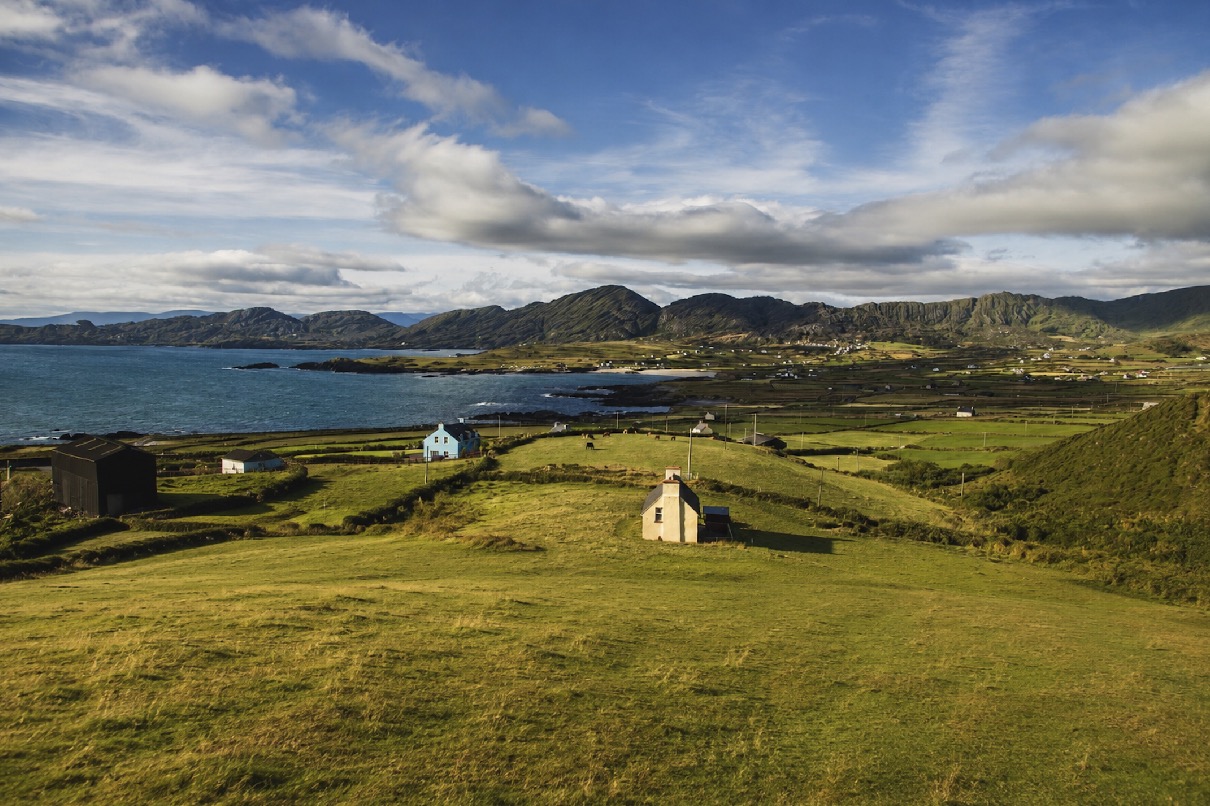
It starts at the Ross Castle car park, follows the tarred road past the castle itself, then picks up a narrow trail that skirts the shoreline of Lough Leane before passing the old copper mine workings and looping back to the start.
The mine ruins are worth a look, though don’t expect interpretive panels or neat signage. It’s rough and unpolished, which adds to the appeal. Click here for the AllTrails map link.
Distance:
Approximately 5 km for the full loop.
Grade:
Easy to moderate.
Terrain:
The terrain keeps things manageable, but watch your footing on the lakeshore section. Tarred road near Ross Castle, then a narrow trail with exposed rock along the lakeshore. The path closest to the water can be slippery on wet rock, so take care after rain.
Starts:
Ross Castle car park, Killarney.
Return:
The loop brings you back to Ross Castle, so it pairs well with a visit to the castle itself. Do the walk first, then head inside.
Lakeside Walk
The Lakeside Walk is one of the longer flat routes in Killarney National Park, running from the N71 gate lodge car park along the shores of Lough Leane all the way to Muckross House. It’s a good option if you want distance without any real climbing.
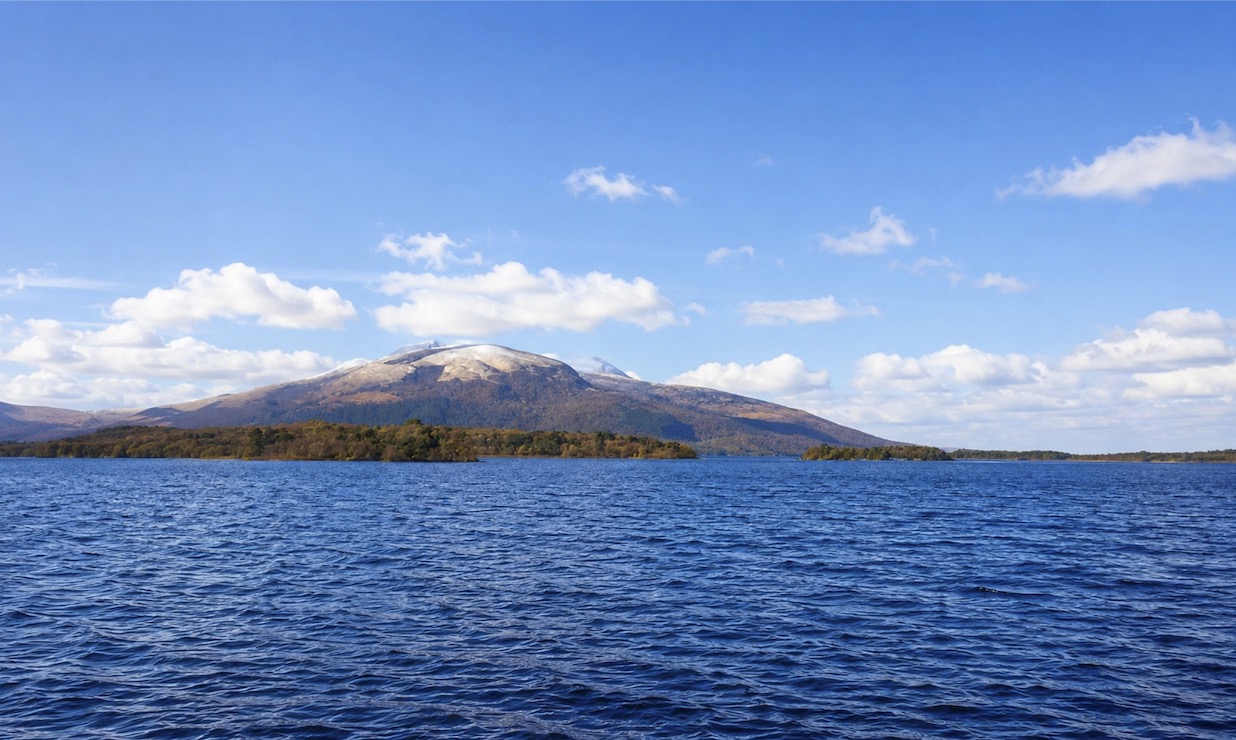
On a clear day, the lake views are the payoff. The path is rough and meandering in places, so wear proper hking shoes rather than runners.
Distance:
Approximately 8 km one way, depending on whether you take the detour to Muckross Abbey en route.
Grade:
Easy. Almost entirely flat the whole way, which makes it accessible for most walkers.
Terrain:
Mixed. Some sections are well-maintained path, others are rough and uneven closer to the water. This is not a manicured promenade, so expect mud after rain and a few sections where you’re picking your way through.
Starts:
N71 gate lodge car park, on the southern edge of Killarney town.
Return:
The walk ends at Muckross House, so you can turn it into a full day by exploring the house and gardens on arrival. If you detour to Muckross Abbey on the way, build in an extra 20-30 minutes. Click here for the AllTrails link for this walk.
Old Boathouse Trail
The Old Boathouse Trail skirts the rocky limestone promontory of Dundag Point, threading through natural yew woodland with panoramic views of the mountains that frame the Killarney lakes. It connects to Torc Waterfall at the far end, making it a solid linking route if you want to extend your day in the National Park.
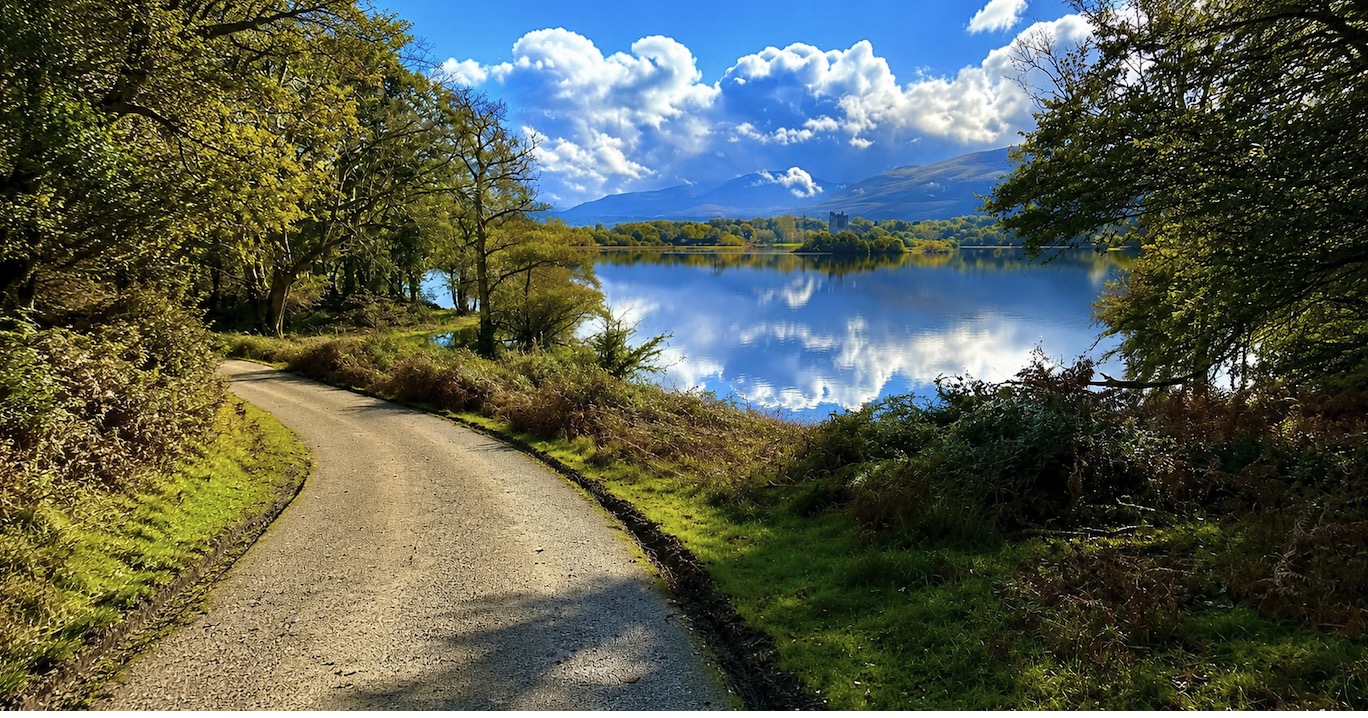
The trailhead branches off from the main road to Torc and is marked with a stone signpost that’s easy to walk straight past if you’re not actively looking for it. Keep your eyes open. Here’s the link for Dundag to Torc and here’s the link for the Old Boathouse Trail – together, they equal around 5km. You can also do a shorter version which is only 1.5km, or adding on other paths that connect.
Distance:
Approximately 5km return.
Grade:
Easy to moderate.
Terrain:
A mix of woodland path, limestone outcrops, and shoreline track leading to the secluded Dundag Beach. Red deer are regularly spotted on the open Torc fields nearby, so it’s worth walking quietly.
Start:
Off the main N71 road toward Torc Waterfall, look for the stone trail marker on your right.
Return:
The trail finishes close to Torc Waterfall, so it pairs well with a visit there.
Library Point
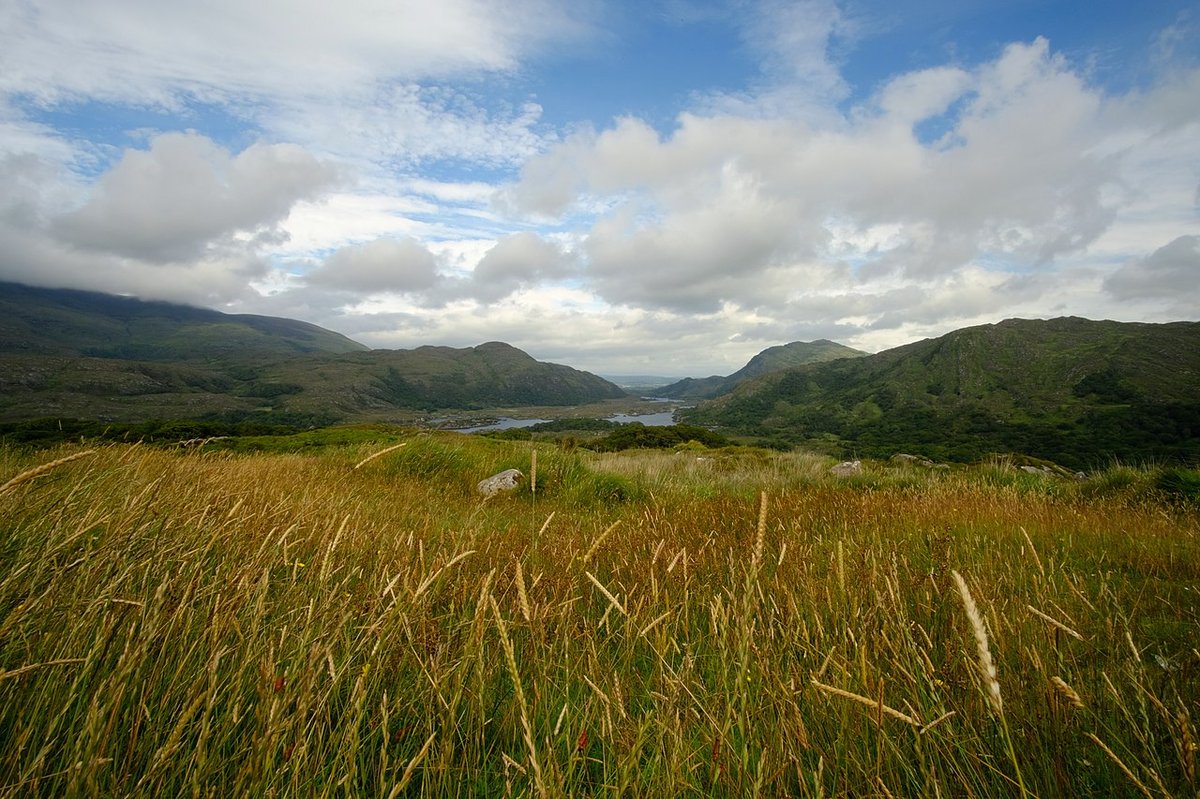
Library Point is a limestone rock formation on the shores of Lough Leane, sitting on the tip of Ross Island’s headland. Most people visiting Ross Castle don’t make it this far, which is exactly the reason to go.
Distance:
Just over 2km from Ross Castle via the direct route, making it a 4km return. Add the Copper Mines loop and you’re looking at a 5km circuit.
Grade:
Easy. The paths are well-formed and the elevation gain is minimal, though the woodland trail above the lakeshore has some uneven limestone underfoot.
Terrain:
Woodland paths through mixed forest, rising above the lakeshore with views across Lough Leane. The headland itself has exposed limestone outcrops and a short loop around the point.
Start:
Ross Castle car park. Follow the lakeside path south and continue past the castle toward the Ross Island peninsula.
Finish:
Return the same way or extend via the Copper Mines loop before heading back to Ross Castle. It pairs well with a Ross Castle visit and adds maybe an hour to your morning without much extra effort.
Guided Tours of Killarney National Park
Killarney National Park is easy enough to explore on your own, but a guided tour adds a layer of context you’d miss walking in cold: wildlife, geology, the stories behind the ruins.
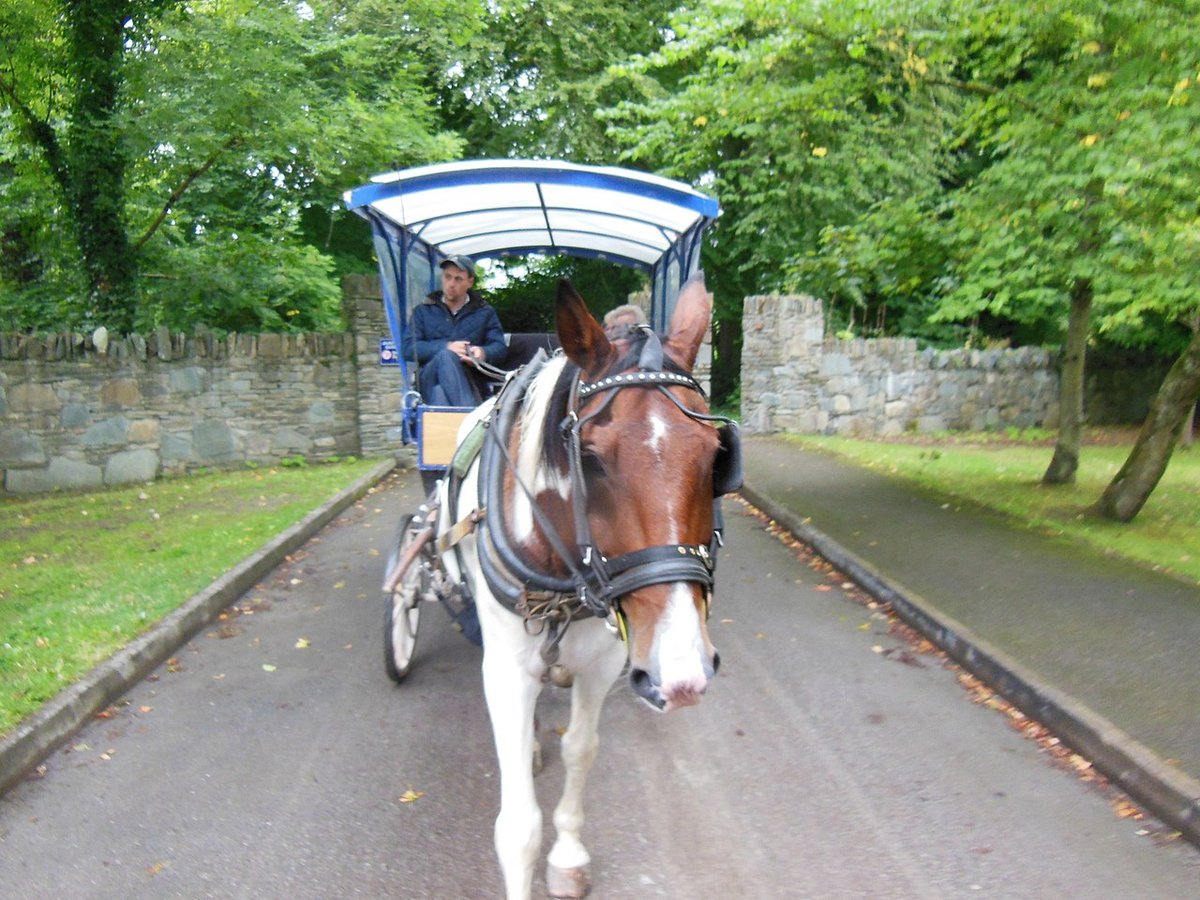
The Killarney National Park Highlights tour covers the park’s headline attractions with a guide who knows the history behind them, from the lakeshore to the ancient woodland and beyond. It’s a solid option if you want the full picture without doing your own research.
For photographers, the Fully Guided Killarney National Park Photo Walk combines guided commentary with practical shooting advice on location. Even in poor light, the park has real drama to it.
We didn’t do the Killarney National Park Jaunting Car Tour, a horse-drawn carriage ride through the park with a local jarvey doing the talking. But it’s super popular and is one of those experiences that feels specific to this corner of Ireland. If you want a more comprehensive look at the park’s highlights with a knowledgeable guide, you can also book the Killarney National Park tour on Viator.
Where to Stay Near Killarney National Park
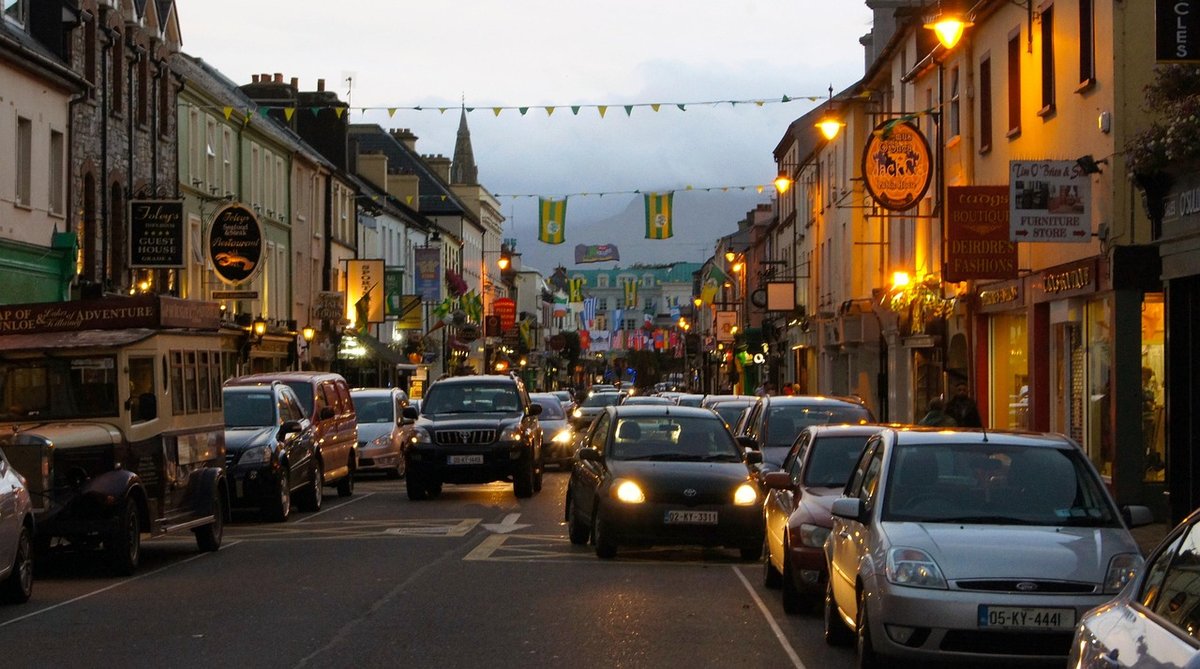
Most visitors base themselves in Killarney town, which puts you walking distance from the Knockreer entrance and a short drive from Muckross and Ross Castle.
When we visited in October, we were travelling by campervan and stayed at Fleming’s White Bridge Caravan and Camping Park on the Muckross Road. We essentially the place to ourselves, and the owner was welcoming. If you’re travelling with a tent or campervan and the timing works, it’s a good spot. We took an easy taxi into Killarney each day.
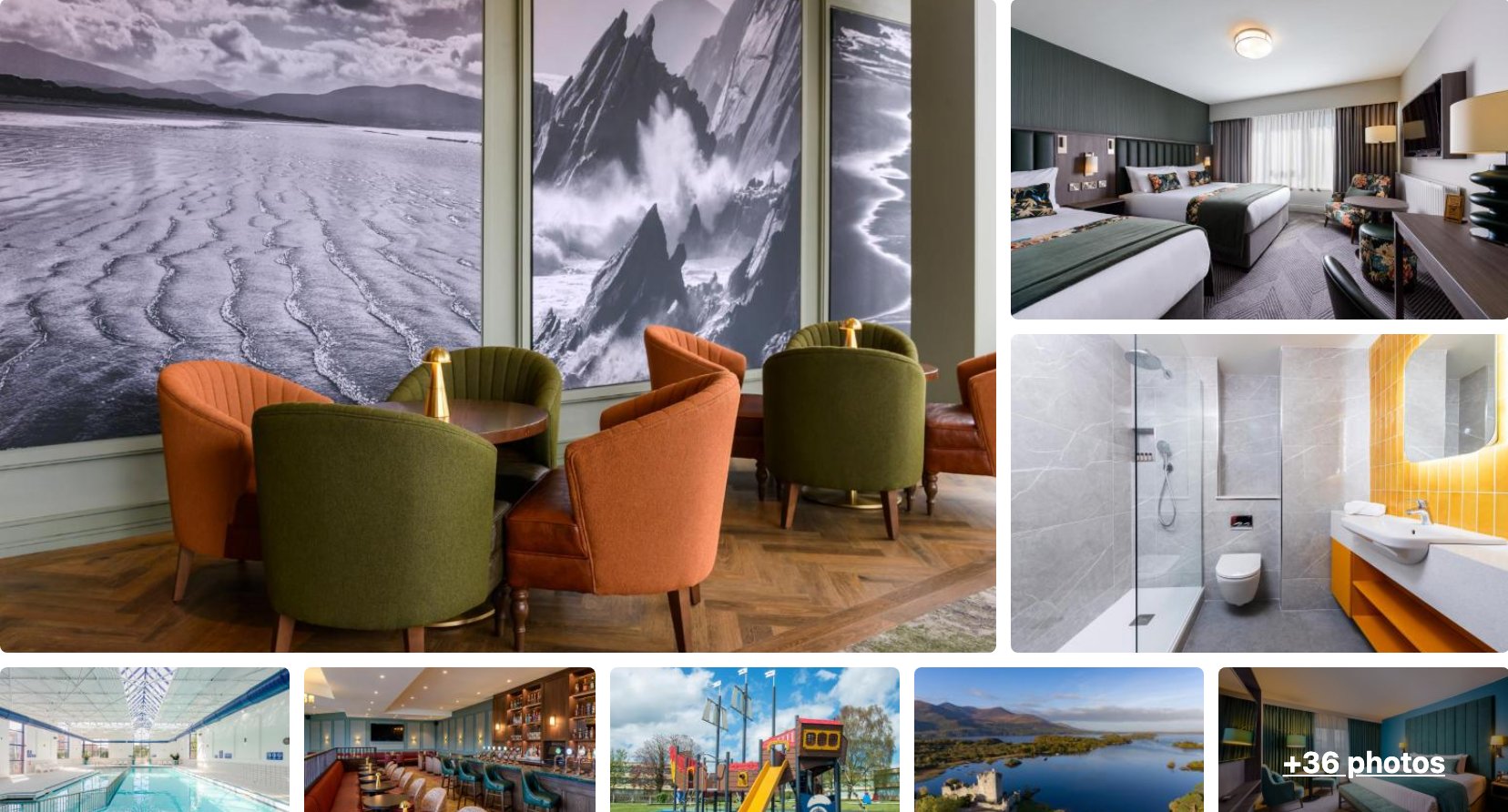
Hotel Killarney
Hotel Killarney sits right in the centre of town, putting you within easy reach of the park, the restaurants, and the trad pubs. It’s a solid mid-range pick with comfortable rooms and a location that’s hard to argue with.
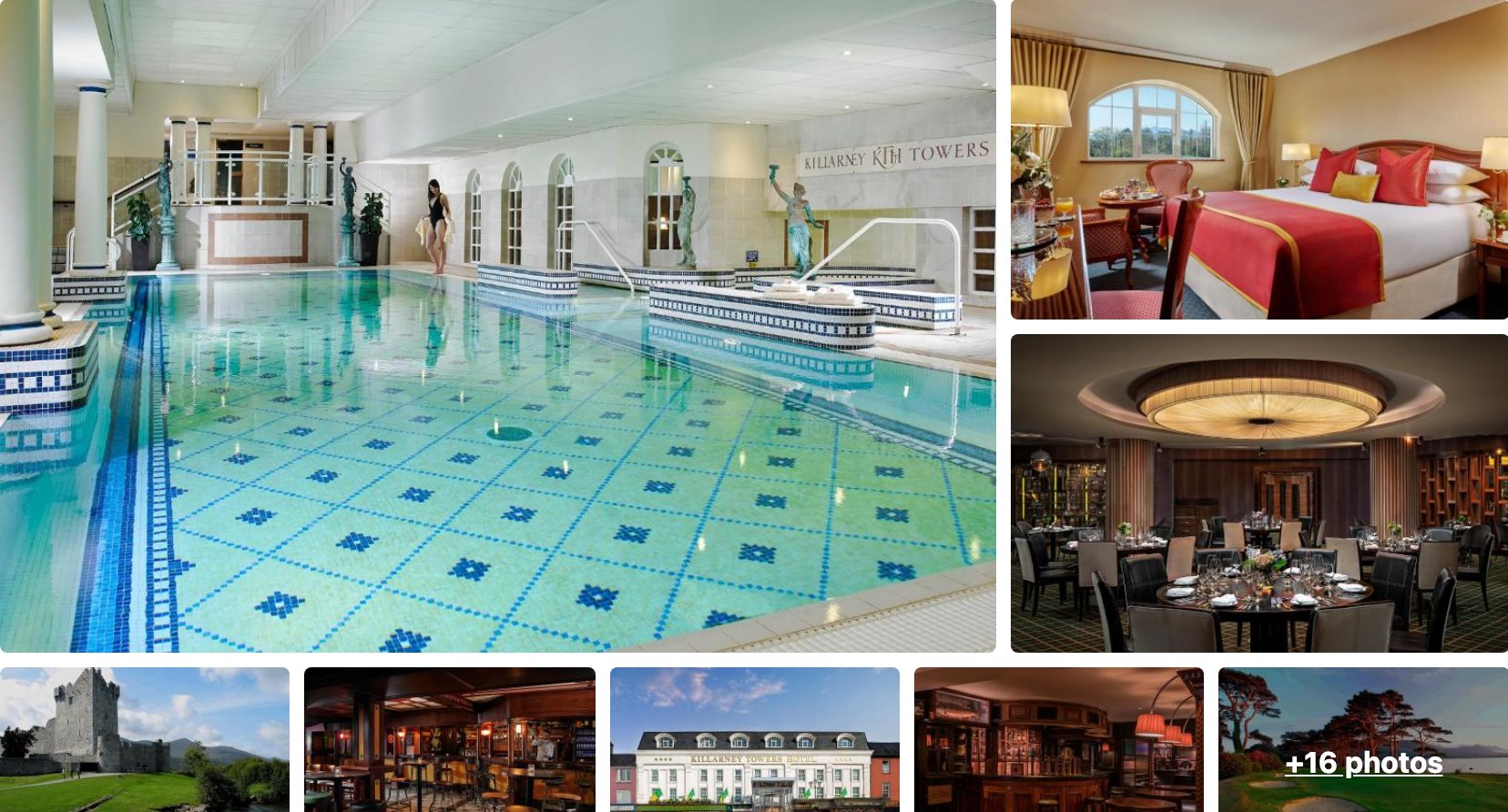
Killarney Towers Hotel & Leisure Centre
Killarney Towers Hotel & Leisure Centre adds a leisure centre to the mix, which is useful after a full day on the trails. It’s centrally located and consistently well-reviewed.
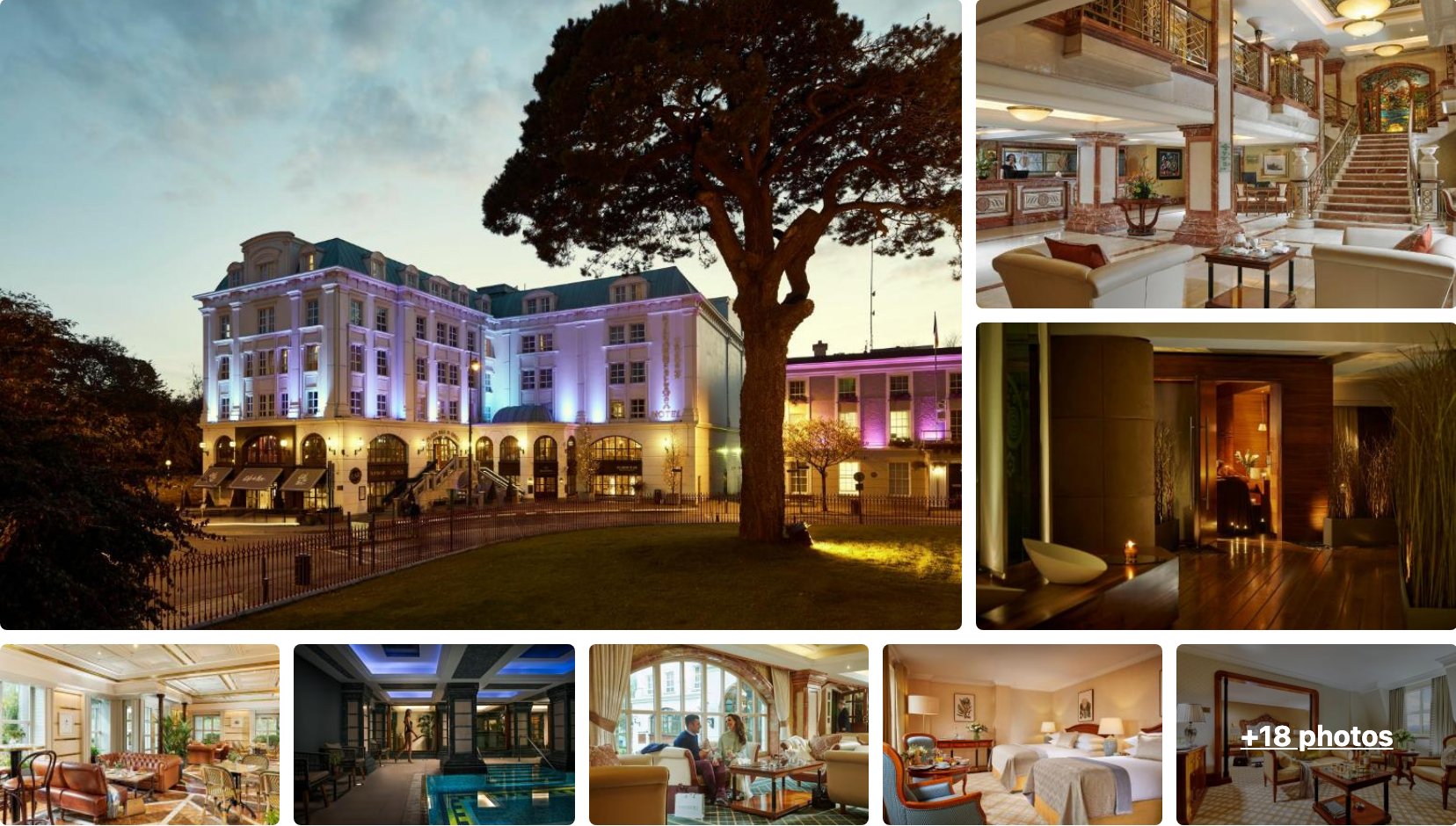
Killarney Plaza Hotel & Spa
If you want to push the boat out, Killarney Plaza Hotel & Spa is the top-end option in town, with a spa that earns its keep after a day of hiking in the rain.
Hotel Killarney sits right in the centre of town, which puts you within easy walking distance of the National Park trailheads and the best trad music pubs on the strip.
Killarney Towers Hotel & Leisure Centre is right in the centre of town and comes with a pool and full leisure facilities.
It’s a solid pick after a long day on the Ring of Kerry or tramping around Muckross in the rain.
If you want to splash out, Killarney Plaza Hotel & Spa is the go-to, with a full spa on site, exactly what you need after a day on the Ring of Kerry.
Frequently Asked Questions
Is Killarney National Park free to enter?
The park itself is completely free to enter. Muckross House charges admission if you want to go inside the Victorian manor, but the grounds, the abbey, the woodland trails, and the lakeshores cost nothing.
How long do you need to visit Killarney National Park?
At minimum, a full day. Two to three days is more like it if you want to cover Muckross Estate, Ross Castle, the Gap of Dunloe, and the upper lake area without feeling rushed. Killarney as a base deserves at least two nights.
When is the best time to visit?
May, September, and October are the sweet spots. Fewer crowds, reasonable prices, and the autumn colour in October is worth timing a trip around. July and August are the busiest months by a long stretch.
Can you do the Gap of Dunloe without a car?
Yes. Jaunting cars run from Kate Kearney’s Cottage through the Gap, and there are guided day tours from Killarney town that include the whole route. It’s one of those cases where not driving is actually the better experience.
Are dogs allowed in Killarney National Park?
Yes, dogs are welcome throughout the park as long as they’re kept on a lead. It’s a popular spot for a reason.
Final Thoughts on Killarney
Killarney has a reputation as one of Ireland’s most touristy towns, and it’s well deserved! Combine the town with a couple of days spent around the Killarney National Park, and it’ll be the perfect trip.
Seeing Muckross Abbey in the mist was one of those atmospheric moments that’ll stay with us, as was the Torc Waterfall and the woodland walks through the park felt wild, not manicured.
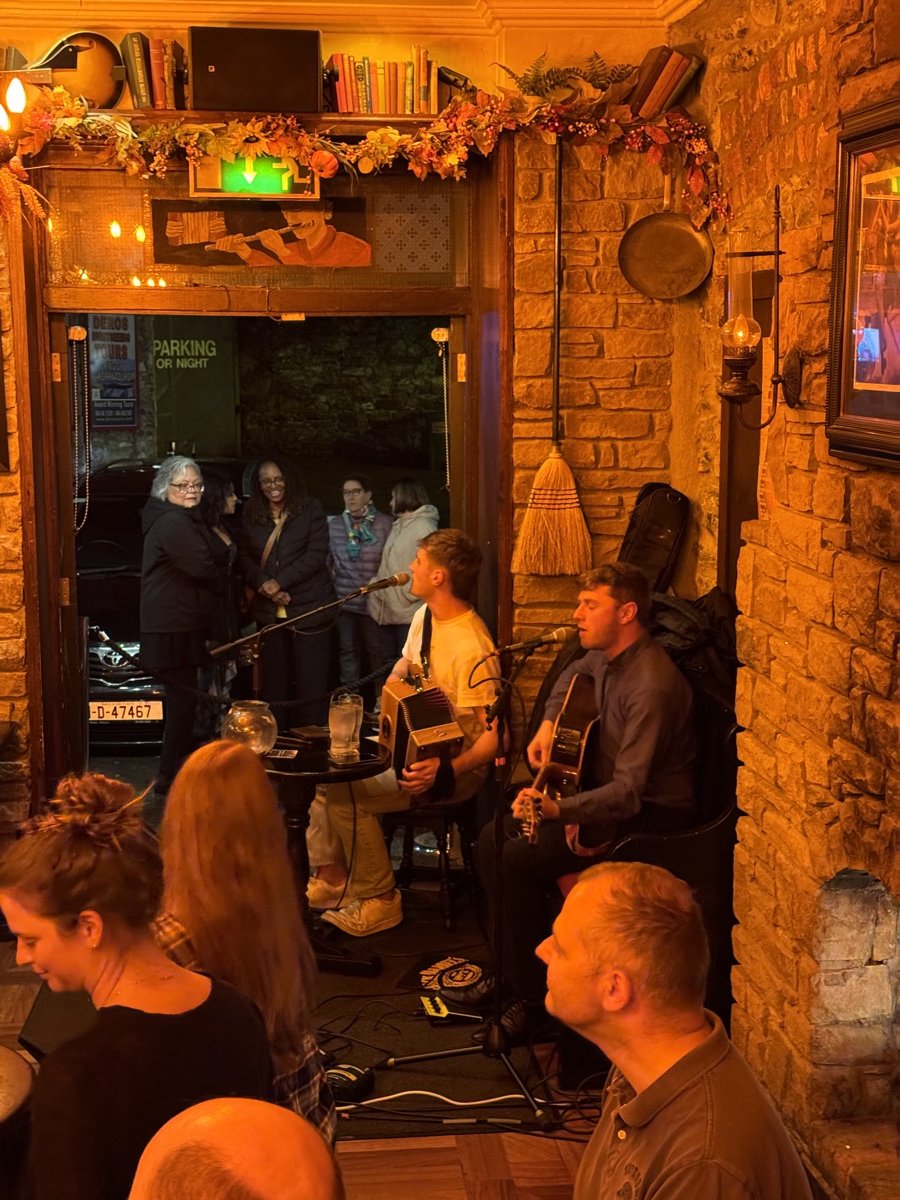
The music scene that evening back in town was outstanding. The band at the Killarney Grand was one of the best trad sessions we caught anywhere in Ireland.
My one regret is that we didn’t get to the Gap of Dunloe, but it’s on the list for next time! If you can give Killarney 2 to 3 nights, do it. One night is enough to see the headlines, but not enough to slow down and actually feel the place.
Like it? Pin it!
Save this guide for later