
The beaches in Donegal are the best in Ireland, and they’re up in the far northwest corner of the country, way off the usual Dublin-to-Kerry loop. You get miles of empty white sand, big Atlantic surf, and cliffs dropping straight into the water.
That distance is exactly why they stay so quiet. We drove the coast on our last trip, about two weeks in autumn, and hit a lot of these. Silver Strand at Malin Beg is a horseshoe of sand at the bottom of about 170 steps, and even in summer you can have most of it to yourself. You won’t get that at the famous strands down south.
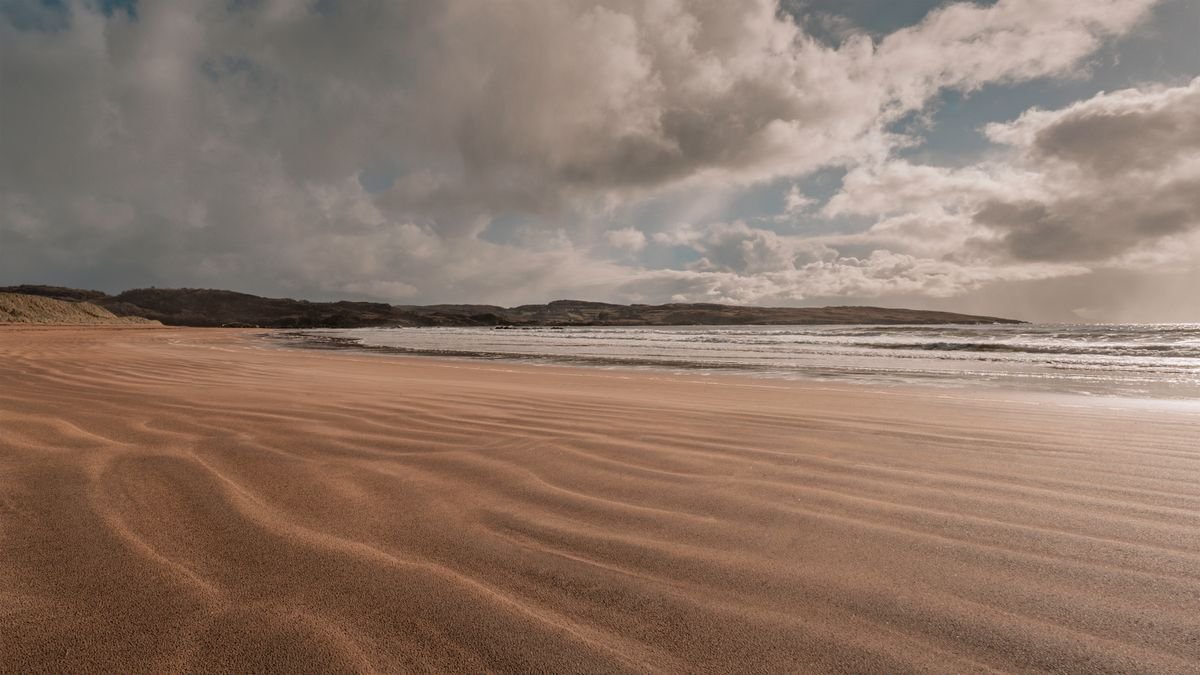
The catch is the water. This is the North Atlantic, it’s cold year-round, and some of these beaches have serious currents, so a bit of the safety stuff is worth reading before you go.
Below is the list, from the big famous strands to the ones we’d actually send you to instead, plus the best time to go, how to get up to Donegal in the first place, and where to base yourself near the coast.
More Ireland Beach Guides
- The Best Beaches in Ireland: 20 Picks for Every Part of the Country
- The Best Beaches in Northern Ireland
- Best Blue Flag Beaches in Ireland: 9 Top Swim Spots
- Dog Friendly Beaches Ireland: The 10 Best Dog Beaches
Quick Answer:
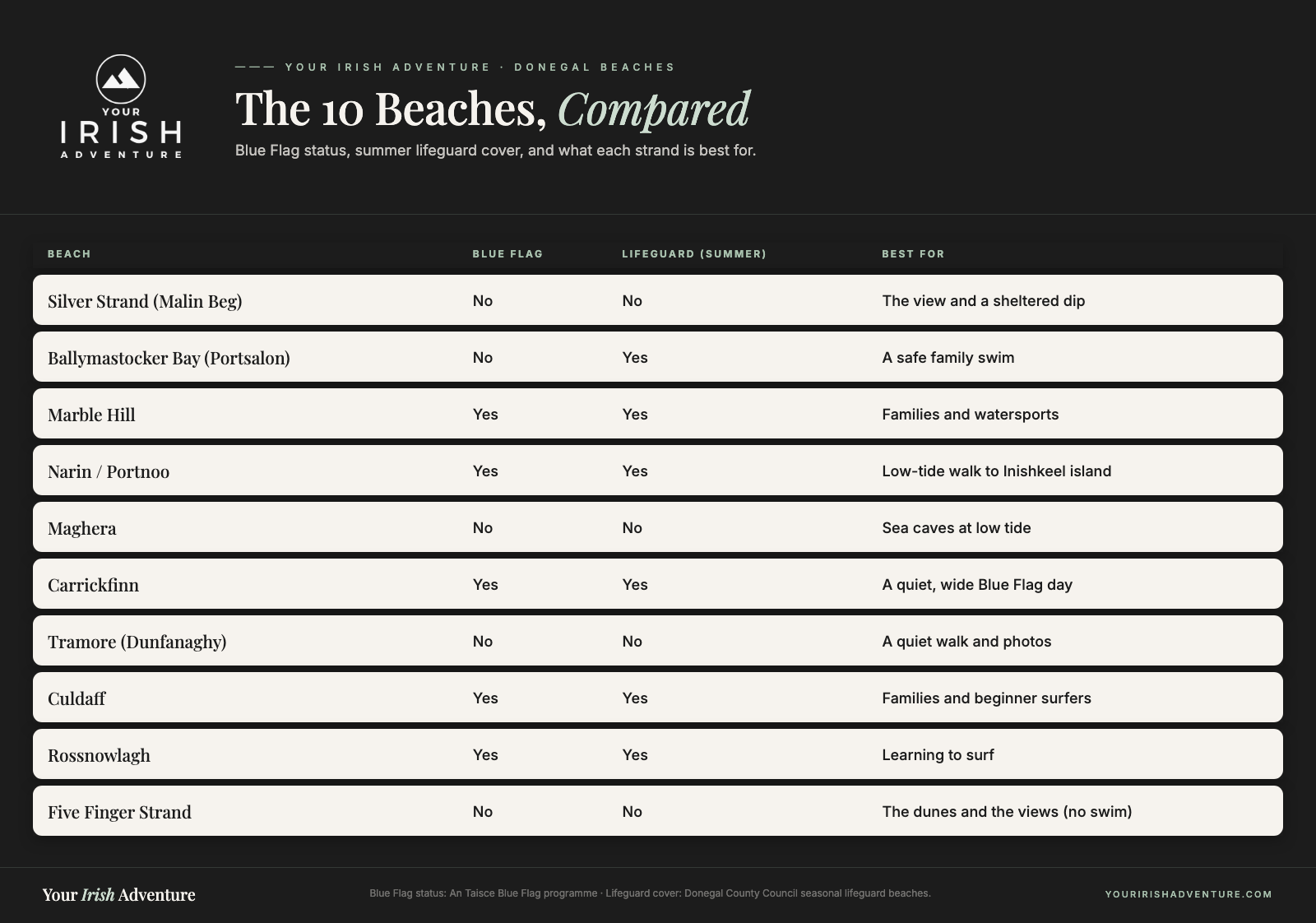
The best beaches in Donegal sit along the far northwest coast, off the usual tourist trail. Silver Strand at Malin Beg and Ballymastocker Bay win on looks, while Marble Hill, Narin/Portnoo, Carrickfinn, Culdaff and Rossnowlagh hold Blue Flag status with summer lifeguards. The water is cold all year, so a car and swim-safety sense help.
A Quick Note on Swimming and Safety
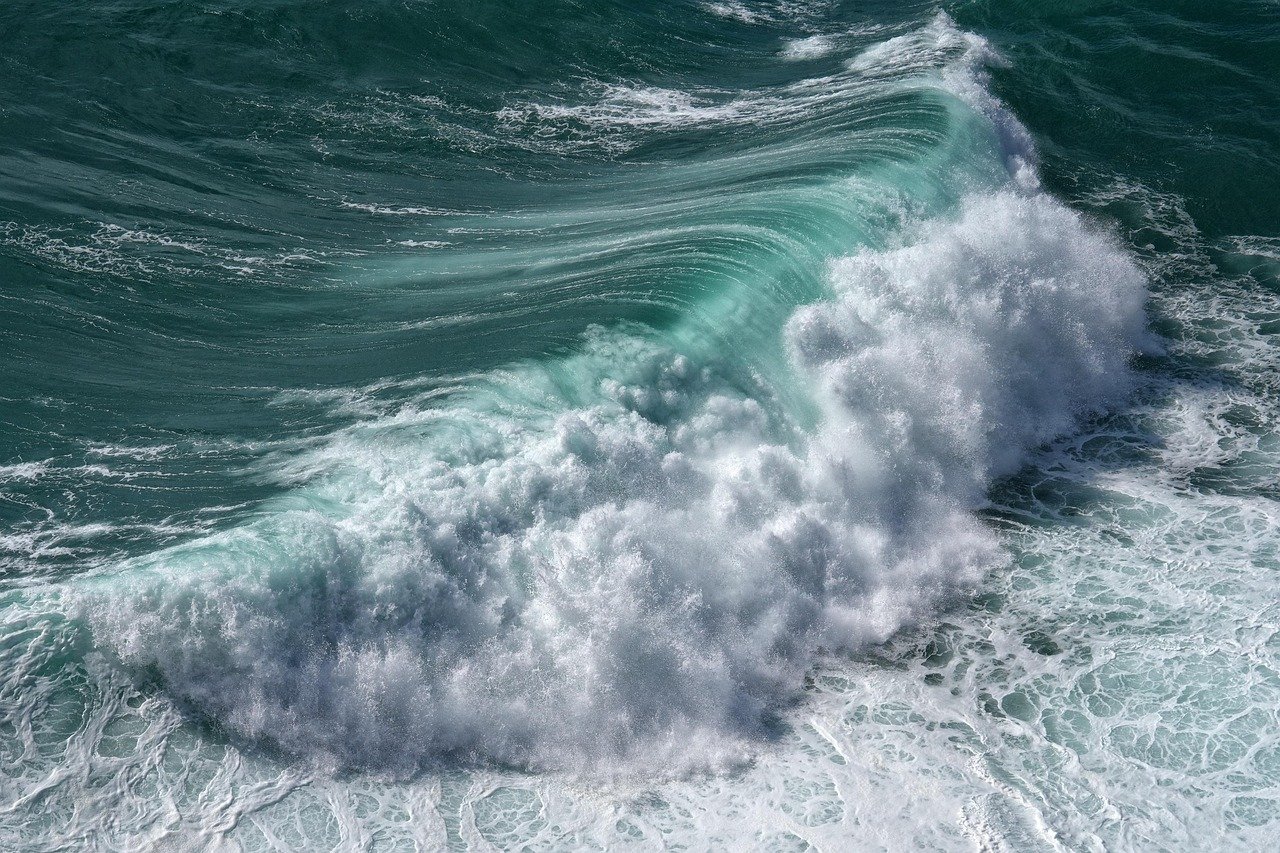
Donegal faces the open North Atlantic, so a lot of these beaches have rip currents and a strong undertow, especially the exposed ones on a big swell. This is real, so read it before you decide to swim.
The simplest rule is to swim where it’s lifeguarded. Beaches like Portsalon, Marble Hill, and Rossnowlagh have seasonal lifeguards, usually through the summer, and they set the flags for a reason. Swim between the red and yellow flags and you’re in the patrolled zone.
A red flag means don’t go in the water at all. A lot of the quieter strands, including Silver Strand, have no lifeguard cover, so if you swim there you’re on your own and need to judge it yourself.
If you do get caught in a rip, don’t fight it back to shore. Stay calm, swim parallel to the beach until you’re out of the pull, and then head in. Panicking and swimming straight at the sand is what wears people out.
The water is cold enough year-round that a wetsuit makes a real difference, and it’s worth having if you plan to be in for more than a quick dip. The surf crowd up here wears them even in August.
None of this is meant to scare you off. Millions of people swim these beaches every summer without a problem. Pick a lifeguarded one, watch the flags, and keep an eye on kids, and you’ll be fine.
The Best Beaches in Donegal
Here’s the run-down, working roughly from the big-name strands to the less-visited ones. Some are Blue Flag beaches with parking and lifeguards, and some you have to walk into. I’ve flagged which is which so you can pick the right one for your day.
Silver Strand (Malin Beg)
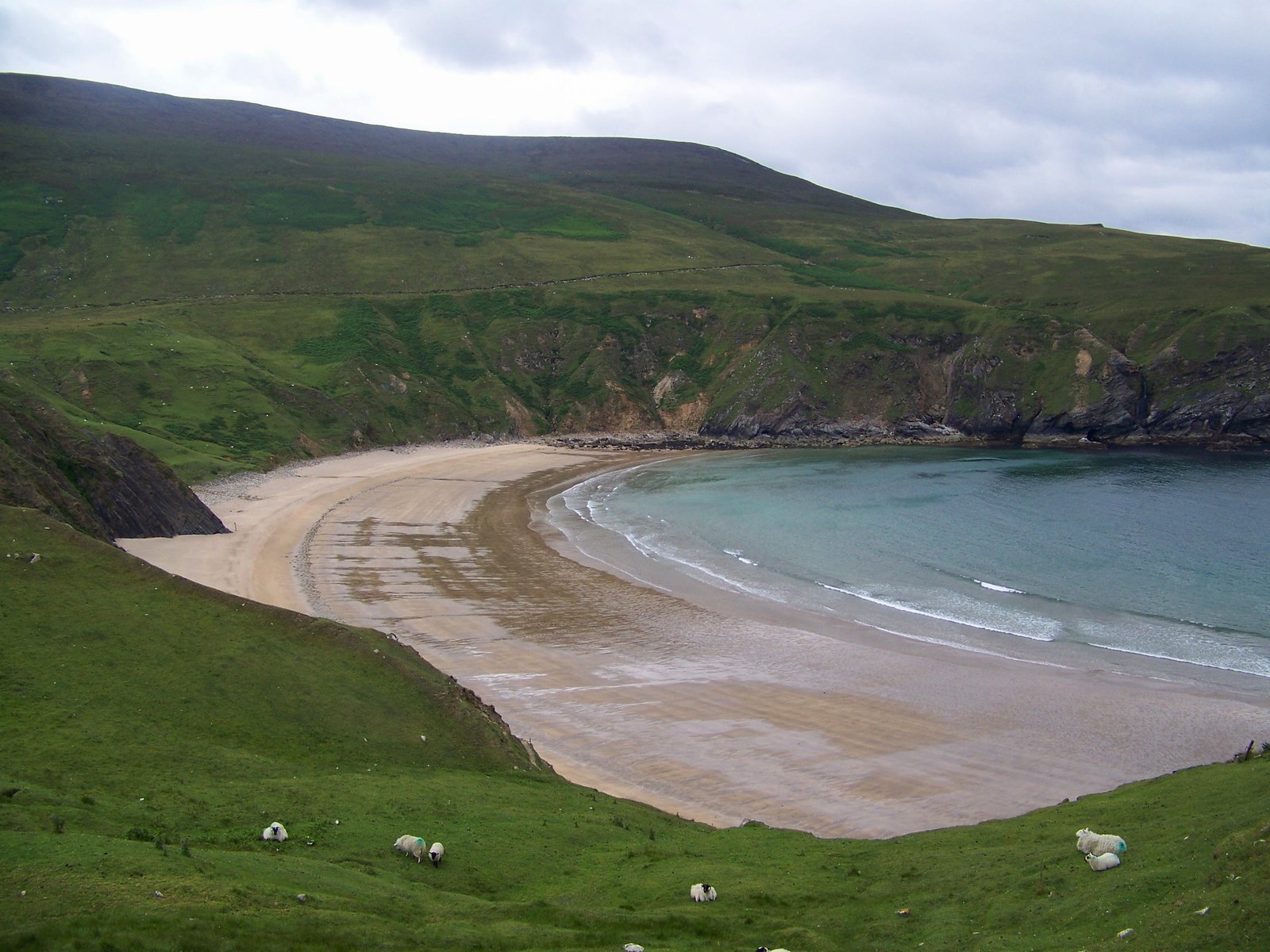
Silver Strand sits at the far southwest tip of Donegal, past Glencolmcille and not far from the Slieve League cliffs. Because it’s tucked into a cove with high cliffs on both sides, the water is calmer here than on the open strands, which is unusual for this coast.
There’s a small parking lot and viewing platform up top, so even if you don’t fancy the climb back up, the view down over the sand is worth the drive out. Just remember there’s no lifeguard here.
Ballymastocker Bay (Portsalon)
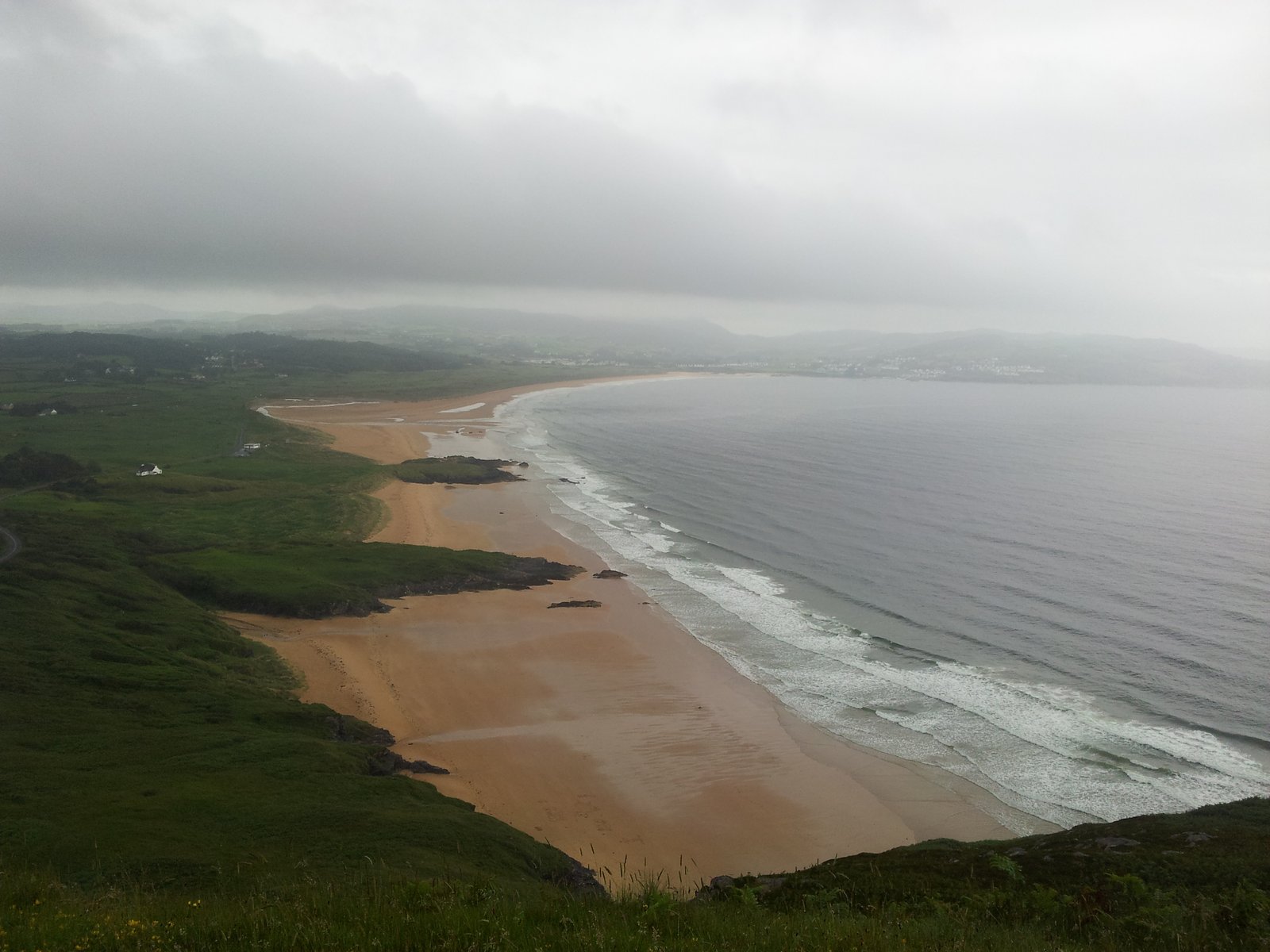
Ballymastocker Bay at Portsalon, out on the Fanad peninsula, is the golden-sand postcard beach a lot of people picture when they think of Donegal. Newspaper readers once voted it one of the best beaches in the world, and it lives up to it.
It faces into Lough Swilly rather than the open ocean, so it’s more sheltered, and it has seasonal lifeguards through the summer. There’s a golf course right beside it and easy parking, which makes it a simple one to build a beach day around.
Marble Hill Beach
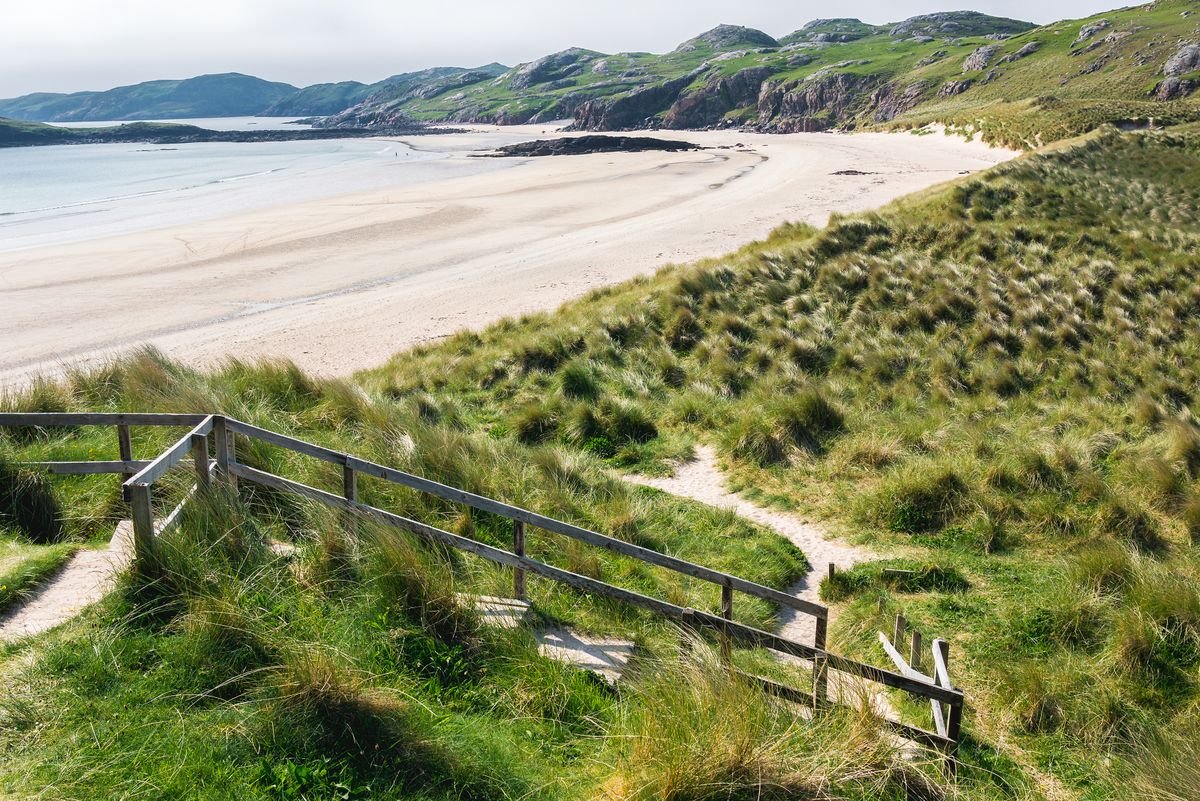
Marble Hill sits on Sheephaven Bay near Dunfanaghy and Port-na-Blagh. It’s sheltered, family-friendly, and shallow for a good stretch out, which is why it’s popular with kids and with the watersports crowd.
You’ll find kayak and paddleboard rentals here in the summer, plus lifeguard cover, so it’s one of the safer options for an actual swim.
Narin / Portnoo Beach
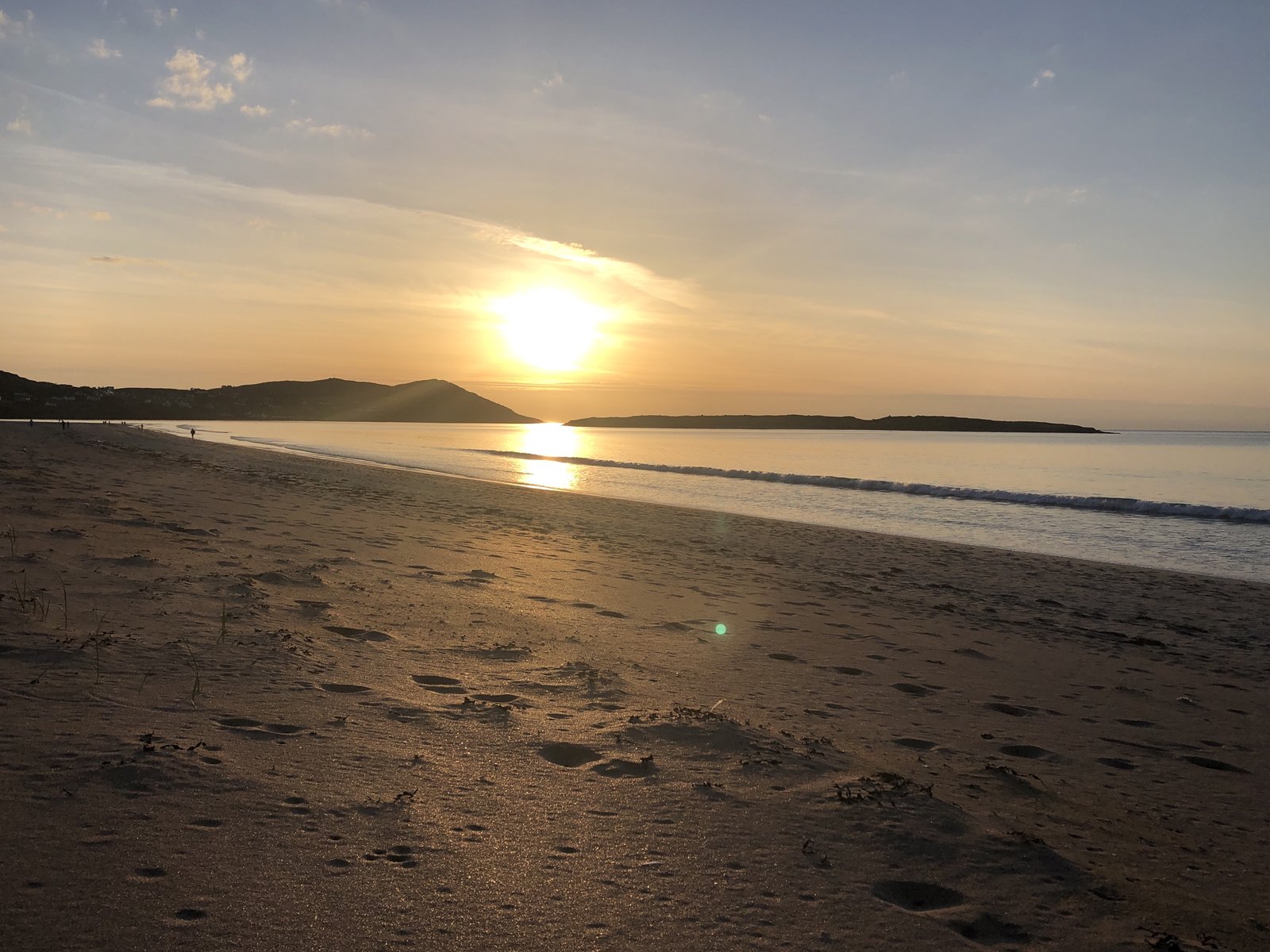
Narin, near Portnoo and Ardara, is a wide Blue Flag beach with a long arc of clean sand. The draw here is Inishkeel, a small tidal island with old church ruins that you can walk out to across the sand at low tide.
Check the tide times before you head over, because the crossing closes off as the water comes back in and you don’t want to be stuck out there.
Maghera Beach and Caves
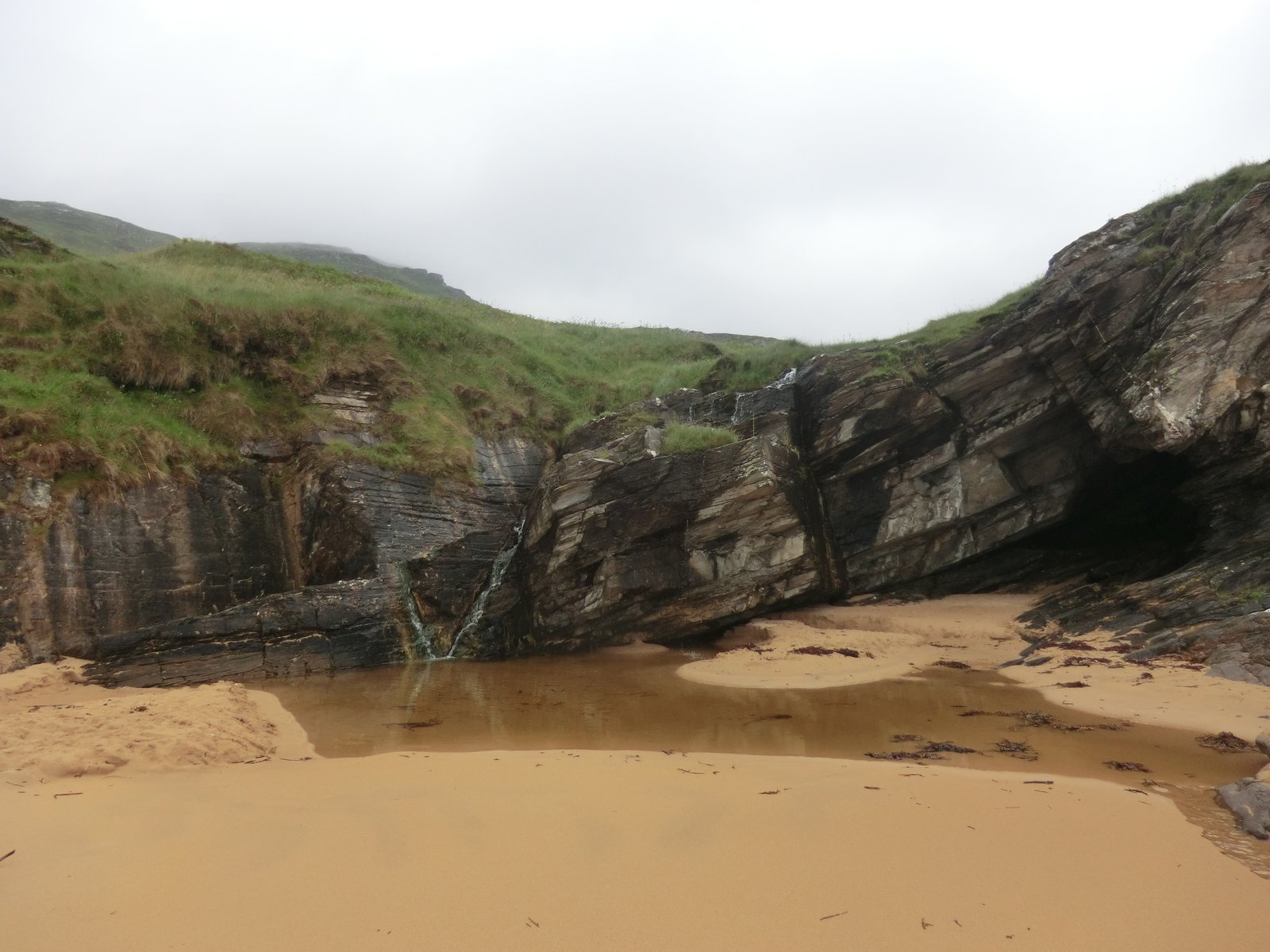
Maghera, below the Glengesh Pass near Ardara, is one of the more dramatic spots on this list. Big dunes back the beach, and at low tide you can explore a line of sea caves cut into the cliffs.
The caves are the whole reason to come, but they flood at high tide, so time your visit for the outgoing tide and don’t wander too far in. There’s a small parking fee at the lot by the trail.
Carrickfinn Beach
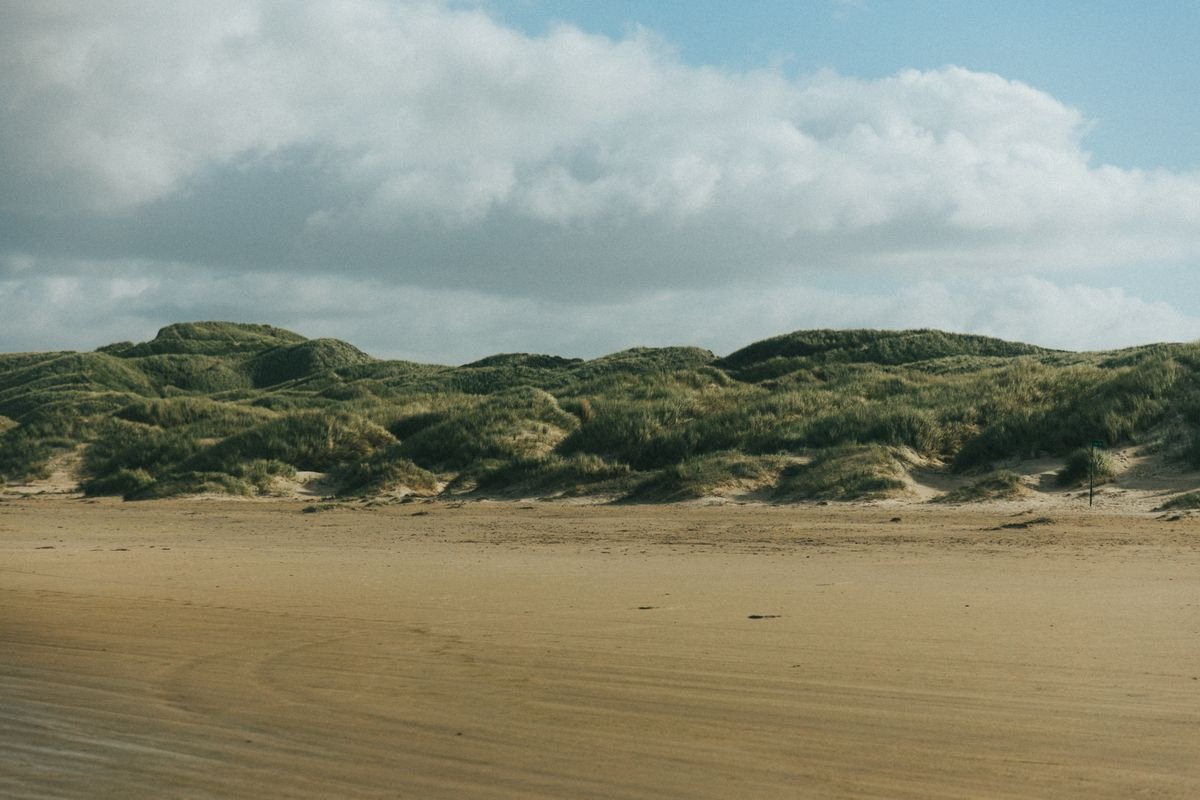
Carrickfinn is out in the Gaeltacht near Donegal Airport, and yes, the runway runs right alongside the dunes. Watching a small plane come in low over a white-sand beach is a properly odd sight.
It’s a Blue Flag beach with lifeguards in season, wide and clean, and it rarely feels crowded given how far northwest it is.
Tramore Beach (Dunfanaghy)
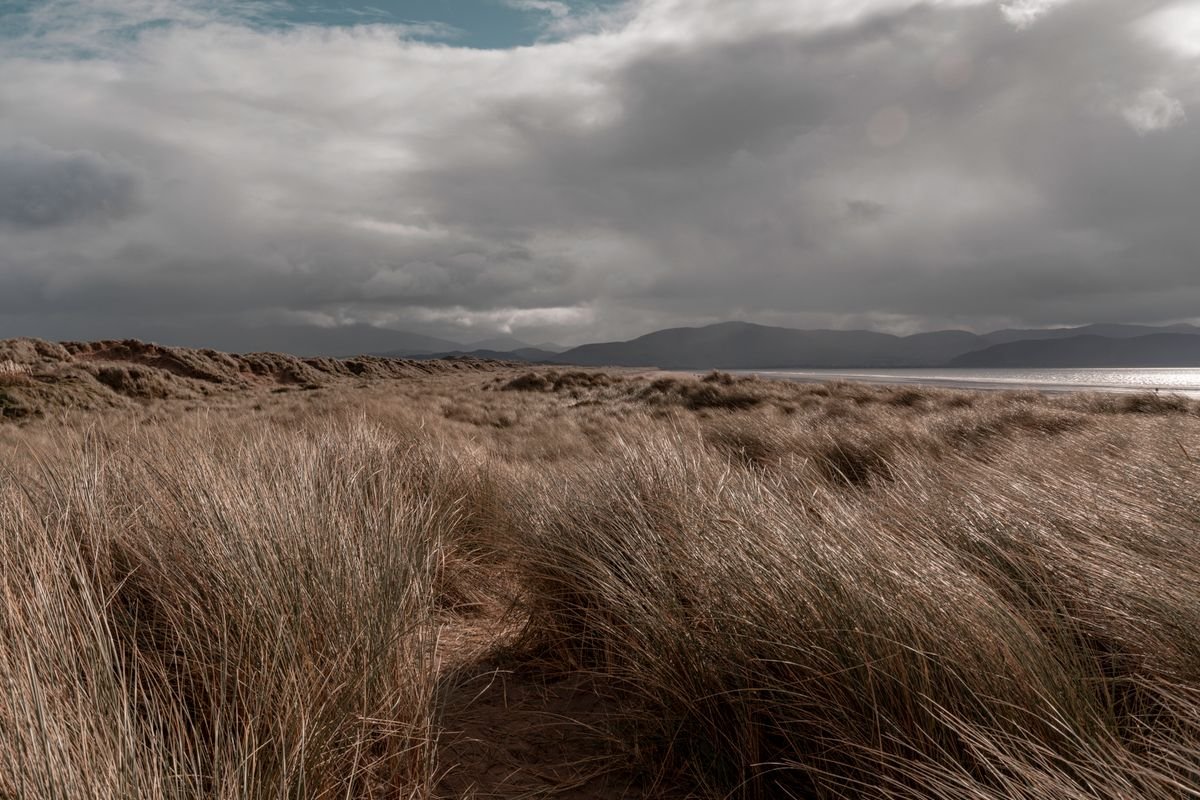
This is the less-visited one near Dunfanaghy, and not to be confused with the Tramore down in Waterford. There’s no direct road to it, so you park at Killahoey and walk in through the dunes, which is exactly why it’s usually empty.
It’s a long, open Atlantic strand with real surf and no lifeguard, so it’s better for a walk and photos than a swim unless you know what you’re doing.
Culdaff Beach
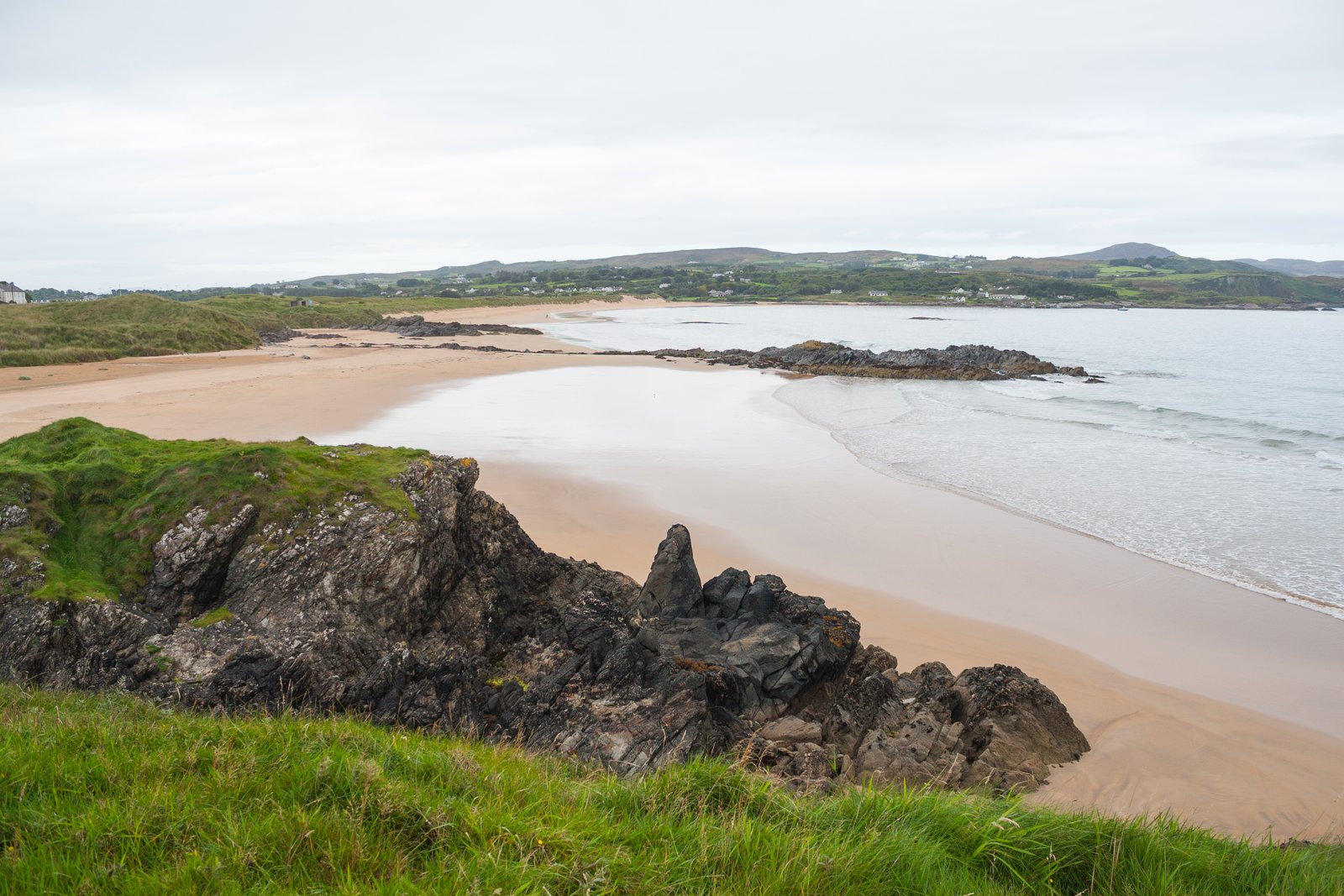
Over on the Inishowen peninsula in the northeast, Culdaff is a Blue Flag beach that’s sheltered enough for families but still gets enough swell for beginner surfers. The village of Culdaff sits right behind it and has a couple of good pubs for after.
It’s an easy one to combine with a run up to Malin Head, the most northerly point in Ireland, which is only a short drive away.
Rossnowlagh Beach
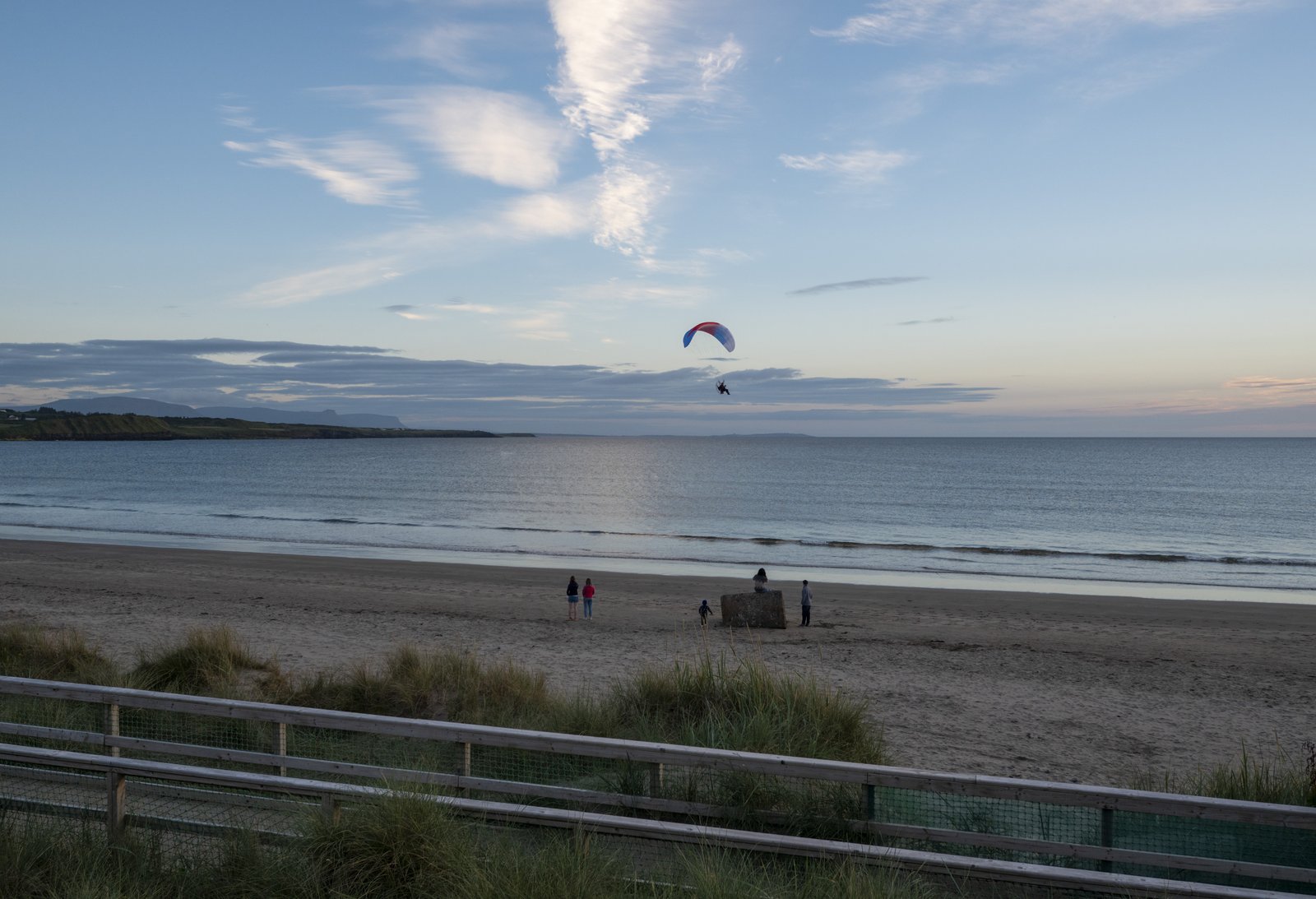
Rossnowlagh is the big, flat, easygoing beach in the south of the county near Ballyshannon and Donegal Town. It’s wide enough that you can drive your car right onto the sand, and it’s the main surf hub in this part of Ireland.
There are surf schools and board rentals on the beach, plus lifeguards in summer. If you want to try surfing for the first time in Donegal, this is where to do it.
Five Finger Strand
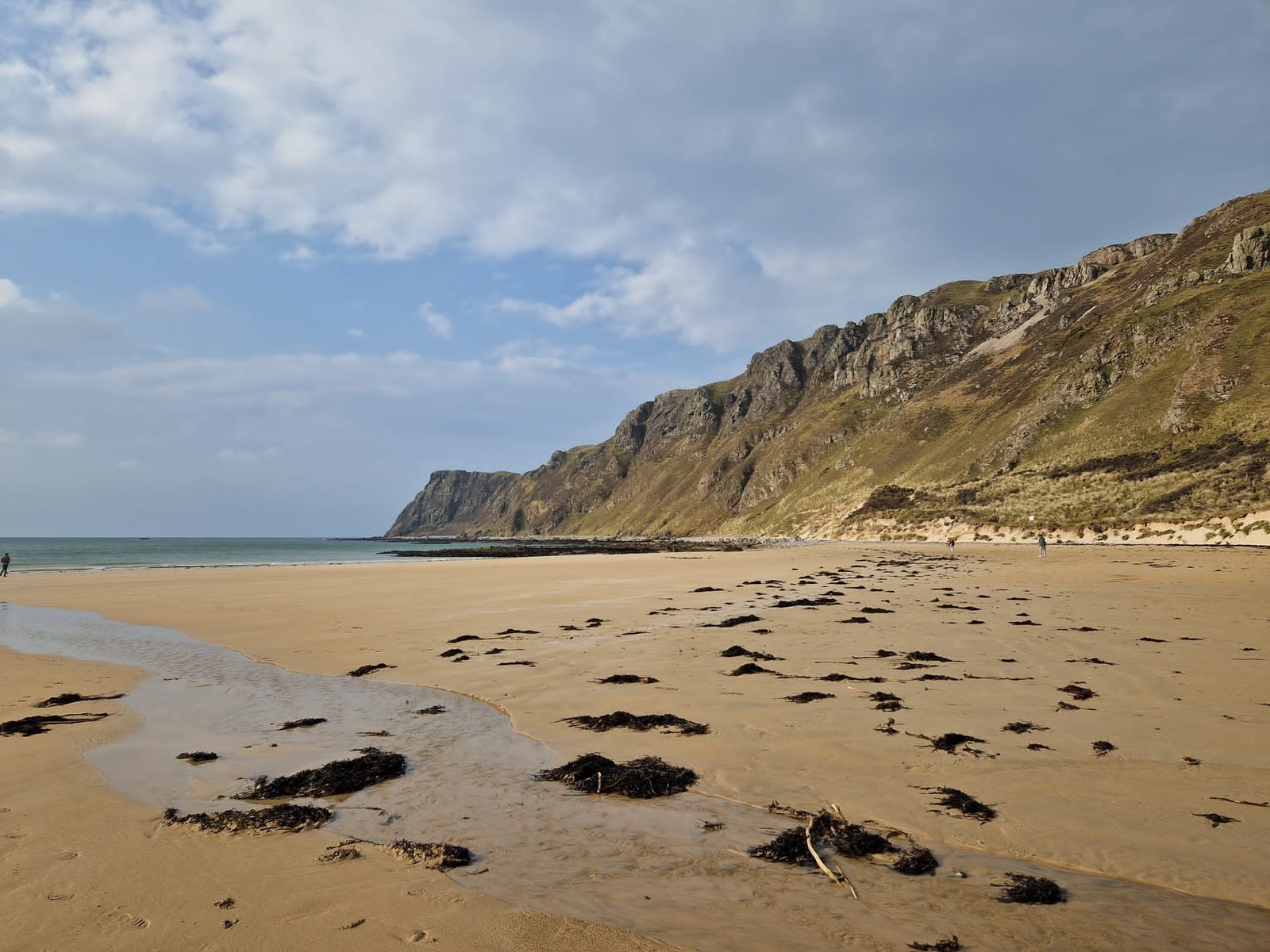
Five Finger Strand, near Malin Head on Inishowen, is backed by some of the tallest sand dunes in Ireland. It’s wild and open, and it’s one of the most impressive beaches in the county to just stand and look at.
Read this one carefully though: the currents here are strong and there’s no lifeguard, so this is a beach for walking, not swimming. Come for the dunes and the views and keep the swim for one of the patrolled beaches above.
Best Time to Visit Donegal’s Beaches
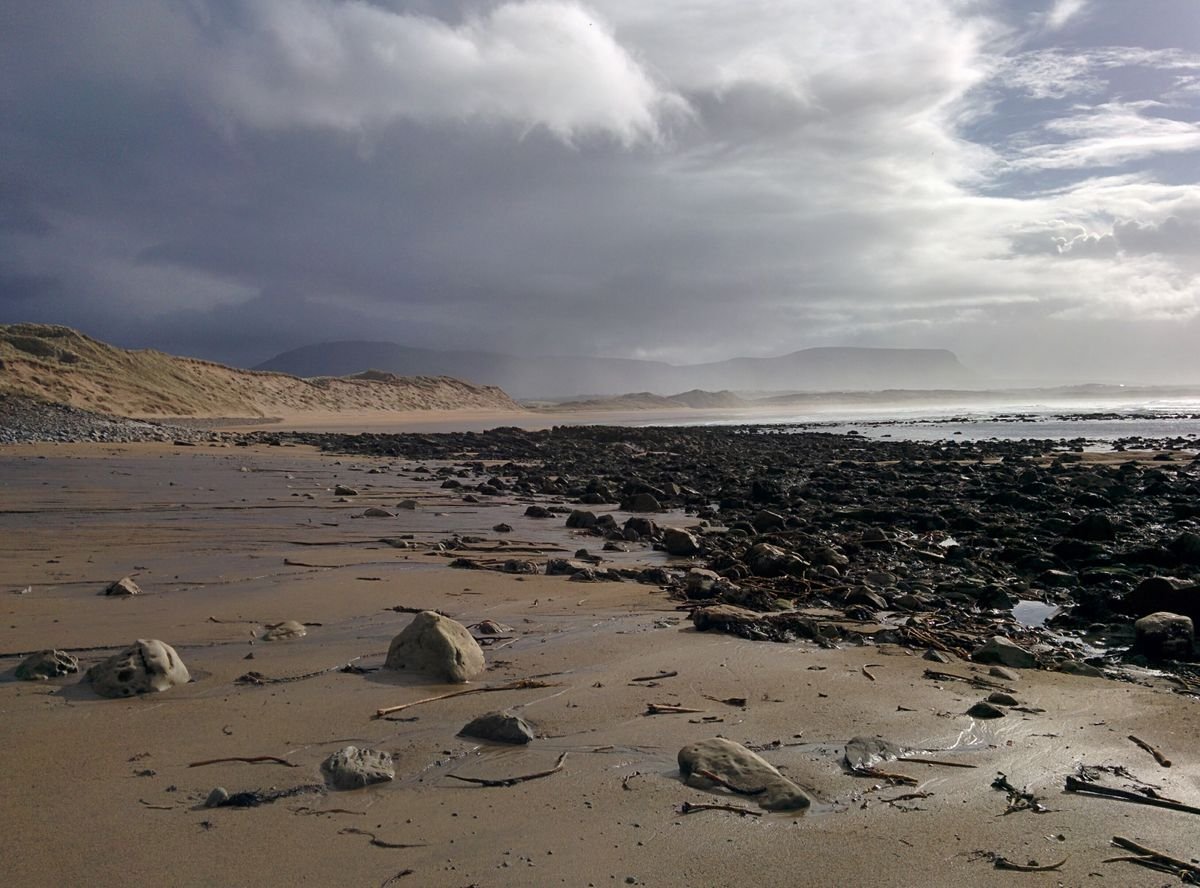
The honest answer is summer, roughly June through August. That’s when the lifeguards are on, the water is at its warmest (relatively speaking), and you actually get long, bright evenings up in the far north.
July and August are the warmest and driest, with air temperatures usually in the high teens to low 20s Celsius. It’s still Ireland, so pack a rain jacket regardless, but this is your best shot at a run of dry beach days.
Even in peak summer these beaches don’t feel packed. Donegal is far enough off the main tourist trail that the strands stay quiet, so you’re not fighting for space the way you would down in Kerry or the Ring of Kerry towns.

May, June, and September are the sweet spot if you’d rather skip the school-holiday weeks. You still get decent weather and the odd warm day, and the coast is even emptier. The water is coldest in spring and slowest to warm up, so bring a wetsuit if you plan to swim.
Here’s a useful quirk: the sea is actually at its warmest in late summer and early autumn, not midsummer. It takes months to heat up, so September water is warmer than June water, even if the air feels cooler.
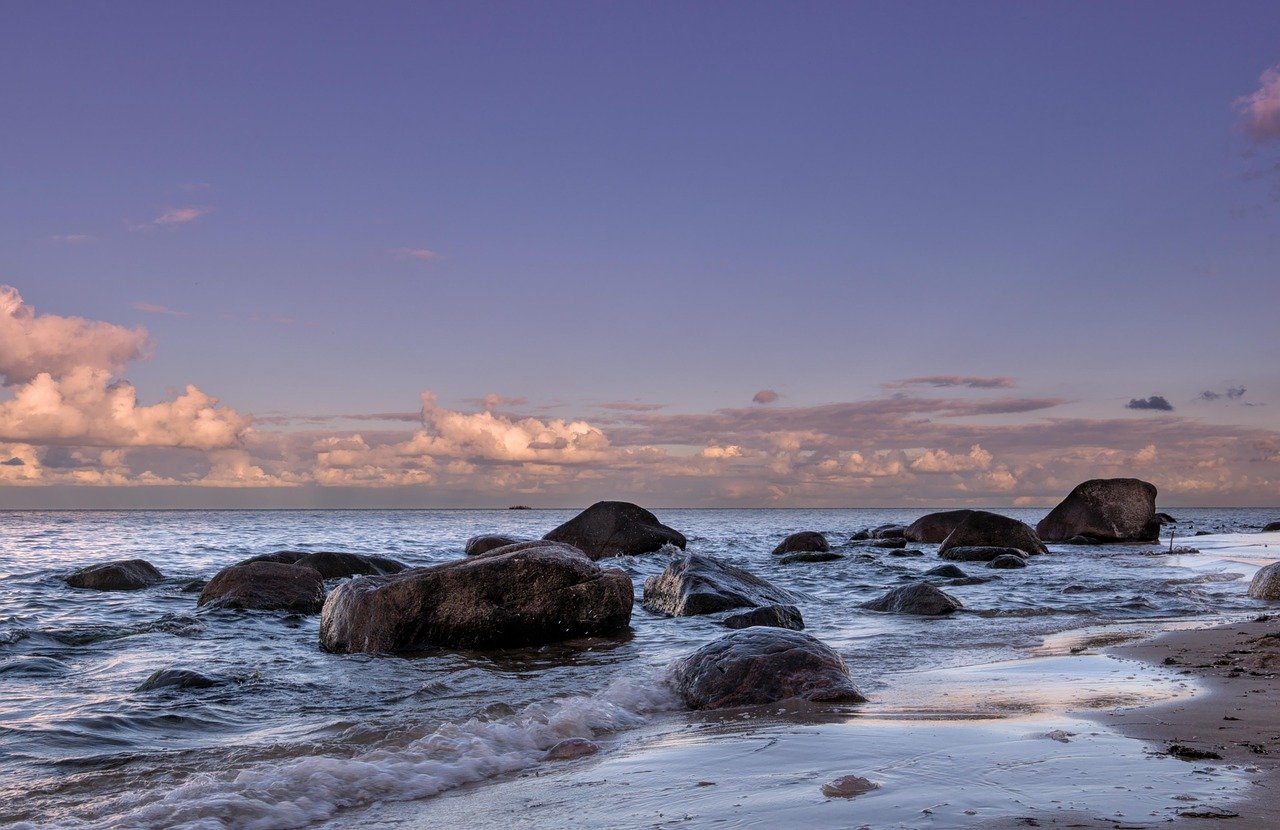
Off-season, from October to April, is for walkers and photographers, not swimmers. The lifeguards are gone, the surf is bigger, and the wind off the Atlantic is serious. Wrap up, walk the sand, and leave the swimming for one of the patrolled beaches in summer.
If surfing is the goal, autumn and winter bring the biggest, cleanest swells, which is why the surf crowd at Rossnowlagh runs year-round in wetsuits. For a normal beach day, aim for that late-June-to-September window and you’ll get the best of it.
Explore More of the Wild Atlantic Way
- 9 Best Places On The Wild Atlantic Way Route
- Wild Atlantic Way Itinerary – Ireland’s Most Epic Road Trip
- Wild Atlantic Way 5 Day Itinerary: Kinsale to Doolin
How to Get to Donegal
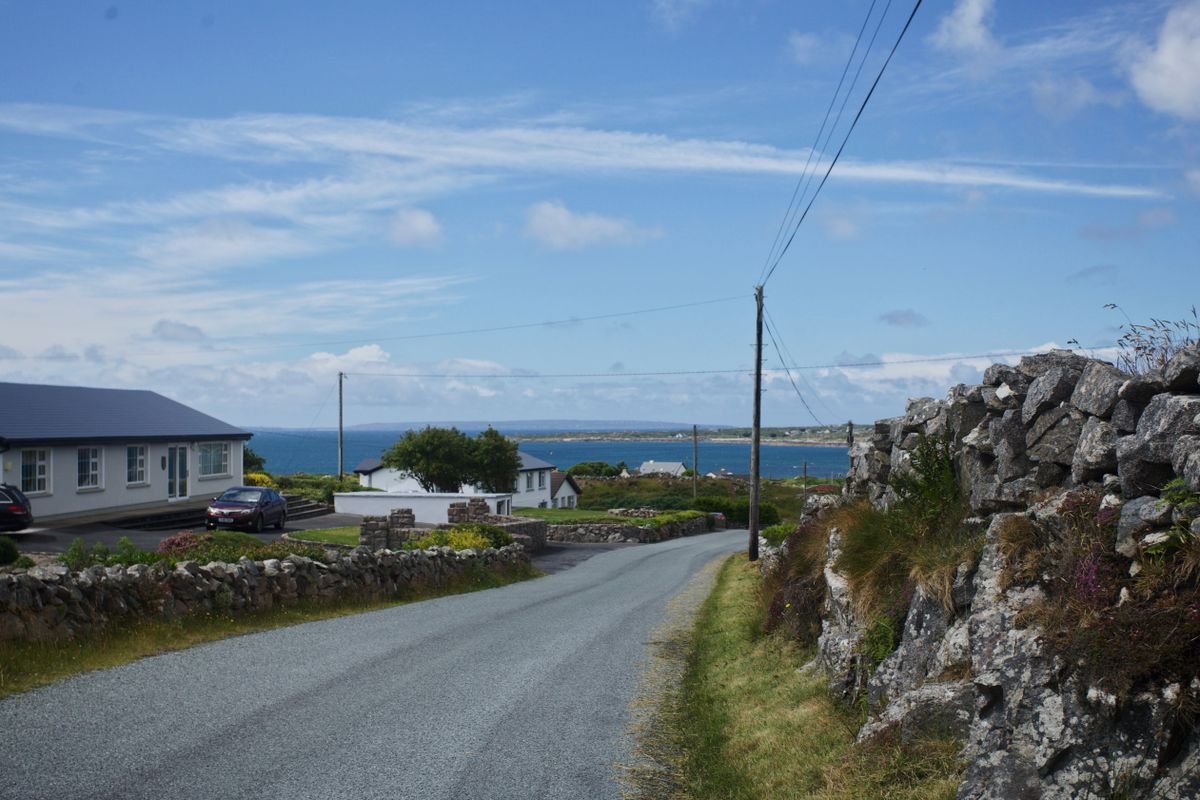
Donegal is the one that takes a bit of effort, and that’s the whole point. It sits in the far northwest, up past Northern Ireland, so there’s no quick way in from the main tourist route. A car is the way to do it, and that’s what I’d tell a first-timer.
From Dublin it’s about 3.5 to 4 hours by car to Donegal Town, mostly on the N3 and then the N15. From Galway it’s a similar run up the coast. Pick up a rental at the airport and drive straight up, because once you’re in the county you’ll want a car anyway to reach these beaches. It’s worth booking ahead in summer, so compare car hire deals on Discover Cars before you go.
One thing that catches people out: Donegal has no train station. There’s no rail line into the county at all, so the train isn’t an option no matter where you’re coming from.
Flying In

The closest airports are City of Derry, just over the border in Northern Ireland, and Donegal Airport at Carrickfinn, which is the little runway right beside the beach mentioned above. Both are handy if you can get a connection, but the routes are limited.
Otherwise it’s easier to fly into Dublin, Belfast, or Knock (Ireland West), grab a rental car, and drive the rest. Belfast and Knock are both closer to Donegal than Dublin is, so they’re worth checking if the flights line up.
By Bus
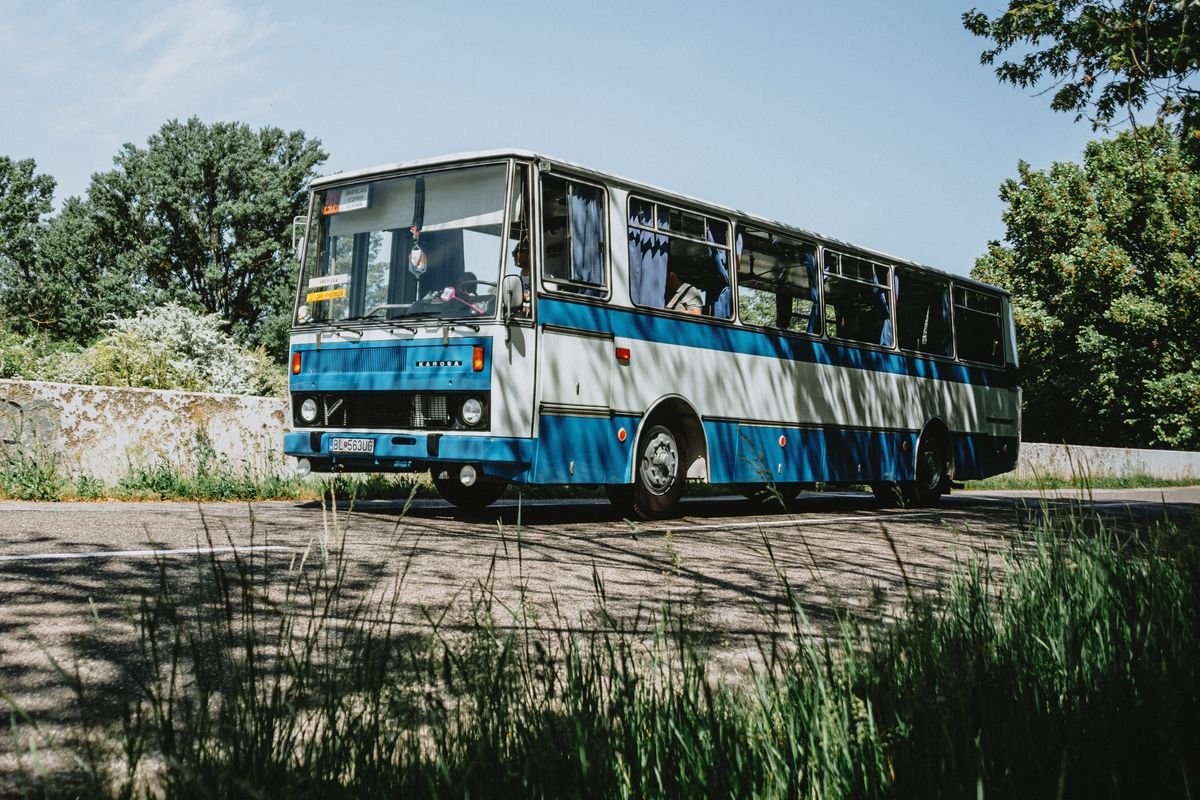
If you’re not driving, buses do run up to Donegal. Bus Éireann connects Dublin and Galway to Donegal Town and Letterkenny, and private operators like John McGinley run direct coaches from Dublin and Dublin Airport into the county.
The catch is that buses get you to the towns, not to the beaches. These strands are down boreens with no public transport, so without a car you’ll be stuck near the bigger centers. For a proper beach trip up here, a car is close to essential.
Where to Stay Near the Beaches
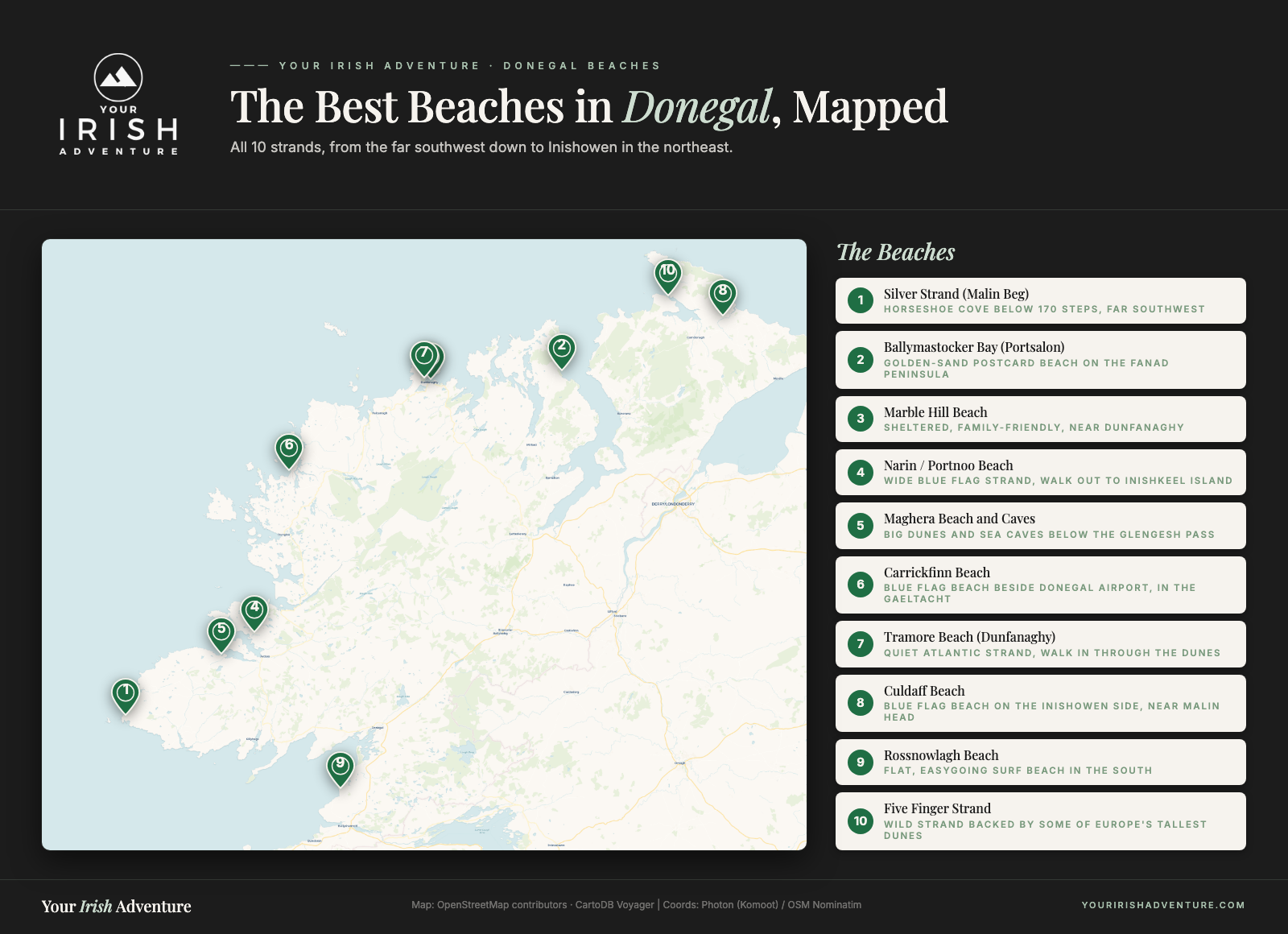
Donegal is a big county, and the beaches are spread right across it, so there’s no single town that puts you near all of them. Pick a base by which stretch of coast you’re aiming for, then do day trips out from there.
Dunfanaghy is the one I’d point most first-timers to. It’s a small town on the north coast with a good line-up of pubs, cafes, and places to stay like The Mill, and it puts you within a short drive of Marble Hill and Tramore. It also makes a good jumping-off point for the wider northwest coast.
Where to Stay in Dunfanaghy
For the southwest beaches, base yourself around Ardara or Glencolmcille. That’s your closest run to Silver Strand at Malin Beg and the caves at Maghera, and Ardara is a proper little town with pubs and shops rather than just a scattering of houses.
Where to Stay in Ardara and Glencolmcille
Down south, Donegal Town and Rossnowlagh are the easy option, especially if you’re coming up from Dublin or Galway and want to break the drive. Rossnowlagh has hotels right by the surf beach, and Donegal Town has the widest choice of places to stay in the county.
Where to Stay in Rossnowlagh and Donegal Town
If you’re heading up to Inishowen for Culdaff, Five Finger Strand, and Malin Head, Letterkenny is the biggest town and a handy hub, though it’s inland. For a spot right on the coast, look around Carndonagh or the villages closer to the beaches themselves.
One practical note: places in the smaller coastal villages book up fast in July and August, and there aren’t many of them to start with. If you’re coming in peak summer, lock in your accommodation well ahead, because turning up and hoping is how you end up staying an hour inland.
More Ireland Itineraries & Road Trips
- A Photographer’s Definitive Ireland Road Trip
- Northern Ireland: A 3-Day Itinerary
- A 7-Day Ireland Itinerary With Kids
In short
- Silver Strand at Malin Beg and Ballymastocker Bay are the two best for looks.
- Narin/Portnoo, Carrickfinn, Culdaff, Marble Hill and Rossnowlagh carry Blue Flag status.
- Water stays cold all year, peaking near 15 or 16 Celsius in late summer.
- Rossnowlagh is Donegal’s main surf hub, with schools and board rentals on the sand.
- A car is close to essential, as the strands sit down country roads with no buses.
Frequently Asked Questions
These are the questions people ask most before a Donegal beach trip, from which strand to pick to whether the water is swimmable and if you really need a car.
What is the best beach in Donegal?
It depends on what you want. For sheer looks, Silver Strand at Malin Beg and Ballymastocker Bay at Portsalon are the two that win most votes. For a safe family swim, go for Marble Hill or Portsalon, both of which have summer lifeguards.
Is the water warm enough to swim in Donegal?
No, not by any normal standard. This is the North Atlantic and it’s cold all year, peaking at maybe 15 or 16 Celsius in late summer. People swim it happily in summer, but a wetsuit makes a big difference if you want to stay in for more than a quick dip.
Does Donegal have Blue Flag beaches?
Yes, plenty. Narin/Portnoo, Carrickfinn, Culdaff, Marble Hill, and Rossnowlagh all carry Blue Flag status, which means clean water, good facilities, and lifeguard cover in season. If you want the reassurance of a patrolled, well-run beach, start with those.
Is Donegal good for surfing?
It’s one of the best surf spots in Ireland. Rossnowlagh in the south is the main hub, with surf schools and board rentals right on the sand, and it’s a good place to learn. The bigger, cleaner swells roll in through autumn and winter, so the serious crowd surfs year-round in wetsuits.
Do you need a car to visit Donegal’s beaches?
Pretty much, yes. Buses will get you to towns like Donegal Town and Letterkenny, but the strands themselves are down country roads with no public transport. To actually reach these beaches and move between them, a car is close to essential.
Final Thoughts on Donegal’s Beaches
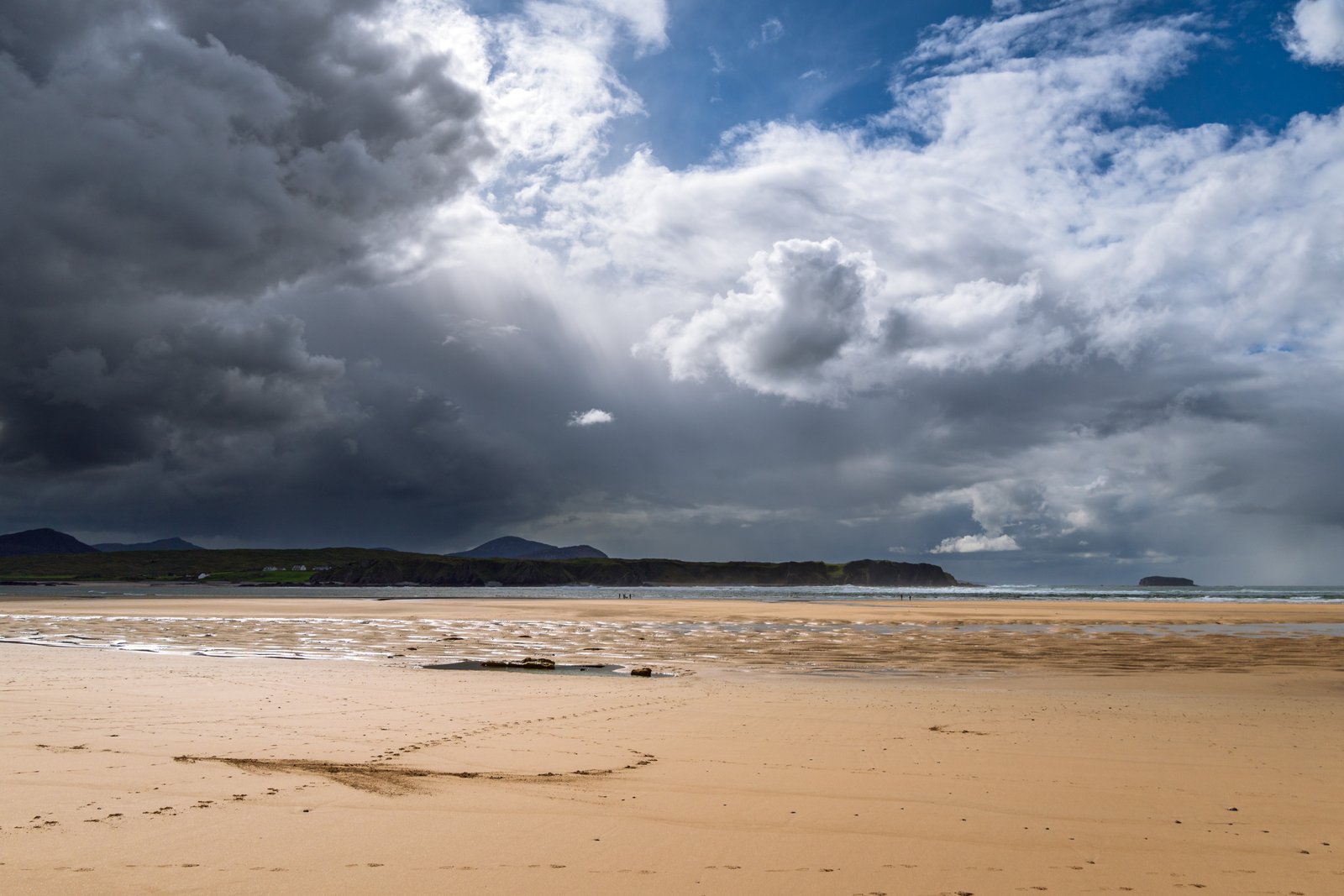
Donegal has the best beaches in Ireland, and the reason they’ve stayed that way is the long drive into the far northwest. That distance keeps the crowds off the sand.
If you just want one, go for Silver Strand at Malin Beg or Ballymastocker Bay at Portsalon for the looks, and Marble Hill or Portsalon for a safe family swim with lifeguards on. That covers what you’re likely coming for.
Just go in knowing what this coast is. The water is cold, the currents are real on the open strands, and a car is close to essential to reach any of it. Swim the patrolled beaches, watch the flags, and save the wild ones like Five Finger Strand and Tramore for a walk.
Do that and you get miles of empty Atlantic sand. It’s worth the drive, and once you’re up here you’ll wonder why the rest of the country’s beaches get all the attention.
Like it? Pin it!
Save this guide for later