
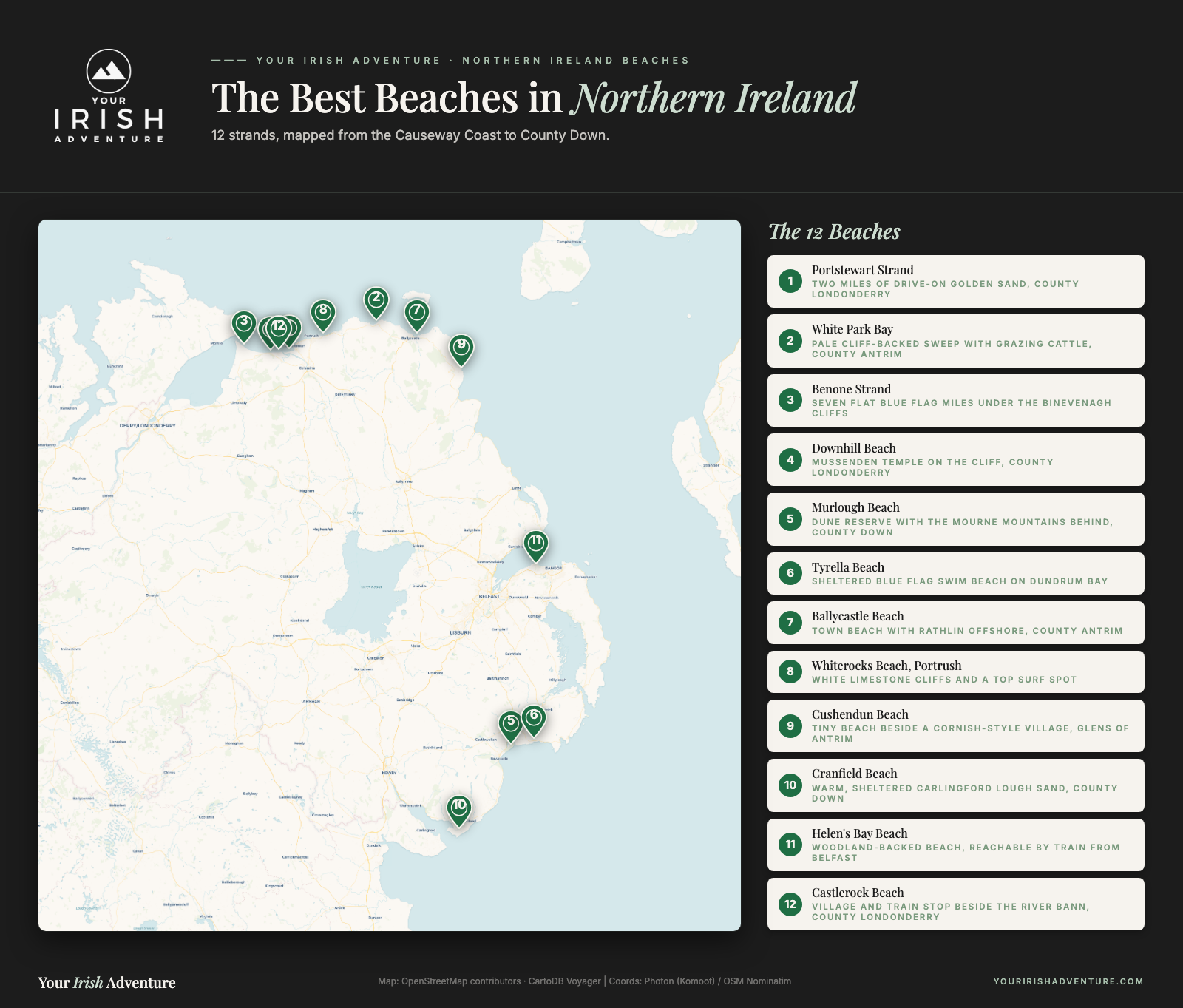
Some of the best beaches in Northern Ireland are wide, sandy, and backed by big cliffs. A couple of them beat the famous southern names outright.
We covered most of this coast on our last trip, about two weeks driving Ireland in shoulder season. We travelled by campervan, but a rental car works exactly the same on this route and is the easier choice if it’s your first time over.
These aren’t packed, sunbed-and-cocktail beaches. Half of them you’ll have mostly to yourself even in autumn, and the water is cold enough that a swim is a quick in-and-out. What you get instead is miles of open sand, big cliffs, and a couple of beaches you’ll recognize from Game of Thrones.
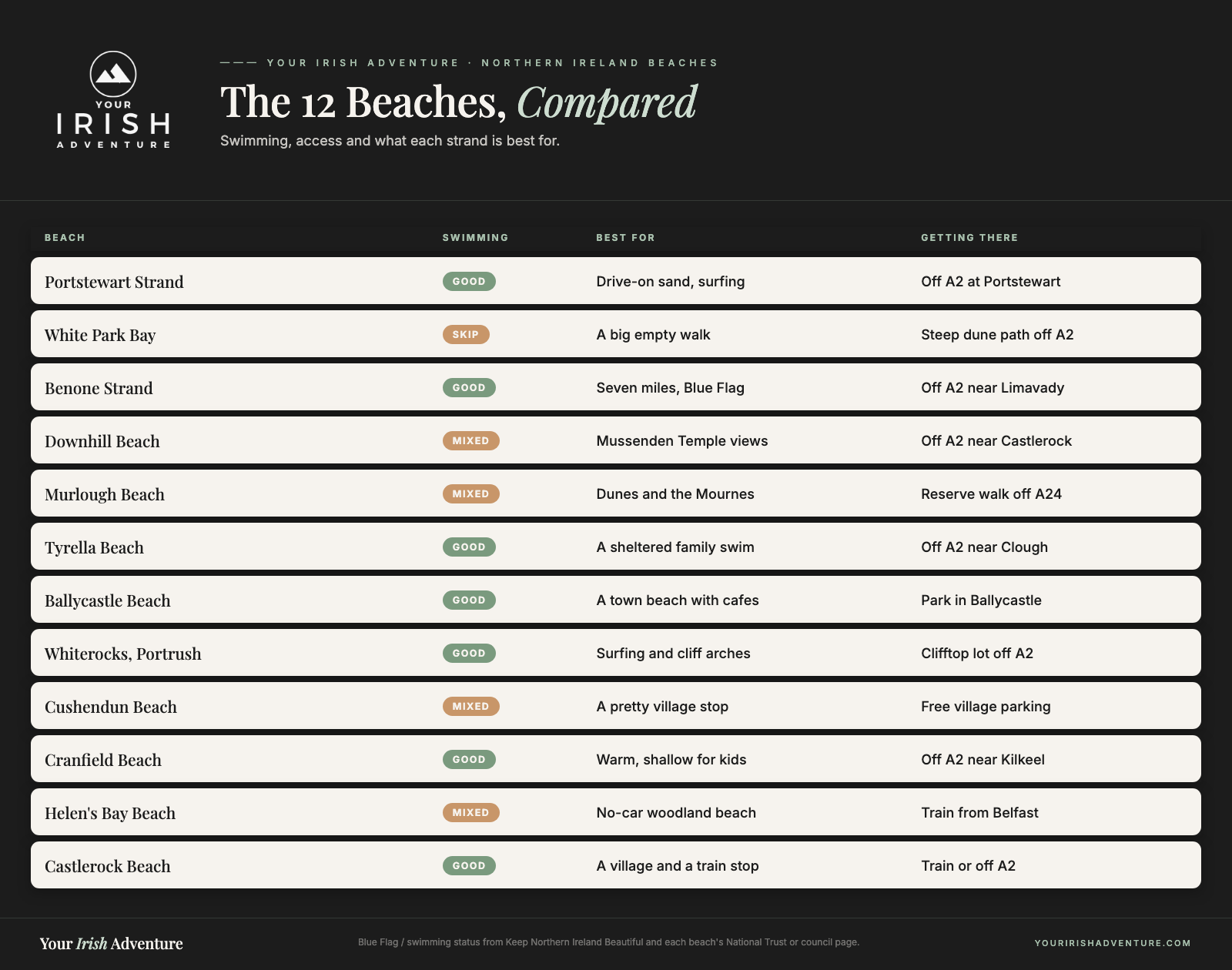
Here’s the full list, from the famous names like White Park Bay and Downhill down to the less-visited strands we’d actually point you to instead, plus the best time to go, how to reach them, and where to stay nearby.
Quick Answer:
The best beaches in Northern Ireland run along two coasts. Up north on the Causeway Coast you get White Park Bay, Benone, and Downhill, where three stretches doubled as Game of Thrones sets. Down in County Down sit Murlough and Tyrella under the Mournes. Most stay uncrowded even in autumn, and the water is cold year-round.
More Northern Ireland Coast Guides
- The Most Beautiful Seaside Towns in Northern Ireland
- Lakes in Northern Ireland You NEED to Visit
- Giant’s Causeway From Belfast: All Day Trip Options
- All You Need To Know About Mountain Biking In Northern Ireland
Portstewart Strand
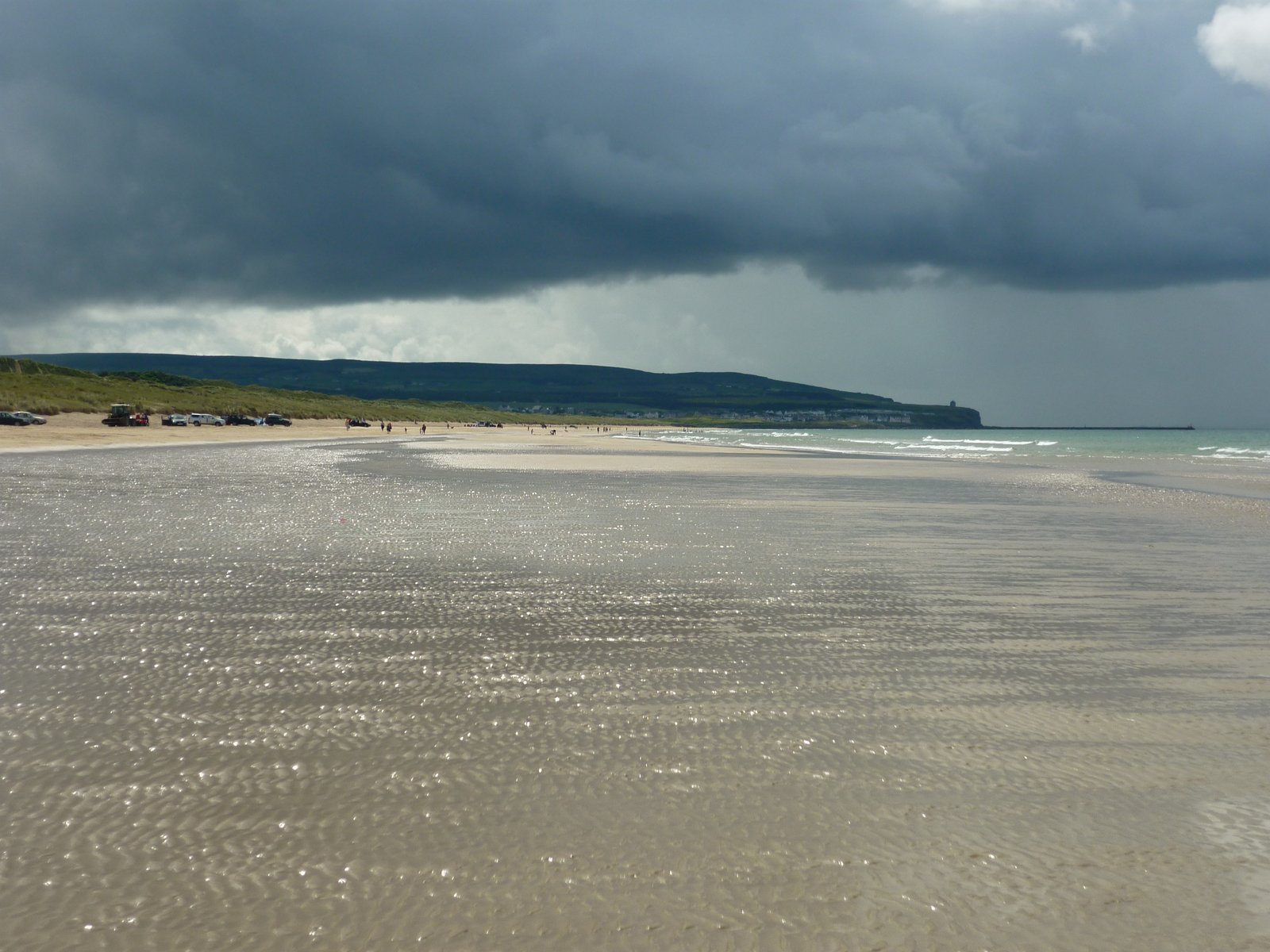
Portstewart Strand is the beach you picture first when someone says Northern Ireland, and it earns the spot. It’s two miles of firm golden sand running from the edge of Portstewart town toward the mouth of the River Bann in County Londonderry, with a long wall of dunes behind it.
The National Trust runs it, and it’s one of the few beaches in Northern Ireland you can still drive onto and park right on the sand. That sounds like it should wreck the place, but the strand is wide enough that it never feels packed, even on a warm weekend when half of Portrush comes over the hill for the day.
The dunes behind the sand are a nature reserve, so there’s a proper walk here on top of the beach itself. It’s a Blue Flag beach, the surf school runs lessons right through summer, and Game of Thrones fans will clock it as the road into Dorne. If you only have time for one beach on this coast, make it this one.
White Park Bay
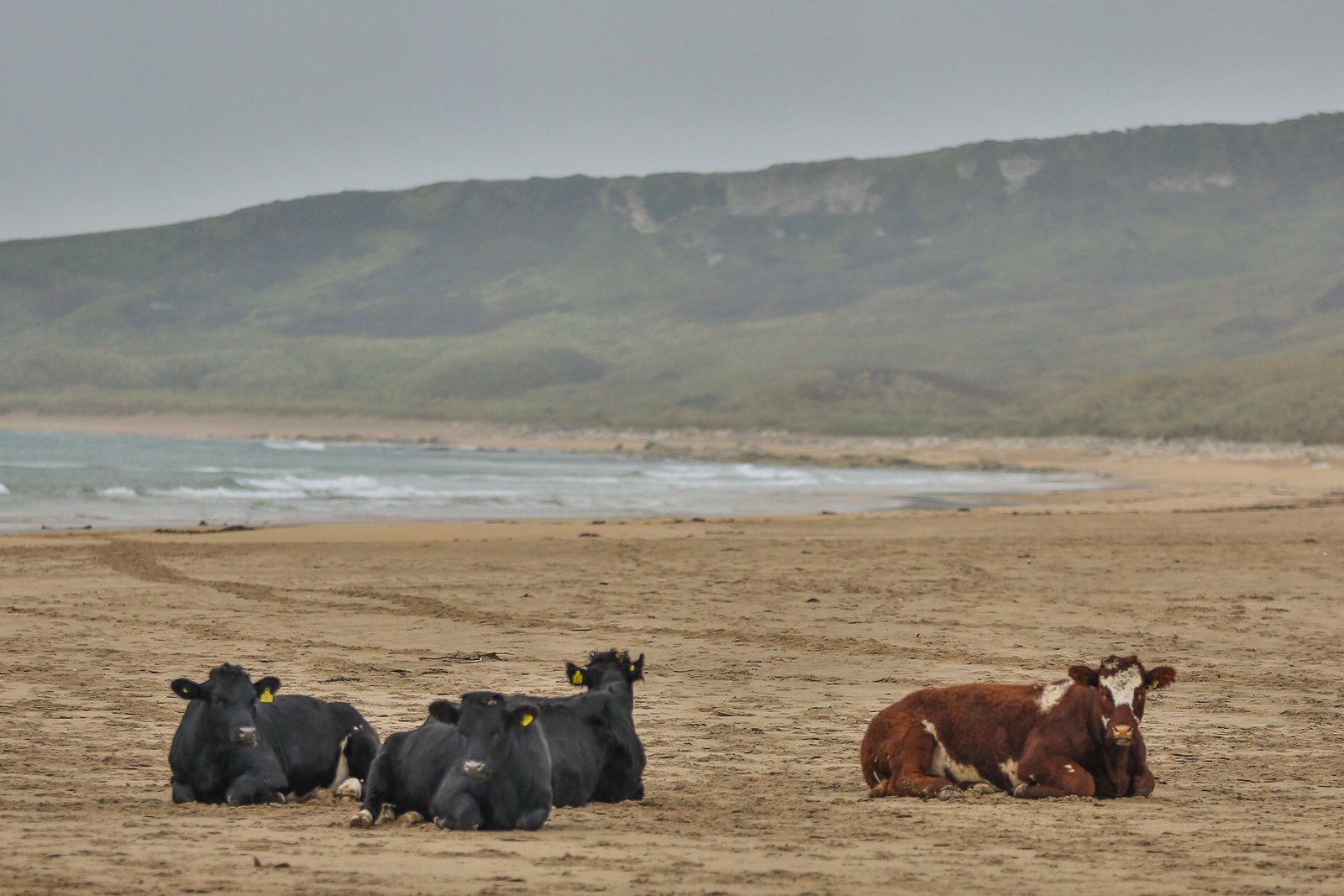
White Park Bay is the beach you picture when you think of the Causeway Coast. It’s a three-mile sweep of pale sand curving between two headlands in County Antrim, backed by grass dunes and a wall of cliffs.
The National Trust owns it, and it never gets built up or crowded the way a beach this size would anywhere else. Even in summer you’ll usually see more cattle on the sand than people. They graze the dunes and wander down to the beach, which is not something you expect on a coast this pretty.
One honest warning: don’t swim here. The currents are strong and the bay has a real rip, so this is a beach for walking, not a quick dip.
Getting there takes a bit of effort, and that’s part of why it stays empty. You park in the National Trust lot off the A2 near Ballintoy, then walk down a steep path through the dunes to reach the sand.
While you’re here, Ballintoy Harbour is five minutes down the road and doubled as the Iron Islands in Game of Thrones. Pair the two and you’ve got an easy half-day on this stretch of coast.
Benone Strand
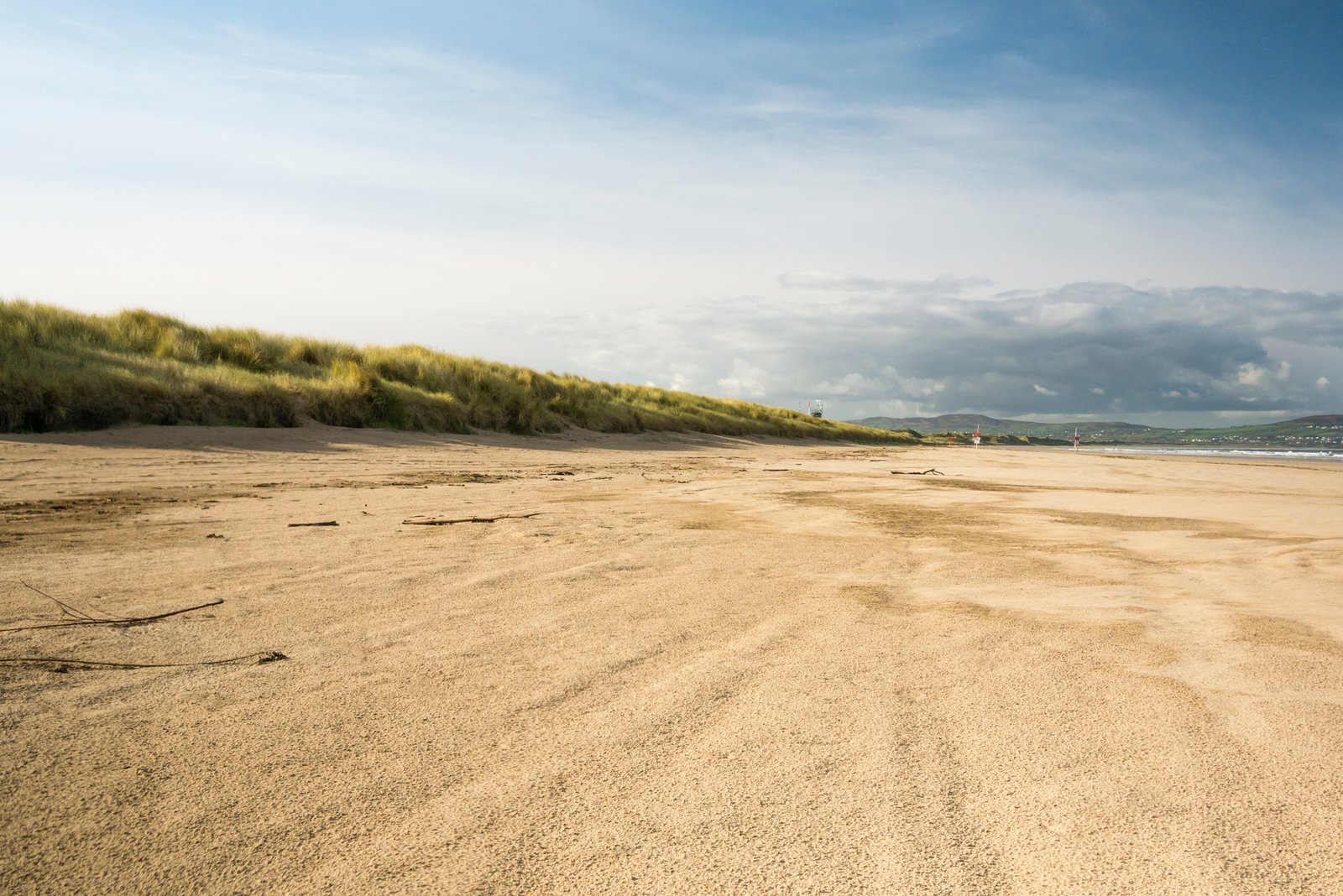
Benone Strand is the biggest beach on this list. Seven miles of flat golden sand running along the County Londonderry coast, with the Binevenagh cliffs rising behind it and the hills of Donegal across the water.
It’s a Blue Flag beach, which here means clean water, lifeguards in season, and safer swimming than most of the wilder strands further along the Causeway Coast. If you actually want to get in the water, this is one of the better spots to do it.
The sand is firm enough that you can drive your car right onto the beach and park on it, which sounds strange until you see everyone doing it. There’s a fee to drive on in season, so check the current pricing before you go.
Because it’s so wide and long, it never feels busy even when the parking lot is full. Kids build sandcastles, beginners have a go at surfing and kitesurfing, and there’s room for all of it without anyone tripping over each other.
Getting here is easy. It’s signposted off the A2 near Limavady, about an hour and a half west of the main Causeway sights, and Downhill Beach with Mussenden Temple is a ten-minute drive along the same coast if you want to make a day of it.
Downhill Beach
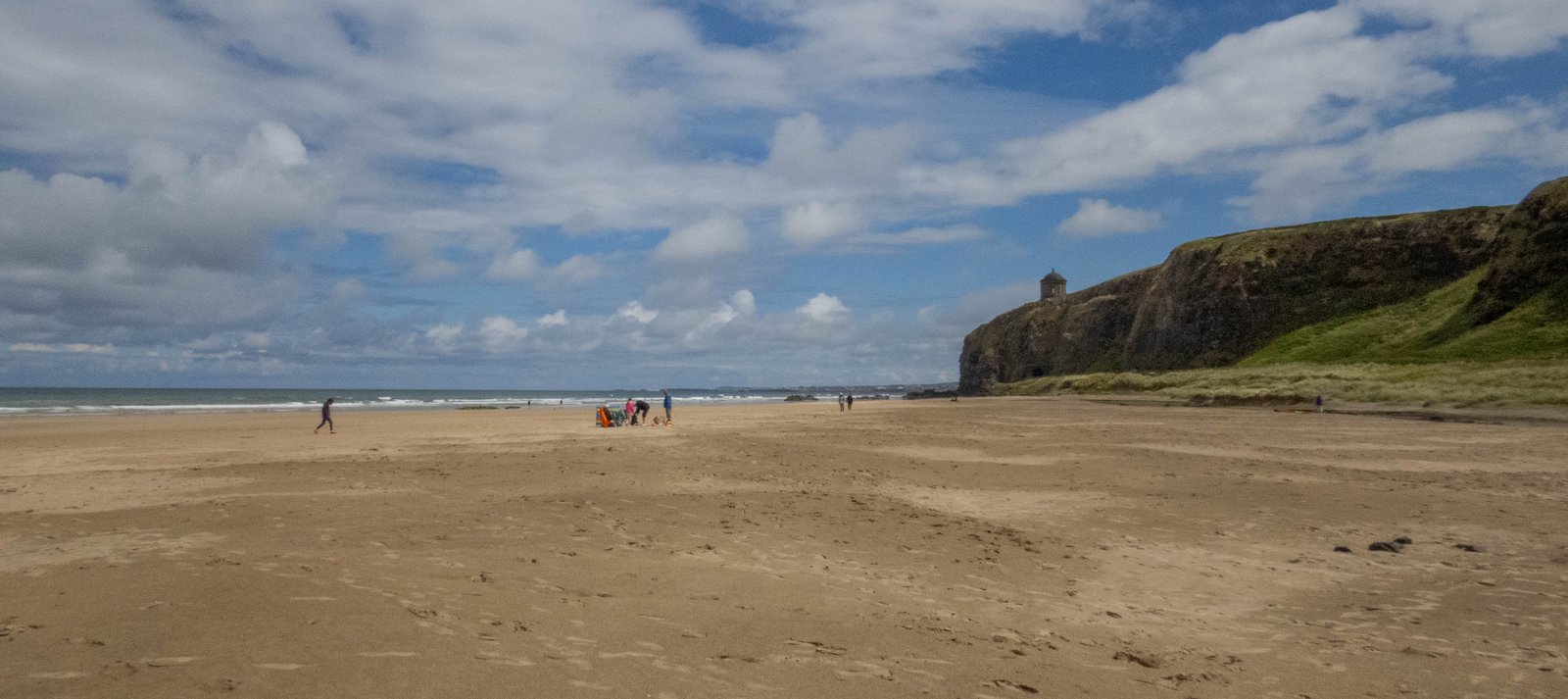
Downhill Beach is the one with the little temple perched on the cliff above it. That’s Mussenden Temple, a round stone building sitting right on the edge of a headland in County Londonderry, and it’s the whole reason to stop here.
The beach itself is a long stretch of flat sand running below the cliffs, with a waterfall spilling down the rock at one end. It’s wilder and less manicured than Benone next door, and the temple looking down over all of it is an odd sight.
Game of Thrones fans will recognize this one too. The beach stood in for Dragonstone, the scene where Melisandre burns the statues of the old gods, so it’s a second stop on this coast if you’re ticking off filming locations.
You can walk straight onto the sand from the parking area off the A2 near Castlerock, and the beach is open to cars in the right conditions. To reach the temple you park up at the National Trust site and walk in through the Downhill Demesne grounds along the cliff top.
The temple grounds have an entry fee if you want to go in, so check the current National Trust pricing, though the beach below is free and the view up at the temple is the best part anyway.
Murlough Beach
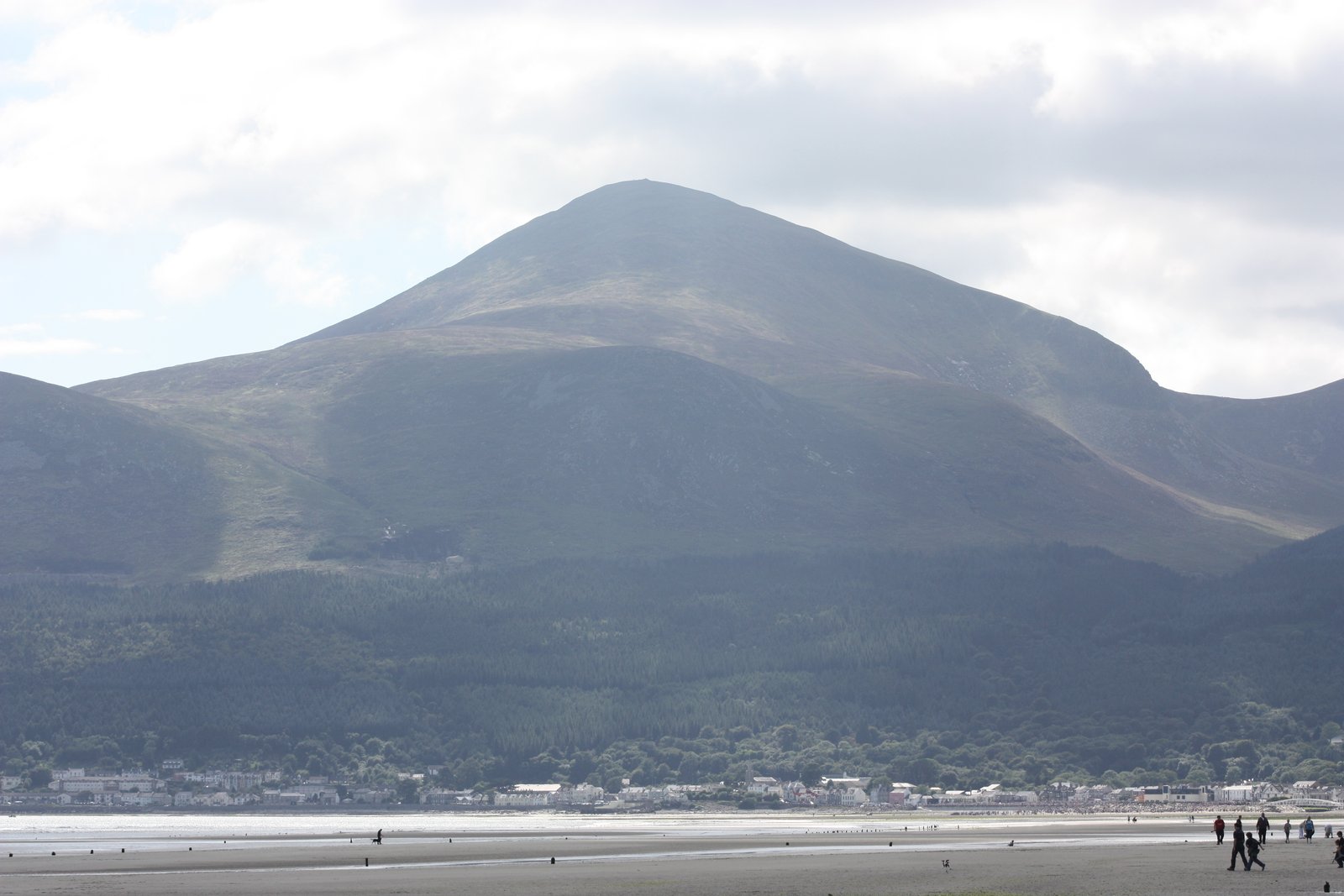
Murlough Beach is the odd one out on this list. It’s nowhere near the Causeway Coast, sitting down on the County Down side near Newcastle, and it’s worth the drive across for one reason: the Mourne Mountains rise straight up behind it.
That’s the whole picture here. A wide sandy beach in front of you, and Slieve Donard, the highest peak in Northern Ireland, looming over the far end. Not many beaches give you a mountain range for a backdrop.
To get to the sand you walk through Murlough itself, a 6,000-year-old dune system that’s run as a nature reserve by the National Trust. Boardwalk paths cut through the marram grass and heather, so you’re not slogging across loose sand the whole way.
It’s an easy, flat walk and a good one for spotting wildlife. Seals turn up in the water off the beach, and the dunes are full of birds and butterflies in the warmer months.
One thing to sort before you go: the main National Trust parking lot off the A24 near Dundrum charges in season, so check the current pricing. From the lot it’s a ten-minute walk through the reserve to reach the water.
Pair it with a walk in the Mournes and you’ve got a full day on this side of the country, well away from the Game of Thrones crowds up north.
Tyrella Beach
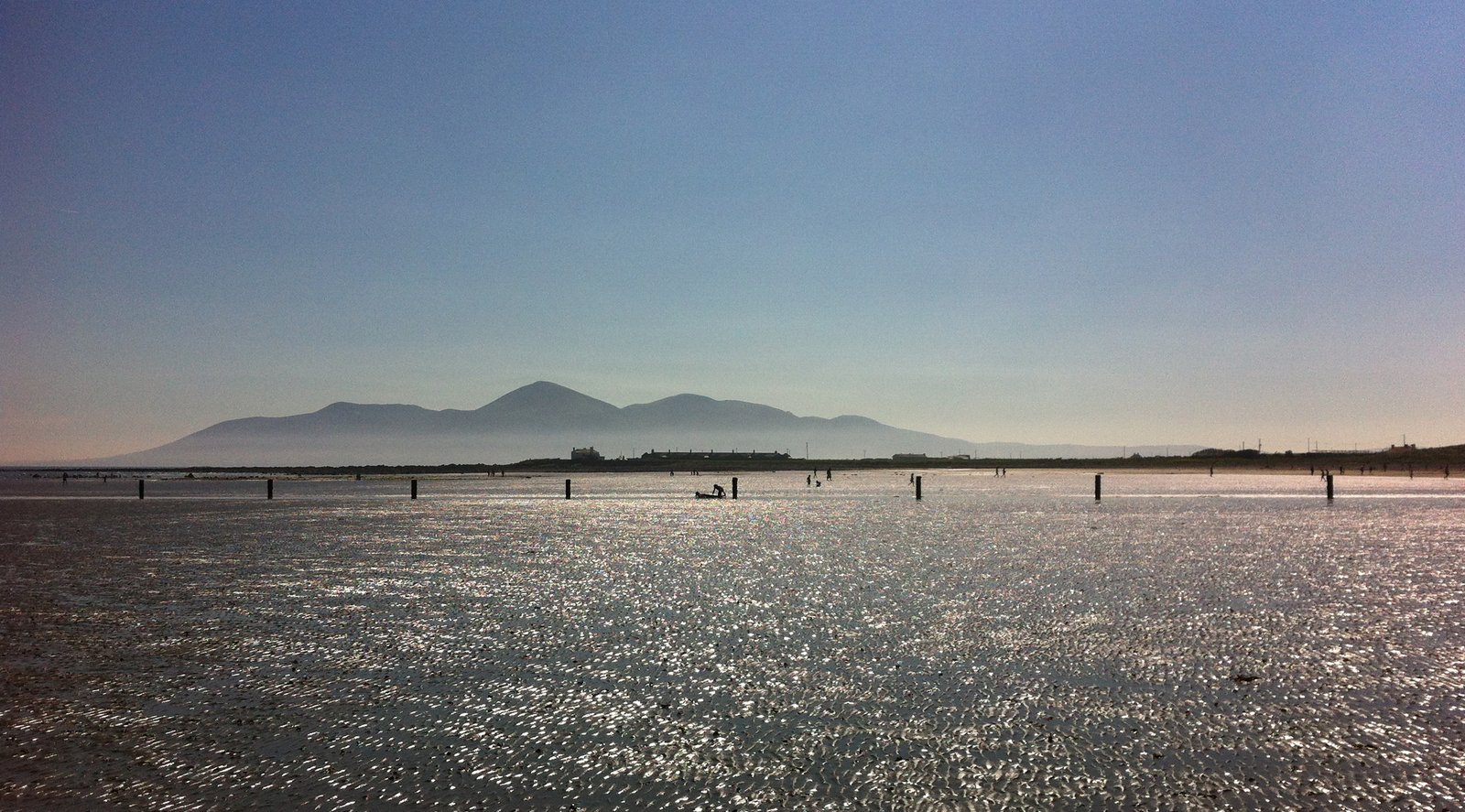
Tyrella is the swimming beach on this list. It sits on the County Down coast just around Dundrum Bay from Murlough, and where Murlough is all dunes and nature reserve, Tyrella is the flat, easy, get-in-the-water option.
It’s a Blue Flag beach with lifeguards in season, and the bay shelters it enough that the water is calmer than the open Atlantic strands up on the Causeway Coast. If you’ve got kids or you actually want a proper swim, this is the one to pick down south.
The sand is firm and wide, and you can drive your car onto part of the beach and park up behind the dunes. There’s a fee to drive on in season, so check the current pricing before you turn off the main road.
You still get the Mourne Mountains across the water, so the backdrop is much the same as Murlough, but Tyrella feels more like a family day out than a wild walk. Basic facilities, plenty of parking, and room to spread out.
It’s signposted off the A2 near Clough, a short drive from Newcastle and the Mournes. Do Murlough for the walk and Tyrella for the swim and you’ve covered both sides of Dundrum Bay in a day.
Ballycastle Beach
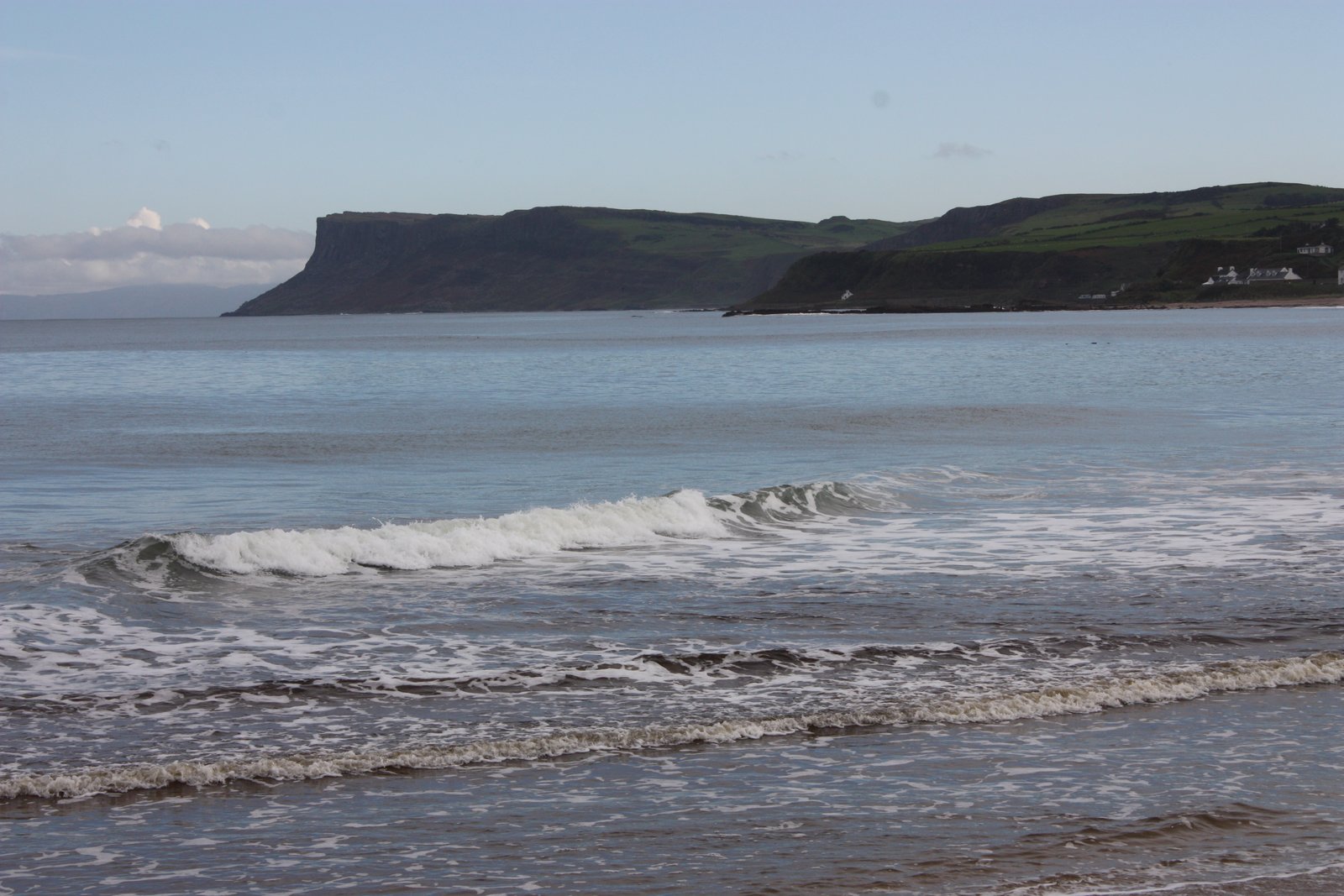
Ballycastle Beach is the town beach on this list, and that’s exactly why it’s worth a stop. It sits right on the edge of Ballycastle in County Antrim, a curve of sand and pebble at the eastern end of the Causeway Coast, with the town’s promenade running along the back of it.
You don’t walk down a dune path or drive a car onto this one. You park in town, cross the road, and you’re on the sand. That makes it the easy option if you want a beach with a coffee and a proper meal five minutes away.
It’s a Blue Flag beach, so the water is clean and there are lifeguards in season. The bay is fairly sheltered, which makes it calmer than the open strands further west and a decent spot for a swim if you can handle the cold.
The view is what sets it apart. Look out from the sand and you’ve got Rathlin Island sitting offshore, and on a clear day you can see the Mull of Kintyre in Scotland across the water. The Fairhead cliffs run off to the east, some of the biggest sea cliffs in Northern Ireland.
Ballycastle is also the ferry port for Rathlin Island, so if you want to break up the beaches, the boat leaves from the harbour right next to the beach. Rathlin is worth a day on its own for the puffins and the upside-down lighthouse.
It’s an easy base for the whole Causeway Coast. The Giant’s Causeway, Carrick-a-Rede rope bridge, and White Park Bay are all a short drive west along the A2, so you can stay in Ballycastle and reach most of the big sights inside half an hour.
Whiterocks Beach, Portrush
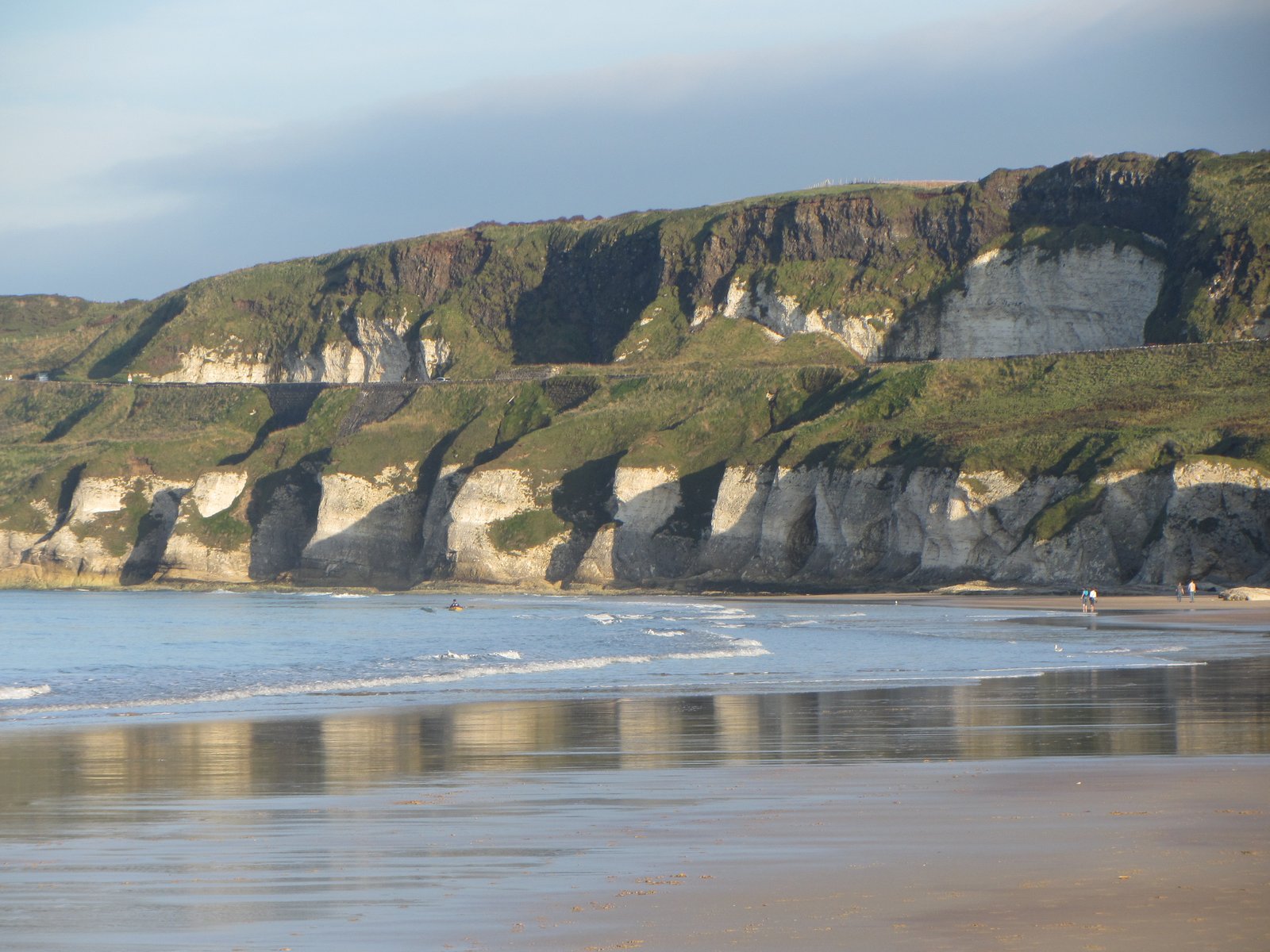
Whiterocks is the one named for the cliffs behind it. It sits just east of Portrush in County Antrim, a long stretch of sand backed by a wall of white limestone that the sea has carved into arches, caves, and stacks.
That soft white rock is the whole draw. Wind and waves have cut it into shapes you don’t see on the darker basalt cliffs further along the coast, and the most famous of them, the Wishing Arch, sits right at the base of the cliffs.
It’s a Blue Flag beach and one of the better surf spots on this coast. The waves roll in clean and there’s a surf school working the sand in season, so it’s a good spot to try it for the first time or just watch people wipe out.
The beach is wide and firm, and you can walk the full length of the sand west toward Portrush or east toward Dunluce Castle when the tide is out. Time it wrong and the water pushes you back up against the cliffs, so check the tide before you set off along the base.
Getting there is easy. There’s a parking lot on the cliff top right off the A2 between Portrush and Bushmills, and a path down to the sand from there.
Dunluce Castle is a five-minute drive east along the same road, a ruin perched on a cliff edge that’s worth a stop on its own. Pair the beach with the castle and you’ve got an easy morning at this end of the Causeway Coast.
Cushendun Beach
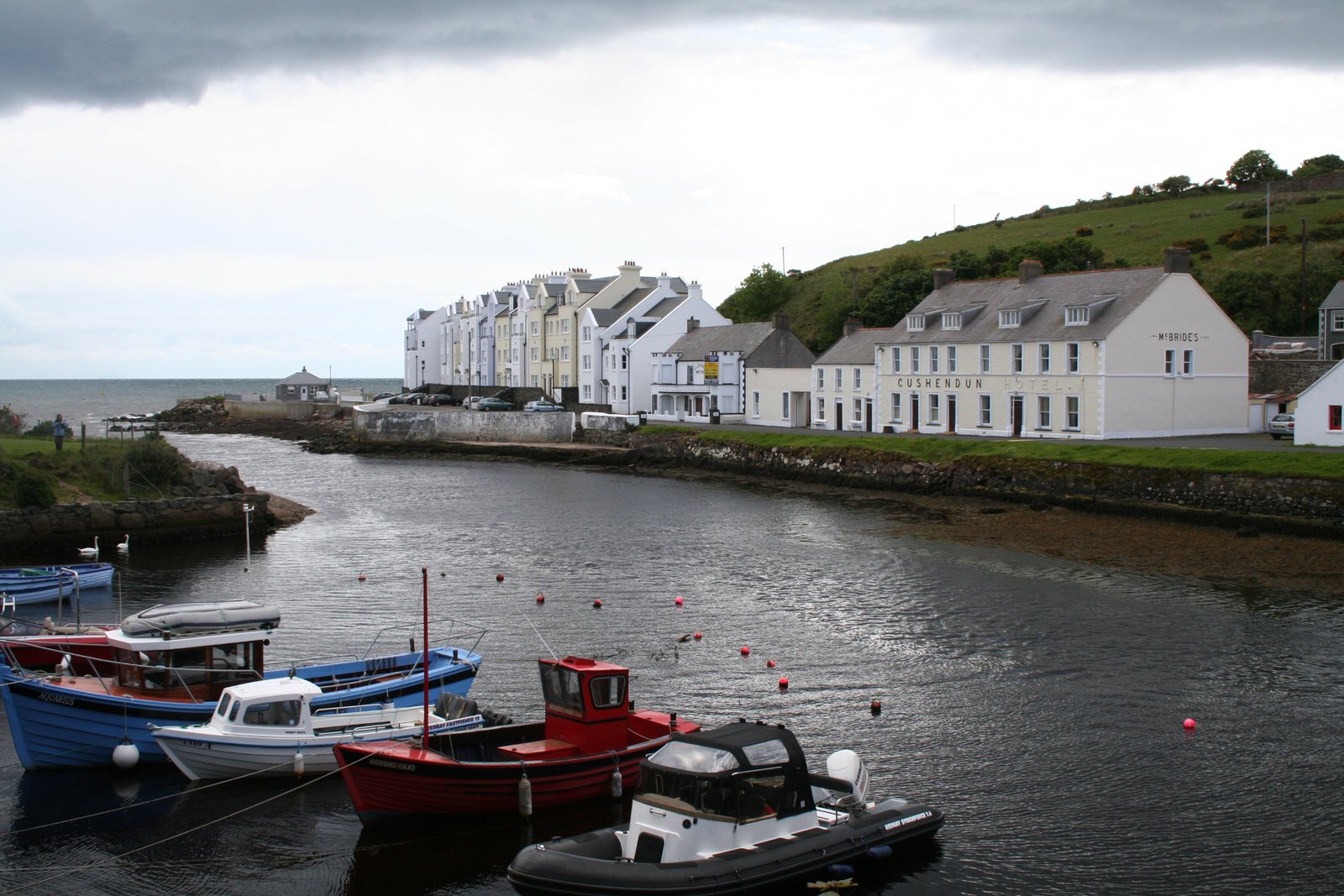
Cushendun is the small one on this list, and you go for the village as much as the sand. It sits at the mouth of the River Dun on the County Antrim coast, tucked into one of the Glens of Antrim where the river runs out to a short, sheltered stretch of beach.
The village itself is the odd part. It was designed to look Cornish, built in the 1920s by the same architect who did Portmeirion in Wales, so you get whitewashed cottages and a square that feel more like southwest England than the north Antrim coast. The National Trust looks after most of it now.
The beach is small and calm, backed by the village and the glen, and the harbor keeps the water flat. It’s not a big open strand like Benone or Whiterocks, so come here for a short walk and a look around rather than a full day on the sand.
Just south of the beach are the Cushendun Caves, a run of red sandstone sea caves the waves have cut into the cliff. Game of Thrones fans will know them as the spot where Melisandre gives birth to the shadow baby, which is a strange thing to stand in once you’ve seen the scene.
Getting there is a nice drive in itself. Cushendun sits on the Antrim Coast Road, and the higher Torr Head route between here and Ballycastle is one of the better stretches of coast in the north, with the caves a short signposted walk from the free village parking.
Cranfield Beach
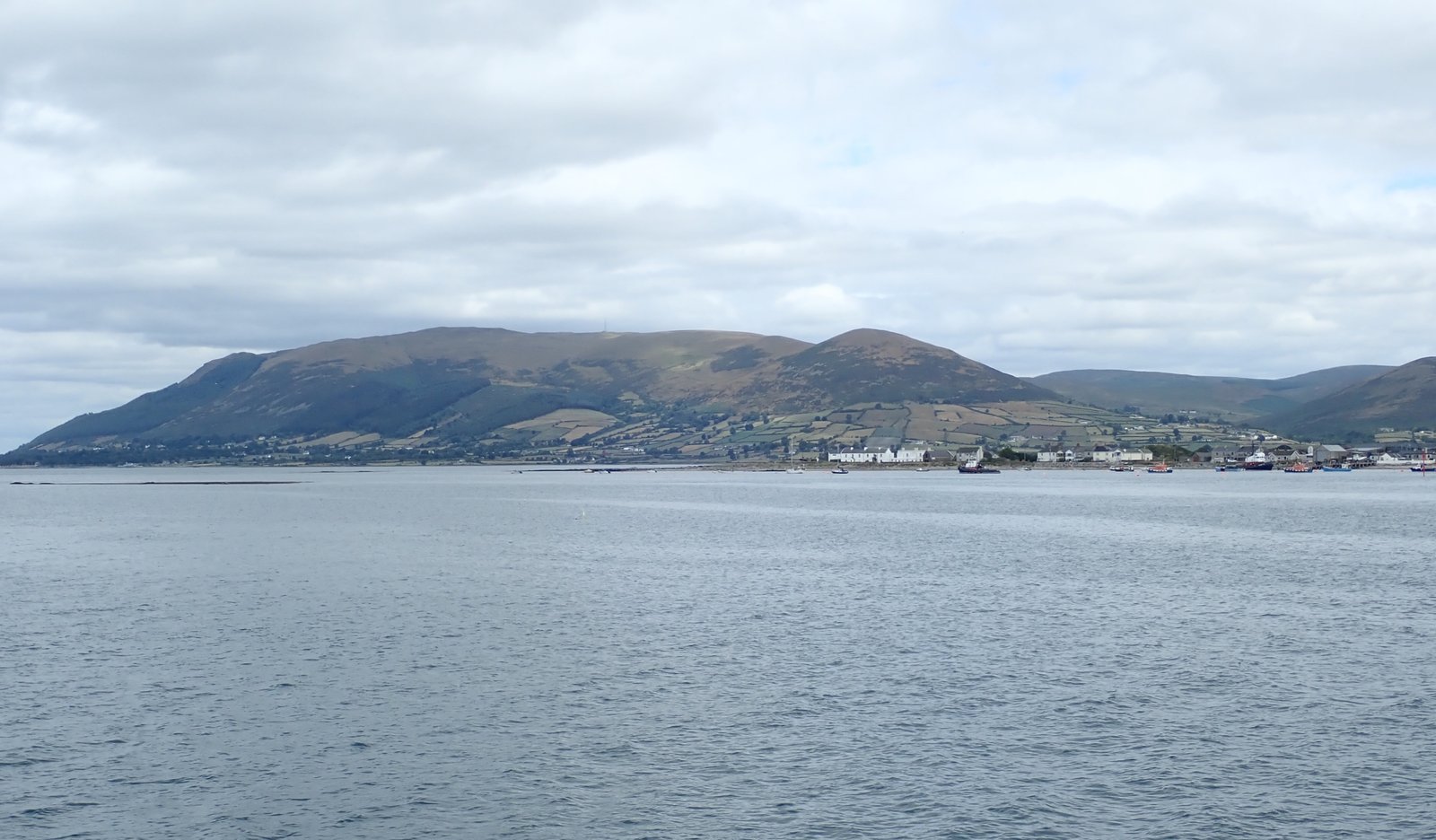
Cranfield is about as far south as you can go and still be in Northern Ireland. It sits at the mouth of Carlingford Lough in County Down, right on the border, with the Cooley Mountains of the Republic rising straight across the water.
The lough is the reason to come here. It shelters the beach from the open sea, so the water is calmer and warmer than the Atlantic strands up north, and Cranfield is known as one of the safer, warmer places to actually get in and swim.
It’s a Blue Flag beach with lifeguards in season, a stretch of golden sand and shallow water that stays gentle a long way out. That makes it a solid choice with young kids, who can paddle without the waves knocking them over.
This one is busier and more built up than most on this list. There are caravan and holiday parks backing the beach, so it fills up with families in summer, and you get proper facilities rather than a walk down a dune path to an empty strand.
It’s signposted off the A2 near Kilkeel, the fishing port at the foot of the Mournes, about an hour south of Belfast. Pair it with Kilkeel harbour for fresh seafood and you’ve got an easy day at the southern tip of the coast.
Helen’s Bay Beach
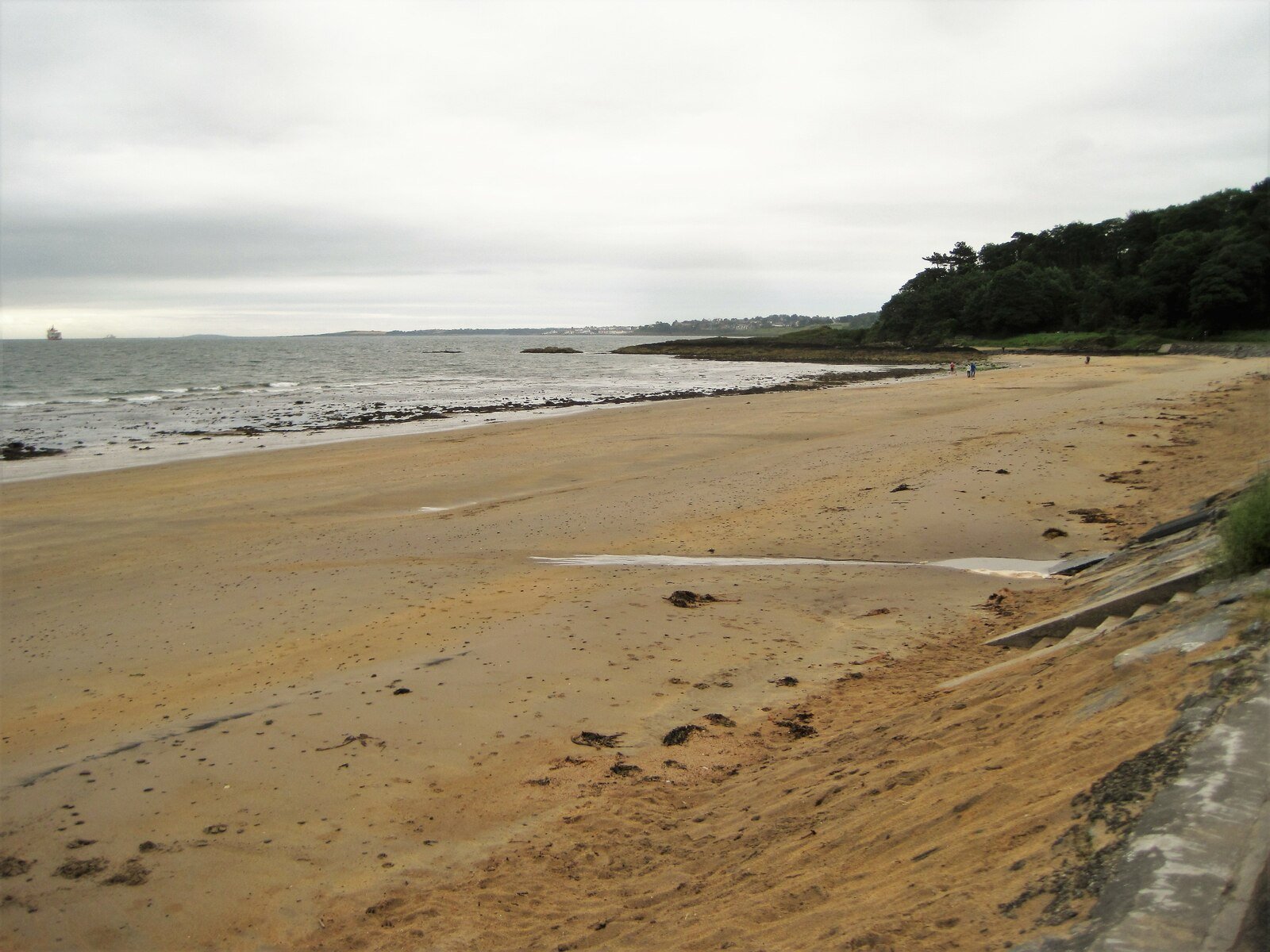
Helen’s Bay is the easy one to reach if you’re based in Belfast. It sits on the County Down coast between the city and Bangor, a sheltered curve of sand backed by the woods of Crawfordsburn Country Park.
The country park behind it is the reason to come. You walk down through the trees and out onto the sand, so you get a proper woodland-and-beach combo rather than just a strip of sea. It’s a National Trust and council-run spot, well looked after and free to walk.
The beach itself is small and calm, more of a family stroll than a big open strand like Benone. The water is sheltered by Belfast Lough, so it’s flatter than the Atlantic beaches up north, though it’s a beach for a paddle and a walk rather than a serious swim.
What makes it stand out is how you can get here without a car. Helen’s Bay has its own station on the Bangor train line out of Belfast, so you can be on the sand in about half an hour from the city center with no driving at all. That’s rare for a beach on this list.
It also sits right on the North Down Coastal Path, which runs along the shore between Holywood and Bangor. Turn one way and you can walk to Grey Point Fort, an old coastal battery with the guns still in place, and turn the other and it’s an easy stretch toward Crawfordsburn village.
If you’re staying in Belfast and want a beach afternoon without renting a car or driving to the Causeway Coast, this is the one to pick. Take the train, walk the coastal path, and you’ve got a half-day out for the price of a train ticket.
Castlerock Beach
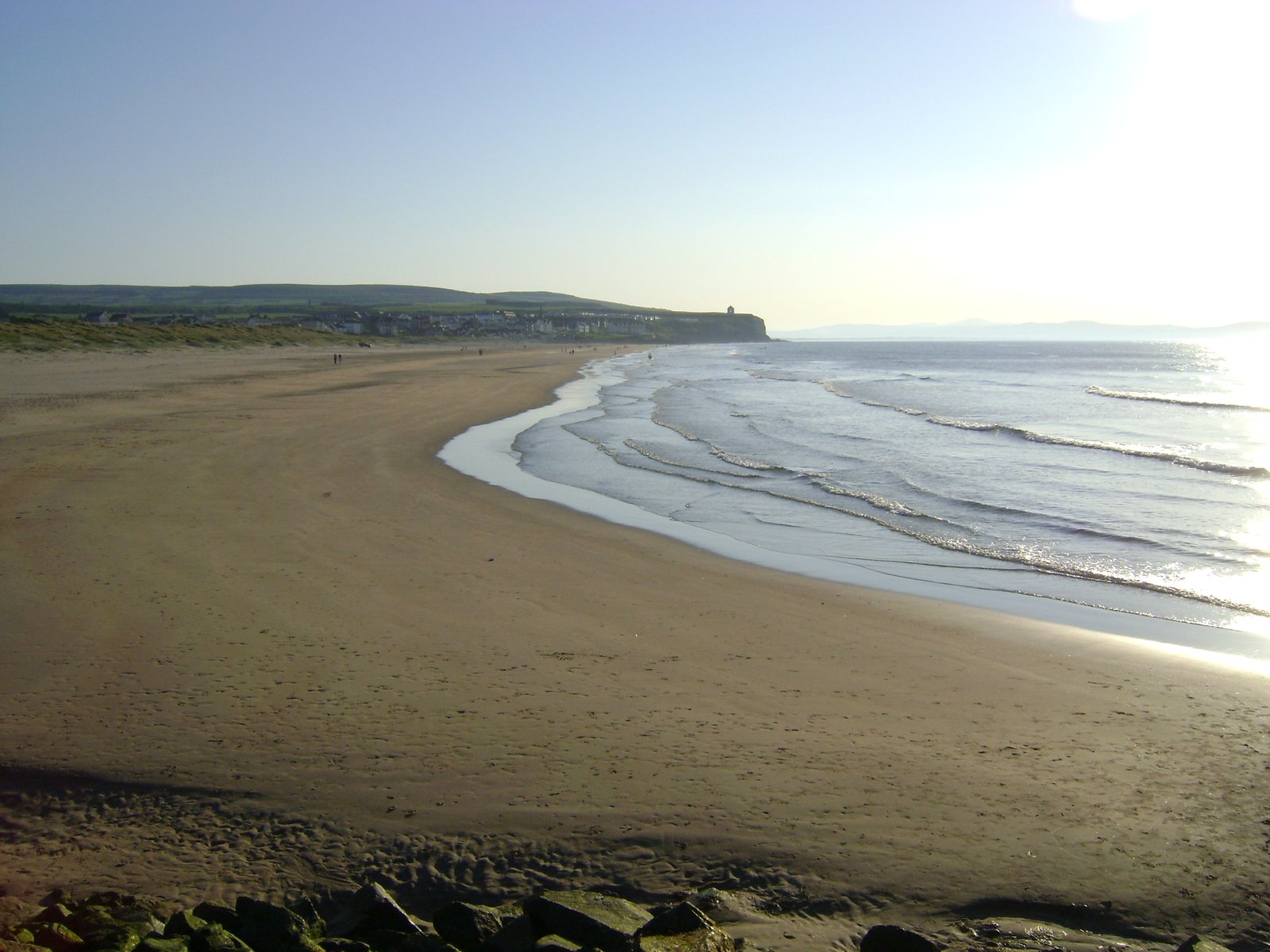
Castlerock is the beach with its own village and its own train stop, sitting just west of Downhill on the County Londonderry coast. It’s a wide sweep of firm golden sand running from the little town down toward the mouth of the River Bann.
It’s a Blue Flag beach with lifeguards in season, and the sand is flat and hard-packed, so it’s an easy, safe one for families. The water is open Atlantic, so it’s cold, and a swim on a calm day is a quick in-and-out if you can handle it.
What sets Castlerock apart from the empty strands further along the coast is the village. You walk off the sand and you’re in a proper town, with a shop, a couple of places to eat, and a championship links golf course backing the dunes. Plenty of the wilder beaches here leave you a long drive from a coffee, and this one doesn’t.
Castlerock has its own station on the Belfast-to-Derry line, which is handy if you’d rather not drive the whole Causeway Coast. The train runs right along the water for the last stretch into town, and you step off pretty much onto the beach.
It’s an easy base for this end of the coast too. Downhill and Mussenden Temple are a couple of minutes east, and Benone’s seven miles of sand are a short drive along the same shore, so you can park up here and reach three of the best beaches in the north inside fifteen minutes.
More Ireland Beach Guides
- The Best Beaches in Ireland: 20 Picks for Every Part of the Country
- Best Blue Flag Beaches in Ireland: 9 Top Swim Spots
- 6 Best Beaches Dublin Has To Offer
Best Time to Visit the Beaches
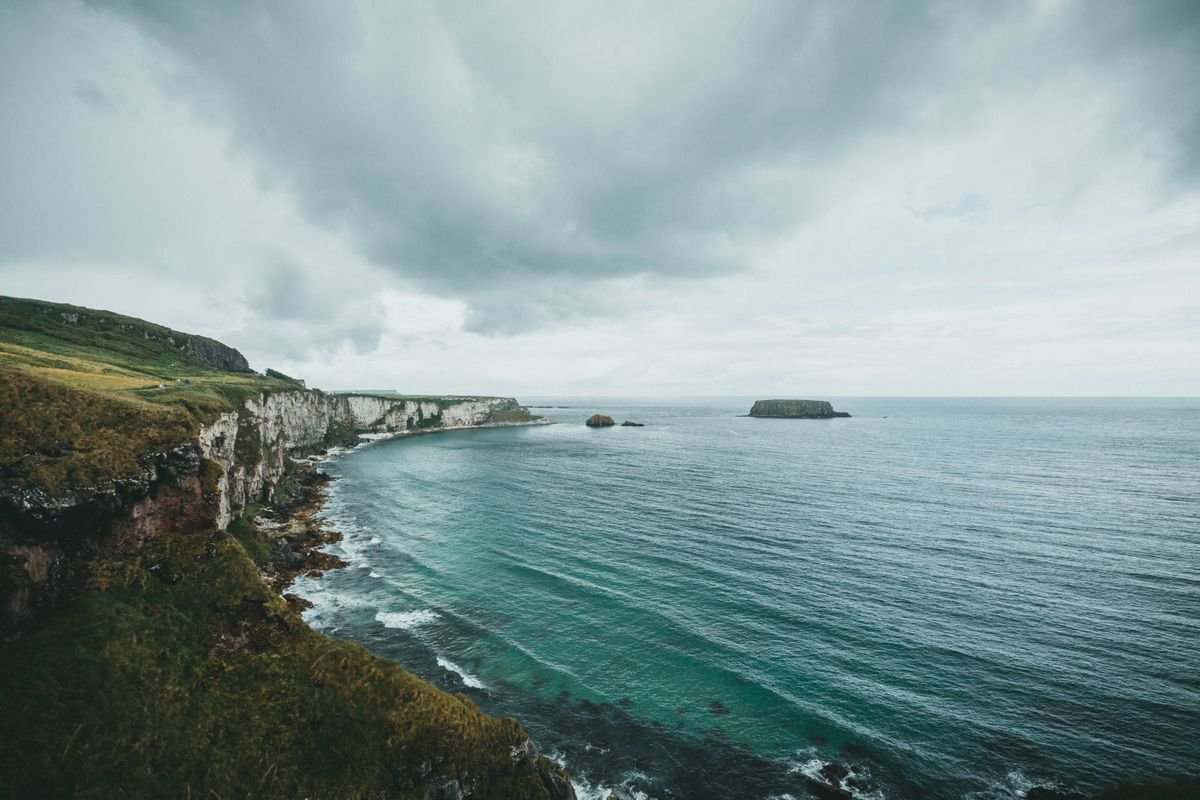
The short answer: come between May and September if you want any chance of warm weather, and aim for the shoulder months either side of high summer if you want the sand to yourself.
July and August are the warmest and busiest, with air temperatures around the high teens Celsius and the water at its least brutal. This is when the Blue Flag beaches have lifeguards on, the surf schools are running, and the family strands like Cranfield and Benone actually fill up.
It’s also when parking is tightest and the drive-on beaches are at their most crowded, so factor that in if you’re chasing an empty strand.
May, June, and September are the ones we’d point you to. The weather still gives you plenty of clear days, the crowds thin right out, and beaches like White Park Bay are close to empty. We drove this coast in shoulder season and had most of the big strands to ourselves.
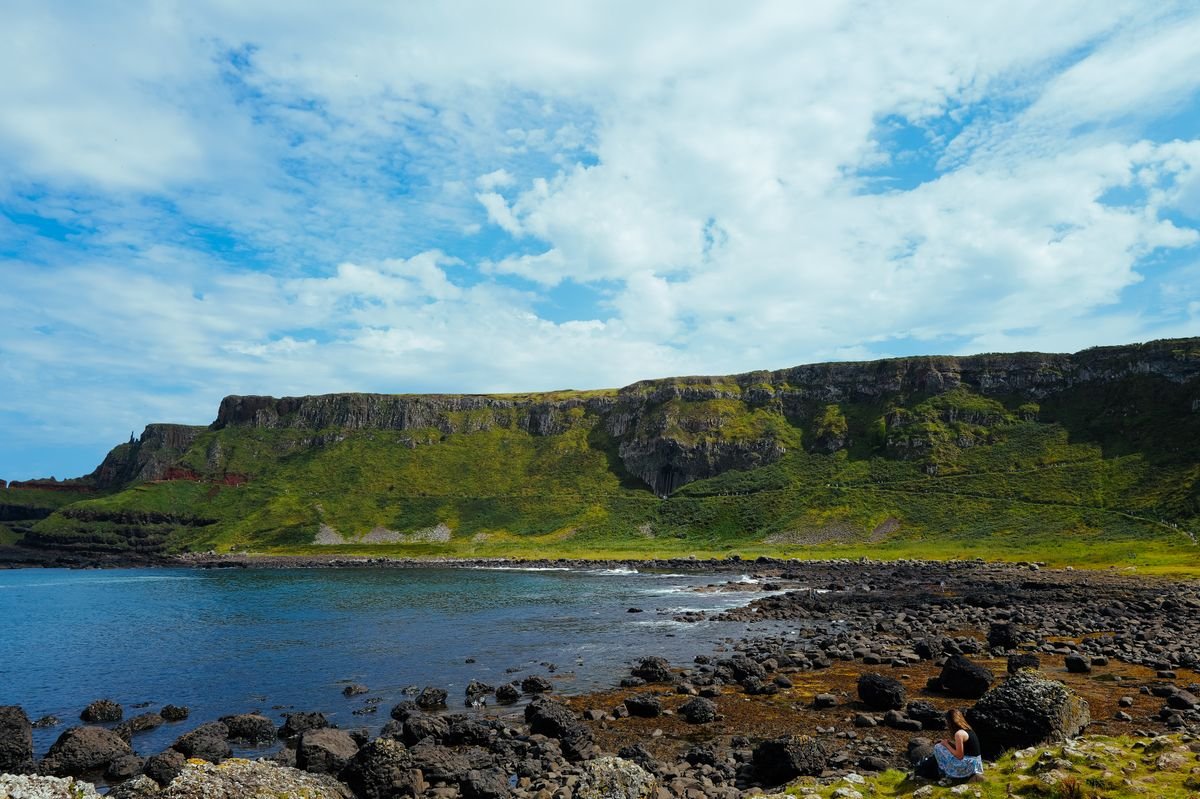
Don’t come for the swimming, whatever the month. This is the North Atlantic and the water stays cold all year, so a dip is a quick in-and-out even in August. Bring a wetsuit if you’re serious, and stick to the sheltered lough beaches like Cranfield and Tyrella where the water sits a degree or two warmer.
Two practical things to plan around. The drive-on and National Trust parking fees only run in season, so an off-season visit often means free parking but no lifeguard. And the weather here turns fast, so check the forecast the morning of and have a backup, a castle or a pub, for when the rain rolls in off the sea.

One more for timing: go on a weekday if you can. A Wednesday in June is a different beach from the same spot on a Saturday in August, and on the quieter strands you’ll often be the only car in the lot.
Planning Your Northern Ireland Trip
- Where to Stay in Belfast: Best Areas & Hotels
- Titanic Belfast: The Complete Visitor’s Guide
- A Photographer’s Definitive Ireland Road Trip
Getting to Northern Ireland’s Beaches
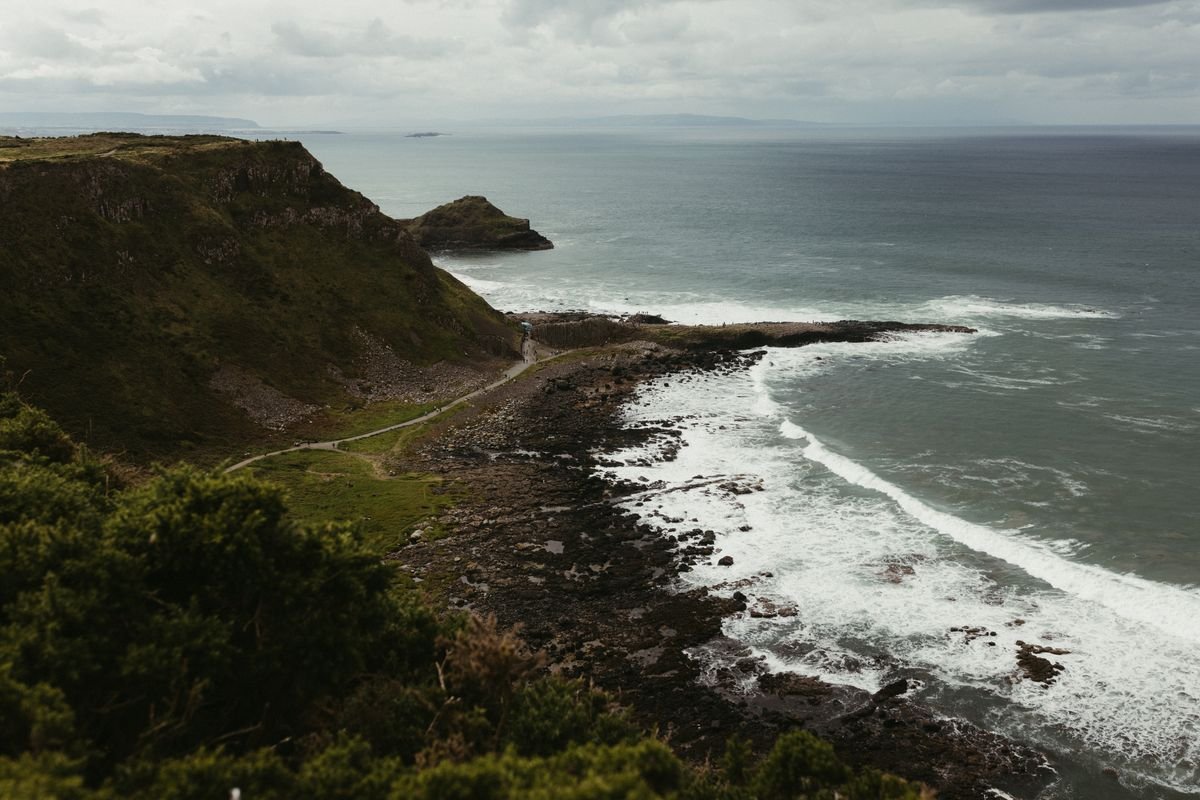
Belfast is your way in. It has two airports, and the names trip people up, so here’s the quick version: Belfast International is the big one out west that most flights land at, and George Best Belfast City is the small one right beside the city center. One’s a longer drive in, the other you can walk out of and be downtown in ten minutes.
You can also fly into Dublin and drive up, which a lot of people do without realizing they’ll cross a border. It’s about two hours to Belfast on the M1, there’s no checkpoint, and you won’t notice the crossing except the speed signs switching from kilometers to miles. Plenty of people rent a car in the Republic and keep driving north.
Either way, you’ll want a car. The Causeway Coast strands like White Park Bay and Downhill aren’t on any bus route worth the hassle, and the whole point of this coast is being able to pull off the A2 the second a stretch of sand looks good. We drove it and stopped on a whim half a dozen times, which you can’t do tied to a timetable. It’s worth a few minutes to compare car hire deals on Discover Cars before you go, since prices swing a lot between the Belfast and Dublin pickup points.
The road to know is the Causeway Coastal Route, which runs from Belfast up to Derry along the north coast. It strings together most of the Antrim and Londonderry beaches on this list, and it’s a good enough drive on its own that you’d do it even without the sand.
One thing that’ll save you a headache: the beaches sit in two groups at opposite ends of the country. The famous ones run along the Causeway Coast up north, an hour or so from Belfast. The County Down beaches, Murlough, Tyrella, and Cranfield, sit down the east and south coast near the city. Don’t try to do both in one day. Pick an end.
If you’d rather skip the driving, a handful of these are actually on the train line out of Belfast. Helen’s Bay, Castlerock, and Portrush near Whiterocks all have their own stops, so you can reach the sand without renting anything. For everywhere else, plan on a car.
Where to Stay Near the Best Beaches in Northern Ireland
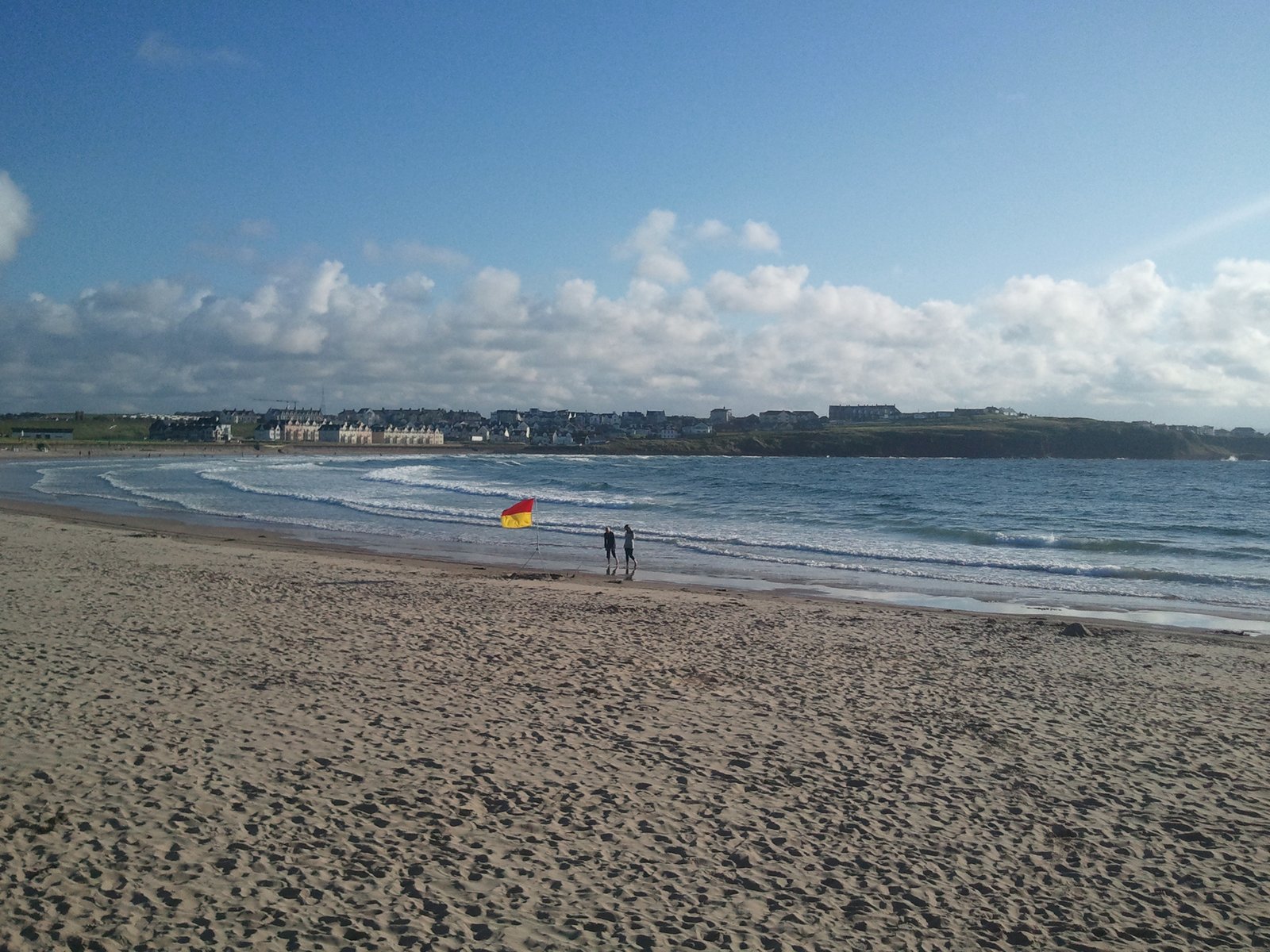
Where you stay comes down to which cluster you’re chasing. The famous beaches run along the Causeway Coast up north, and the rest sit down on the County Down side near Belfast. Pick your end and base yourself there rather than trying to bridge the two.
For the Causeway Coast beaches
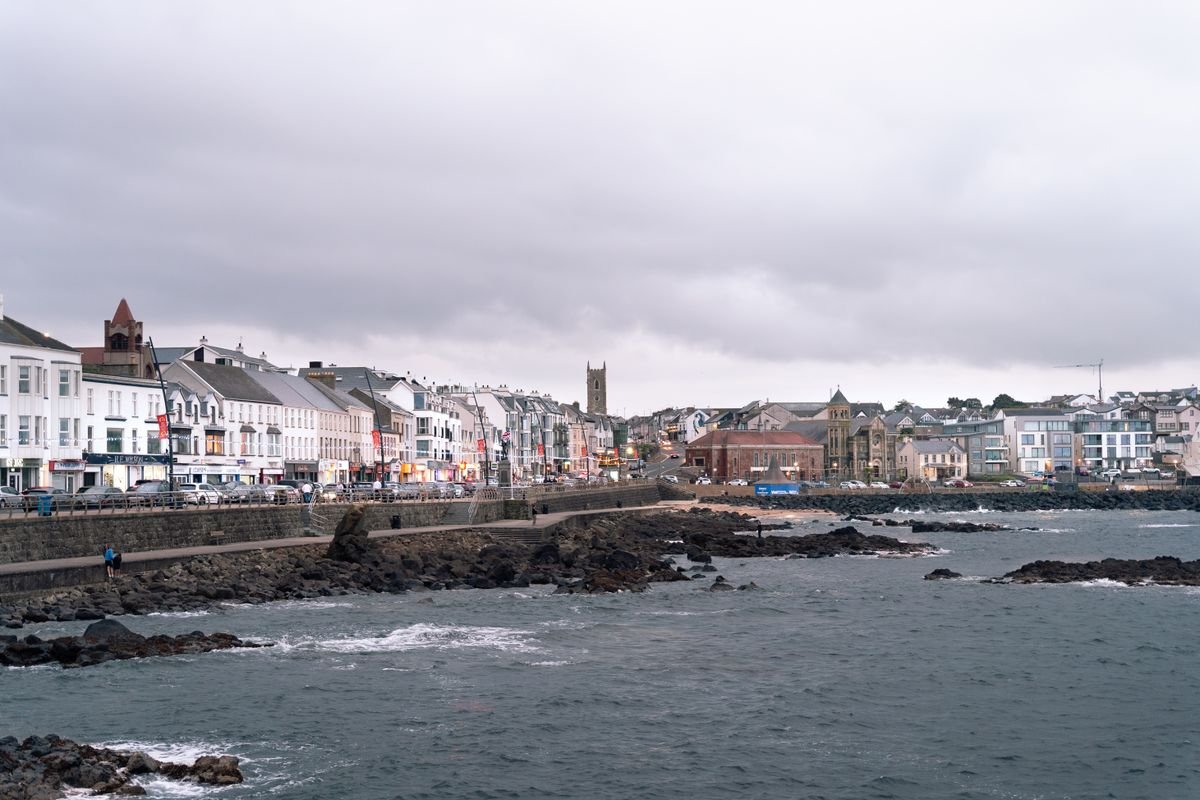
Portrush is the obvious base for this end. It’s a proper seaside town with plenty of hotels, guesthouses, and self-catering places, and it puts you within fifteen minutes of Whiterocks, Dunluce Castle, and the run out to the Giant’s Causeway. It books up fast in summer, so it’s worth checking availability early, browse places to stay in Portrush on Booking.com.
Ballycastle is the quieter pick at the eastern end. You’ve got the town beach on your doorstep, the Rathlin ferry at the harbor, and Cushendun and the Glens a short drive south. It’s a good jumping-off point if you want the coast without the Portrush crowds.
Castlerock and the villages near Downhill work well if you’re aiming at the western strands. Stay here and Downhill, Benone, and Mussenden Temple are all inside a few minutes, plus you’ve got a train stop if you’d rather not drive the whole route.
Bushmills sits a little inland but is central to everything on this stretch, and the campervan option is real here too. Some sites let you park up near the coast, so if you’re driving a van, check the pitches around the Causeway before you book a room.
Where to Stay in Portrush
Where to Stay in Ballycastle
For the County Down beaches
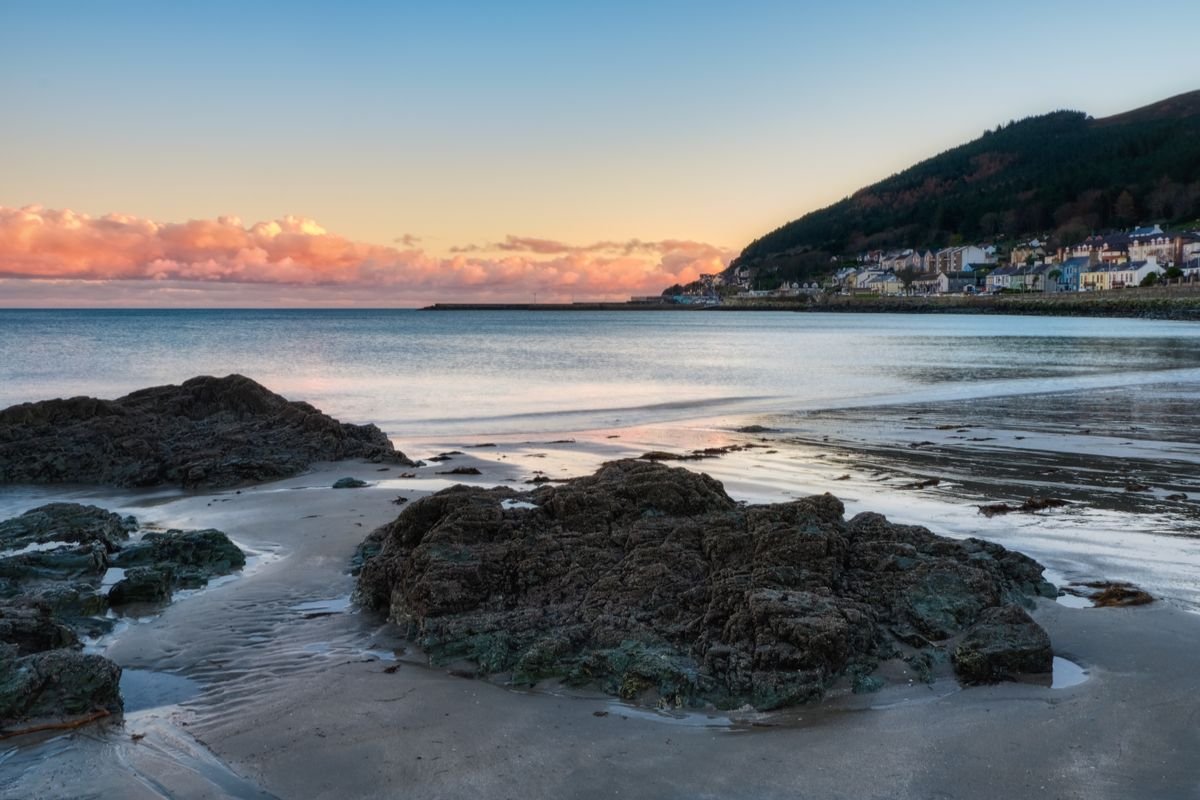
Newcastle is the base for the southern strands. It sits right under the Mourne Mountains with Murlough and Tyrella close by, Cranfield a short drive further south, and enough hotels and B&Bs to make it an easy pick for a couple of nights, find a place to stay in Newcastle on Booking.com.
Belfast itself is a fine base if you’d rather stay in a city and drive out. Helen’s Bay is half an hour away on the train, the County Down beaches are all inside an hour, and the Causeway Coast is doable as a long day trip if you get an early start.
If you only get one base for the whole trip, split it: two or three nights up on the Causeway Coast and two down near the Mournes covers both ends without the daft cross-country drives. Trying to do it all from one hotel is how you burn a day in the car.
Where to Stay in Newcastle
- NIapartments Coastal retreat with Mountain views
- The Orchard, 5 Star Luxury Accommodation
- Drumee Lodge boutique B and B, Newcastle, County Down
In short
- White Park Bay and Benone are the two best beaches in Northern Ireland for a big empty walk.
- Benone Strand has seven miles of Blue Flag sand and lifeguards in season for swimming.
- Downhill, Cushendun, and Ballintoy all appear as Game of Thrones filming locations.
- You can drive and park on the sand at Benone, Downhill, and Tyrella for a fee.
- Go in May, June, or September for clear days, thin crowds, and near-empty strands.
Frequently Asked Questions
What is the best beach in Northern Ireland?
It depends what you’re after. For a big empty walk, White Park Bay on the Causeway Coast is hard to beat. For actually getting in the water, Benone Strand and its seven miles of Blue Flag sand is the pick. If you want a mountain backdrop, cross to Murlough and the Mournes down in County Down.
Can you swim at Northern Ireland’s beaches?
You can, but the water is cold all year and a dip is a quick in-and-out. Stick to the Blue Flag beaches with lifeguards in season, like Benone, Tyrella, and Cranfield. Skip swimming at White Park Bay entirely, as the currents there are strong and the bay has a real rip.
Which Northern Ireland beaches were in Game of Thrones?
Three of the beaches on this list. Downhill stood in for Dragonstone, the Cushendun Caves are where Melisandre gives birth to the shadow baby, and Ballintoy Harbour beside White Park Bay played the Iron Islands. You can tick off all three on the Causeway Coast in a day.
Can you drive your car onto the beaches?
On a few of them, yes. Benone, Downhill, and Tyrella all have firm sand you can drive and park on. There’s a fee to drive on in season, so check the current pricing before you turn off the main road, and watch the tide so you don’t get stuck.
Do you need a car to reach the beaches?
For most of them, yes. The Causeway Coast strands aren’t on any bus route worth the hassle. But a handful are on the train line out of Belfast, so Helen’s Bay, Castlerock, and Portrush near Whiterocks all have their own stops if you’d rather not drive.
When is the best time to visit?
May, June, and September. You still get plenty of clear days, the crowds thin right out, and the big strands are close to empty. Go on a weekday and you’ll often be the only car in the lot. July and August are warmest but busiest, and the water stays cold whatever the month.
Final Thoughts
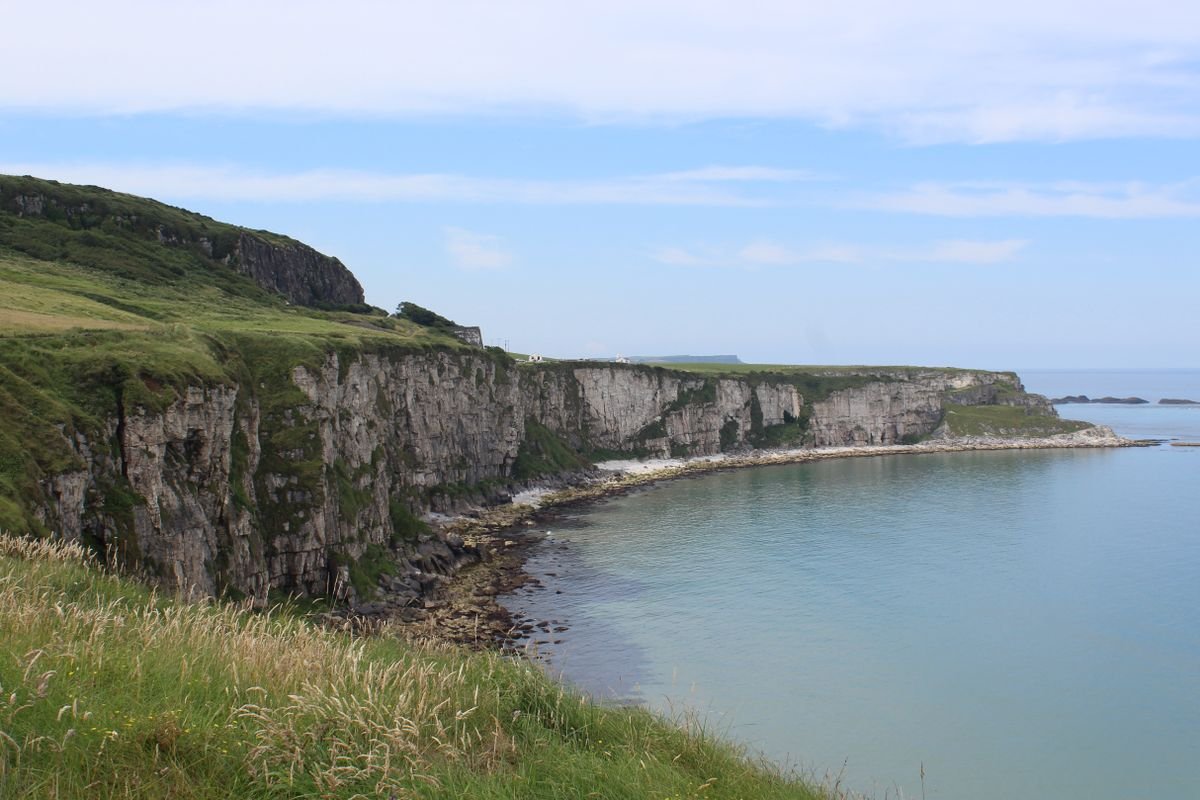
Northern Ireland’s beaches aren’t a sunbathing holiday, and if you turn up expecting warm water you’ll be disappointed. What you get instead is space. Miles of open sand, big cliffs behind you, and half the time no one else in the parking lot.
If you only do one, make it White Park Bay for the walk or Benone if you actually want to get in the water. Both beat most of the famous names down south, and neither one gets crowded the way you’d expect.
The one thing we’d tell a first-timer: pick an end and stay there. The Causeway Coast strands up north and the County Down beaches near Belfast sit at opposite corners of the country, and trying to link them in a day just burns your time in the car.
Go in May, June, or September, drive the Causeway Coastal Route with no fixed plan, and pull off whenever a stretch of sand looks good. That’s the best way to do this coast, and it’s worth the trip even with the cold water.
Like it? Pin it!
Save this guide for later