
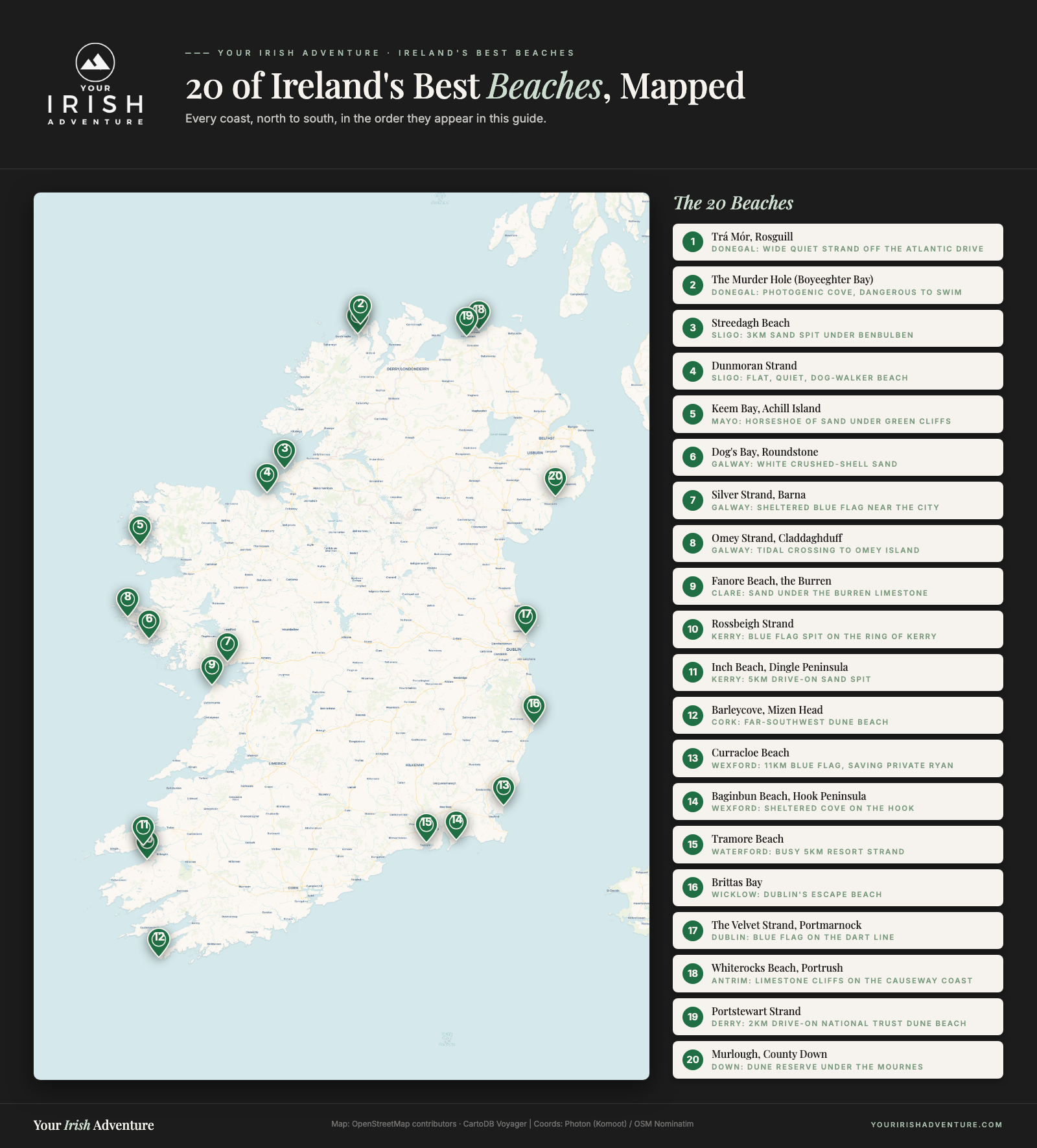
Ireland has hundreds of beaches, and most of them are empty even in summer. This is our run-down of the best beaches in Ireland, twenty of them, spread across every coast from Donegal down to Wexford so you can find the ones near wherever you’re headed.
We drove a big loop of the country on our last trip, about two weeks in shoulder season, and we hit a lot of these in person. I swam in the Atlantic at Clifden Eco Beach in Connemara in late September, which tells you something about how clear and blue the water can get out there, even when it’s cold enough that nobody else is in.
We did it by campervan, but a rental car works the exact same on this route and is the easier call for a first trip. It’s worth taking a minute to compare car hire deals on Discover Cars before you book, since rates swing a lot by season. The water is cold year-round, so go in knowing that.
Below is the list, region by region from Donegal and Mayo down through Kerry and the southeast, plus the practical stuff: what Blue Flag and Green Coast status actually mean, when to go, how to swim safely on the Irish coast, and where to stay nearby.
More Ireland Beach & Coast Guides
- Best Blue Flag Beaches in Ireland: 9 Top Swim Spots
- 6 Best Beaches Dublin Has To Offer
- The Best Coastal Walks in Ireland: 10 Cliff & Sea Trails
Quick Answer:
The best beaches in Ireland run the whole coast, from Keem Bay on Achill and the Murder Hole in Donegal for raw scenery to Blue Flag strands like Curracloe in Wexford and the Velvet Strand near Dublin for easy family days. For the clearest water, head to the Connemara beaches around Clifden. Shoulder season, May, June, or September, gives you the emptiest sand.
Beaches in Donegal and the Northwest
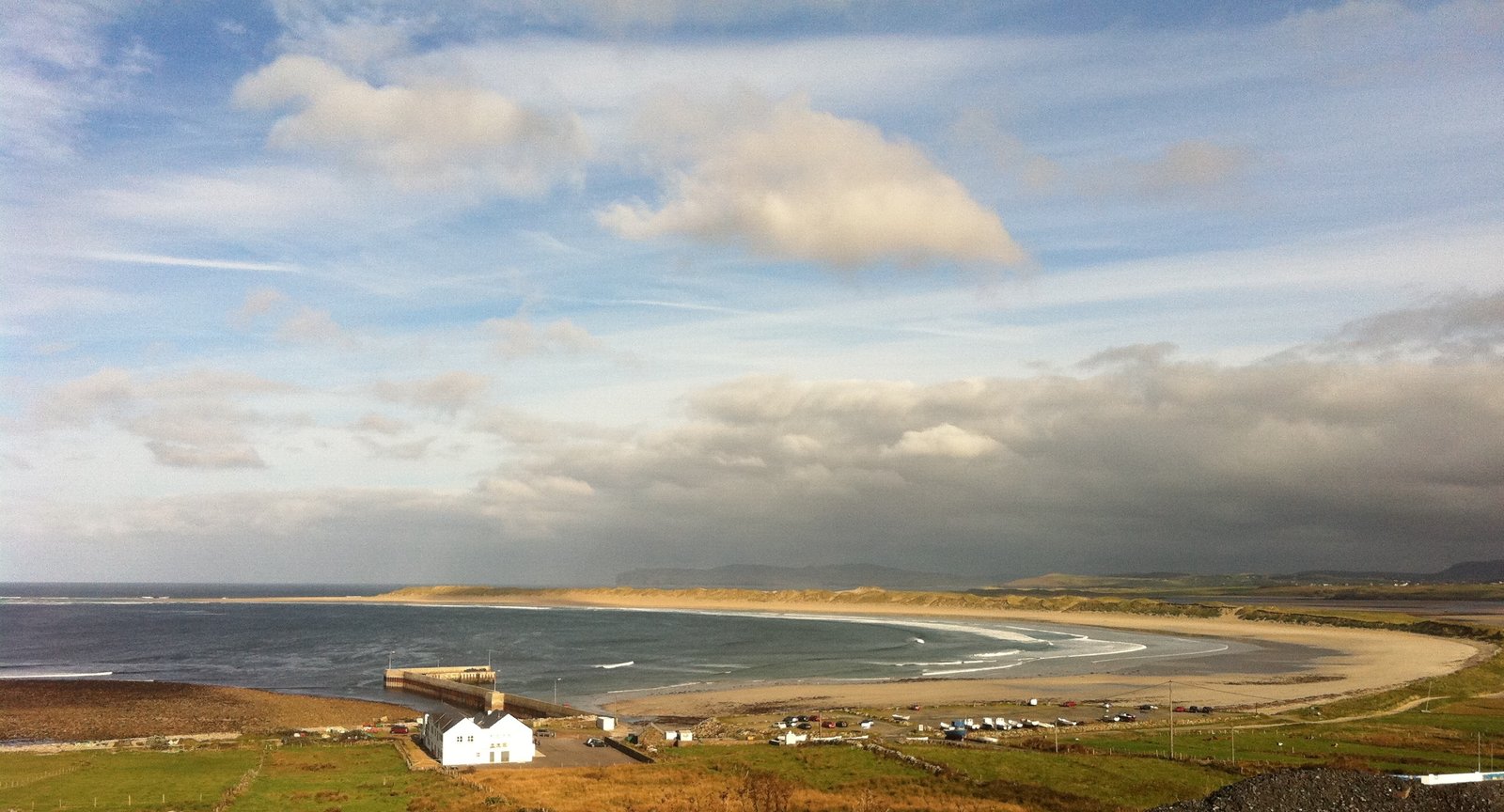
This is the corner of Ireland where the beaches are at their wildest and emptiest. Donegal and Sligo sit a long way from Dublin, four hours and change in the car, so the crowds thin out the further northwest you go. That distance is exactly why the sand stays this clean.
The water up here is rougher than the south and the wind has a real bite to it most of the year. Bring layers, plan for a flask of something hot, and don’t expect a busy beach bar. You come to these beaches for the coast and the cliffs, and you walk them with your jacket zipped up.
Trá Mór, Rosguill
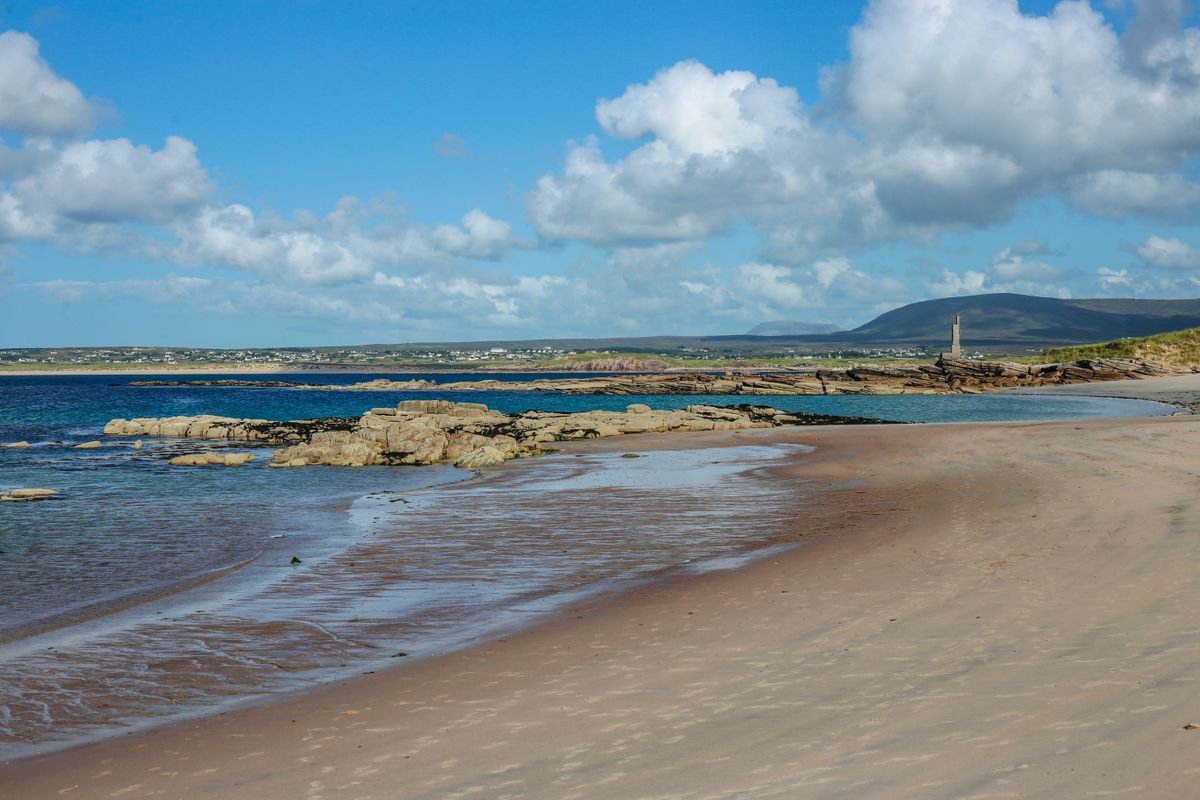
Trá Mór sits on the Rosguill Peninsula, just off the Atlantic Drive loop near Downings. It’s a wide strand backed by dunes, and you reach it on foot over the grass rather than straight from a parking lot, which keeps it quiet even in summer.
The name just means “big beach” in Irish, and that’s the right description. There’s space here to walk for a long time without passing another person. Pair it with the Atlantic Drive, which is one of the better short coastal loops in Donegal.
The Murder Hole (Boyeeghter Bay)
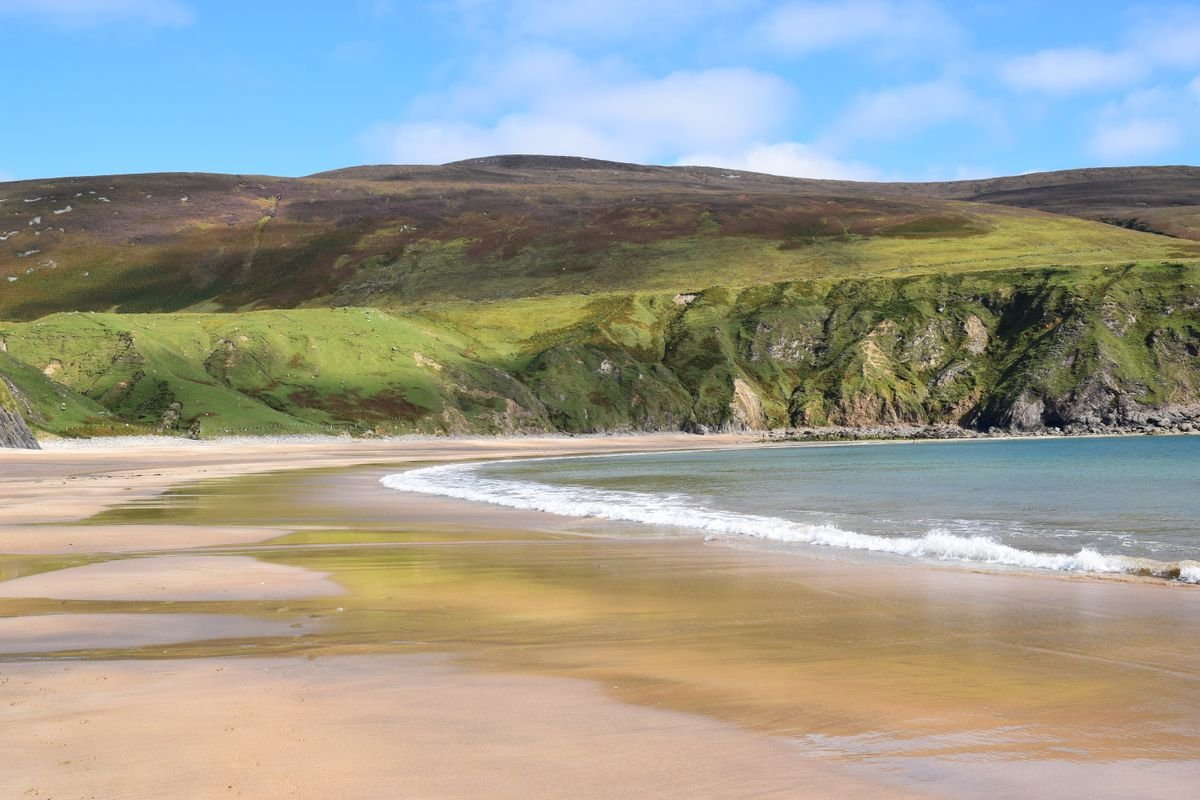
Boyeeghter Bay, better known as the Murder Hole, is on the same Rosguill Peninsula and it’s the most photographed beach in this whole region for a reason. A horseshoe of pale sand sits between two rocky headlands, with green farmland running right down to it.
You have to work for this one. It’s a walk of around 20 minutes across private farmland from the nearest pull-in, with no facilities and no lifeguard. Take the name as a real warning. The currents and rip here are dangerous, so come to look and photograph and stay out of the water.
Streedagh Beach, Sligo
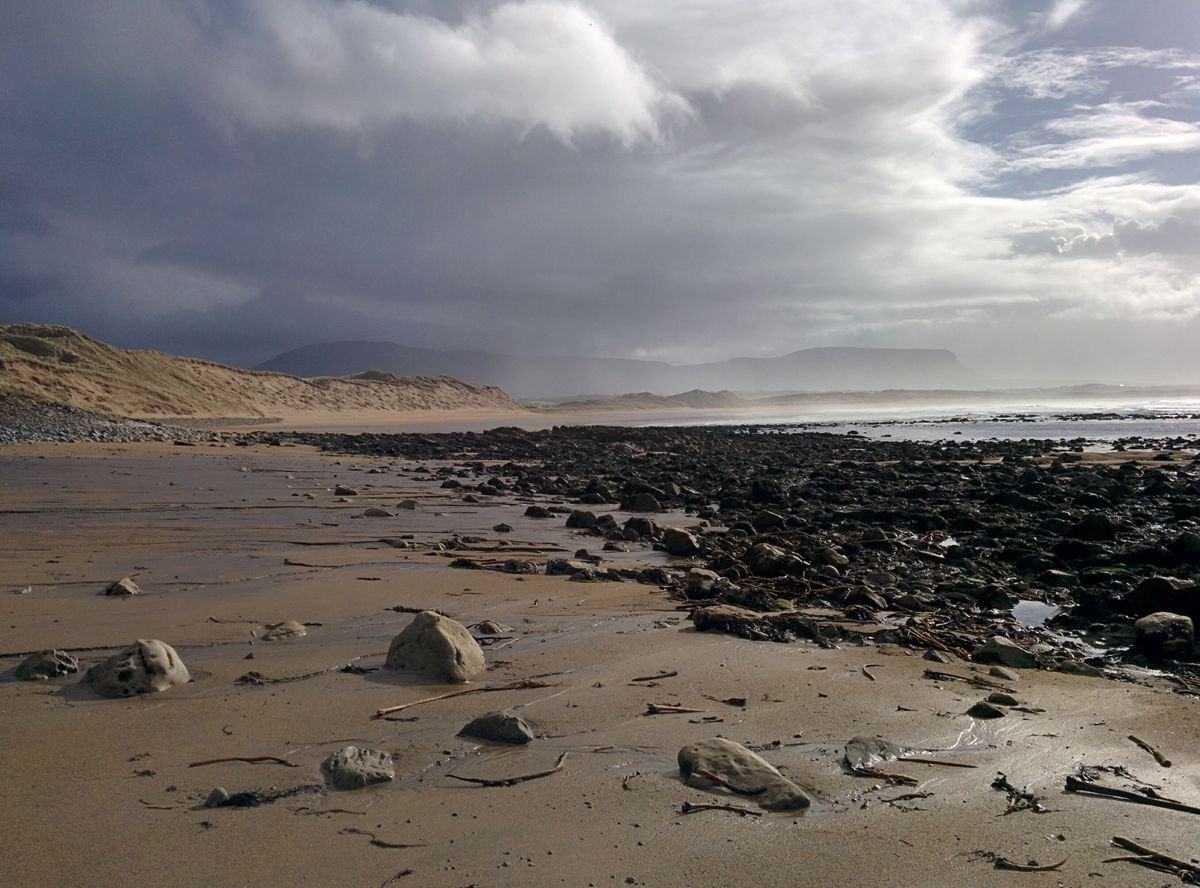
Streedagh is a long sand spit near Grange in County Sligo, with the flat-topped Benbulben mountain sitting behind it. It runs for about 3 km, so even on a decent day it never feels packed.
Three ships from the Spanish Armada wrecked off this beach in 1588, and at low tide you can sometimes still see the remains of an old wreck in the sand. It’s also a regular spot for surfers, so the swell that makes it good for boards makes it one to respect if you’re swimming.
Dunmoran Strand
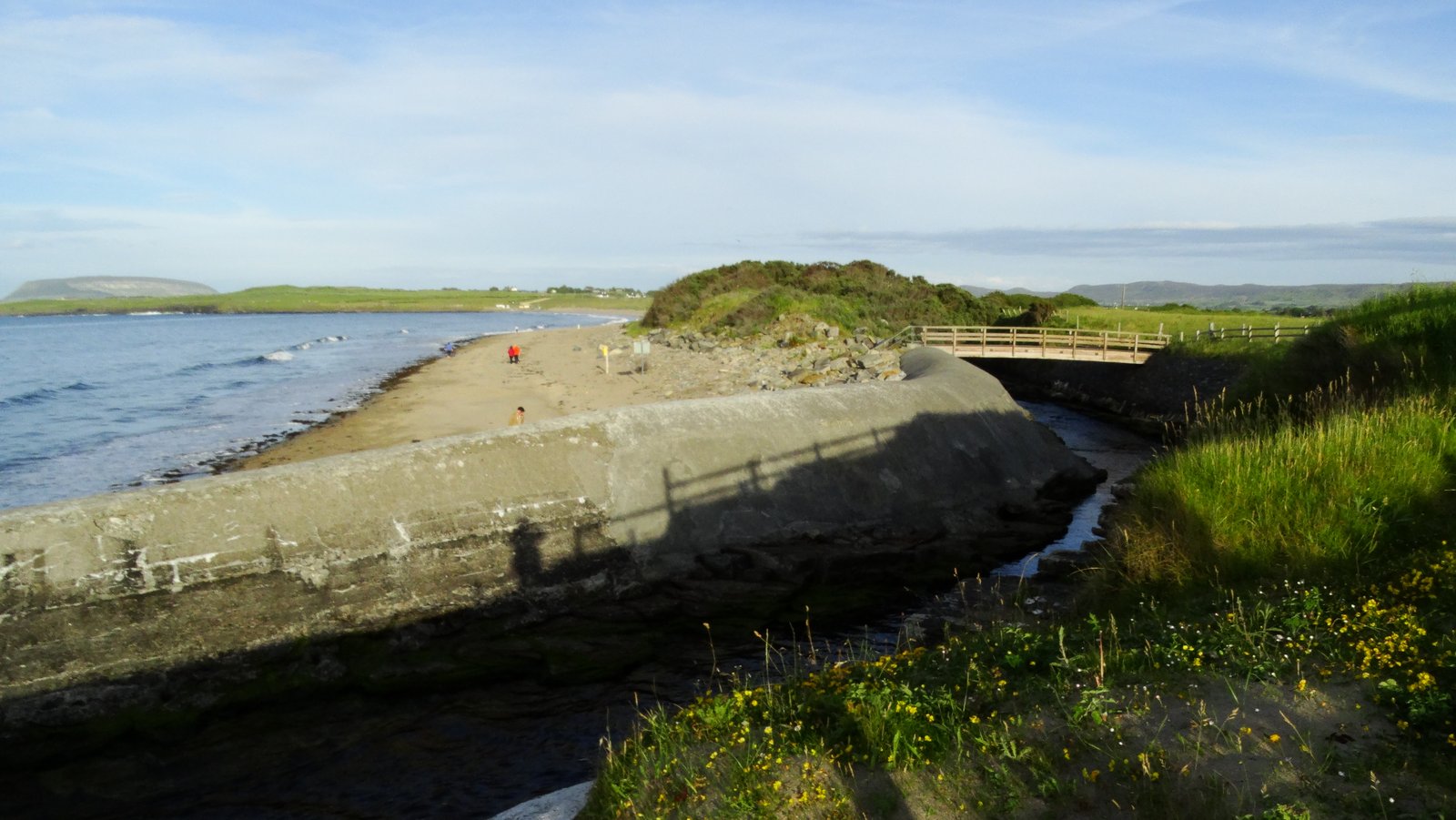
Dunmoran Strand is the quieter pick of the Sligo beaches, west of the town near Skreen. It’s a flat, sandy stretch backed by low dunes, and most days you’ll share it with a few dog walkers and not much else.
You come here for a walk and a bit of nothing, so don’t expect much in the way of facilities. If you’re driving between Sligo and the Mayo coast, it’s an easy stop to stretch your legs and get a quieter beach than the busier names nearby.
Beaches in Mayo and Galway
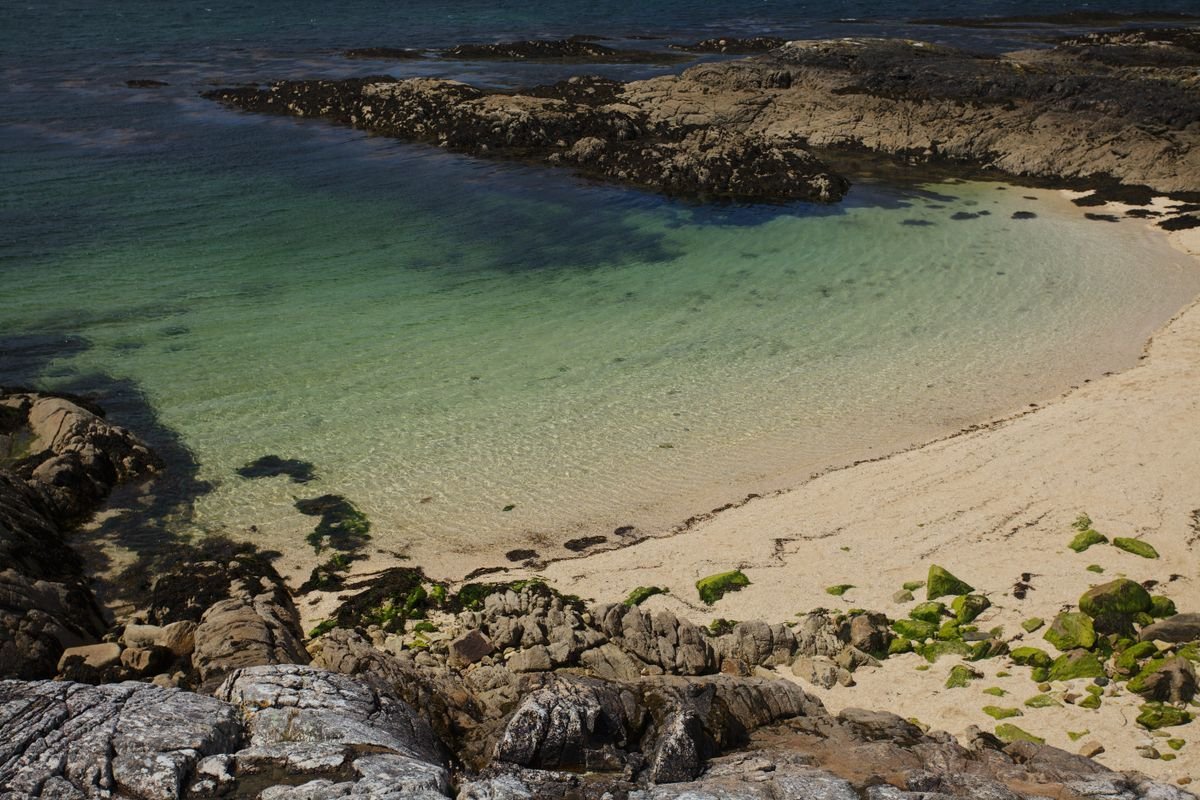
This stretch was the highlight of our last trip. We drove the N59 west out of Galway through Connemara and based ourselves near Clifden for a couple of nights, and the run of coast between there and the Mayo border has some of the best beaches in the country.
The water out here is the clearest blue I’ve seen anywhere in Ireland. We stopped for chowder at Guy’s Seafood Bar in Clifden between beach walks, which is the kind of food you want after an hour in the wind. Here are the ones worth planning your route around.
Keem Bay, Achill Island
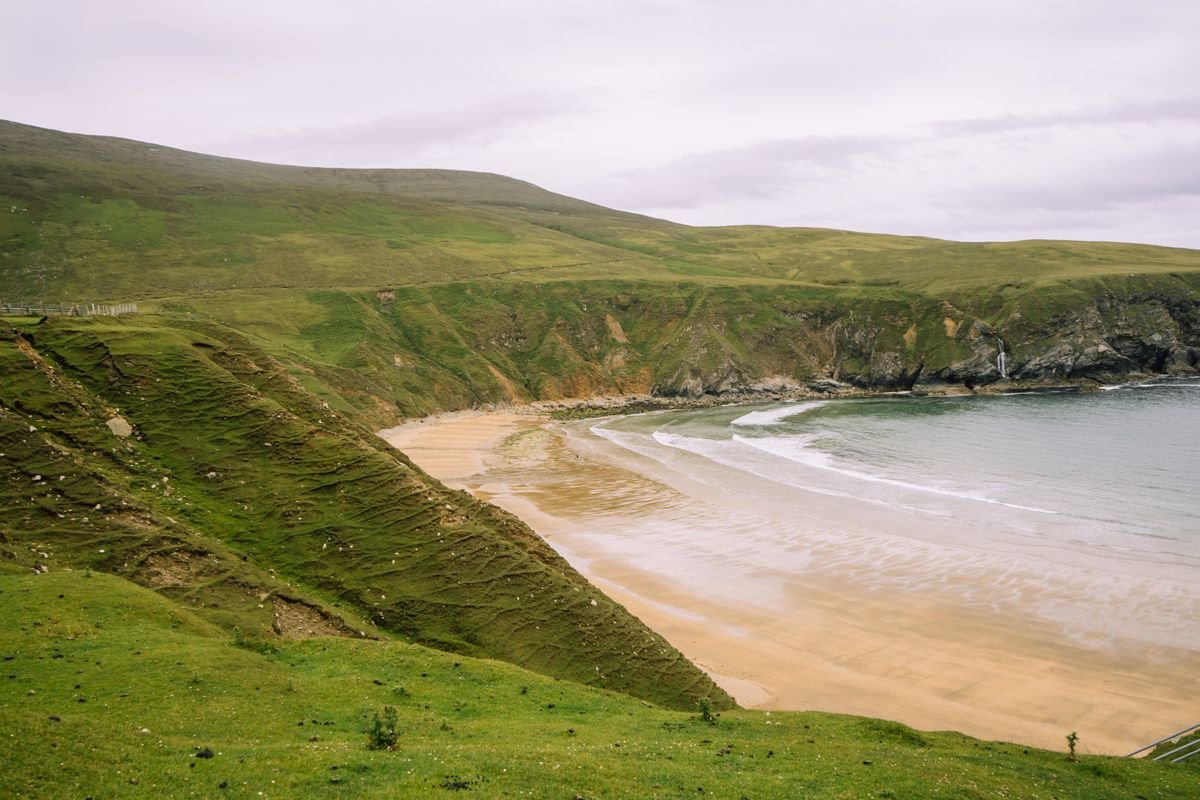
Keem Bay sits at the very end of the road on Achill Island, a horseshoe of sand tucked between two steep green headlands with a single-track road winding down to it. It’s the most famous beach in Mayo and one of the most photographed in Ireland.
The drive in is half the experience, with the cliffs of Croaghaun rising to your right and the water turning bright turquoise below. Basking sharks were once netted in this bay, and in summer you can sometimes still spot them from the cliffs above.
Dog’s Bay, Roundstone
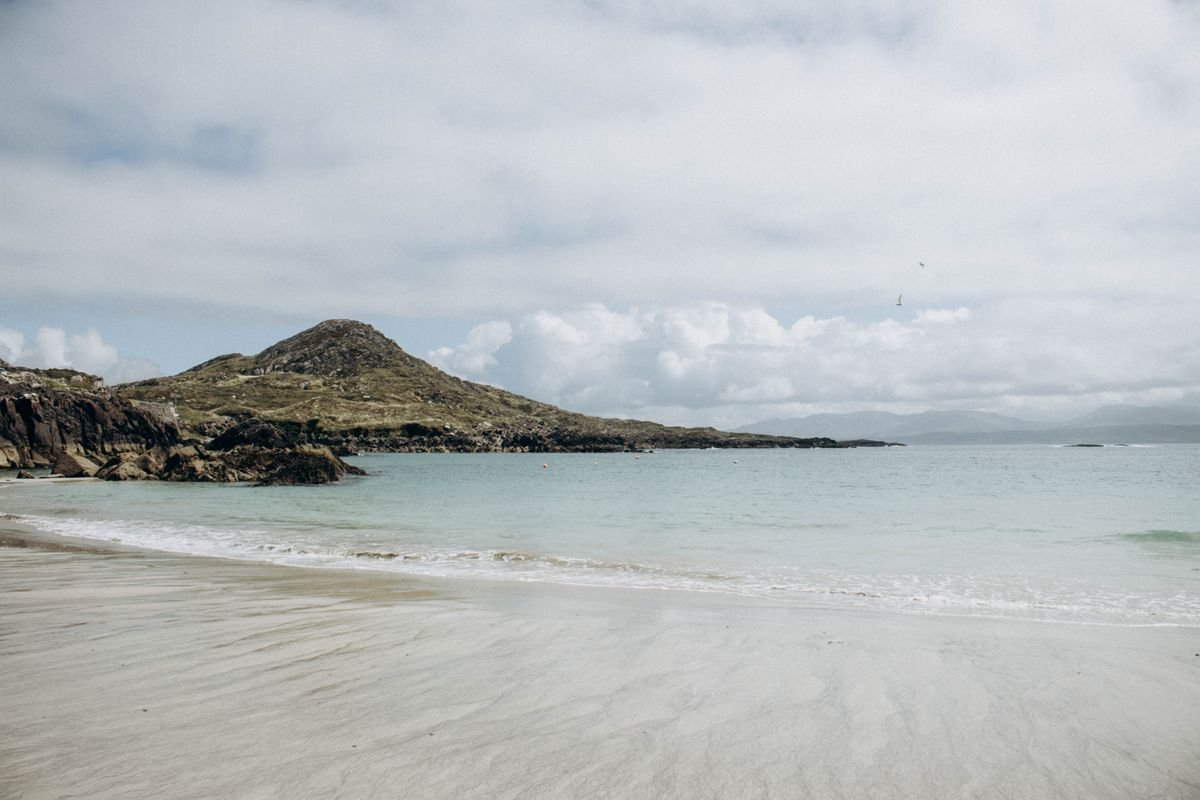
Dog’s Bay is a near-perfect curve of white sand near Roundstone village in Connemara, joined to its twin beach Gurteen Bay by a narrow sandy neck of land. The sand here isn’t really sand at all, it’s made of crushed seashell fragments, which is why it stays so pale.
We ran out of time to get down to Roundstone on our last trip, and it’s the one corner of Connemara I’d go back for first. If you’re driving the N59, build in the detour we skipped.
Silver Strand, Barna
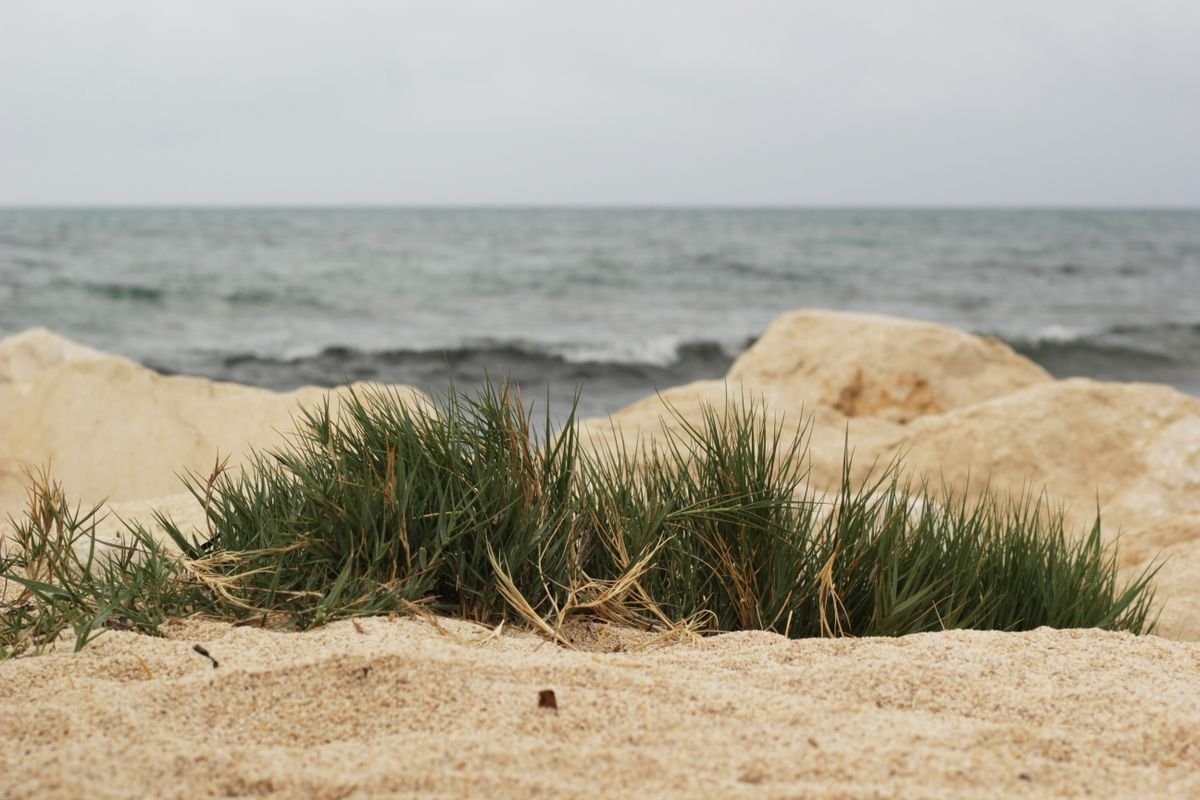
Silver Strand is the easy one to reach, a short drive west of Galway city near Barna along the bay. It’s a sheltered Blue Flag beach that families actually use, with calm water and a lifeguard in summer.
We based ourselves at O’Hallorans Caravan Park in Salthill and taxied into the city, and Silver Strand is just a little further out along the same coast. If you want a swim close to Galway without driving deep into Connemara, this is the one.
Omey Strand, Claddaghduff
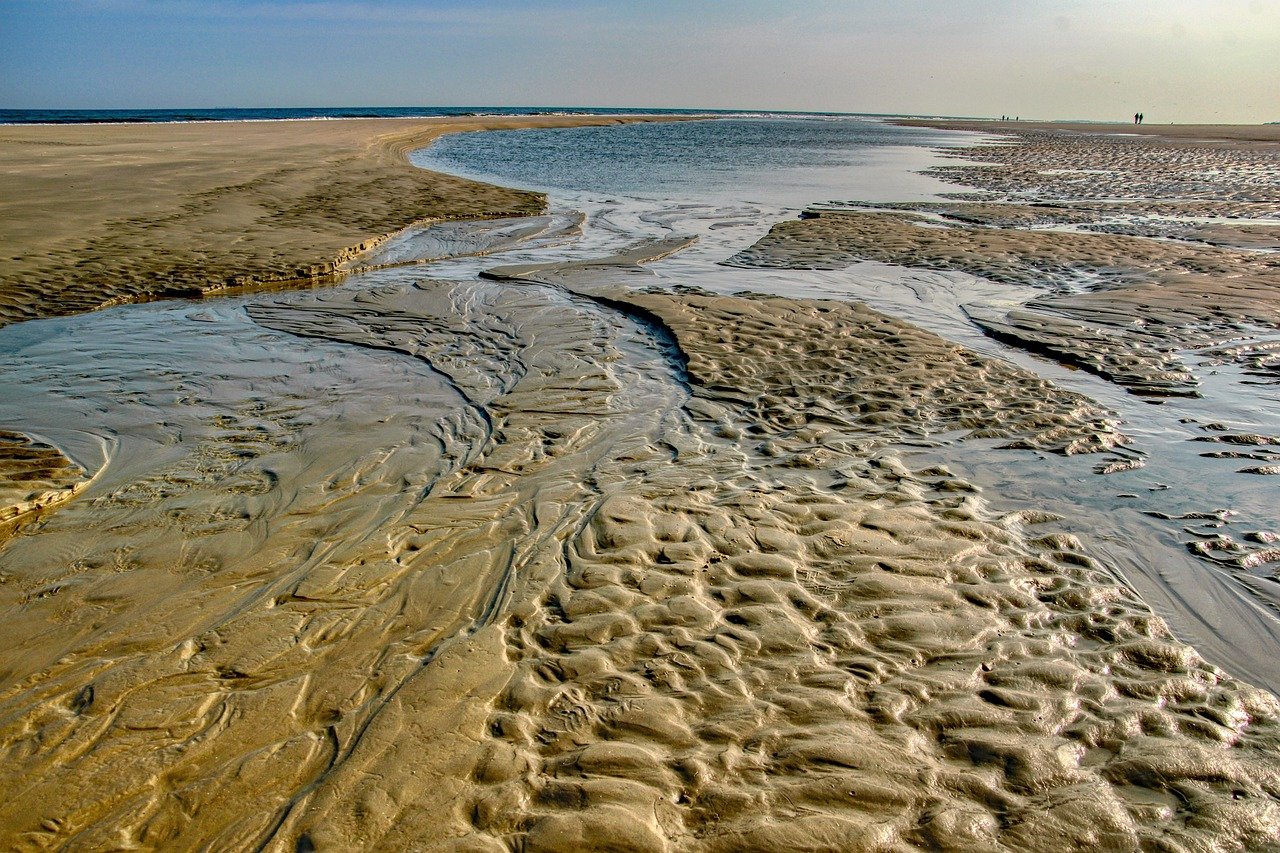
Omey Strand is the strangest beach on this list, just north of Clifden where we were based. At low tide the sea pulls back and you can drive or walk straight across the sand to Omey Island, with marker posts showing the safe route.
Time it wrong and the tide comes back in over the crossing, so check the tide tables before you go and don’t get caught out there. Get it right and you have a whole tidal island and an empty beach mostly to yourself.
Fanore Beach, the Burren
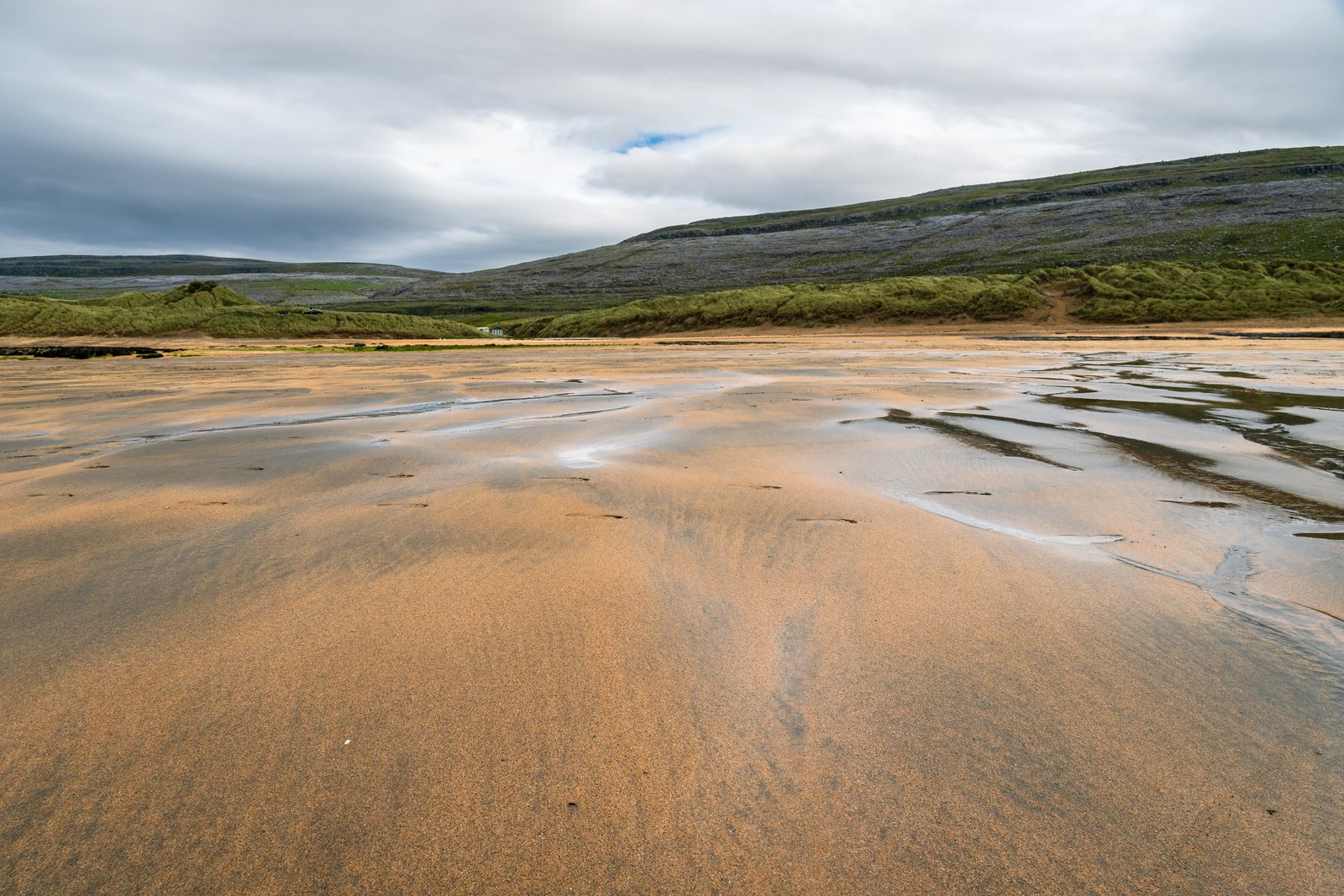
Fanore sits on the edge of the Burren in County Clare, where the gray limestone of the hills runs right down to a long sandy beach backed by dunes. It’s a popular spot with surfers thanks to a reliable swell off the Atlantic.
The mix of bare rock, dune grass and sand makes it look unlike any other beach on this list. It’s also an easy stop if you’re driving the coast road between Galway and the Cliffs of Moher, so you can fold it into a bigger day out.
Where to Stay in Clifden
Day Trips from Galway and Connemara
- Connemara Day Tour with a Stop at Kylemore Abbey
- From Galway: Connemara, Cong and Kylemore Abbey Tour
- From Galway: Aran Islands and Cliffs of Moher Cruise
Beaches in Kerry and the Southwest
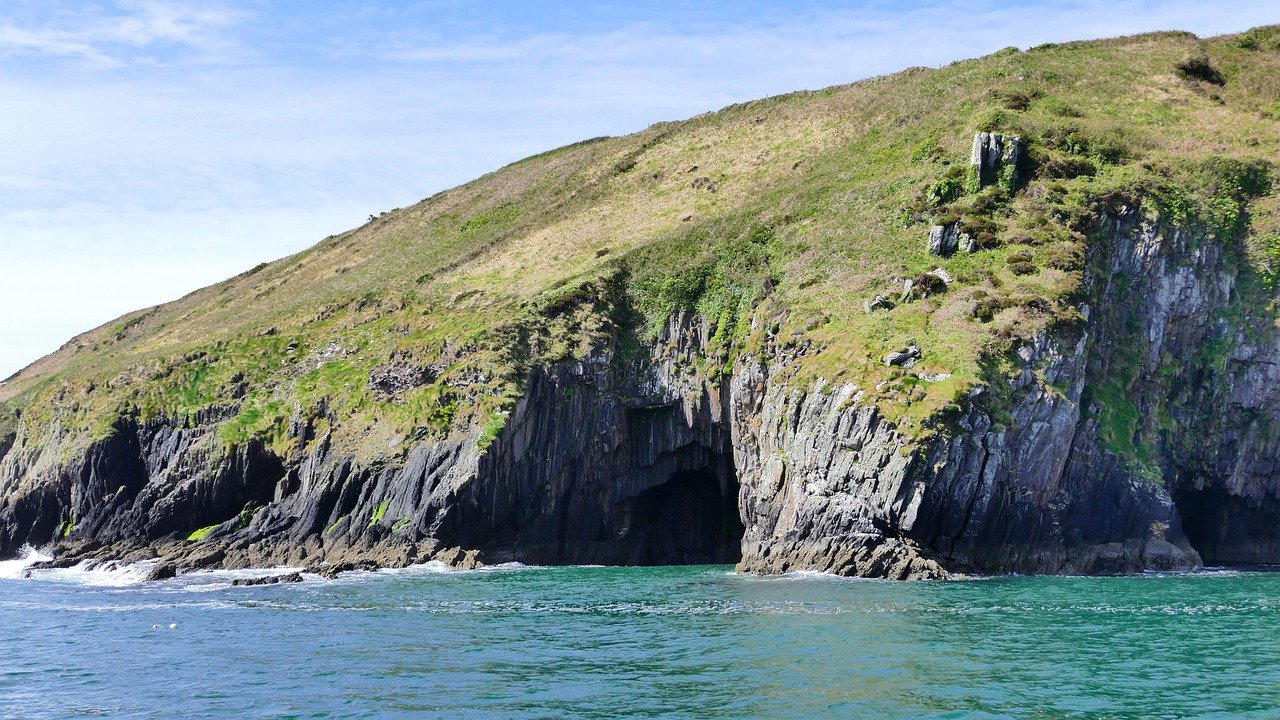
Kerry is the corner of Ireland a lot of people picture when they think of the coast, and the beaches back it up. The Ring of Kerry and the Dingle Peninsula both run right along the water, so you’re rarely more than a few minutes from a strand. If you’d rather not drive the Ring yourself, you can book a Ring of Kerry day tour on GetYourGuide out of Killarney and let someone else handle the road. Here are the three we’d plan a Kerry trip around.
Rossbeigh Strand
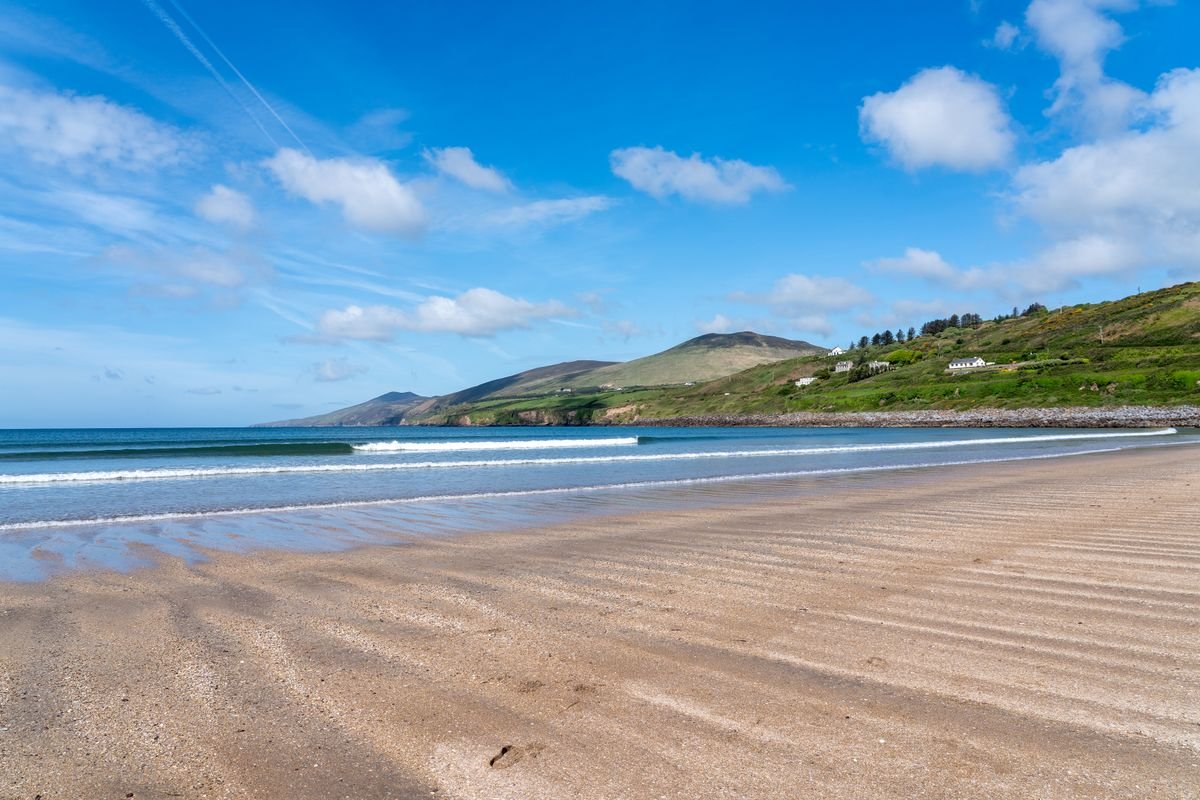
Rossbeigh is a long sand spit near Glenbeigh on the Ring of Kerry, jutting out into Dingle Bay with the mountains of the Dingle Peninsula across the water. It runs for a few kilometers, so there’s plenty of room to walk and the views back to the hills are some of the best on the Ring.
It’s a Blue Flag beach with a lifeguard in summer, and the sheltered inner side is calm enough for a family swim. The outer Atlantic side picks up more swell, so it draws windsurfers and kitesurfers when the wind is up.
Inch Beach, Dingle Peninsula
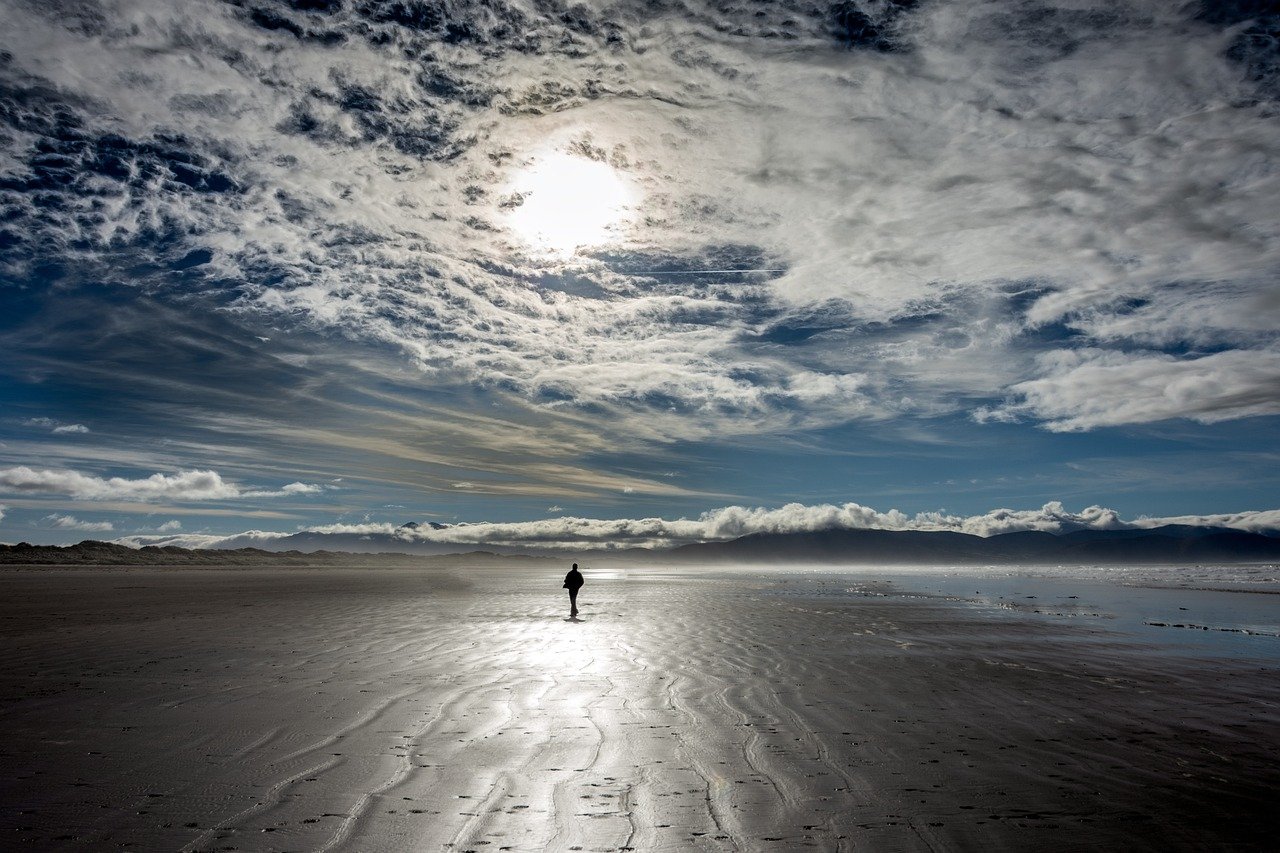
Inch is the big one on the Dingle Peninsula, a sand spit that reaches about 5 km out into Dingle Bay. You can drive right onto the firm sand and park, which makes it one of the easiest beaches in Kerry to actually use, and the surf school here runs lessons most of the year.
Inch sits on the route we drove out to Dingle town on our last trip, about two hours from Doolin going through Adare and Limerick. We arrived in heavy rain and only got out for the evening, which is the biggest regret of our whole Ireland trip. We parked the van at the Rainbow Hostel and taxied the ten minutes into town.
We ended up at Foxy John’s, a working hardware shop with a bar at the back, where two musicians were running a trad session on guitar and tin whistle. The pub was the night, but it means we drove the Slea Head loop in the dark and never properly saw Inch or the peninsula in daylight. Give Dingle two nights so you don’t make our mistake.
Barleycove, Mizen Head
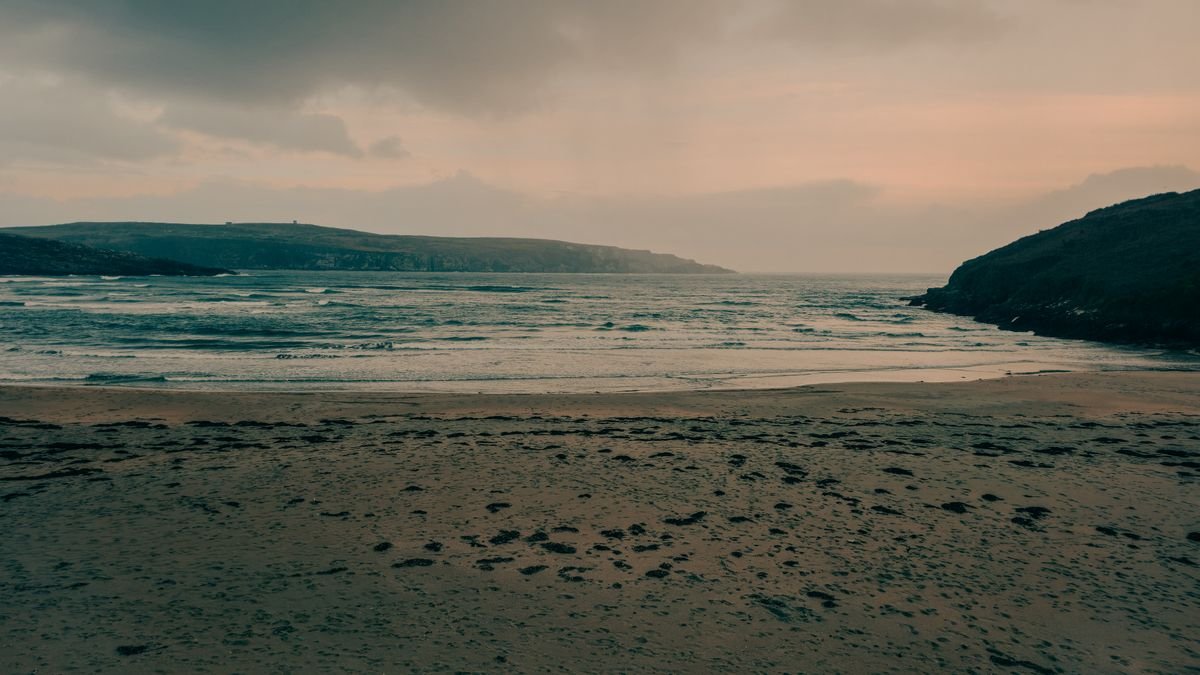
Barleycove is right down at the far southwest tip of County Cork, near Mizen Head, the most southwesterly point on the Irish mainland. It’s a wide stretch of pale sand backed by a protected dune system, and you cross a floating pontoon boardwalk over the marsh to reach it, which keeps cars well back from the sand.
The dunes here are a special area of conservation, so it stays undeveloped and quiet even in summer. It’s a long drive out to this part of West Cork, but pair it with the Mizen Head signal station and the Sheep’s Head drive and you have a full day on one of the wildest stretches of the southwest coast.
Where to Stay in Dingle
Beaches in Wexford, Wicklow, and the Southeast
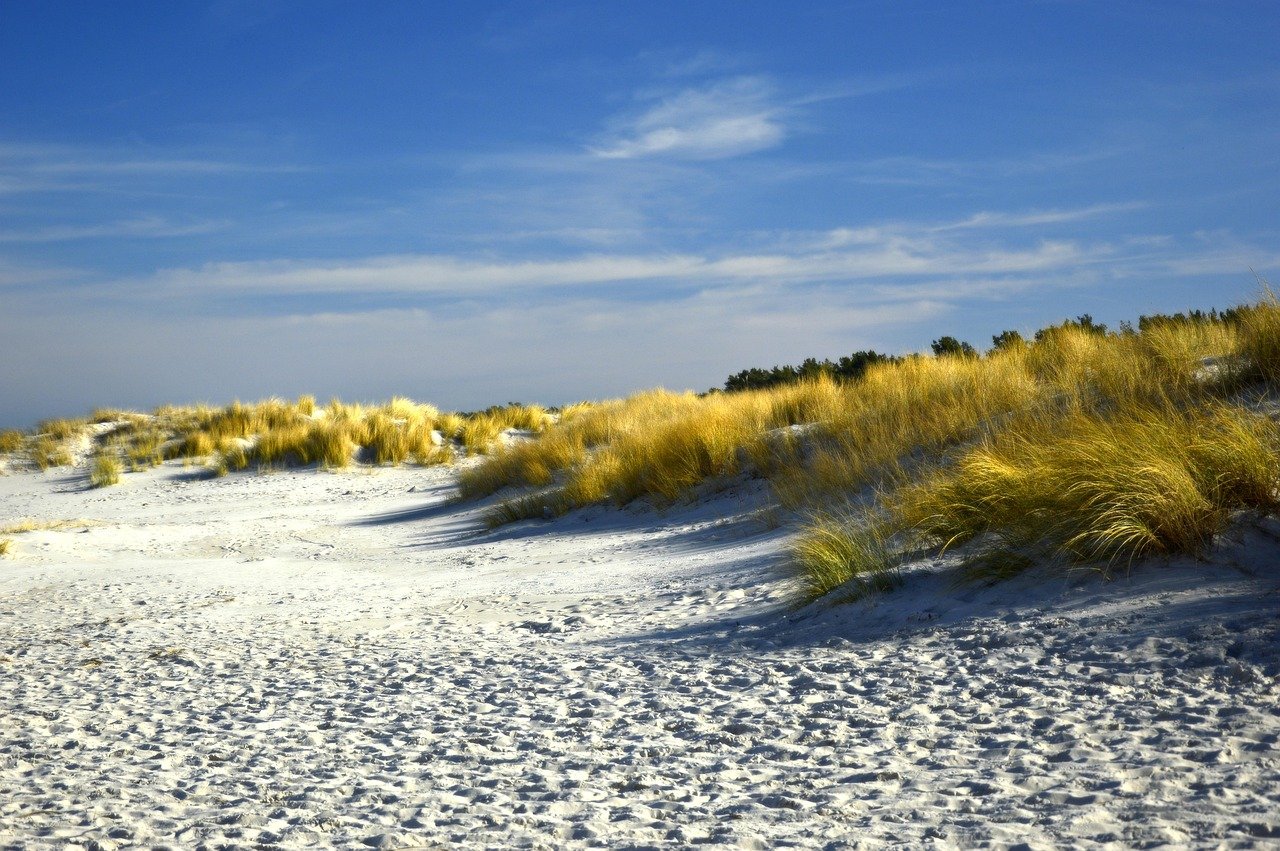
The southeast is the easiest corner to reach from Dublin, and the water is a touch warmer and calmer than the wild Atlantic coast up north. If you’re based in the capital and want a real beach day without driving across the whole country, this is where you head.
These are softer, family-friendly strands for the most part, long flat sand and gentle dunes rather than dramatic cliffs. They get busier in summer because the cities of the east are close, but they’re big enough to absorb a crowd. Here are the four worth the drive.
Curracloe Beach, Wexford

Curracloe is the famous one in Wexford, an 11 km stretch of flat golden sand backed by dunes a short drive northeast of Wexford town. It’s a Blue Flag beach with a lifeguard in summer, and there’s enough room here that it never feels full.
The opening D-Day scene of Saving Private Ryan was filmed here, standing in for Omaha Beach. Brave by name was also shot along this coast. It’s an easy beach to actually use, with parking close to the sand and shallow water that makes it a solid family pick.
Baginbun Beach, Hook Peninsula
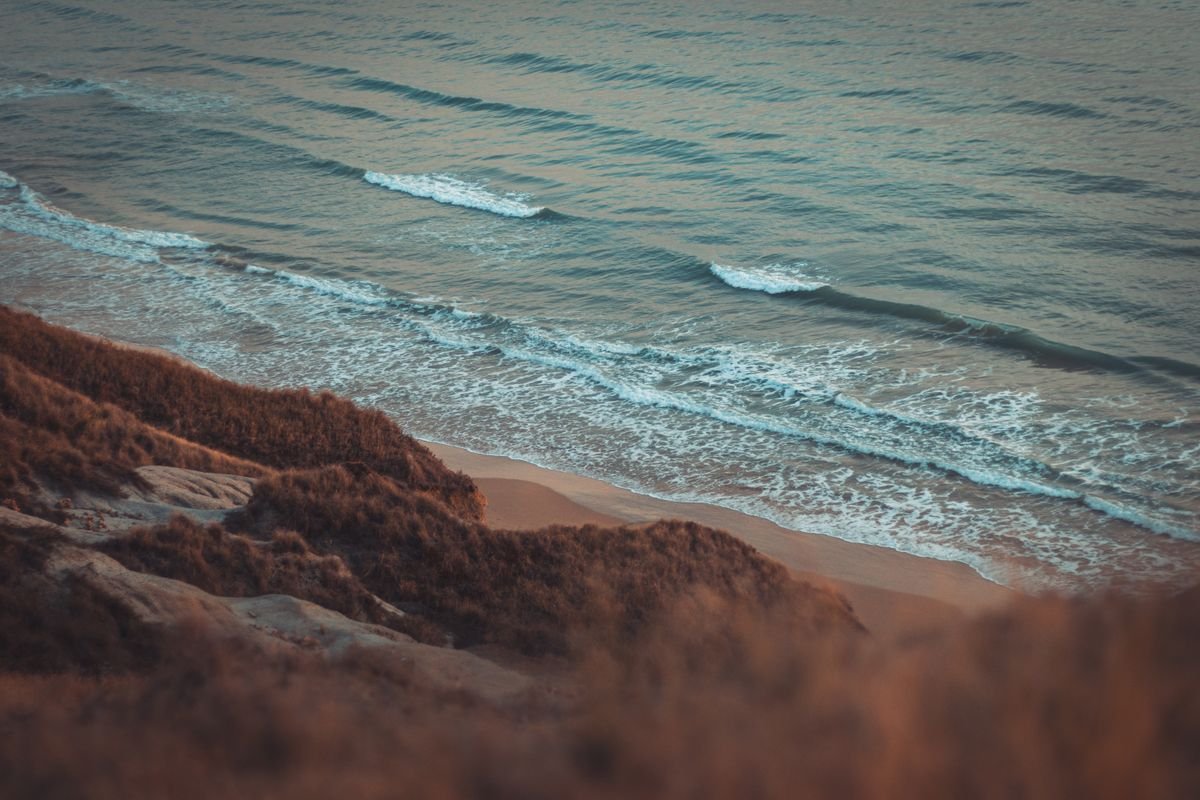
Baginbun is a small sheltered cove on the Hook Peninsula in south Wexford, tucked into a headland near the village of Fethard-on-Sea. It’s two little beaches really, split by a rocky point, with calm clear water that’s good for swimming.
This is where the Normans first landed in Ireland in 1170, and there’s an old saying that “at the creek of Baginbun, Ireland was lost and won.” Pair it with a drive down to the Hook Lighthouse, one of the oldest working lighthouses in the world, and you’ve got a full day on the peninsula.
Tramore Beach, Waterford
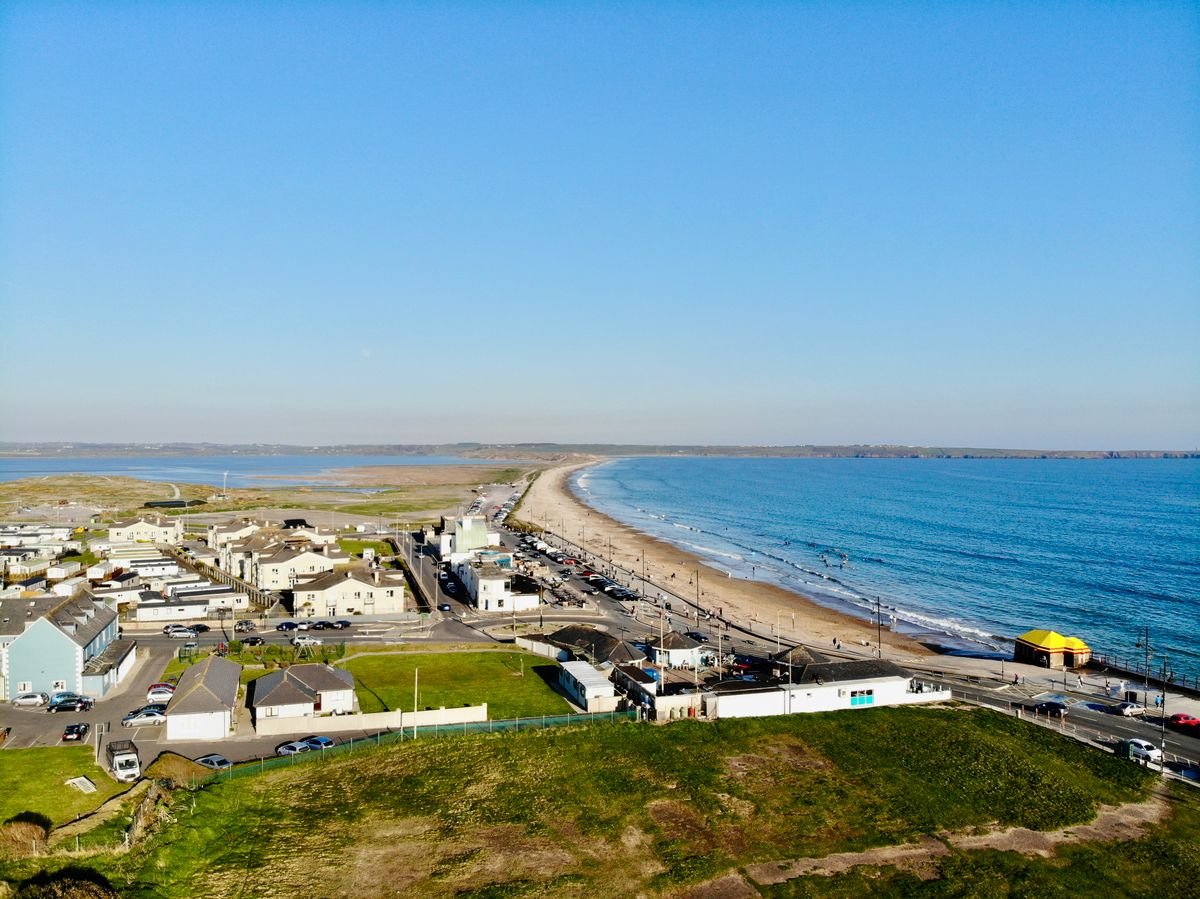
Tramore is the big seaside town of the southeast, just south of Waterford city, and its beach is a 5 km sweep of sand backed by a serious dune system. The name means “big strand” in Irish, and it’s the busiest, most developed beach on this list.
This is the one to pick if you want a proper resort day with amusements, chip shops, and a promenade rather than empty wilderness. It’s a popular surf spot too, with schools running lessons on the beach break, so it works whether you want to ride the swell or just eat ice cream and watch.
Brittas Bay, Wicklow
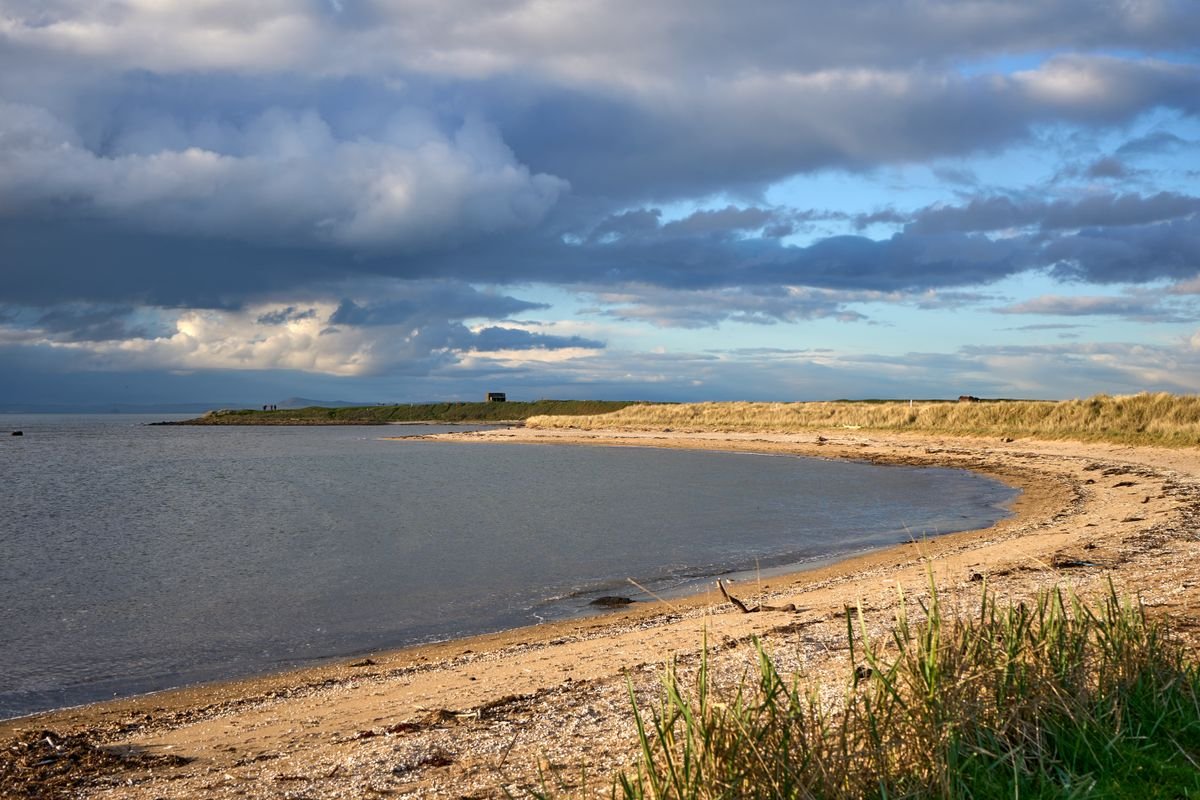
Brittas Bay is the best beach within easy reach of Dublin, about an hour and 15 minutes south down the coast in County Wicklow. It’s a 5 km run of pale sand and tall dunes that has long been the escape beach for people in the capital.
The dunes here are protected, so the sand stays clean and the backdrop stays natural even with the crowds. There are paid parking areas at the north and south ends, and on a warm summer weekend they fill up fast, so get there early if the forecast is good.
Where to Stay Around Ireland
- Best Places to Stay in Galway, Ireland
- Where to Stay in Lahinch: Best Hotels, Lodges & B&Bs
- Where to Stay in County Cork: Cork City vs West Cork
Beaches Near Dublin and the East Coast
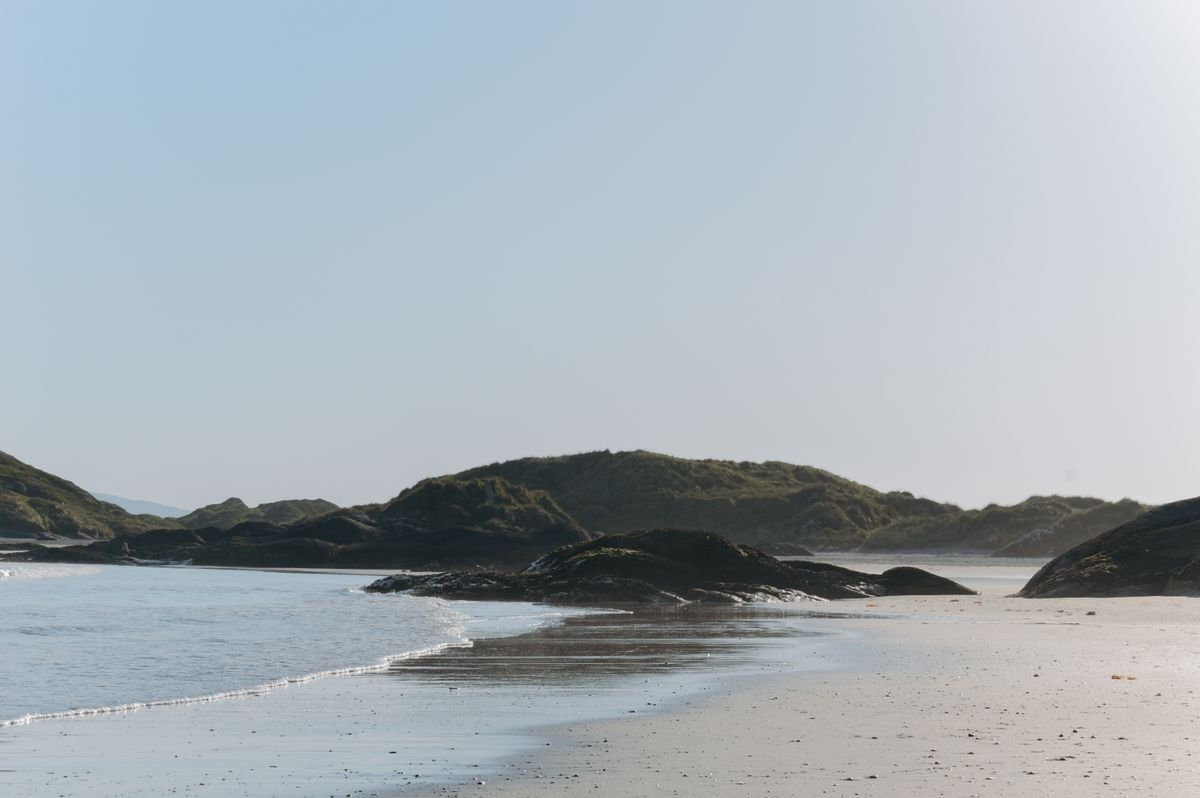
Dublin itself isn’t a beach city, but you don’t have to go far to find sand. We started and ended our last trip in the capital, with a couple of nights at Fitzsimons Hotel in Temple Bar, and the closest proper strand is a short hop north of the city.
That first night we did the Temple Bar pub crawl, starting with pints at Darkey Kelly’s on Fishamble Street, which is the kind of night the area is built for. If you’re using Dublin as a base, you can sleep in the city, do the Jameson Distillery and Trinity College in the day, and still get a beach walk in.
This section runs up the east coast and over the border into Northern Ireland, where the Antrim and Derry coastline has some of the best beaches on the whole island.
The Velvet Strand, Portmarnock
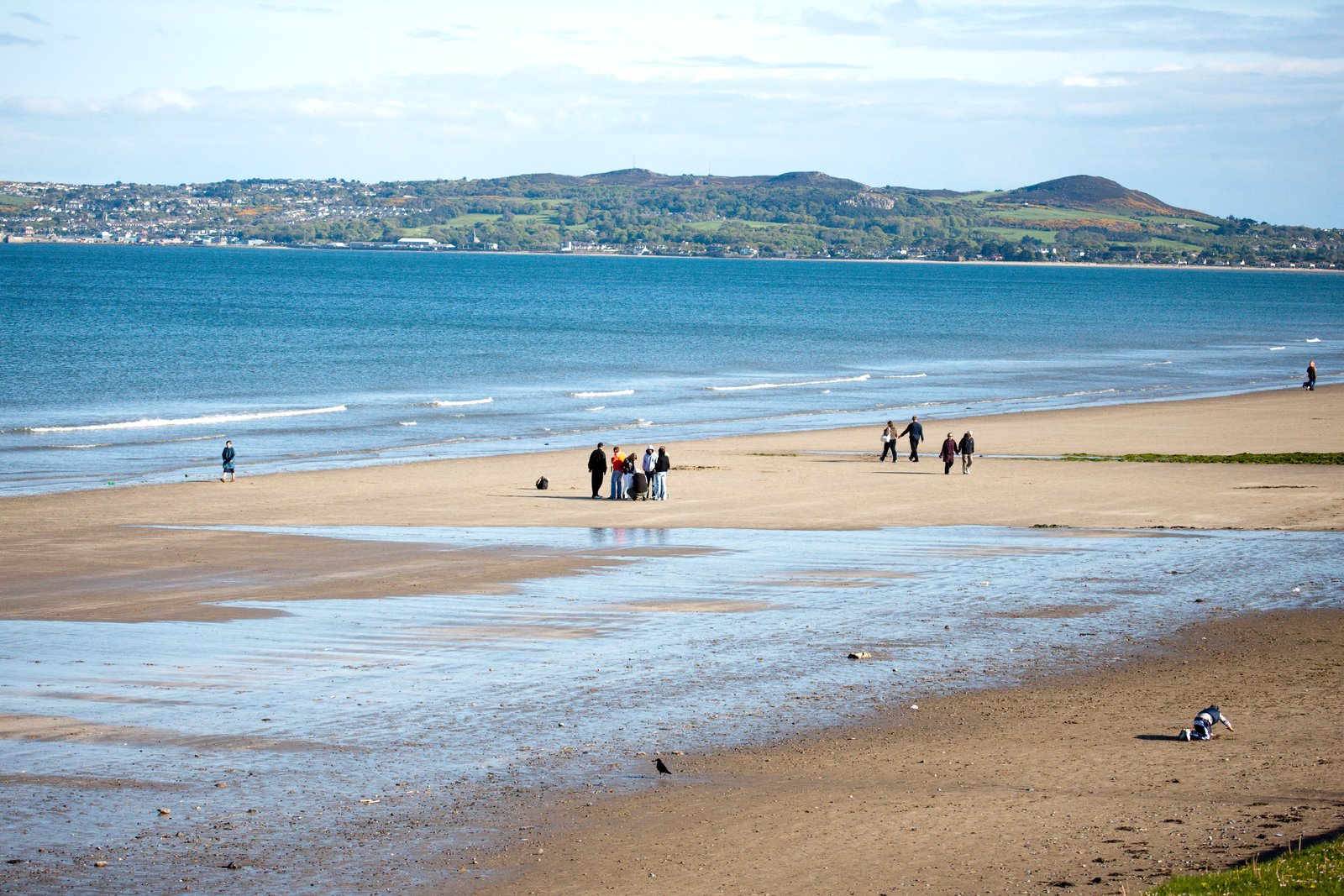
The Velvet Strand at Portmarnock is the easiest beach to reach from Dublin, about half an hour north of the city and on the DART line, so you don’t even need a car to get here. It’s a long, flat stretch of fine sand that runs for around 3 km along the coast.
The fine, soft sand is where the name comes from. The first east-to-west transatlantic flights took off from this beach in the early days of aviation, and there’s a memorial on the dunes marking it. It’s a Blue Flag beach with calm water, which makes it a solid family swim close to the city.
Whiterocks Beach, Portrush
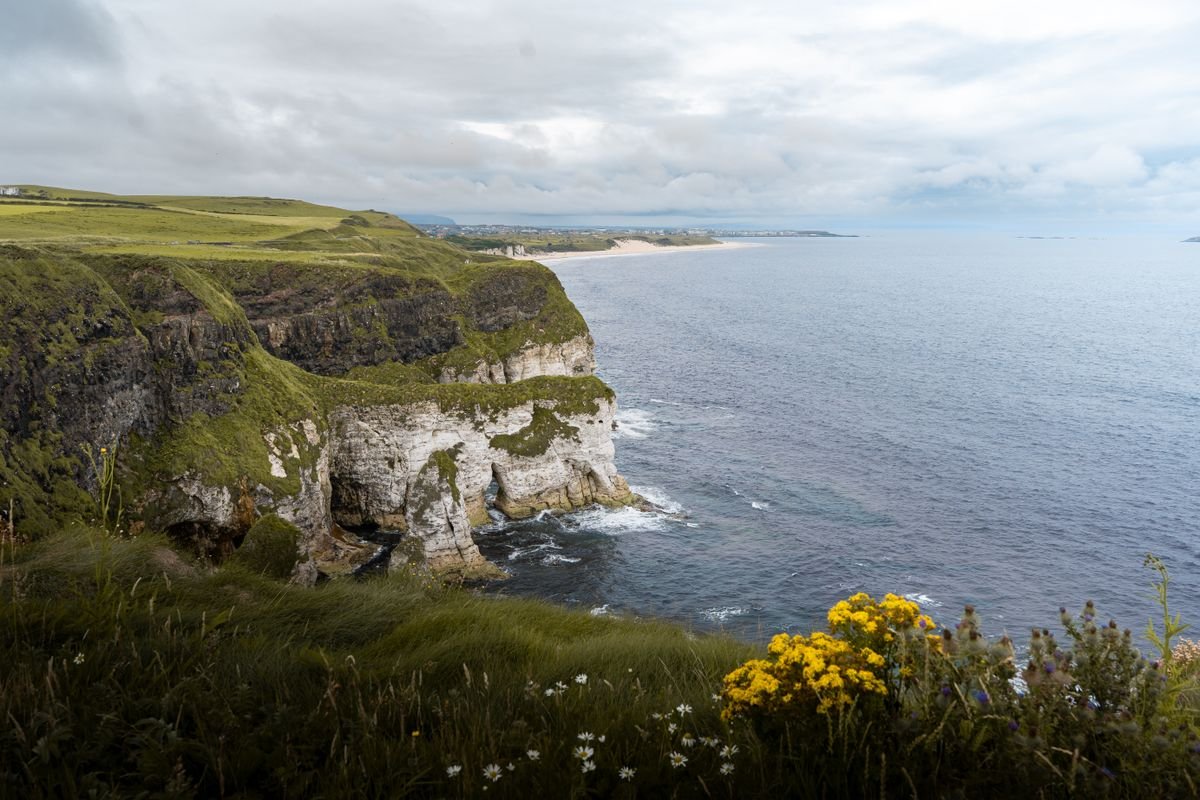
Whiterocks is on the Causeway Coast in County Antrim, just east of Portrush, and it’s named for the pale limestone cliffs that back the sand. The cliffs have been carved by the sea into arches and caves over thousands of years, which gives this beach a look you won’t find further south.
It’s a wide, firm beach popular with surfers and walkers, and it sits right on the road to the Giant’s Causeway. If you’re driving the Causeway Coastal Route, this is an easy stop to fold into a day that takes in the Causeway itself and the Carrick-a-Rede rope bridge.
Portstewart Strand, Derry
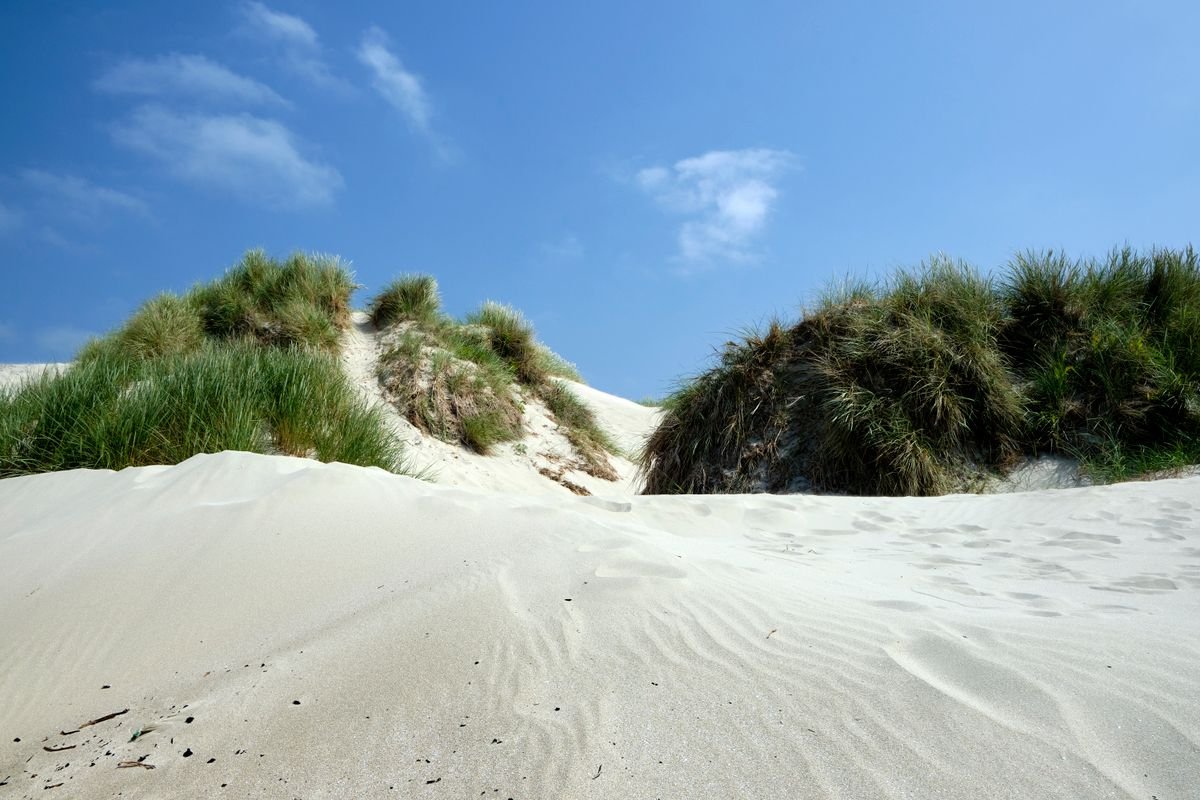
Portstewart Strand is a 2 km stretch of golden sand on the north Derry coast, managed by the National Trust and backed by one of the biggest dune systems in Northern Ireland. You can drive straight onto the beach and park on the firm sand, which makes it one of the easiest to actually use on this coast.
The dunes here are a special area of conservation and home to rare orchids and butterflies in summer. It’s a Blue Flag beach with lifeguards in season, and the walk out through the dunes to the River Bann estuary is worth doing on its own.
Murlough, County Down
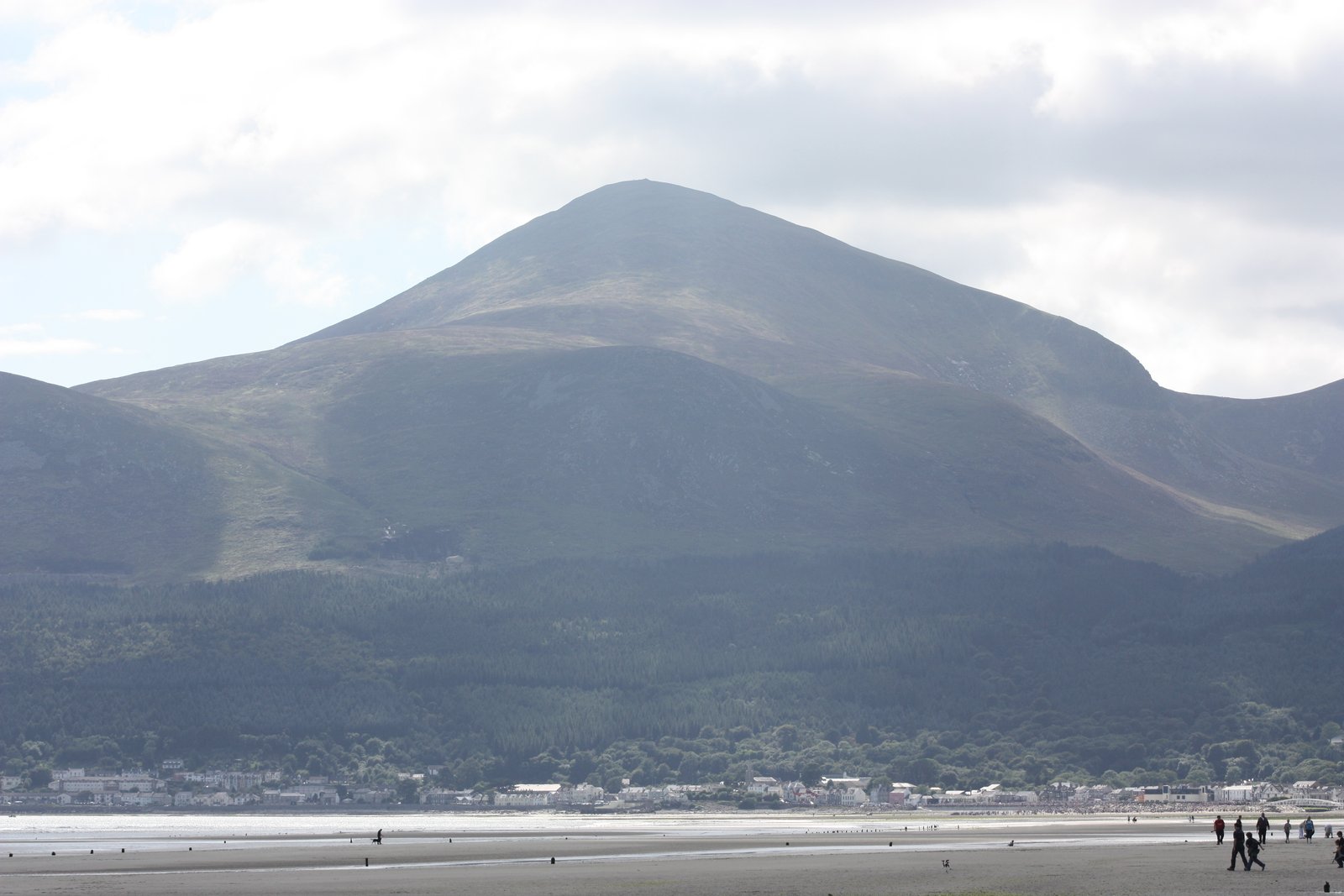
Murlough is a beach and nature reserve on the County Down coast, with the Mourne Mountains rising right behind it. It was Ireland’s first nature reserve, and you reach the sand on a network of boardwalks through 6,000-year-old sand dunes, which keeps the fragile ground protected.
The view of Slieve Donard, the highest peak in the Mournes, dropping down toward the sea behind the beach is the reason to come. Pair it with the seaside town of Newcastle just down the road and you’ve got a full day on the southern Down coast.
Where to Stay in Wexford Town
Best Day Tours from Dublin
- Guinness Storehouse Self-Guided Tour with a Free Pint
- From Dublin: Cliffs of Moher, Burren and Galway City Day Tour
What Blue Flag and Green Coast Status Actually Mean
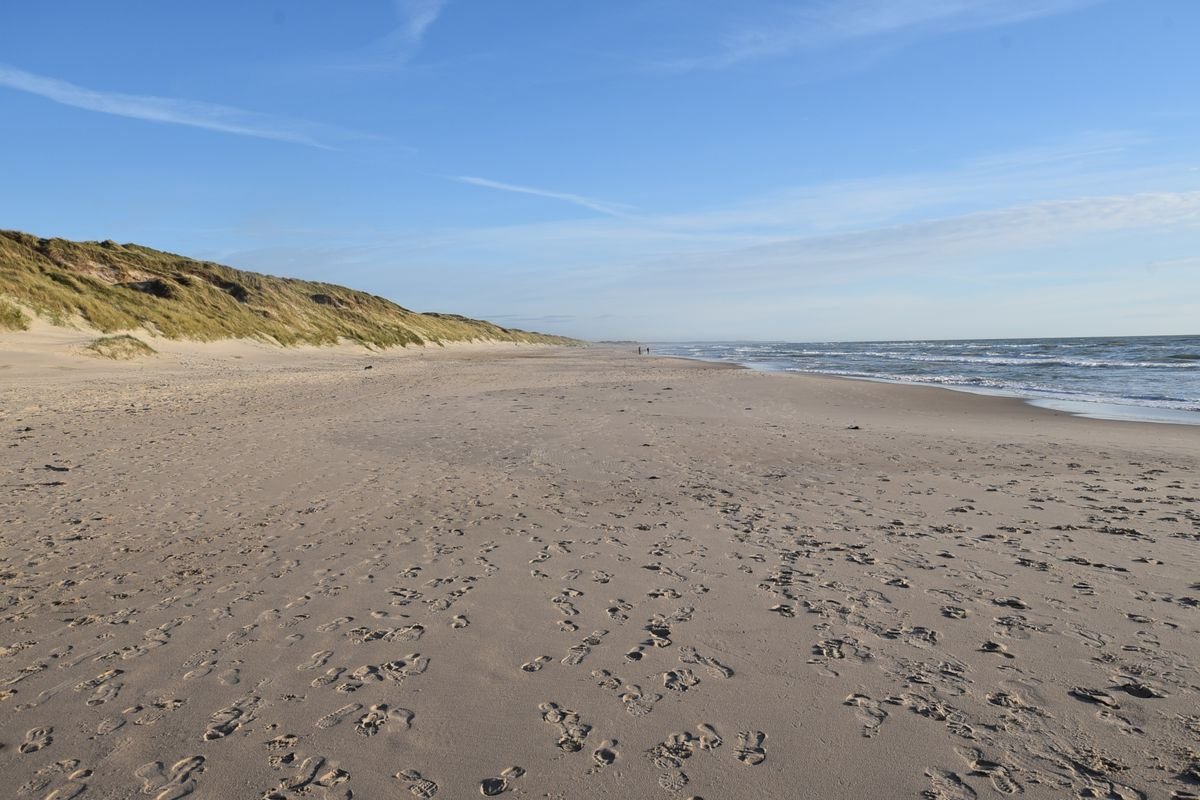
You’ll see “Blue Flag” and “Green Coast Award” on a lot of Irish beaches, and they tell you two different things, so it helps to know which is which.
Blue Flag is an international award run in Ireland by An Taisce. A beach earns it by hitting strict standards on water quality, safety, and facilities, which means lifeguards in season, toilets, clean tested water, and proper management.

In plain terms, a Blue Flag beach is the safe family pick. It’s the one with the parking, the bins, and someone watching the water in summer. Silver Strand near Galway, Rossbeigh in Kerry, and Curracloe in Wexford all carry it, and they’re all easy beaches to actually use with kids.
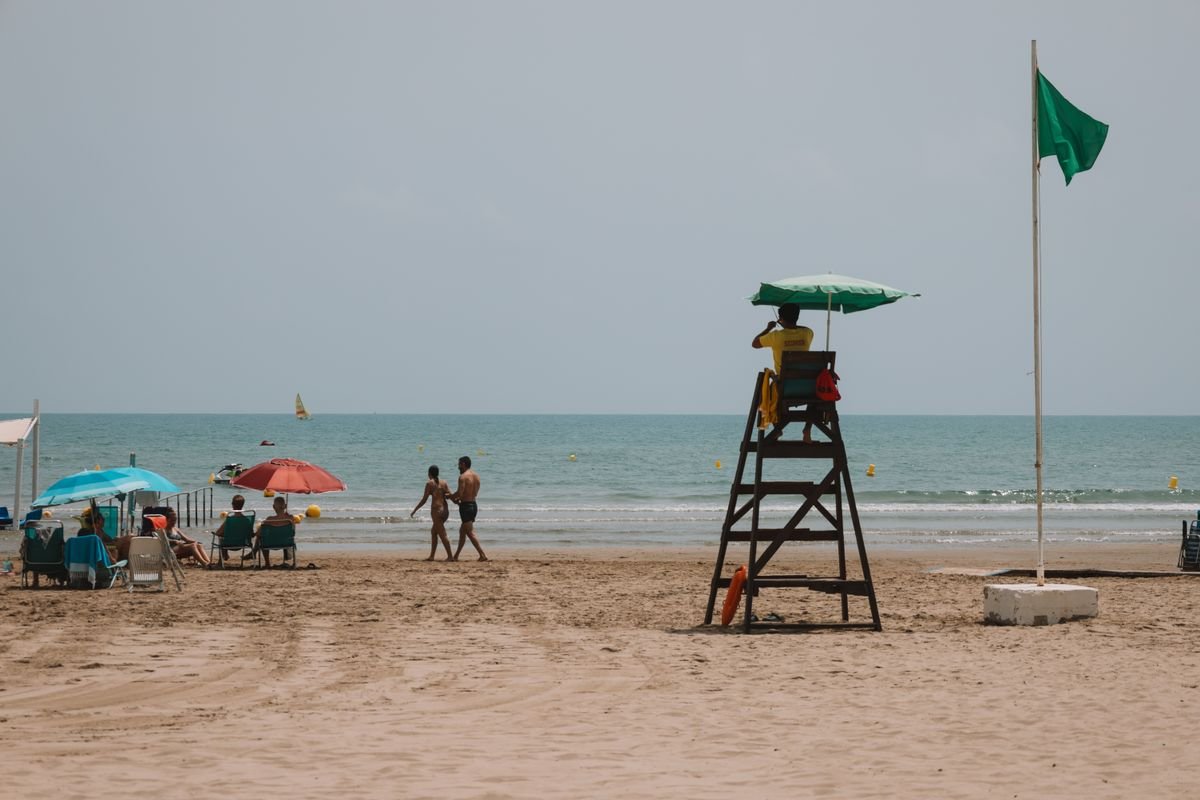
The Green Coast Award is the other one, also run by An Taisce, and it’s almost the opposite idea. It rewards beaches with clean water and a healthy natural environment, but ones that are rural and undeveloped, without the facilities a Blue Flag demands.
So a Green Coast beach is the wilder, less-visited choice. Great water, protected dunes, and not much in the way of toilets or a lifeguard. If you want sand and space over a promenade and a chip shop, that’s the flag to look for.
Both are renewed every year, so a beach can lose its status if the water quality slips. One last thing to keep in mind: plenty of the best beaches on this list carry no flag at all.
The Murder Hole and Keem Bay are two of the most photographed spots in the country, and neither has lifeguards or facilities. A flag is useful, but the absence of one doesn’t mean a beach isn’t worth the drive.
Best Time to Visit Irish Beaches
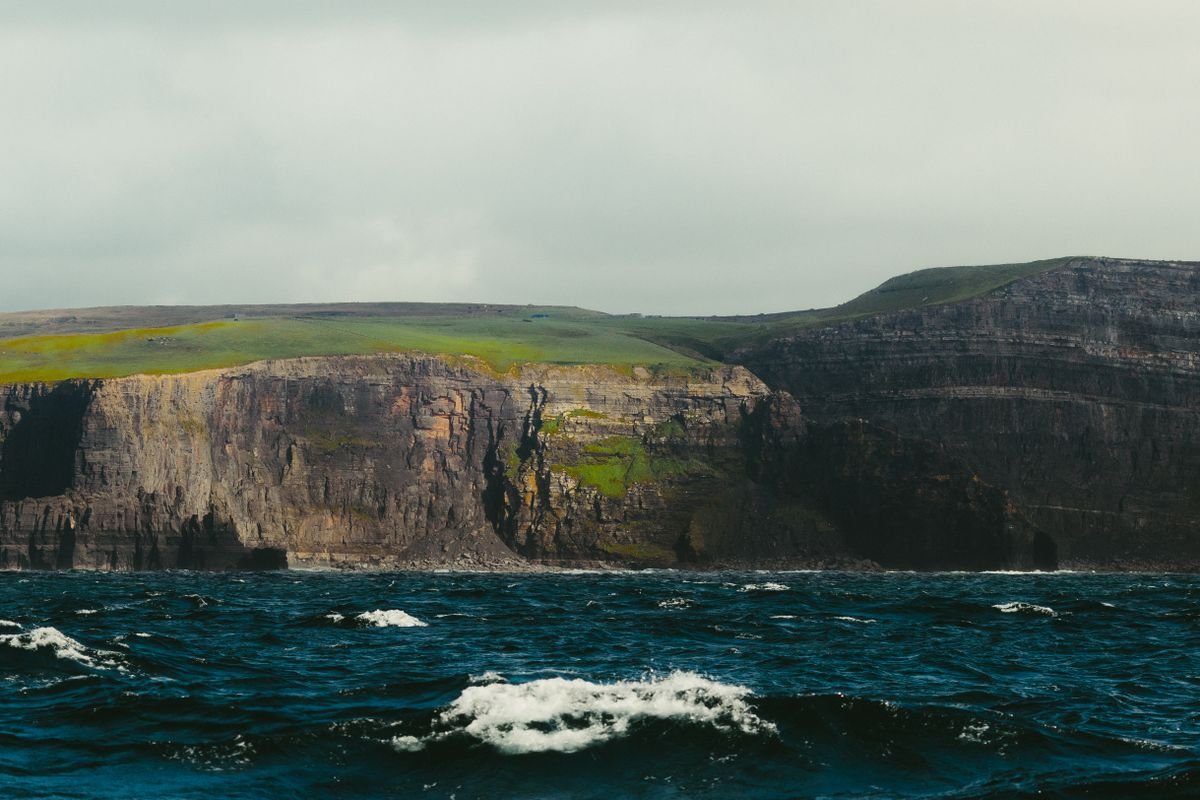
The short answer is that there isn’t a bad time to walk an Irish beach, but there’s a clear best time to swim one. The water is cold all year, and the season you pick changes a lot more than just the temperature.
July and August are the warmest months and the only stretch when lifeguards are on duty at the Blue Flag beaches. The sea climbs to around 15 to 16°C, which is as warm as it gets here, and the family beaches in the southeast and near Dublin actually fill up. If you want a real beach day with the water at its best, this is the window.
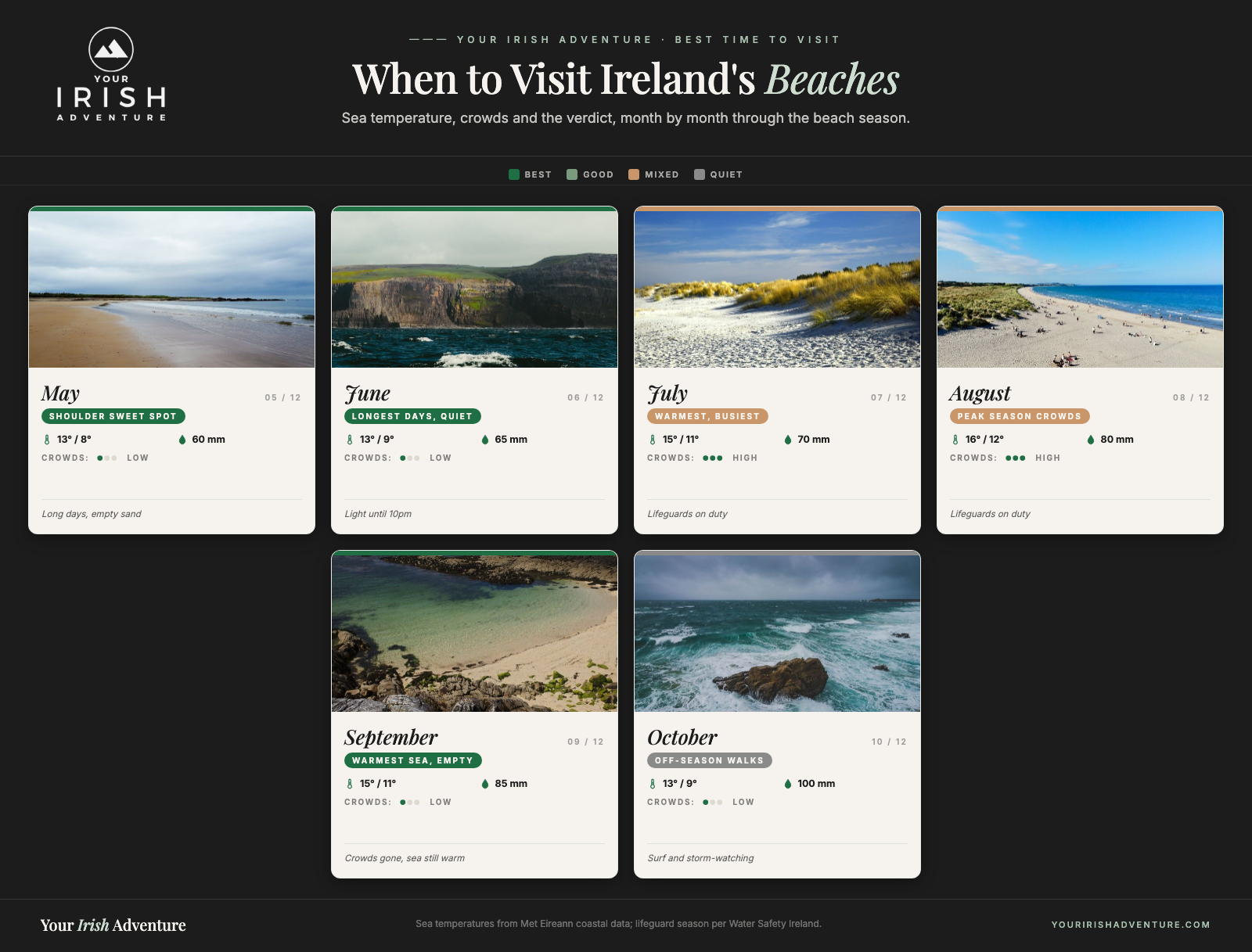
The trade-off is crowds and parking. Spots like Brittas Bay and Curracloe fill their lots fast on a warm weekend, so get there early. The wild Atlantic beaches up in Donegal and Connemara stay quiet even in peak summer, so the crowd issue is really only a southeast and east-coast problem.
Shoulder Season: May, June, and September
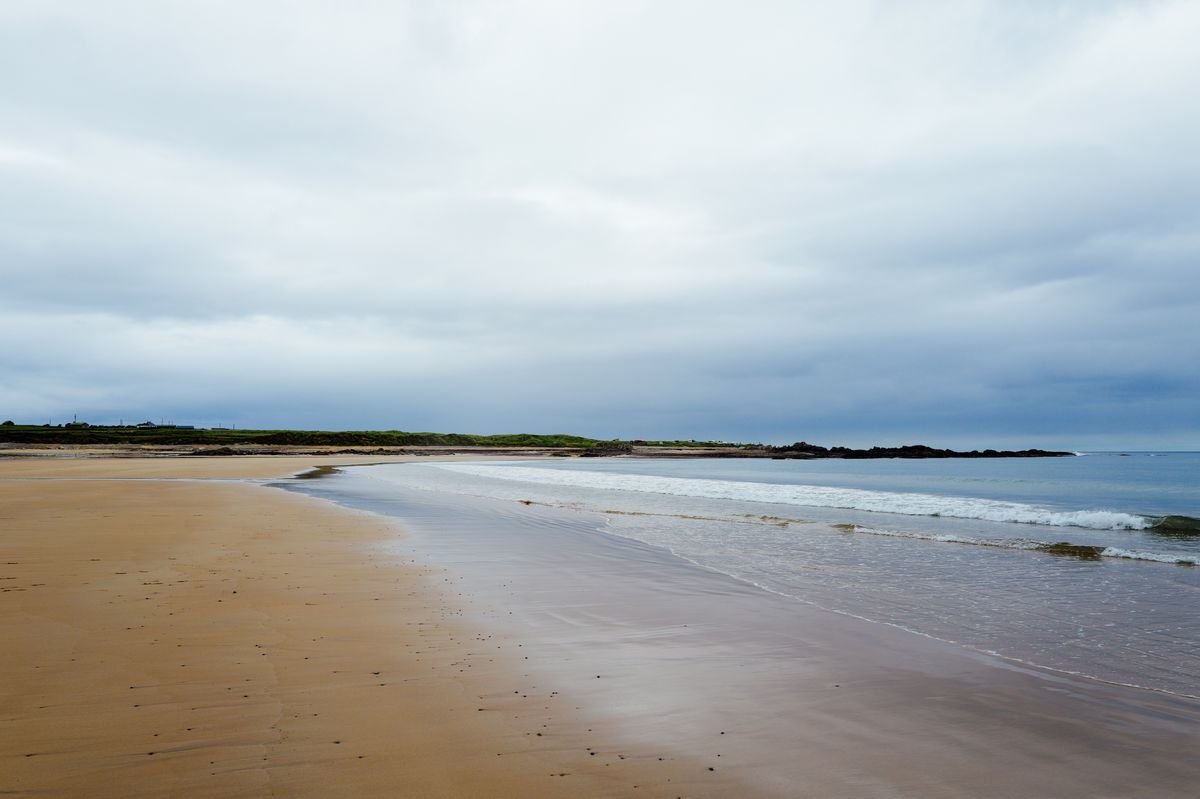
This is the sweet spot if you want decent weather without the crowds. Late May and June give you the longest days of the year, with light until nearly 10pm, and the beaches are far emptier than in the school holidays. The sea is still cold but warming, and the weather is often more settled than midsummer.
September is the other strong pick. The sea has had all summer to warm up, so it’s actually at its warmest in early September, and the tourist crowds drop off the moment the schools go back. We drove the whole west coast in shoulder season and had most of these beaches close to ourselves.
Winter and the Off-Season
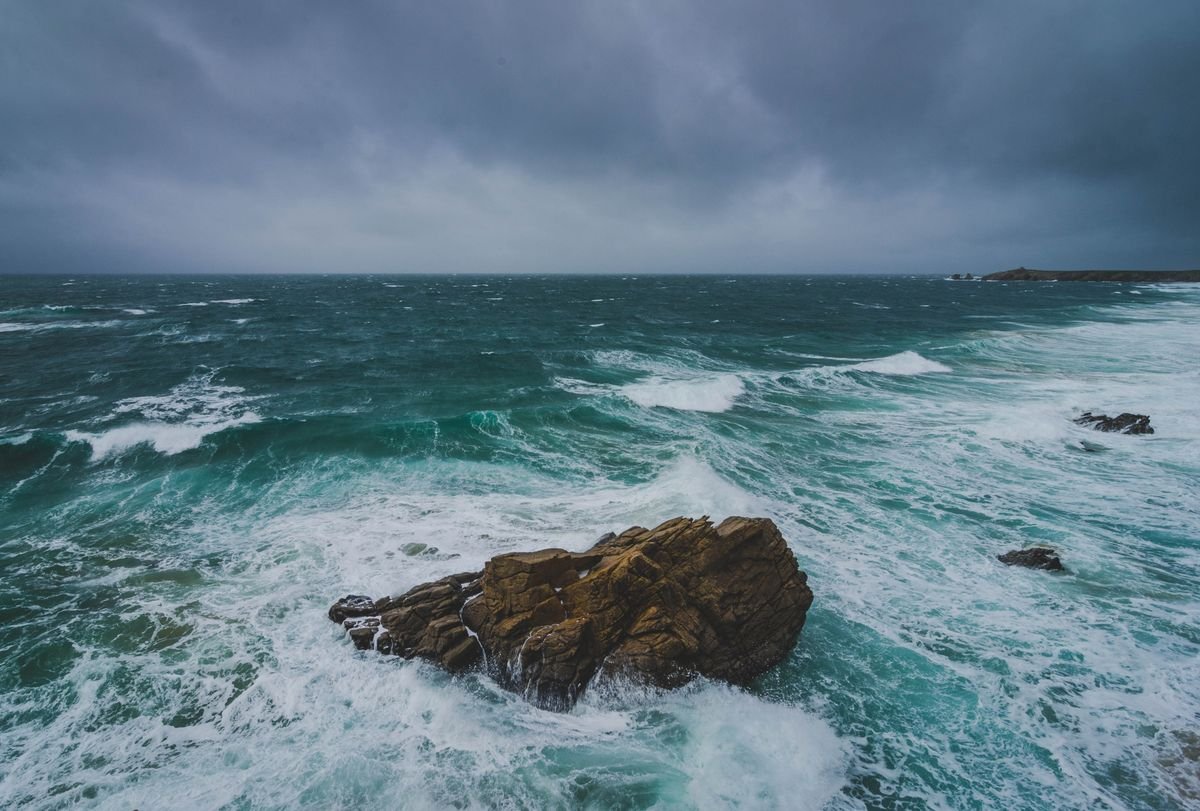
From October through April, swimming is for hardy locals and wetsuit-wearing surfers only, and the lifeguards are gone. What you get instead is the coast at its most dramatic, with big Atlantic swells rolling into beaches like Fanore and Streedagh that draw surfers all winter.
A winter beach walk in Ireland is a real thing to do, just go in knowing the days are short, the wind is serious, and there’s nothing open nearby. Wrap up, bring a flask, and you’ll often have a famous beach entirely to yourself.
One thing holds true no matter the month: Irish weather changes by the hour. You can get four seasons in an afternoon on any coast, so pack layers and a rain jacket whenever you go, and don’t write off a day just because the morning looks grim.
Swimming Safety on the Irish Coast
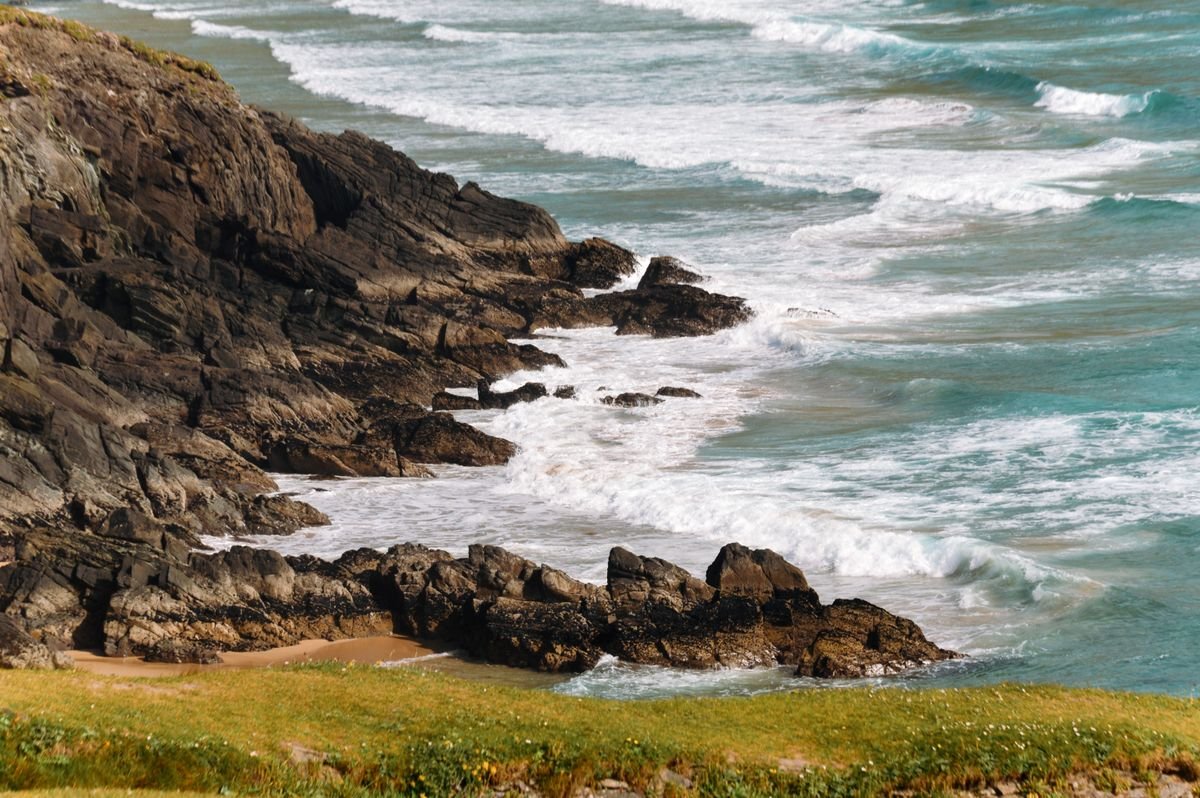
Irish water is no joke, even on a calm day. The Atlantic is cold all year, the currents are strong, and most of these beaches have no lifeguard outside of July and August. A few minutes of basic caution is what keeps a beach day from turning into a bad story.
The first rule is to swim at a lifeguarded beach if you’re swimming properly, and swim between the red and yellow flags. Those flags mark the patrolled zone where the lifeguard is watching and the conditions have been checked. A red flag on its own means don’t go in the water at all.
Rip Currents
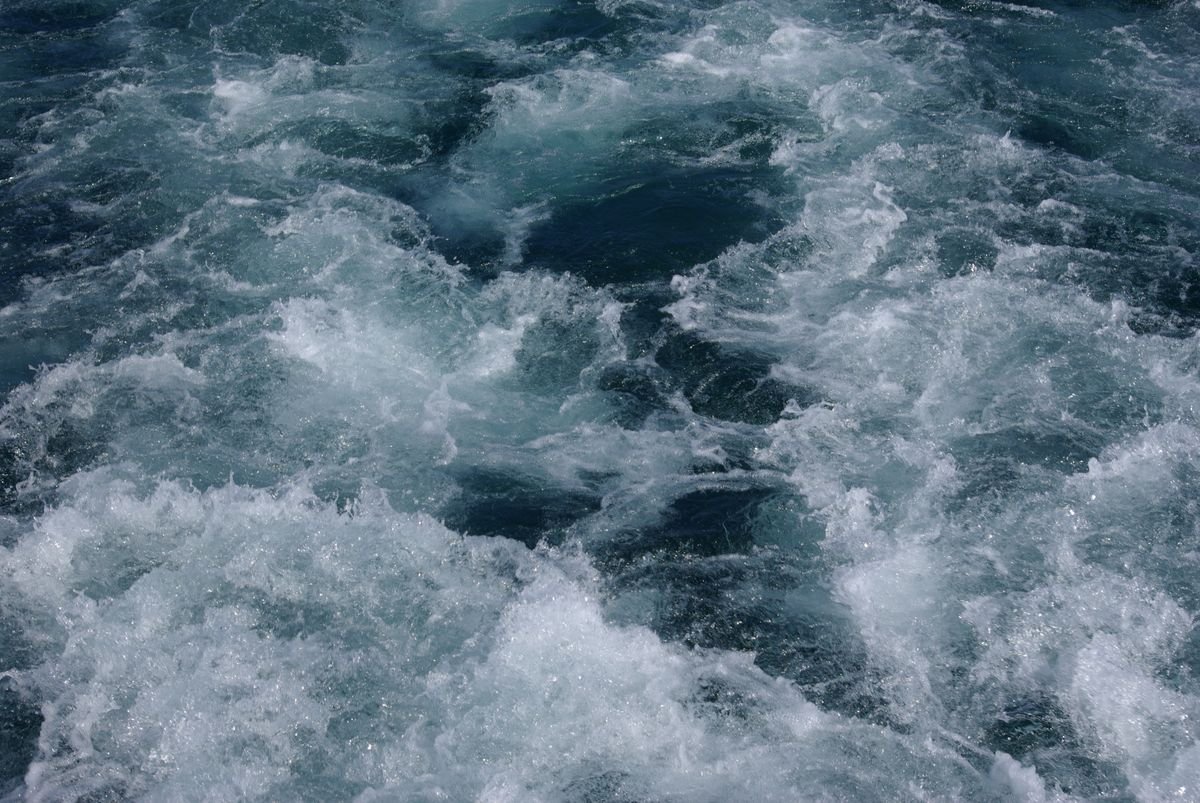
Rip currents are the real danger on the Atlantic coast, and they kill strong swimmers every year. A rip is a narrow channel of water pulling back out to sea, and it can drag you out faster than you can swim against it.
If you get caught in one, don’t fight it straight back to shore. Swim parallel to the beach until you’re out of the pull, then come in at an angle. Beaches with a reliable surf break, like Streedagh, Fanore, or Tramore, are exactly the ones where rips form, so respect the swell that makes them good for boards.
Cold Water and Tides
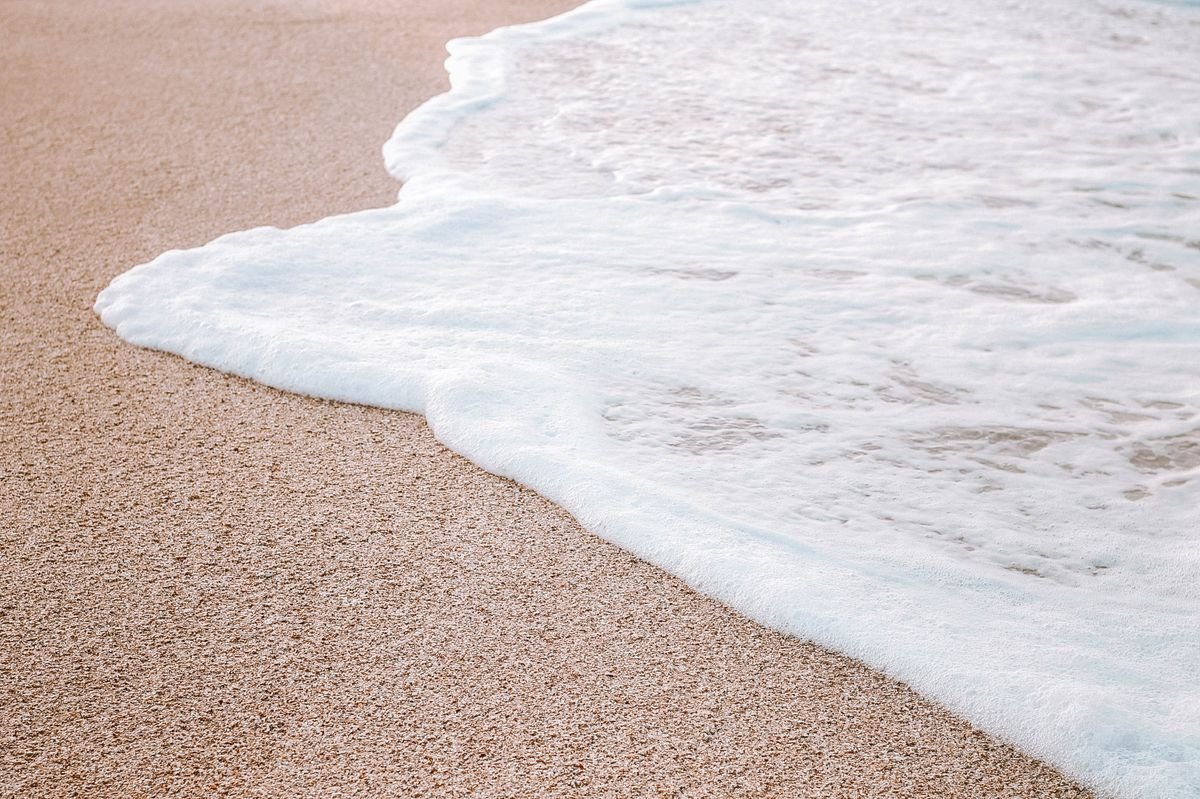
Even in summer the sea only reaches about 15 to 16°C, cold enough to cause cold water shock if you jump straight in. Wade in slowly and let your breathing settle before you go deep. A wetsuit makes a big difference if you plan to stay in for more than a quick dip.
Tides matter just as much as the water itself. On a tidal-crossing beach like Omey Strand the sea comes back in over the sand and can cut you off, so check the tide tables before you walk out and give yourself a wide margin to get back.
A Few Simple Rules
- Never swim alone, and keep an eye on anyone in the water with you.
- Don’t swim straight after a big meal or after drinking.
- Keep kids within arm’s reach in the shallows.
- If a beach has no lifeguard and a dangerous reputation, like the Murder Hole, stay out of the water and just walk it.
- If you see someone in trouble, don’t go in after them. Call 112 or 999 and ask for the Coast Guard.
None of this should put you off. Walk on, wade in where it’s safe, and pick a lifeguarded Blue Flag beach if you want a proper swim with kids. Treat the Atlantic with a bit of respect and it gives you some of the best water in Europe.
Where to Stay Near Ireland’s Best Beaches
You won’t find big beach resorts dotted along the Irish coast. The smart move is to pick a base town for each region and do the beaches as day trips from there, so here’s where we’d set up in each corner of the country.
Donegal and the Northwest
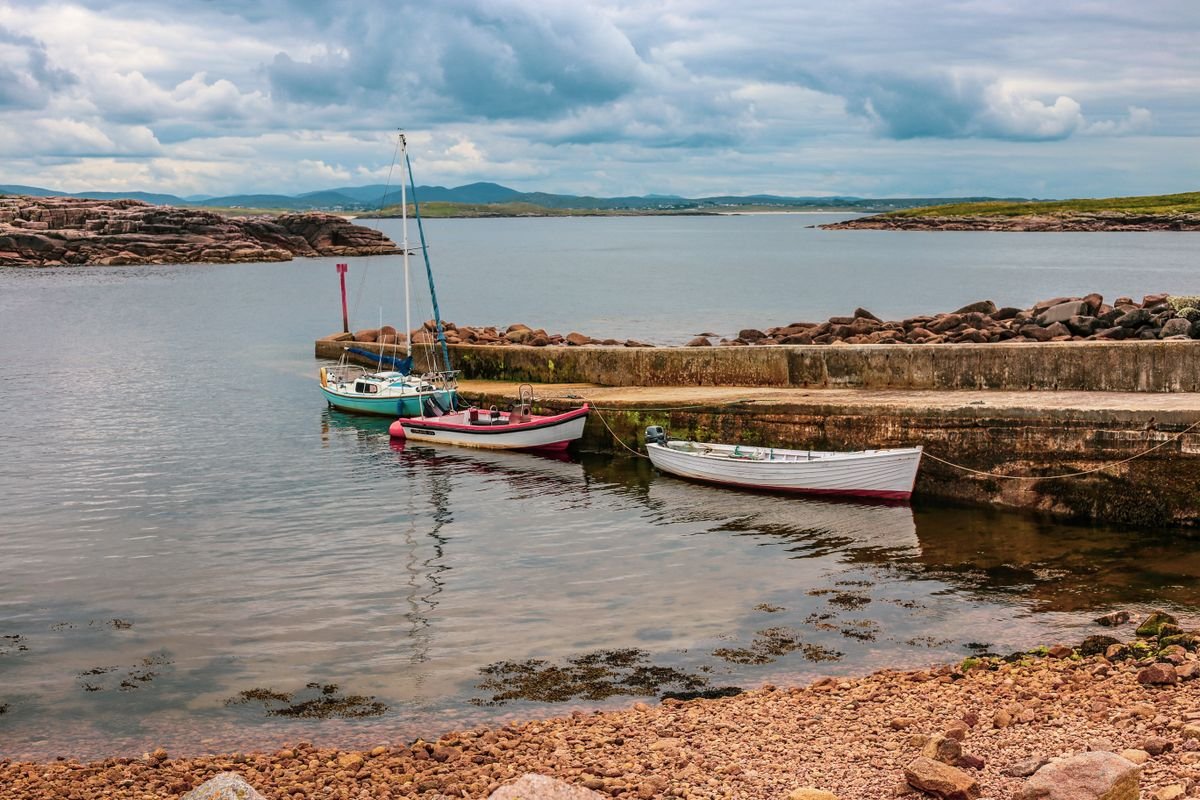
For the Donegal beaches, base yourself in Downings or Carrigart on the Rosguill Peninsula and you’re a few minutes from both Trá Mór and the Murder Hole. For Sligo, the town itself is the obvious base, with Streedagh and Dunmoran both inside a short drive.
This is a B&B and guesthouse part of the country rather than a hotel one. Book ahead in summer, because the towns up here are small and the good rooms go fast.
Connemara and the West
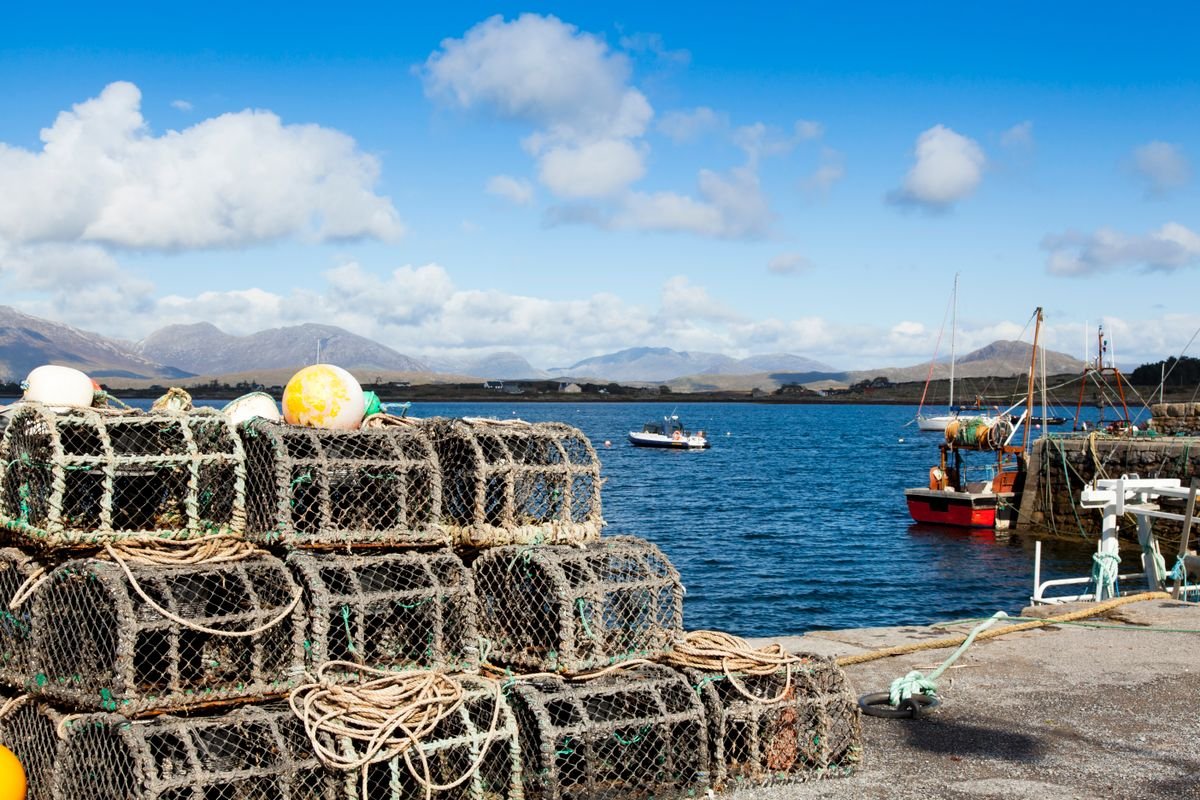
Clifden is the best base for the Connemara coast, a good jumping-off point for Omey Strand, Dog’s Bay, and the run of beaches toward Roundstone. We based ourselves there for a couple of nights on our last trip and could reach everything along this stretch easily, so it’s worth a look to find places to stay in Clifden on Booking.com early, as the good rooms book out in summer.
If you’re in a campervan, we spent a night parked up on the L1102 coastal road with the van right by the water, one of the better free spots we found in the west.
For Achill and Keem Bay you’re better off basing on the island itself or in Westport, which is the main town for that part of Mayo.
Galway and Clare
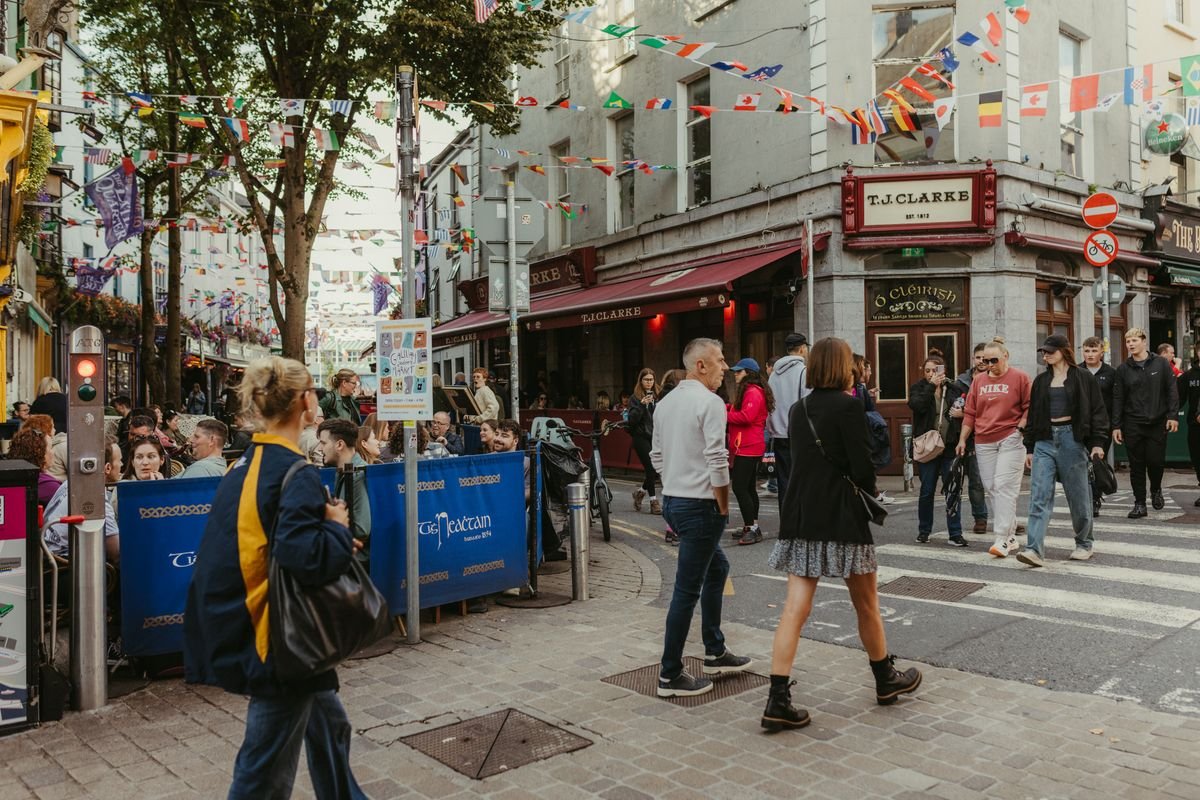
Galway city is the natural base if you want Silver Strand and the easy western beaches with a real town to come back to at night. Parking a big vehicle in the city center is a pain, so stay just outside and taxi in.
For Fanore and the Burren coast, the village of Doolin or Lisdoonvarna puts you close to the sand and the Cliffs of Moher in one go.
Kerry and the Southwest
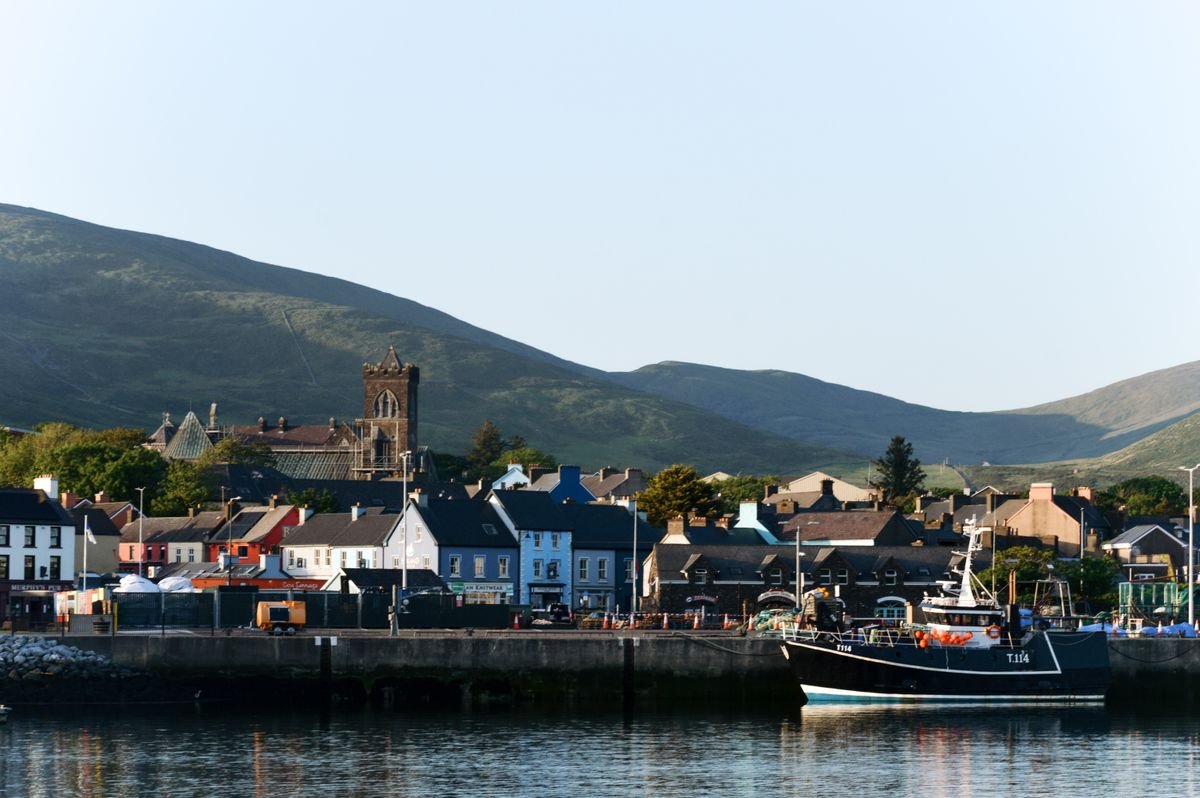
Dingle town is the base for Inch Beach and the Slea Head loop, and I’d give it two nights rather than one so you actually see the peninsula in daylight. It’s a small town, so book a room in Dingle on Booking.com ahead in peak season. Killarney works well for Rossbeigh and the Ring of Kerry beaches.
For Barleycove right down at Mizen Head, the village of Schull or Goleen in West Cork is your nearest stop.
Dublin and the Southeast
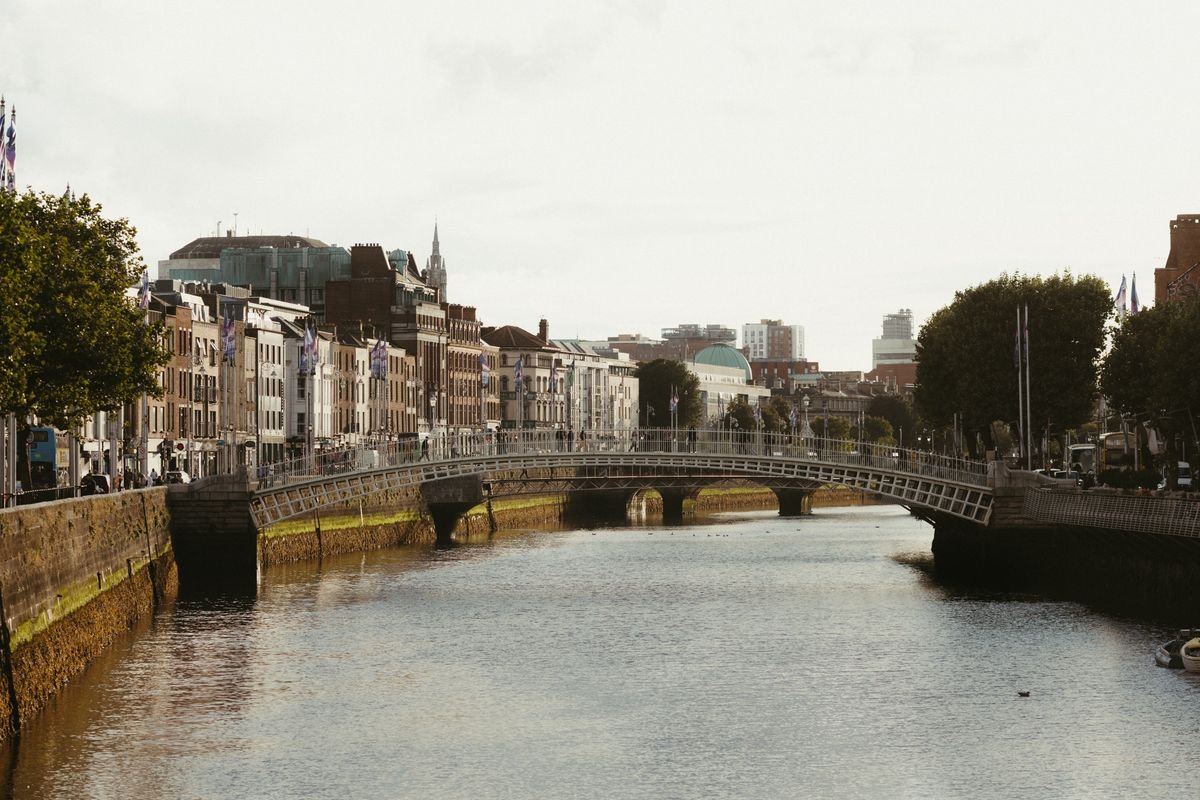
If the beaches are a day out from the city, you can just stay in Dublin and drive to the Velvet Strand or down to Brittas Bay. For a proper beach week in the southeast, base in Wexford town for Curracloe and the Hook Peninsula, where you can check Wexford town stays on Booking.com, or in Tramore itself if you want the resort-town setup with the beach on your doorstep.
More Ireland Itineraries & Scenic Drives
- Wild Atlantic Way Itinerary – Ireland’s Most Epic Road Trip
- The 20 Most Scenic Drives in Ireland
- A Photographer’s Definitive Ireland Road Trip
In short
- Ireland has 20 standout beaches spread across every coast, from Donegal down to Wexford.
- Keem Bay, the Murder Hole, and Dog’s Bay are the top picks for raw scenery and pale sand.
- Blue Flag strands like Curracloe and Silver Strand are the safest bets for swimming with kids.
- Sea temperatures peak near 15 to 16°C in late summer, so a wetsuit helps for more than a quick dip.
- Shoulder season (late May, June, September) gives long days, warmer water, and far fewer crowds.
Frequently Asked Questions
What is the best beach in Ireland?
There’s no single answer, because it depends what you’re after. For raw scenery, Keem Bay on Achill and the Murder Hole in Donegal are the two most photographed for a reason. For the clearest water, the Connemara beaches around Clifden were the highlight of our last trip. If you want one you can actually use with kids, pick a Blue Flag strand like Silver Strand near Galway or Curracloe in Wexford instead.
Can you swim in the sea in Ireland?
You can, and people do all year. The water is cold, around 15 to 16°C at its summer warmest, so wade in slowly and let your breathing settle before you go deep. A wetsuit makes a big difference if you want more than a quick dip. I swam in the Atlantic at Clifden Eco Beach in late September with nobody else in the water, and it was clear and blue. Cold, but worth it.
Does Ireland have white sand beaches?
It does, and they catch a lot of people off guard. Dog’s Bay near Roundstone is a curve of near-white sand that’s actually made of crushed seashell fragments, which is why it stays so pale. On a sunny day in Connemara the water turns turquoise and it doesn’t look like Ireland at all.
When is the best time to visit Irish beaches?
July and August are warmest and the only months with lifeguards on duty, but they’re also the busiest on the east and southeast coasts. Our pick is shoulder season, late May, June, or September, when the days are long and the beaches are far emptier. The sea is at its warmest in early September after a whole summer of heating up, so that’s the sweet spot for a swim without the crowds.
Which beach is closest to Dublin?
The Velvet Strand at Portmarnock is the easiest, about half an hour north of the city and right on the DART line, so you don’t even need a car. For a bigger day out, Brittas Bay in Wicklow is around an hour and 15 minutes south and worth the drive.
The Last Word on Ireland’s Beaches
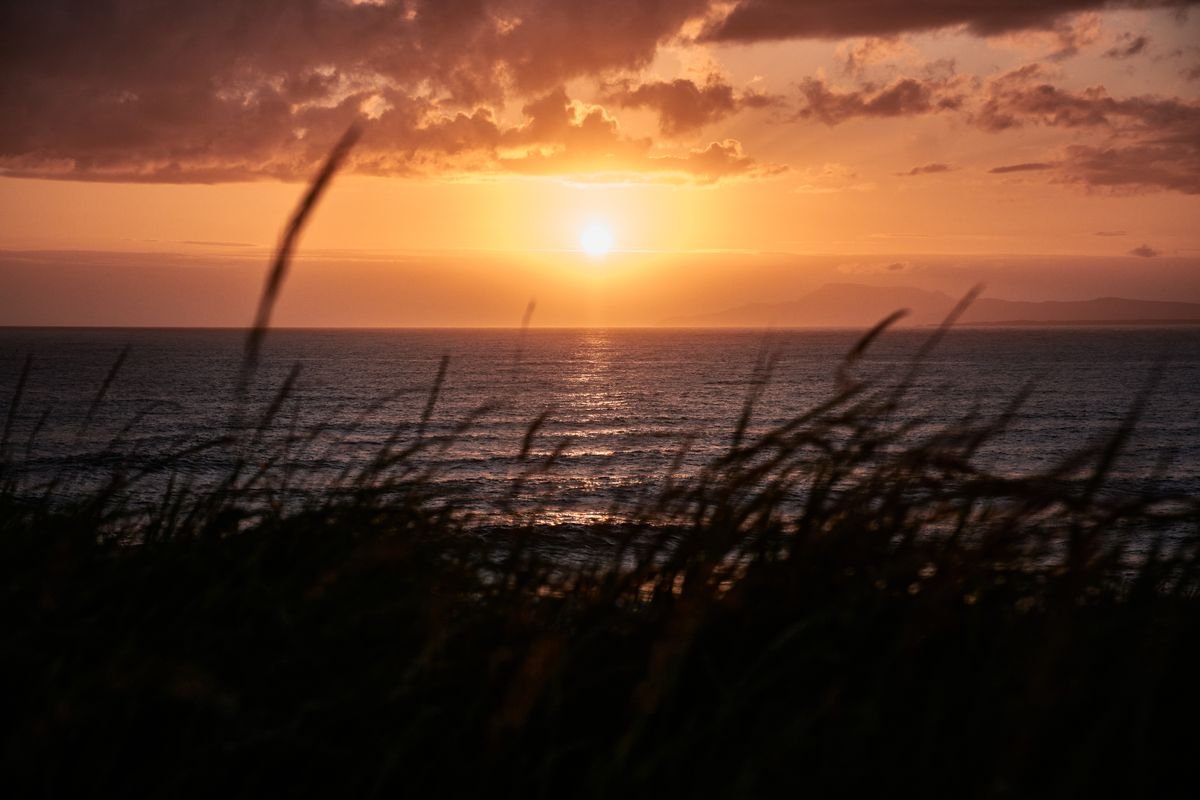
The thing that surprised us most about Ireland’s coast is how empty it stays. You can drive to a stretch of pale sand that would have a parking lot and a line of cars in half of Europe, and here you’ll share it with a couple of dog walkers and the wind.
Don’t try to hit all twenty. Pick the corner you’re already headed to and build your beaches around it. If you’re in the northwest, the Murder Hole and Keem Bay are the showstoppers. In the southeast, Curracloe and Brittas Bay are the easy, usable ones close to Dublin.
For our money, the run of coast around Clifden was the best of the lot. The water there turns a blue you don’t expect this far north, and the beaches were near enough to ourselves in shoulder season.
Go in knowing the water is cold and the weather does whatever it wants. Pack a rain jacket, bring a flask, swim where it’s safe, and walk the rest. Do that and Ireland gives you some of the best beach days in Europe, with hardly anyone else on the sand.
Like it? Pin it!
Save this guide for later