We spent about two weeks driving Ireland on our last trip, and three of the best days were up north. If you’re trying to figure out a northern ireland 3 day itinerary that actually fits, the short answer is yes, three days is enough to get the best of it. You just can’t try to see everything.
This route runs Belfast to the Causeway Coast to Derry. It’s the classic loop for a reason, and it works whether you’re basing yourself in one spot or moving each night.
We did it by campervan in shoulder season, but a rental car is the easier call for a first trip up here. Same roads, same stops, less faff parking in the cities.
Below I’ll break down the route day by day, what to see in Belfast and Derry, how to handle parking and tickets on the coast, where to stay, and the stops I’d cut first if you’re tight on time.
More Northern Ireland Travel Guides
- 5 Best Day Trips From Belfast, Ireland
- The Best Beaches in Northern Ireland
- Game of Thrones Filming Locations in Northern Ireland Map
- 10 Best Bars In Belfast, Northern Ireland
Quick Answer:
This Northern Ireland 3 day itinerary runs Belfast to the Causeway Coast to Derry. Day one is Belfast (Titanic Belfast, a black-cab tour), day two drives the coast for the Giant’s Causeway, Carrick-a-Rede and Dunluce, and day three walks Derry’s walls and Bogside. A rental car is easiest, but a guided coast tour covers day two.
The Route at a Glance
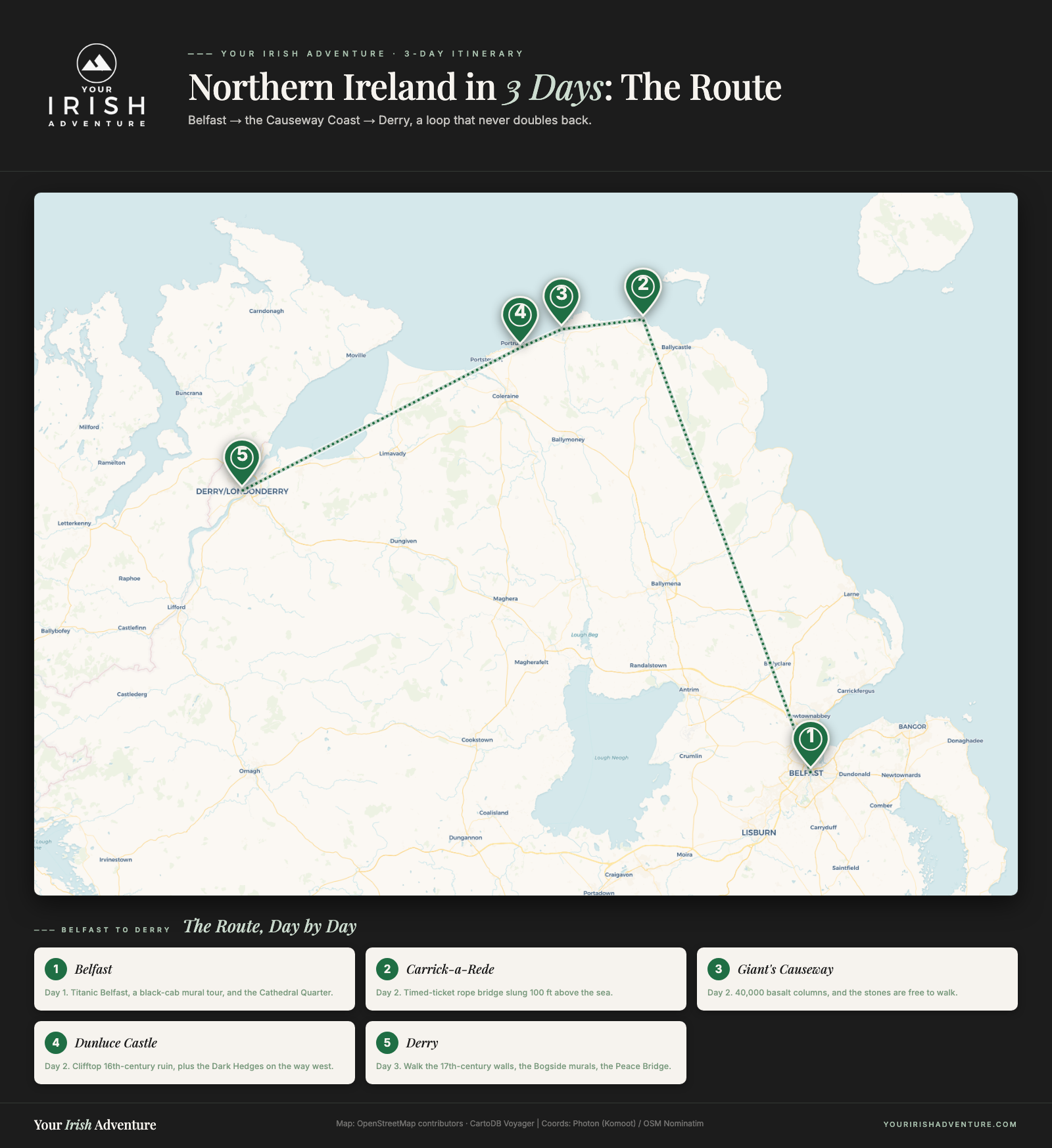
Here’s the shape of it before we go stop by stop. Three days, three bases, and a loop that never doubles back on itself.
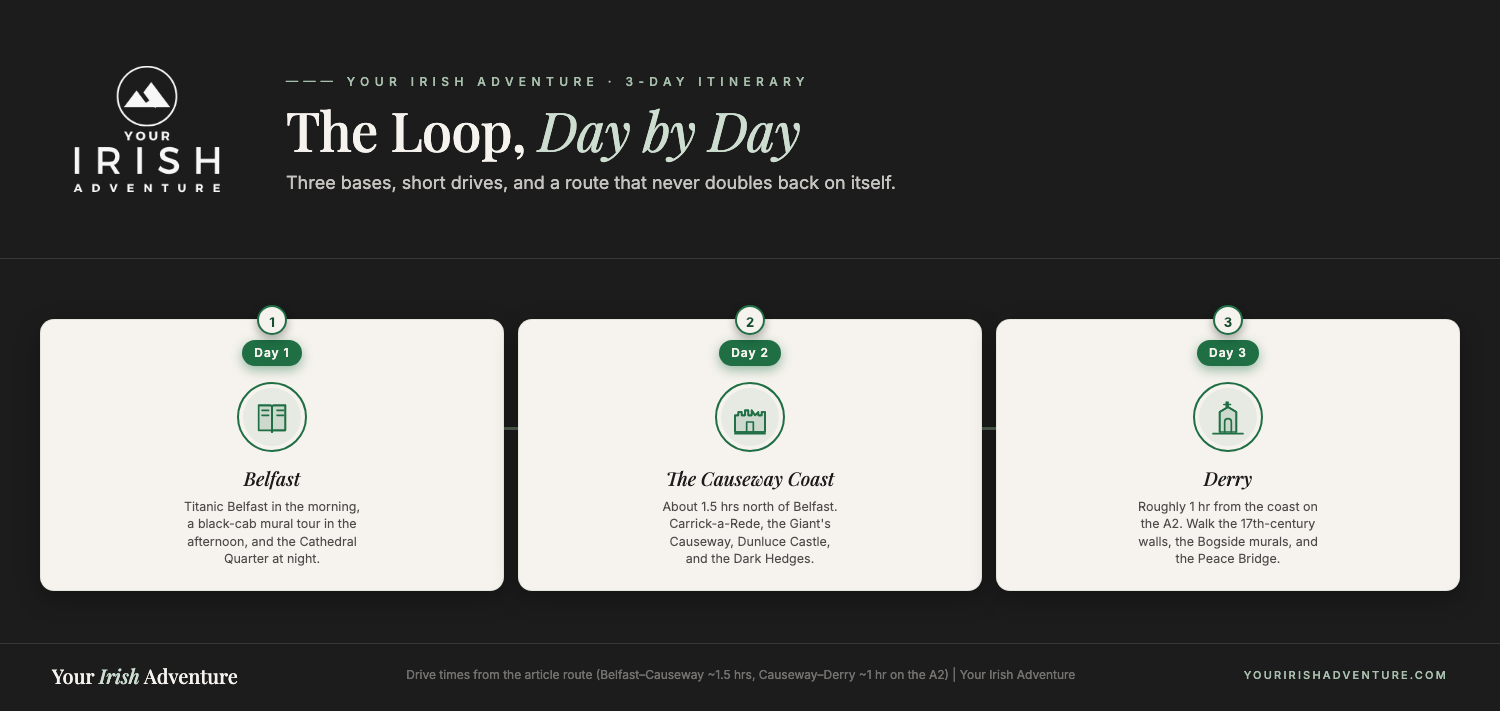
Day one is Belfast. Day two is the Causeway Coast, the run from Belfast up to the Giant’s Causeway and along the cliffs. Day three is Derry, the walled city, before you either head home or carry on south.
This Northern Ireland 3 Day Itinerary at a Glance
- Day 1 in Belfast covers the Titanic Belfast museum, a black-cab tour of the murals, and a night out around the Cathedral Quarter.
- Day 2 on the Causeway Coast takes in the Carrick-a-Rede rope bridge, the Giant’s Causeway, Dunluce Castle, and a stop at the Dark Hedges if you’re a Game of Thrones fan.
- Day 3 in Derry is a walk of the full circuit of the 17th-century city walls, the Bogside murals, and a crossing of the Peace Bridge.
The driving is short
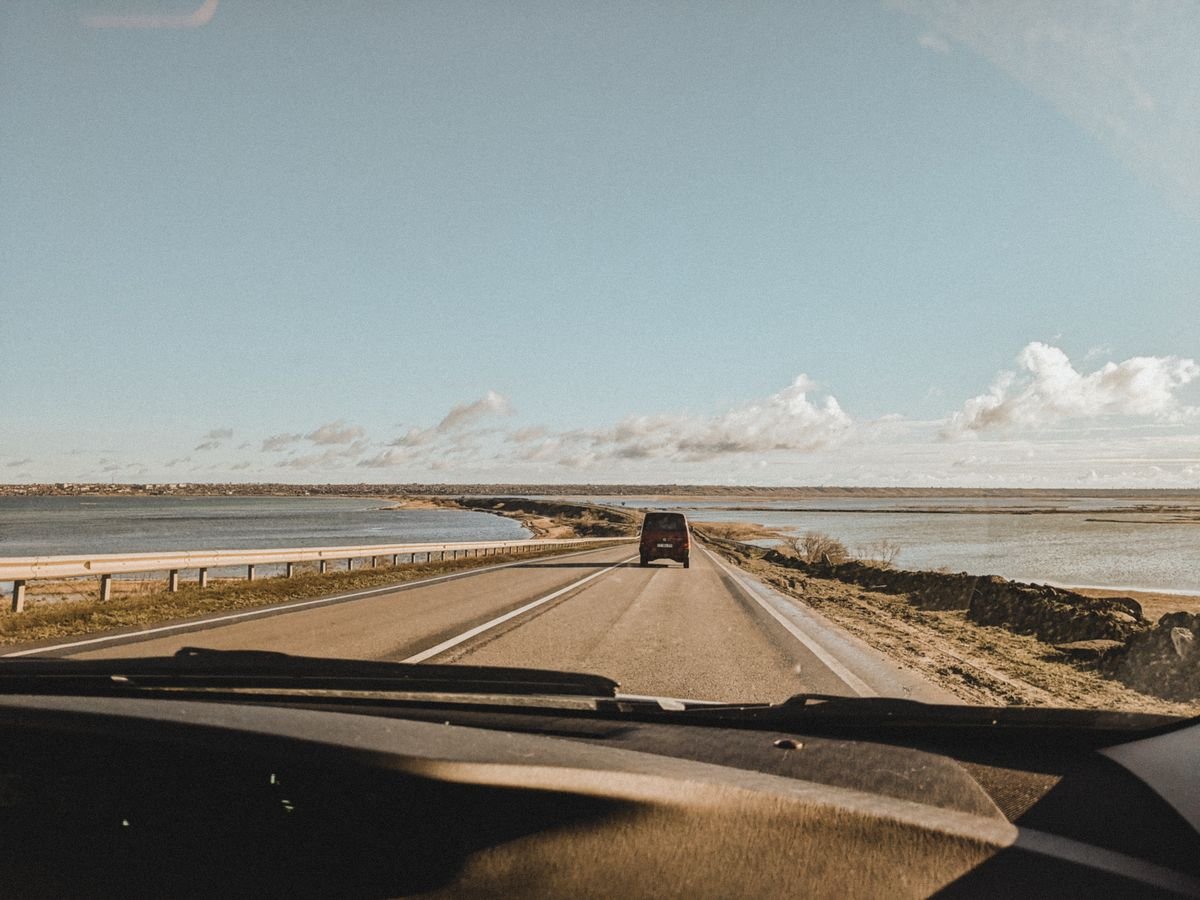
None of the legs are long, which is what makes three days work. Belfast to the Giant’s Causeway is about an hour and a half, and you’ll stretch that to a full day with stops.
From the Causeway across to Derry is roughly an hour on the A2. So the longest you’re ever in the car is a couple of hours, and most of that hugs the coast.
If you’d rather not move hotels every night, base yourself in Belfast for two nights and Derry for one, or do the whole thing out of Belfast and make day two a longer loop. Both work fine on these distances.
A rental car is what makes this loop tick, so pick it up at Belfast airport when you land. It’s worth a minute to compare car hire deals on Discover Cars before you commit, since prices on the same car swing a lot between the desks.
Day 1: Belfast
Belfast is where you start, and one full day is enough to hit the big three. The Titanic museum in the morning, a black-cab tour in the afternoon, and the Cathedral Quarter at night. That’s the day.
It’s a compact city, so you’re not burning hours getting between things. If you fly in the night before, you’ll roll into day one fresh instead of half asleep.
Titanic Belfast
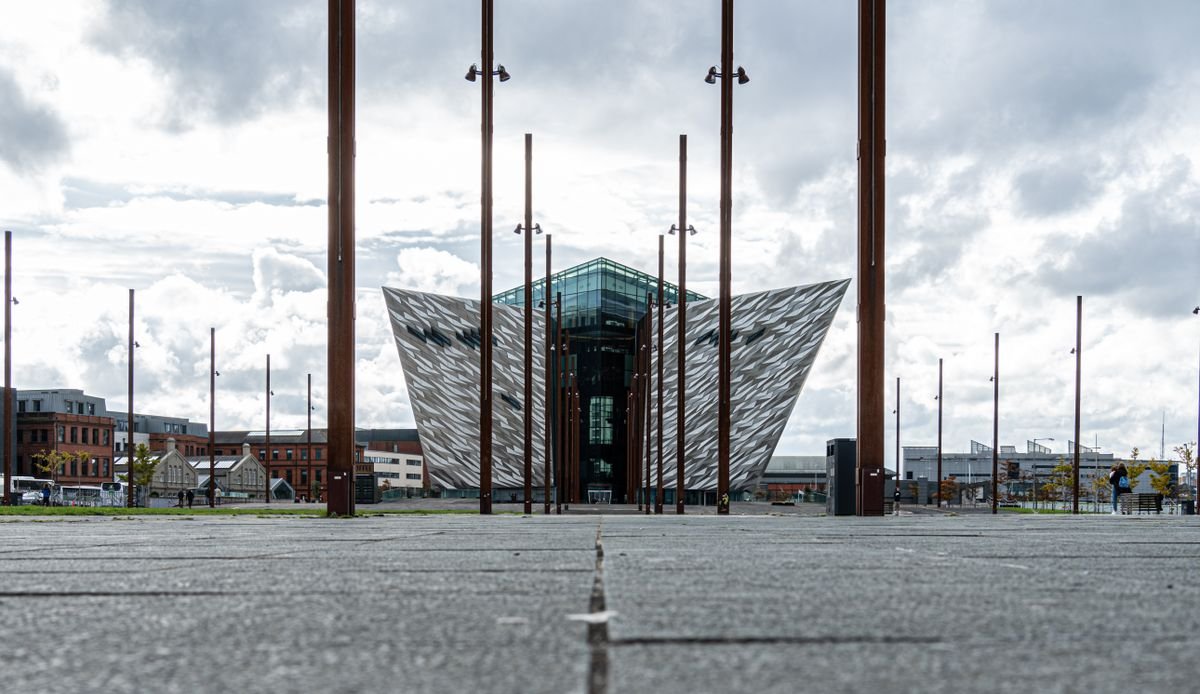
Start at Titanic Belfast, the museum built on the exact slipways where the ship was designed and launched. It’s the thing everyone tells you to do here, and it earns it.
The building is six floors and covers the whole story, from Belfast as an industrial shipbuilding city right through to the wreck on the sea floor. There’s even a little ride car that takes you through a recreation of the shipyard.
Plan on about two to three hours inside. Book your ticket online ahead of time, because the walk-up line can be long in summer, and pick an early slot so you’re not rushing the rest of the day.
Take a Black Cab Mural Tour
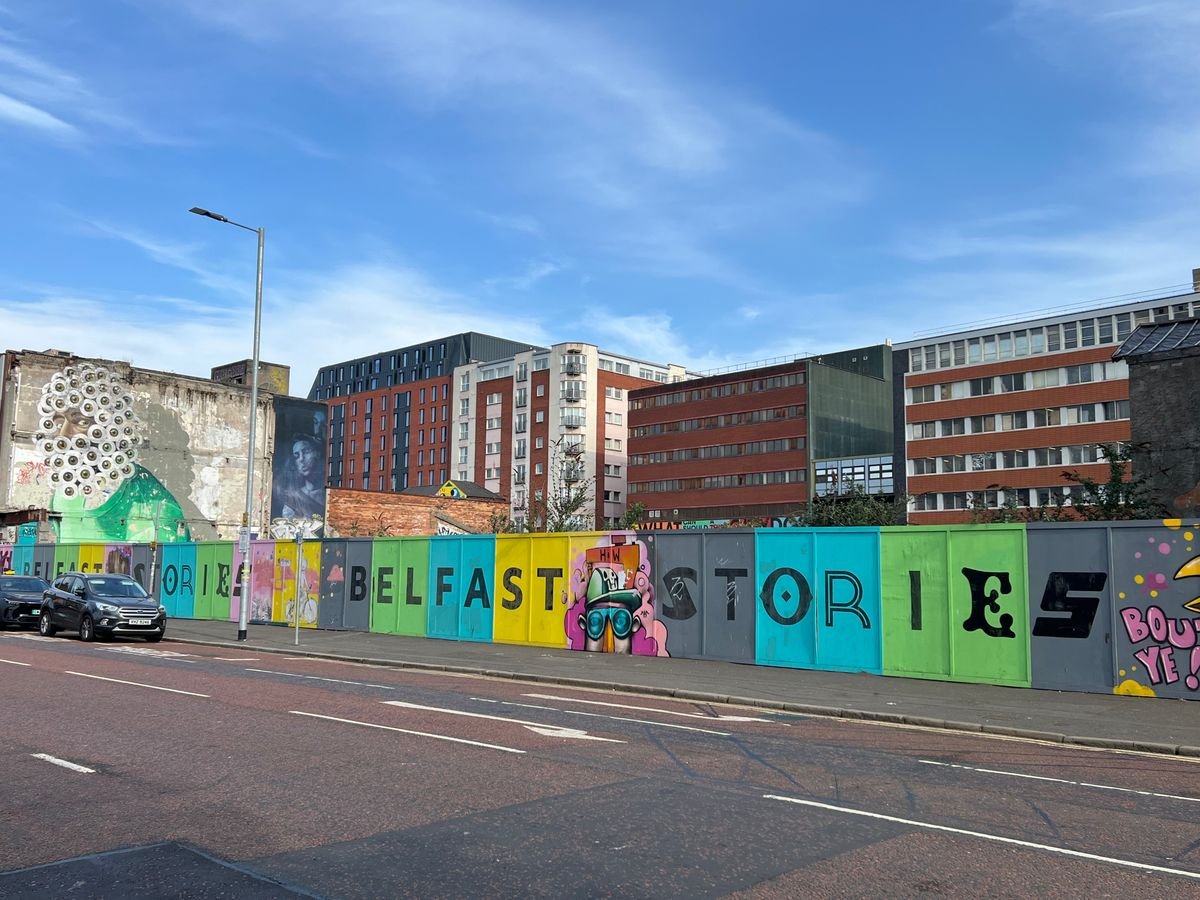
In the afternoon, do a black-cab tour of the political murals. A local driver takes you around the Falls and Shankill roads, the two communities on either side of the Troubles, and walks you through what actually happened here.
This is the one to prioritize. The murals and the Peace Wall are one thing to look at, but the value is the driver, who usually lived through it and gives you both sides straight.
Most tours run about an hour and a half and pick you up wherever you’re staying. Ask questions. The good drivers want them, and you’ll understand Northern Ireland far better for day three in Derry. You can book a black-cab history tour on GetYourGuide and have it locked in before you arrive.
Explore the City Center and Cathedral Quarter
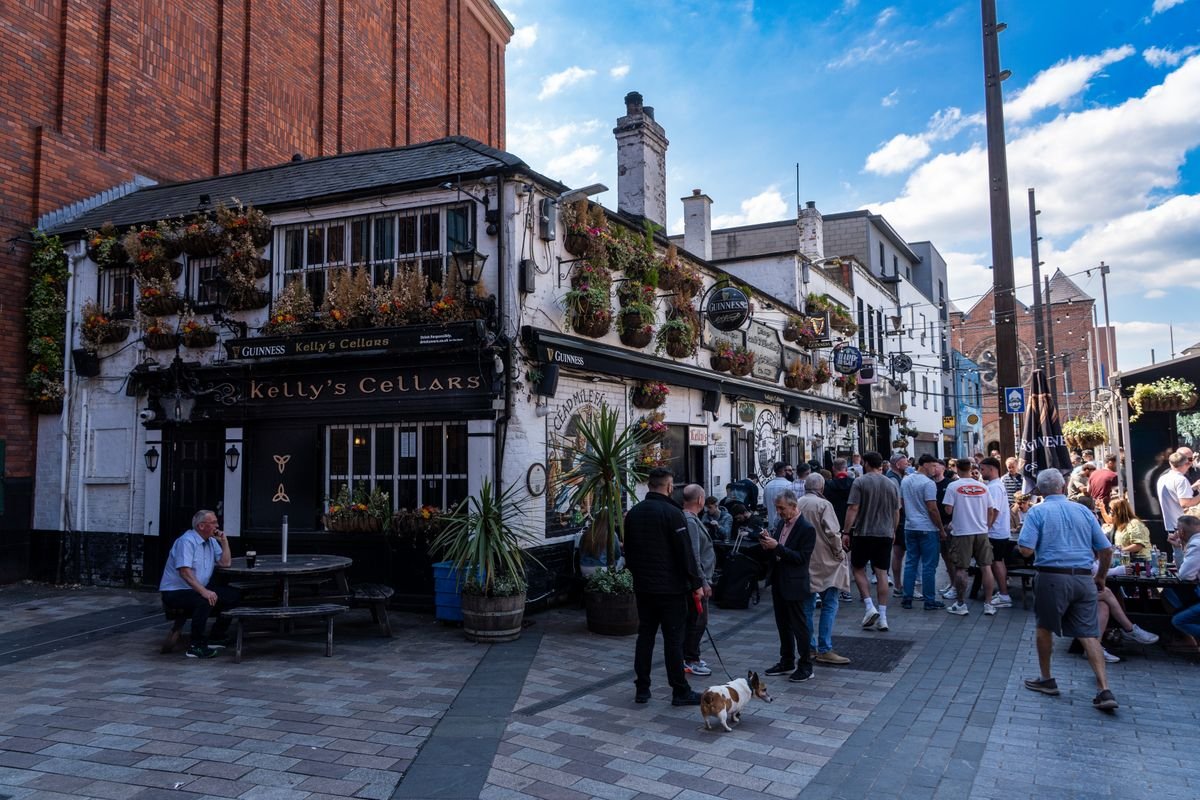
By evening you’re back in the city center. Belfast is small enough to walk, so wander over to the Cathedral Quarter, the old cobbled part of town around St Anne’s Cathedral and the best spot for a night out.
The Duke of York and the Cathedral Quarter’s back lanes are packed with pubs, and you’ll find live traditional music most nights. It’s the northern answer to a session, and it’s a good one.
If you want a look at the older side of the city first, the City Hall and the Victorian arcades off Donegall Place are a short walk away. Then eat, grab a pint, and call it. Day two is a long one on the coast.
Day 2: The Causeway Coast
Day two is the big one. You leave Belfast after breakfast, follow the coast north, and by the end of it you’ve hit a rope bridge over the sea, the Giant’s Causeway, and a clifftop castle ruin. It’s a full day, and it’s the reason people drive up here.
Do the stops in geographic order so you’re never backtracking. Carrick-a-Rede first, then the Causeway, then Dunluce and the Dark Hedges on the way toward Derry. Get an early start, because parking fills up fast in summer. If you’d rather someone else handle the driving and the parking, you can book the Giant’s Causeway and Game of Thrones day tour on GetYourGuide, which hits these same stops out of Belfast.
Carrick-a-Rede Rope Bridge
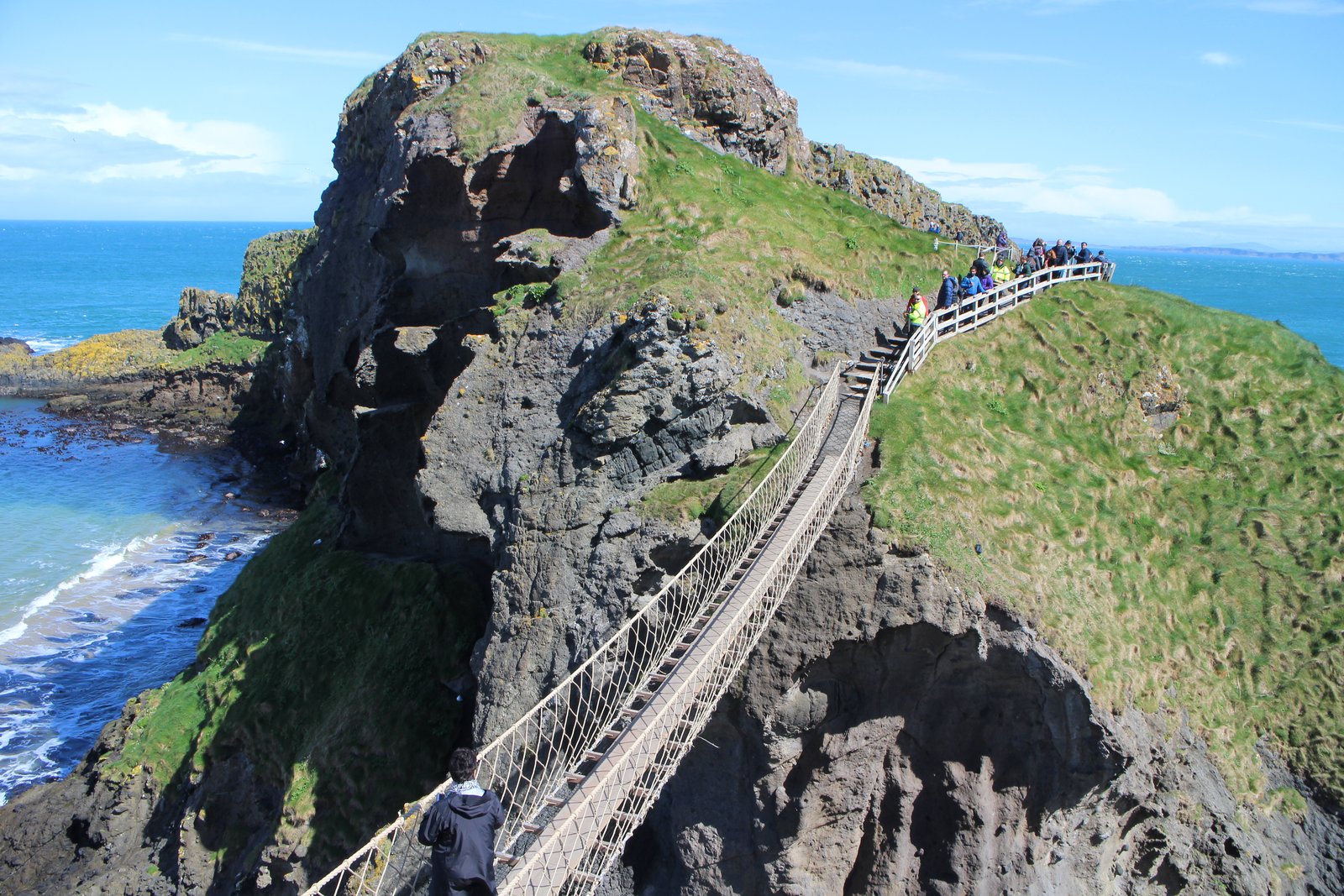
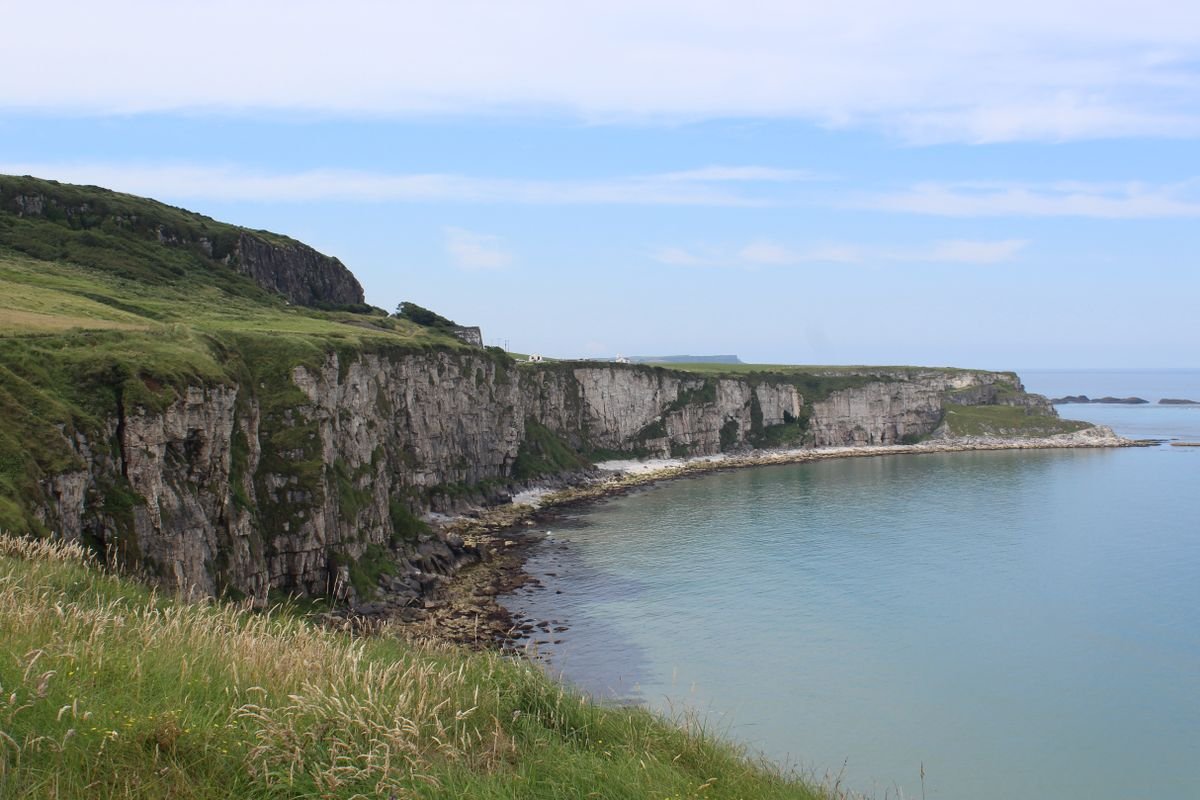
First stop is the Carrick-a-Rede rope bridge, a narrow bridge slung 100 feet above the water, connecting the mainland to a tiny island where fishermen used to check their salmon nets. You walk out, look down, and walk back. That’s the whole thing, and it’s a good one.
Book the timed ticket online before you go. It’s run by the National Trust, entry is limited to slots, and the walk-up spots sell out on busy days. The path from the parking lot to the bridge is about a mile, so give yourself the time.
If someone in your group isn’t going near a swaying bridge over the Atlantic, the clifftop walk out to it is worth the ticket on its own. The views back along the coast toward Scotland are the payoff either way.
The Giant’s Causeway
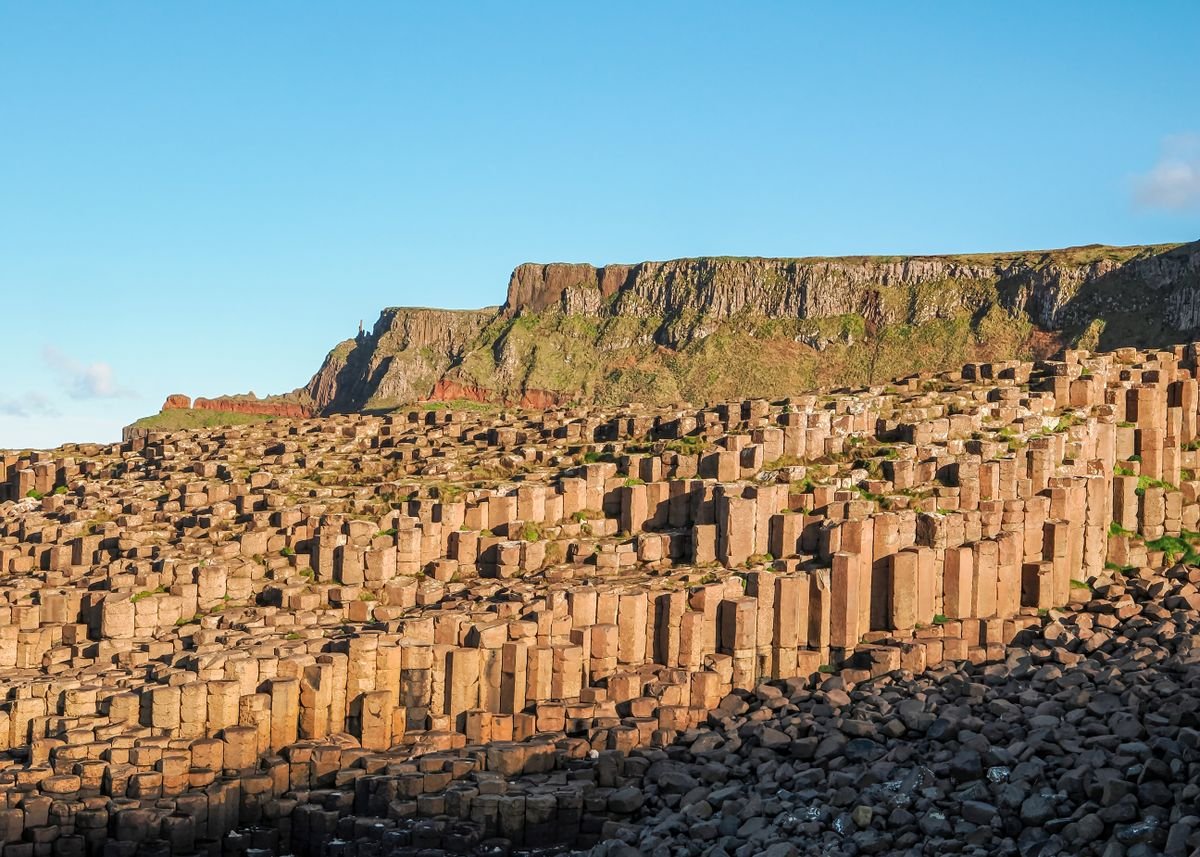
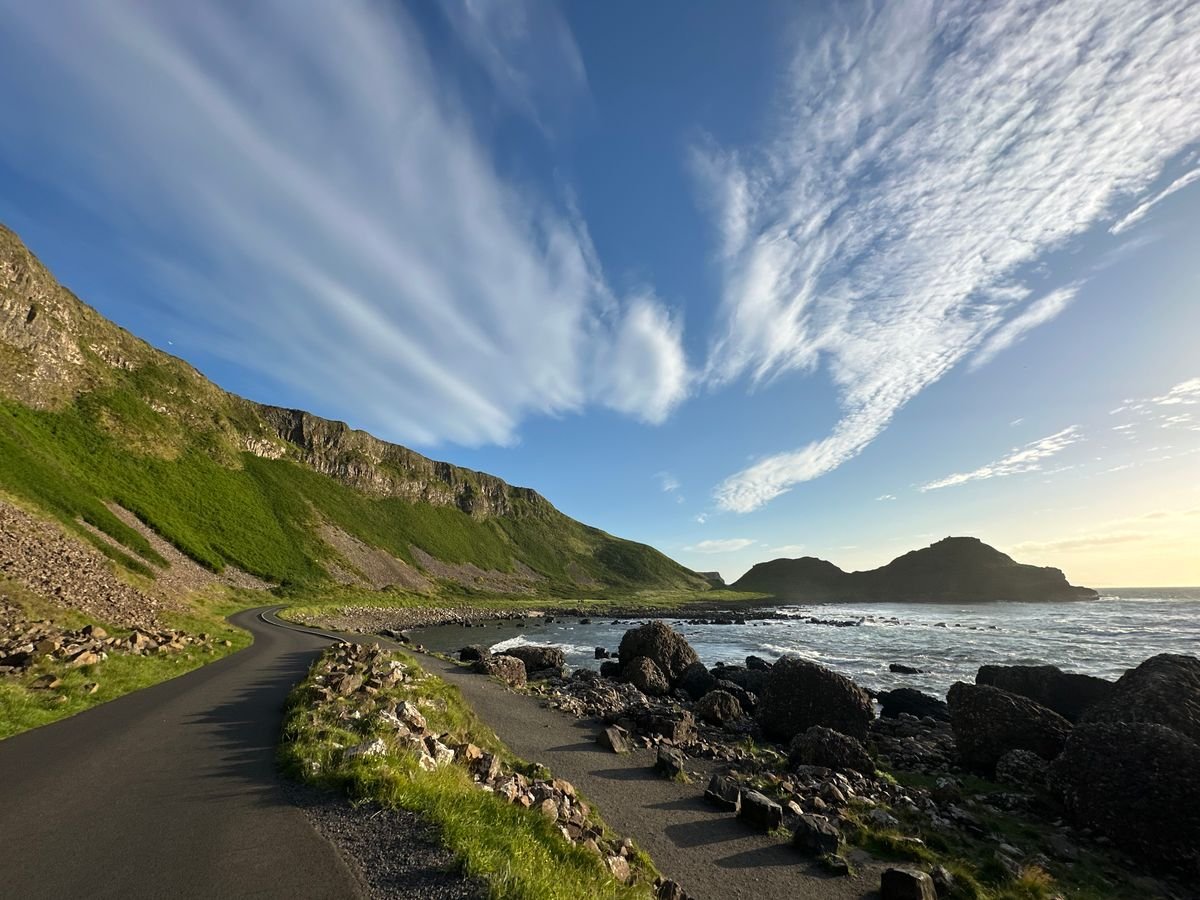
Ten minutes down the road is the main event, the Giant’s Causeway. It’s 40,000 basalt columns packed together in hexagons, formed by an ancient volcanic eruption, though the better story is that a giant built it as stepping stones to Scotland.
Here’s the money-saving part. You do not need to pay for the visitor center to see the stones. The Causeway itself is free to walk, and you can park cheaper down the road at the Causeway Hotel or take the coastal path in. The center is a paid ticket for the museum and the parking lot.
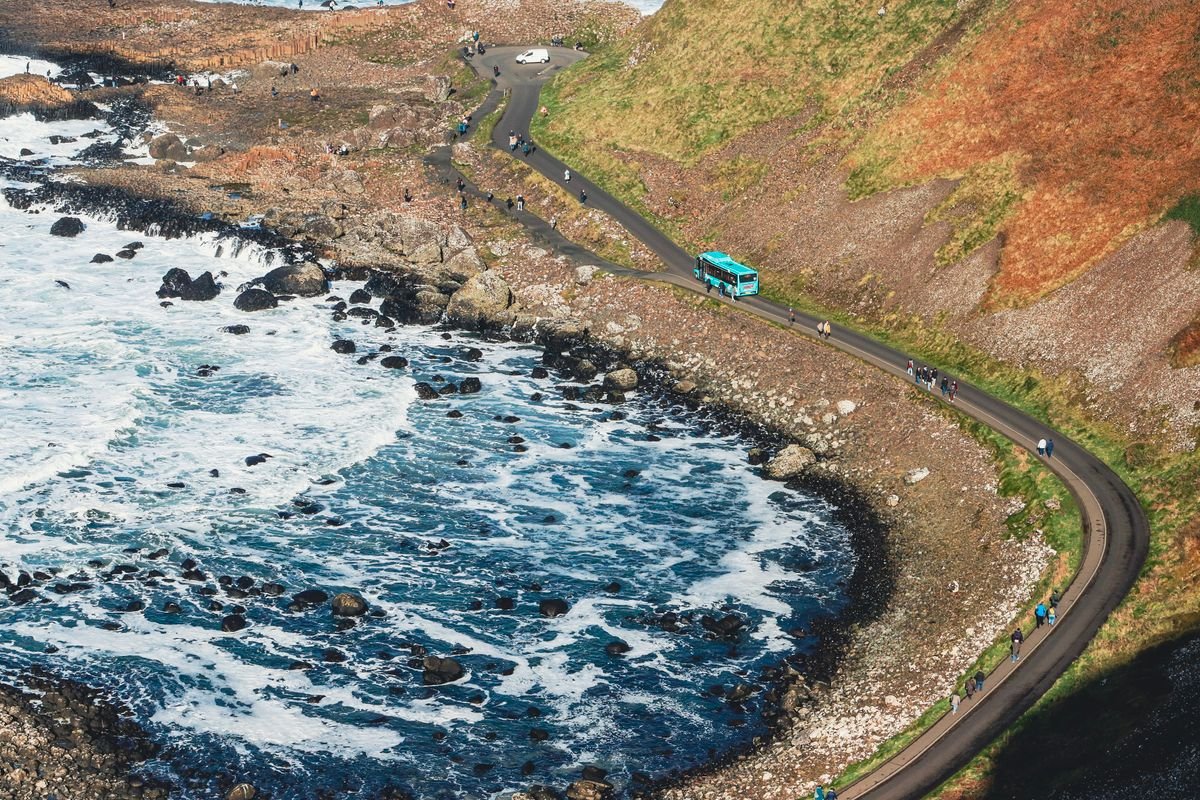
It’s about a 10-minute downhill walk from the top to the stones, or a shuttle bus if you’d rather not do the hill. Once you’re down there, climb around on the columns, and give it an hour or two. This is the one stop I wouldn’t rush.
Dunluce Castle and the Dark Hedges
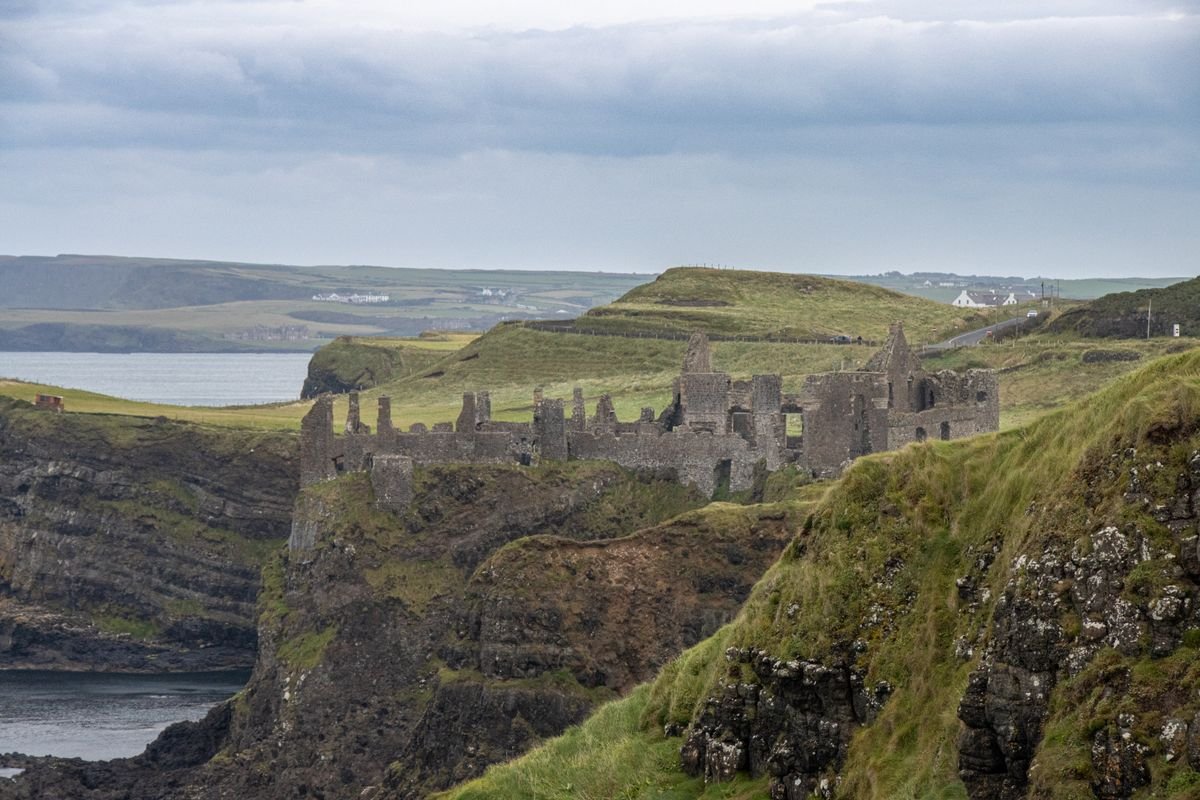
A few minutes west of the Causeway is Dunluce Castle, a 16th-century ruin sitting right on the edge of a cliff over the sea. Part of the kitchen reportedly fell into the ocean one night in the 1600s, which tells you how close to the edge it is.
You can pay to go inside, but plenty of people just pull over at the viewpoint across the road and shoot it from there. It’s one of the better castle ruins in the north, and the setting does most of the work.
If you’re a Game of Thrones fan, swing by the Dark Hedges on your way toward Derry, a tunnel of beech trees planted in the 1700s that stood in for the Kingsroad. It’s free and takes 15 minutes. If you don’t watch the show, it’s a pretty row of trees, and you can skip it without missing much.
Parking, Tickets, and Opening Times on the Coast
Day two is the one that goes sideways if you wing it. The coast stops are popular, the parking lots are small, and two of the big ones run on timed tickets. A little planning the night before saves you the whole headache.
Here’s how the logistics actually shake out, so you’re not learning it at a full parking lot with a ticket you can’t get.
The National Trust ticket, and whether membership pays off
Carrick-a-Rede and the Giant’s Causeway visitor experience are both run by the National Trust. Both use timed entry slots you book online, and both can sell out on a busy summer day. Book them the night before at the latest.
If you’re hitting both in one day, a National Trust day or short-stay membership can work out cheaper than two separate tickets, and it covers the parking too. Do the quick math on their site before you pay per-site.
Just remember the Causeway stones themselves are free to walk regardless. The Trust ticket buys you the museum, the shuttle, and the main parking lot, not the rocks.
Parking fills up first, so go early
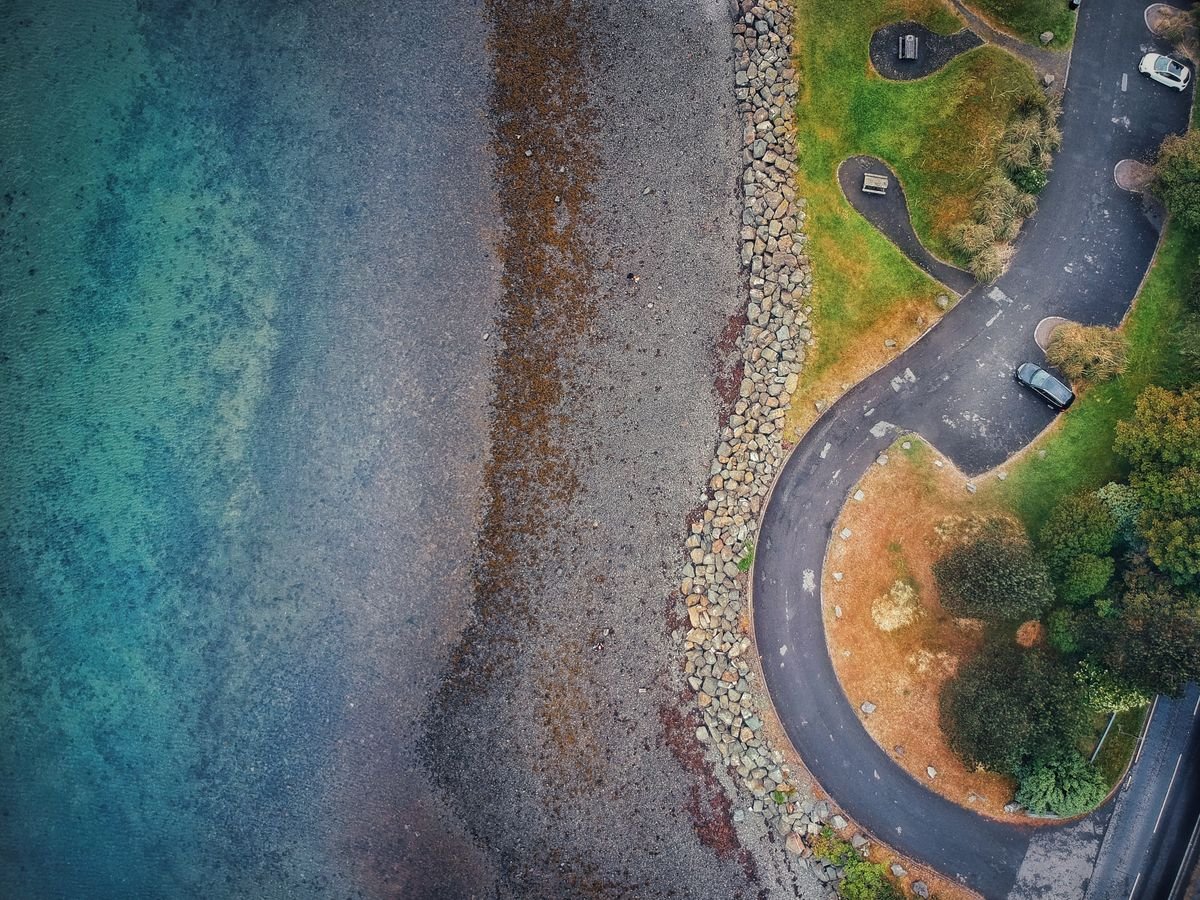
The single best move on the coast is an early start. The lots at Carrick-a-Rede and the Causeway are the first things to fill, and by late morning in summer you can be circling or parking a good walk away.
Get to your first stop close to opening and you’ll have a spot, thinner crowds, and better photos. Dunluce has a small free-ish pull-in across from the ruin, and the Dark Hedges has a nearby lot because parking right at the trees isn’t allowed.
Opening times shift with the season
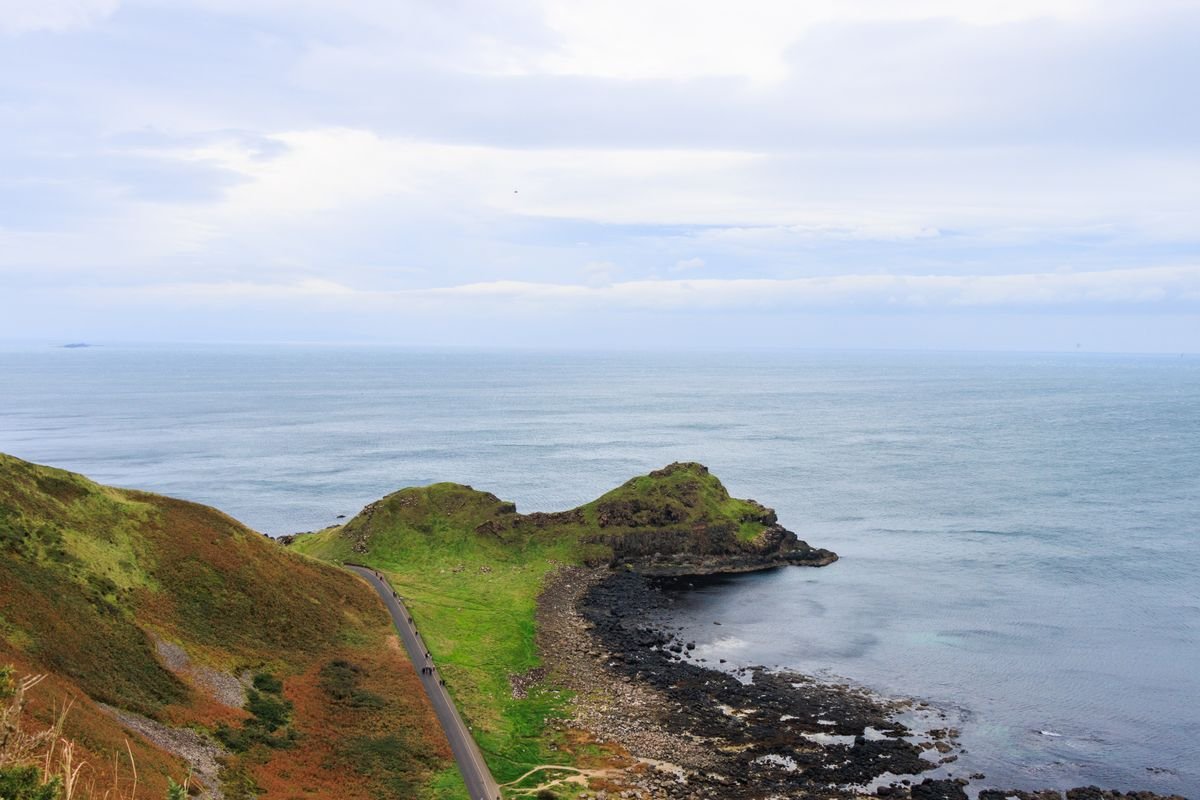
Hours on the coast are longest in summer and get shorter through autumn and winter, and last admission is usually a fair bit before closing. If you’re up here in shoulder season, check each site’s hours for the actual week you’re going.
Card works everywhere that matters, so you don’t need a pile of cash. The one thing worth carrying is a rain jacket, because the timed slot you booked doesn’t care what the weather’s doing when it comes up.
Day 3: Derry
Day three is Derry, and it’s the one people underrate. After the coast, an old walled city feels like a change of pace, but the history here ties straight back to the black-cab tour on day one.
It’s a small city, so a half to full day covers it easily. Walk the walls, see the Bogside murals, and cross the Peace Bridge. If you’re carrying on south, Derry sits right by the border and makes an easy jumping-off point into Donegal.
Walk the City Walls
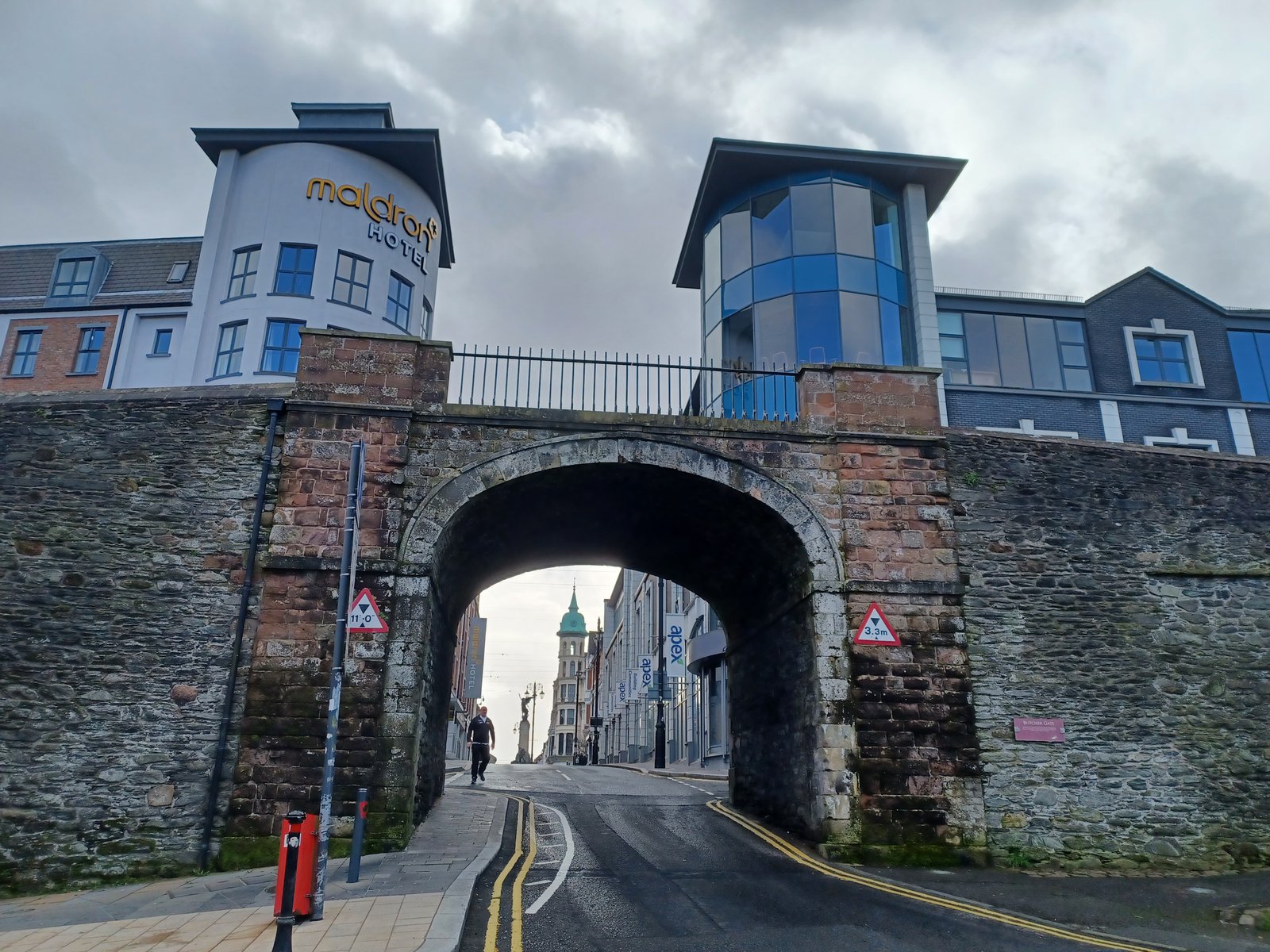
Start on the walls. Derry is one of the only cities in Europe with its full 17th-century defensive walls still intact, and you can walk the entire circuit on top of them. It’s about a mile all the way around.
The loop takes maybe half an hour if you don’t stop, longer if you do, and it’s the best way to get your bearings. You look down over the old cannons, the cathedral, and out across the Bogside below.
It’s free and open all the time, so there’s no ticket and no timed slot to worry about. Do this first, then drop down to see the parts you spotted from up top.
The Bogside and the People’s Gallery Murals
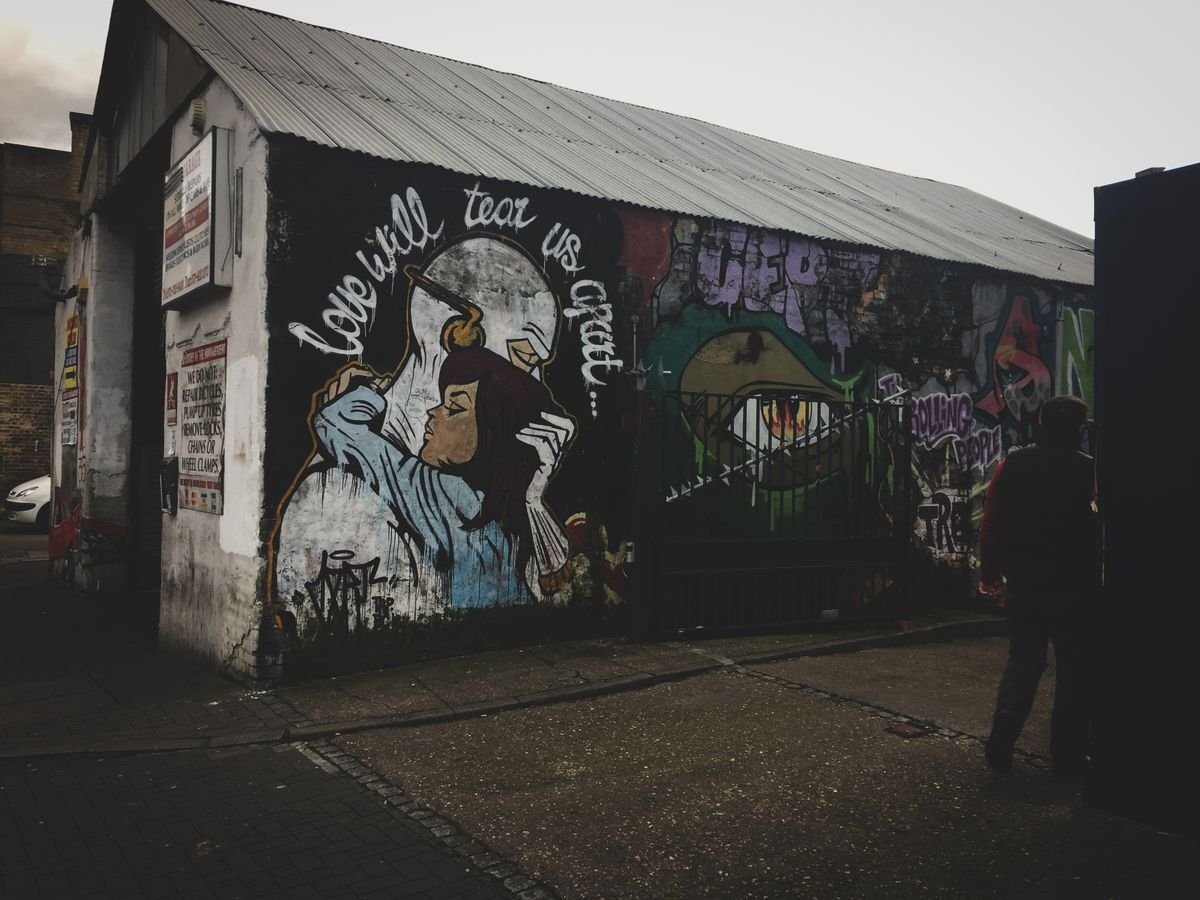
Below the walls is the Bogside, the Catholic neighborhood that was the center of Bloody Sunday in 1972. The People’s Gallery is a set of twelve large murals painted on the gable ends of houses, and they tell the story of what happened here.
This is the heavier stop of the day, and it’s the reason the murals in Belfast matter for context. Take your time reading them, and look for the Free Derry Corner, the white wall that still reads “You Are Now Entering Free Derry.”
The Museum of Free Derry is right there if you want the full account, and it’s worth the ticket. Even just standing in front of the murals, you’ll understand more than any guidebook gives you. To get it walked through properly, book the Bloody Sunday and Bogside murals walking tour on GetYourGuide, often led by someone who was there.
The Peace Bridge and the Guildhall
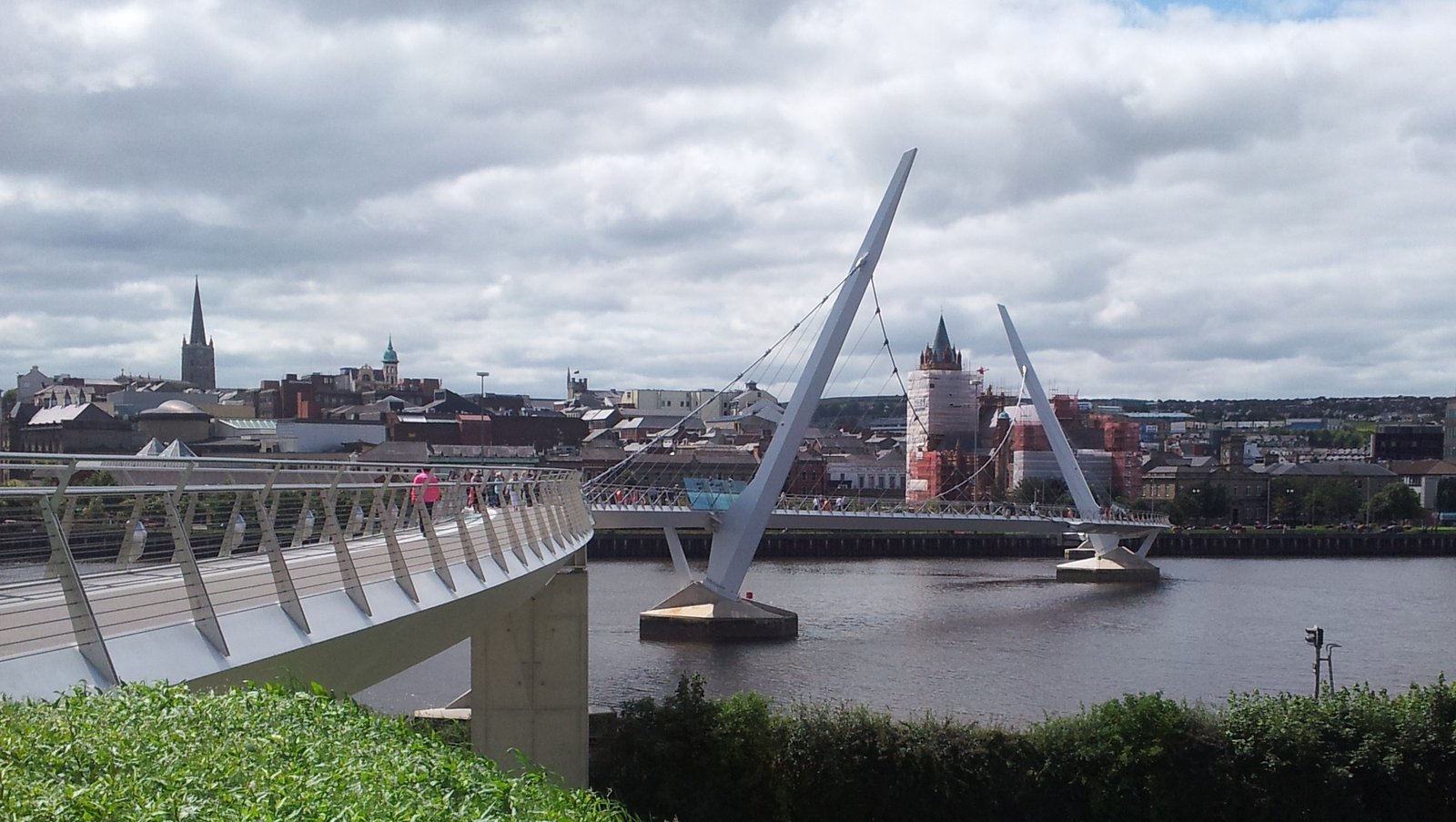
End on a lighter note down at the river. The Peace Bridge is a curving pedestrian bridge that opened in 2011 to link the mostly unionist east bank with the mostly nationalist west, and the symbolism is the whole point. It’s a nice walk across and back.
Right by the bridge is the Guildhall, the red-sandstone building with the big clock tower. You can go inside for free, and there’s a small exhibition on the city’s history and the stained-glass windows.
That’s your three days. From here you either drive back to Belfast for a flight home, or point the car south and keep going into the rest of Ireland. Either way, you got the best of the north without trying to cram in everything.
More Belfast and Derry Guides
- Where to Stay in Belfast: Best Areas & Hotels
- Giant’s Causeway From Belfast: All Day Trip Options
- Derry/Londonderry: The Complete Visitor’s Guide
- A Perfect Weekend in Derry: Where To Eat, Drink, Stay and Play
Where to Stay
Where you sleep comes down to one choice: move each night, or pick a base and drive out from it. Both work on these distances, so it’s really about how much you hate packing a bag every morning.
Below is how I’d split the nights for each version, plus the areas worth booking in each city.
Belfast for the first night or two

Wilton House sits 400 metres from the centre, so you can walk to most of day one. The Cathedral Quarter and the area around City Hall put you near the pubs and the restaurants, so you’re not paying for a taxi after a couple of pints.
If you’re doing the whole loop out of one base, Belfast is the smart pick for two nights. You get day one in the city, then run the coast as a long day trip and come back to the same bed.
👉 View Wilton House Availability and Pricing
A night on the coast
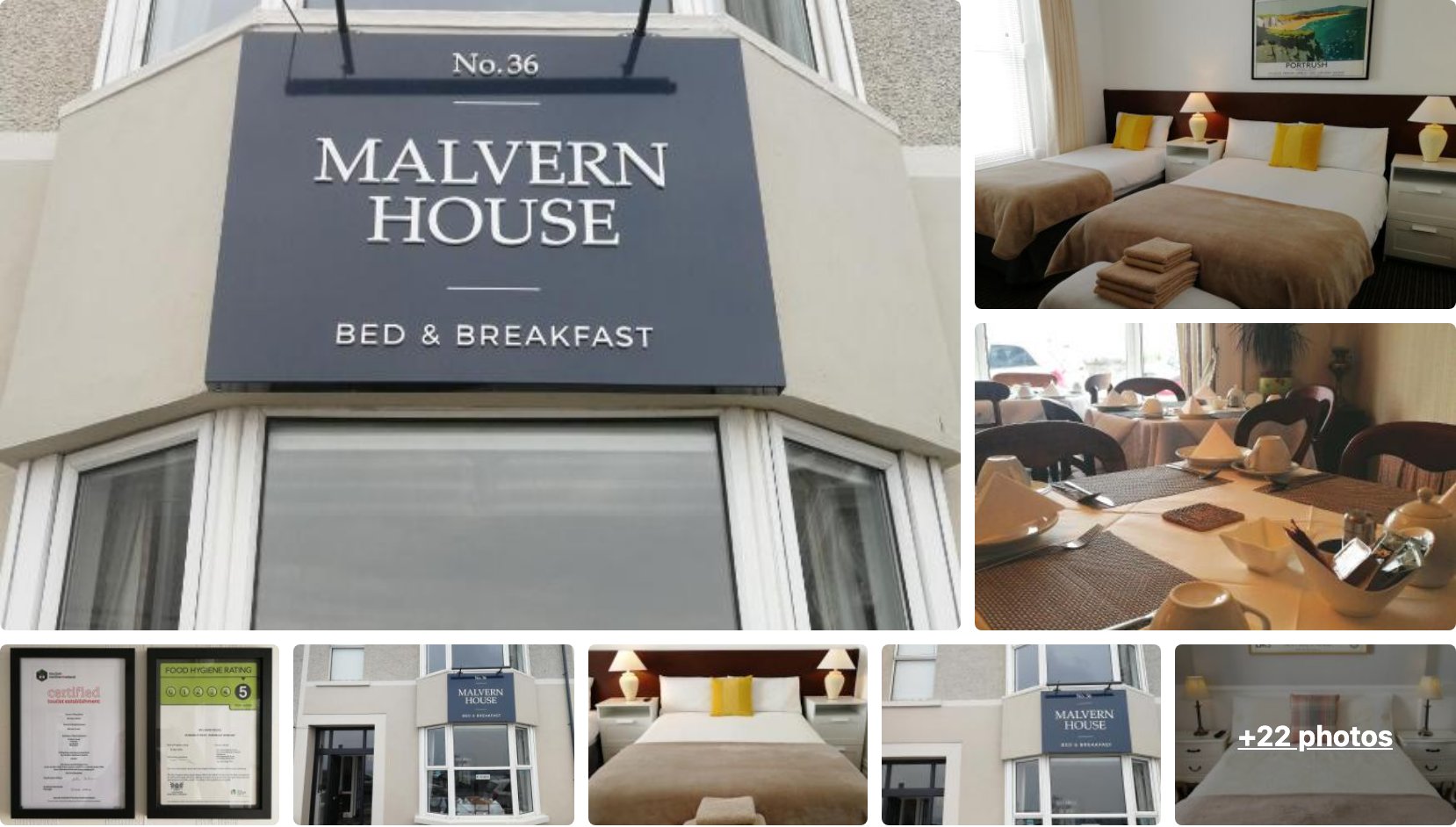
Malvern House is a Portrush B&B a couple of minutes’ walk from the seafront, a good base if you’d rather break up the driving and sleep on the coast after day two. Portrush and Bushmills are the two obvious spots, both within a few minutes of the Giant’s Causeway and Dunluce.
Portrush is the bigger seaside town with more places to eat, and Bushmills is quieter and closer to the stones. Waking up on the coast also means you can beat the day-trippers to the Causeway before the Belfast crowd arrives mid-morning.
We did this stretch by campervan, so we had the option of parking in a field for the night. In a rental car you won’t, so book a room ahead in shoulder season and beyond, because the coast towns are small and fill up.
👉 View Malvern House Availability and Pricing
Derry for the last night
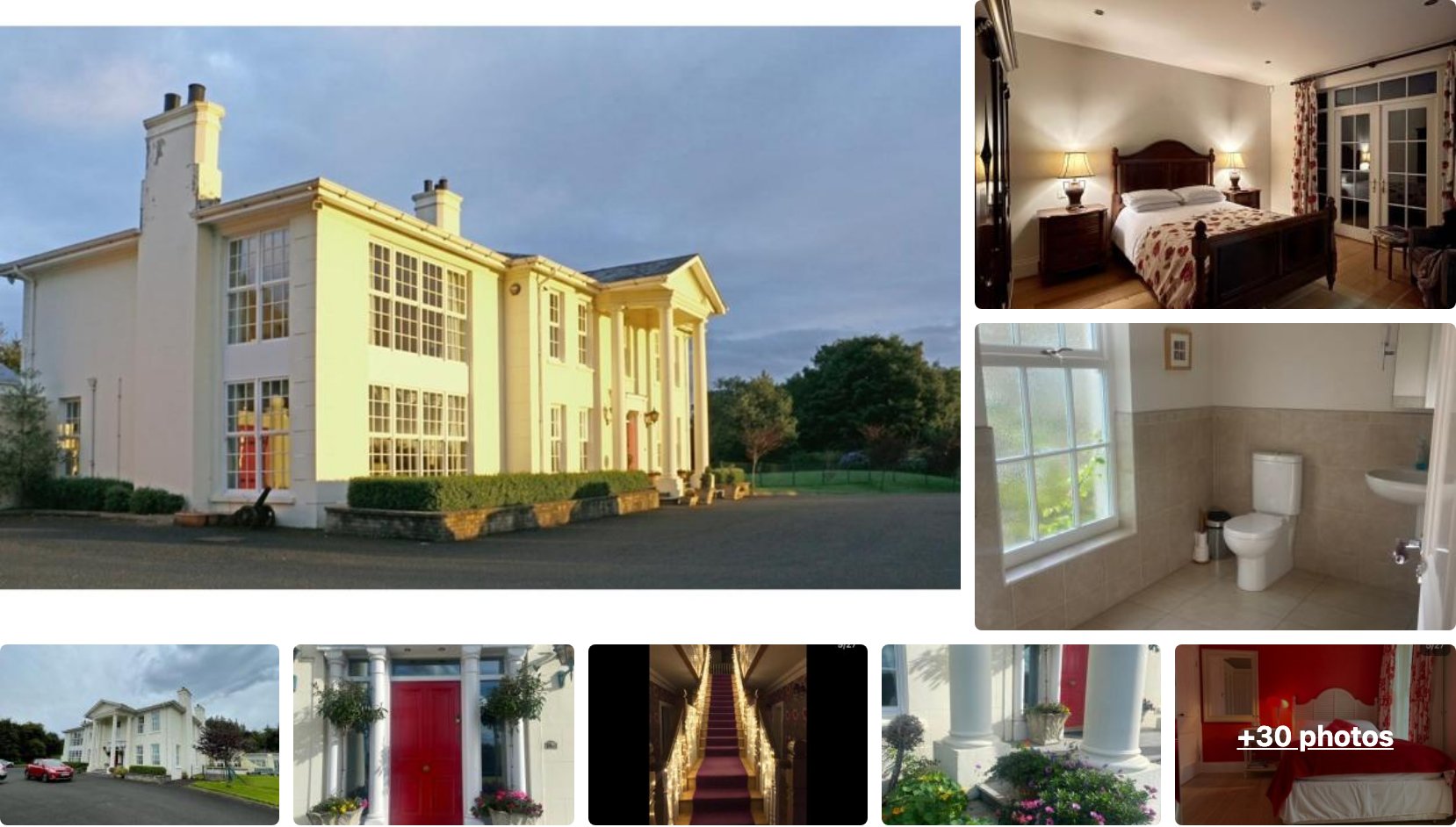
Redgate House Bed & Breakfast is a short drive out of the centre if you want to end in Derry and stay just outside the walls. The old city is compact, so a central spot means you walk to the walls, the Bogside, and the Peace Bridge without touching the car.
This is also the best last night if you’re carrying on south, since Derry sits right by the border and drops you straight into Donegal the next morning. If you’re flying home from Belfast instead, it’s an easy two-hour run back.
Book Derry ahead on a weekend. It’s a night-out city, and the central places go first when there’s a match or a festival on.
👉 View Redgate House Bed & Breakfast Availability and Pricing
Best Time to Do This Trip
The short version: late spring and early autumn are the sweet spot for this loop. You get long enough days to walk the coast, most sites are on full hours, and you dodge the worst of the summer crowds. That’s the window I’d aim for.
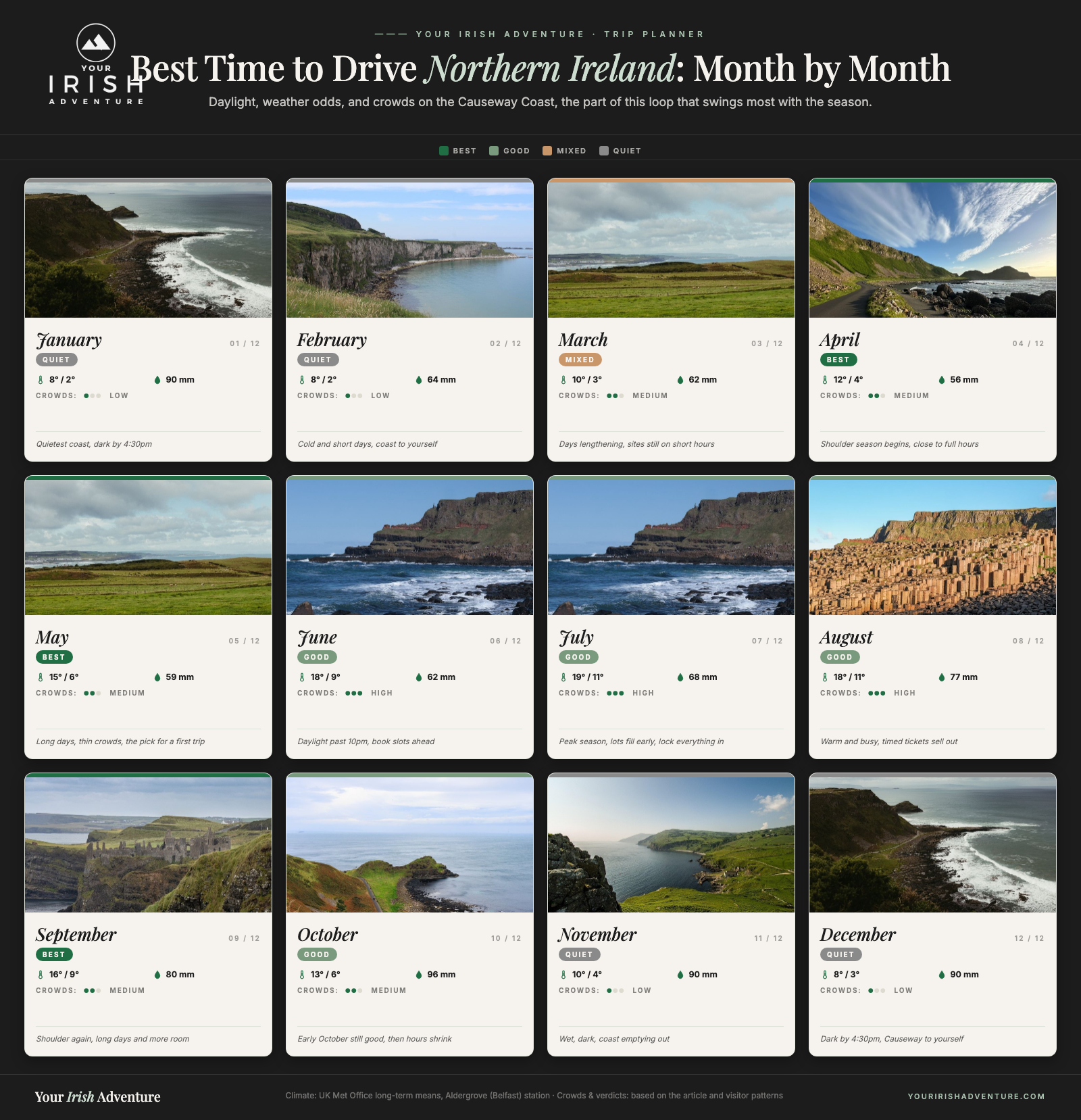
The coast is the part that swings most with the season, so plan the trip around day two more than day one or three. Belfast and Derry are cities and work fine year round.
Summer: long days, but book everything
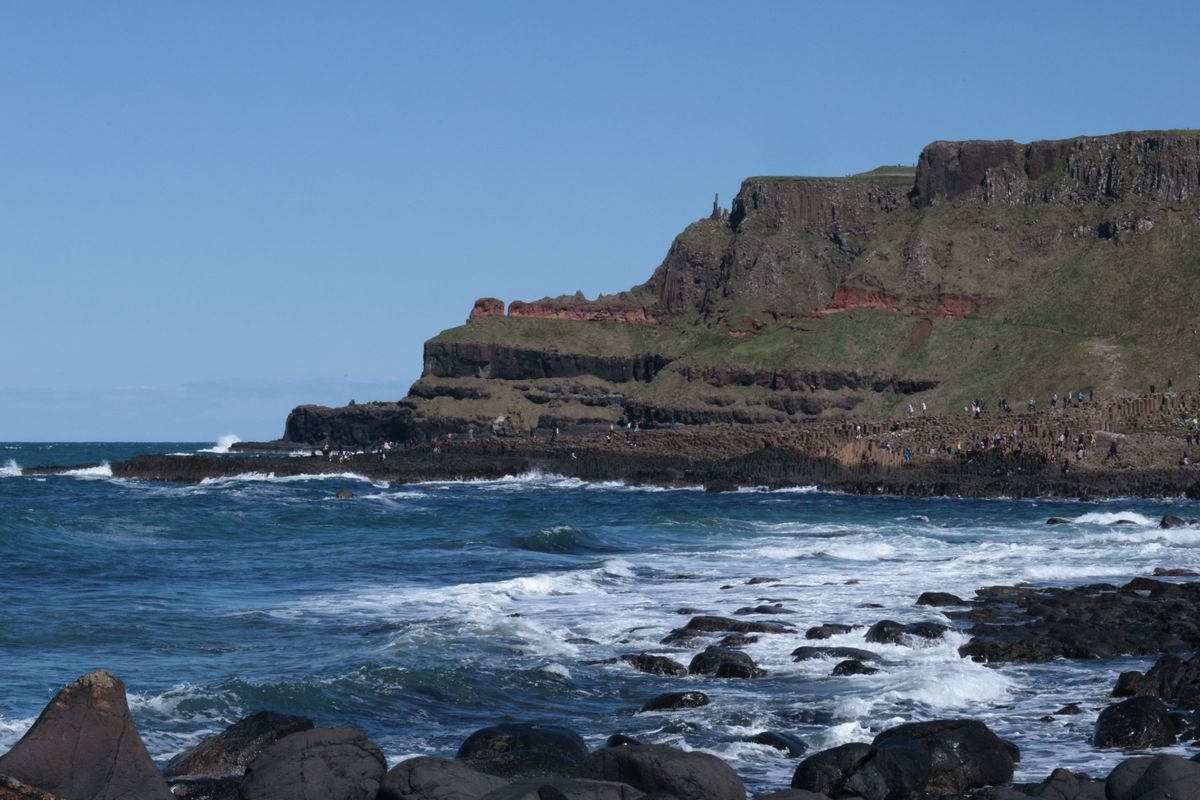
June through August gives you the longest daylight, up past 10pm in midsummer, which is a real gift on the Causeway Coast. The sites are all on their longest hours and the weather is at its best odds, though that’s still Northern Ireland, so pack a rain jacket anyway.
The trade is crowds. The Carrick-a-Rede and Giant’s Causeway parking lots fill early, the timed slots sell out, and the coast towns book up. If you’re coming in summer, lock your accommodation and your National Trust tickets well ahead, and get to the coast at opening.
Shoulder season is the pick
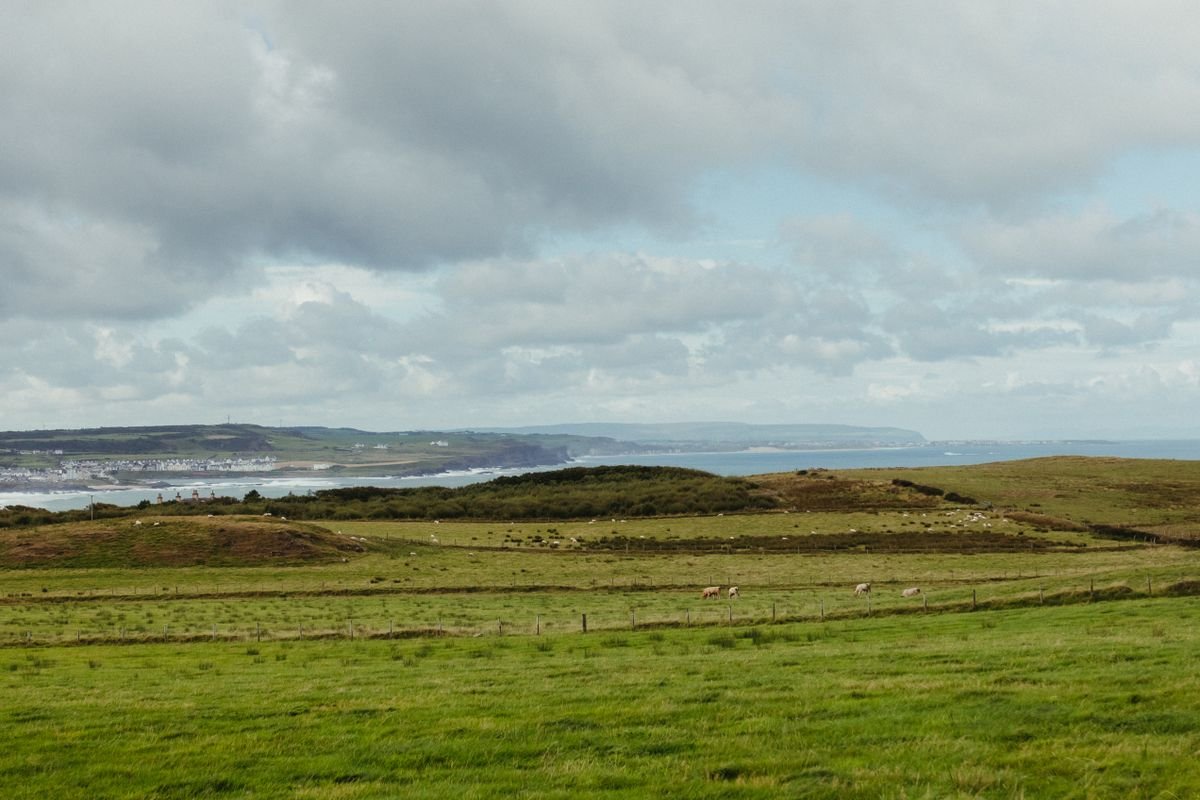
April, May, September, and early October are where I’d point a first-timer. The days are still long enough, most sites are on close to full hours, and the parking and crowd headache eases off a lot. We did this stretch in shoulder season and had far more room on the coast than a July trip would give you.
A weekday in shoulder season is the quietest the Causeway ever gets short of winter. You still want to book Carrick-a-Rede and the Causeway experience ahead on a weekend, but midweek you can usually walk up.
Winter: quiet, but short days
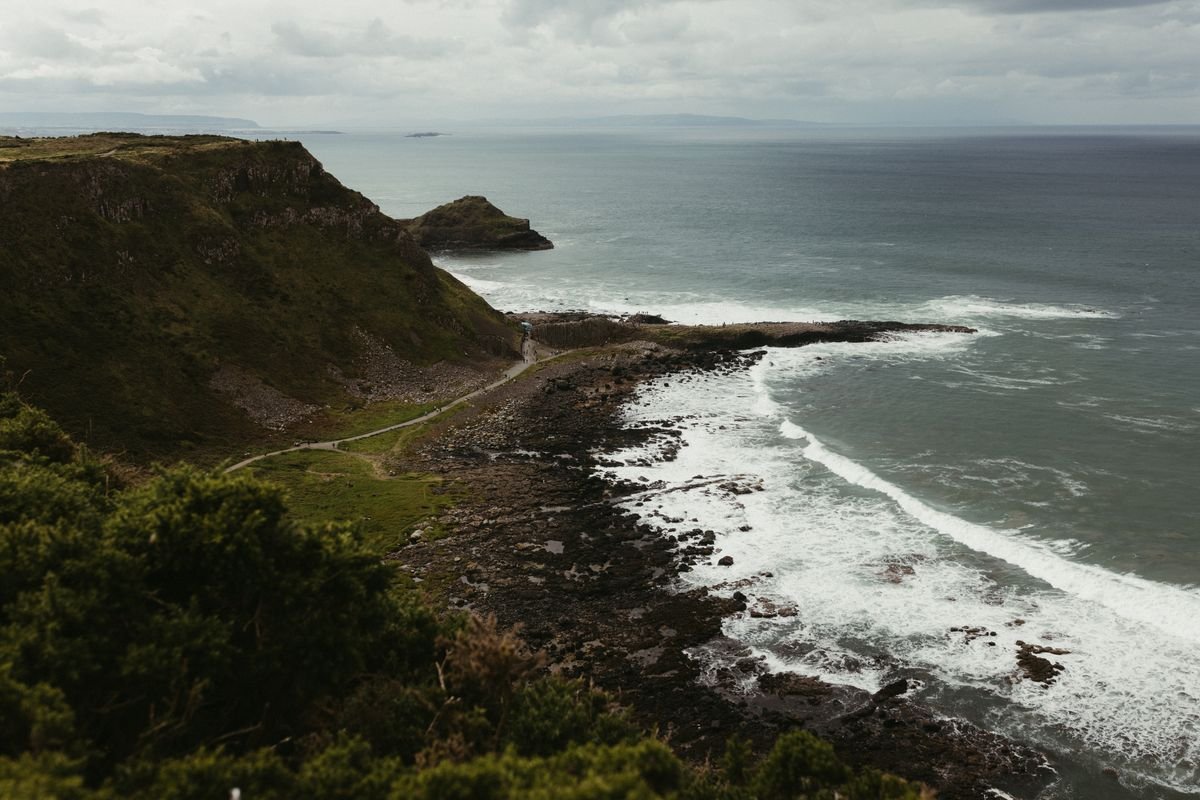
November through February you’ll have the coast to yourself, and Belfast and Derry are good any time of year. The catch is daylight. It’s dark by around 4:30pm in December, so day two gets tight and you’ll be racing the light between stops.
Hours also shrink at the coast sites in winter, and last admission comes early, so check each one for the exact week you’re going. If you don’t mind wind and short days, though, a winter Causeway with nobody on it is a fair trade.
One last thing that holds all year: the weather changes fast up here, and no season guarantees you a dry day on the coast. Build in a little slack, keep the rain jacket handy, and don’t pin the whole trip on a forecast.
More Ireland Itineraries and Road Trips
- 3 Days in Ireland: The Perfect Itinerary
- 10 Days in Ireland: The Ultimate Itinerary
- Wild Atlantic Way Itinerary – Ireland’s Most Epic Road Trip
- A Photographer’s Definitive Ireland Road Trip
Best Tours of Northern Ireland
If you’d rather book a few things ahead or hand off the driving on a day or two, these are the tours worth locking in for this loop. Each one lines up with a stop on the three days above.
From Belfast: Giant’s Causeway Guided Day Tour With Castles
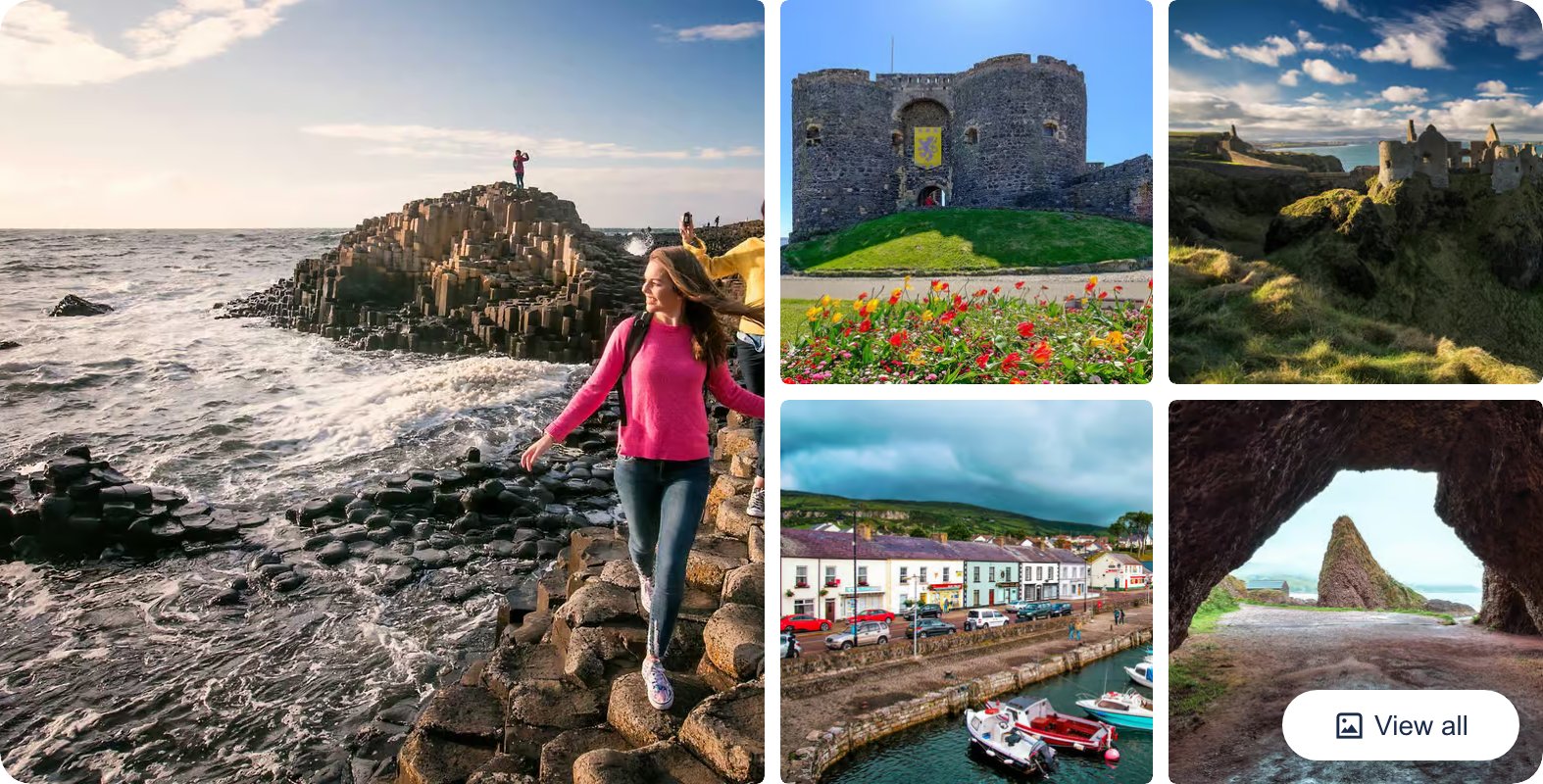
This is the full day-two coast run without the car. It leaves Belfast in the morning and covers the Giant’s Causeway, Carrickfergus Castle, and the Dunluce ruin, with a guide who drives and handles the parking that goes sideways if you wing it yourself.
👉 Check From Belfast: Giant’s Causeway Guided Day Tour With Castles Availability and Reviews
Belfast: The Titanic Experience with SS Nomadic Visit
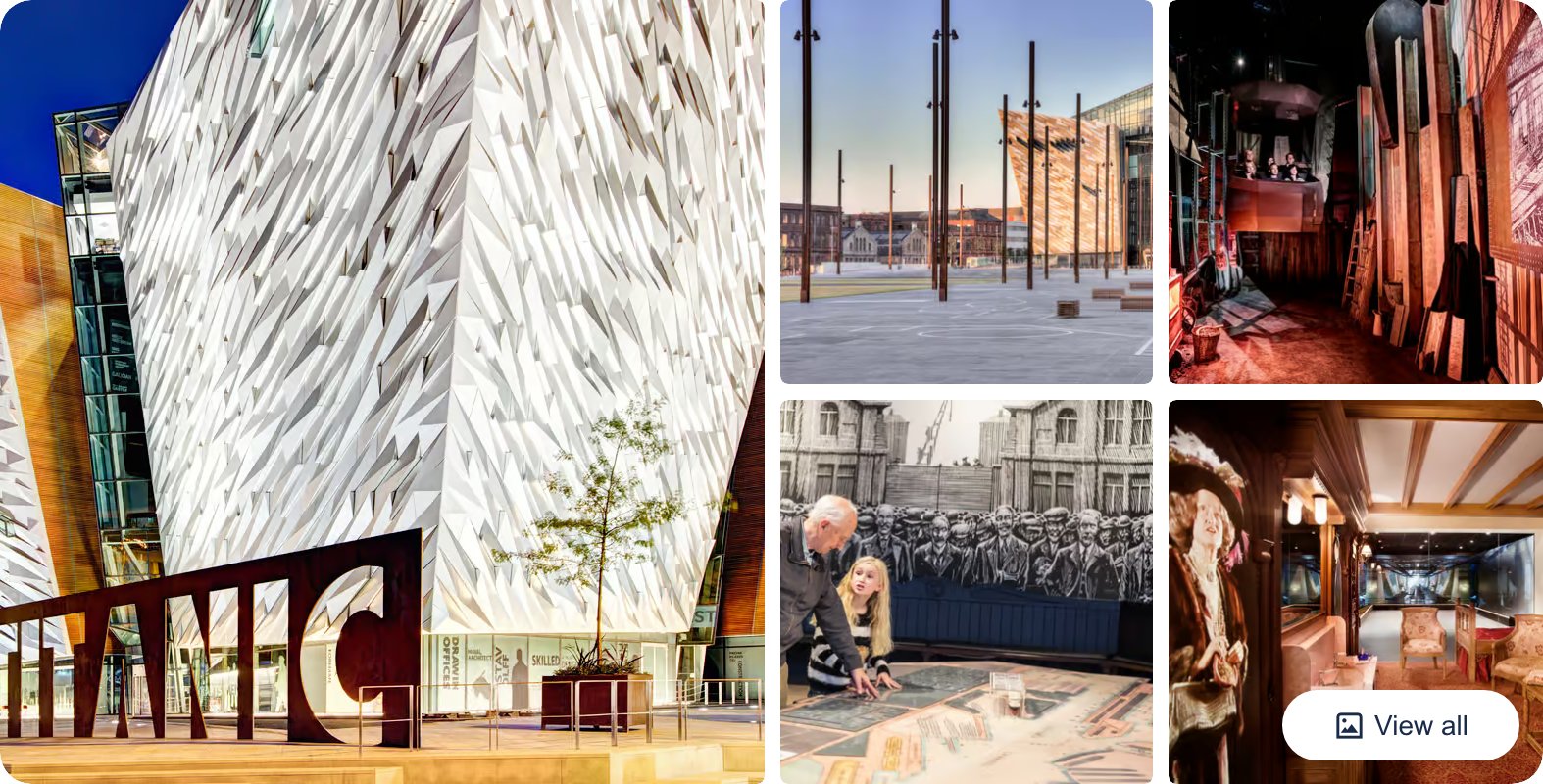
This is the day-one museum ticket, and it adds the SS Nomadic, the last surviving White Star Line ship, docked right beside the building. Book the entry ahead so you get an early slot and skip the walk-up line in summer.
👉 See what’s included on the Titanic Experience with SS Nomadic Visit
Official Game of Thrones Studio Tour

If the Dark Hedges on day two isn’t enough Game of Thrones for you, this is the real thing, the official studio set in Banbridge with the Iron Throne, original costumes, and props from the show. It’s an admission ticket, so you go at your own pace, and it sits between Belfast and the coast on the drive.
👉 Check dates and prices for the Game of Thrones Studio Tour
Derry City: The Troubles Bogside Walking Tour
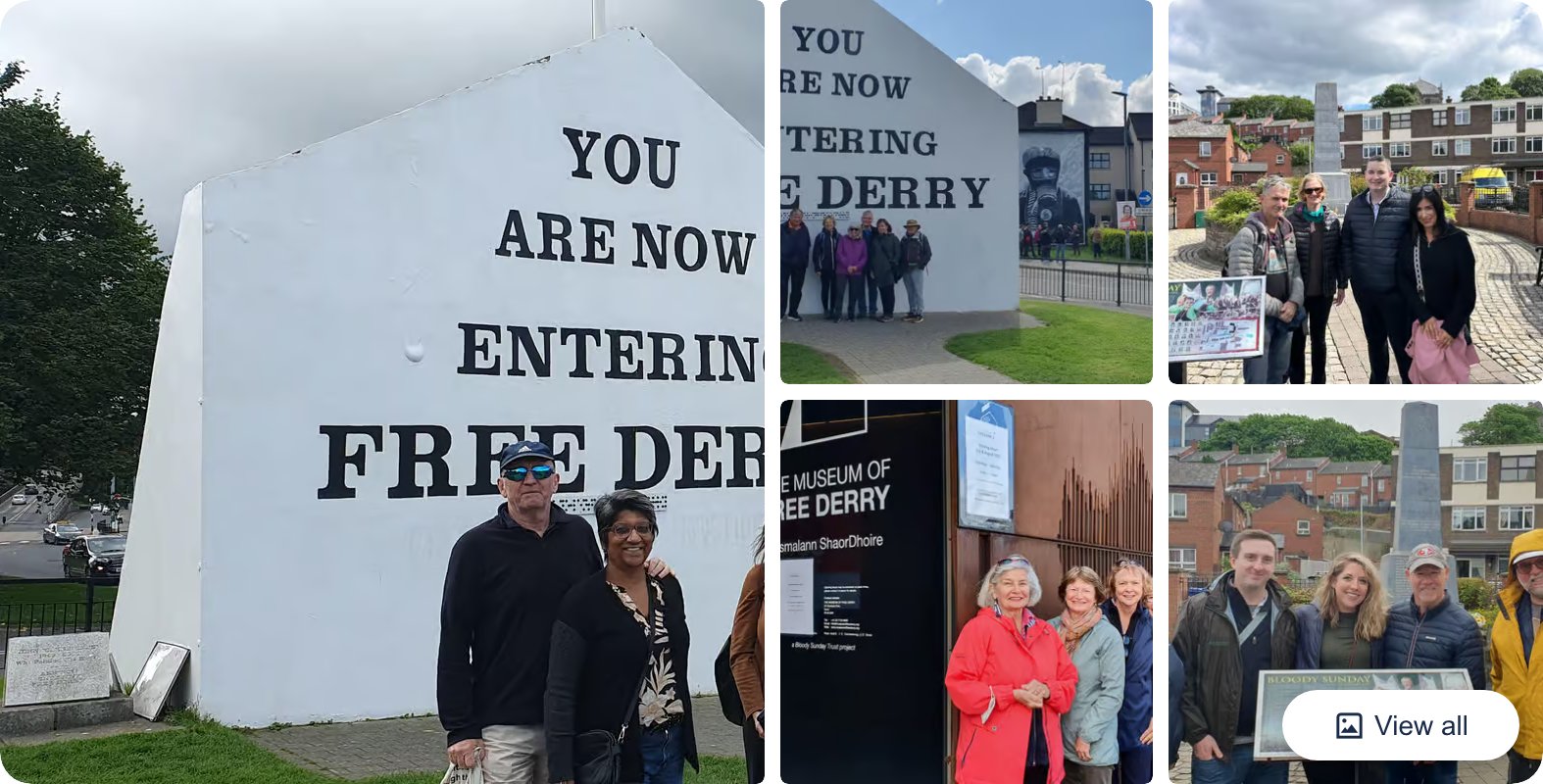
This walks you through the Bogside on day three, the People’s Gallery murals, Free Derry Corner, and the Bloody Sunday memorial, usually led by someone with a direct link to the area. It’s the same reason the black-cab tour in Belfast matters, told from the Derry side.
👉 Check Derry City: The Troubles Bogside Walking Tour Availability and Reviews
Frequently Asked Questions
A few things come up every time someone plans this trip. Here are the quick answers before you book.
Is 3 days enough for Northern Ireland?
Yes, for the highlights. Three days gets you Belfast, the Causeway Coast, and Derry without rushing, though you’ll skip slower spots like the Glens of Antrim and the Mourne Mountains.
Do you need a car for this itinerary?
For day two on the Causeway Coast, effectively yes, since the stops are spread out and the timings only work if you can drive between them. Belfast and Derry are both walkable, so a guided Causeway day tour plus trains or buses can replace the car.
Can you do this trip without a car?
You can. A direct train links Belfast and Derry along the coast, and a day tour covers the Causeway Coast stops (Carrick-a-Rede, the Giant’s Causeway, Dunluce) in one loop back to Belfast.
Is Northern Ireland part of the UK, and what money do they use?
Northern Ireland is part of the UK, so the currency is pound sterling, not the euro. Card works nearly everywhere, and you switch back to euro the moment you cross south into Donegal.
Is there a border check between Northern Ireland and the Republic?
No. The border is open with no passport check, and you’ll often only notice the crossing when road signs switch from miles to kilometres. Check your rental agreement allows cross-border driving, as most do.
Is Northern Ireland safe to visit?
Yes. Belfast and Derry are normal, easy cities to walk around, and the black-cab and Bogside tours walk you through the history of the Troubles.
In short
- Route: Belfast, then the Causeway Coast, then Derry over three days.
- Day two needs a car or a guided tour; the coast stops are spread out.
- Don’t miss the Giant’s Causeway, Carrick-a-Rede rope bridge and Dunluce Castle.
- Northern Ireland uses pound sterling, not the euro; the Republic border is open.
- Shoulder season (May, June, September) means lighter crowds and long daylight.
Final Thoughts
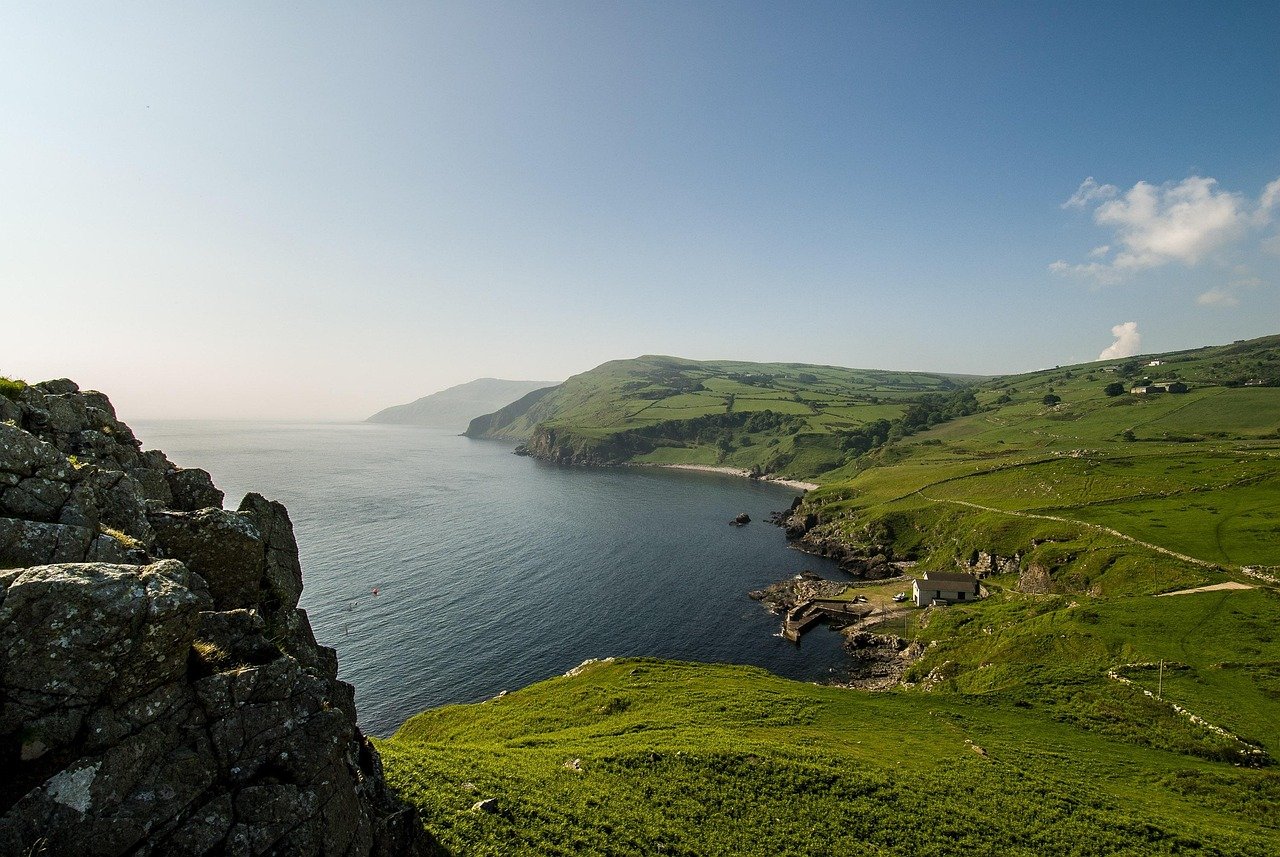
Three days up north gets you the real highlights without the death march of trying to see it all. Belfast for the history, the Causeway Coast for the scenery, and Derry to tie it together. That’s a full trip, not a rushed one.
The thing that makes it work is how short the driving is. You’re never more than a couple of hours in the car, most of it along the coast, so the days are spent at the stops instead of getting to them.
If I had to name the two you shouldn’t cut, it’s the black-cab tour in Belfast and the Giant’s Causeway. One gives you the story of the place, the other is the reason people drive up here in the first place. Everything else you can flex around your time and your budget.
Book your coast tickets and your rooms ahead in summer, go early to beat the parking, and aim for shoulder season if you can pick your dates. Do that and the whole loop runs smooth.
And if you’ve got the time, Derry sits right on the border, so you can finish the three days and roll straight into Donegal and the rest of Ireland. That’s exactly what we’d do.
Like it? Pin it!
Save this guide for later