
For me, the best time to drive the Wild Atlantic Way is May or early June, with September a close second. As an Irish native who has explored the country in every season, I would choose the longer spring evenings for a first road trip. They leave more time for walks and unplanned stops.
September suits a slower trip with fewer daylight hours, while July and August make sense when school vacations decide your dates. Winter needs a much shorter route and a willingness to change plans when the weather does.
More Wild Atlantic Way Planning Guides
- The Best Stops on the Wild Atlantic Way (11 Worth It)
- Wild Atlantic Way 5 Day Itinerary: Kinsale to Doolin
- 9 Best Places On The Wild Atlantic Way Route
The useful question is how much coast you want to see. A week in Kerry needs different planning from a trip covering Cork to Donegal, especially when island visits are involved.
Use the broader guide to the best time to visit Ireland if this drive is only part of your vacation. A trip centered on Dublin museums has less need for long evenings than one centered on beaches and headlands.
Quick Answer:
May or early June is my first choice for driving the Wild Atlantic Way, with September a good alternative. Spring brings long evenings and lower average rainfall at the coastal stations compared here. July and August also work well with advance booking. In winter, choose a shorter section, stay flexible, and plan around daylight and weather warnings.
Best Time to Drive the Wild Atlantic Way: My Verdict

May is my first choice because it combines long days with relatively low average rainfall. Early June gives you even more evening light, and September is a good alternative when you can accept shorter days and a higher chance of rain.
A spring weekend can be busy, and a wet week can happen in any month. I would check the availability of the places you particularly want to stay before choosing between otherwise suitable dates.
July and August are also good months for this drive. You get long evenings, warmer average temperatures, and plenty of seasonal services. The extra planning comes with popular overnight stops and parking at well-known sights. Reserve accommodation ahead and give the busiest attractions their own time.
For a first trip, I would choose April through September over November through February. Early October can still suit a selected stretch, but each evening gives you less time outside. There is little benefit in adding a long coastal detour if you reach it after sunset.
The Wild Atlantic Way Month by Month

April to September offers the widest choice of road-trip plans. The table below gives my recommendation for each month. Local events, weekends, and the particular part of the coast can change the experience considerably.
| Month | Best fit | What to plan around |
|---|---|---|
| January | Short local drives | Check wind warnings and winter opening days. |
| February | One-base breaks | Keep the route flexible around the forecast. |
| March | Selective mainland trips | Check Easter dates and seasonal services. |
| April | Mainland sightseeing | Longer days; some island services remain limited. |
| May | My first choice | Long evenings and lower average rainfall. |
| June | Long outdoor days | Early June is an excellent first-trip option. |
| July | Summer touring | Reserve popular stays and allow time for parking. |
| August | Summer touring | Book ahead and use the long evenings. |
| September | My second choice | Good for a slower trip; wetter averages than May. |
| October | A shorter route | Daylight declines; confirm boats and opening hours. |
| November | Town-based breaks | Use suitable weather windows for coastal drives. |
| December | Short winter outings | Very short days and fewer seasonal services. |
January and February suit short breaks based in a town with reliable winter services. You can take a coastal drive on a suitable day, then change plans if strong winds arrive. I would not book a succession of remote overnight stops that leaves no room to stay put.
March is more workable as the days lengthen. Easter can fall in March or April, so check school vacations before assuming spring dates will be less busy. Boat operators and seasonal attractions have their own opening calendars, which may begin later than your trip.
April is a good choice for mainland sightseeing. May and early June are my preferred months for a longer drive with walks. A lighter evening also makes it easier to settle into your accommodation before going out again for a short stroll.
July and August suit travelers who want the warmest part of the year and broad seasonal availability. Book the overnight stops first, especially if you need a family room or accessible accommodation. A late visit to an outdoor viewpoint can work well, provided the parking and access hours allow it.
September remains a good road-trip month, but its shorter evenings matter on days with long drives. October needs a more selective itinerary. In November and December, I would stay in one area and choose drives from the short-range forecast, rather than commit to completing the coast.
Daylight Makes a Difference to Your Driving Plans

The west coast has roughly twice as much daylight around midsummer as around midwinter. In Galway, sunrise-to-sunset daylight is about 17 hours near the June solstice and about seven and a half hours near the December solstice. Cloud cover and visibility still affect how useful those hours are.
That does not mean you should drive for 17 hours. It means that a late lunch, a longer walk, or an unexpected stop does not immediately force the rest of the day into darkness. I prefer to keep the driving itself moderate and use the extra evening for time out of the car.
In winter, plan your main outdoor stop for the middle of the day and aim to reach your accommodation before dark. A headland road can take longer than a map suggests when you meet oncoming traffic, have to find parking, or stop to let cyclists pass safely.
More Seasonal Ireland Guides
- Visiting Ireland in Spring: The Complete Guide
- Ireland in Autumn: Best Places to Visit & Things to Do
- Ireland in August: Everything You Need to Know
The clock changes alter the time shown for sunset, not the amount of daylight the earth receives. Late October's return to winter time makes the earlier evening particularly noticeable. Check sunrise and sunset for your actual destination and travel dates before booking a late afternoon activity.
Donegal has a larger seasonal swing than Cork because it is farther north. It gets longer summer days and shorter winter days. Do not use a Cork sunset time to plan an evening walk near Malin Head, and leave time to get back from the viewpoint before the light goes.
What the Weather Averages Actually Tell You
May has lower average rainfall than September at both Belmullet in County Mayo and Valentia Observatory in coastal Kerry. That supports my preference for late spring, but these are two stations on a very long coast. They cannot tell you the weather on a particular mountain, island, or travel day.
At Belmullet, the average daily high rises from about 14.6°C (58°F) in May to 17.6°C (64°F) in July. September averages 16.5°C (62°F). Valentia's figures are similar, with average highs of 14.5°C (58°F), 17.8°C (64°F), and 16.9°C (62°F) respectively.
The monthly rainfall comparison below shows why I would not describe September as a drier version of summer. It can be a very good month to visit, but the long-term averages give you a different reason to choose it from May.

These totals include all rainfall during a month, rather than the number of days your sightseeing will be interrupted.
Rain can pass in a short shower or continue for much of the day. Allow for both. A waterproof jacket, suitable footwear, and a dry layer in the car are useful in every season. Summer evenings can feel cool on an exposed headland even when the afternoon was warm.
I would also keep a town-based alternative for a wet day. Visit a museum, take a long lunch, or move a coastal walk to another day. Check the forecast for the next section of your route each morning, particularly before leaving for an island or a place with little shelter.
Choose the Part of the Coast Before Booking Dates

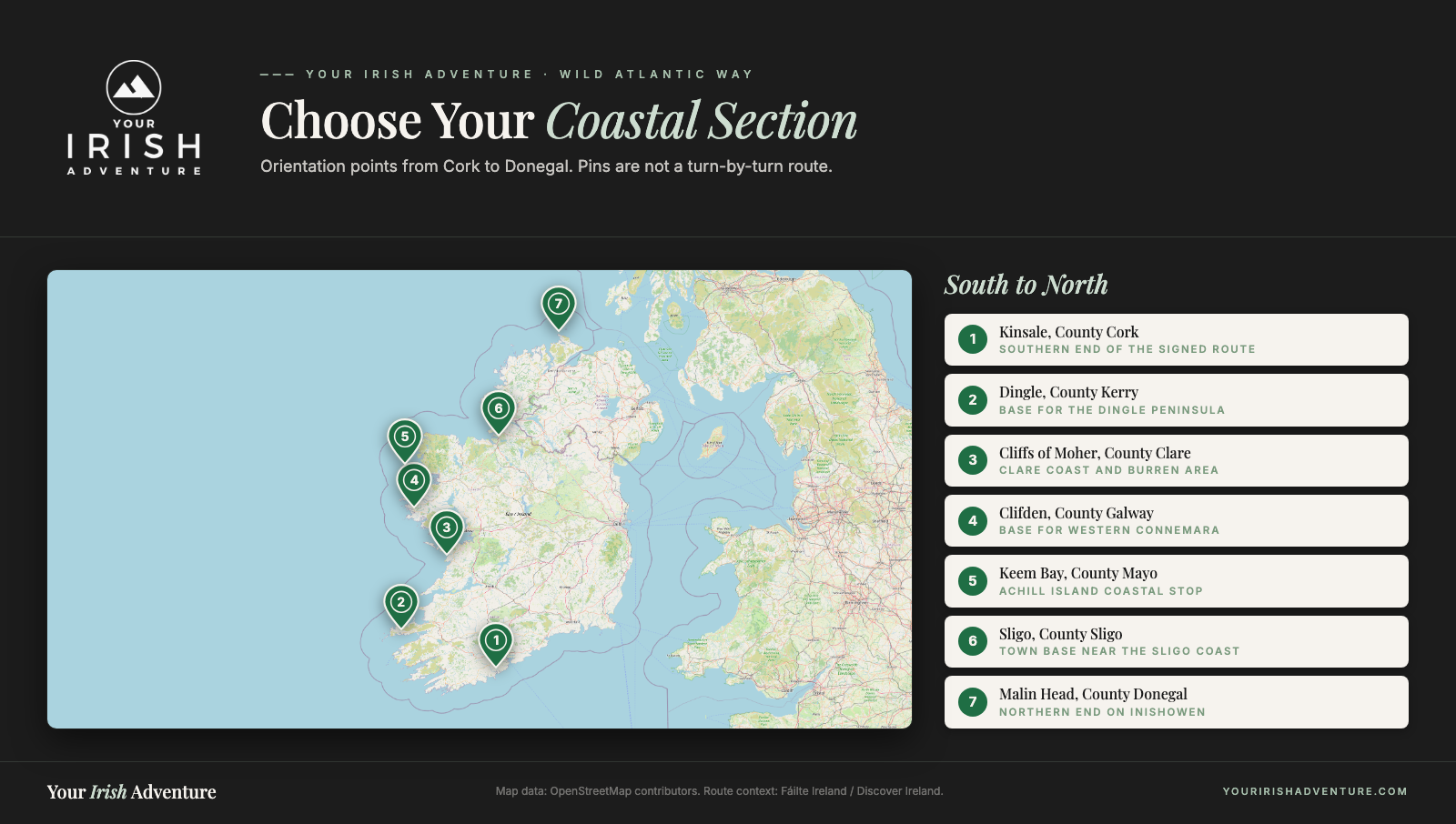
The Wild Atlantic Way follows about 2,500 km, or 1,550 miles, of Ireland's western coastline between Kinsale and the Inishowen Peninsula. It includes long detours around bays and peninsulas. Driving directly between its endpoints is a different trip from following the signed coastal route.
The map shows the order of the regions discussed here, traveling north from Cork. Its markers are orientation points, rather than turn-by-turn directions or a proposed driving day. The coast has far more stops than you should try to visit in one vacation.
I would choose a southern, central, or northern section first, then decide how much time to spend there. You can combine neighboring sections when you have longer, but adding another county should leave time to stop in it.
Cork and Kerry
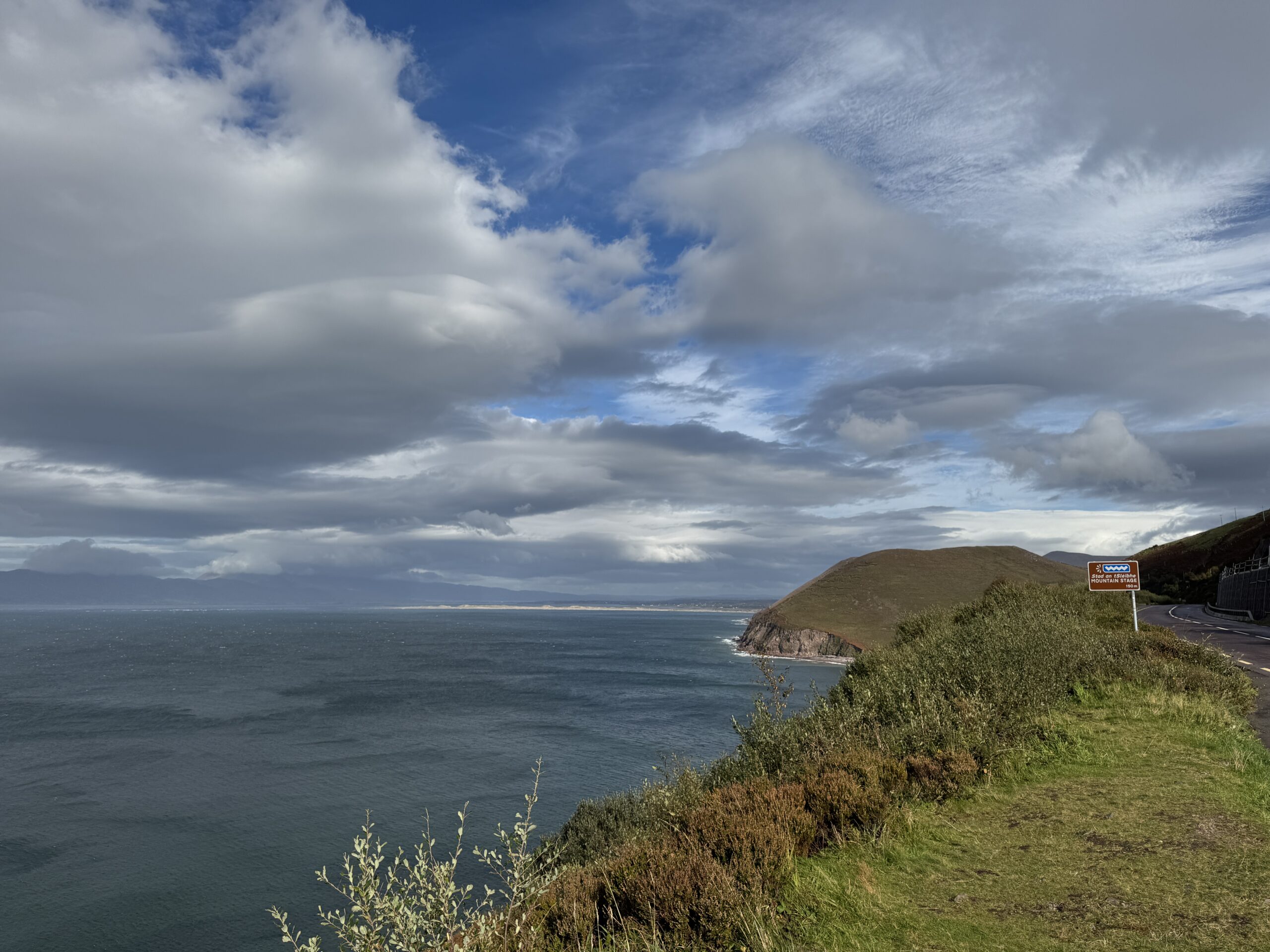
May, early June, and September are my preferred windows for West Cork and Kerry. Kinsale is the southern end of the route, while the Beara, Iveragh, and Dingle peninsulas each deserve time of their own. A two-night base gives you more flexibility than arriving late and leaving again after breakfast.
For a trip starting in the south, my guide to the best time to visit Cork covers city breaks and the county’s coastal stops.
For the Ring of Kerry, choose the driving day around the local forecast once you are in the area. Our guide to the best time to drive the Ring of Kerry looks more closely at daylight, traffic, and how to plan the loop. A date that suits the whole coast does not guarantee clear views on that particular day.
Skellig Michael adds a separate restriction. Landing visits operate within a limited season and depend on sea conditions. If landing is a priority, confirm the permitted season and boat availability before booking the rest of your Kerry stay. A mainland driving trip can work in months when a landing cannot.
Clare, Galway, and Connemara
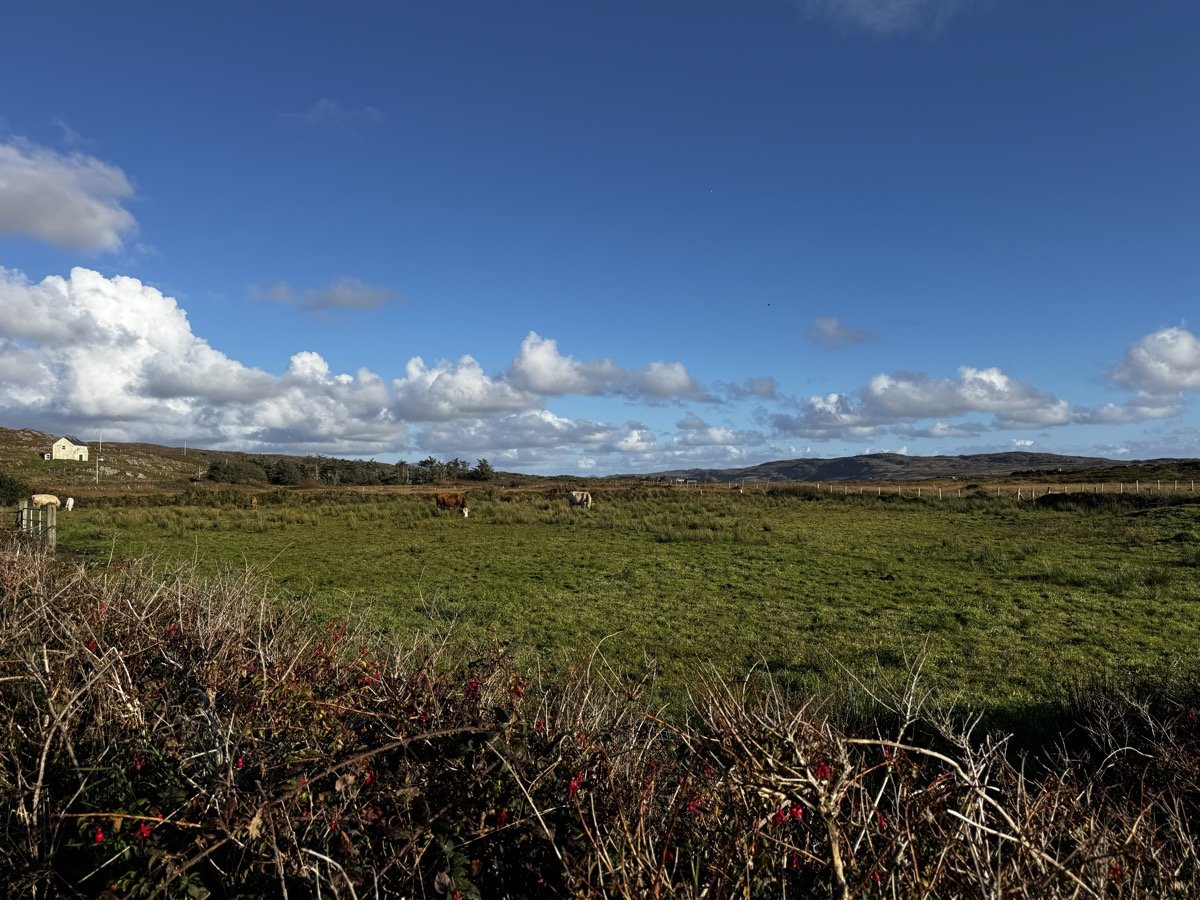
April through September gives you plenty of options for mainland stops in Clare and Galway. The Cliffs of Moher, the Burren, and Connemara can fill several days without moving every night. A sunny forecast is useful, but visibility and wind matter more than whether the month sounds summery.
Galway is useful for a city evening and transport connections. Clifden puts you farther into Connemara for coastal drives and shorter journeys to its western side. They are different bases, so choose according to where you want to spend your days rather than treating them as interchangeable.
For the Aran Islands, the departure port matters as much as the season. Some services run year-round and others are seasonal. Allow the island its own day, with enough time to reach the pier, park, and board. I would avoid adding a long drive immediately after the return ferry.
Mayo, Sligo, and Donegal

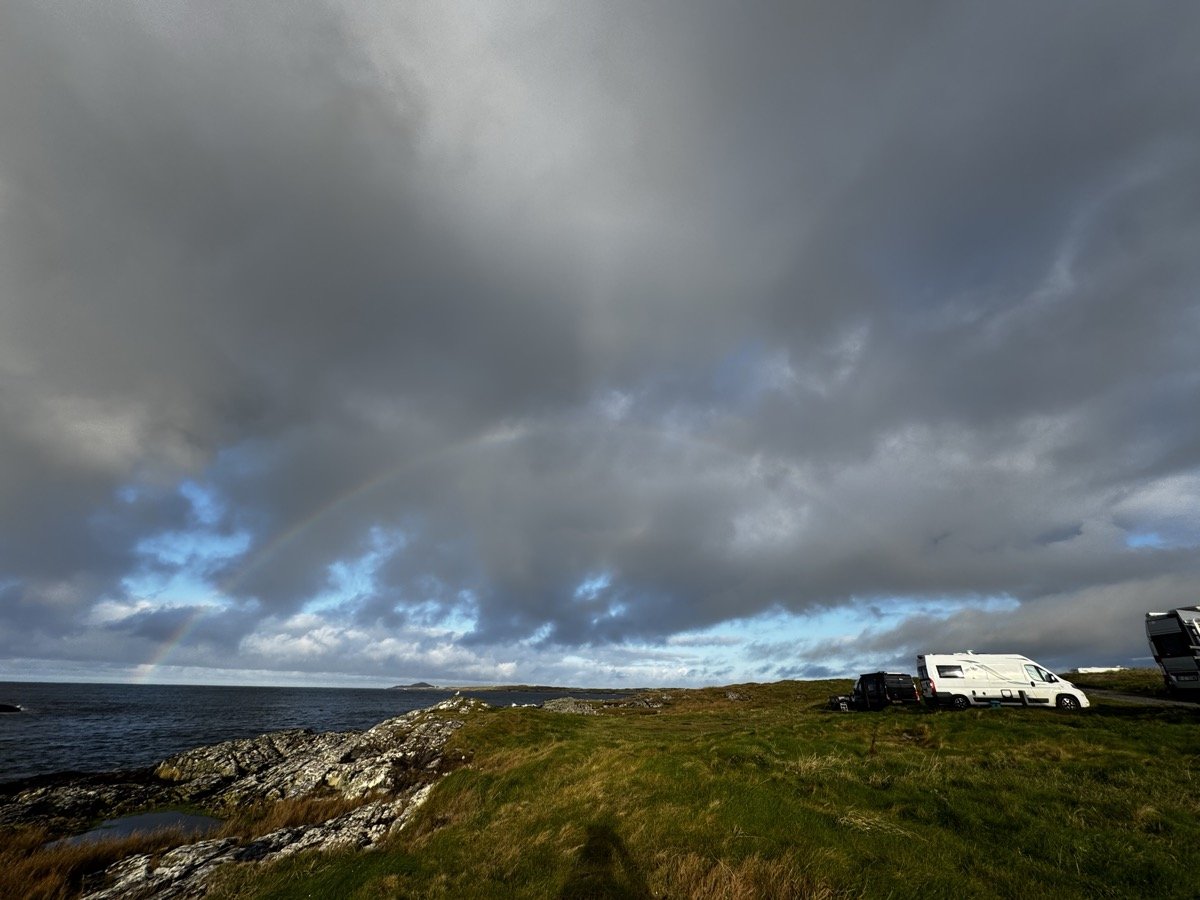
May through September is the easiest period for a northern section with several outdoor stops. Achill Island, the Sligo coast, and Donegal are spread over a large area. Keem Bay and Malin Head belong on separate driving days with overnight stops chosen between them.
Summer can be a very good choice here. Popular stops can still be busy in August. A beach, headland, or small parking lot can be busy on a fine day even when the surrounding roads have little traffic.
Donegal alone rewards a longer stay. Donegal Town works for the southern part of the county, but it is a poor base for repeatedly driving to Inishowen. Move your overnight stop north when your sightseeing moves north, rather than spending the same hours retracing the road.
How Many Days Should You Allow?

I would allow about three weeks for a first attempt at the full signed route, with longer if you want several island visits, long walks, or days without driving. Two weeks can work for a selective trip along much of the coast. You will need to leave out coastal detours to make room for unhurried sightseeing.
The distance helps explain the difference. Divide 2,500 km by 14 days and you have almost 180 km per day before any extra journeys. That average also includes days when you might prefer to spend the whole afternoon walking, visiting an island, or waiting out poor weather.
For seven days, I would choose one section. West Cork and Kerry, Clare and Connemara, or Mayo and part of Donegal can each make a worthwhile trip. Choose a few main stops within that area and leave time for walks and shorter detours.
Plan Your Coastal Stops
- Best Time to Visit Skellig Michael
- Best Time to Visit the Cliffs of Moher: Beat the Coaches
- Best Beaches in Mayo: Achill Island and Beyond
With ten days, add a neighboring area or spend longer in your first choice. With two weeks, you can travel between several regions while leaving out substantial loops. Keep arrival and departure days separate from full sightseeing days, especially when your flight uses Dublin rather than an airport near your chosen coast.
There is no useful fixed distance to drive every day. A short peninsula loop with stops can take longer than a much greater distance on a main road. Look at each day's driving time, add time for the things you want to do, and keep some of the day unallocated.
In winter, I would reduce the number of overnight moves before trying to shorten every visit. Three nights in one base gives you a chance to use the best weather window. Three distant hotels booked on consecutive nights may force you onto the road when you would rather wait.
Island Trips and Seasonal Openings

Check your priority boat trip before fixing your travel month. Mainland roads do not have one official opening season, but an island landing, passenger ferry, visitor center, or campsite may have a calendar that limits your plans.
Heritage Ireland publishes the current opening arrangements for Sceilg Mhichíl, also known as Skellig Michael, and lists permitted boat operators. The landing season generally falls between May and September, with the exact dates subject to change. Even within that period, a booking cannot guarantee safe landing conditions.
The Aran Islands have a different pattern. Aran Island Ferries runs year-round services from Rossaveel to all three islands and a seasonal service from Galway City to Inis Mór and the Cliffs of Moher. Check the timetable for your departure port rather than assuming a Galway City sailing operates throughout the year.
Leave room for a cancellation to change your day. The replacement could be a mainland visit or a second sailing attempt if the operator has space. An extra night gives you another possibility; it does not reserve another seat or make the sea conditions predictable.
For October through early spring, confirm your accommodation and dinner options directly before arriving in a small coastal village. Some businesses close seasonally or operate on fewer days. Confirm each restaurant and campsite separately, since their opening days may differ from your hotel’s.
Driving, Packing, and Poor-Weather Plans
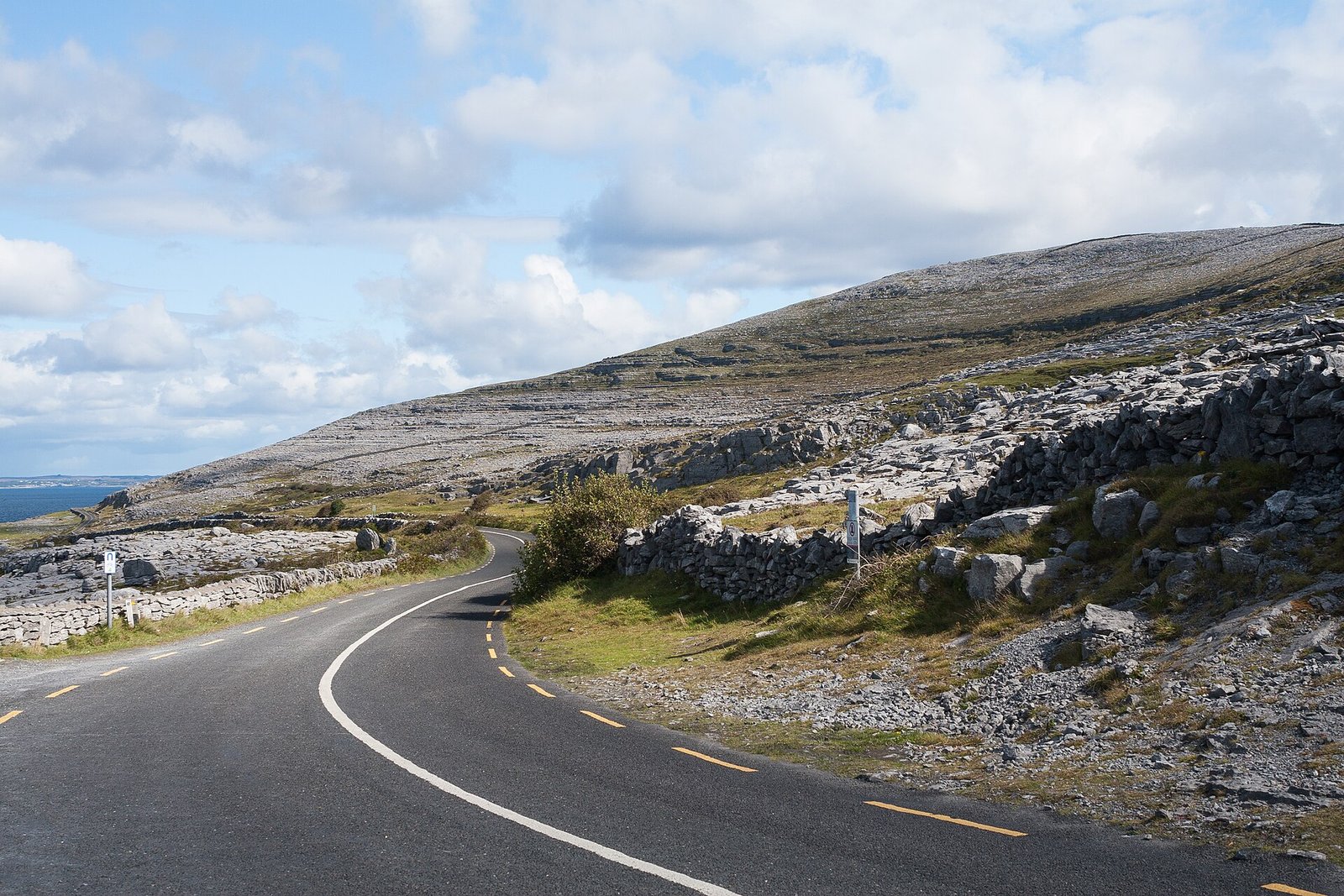
A smaller rental car is usually easier to manage on narrow coastal roads, provided it fits your passengers and luggage. Book an automatic early if you need one. You can compare rental cars on Discover Cars, then read the total rental terms as well as the headline price. Accommodation with convenient parking helps when you have luggage.
Drive on the left, allow space for cyclists and walkers, and use passing places without blocking them. The safe speed may be well below the posted limit. A line of cars behind you is a reason to pull over safely when you can, rather than hurry through a bend you cannot see around.
Read Met Éireann's warnings as well as the general forecast. Strong winds can make exposed coastal routes unsuitable, and heavy rain can affect roads far from the viewpoint you planned to visit. Follow local closures and advice, even if the weather at your hotel looks manageable.
The Road Safety Authority advises drivers to choose another route if the road ahead is flooded. Do not drive through floodwater. In severe weather, postponing a sightseeing drive is often the sensible decision, particularly in a campervan or another high-sided vehicle.
Keep a waterproof outer layer, warm clothing, and walking shoes within reach instead of underneath your bags. In the colder months, add gloves and a hat. Bring sun protection too. Your clothes should suit the time you spend outside the car, including a wait at an exposed ferry pier.
Personally, I would rather miss a viewpoint than spend the next hour trying to recover a tightly booked schedule. Choose one main outing each day and treat the smaller stops as optional. That approach works in summer as well as winter, and it leaves you time to enjoy the places you drove to see.
Before You Book
- Choose May or early June for a first trip with long outdoor days.
- Allow about three weeks for the full signed route, or select one section for a week.
- Check island schedules before fixing dates, and leave space for weather changes.
Where to Stay Along the Route
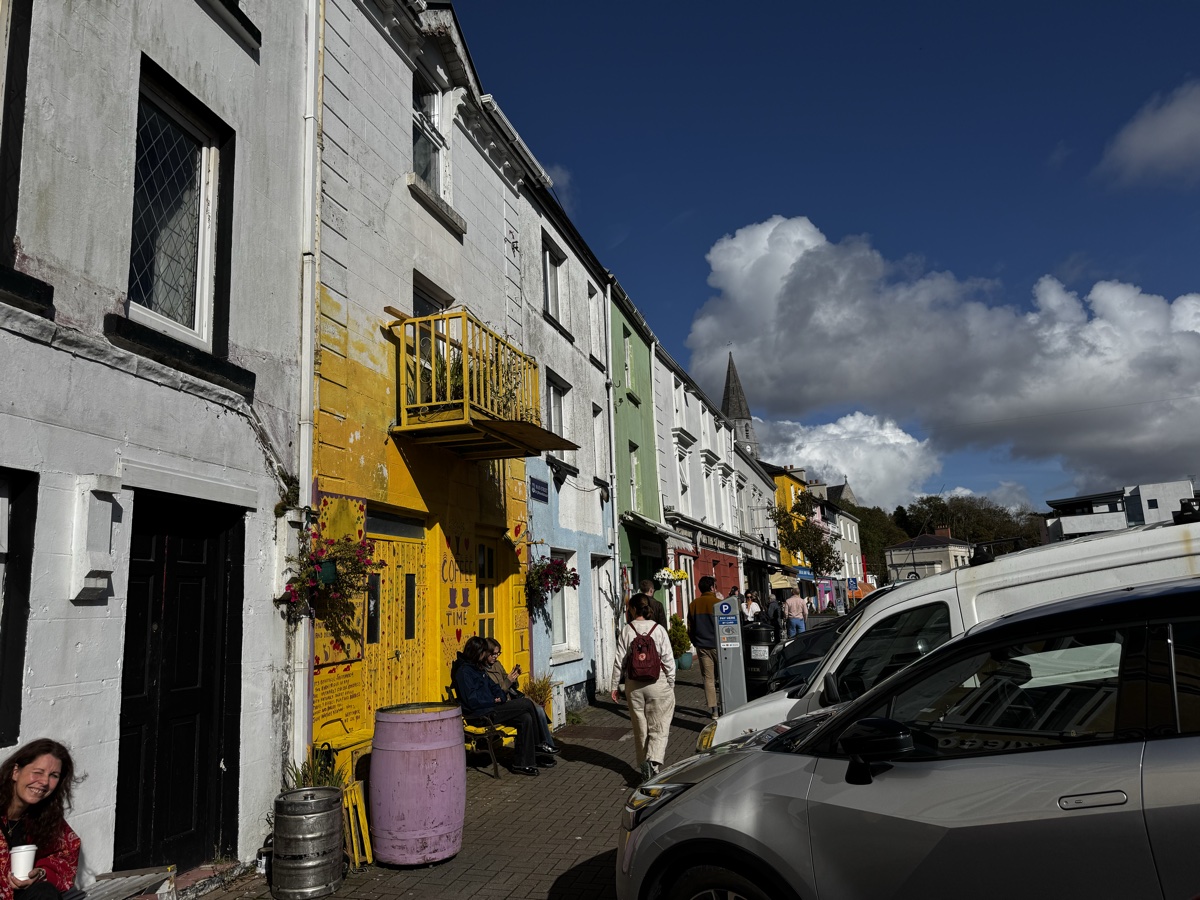
Choose accommodation for the section you are driving, rather than trying to cover the coast from one base. For a selective trip, two or three nights in each area often makes more sense than packing every morning. You can then move farther along the route without retracing the previous day's drive.
The two bases below suit different parts of the coast. Look for parking and cancellation terms that suit a road trip.
For a trip centered on Slea Head, I would stay in Dingle instead of making repeated journeys from Killarney. For an early Skellig departure, look closer to the departure pier. The right base depends on your booked activity, particularly when check-in at the boat is early.
Book popular summer dates as soon as the route is reasonably settled. For spring and September, compare actual prices rather than assuming a fixed discount. A festival or weekend can change availability, and flexible cancellation can be useful when a boat trip is central to your plans.
Where to Stay in Kerry
Killarney has budget beds at The Black Sheep Hostel, central rooms at The Ross, and a lakeside stay at The Lake Hotel.
Where to Stay in Killarney
Where to Stay in Connemara
Foyles is on Main Street, Station House on Galway Road, and Abbeyglen on Sky Road. Clifden suits a stay in western Connemara.
Where to Stay in Clifden
Frequently Asked Questions
What is the overall best time to drive the Wild Atlantic Way?
May or early June is my first choice for long evenings and relatively low average rainfall. September is a good alternative, with shorter days and wetter averages.
How long does the full route take?
I would allow about three weeks for a first trip following the full signed route. Two weeks suits a selective trip, while one week is better spent in a single section.
Is it worth driving in winter?
Winter suits short coastal drives from one base when the weather allows. Short days, strong winds, and seasonal closures make it a poor choice for a first attempt at the full route.
Will rain ruin the drive?
Rain does not have to spoil a trip, but it can last much of the day and reduce visibility. Keep an alternative indoor plan, and postpone exposed drives when weather warnings or local advice require it.
Can you visit the Aran Islands all year?
Aran Island Ferries runs year-round services from Rossaveel to all three islands. Its Galway City service is seasonal, and all departures depend on sailing conditions.
Is May better than September for the Wild Atlantic Way?
I prefer May for a first trip because it has longer daylight and lower average rainfall at the Belmullet and Valentia coastal stations. September suits travelers who are happy with shorter driving days.
Final Thoughts
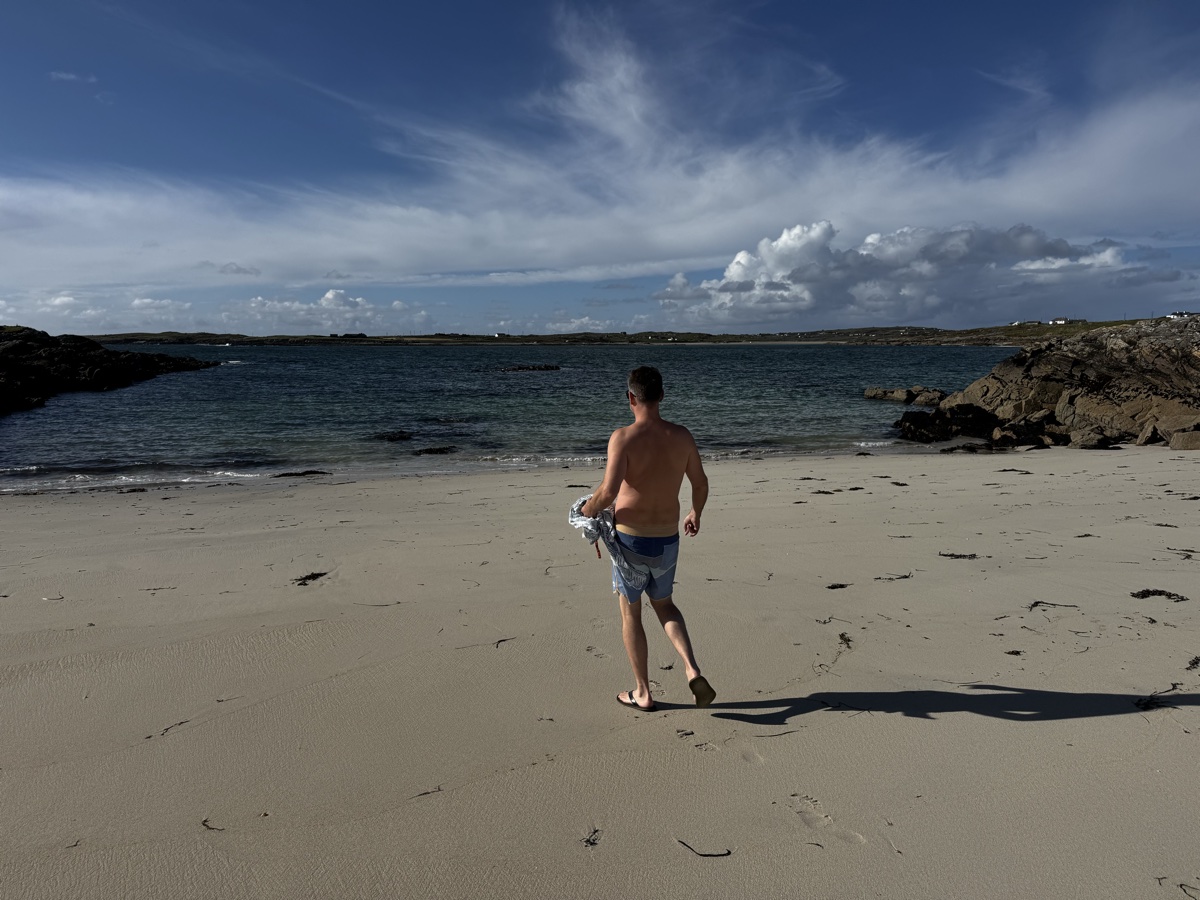
I would start with May or early June for a first Wild Atlantic Way drive, then choose the stretch of coast that fits the time available. September is my next choice when the shorter evenings suit your plans. July and August remain good options if those are the months you can travel.
Book your essential overnight stops and any priority island visit, but leave some space between them. A shorter route with time for a walk, lunch, and a stop you had not planned is a better use of a week than passing half the coast through the windshield.
Featured photo: Kent Wang, CC BY-SA 2.0. Resized. This article contains affiliate links. We may earn a commission if you book through them, at no extra cost to you.
Photo: Pinterest image 1, Kent Wang: Malin Head (2019), CC BY-SA 2.0. Cropped with text added; adaptation under the same license.
Photo: Pinterest image 2, Andreas F. Borchert, CC BY-SA 4.0. Cropped with text added; adaptation under the same license.
Like it? Pin it!
Save this guide for later