Dublin is a walking city, so the best way to actually get to know it is on foot with someone who knows the stories. We covered a lot of it on our last trip, and the walking tours in Dublin do something a self-guided wander can’t: they connect the pub you’re standing outside to the writer, the rebellion, or the murder that happened there.
We spent about two weeks driving Ireland in shoulder season, with a few nights in Dublin on each end. Between pints on the Temple Bar crawl and a slow morning walking the Trinity College grounds, we did enough of the city on foot to know which tours are worth your time and which ones you can skip.
The good news is there’s a tour for whatever you’re into, and plenty of the best ones are free. The tricky part is picking the right one, because a bad guide can make even a great route feel like a slog.
So here’s the full rundown, from the free tip-based walks and the serious history tours to the literary crawls, ghost walks, and food tours. I’ll also cover the Northside versus Southside question and what to sort out before you book.
More Dublin Travel Guides
- 22 Best Things To Do in Dublin
- 29 Free Things To Do in Dublin: A Local’s Guide
- The Best Ireland Itineraries From Dublin Airport
- The Best Game of Thrones Tour From Dublin (2026)
Quick Answer:
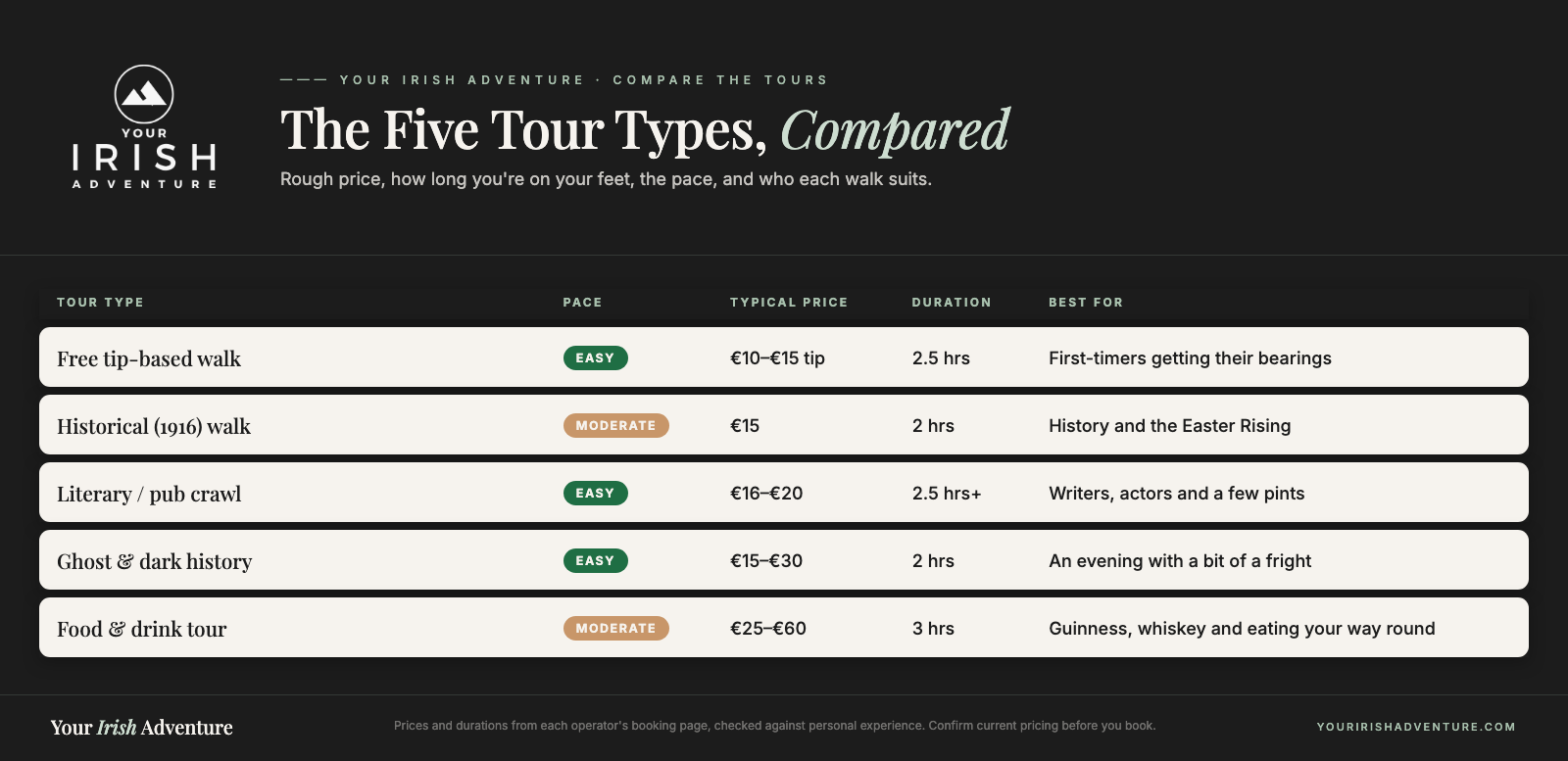
The best walking tours in Dublin fall into five types: free tip-based loops (plan €10 to €15 for the guide), 1916 history walks, literary pub crawls, ghost walks, and food tours. Most run two to three hours. Do a free loop on your first morning for your bearings, then pick one paid specialist tour for the subject you care about.
Free Walking Tours of Dublin
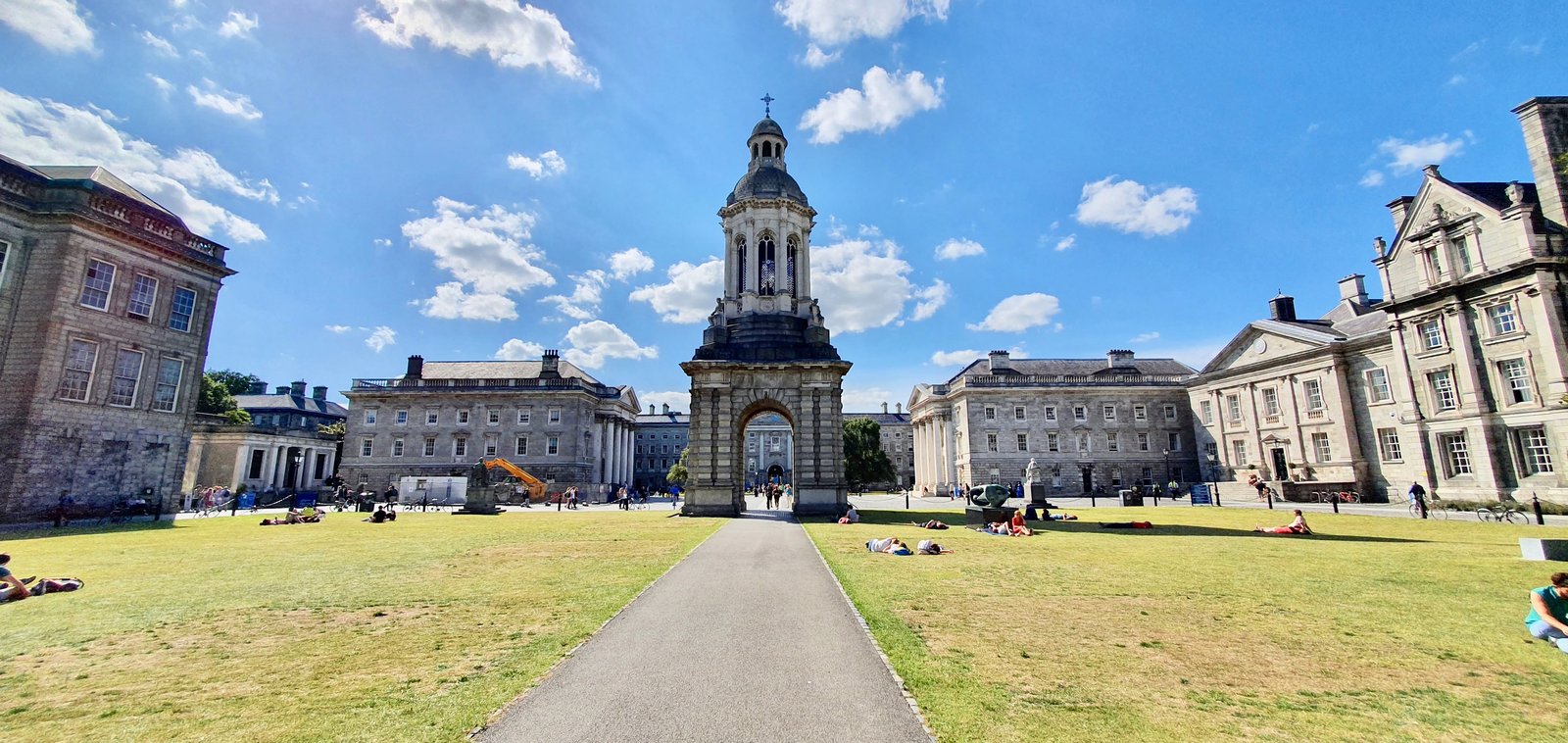
If you only do one tour in Dublin, make it one of the free tip-based walks. Two companies run them, Generation Tours and Dublin Free Walking Tour, and both cover the same core loop through the old city over about two and a half hours.
“Free” is doing some work in that name. You book a spot for nothing, then tip the guide what you think the walk was worth at the end. Plan on €10 to €15 per person if they were good, which they usually are, because the whole model runs on the guide earning it.
Most of them meet near City Hall or the front gates of Trinity College, so they’re easy to reach wherever you’re based. We stayed at Fitzsimons in Temple Bar, and the meeting points were a five-minute walk from the door.
The route hits Dublin Castle, Christ Church, the medieval lanes, and Trinity, with the guide stitching in the 1916 Rising, the Vikings, and a few stories you won’t get off a plaque. It’s the fast way to get your bearings on a first morning before you start wandering on your own. If the free slots are full, you can book a guided Dublin walking tour on GetYourGuide that covers the same core loop.
A few things to know before you go
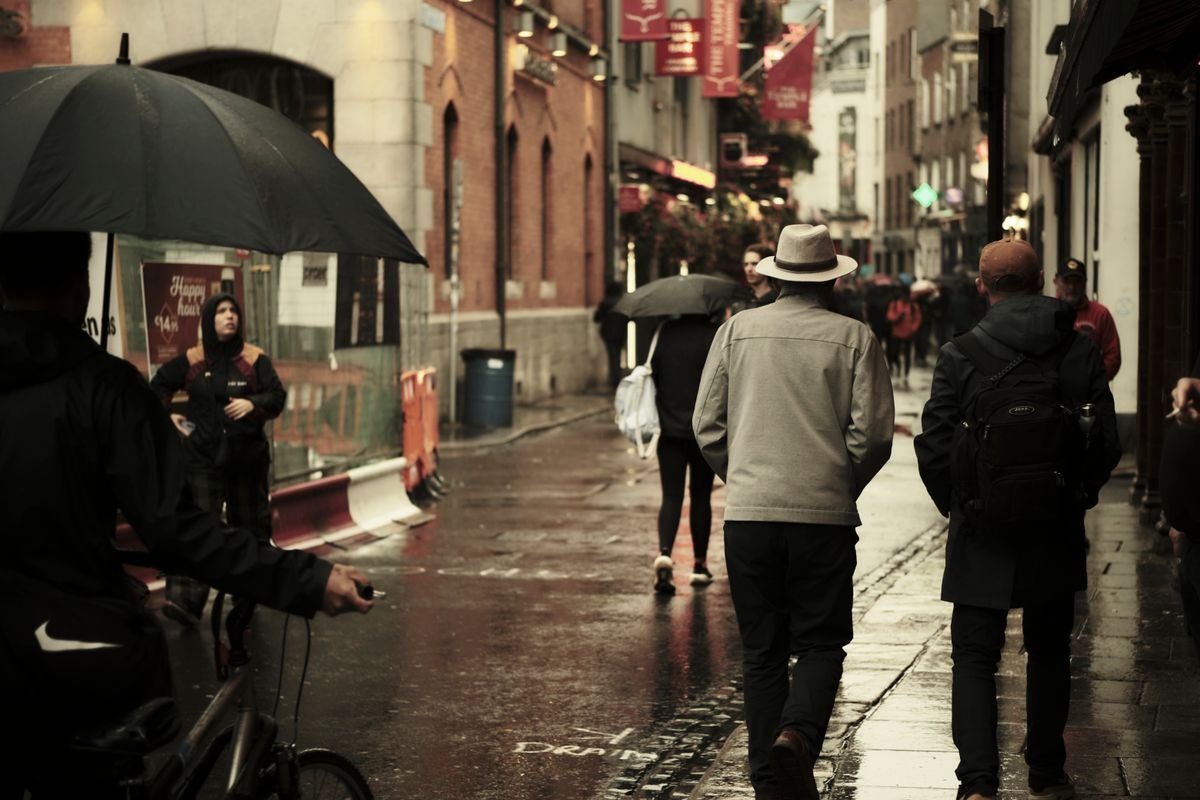
Book ahead in summer, because the popular time slots fill up and the groups get capped. Wear real shoes, bring a rain jacket no matter what the forecast says, and carry a bit of cash for the tip since not every guide takes card.
These walks are the best value in the city and a smart first move on a short trip. Do the free walk on day one to get the lay of the land, then pay for a specialist tour later if a particular subject grabs you.
Historical Walking Tours of Dublin
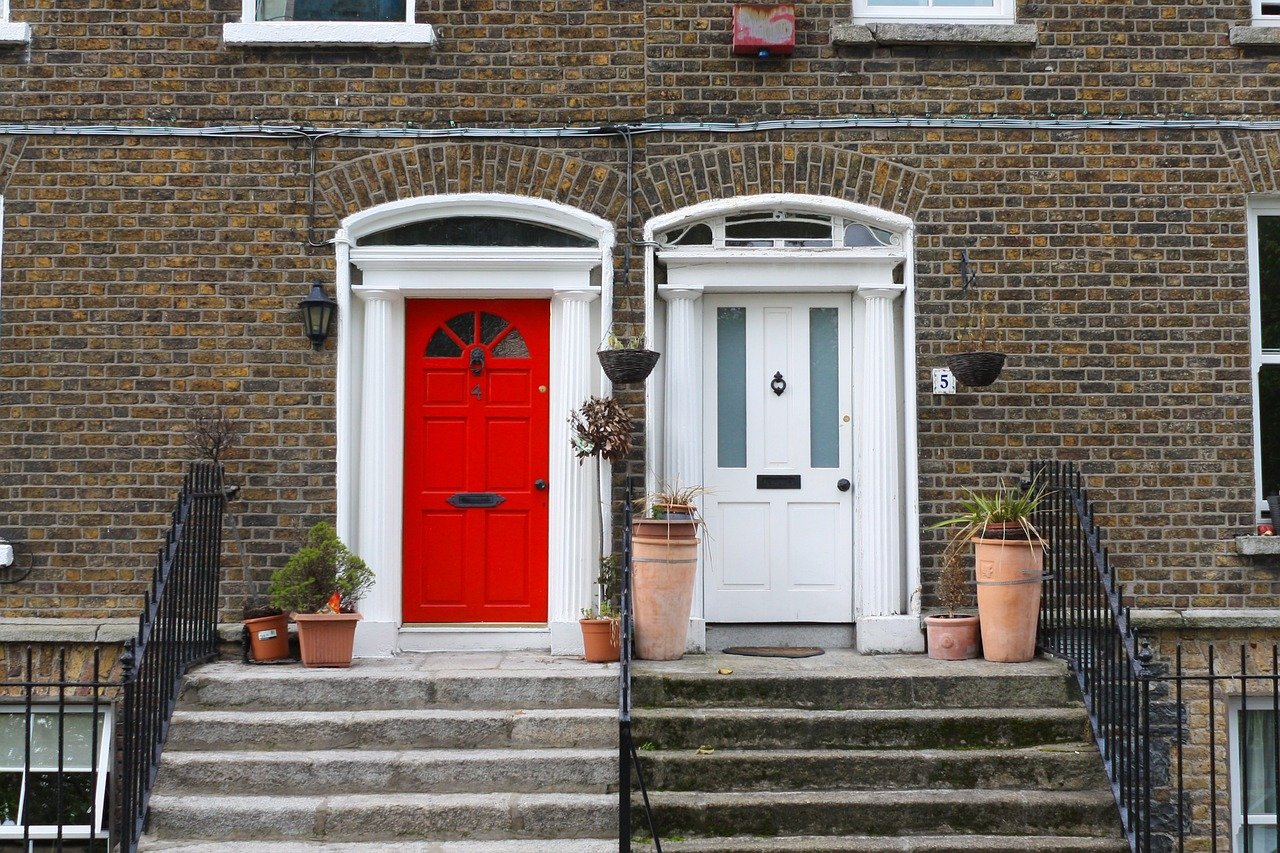
Dublin’s history is dense and bloody, and a good guide turns street corners you’d walk straight past into the actual sites of the 1916 Rising, the Civil War, and 800 years of British rule. This is where paying for a specialist beats the free loop.
The one to book is the 1916 Rebellion Walking Tour. It traces the Easter Rising from the pubs where it was planned to the streets where it played out, runs about two hours, and costs around €15 per person.
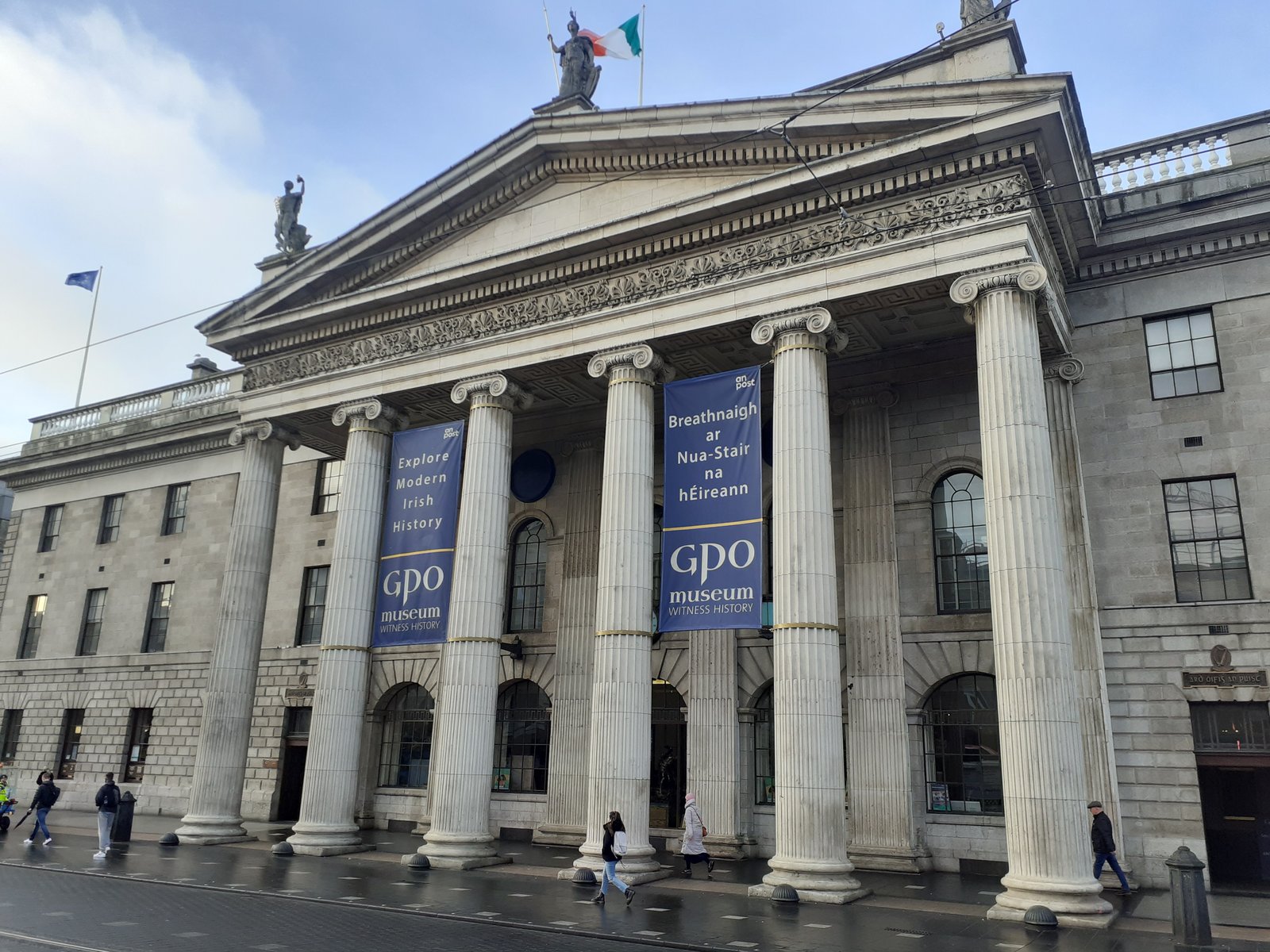
You start at the International Bar off Grafton Street and finish under the columns of the GPO on O’Connell Street, where the guide walks you through the six days that changed the course of Irish history. The bullet marks are still in the stone if you know where to look.
For the longer sweep, Pat Liddy’s Walking Tours cover the medieval city, the Vikings, and the Georgian era with the same depth. Liddy has been mapping Dublin’s past for decades, and his guides carry that reputation into every walk. If you want the classic two-hour version, you can book a guided historical walking tour on GetYourGuide.
History buffs should also make time for the Glasnevin Cemetery tour, where a historian walks you past the graves of Michael Collins, Daniel O’Connell, and most of the names from the Rising. It’s a real history lesson for around €16, and check current pricing before you go.
We only had a few nights in Dublin, split across each end of our last trip, and never carved out time for a full 1916 tour or Kilmainham Gaol. That’s my one regret for the city, so build in an extra afternoon if the history is what you came for.
👉 Read our full guide to Kilmainham Gaol before you go.
Book These Dublin History Tours
- Dublin: Kilmainham Gaol and City Highlights Tour
- Dublin: IRA History Tour with GPO Museum Ticket
- Early Access: Book of Kells and Dublin Castle Tour
Literary Walking Tours and Pub Crawls
Dublin has produced four Nobel writers and a UNESCO City of Literature title, so the literary tours here aren’t a gimmick. The one to book is the Dublin Literary Pub Crawl, where two actors walk you between old pubs and perform bits of Joyce, Beckett, Behan, and Yeats along the way.
It starts upstairs at The Duke off Grafton Street, runs about two and a half hours, and costs around €16 per person. Check current pricing before you book, and grab a spot ahead in summer because it caps the group size.
The actors are the reason it works. They perform a scene, argue about the writer, then lead you to the next pub where the drink is real and the history is attached to the room you’re standing in.
If it’s music you want instead of literature, the Musical Pub Crawl in Temple Bar does the same thing with trad musicians. Two players walk you between bars, play a set, and explain where the tunes and instruments come from. It’s around €20 and better than stumbling into a random session and hoping it’s any good.
Doing your own pub crawl
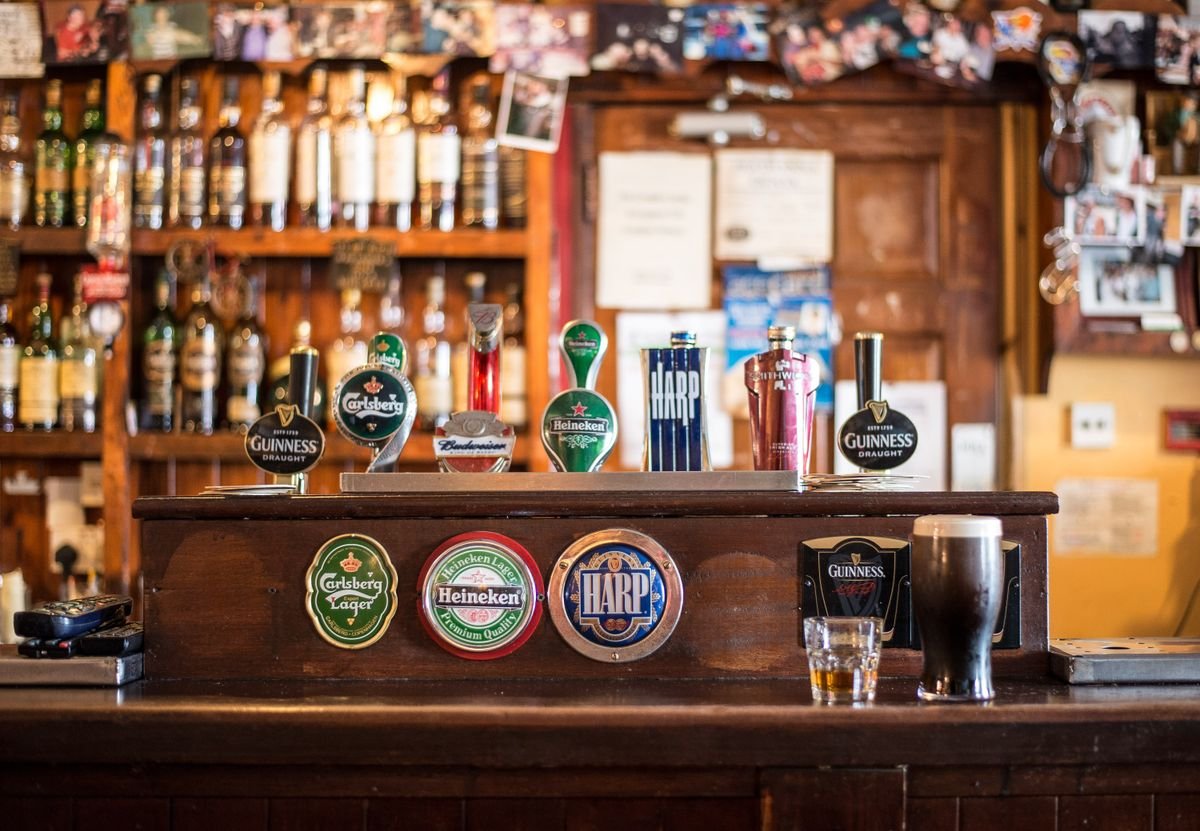
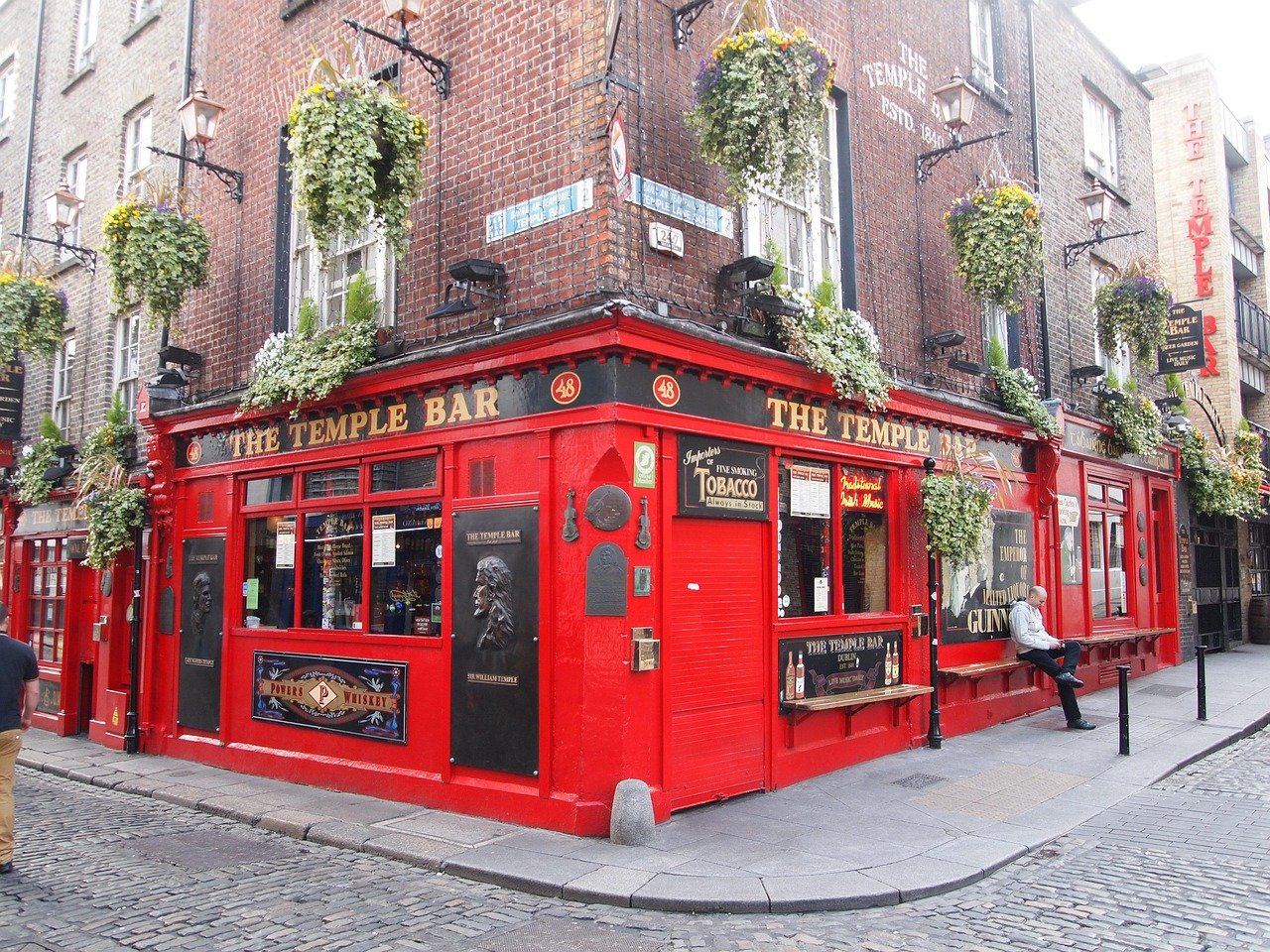
You don’t strictly need a guide to crawl Temple Bar, and we didn’t. On our first night we did our own loop from Darkey Kelly’s on Fishamble Street to Napper Tandy and The Hairy Lemon, then finished the night out at Merrion Row.
Temple Bar is touristy and the pints are pricey, but it’s still a fun first night in the city if you go in knowing that. The pull of the guided crawls is the stories and the performance, so pick the tour if you want the context and do it yourself if you just want the pints. If you’d rather have a guide handle the route, you can book a Dublin pub crawl on GetYourGuide.
Operators to Book for a Dublin Drinks Crawl
- The Dublin Whiskey Story
- Dublin: 2-Hour Deluxe Whiskey and Food Tasting
- Dublin Whiskey Blending Experience
Ghost and Dark History Tours
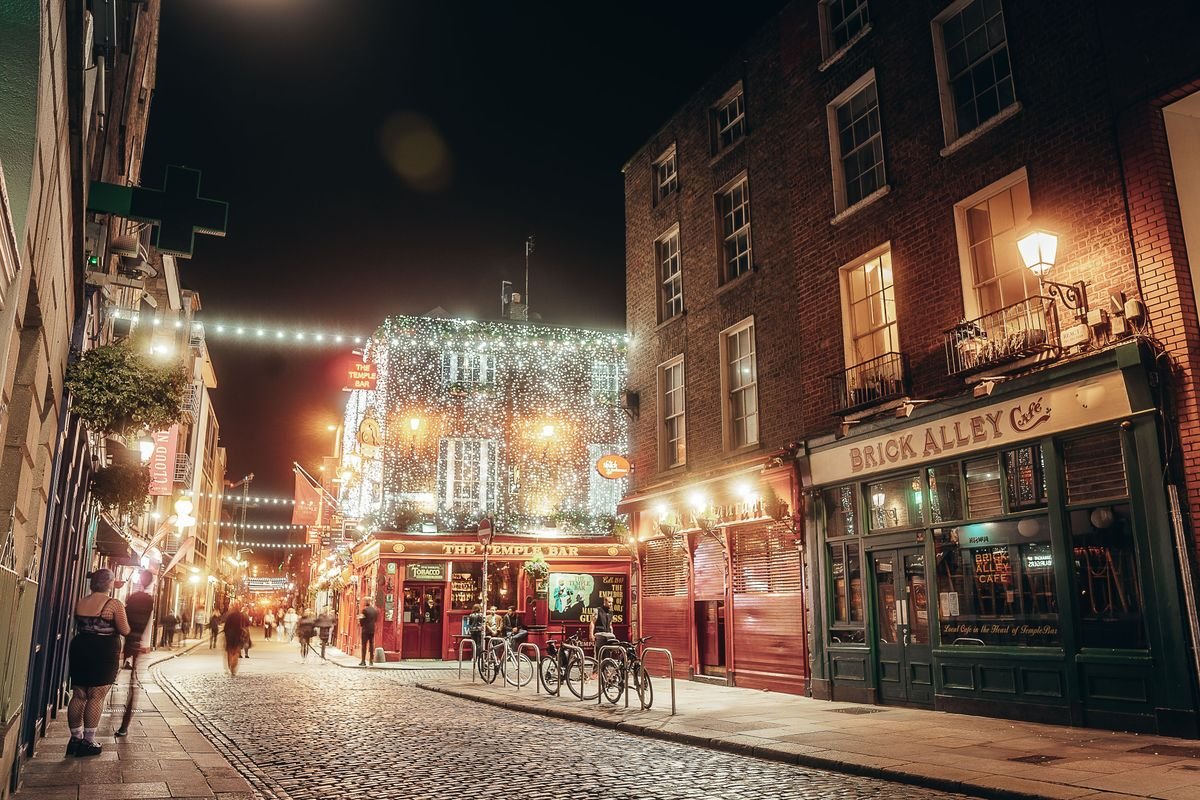
Dublin has a grim past under all the pubs and Georgian doors, and a few tours lean straight into it. Executions, body snatchers, plague pits, and old murders make up the dark history walks, and after dark they land better than they would at noon.
The big-name one is the Gravedigger Ghost Bus Tour. It’s part theater and part history, with actors staging scares as the bus loops the old city and out toward Glasnevin. It runs around €30 and books out fast, so grab a spot ahead.
If you’d rather stay on foot, the walking ghost tours run through Hidden Dublin and a few smaller outfits. They cover the same dark ground, cost closer to €15, and give you the medieval lanes and graveyards at night without the bus-tour showmanship. You can book a Dublin ghost walking tour on GetYourGuide, and check current pricing before you go.
The stories are real people, not made-up ghouls, which is what makes them stick. Darkey Kelly, the name over the pub we drank at on Fishamble Street, was a brothel keeper executed in the 1700s and long tagged as one of Ireland’s first serial killers. You’re standing where it happened, not reading a plaque.
These tours are more entertainment than deep history, so don’t book one expecting the depth of the 1916 walk. But if you’re traveling with teens or you just want a fun evening with a bit of a fright, a ghost walk is an easy yes.
Book These Dublin Ghost and Dark History Tours
Food and Drink Walking Tours

Dublin isn’t a fine-dining capital, but the food and drink tours here are less about chasing tasting menus and more about the stuff the city actually runs on: Guinness, whiskey, oysters, brown bread, and a proper coffee. A good one feeds you enough to skip lunch and teaches you why the pint tastes better here.
The main food walk is the Delicious Dublin Tour. A local guide walks you around the city for about three hours, stopping at cafes, a cheesemonger, an old pub, and a few spots you’d never pick on your own. It runs around €60 per person, and you leave full, so check current pricing before you book. For a shorter option with tastings and a few drinks built in, you can book a Dublin food and drink tour on GetYourGuide.
The stops change, but expect Irish farmhouse cheese, cured fish, brown bread, and a coffee from one of the better roasters. The guide fills the gaps between bites with how the food ties back to the city, which is what separates this from just eating your way down a street.
Whiskey and Guinness tours

For drink specifically, the two anchors are the Guinness Storehouse and the Jameson Distillery, and both work like a self-guided tour with a tasting at the end rather than a walking group.
We did the full Jameson Distillery tour on Bow Street, and it’s worth the ticket. You walk through the reconstructed old office, learn how the whiskey is made, and finish with a four-glass tasting flight in the bar under the glass ceiling.
The flight is the part that sells it. We tasted the 18-year-old, the Black Barrel Cask Strength, and the Edition side by side, which is the kind of pour you’d never buy by the glass. That Bow Street bar alone is worth a stop even if you skip the tour.
The Guinness Storehouse is the busier of the two and leans more into the spectacle, ending with a pint at the Gravity Bar and a full view over the city. Both run roughly €25 to €30, both book out in summer, so grab a time slot ahead.
If I had to pick one drink tour, I’d do Jameson for the tasting and the room, and save the Storehouse for a wet afternoon when you want the big attraction. Do either on an empty stomach and don’t drive after.
Walking Tours in Other Irish Cities
- 33 Best Things To Do in Galway, Ireland
- Best Things To Do In Cork (City & Day Trips)
- The Best Places to Visit in Belfast
Northside vs Southside: Which Route Suits You
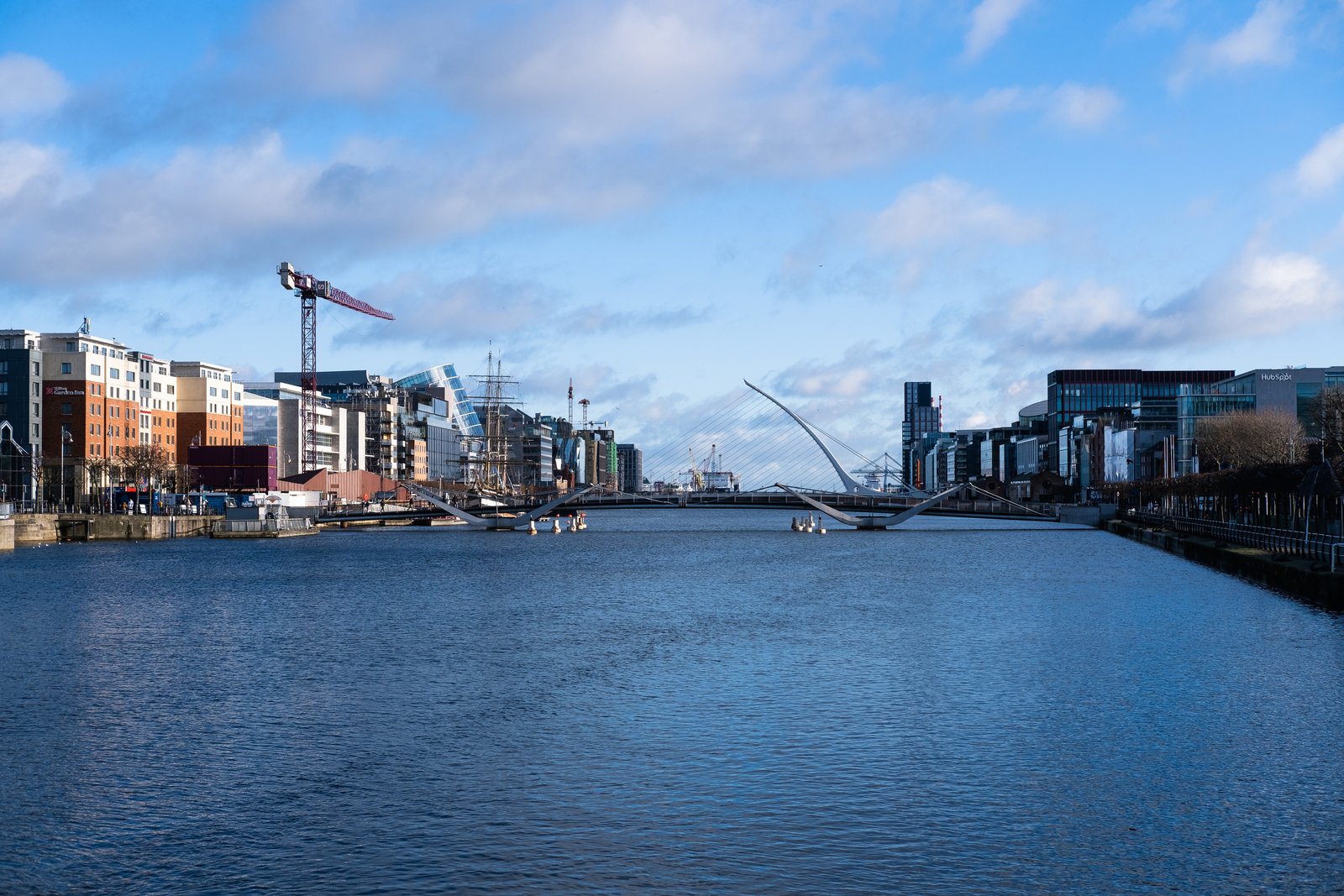
The River Liffey splits Dublin in two, and the two sides have a bit of a rivalry that goes back generations. Most walking tours run on the Southside, but where you spend your time changes which version of the city you get.
We walked the Liffey Boardwalk between the two on our last trip, and it’s the easiest way to feel the switch. One bank leans polished and touristy, the other feels more like the working city.
The Southside is the tourist heart. Trinity College, Grafton Street, Dublin Castle, Temple Bar, and the Georgian squares are all packed into a compact area you can cross on foot in twenty minutes.
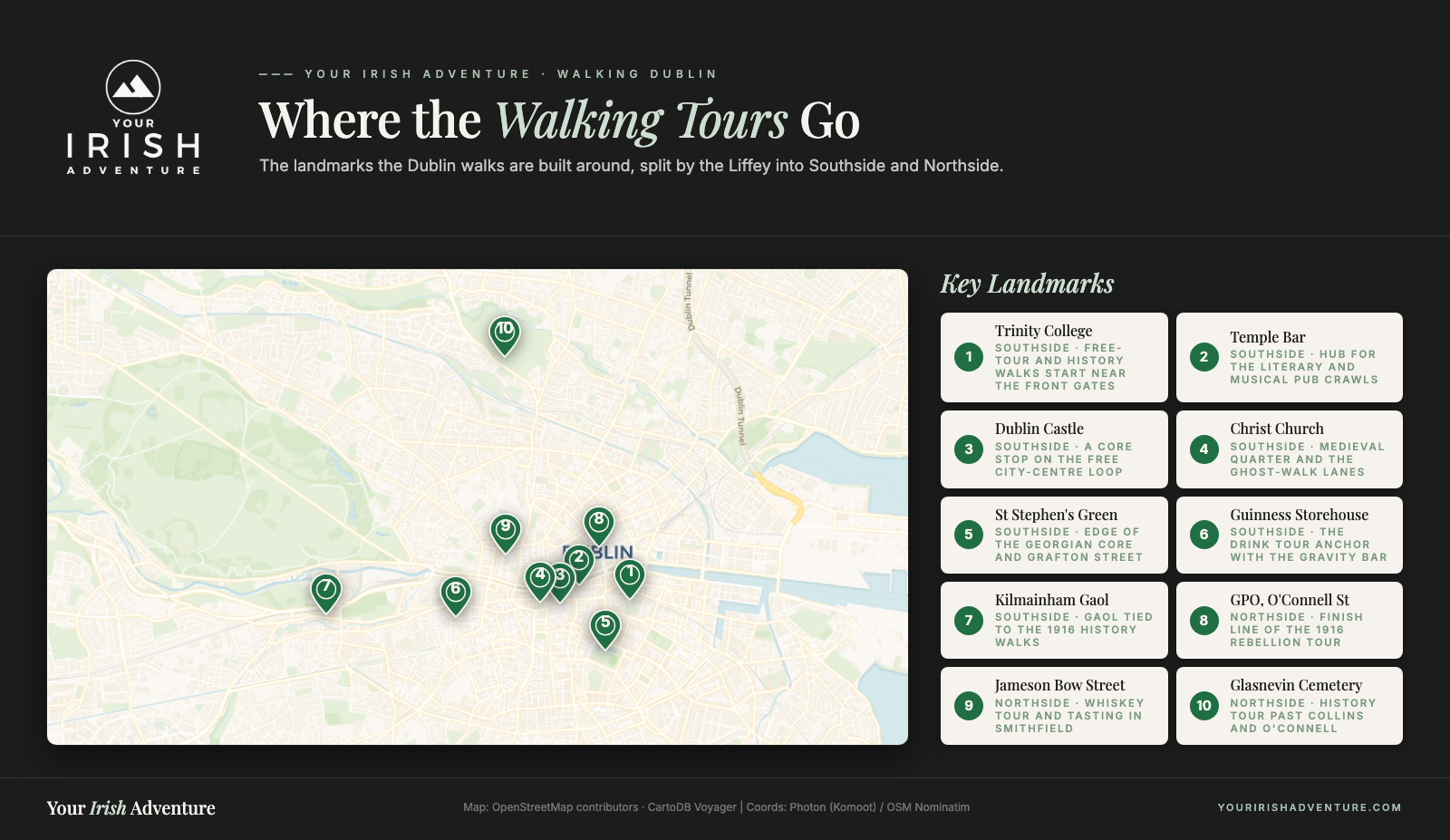
This is where the free loops, the literary pub crawl, and the food walks all cluster. If your trip is short and you want the classic Dublin postcard, you’ll spend most of it here without ever crossing the river.
The Northside is where the history gets heavier. O’Connell Street, the GPO, the Spire, and the road out to Glasnevin Cemetery are all up here, and the 1916 tours pull you north for a reason.
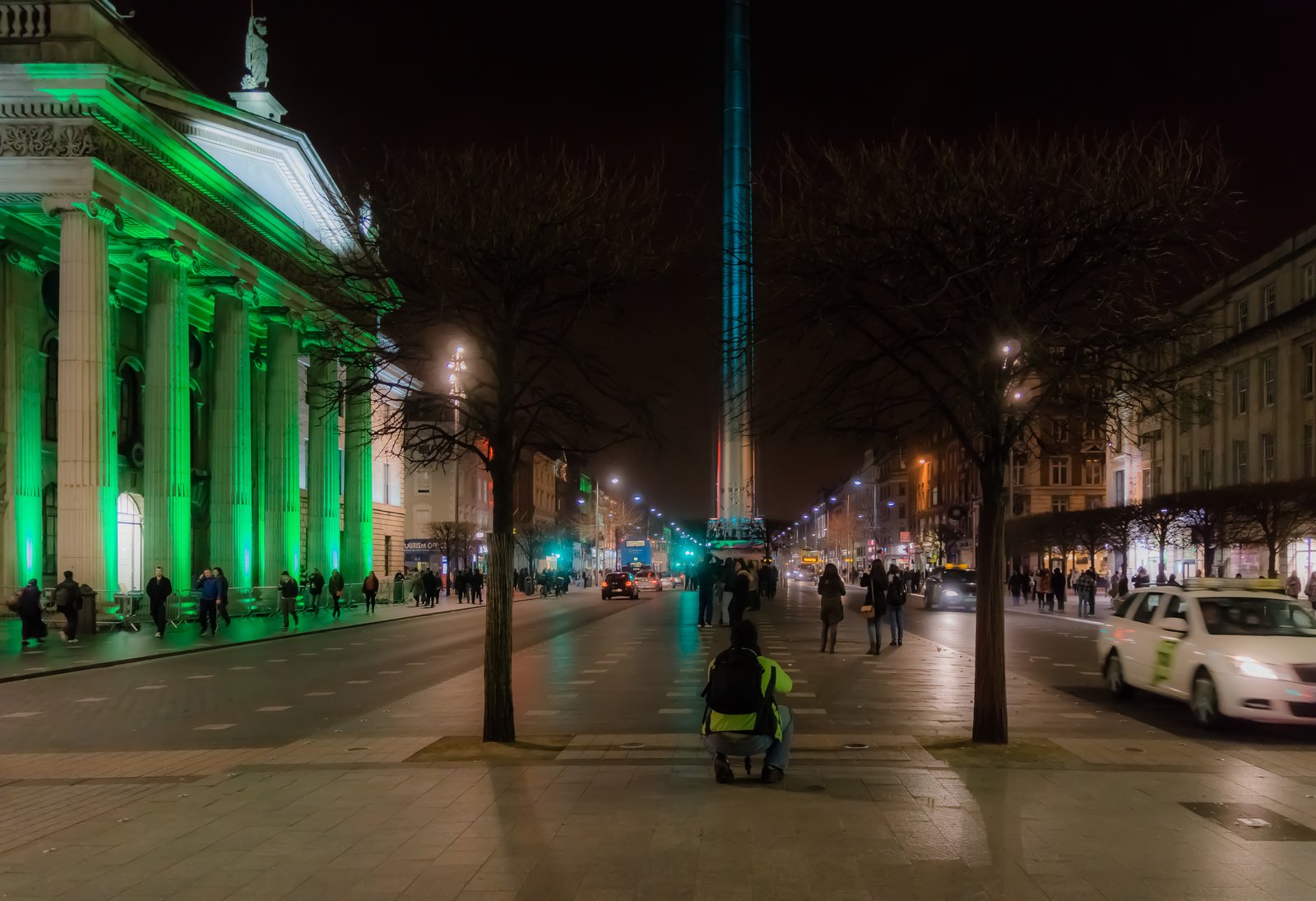
It’s less scrubbed for tourists and more everyday Dublin, with the Rising sites, the writers’ connections, and Croke Park all on this side of the water. Come here if you want the rebellion story more than the shopping streets.
Here’s the thing though: you’re not really picking one. The two sides are a five-minute walk apart over the Ha’penny or O’Connell bridges, so any good tour hops between them anyway.
So don’t overthink the Northside versus Southside question. Base yourself near Trinity or Temple Bar for the easy access, then let the history walks carry you north when the subject earns it.
What to Know Before You Book
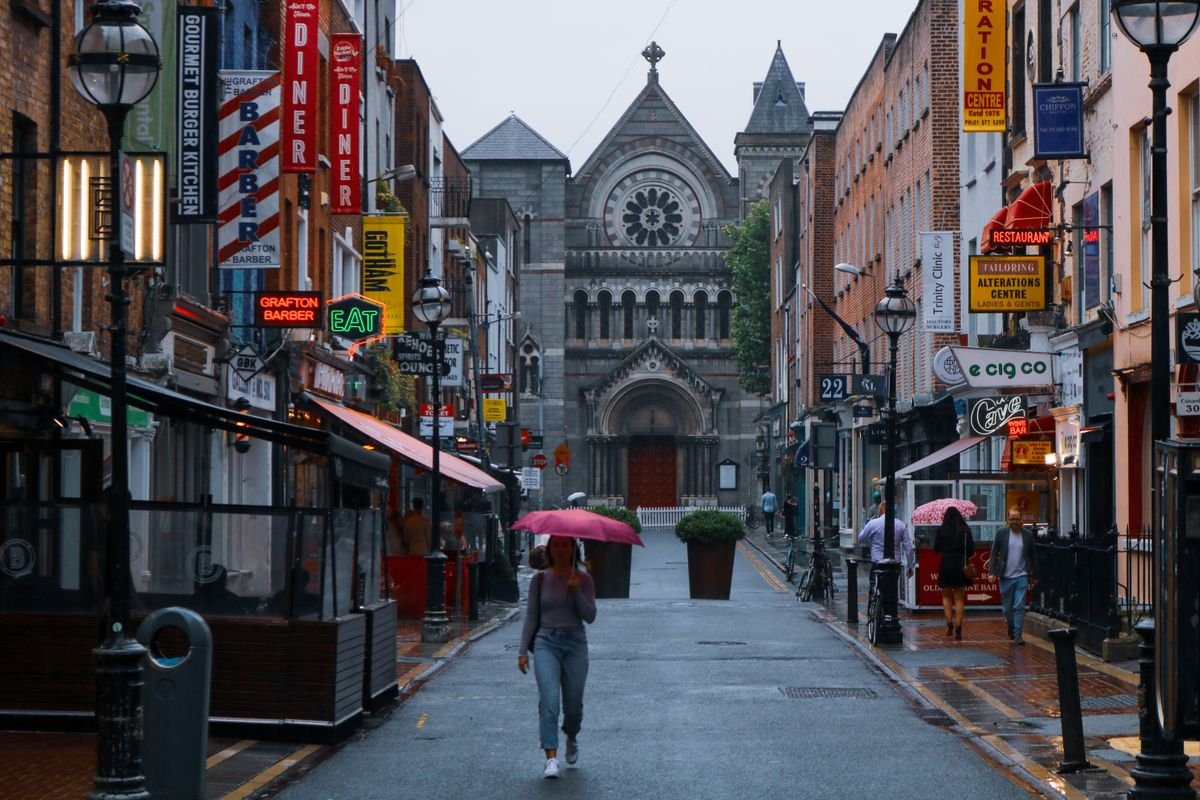
A walking tour is only as good as the planning around it. Most of them run two to three hours on your feet with a fair bit of standing, so a few small calls before you book decide whether you enjoy it or spend it watching the clock.
Book directly with the operator wherever you can. Plenty of resellers list the exact same walks with a markup on top, and the free tip-based tours especially should never cost you a cent up front.
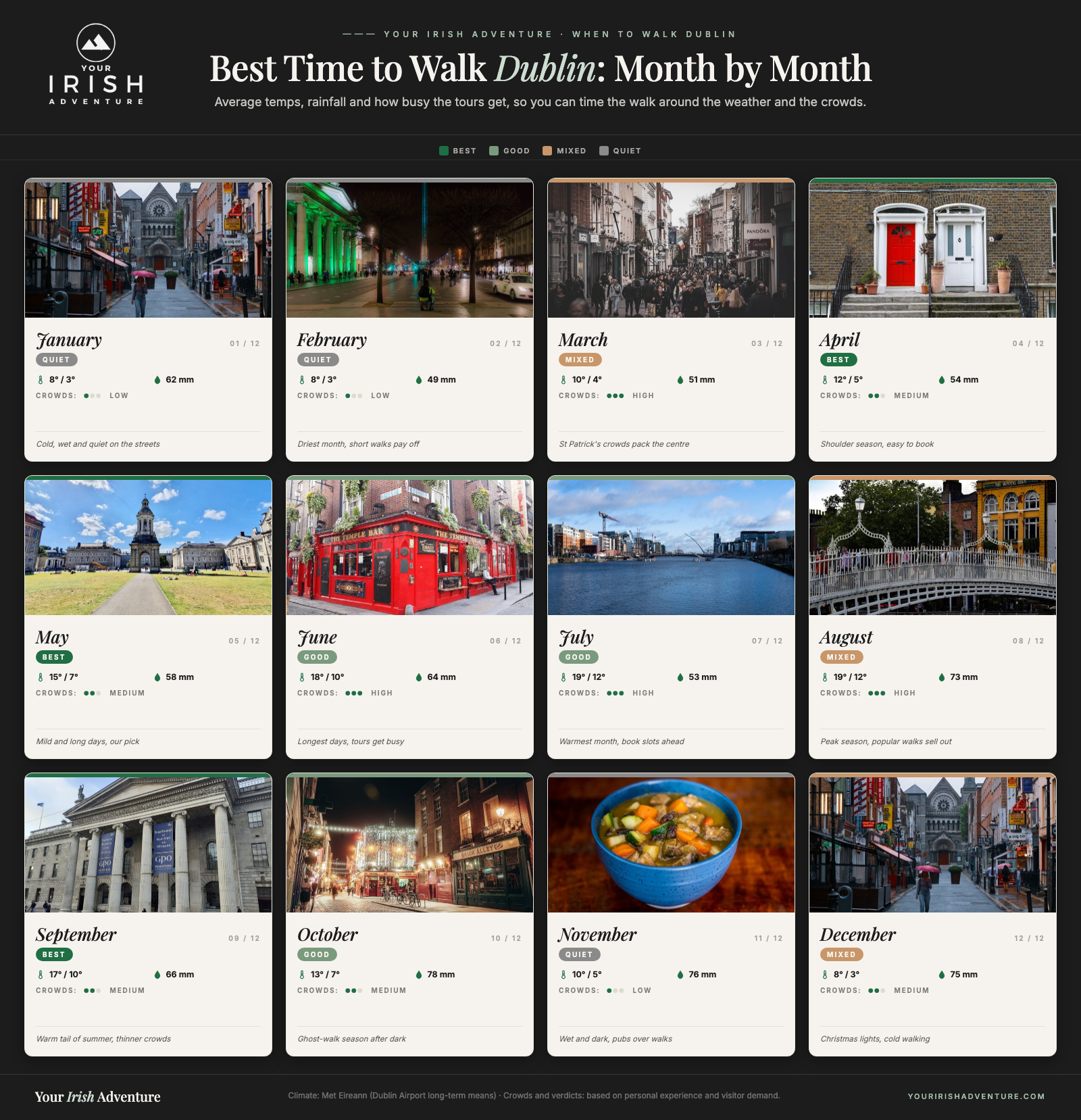
Here’s the short list of things to sort before you lock in a spot:
- Screenshot the meeting point and drop a pin on your map, because a couple of the free tours use spots that are easy to walk straight past.
- Check what’s actually included, since pub crawls and food tours vary on whether the drinks or tastings are in the price.
- Show up ten minutes early, as the bigger groups leave on time and won’t wait for stragglers.
- Don’t book a big tour for your arrival day when you’re dragging bags off the airport bus and running on no sleep.
Timing matters more than people expect. Morning tours get you smaller groups and the streets before the crowds, while the ghost and pub walks only make sense once it’s dark. If you’re doing more than one, spread them across different days instead of stacking two long ones back to back.
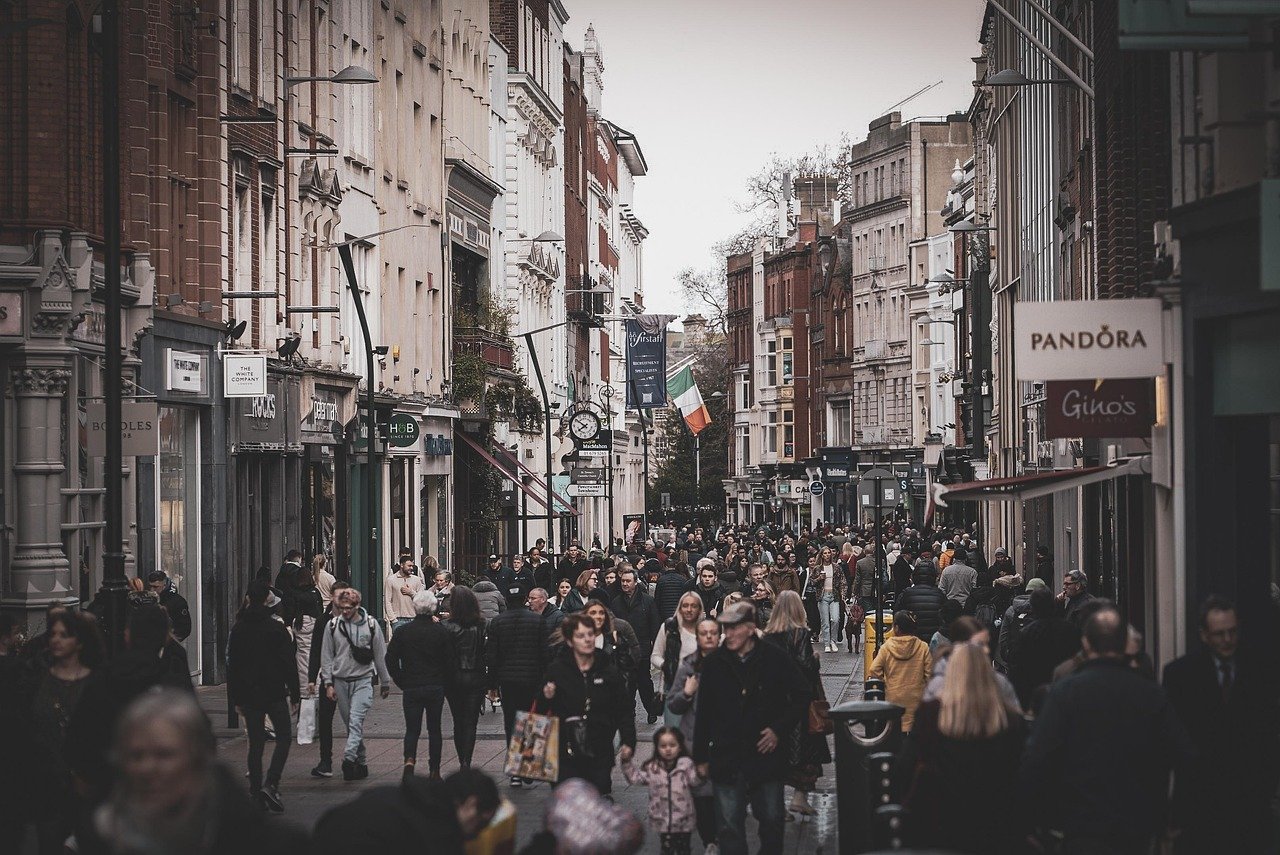
In summer the popular slots cap out and sell through, so book a few days ahead. We went in shoulder season and could usually grab a spot with a day’s notice, which gives you room to pick your tour around the weather.
Sort those few things and almost any Dublin walking tour is worth your time. Do the free loop first for your bearings, pick one specialist tour for the subject you actually care about, and let the guide carry the rest.
Plan the Rest of Your Dublin Trip
- Where To Stay in Dublin: Best Areas and Accommodations
- 7 Best Day Trips From Dublin, Ireland
- A Photographer’s Definitive Ireland Road Trip
In short
- Free tip-based walks are the best value; plan €10 to €15 for the guide.
- The 1916 Rebellion Walking Tour is the pick for Dublin history, about €15.
- The Dublin Literary Pub Crawl mixes readings with the city’s oldest pubs.
- Most walks run two to three hours; book ahead in summer and pack a rain jacket.
- Do a free loop first for your bearings, then one paid specialist tour.
Frequently Asked Questions
A few quick answers on cost, timing, and which walking tour in Dublin to do first.
Are the free walking tours in Dublin actually free?
You book your spot for nothing and pay the guide what you think it was worth at the end. Plan on €10 to €15 per person if they were good, and carry a bit of cash since not every guide takes card.
How long do most Dublin walking tours last?
Most run two to two and a half hours on your feet, with a fair bit of standing while the guide tells a story. Food tours run closer to three hours, and the pub crawls stretch longer because you stop to drink.
Do I need to book ahead?
In summer, yes, because the popular slots cap the group size and sell through. We went in shoulder season and could usually grab a spot with a day’s notice, which let us pick the tour around the weather.
Which walking tour should I do first?
Do one of the free tip-based loops on your first morning to get your bearings, then pay for a specialist tour later if a subject grabs you. It’s the best value in the city and the smartest first move on a short trip.
Are Dublin walking tours good in the rain?
They run rain or shine, so bring a rain jacket no matter what the forecast says and wear real shoes. If the weather turns properly grim, that’s the afternoon to swap a walk for the Guinness Storehouse or the Jameson Distillery instead.
Is Dublin safe to walk at night for a ghost tour?
The city center is fine to walk at night, and you’re in a group with a guide the whole time anyway. Use the usual sense you’d use in any city, keep an eye on your stuff, and you’ll be grand.
Final Thoughts on Walking Tours in Dublin
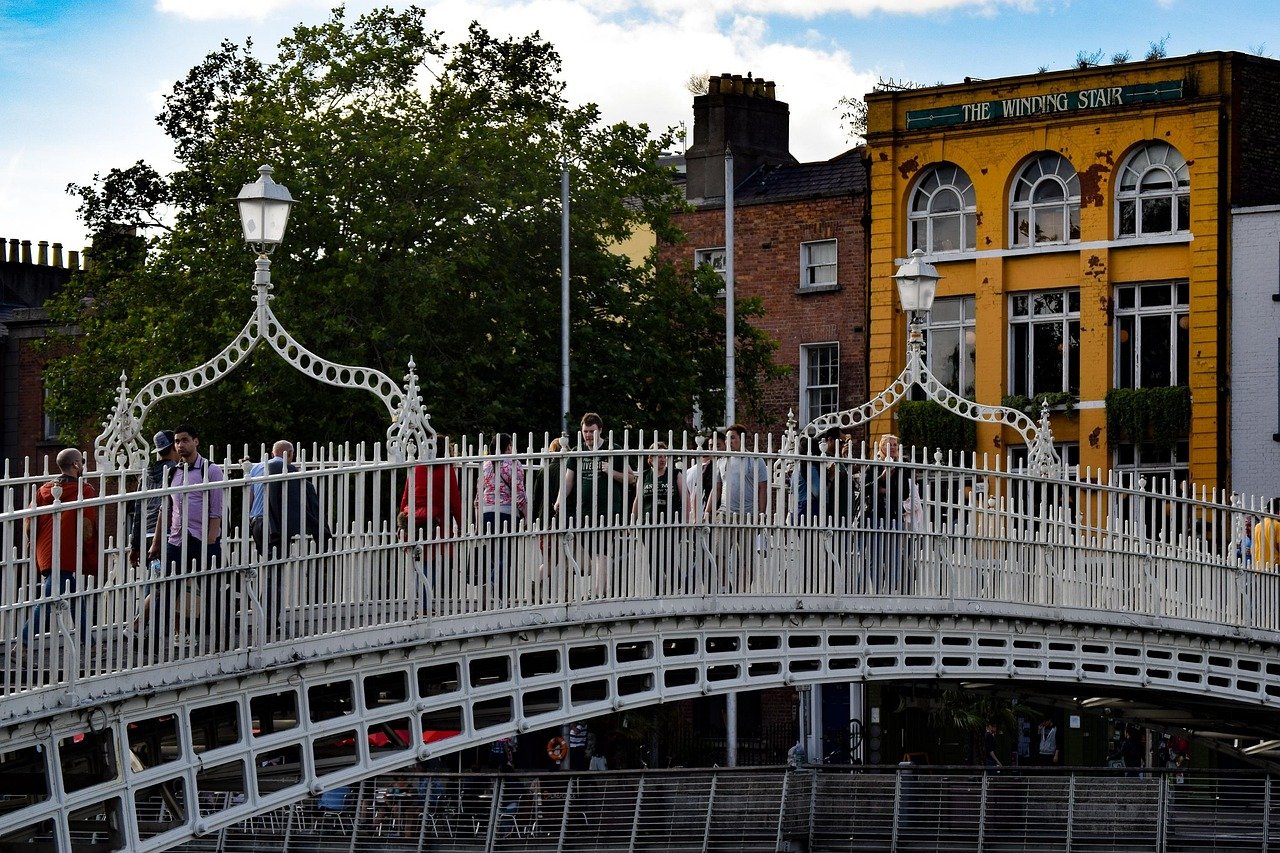
Dublin rewards you for slowing down and walking it, and a good guide is the fastest way to turn a row of pubs and Georgian doors into a story you’ll actually remember. We only had a few nights split across each end of our last trip, and I’d give the city more time if we did it again.
You don’t need to book five tours to get it. Do a free tip-based loop on your first morning for your bearings, then pick one specialist walk for the subject you came for, whether that’s the 1916 Rising, the writers, or the whiskey.
Leave room for the stuff you can do on your own too. The Trinity College grounds are free to wander, our own Temple Bar crawl was a fun first night, and a pint of Guinness at the airport on the way out is a tradition worth keeping.
Dublin is a hanging-out city more than a tick-the-monuments one, and the walking tours are the best way in. Pick one that matches what you’re actually into, wear real shoes, pack the rain jacket, and let the guide do the rest.
Like it? Pin it!
Save this guide for later