
I would visit Ireland in January for a few days of museums, food, and live music. As an Irish native, I would be much less enthusiastic about choosing it for a first trip spent driving the Atlantic coast. The difference is how much of your vacation needs good outdoor conditions.
January has short days, cold weather, and a useful cultural calendar. You can have a rewarding trip, but it helps to choose a base where a wet afternoon still leaves you with something you want to do.

My recommendation is four nights in Dublin, with three full days to divide between the city and a possible coastal outing. There are also good reasons to choose Cork or Galway if your flights take you elsewhere.
Quick Answer:
Ireland in January suits a city stay with museums, meals, and live music. Plan around short daylight, keep a coastal outing flexible, and check TradFest’s current venues before booking. Four nights in Dublin gives you three full days without changing hotels. Cork or Galway can work better for different flights and interests.
Is January Worth It for Your Trip?
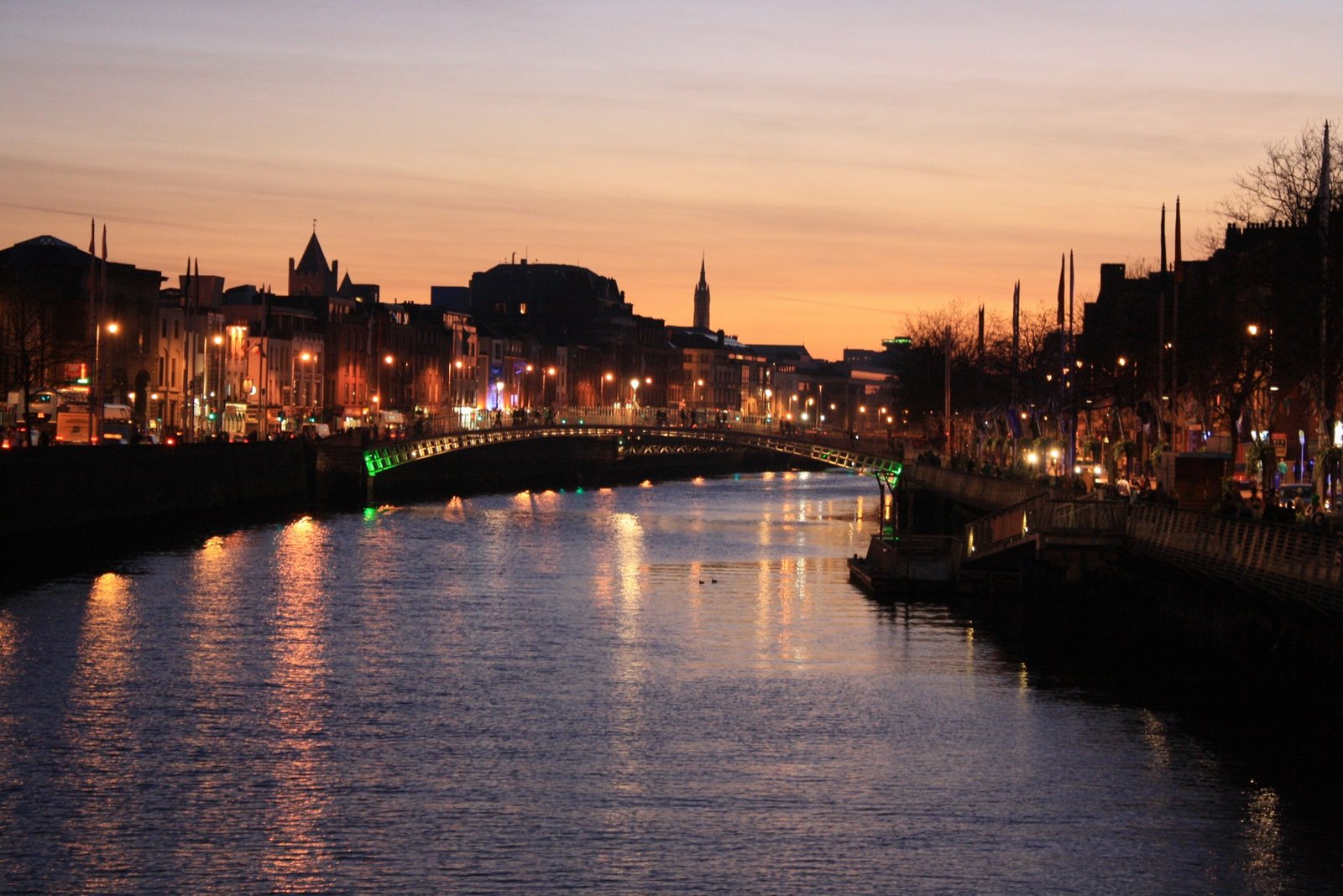
January is worth considering if your priorities are Irish music, museums, and time in a city. I would choose another month for a vacation centered on island landings, mountain walks, or a long sequence of coastal stops.
Staying in one place makes the shorter days easier to use. You can take a park walk during a dry morning, visit a gallery after lunch, and go to a concert in the evening. Moving hotels every night uses daylight for packing, driving, and finding the next address.
There may be attractive room rates after the Christmas period, but compare the actual dates. A festival performance, a weekend, or a room with a better cancellation policy can change the calculation. January alone does not guarantee a cheap trip.
For a wider comparison, our best time to visit Ireland guide helps you match the season to your plans. January is a particularly good choice when an event you want to attend gives you a reason to travel then.
Ireland in January: Weather and Daylight
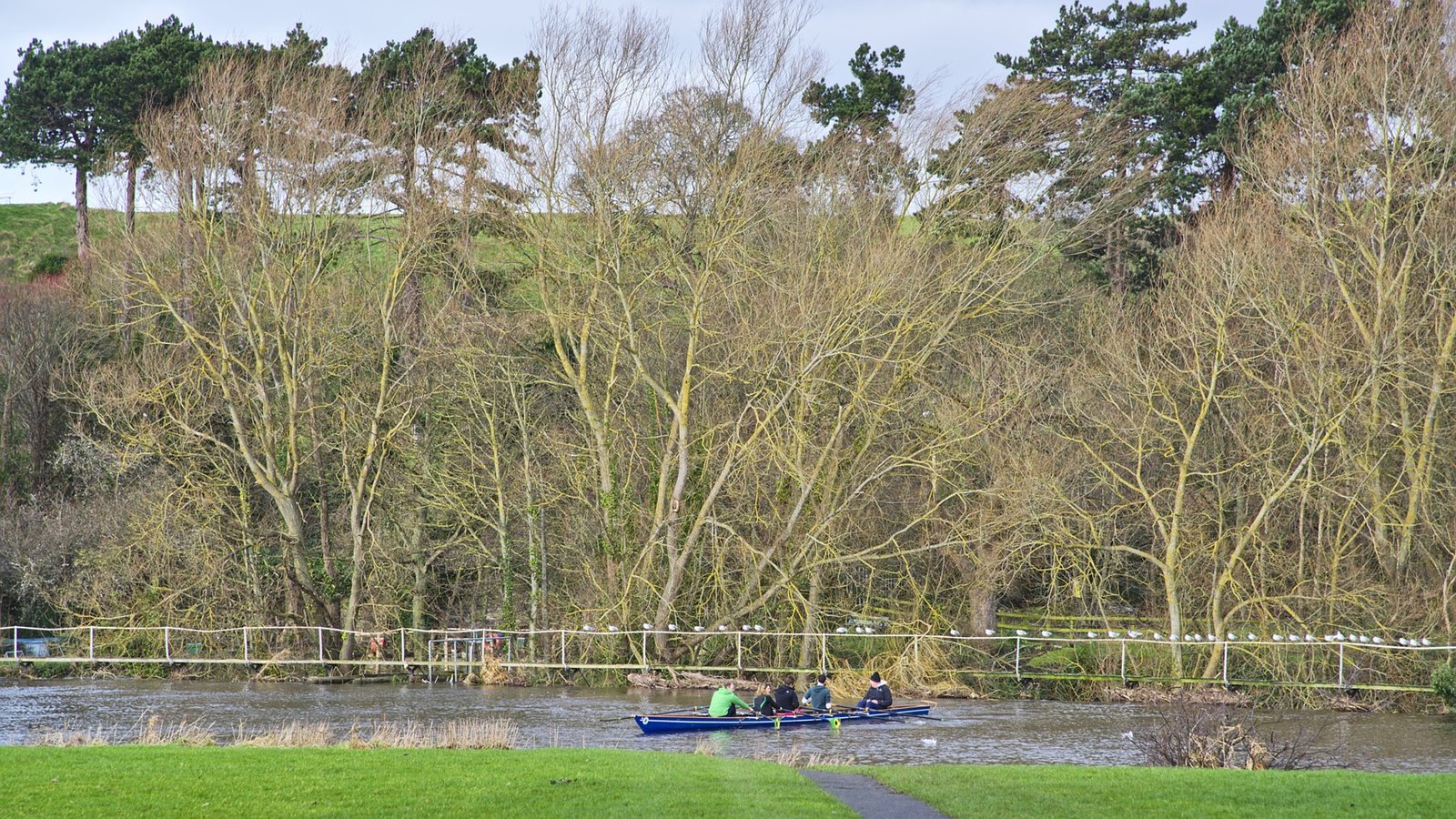
Expect winter conditions, with meaningful differences between locations and between individual weeks. A city forecast is more useful for tomorrow’s plans than a national monthly average, particularly if you are deciding whether to go to the coast.
Temperature and Rainfall
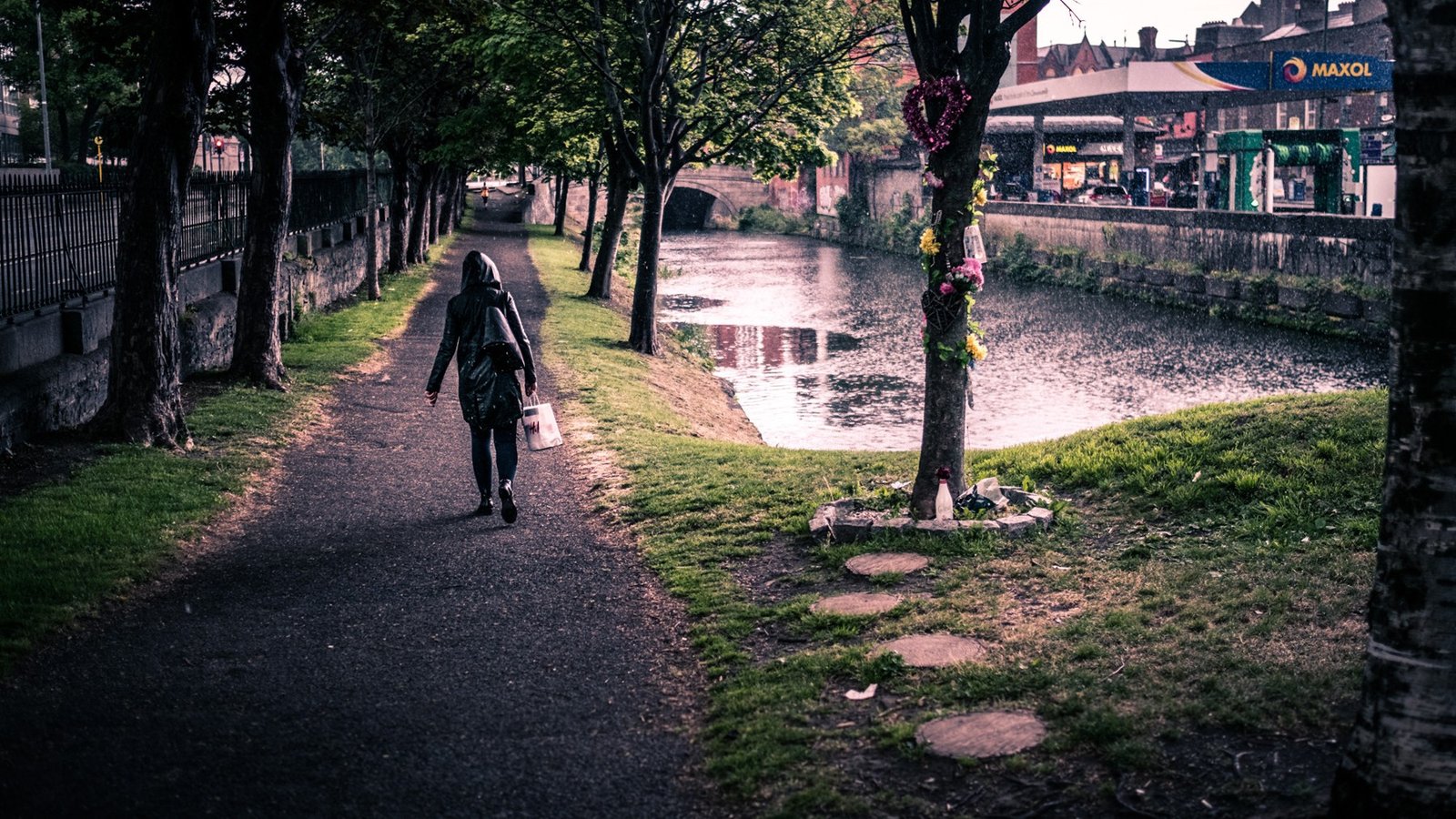
Met Éireann’s Dublin Airport averages put January daytime highs at about 8°C (46°F) and nighttime lows at about 2°C (36°F). Cork Airport averages are about 8°C (47°F) and 3°C (38°F). These are average daily highs and lows, so a colder spell can fall well outside that range.
Rainfall varies considerably. The January monthly average is 61.8 mm at Dublin Airport and 131.3 mm at Cork Airport. Those station figures describe their own locations; they do not predict how much rain will fall during your four-night stay.
A wet month also does not mean uninterrupted rain. Showers, dry intervals, and longer periods of rain can all occur. I would keep outdoor plans movable between days and choose accommodation within a manageable walk of indoor places I want to visit.
How Much Daylight Will You Have?
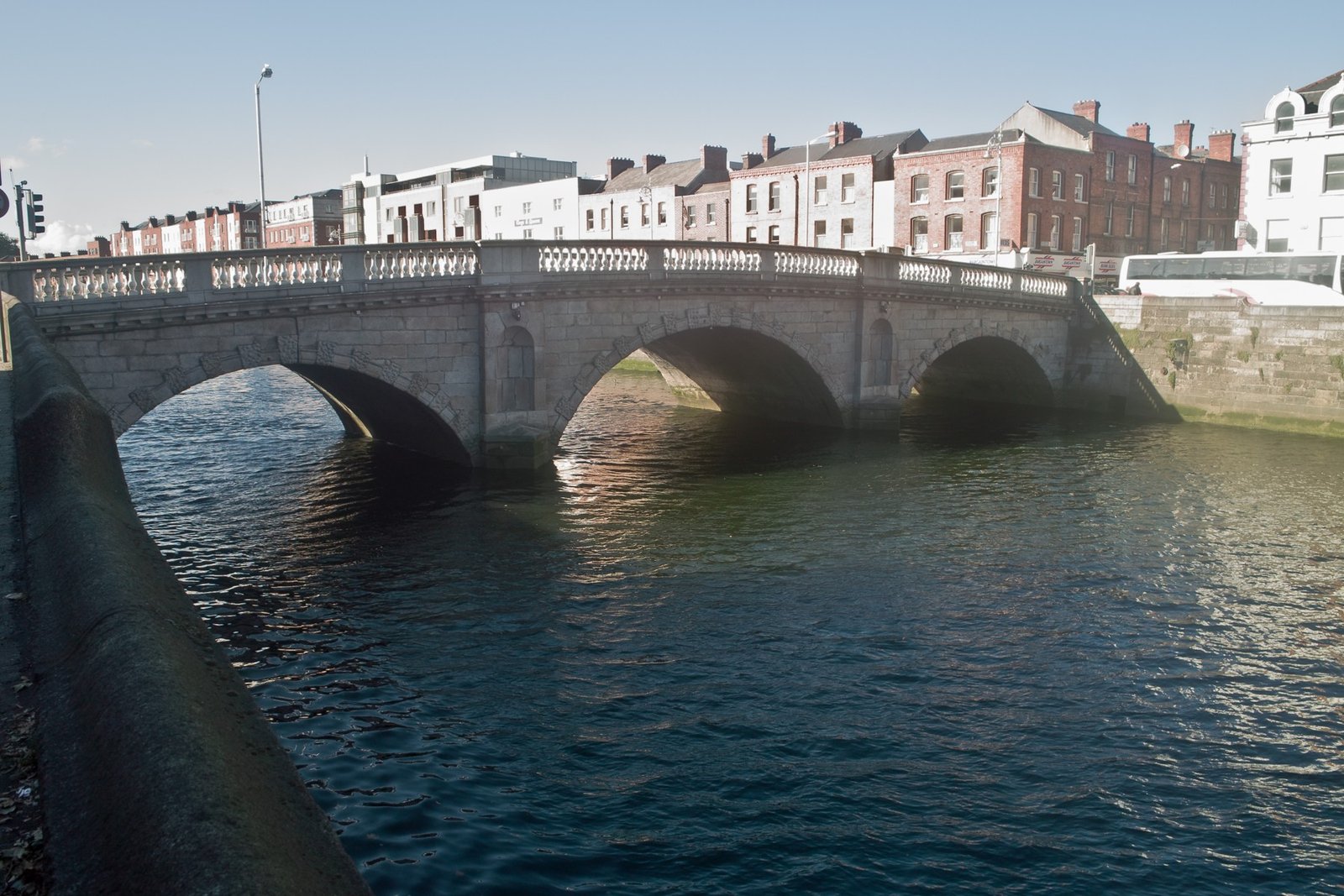
Dublin has roughly seven hours and forty minutes between sunrise and sunset at the start of January, increasing to almost nine hours by the end. Sunset moves from about 4:20 p.m. to just after 5 p.m. across the month.
That gives a late-January visit more afternoon light than an early one. It also distinguishes the month from Ireland in December, when the winter solstice brings the shortest day. Daylight is the time between sunrise and sunset; cloud can still make an afternoon feel dark.

Check the sunrise and sunset table for your own dates and location. For a country walk, allow time to finish and return before dark. A late museum opening or an evening concert can then make use of the hours after sunset without extending an outdoor excursion.
Snow, Frost, and Wind
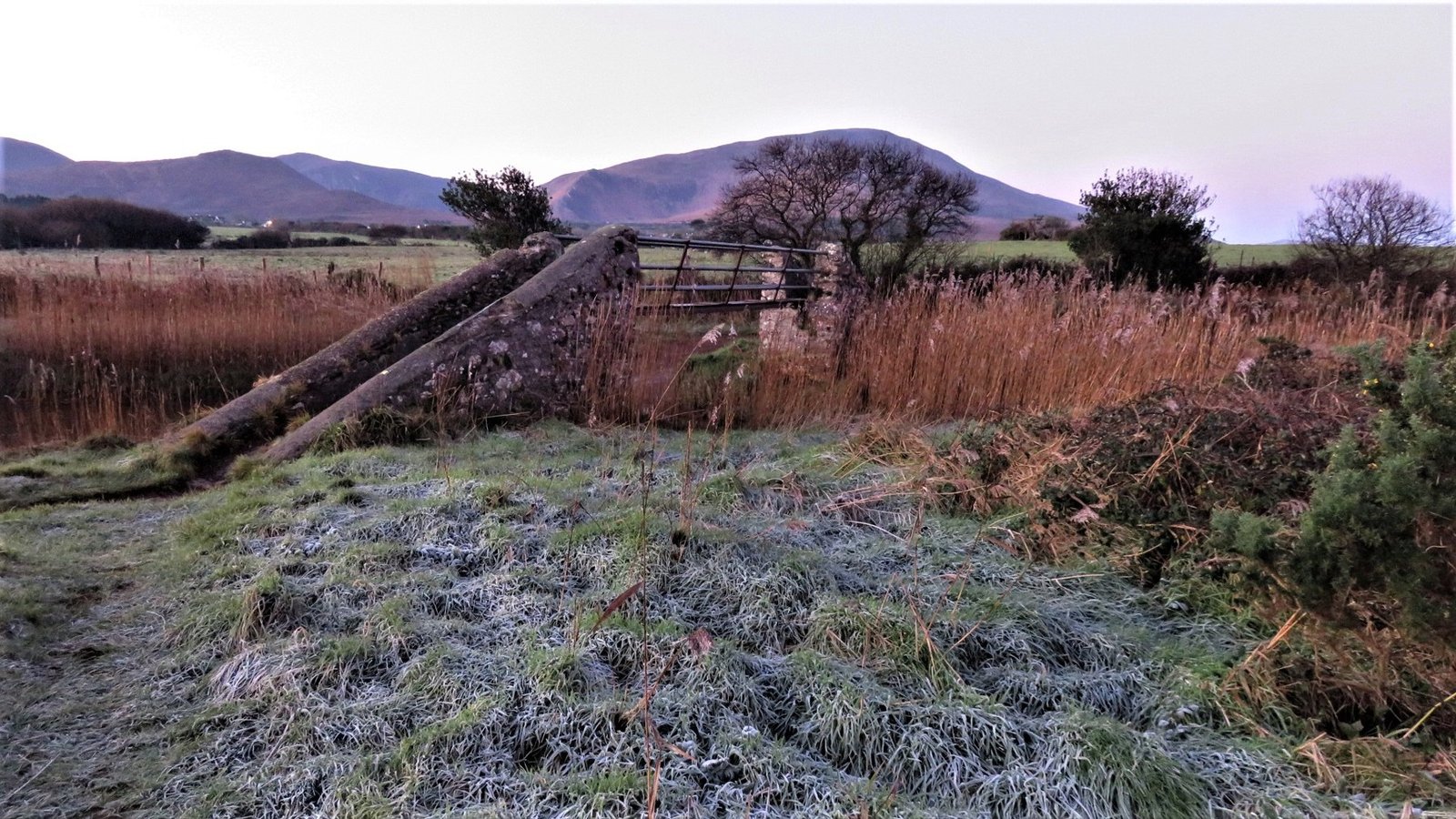
Snow is possible, but a January trip should not depend on seeing it. Frost and ice also matter on roads and paths when the surrounding fields look green. Conditions at higher elevations can differ sharply from those in the nearest town.
For a coastal outing, check wind as well as rain. A dry forecast does not make an exposed pier or cliff path suitable in strong winds. Read Met Éireann’s weather warnings and any local access notices before leaving, then choose an indoor plan if conditions do not suit the outing.
Plan Around TradFest if Music Is the Reason You Are Coming
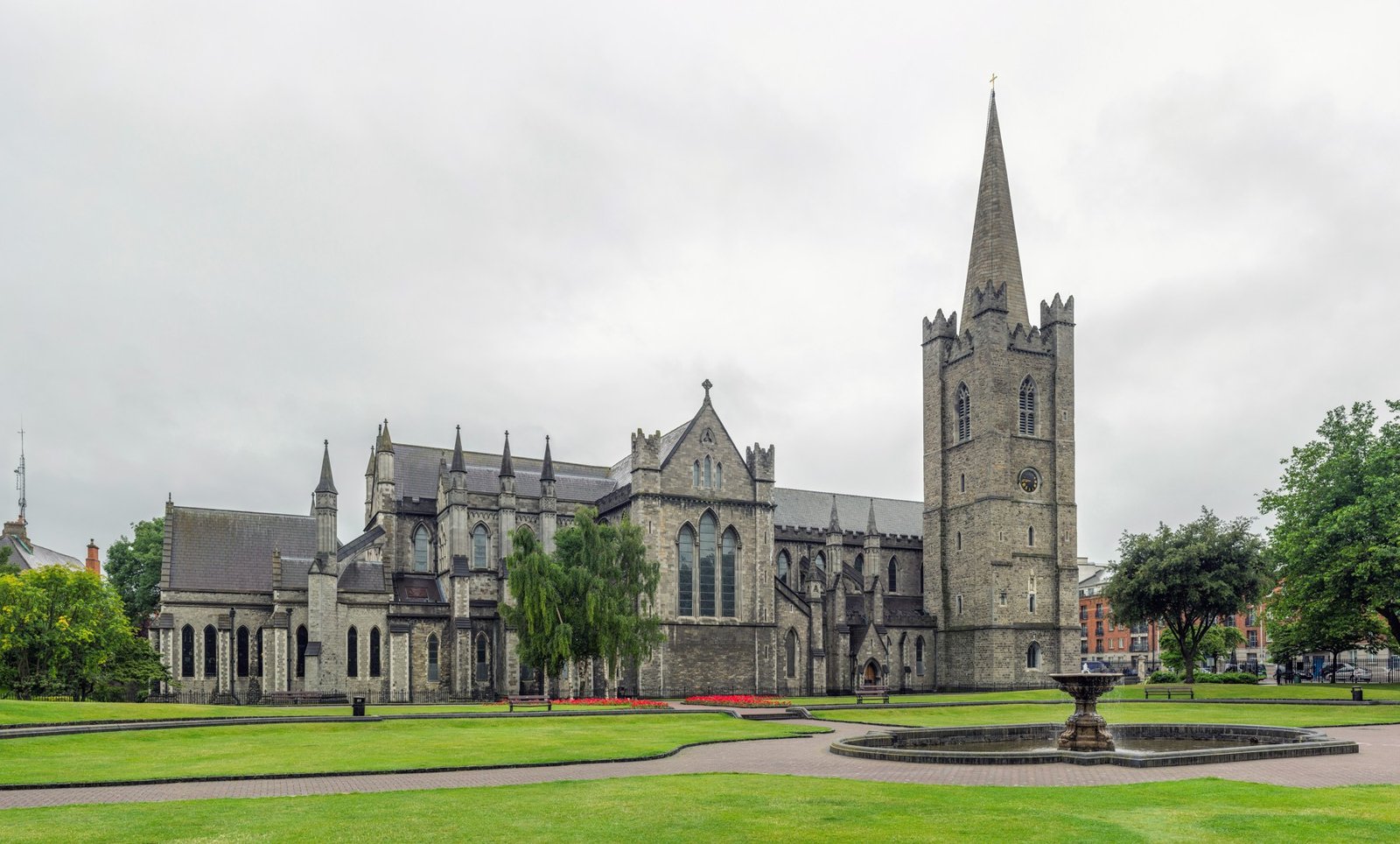
TradFest is a strong reason to choose late January. The festival presents traditional and folk music in Dublin, with concerts in historic buildings and other venues across the city and county. Check its current program before fixing your travel dates.
Look at the venue address as carefully as the artist’s name. A concert at St. Patrick’s Cathedral puts you in central Dublin; another event may be in Fingal or a different part of the county. Two performances listed under the same festival can involve a substantial journey between them.
I would book the performance I most wanted to see first, then choose accommodation and other evening plans around it. Allow for doors opening, the concert itself, and the journey home. Check the last suitable train or bus for that weekday rather than assuming public transportation runs until the music ends.
The program includes ticketed concerts and free sessions, with different entry arrangements. A free session still has limited space. For a ticketed performance, read the event’s seating and accessibility information before booking; the festival’s general advice cannot describe every venue.
Plan Your Dublin Stay
- Where To Stay in Dublin: Best Areas and Accommodations
- 7 Things To Do In Dublin When It Rains
- Top 5 Music Venues in Dublin, Ireland
You can also visit outside festival week and look for regular music sessions. Check the pub or venue’s own current schedule. I would choose a seated concert if listening to the music is your main purpose.
A Four-Night Dublin Stay in January
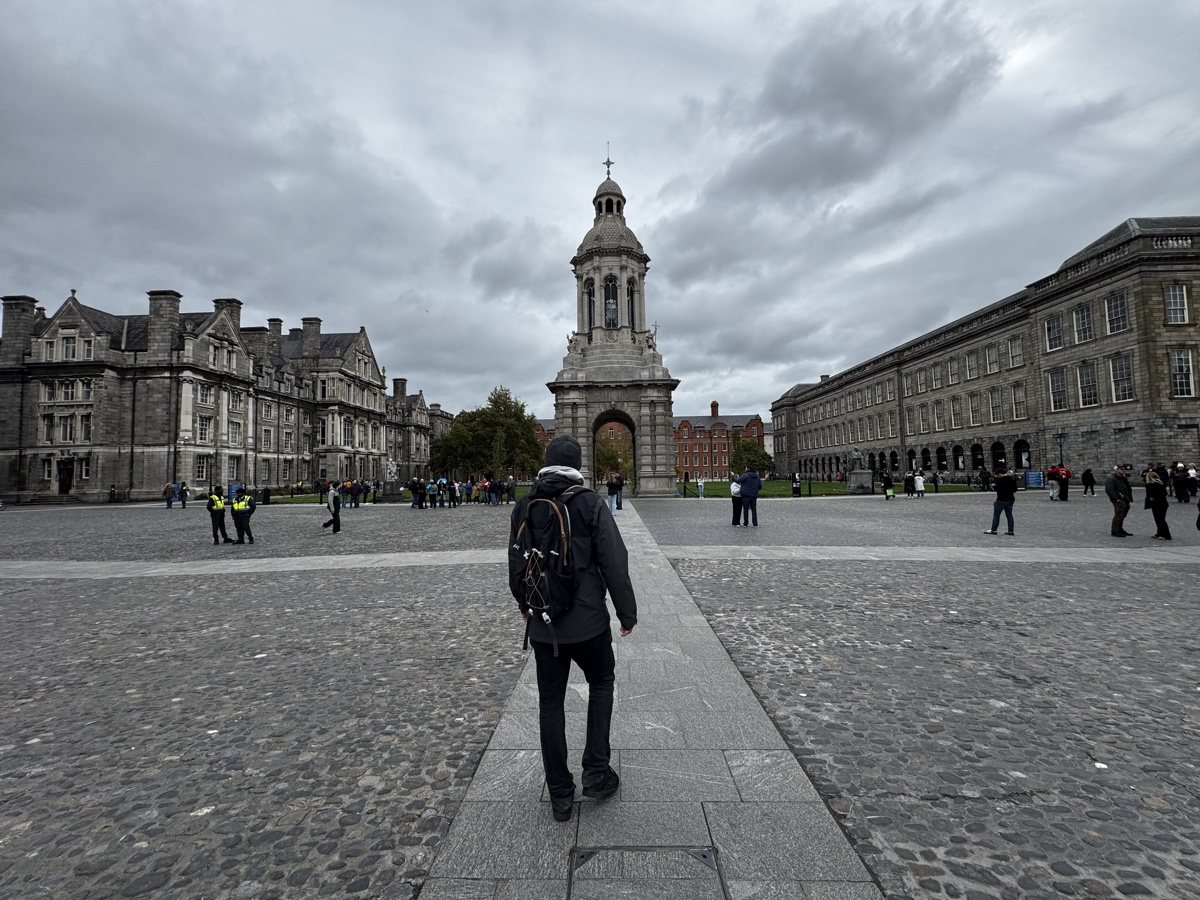
Four nights gives you an arrival evening, three full days, and a departure morning. I would keep the same room throughout. That leaves enough time for Dublin without requiring good weather every day or spending a large share of the trip in transit.
Choose two indoor visits you particularly want, book any timed admission, and leave one full day flexible. If you are attending TradFest, put its concert into the relevant evening first. The daytime order can then change with museum opening hours and the forecast.
The Merrion Hotel is on Upper Merrion Street, near the museum and gallery. Henrietta Suites is north of the river on Henrietta Street.
The Libertine Lodgings is on Clanbrassil Street in Dublin 8. Compare each address with your evening venue and check room availability for your dates.
Where to Stay in Dublin
Two Full Days for Museums and the City
The National Museum of Ireland’s Archaeology collection on Kildare Street is a good first choice, with prehistoric gold and Viking objects. General admission is free. Check the day’s opening time, especially on Sunday or Monday, when opening is later than on the other days.
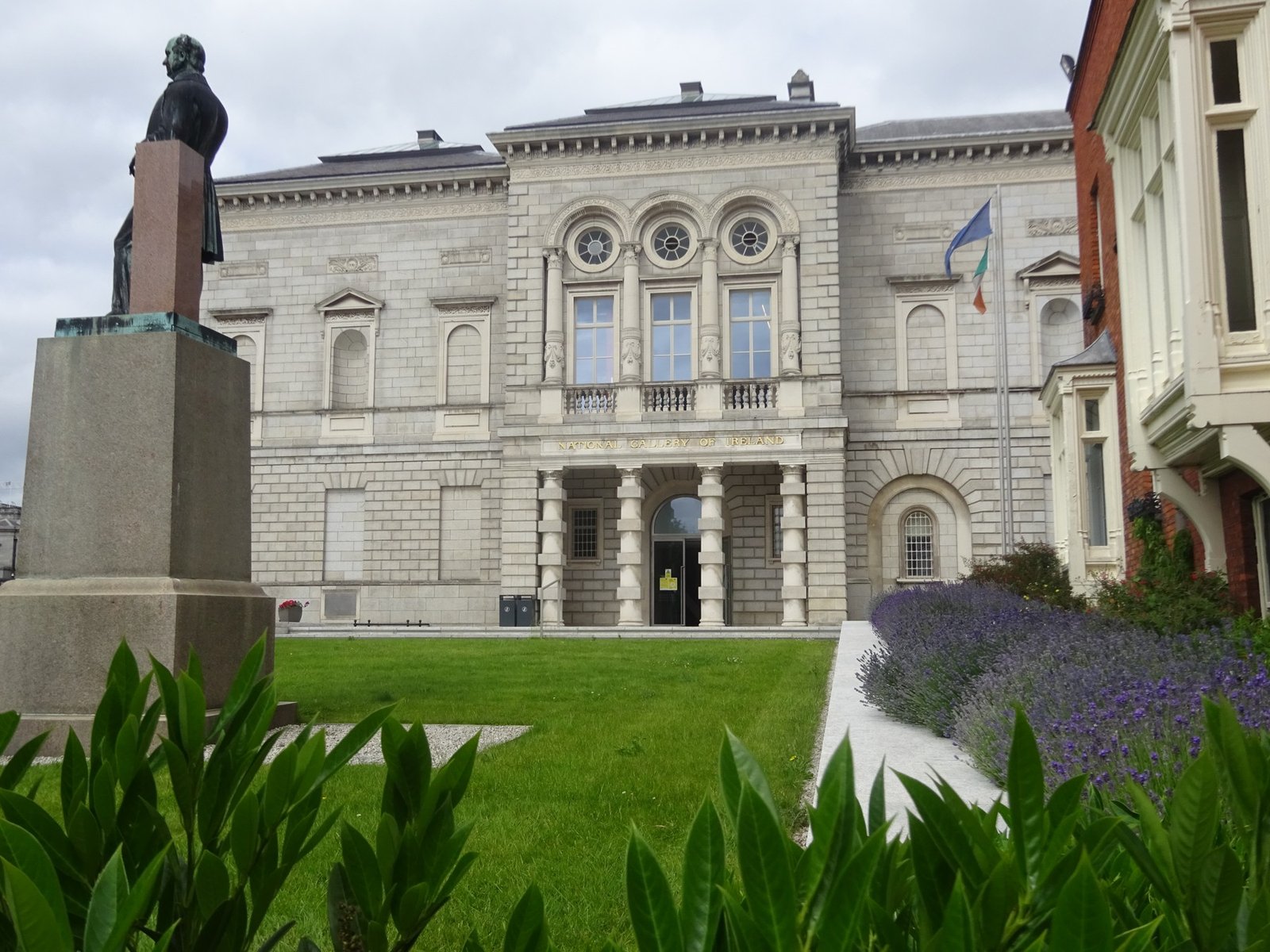
The National Gallery of Ireland is nearby and gives you another substantial indoor visit. Its permanent collection is free to enter, while some exhibitions need a separate ticket. Thursday’s late opening is useful when you want to spend the available daylight outside.
Use a dry interval for St. Stephen’s Green or a walk between Merrion Square and the city center. On a wet afternoon, stay longer in the gallery and save the park for another day.
Spread the museum and gallery across the two days if you prefer shorter visits. Leave time for lunch and a return to your room before the evening. A morning attraction, an afternoon walk or second indoor stop, and a concert is enough for a full winter day.
Keep One Day Flexible for the Coast
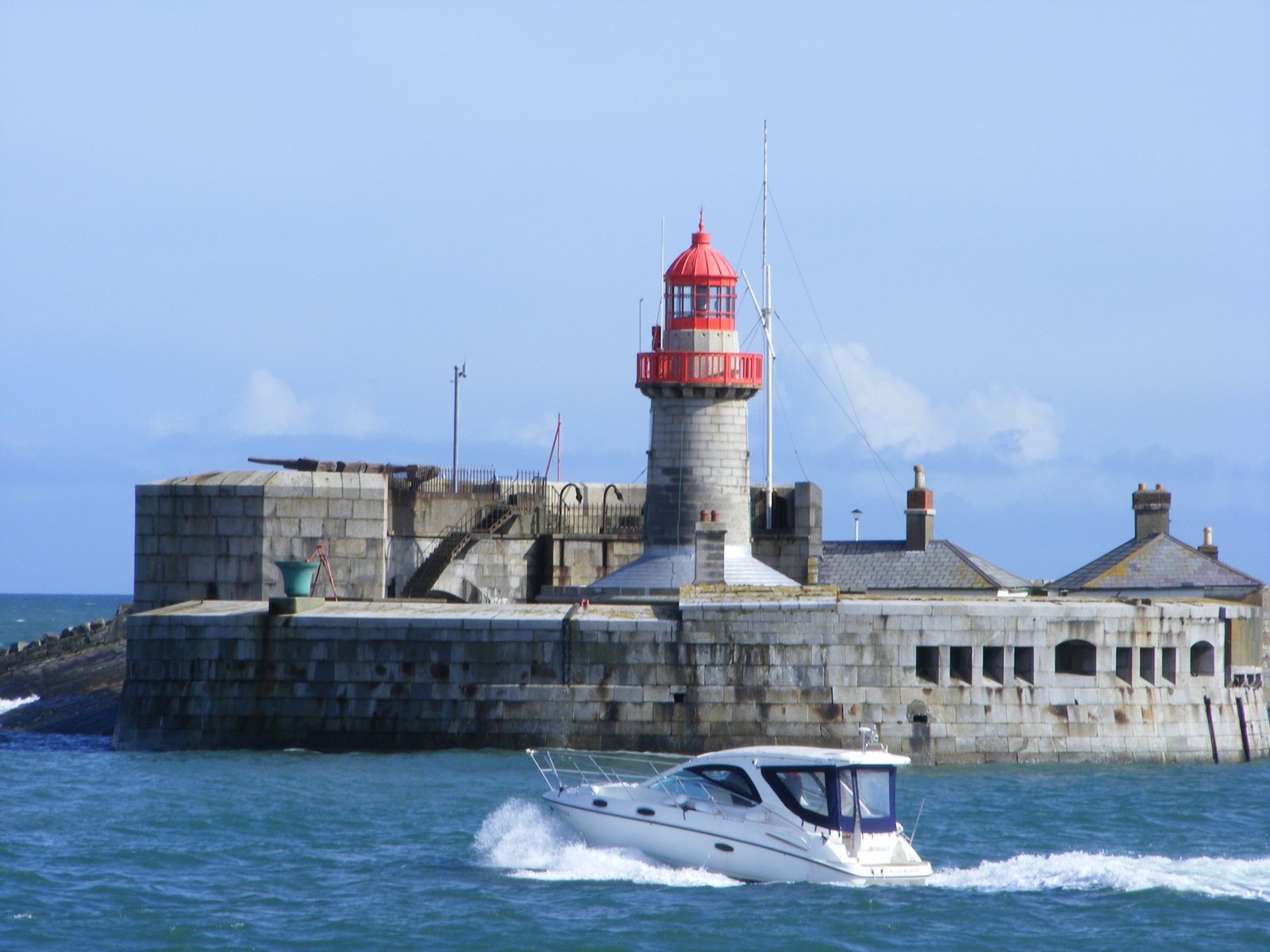
Dún Laoghaire is a practical coastal option from Dublin by DART. On a suitable day, you can walk by the harbor, get lunch in town, and return without renting a car. Decide how far to walk once you have checked the conditions.
The pier is exposed, so this is a fair-weather option. Follow local closure notices and turn back if wind or spray makes the walk uncomfortable. You can keep to the town and shore, or spend the day in Dublin instead.
I would not book a long west-coast day trip simply to guarantee a landscape photograph. The bus journey still takes time if the main viewpoint is covered by cloud. If that view is central to your trip, stay nearer it with several possible visiting days, or travel in a season with more daylight.
For the final evening, choose something near your accommodation and sort out the airport transfer. Check weekend rail works before committing to a DART outing, and allow additional transfer time on the day you fly.
Other January Bases: Cork and Galway
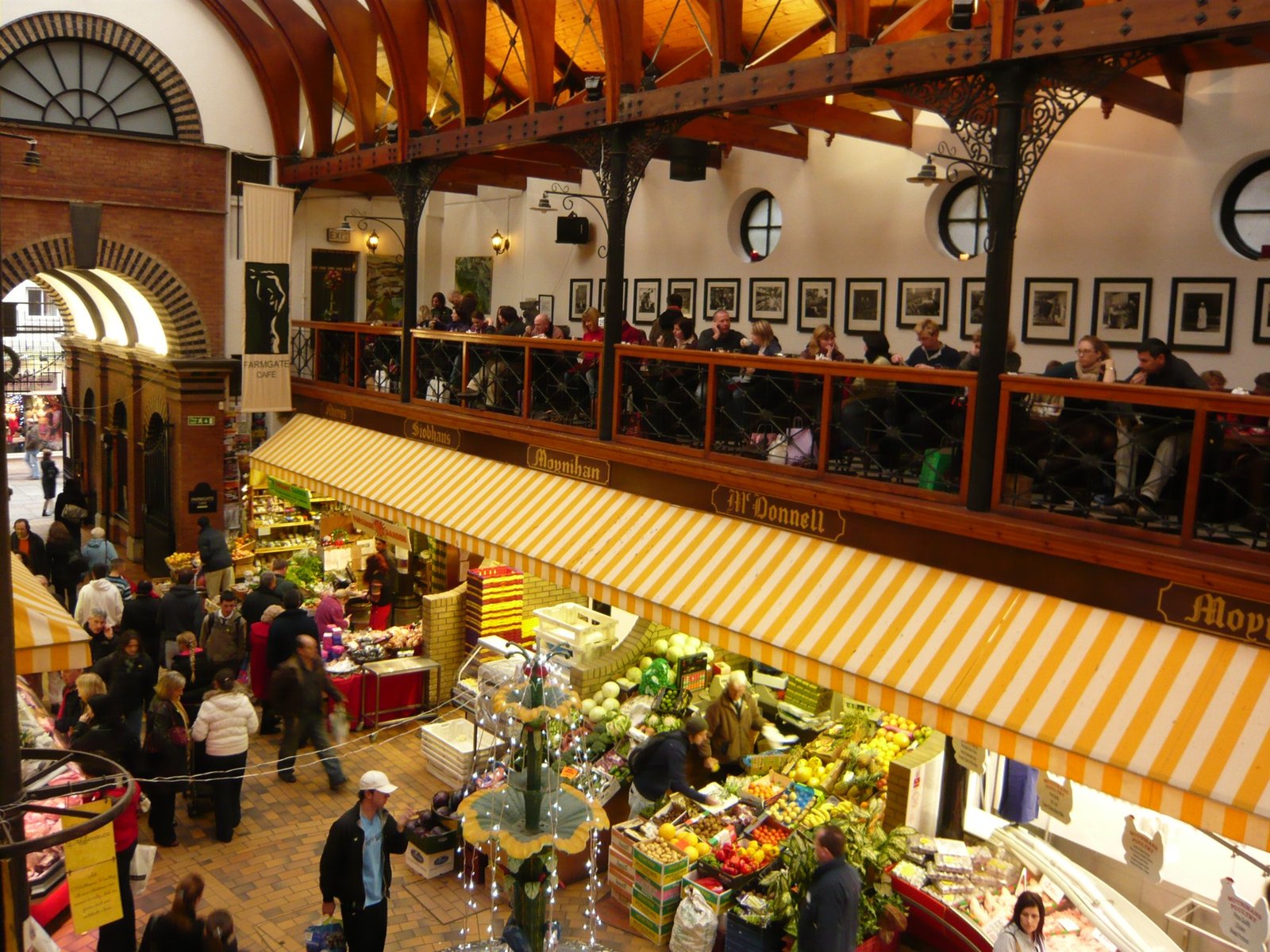
Choose a different base if it makes better use of your flights or interests. I would favor several nights in Cork or Galway over crossing Ireland twice to reproduce a Dublin itinerary. Each gives you places to eat and indoor visits within a city setting.
Cork suits a trip with an interest in food. The English Market is covered and normally opens Monday through Saturday; it closes on Sundays and public holidays. Cork City Gaol also has winter opening hours, so it is a practical indoor stop when you plan the journey there.
Galway works well for evenings of music and a compact city stay. Galway City Museum gives you an indoor option, but check its opening days before assigning it to a wet afternoon. A walk by the water can fit into a favorable spell without committing the whole day to an excursion.
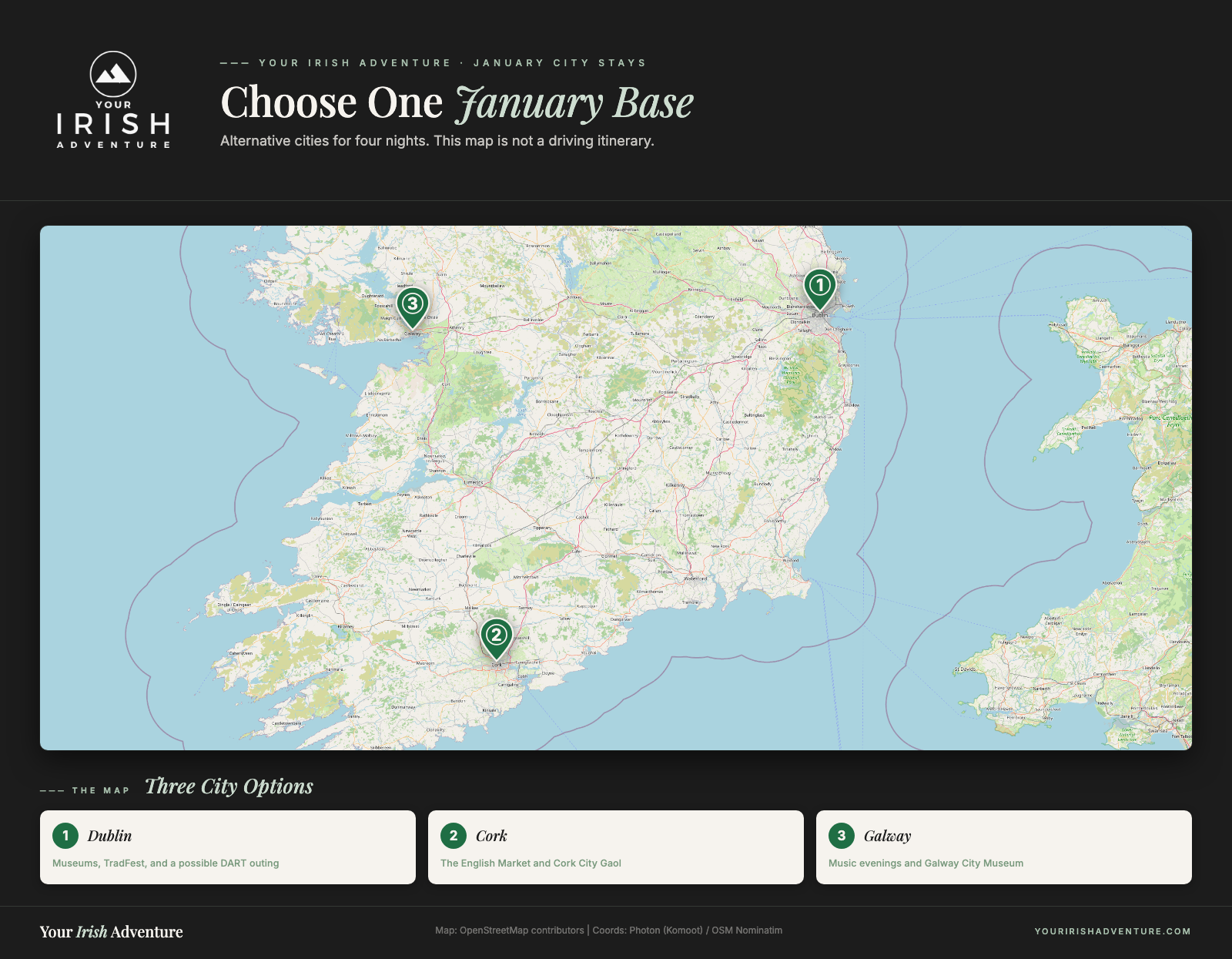
The map shows alternative bases, rather than a route to complete on one short trip. Pick one for four nights. With a longer visit, add a second only when the transfer and the activities there justify the time.
A west-coast base does not guarantee access to every island or seasonal attraction. Check the specific ferry route and attraction, including winter operation, before paying for accommodation around it. A service can operate in winter and still be canceled by conditions on the day.
Driving and Public Transportation in January

You can make the four-night Dublin plan without a rental car. Walking and city transportation cover the main visits, and DART provides the coastal option. Choose accommodation for the journeys you will actually make, including the return from an evening performance.
For travel between cities, compare the direct bus or train with the full driving cost. Check the departure station, not just the destination name: Dublin’s intercity routes use different stations. A late arrival also changes how you get from the station to your accommodation.
Compare Cork and Galway Bases
- Where To Stay in Cork: Best Areas and Accommodations
- Best Places to Stay in Galway, Ireland
- Best Time to Visit Cork: Month-by-Month Guide
A car becomes more useful for rural accommodation and places with limited public transportation. You can compare rental cars on Discover Cars for the same pickup point and rental period.
I would keep unfamiliar country-road driving within daylight and leave spare time for the route. Confirm the transmission, insurance terms, and pickup arrangements before paying.
During a cold spell, follow road and weather updates rather than assuming that a main-road journey tells you what a smaller access road will be like. Keep the arrival day modest, particularly after an overnight flight. A long drive immediately after landing adds fatigue to an unfamiliar road system.
Prices, Closures, and What to Book First

Compare the total cost of your chosen dates. Include flights, the room, airport transfers, and any car you will use. A lower room rate outside town can be offset by repeated taxis after dinner or music.
I would book in this order: the event or timed visit that determines the trip, accommodation with suitable cancellation terms, and then transport. Keep a weather-dependent outing flexible where you can. Compare like-for-like rooms, including breakfast and cancellation rules.
New Year’s Day needs a separate opening-hours and transport check. Later in the month, some seasonal businesses may still be closed, while others take a break after Christmas. Confirm the particular restaurant, attraction, or rural hotel you want rather than treating winter as a countrywide closure.
More Winter Trip Planning
- Best Things to Do in Ireland in Winter (2026 Guide)
- Best Time to Visit Dublin: Month-by-Month Guide
- How To Get From Dublin Airport to Dublin City Centre
Ireland in February offers more daylight, which can matter more than a modest difference in price. If you have flexible dates and no January event to attend, compare both months using the same route and booking conditions.
What to Pack for Ireland in January

Pack for cold rain and changing indoor temperatures. A waterproof outer layer over warm layers is more useful than a heavy coat that leaves you wet after a shower. Check that your shoes are comfortable for several days of walking.
- Bring a waterproof jacket with a hood and room for a sweater or fleece underneath.
- Choose water-resistant walking shoes with grip, and pack spare socks.
- Take gloves, a hat, and a scarf for waiting outside and walking near the sea.
- Use a small day bag that protects your phone and tickets from rain.
- Pack a suitable plug adapter and a power bank if you rely on your phone for navigation.
For city visits, you do not need a full hiking wardrobe. For a planned walk on rough ground, take the footwear and clothing that route requires. Dry your outer layers between outings, and leave enough room in your bag to remove a layer inside a warm gallery or pub.
Before You Book
- Choose one base for four nights instead of changing hotels daily.
- Check TradFest venue addresses and the last suitable public transportation home.
- Keep Dún Laoghaire flexible and use Dublin museums on wet days.
- Compare total costs for your dates, including transfers and cancellation terms.
Frequently Asked Questions
Is January a good time to visit Ireland?
January is a good choice for city museums, food, and live music, especially if you want to attend TradFest. It is less suitable for a first trip built around long coastal drives or several full days outdoors.
How cold is Ireland in January?
Average January daily highs are about 8°C (46°F) at Dublin Airport, with lows around 2°C (36°F). Conditions vary by location, and cold spells can bring frost, ice, or snow.
Does it rain all the time in Ireland in January?
No, but you should expect rain and keep outdoor plans flexible. Monthly rainfall totals vary by location and do not tell you how many hours of your trip will be wet.
How many daylight hours are there in January?
Dublin has roughly seven hours and forty minutes of daylight at the start of January, increasing to almost nine hours by the end. Check sunrise and sunset for the exact date and place you plan to visit.
Do you need a car in Ireland in January?
You do not need a car for a Dublin city stay with a DART outing. A rental can be useful for rural plans, but compare it with intercity transport and allow for limited daylight and winter road conditions.
Is Ireland cheaper in January?
January can offer lower room rates than busier travel periods, but it is not always the cheapest option. Compare the full cost for your dates, including event demand, transport, and cancellation terms.
Final Thoughts
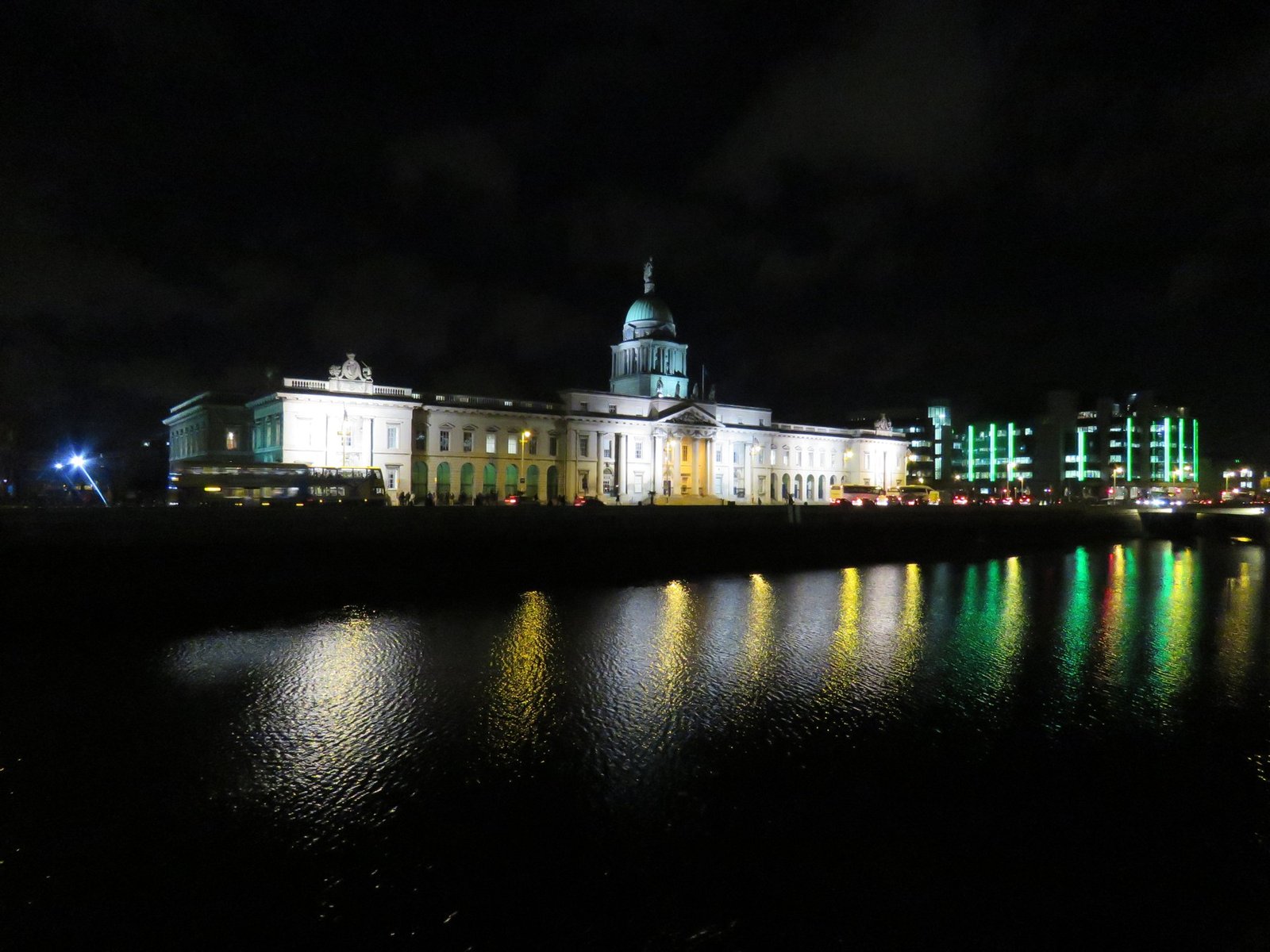
I would book Ireland in January for a city stay with a concert or museum visit I was looking forward to. Four nights in one base gives you time to change the daytime order, enjoy the evenings, and take a coastal outing when the conditions suit it.
Before paying, check the event venue, the opening days of your two main indoor visits, and the trip back to your accommodation after the music. If your plans depend on several long outdoor days, compare a later month before committing.
Like it? Pin it!
Save this guide for later