Winter in Ireland means short days, a lot of rain, and pubs that fill up by four in the afternoon. It also means half the tour buses are gone and you can walk into a Galway session without fighting for a stool. The best things to do in Ireland in winter are the ones summer crowds ruin.
The cold is the trade you make to have the place closer to yourself. The Cliffs of Moher car park has actual spaces in it, and the coast roads are yours.
Daylight is the thing to plan around. In December you’re looking at roughly 8am to 4:30pm of light, so you pack the outdoor stuff into the middle of the day and let the long evenings be about food, fires, and trad music.
The weather is honestly not as brutal as people expect. It rarely snows outside the hills, temperatures sit around 4 to 8°C, and the real enemy is wind and horizontal rain rather than deep cold. Pack proper waterproofs, plan on getting soaked at least once, and the rest sorts itself out.
So here’s what’s actually worth doing between November and February, from the wild coast walks to the Christmas markets and the warm pubs you’ll be very glad to find.
The best things to do in Ireland in winter are the seasonal ones: Christmas markets in Galway, Belfast, Dublin and Waterford, distillery tours and trad-music pubs, quiet drives on the Wild Atlantic Way and Ring of Kerry, and frosty coastal hikes. Expect 4 to 8°C, short days, plenty of rain, and low off-season prices.
More on Visiting Ireland in Winter
- Weather in Ireland in December: Is it Worth a Visit?
- Christmas In Dublin: 10 Things To See and Do
- Best Festivals in Ireland in November: Your Irish Festival Guide
- Ireland in November: Weather, Packing, Festivals and More
Winter Weather in Ireland
Let me set expectations before you book anything. Irish winter is not a cold you need to fear. It’s a wet, windy, grey kind of cold that gets into you slowly, and the trick is dressing for it rather than fighting it.
Daytime temperatures sit around 4 to 8°C from December through February. Frost is common in the mornings inland, but the coast stays milder because the Atlantic keeps it from dropping much below freezing. Snow is rare unless you’re up in the hills.

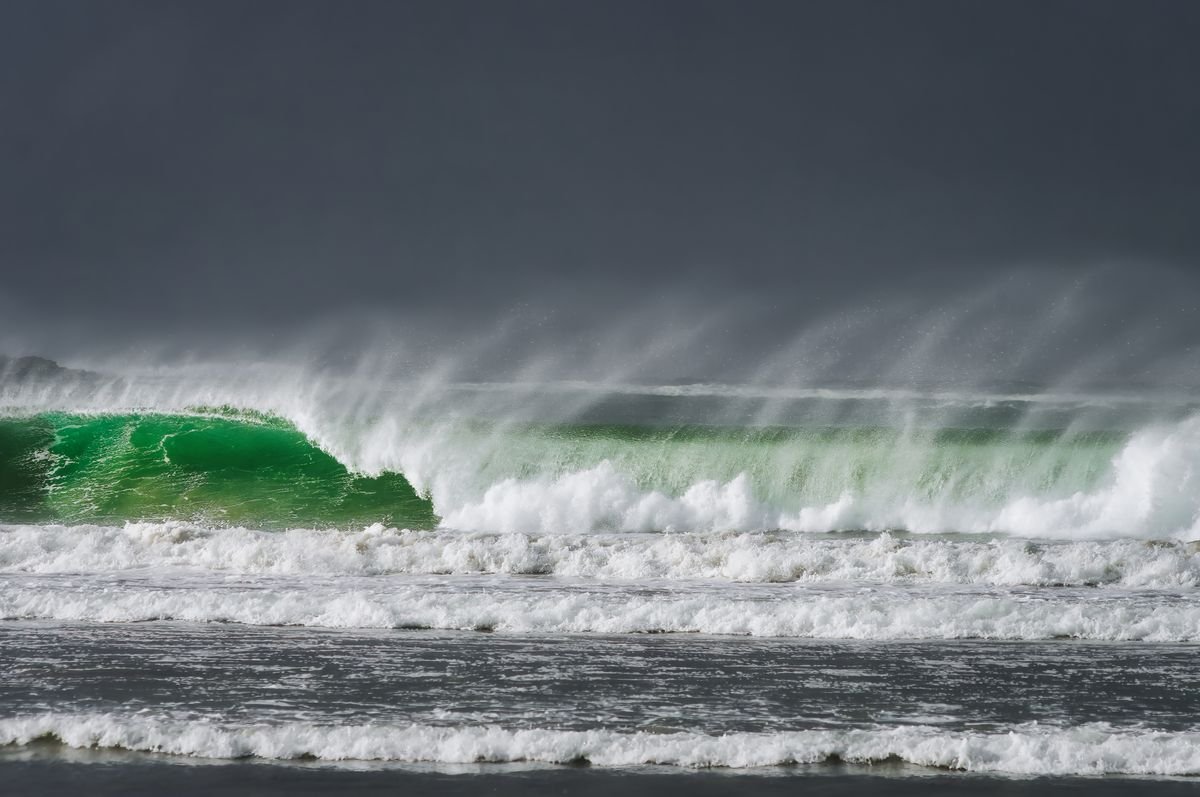
The wind is the real story. Atlantic storms roll in off the west coast all winter, and when the rain comes sideways at you on a clifftop in Clare or Kerry, no umbrella on earth will save you. This is why you bring proper waterproofs and not a fashion jacket.
What to actually pack
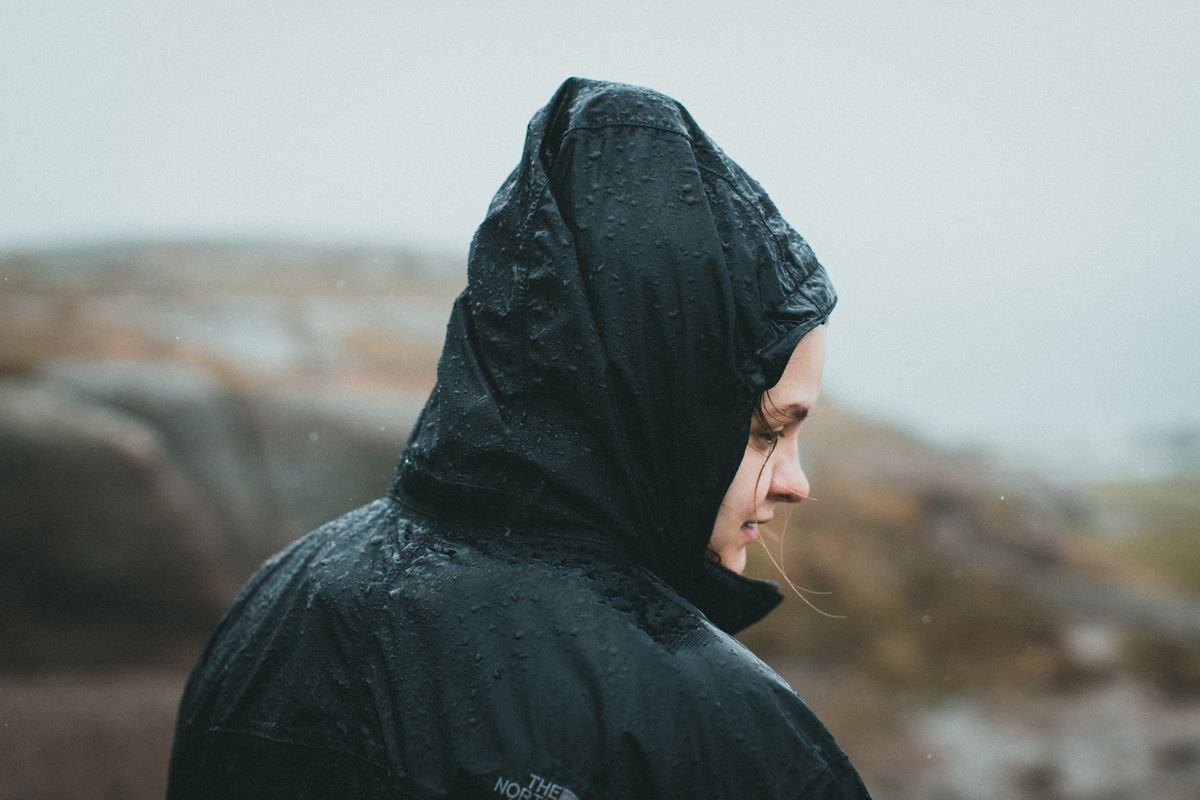
Here’s what I’d tell a first-timer to bring, and it’s less about staying warm than staying dry.
- A proper waterproof shell jacket with a hood, not a soft puffy one that soaks through
- Waterproof walking boots, because every coastal path will be muddy
- Layers you can add and strip off, since you’ll go from a cold clifftop to a warm pub in ten minutes
- A hat and gloves for the wind, and
- A small dry bag for your phone and camera
Skip the umbrella. It’ll turn inside out by lunchtime and you’ll bin it.
The daylight is short, so plan around it
In December the sun is up around 8:30am and gone by 4:30pm, and that’s your biggest constraint. You get roughly eight hours of usable light, and a chunk of that is dim and grey.
By late February it stretches back out toward 6pm, which makes a real difference if you want long coast drives. Either way, do your outdoor stuff between 10am and 3pm and you’ll be fine.
The weather changes fast, which works in your favour as much as against you. A morning of horizontal rain can clear to bright sun by noon, so check the forecast the night before, stay flexible, and don’t write off a day just because it starts wet.
The Pros and Cons of Visiting Ireland in Winter
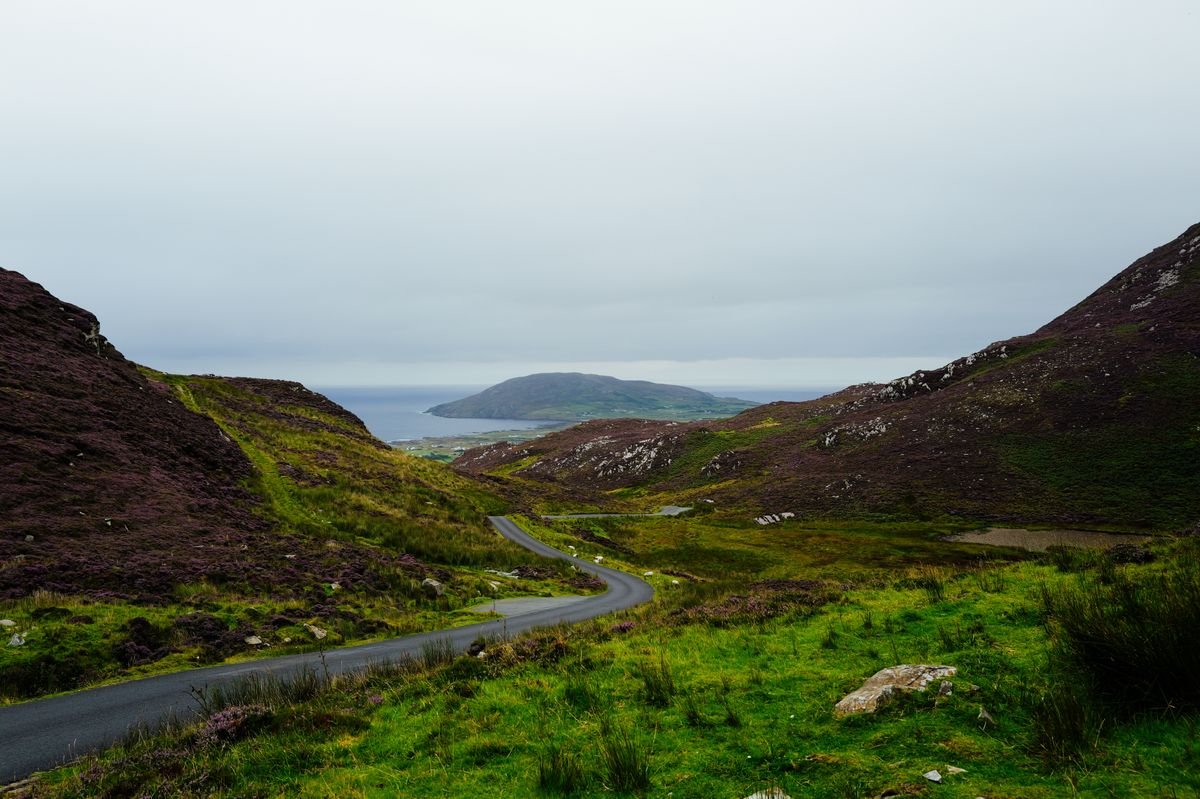
Winter is a trade-off, and you should know both sides before you book. There’s a real reason the crowds come in summer, and there’s an equally real reason some of us would rather have the place in January.
The Pros
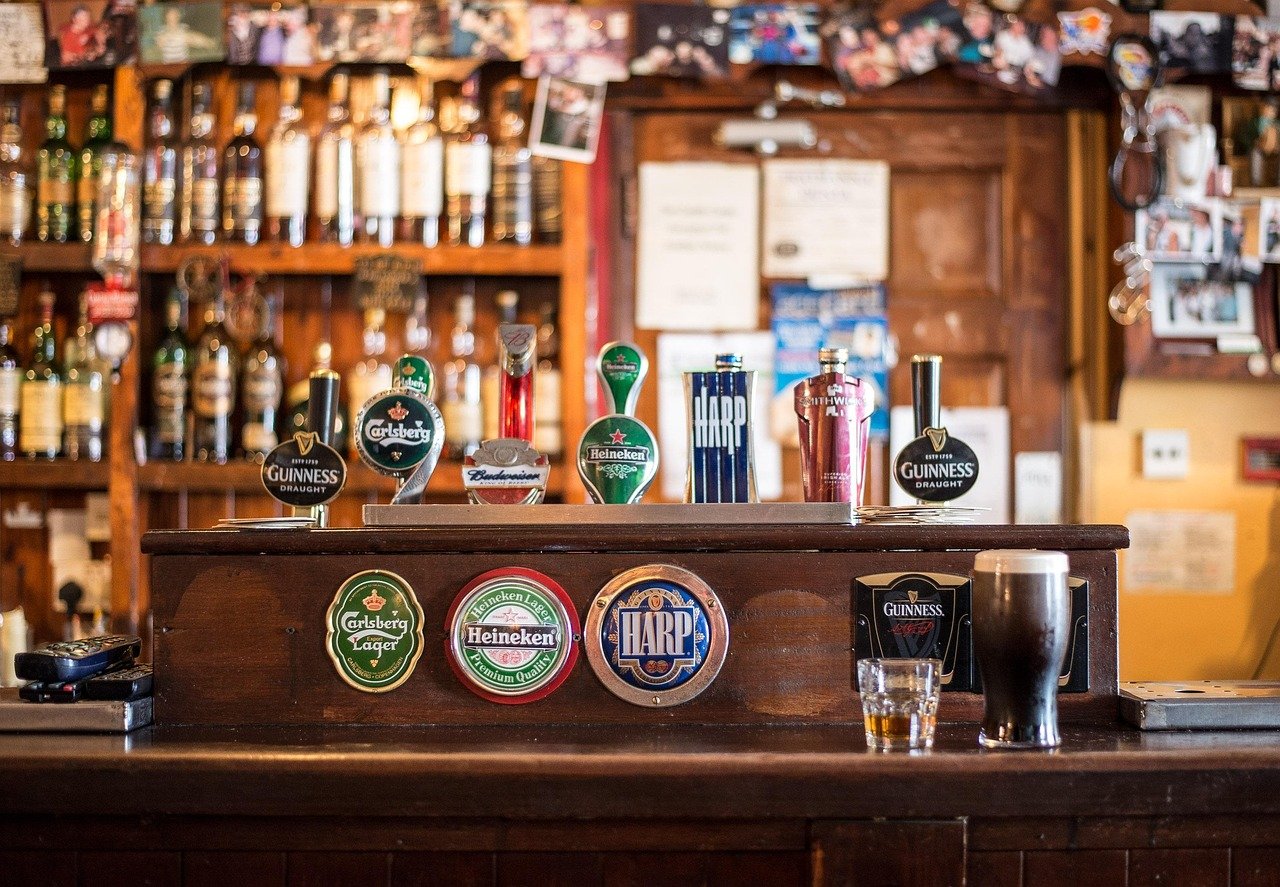
The crowds are the big one. The famous spots that have a queue and a packed car park in July are calm in winter. You can stand at a viewpoint without forty other people in your shot, and you can walk into a pub session and actually get near the musicians.
Prices drop too. Flights are cheaper, hotels and B&Bs cut their rates outside peak season, and a car rental in January costs a fraction of what it does in August. Your money goes a lot further.
Then there’s the atmosphere indoors. A turf fire, a pint, and trad music in a small pub is at its best when it’s grey and blowing a gale outside. December adds Christmas markets and lights on top of that, which is reason enough for some to come.
And the coast is better in a storm. Atlantic swells crashing into the cliffs of Clare and Kerry are a bigger spectacle in winter than on any calm summer day.
The Cons
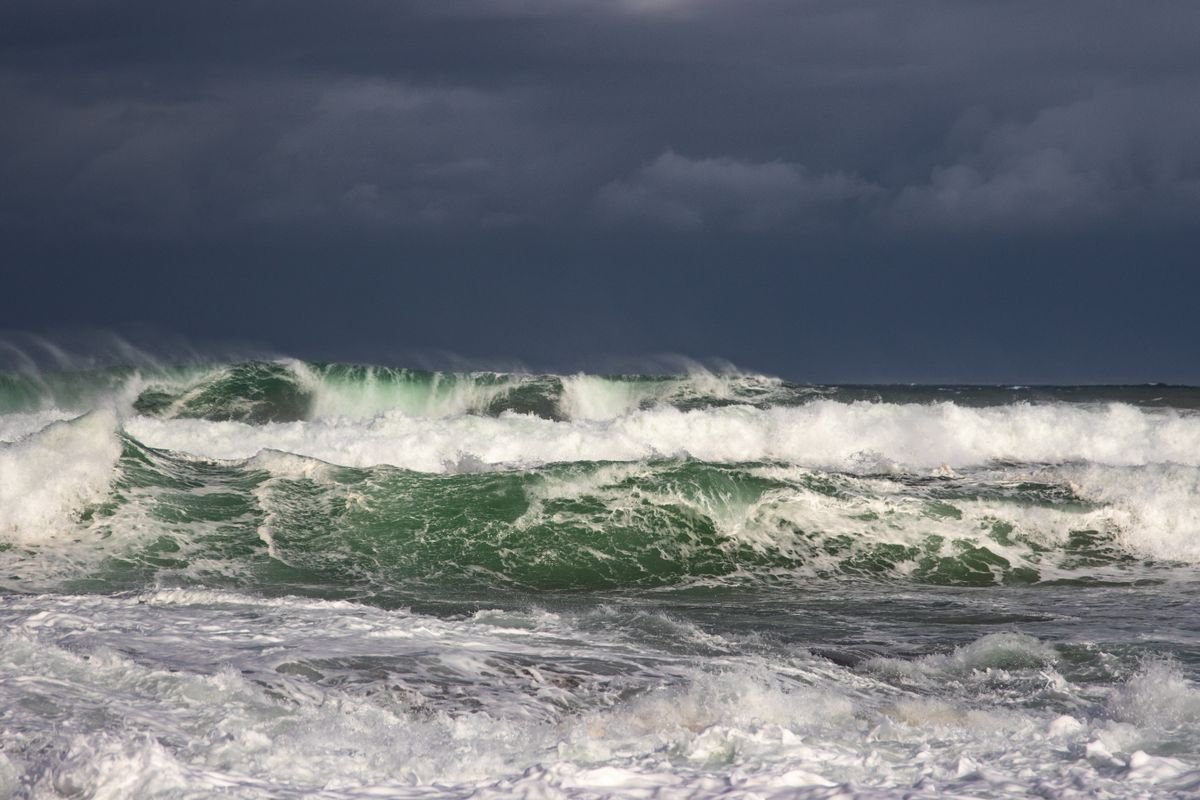
The short days are the real limit. Eight hours of usable light means you can’t pack as much into a day, and a long coast drive eats most of it. You have to be realistic about how many stops you’ll actually make.
The weather will mess with your plans at some point. A ferry to the Aran Islands or a boat trip can get cancelled when the wind picks up, and some clifftop walks aren’t safe in a storm. Build in a spare day and don’t pin everything on one date.
Some things also close or run reduced hours off-season. Smaller attractions, a few rural restaurants, and some tour operators shut down from November through February, so check ahead rather than turning up and finding the door locked.
None of this is a dealbreaker. Go in knowing the daylight is short and the weather calls the shots, plan loosely around both, and winter is one of the best times to see the country.
Best Things to Do in Ireland in Winter
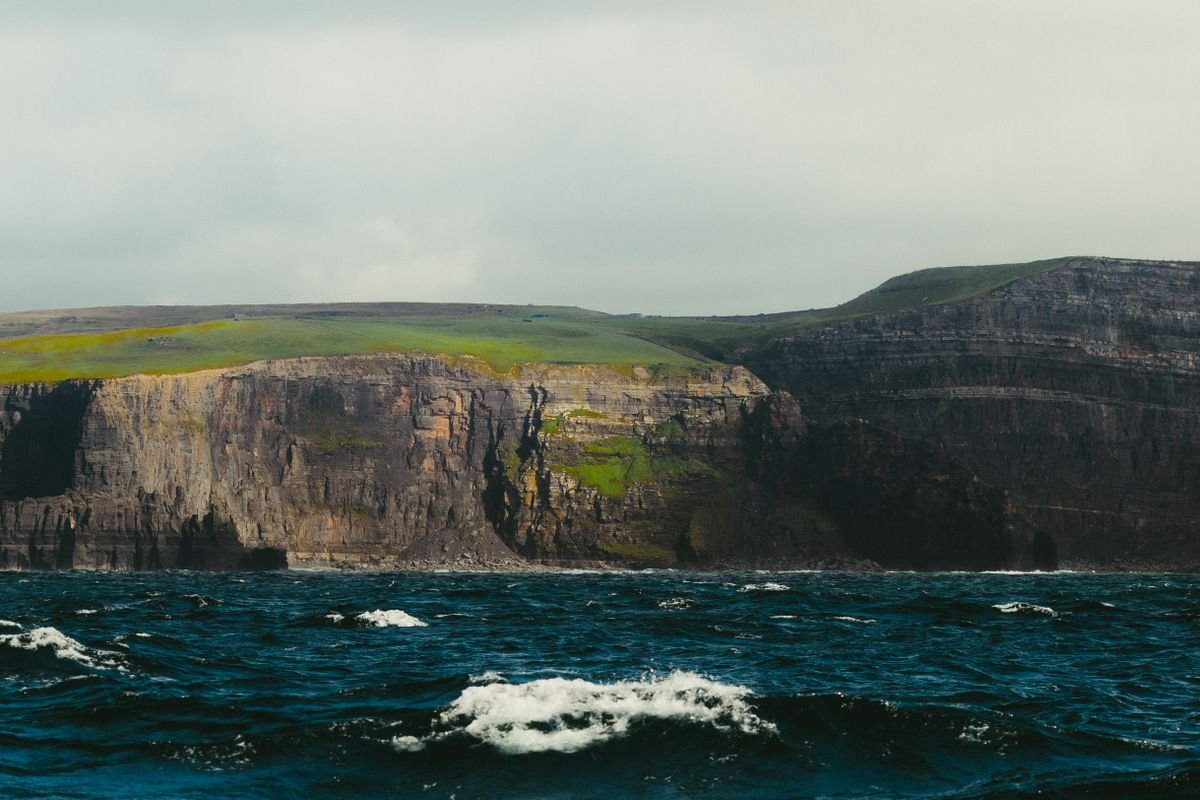
This is the part you came for. Winter changes what’s worth your time in Ireland, and the list below leans into what the season actually does well rather than what it takes away.
The rough split is simple. Do the outdoor stuff in the middle of the day, save the markets and the indoor stops for the dark afternoons, and let the evenings be about a fire and a pint. Here’s what I’d tell a first-timer to check out.
Christmas Markets and Festive Events
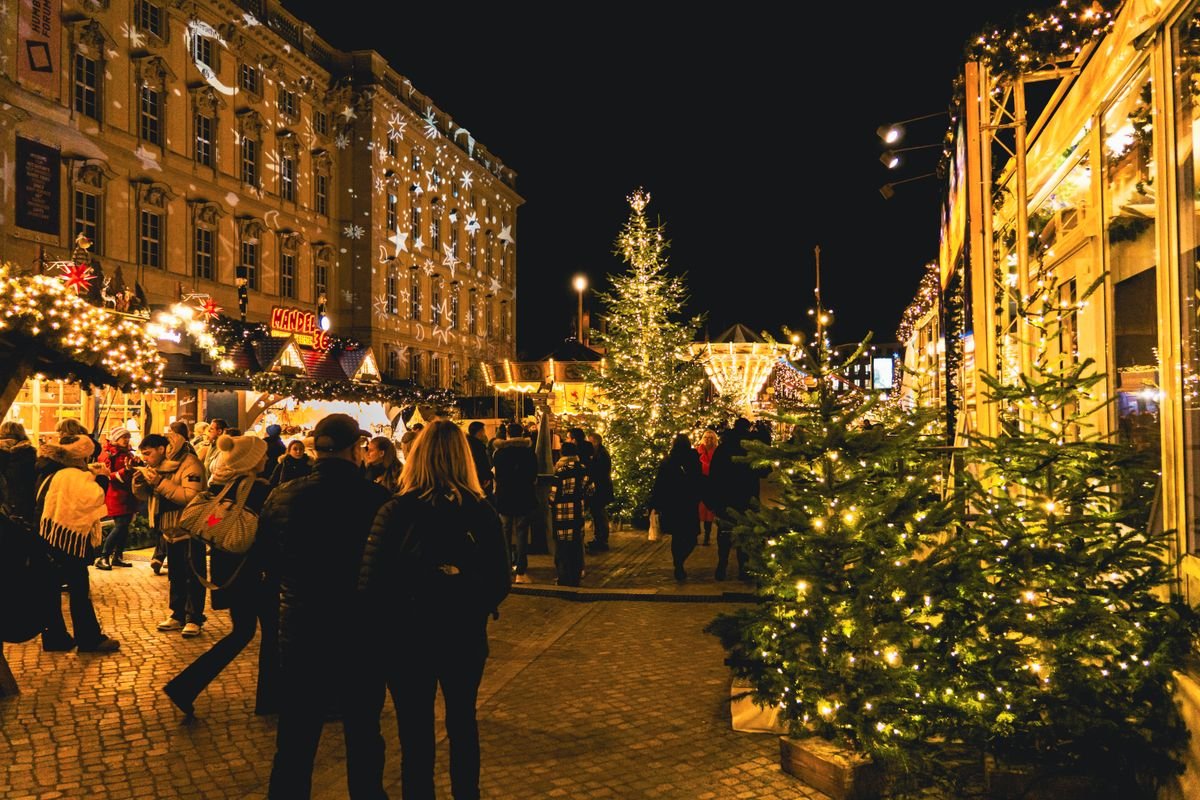
December is when Ireland leans hardest into winter, and it’s a good time to be here. Galway’s Christmas Market on Eyre Square runs from mid-November and is one of the biggest in the country, with mulled wine, a Ferris wheel, and food stalls packed into the square.
Dublin spreads its festive stuff around the city, with markets, the lights down Grafton Street, and the windows on the old department stores. Belfast runs a big market in the grounds of City Hall that’s worth the trip north on its own.
If you want the strange and local version, time your trip for St Stephen’s Day on December 26th, when the Wren Boys come out in places like Dingle in straw costumes, playing music through the streets. It’s odd, it’s old, and it beats anything staged for tourists.
For the live trad side of the season, you can book a Galway trad music pub crawl on GetYourGuide and let someone else find the warm rooms with the best players.
Indoor Attractions and Warm Escapes

When the rain sets in for the whole day, and it will at some point, the indoor stuff is your friend. The good news is a lot of Ireland’s best attractions are inside, and they’re far quieter in January than July.
The distilleries are the obvious play. Jameson in Midleton, Teeling in Dublin, and the smaller spots like Dingle Distillery all run tours that end with a tasting, which is exactly where you want to be on a grey afternoon. A whiskey tour and a warm room is hard to beat in winter.
Dublin alone can fill a wet day. Trinity College and the Book of Kells, the Guinness Storehouse, EPIC the Irish Emigration Museum, and the National Museum will all keep you dry and out of the wind. If you’d rather have it walked for you, book a Book of Kells and Dublin Castle tour on GetYourGuide. Down in Cork, the English Market is a covered food hall you can happily lose an hour in.
Then there are the castles and grand houses. Blarney Castle, Bunratty, and the big estates like Powerscourt give you something to do that doesn’t depend on the sky behaving, and the grounds are calm with the summer coaches gone.
Winter Road Trips and Scenic Drives
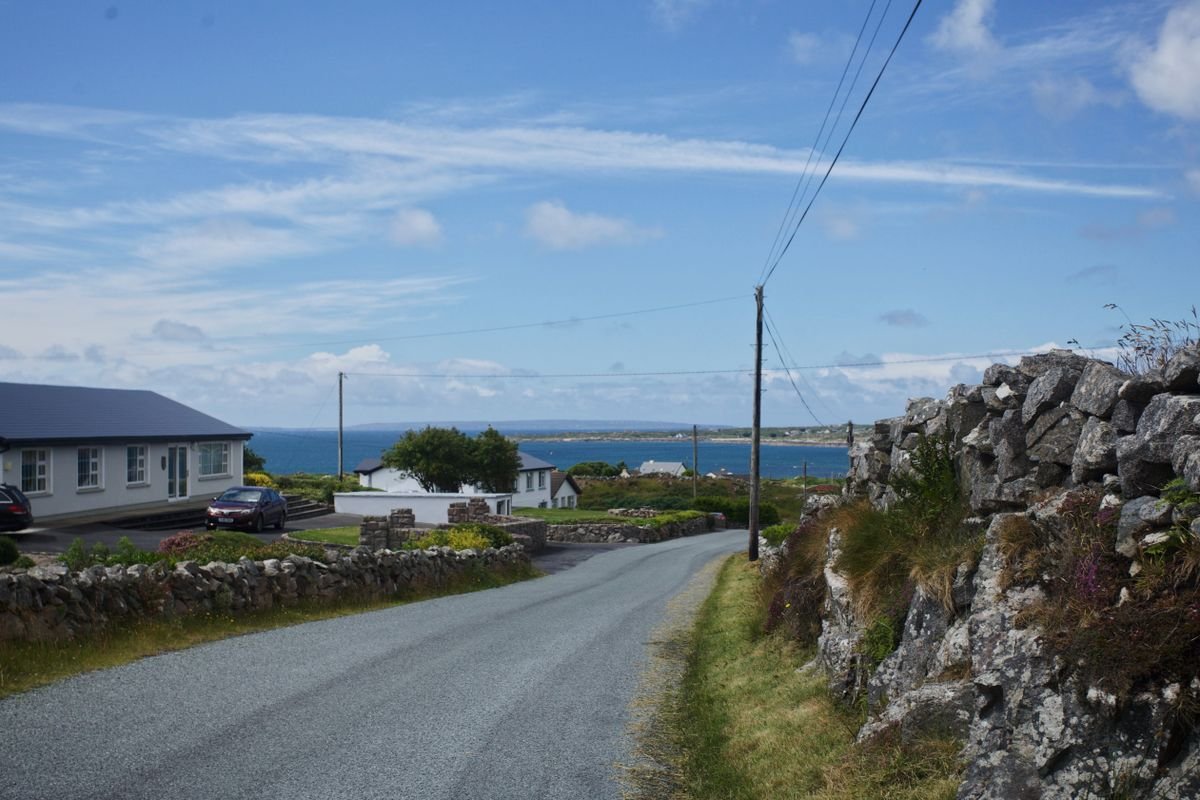
This is where winter pays off. The Wild Atlantic Way and the famous coast roads are yours in the off-season, with no caravans crawling along in front of you and no fight for a layby to stop and take a photo. You’ll need your own wheels for any of it, and January rates are a fraction of summer’s, so it’s worth taking a minute to compare winter car hire deals on Discover Cars before you lock one in.
The Ring of Kerry and the Slea Head Drive around Dingle are both far better without the summer convoy of tour buses. The roads are narrow and the buses are the main stress in peak season, so losing them is a real gift.
Two things to plan around. Daylight is short, so pick one drive a day rather than trying to link three, and start by 10am to get the light. And after a big storm, check for fallen branches or flooding on the smaller coastal roads before you commit to them.
The payoff is the sea itself. An Atlantic storm hammering into the coast of Clare or the Beara Peninsula is a far bigger show in January than the flat, calm water you get on a still summer day.
Winter Hikes, Walks and Wildlife
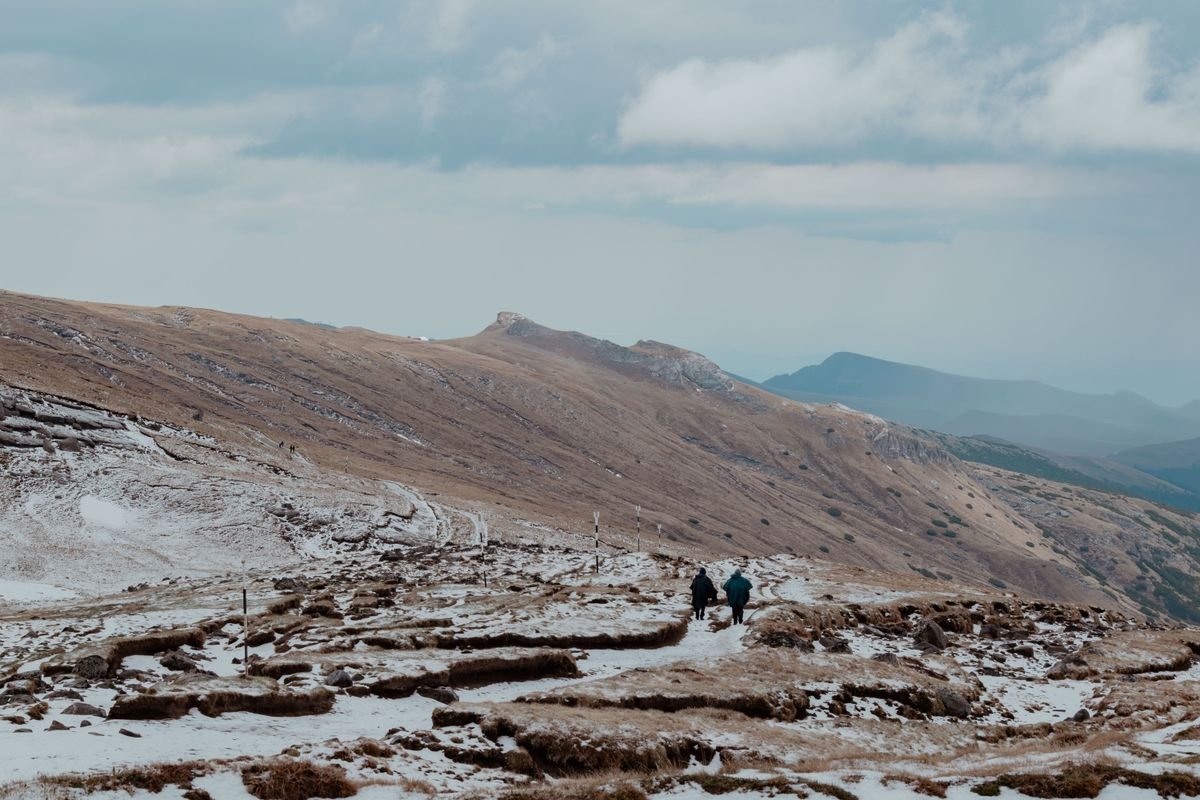
You can still walk in winter, you just pick your day and your route. Save the exposed clifftop paths for when the wind drops, and lean on the lower, more sheltered trails when a storm is blowing.
The Cliffs of Moher walk from Doolin has far fewer people on it in winter, and Howth Head just outside Dublin is an easy half-day loop with sea views. If you’d rather not drive the narrow Clare roads on a wet day, you can book a guided Cliffs of Moher and Burren walking tour on GetYourGuide out of Galway instead. Killarney National Park is a good all-weather option, with woodland and lakeside trails that are sheltered when the tops are wild.
👉 Read our full guide to Killarney National Park.
Winter is also the season for one of Ireland’s better wildlife shows. From October through January, huge flocks of starlings gather at dusk and wheel through the sky in murmurations over places like the Shannon callows and Lough Ennell before they roost. Pull over, look up, and watch.
Just remember the safety side. Some clifftop walks aren’t safe in a gale, the ground is muddy and slick, and the light goes early. Be off the exposed stuff well before dark and you’ll get the best of it.
Other Times of Year to Visit Ireland
- Ireland Packing List for April: Spring Is In The Air
- Ireland Packing List for May: Summer Is Here
- Ireland in June: What To Wear and Pack
- Ireland Packing List For September
Does It Snow in Ireland?
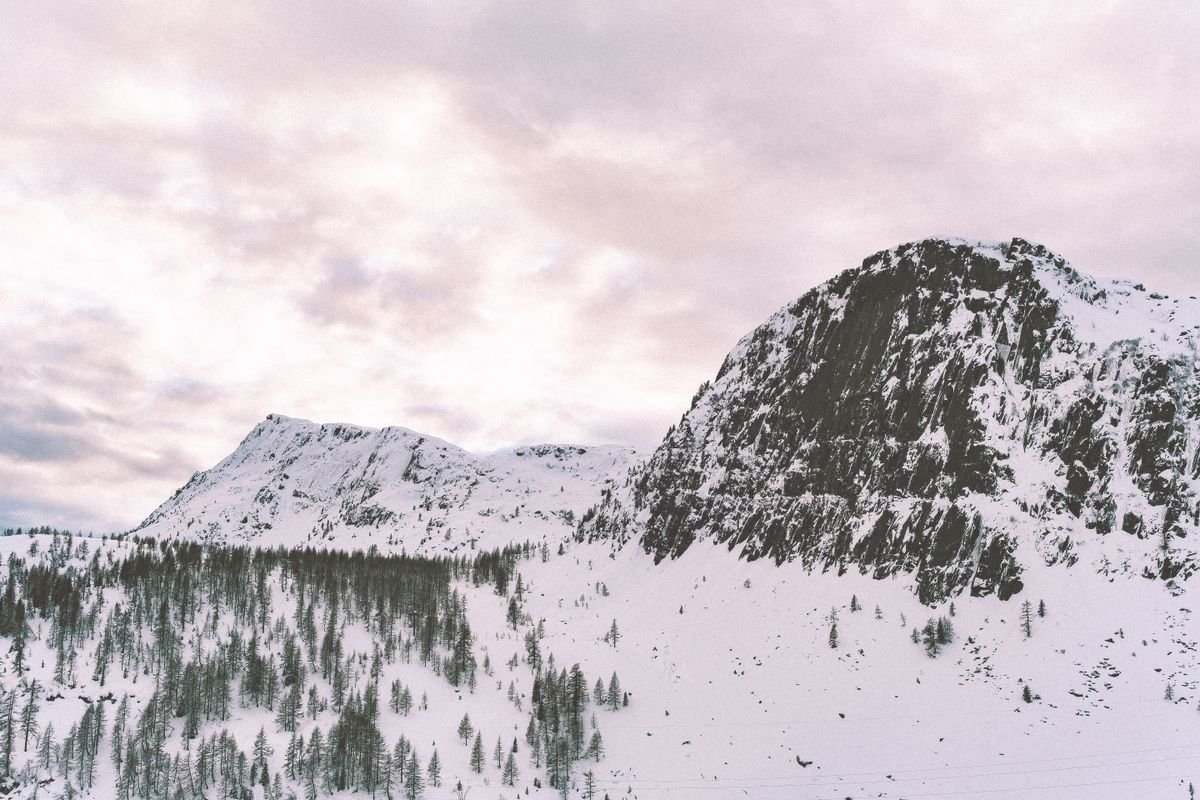
Short answer: rarely, and almost never in the places you’re going. If you’re picturing a white Christmas on the coast, that’s not the Irish winter. The Atlantic keeps the whole island mild, and snow that actually settles at sea level is the exception, not the norm.
What you get instead is sleet and the odd morning frost. Most winters the lowlands see a few flurries that melt before lunch, and that’s it. Dublin, Galway, Cork, and the coast roads can go a whole season without any real snow on the ground.
The hills are a different story. Get up into the Wicklow Mountains, the Mournes, or the MacGillycuddy’s Reeks in Kerry and you’ll find proper snow on the tops through January and February. It can sit there for weeks while the towns below stay green and wet.
Every so often the whole country gets hit. The “Beast from the East” in early 2018 buried Ireland for the best part of a week and shut roads, schools, and airports. That kind of event happens maybe once a decade, so don’t plan a trip around it.
So if you’re coming for snow, Ireland is the wrong call. Come for the wet, windy, green winter it actually has, and treat any snow you do see as a bonus rather than the plan.
Best Time to Visit Ireland in Winter
December is the obvious draw. Late November dodges the worst of the crowds. January is the cheapest and quietest. February gives you the most daylight. The right month comes down to whether you’re here for the festive stuff, the lowest prices, or the most usable light.
December is the obvious draw, and it earns it. The Christmas markets are running, the cities are lit up, and the pubs are at their warmest. The catch is that it’s also the busiest and priciest stretch of winter, and the daylight is at its shortest, around 8am to 4:30pm.
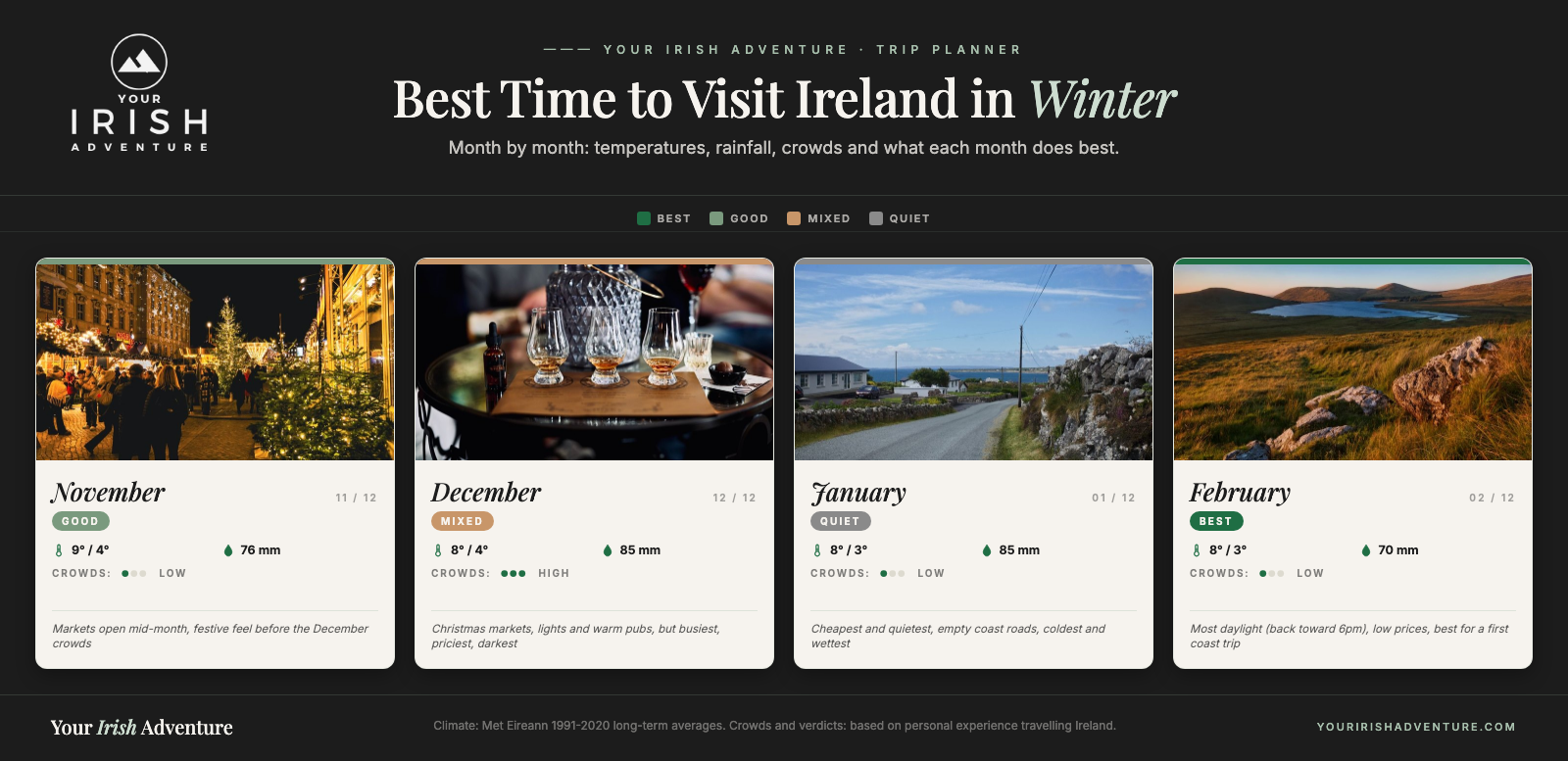
Late November is the smart middle ground. The Galway market opens mid-month, the festive feel is starting, and you get it all before the December prices and crowds land. If you want Christmas without the peak, this is when I’d come.
January is the quietest and cheapest month, full stop. Flights and hotels drop hard after the New Year, the famous spots are empty, and you’ll have coast roads to yourself. The trade is that it’s the coldest, wettest stretch and some smaller places are shut for the off-season.
February is the one I’d point a first-timer to if they don’t care about Christmas. The light is stretching back toward 6pm by late in the month, prices are still low, and the days are long enough for a proper coast drive without racing the dark.
So pick December for the festive run, late November to dodge the worst of the crowds, January for the cheapest and quietest trip, and February for the most daylight. There’s no wrong month, just different trade-offs.
More Ireland Itineraries and Road Trips
- 10 Days in Ireland: The Ultimate Itinerary
- Wild Atlantic Way Itinerary – Ireland’s Most Epic Road Trip
- 9 Best Places On The Wild Atlantic Way Route
- The Definitive Guide To Driving in Ireland For Tourists
What to Pack for Ireland in Winter
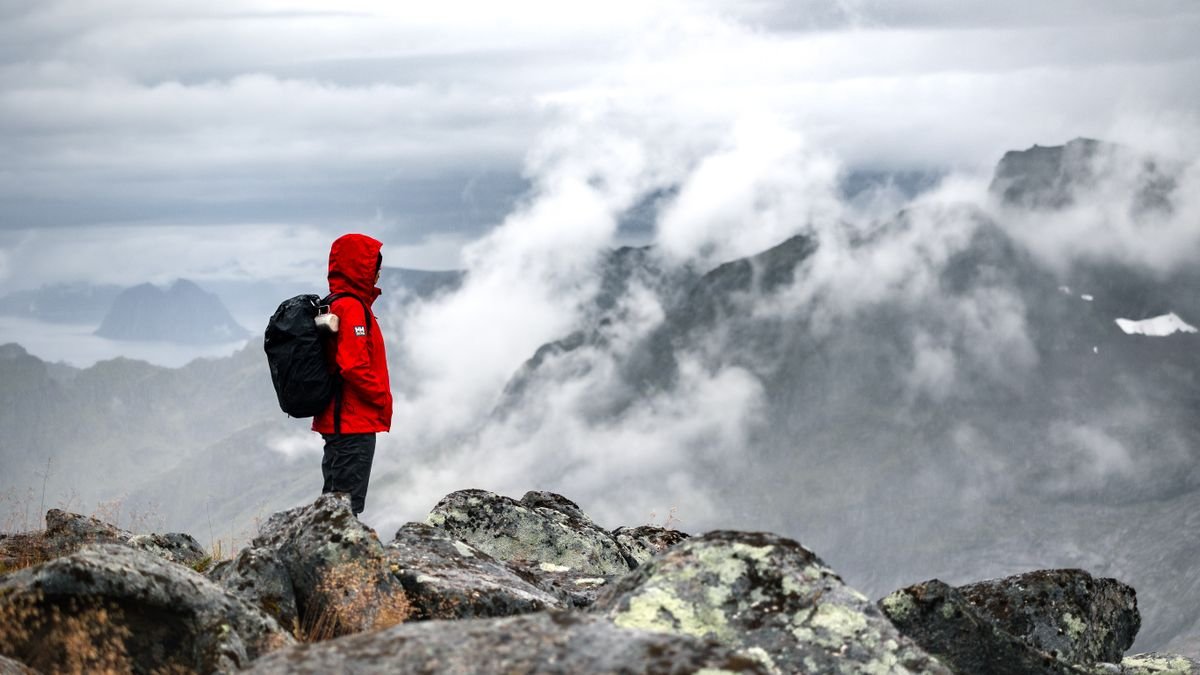
I covered the short version earlier, so here’s the longer one. Packing for an Irish winter is all about layers you can add and strip through the day. You’ll go from a windblown headland to a hot pub in the space of one walk, and you want to be able to peel off without overheating.
The rule that matters most is staying dry. Wet and 6°C is far more miserable than dry and 2°C, and almost everything below is about keeping the rain and wind off you.
The layering system
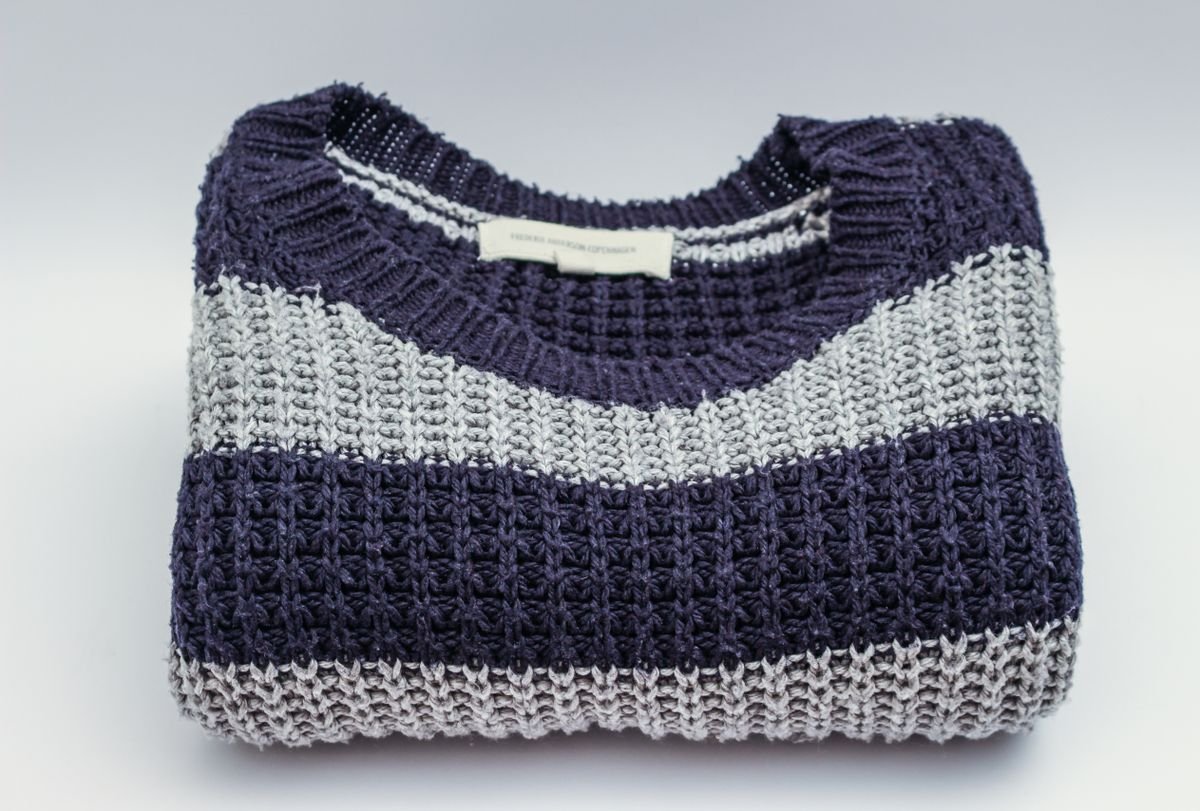
Think in three layers. You want a base layer next to your skin, a warm mid layer over that, and a waterproof shell on top. Get this right and you’ll be comfortable in anything Ireland throws at you.
- Merino or synthetic base layers, not cotton, because cotton holds water and chills you once it’s damp
- A fleece or a thin wool jumper for the middle, easy to pull off when you step indoors
- A packable down or synthetic jacket for the really cold days, worn under the shell
- Trousers that dry fast, not jeans, which stay soaked for hours, and
- A few good pairs of wool socks, because wet feet ruin a day faster than anything else
Footwear and accessories
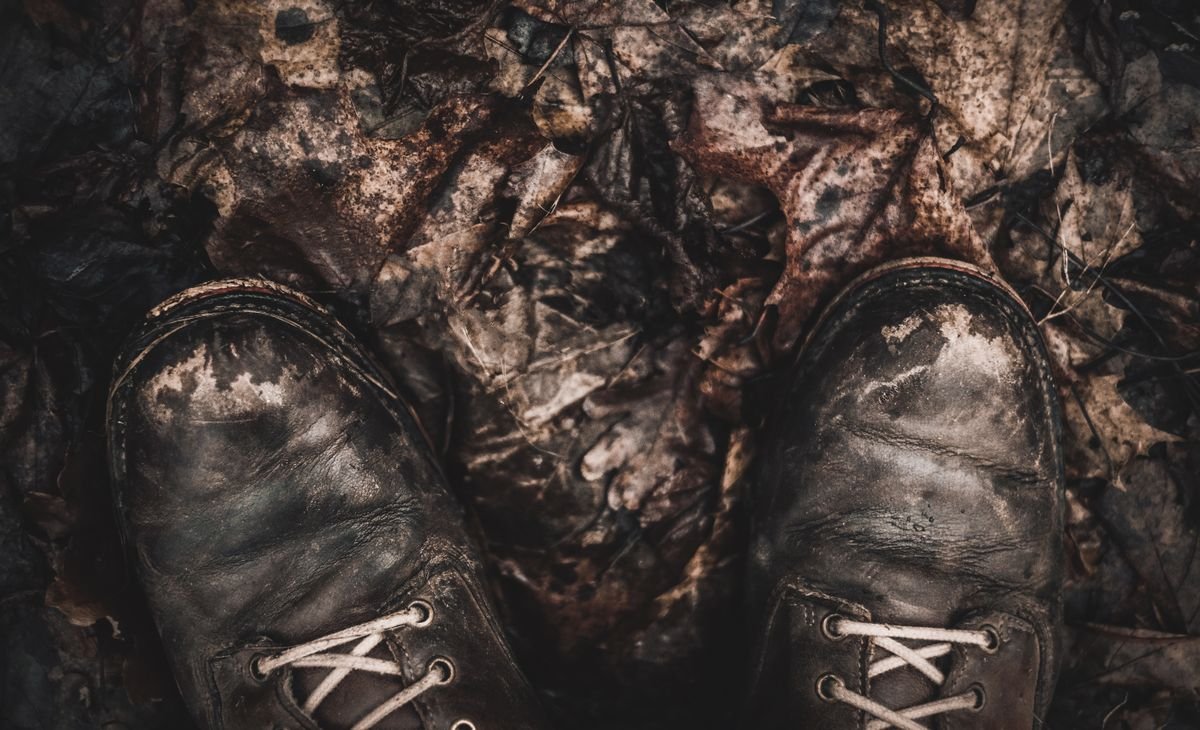
Waterproof boots with real grip are the single best thing you can pack. Every coast path and castle ground is mud and wet stone in winter, and trainers will have you cold and slipping within an hour.
For the small stuff, bring a warm hat that covers your ears, gloves you can still use your phone in, and a buff or scarf for the wind. A small daypack with a dry bag inside keeps your camera and a spare layer safe when the rain comes sideways.
What to leave at home

Leave the heavy single coat that does one job. A big padded parka feels right when you pack it, but it soaks through in real rain and leaves you with nothing to swap to. Layers beat it every time.
Skip the white trainers, anything dry-clean only, and the idea that you’ll dress up. Ireland in winter is jeans-and-a-jumper country, and the pubs you’ll want to be in don’t care what you’re wearing.
Where to Stay in Ireland in Winter
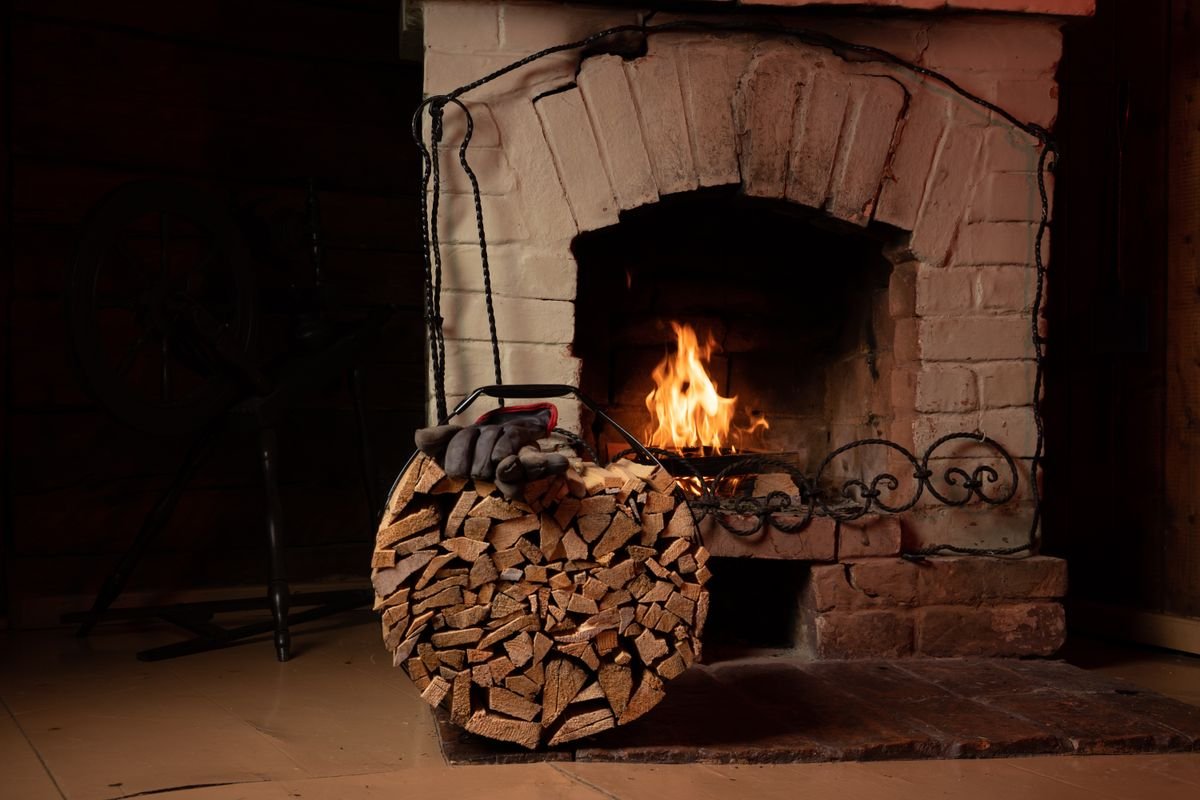
The thing that matters most in winter is heat and a good base. You want somewhere warm to come back to after a wet day on the coast, and somewhere central enough that the short daylight isn’t all spent driving.
Pick two or three bases rather than a new bed every night. Moving every day in winter means packing the van or car in the rain and losing your best light to the road. A few nights in one spot is the way to do it.
Good winter bases by region
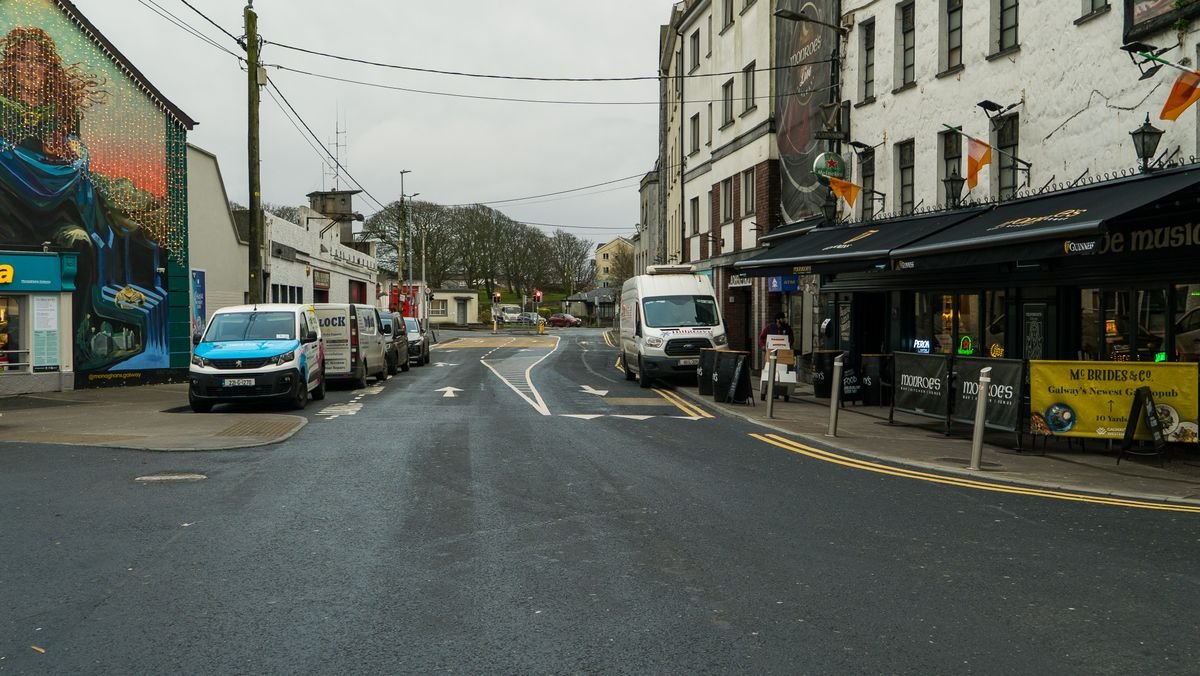
Galway is the one I’d point most first-timers to. It’s a great base for day trips out to Connemara, the Burren, and the Cliffs of Moher, the pubs run trad sessions all winter, and the city stays busy when the coast empties out.
Killarney works the same way for the southwest. It’s a good jumping-off point for the Ring of Kerry and Dingle, the National Park is right there for an all-weather walk, and plenty of hotels and B&Bs stay open through the off-season.
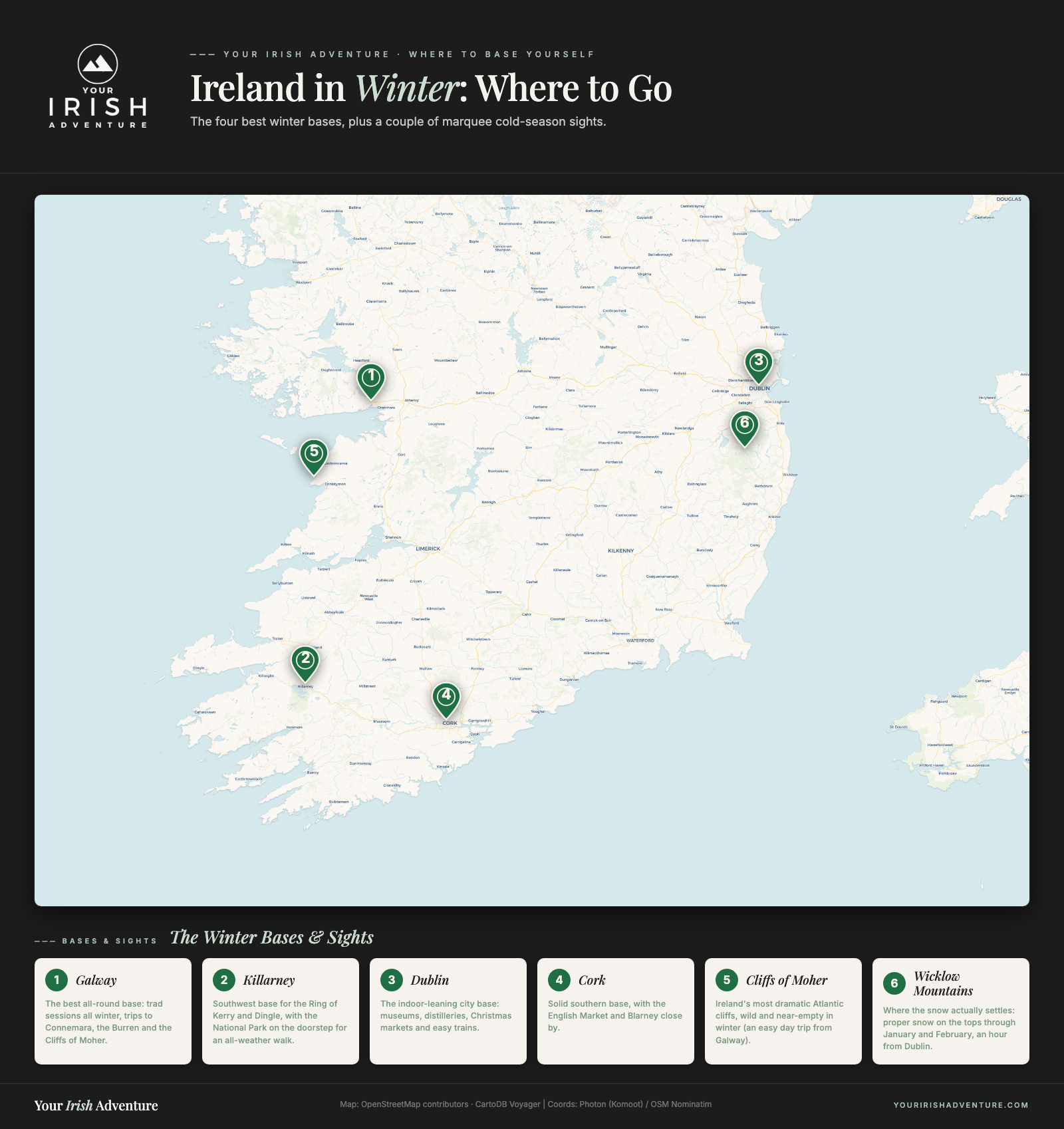
Dublin is the obvious city base if your trip leans indoors, with the museums, the distilleries, and easy trains. Cork makes a solid southern base too, with the English Market and Blarney close by.
A warm base in each of those towns
If you want the booking sorted, here’s one well-rated, warm place in three of those bases. All three score over 9 on Booking and stay open through the off-season, so they’re a safe bet for a wet winter week.
Seacrest B&B, Galway

Seacrest B&B is a family-run guesthouse on the coast road a few minutes out of the city, with a 9.5 from nearly a thousand guests and a proper cooked breakfast to send you out into the rain. It’s the warm-base-plus-breakfast formula that’s hard to beat in winter, and it’s an easy run into town or out to Connemara.
👉 View Seacrest B&B Availability and Pricing
Killarney Lodge, Killarney

Killarney Lodge is a guesthouse a four-minute walk from the town centre, and with a 9.6 off more than a thousand reviews it’s about as safe a pick as Killarney has. The rooms are warm and traditional, the National Park gate is on your doorstep for an all-weather walk, and you can leave the car parked and do the town on foot.
👉 View Killarney Lodge Availability and Pricing
Henrietta Suites City Centre, Dublin
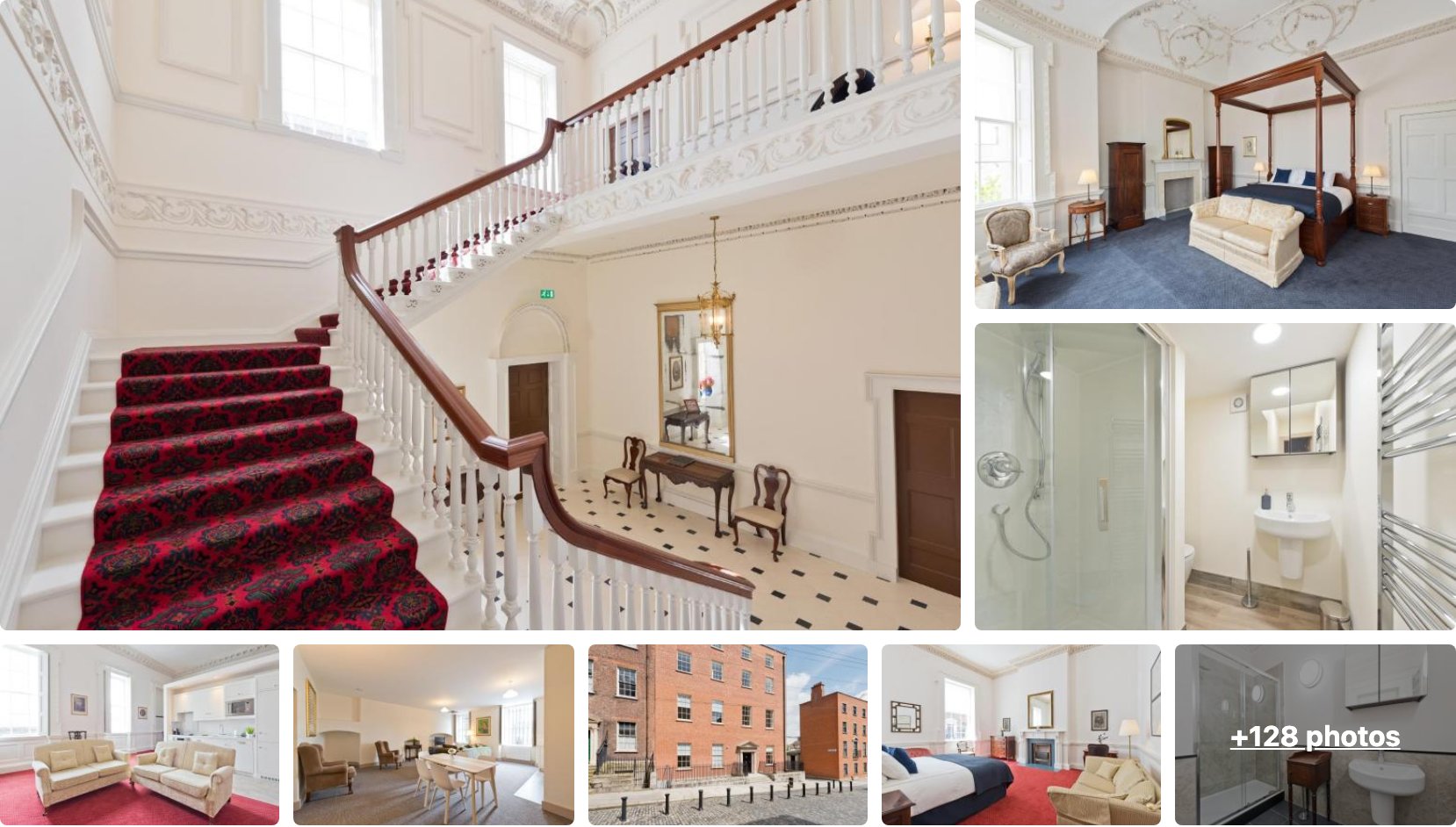
Henrietta Suites City Centre puts you in a restored Georgian house on Dublin’s oldest street, a short walk from the museums and the river, scoring 9.5 from over a thousand guests. The apartment-style suites mean you’ve got space to dry off and make your own coffee, which is exactly what you want when the weather pins you indoors for an afternoon.
👉 View Henrietta Suites City Centre Availability and Pricing
What kind of place to book

A B&B is hard to beat in winter. You get a proper breakfast, a host who’ll tell you which roads flooded overnight, and a real fire more often than not. Prices drop hard after the New Year, so you can get a good one cheap.
Older cottages and pub rooms have charm but check the heating before you book. Some rural places run on a turf fire and not much else, which is lovely in the evening and cold at 7am. Read recent reviews for the word “warm”.
If you’re renting a car you’ve got the run of self-catering cottages, which are cheap off-season and great for a few nights in one spot. We travelled by campervan, which most visitors won’t, so for winter I’d skip the van and book a warm room instead.
One booking note. December fills up around the Christmas markets and the cities, so lock those nights in early, and it’s worth a minute to check winter availability on Booking.com while the off-season rates are still up. January and February you can largely turn up and find a room, but ring ahead in the small towns where half the places shut for the off-season.
In short
- Winter runs November to February, coldest in January, with daytime temperatures of 4 to 8°C.
- December brings the Christmas markets in Galway, Belfast, Dublin and Waterford’s Winterval.
- Days are short: roughly 8am to 4:30pm of light in December, so plan outdoors midday.
- January and February are the cheapest, quietest months with the lowest hotel and flight prices.
- Pack a waterproof jacket, warm layers and sturdy boots; rain beats snow most days.
Frequently Asked Questions
A few things people ask before they book a winter trip. Here are the straight answers.
When does winter start and end in Ireland?
For travel purposes, treat winter as November through February. The Irish count December, January, and February as the official winter months, but November is already cold, dark, and off-season. The short days are the marker, with light closing in around 5pm by early November and not stretching back toward 6pm until late February.
Is winter a good time to visit Ireland?
Yes, with eyes open. If you want empty coast roads, cheap flights and hotels, and trad sessions you can actually get near, winter is one of the best times to come and your money goes a lot further. If you are set on long days, packed outdoor itineraries, or any chance of warm weather, come in late spring or summer instead.
What is the weather like in Ireland in winter?
Wet, windy, grey, and mild. Daytime temperatures sit around 4 to 8°C from December through February, frost is common inland in the mornings, and the coast stays a touch warmer because the Atlantic keeps it from dropping far below freezing. The wind and rain are the real story, not the cold, and snow is rare outside the hills.
Planning Your Trip to Ireland
- Ireland On A Budget – How To Save Money
- Wild Atlantic Way Hotels With A Touch Of Luxury
- 30 Best Things To Do in Ireland
Final Thoughts on Winter in Ireland
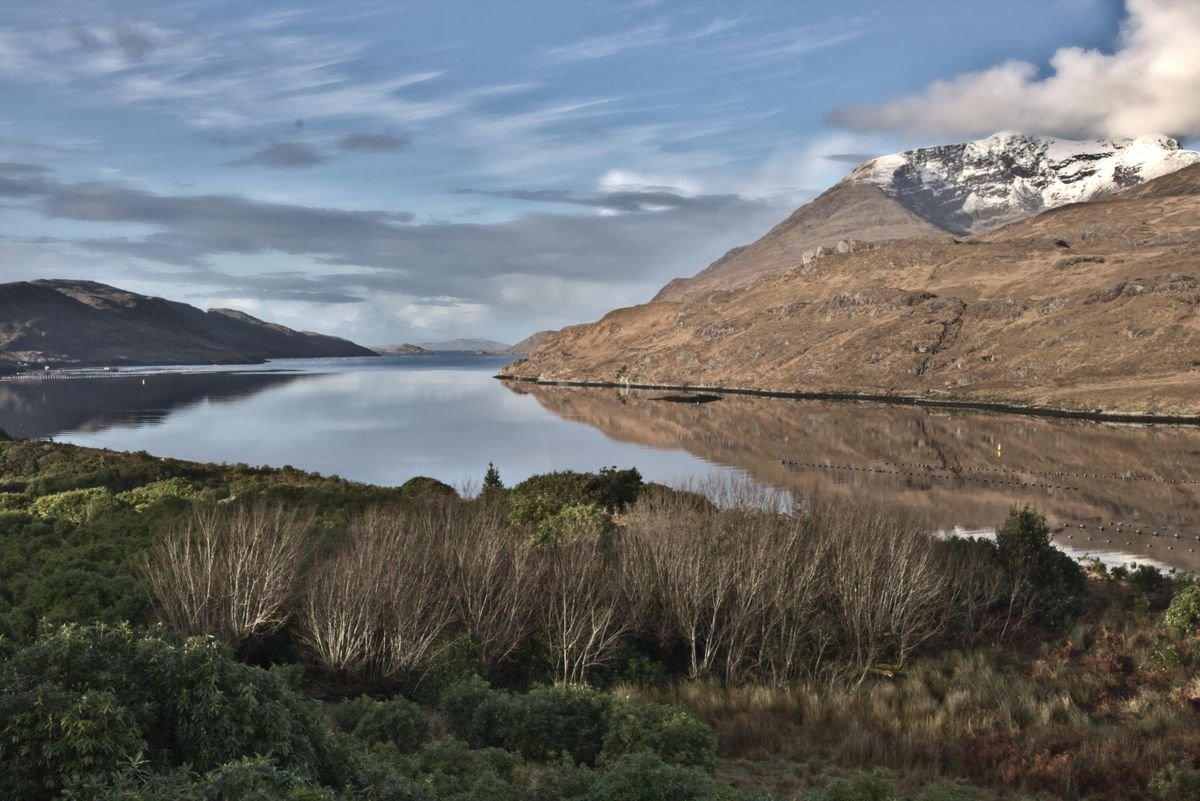
Winter in Ireland is a straight trade. You give up daylight and dry feet, and you get the country with most of the crowds stripped out of it.
If you need long days, packed itineraries, and any shot at sun on your back, come in late spring or summer. This isn’t your season and I’d be lying to tell you otherwise.
But if you want the coast roads to yourself, cheap flights and rooms, and trad music in a warm pub while a gale rattles the windows, this is the time to come. The famous spots are calm and your money stretches a lot further.
Plan around the short light, pack for rain rather than cold, book two or three warm bases instead of a new bed every night, and keep a spare day for when a storm rearranges your plans. Do that and the wet, windy version of Ireland is well worth the trip.
Like it? Pin it!
Save this guide for later