
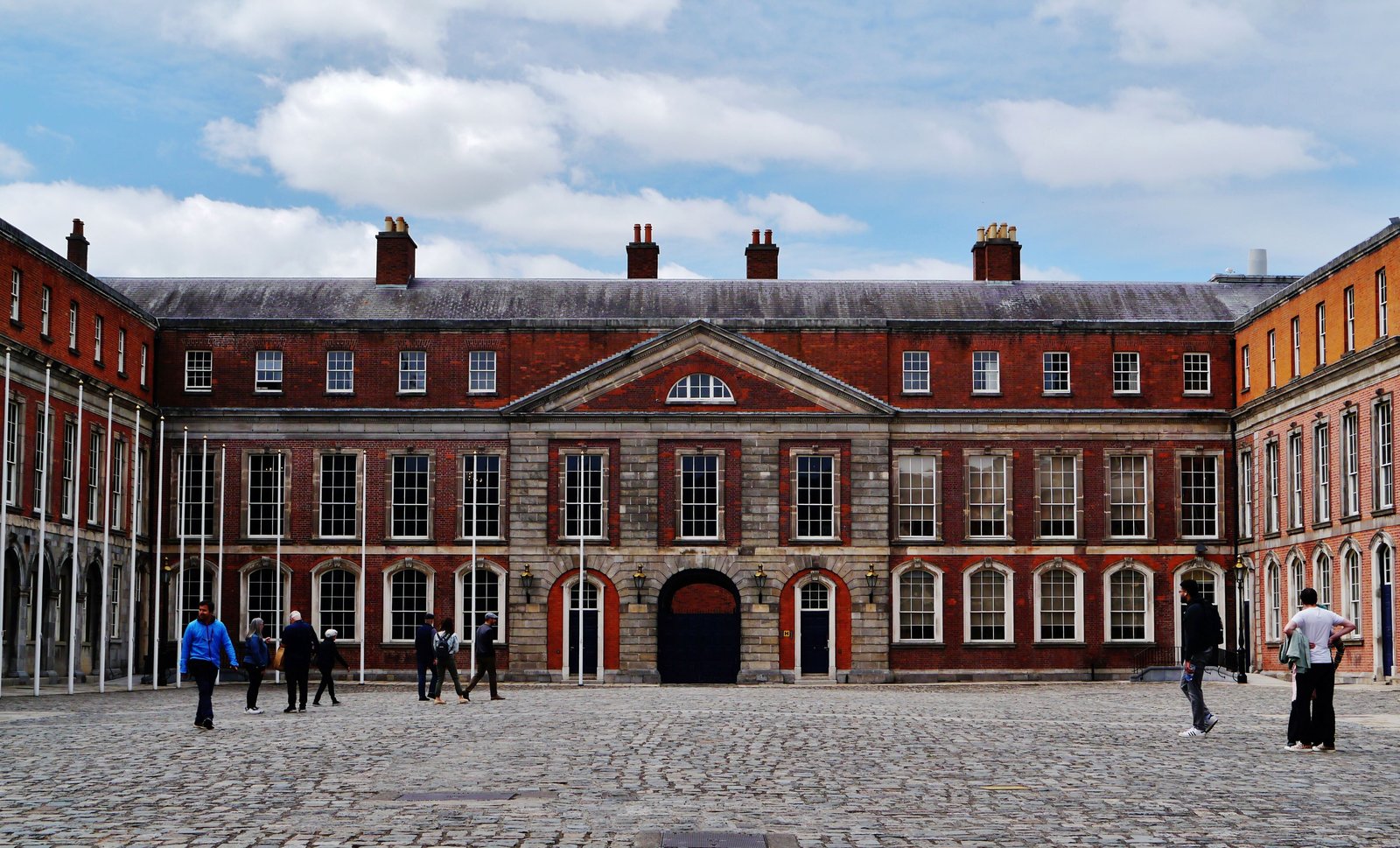
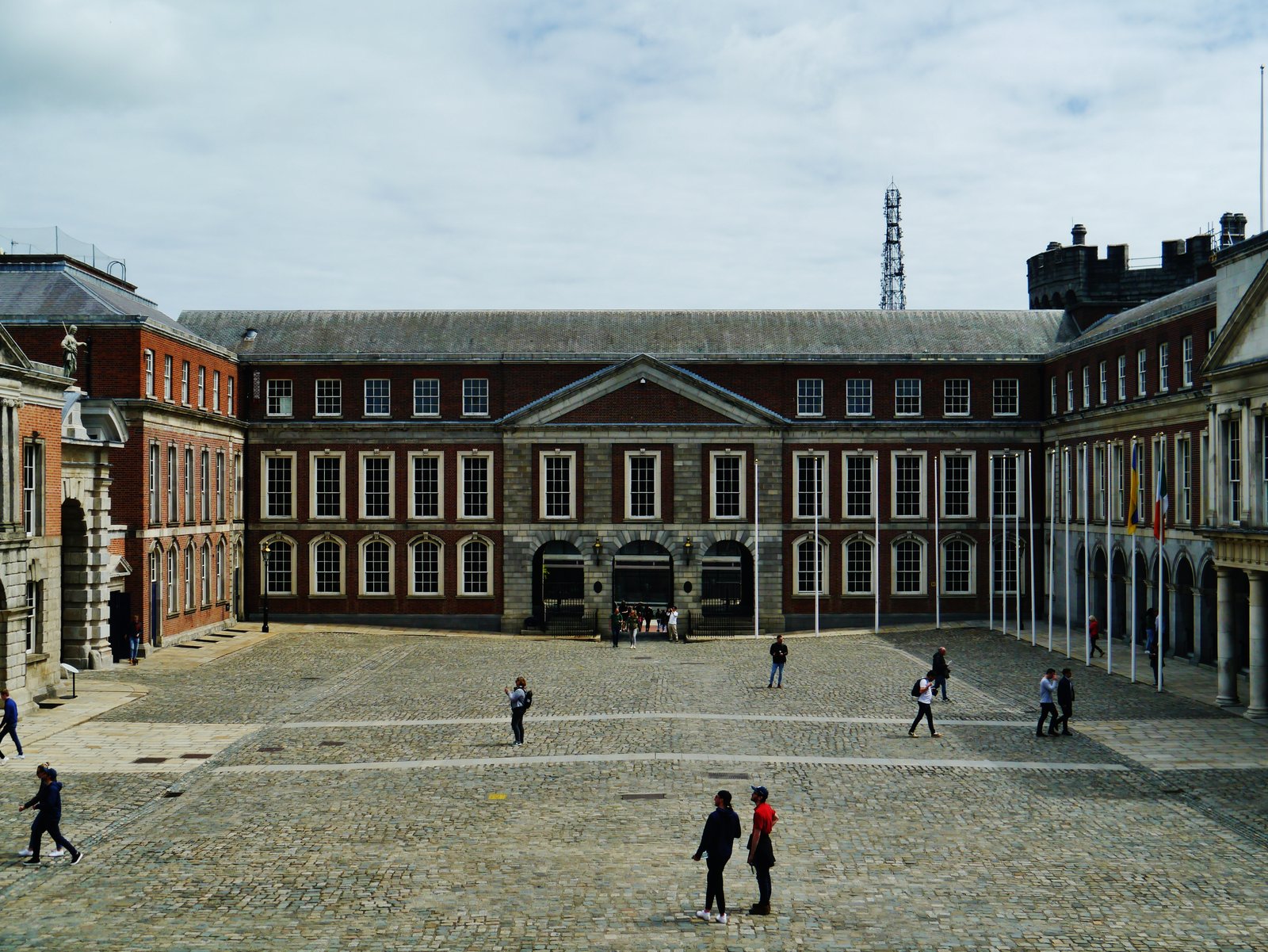
Dublin Castle sits right in the middle of the city, just off Dame Street, and it’s one of the easiest big sights to fit into a day here. Don’t expect a fairytale fortress though. Most of what you’ll see is an 18th-century complex built around a courtyard, with one squat medieval tower left from the original.
It was the seat of British power in Ireland for about 700 years, which is really why it matters. Inside you get the State Apartments, the medieval undercroft down below, and the Chapel Royal, and the Chester Beatty library sits right next door in the gardens for free.
On our last trip we based ourselves in Temple Bar, a few minutes’ walk from the castle gates, so it’s about as central as a Dublin sight gets. You can walk over from Trinity College or the Jameson Distillery without ever needing a bus.
Below I’ll run through what’s actually worth seeing, whether the guided tour beats going it alone, what tickets cost, the opening hours, how to get there, and where to stay nearby, plus an honest take on whether it’s worth your time at all.
More Dublin Guides
- Castles Near Dublin: 10 Worth Visiting in 2026
- 10 Best Castles in Dublin, Ireland
- Visiting Malahide Castle, Dublin: One Of Ireland’s Oldest Castles
- Hidden Gems in Dublin: 12 Spots Locals Love
Quick Answer:
Dublin Castle sits off Dame Street in central Dublin and is open daily, roughly 9:45am to 5:45pm. The courtyard and Dubh Linn Gardens are free; a ticket covers the State Apartments and undercroft. The guided tour adds the Chapel Royal and undercroft. Allow about an hour, and book the guided slot ahead on busy days.
What to See at Dublin Castle
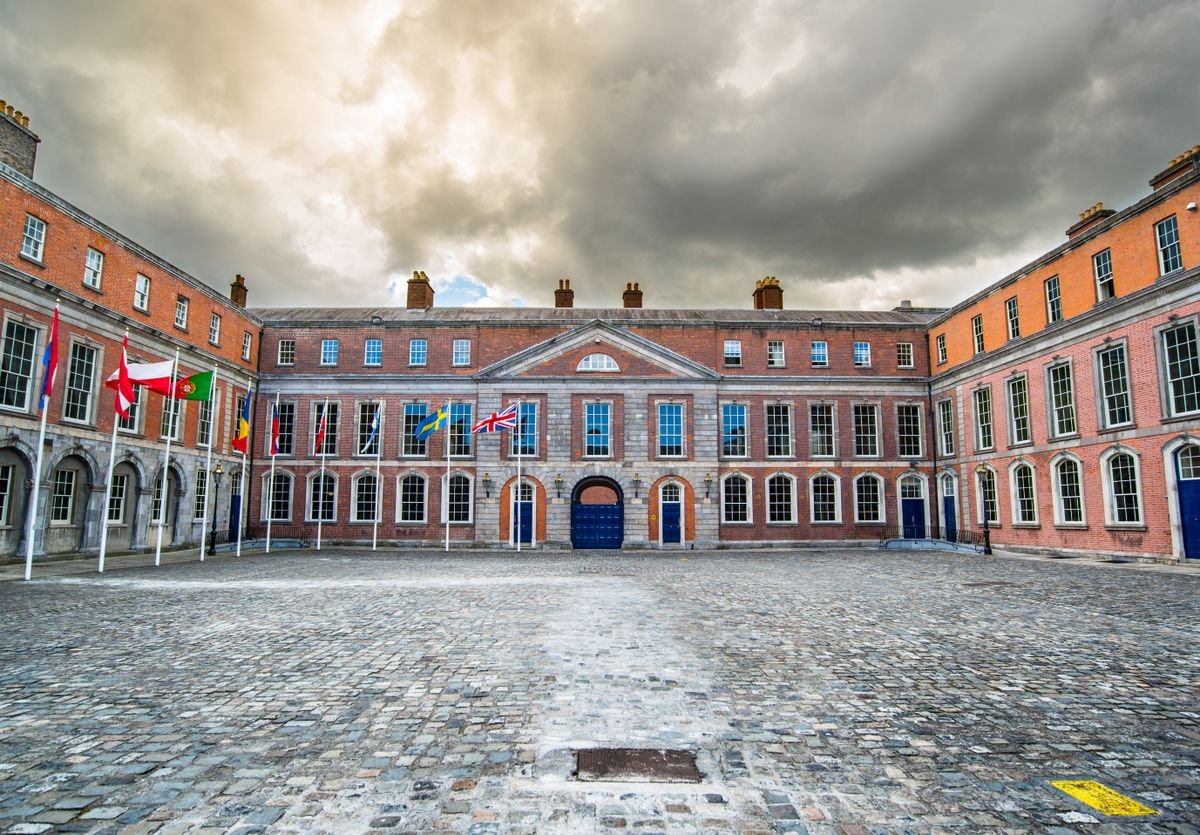
The courtyard is free to walk into, so you can wander the complex and get your bearings before deciding whether to pay for the interior. On our last trip we walked through it on foot but didn’t book the guided tour, and I’d go inside next time.
There are really four things worth your time here, and they split into what’s above ground and what’s below it. Here’s what each one actually is.
The State Apartments
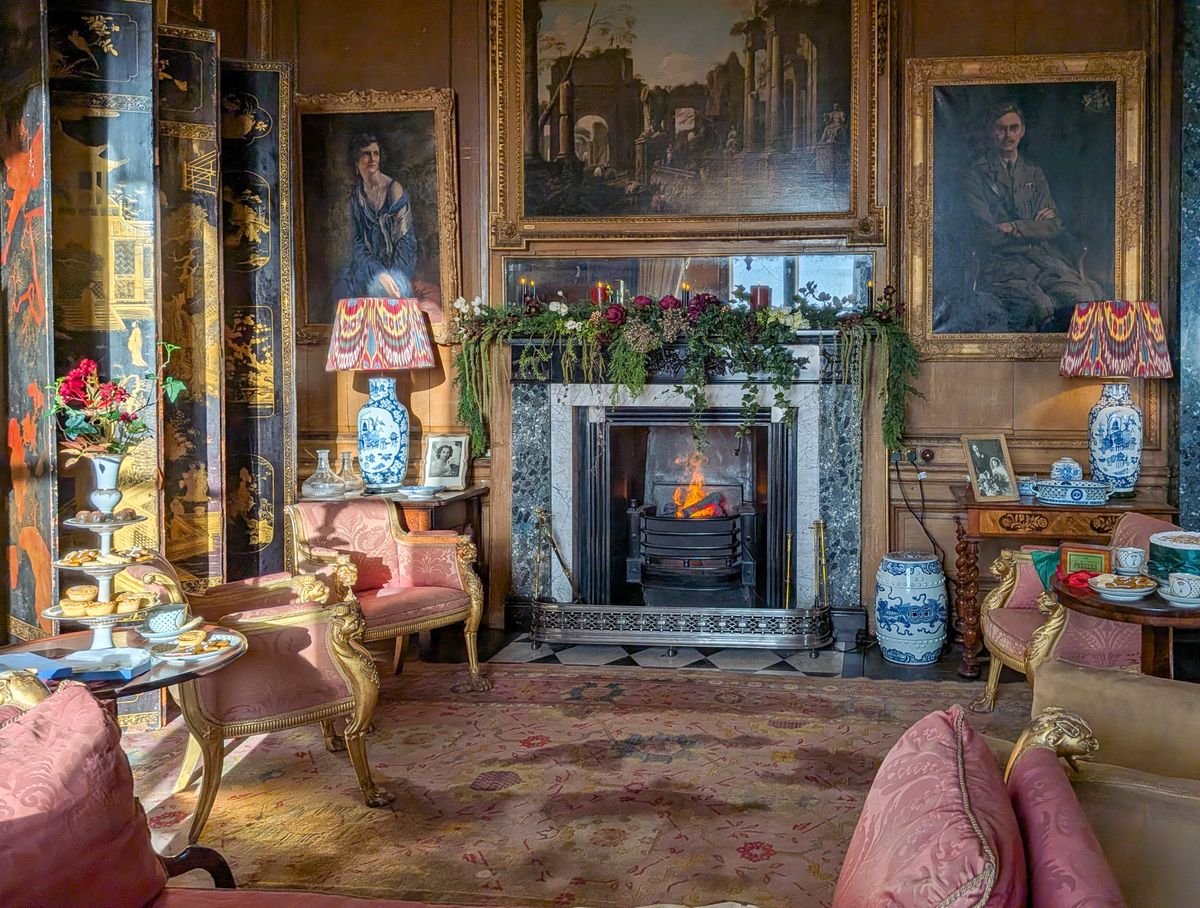
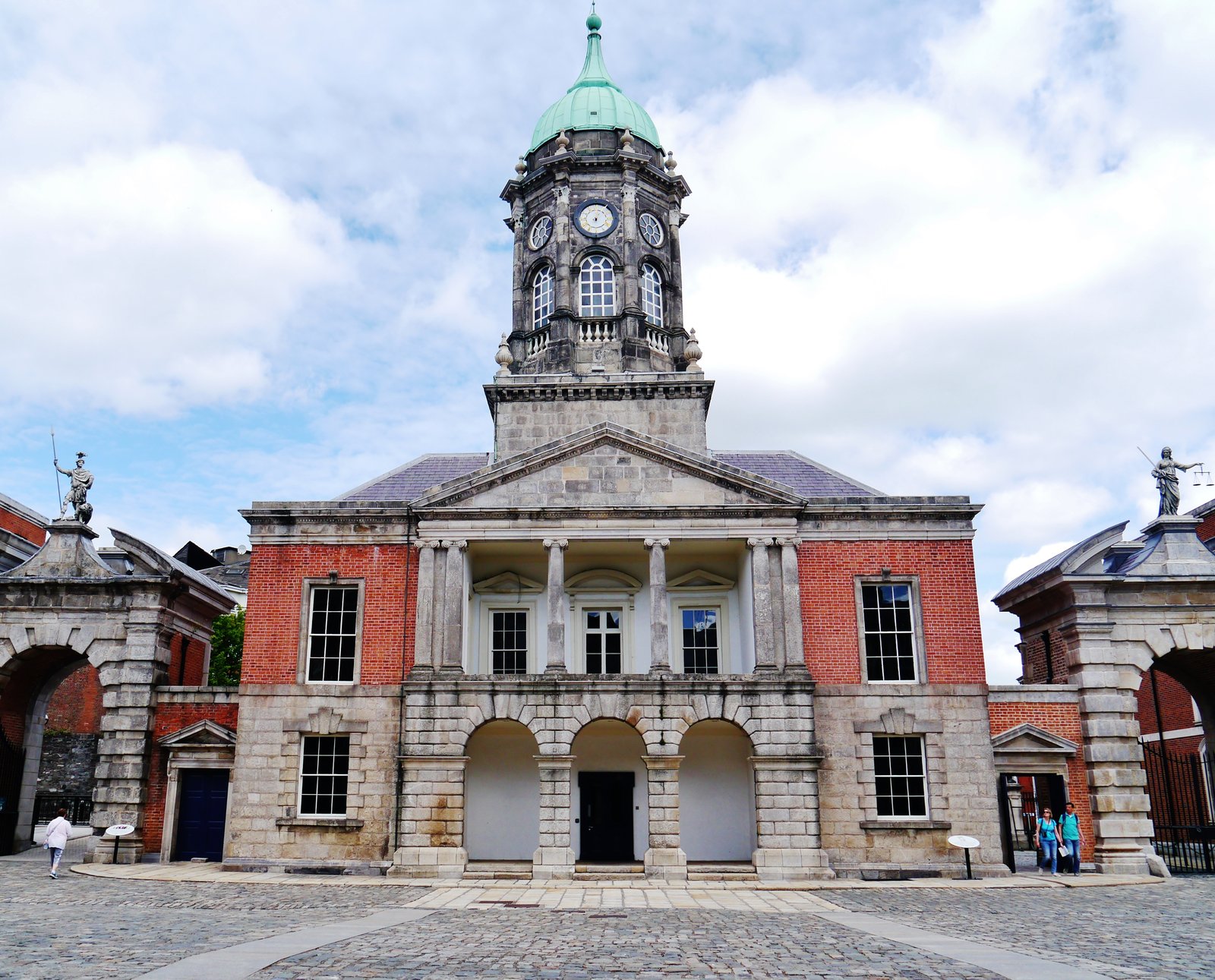
This is the main event and the reason to buy a ticket. The State Apartments are the grand 18th-century rooms the British administration used, and they’re still used today for state events and the inauguration of the Irish president.
The big one is St Patrick’s Hall, with its painted ceiling and rows of banners. You also get the Throne Room and a run of drawing rooms, all done up in the heavy, formal style you’d expect from the seat of power in Ireland.
James Connolly was held here after the 1916 Rising, wounded, before being taken to Kilmainham. That bit of history does more for the rooms than any of the chandeliers.
👉 Read our full guide to Kilmainham Gaol.
The Chapel Royal and Record Tower
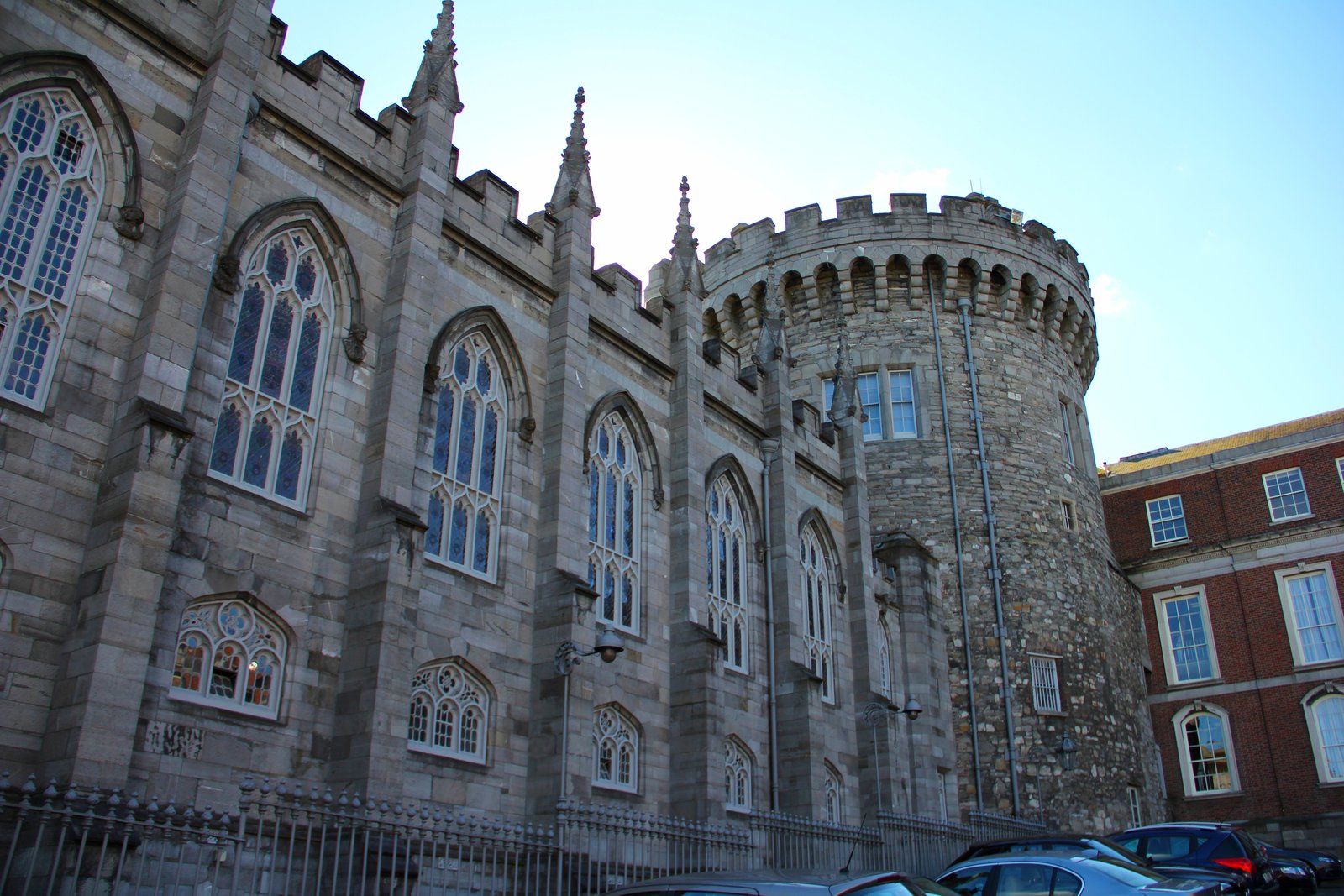
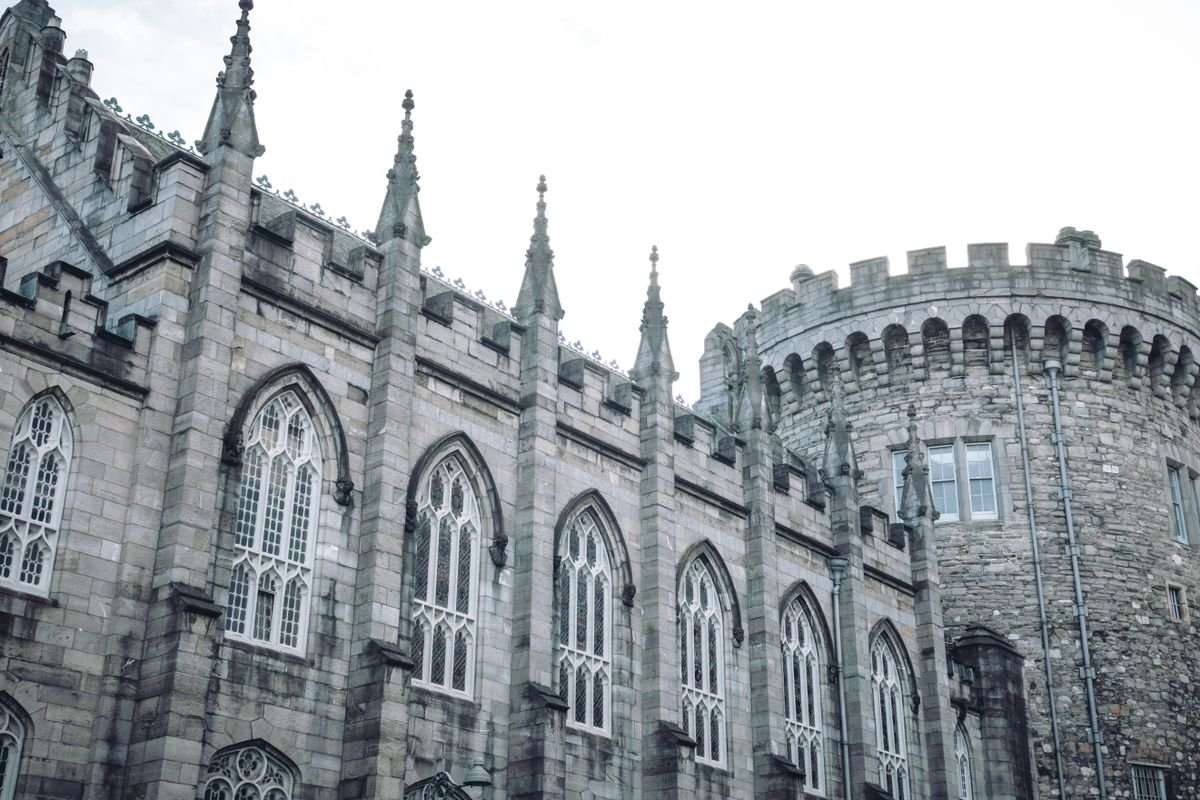
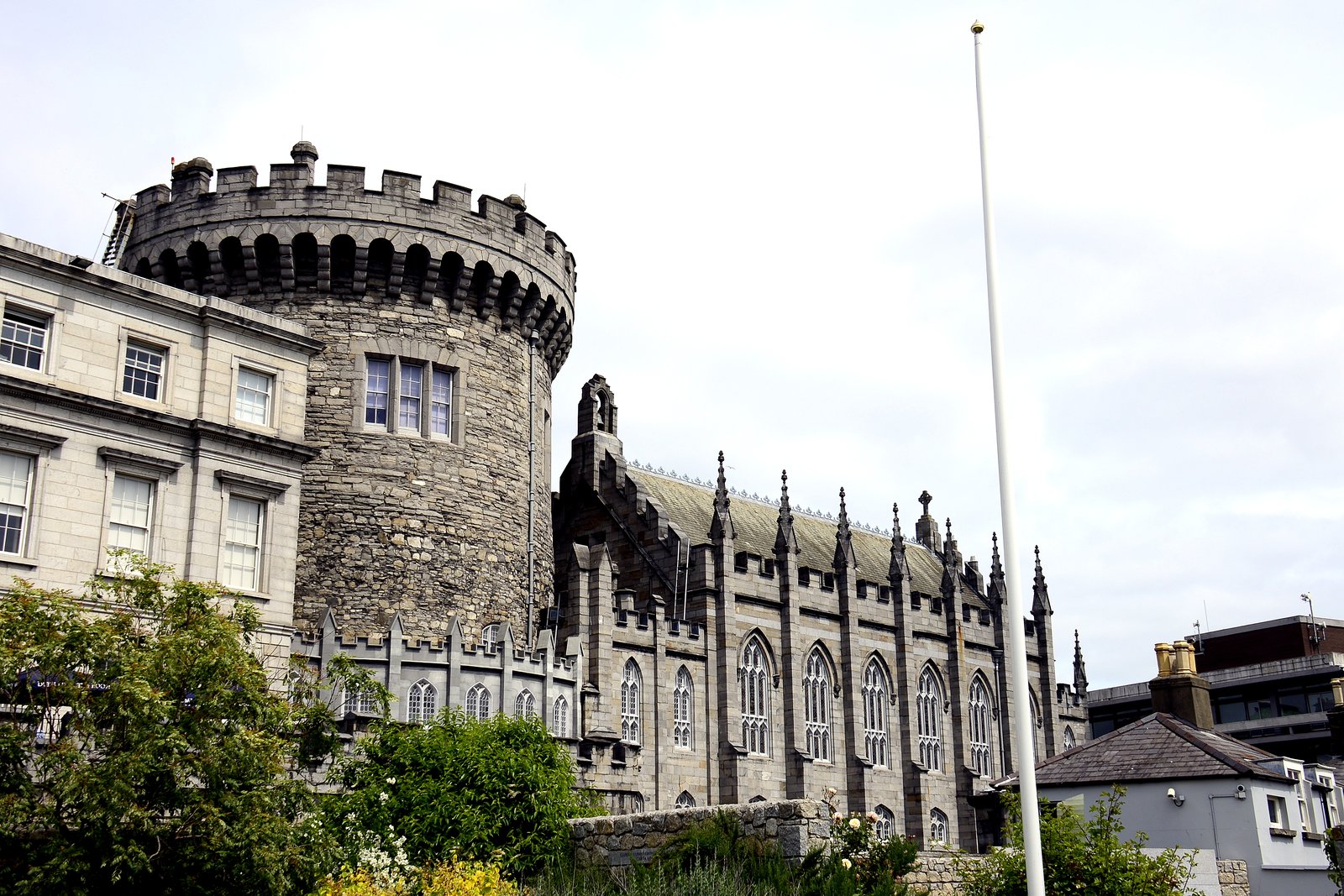
The Chapel Royal sits in the corner of the lower courtyard, a neo-Gothic church from the early 1800s. Look up at the outside and you’ll spot dozens of carved stone heads of Irish and British figures ringing the walls.
Right beside it is the Record Tower, the squat, round medieval tower I mentioned earlier. It’s the one substantial piece of the original 13th-century castle still standing, and it’s a useful reminder of how much older this site is than the polished courtyard suggests.
The Medieval Undercroft and Viking Excavations
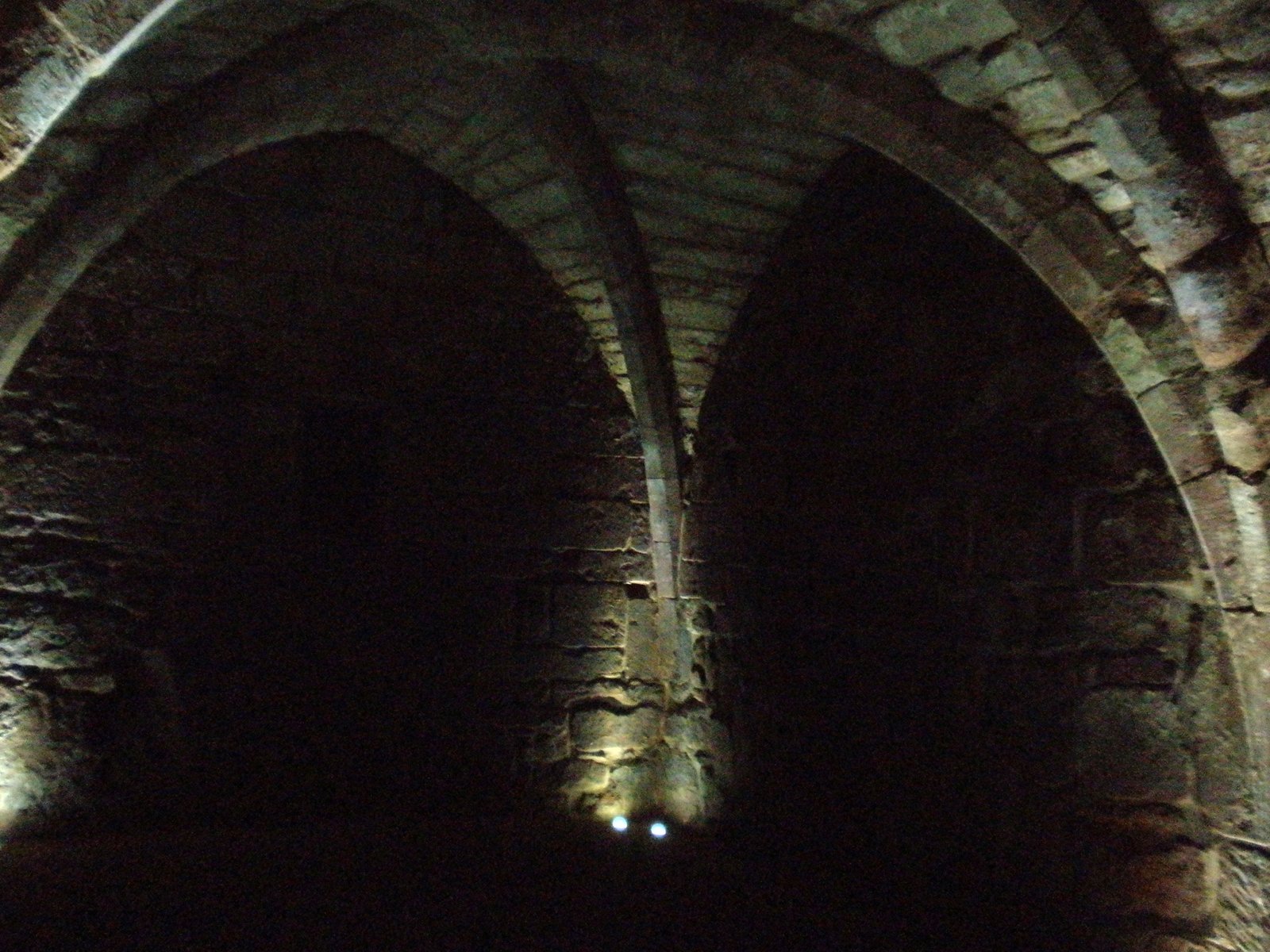
This is the part I’d least want to skip. Down below the State Apartments there’s an excavated undercroft where you can see the base of the old Norman defensive tower, a stretch of the medieval city wall, and the steps that went down to the moat.
You also get the Poddle, the river that once fed the castle’s defences and still runs underground beneath the city. It’s an old, damp, stone corner that survives directly under all the 18th-century finery upstairs, and it puts the whole place in order.
The Dubh Linn Gardens
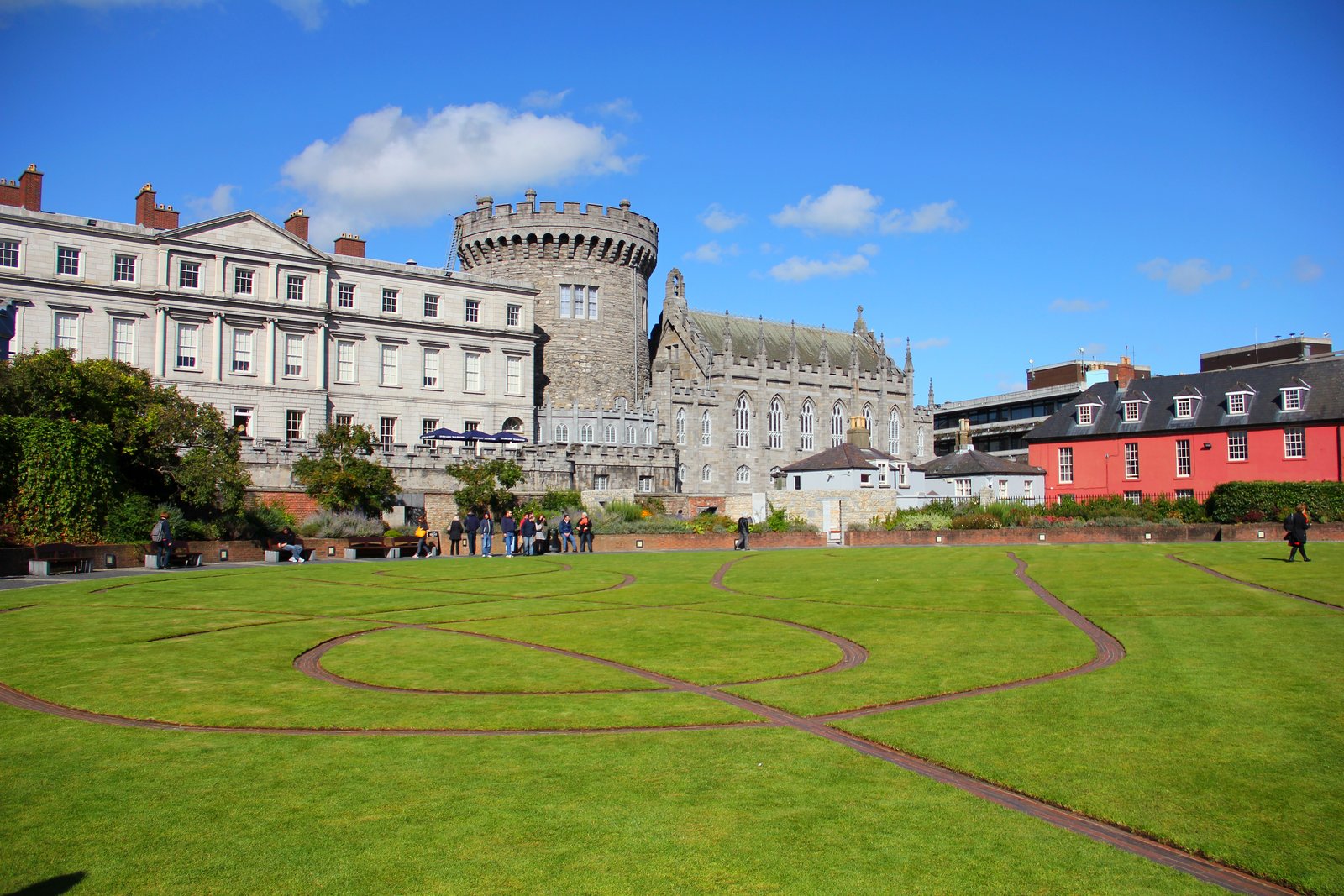
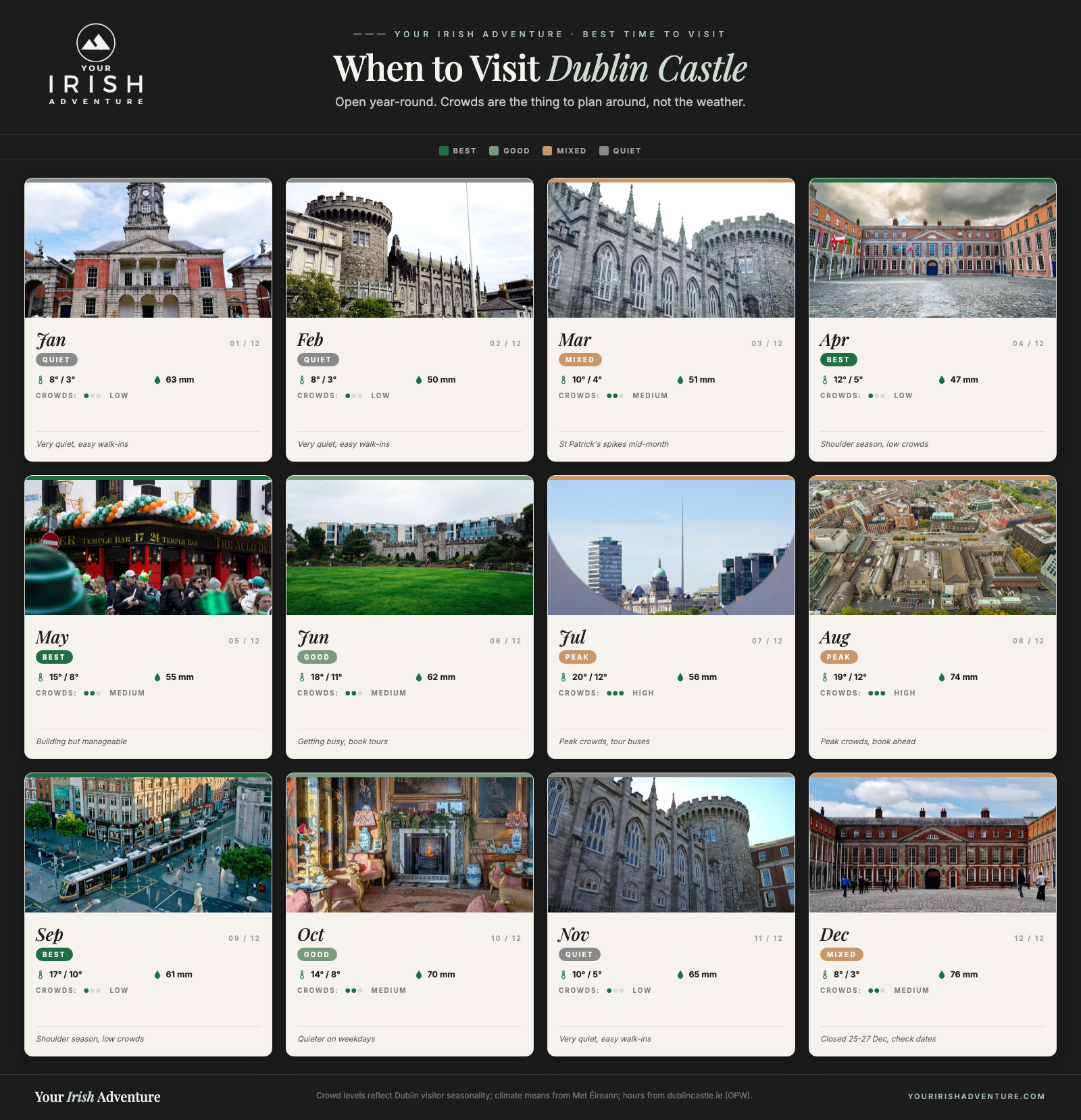
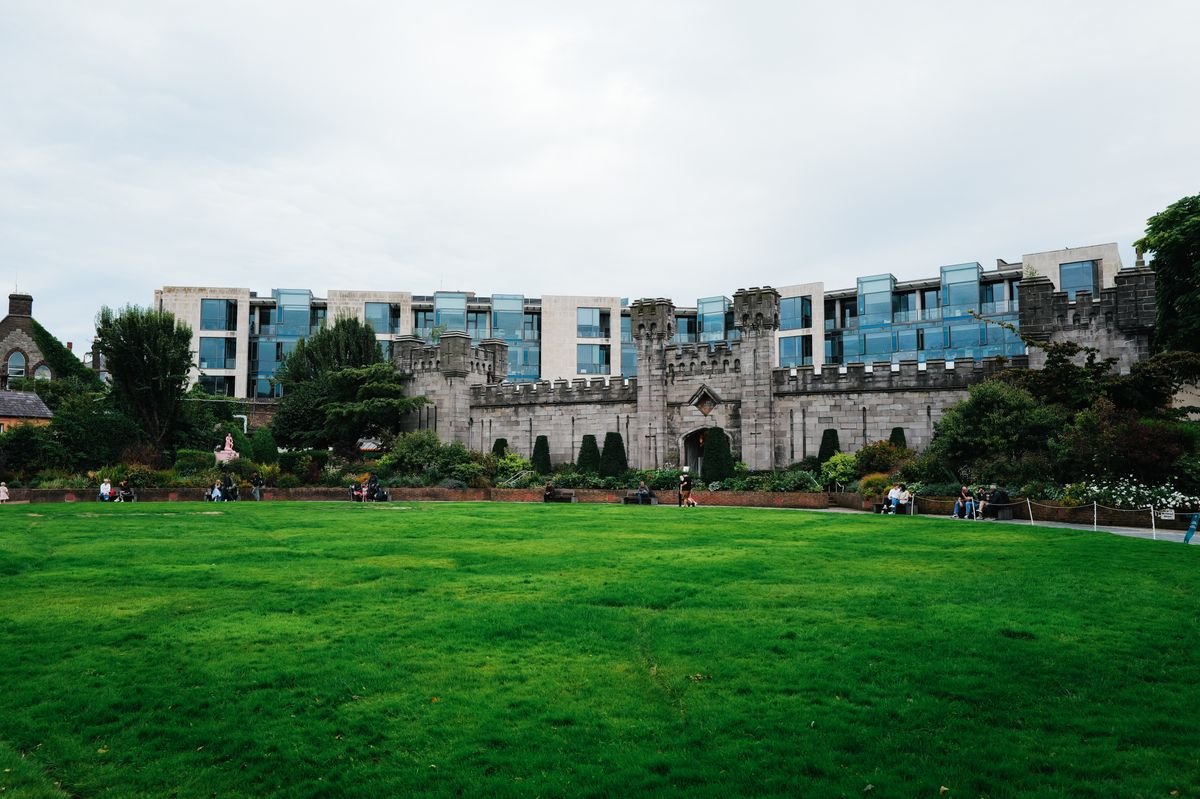
Behind the main buildings there’s a circular lawn with a snake-pattern path cut into it. This is the Dubh Linn Garden, and it sits on the site of the black pool, the “dubh linn,” that gave Dublin its name in the first place.
It’s a good spot to sit for ten minutes away from Dame Street, with far fewer people than the courtyard, and you can loop it in with the Chester Beatty next door. If the weather’s decent, it’s an easy add-on before you head back into the city.
Guided Tours vs Self-Guided Visits
Here’s the thing that actually decides your ticket. There are two ways in, and they don’t get you the same castle. Pick wrong and you’ll miss the best part.
The self-guided ticket is the cheaper one and gets you into the State Apartments on your own, at your own pace. You walk St Patrick’s Hall, the Throne Room, and the drawing rooms, read the panels, and that’s your visit.
The guided tour costs a few euro more and adds the two things you can’t reach otherwise: the medieval undercroft down below and the Chapel Royal. That undercroft is the one I’d least want to miss, so for me the tour wins easily.
So the math is simple. If you care at all about the Viking and Norman layer of this place, and you should, the guided tour is the only ticket that gets you there. The extra cost is worth it.
The tours run at set times through the day and a guide walks you through in about an hour, with the history you’d otherwise be guessing at from the wall text. They can sell out on busy days, so book ahead online rather than turning up and hoping.
The only case for going self-guided is if you’re tight on time or on a budget and just want to see the grand rooms. It’s still a decent visit. But you’ll walk out having skipped the oldest and most interesting corner of the site, and that’s a real shame.
Tickets and Admission Prices
Dublin Castle is run by the OPW, and admission is cheap by the standards of Dublin’s paid sights. There are two tickets, and which one you buy comes down to the guided-versus-self-guided call from the last section.
Rough prices at the gate look like this, though it’s worth checking the official site before you go, because they do move:
- Self-guided adult: around €8, State Apartments only
- Guided tour adult: around €12, adds the undercroft and Chapel Royal
- Students and seniors: a couple of euro less on either ticket
- Kids under 12: free
So even the full guided ticket runs about the price of a couple of pints, and it gets you the medieval layer you can’t reach any other way. For what you’re paying, it’s good value.

Book on the official dublincastle.ie site rather than through a third-party reseller, which will only add a markup. The guided slots run at set times and can sell out on busy days, so lock one in ahead if your visit is fixed.
Plenty of the site is free either way. You can walk the courtyard, sit in the Dubh Linn Gardens, and go through the Chester Beatty next door without paying a cent, so even on a tight budget you get a good chunk of the place for nothing.
Opening Hours
Dublin Castle is open every day, which makes it easy to slot in whenever you’re passing through the city center. The complex generally runs from 9:45am to 5:45pm, with the last admission at 5:15pm.
Those hours cover weekends too, so a Saturday or Sunday visit is no problem. The one thing to plan around is the guided tour, which runs at set times through the day rather than on a constant loop.
It closes on a handful of dates: Christmas Day through December 27, New Year’s Day, and Good Friday. Check dublincastle.ie before you go, because those dates and the daily hours can shift.
The bigger catch is that this is still a working government building. The State Apartments host state events and can close to visitors at short notice, sometimes on the day. If your trip is fixed, it’s worth a quick check that the castle is open before you walk over.
To dodge the tour buses, aim for a weekday morning right at opening or the last hour before close, and you’ll have far more room in St Patrick’s Hall. A weekday in shoulder season, spring or autumn, is quieter again than a summer weekend.
How to Get to Dublin Castle

The castle is on Dame Street, dead center in Dublin, so getting there is the easy part. If you’re staying anywhere around the old city you’ll almost certainly walk, and that’s the way I’d do it.
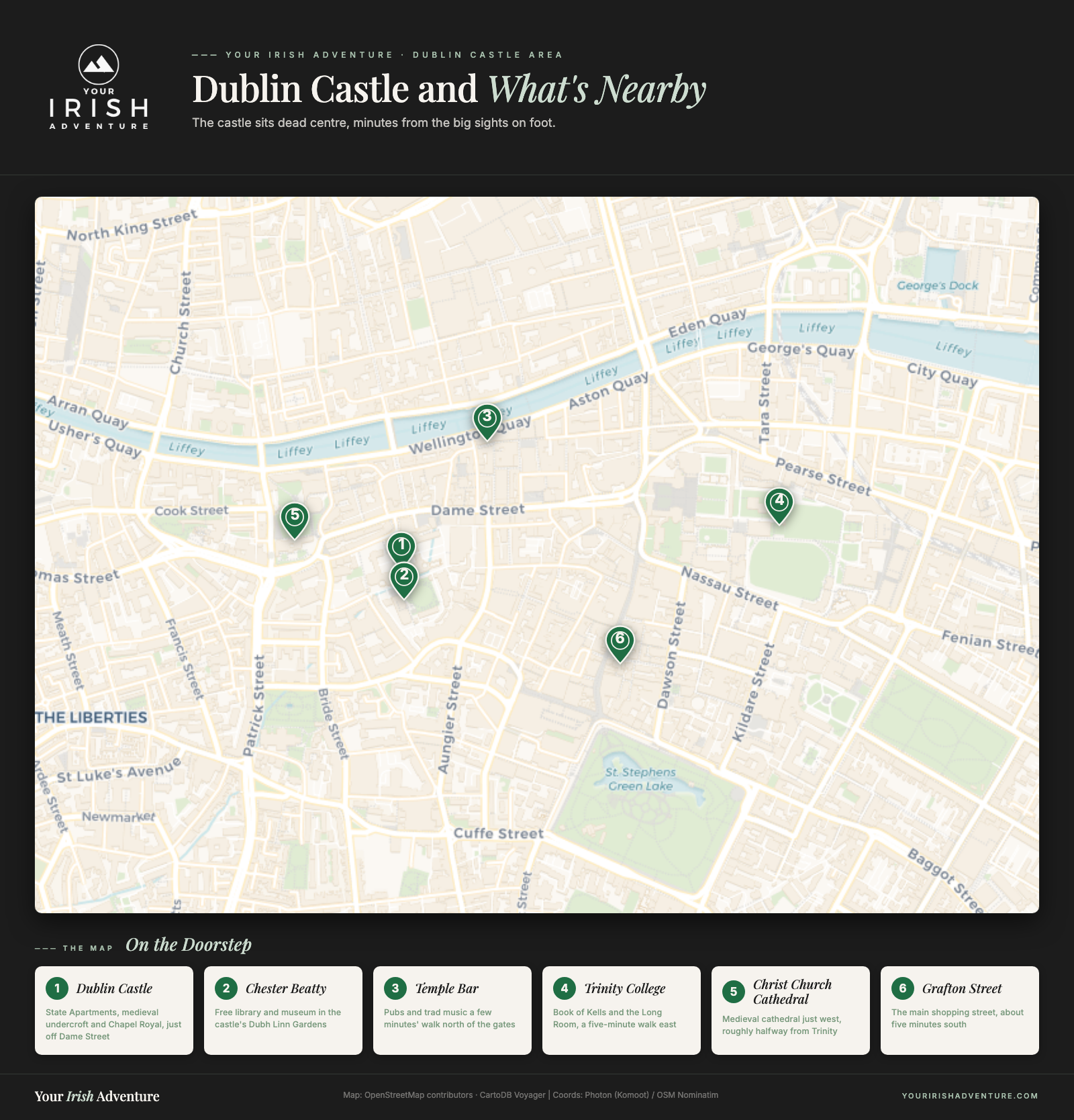
The main entrance is through the gates on Dame Street, roughly halfway between Trinity College and Christ Church Cathedral. From the top of Grafton Street it’s about a five-minute walk, and from the O’Connell Street side of the Liffey it’s ten.
Coming from the airport

We flew into Dublin on Ryanair and took the airport bus straight to the city center, then dropped our bags at Fitzsimons Hotel before heading out. The airport bus is the cheap, simple way in, and it drops you a short walk from the castle.
A taxi from the airport runs a lot more, around €25 to €30 depending on traffic, so unless you’ve got heavy luggage or a group, the bus wins on value.
By tram, bus, or car

The Luas tram is the handiest public transport for the castle. Both the Green and Red lines stop within a few minutes’ walk, so it’s an easy hop if you’re staying further out.
Don’t drive here if you can help it. There’s no visitor parking at the castle and the surrounding streets are a mess of one-ways and bus lanes. If you’re renting a car for the rest of your Ireland trip, leave it at the hotel or a parking garage and walk over. When you do need wheels for the coast, it’s worth a minute to compare car hire deals on Discover Cars before you land.
Accessibility and Facilities
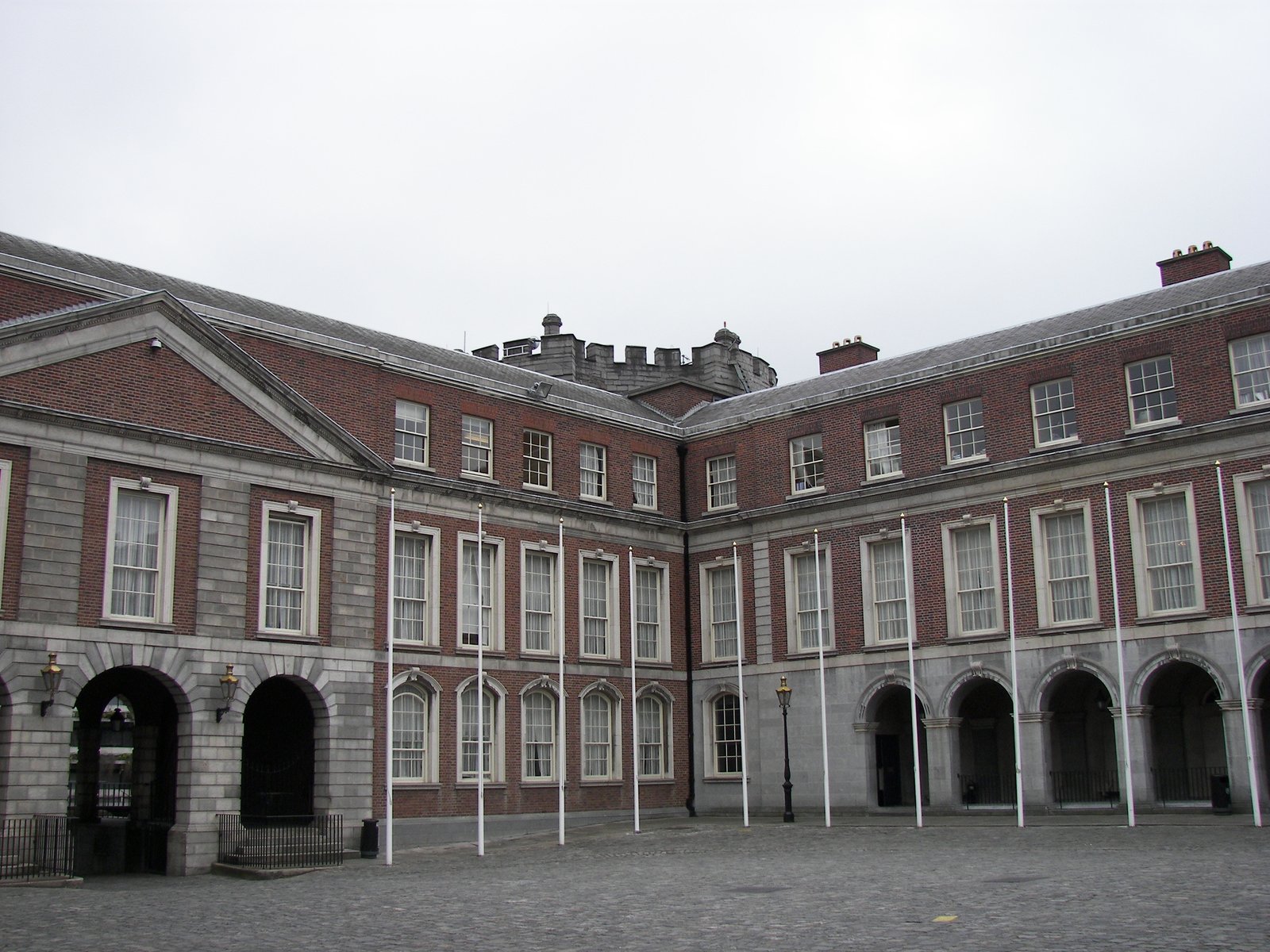
Dublin Castle is more accessible than most old buildings its age, but it’s a mixed bag depending on which part you’re heading for. The courtyard is flat but cobbled, so a wheelchair or a stroller will feel the bumps getting across it.
The State Apartments are the good news. There’s elevator access up to the main rooms, so the grand 18th-century floor is open to wheelchair users and anyone who can’t manage stairs.
The medieval undercroft is the sticking point. It’s reached by a flight of stone steps down below the apartments, with no elevator, so if steps are an issue that’s the one part of the guided tour you won’t be able to do. It’s worth asking staff at the ticket desk before you book the guided ticket, so you know what you’re paying for.
On the practical side, the basics are all here:
- Accessible toilets on site, plus standard restrooms
- A café for coffee and a bite between the castle and the Chester Beatty
- A gift shop by the State Apartments
- Free entry to the courtyard and the Dubh Linn Gardens for anyone not doing the paid interior
There’s no cloakroom worth relying on, so travel light. Large bags and suitcases can be a problem on the guided tour, which is another reason to drop your luggage at the hotel first if you’re arriving into the city the same day.
One last thing on the ground itself. Between the cobbles in the courtyard and the worn stone underfoot in the older parts, flat comfortable shoes beat anything with a heel or a smooth sole here.
Best Tours That Include Dublin Castle
We didn’t book a tour on our last trip. Dublin is small enough that we just walked it ourselves, starting with our own Temple Bar crawl and pints at Darkey Kelly’s on Fishamble Street. Take this as the honest version: you don’t need a tour to see the castle, but a few tie it in nicely with the rest of the city.
If you do want someone else doing the planning, these are the ones worth looking at.
Book of Kells, Dublin Castle and Christ Church Cathedral Tour

This is the one I’d pick. It ties the castle to the Book of Kells at Trinity and Christ Church Cathedral in one guided loop, so the castle stops being a random stop and starts making sense in the story of old Dublin. It’s a walking tour with skip-the-line entry to the Old Library, and you’re on your feet the whole way, so wear flat shoes.
👉 Check Book of Kells, Dublin Castle and Christ Church Cathedral Tour Availability and Reviews
1916 Easter Rising Dublin Walking Tour with a Historian

Given James Connolly was held at the castle after the Rising, this one is a natural fit. A historian walks you around the key rebellion sites in the city center over a couple of hours on foot and puts the castle’s role as the seat of British power in its proper context. It’s the history-first option, so again, flat shoes and be ready to keep moving.
👉 See what’s included on the 1916 Easter Rising Walking Tour
Dublin Hop-On Hop-Off Sightseeing Bus Tour

The open-top bus loops past Dublin Castle and hits the cathedrals, the Guinness Storehouse, and the rest, so you hop off, buy your own castle admission, look around, and catch the next bus. The ticket is for the bus, not the castle interior. For a compact city I’d rather walk, but it earns its keep if mobility or weather is against you.
👉 Check dates and prices for the Dublin Hop-On Hop-Off Bus Tour
Whichever you go for, book the tour and your castle ticket separately unless the listing clearly says interior access is included, or you’ll turn up thinking you’re covered and find you’re not.
Where to Stay Near Dublin Castle
The good news is that the castle is so central you can stay almost anywhere in the old city and still walk to the gates in ten minutes. What changes from one area to the next is the noise, the price, and how touristy it feels. Wherever you land, it’s worth a look to check availability on Booking.com across the central areas before you pick one.
We stayed a couple of streets from the castle in Temple Bar, and I’d give you an honest split verdict on it before you book. Here are three central places I’d book myself, from a Georgian townhouse right on St Stephen’s Green to a quieter guesthouse a short walk south of the castle.
Townhouse on the Green
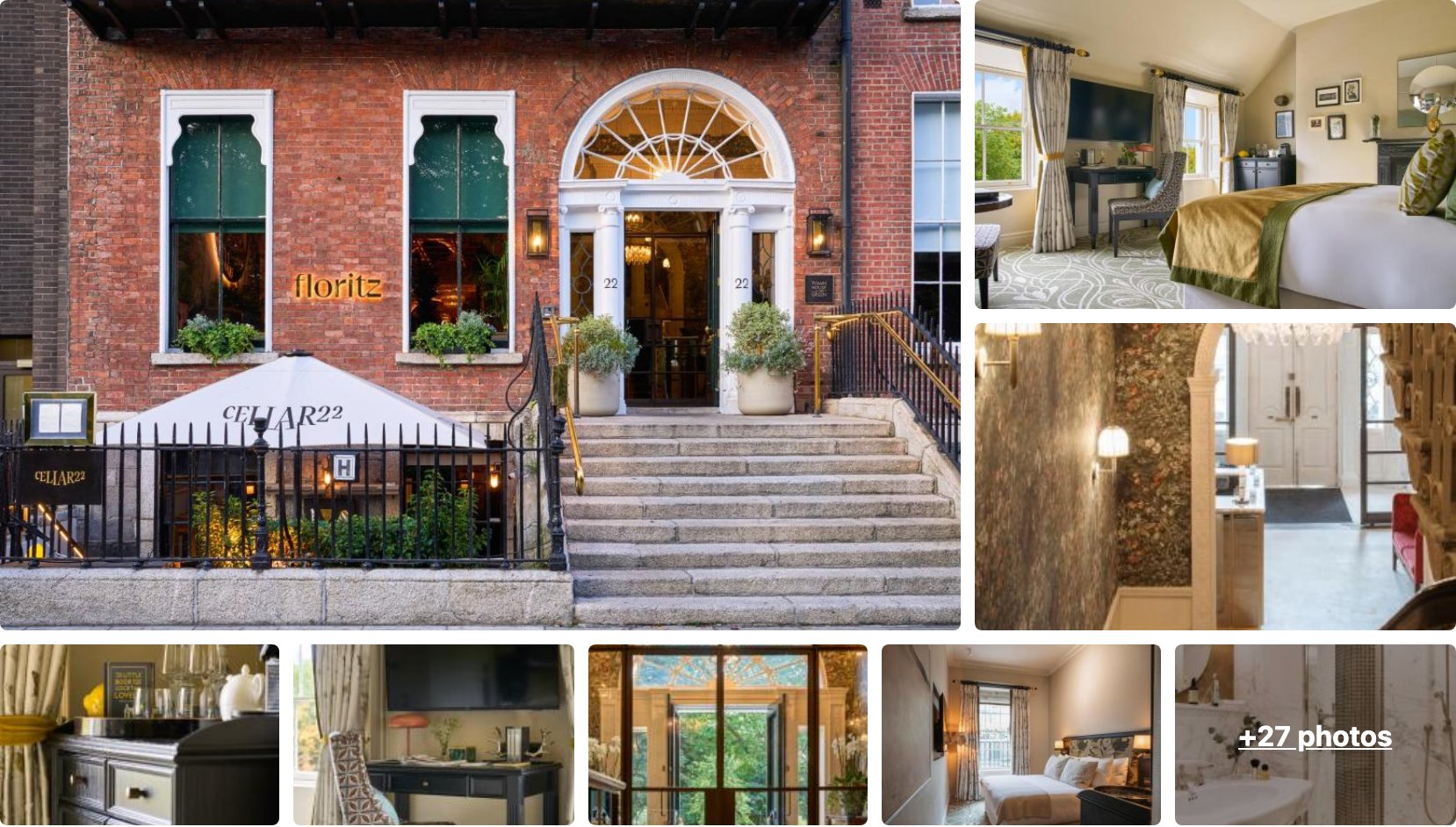
Townhouse on the Green sits in a Georgian house right on St Stephen’s Green, about a ten-minute walk from the castle gates and a minute from the top of Grafton Street. It scores 9.3 across more than 500 reviews, and the location is about as central as it gets without paying Merrion prices.
👉 View Townhouse on the Green Availability and Pricing
Number 31
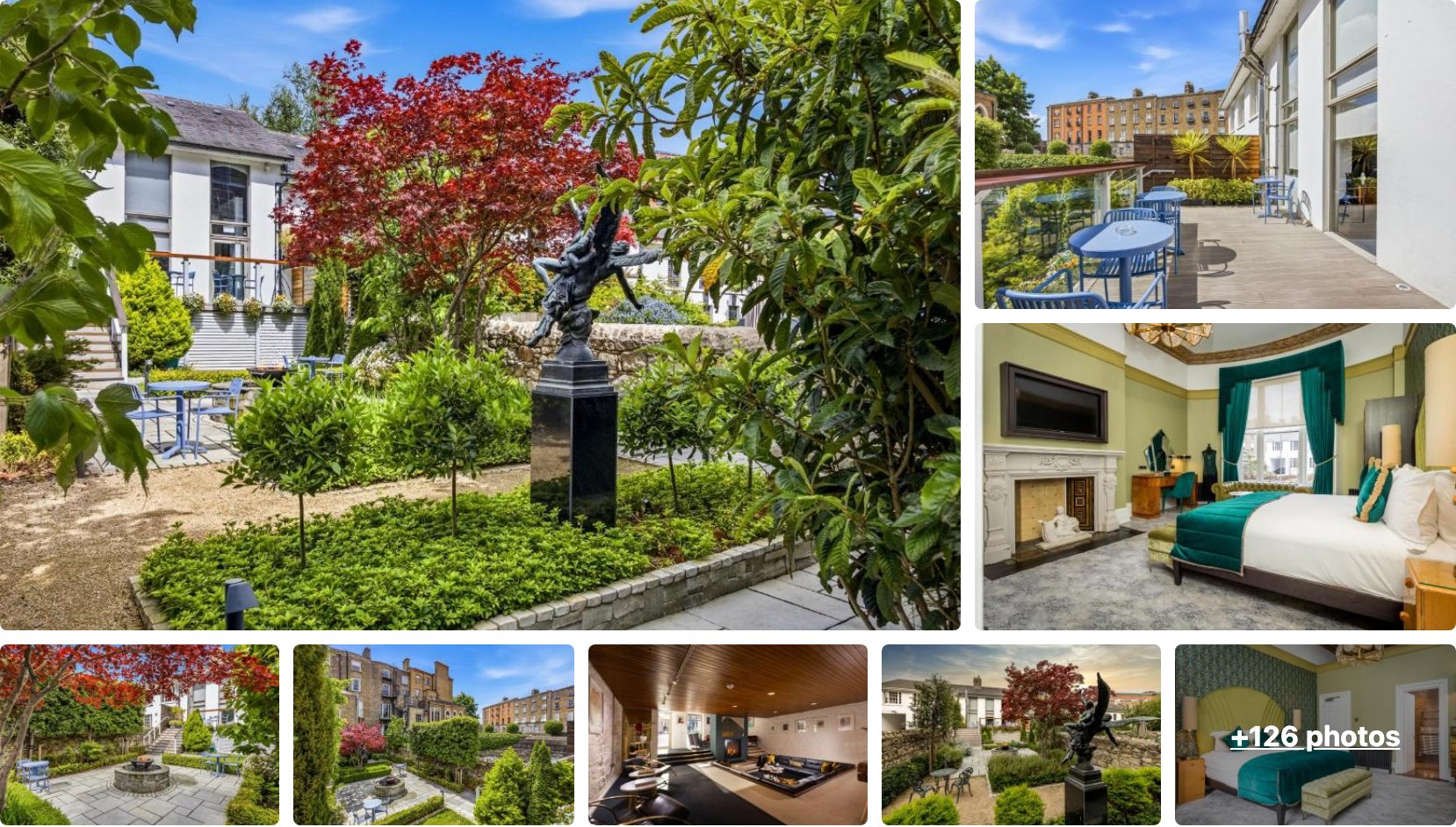
Number 31 is a boutique guesthouse tucked off Leeson Street, a fifteen-minute walk south of the castle in a quiet corner near the Grand Canal. The sunken lounge and walled garden give it more character than most city hotels, and it holds a 9.3 across 700-plus reviews.
👉 View Number 31 Availability and Pricing
Number 59 Dublin

Number 59 Dublin is a small inn on Camden Street with a proper bar and its own restaurant, about a fifteen-minute walk from the castle through the south city. It’s the pick if you want somewhere with a bit of a scene downstairs, and it rates 9.3 across 800-plus reviews.
👉 View Number 59 Dublin Availability and Pricing
Where to Stay Near Dublin Castle
Temple Bar: central but loud

Temple Bar is touristy and it’s loud at night, and it’s still a good first night in Dublin. You’re right on top of the castle, Trinity, and the pubs, so you roll out of bed and you’re in the middle of everything with no bus needed.
The trade-off is real though. Rooms here cost more than they should for what you get, and the party noise runs late, so if you’re a light sleeper pick a room off the main strip or look one neighborhood over.
Quieter areas a short walk away
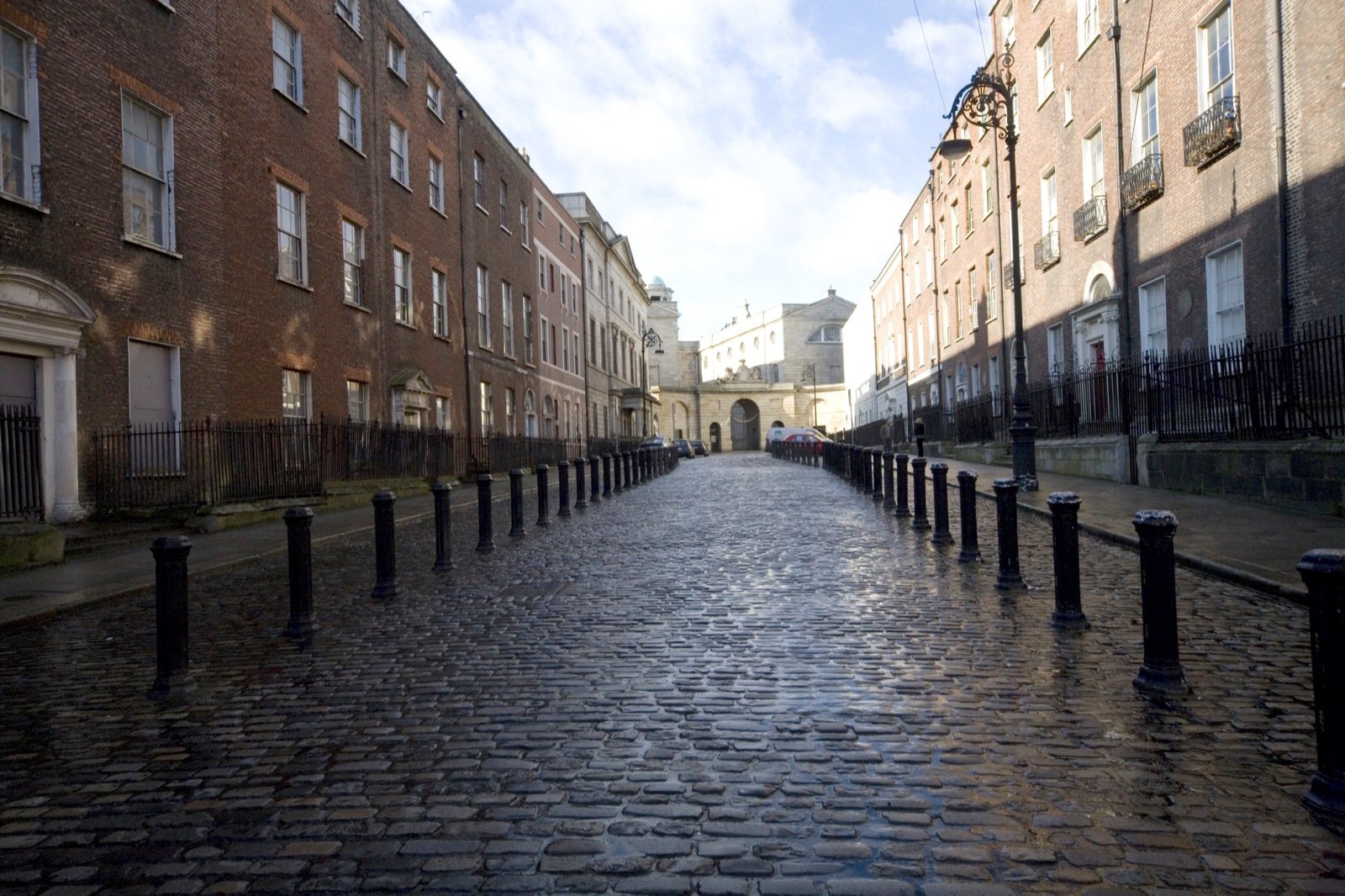
If you want the same walk to the castle without the racket, look at the streets around Dame Street and the south Georgian core near St Stephen’s Green. You’re still five to ten minutes from the gates, and the evenings are a lot calmer.
The one area we didn’t give enough time to was Smithfield and Stoneybatter, just north of the river. It’s a short walk or a quick Luas hop to the castle, the pubs feel more local than tourist, and the rooms tend to run cheaper. I’d stay there next time.
How long to stay
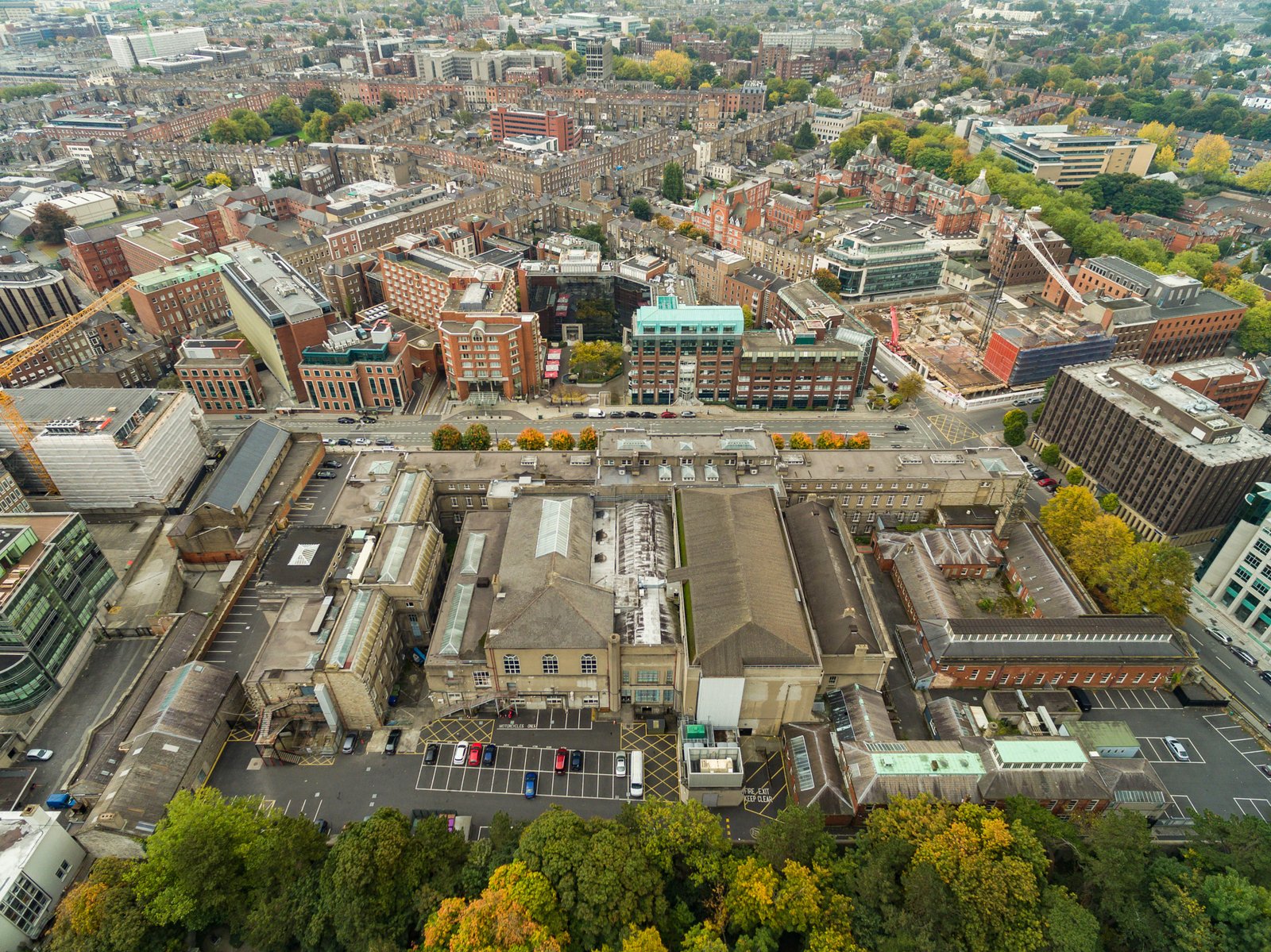
Whatever area you land on, give Dublin at least two nights on each end of a road trip. One night is enough to see the castle and little else, and the city is worth more than a rushed evening before you drive off to the coast.
Things to Do in Other Cities Around Ireland
- 33 Best Things To Do in Galway, Ireland
- Best Things To Do In Cork (City & Day Trips)
- The Best Places to Visit in Belfast
- Fun Things To Do in Kilkenny – Ireland’s Marble City
Tips for Visiting Dublin Castle
Most of the practical stuff is covered above, so here are the small things I’d actually tell a friend before they go, pulled from how we spent our own days in the city.
The best move is to string the castle into a walking day rather than treating it as a one-off stop. Dublin is small and flat, and the sights that surround the castle are all a few minutes apart on foot.
- Book the guided slot online the night before if your dates are fixed, since the good times fill up first.
- Do the castle first thing, then keep walking to whatever’s next while the rooms are still quiet.
- Bring a card. Tickets, the café, and the shop all take one, and you won’t need cash for any of it.
- Leave a spare hour for the free bits, the courtyard, the gardens, and the Chester Beatty next door.
On our last trip we spent a morning at Trinity College, walking the campus past the Campanile and the Sphere Within Sphere sculpture, and it’s a five-minute stroll from there to the castle gates. That’s the walk I’d build a morning around.
We also did the full Jameson Distillery tour on Bow Street with the four-glass tasting flight, which sits a short walk the other side of the castle. Pair the two in a day and you’ve got the history in the morning and the whiskey in the afternoon.
One last habit worth stealing. We always leave time for a pint of Guinness in the airport before flying out, and it’s a fitting way to bookend a Dublin trip that starts a few streets from the castle.
Is Dublin Castle Worth Visiting?
Yes, with one thing to get straight first. If you turn up expecting a castle out of a storybook, you’ll be let down. This is a courtyard of formal 18th-century rooms with one medieval tower, not turrets and battlements.
What makes it worth an hour or two is the history, not the looks. This was the seat of British power in Ireland for 700 years, and standing in the medieval undercroft below the state rooms puts all of it in order in a way no wall panel does.
The value adds up too. A guided ticket runs about the price of a couple of pints, most of the site is free to walk, and it’s dead center, so you’re not going out of your way to fit it in.
On our last trip we didn’t book the interior, and that’s the one thing I’d change. We had two days in Dublin split across the start and end of the drive, and it would have cost us an hour to see the oldest corner of the city properly.
So here’s my take. Skip it if you only want a photo of a fortress and you’re tight on time. Do it, on the guided tour, if you want the layer of Dublin that runs from the Vikings to 1916, all in one central stop you can walk to.
In short
- Dublin Castle sits off Dame Street in central Dublin, walkable from Trinity College and Temple Bar.
- Open daily around 9:45am to 5:45pm; the courtyard and Dubh Linn Gardens are free.
- A ticket covers the State Apartments; the guided tour adds the undercroft and Chapel Royal.
- Book the guided tour ahead on busy days, as set-time slots sell out.
- Allow about an hour, or twenty minutes for just the courtyard and gardens.
Frequently Asked Questions
How long do you need at Dublin Castle?
Give it about an hour to an hour and a half if you’re doing the guided tour, which covers the State Apartments, the undercroft, and the Chapel Royal. If you’re only walking the courtyard and the gardens, twenty minutes does it.
Is Dublin Castle free to visit?
Partly. The courtyard, the Dubh Linn Gardens, and the Chester Beatty next door are all free, so you can see a good chunk of the site without paying. You only need a ticket for the interior, the State Apartments, and the undercroft.
Do you need to book Dublin Castle in advance?
For the self-guided ticket you can usually just turn up. The guided tour is the one to book ahead, because the slots run at set times and sell out on busy days. If your dates are fixed, lock a time in online the night before.
Is Dublin Castle good for kids?
It’s fine for older kids who’ll get something out of the history, and under-12s go free. Just know it’s formal rooms and an excavated basement, not a battlements-and-dungeons kind of castle, so smaller kids can get bored in the State Apartments quickly.
Can you see Dublin Castle without a ticket?
Yes. Walk in through the Dame Street gates and you can wander the courtyard, sit in the gardens out back, and photograph the outside of the Chapel Royal and Record Tower for nothing. You just won’t get inside the grand rooms or down to the undercroft.
What else is near Dublin Castle?
Loads, and it’s all walkable. Trinity College is five minutes one way, Christ Church and Dublinia are a couple of minutes the other, and Temple Bar’s pubs are right on the doorstep. It slots into a walking day of the old city with no bus needed.
Plan the Rest of Your Ireland Trip
- Dublin Travel Guide: Where to Stay, Eat and Explore
- A Photographer’s Definitive Ireland Road Trip
- Wild Atlantic Way Itinerary – Ireland’s Most Epic Road Trip
Final Thoughts
Dublin Castle isn’t the sight that will define your Ireland trip, and it doesn’t need to be. It’s a solid hour or two right in the center of the city, on foot, with 700 years of history packed into one courtyard.
It works best as part of a bigger day rather than a destination on its own. String it between Trinity, Christ Church, and the Chester Beatty next door and it earns its place easily.
Dublin bookended our own drive around Ireland, a couple of days at the start and the end, and the castle is the sort of central, weatherproof stop that fits either half of a trip like that. If you’re renting a car for the coast, this is a good thing to do before you pick it up or after you drop it off.
Go in with the right expectations, buy the guided ticket, and you’ll walk out with the oldest layer of the city under your belt in less time than it takes to have lunch.
Like it? Pin it!
Save this guide for later