
Hurling is the oldest field sport in Europe and probably the fastest game on the planet. The short version of hurling in Ireland: it’s a 3,000-year-old game played with a wooden stick and a rock-hard ball, and the whole country loses its mind over it every summer.
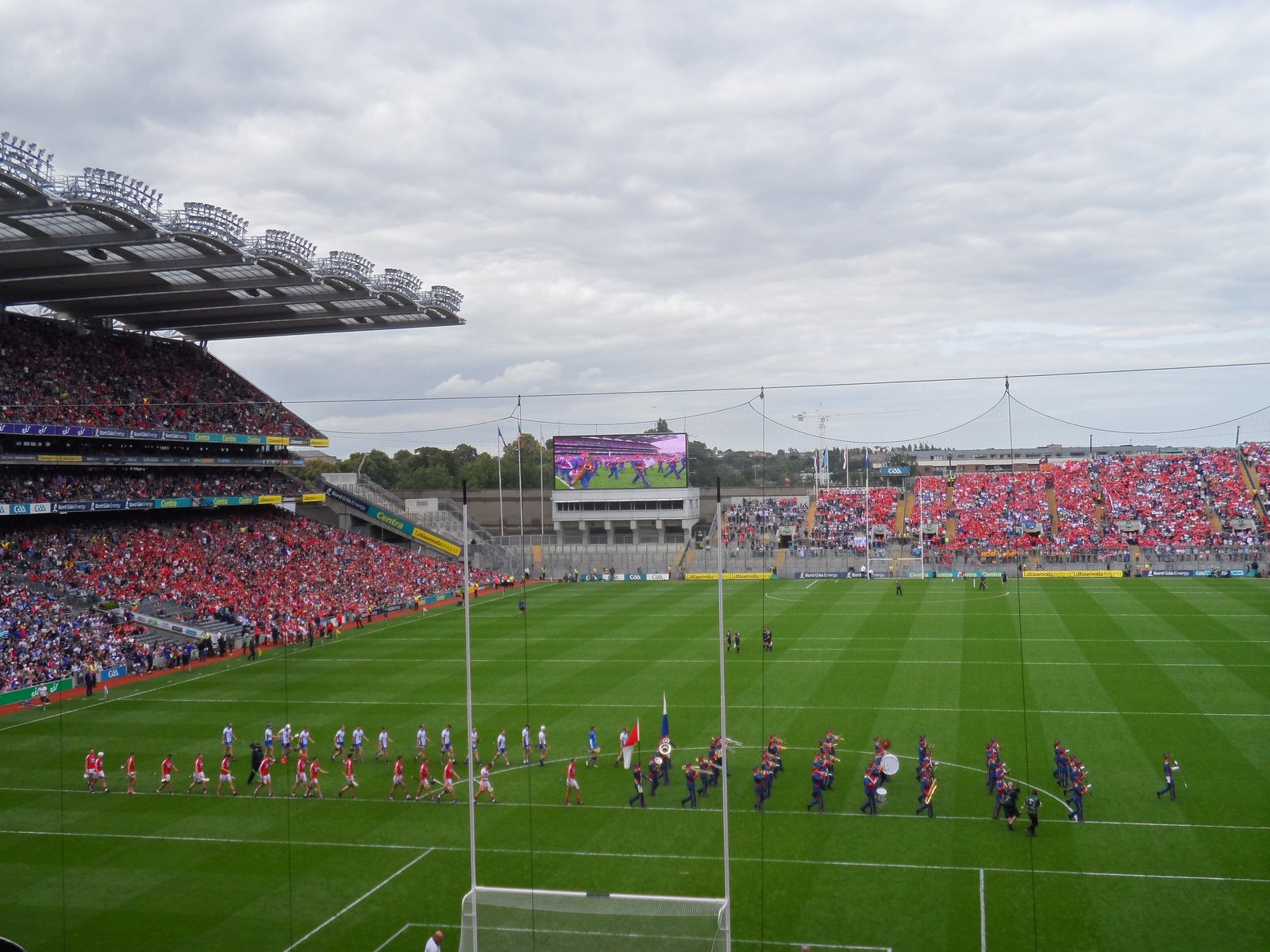
It’s a strange thing to explain to a first-timer. Picture field hockey, baseball, and lacrosse thrown in a blender, played at a sprint, by amateurs who are local heroes in their county. No one gets paid. That’s part of why the All-Ireland final fills 82,000 seats at Croke Park.
We’ve spent a lot of time in Ireland and a GAA match is the thing we tell people to go out of their way for, even if you’ve never seen the sport in your life. The crowd alone is worth the ticket.
Below I’ll break down how the game actually works, where it came from, how the season and the All-Ireland Championship run, how to get to a match and buy tickets, and where camogie, the women’s game, fits in. Here’s what I’d tell a first-timer to know before you go.
Quick Answer:
Hurling in Ireland is a 3,000-year-old amateur game played by two teams of 15 with a wooden stick and a leather ball called a sliotar. Over the bar scores 1 point, into the net scores a goal worth 3. The season peaks every summer at the All-Ireland final, which packs 82,000 into Croke Park.
More Guides to Ireland’s Great Hurling Counties
- A Perfect Weekend in Kilkenny: A Local’s Guide
- 10 Epic Day Trips From Cork (Chosen By a Cork Local)
- 10 Best Pubs In Galway, Ireland
- 5 Top Castles To Visit in Cork (+Castle Accommodation)
How Hurling Is Played
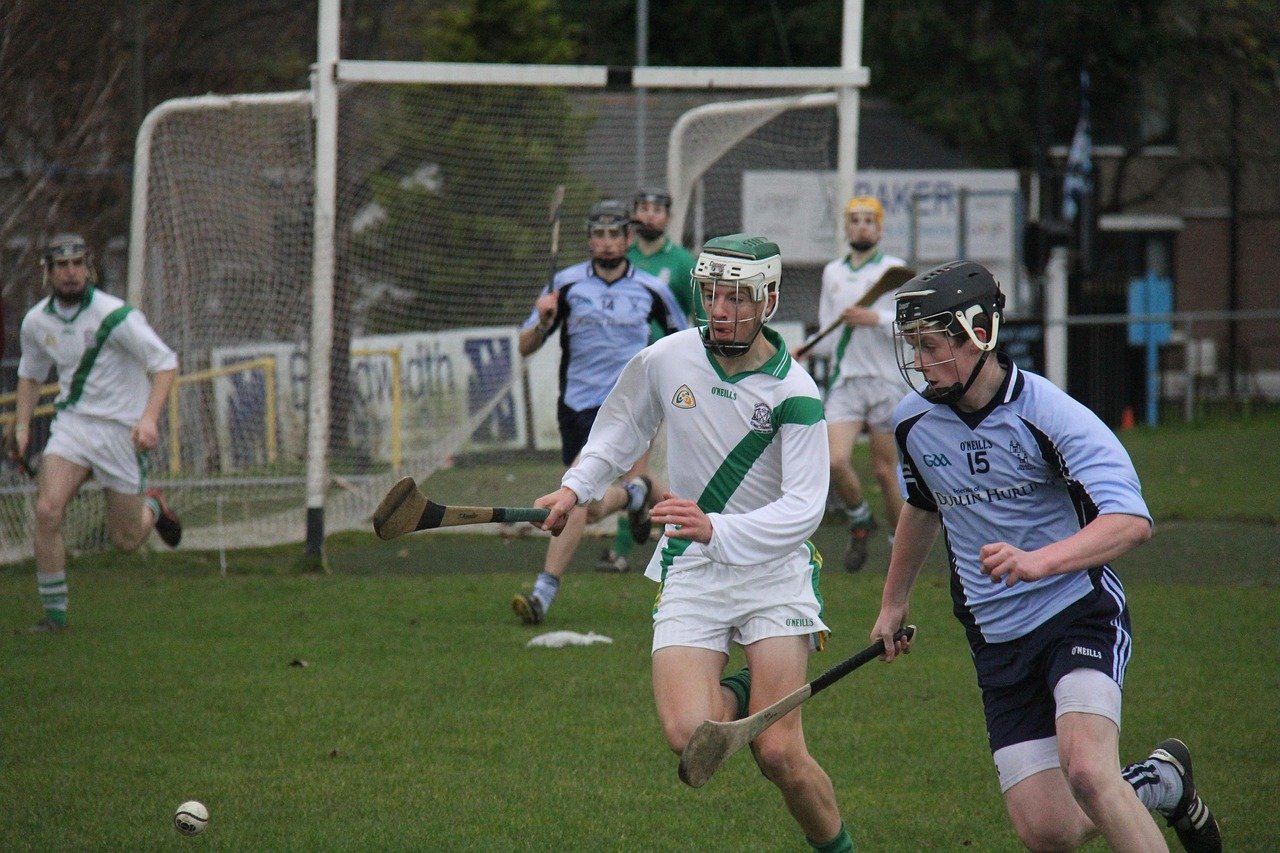
Two teams of 15 play on a pitch bigger than a soccer field, with goals at each end that look like rugby posts crossed with a soccer net. A game runs 70 minutes at the top inter-county level. The aim is to get the ball, the sliotar, into or over the other team’s goal.
The pace is the thing that gets you. The sliotar flies the length of the pitch in a couple of swings, players catch it out of the air at full sprint, and it almost never stops moving. If you’ve only ever watched soccer, the first few minutes are a shock.
The Rules and How Scoring Works
Scoring is the one rule you need before you sit down. Over the crossbar and between the posts is 1 point. Under the crossbar and into the net is a goal, worth 3 points. That’s the whole thing.
Scores are written as two numbers, like 2-15. The first is goals, the second is points, so that reads as 6 plus 15, or 21 in total. The scoreboard had me lost the first time I watched, so do the math once and the rest of the game opens up.
Here’s where it gets strange. You can hit the sliotar out of the air or off the ground, catch it in your hand, and balance it on the stick while you sprint. What you can’t do is pick it straight off the ground, and you can’t throw it. To pass to a teammate, you slap it with an open palm.
There’s plenty of contact too. Shoulder-to-shoulder is fair, a big swing near someone’s head is not, and the ref comes down hard on the line between them. For a game played at that speed with a ball that hard, serious injuries are rarer than you’d think.
The Equipment: Hurl, Sliotar and Helmet
The stick is called a hurl, or camán in Irish. It’s cut from ash, about 3 feet long, flat and curved at the end into a paddle called the bas. Players are particular about their hurls the way a baseball player is about a bat.
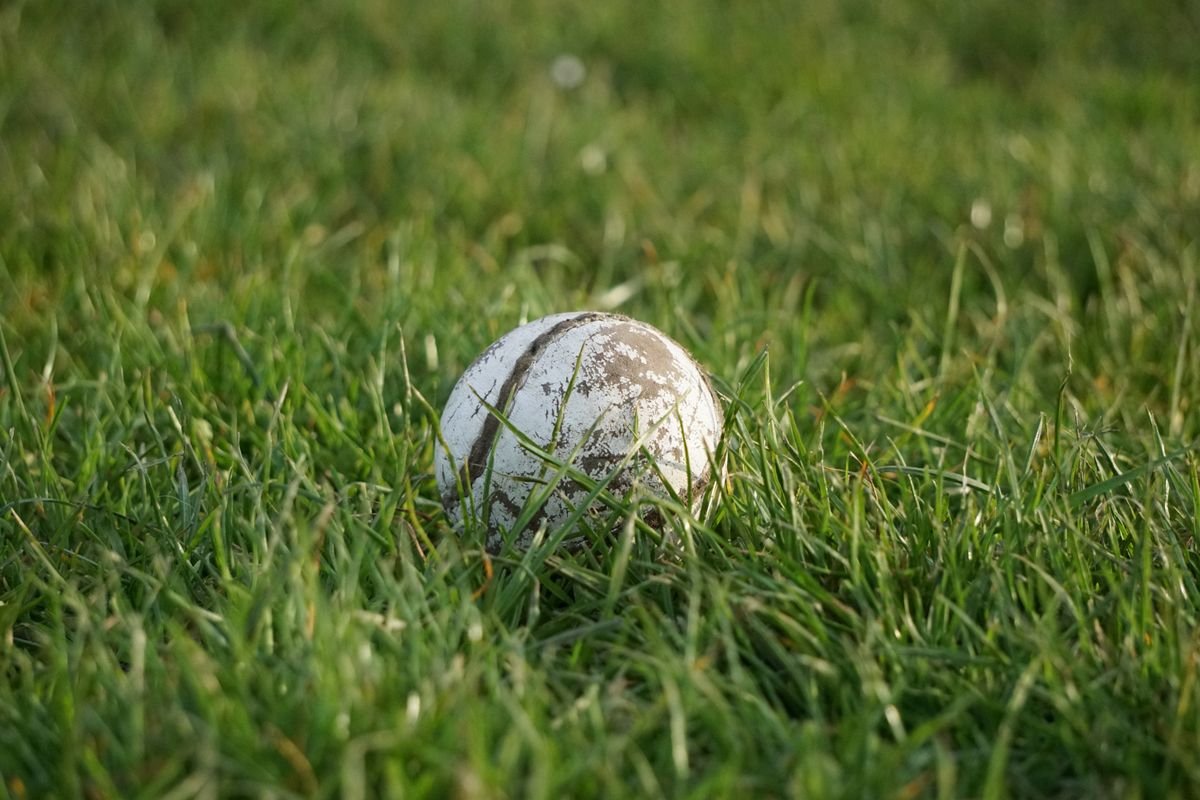
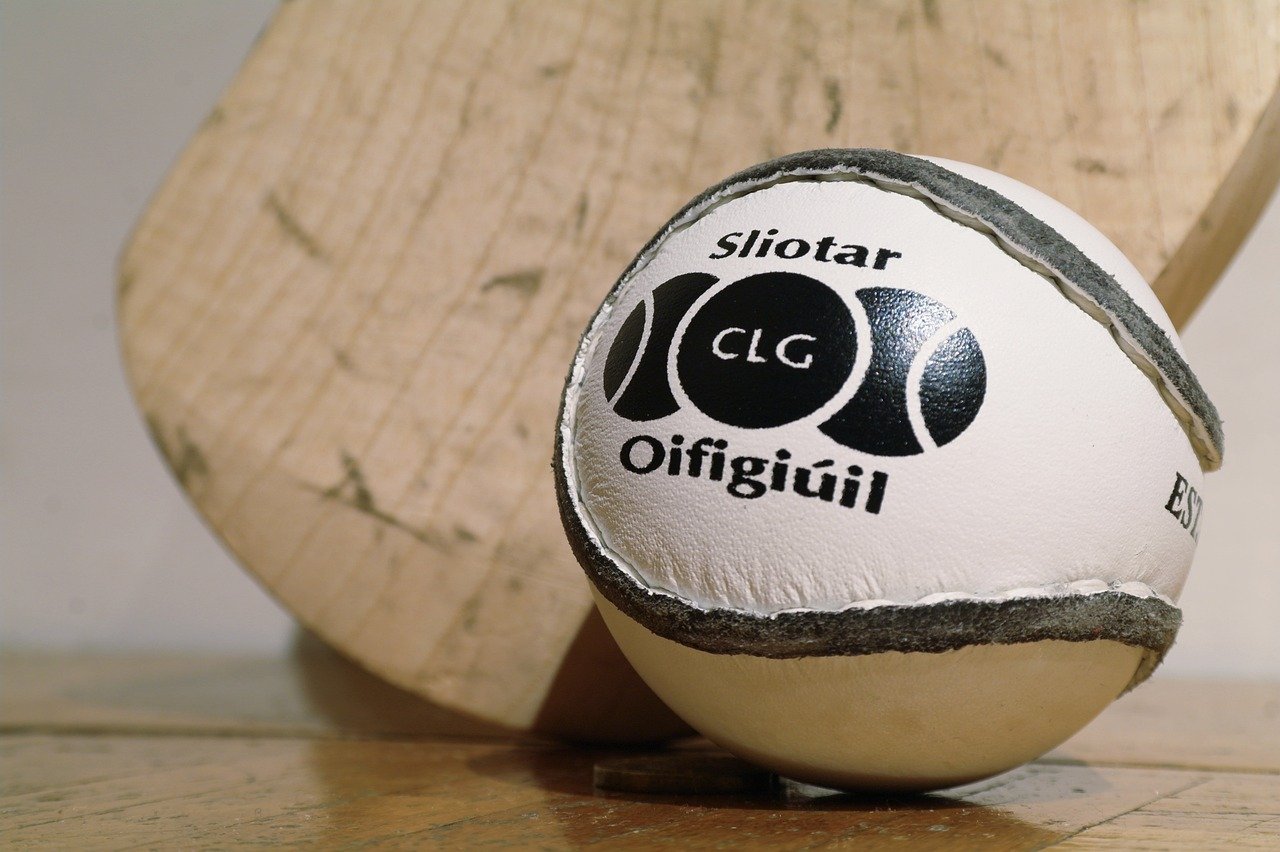
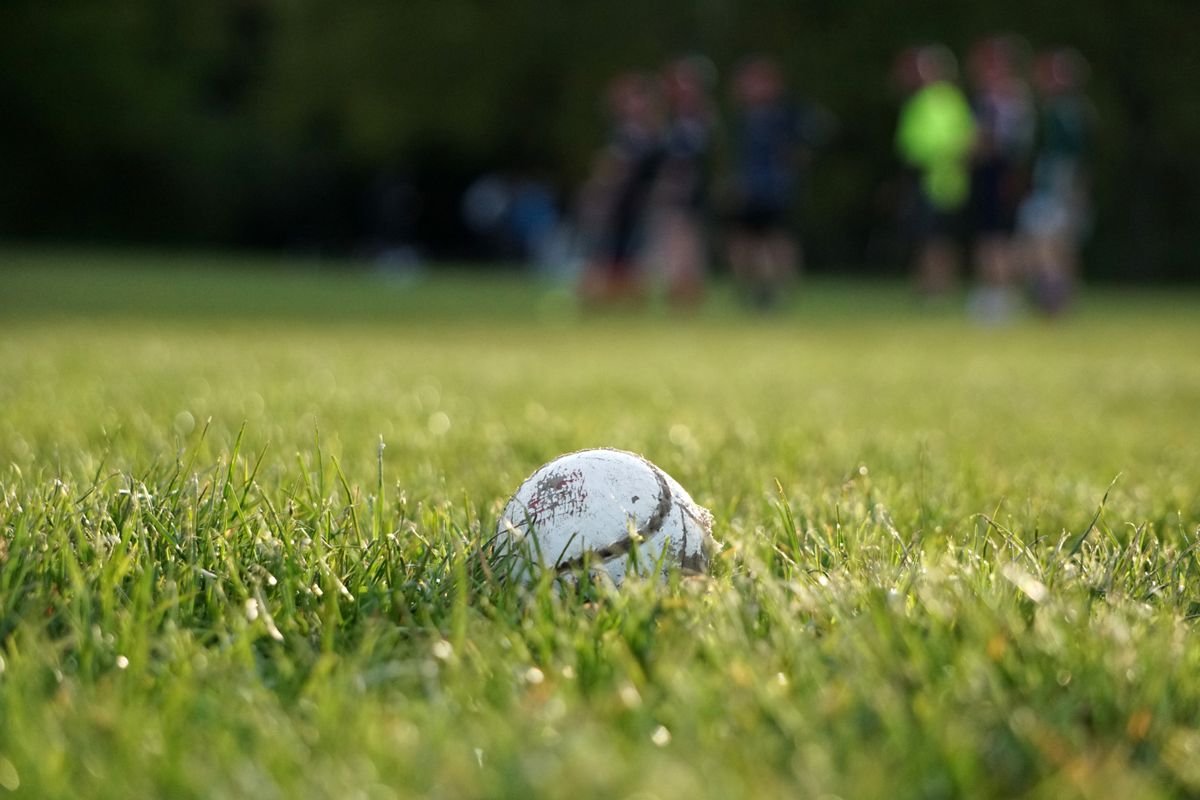
The sliotar is the ball, and it’s the reason people wince. It’s a cork core wound in yarn under a stitched leather cover, roughly the size of a baseball and almost as hard. A struck sliotar travels well over 90 mph, which is why the speed off the stick looks so wild in person.
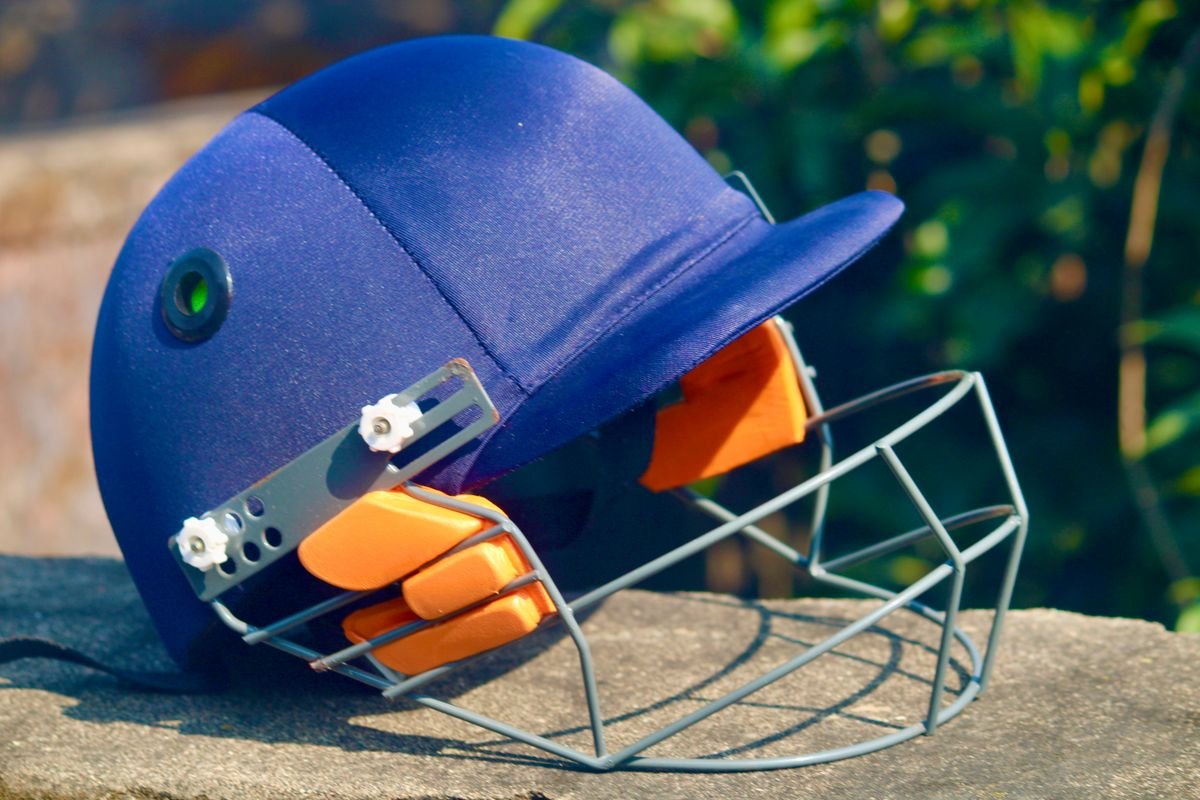
Helmets with a faceguard are now required at every level. They only became mandatory across the board in 2010, so old footage of bare-headed players belting that ball around looks completely mad today. Watch one match and you’ll understand exactly why the rule exists.
A Short History of Hurling
I know you’re not here for a history lesson, so I’ll keep this quick. Hurling shows up in Irish writing going back thousands of years, which makes it older than almost any sport you can name.
It’s woven right into the old myths. The legend of Cú Chulainn starts with a boy named Sétanta who kills a guard dog by driving a sliotar down its throat with his hurl, then offers to guard the house in the dog’s place. That’s the origin of one of Ireland’s most famous heroes, and he got there with a stick and a ball.
The game wasn’t always welcome. Under English rule it was banned more than once, with the Statute of Galway in 1527 outlawing it outright. People kept playing anyway, county against county, parish against parish.
The GAA and the Modern Game
The version you’ll watch today was pinned down in 1884, when the Gaelic Athletic Association was founded in Hayes’ Hotel in Thurles, County Tipperary. Michael Cusack and a small group set out to standardize the rules and protect the native Irish games from dying out.
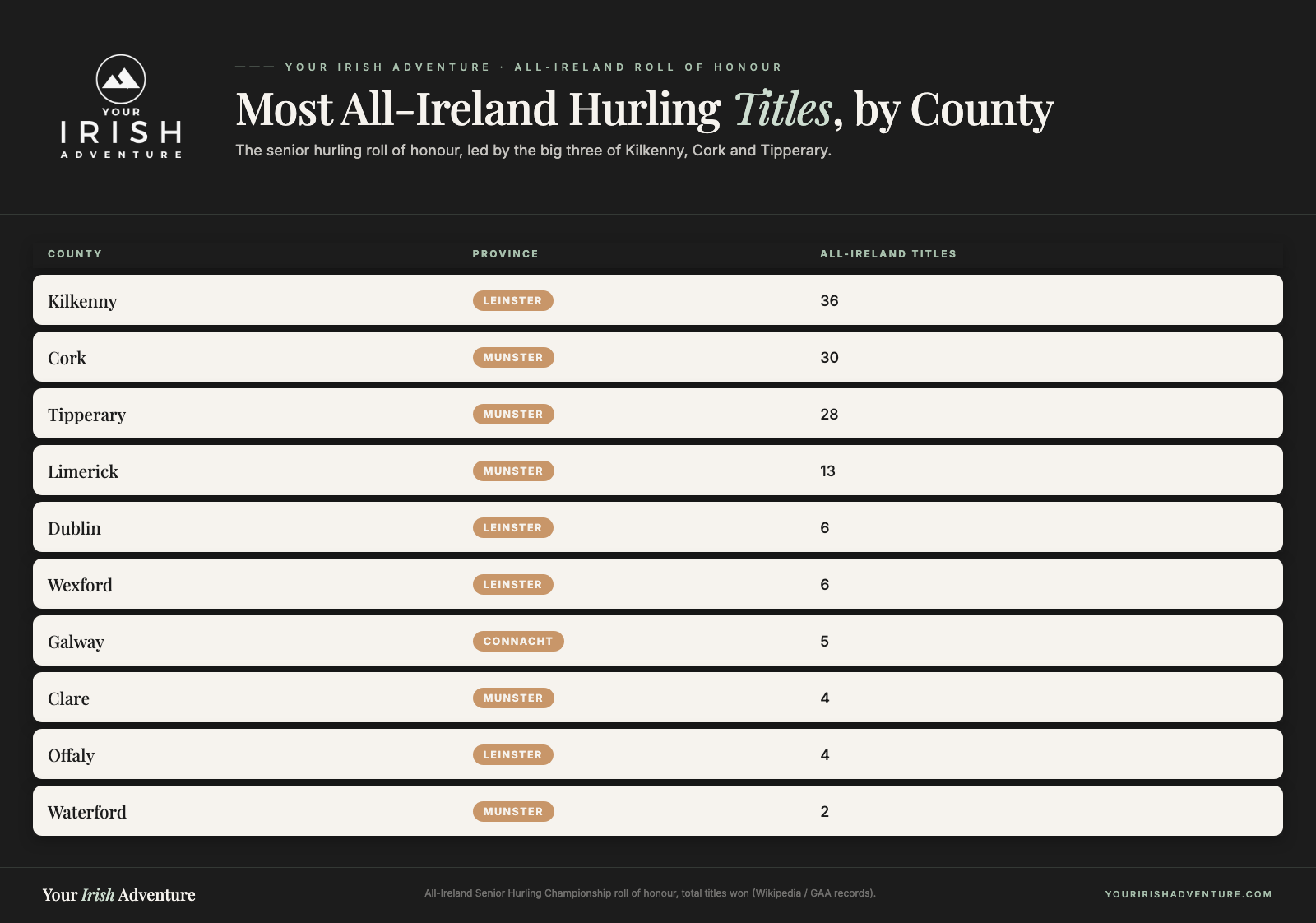
That’s the same body that runs hurling now, and the amateur, county-first structure has barely changed. The men playing in front of 82,000 people at the All-Ireland final are still playing for the parish they grew up in, for free. Knowing that going in is half of why the atmosphere hits the way it does.
The Hurling Season and the All-Ireland Championship
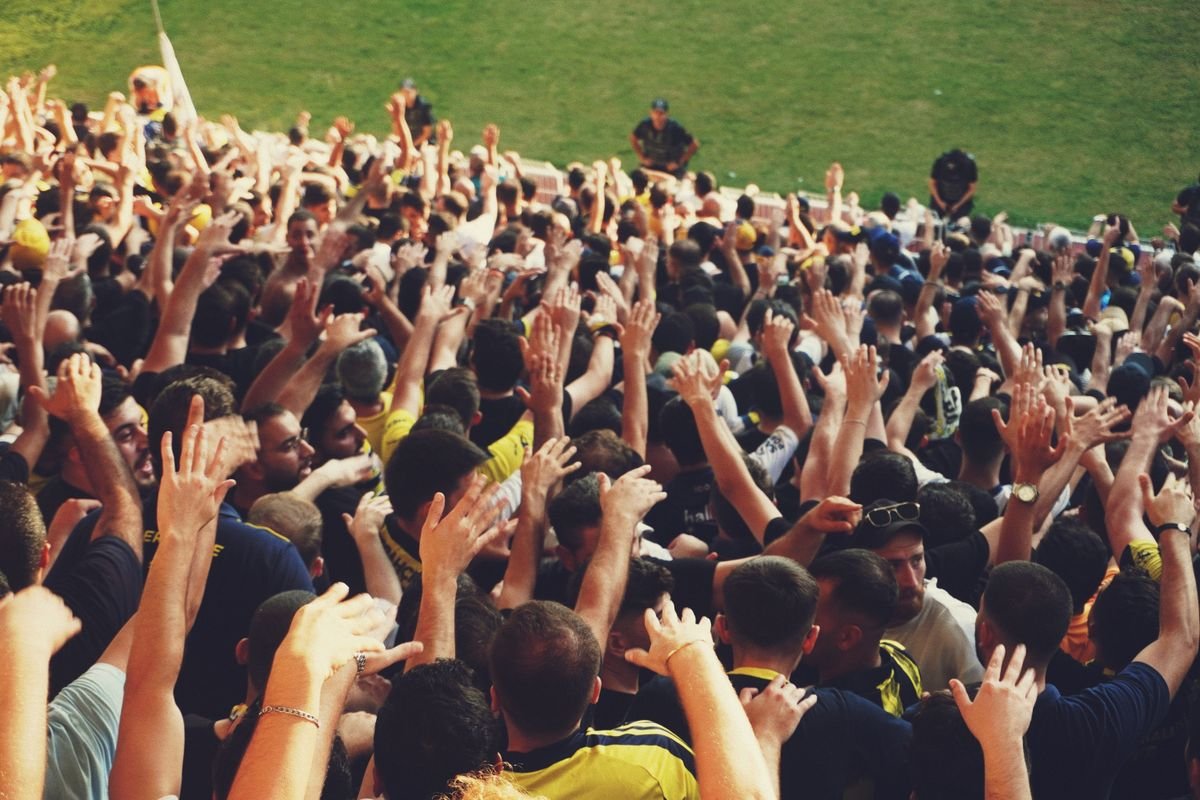
Hurling is a summer game. The inter-county season builds through spring and runs hot from May into July, which also happens to be when Ireland gives you the best shot at decent weather, so it lines up nicely with a trip.
The thing to get your head around is that it’s all built on the county. You’re born into your county team the way you’re born into a family, and that loyalty runs for life. There’s no transfer market, no buying success, and no player jumping ship for a better contract, because there’s no contract.
How the Season Is Structured
First come the provincial championships. Munster and Leinster are where the serious hurling counties live, and Munster is the one I’d point you at. Tipperary, Limerick, Cork, Clare and Kilkenny are the names that come up year after year, and a Munster game between any two of them is as good as the sport gets.
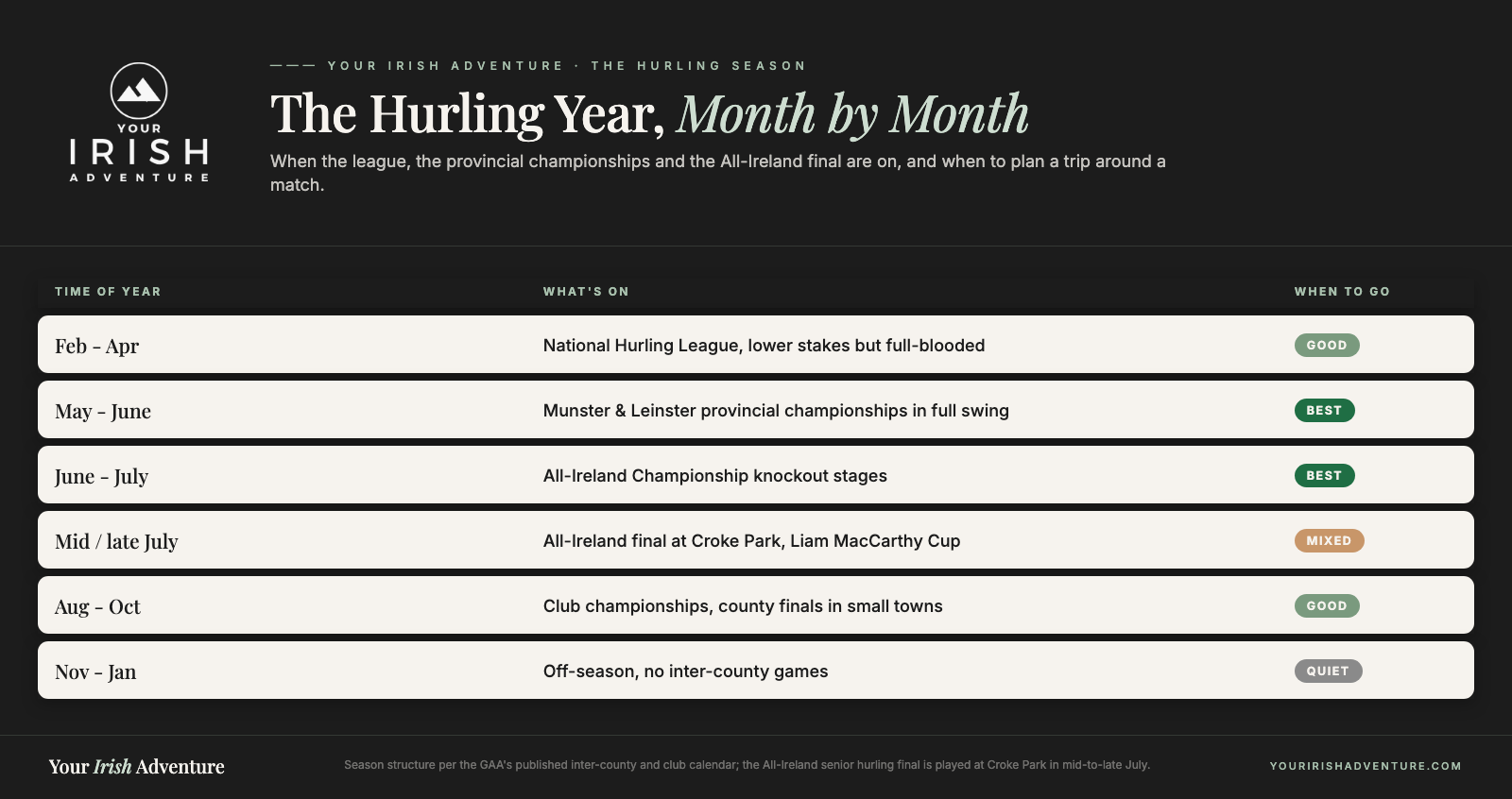
The provincial winners and the best of the rest then feed into the All-Ireland Senior Hurling Championship. By the later stages it’s straight knockout, win or go home, and you can feel the crowd tighten with it. One bad twenty minutes and a county’s whole summer is over.
The final lands in July at Croke Park in Dublin, in front of more than 82,000 people. The winning county lifts the Liam MacCarthy Cup, and that’s the trophy every one of those players has chased since they were a kid pucking a ball against a gable wall.
When to Catch a Match
If you’re in Ireland between May and July, there’s almost certainly a championship game on somewhere. A provincial round in Thurles, Limerick or Cork gives you the same noise and the same standard without the final’s price tag or its sold-out scramble for tickets, so that’s where I’d start.
The rest of the year still has hurling if you know where to look. The club season runs in autumn and winter, county finals included, and a big club game in a small town is a great watch in its own right. There’s also the National Hurling League in spring, which is lower stakes but still a real, full-blooded game.
Where and How to Watch a Match
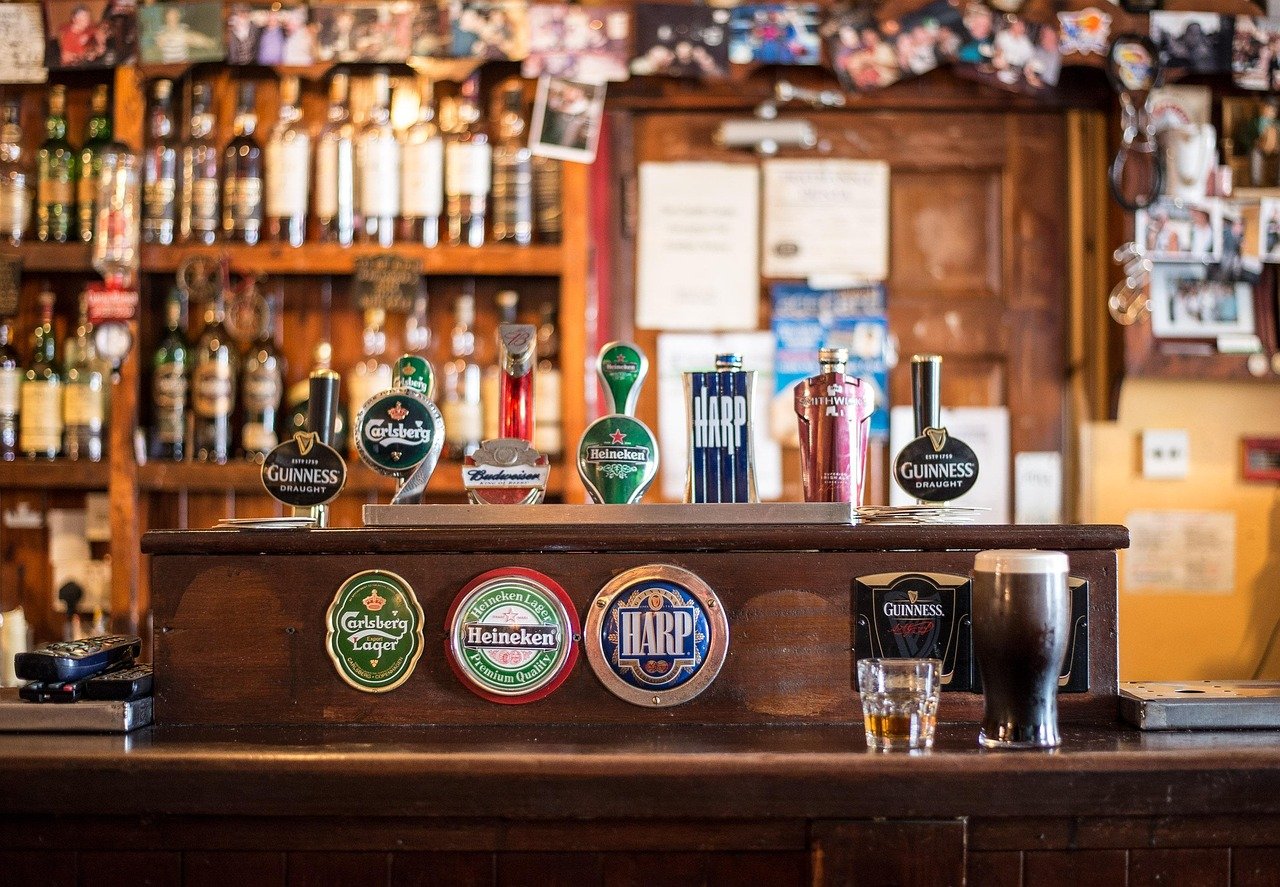
You’ve got three ways in, and they’re all good. The big stage in Dublin, a proper county ground on a championship Sunday, or a packed pub when you can’t get a ticket. Here’s how each one actually works.
Croke Park, Dublin
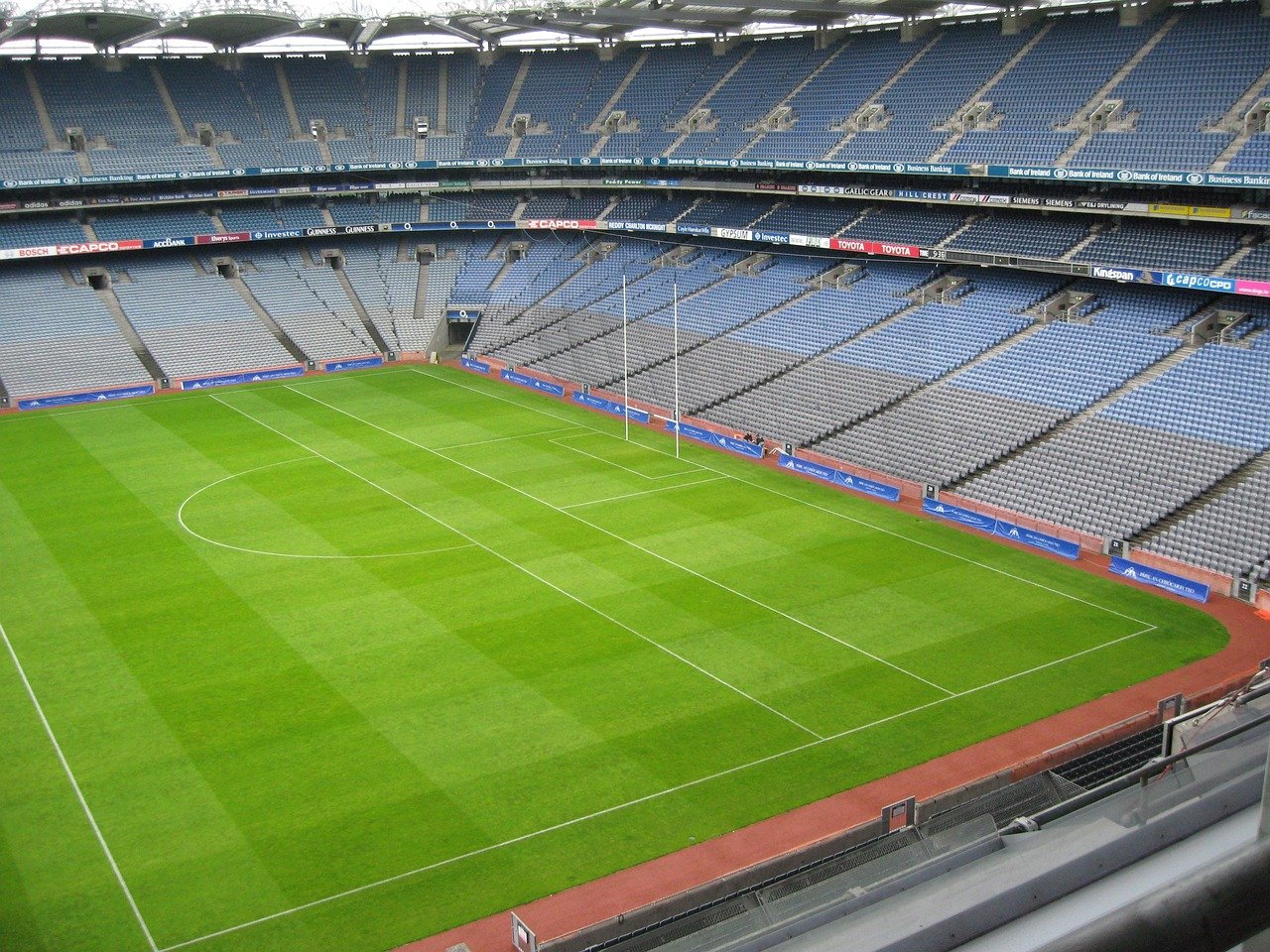
Croke Park is the home of the GAA and the biggest stadium in Ireland. It sits on the north side of the city, a short ride across the Liffey from the center. We based ourselves in Temple Bar on our last trip, and from there it’s barely 15 minutes by taxi.
The semi-finals and the All-Ireland final are played here, and a full house for the final is one of the loudest sporting crowds you’ll ever stand in. Tickets for those late-summer games are gold dust, so if a final is the plan, sort it weeks ahead.
If you’ve got a match here, stay close so you can walk to the ground and skip the post-game taxi crush. The Maldron Hotel Croke Park is about 250 meters from the stadium, so you can check availability at the Maldron Hotel Croke Park on Booking.com and roll out of bed straight into the crowd.
If you’re in Dublin outside the championship dates, the stadium tour and the GAA Museum are open year-round and worth a couple of hours. You get out on the pitch-side and up into the stands, and it’s a good primer before you ever see a live game.
Semple Stadium and the County Grounds
For most visitors I’d skip the final scramble and go to a provincial game at a county ground instead. The hurling is the same standard, the tickets are easier, and you’re shoulder to shoulder with the home support rather than tourists.
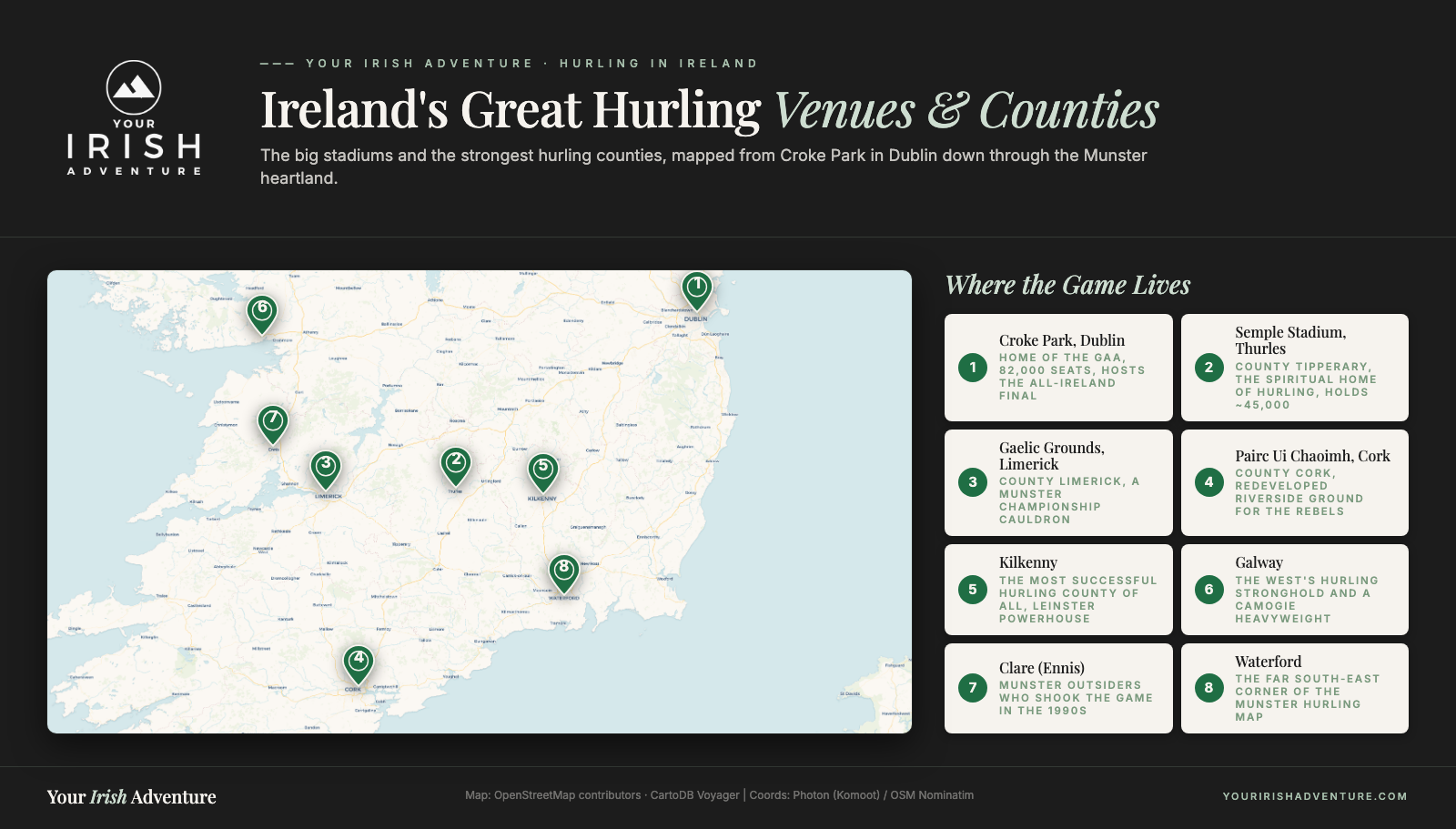
Semple Stadium in Thurles, County Tipperary, is the spiritual home of the game and holds around 45,000. A Munster championship day here is as good as it gets. The Gaelic Grounds in Limerick and Páirc Uí Chaoimh in Cork pull the same kind of noise.
The catch with the county grounds is getting there. Thurles, Limerick and Cork aren’t quick hops on public transport from Dublin on a match day, so a car gives you the freedom to make a day of it. It’s worth a minute to compare car hire deals on Discover Cars before you commit to the train timetable.
Get there early. The towns fill up hours before throw-in, the pubs near the ground are part of the day, and the build-up walking to the stadium with thousands of county jerseys is half the experience. Buy through the GAA website or a local SuperValu or Centra shop, which sell tickets over the counter.
Watching Hurling in a Pub
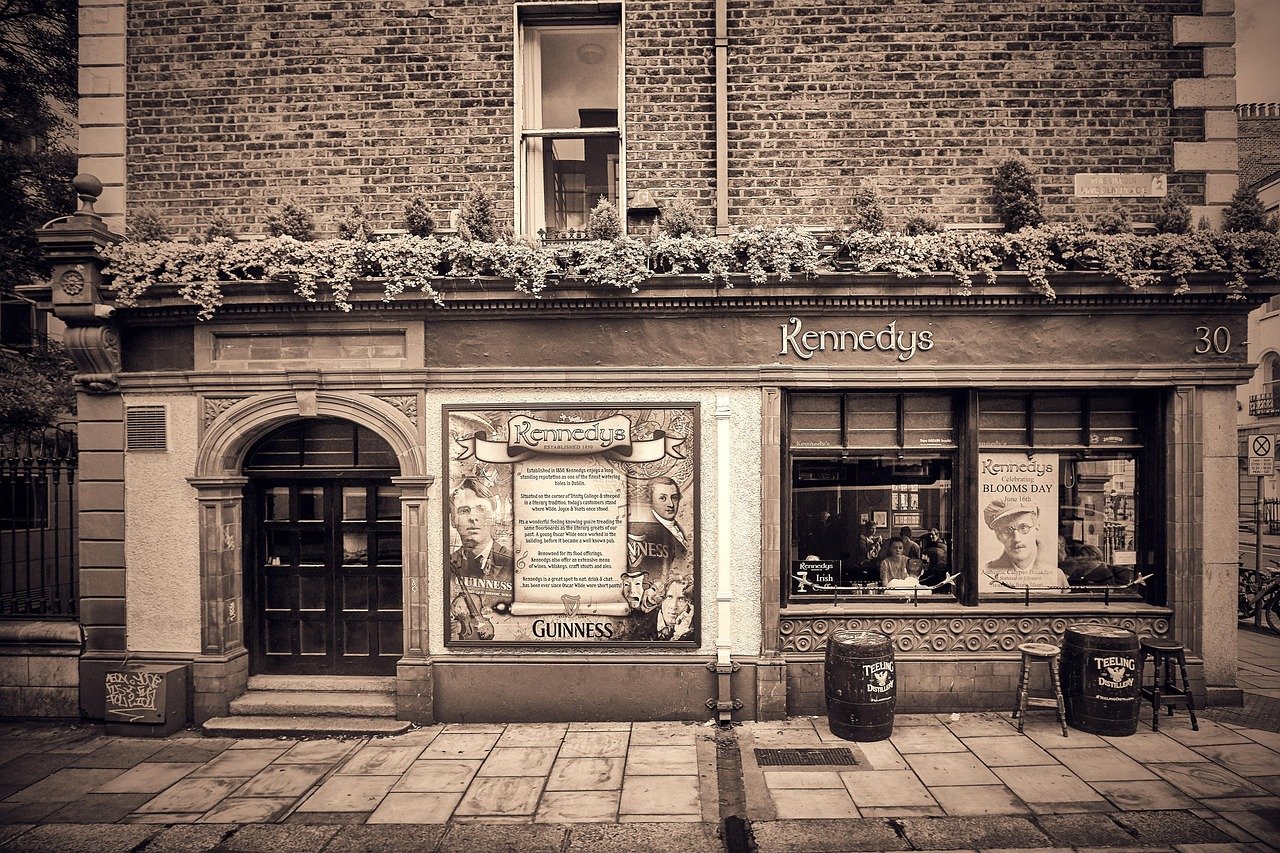
If you can’t get to a ground, a big championship Sunday in a busy pub is the next best thing, and sometimes it’s the better story. Find one showing the game where the locals actually care which county wins and the place will roar at every score.
We had our first pints of the trip at Darkey Kelly’s on Fishamble Street in Dublin, and a city-center pub like that with the GAA on the TV is an easy afternoon. A county town on match day is even better, since half the room will be wearing the colors.
One tip: ask the bartender if anything’s on before you settle in. The hurling and the Gaelic football share the summer Sundays, and you’ll want to know which game you’re about to spend three pints watching.
Where to Stay Near Semple Stadium in Thurles
How to Get GAA Tickets
Tickets are easier to sort than people expect, as long as you’re not chasing a final. For most championship games you can buy online right up to the day, and for the bigger ones you’ll want to plan ahead. Here’s how it actually works.
The official source is the GAA’s own site at gaa.ie, which sells through Ticketmaster Ireland. That’s the first place to look, and the prices there are the real prices, not a reseller markup.
If you’d rather not deal with a website, walk into any Centra or SuperValu shop in Ireland and buy over the counter. They’re everywhere, even in small towns, and the staff sell GAA tickets the same way they sell a lottery ticket. For a provincial game this is the simplest route a visitor has.
What You’ll Pay
A provincial championship game runs around €25 to €35 for a stand seat, and a bit less for the terrace, which is the standing section behind the goals. For the money, it’s one of the best-value live sporting tickets in Europe.
The semi-finals and the All-Ireland final climb from there, with final tickets in the region of €90 and up. Kids’ tickets are cheap, often a few euro, so a GAA day is one of the rare big sporting events you can take a family to without it costing a fortune.
The Catch With Final Tickets
Here’s the part to know going in. All-Ireland final tickets mostly never hit general sale. The bulk are handed down through the GAA’s club network, so they go to members of the local clubs in the two counties playing, not to the public.
That means a visitor trying to buy a final ticket online in July will usually find nothing there. Your best shot is knowing someone connected to a club, or watching for the small number that do reach Ticketmaster and moving the second they appear.
This is the strongest argument for a provincial game over the final. You’ll walk in without the stress, pay a fraction of the price, and the hurling on the day is every bit as good.
Where to Stay Around Ireland
- Where to Stay in County Cork: Cork City vs West Cork
- Where To Stay in Cork: Best Areas and Accommodations
- Where to Stay in Doolin: Best Areas & Hotels
Camogie: The Women’s Game
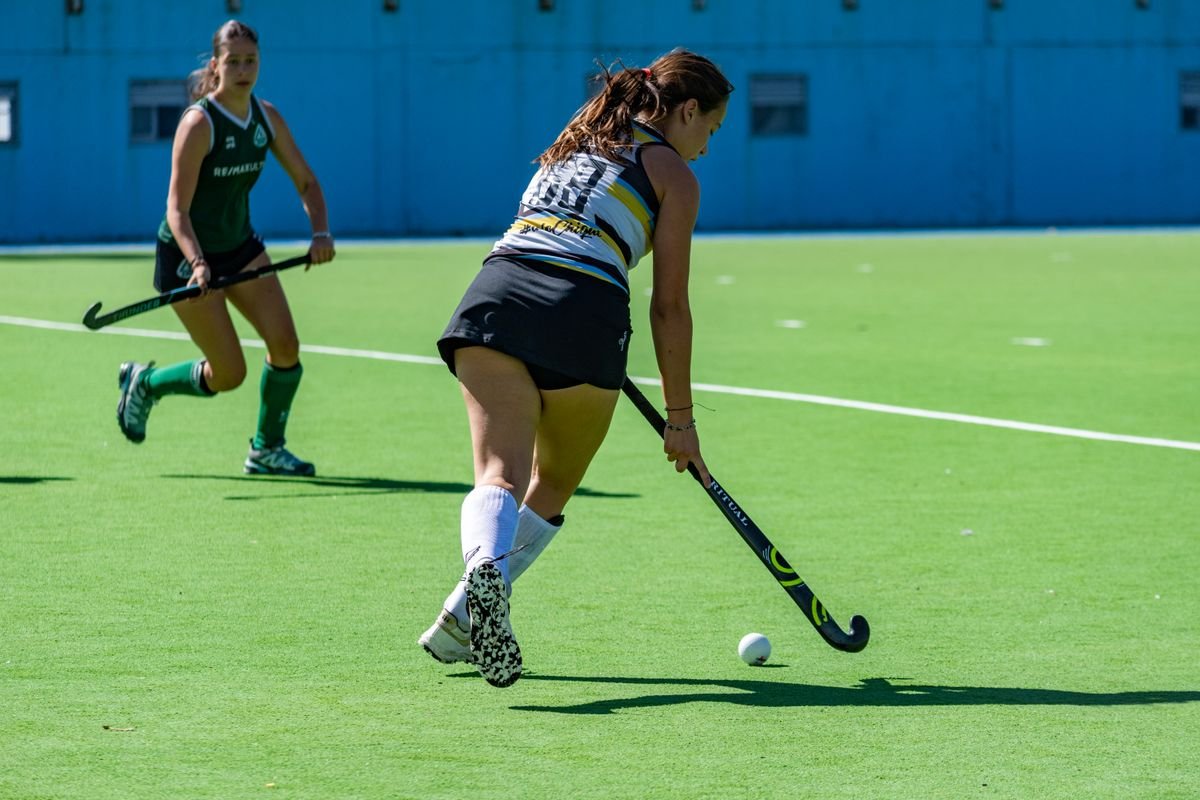
Camogie is hurling played by women, and it’s the same fast, skillful game with a hurl and a sliotar. If you’ve read this far and understood how hurling works, you already understand camogie. The scoring is identical, the stick is the same, and the speed will catch you out the same way.
There are a few small rule differences, but nothing a first-timer needs to study. The standard of play at the top is every bit as high, and the same county pride runs through it. Kilkenny, Cork and Galway are the names that come up year after year.
It’s run by the Camogie Association rather than the GAA, though the two are merging into one organization. The big prize is the All-Ireland Senior Camogie Championship, and the winners lift the O’Duffy Cup. The final is played at Croke Park, the same stage as the men, in front of a big crowd.
If you want to see it, the camogie championship runs through the summer alongside the hurling, so a trip timed for one usually catches the other. Tickets are cheaper and easier to get than the men’s final, and the game on the day is worth your afternoon either way.
More Ireland Itineraries and Road Trips
- 5 Day Ireland Itinerary: Dublin, Cork & the West Coast
- 14 Days in Ireland: The Ultimate 2-Week Itinerary
- Wild Atlantic Way Itinerary – Ireland’s Most Epic Road Trip
Best Tours from Dublin
If you want to do more than watch, there’s one tour I’d point a first-timer at before you ever sit in a stand.
Dublin Gaelic Games Experience
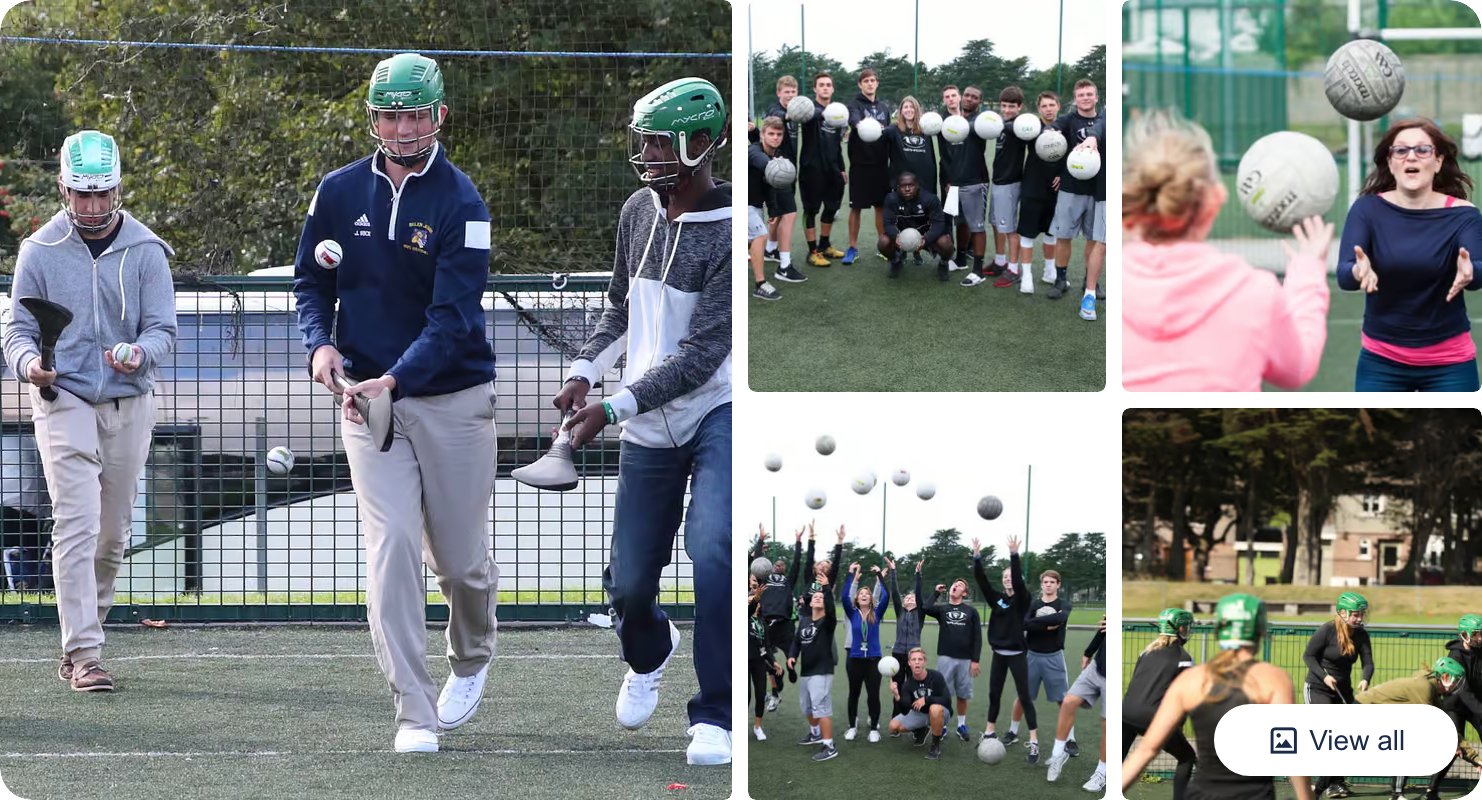
This is a hands-on session in Dublin where coaches put a hurl in your hand and run you through hurling and Gaelic football yourself, helmet on, sliotar and all. It lasts about two hours, the gear is provided, and it’s the fastest way to understand why the players make a brutally hard game look easy.
👉 Check Dublin Gaelic Games Experience Availability and Reviews
Where to Stay Near Croke Park
If a match at Croke Park is the plan, stay on the north side within a short walk of the ground so you can roll out after the final whistle and skip the taxi crush. These three are all within a kilometer of the stadium and cover a range of budgets.
The Croke Park Hotel
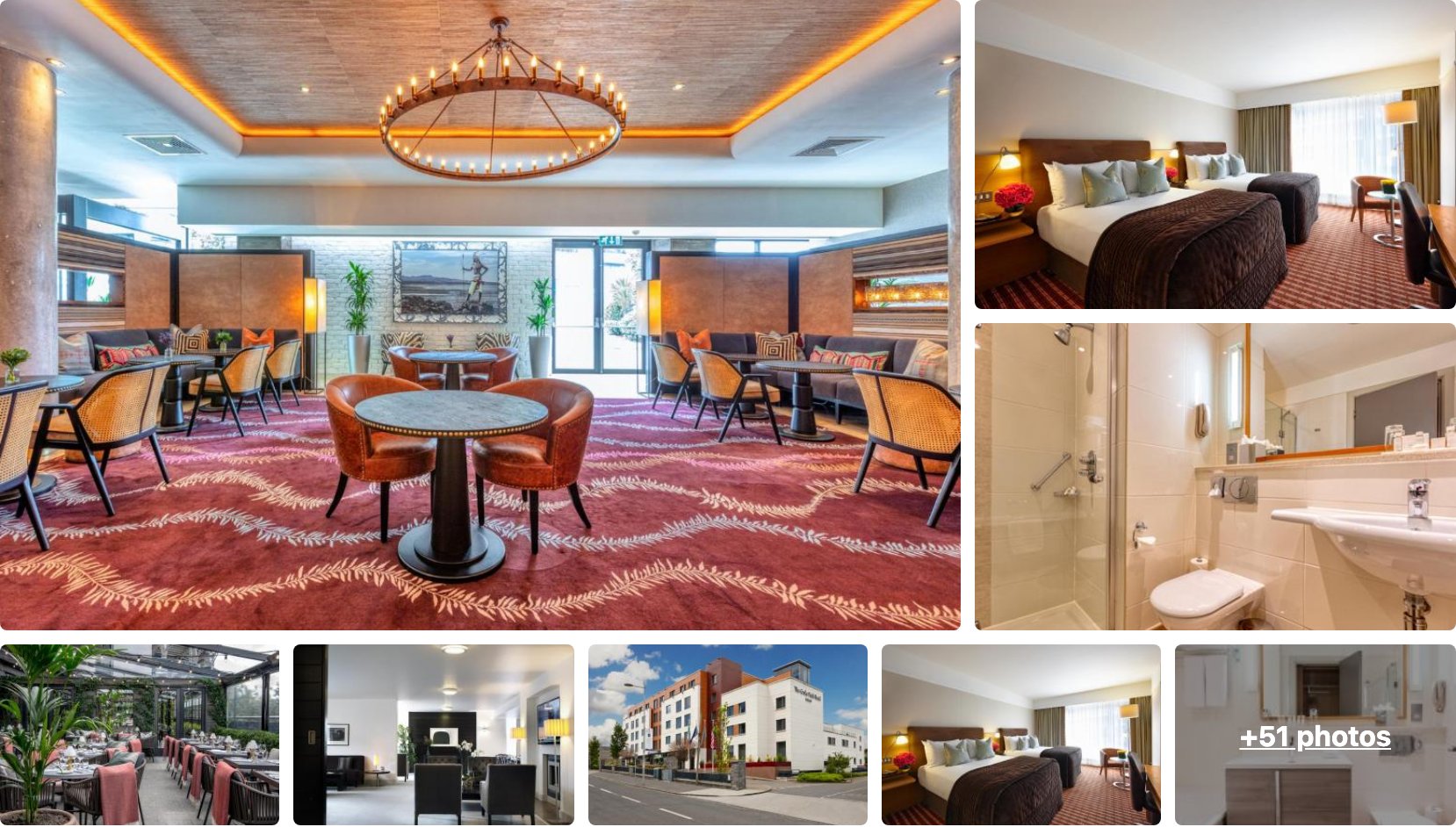
The Croke Park Hotel sits 300 meters from the stadium, which makes it the easy pick on a match day. It scores 8.8 across more than 6,000 reviews, so you know what you’re getting, and there’s a bar and restaurant on site for before and after the game.
👉 View The Croke Park Hotel Availability and Pricing
Dergvale Hotel
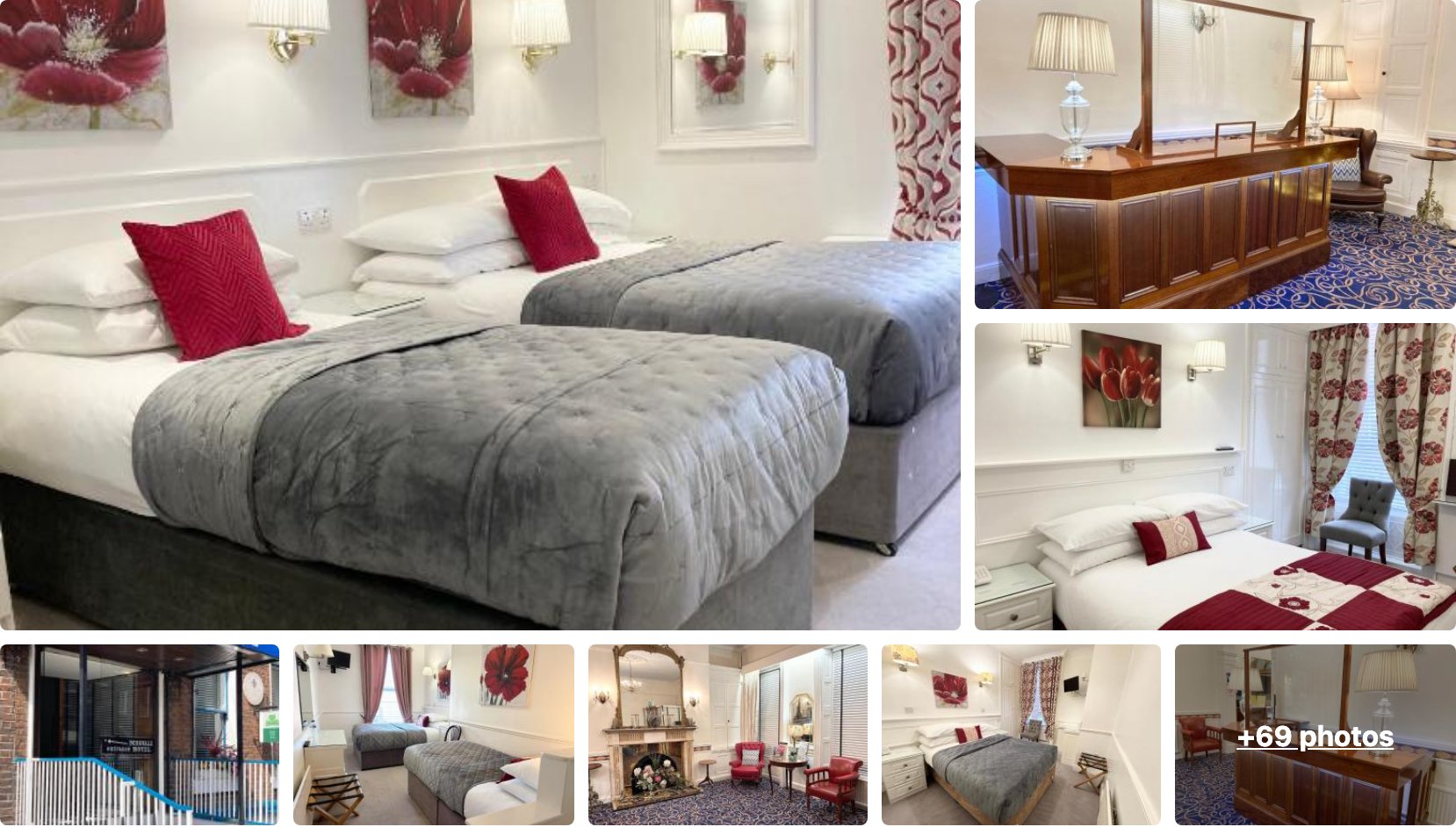
Dergvale Hotel is a small family-run hotel on Gardiner Place, about a kilometer from the ground and a short walk from the city center. It scores 9.0 from 747 reviews, which is rare for a hotel at this price, and it’s a solid mid-range base if you want a real Dublin hotel without the city-center rate.
👉 View Dergvale Hotel Availability and Pricing
Harveys Guest House
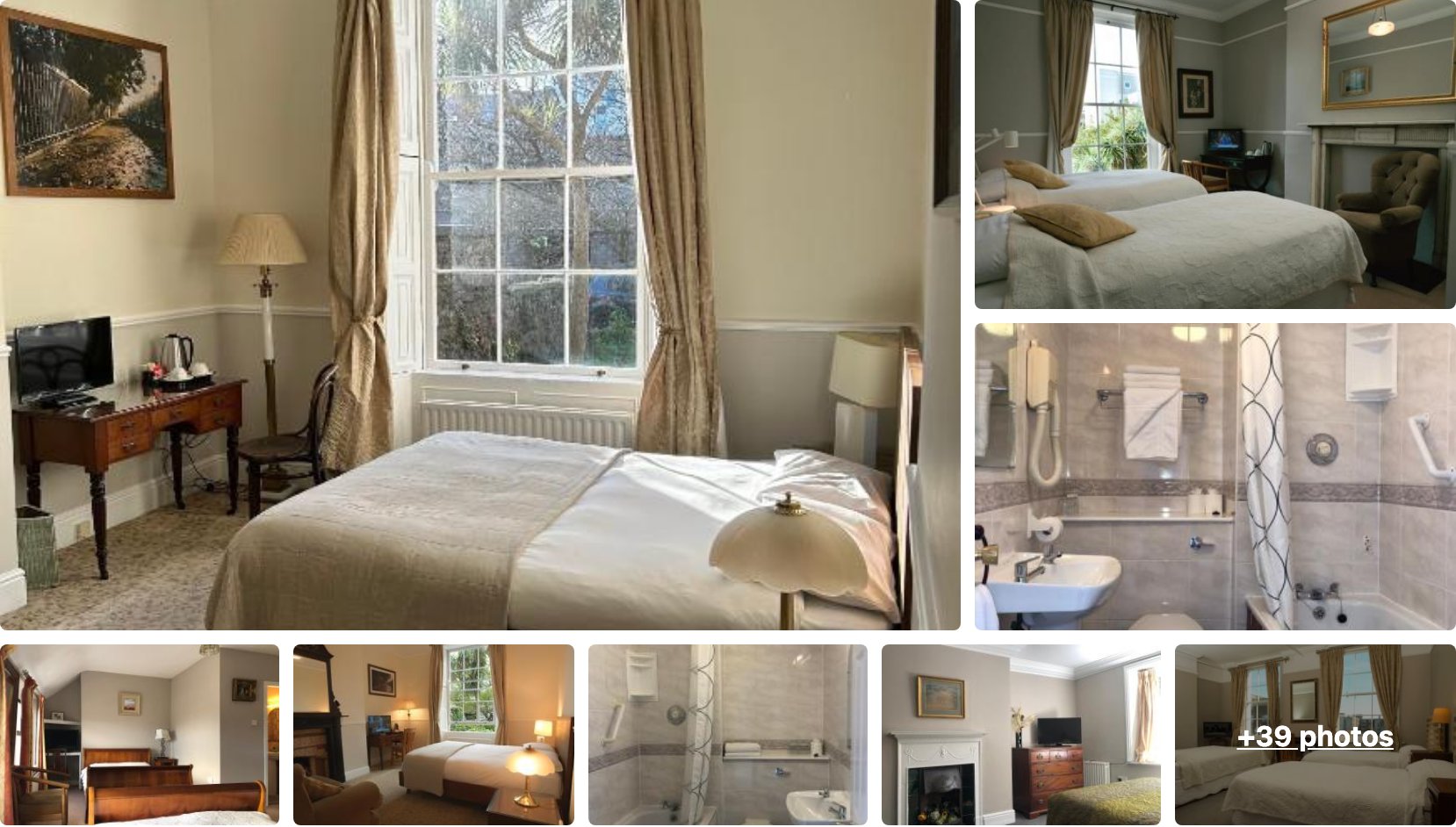
Harveys Guest House is the budget call, a Georgian guesthouse on Upper Gardiner Street about 800 meters from Croke Park. It scores 8.7 from over 1,100 reviews, and for a B&B this close to the stadium it’s the kind of place that books out fast on a championship weekend.
👉 View Harveys Guest House Availability and Pricing
In short
- Hurling is about 3,000 years old, the oldest field sport in Europe.
- Two teams of 15 play 70 minutes with a wooden hurl and a leather sliotar.
- Over the crossbar scores 1 point; into the net is a goal worth 3.
- Scores read as two numbers, like 2-15, meaning 6 plus 15, or 21 total.
- The season peaks May to July, ending with the All-Ireland final at Croke Park.
Frequently Asked Questions
Do I need to know the rules to enjoy a hurling match?
No. Learn the scoring, that a point is 1 and a goal is 3, and you’re set. The speed and the crowd carry the rest, and you’ll pick up the flow within the first ten minutes.
What’s the difference between hurling and Gaelic football?
They share the same pitch, the same goals, and the same scoring. Gaelic football uses a round ball you carry and kick by hand and foot, with no stick. Hurling is the faster of the two by a long way. The GAA runs both, and they fill the summer Sundays between them.
Is hurling dangerous to watch or play?
To watch, not at all. To play, less than you’d guess given the speed and the hard ball. Helmets are required at every level now, and the ref polices the high swings hard, so serious injuries are rarer than the game looks.
Can tourists buy tickets to a GAA match?
Yes, easily, for everything except the All-Ireland final. Buy a provincial or league game online at gaa.ie or over the counter at any Centra or SuperValu, walk in, and you’re sorted. The final is the only one that’s truly hard to get into.
When is the best time to see hurling in Ireland?
May to July, when the inter-county championship is in full swing and the weather gives you a fair shot. A Munster game in Thurles, Limerick or Cork is the one I’d build a trip around if you can.
How long does a hurling match last?
A top inter-county game is 70 minutes of play, two halves of 35, plus a halftime break and a little stoppage time. Add the build-up in the town beforehand and it’s a full afternoon out.
Final Thoughts
If you take one thing from all of this, make it the simple version. Learn the scoring, get yourself to a championship game between May and July, and let the speed and the crowd do the rest.
You don’t need a final and you don’t need to understand every rule. A provincial Sunday at a county ground is cheaper, easier to get into, and every bit as good as the sport gets. That’s the one I’d point a first-timer at every time.
What sells it is knowing these are amateurs playing for the parish they grew up in, for free, in front of tens of thousands. That’s why a GAA match is the one thing we tell people to go out of their way for in Ireland, even if they’ve never picked up a hurl in their life.
Time a summer trip around a Munster game in Thurles, Limerick or Cork, and you’ll come home talking about it more than the cliffs and the castles.
Like it? Pin it!
Save this guide for later