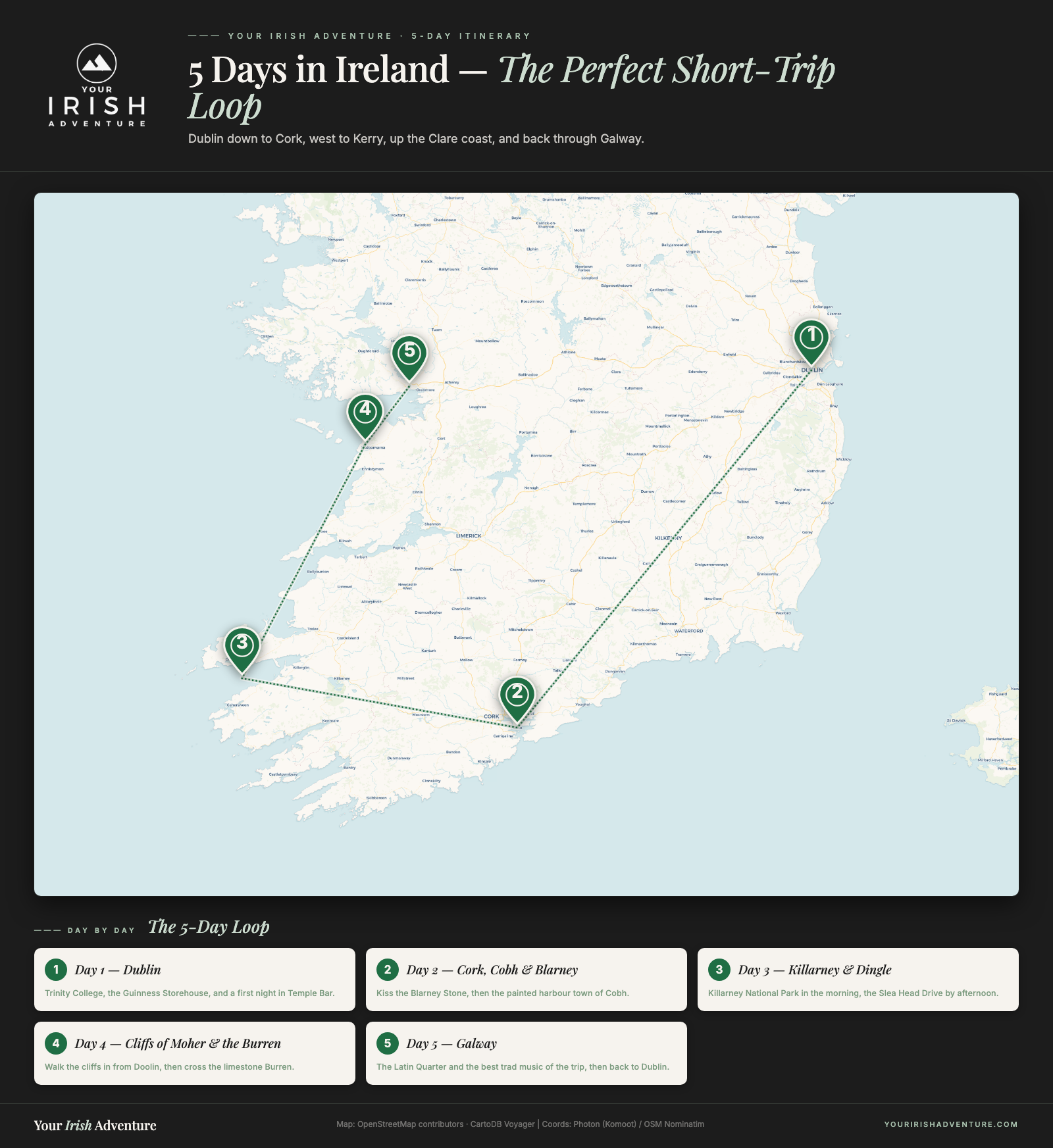
Our first ten minutes in Galway, we walked into Monroe’s Tavern on Dominick Street and found about 20 people mid-session. That’s the trip we’d plan again, and it’s why this 5 day Ireland itinerary is built as one drivable loop with real pints and real coastline. Five days is plenty if you don’t try to see everything.

We drove this route in late September into early October, Dublin down to Cork and back up the west coast in a campervan. You’ll most likely do it in a rental car, which honestly works better for parking and flexibility, and every stop here works the same way by car.
Five days is short. You won’t see Northern Ireland, and you won’t drive the whole Wild Atlantic Way, so don’t try. What you can do is Dublin on foot, Cork and Cobh and Blarney, Killarney and the Dingle Peninsula, the Cliffs of Moher and the Burren, and a proper last night in Galway.
Here’s the exact itinerary we’d give a first-timer, day by day, with the drive times, the pubs that were worth it, and the honest stuff about what fits in a day and what doesn’t.
More Ireland Itineraries & Road Trips
- 3 Days in Ireland: The Perfect Itinerary
- 10 Days in Ireland: The Ultimate Itinerary
- 14 Days in Ireland: The Ultimate 2-Week Itinerary
- Wild Atlantic Way Itinerary – Ireland’s Most Epic Road Trip
Quick Answer:
This 5 day Ireland itinerary runs as one drivable loop: Day 1 in Dublin on foot, then a rental car to Cork, Cobh and Blarney, on to Killarney and the Dingle Peninsula, the Cliffs of Moher and the Burren, and a last night in Galway. Dublin to Cork is about 2.5 hours on the M8. Five days is enough if you skip Northern Ireland.
Getting Around Ireland: Renting a Car and Driving
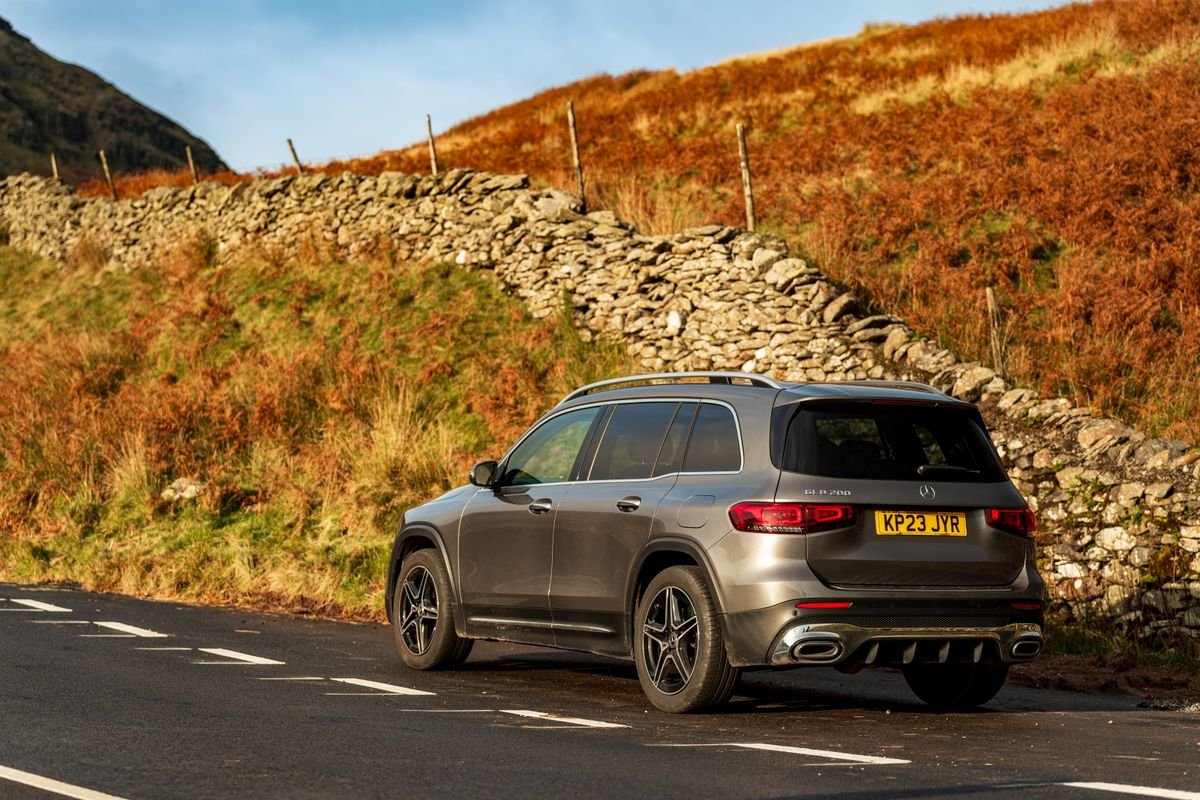
For this loop you want your own wheels. There’s no train or bus that strings Cobh, Dingle, the Cliffs of Moher, and Galway together in five days, so a rental car is the move. We did it in a campervan, but a regular car is easier for parking and cheaper to run, and every stop on this route works the same way.
Don’t pick up the car until you leave Dublin
Day 1 is Dublin on foot, and a car in the city is just a parking headache you’ll pay for. Do Dublin without one, then grab your rental the morning you head for Cork. The airport pickup is the easy option, well signed and quick to find.
One tip: book the car well in advance and book an automatic if you can’t drive a manual. Manuals are the default here and automatics sell out, especially in shoulder season and summer. Expect to pay more for one. We compare car hire deals on Discover Cars before we lock anything in, since it lines up the local and big-name rental desks side by side.
Driving on the left and the narrow roads
You drive on the left. It feels strange for about an hour and then it’s normal. The bigger adjustment is the roads. Once you’re off the motorways, a lot of Ireland is single-lane country roads with stone walls or hedges right up against the car, and the odd boreen barely wide enough for one vehicle.
Slea Head Drive on the Dingle Peninsula and the small roads through the Burren are exactly this. Go slow, use the pull-in spots to let oncoming cars pass, and don’t take the smallest hire car if you’re nervous, but don’t take a huge one either.
Plan on the drives taking longer than the map says. Dublin to the Cork area is about 2.5 to 3 hours on the M8, but the scenic west-coast bits crawl. Build in time and you won’t be stressed.
Parking and tolls
Here’s the honest one. Town-centre parking in Galway, Killarney, and Dingle is a pain, and it was worse for us in a big vehicle. We ended up staying just outside town in a few places and taking taxis in. Download the FreeNow app for cabs, it works like Uber and saved us repeatedly.
Bigger sights have proper car parks. Blarney has a large lot with space even for an oversized vehicle, and in Cobh we parked right on the water at Five Foot Way for €10 a day. The M50 ring road around Dublin is a barrier-free toll, so check whether your rental covers it or pay online within a day or two to avoid a fine.
Day 1: Dublin
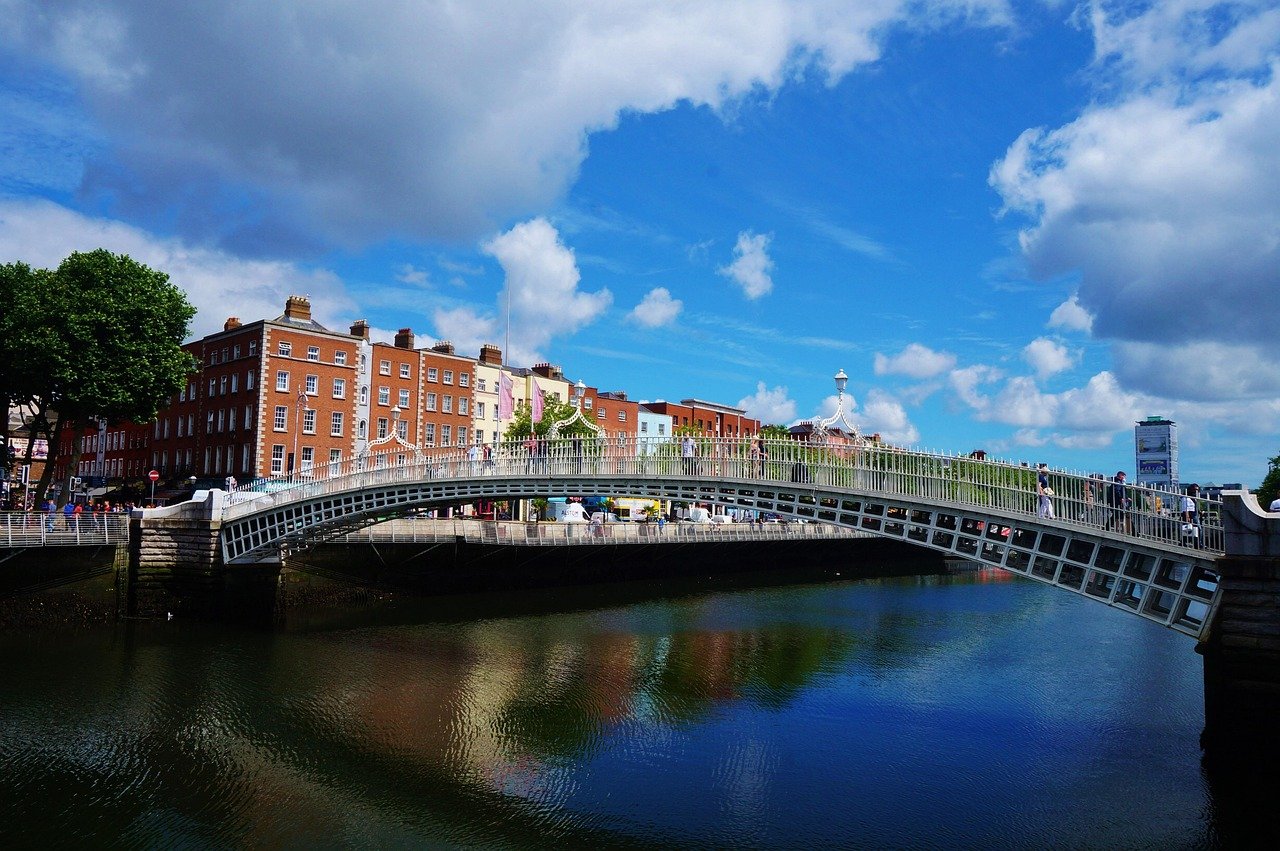
Day 1 is Dublin on foot, and that’s the way to do it. We came in on the airport bus, dropped our bags at Fitzsimons Hotel right in Temple Bar, and walked everywhere from there. The city center is compact, so you can hit the big sights and still have plenty left for the evening.
Trinity College and the Book of Kells
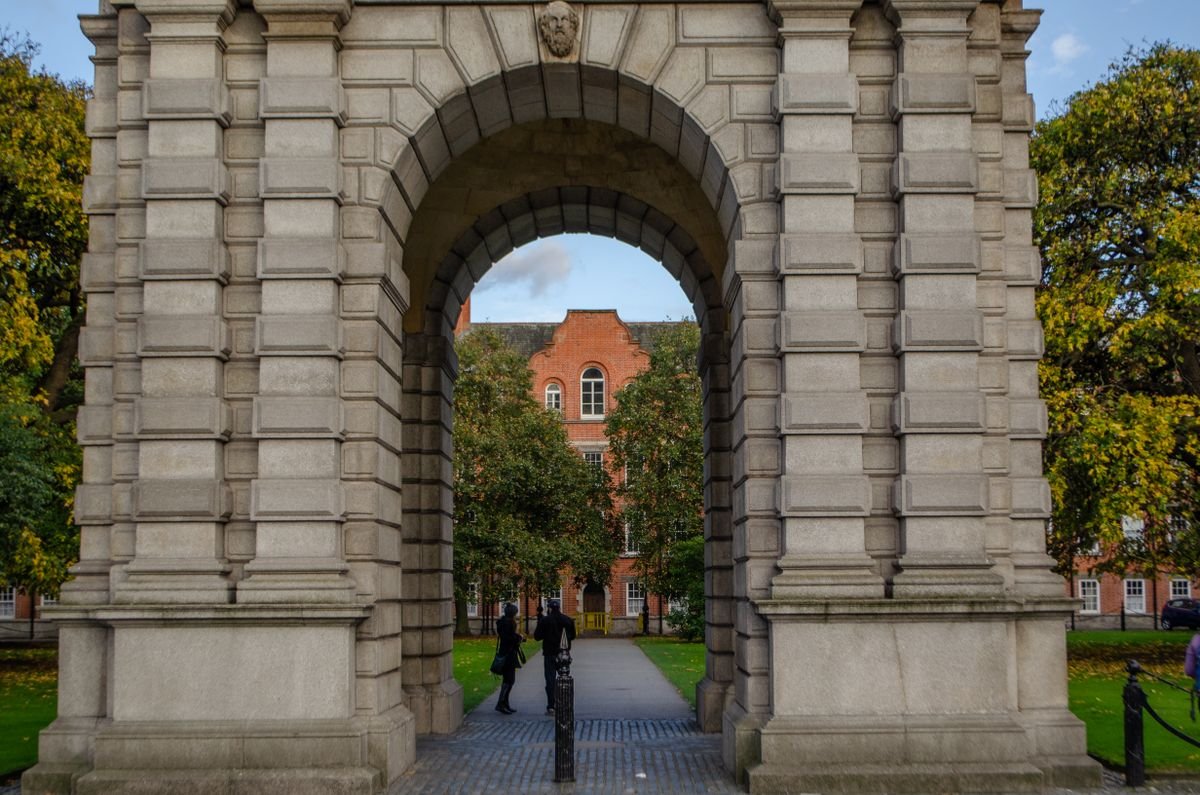
Start at Trinity College. The grounds are free to walk and underrated, and honestly they were the part I liked most. Cross Parliament Square, find the Campanile bell tower, and look for the Sphere Within Sphere sculpture sitting outside the library.
The Book of Kells is the paid ticket here. It’s a 9th-century illuminated manuscript, and the same entry gets you into the Old Library Long Room, the big barrel-ceilinged hall of old books you’ve seen in photos.
Book a timed slot online before you go. It’s one of the busiest things in the city, and even on a Tuesday in late September the queue was real. Get an early slot and you’ll have the rest of the day free.
The Guinness Storehouse
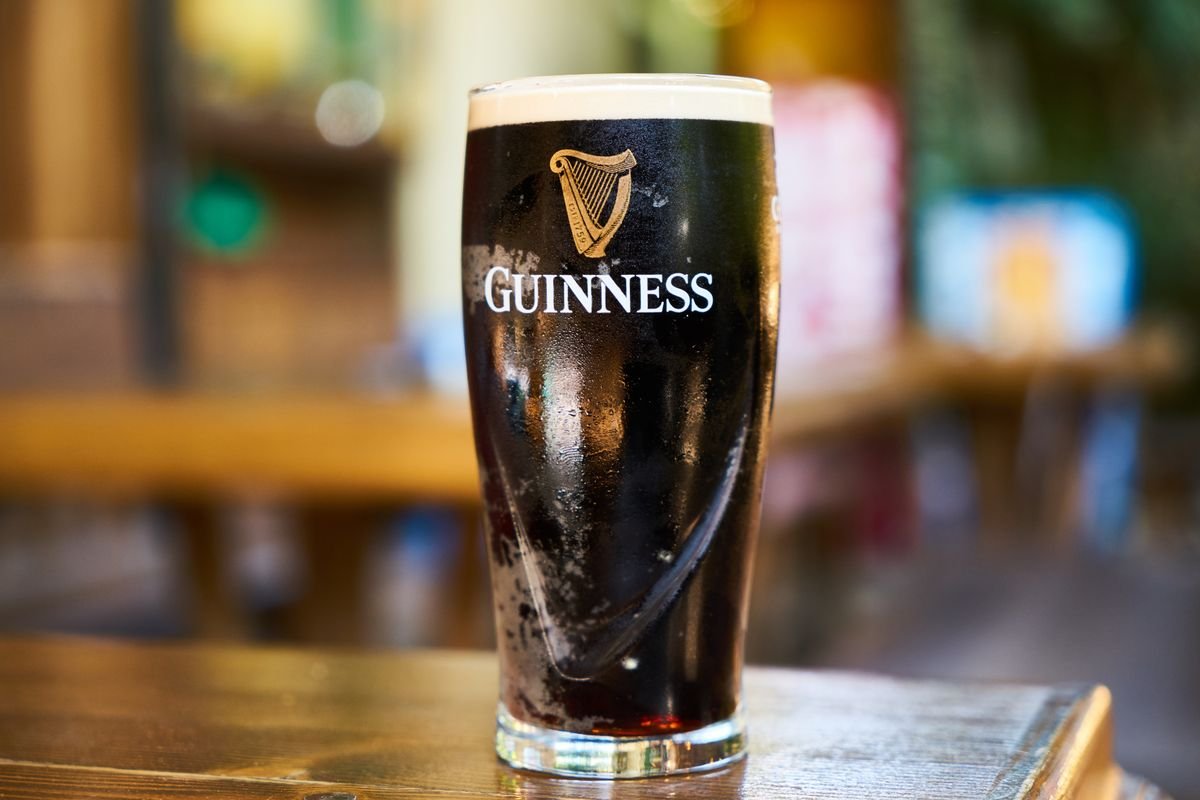
The Guinness Storehouse is the other big Dublin ticket. It’s seven floors built inside the old brewery, walking you through how the stout is made, and it ends at the Gravity Bar up top with a 360-degree view over the city and a pint included. Buy online ahead of time, because the door line gets long. You can book the Guinness Storehouse tour with a pint on GetYourGuide and skip the worst of the queue.
I’ll be honest, we actually did the Jameson Distillery on Bow Street instead, and it was great. The reconstructed office, the glass-ceiling bar, and a four-glass tasting flight made it well worth the price. If you’re more of a whiskey person, that’s the swap I’d make.
An Evening in Temple Bar
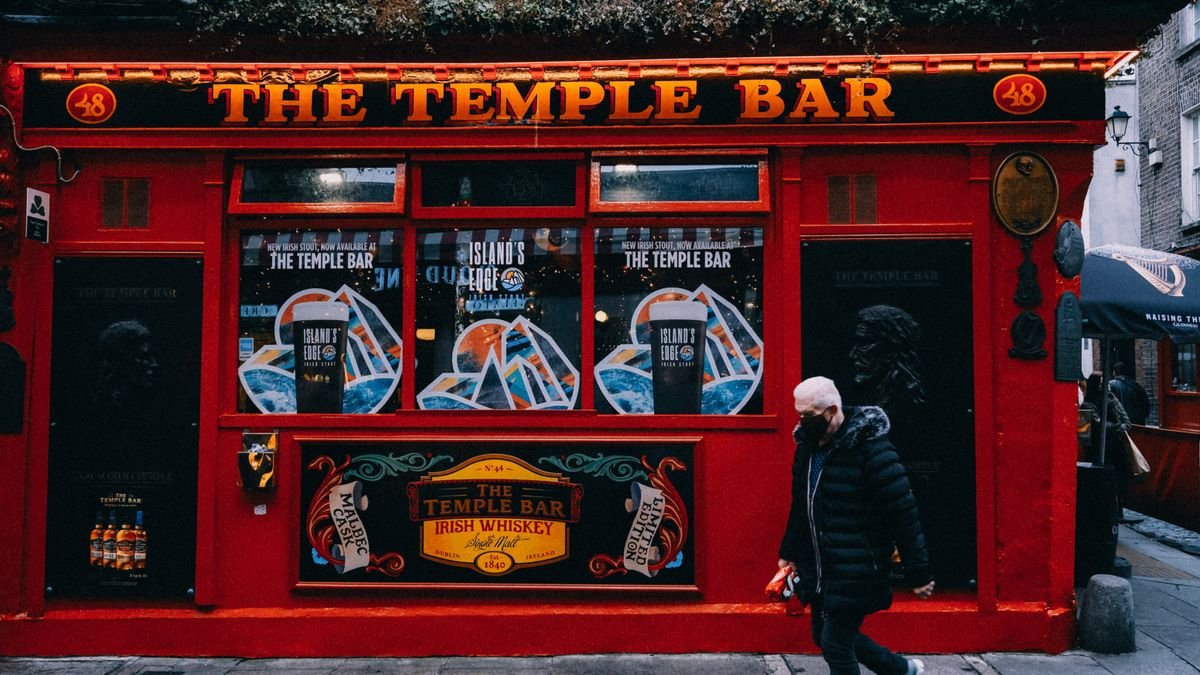
Temple Bar is touristy and you’ve heard that already. It’s still a fun first night, and after a long travel day it’s exactly what you want. Our first pints were at Darkey Kelly’s on Fishamble Street, then we worked our way through Napper Tandy, The Hairy Lemon, and up to Merrion Row.
One warning: pints in Temple Bar are pricey, easily the most expensive of the trip. Have a few here for the atmosphere and the music, then drink cheaper elsewhere the rest of the week. It’s a great way in to Ireland, just don’t make it your whole impression of the country.
More Things to Do in the Cities on This Route
- 29 Free Things To Do in Dublin: A Local’s Guide
- A Weekend in Dublin, Ireland: The Perfect 2 Day Itinerary
- 4 Days in Dublin: Perfect Itinerary
Day 2: Cork City, Cobh, and Blarney Castle
Grab the rental and point it south on the M8. This is your first proper drive of the trip, and it’s an easy one, mostly motorway down to the Cork area. Today is about two stops that pair up perfectly: Blarney Castle just north of the city, and the harbor town of Cobh just south of it.
Do Blarney first thing, while you’ve got energy, then drop down to Cobh for the afternoon and the night. Cork city sits in the middle, and I’ll be straight about how much of it you’ll actually see.
Kiss the Blarney Stone
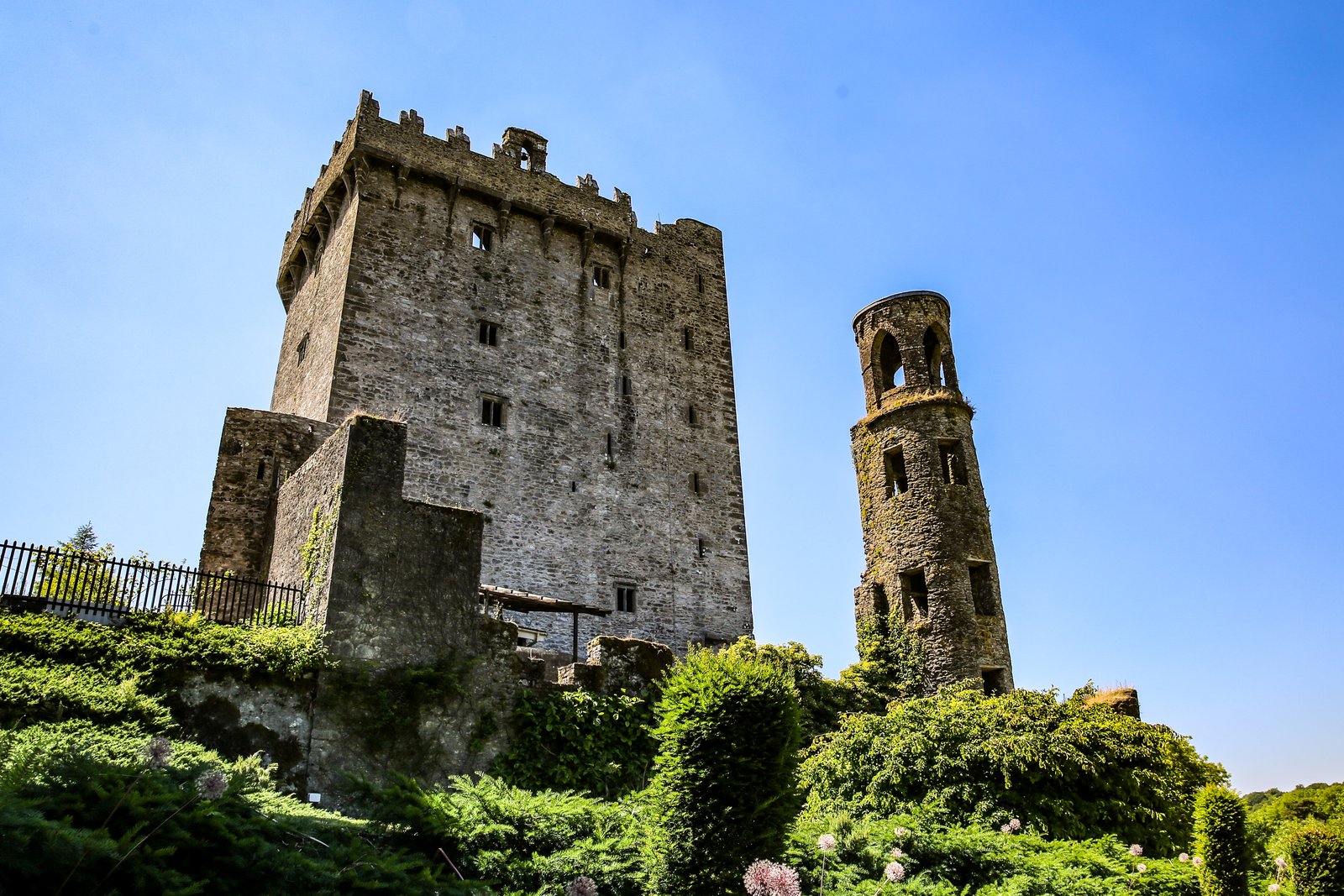
We pulled into Blarney expecting a tourist trap and left pleasantly surprised. The stone itself is the touristy bit, sure, but the castle tower is substantial and the grounds are the real reason to come.
To kiss the Blarney Stone you climb the tower, lie back over the parapet, hold the iron bars, and lean down into the gap. It’s quick and a little silly, and you do it for the story. Supposedly it gives you the gift of the gab. If you’re not driving in yourself, you can book the Blarney Castle half-day tour on GetYourGuide out of Cork.
The grounds are what won us over. The Fern Garden, the River Bank Walk, and the Victorian mansion of Blarney House are all worth your time, and the gardens are kept beautifully. Give it two to three hours, not the rushed half-hour you might budget for it.
Parking is easy here, a big lot with room even for an oversized vehicle, so this is one stop where having the car is no hassle at all.
Explore the Harbour Town of Cobh
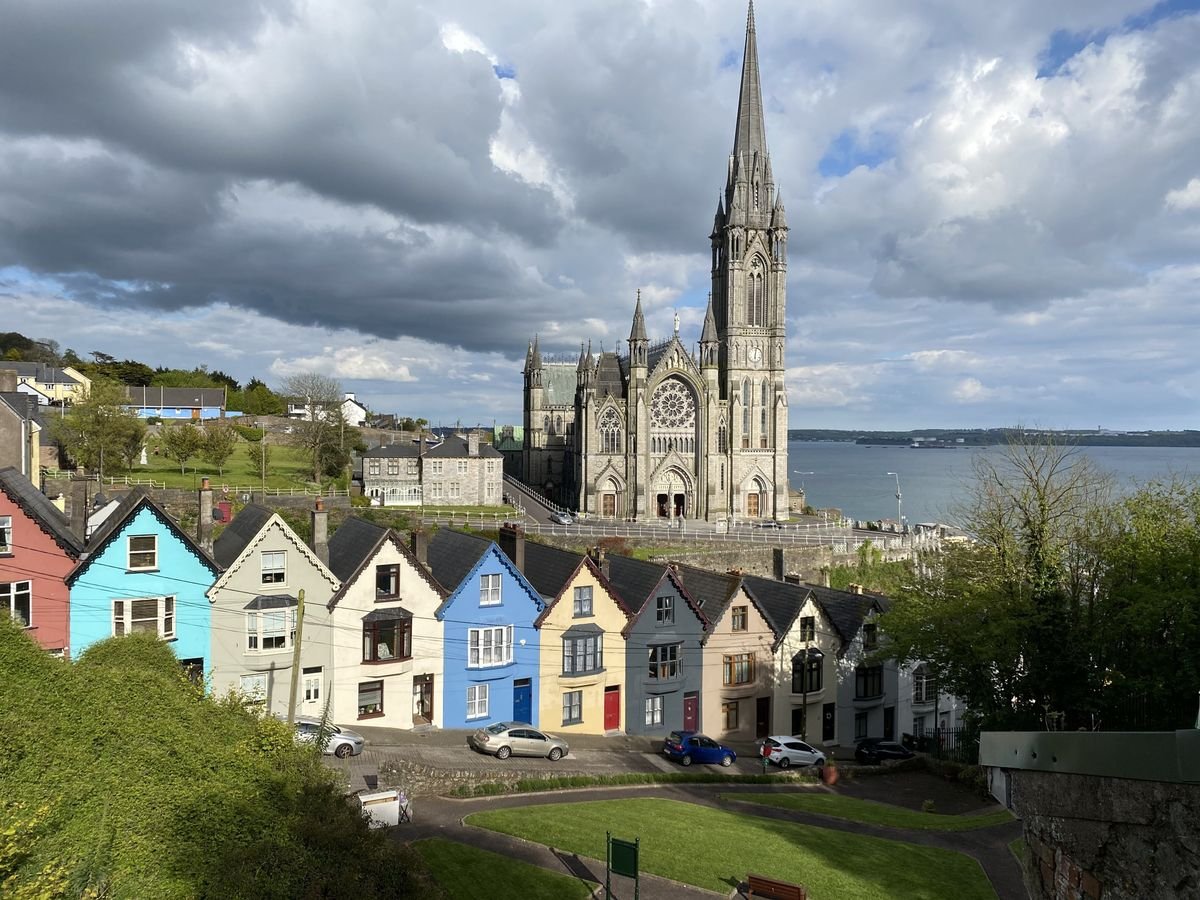
From Blarney it’s about 45 minutes down to Cobh, the colorful harbor town that was the Titanic’s last port of call. It’s a 25-minute train from Cork city too, but you’ve got the car, so just drive in and park on the waterfront.
Cobh is still a working cruise port today, one of Ireland’s busiest. Ships anchor right in the harbour through the summer season, so don’t be surprised to share Cobh’s steep streets with a few thousand extra visitors on a given day. If you’d rather see this stretch of coast from the water than the driver’s seat, Celebrity Cruises runs all-inclusive european cruises that call into Cork.
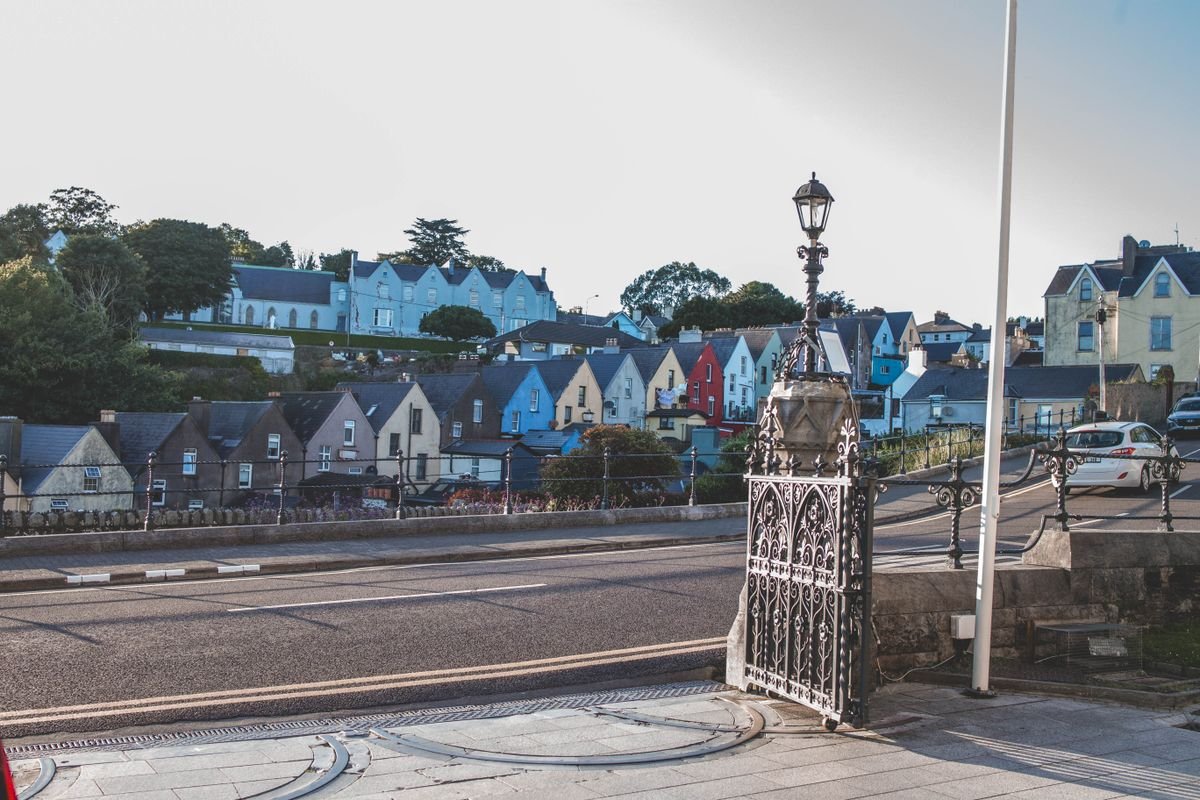
Walk up to Spy Hill first. That’s where you get the postcard shot of the Deck of Cards houses, a row of tall painted terraces stacked up the hill with St. Colman’s Cathedral towering behind them. The Gothic cathedral is impressive close up too.
From the top, wander down the steep streets, West View, Westbourne Place, the Khyber Pass, and finish with a pint at Kelly’s Bar. One honest warning: restaurant options in Cobh can be thin, and a few places were shut when we visited. Book ahead or plan to eat in Cork.
About Cork city itself: we barely saw it. An Atlantic storm rolled in and kept us pinned in Cobh, so we drove through, grabbed a meal at Le Bon Crubeen, and that was it. Cork is Ireland’s second city and everyone who spends time there loves it. If the weather plays nice, give the English Market and the pubs an hour or two.
Day 3: Killarney and the Dingle Peninsula
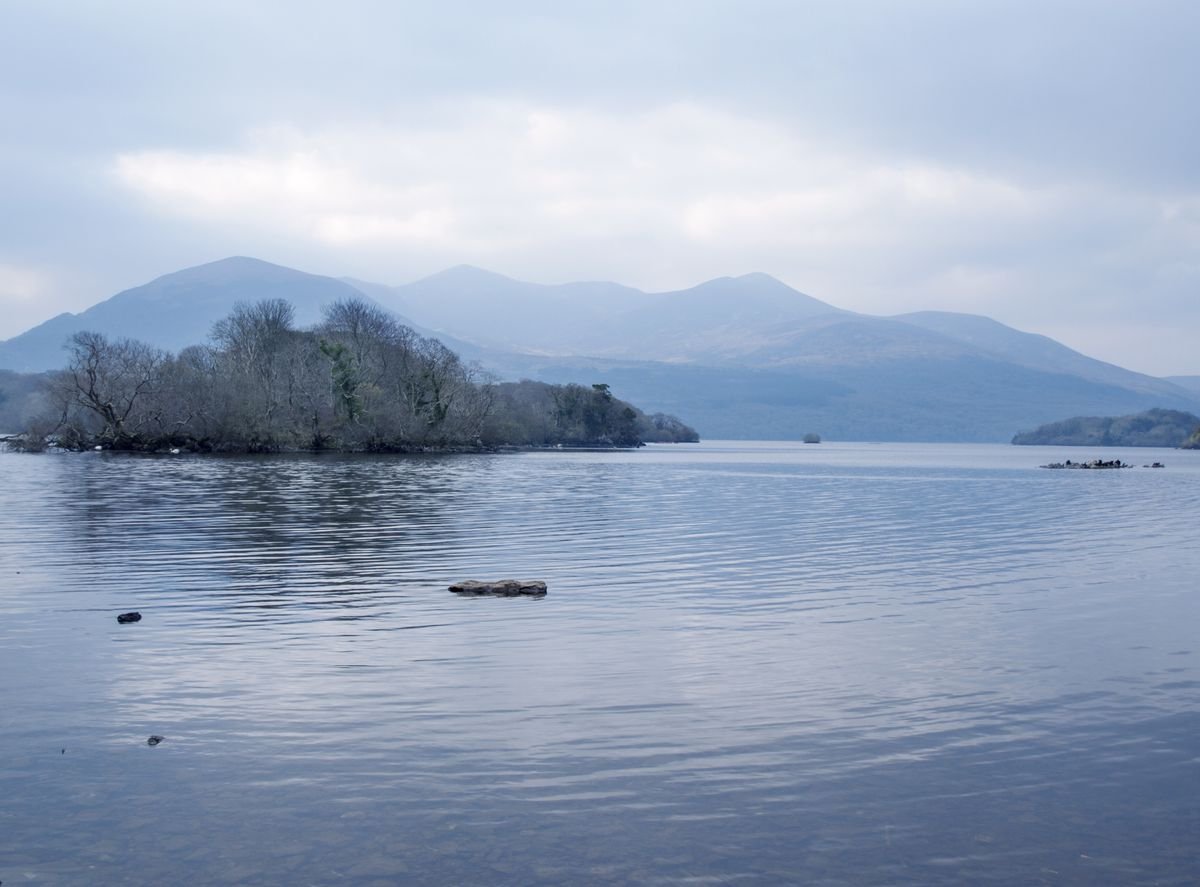
From Cobh you’re heading west into Kerry. It’s about an hour and twenty to Killarney, and this is your biggest scenery day of the trip. I’ll say up front that Killarney National Park and the full Dingle Peninsula is a lot to pack into one day, so you do the park in the morning and aim to be on Dingle by mid-afternoon.
Killarney National Park
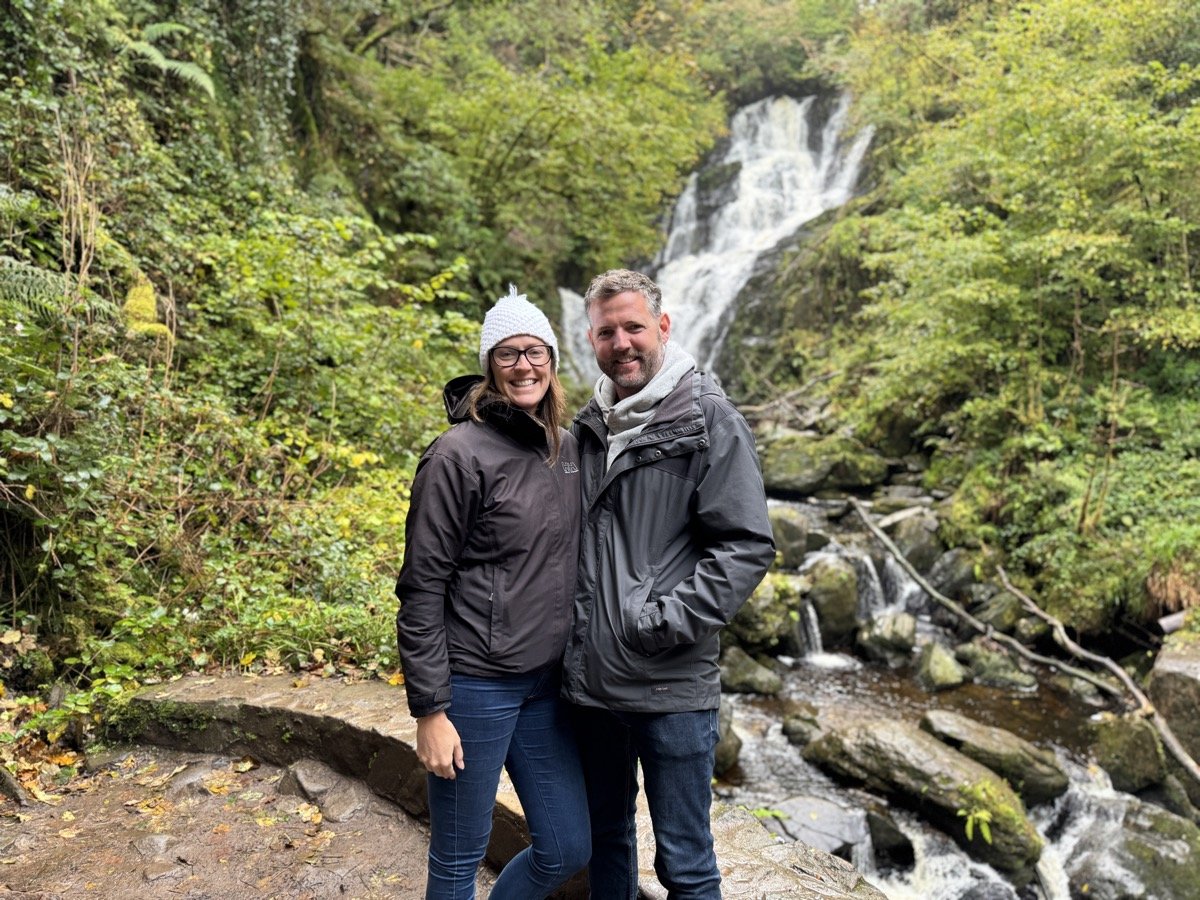
Killarney town has a touristy reputation, and that part is fair. The National Park is the real thing, though, and it’s where you spend your morning. We were there on a Wednesday in early October and got rained on all day, and we still loved it.
Base yourself around the Muckross Estate. Muckross House is the Victorian manor everyone visits, but the part I’d send you to is Muckross Abbey, a 15th-century Franciscan friary you can walk right through. The ruins in the mist were the highlight for us, and they’re free.
Add Torc Waterfall and a loop of the woodland walks and you’ve got a solid two to three hours. If the rain has you beaten, do what we did and warm up over afternoon tea at Monk’s Lounge in the Muckross Park Hotel. It’s a good one.
Killarney also has some of the best trad music of the whole route. The band at the Killarney Grand was excellent, and O’Connor’s is another reliable spot if you end up back here for the night.
Drive the Slea Head Loop
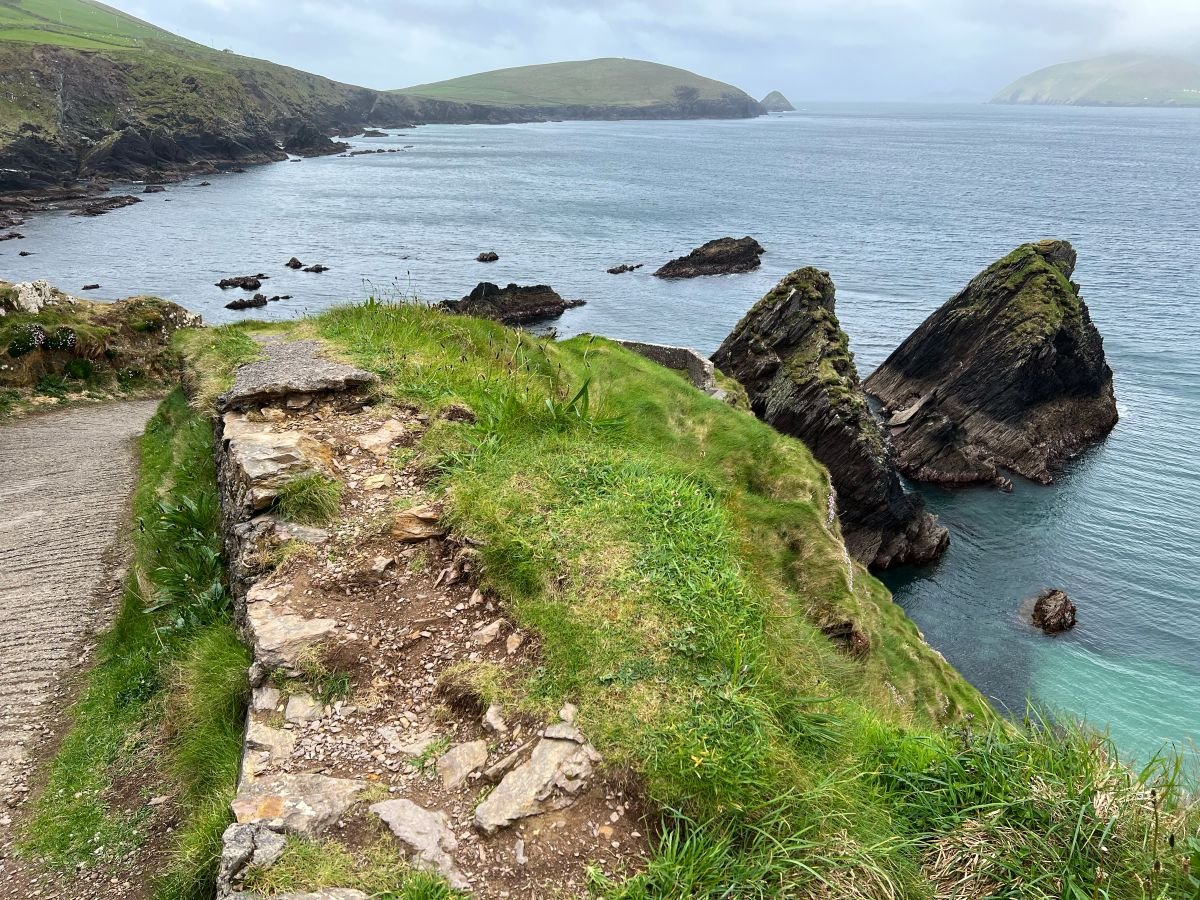
From Killarney it’s about an hour and a half over to Dingle town, and we stopped in Adare on the way for shepherd’s pie and a Guinness, which is worth the break. Once you’re on the peninsula, the Slea Head Drive is the reason you came.
It’s a loop of narrow coast road past beehive huts, empty beaches, and the Atlantic dropping away beside you. If the narrow roads put you off driving it yourself, you can book the Dingle and Slea Head day tour on GetYourGuide straight out of Killarney. Do it in daylight. This is the one piece of advice I’d hammer home, because we arrived in heavy rain and only ever saw Dingle at night, and missing that drive is my biggest regret of the trip.
For the evening in town, go straight to Foxy John’s. It’s a working hardware shop by day with a bar at the back, and we walked in to a trad session with a guitar and tin whistle going. It’s one of the most unusual pubs in Ireland and it’s exactly the kind of stop that makes a night here.
One honest call on the schedule: Dingle deserves two nights, not the half a day this itinerary gives it. If you can add a day anywhere, add it here.
Where to Stay in Dingle
Day 4: The Cliffs of Moher and The Burren
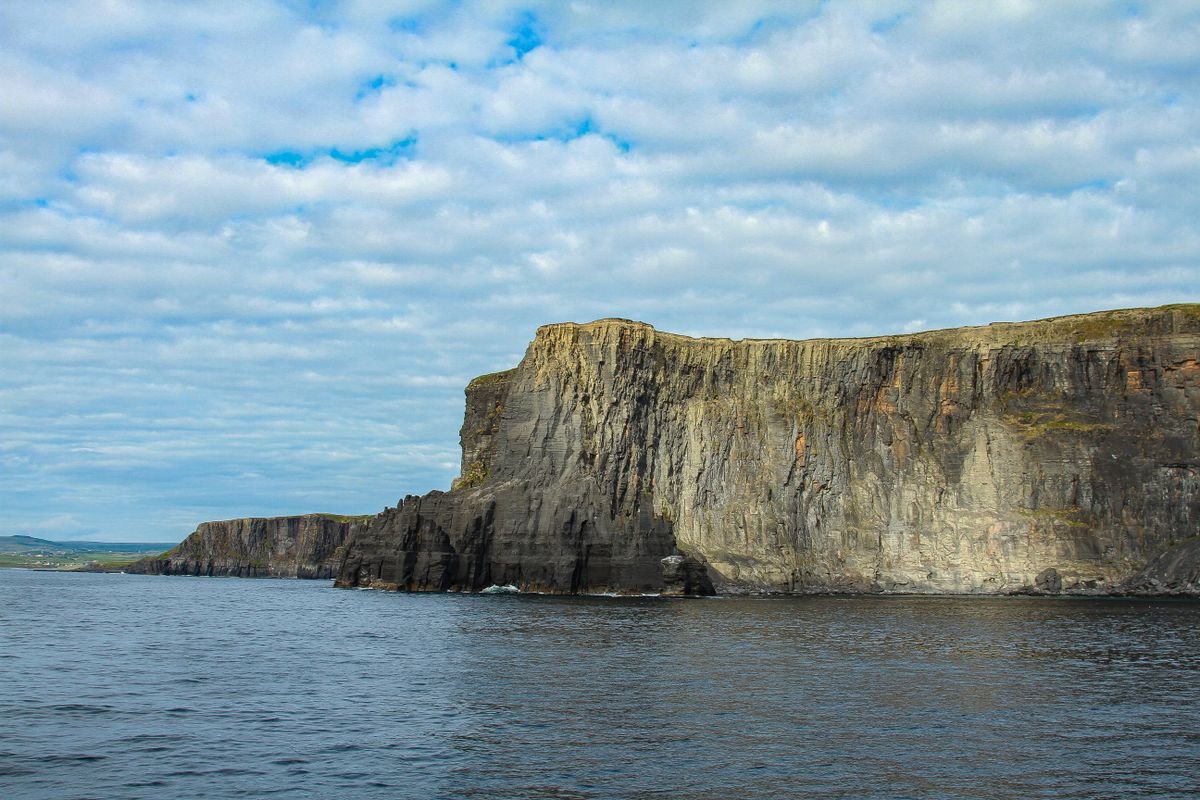
Day 4 moves you north out of Kerry and up into County Clare. From Dingle it’s a long drive, so take the Killimer to Tarbert car ferry across the Shannon estuary. It saves you a big loop inland and the crossing is part of the fun. Aim for Doolin as your base, the little village right at the northern end of the Cliffs of Moher.
Walk the Cliffs of Moher
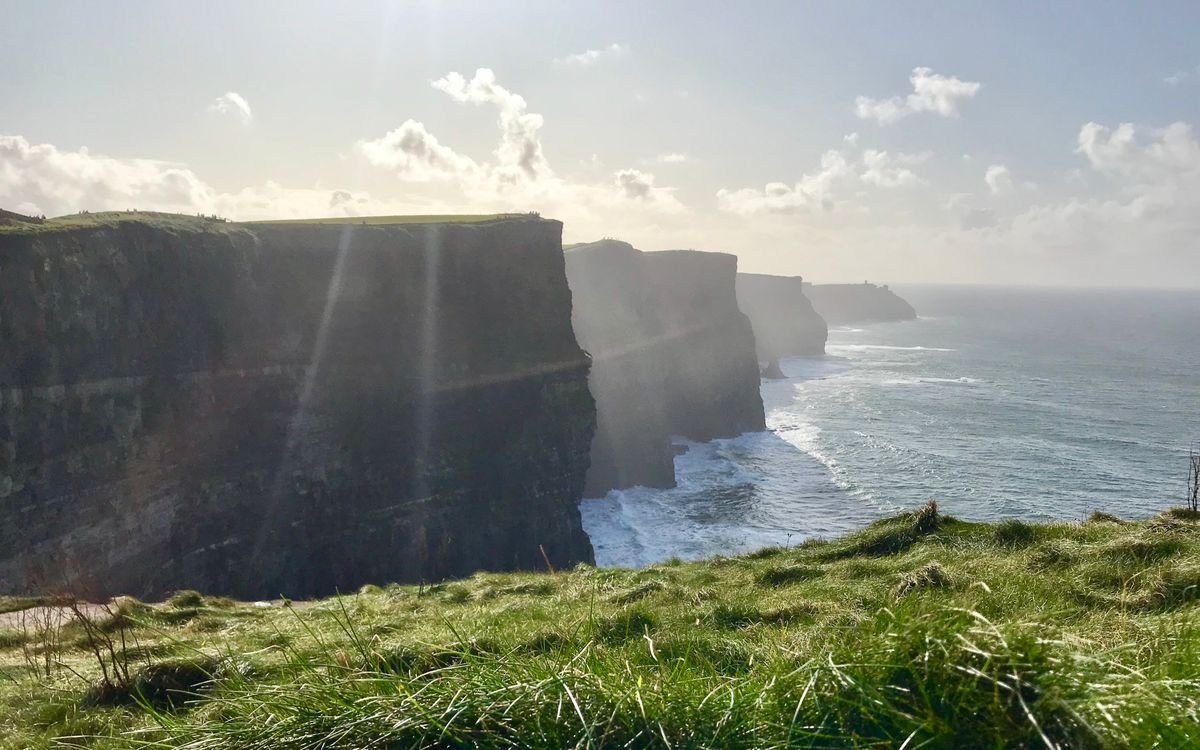
A lot of people park at the main visitor centre and look at the cliffs from the platform. We did it differently and I’d tell you to do the same. From Doolin there’s a coastal path that runs right along the northern cliffs, and walking in is far better than driving to the car park. For a different angle on them, you can also book the Doolin Cliffs of Moher boat tour on GetYourGuide and see the wall of rock from the water.
The trail is narrow and hugs the cliff edge, a sheer drop to the Atlantic on one side and farmland with cows grazing on the other. We hiked about two hours return on a Monday in late September, well into shoulder season, and had long stretches of it to ourselves while the platform was packed.
Dress in layers and wear proper shoes. It was overcast for us, which is honest Clare weather, and the wind picks up even on a calm day. The scale of the cliffs in person is the part that gets you, and the cows on the clifftop are a uniquely Irish touch.
One straight take: if you have an extra few hours, Loop Head Peninsula further south impressed us more than the main cliffs. Wilder, far fewer people, and our photos came out better. The Cliffs of Moher are still worth doing, just skip the crowded platform and earn the view from Doolin.
Cross the Burren
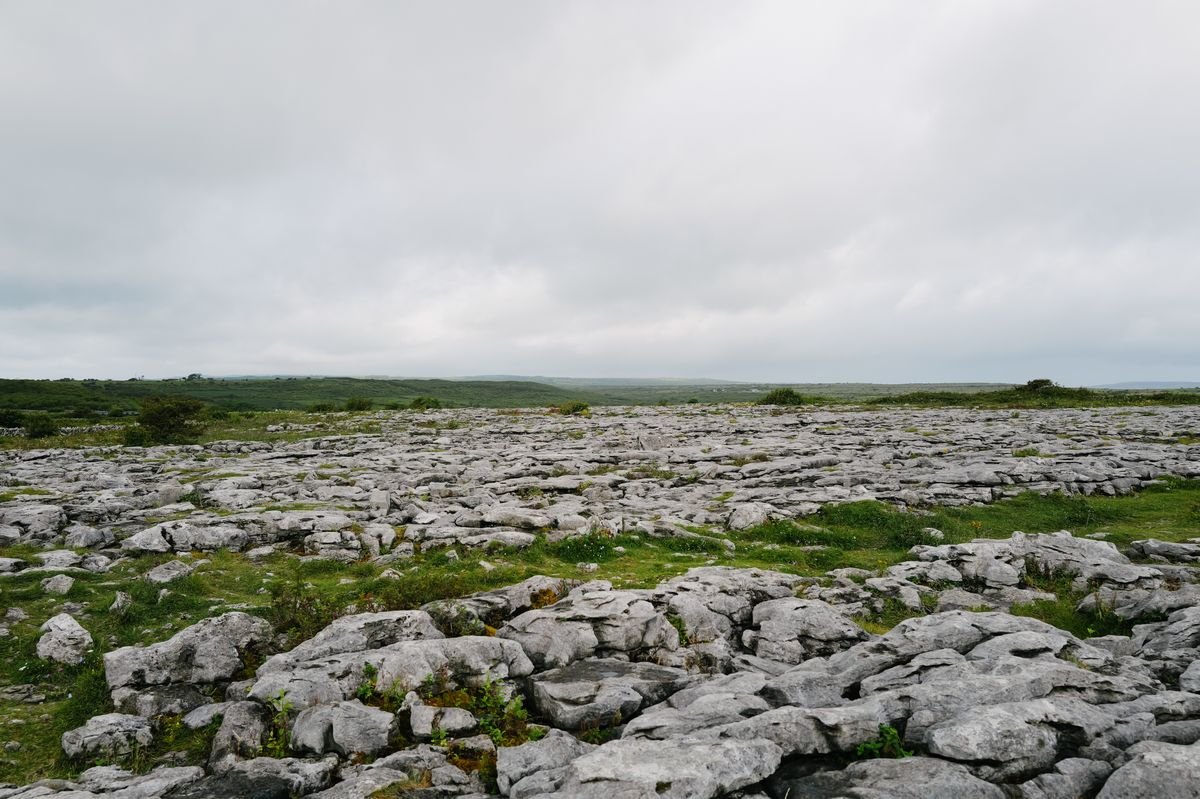
Just inland from the cliffs is the Burren, and it looks like nowhere else in Ireland. It’s a huge expanse of cracked grey limestone, bare rock pavement rolling out to the horizon with wildflowers growing up through the gaps. The drive across it is the attraction.
Take the R480 and the small roads up through it. These are the tight, single-lane country roads I warned you about earlier, so go slow and use the pull-ins. Worth a stop is Poulnabrone Dolmen, a 5,000-year-old portal tomb sitting right out on the rock, free and a quick walk from the road.
Spend the night back in Doolin. The village has three pubs that all run trad sessions, and it’s a much easier place to end the day than fighting for parking in a bigger town. A pint and music in Doolin after a day on the cliffs is the right way to close Day 4.
Where to Stay in Doolin
Day 5: Galway City
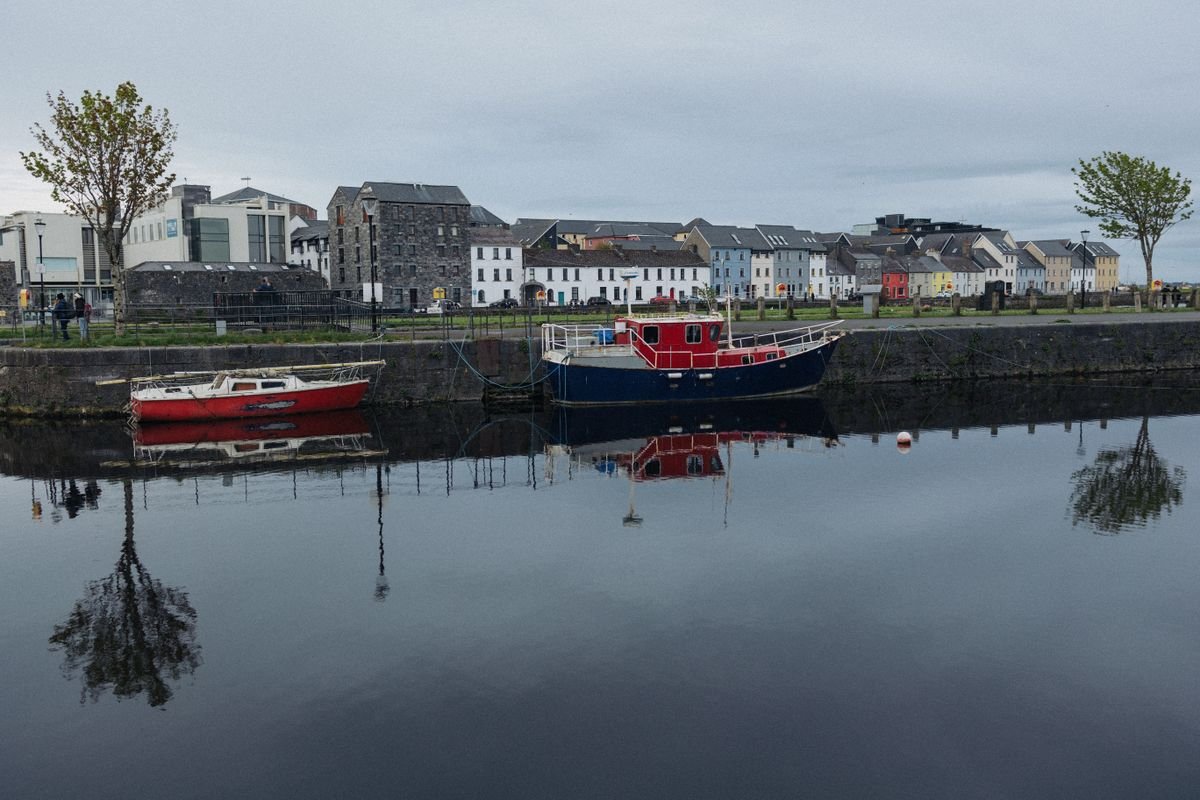
From Doolin it’s about an hour and a half up the coast to Galway, your last stop before the drive back to Dublin. We’d heard a lot of good things about Galway and it turned out even better than we thought, mostly for the music and the streets. It’s the right place to end this loop.
One practical note: parking in the city center is a pain, and it was worse for us in a big vehicle. We stayed just outside town at O’Hallorans in Salthill and taxied in with FreeNow. A regular rental car has it easier, but I’d still base yourself near the edge and walk or cab into the center.
Wander the Latin Quarter
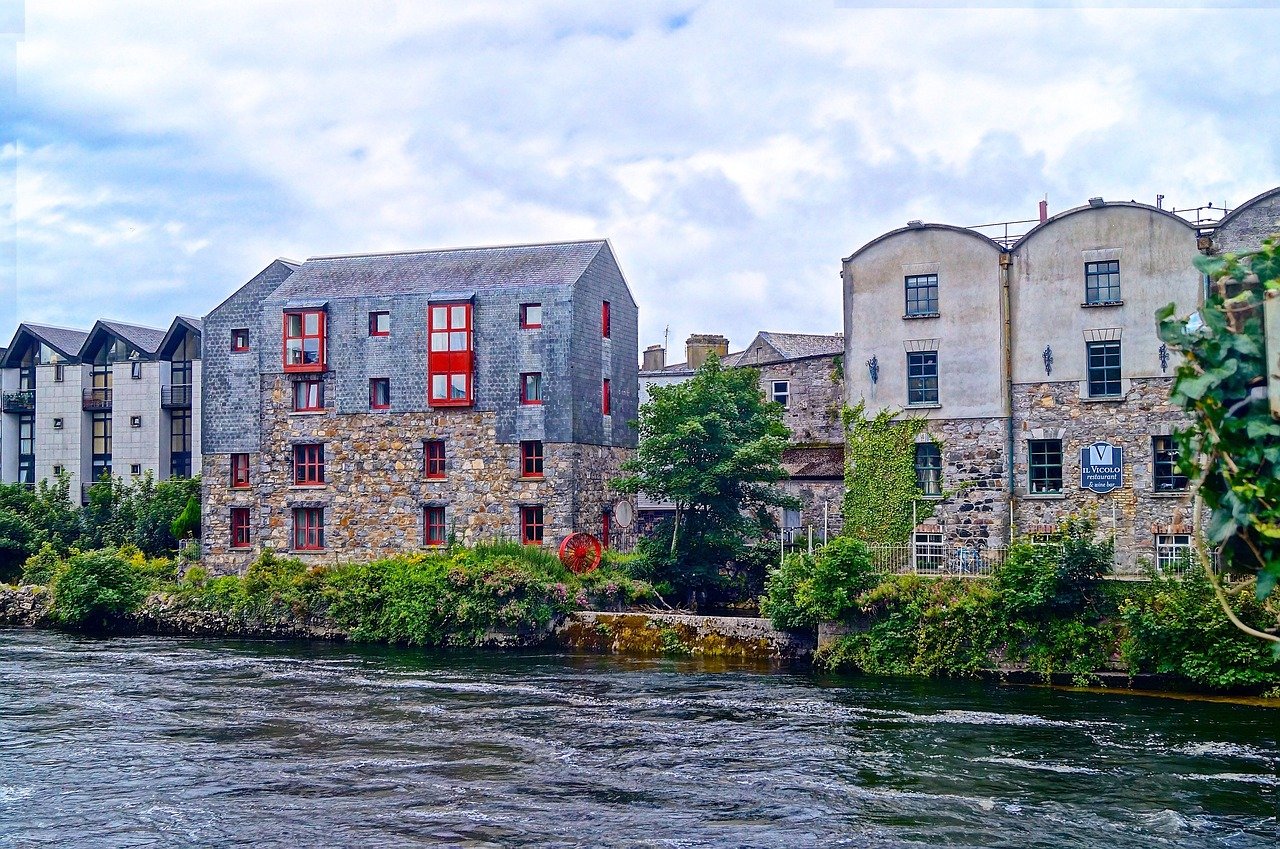
Galway isn’t a city for big monuments. The best of it is just walking the Latin Quarter, the tight grid of pedestrian streets that runs down to the water. Shop Street, Cross Street, and Quay Street are the spine of it, all buskers, painted shopfronts, and people spilling out of pubs.
Grab a bag of chips from Prátaí on Shop Street and eat them on the street, that’s the move. Then walk The Long Walk along the harborfront and out toward the Claddagh, the old fishing area at the mouth of the river. You can cover the whole center on foot in an afternoon.
One honest tip on food: book your dinner ahead. We tried to get into Kai and Oscar’s Seafood Bistro and couldn’t, both were full. The trad music you’ll find anywhere, but the good restaurants fill up, so reserve a table earlier in the day.
Pubs and Trad Music
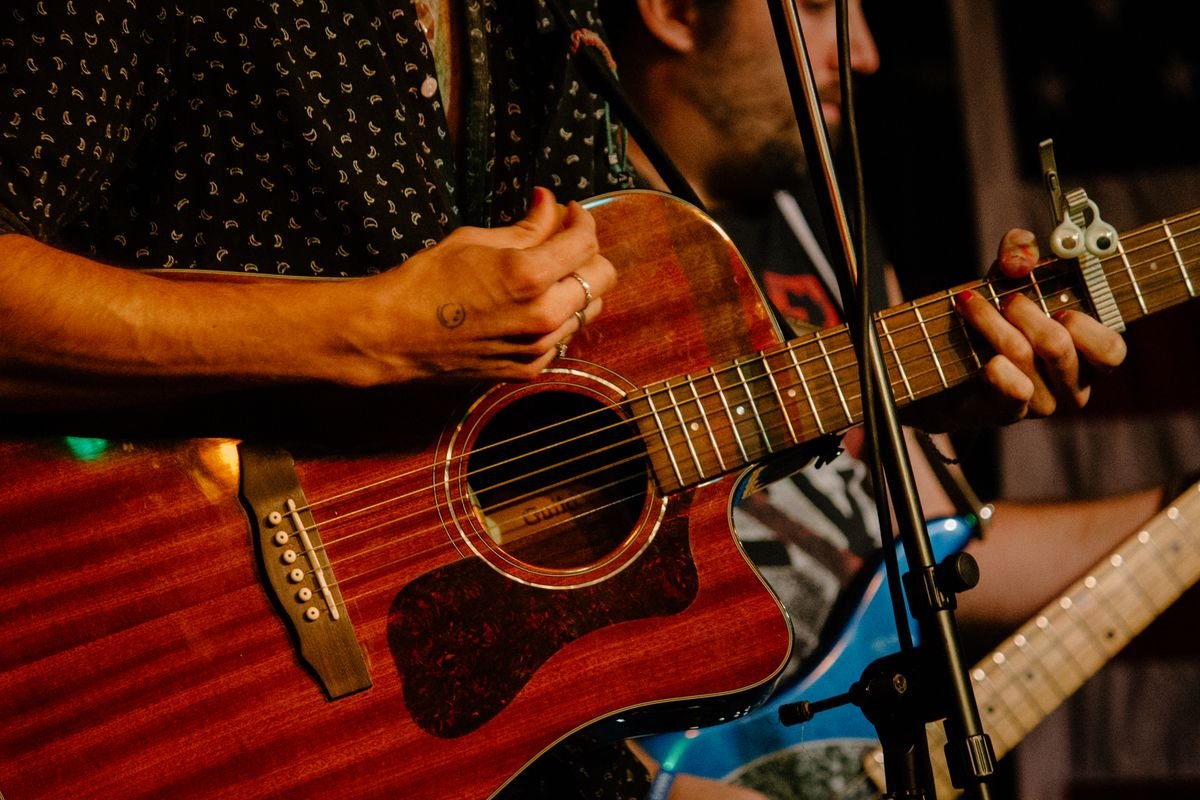
This is what makes Galway. The trad music here is everywhere and it’s always good. Tig Coilí on Mainguard Street is small and authentic, and it was our favorite, the kind of place where a session just starts up beside you. Taaffe’s Bar on Shop Street is another reliable one for live music.
If you want a break from Guinness, The Salt House does great craft beer. Bounce between a couple of these on your last night, have a long one, and you’ll see why Galway is the city you’ll remember best.
Then it’s the drive back. Galway to Dublin airport is about 2.5 hours straight across on the M6, so plan your last morning around your flight and leave plenty of buffer. End the trip with a Guinness at the airport if you’ve got time, it’s a tradition worth keeping.
Best Tours and Day Trips from Galway
- Connemara Day Tour with a Stop at Kylemore Abbey
- Galway City Cultural and Historical Walking Tour
- From Galway: Aran Islands and Cliffs of Moher Cruise
Where to Stay on This Ireland Itinerary
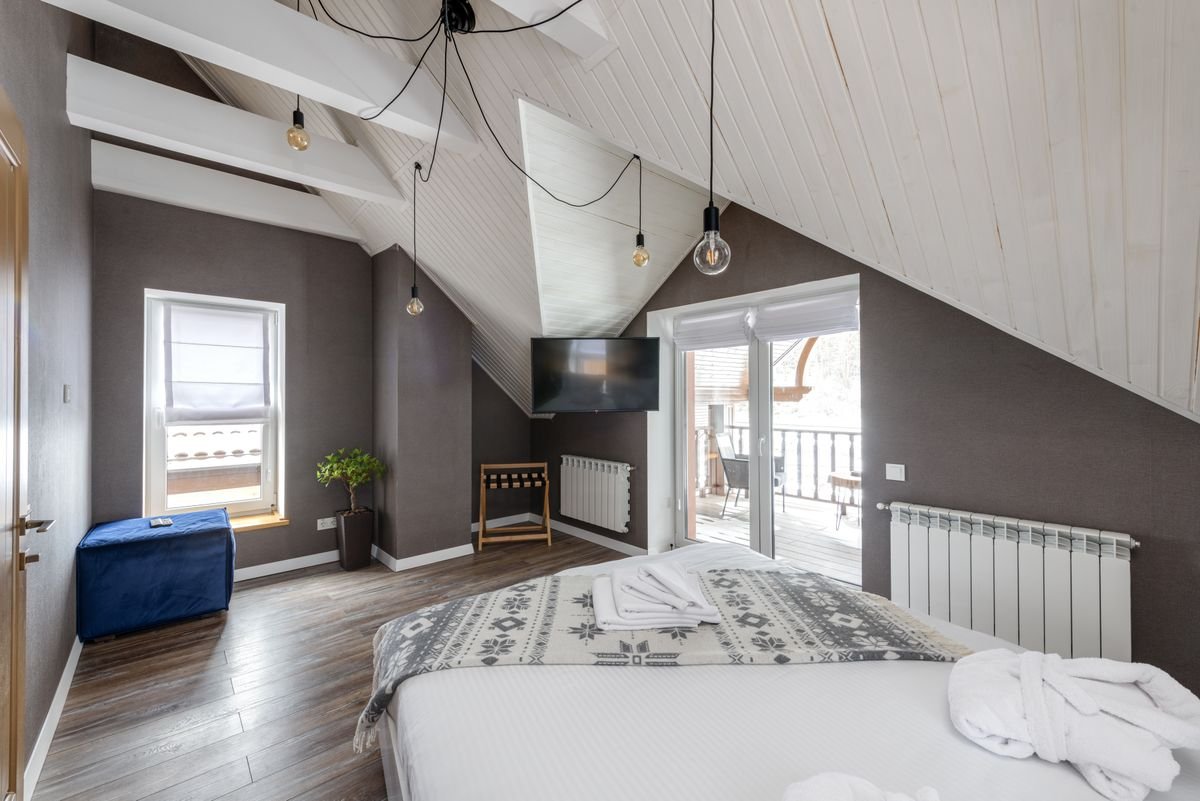
Five days on this loop means five nights, and the easiest way to think about it is one base per day, moving with the route. You don’t backtrack once, which is the whole point of doing Ireland as a loop. Here’s where we’d have you sleep each night.
- Night 1, Dublin: stay central and walkable. We dropped our bags at Fitzsimons Hotel right in Temple Bar, which puts you steps from the pubs and an easy walk to Trinity.
- Night 2, Cobh: base in the harbor town itself rather than Cork city. It’s quieter, you wake up on the water, and you’re done driving for the day.
- Night 3, Dingle: get a room in or near Dingle town so you can walk to the pubs at night. We stayed just outside at the Rainbow Hostel and taxied in.
- Night 4, Doolin: the village has a handful of guesthouses and B&Bs, and staying here means you walk to the trad sessions instead of driving.
- Night 5, Galway: base near the edge of the center and walk or cab in, since city-center parking is a fight.
A pattern you’ll notice on the west coast: in Killarney, Dingle, and Galway, staying a little outside the center and taxiing in is often easier than fighting for a town-center spot. In Killarney we had Fleming’s White Bridge on the Muckross Road basically to ourselves, a five-minute drive from the park and the pubs.
Book ahead, even in shoulder season. We traveled late September into October and still found good B&Bs and the better restaurants filling up. Lock in Dublin and Galway first, since those two go quickest, and you’re set. It’s worth a few minutes to compare places to stay on Booking.com for each night before you commit.
Best Time to Visit Ireland
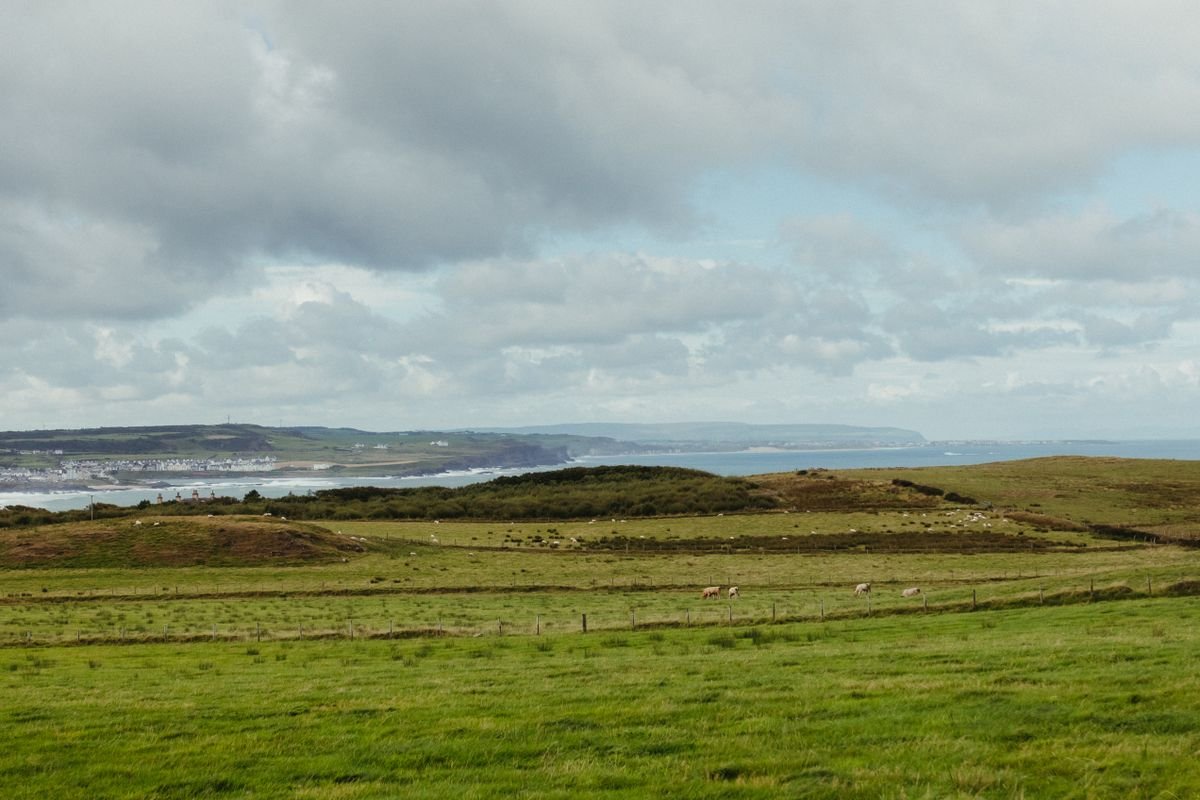
The short answer is May through September. That’s when you get the longest days, the most pubs and sights open, and the best odds on weather. For a tight 5-day loop like this one, daylight matters more than you’d think, and summer gives you plenty of it for the drives.
June, July, and August are peak. The trade-off is crowds and price. Town-center parking is tighter, the popular sights have lines, and the rooms and rental cars you want go fast. Book everything well ahead if you come in summer.
Shoulder season is the sweet spot
We did this trip late September into early October, and shoulder season is what I’d recommend if you can swing it. April to early May and late September into October give you thinner crowds, easier parking, and lower prices, while most of the big sights are still open.
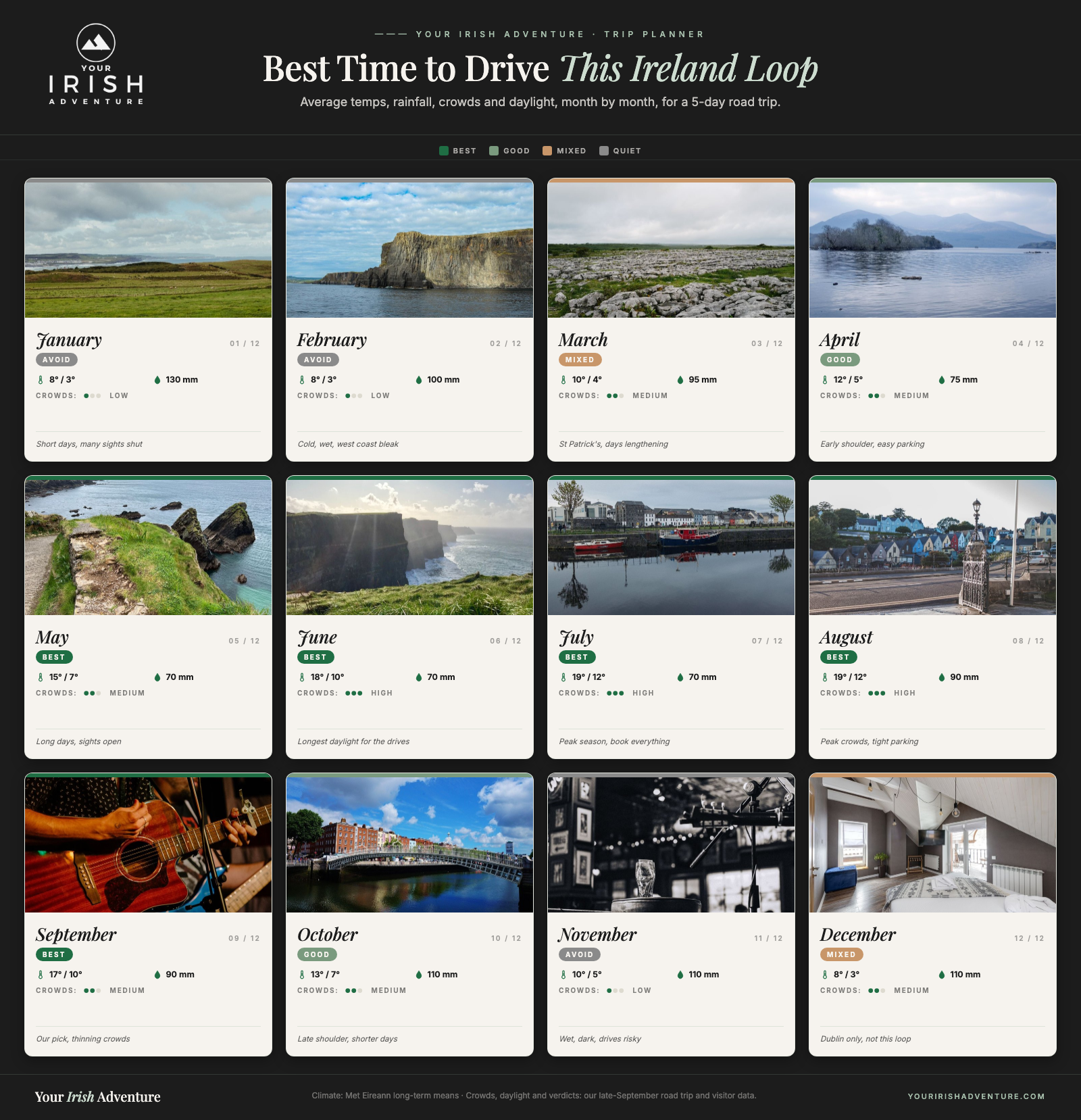
The catch is the weather and the daylight. By October the days are getting shorter, so you’ve got less time for the scenic drives, and the rain is a real gamble. We got soaked on plenty of days. The upside is you’ll have far more of the coast to yourself than a July visitor will.
A word on winter
I wouldn’t plan this itinerary for November through March. The days are short, plenty of guesthouses and smaller sights close for the season, and the west-coast weather can shut down a drive entirely. Dublin works fine as a city break in winter, but a road trip like this one needs the longer days.
One thing that’s true year-round: pack for rain whenever you come. Layers, a real rain jacket, and shoes you don’t mind getting wet. Irish weather changes by the hour, and you’ll get sun and showers in the same afternoon no matter the month.
What This Trip Costs

Ireland isn’t a cheap country, and I’d rather you know that going in than get a surprise at the rental desk on Day 2. This 5 day Ireland itinerary adds up fast once you stack a car, fuel, rooms, big-ticket sights, and pints. The good news is you can flex most of it.
The car and the fuel
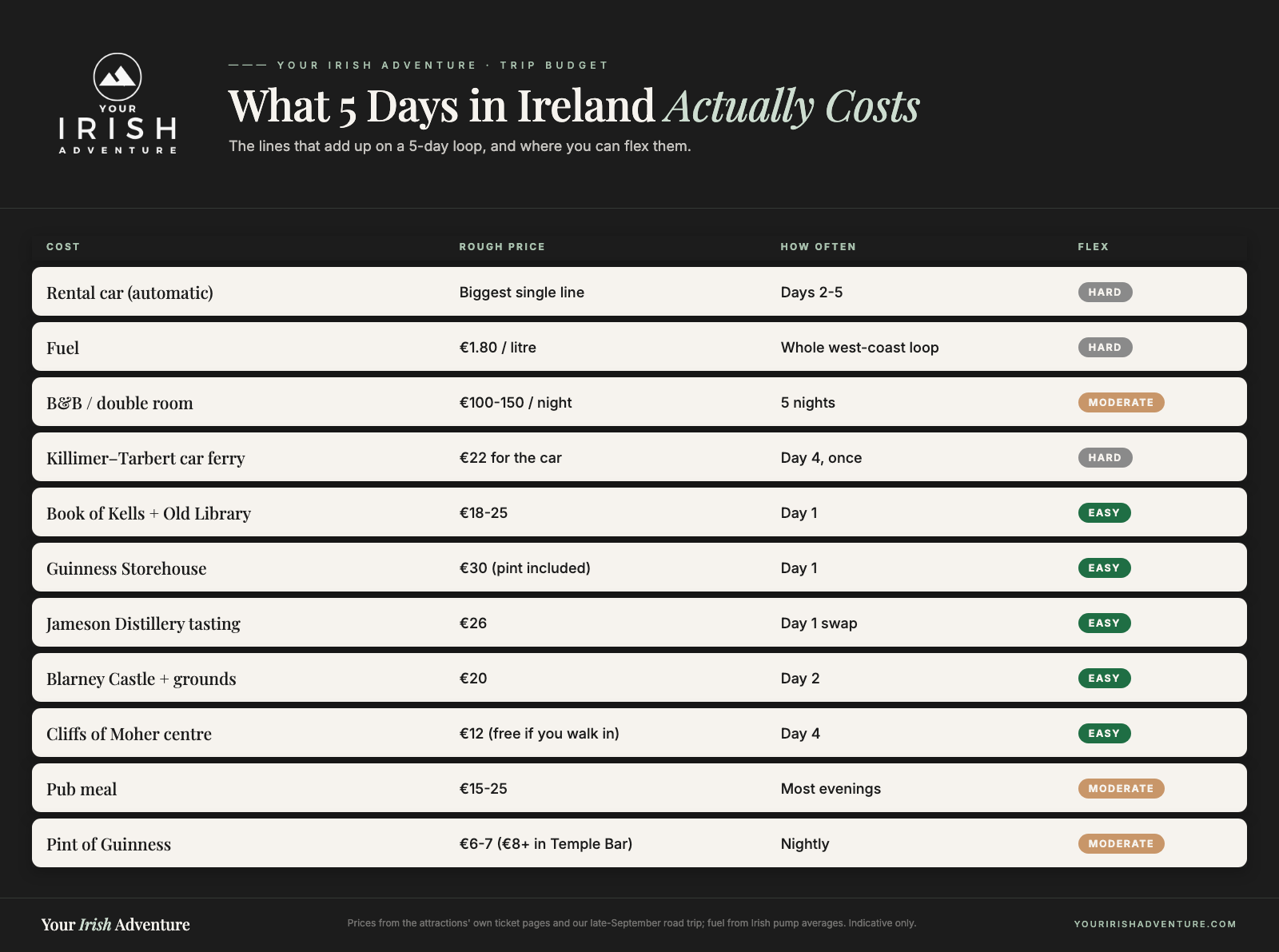
The rental car is your biggest single line, and the automatic premium stings. Budget more than you think, especially in summer when they sell out. Then there’s gas, which runs around €1.80 a liter, so figure on a real chunk for a week of west-coast driving.
One cost people forget is the Killimer to Tarbert car ferry on Day 4, about €22 for the car. Worth every cent for the loop it saves you. The M50 toll around Dublin is small but real, so settle it online to dodge a fine.
The big-ticket sights
The paid attractions are where a 5-day trip can quietly balloon. Here’s roughly what the headline ones cost, so you can pick the two or three you actually care about instead of buying every ticket:
- Book of Kells and the Old Library: around €18 to €25, book a timed slot
- Guinness Storehouse: around €30, pint included at the top
- Jameson Distillery on Bow Street: around €26 with the tasting flight, and this was the one I’d pay for again
- Blarney Castle and grounds: around €20, and you get a half-day out of it
- Cliffs of Moher visitor centre: around €12, or free if you walk in from Doolin like we did
You don’t need all of them. Skip a couple, walk the free stuff like Trinity’s grounds and Muckross Abbey, and you’ll keep this part well under control.
Beds, food, and pints
A decent double B&B runs roughly €100 to €150 a night in shoulder season, more in Dublin and Galway and more again in summer. Five nights of that is the bulk of your spend after the car, so this is where booking early actually saves you money.
There’s room to go cheap if you want it. We did a few nights camping the van, including a €10 field behind a pub in Lorrha, which is about as low as Ireland gets.
For food and drink, a pub meal is roughly €15 to €25 and a pint of Guinness is usually €6 to €7. Temple Bar is the exception, where pints climb past €8, so have a couple there for the night out and drink cheaper the rest of the week.
Where to Stay Elsewhere Around Ireland
- Where to Stay in County Cork: Cork City vs West Cork
- Where to Stay in Lahinch: Best Hotels, Lodges & B&Bs
- Where to Stay in Kinsale: Best Areas & Hotels
In short
- Pick up your rental car when leaving Dublin; city driving adds parking cost with no payoff.
- Book an automatic transmission well in advance; they sell out fast in summer and shoulder season.
- The full loop covers Dublin, Cork, Cobh, Blarney, Killarney, Dingle, the Cliffs of Moher, and Galway.
- Monroe’s Tavern on Dominick Street, Galway is worth a last night for a live traditional music session.
- Slea Head Drive on the Dingle Peninsula has single-lane roads with stone walls right against the car.
Frequently Asked Questions
Is 5 days enough time in Ireland?
Yes, if you stick to one region and don’t try to see the whole island. Five days is plenty for Dublin and a loop down the southwest and up the west coast. It’s not enough for Northern Ireland too, so leave that for another trip.
Do I need to rent a car for this trip?
For this route, yes. No train or bus links Cobh, Dingle, the Cliffs of Moher, and Galway in five days, so you need your own wheels. Skip the car for Day 1 in Dublin and pick it up when you head for Cork.
Should I fly into Dublin or Shannon?
Dublin has the most flights and the cheapest fares, and this loop starts and ends there, so it’s the easy pick. Shannon is closer to the west coast if you’d rather start with the Cliffs and Galway and run the loop backward. Either works, just fly in and out of the same airport to save a one-way car fee.
What’s the best time of year for a 5-day Ireland road trip?
May through September for the long days and the best odds on weather. April to early May and late September into October are the sweet spot if you want thinner crowds and lower prices, with most sights still open. We did it in late September and would again. Avoid November through March for a drive like this.
Can I do this itinerary in reverse?
Easily. Run it Dublin to Galway first, then down the coast to Killarney and Cork, and back to Dublin. It’s the same loop with no backtracking. If you fly into Shannon, reversing it actually makes more sense since you start near Galway and the Cliffs.
Final Thoughts
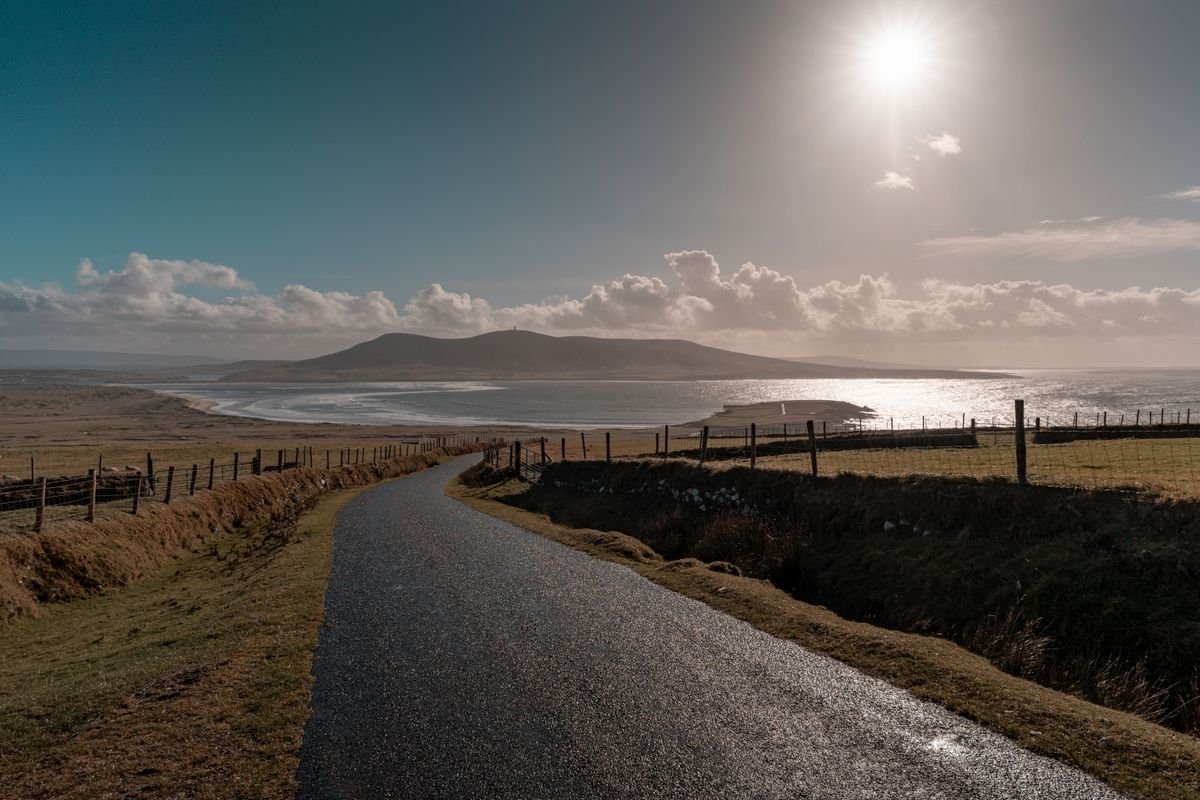
Five days in Ireland is short, and that’s the whole trick to doing it well. Pick this one loop, accept that you’re skipping most of the island, and you get a real trip instead of a blur of car parks and motorway.
If I had to name the parts that stuck, it’s the music and the coast. The trad sessions you stumble into, the narrow roads with the Atlantic dropping away, and the small towns that turn out better than the famous ones. That’s the Ireland worth driving for.
My one honest push: if you can steal an extra day from anywhere, do it, and spend it on the Dingle Peninsula. Five days works, but six would let you slow down on the bit we rushed.
Book your car and your first and last nights early, pack a real rain jacket, and don’t try to see it all. Do that and you’ll come home wanting to plan the next loop before you’ve even unpacked.
Like it? Pin it!
Save this guide for later