The first time we spent 4 days in Dublin, we stepped off the DART into the grey morning drizzle, caught the smell of a chipper already going at 10am, and felt the city pulling us in six directions at once. Those 4 days in Dublin revealed a place that demands to be explored slowly, yet somehow always leaves you wishing you’d stayed longer.
The good news is that one day in Dublin is enough to get a real feel for the city, as long as you plan the route and don’t try to do everything.
This guide gives you a tight, 24-hour itinerary covering the top sights, best spots to eat, and where to have a pint.
If you have more time, check out our 2 Days in Dublin: The Perfect Weekend Itinerary to make the most of a longer stay.
More guides for your Ireland trip:
- A Weekend in Dublin, Ireland: The Perfect 2 Day Itinerary
- Weekend in Killarney: The Perfect 2 Day Itinerary
- Weekend in Galway: The Perfect 2 Day Itinerary
- Weekend in Cork: The Perfect 2 Day Itinerary
- The Cheapest Pint In Dublin: A Local’s Guide
- Guide to Finding The Phoenix Park Deer in Dublin
- The Perfect Weekend In Belfast
- 15 Best Ways to Celebrate St. Patrick’s Day in Dublin
- Best Things To Do In Cork (City & Day Trips)
- Sleeping in Dublin Airport: Showers, Sleep Pods and Opening Times
1. What to Expect From 1 Day in Dublin
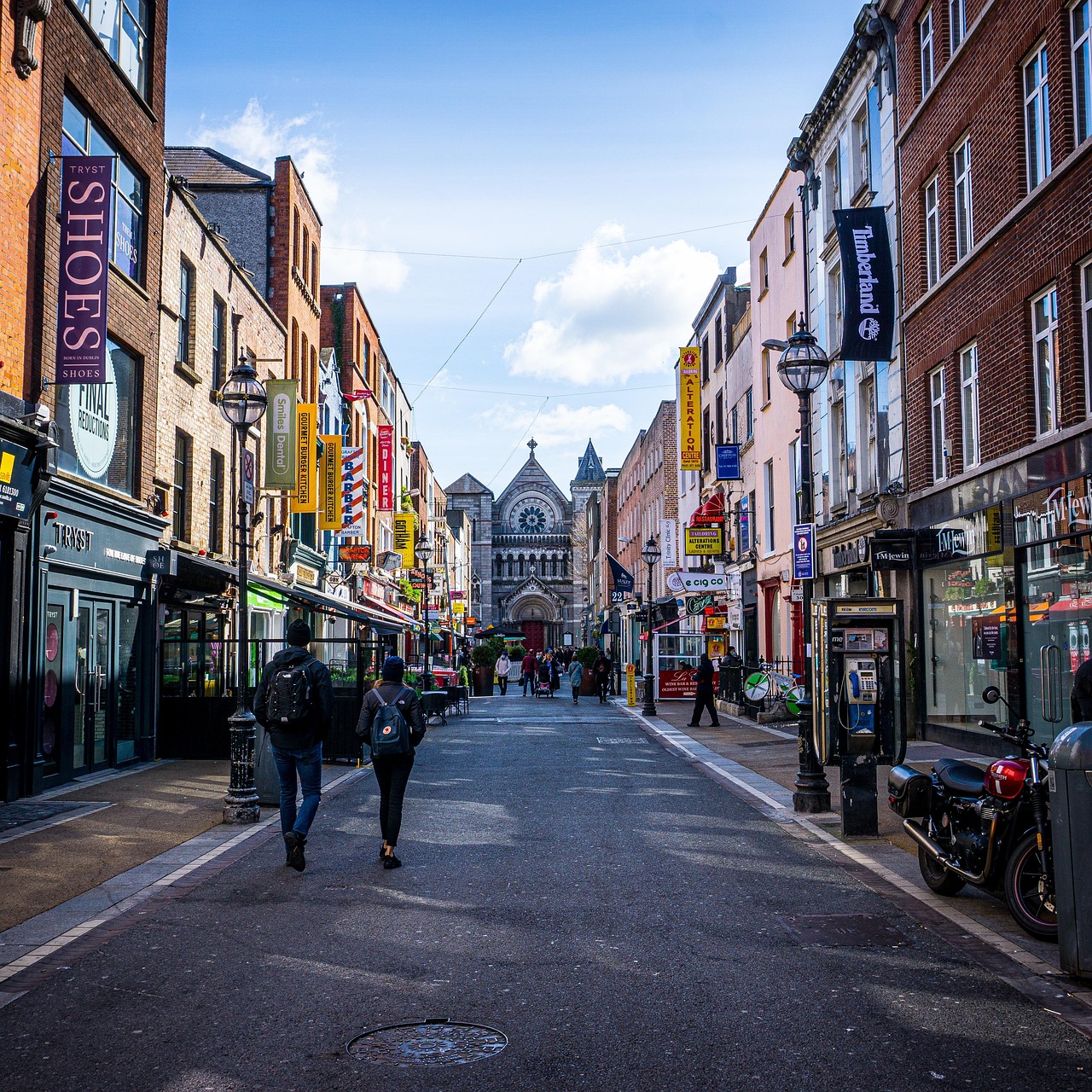
Dublin is a compact city, and that works in your favour when you’re short on time.
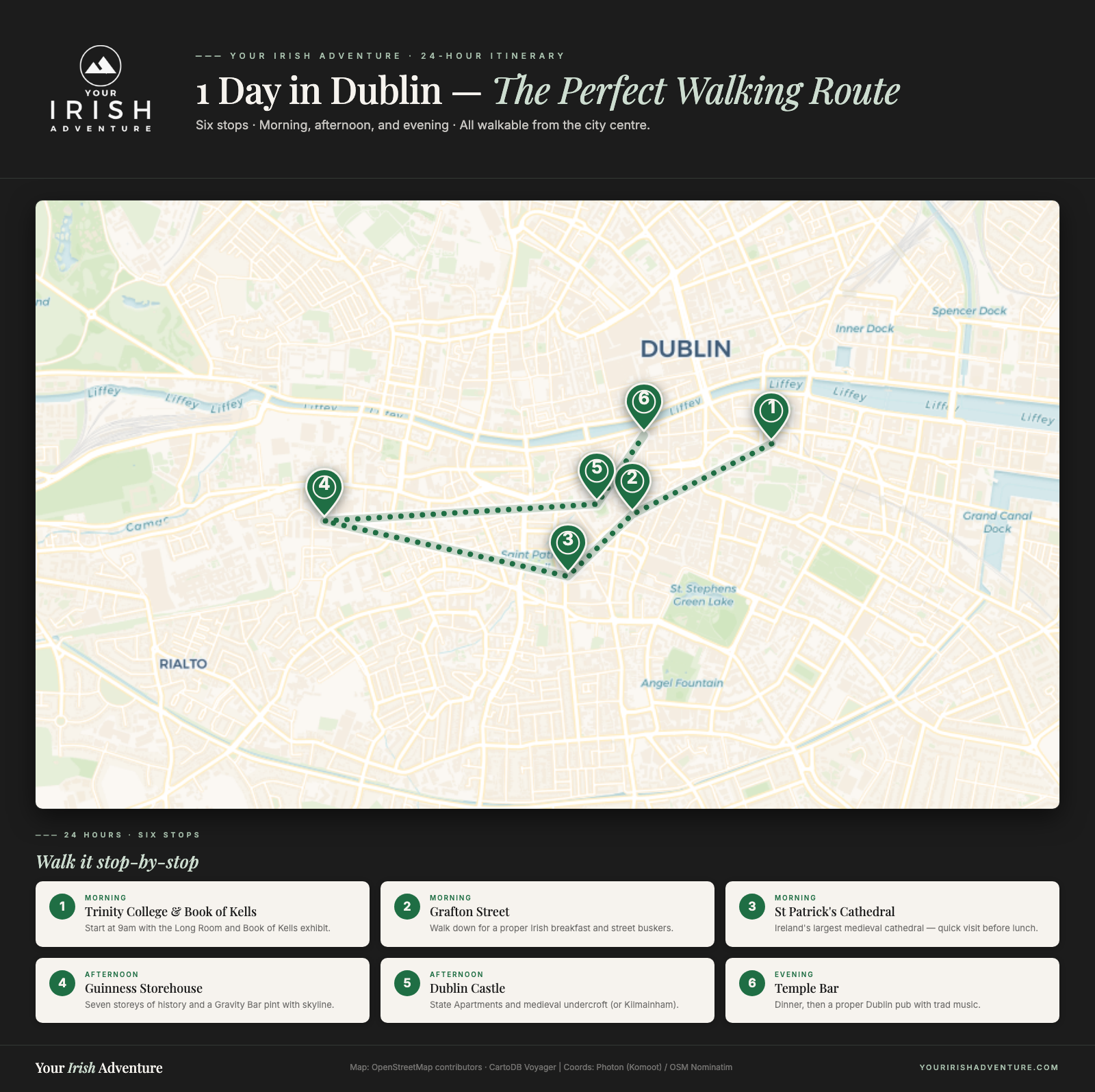
Most of the big sights sit within walking distance of each other, so you can move from Trinity College to the Guinness Storehouse to Temple Bar without once needing a bus or a taxi.
That said, one day means making choices.
You won’t get to everything, and that’s fine.
This itinerary runs morning through evening and mixes paid attractions with free ones, so it suits most budgets without feeling like a checklist.
One thing worth flagging: Dublin gets busy on weekends and especially through the summer months, so book anything ticketed well in advance.
The Guinness Brewery in particular sells out fast.
If you find yourself wanting more time after reading this, our 2 Days in Dublin: The Perfect Weekend Itinerary is worth a look before you travel.
Getting to Dublin and Getting Around

Dublin Airport is the main entry point for most visitors, and it’s well connected to the city centre with a few easy options.
The Aircoach runs direct to O’Connell Street and beyond for around €8-10 one way.
Dublin Bus route 16 is cheaper at around €3.50 but takes longer and makes more stops.
A taxi or rideshare from the airport runs roughly €25-35 depending on traffic and time of day, which is worth it if you’re arriving late or travelling with heavy bags.
For this itinerary, you don’t need a car at all.
Dublin’s city centre is compact and very walkable, and most of what’s covered here sits within easy reach on foot.
If you’re using Dublin as a starting point for a longer trip around Ireland, sorting car hire before you arrive makes sense.
DiscoverCars is a good place to compare options and lock in a decent rate.
Planning to drive beyond the capital? Our guide to driving in Ireland covers everything from narrow country roads to roundabout rules, and our Wild Atlantic Way itinerary is a solid next step if you’re heading west.
Where to Stay in Dublin

When you only have one day in Dublin, where you sleep matters more than usual.
Staying in or near the city centre cuts out wasted travel time and keeps everything on this list within walking distance.
For a deeper look at the best areas across different budgets, our full guide to where to stay in Dublin is worth a read before you book.
Budget (~€80 – 100/night)

The Isaacs Hotel sits right in the heart of the city, a short walk from both the Luas and the main bus terminus at Busáras.
Rooms are clean, straightforward, and comfortable, which is all you really need when you’re spending most of your time out on the streets.
At around €80 – 100 per night, it’s solid value for a central Dublin location.
Mid-Range (~€150 – 200/night)
The Wilder Townhouse is a Georgian townhouse hotel in the Portobello neighbourhood, about a 15-minute walk south of the city centre.
It has a genuinely individual feel compared to the big-chain options, with well-designed rooms and a relaxed atmosphere that works well after a long day of sightseeing.
Budget €150 – 200 per night and you’ll be well looked after.
Luxury (~€250+/night)
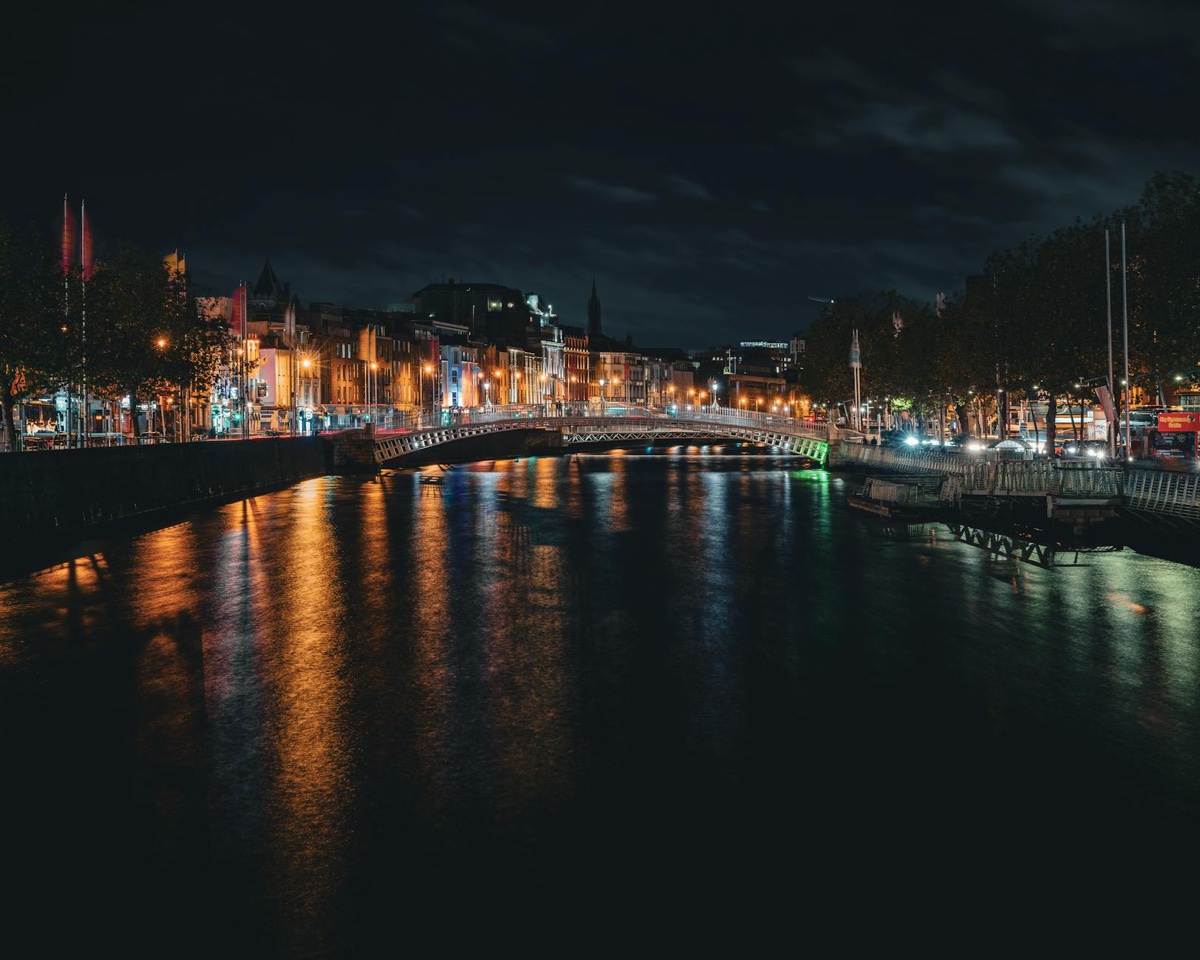
The Shelbourne on St. Stephen’s Green is about as central as it gets, and it’s one of the most iconic hotels in the country.
The rooms are serious, the service is sharp, and having St. Stephen’s Green, Grafton Street, and Trinity College all on your doorstep is hard to beat when you’re working with just 24 hours.
Rates start around €250 – 300 per night, though they climb fast in peak season.
2. Morning in Dublin (9am – 1pm)
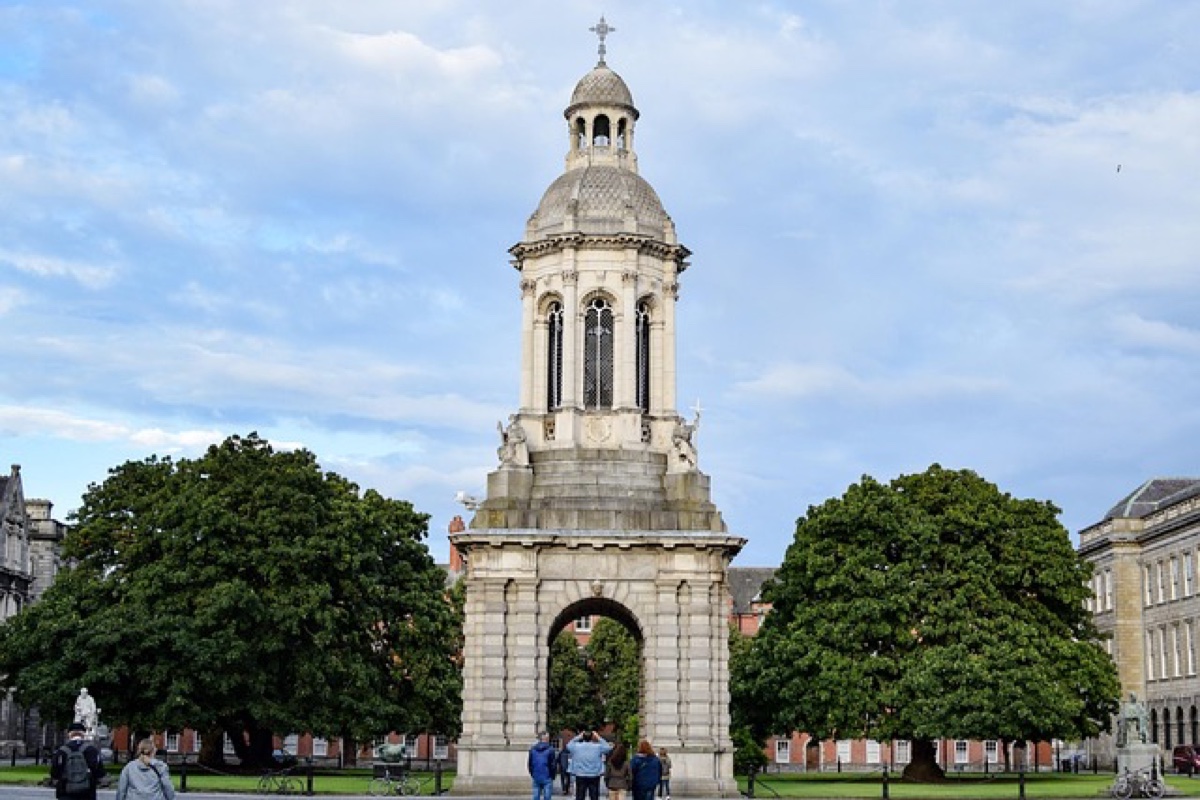
Dublin’s centre is compact enough that you can cover three great spots in a single morning without feeling rushed.
Start at Trinity, walk Grafton Street for breakfast, then head to St Patrick’s Cathedral before lunch.
Trinity College and the Book of Kells
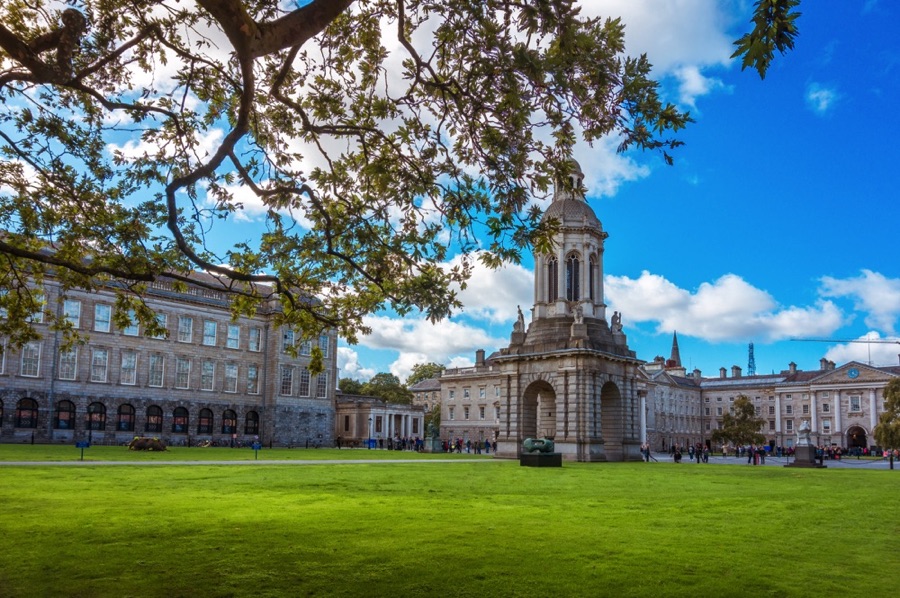
Trinity College is the obvious first stop, and it earns that status.
The Book of Kells is a 9th-century illuminated manuscript that has to be seen in person to appreciate the detail.
The Long Room library above it is one of the most impressive interiors in Ireland.
Tickets run €16 – 23 depending on the season, and 90 minutes is about the right amount of time to take it all in without rushing.
Queues in summer can be brutal, and selling out by late morning is not unusual.
Book online before you go.
Click here to book a skip-the-line Book of Kells tour.
Grafton Street and a Proper Irish Breakfast

After Trinity, walk south through the college gates and you’re straight onto Grafton Street, Dublin’s main pedestrian shopping strip.
It’s worth a slow stroll, especially if buskers are out, but the real reason to stop here is breakfast.
Bewley’s Oriental Café at 78 Grafton Street is the go-to, a Dublin institution with stained glass windows, strong coffee, and a full Irish that comes in around €12 – 15.
It’s not the cheapest breakfast you’ll find in the city, but the atmosphere is worth it.
You’re fuelling up for a full day, so it’s not the moment to cut corners.
St Patrick’s Cathedral

St Patrick’s Cathedral is about a five-minute walk from Grafton Street, and it’s a very different experience to what most people expect.
Entry is around €8, and 45 minutes is plenty of time to explore properly.
It sits on the site of a well where St Patrick reportedly baptised converts in the 5th century, and the surrounding area was Viking and then Norman long before the current building went up in 1191.
It’s a working cathedral, not a museum, and that distinction matters.
Services still happen here, the choir still performs, and it doesn’t have the slightly sterile feel of a heritage attraction dressed up in religious clothing.
If you’d rather take the guesswork out of the morning and get both Dublin Castle and St Patrick’s covered with a guide, you can book a skip-the-line Dublin highlights tour that bundles them together.
Lunch in Temple Bar or Dame Street

Temple Bar gets a bad reputation, and honestly, some of it is deserved.
It’s touristy, the pints cost more than they should, and you’ll be sharing the cobblestones with stag parties and tour groups for most of the day.
That said, it’s central, it’s lively, and for a quick lunch stop before an afternoon of sightseeing, it does the job fine.
The Vintage Kitchen on Poolbeg Street, just on the edge of the area, is one of the better options nearby.
Proper Irish cooking, mains around €14 – 18, and a room that actually feels like someone lives in it rather than a set designed to look “authentic.”
Guinness Storehouse

The Guinness Storehouse is the most visited attraction in Ireland, which tells you something.
It’s a self-guided tour through seven floors of brewing history, brand storytelling, and interactive exhibits, with a complimentary pint at the Gravity Bar on the top floor included in your ticket.
Tickets run around €26 – 29 depending on when you book, and yes, that’s expensive for what amounts to a very polished brand experience.
But the view from the Gravity Bar across Dublin is worth it, and the pint up there tastes better than it has any right to.
Book in advance if you’re visiting in summer or on a weekend.
Walk-up queues can be long, and pre-booked tickets are usually cheaper anyway.
If you want someone to walk you through the whole process – the brewing, the history, and how to actually pour a proper pint – it’s worth doing it with a guide. You can Book Guinness Storehouse + Pint Tour through Viator, which includes the storehouse entry and a tutored pour experience.
Dublin Castle or Kilmainham Gaol
This one depends on what kind of traveller you are, so think of it as a fork in the road for your afternoon.
Dublin Castle is five minutes from Dame Street, the grounds are free to walk, and the State Apartments are worth a look if you book a guided tour (around €12).
It’s less dramatic than people expect, but the history is real.
This was the seat of British rule in Ireland for over 700 years, and standing in the courtyard knowing that makes it land differently.
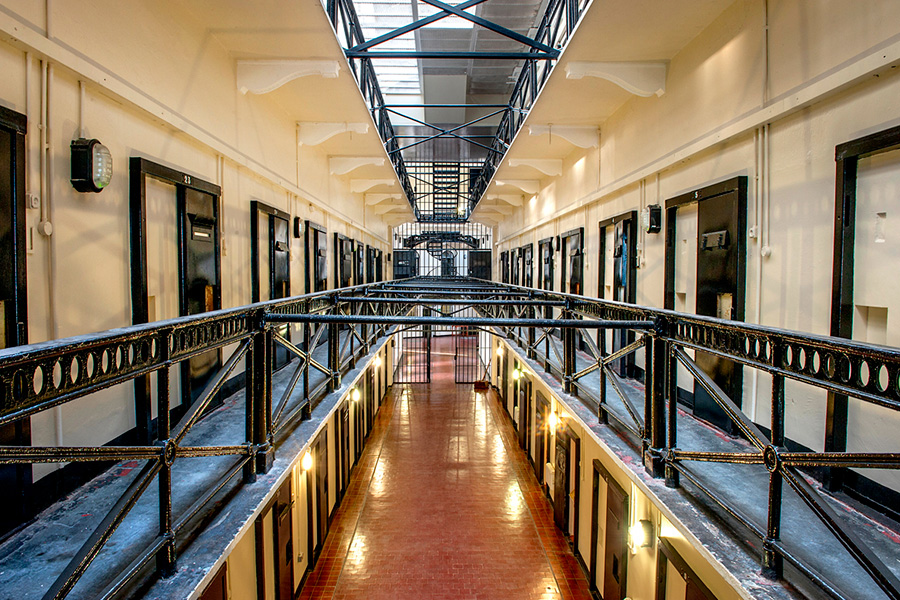
Kilmainham Gaol is the stronger experience, full stop.
Tickets cost around €8, but you can only visit on a guided tour, and those sell out days in advance during summer.
The leaders of the 1916 Easter Rising were executed here, and the tour guides don’t let you forget it.
It’s sobering, detailed, and one of the most memorable things you can do in Dublin.
If you’re planning ahead, go to Kilmainham.
If you’re doing this last-minute, Dublin Castle is the safer bet.
Click here to book a guided tour of Kilmainham Gaol.
If Dublin has you wanting more of Ireland’s cities, and are worth bookmarking for the rest of your trip.
More guides for your Ireland trip:
- Where To Stay in Dublin: Best Areas and Accommodations
- The Ring Of Kerry Drive: Itinerary, Highlights & Tips
- Christmas In Dublin: 10 Things To See and Do
- 20 Activities in Dublin (That Don’t Involve Drinking)
- 7 Best Day Trips From Dublin, Ireland
- 10 Things To Do In Dun Laoghaire, Dublin
- 10 Best Castles in Dublin, Ireland
- Visiting The Hellfire Club, Dublin
- The Most Haunted Places In Ireland
- 13 Unique Pubs In Dublin To Grab A Drink
4. Evening in Dublin (6pm onwards)
Dublin’s evenings are worth staying up for.
The city shifts gears around 6pm, and if you’ve got a few hours left, there’s a solid rhythm to follow: dinner, a proper pub, and live music if you can stay awake long enough.
Dinner
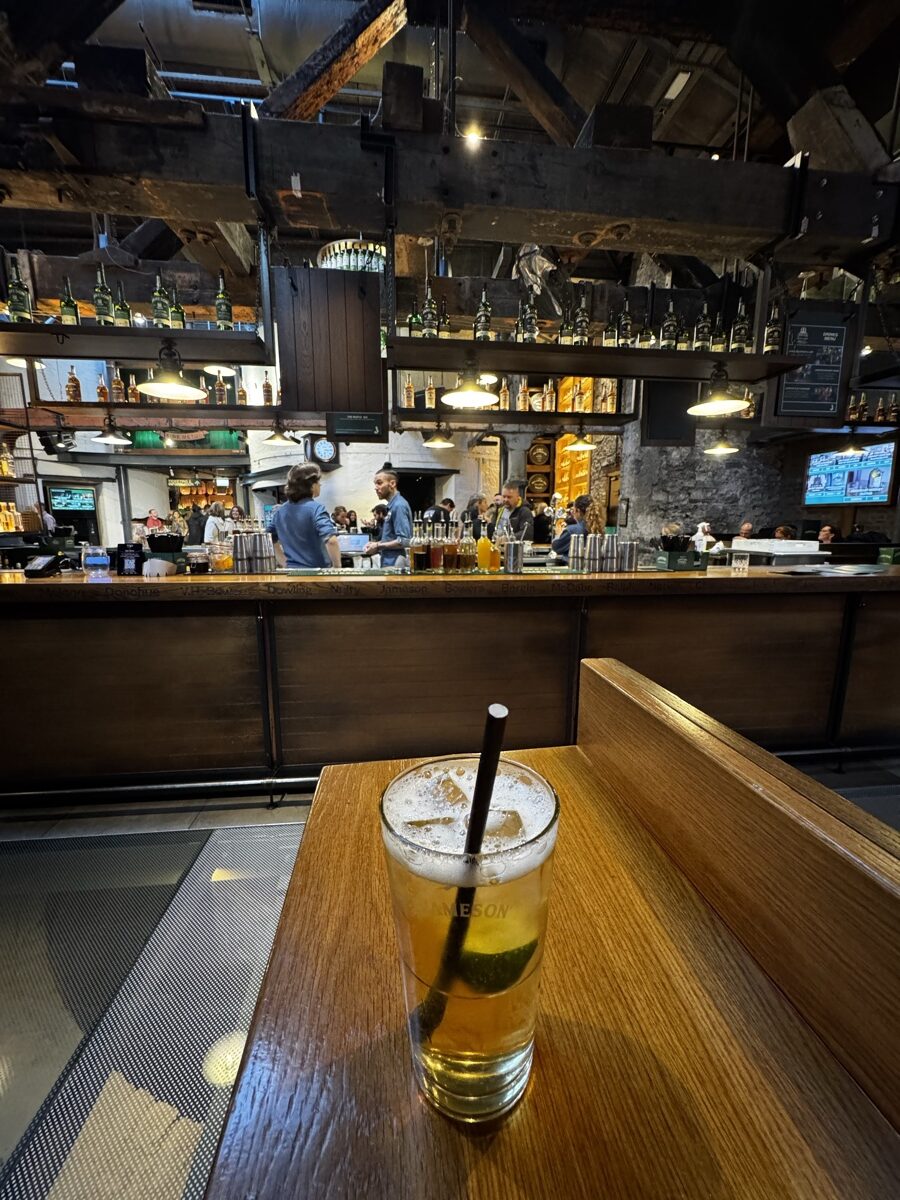
For a mid-range dinner around €25-35 per head, The Daily on South William Street is a reliable choice.
The menu is simple, the ingredients are decent, and it doesn’t feel like a tourist trap, which puts it ahead of a lot of places near Temple Bar.
If you’d rather spend closer to €15 per head, Bunsen on Wexford Street does some of the best burgers in the city, no argument.
It’s a short menu, the portions are generous, and it’s almost always busy, so go early or expect a short wait.
A Proper Dublin Pub

Skip the Temple Bar strip for your pub night.
The Long Hall on South Great George’s Street is the one I’d point you toward first.
It’s been open since 1766, the Victorian interior is the real thing, and the bar staff know what they’re doing.
It pulls a mix of locals and visitors, but the atmosphere never tips into performance, and that’s rare in central Dublin.
If you want to go deeper into Dublin pub culture, the 13 Unique Pubs in Dublin guide is worth a read before your trip, and the cheapest pint in Dublin guide is useful if you’re watching the budget.
A pint here isn’t just a drink, it’s how Dublin actually socialises, and sitting at the bar for an hour tells you more about the city than most tours will.
That said, if you want some proper context for what you’re drinking and why, it’s worth booking a guided experience. Join the Perfect Pint Pub Tour and you’ll cover the history, the pubs, and the pouring technique – all with someone who actually knows what they’re talking about.
Live Music
If you’ve still got energy after 9pm, head to Whelan’s on Wexford Street or The Cobblestone in Smithfield for live trad.
Sessions at both places typically kick off around 9 to 9:30pm, though the timing shifts depending on who’s playing.
The Cobblestone is the more traditional of the two, a small, unpretentious pub where the musicians sit in the corner and play for themselves as much as for the crowd.
Live music in Dublin is hit or miss depending on the night, so check their social pages or websites before heading out.
Nothing worse than showing up to an empty stage.
If this is just the start of your Ireland trip, and are both worth bookmarking for the days ahead.
Tips for Your Day in Dublin
A little planning goes a long way in Dublin, especially if you’re working with just one day.
Book Ticketed Attractions in Advance
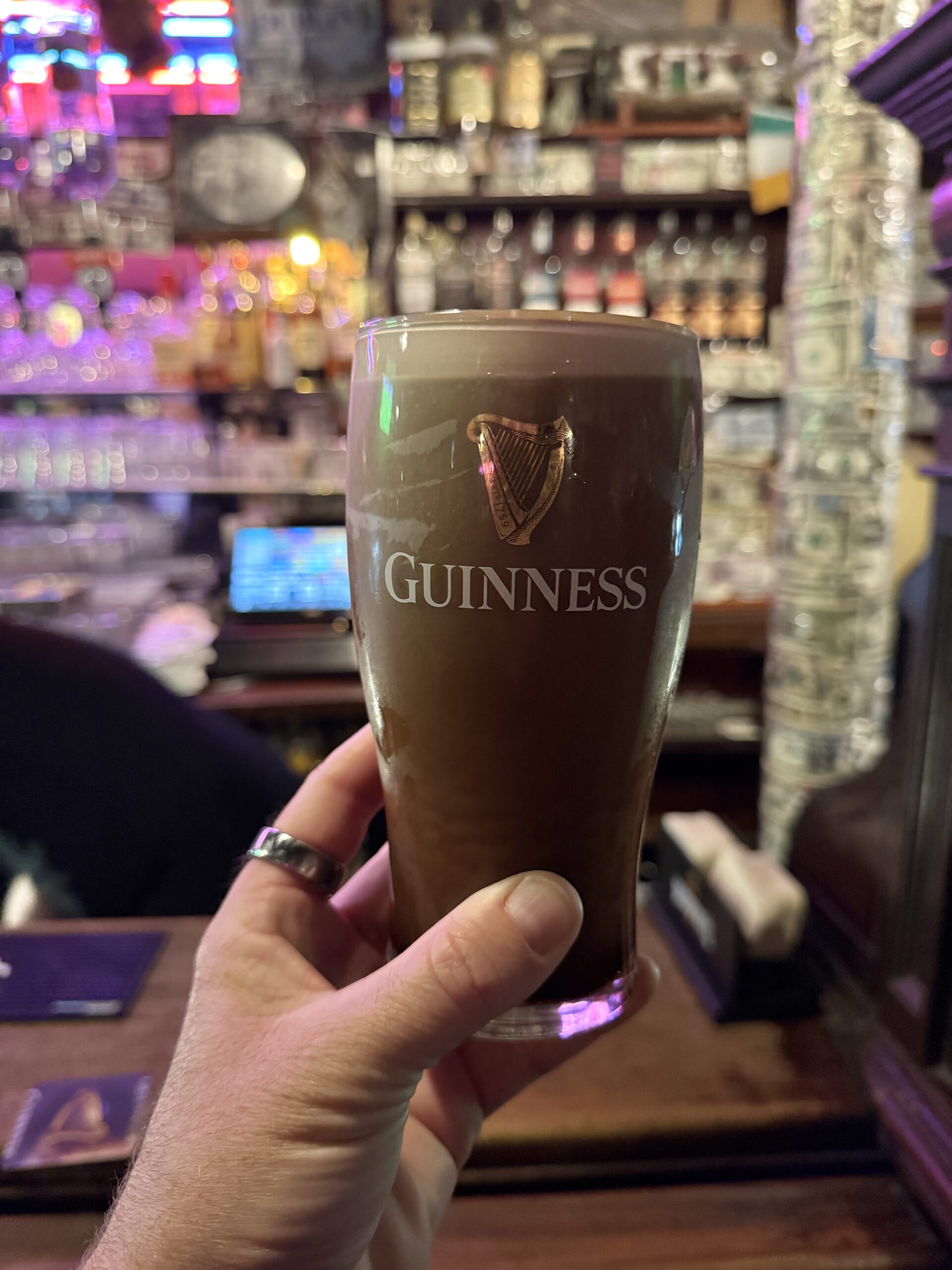
The Book of Kells, Kilmainham Gaol, and the Guinness Storehouse all sell out, sometimes days ahead in summer.
Book online before you arrive and you’ll save yourself a lot of disappointment standing outside a closed ticket window.
Wear Layers and Bring a Waterproof Jacket

Dublin weather is unpredictable, and the forecast is often wrong.
You can have sun, rain, and wind all before lunchtime, so pack a waterproof jacket regardless of what the app says the night before.
Dublin Is Very Walkable
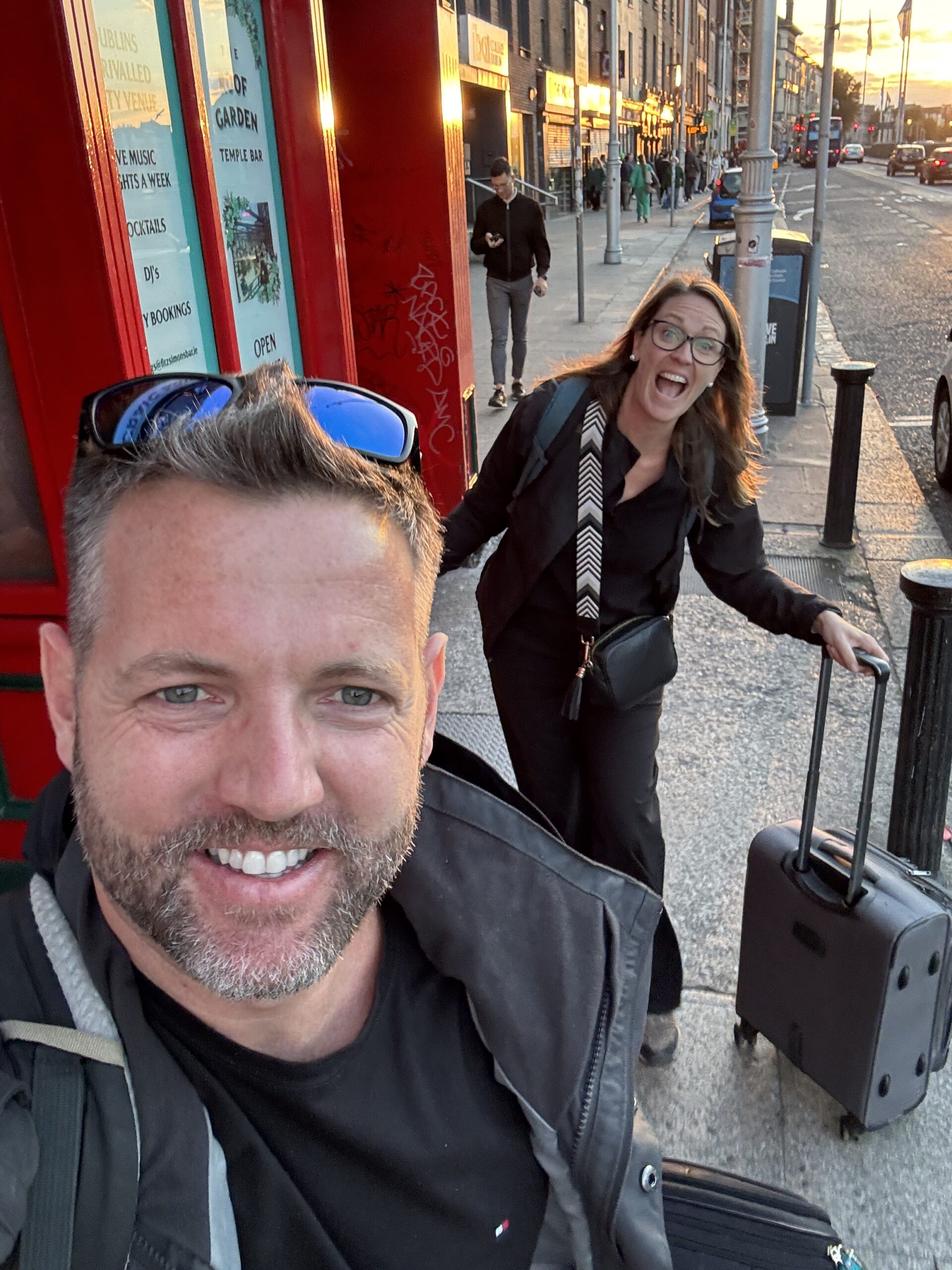
Most of what’s covered in this itinerary sits within comfortable walking distance of the city centre.
Good walking shoes matter more than any transport pass if you’re sticking to the main areas.
Don’t Drive in the City Centre

Parking in Dublin is expensive, traffic is heavy, and the one-way systems will grind your patience down fast.
If you’re arriving by car, park on the outskirts and take the Luas or a bus in.
Get a Leap Visitor Card if You’re Using Public Transport
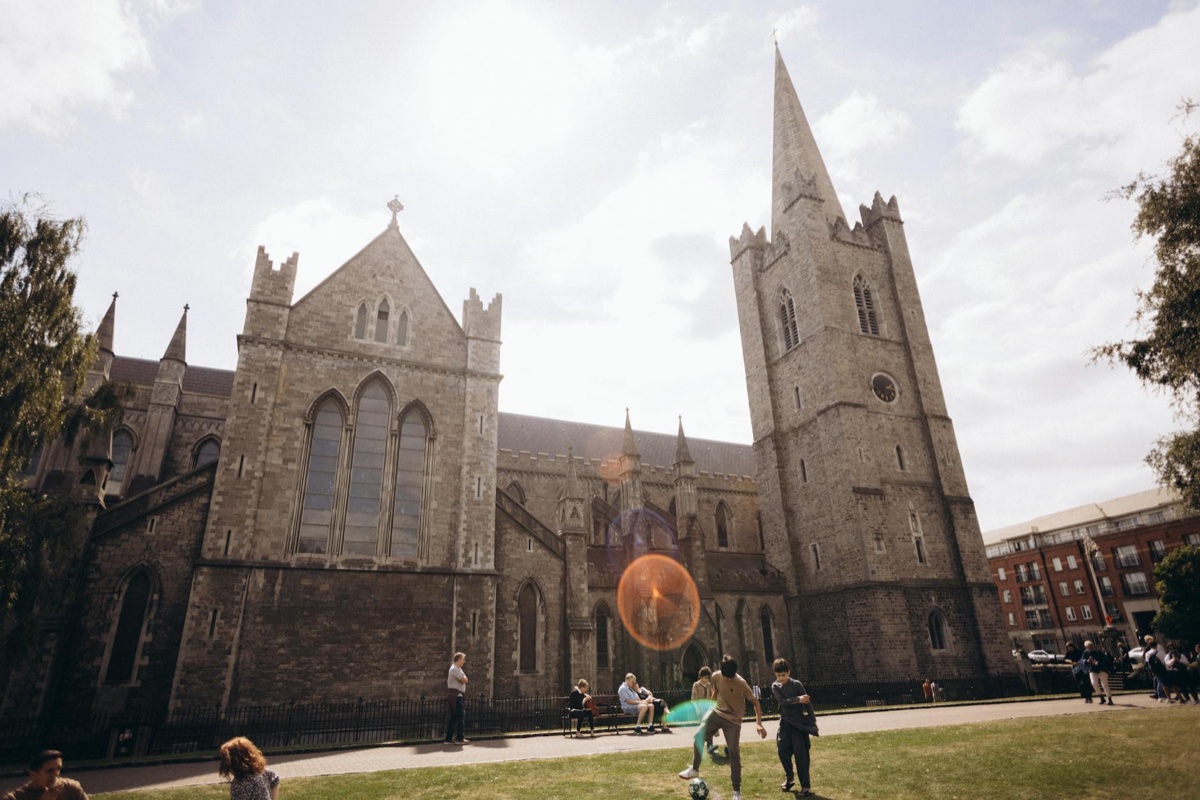
The Leap Visitor Card gives you unlimited travel on Dublin Bus, the Luas tram, and DART rail for a set period, starting at around €10 for 24 hours.
It’s worth picking one up at the airport or at Connolly Station if you’re planning to use buses or the tram to get around.
Tipping Is Not Mandatory
Unlike in North America, tipping in Ireland is not expected, but 10 to 15% in restaurants is appreciated if the service was good.
In pubs, people don’t typically tip for drinks.
Frequently Asked Questions
Here are the questions I get asked most about spending a day in Dublin.
Is 1 day in Dublin enough?
It’s enough to hit the highlights, yes, but you won’t go deep.
You can do Kilmainham Gaol, Trinity College, and a couple of pubs in a single day if you’re organised, but you’ll have to skip a lot.
If you have the option to extend to two days, the 2 Days in Dublin: The Perfect Weekend Itinerary is a much more relaxed way to see the city properly.
What is the best area to stay in Dublin for 1 day?
Stay in the city centre, specifically around St Stephen’s Green or Temple Bar.
You’ll be walking distance from most of the attractions on this itinerary and won’t need to rely on public transport at all.
For a full breakdown of the neighbourhoods, check out the Where To Stay in Dublin guide.
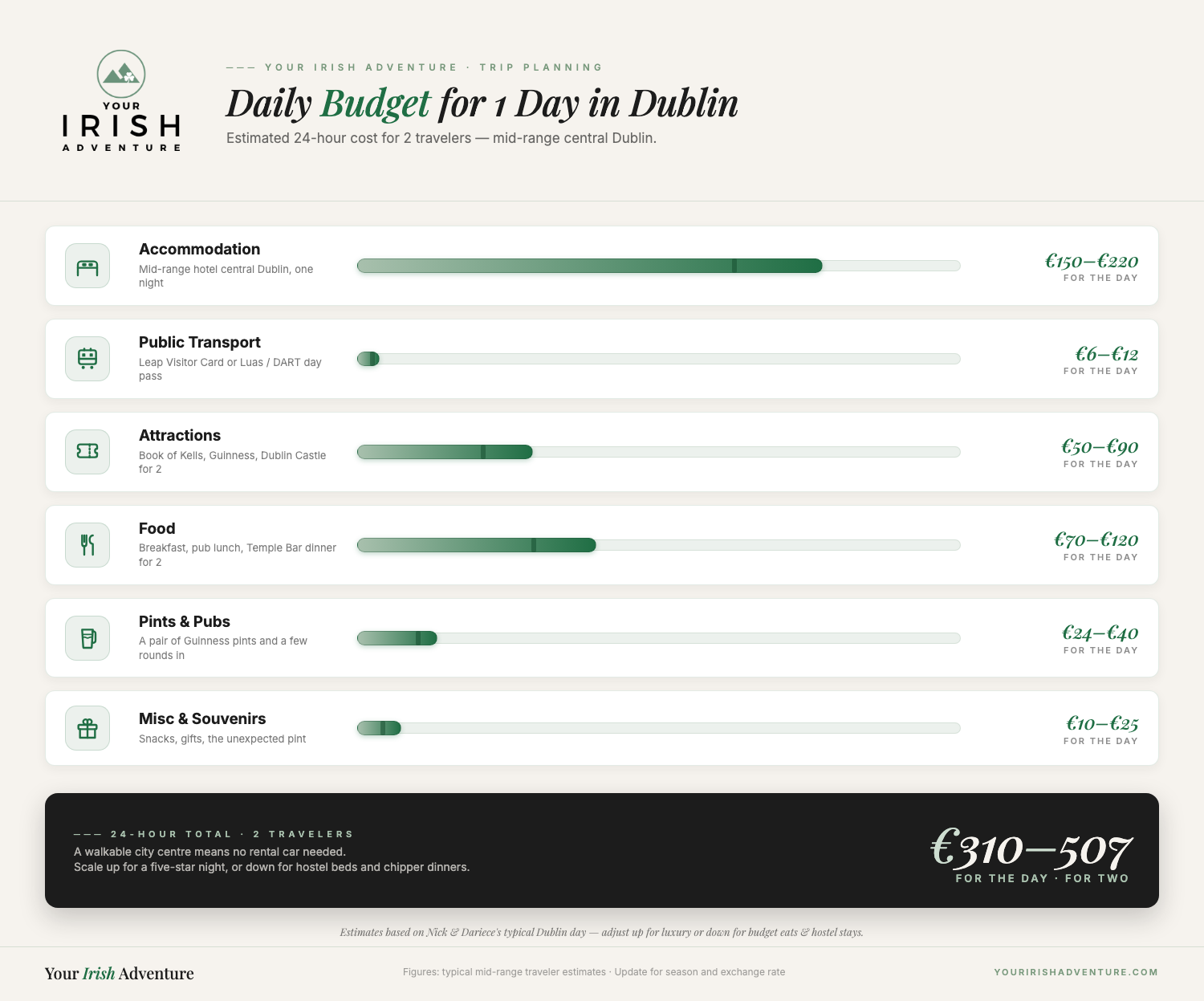
How much does a day in Dublin cost?
A rough budget for one person: Kilmainham Gaol entry is around €8, the Book of Kells is €16 to €18, a pub lunch will run you €12 to €16, and a pint costs €6 to €7 in most central pubs.
Add in a dinner and a couple of drinks and you’re looking at €60 to €80 for the day, not including accommodation.
Is Dublin safe for tourists?
Yes, Dublin is safe for tourists.
Apply the same common sense you would in any city: keep an eye on your belongings in busy areas like Temple Bar and O’Connell Street, and stick to well-lit streets at night.
Do you need to book attractions in advance?
For the big three, yes.
Kilmainham Gaol sells out days in advance, and the Book of Kells at Trinity College gets busy fast in summer, so book both before you travel.
Guinness Storehouse is easier to walk up to, but pre-booking saves you time in the queue.
Is Dublin walkable?
Very much so.
The itinerary in this guide requires almost no public transport, the city centre is compact and most of the major attractions are within a 20 to 30 minute walk of each other.
The main exception is Kilmainham Gaol, which is about a 30 minute walk from Trinity College or a short Luas ride if your feet need a break.
Final Thoughts
Dublin rewards a single day if you plan it well.
It’s not a cheap city, so budget around €80 to €120 per person once you factor in attraction tickets, a decent lunch, and a couple of pints in a proper pub.
But the energy here is hard to find anywhere else, and even a short visit leaves most people wanting to come back for more.
If one day has you hooked, the 2 Days in Dublin: The Perfect Weekend Itinerary is the logical next step, and it opens up a lot more of the city.
And if Dublin has you thinking about other Irish cities, it’s worth knowing that a day in the right place can go a long way.
That might mean 1 Day in Galway: The Perfect 24-Hour Itinerary or 1 Day in Cork: The Perfect 24-Hour Itinerary.
Ireland is a small country, which is one of the best things about it.
Like it? Pin it!
Save this guide for later


Is 4 days in Dublin enough to see everything?
4 days in Dublin is a great amount of time to cover the main highlights including Trinity College, the Guinness Storehouse, Dublin Castle, and Temple Bar without feeling rushed. You’ll also have time for day trips to nearby attractions like Howth or the Wicklow Mountains. Prioritise your must-sees in advance as some popular spots like the Book of Kells require booking tickets ahead.
How much money do I need for 4 days in Dublin?
Budget roughly €150–€200 per day in Dublin to cover mid-range accommodation, meals, transport, and key attractions. Major costs include the Guinness Storehouse (around €30), accommodation averaging €100–€150 per night, and dining where a pub meal typically costs €15–€20. Saving money is easy by using the Leap Card for public transport and seeking out the many free attractions like St. Patrick’s Cathedral grounds and Phoenix Park.
What is the best area to stay in Dublin for tourists?
The city centre areas of Temple Bar, Trinity College, and St. Stephen’s Green are the best locations to stay for tourists visiting Dublin, putting you within walking distance of most major sights. Staying south of the River Liffey is generally recommended for first-time visitors as it’s close to the majority of top attractions. If you’re on a tighter budget, the areas around Parnell Square or Smithfield on the north side offer more affordable accommodation options.
What is the best time of year to spend 4 days in Dublin?
May to September is the best time to visit Dublin for your 4-day trip, offering the warmest temperatures (14–20°C), longest daylight hours, and the most outdoor events and festivals. Late spring and early autumn are particularly ideal as the city is busy but not as crowded as peak summer. If you visit in winter, expect cold and rainy weather but benefit from lower accommodation prices and a cosy pub atmosphere.
Can you do Dublin in 4 days without a car?
Absolutely — Dublin is one of the most walkable cities in Europe and you can easily spend 4 days exploring without needing a car. The city centre attractions are all within comfortable walking distance, and the Luas tram, Dublin Bus, and DART train network cover everything further afield. A Leap Card is the most cost-effective way to use public transport and will save you money compared to buying single tickets each time.