
We stepped off the taxi in Galway and could already hear a session coming from Monroe’s Tavern on Dominick Street. We walked in to twenty people mid-tune, pints in hand, and that was our first ten minutes in the city. Galway does that to you fast.
The good news for anyone planning a trip is that the best places to visit in Galway City are packed into a compact, walkable center. Most of the sights are a short walk from each other, so you can cover the majority of them on foot in a day or two without ever touching a car.
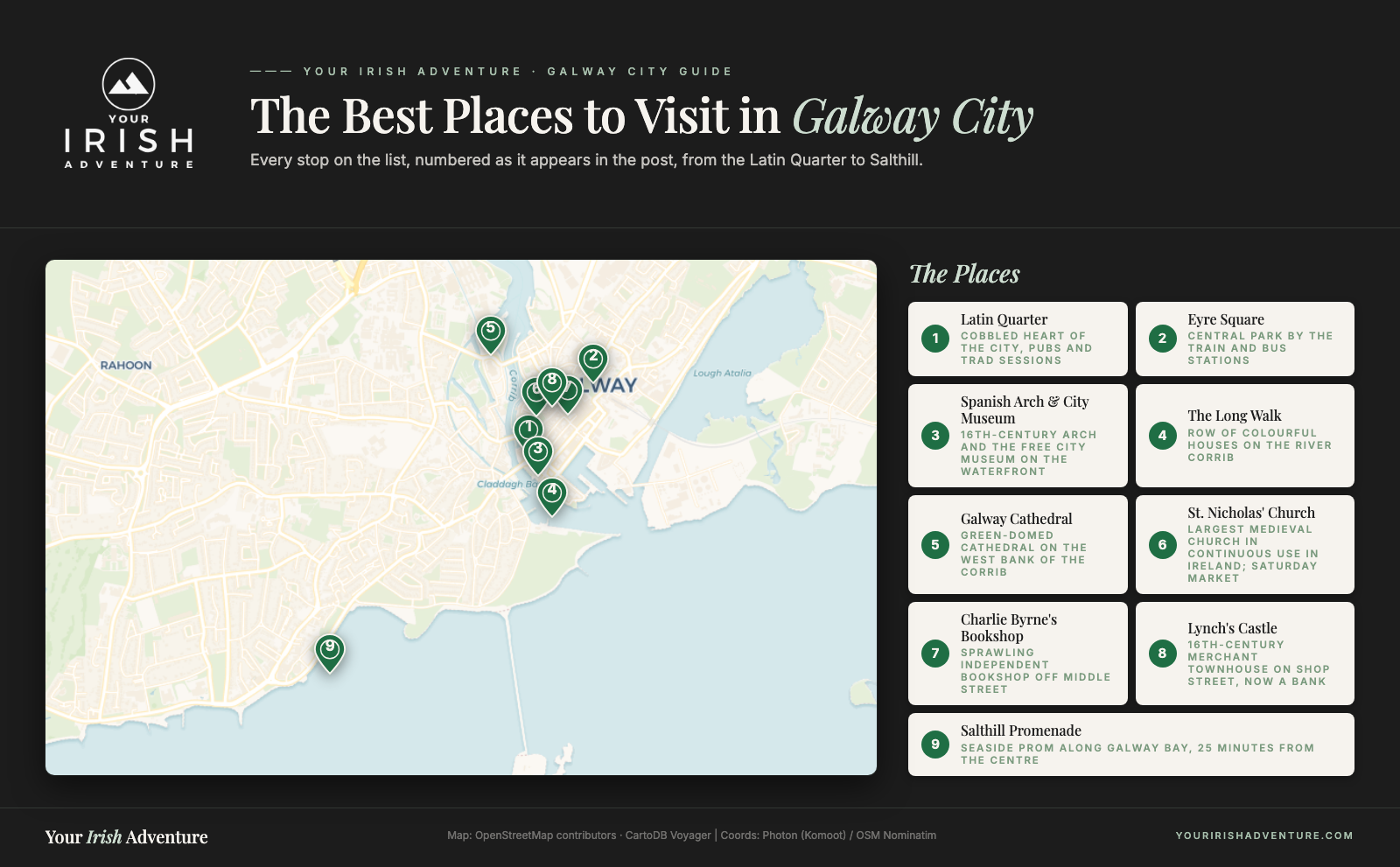
Below is the list of places we’d actually send a first-timer to, from the Latin Quarter down to the seafront at Salthill, plus where to stay, where to eat, and the day trips worth building in if you have an extra day.
Quick Answer:
The best places to visit in Galway City sit within a compact, walkable center: the cobbled Latin Quarter, Eyre Square, the Spanish Arch and Galway City Museum, and Galway Cathedral. Add the seaside Salthill Promenade and a day trip to the Cliffs of Moher or the Aran Islands. One full day covers the core, two if you slow down.
More Galway Travel Guides
- 33 Best Things To Do in Galway, Ireland
- Weekend in Galway: The Perfect 2 Day Itinerary
- 10 Best Pubs In Galway, Ireland
- 13 Free Things to Do in Galway (Like Actually Free)
- 10 Best Airbnbs in Galway, Ireland
Where to Stay in Galway City
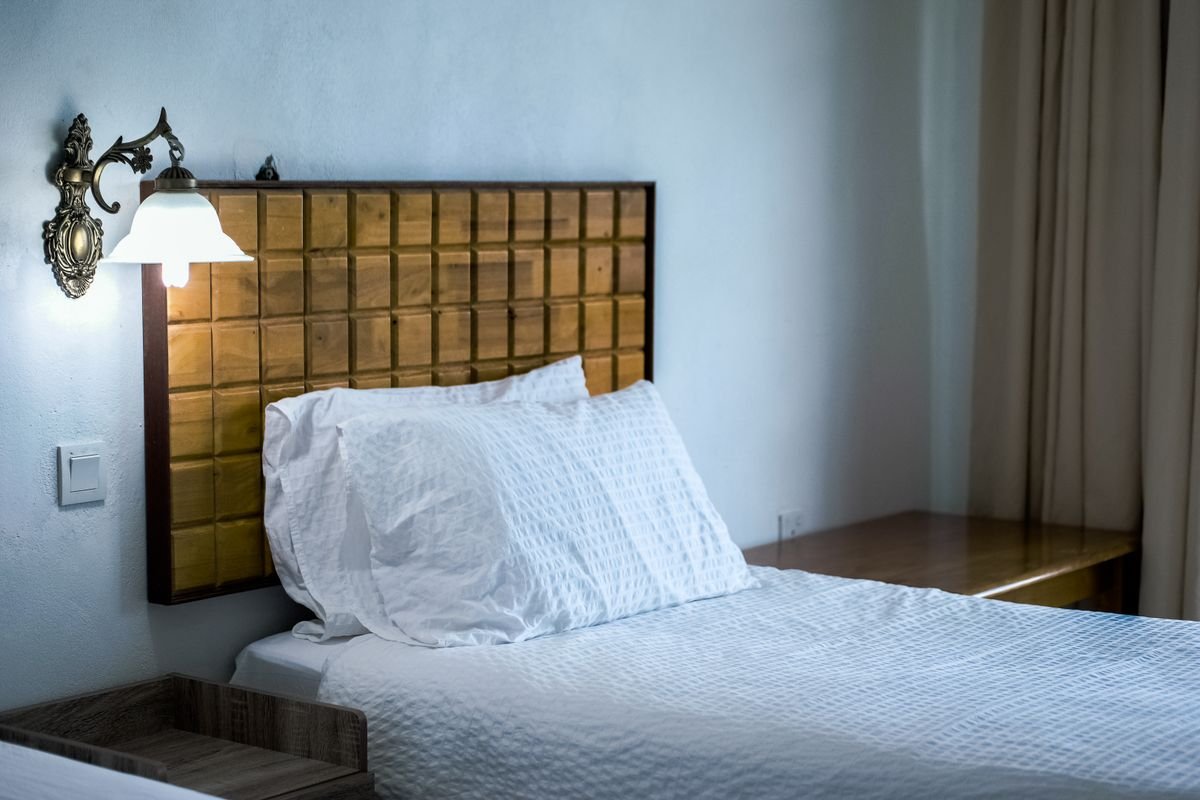
The best base in Galway is in or right beside the city center, within walking distance of the Latin Quarter. The whole center is small, so staying central means you can walk to nearly everything and roll home from the pub without a taxi. That’s worth more here than in most Irish cities.
If you want to be in the thick of it, look around Eyre Square, Quay Street, and the streets running down toward the Spanish Arch. You’ll pay a bit more for a central spot, especially in summer and during festival weeks, but you save the time and hassle of getting in and out.
Prices climb fast when the Galway Races or the Arts Festival are on, so book early if your dates land in July. There’s a good spread of options for every budget, from hostels and guesthouses near the center to full hotels a few minutes’ walk from Quay Street. You can check availability on Booking.com to see what’s still open on your dates.
Salthill is the other option, out along the bay about a 25-minute walk or a short bus ride from the center. You trade a bit of the nightlife and the walkability for sea views and the promenade on your doorstep. If you’re driving and want easier parking, Salthill makes a lot of sense as a base.
Where to Stay in Galway City
The Best Places to Visit in Galway City
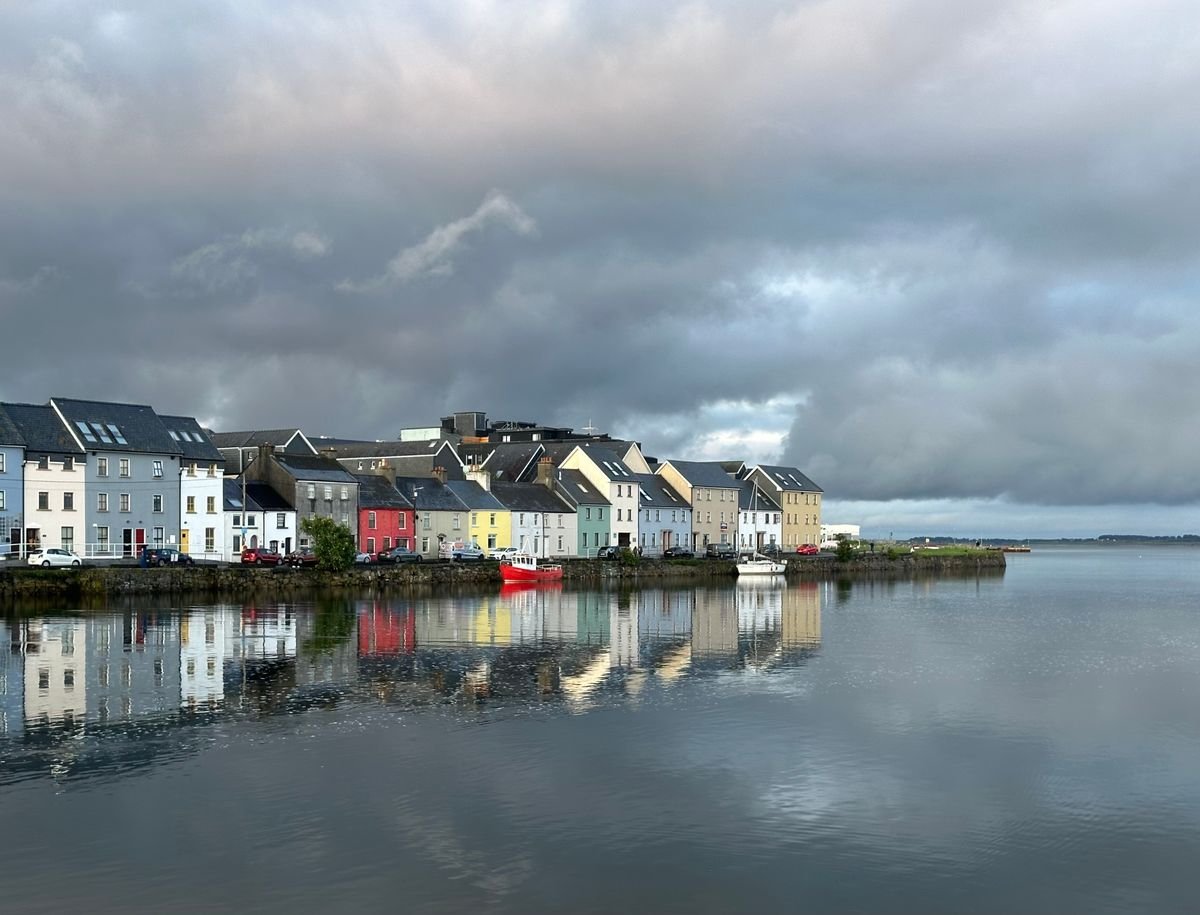
Galway isn’t a city of huge landmarks or one big sight everyone lines up for. The best part is the center itself, and the fact that you can walk the whole thing. These are the standout places to visit, and nearly all of them are a short walk from each other, so you can string them together in whatever order you like.
Wander the Latin Quarter
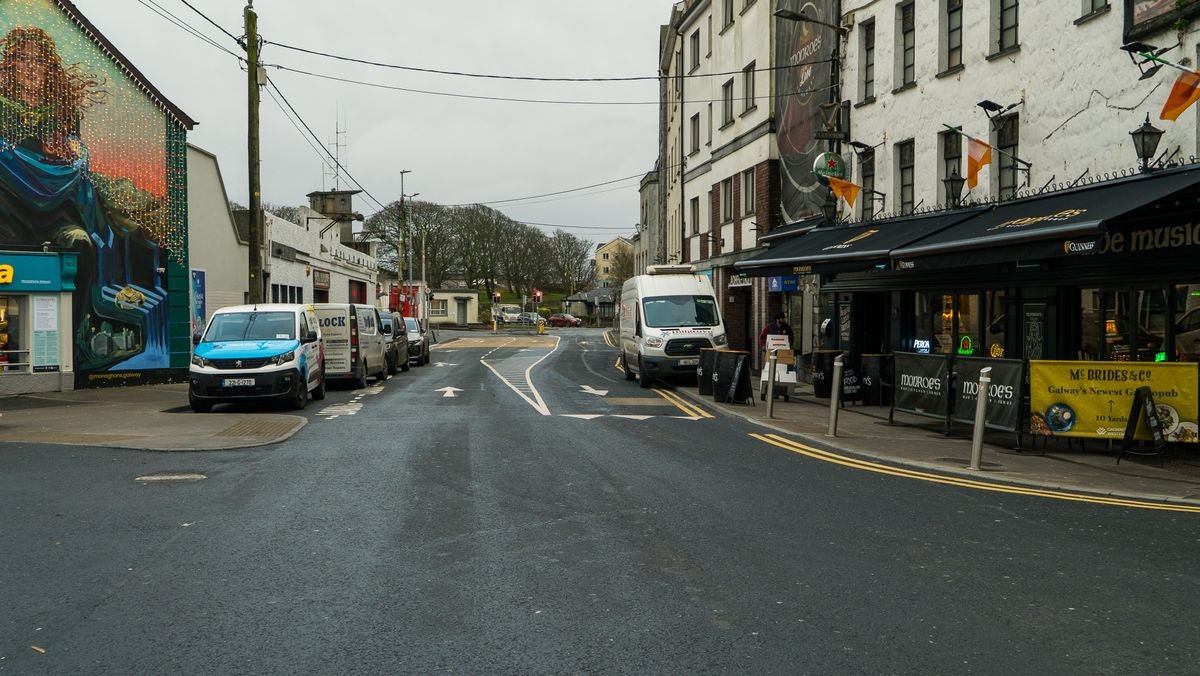
The Latin Quarter is the cobbled heart of the city, and it’s where you’ll spend most of your time. Quay Street and Shop Street run through it, lined with pubs, cafes, and small independent shops, and there’s almost always a busker or a trad session going somewhere.
This is where we walked into Monroe’s on our first night and found the session already going. You don’t need a plan here. Wander down toward the water, duck into whichever pub has the music, and you’ve basically got the Galway experience. It’s touristy, and it’s still the best thing about the city.
See Eyre Square and the Whatliftsyou Mural
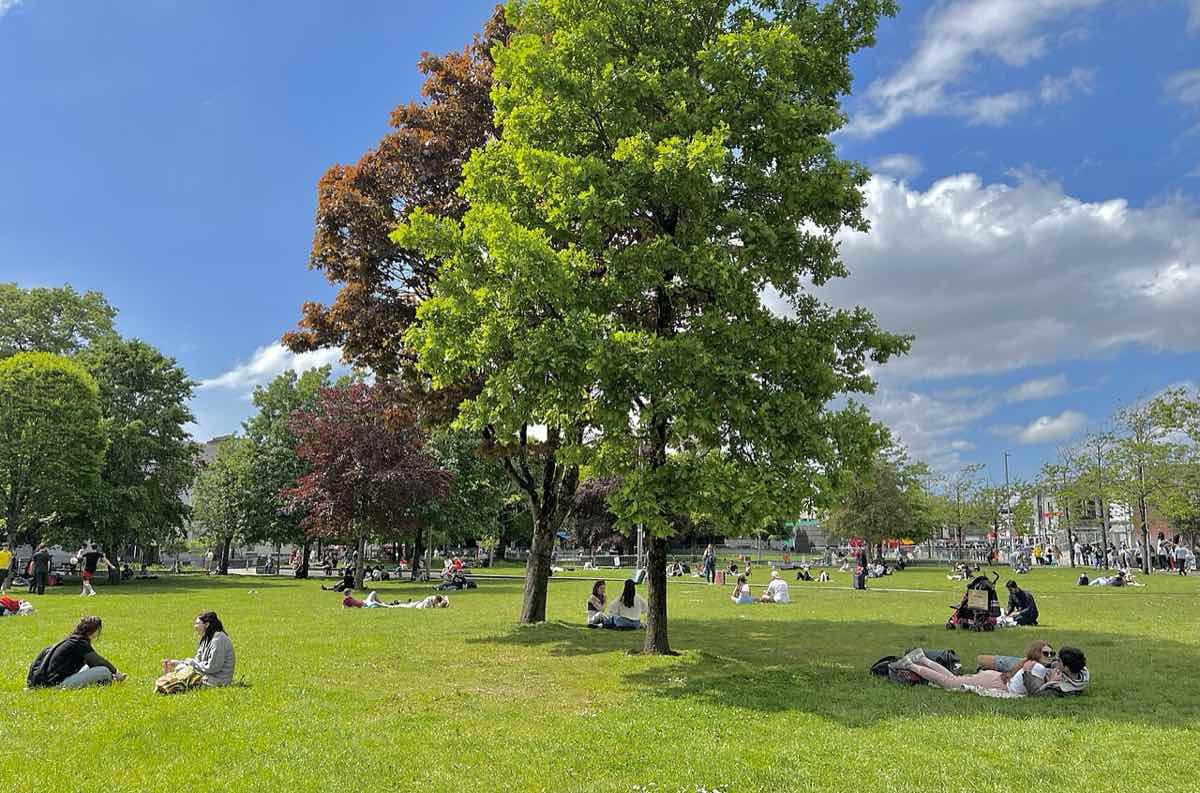
Eyre Square is the city’s central park and the natural place to start on foot. It sits right by the train and bus stations, so if you arrive by public transport, you’ll land here anyway. It’s an open green space ringed by shops and hotels, good for getting your bearings before you head down into the Latin Quarter.
On the side of a building nearby you’ll find the Whatliftsyou mural, a large winged design that people stop to photograph with their arms out. It’s a quick one, but it’s on the way, so take the two minutes and grab the photo before you carry on.
Visit the Spanish Arch and Galway City Museum
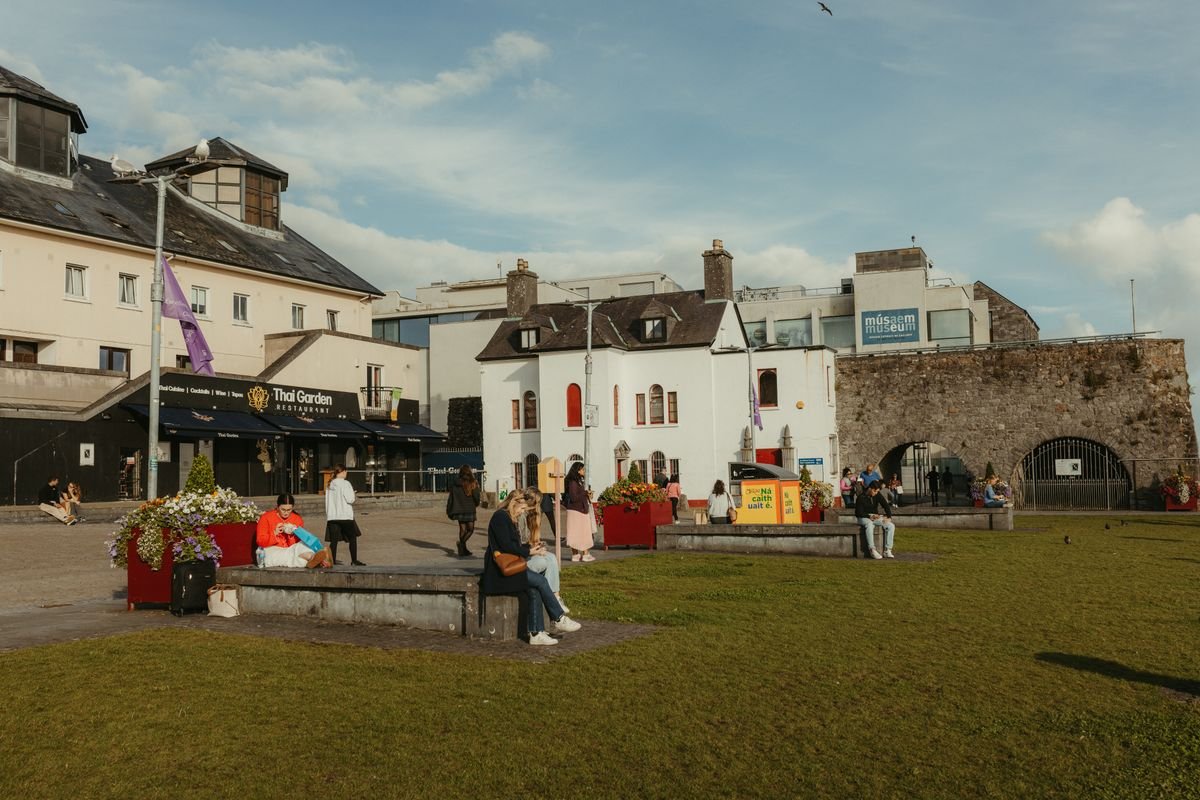
The Spanish Arch is a 16th-century stone arch down on the waterfront, once part of the old city walls that protected the quays. It’s not huge, so don’t expect a grand monument. On a dry day people sit out on the grass beside it with a drink, and it’s a good spot to watch the river meet the bay.
Right beside it is the Galway City Museum, and the best part is that it’s free. Three floors cover the city’s history, the Claddagh, and its maritime past. It’s an easy 45 minutes to an hour, and being free, it’s an easy call even if you only have a passing interest.
Walk the Long Walk and River Corrib
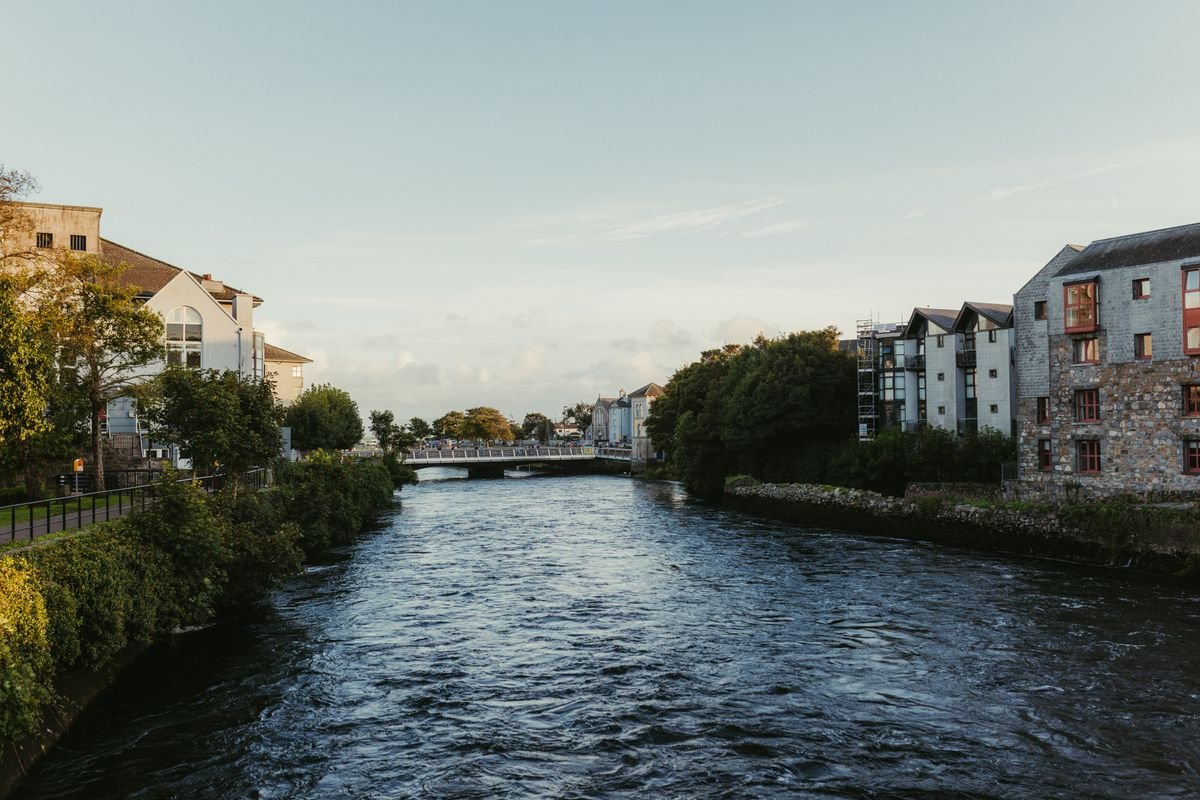
Just across from the Spanish Arch is the Long Walk, a row of tall, colorful houses standing right on the water. It’s one of the most photographed spots in Galway, and it’s earned it. The mix of the painted fronts and the boats moored in front makes it one of the city’s best short strolls.
The River Corrib runs fast and cold right through here on its way to the bay, one of the shortest and fastest rivers in Ireland. Follow it up a little and you’ll pass fishermen and the odd swimmer. The whole loop takes fifteen minutes, and it’s worth doing early before the crowds are out.
Step Inside Galway Cathedral
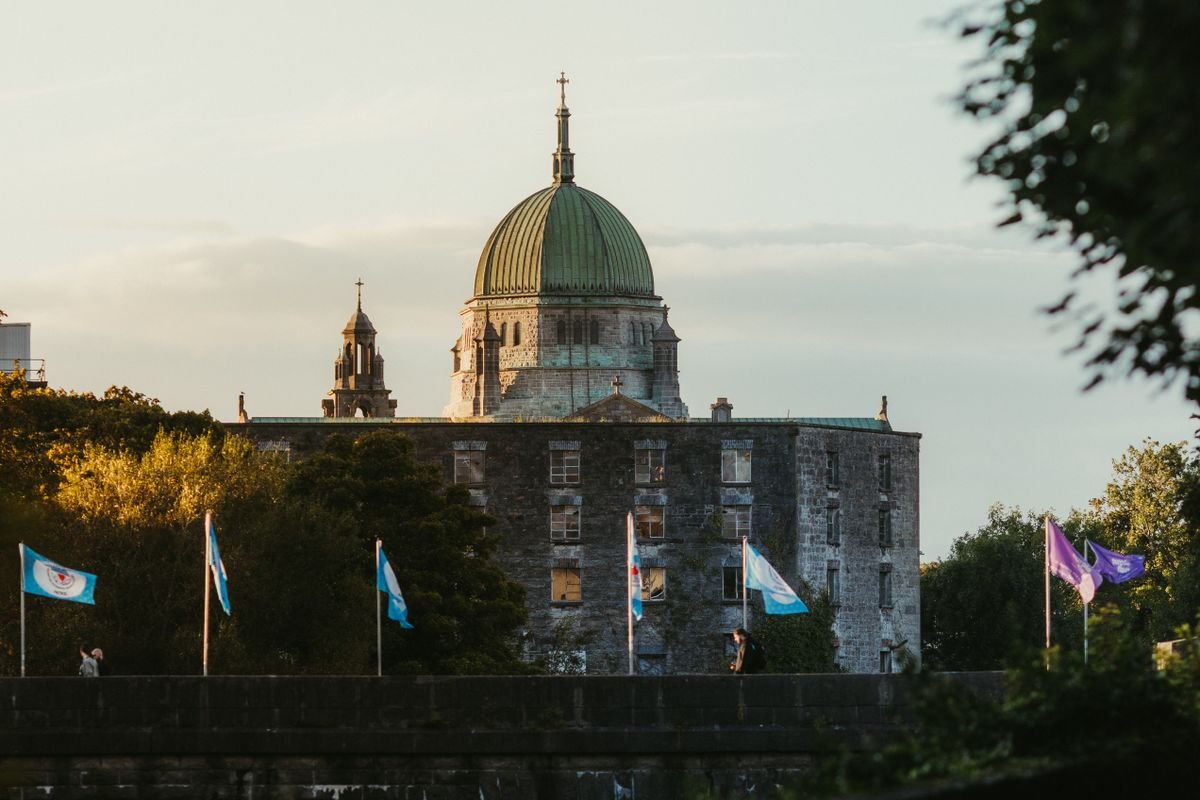
Galway Cathedral is one of the last great stone cathedrals built in Europe, finished in 1965, which makes it far younger than it looks. It sits on the west bank of the Corrib, a short walk from the center, and the green dome is one of the first things you’ll pick out on the skyline.
Step inside and it’s the domed ceiling and the stonework that get you. It’s a working cathedral, entry is free, and it takes twenty minutes to walk around. Even if churches aren’t your thing, the scale of the interior is worth the short detour across the river.
Explore St. Nicholas’ Collegiate Church
St. Nicholas’ Collegiate Church is the largest medieval church in continuous use in Ireland, dating to 1320. It’s right in the center, so you’ll pass it without trying. Local lore says Christopher Columbus stopped in to pray here before sailing west, which may or may not be true, but the church is old enough that people repeat it.
The real reason to time your visit is the Saturday market that sets up in the streets around it. Stalls sell food, crafts, and produce, and it’s one of the better market mornings in the west of Ireland. Come Saturday if you can, and eat your way down the row.
Browse Charlie Byrne’s Bookshop

Charlie Byrne’s is a sprawling independent bookshop off Middle Street and a Galway institution. It’s a series of small connected rooms packed floor to ceiling with new, used, and discounted books, and it’s easy to lose half an hour in there without meaning to.
Even if you’re not planning to buy anything, it’s worth a look for the sheer scale of the place and the staff picks scattered around. Shops like this have disappeared from most cities, so it’s a good one to support while you’re in town.
See Lynch’s Castle and the Hall of the Red Earl
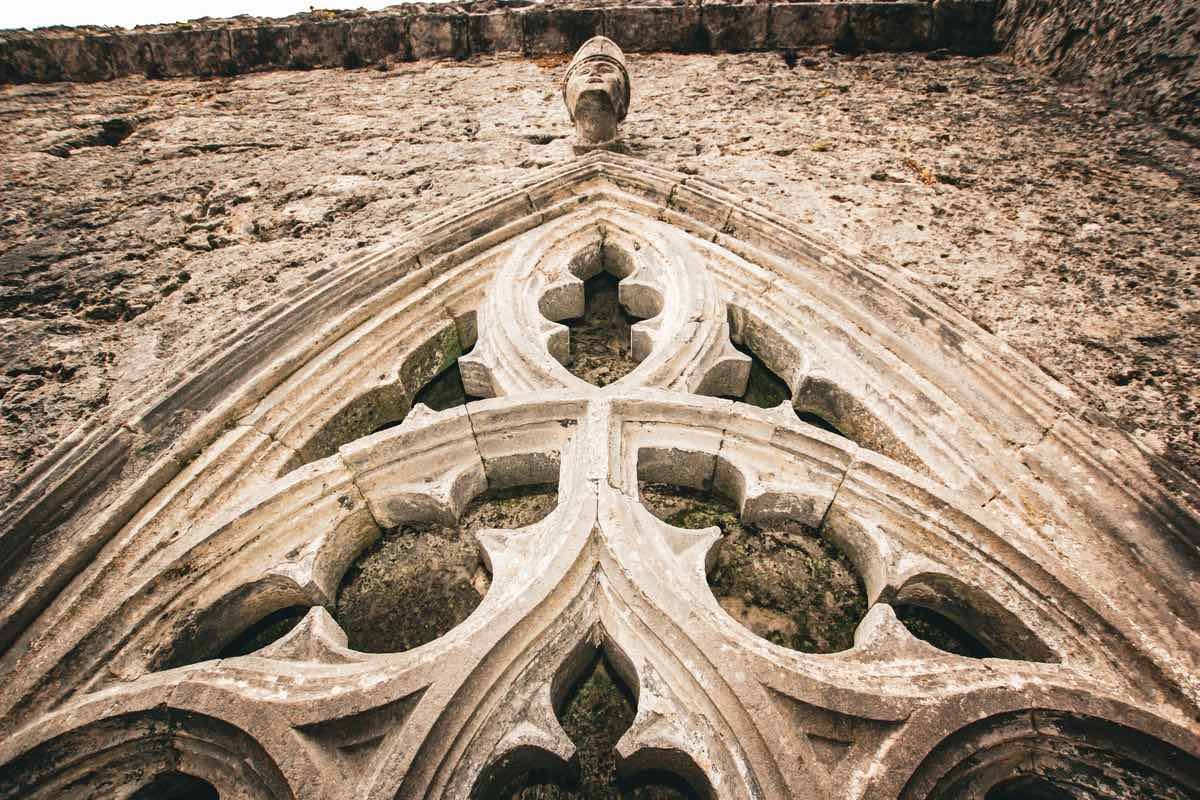
Lynch’s Castle is a 16th-century townhouse right on Shop Street, and it’s now a working bank, which is a strange thing to walk into. It was built by one of Galway’s powerful merchant families, and the carved stone front is the best-preserved medieval townhouse in the city. You can step inside during banking hours and see the old details.
A short walk away, the Hall of the Red Earl is the excavated remains of a medieval hall, rediscovered during building work in the 1990s. It’s free to visit and takes ten minutes, but it’s a real slice of the city’s merchant past sitting under a modern building.
Stroll the Salthill Promenade
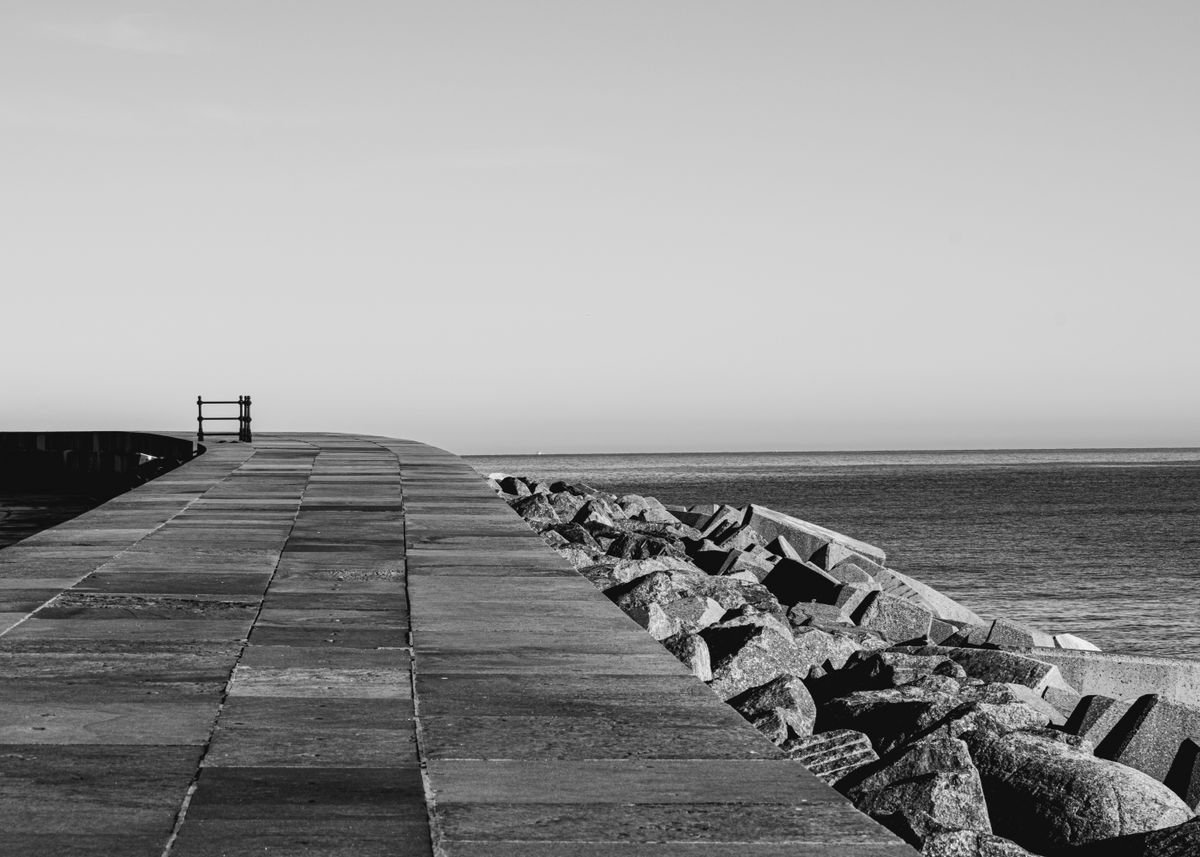
The Salthill Promenade runs along Galway Bay, about a 25-minute walk from the center or a quick bus ride. On a clear day you can see across the water to the hills of the Burren in County Clare, and the whole prom is lined with benches, ice cream spots, and swimmers year-round.
There’s a local tradition of kicking the wall at the far end before you turn back, a habit passed down for generations that nobody can fully explain. Do it anyway. It’s a proper seaside walk, and it’s the best way to spend a couple of hours if the weather cooperates.
Where to Eat and Drink in Galway City

For its size, Galway has an outsized food scene. It’s a small city, but it eats like a much bigger one, and it’s arguably the best food town in Ireland outside Dublin. The seafood is the thing to chase here, pulled fresh from the Atlantic and the bay right on the doorstep.
Oysters are a local point of pride, and the Galway International Oyster Festival in September is built around them. Even outside the festival, plenty of pubs and restaurants serve them by the half-dozen. If you eat oysters anywhere in Ireland, eat them here.
Beyond the seafood, the Latin Quarter and the streets around it are stacked with cafes, bakeries, and small restaurants covering most budgets. McCambridge’s on Shop Street is a long-running deli and food shop worth a stop for lunch, and the Saturday market is a meal in itself if you graze the stalls.
The drinking is the other half of the story. Galway’s pubs pour pints and run live trad sessions most nights, and the good ones don’t need a schedule. Monroe’s Tavern on Dominick Street is where we ended up first, and Tig Cóilí and The Crane Bar are both known for the music. Follow the sound.
Best Shopping in Galway City
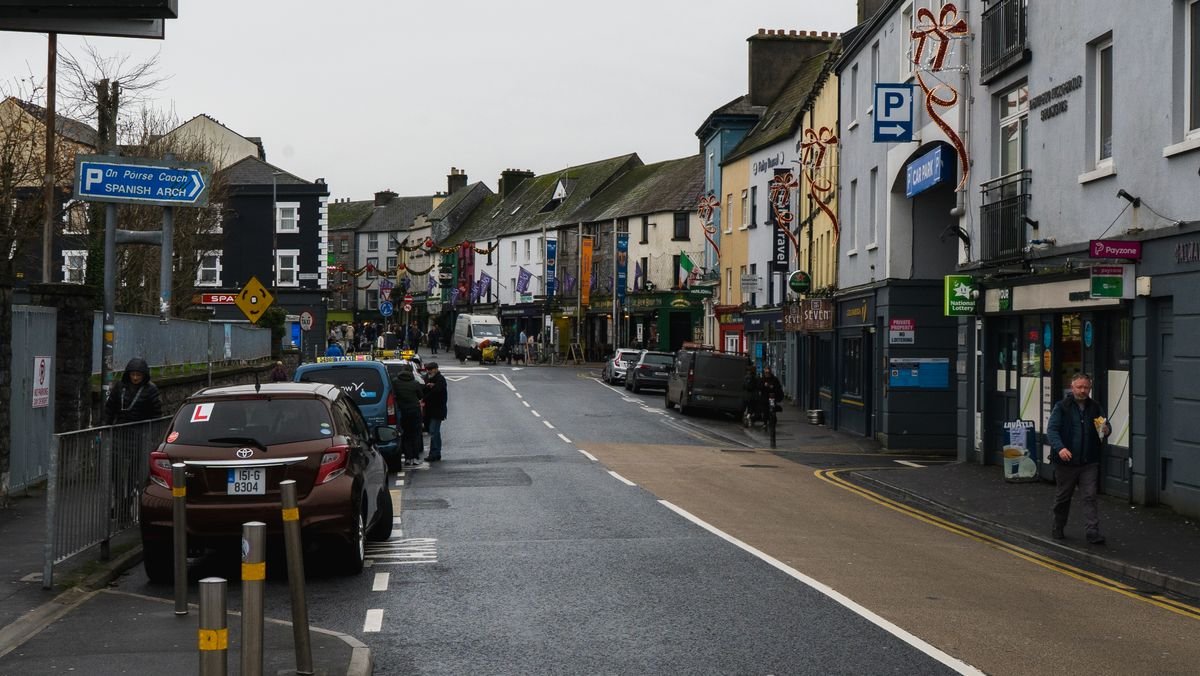
Galway is a good place to browse, mostly because it’s kept its independent shops. Shop Street and the lanes off it are full of small boutiques, craft shops, and record stores rather than the same chains you see everywhere else. It’s the sort of center you can shop on foot without ever setting foot in a mall.
The Saturday market around St. Nicholas’ Church is the highlight, with stalls selling crafts, art, and food. It’s the best morning to be in the city if you like a browse. Time your trip around it if you can.
Galway is also the home of the Claddagh ring, the traditional Irish ring showing two hands holding a crowned heart. The original Claddagh ring shops are here, and it’s the one place in Ireland where buying one actually means something. It makes a better souvenir than the usual fridge magnet.
Best Time to Visit Galway City
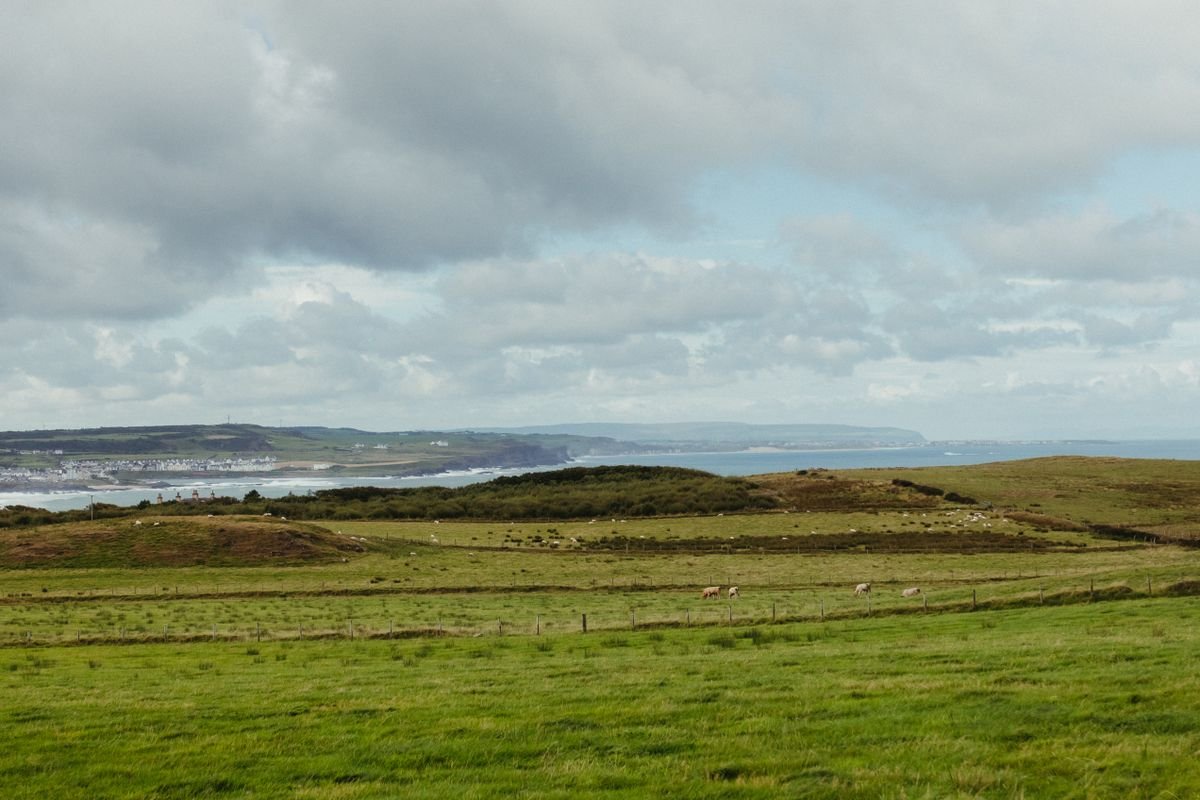
Summer, from June through August, brings the best weather and the biggest events. The Galway International Arts Festival and the Galway Races both land in July, and the city is at its liveliest. The trade-off is crowds and higher prices, and you’ll want to book your bed well ahead if you come in peak season.
If you’d rather skip the crush, late spring and early autumn are the sweet spot. May, September, and early October give you decent odds on the weather with fewer people and easier prices. We were in Galway in late September and the center was busy but never packed.

Whenever you come, pack for rain. This is the west of Ireland, and the weather turns on a dime in any season. Bring a rain jacket and plan your indoor stops, like the museum and the cathedral, for the wet stretches.
More Guides for Ireland’s West Coast
- Wild Atlantic Way Itinerary – Ireland’s Most Epic Road Trip
- A Photographer’s Definitive Ireland Road Trip
- Where to Stay in Doolin: Best Areas & Hotels
Day Trips and Places Near Galway City
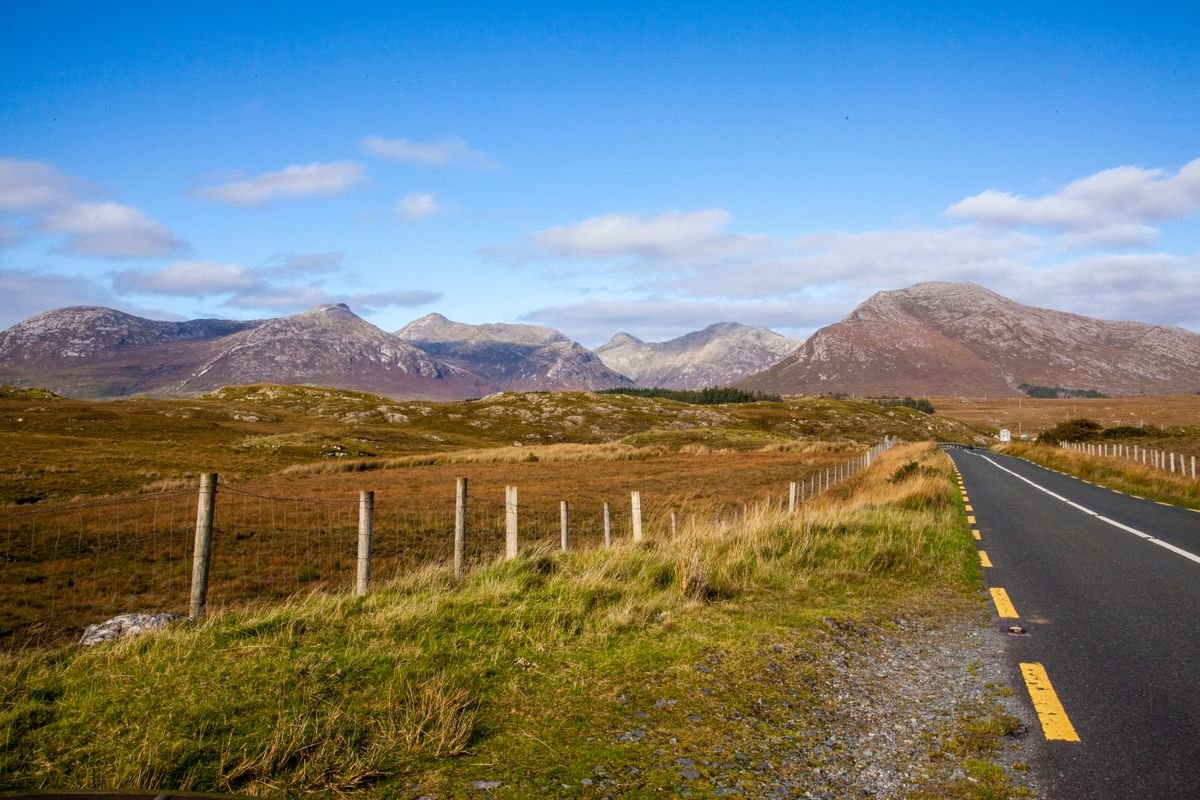
Galway City is a great base for day trips, and it’s the reason a lot of people use it as a jumping-off point for the west of Ireland. Some of the best scenery in the country is within easy reach, and you can hit most of it in a day and be back for the pub.
Connemara is the closest big draw, a stretch of mountains, bogs, and coastline just to the northwest. Kylemore Abbey sits out that way too, a lakeside country house with walled gardens that makes an easy half-day if you’re already in Connemara. If you’d rather not drive it, you can book the Connemara and Kylemore Abbey day tour on GetYourGuide and let a coach do the loop.
The Cliffs of Moher are about 90 minutes south in County Clare, one of the most-visited sights in Ireland and worth the drive despite the crowds. Loop Head, further out on the same peninsula, is wilder and quieter if you want the cliffs without the tour buses. Without a car, the simplest way is to book the full-day Cliffs of Moher tour on GetYourGuide, which pairs the cliffs with a run through the Burren.

The Aran Islands are the other classic day trip, reached by ferry from Rossaveel west of the city. Rent a bike on Inis Mór and ride out to the Iron Age fort of Dún Aonghasa on the cliff edge. It’s a full day, but it’s one of the best you can have out of Galway. If you want the islands and the cliffs in one go, you can book the Aran Islands and Cliffs of Moher cruise on GetYourGuide.
Things to Do in Other Irish Cities and Towns
- 22 Best Things To Do in Dublin
- Best Things To Do In Cork (City & Day Trips)
- 20 Best Things To Do in Dingle, Ireland
- The Best Things to Do in Kenmare, Ireland
Frequently Asked Questions
How many days do you need in Galway City?
One full day covers the main sights in the center, since everything is close together. Give it two days if you want to slow down, walk out to Salthill, and add a day trip to the Cliffs of Moher or the Aran Islands.
Is Galway City walkable?
Yes. The center is compact and flat, and most of the best places to visit are a short walk from each other. You won’t need a car or public transport to get around the city itself. Salthill is the only spot far enough out to warrant a bus or a longer walk.
What is Galway City known for?
Galway is known for its live traditional music, its pubs, its seafood, and the Claddagh ring, which was born here. It’s also the main gateway to Connemara, the Aran Islands, and the Cliffs of Moher.
Is Galway worth visiting?
It is one of the best cities to visit in Ireland. The center is small and easy to walk, the pub scene is the real deal, and the food is better than you’d expect for a city this size. Add the day trips within reach and it’s an easy choice for a couple of days.
In short
- Galway City’s center is compact and walkable, so you can skip the car.
- Start at Eyre Square, then wander the cobbled Latin Quarter for pubs and trad music.
- The Spanish Arch, Galway City Museum, and Hall of the Red Earl are all free.
- Walk the Salthill Promenade along Galway Bay and kick the wall at the end.
- Base yourself in or near the center, and give the city at least a full day.
Final Thoughts
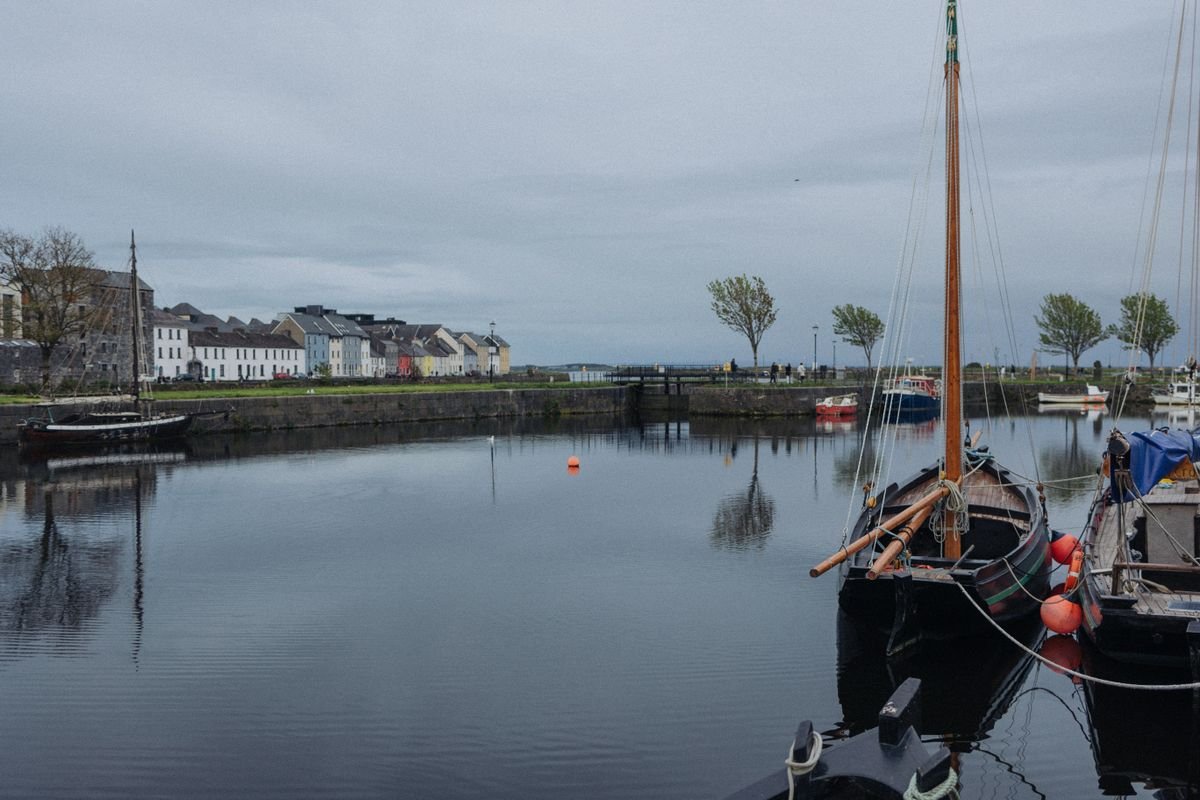
Galway rewards a slow wander more than a tight itinerary. The sights are close together and none of them takes long, so the trick is to leave time to just walk the Latin Quarter, follow the music, and see where the day goes.
Give yourself at least a full day in the center, and a second if you can spare it for Salthill and a day trip out west. We turned up with no plan beyond finding a session, walked into Monroe’s, and that set the tone for the whole visit. That’s the way to do Galway.
Like it? Pin it!
Save this guide for later