
Kerry has the best beaches in Ireland, and if you only have time for one county’s coastline, this is the one. Wide Atlantic strands, a few tucked into hidden coves, some backed by mountains, others by nothing but dunes and sky. This post rounds up the best beaches in Kerry, the ones actually worth the drive.
We spent about two weeks driving Ireland on our last trip, through shoulder season in autumn, and Kerry’s coast was the stretch we kept slowing down for. The county packs in Blue Flag beaches, surf spots, and less-visited corners that a lot of road trips blow straight past.
Some are famous, like Inch and Banna. Others you’ll have almost to yourself even in summer. A rental car makes the whole thing easy, since a lot of these sit at the end of narrow roads with no bus anywhere near them.
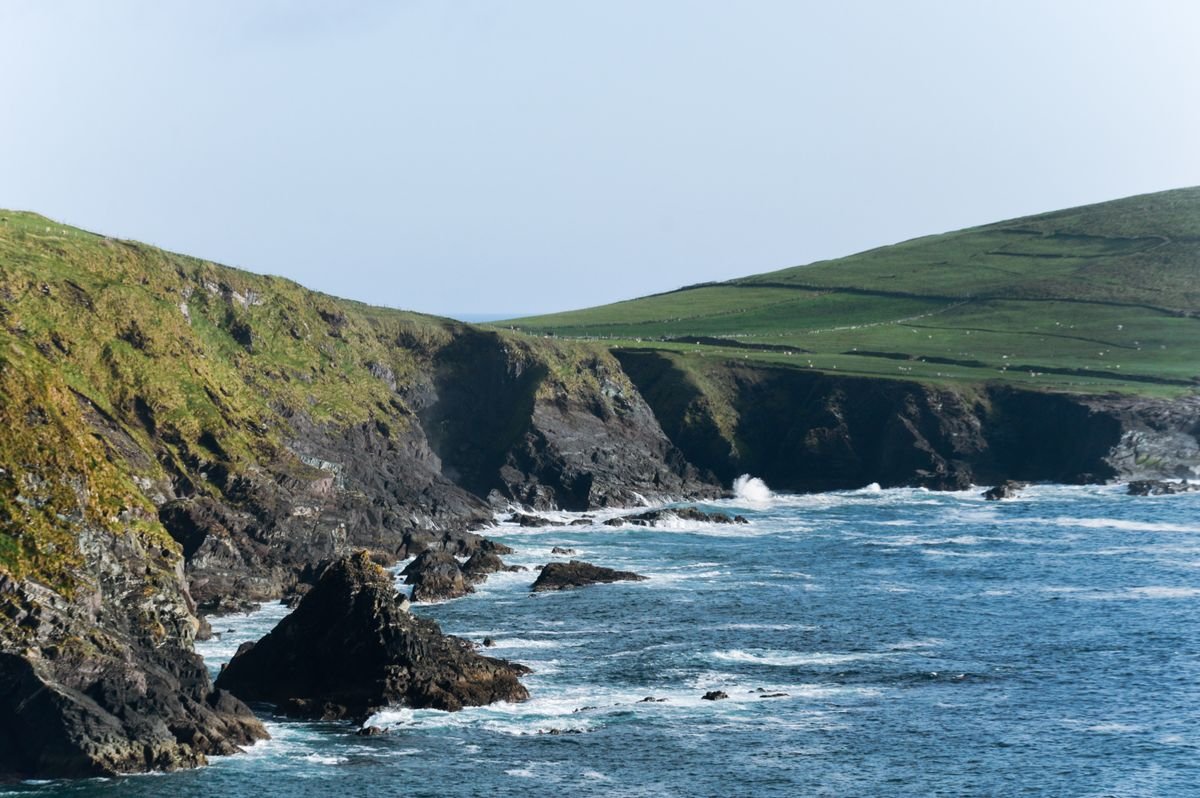
Below is the full list, from the big-name strands to the smaller ones we’d send you to instead, plus how to reach them, the best time of year to go, and where to base yourself along the coast.
More Kerry Travel Guides
- 21 Unique Things To Do in Kerry, Ireland – The Kingdom County
- 7 Best Places to Stay in Dingle, Ireland
- Where To Stay in Killarney: Best Areas and Accommodations
- Muckross House Killarney: A Complete Visitor Guide
Quick Answer:
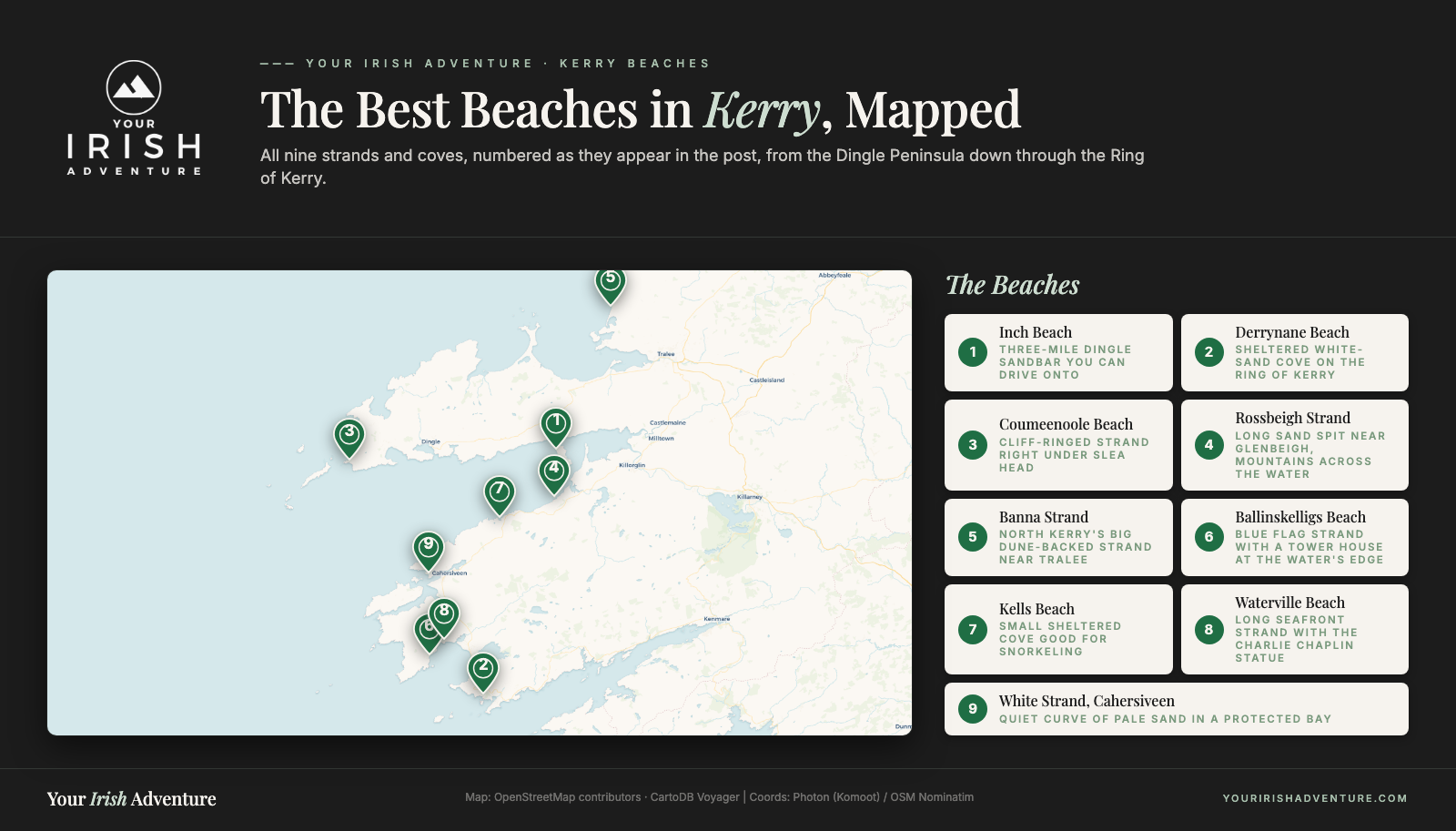
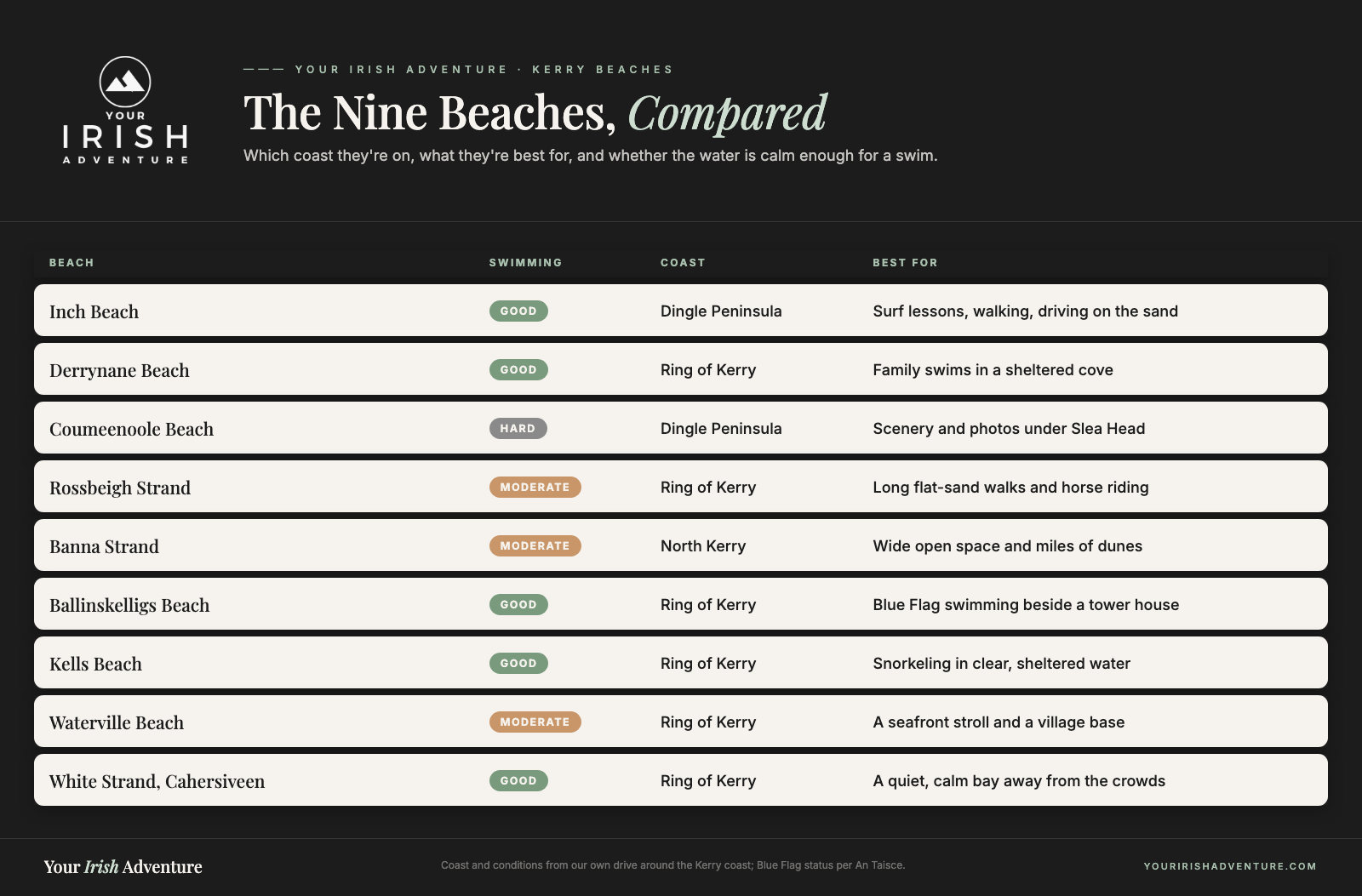
The best beaches in Kerry run along the Dingle Peninsula and the Ring of Kerry. Inch is the famous three-mile sandbar you can drive onto, Derrynane has sheltered white-sand coves, and Coumeenoole sits under Slea Head. Blue Flag strands like Banna and Rossbeigh are the safe swimming picks. A rental car reaches them all.
The Best Beaches in Kerry
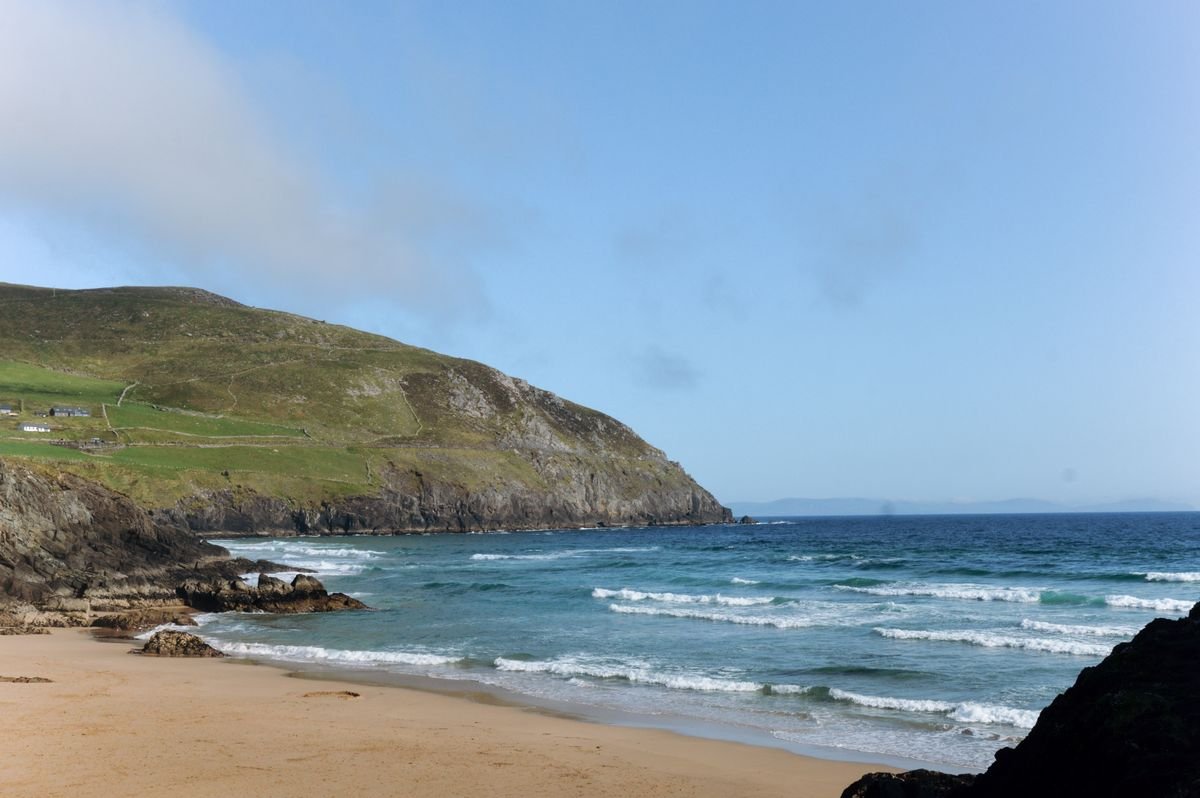
Kerry’s beaches split roughly into three groups: the big Dingle Peninsula strands, the sheltered coves along the Ring of Kerry, and a couple of long dune-backed beaches up north near Tralee. Here’s the full rundown, with how to reach each one and what it’s actually good for.
Inch Beach
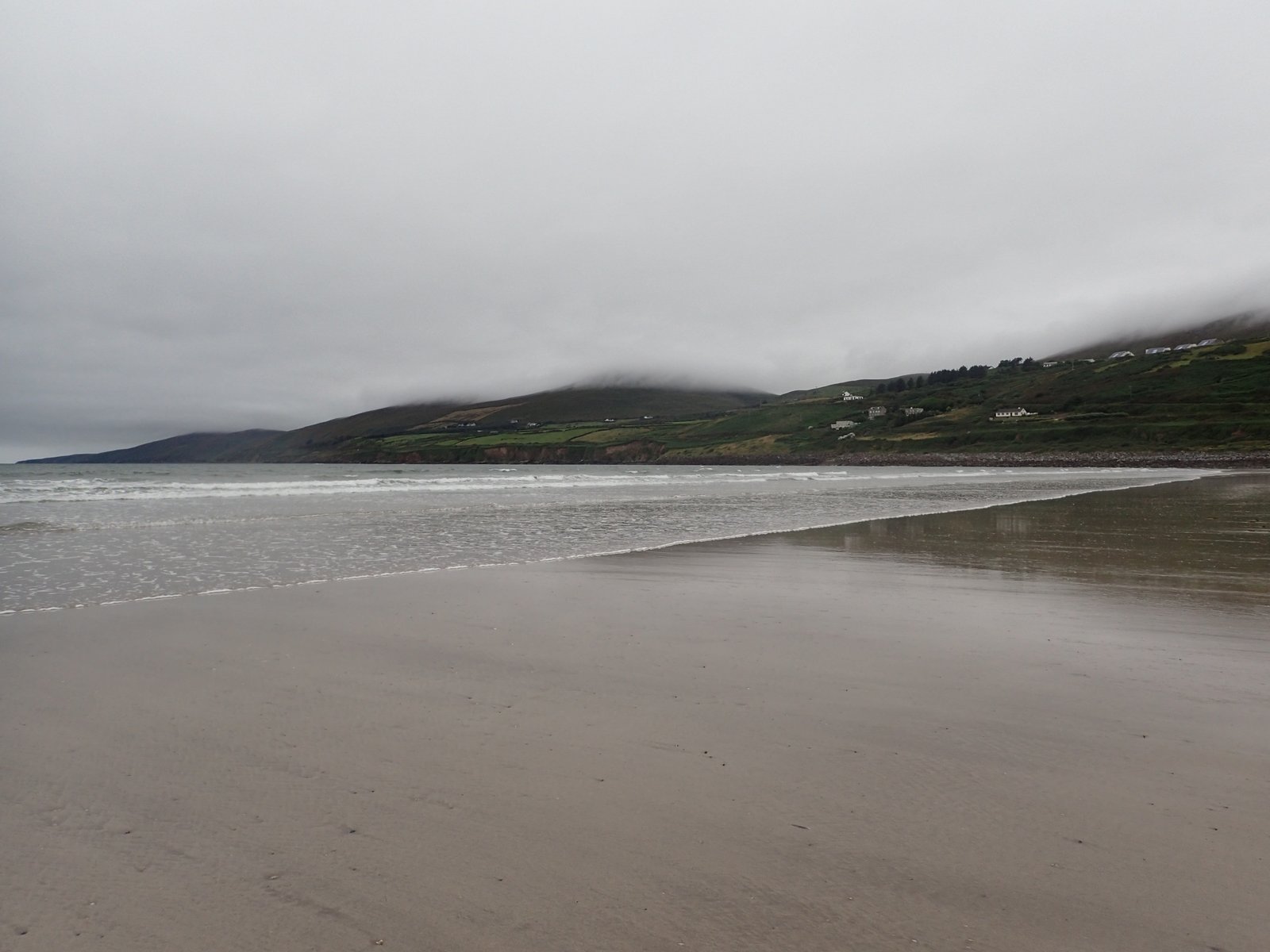
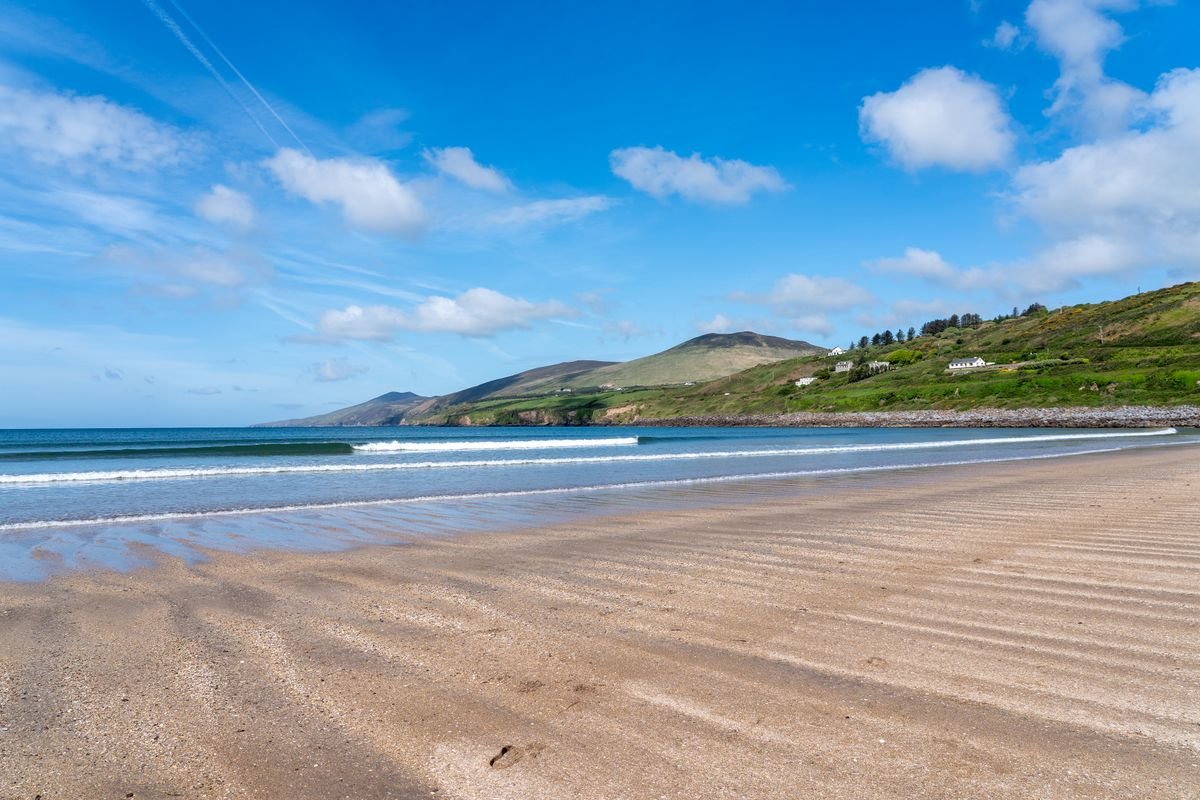
Inch is the famous one, and it earns it. A three-mile sandbar sticking out into Dingle Bay, backed by dunes and the Slieve Mish mountains behind. You can drive right onto the hard sand, which is half the fun.
It sits on the R561 on the Dingle Peninsula, about a 90-minute drive from Killarney. There’s a cafe and surf school at the entrance, and it’s a reliable beginner surf spot when there’s a swell. Blue Flag, plenty of parking, and room to spread out even in July.
Derrynane Beach
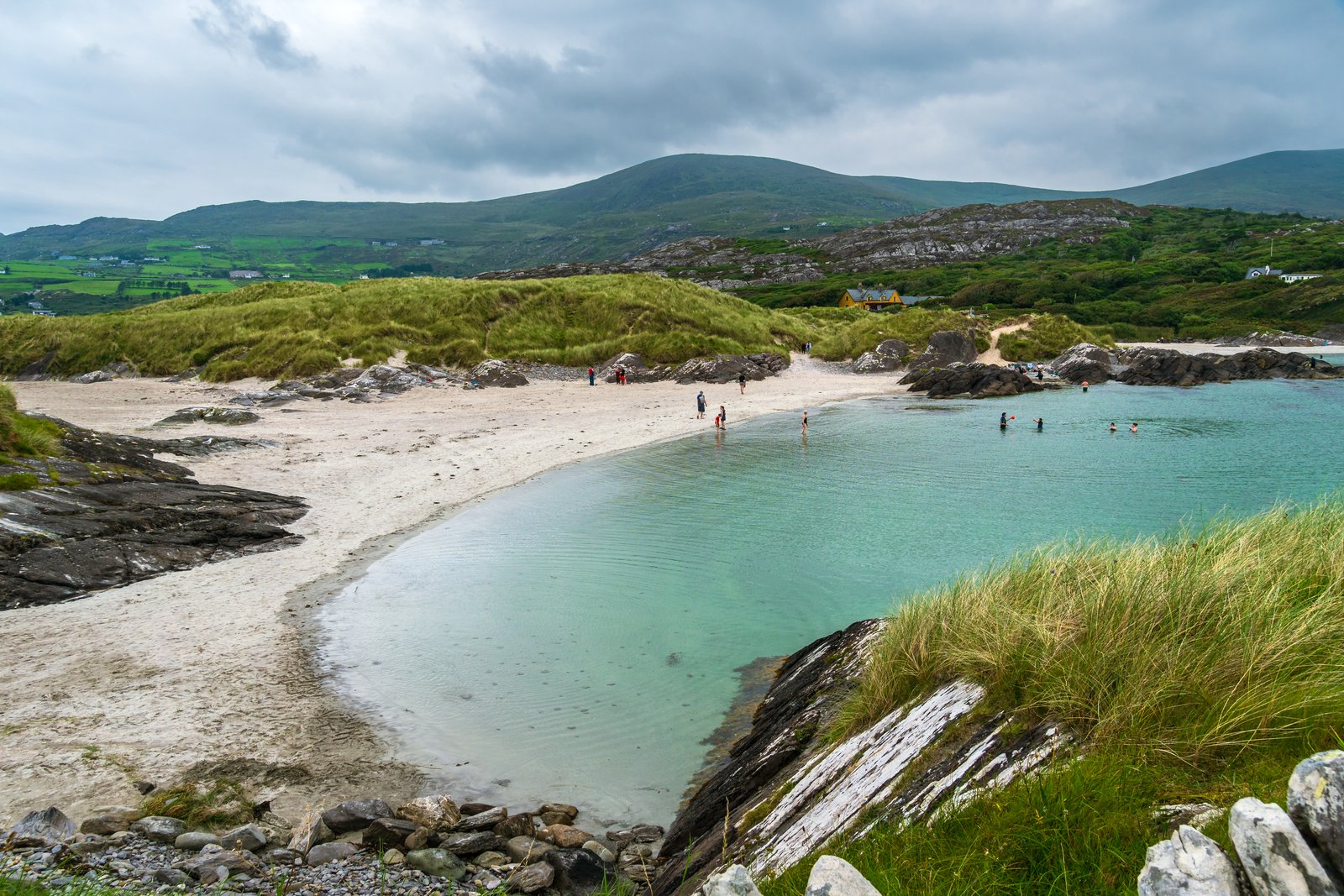
Derrynane is the best beach on the Ring of Kerry, and it’s not close. A cluster of sheltered white-sand coves near Caherdaniel, with a tidal island you can walk out to at low tide and dunes behind that keep the wind off.
It’s part of the Derrynane National Historic Park, the old home of Daniel O’Connell, so you can pair the beach with the house and gardens. Follow the signs off the N70. Calm, protected water makes it one of the better family swimming spots in the county.
Coumeenoole Beach
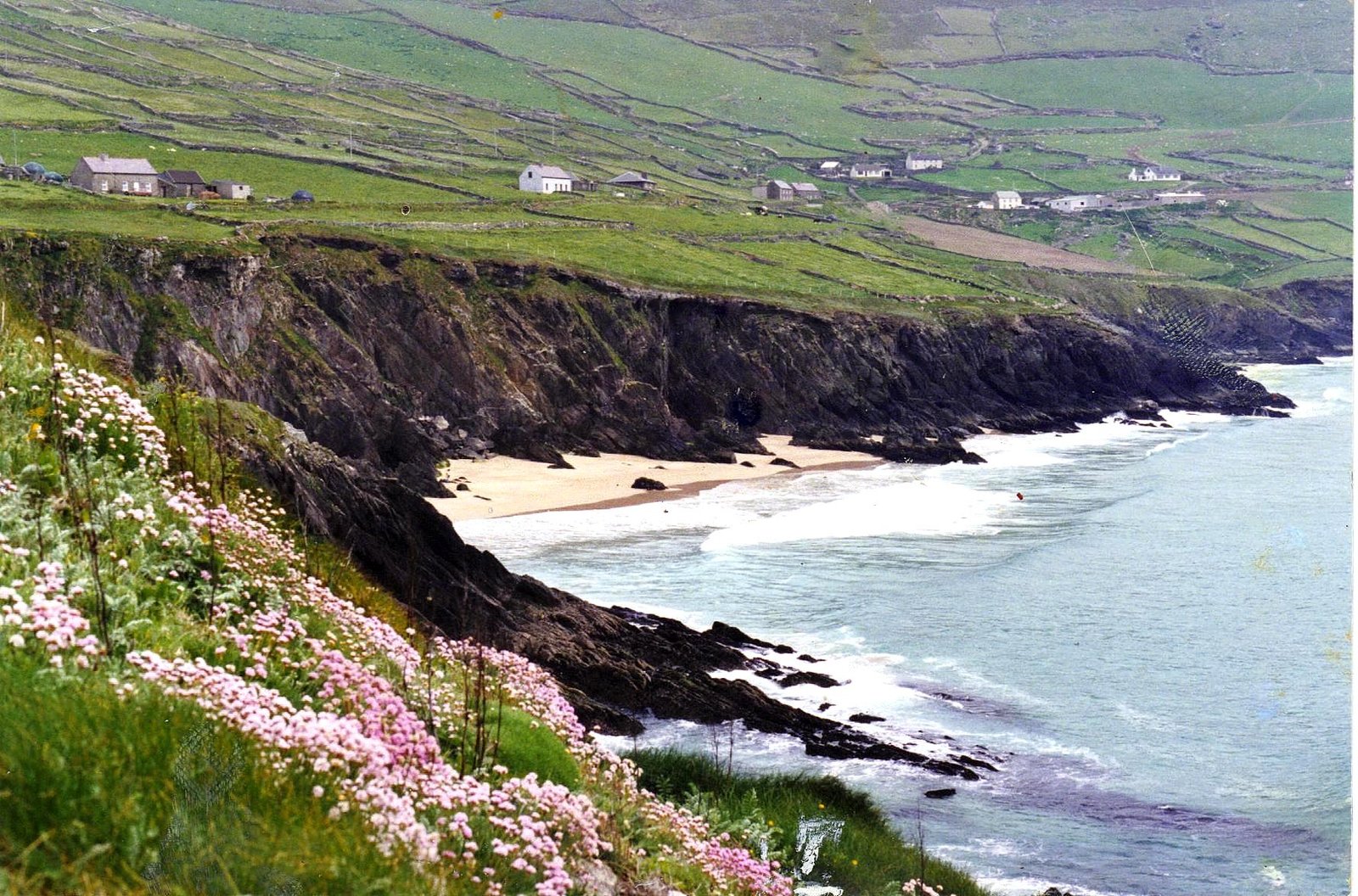
Coumeenoole sits right under Slea Head at the western tip of the Dingle Peninsula, ringed by dark cliffs with the Blasket Islands offshore. This is the one that ends up on postcards, and it looks even better in person.
It’s small, and the currents are strong, so it’s better for looking than swimming. The steep path down from the road keeps the crowds thinner than you’d expect for a beach this good. Go for the views and the walk, not for a long lazy swim.
Rossbeigh Strand
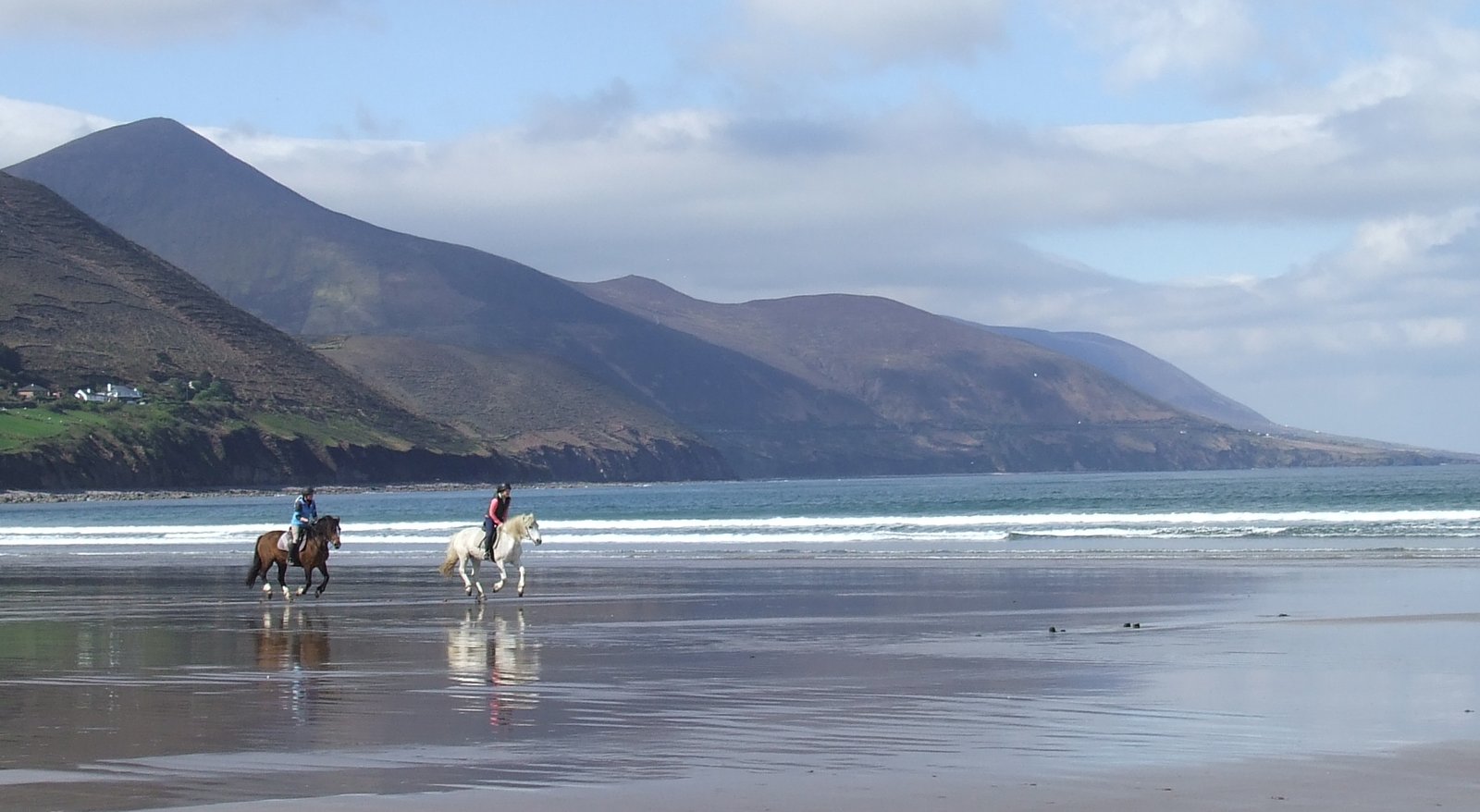
Rossbeigh is a long sand spit reaching out into Dingle Bay near Glenbeigh, right on the Ring of Kerry. A few miles of flat sand backed by dunes, with the mountains of the Dingle Peninsula across the water.
It’s Blue Flag, easy to reach off the N70, and popular for walking and horse riding along the sand. The far end gets wild and empty fast. An easy stop if you’re driving the Ring and want to stretch your legs on a beach.
Banna Strand
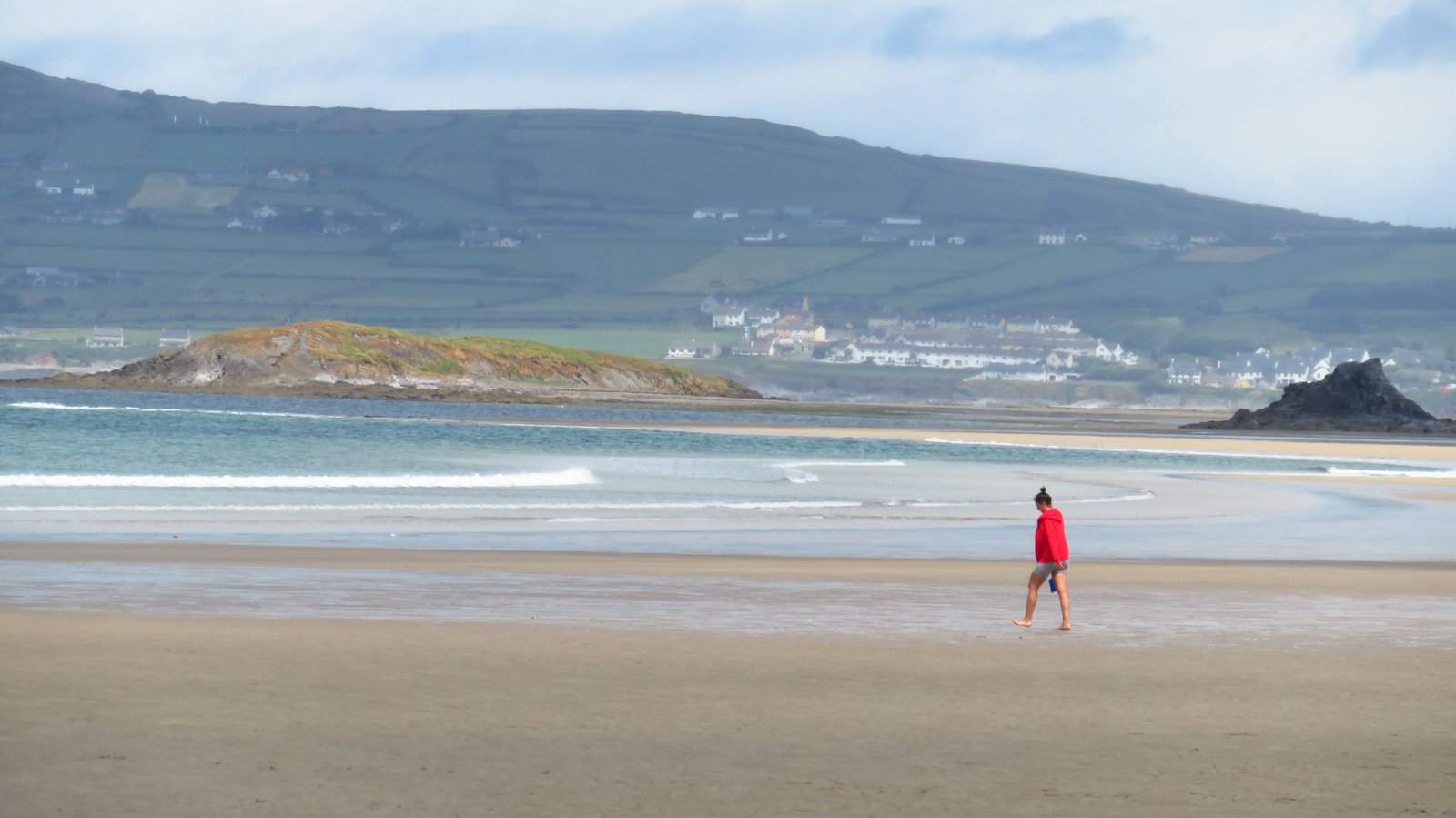
Banna is north Kerry’s big one, a huge dune-backed strand that runs for miles near Tralee. Wide, flat, and open, with some of the tallest sand dunes in Ireland behind it.
It’s about 20 minutes from Tralee and well signposted. Blue Flag, lifeguarded in summer, and there’s a memorial here to Roger Casement, who was arrested nearby in 1916. If you want space to walk without seeing another soul, head away from the main parking area and keep going.
Ballinskelligs Beach
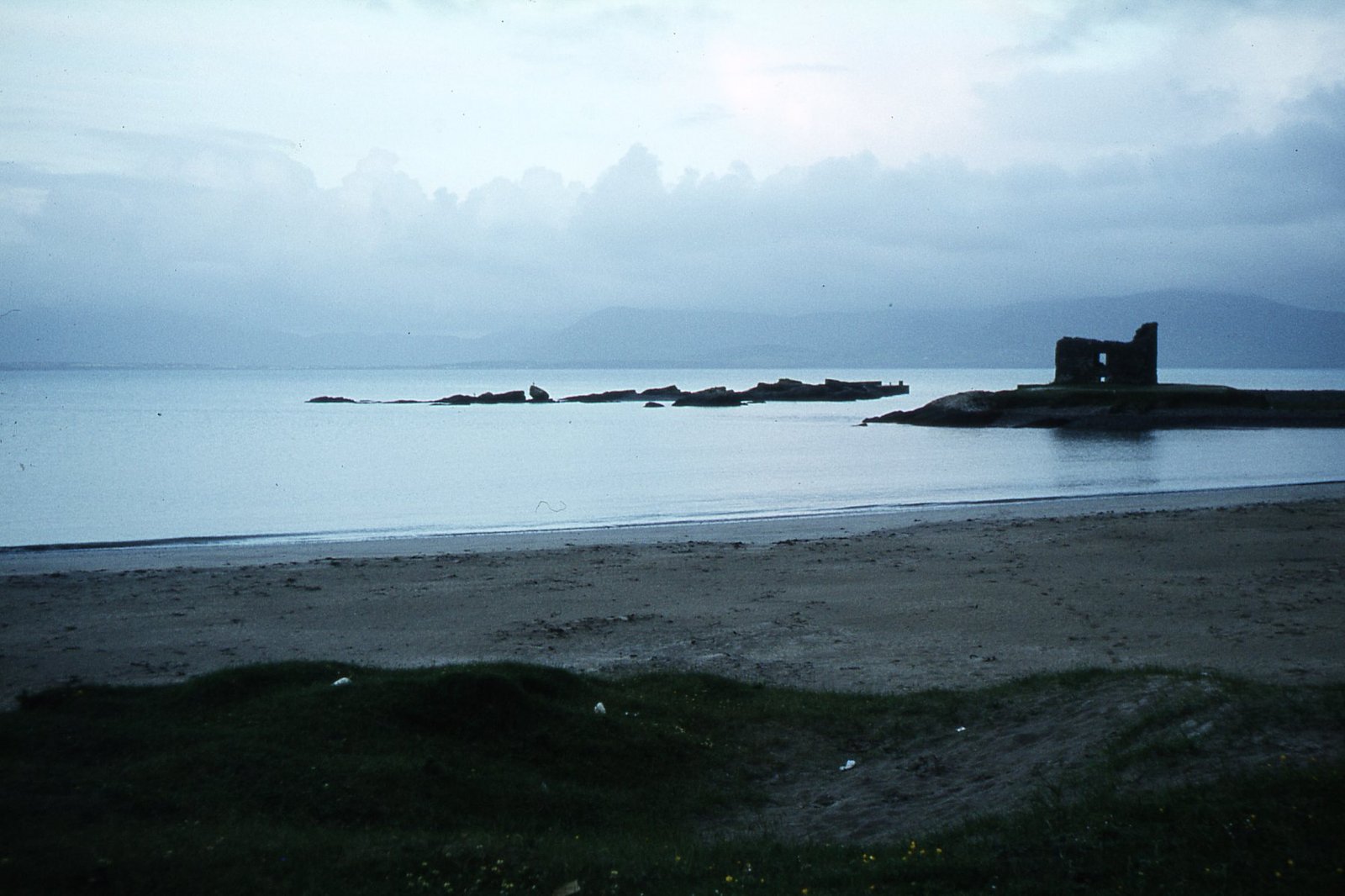
Ballinskelligs is a Blue Flag beach in the Gaeltacht on the Skellig Ring, the quieter loop the big Ring of Kerry buses can’t fit. A stretch of clean sand with the ruins of McCarthy Mór’s 16th-century tower house sitting right at the water’s edge.
The old castle next to the sand is the thing that sets it apart, and the swimming is good when the tide’s in. It’s off the R566 near the village, and the whole Skellig Ring is worth the detour if you’ve got the extra hour.
Kells Beach
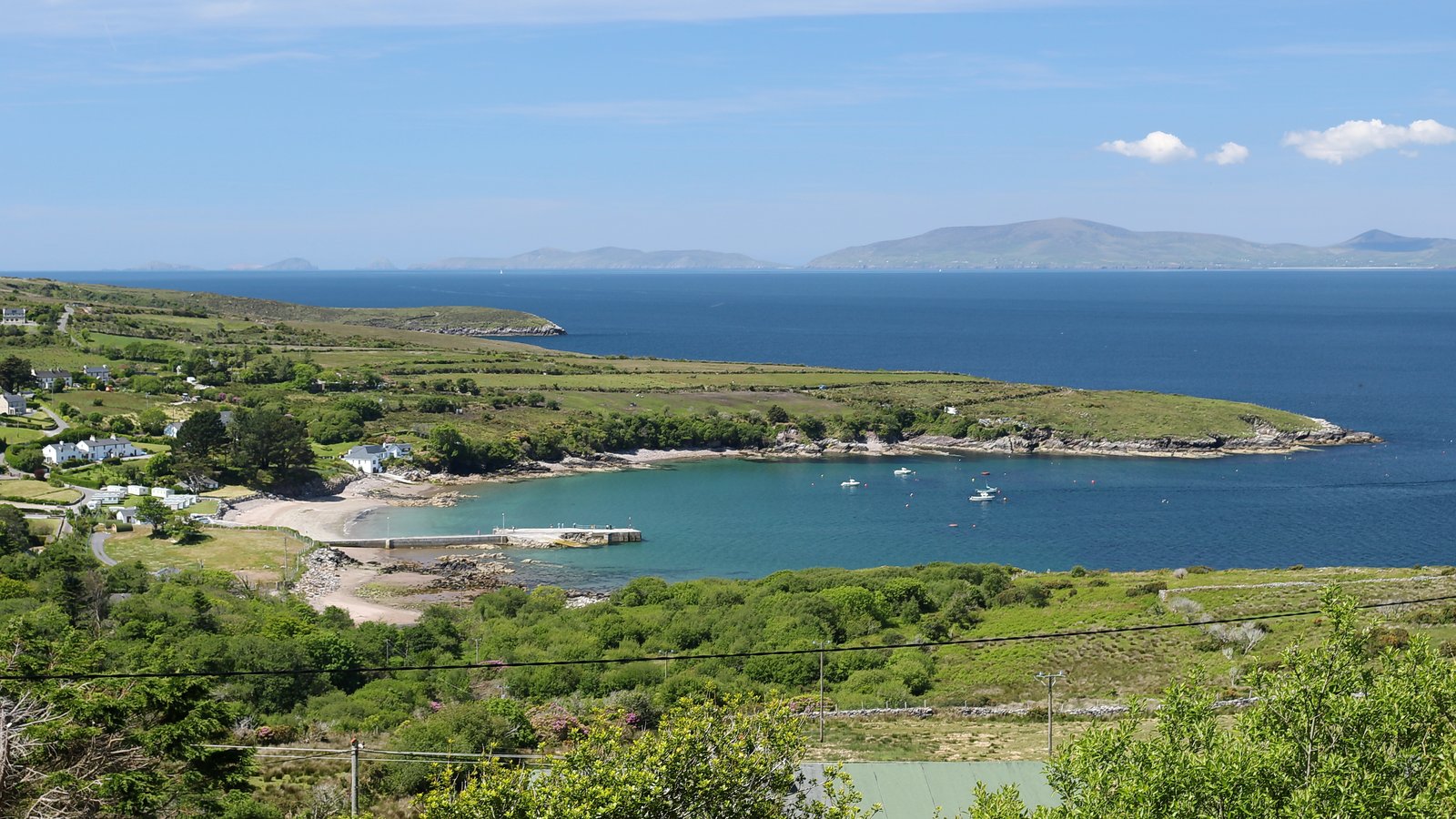
Kells is a small sheltered cove tucked between Glenbeigh and Cahersiveen on the Ring of Kerry, sitting below the road with steep green hills around it. The clear, calm water here makes it one of the better snorkeling spots in the county.
There’s a caravan park and a good little cafe above the beach. It’s an easy stop off the N70 and a nice one to have almost to yourself, since a lot of Ring drivers blow straight past it. Worth pulling in for.
Waterville Beach
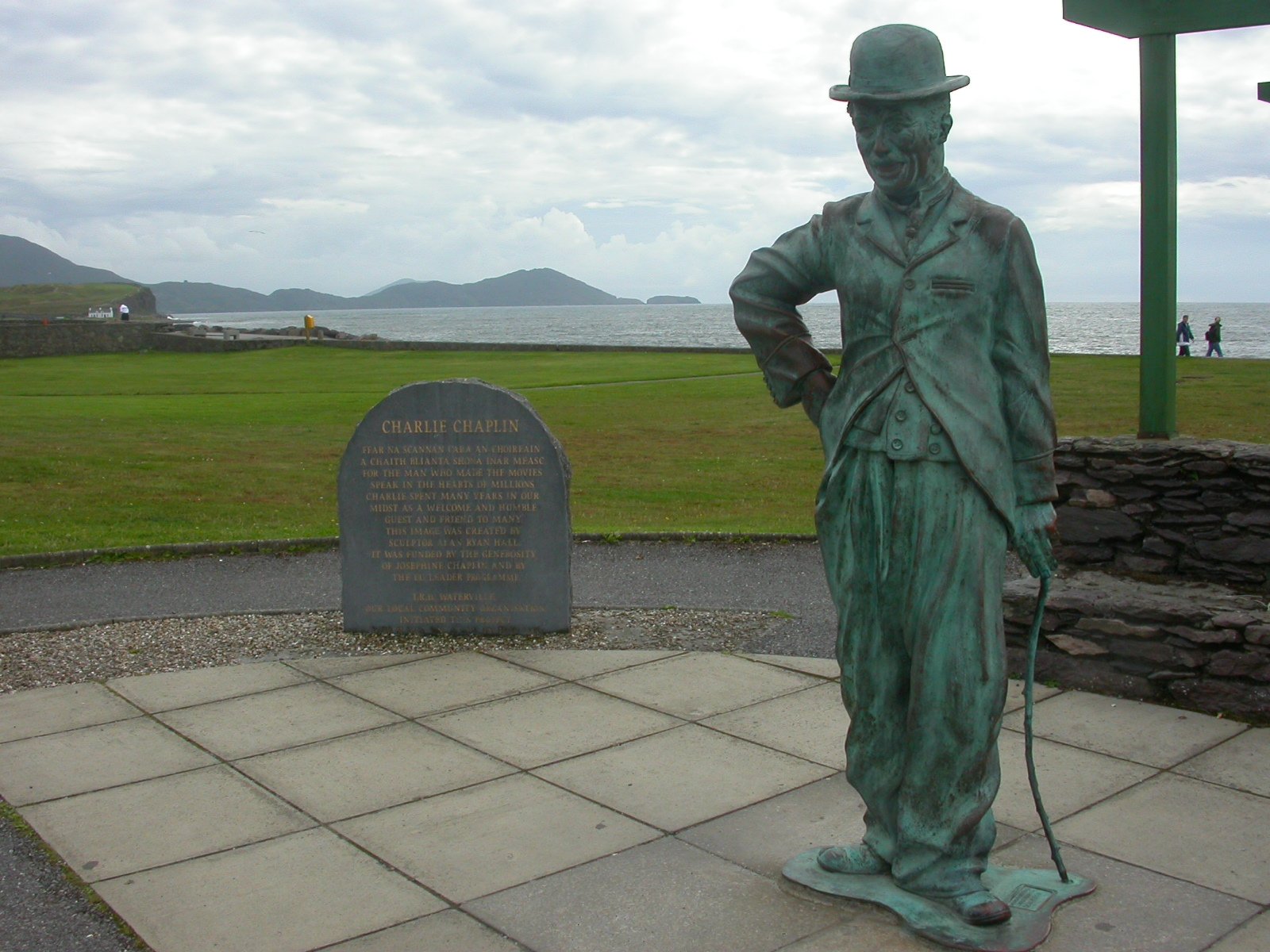
Waterville is the long beach running right along the seafront of Waterville village on the Ring of Kerry, a mix of sand and shingle facing Ballinskelligs Bay. It’s more of a walk-and-watch-the-waves beach than a lie-out-all-day one.
Charlie Chaplin holidayed here for years and there’s a statue of him on the front. The village has pubs, cafes, and places to stay right on the water, so it works well as a base for the southern half of the Ring.
White Strand, Cahersiveen
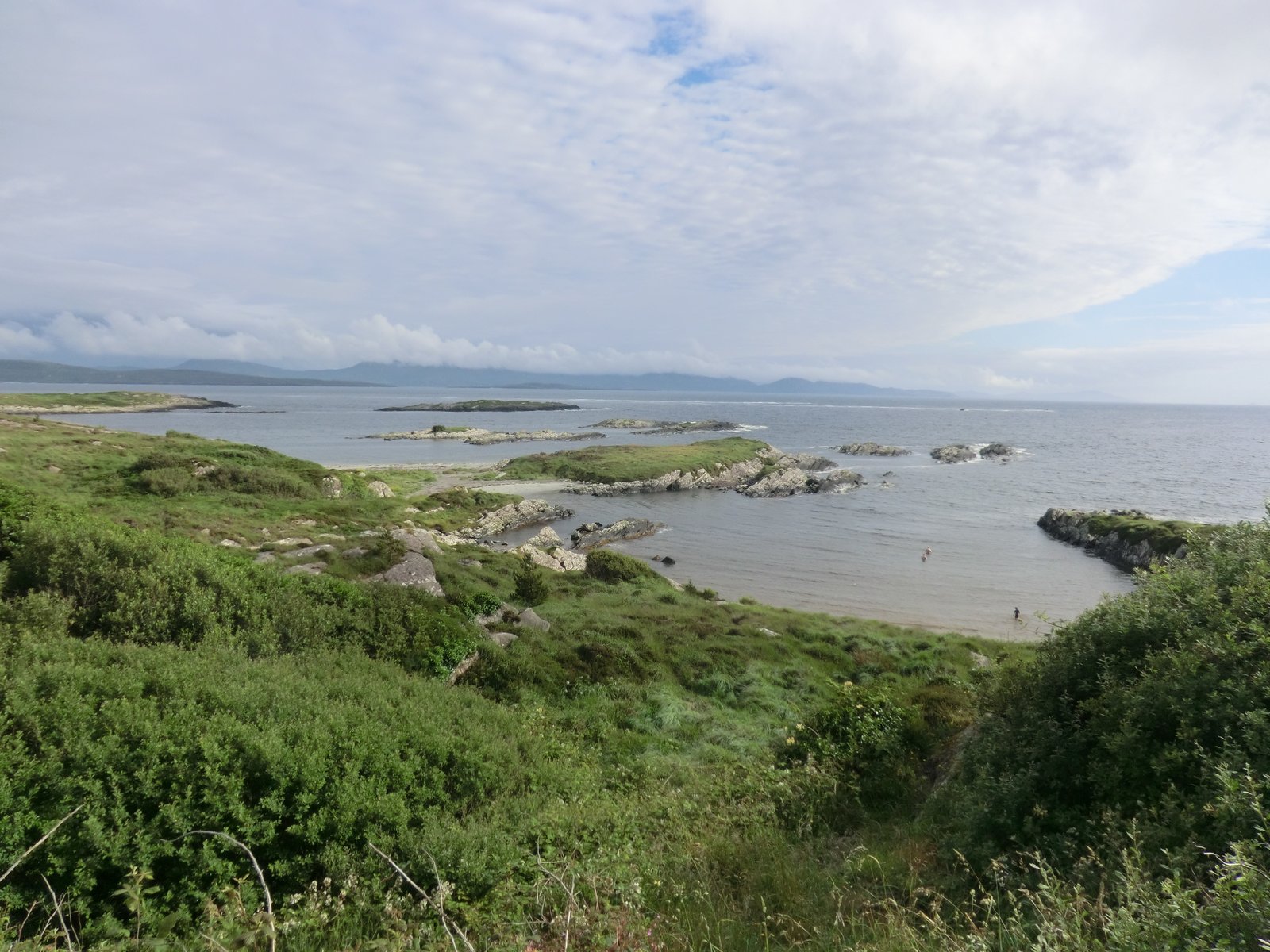
White Strand is a small Blue Flag beach a few miles outside Cahersiveen, a curve of pale sand in a protected bay off the N70. Quiet, clean, and calm, with none of the crowds of the bigger strands.
There’s parking right beside it and lifeguards in high summer, which makes it a safe swimming pick for families. If you’re basing yourself around Cahersiveen, this is the local beach to know about.
How to Get to Kerry’s Beaches
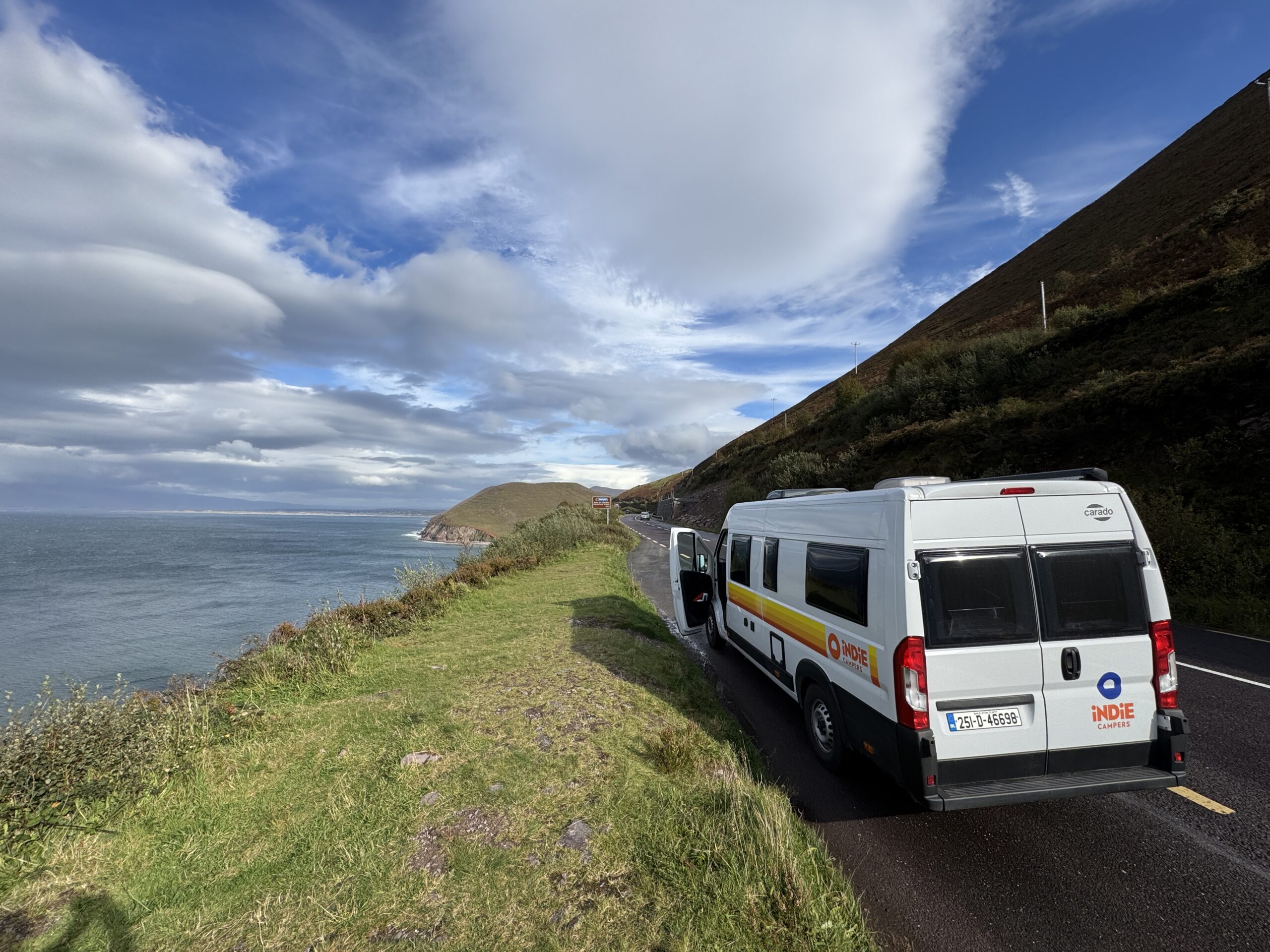
You need a car. That’s the short version. Almost every beach on this list sits at the end of a narrow road with no bus service anywhere close, and public transport in Kerry is thin once you leave the main towns.
The usual way in is to fly into either Kerry Airport (near Farranfore) or Cork Airport, then rent a car. Kerry Airport is the closest, about 30 minutes from Killarney, but it runs a limited schedule. Cork has far more flights and sits roughly 90 minutes from the coast. It’s worth booking the car ahead of the trip, and you can compare car hire deals on Discover Cars to lock in a rate before you land.
Coming from Dublin, it’s around a 3.5-hour drive to Killarney, straight down the M7 and N21. Not a bad run, and it’s the easiest way to pair Kerry with the rest of a wider Ireland trip.
Getting Around Once You’re There
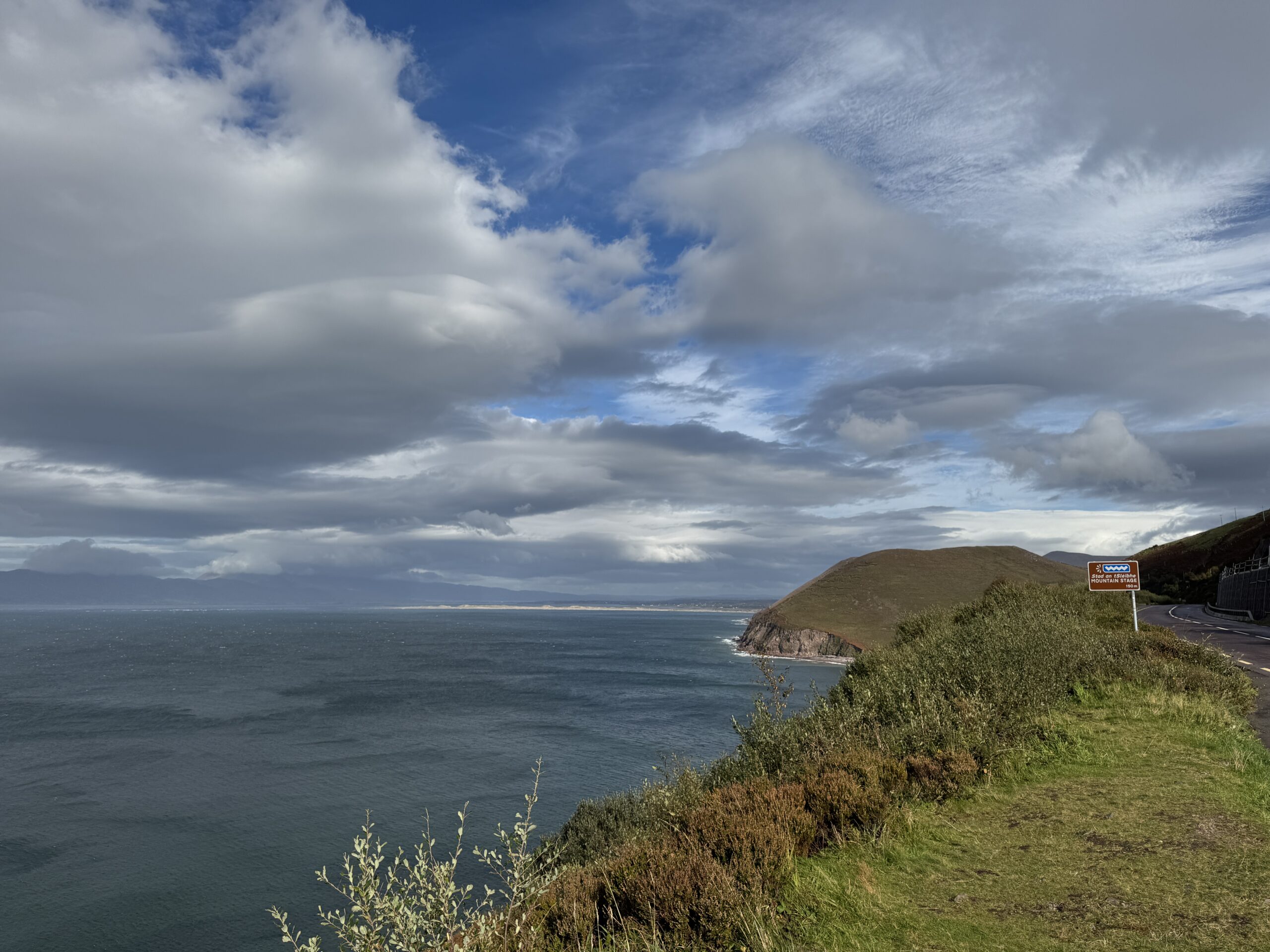
Killarney is the natural base for the whole county, and both the Ring of Kerry and the Dingle Peninsula loop out from there. The Ring of Kerry follows the N70 the whole way around, and most of the coves on this list sit just off it.
The Dingle beaches run off the R561 and R559, with the western ones near Slea Head reached by a single narrow loop road that gets tight in high summer. Drive it clockwise, the way the tour buses go, so you’re not meeting them head-on.
North Kerry is simpler. Banna and the Tralee-area strands are a flat 20-minute drive on wide roads, no mountain passes involved. If you only rent a car for one part of the trip, make it the Ring and the peninsula, where the beaches are hardest to reach any other way.
More of Ireland’s Best Beaches
- The Best Beaches in Ireland: 20 Picks for Every Part of the Country
- Best Blue Flag Beaches in Ireland: 9 Top Swim Spots
- The Best Beaches in Donegal: 10 Wild Atlantic Strands
- The Best Beaches in Northern Ireland
Best Time to Visit the Beaches in Kerry
Ireland is not the Mediterranean, so let’s be honest about what you’re getting. The sea off Kerry stays cold most of the year, and the weather does whatever it wants. But that doesn’t mean there’s no good time to go, it just means you plan around it.

The short answer: late May through early September is the beach window. That’s when the water is at its warmest, the lifeguards are on the Blue Flag strands, and you actually get stretches of dry, sunny days.
Summer (June to August)
This is peak season, and for beaches it’s the best call. Long days, the water as warm as it gets in Ireland, lifeguards on the main strands, and the surf schools at Inch running daily. If you want to swim without a wetsuit, this is your window.
The trade-off is crowds and traffic. The Ring of Kerry and the Slea Head loop get busy with tour buses, and the narrow roads out to the smaller coves get tight. Start early and you’ll beat most of it.
Shoulder Season (May and September)
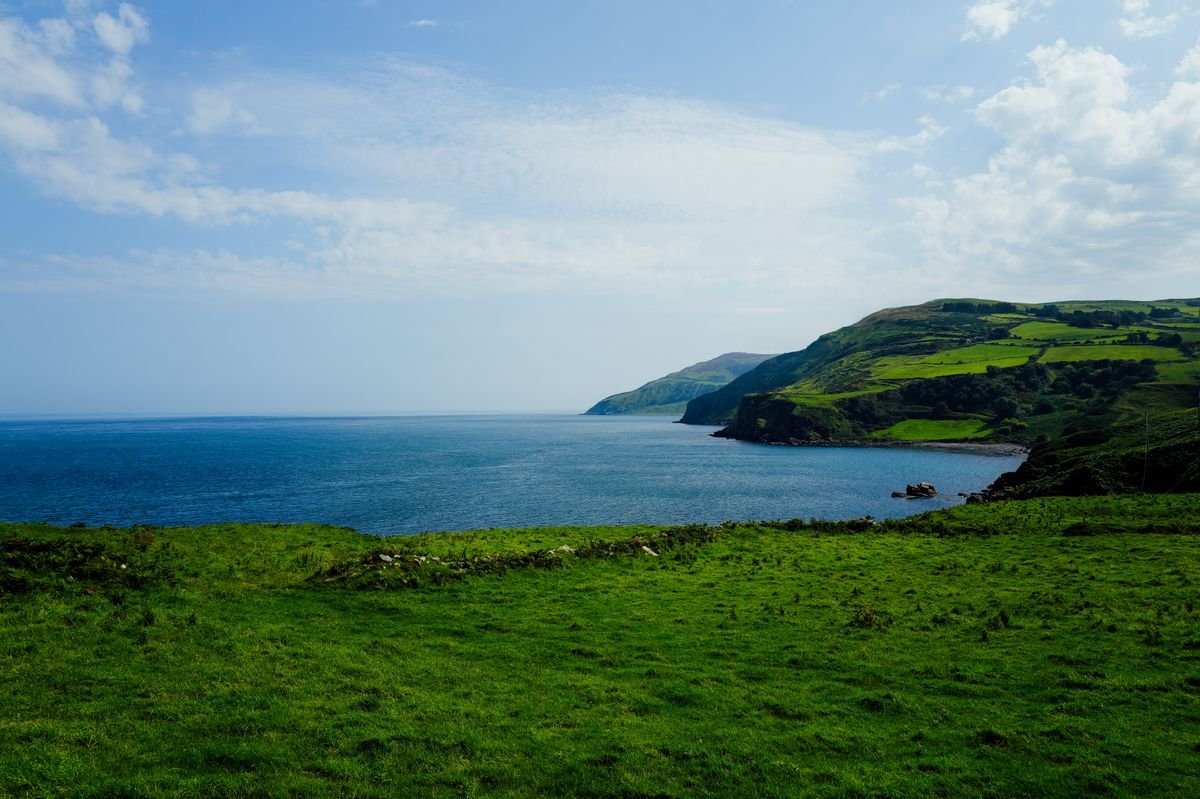
If you can go either side of the summer rush, do it. We drove the coast in autumn, well into shoulder season, and it was the sweet spot: quieter beaches, easier parking, and the sea still holding a bit of its summer warmth in September.
May often gets the driest, clearest weather of the whole year, and the smaller coves like Kells and White Strand are close to empty. You lose some of the lifeguard cover, so keep that in mind if you’re swimming with kids.
Off-Season (October to April)
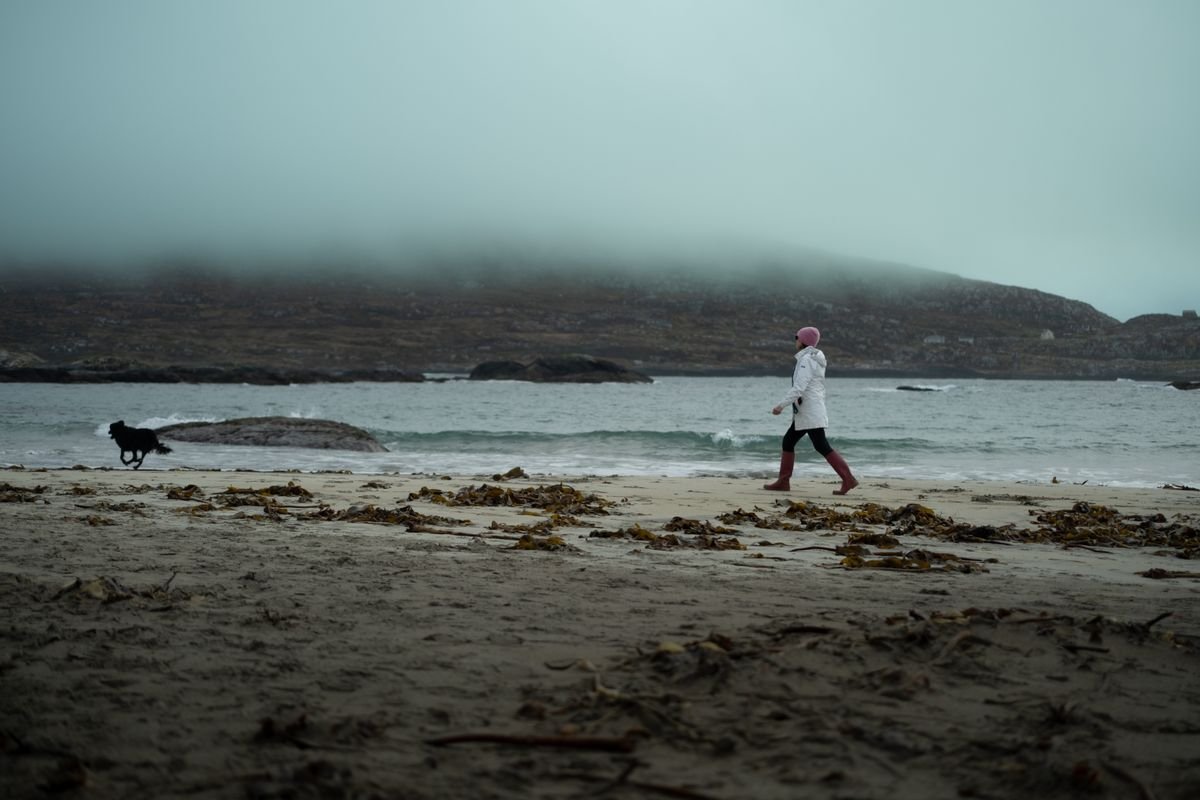
Winter isn’t beach weather, but the beaches are still worth it. Coumeenoole and Rossbeigh are just as good for a windy walk in February, and you’ll have the whole strand to yourself. Bring layers and a rain jacket, not a swimsuit.
The one thing to plan for is the water temperature, which drops to around 50°F. Surfers in full wetsuits are out year-round, but for everyone else the off-season is about the scenery and the empty sand, not the swim.
A Word on the Weather
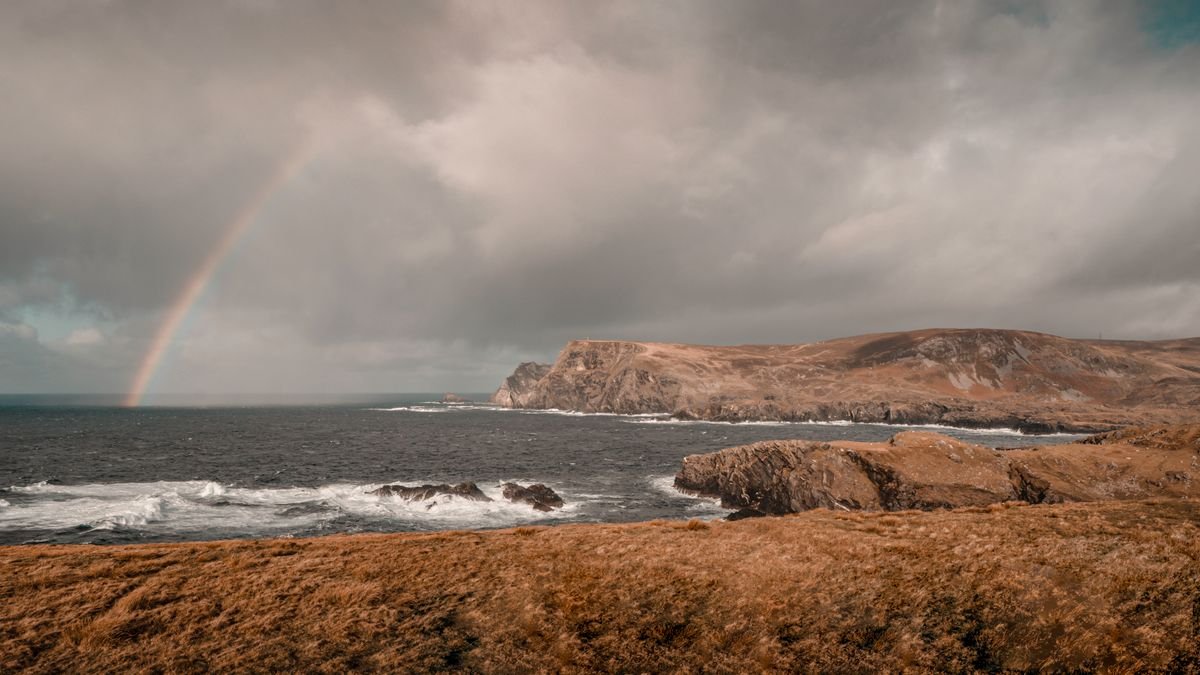
Whatever month you pick, Kerry weather changes by the hour. You can get four seasons in an afternoon, so don’t write off a whole day because the morning looked grim. Pack for rain, keep your plans loose, and grab the sunny breaks when they come.
Where to Stay Near Kerry’s Beaches
Kerry is a big county, and where you base yourself depends on which beaches you’re chasing. There’s no single town that puts all of them within easy reach, so it’s worth picking your spot around the coast you actually want to drive.
The three that make the most sense are Killarney for a central base, Dingle for the peninsula strands, and a Ring of Kerry town like Waterville or Cahersiveen for the southern coves. Here’s how to choose between them.
Killarney (Best All-Round Base)
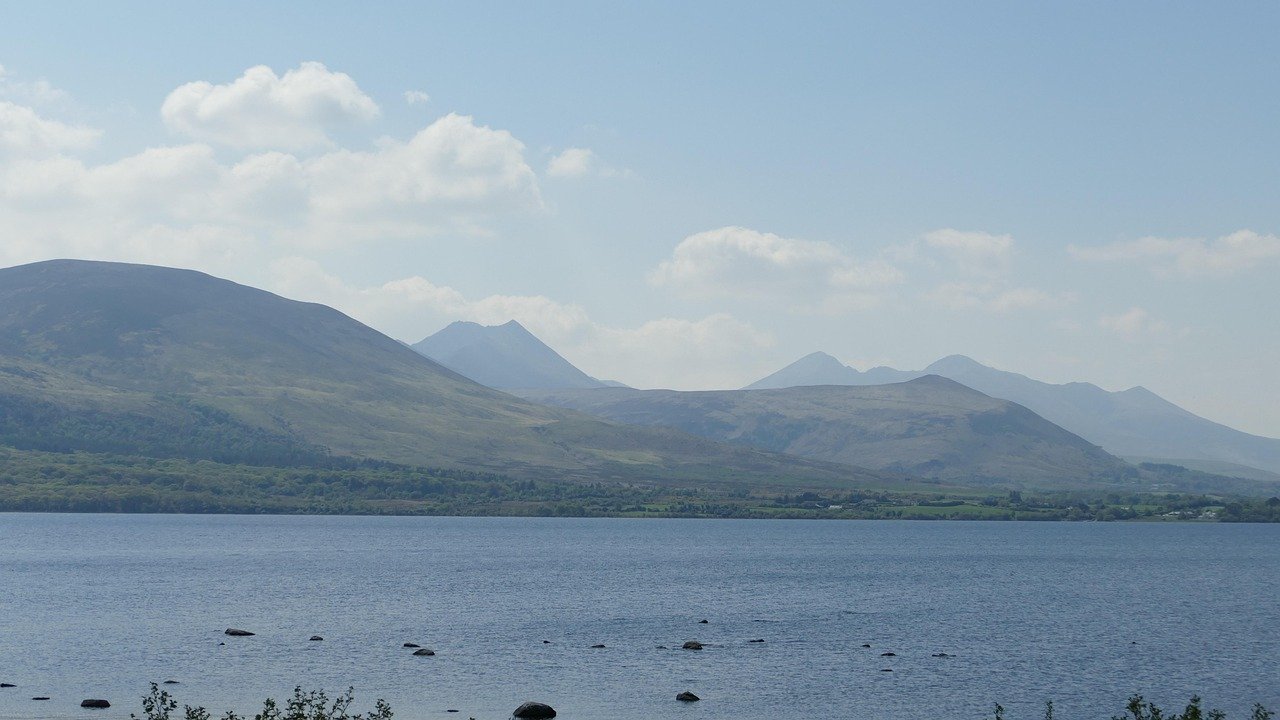
Killarney is the obvious pick if you only want one base for the whole county. Both the Ring of Kerry and the Dingle Peninsula loop out from here, and you’ve got the National Park on the doorstep for the days the beach weather turns.
👉 Read our full guide to Killarney National Park.
It has the most hotels, guesthouses, and restaurants in the region, plus Kerry Airport 30 minutes away, and you can check availability on Booking.com to see what’s open on your dates. The trade-off is distance: Inch and the Dingle strands are a 90-minute drive, so it’s a long day out and back.
Where to Stay in Killarney
Dingle (For the Peninsula Beaches)
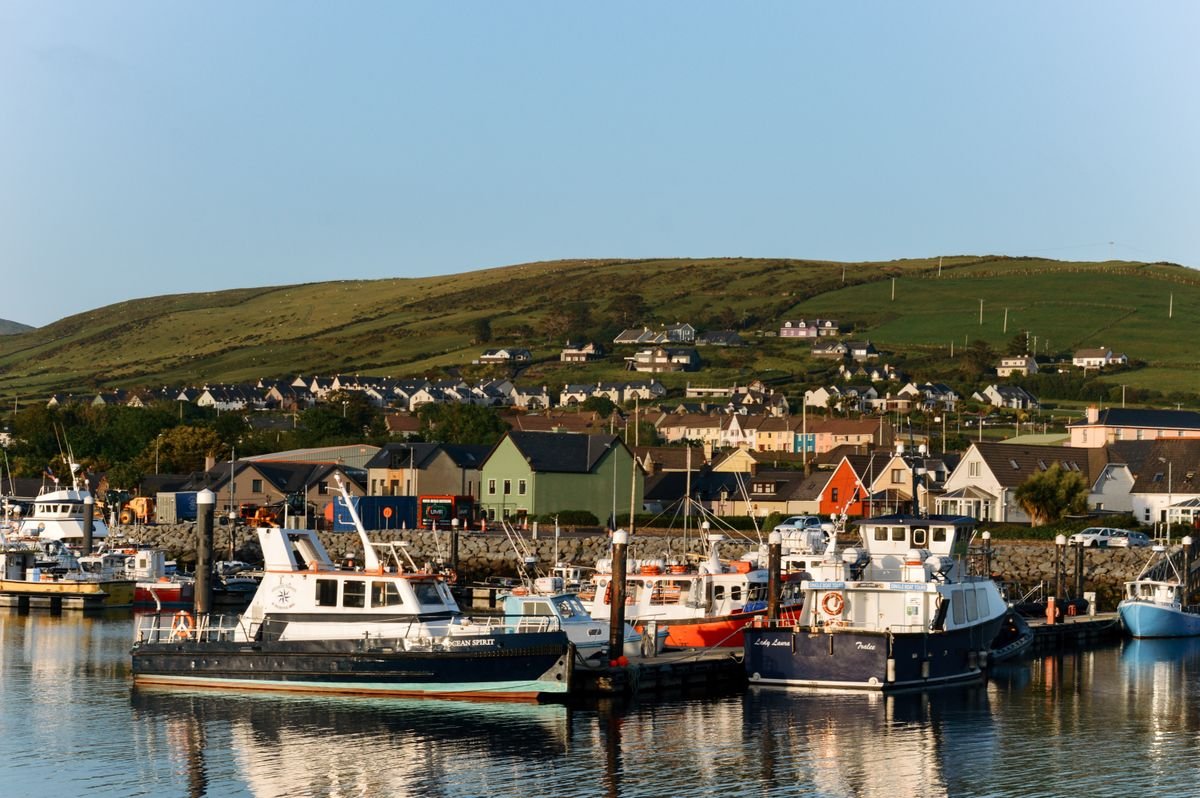
If Inch, Coumeenoole, and the Slea Head coast are your main target, stay in Dingle town instead. It puts you right in the middle of the best beaches on the peninsula and cuts out that long daily drive from Killarney.
Dingle is also just a good town to base in, with a working harbor, plenty of pubs with music, and some of the best seafood in the southwest. Book ahead in summer, since it’s small and fills up fast.
Where to Stay in Dingle
Ring of Kerry Towns (For the Coves)
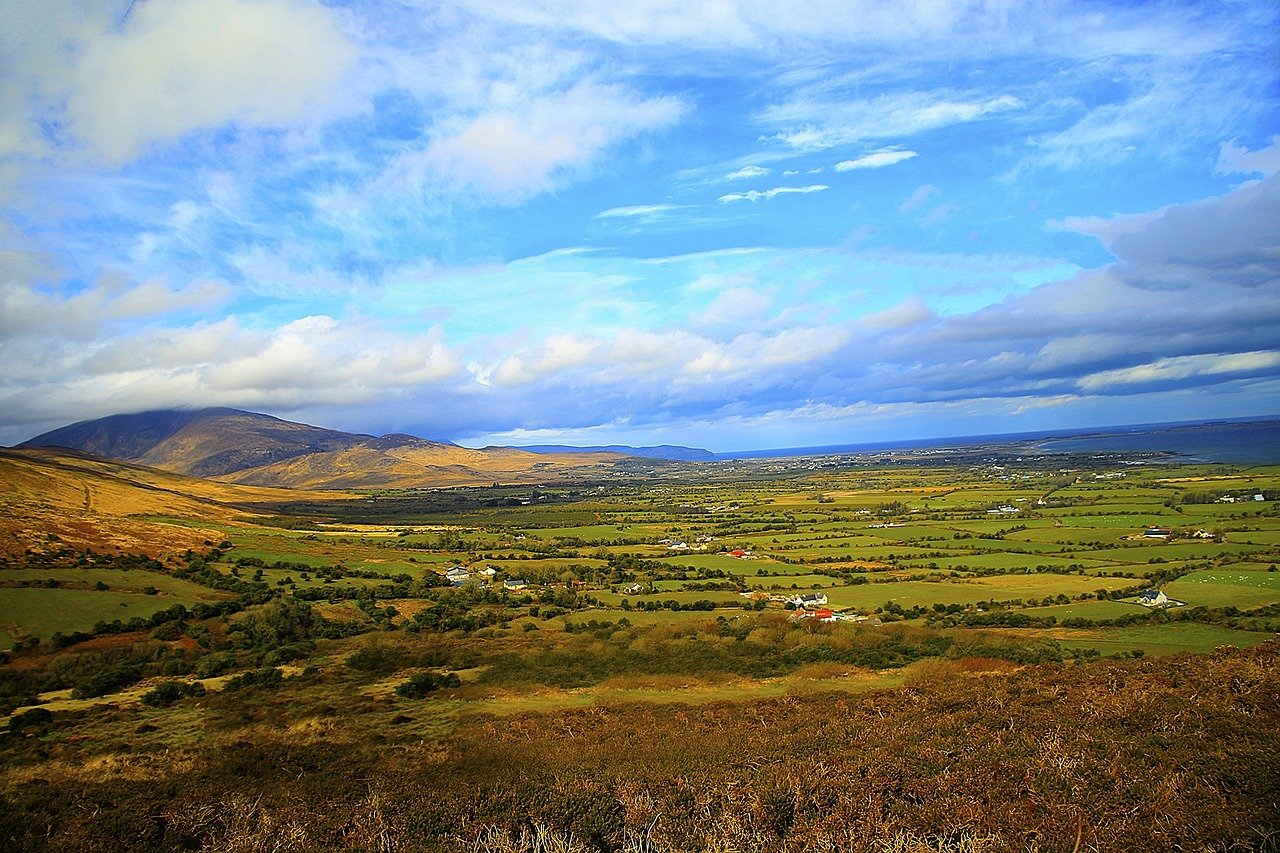
For Derrynane, Ballinskelligs, and the quieter Ring coves, base yourself on the southern loop itself. Waterville sits right on the water with pubs and places to stay along the front, and Cahersiveen makes a handy stop near White Strand and Kells.
These towns are smaller and quieter than Killarney, with less choice, but you wake up on the coast instead of driving to it. Good if you want to slow down and actually spend your mornings on the beach.
Tralee (For North Kerry)
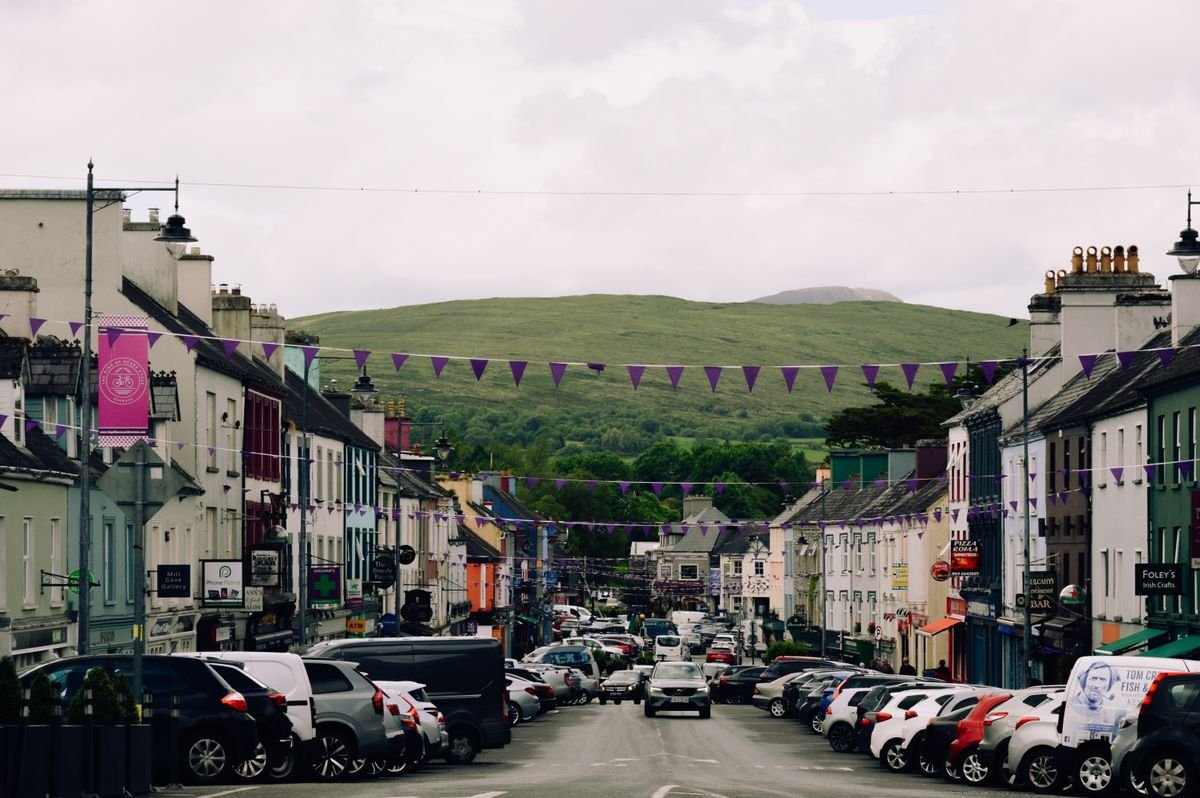
Heading for Banna and the north Kerry strands, Tralee is the practical base. It’s a proper town with plenty of accommodation, and the beaches are a flat 20-minute drive on wide roads, no mountain passes to deal with.
Tralee also works as a first or last night if you’re driving in from Dublin or Limerick, since it sits at the top of the county before the Ring and the peninsula begin. For beach access alone, though, the coastal towns win.
Where to Stay in Tralee
Plan the Rest of Your Ireland Trip
- Wild Atlantic Way 5 Day Itinerary: Kinsale to Doolin
- Ireland Honeymoon Itinerary: 10 Perfect Days
- A 7-Day Ireland Itinerary With Kids
In short
- Inch is the best-known Kerry beach: a three-mile sandbar you can drive onto near Dingle.
- Derrynane on the Ring of Kerry has the best sheltered white-sand coves for families.
- Blue Flag strands, Inch, Banna, Rossbeigh, and White Strand, are the safe swimming picks.
- Coumeenoole under Slea Head is the most scenic, but strong currents make it look-only.
- Base in Killarney for both loops, or Dingle and Waterville for beach access.
Best Beaches in Kerry: FAQ
These are the questions readers ask most before a Kerry beach trip, from which strand is best to where to swim and where to base yourself.
What is the best beach in Kerry?
Inch is the most famous, and it’s still one of the best: a three-mile sandbar you can drive right onto, with mountains behind it. But Derrynane on the Ring of Kerry runs it close, and Coumeenoole under Slea Head is the best-looking of the lot. Pick by which coast you’re driving.
Can you swim at the beaches in Kerry?
Yes, and the Blue Flag strands like Inch, Banna, Rossbeigh, and White Strand are the safe picks, with lifeguards in summer. The water is cold, around 50°F in winter and warmest from late May to September. Some spots like Coumeenoole have strong currents, so those are for looking, not swimming.
Are Kerry’s beaches good for families?
The sheltered ones are ideal. Derrynane has calm, protected coves, and White Strand near Cahersiveen sits in a quiet bay with lifeguards in high summer. For sheer space to run around, Banna’s huge dune-backed strand is hard to beat.
Do you need a car to reach the beaches in Kerry?
Pretty much, yes. Almost every beach here sits at the end of a narrow road with no bus service close by, and public transport thins out fast once you leave the main towns. Fly into Kerry or Cork Airport and rent a car, then drive the Ring and the Dingle Peninsula from there.
Which beaches are quietest?
Kells and White Strand off the Ring of Kerry stay near empty because most drivers blow straight past them. Ballinskelligs on the Skellig Ring is off the main loop too. Go in May or September and you’ll have most of the smaller coves close to yourself.
Can you surf in Kerry?
Inch is the reliable one, with a surf school at the entrance and a beginner-friendly break when there’s a swell. Summer is the easiest time to learn, but surfers in full wetsuits are out year-round.
Where should I base myself for the beaches?
Killarney is the best all-round base, with both the Ring and the peninsula looping out from it. Stay in Dingle if Inch and the Slea Head coast are your main target, a Ring town like Waterville or Cahersiveen for the southern coves, or Tralee for Banna and north Kerry.
Best Beaches in Kerry: Final Thoughts
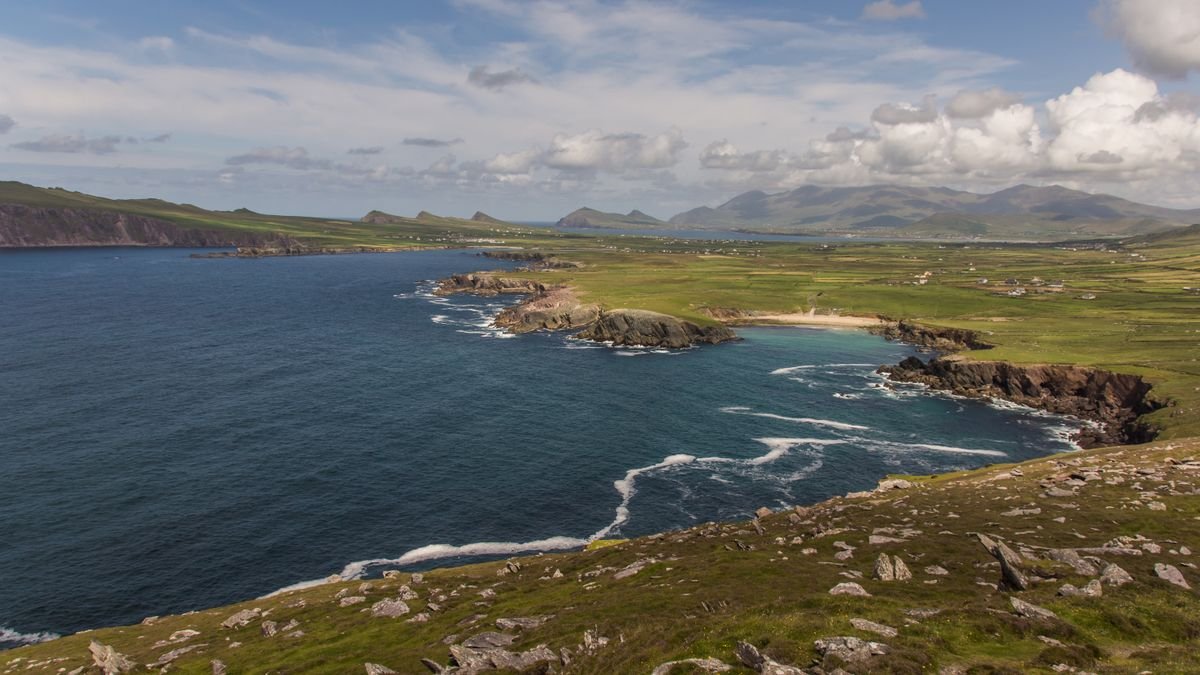
Kerry isn’t a lie-on-the-sand-all-day kind of place, and if that’s what you’re after, book somewhere warmer. The water is cold, the weather is a gamble, and half these beaches are better for a walk than a swim.
But for wide Atlantic strands with mountains behind them and hardly anyone on the sand, nowhere in Ireland comes close. Inch and Banna give you the big famous ones, and Kells, White Strand, and Ballinskelligs give you the less-visited corners most drivers never stop for.
If we had to pick, we’d rent a car, base a few nights in Dingle for the peninsula and a few on the Ring for the coves, and go in May or September when the roads are clear. That’s the version of this trip that actually works.
Pack a rain jacket, keep your plans loose, and don’t try to see all of them in one day. Do that, and Kerry’s coast is worth every mile of narrow road it takes to reach it.
Like it? Pin it!
Save this guide for later