
I’d decide whether you want to celebrate St. Patrick’s Day before booking a trip to Ireland in March. That choice affects your dates, accommodation, and how much time to leave for Dublin before traveling into the countryside.

The holiday brings parades and music, but it also changes what you pay and how easily you move around Dublin. Away from the celebrations, March gives you longer days than winter, cool weather, and plenty of reasons to keep your plans flexible. The parade photographs in this guide show earlier celebrations.
Below, I’ll explain the weather, the holiday practicalities, and how I’d divide a week between Dublin and the west. Our guide to the best time to visit Ireland compares the rest of the year if your dates are still open.
Quick Answer:
Ireland in March suits a trip built around St. Patrick’s Day, or a city stay with a few days in the countryside. Expect cool weather, bring waterproof layers, and allow for wind on the coast. Dublin gets roughly eleven to thirteen hours of daylight as the month progresses. Book accommodation early for the celebrations and check Easter dates before comparing prices.
Plan Your Dublin Stay
- 22 Best Things To Do in Dublin
- 7 Things To Do In Dublin When It Rains
- Where To Stay in Dublin: Best Areas and Accommodations
Is March a Good Time to Visit Ireland?
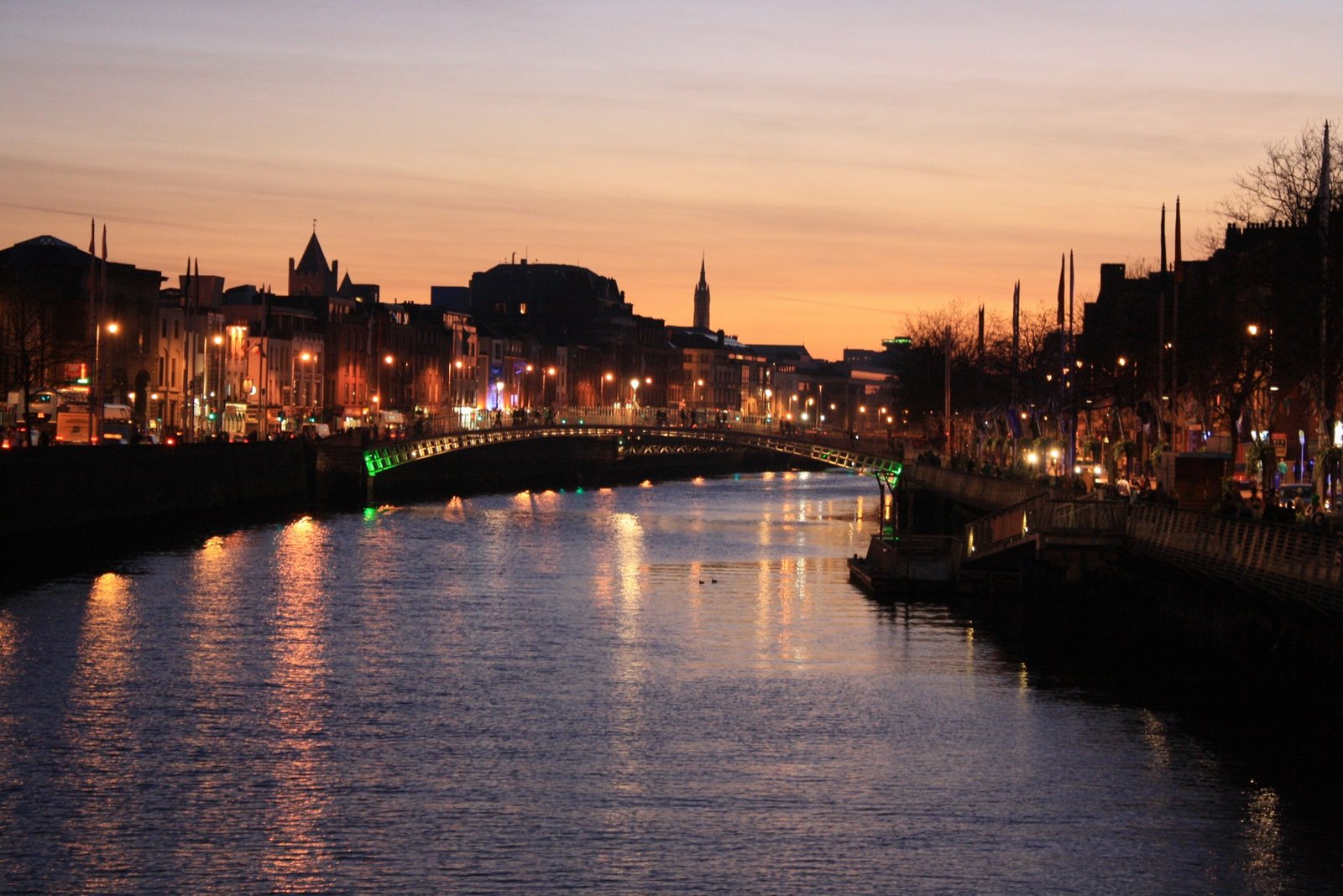
March is a good choice if you enjoy museums, music, and walking, and you’re happy to change an outdoor plan when the weather turns. I’d choose it over midwinter for a mixed city and countryside trip because the extra daylight makes a real difference.
There are two quite different trips available. You can travel for St. Patrick’s Day and accept the busier streets and demand for central rooms. Or you can choose dates away from the holiday and spend more of your time in smaller towns and on the coast.
March falls before the main summer travel season, but that doesn’t make every week inexpensive. Dublin’s festival period needs its own hotel search. Easter can also fall in March, bringing another holiday weekend and school breaks into the same month.
I would leave a long island-hopping trip for later in spring. Ferry schedules and exposed coastal plans need more checking now, and the Skellig Michael landing season does not include March. Choose mainland bases with something indoors nearby, and a canceled boat trip won’t determine the success of your vacation.
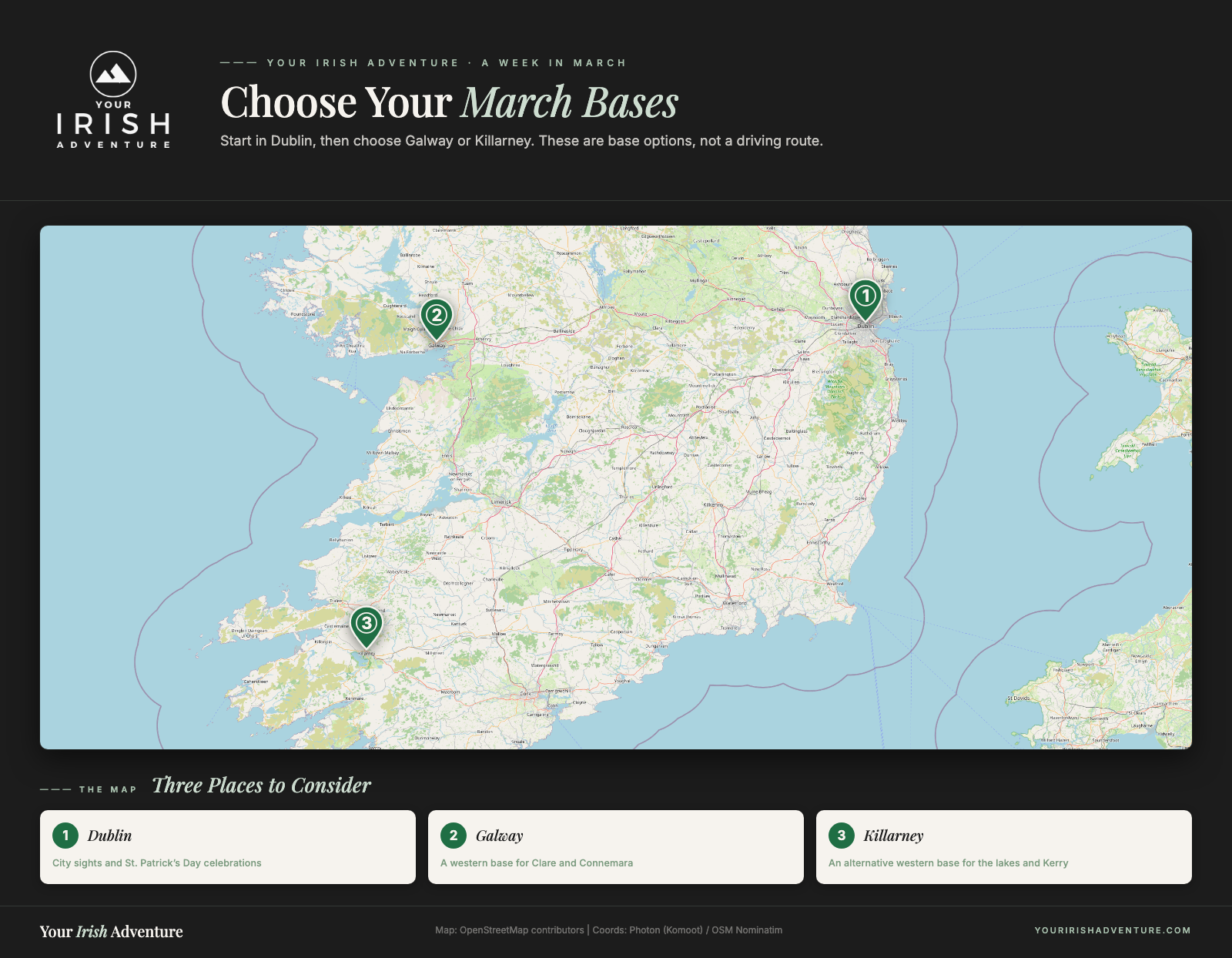
For the week suggested below, Dublin and Galway are enough. Killarney is an alternative to Galway if lakes, woodland walks, and Kerry are your priority. The map shows these choices, not a route requiring you to visit all three.
Ireland in March: Weather and Daylight
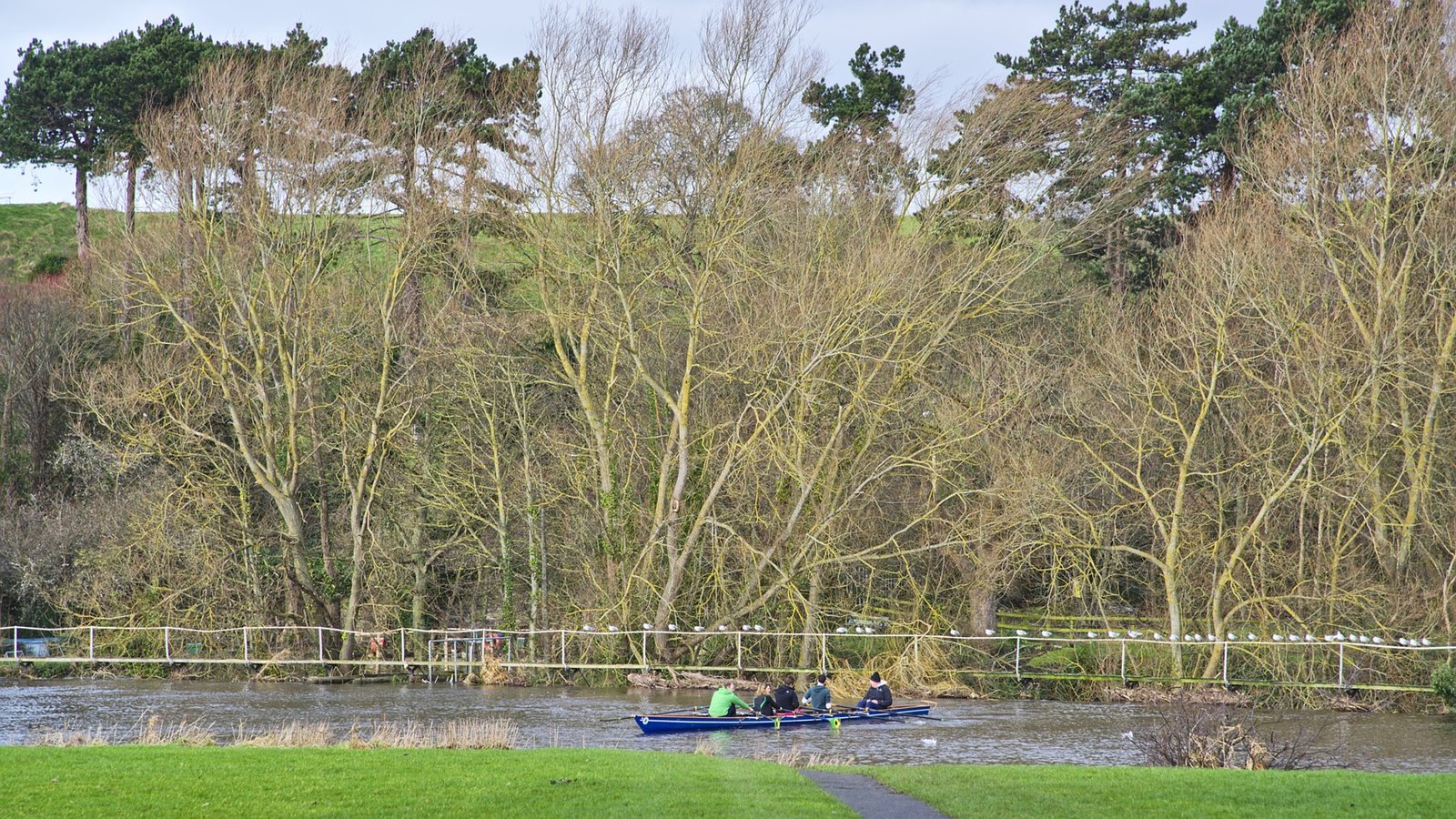
Ireland in March is still cool, and a sunny morning gives you little assurance about the afternoon. Plan for rain, wind, and occasional frost, with warmer layers available even when the forecast looks encouraging.
A monthly average helps with packing. It cannot tell you whether the particular day you have reserved for the Cliffs of Moher will have good visibility. Check the local forecast and weather warnings again once you’re in Ireland.
Temperatures and Rain
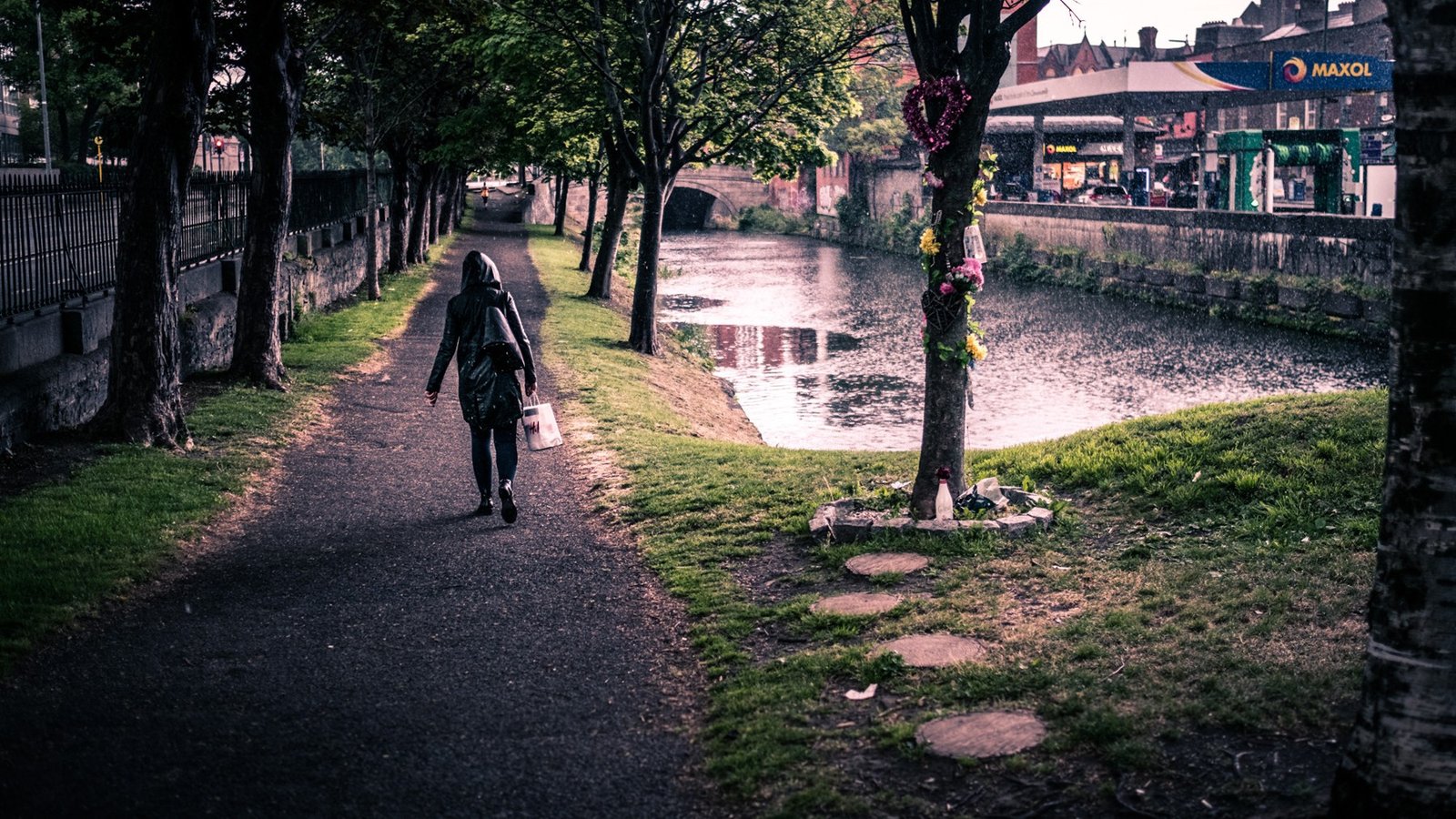
At Dublin Airport, the long-term March average daytime high is 10.1°C (50°F), and the average nighttime low is 3°C (37°F). That is comfortable sightseeing weather with the right clothing, but it can feel colder when you stop moving or stand beside the sea.
Met Éireann’s Dublin Airport records give an average monthly rainfall total of 51.4 mm, or about 2 inches. Shannon Airport, a useful comparison for the midwest, averages 75.8 mm, or about 3 inches. Neither station describes every county, and upland conditions can be considerably different.
Those totals also don’t mean it rains continuously for a fixed number of days. A shower can interrupt an otherwise usable afternoon. I would pack for getting wet and choose an indoor alternative, rather than cancel a whole day because a rain symbol appears in the forecast.
Longer Days and the Clock Change
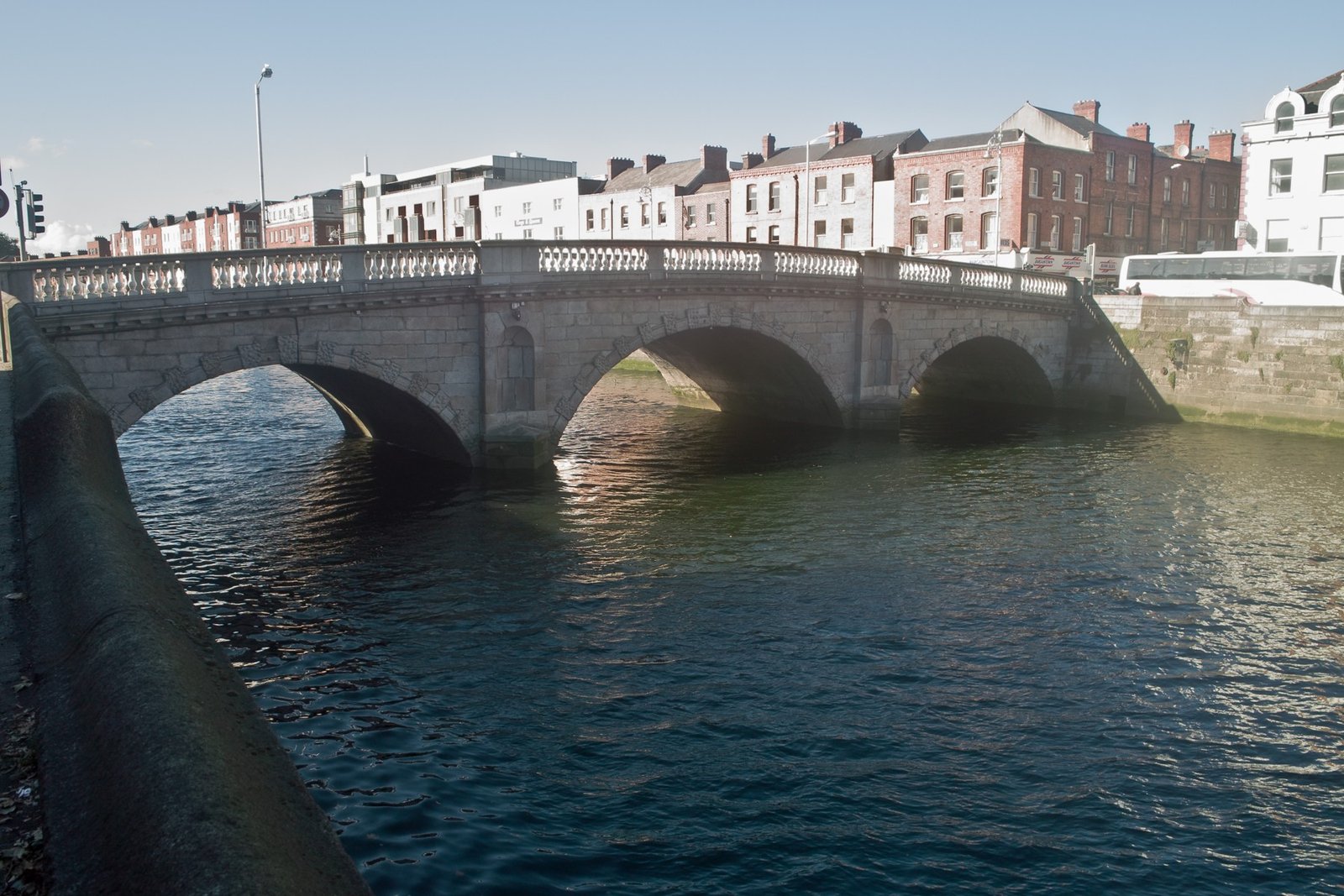
Dublin gets roughly eleven hours of daylight at the start of March and about thirteen by the end. That gives you much more room for an outdoor afternoon than in January, although the available light varies with your location and exact dates.
The clocks go forward on the last Sunday in March under Ireland’s current time arrangements. Sunset then falls an hour later on the clock, but the time change itself creates no extra daylight. The gradual seasonal increase has been happening throughout the month.
Daylight also means the interval between sunrise and sunset, not hours of sunshine. A cloudy day can have thirteen hours of daylight and very little direct sun. For driving, finish unfamiliar rural roads before dark and check the sunset time for the place where you’ll actually be.
Planning Around St. Patrick’s Day

St. Patrick’s Day is the strongest reason to choose March if celebrations are central to your trip. Dublin hosts the national festival, while cities and towns elsewhere run their own events. Each has its own schedule, and an event listed for a previous year is no promise about your visit.
The official St. Patrick’s Festival website is the place to check the current Dublin dates, parade information, and ticketed events. Festival dates may be confirmed before the detailed program, so avoid booking a particular performance on the assumption that it will return.
Watching the Parade in Dublin

I’d stay within walking distance of the part of the city I wanted to use on parade day. That can cost more, but it reduces dependence on a bus stop that may be moved or a taxi that cannot reach your street during road closures.
Check the published parade route, access information, and transport changes shortly before you travel. Agree on a meeting place with your group, keep your phone charged, and think about toilets and food before settling into a viewing spot. Standing outside for several hours feels colder than walking between museums.
Families should look at the festival’s daytime program and accessibility information rather than assume the evening pub crowds will suit everyone. A central hotel is useful for taking a break, but read recent reviews about street noise before choosing a room.
Our guide to celebrating St. Patrick’s Day in Dublin gives you more ideas for the city. I’d reserve one separate day for sightseeing, because combining the parade with several timed attractions creates an unnecessarily complicated schedule.
Other Celebrations and the Easter Weekend

Galway and Killarney are possible bases for local celebrations if you prefer to spend the rest of the week outside Dublin. Check the city or town’s official event information before fixing your route. Smaller celebrations still bring street closures, and accommodation demand is specific to the place and dates.
Easter moves between March and April. When it falls early, a late-March trip can overlap Easter weekend and school vacations. Check your accommodation for both weekends if your stay includes St. Patrick’s Day and extends toward the end of the month.
Good Friday can also change your indoor backup plan. The National Gallery of Ireland, for example, lists Good Friday among its closure days. Check the actual attraction’s calendar rather than assuming that every museum keeps its usual Friday hours.
A Week in Ireland in March
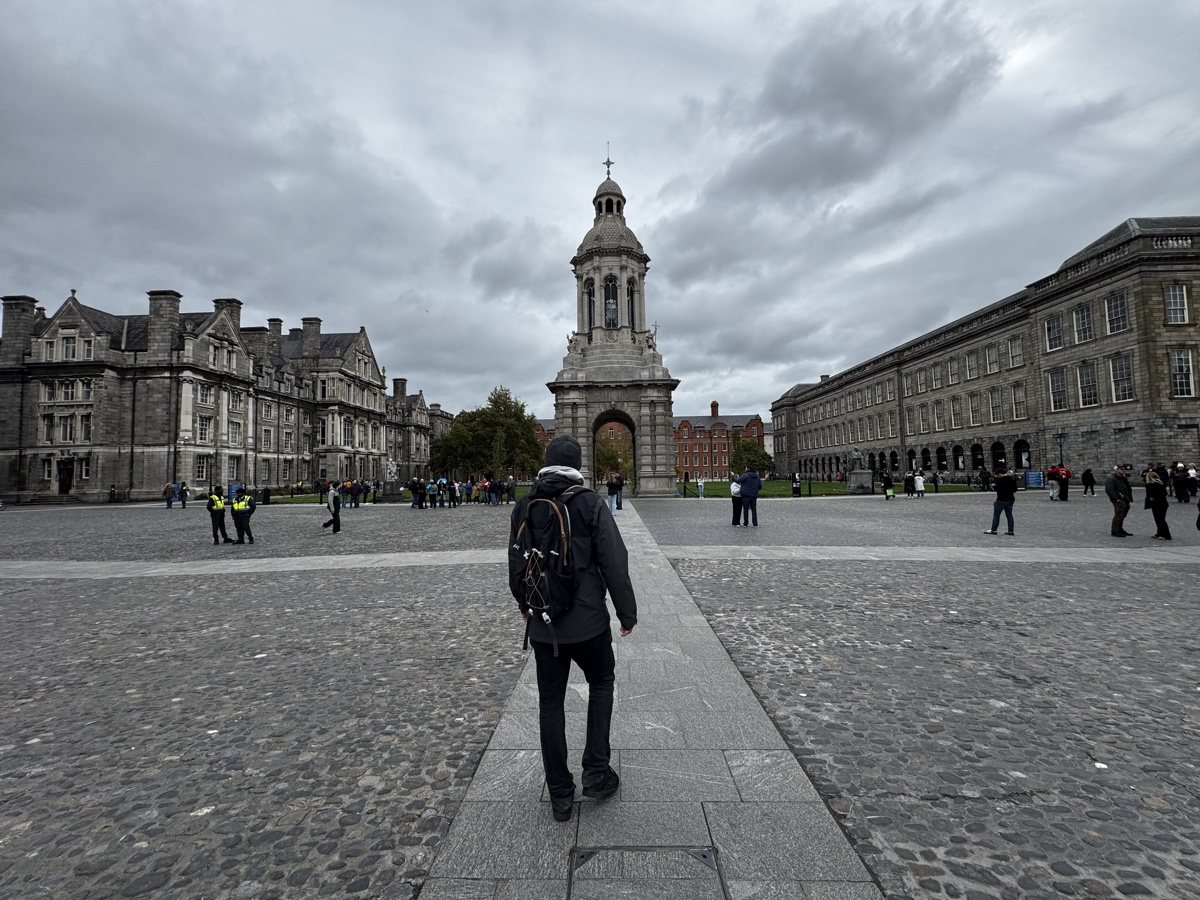
For a first visit with seven nights, I’d divide the trip between Dublin and one western base. Three nights in Dublin, three in Galway, and a final night near Dublin or the airport keep the return journey manageable. This assumes your flights use Dublin; a different arrival airport may justify a different route.
Seven nights usually gives you six full days between arrival and departure. Moving from Dublin to Galway uses part of one of those days, so treat it as a transfer with an optional stop. Don’t describe it to yourself as a full sightseeing day in both cities.
Start with Dublin’s Museums and Streets
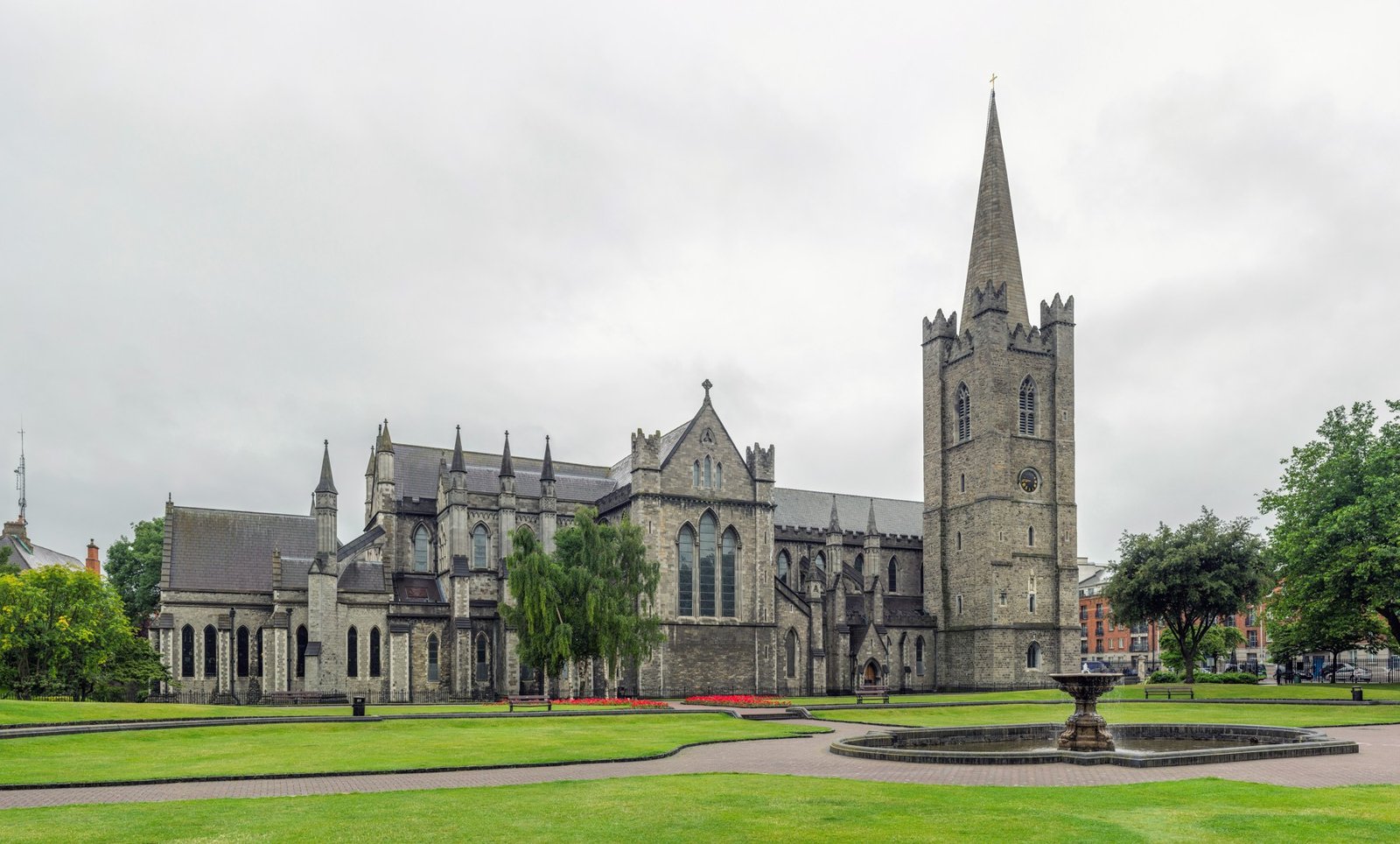
Three nights in Dublin gives you two full days if you arrive in the afternoon and leave after the third night. Use one for the center, including Trinity College’s surroundings and the streets around St. Stephen’s Green. Keep the other for the parade if that’s why you came, or for a museum and a longer walk.
The National Gallery of Ireland’s permanent collection is free, which makes it a useful option when you want to spend a couple of hours indoors without another large ticket purchase. Some temporary exhibitions charge separately, and its opening calendar still needs checking around Easter.
A coastal outing is possible if the forecast allows it. Dún Laoghaire is an easy place to consider by DART, with a harbor walk that you can shorten. Strong wind can make an exposed pier unpleasant or unsafe, so having a train connection doesn’t automatically make every outdoor plan suitable.
I would keep the rental car out of this part of the trip. Central parking adds another cost, and a car is little help during festival street closures. Collect it when you leave Dublin if your western plans require one. You can compare rental cars on Discover Cars once you know your pickup dates.
Spend Three Nights in Galway or Killarney

Galway gives you evenings in the city and a choice of countryside outings. With three nights, allow one full day for the Burren and Clare if the weather suits, and another for Connemara or the city itself. Trying to do both regions on the same day leaves too much of your vacation inside a vehicle.
For the Cliffs of Moher, check current access information before setting out. An open visitor center does not mean every length of the coastal trail is open. Stay within the officially accessible areas, and change the day if wind or visibility makes the trip a poor choice.
Killarney is the alternative I’d choose for a trip focused on Kerry. Shorter outings around the lakes and Muckross area can be easier to adjust than a long coastal circuit. Pick the Ring of Kerry for a day with enough usable daylight, and leave time to stop rather than treating it as a distance to complete.
Keep your last night convenient for the departure airport. Driving across the country on the morning of an early flight is an avoidable worry, particularly after a week when you may already have changed several plans around the weather.
More Guides for Your Western Base
- 33 Best Things To Do in Galway, Ireland
- Weekend in Galway: The Perfect 2 Day Itinerary
- Where To Stay in Killarney: Best Areas and Accommodations
What to Wear and Pack

For March, I recommend several layers under a waterproof outer jacket with a hood. A light top, a fleece or sweater, and a rain shell let you adjust between a heated museum, a walk, and a long wait outside for the parade.
Pack shoes you’ve already walked in, with enough grip for wet paving and paths. Waterproof footwear is useful for countryside days, but you don’t need heavy hiking boots for an itinerary confined to city streets and museums. Bring a second pair so you can let wet shoes dry overnight.
A hat and gloves are worth carrying even when daytime temperatures look mild. Add a small day bag with a waterproof liner for your phone, spare socks, and any medication. A compact umbrella can help in town, but a hood works better when the wind makes an umbrella awkward.
For walks beyond town, bring waterproof pants and check the route’s terrain before packing only sneakers. March paths can be muddy, and upland conditions need a separate decision from the forecast for your hotel’s town. Choose a shorter, lower route if your clothing or experience doesn’t match the conditions.
Where to Stay and What to Book First
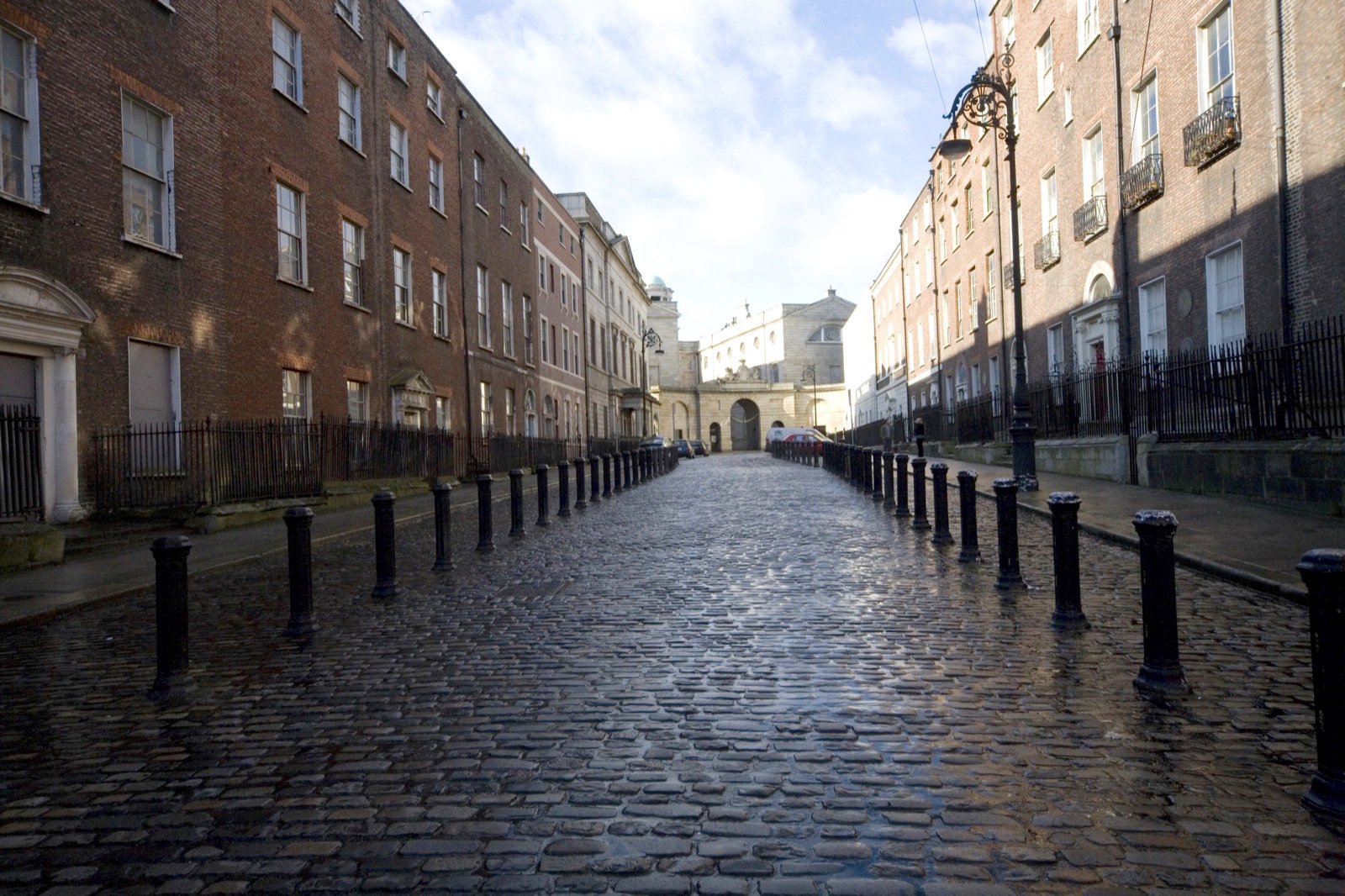
Book your Dublin accommodation first if St. Patrick’s Day is the reason for coming. Compare the full stay total, the cancellation terms, and the location, because a lower nightly price outside the center may come with extra transport costs and a longer journey after an event.
I’d choose a refundable room when the price difference is reasonable. It gives you a confirmed base while you wait for detailed programming, without committing the whole trip to one unannounced concert or an assumed parade arrangement.
For a general March trip, compare several sets of dates. Early March and dates outside major events may offer better value, but there is no fixed discount that applies across Ireland. Rental-car charges also depend on the vehicle, insurance choices, pickup location, and dates.
Henrietta Suites offers suites in a Georgian townhouse on Henrietta Street, useful for the north side of central Dublin. 2 Mikes Homestay is an adults-only stay in East Wall, while Avoca House is a B&B in residential Drumcondra.
The latter two suit travelers happy to plan their journey into the center; check holiday transport before choosing them for parade day.
Where to Stay in Dublin
Comfort On The Green is a four-bedroom vacation home at 35 The Green, worth comparing if you’re traveling as a group. Ivy House is a homestay on Taylor’s Hill, west of the center. Tara Lodge offers B&B rooms off Tuam Road, farther out to the northeast.
For the last two, compare the walk or taxi journey with where you want to spend your evenings.
Where to Stay in Galway
Check the total price for your dates, the room arrangement, and the cancellation terms before booking. A whole house can make sense for a group but is a different comparison from one room for two people.
March Compared with February and April
Ireland in February suits a city break if you’re content with shorter days and winter conditions. March gives you longer afternoons, but it also introduces the St. Patrick’s Day booking problem. I’d choose between them based on the celebrations first and the daylight second.
Ireland in April is my preference for a trip with more countryside walking. Average temperatures rise, and the days get longer again, though rain remains possible. Easter may land in either month, so check that calendar before deciding which set of dates looks cheaper.

Dublin’s station averages show warmer afternoons in April, but not a lower monthly rainfall total. The temperature change is a better reason to favor April than an expectation of dry weather.
March is the month I’d choose when St. Patrick’s Day is part of the purpose of the trip, or when the available dates work well for a city stay with outdoor options. I would avoid paying festival-period Dublin prices for a trip whose main aim is a week in Kerry.
Plan the Journey Between Your Stops
- The Definitive Guide To Driving in Ireland For Tourists
- A Photographer’s Definitive Ireland Road Trip
- 5 Day Ireland Itinerary: Dublin, Cork & the West Coast
Frequently Asked Questions
Is March a good month to visit Ireland?
March suits travelers who want St. Patrick’s Day celebrations or a city stay with time in the countryside. The days lengthen through the month, but cool, wet, and windy weather remains possible. If the celebrations are not your priority, compare dates outside the holiday period.
How cold is Ireland in March?
Dublin Airport’s long-term March averages are about 50°F (10°C) for daytime highs and 37°F (3°C) for nighttime lows. Wind makes exposed coastal stops feel colder. Pack a warm layer beneath a waterproof jacket, and check the forecast for the places you plan to visit.
Is Ireland expensive during St. Patrick’s Day?
Dublin accommodation can cost more and sell out around the celebrations. Price your actual nights before booking flights, and compare the location as well as the nightly rate. A cheaper room farther out may involve extra transport, especially when parade road closures affect the center.
Can you visit Ireland in March without a car?
Yes. Dublin and Galway work for a trip using intercity public transport, walking, and selected day tours. A car gives you more freedom for scattered countryside stops, but I would collect it when leaving Dublin. Check the timetable for each transfer before choosing accommodation.
How much daylight does Ireland get in March?
Dublin has roughly eleven hours between sunrise and sunset at the start of March, increasing to about thirteen by the end. The clocks go forward on the last Sunday, moving sunset later by the clock. Cloud cover means those daylight hours are not the same as hours of sunshine.
Can you visit Skellig Michael in March?
March is outside the normal landing season for Skellig Michael. Do not build a March itinerary around a landing trip. Check Heritage Ireland’s current visitor information when planning a return trip in the operating season; even then, landings depend on conditions.
In short
- Choose whether St. Patrick’s Day is part of your trip before booking flights and rooms.
- Plan a week around Dublin and one western base, with time for the transfers.
- Pack warm layers and waterproof outerwear, then check the coastal forecast each day.
- Compare holiday accommodation and transport using your actual dates.
Final Thoughts

I’d plan Ireland in March around two decisions: whether you want the St. Patrick’s Day celebrations, and which western base you want to visit. Once those are settled, the weather can decide the order of your outdoor days.
Choose accommodation for the actual holiday dates, bring layers that work in wind and rain, and leave enough time to enjoy the places between transfers. A week with Dublin and one western base gives you a useful introduction without requiring every day to go exactly as planned.
Photo: Pinterest image 1, William Murphy from Dublin, Ireland: SPIKY TRIBE BY THE INISHOWEN CARNIVAL GROUP -DUBLIN PARADE 17 MARCH 2018–137739 (39993527035), CC BY-SA 2.0. Cropped with text added by Your Irish Adventure.
Photo: Pinterest image 2, Pastor Sam: Night time on Liffey River, DUBLIN – panoramio, CC BY 3.0. Cropped with text added by Your Irish Adventure.
Like it? Pin it!
Save this guide for later