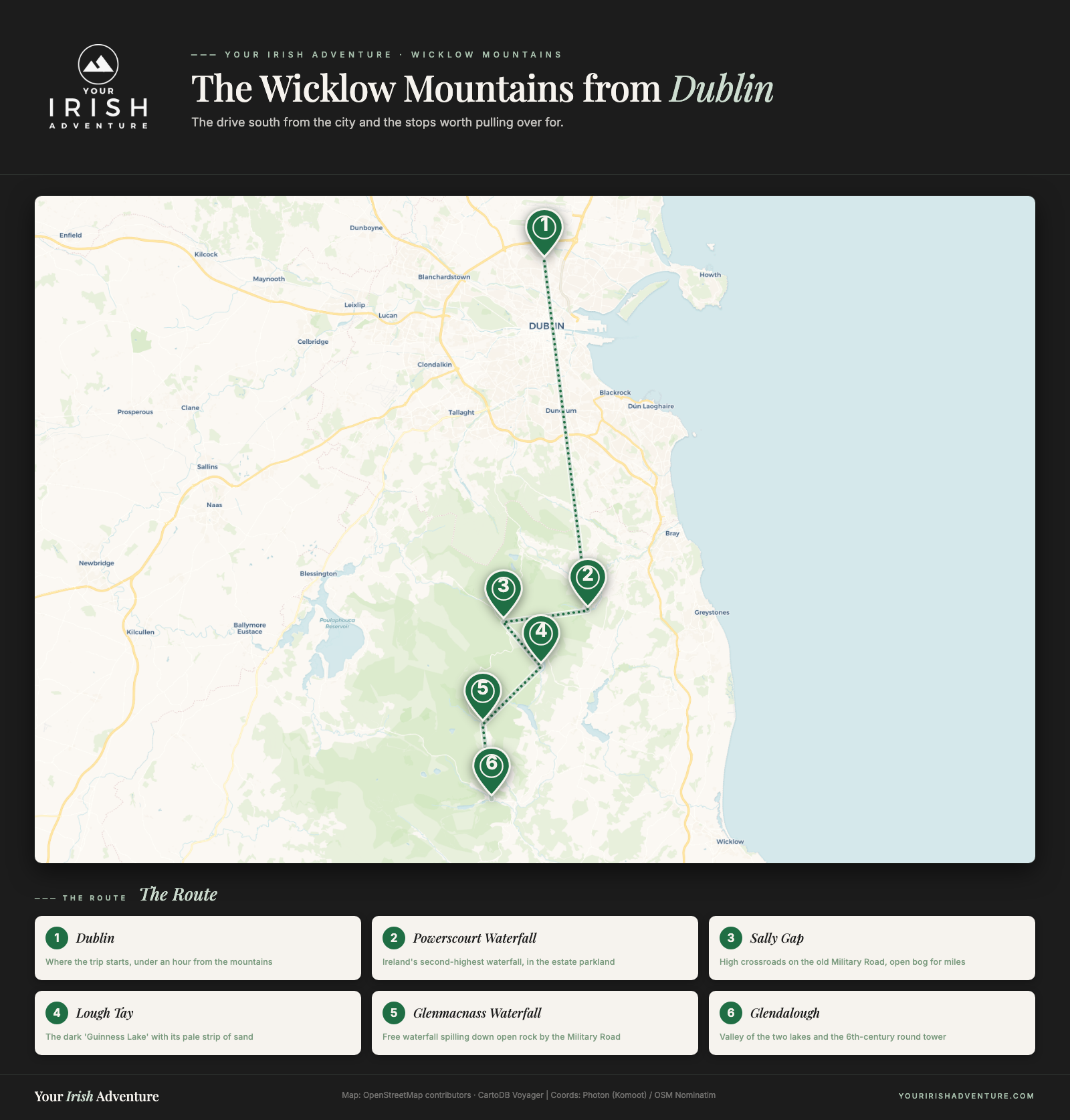
The Wicklow Mountains are the closest real wilderness to Dublin, a run of bog, granite peaks and deep glacial valleys that starts less than an hour’s drive south of the city. Locals call this county the Garden of Ireland, and once you’re up on the Sally Gap or standing over the lakes at Glendalough, you get why.
You can do it as a half-day dash from the city or a full weekend if you want to walk it. The mountains are rounded and brown, the lakes sit dark in the valleys, and the roads twist for miles with barely a house in sight. Throw in the old monastic site at Glendalough with its round tower, and there’s a lot packed in this close to Dublin.
We based ourselves in Dublin on both ends of our last Ireland trip, and this is the day trip I’d push almost everyone toward, because you can get out into proper mountains and be back in the city for dinner.
Below I’ll cover what the national park actually is, the best things to do up there, how to get out from Dublin with or without a car, when to go, and where to stay if you want more than a day.
More Wicklow and Glendalough Guides
- Wicklow Travel: A Complete Guide For Visitors
- The Best Easy Walks in Ireland (For All Skill Levels)
- The Best Coastal Walks in Ireland: 10 Cliff & Sea Trails
Quick Answer:
The Wicklow Mountains are a granite upland range less than an hour’s drive south of Dublin, and the easiest big day out from the city. The highlights are Glendalough’s 6th-century monastic site, the Sally Gap mountain drive, Lough Tay and Powerscourt Waterfall. You can do it as a half-day dash by car, or give it a full weekend to hike peaks like Djouce and Lugnaquilla.
About Wicklow Mountains National Park
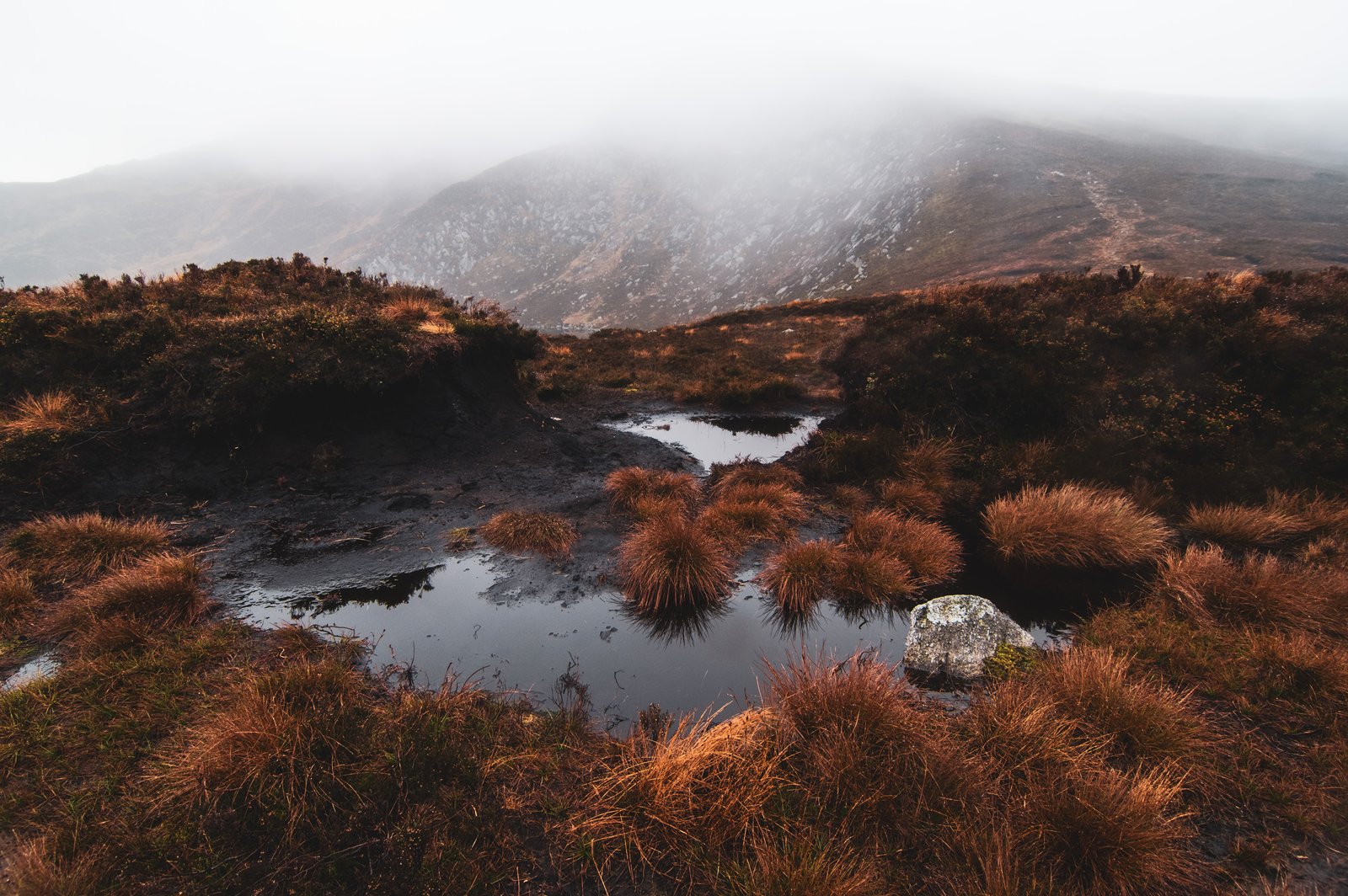
Wicklow Mountains National Park is one of Ireland’s national parks, covering more than 200 square kilometers of upland right on Dublin’s doorstep. It was set up in 1991, and most of what it protects is blanket bog, heath, and the granite peaks that run down the spine of the county.
The high point is Lugnaquilla at 925 meters, which is the tallest mountain in Ireland outside of Kerry. You won’t find dramatic jagged summits up here. The peaks are rounded and brown, cut through with dark lakes and fast little rivers, and that’s exactly what makes the driving and walking so good.
There’s no entrance gate and no ticket to get into the park itself. You just drive in on the mountain roads or park up at one of the trailheads and go. The one spot that gets busy, and charges for parking, is Glendalough, which is the heart of the whole thing.
The Glendalough Valley
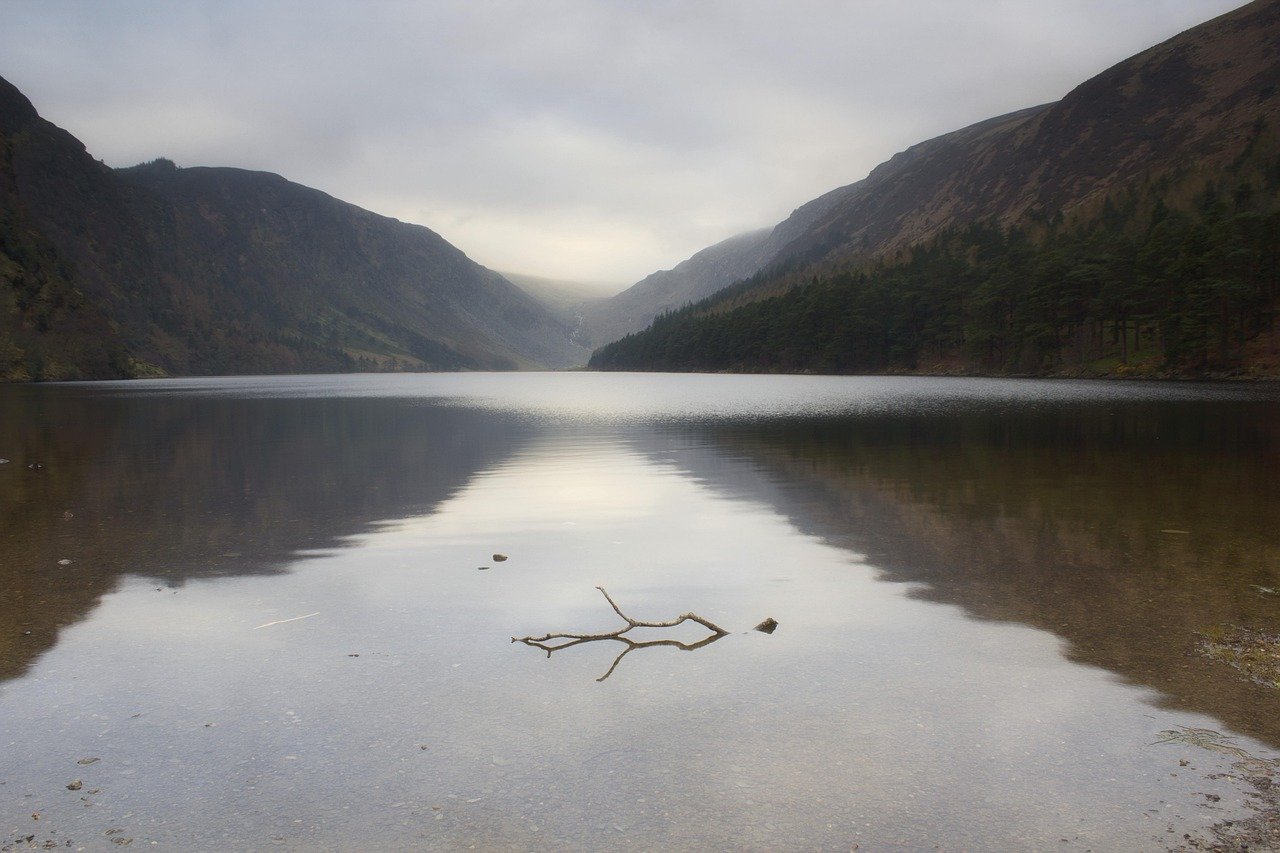
Glendalough means “valley of the two lakes”, and that’s a fair description. It’s a deep glacial valley with an Upper and a Lower Lake sitting dark at the bottom, steep wooded slopes on either side, and a monastic ruin tucked in near the entrance.
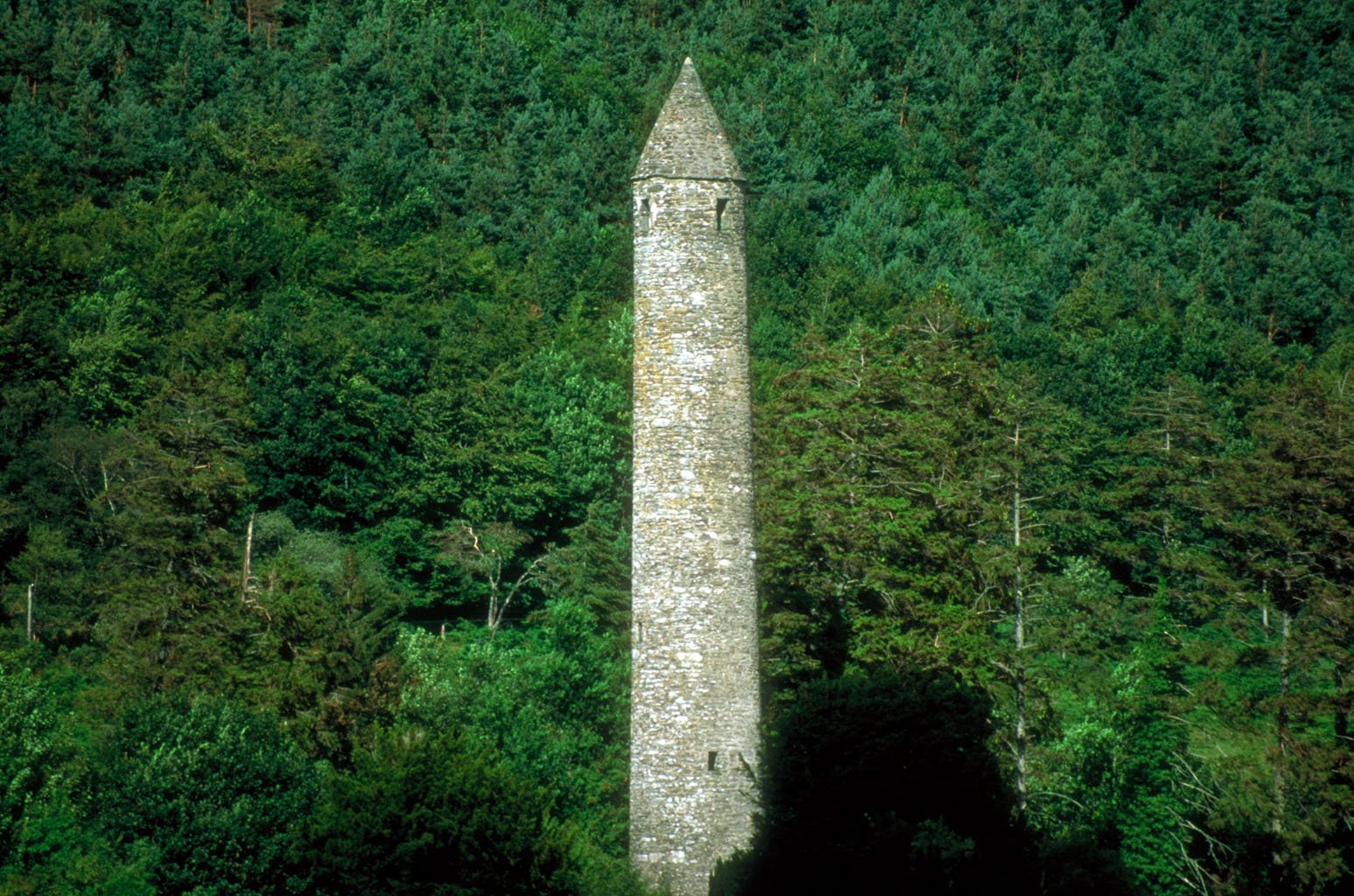
The monastery here was founded by Saint Kevin back in the 6th century, and the standout piece is the round tower, which still stands close to 30 meters tall. There’s also an old cathedral, a small stone church, and a graveyard, all free to wander around.
The crowds cluster around the monastic site and the Lower Lake and never get much further. Walk the extra fifteen minutes up to the Upper Lake and it opens out into the wilder part of the valley, with trails running off in every direction. That’s where I’d point you if you only have an hour or two on foot.
The Best Things to Do in the Wicklow Mountains
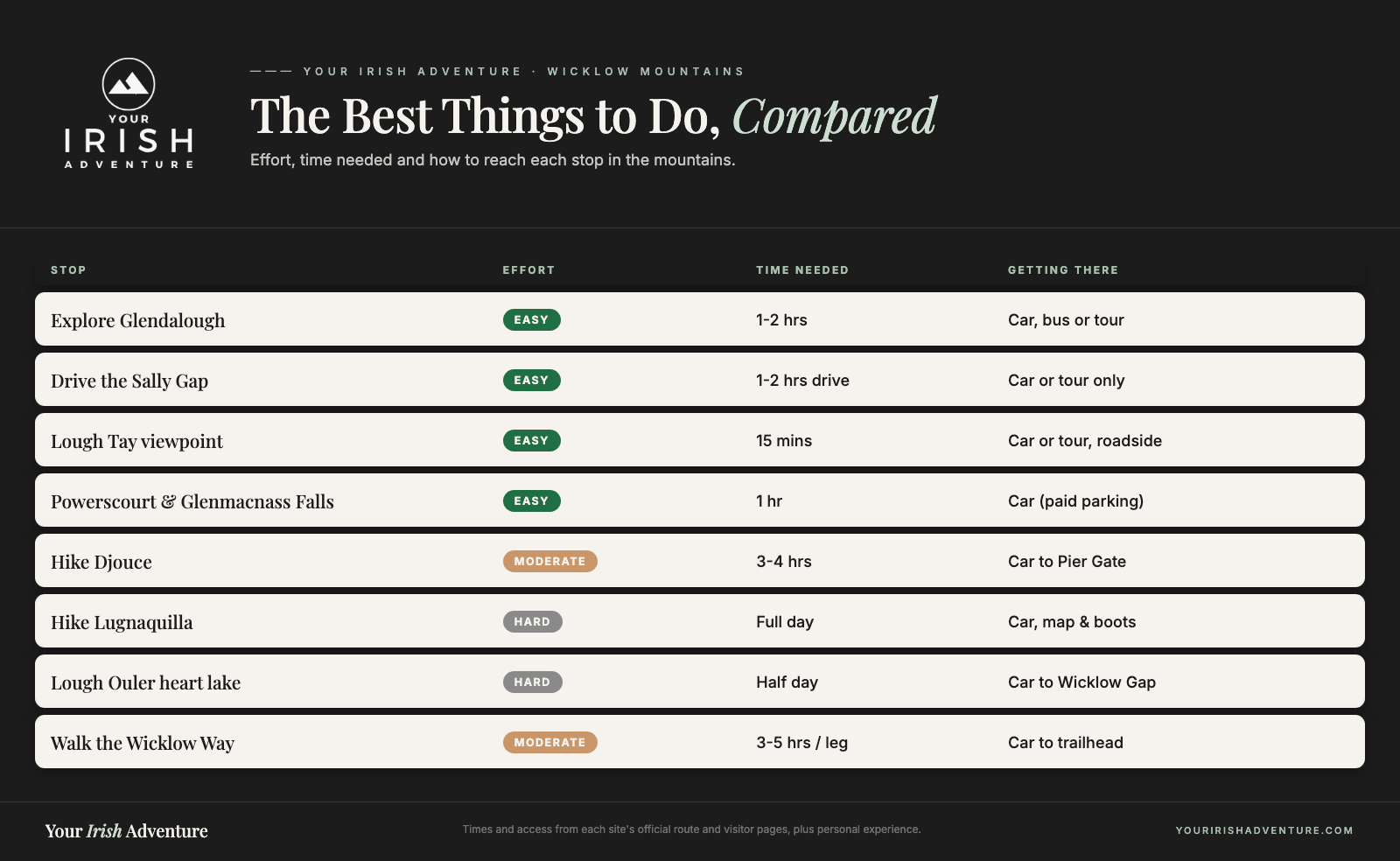
This isn’t a place for ticking off big attractions. Most of what you do up here is drive, walk, and stop at viewpoints, and that’s the whole appeal. Here’s what I’d plan a Wicklow trip around, from the easy roadside stuff to the full mountain days.
Explore Glendalough and Its Round Tower
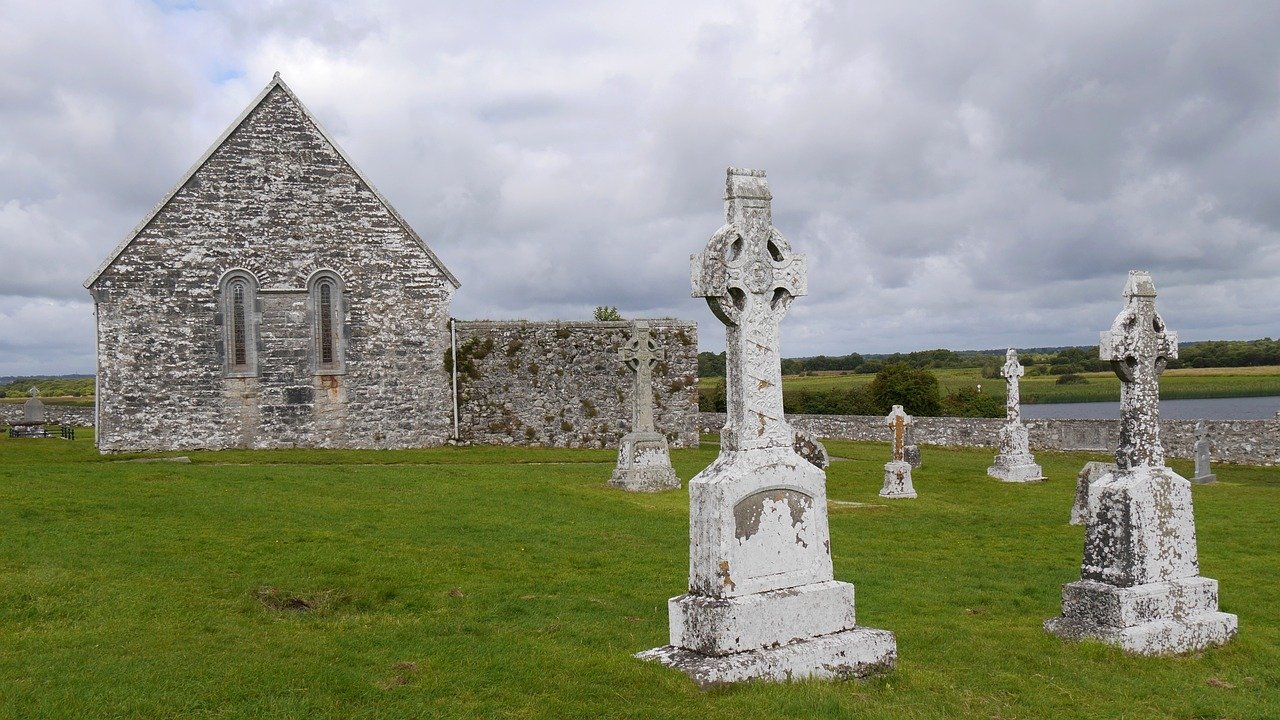
Glendalough is the one stop almost everyone makes, and for once the crowds are right. The monastic site and its round tower are free to walk around, and you can be through them in half an hour.
Give it longer than that. Start at the visitor center, wander the ruins and the graveyard, then follow the path along to the lakes. It’s the easiest way to get a feel for the valley without committing to a big hike.
Drive the Sally Gap
The Sally Gap is the drive that makes the whole trip. It’s a crossroads high up on the Military Road, the old route the British army cut through the mountains in the early 1800s to flush out rebels, and it runs for miles across open bog with almost nothing on it.
You climb out of the trees and the land just opens flat and brown in every direction, with sheep on the road and the odd car pulled over for photos. It’s single track in places and there are no gas stations or shops up top, so fill up before you head in.
Take In the Views at Lough Tay
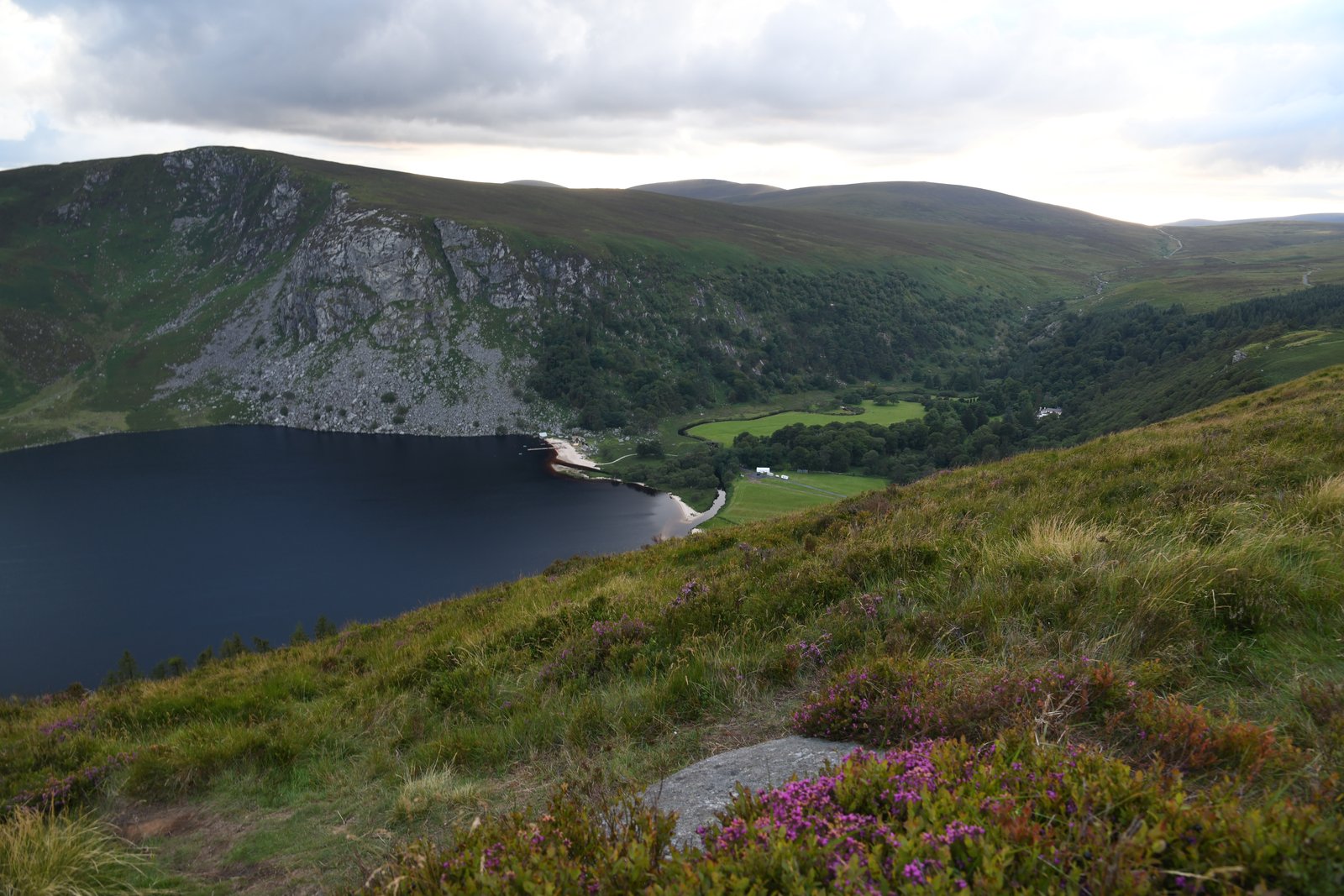
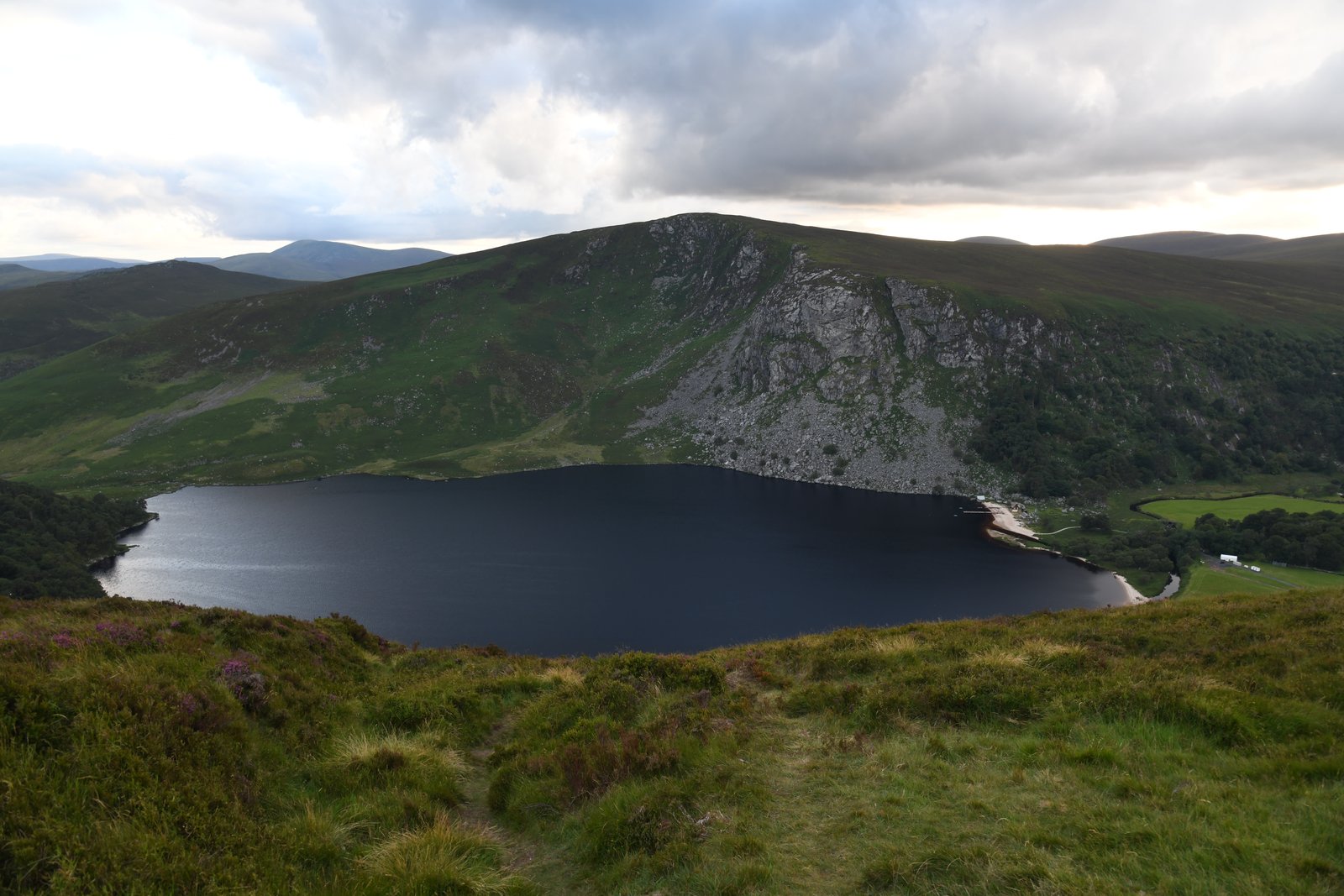
Lough Tay sits just off the R759 near the Sally Gap, and it’s the one that stops every car. It’s a small dark lake with a strip of pale sand at one end, which is why locals call it the Guinness Lake.
There’s a viewing area up on the road where you look straight down onto it, and that’s plenty for a quick stop. The land around the lake is private (it belongs to the Guinness family estate), so you’re admiring it from above rather than walking to the shore, and that view is the whole point.
See Powerscourt and Glenmacnass Waterfalls
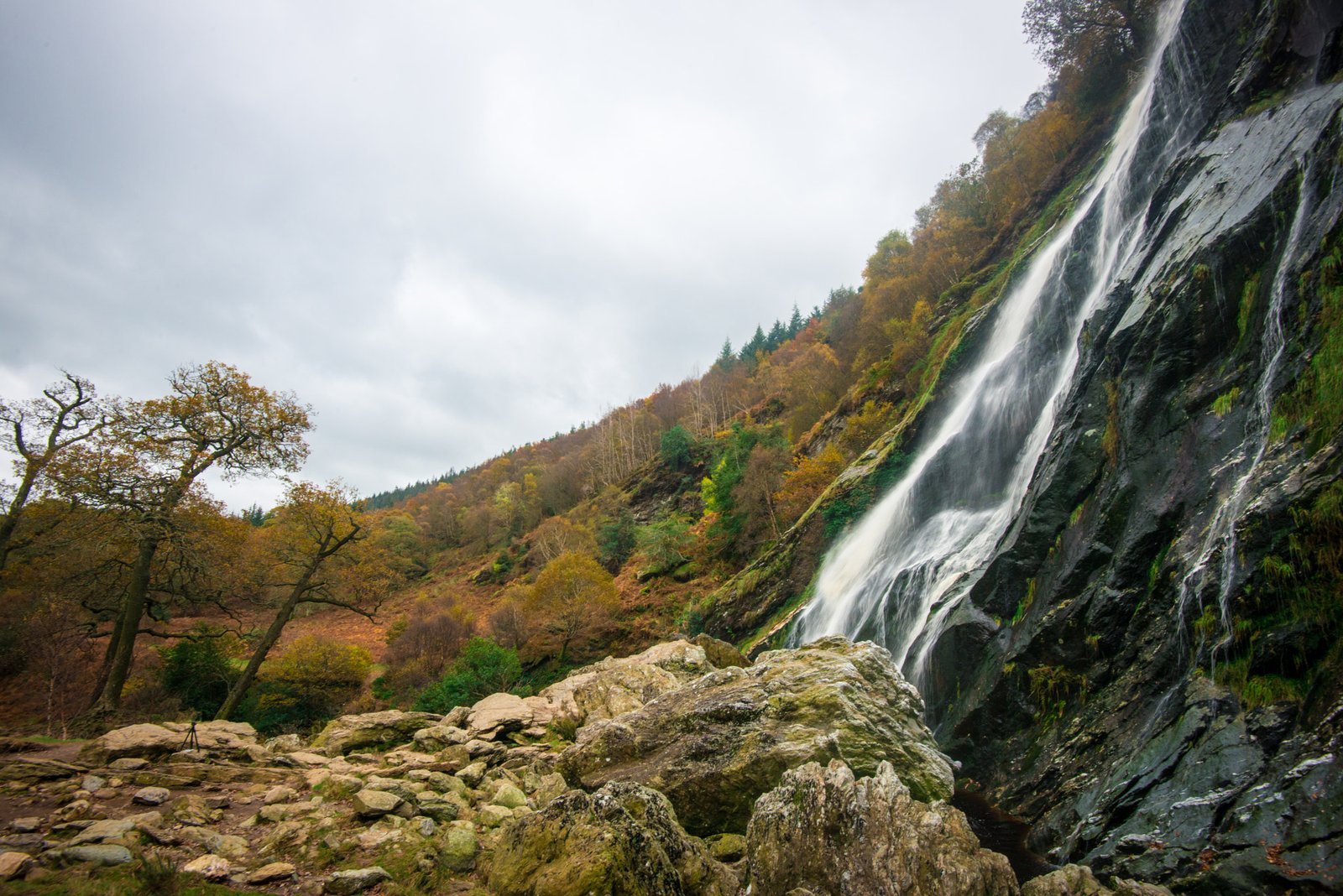
Powerscourt Waterfall is Ireland’s second highest waterfall at 121 meters, tucked in parkland below the main Powerscourt Estate. It’s a proper family stop, with picnic tables and space for kids to run around, and you pay to get into the grounds, so check the current pricing before you go.
Glenmacnass is the free one, and I’d argue it’s more fun. It spills straight down open rock right beside the Military Road, and you can pull over and walk up to it in a couple of minutes. Watch your footing on the wet granite up top, because people slip there every year.
Hike Djouce or Lugnaquilla
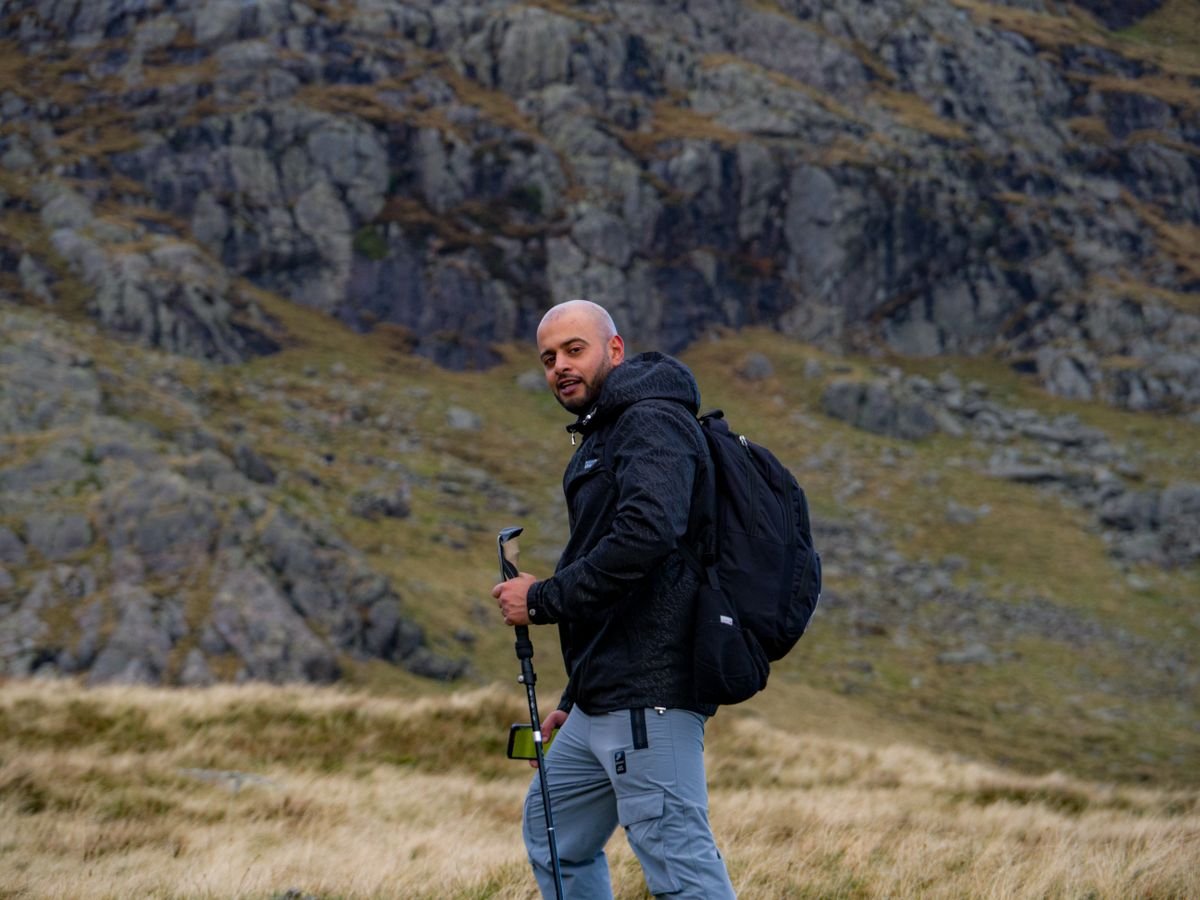
If you want a summit, these are the two to know. Djouce is the manageable one at 725 meters, reached from the Pier Gate parking area on the R759, and a lot of the route runs on a raised boardwalk over the bog with long views out to the coast. Plan on around three to four hours round trip.
Lugnaquilla is the big one at 925 meters, the highest peak in the park and a serious day out. It’s exposed, the weather turns fast, and part of the western approach crosses a military firing range, so check the range schedule and only go with a map, boots, and a real forecast.
Visit Lough Ouler, the Heart-Shaped Lake
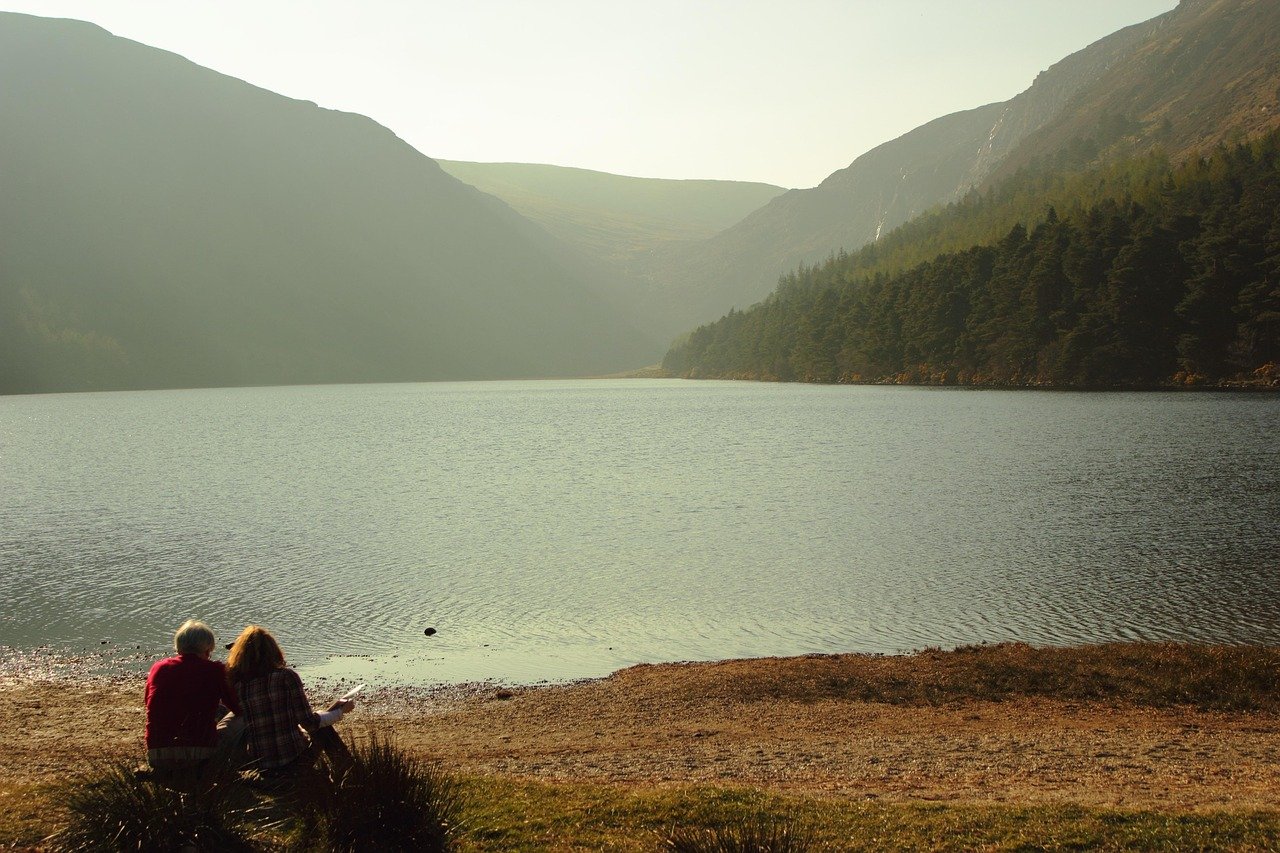
Lough Ouler is a corrie lake that sits in a hollow below Tonelagee, and from the right angle up on the ridge it forms a near-perfect heart. That shape is why it’s become such a target for hikers with a camera.
Getting there is a real hike, not a viewpoint. It’s boggy, unmarked in places, and you start from a pull-in on the Wicklow Gap road, so wear waterproof boots and don’t attempt it in low cloud when you’ll see nothing.
Walk a Stretch of the Wicklow Way
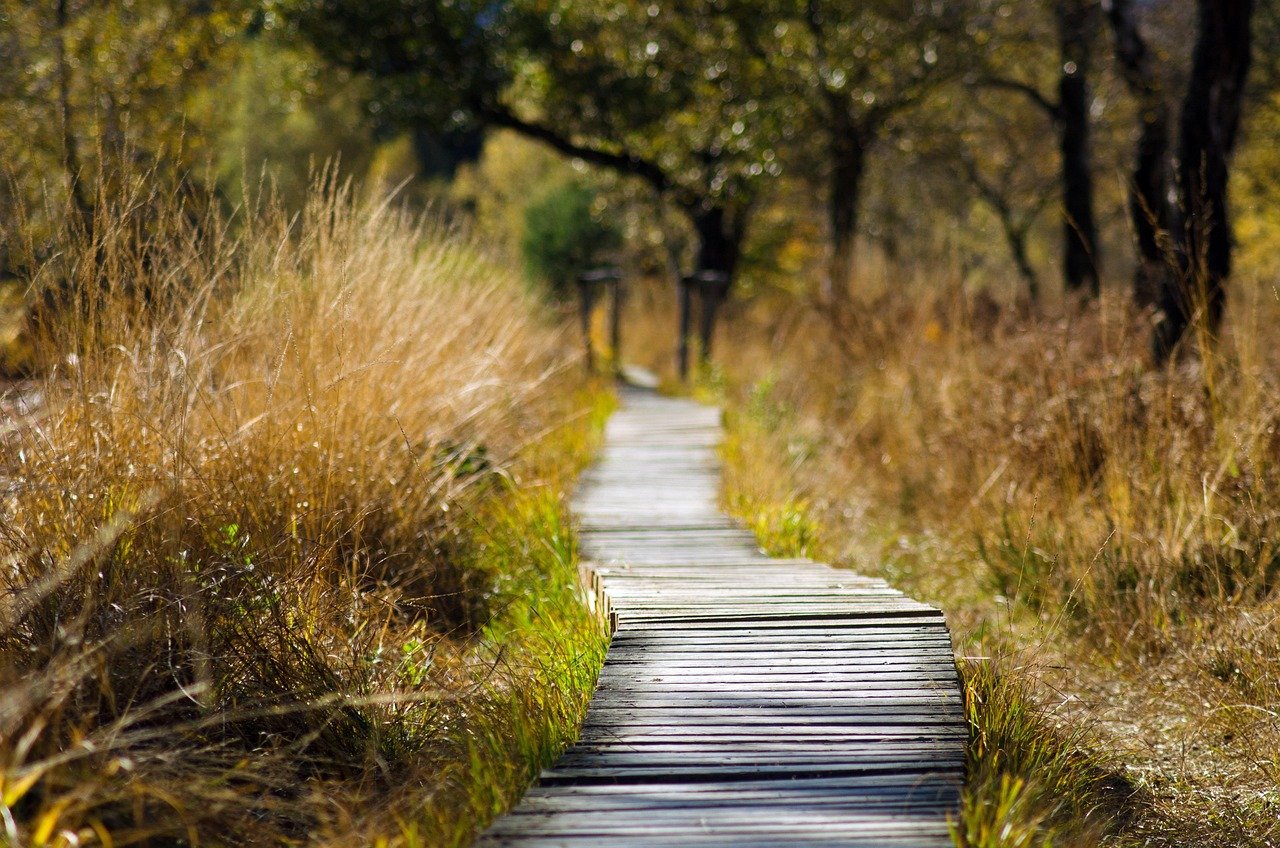
The Wicklow Way is Ireland’s first waymarked long-distance trail, running about 130 kilometers from the edge of Dublin down to Clonegal in County Carlow. Walking the whole thing takes about a week, but you don’t need to.
The best move for a day is to pick one leg and walk it out and back. The section over Djouce and along the boardwalk above Lough Tay is the one I’d choose, because you get the ridge, the lake view, and open bog in a few hours without needing to arrange a shuttle at the far end.
How to Get to the Wicklow Mountains from Dublin
The mountains start less than an hour south of the city, so this is an easy trip to organize however you’re traveling. Your options come down to three: drive yourself, book a day tour, or take the bus to Glendalough and stay put.
By Car (the Best Way)
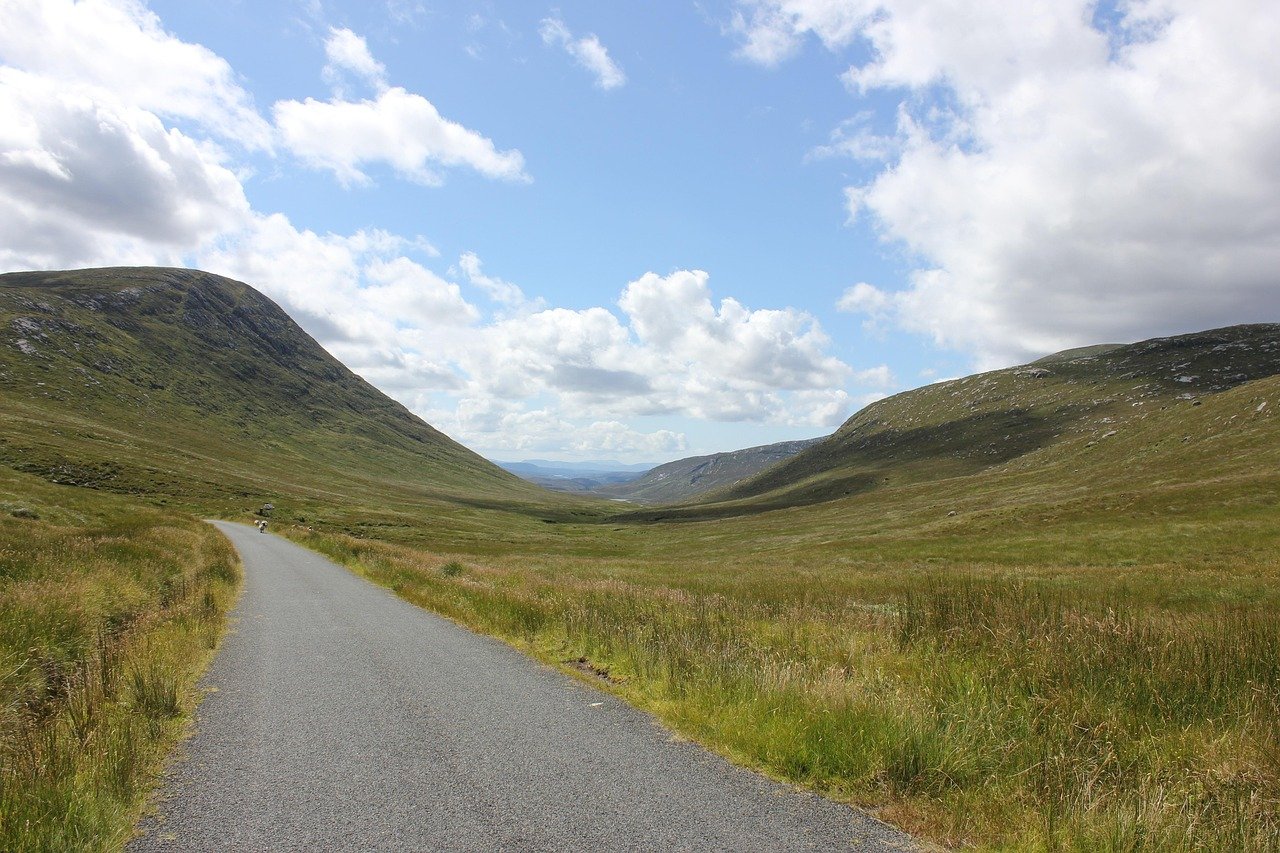
A car is the way to do this, no question. You can string together Glendalough, Lough Tay, and the mountain roads at your own pace, and pull over whenever you feel like it. Plan on about an hour from central Dublin down to Glendalough on the N11.
We drove Ireland by campervan and picked ours up from a depot just north of Dublin, but for most first-timers a rental car straight from the airport is the easier call. It’s worth a minute to compare car hire deals on Discover Cars before you land, since prices swing a lot by pickup date. Either one gets you to every stop in this guide.
Just know the roads get tight and slow once you’re up high, so don’t judge your timing by the distance. Fuel up before you head into the hills, because there’s nothing up there.
By Guided Day Tour
If you’re not driving, a day tour is the simplest way to actually see the high mountains and not just Glendalough. Most run from Dublin city center and loop in Glendalough, the Sally Gap, and a stop or two along the Military Road.
You give up the freedom to linger, but a good driver-guide handles the narrow roads and tells you the history as you go. It’s the best no-car option for getting up onto the open bog. If that’s you, book a half-day Glendalough and Wicklow tour on GetYourGuide and you’ll be picked up in the city center.
Wicklow and Glendalough Day Tours from Dublin
- From Dublin: Full-Day Wicklow, Glendalough and Kilkenny Tour
- From Dublin: Glendalough and Wicklow Mountains Morning Tour
- Wild Wicklow Award-Winning Day Tour with Glendalough
By Public Transport
There’s no train into the mountains, but St Kevin’s Bus runs a direct service from Dublin to Glendalough a couple of times a day, and it takes roughly an hour and a half. Check the current timetable before you rely on it, as departures are limited.
The bus is fine if Glendalough and a walk around the lakes is all you want. It won’t get you to Lough Tay, the Sally Gap, or the waterfalls, so for those you’ll need a car or a tour.
Day Trips and Things to Do Around Dublin
- 7 Best Day Trips From Dublin, Ireland
- Dublin Travel Guide: Where to Stay, Eat and Explore
- 29 Free Things To Do in Dublin: A Local’s Guide
Best Time to Visit and Weather
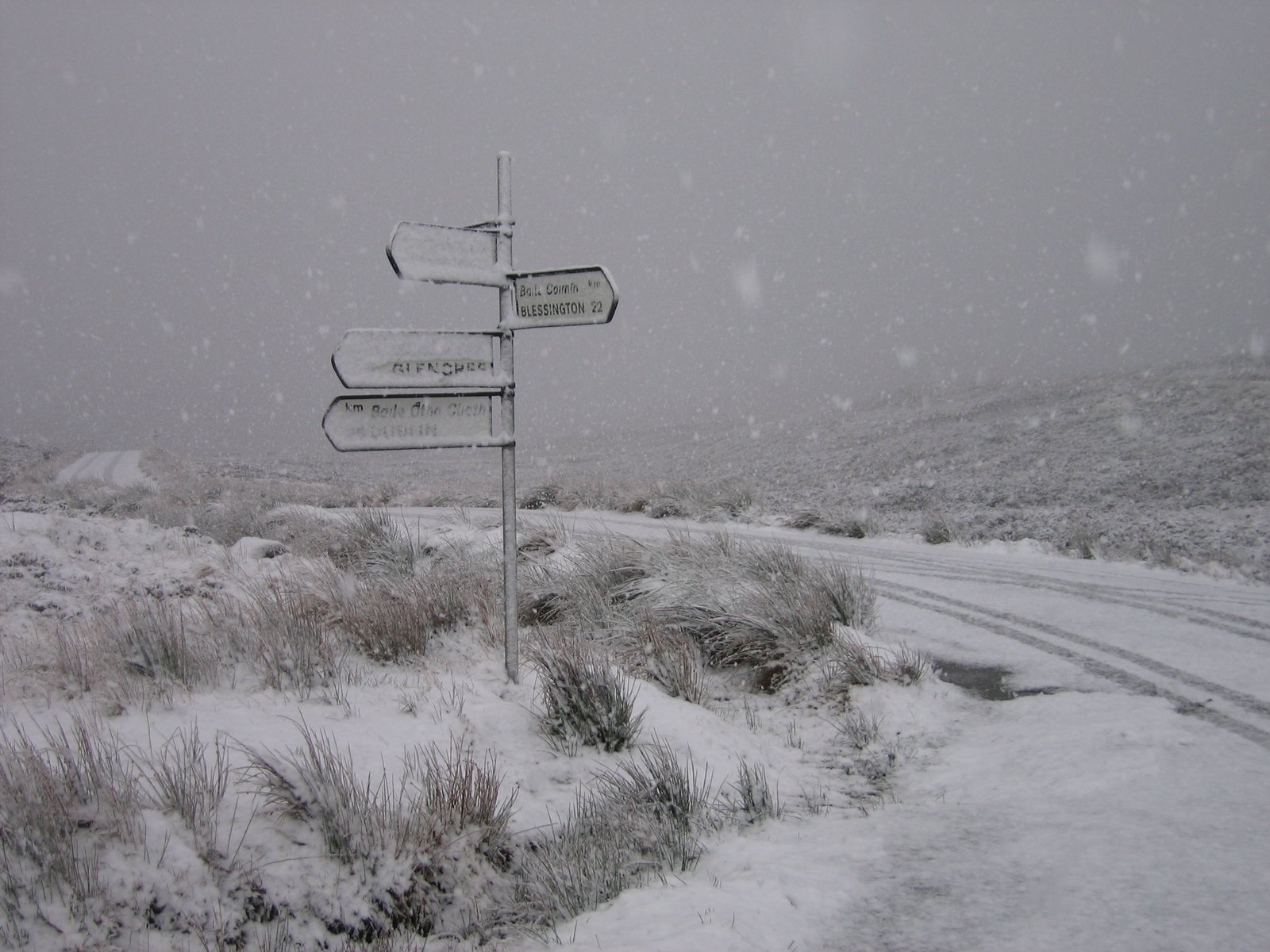
The short answer: late spring through early fall is the sweet spot. From May to September you get the longest days, the warmest temperatures, and the best odds of actually seeing the views instead of a wall of gray cloud sitting on the tops.
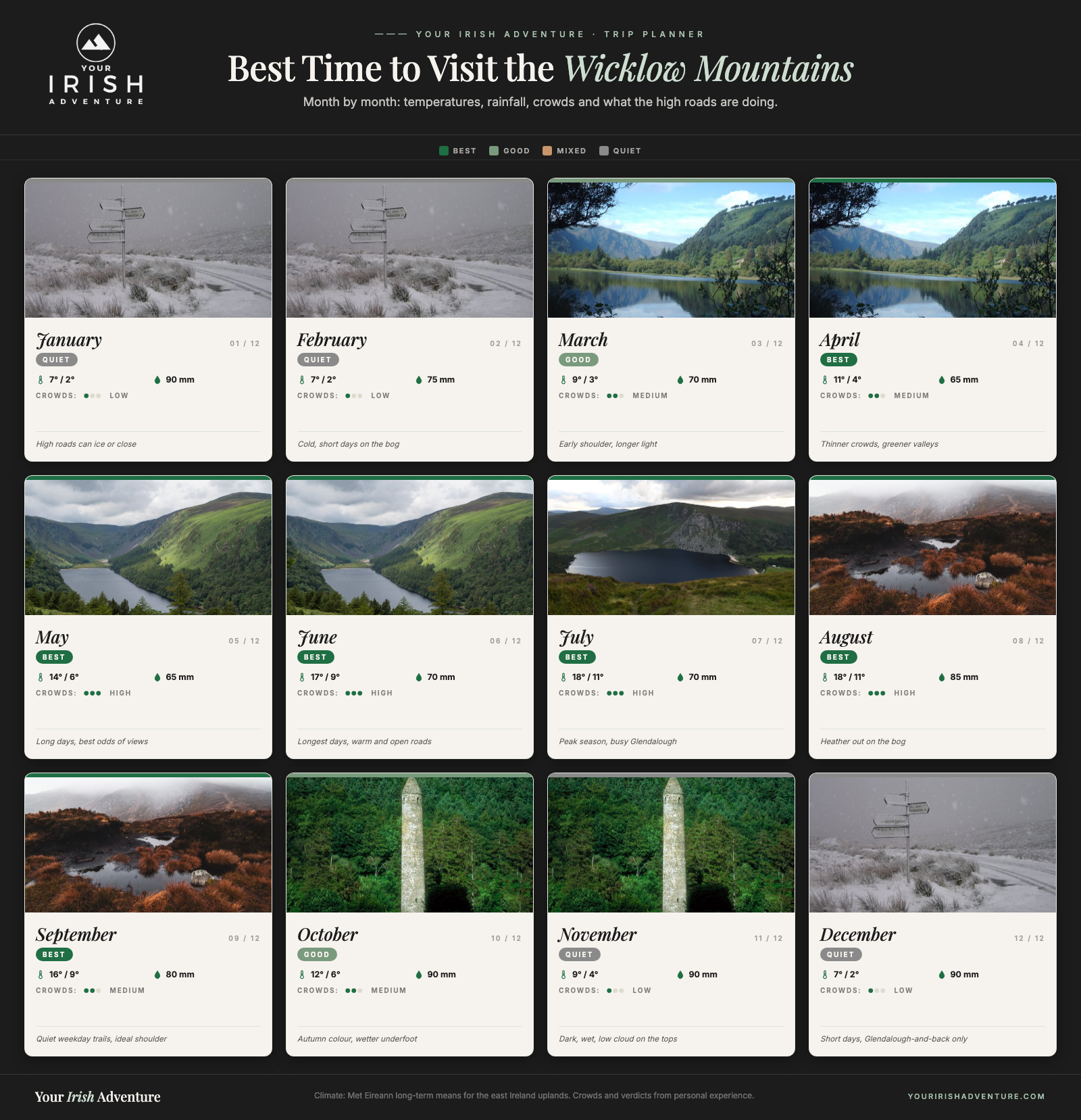
Summer is the safest bet for a first visit. Days are long, the heather is out on the bog in late summer, and the mountain roads are at their easiest. The trade-off is crowds, so Glendalough and its parking lot fill up fast on any dry weekend.
Shoulder season is what I’d aim for if you can. Late spring and early fall give you thinner crowds, and a weekday hike in September can leave you with a trail almost to yourself. Come midweek rather than a Saturday and you dodge most of the day-trip rush from Dublin.
Winter is a different trip. It’s quiet and the low light over the bog is worth seeing, but the days are short, the high roads can ice over or close, and the Sally Gap is no place to be caught in bad weather. If you go up in winter, keep it to Glendalough and the lower stops.
Know the Weather Before You Go
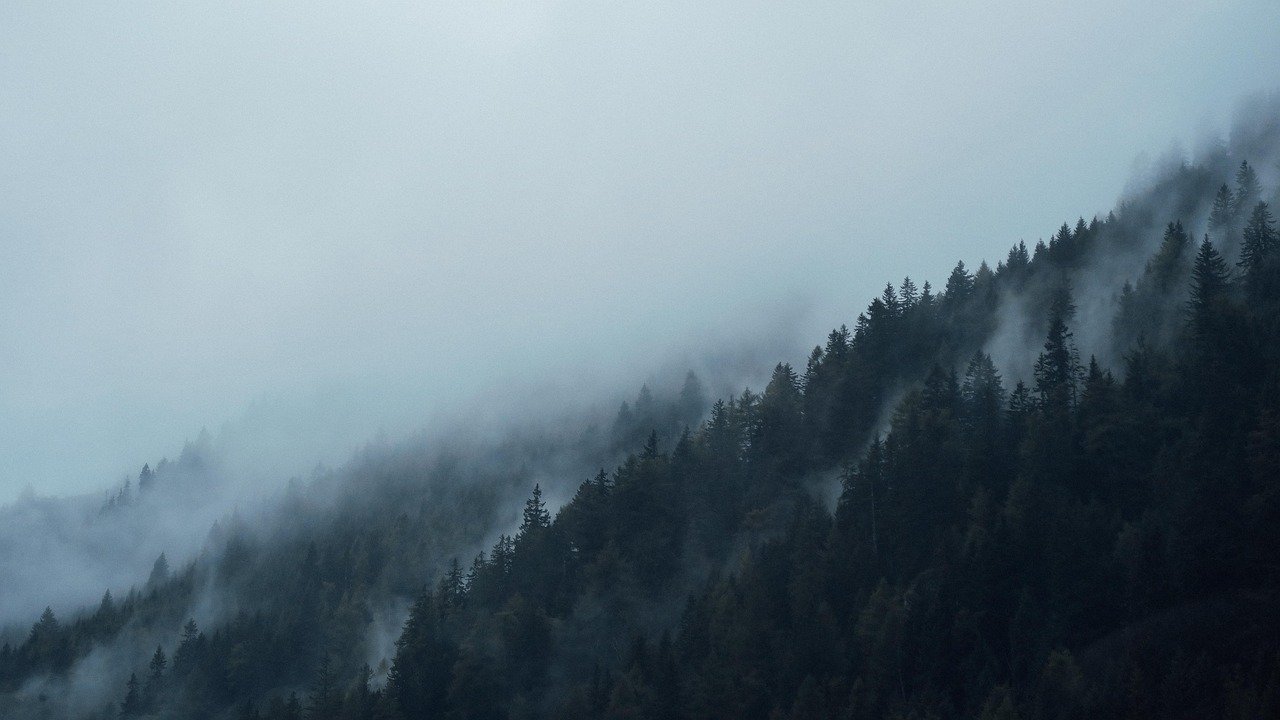
Here’s the thing about these mountains: the weather up top is nothing like the weather in Dublin. It can be dry and mild in the city and blowing rain and cloud on the Sally Gap twenty minutes later, and it turns fast.
Rain is a fact of life in the Wicklow uplands year-round, and the peaks spend a lot of the year in cloud. Pack a waterproof jacket and proper footwear no matter the forecast, and don’t count on a view being there just because it was clear when you left the city.
If you’re hiking anything higher than the lakeshore, check a mountain forecast that morning, not just the general Dublin one. Low cloud is the real deciding factor up here, and there’s no point climbing Djouce or hunting for Lough Ouler if you’re going to see nothing but fog at the top.
Where to Stay Near the Wicklow Mountains
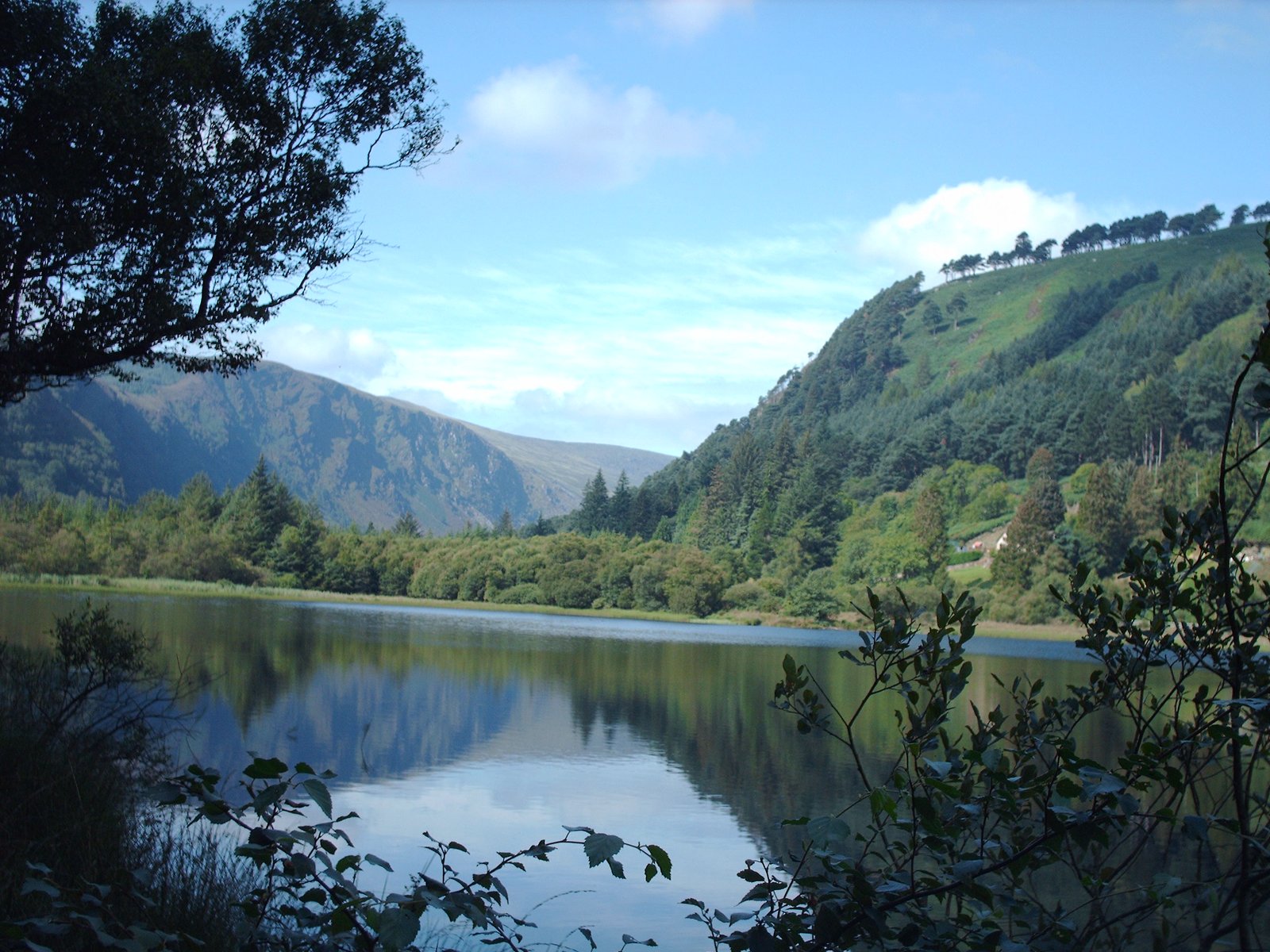
You’ve got two ways to play this. Base yourself in Dublin and treat the mountains as a day trip, or sleep out in the hills and wake up in the middle of it. Both work, and it comes down to how much time you have.
Stay in Dublin and Day Trip
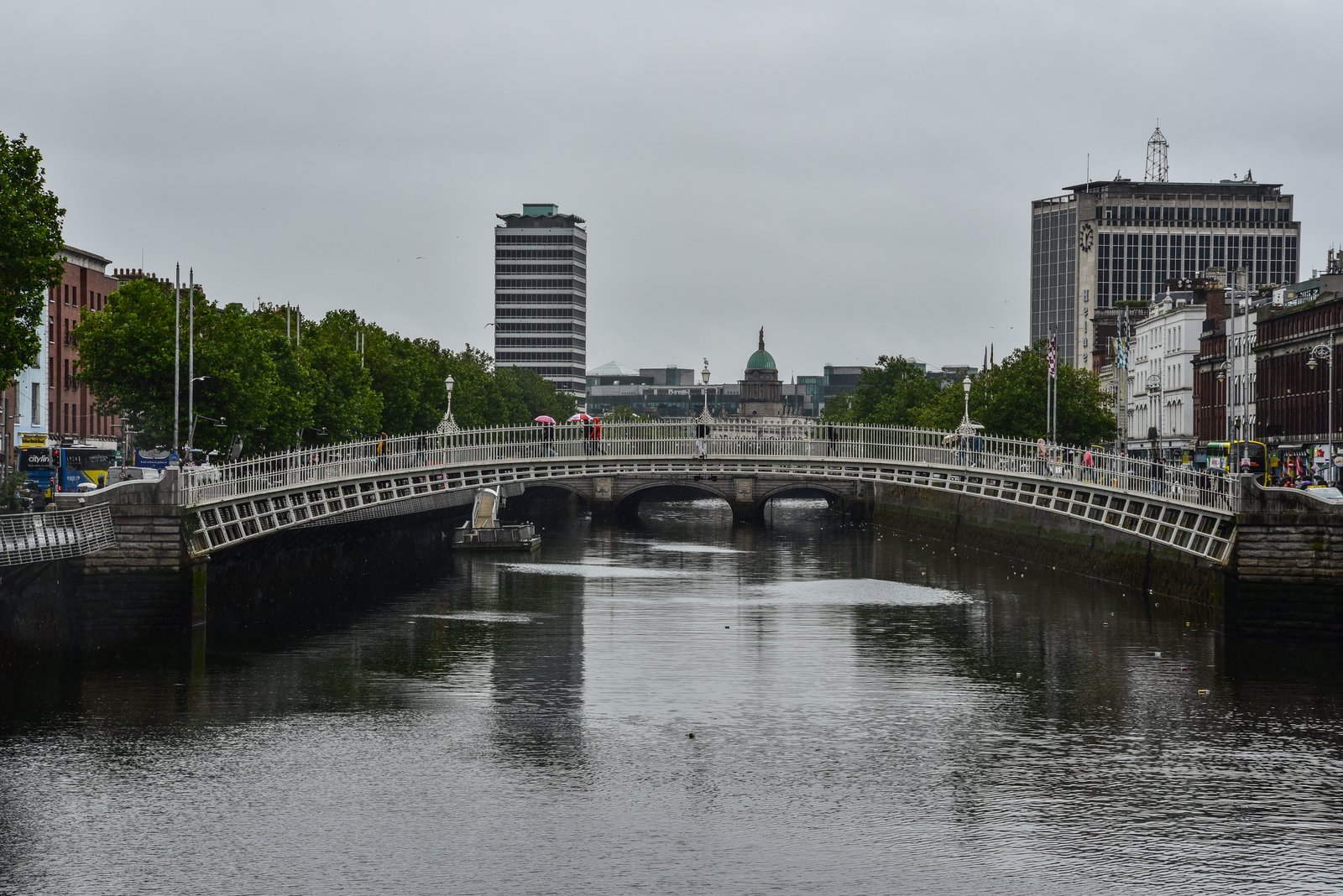
This is what we did, with Dublin as our base on both ends of the trip. Glendalough is about an hour south on the N11, so you can be up in the mountains for the morning and back in the city for dinner without moving hotels.
It’s the easy call if you’re short on time or don’t want to pack up and shift. You keep a city on tap in the evenings and still get your mountain day. The only downside is you’re driving the same road twice.
Stay in Laragh or Glendalough
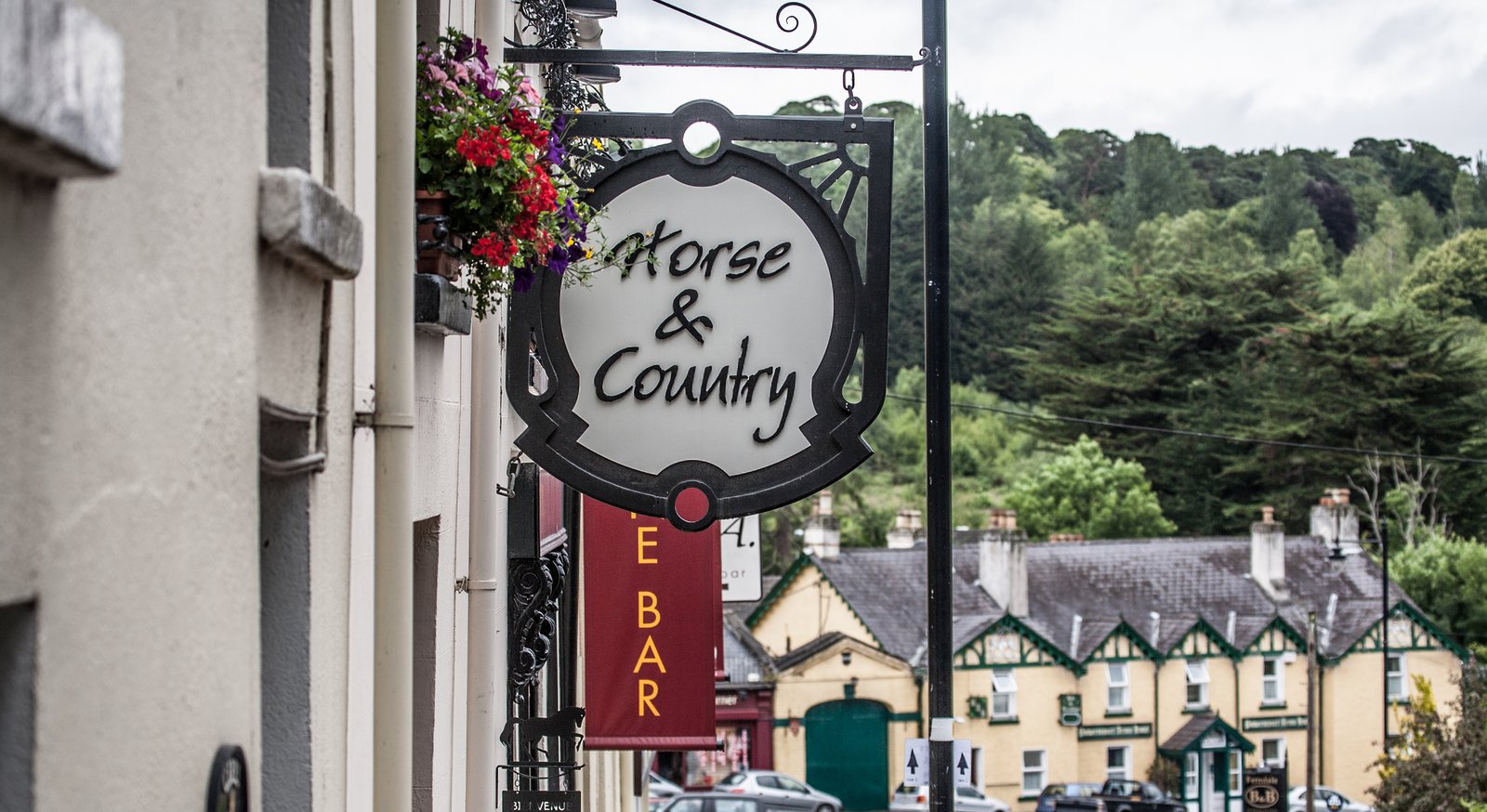
If you want to actually be in the park, base yourself in Laragh, the little village right beside Glendalough. It has a handful of guesthouses, B&Bs, and a couple of pubs, and it puts you a two-minute drive from the round tower and the lakes.
The big win here is timing. Stay in Laragh and you can be walking the Upper Lake before the first tour buses roll in from Dublin, and back out on the trails after they’ve all left. That early and late window is when the valley is at its best.
Roundwood, a bit north near Lough Tay, is another good base and bills itself as Ireland’s highest village. Either one keeps you close to the mountain roads instead of an hour away, and it’s worth a look to check availability on Booking.com once you’ve settled on a village.
The Glendalough Hotel
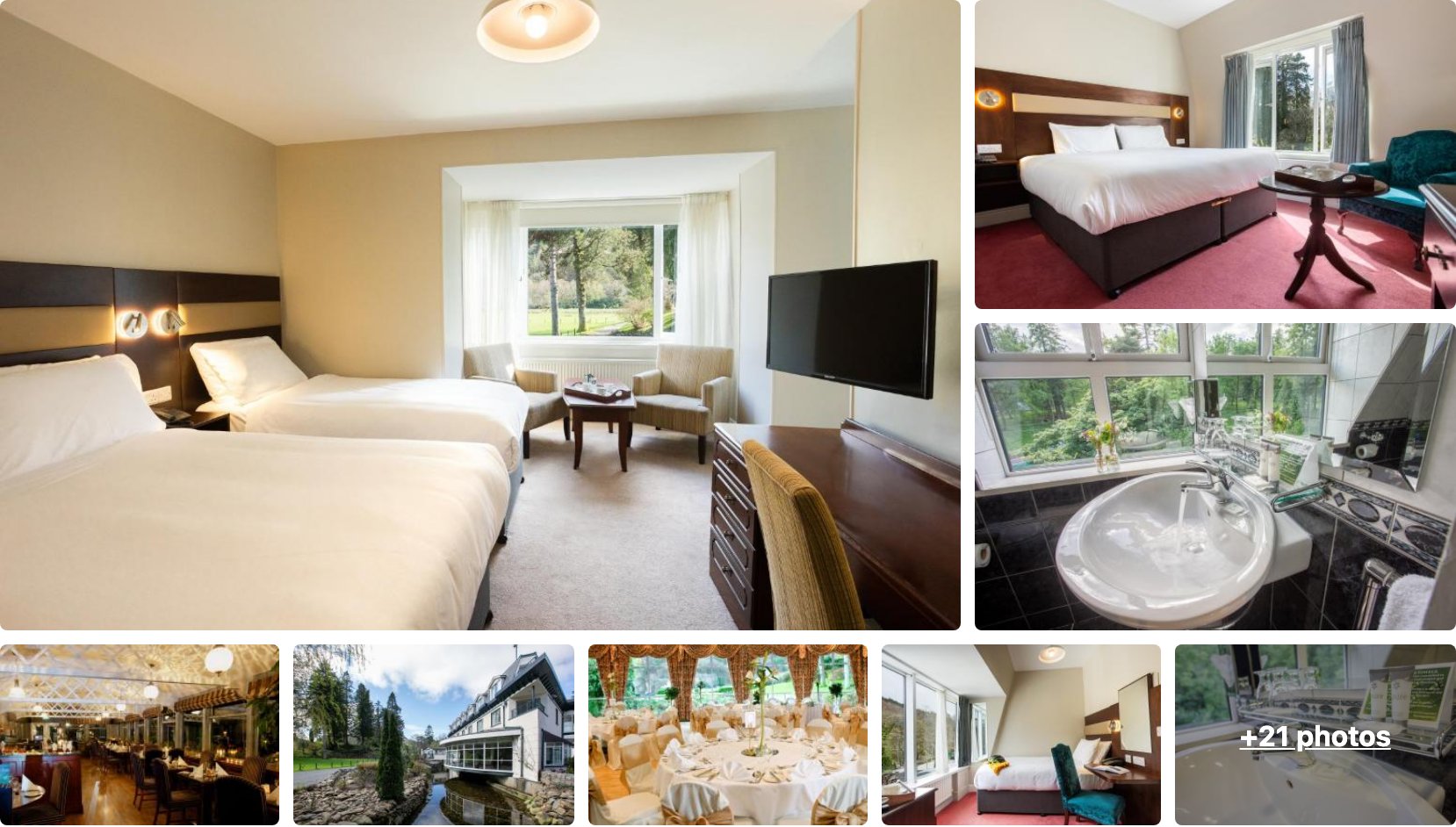
The Glendalough Hotel is the one full hotel right in the valley, a couple of minutes’ walk from the round tower and the lower lake. Rooms look out over the woods and the river, and having a bar and restaurant on site means you don’t have to drive anywhere for dinner after a day on the trails.
👉 View The Glendalough Hotel Availability and Pricing
Riversdale House
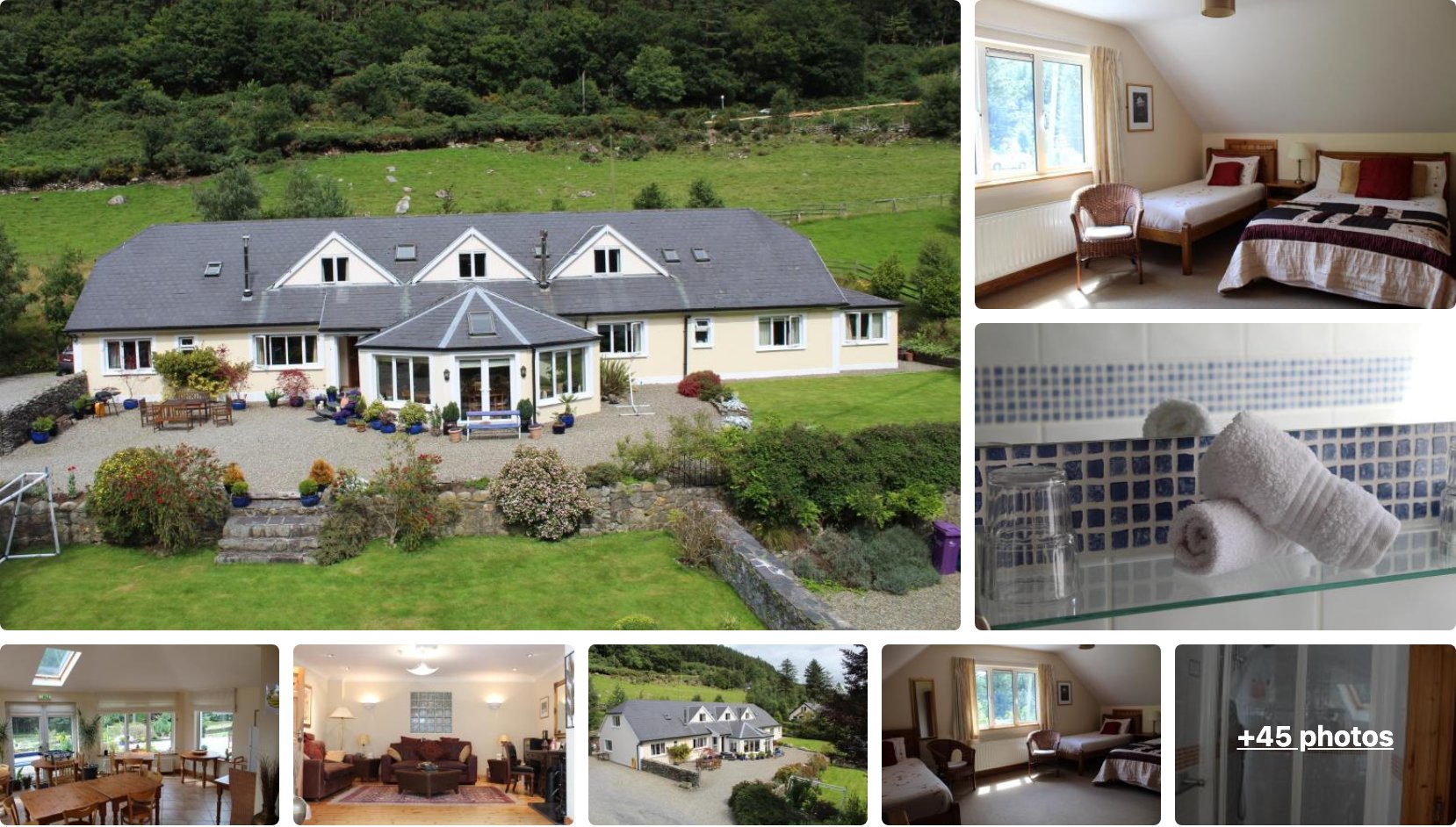
Riversdale House is the pick if you want a proper guesthouse a short walk up the road from Glendalough, and it rates a 9.4 across more than 400 reviews. It sits on its own grounds looking out at the hills, with big bright rooms, and it’s the kind of quiet base that lets you be on the Upper Lake trail before the tour buses arrive.
👉 View Riversdale House Availability and Pricing
Glendalough International Youth Hostel
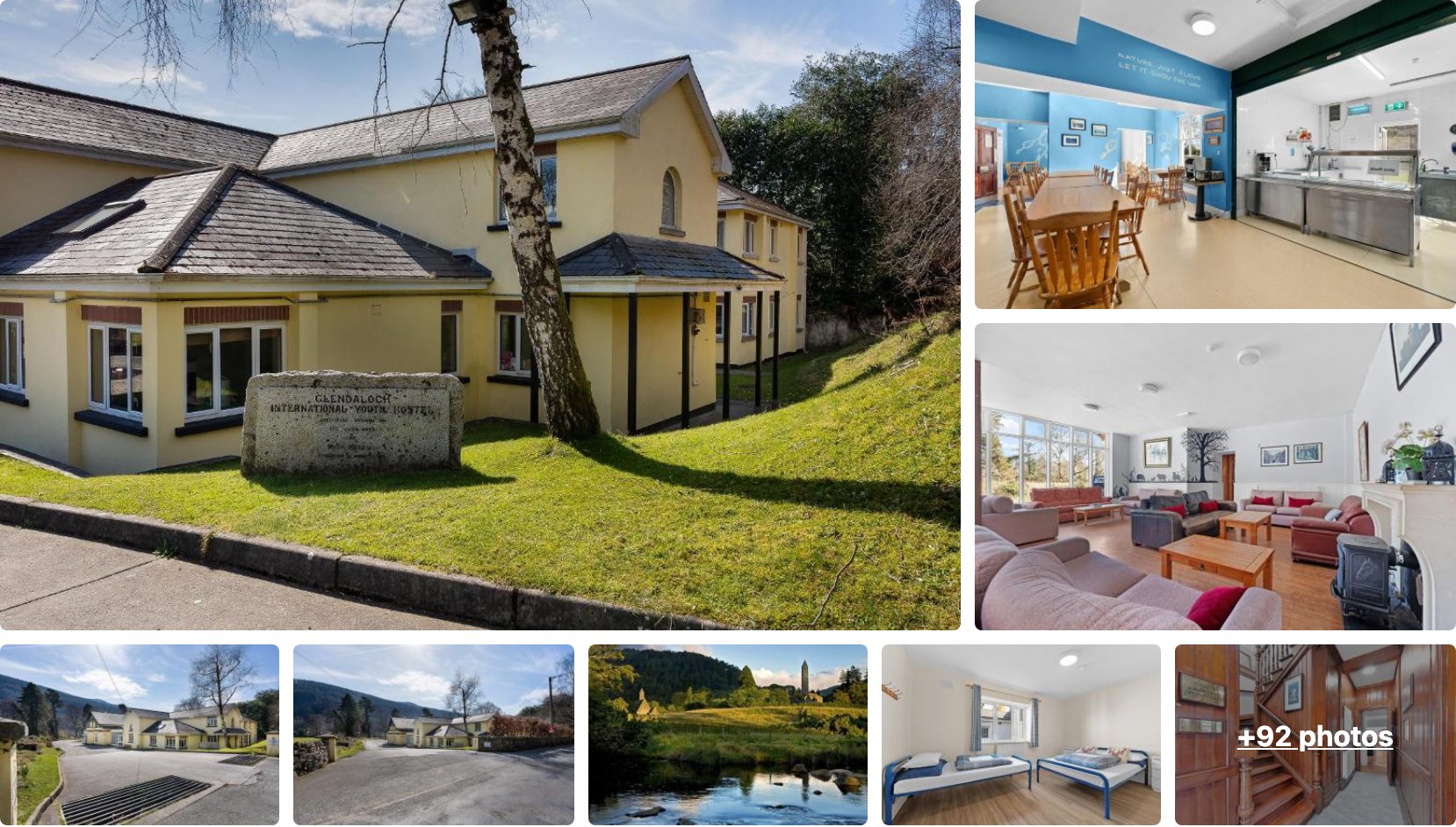
Glendalough International Youth Hostel is the budget option, and it’s the closest bed of the lot to the monastic site, right by the lodge at the edge of the valley. You get dorm beds and private rooms, a shared kitchen, and a big lounge, so it suits walkers who want an early start on the trails without paying hotel money for it.
👉 View Glendalough International Youth Hostel Availability and Pricing
Camping and Campervans
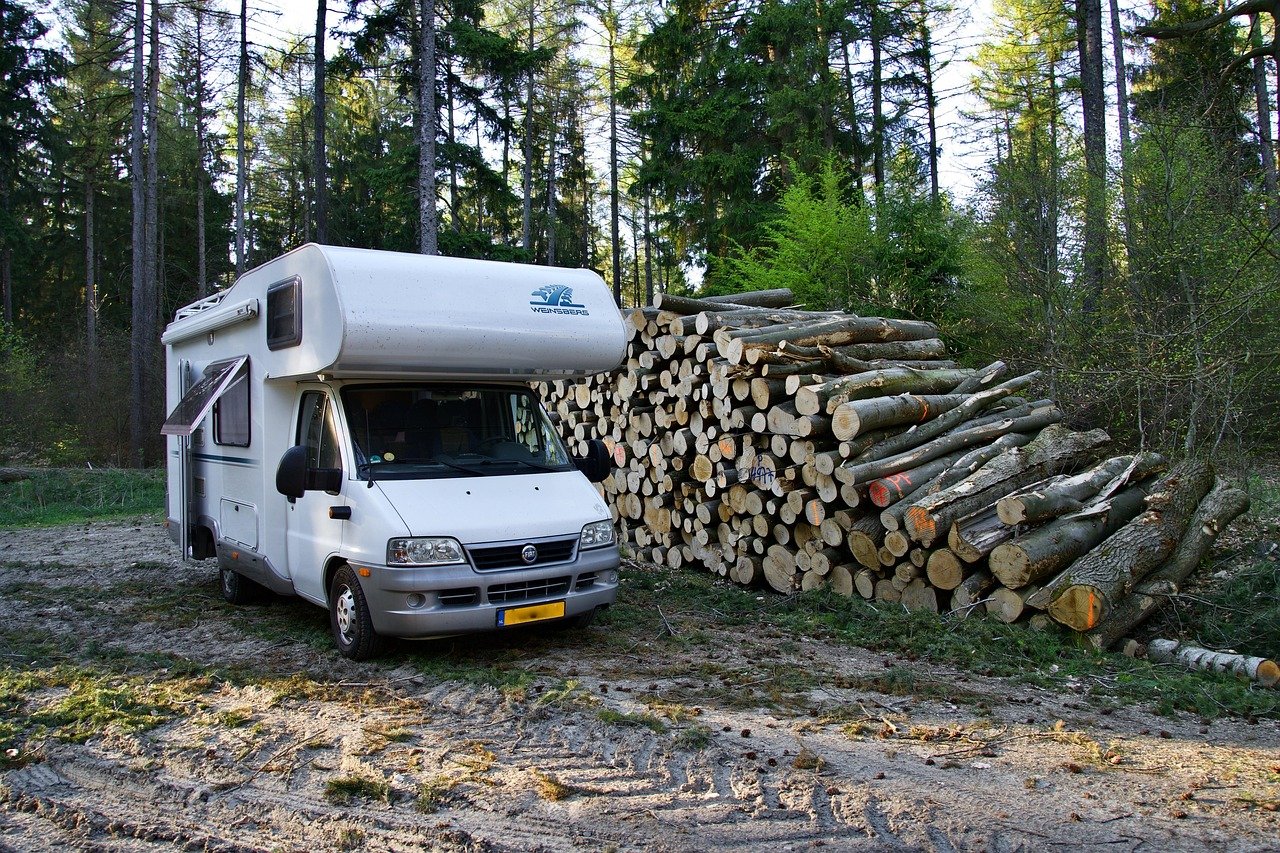
We drove Ireland by campervan, and this part of the country is set up well for it. There are campsites around Glendalough and Roundwood that put you right in the park, which beats any hotel for a sunrise start.
Just don’t plan on wild camping up on the open bog. It’s a national park, the ground is fragile, and the high spots like the Sally Gap are no place to be parked overnight in bad weather. Use a proper site and you’re sorted.
Plan the Rest of Your Ireland Road Trip
- A Photographer’s Definitive Ireland Road Trip
- The Best Ireland Itineraries From Dublin Airport
- Wild Atlantic Way Itinerary – Ireland’s Most Epic Road Trip
Best Day Tours from Dublin to the Wicklow Mountains
If you don’t want to drive the Sally Gap yourself, a guided day trip is the easy fix. These all leave from central Dublin and handle the winding mountain roads for you, so you can look out the window instead of watching for sheep on the tarmac. Here are the ones I’d book.
From Dublin: Wicklow Mountains, Glendalough and Kilkenny Tour
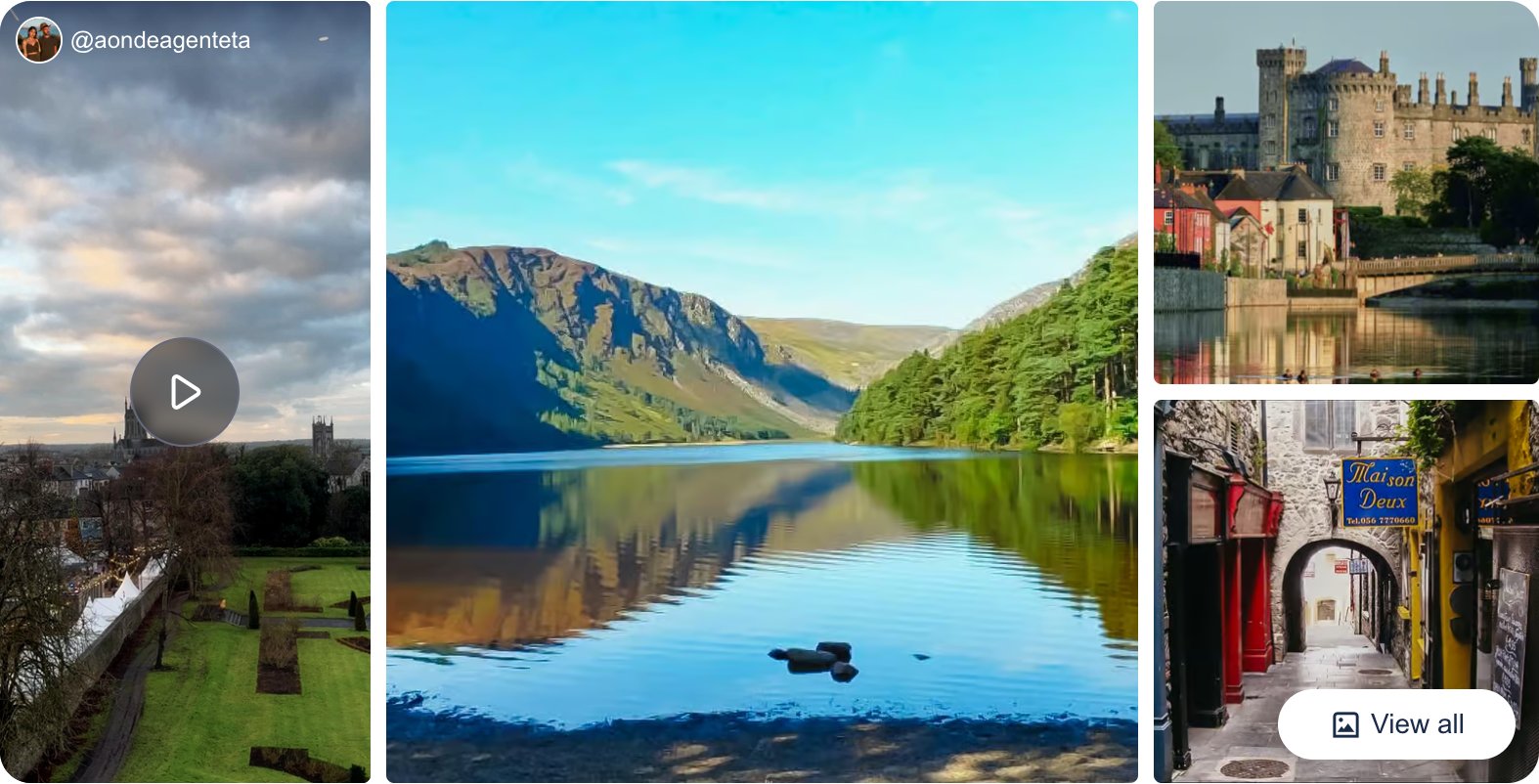
This is the full-day option that pairs the mountains with Kilkenny. You cross the Wicklow Mountains, stop at Glendalough to walk the monastic site and lakes, then carry on to Kilkenny for its medieval castle and streets before heading back to Dublin. It’s a long day, around 10 hours with a guide on the bus.
👉 Check dates and prices for the Wicklow, Glendalough and Kilkenny Tour
From Dublin: Wild Wicklow Mountains and Glendalough Tour
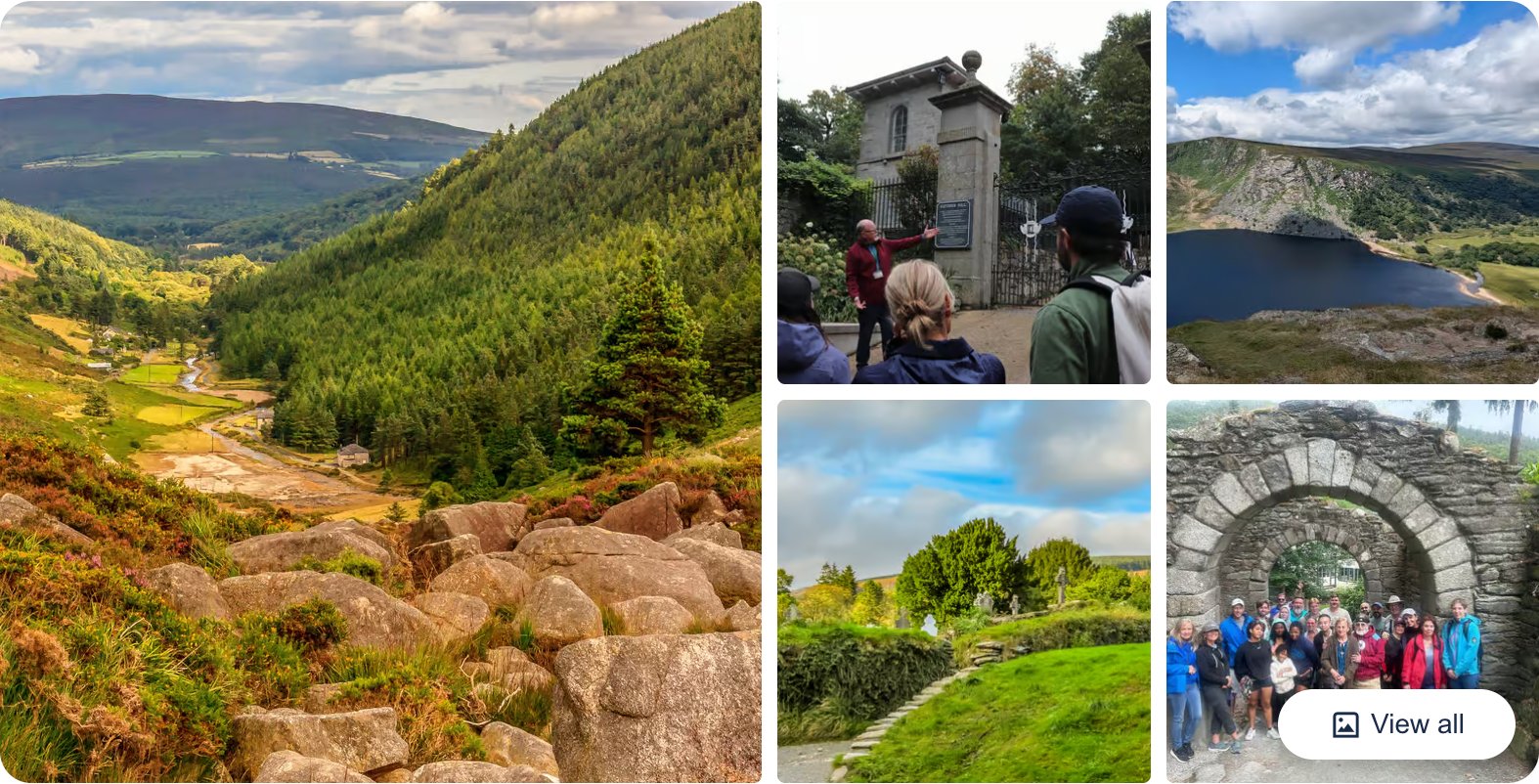
The Wild Wicklow tour has been running for years and leans on the guide’s storytelling as much as the scenery. It heads over the Sally Gap and Wicklow Gap, stops at Glendalough and Lough Tay, and pulls in at a village pub on the way back. It’s a full-day trip and a good pick if you want the history and the craic, not just the photo stops.
👉 See what’s included on the Wild Wicklow Tour
From Dublin: Glendalough and Wicklow Mountains Morning Tour
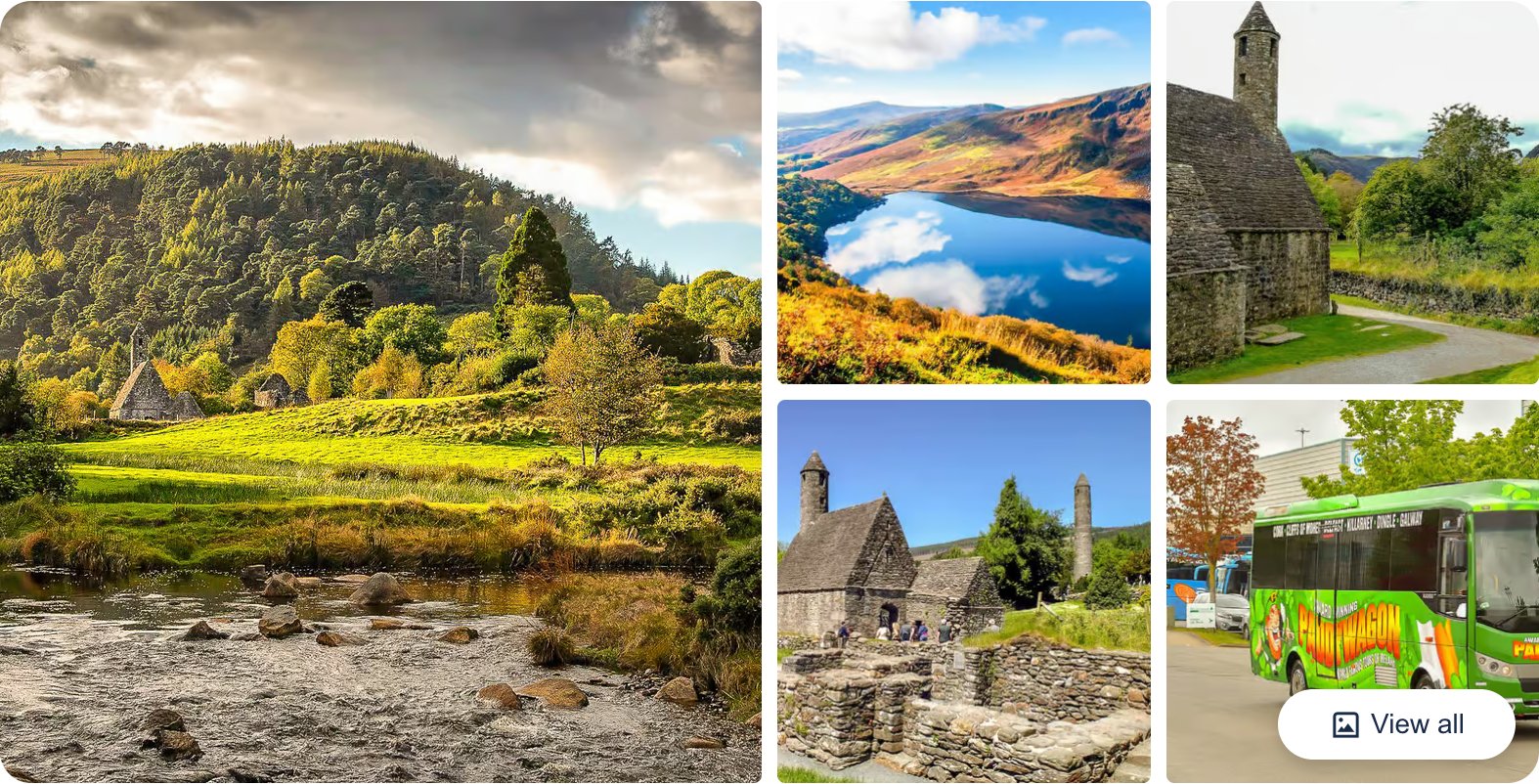
If you’d rather keep your afternoon free, this is the half-day version. It leaves Dublin in the morning, drives up through the mountains, and gives you time at Glendalough’s round tower and lakes before getting you back to the city by early afternoon.
It’s the one I’d book if you’re tight on time or want to pair it with something else in Dublin later.
👉 Check availability for the Glendalough Morning Tour
From Dublin: Wicklow, Glendalough, Waterfall and Sheepdog Show
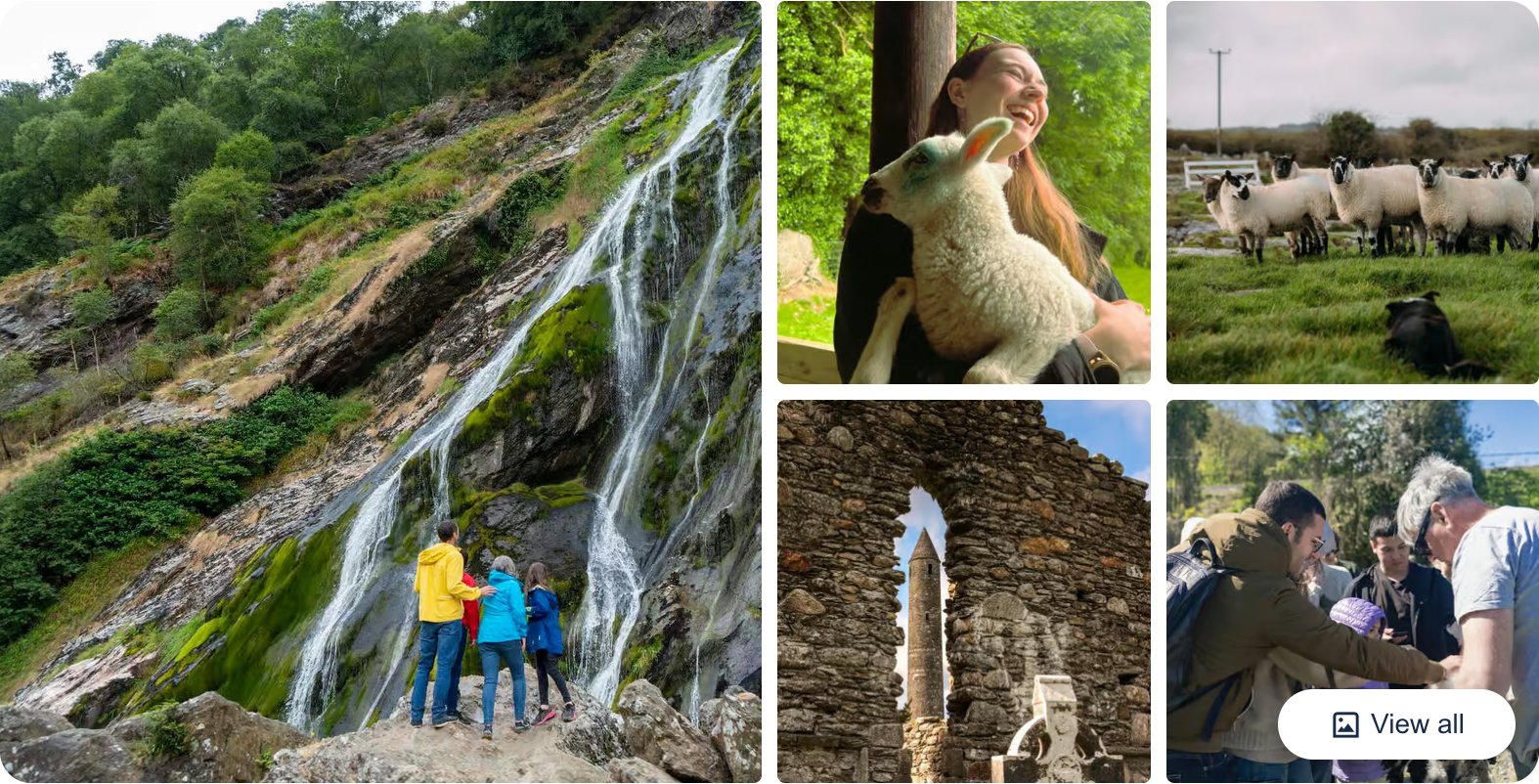
This full-day trip adds two things the others skip: Powerscourt Waterfall, the tallest in Ireland, and a working sheepdog demonstration at a Wicklow farm. You still get Glendalough and the drive over the mountains, so it’s a solid choice if you’re bringing kids or just want a bit more variety than the standard route.
👉 Learn more about the Waterfall and Sheepdog day tour
In short
- The Wicklow Mountains sit under an hour’s drive south of Dublin.
- Glendalough’s 6th-century monastic site and lakeshore walks are free, only parking costs.
- Drive the Sally Gap for Lough Tay, the dark Guinness Lake viewpoint.
- Powerscourt is Ireland’s tallest waterfall at 121 metres.
- Late spring to early autumn gives the best walking weather.
Frequently Asked Questions
Are the Wicklow Mountains worth visiting?
Yes, and it’s the easiest big day out from Dublin. You get real mountains, dark lakes, and an old monastic site inside an hour’s drive of the city. For a first trip to Ireland, it’s one of the best value days you can put together.
Can you see the Wicklow Mountains in one day?
Easily. A car lets you do Glendalough, Lough Tay, and a stretch of the mountain roads and still be back in Dublin for dinner. If you want to summit Djouce or hunt down Lough Ouler, that’s when you’ll want a second day.
Do you need a car to visit?
Not strictly, but it’s the best way. St Kevin’s Bus gets you to Glendalough for a lakeside walk, and a guided tour gets you up onto the high bog. To reach the viewpoints and waterfalls on your own schedule, though, you’ll want your own wheels.
Is Glendalough free to visit?
The monastic site, the round tower, and the walks around the lakes are all free to wander. The only thing you pay for is parking at the main lot, so bring a bit of change or a card for the machine.
Are the Wicklow Mountains good for beginner hikers?
The lower trails around Glendalough are gentle and well marked, so anyone can do them. Once you head for a summit it gets serious fast, with boggy ground and weather that turns without warning. Start on the lake trails and work up from there.
What’s the difference between the Wicklow Mountains and Glendalough?
Glendalough is one valley inside the wider Wicklow Mountains National Park, and it’s the most visited spot in it. The mountains are the whole upland range around it, the Sally Gap, Lough Tay, and the peaks. A lot of people mean Glendalough when they say Wicklow, but there’s far more up there.
Is the Wicklow Mountains Trip Worth It?
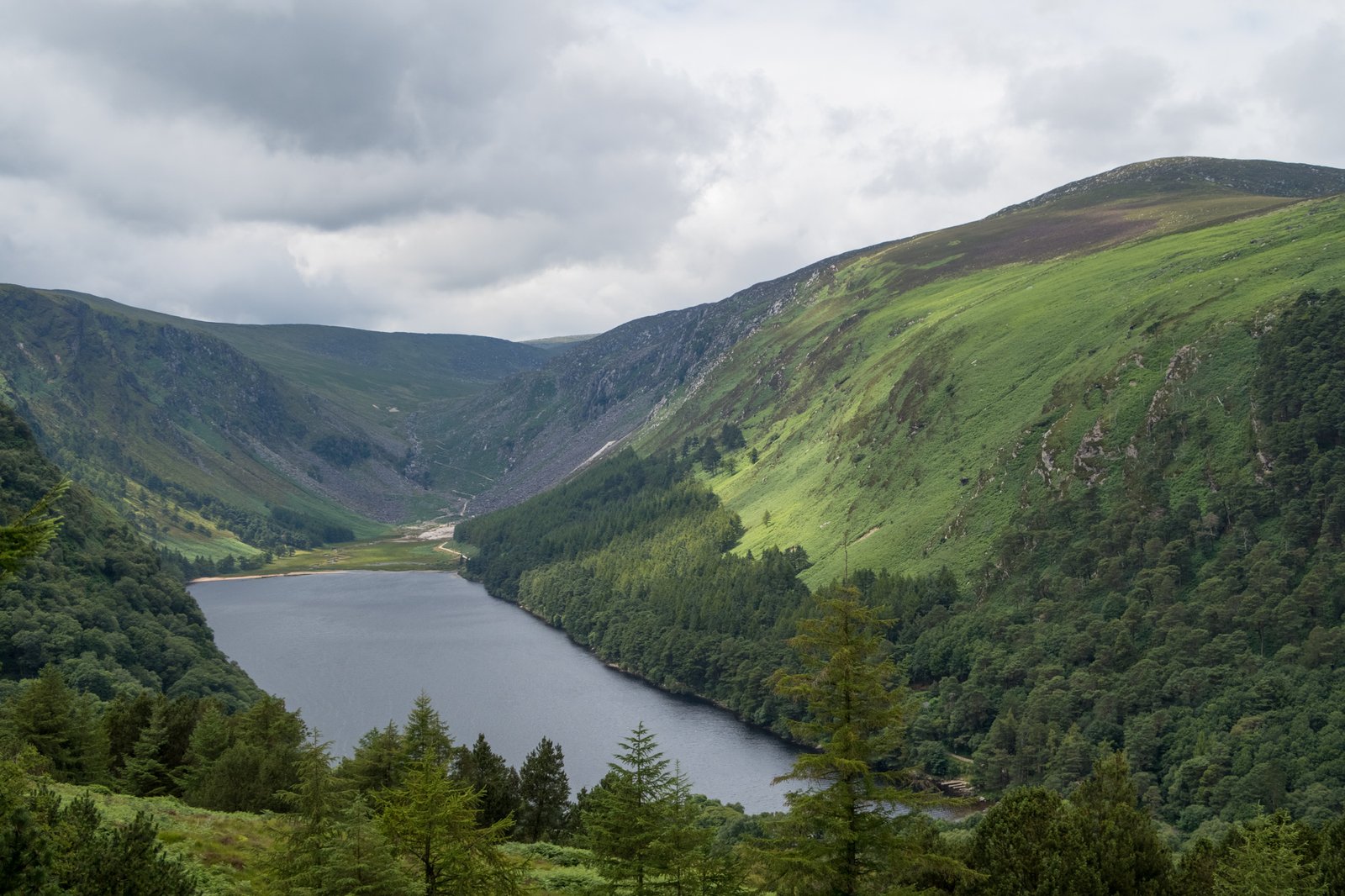
Dark lakes, open bog, a 6th-century round tower, and mountain roads with barely a house on them, all within an hour of Dublin. That’s a lot to pack into one day, and it’s why this is the trip I’d point almost any first-timer toward.
You don’t need to overthink it. Drive the Sally Gap, stop at Lough Tay, walk the lakes at Glendalough, and you’ve had a proper mountain day without straying far from the city.
Give it a full day if you can, and a second one if you want to get up on a summit or track down Lough Ouler. Bring a waterproof, don’t trust the Dublin forecast, and go midweek in shoulder season if the choice is yours. Do that and the Garden of Ireland lives up to the name.
Like it? Pin it!
Save this guide for later