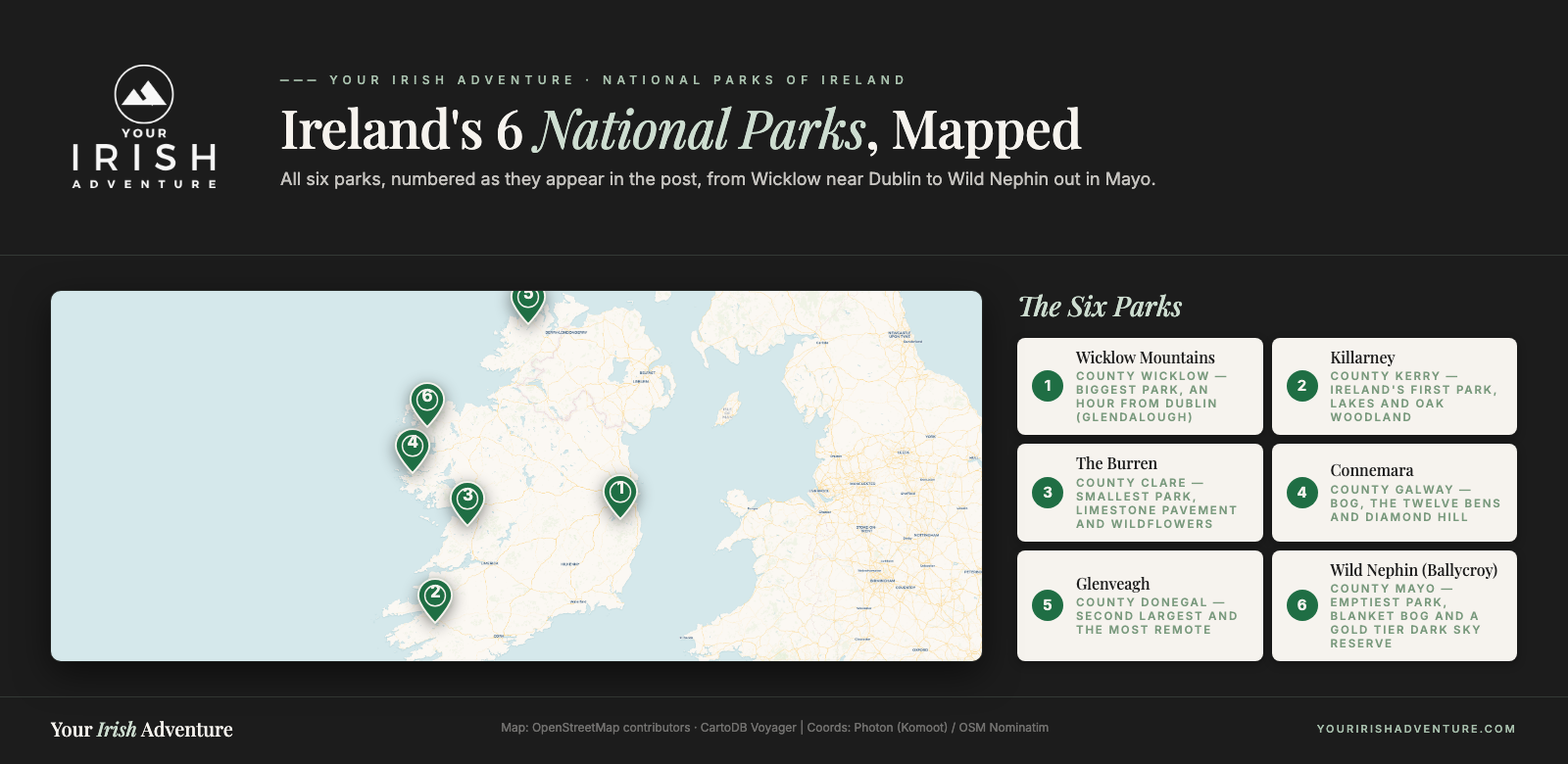
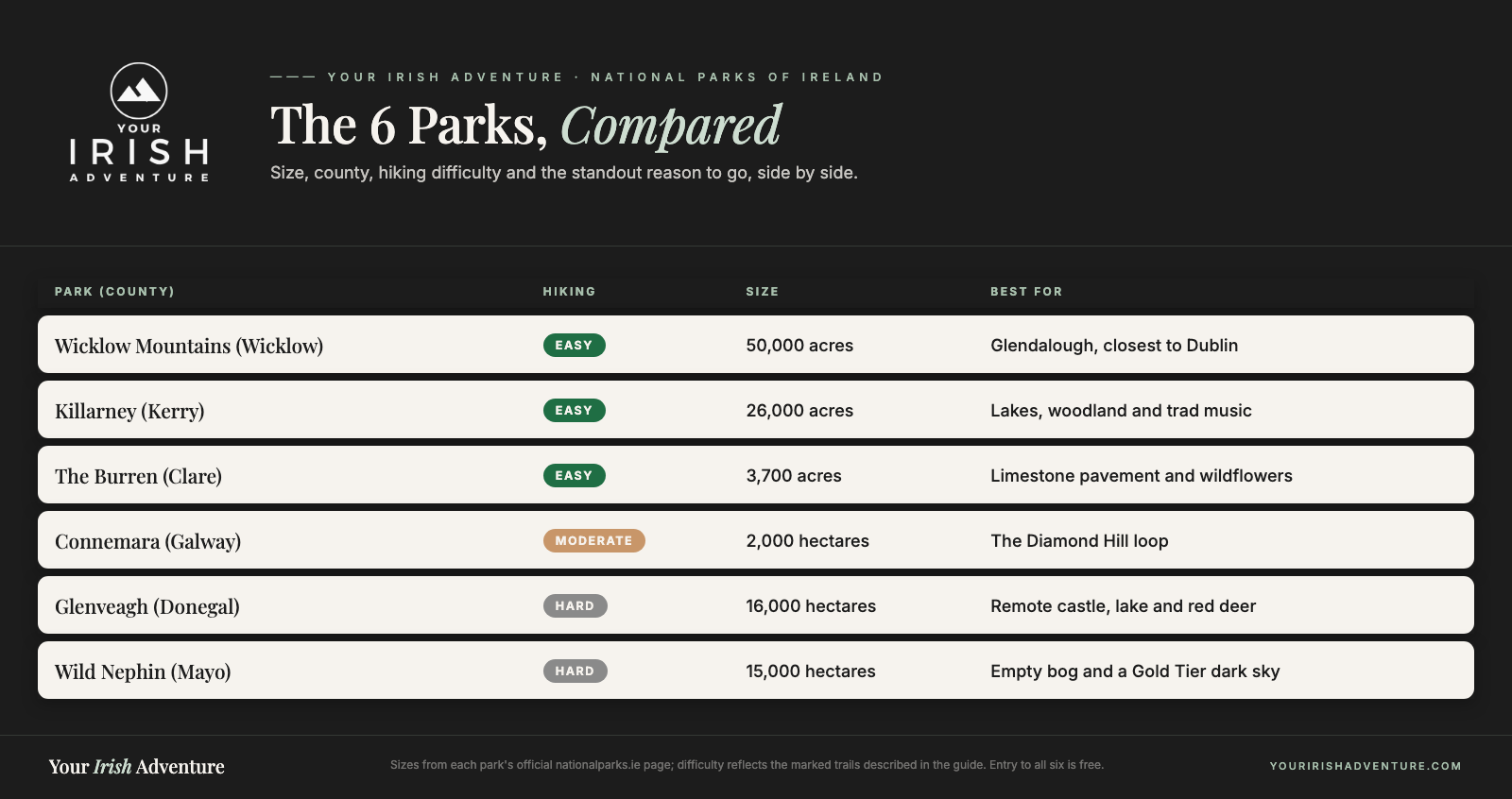
Ireland has six national parks, and they’re some of the best free days out in the country. The national parks in Ireland range from the lakes and mountains of Killarney down in Kerry to the bog and sea cliffs of Wild Nephin up in Mayo, and no two of them feel the same.
On our last trip we drove a big loop from Dublin to Cork and hit two of them properly, Killarney and Connemara. Killarney gave us Torc Waterfall and the Muckross Abbey ruins in heavy rain, and Connemara gave us the N59 through 7,000 acres of bog and mountains, which is still one of the best drives we did in Ireland.
The other four are just as worth your time, and each one suits a different kind of trip. Some are built for big hikes, some are easy walks you can do in an afternoon, and a couple are remote enough that you’ll have the trail to yourself.
Below I’ll run through all six park by park, then cover the best time to go, where to stay near each one, and how to actually hike them without getting caught out by the weather. Here’s what we did, and what I’d tell a first-timer to check out.
More Ireland Hiking & Walking Guides
- The Best Easy Walks in Ireland (For All Skill Levels)
- The Best Coastal Walks in Ireland: 10 Cliff & Sea Trails
- Hiking In Galway: 10 Best Trails For All Levels
Quick Answer:
Ireland has six national parks, and all of them are free to enter. They run from Killarney and the Burren in the southwest to Connemara on the Atlantic, Wicklow Mountains south of Dublin, and the wild, quiet Glenveagh and Wild Nephin up north. Each one covers a different landscape, and most need a car to reach.
Wicklow Mountains National Park
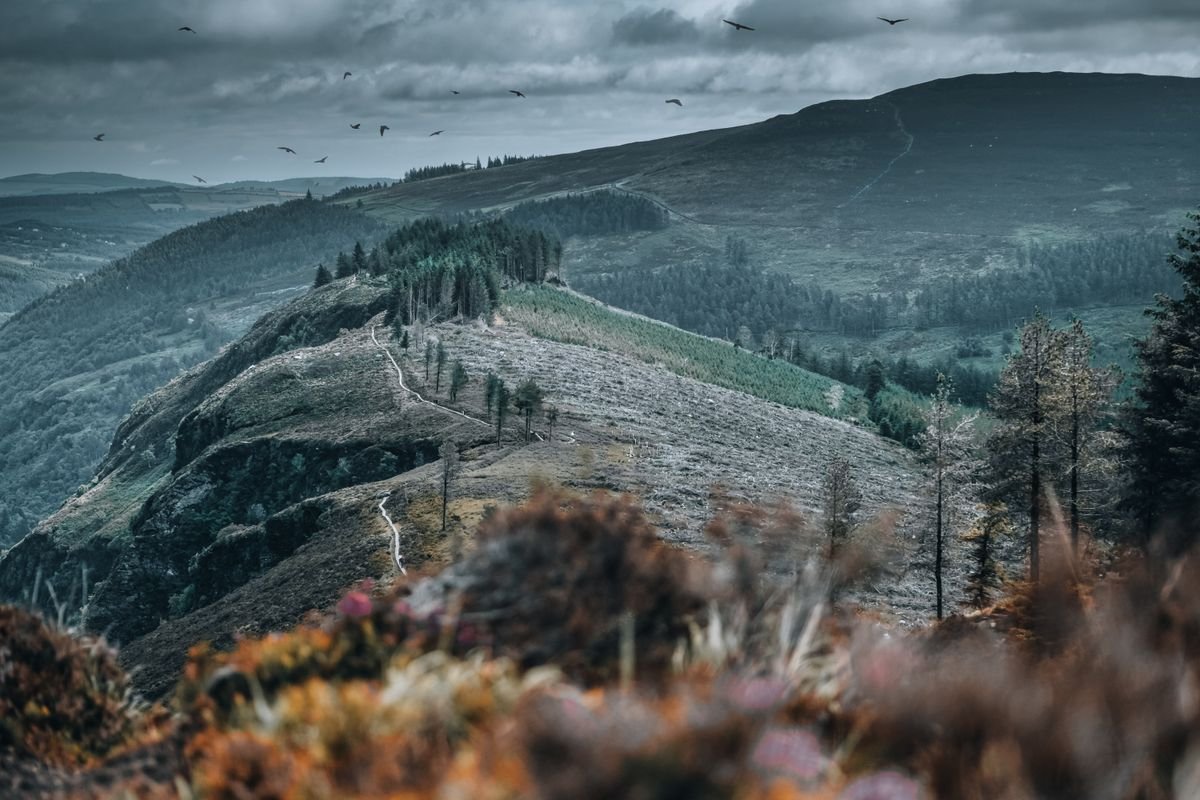
Wicklow Mountains is the biggest of the six national parks in Ireland at around 50,000 acres, and it’s the easiest one to reach. It sits just south of Dublin, about an hour’s drive from the city, which makes it the obvious first park to tick off if you’re starting your trip in the capital.
The heart of the park is Glendalough, an early Christian monastic site founded by St Kevin in the 6th century. The round tower, the ruined churches, and two dark glacial lakes sit together in one valley, and you can walk the whole thing in an afternoon.
Glendalough is also where the crowds go, so go early or midweek if you can. The visitor center and the lower lake parking lot fill up fast on weekends, especially in summer.
The walks at Glendalough
There are nine marked trails here, from a 30-minute loop by the monastic site to the Spinc, a tougher climb on a boardwalk high above the Upper Lake. The Spinc is the one most hikers come for, and the views down the valley earn the climb.
If you want a long-distance route, the Wicklow Way runs right through the park, 80-odd miles from the edge of Dublin down to Clonegal. You don’t need to walk the whole thing to get a good chunk of it.
If you’re based in Dublin without a car, the easiest way to reach Glendalough is a guided day trip. You can book the Wild Wicklow and Glendalough day tour on GetYourGuide, which runs out of the city and drops you straight into the valley.
From Dublin: Wild Wicklow Mountains and Glendalough Tour
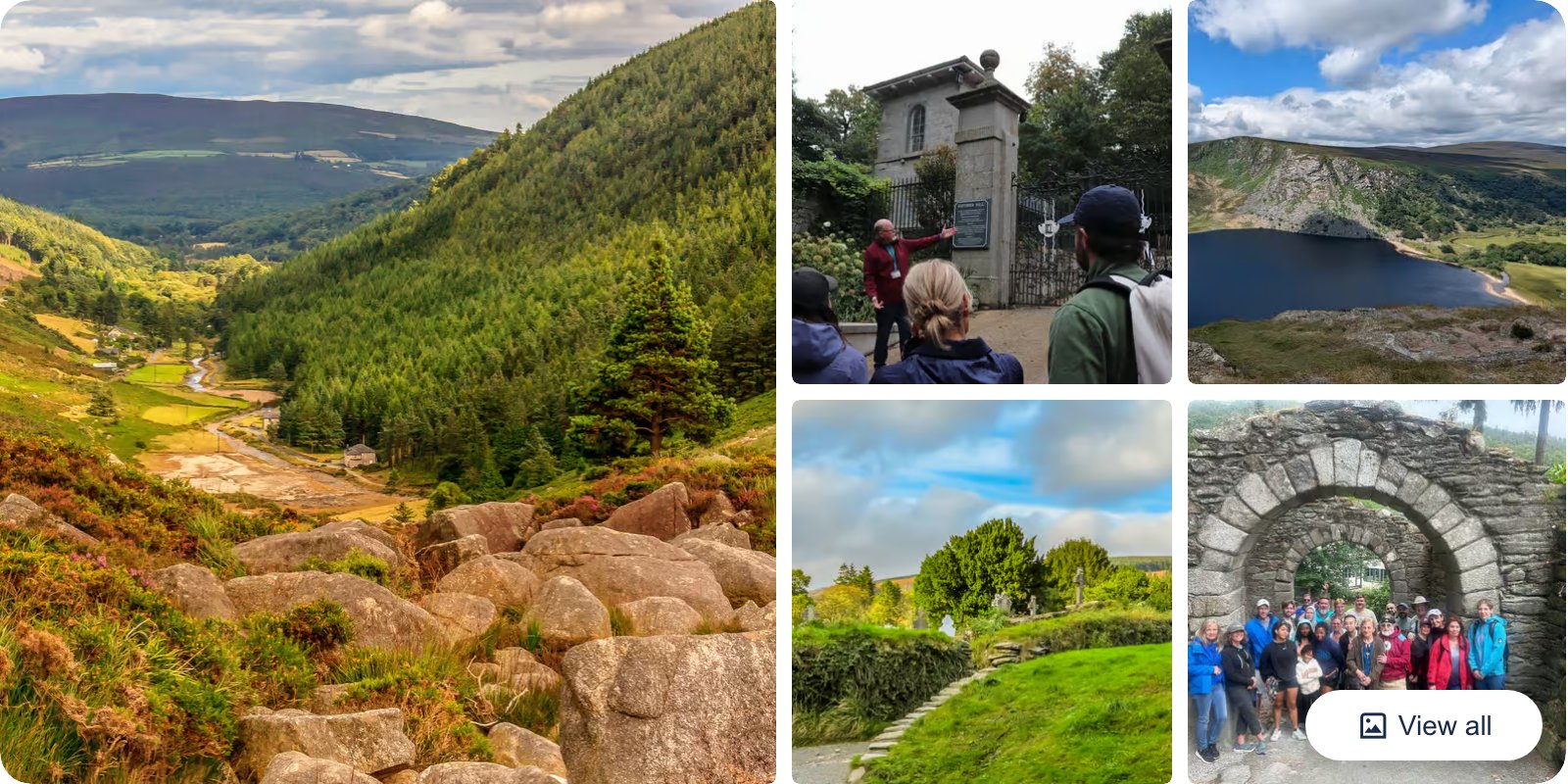
This full-day trip leaves Dublin and runs through the Wicklow Mountains to Glendalough, with time at the monastic site and round tower plus a stop at Lough Tay along the way. It takes about eight to nine hours and you’re back in the city by evening.
👉 Check the Wild Wicklow and Glendalough day tour availability and reviews
Beyond Glendalough
Drive the old Military Road over Sally Gap and you get the wilder side of Wicklow: open blanket bog, brown hills, and very little traffic. This is the landscape that doubled for the wilds in Vikings and Braveheart, and it’s worth the detour on its own.
Lugnaquilla, the highest peak in the park at 925 meters, is up here too, but it’s a serious full-day hike with real exposure on top. Unless you’re an experienced hiker, you’re better off sticking to the marked Glendalough trails and saving Lug for another trip.
Entry to the park and the trails is free, and there’s no charge to walk around the monastic site. It’s the easiest national park to fit into an Ireland trip, and a good warm-up for the wilder ones out west.
Killarney National Park
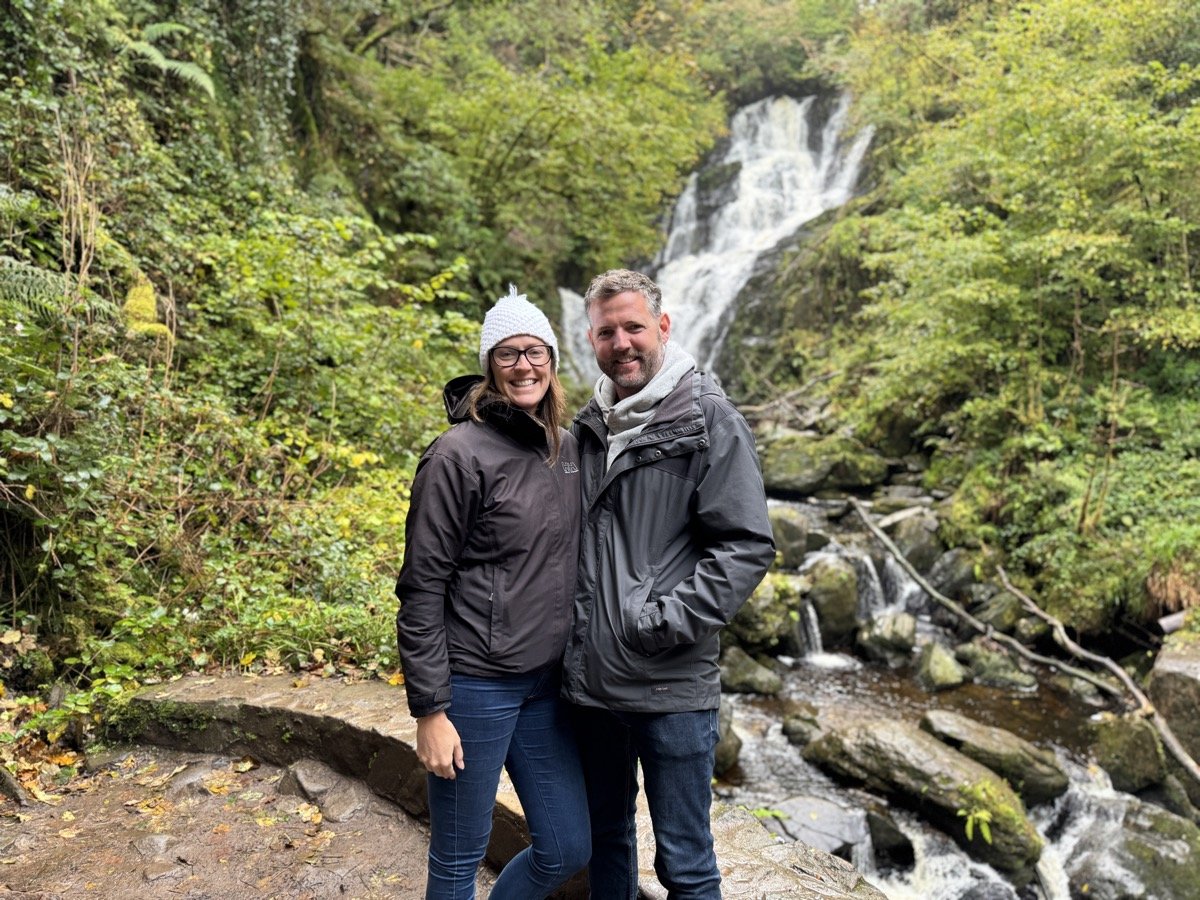
Killarney was Ireland’s first national park, around 26,000 acres of lakes, oak woodland, and the McGillycuddy’s Reeks rising behind it. A lot of people put it at the top of their list, and it has a reputation for being touristy. The town can be, but the park itself is the real thing.
We based ourselves here for two nights on our last trip and stayed at Fleming’s White Bridge on the Muckross Road, a campsite we basically had to ourselves. We went midweek in early October, well into shoulder season, so the place was quiet and the owner couldn’t have been friendlier.
Parking a big vehicle in Killarney town is a pain. We taxied in both evenings rather than fight for a spot, and if you’re driving a camper or anything large, I’d do the same.
What to do in the park
The Muckross Estate is the heart of it, with the Victorian manor house, lake walks, and woodland trails all linked up and easy to do on foot or by bike. We had heavy rain for most of our day there and still came away happy, which tells you how good it is.
When the rain got too much, we ducked into the Muckross Hotel for afternoon tea at Monk’s Lounge. It’s a proper sit-down spread and an easy way to wait out a downpour, which you should plan for in Kerry. I’d recommend it.
The park is also the end point of the Ring of Kerry, and the Gap of Dunloe and a jaunting car ride through the grounds are both on our list for next time. We ran out of dry weather before we got to either. If you want to do the jaunting car properly, you can book a Killarney jaunting car tour on GetYourGuide ahead of time.
Killarney: 1-Hour Jaunting Car Horse and Carriage Tour
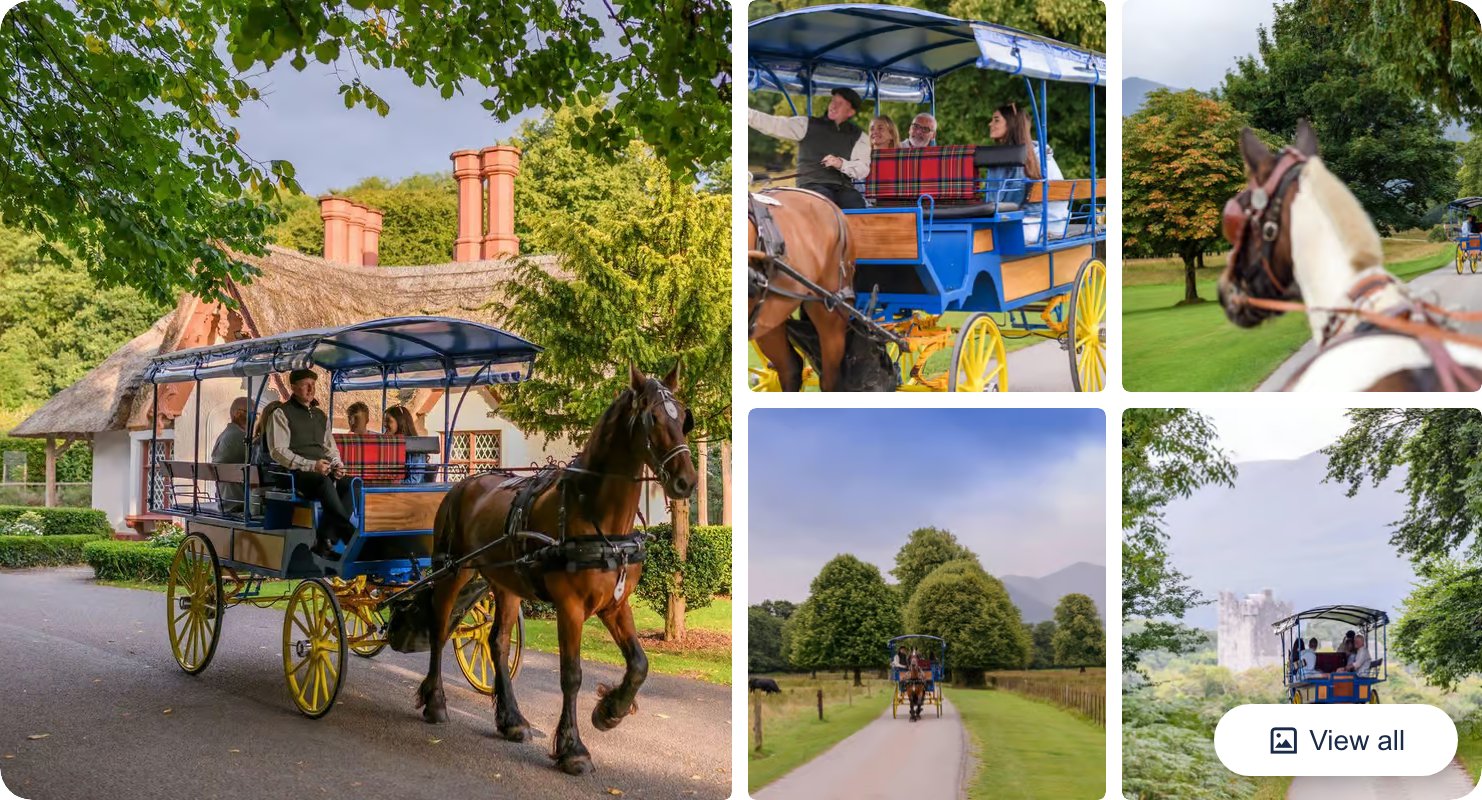
This is the jaunting car ride we kept meaning to do: an hour in a horse-drawn carriage with a local driver through the park grounds, past Ross Castle and along the lakes. The driver does the talking, so you just sit back and take it in.
👉 Check dates and prices for the Killarney jaunting car tour
The music makes the town
What surprised us most about Killarney was the trad scene. We caught a live band at the Killarney Grand that was as good as anything we heard in Galway, and bounced between The Grand and O’Connor Pub the second night.
Entry to the park is free, and you can fill two or three days here easily between the trails, the music, and the food. If your weather’s better than ours, give it the time.
👉 Read our full guide to Killarney National Park.
The Burren National Park
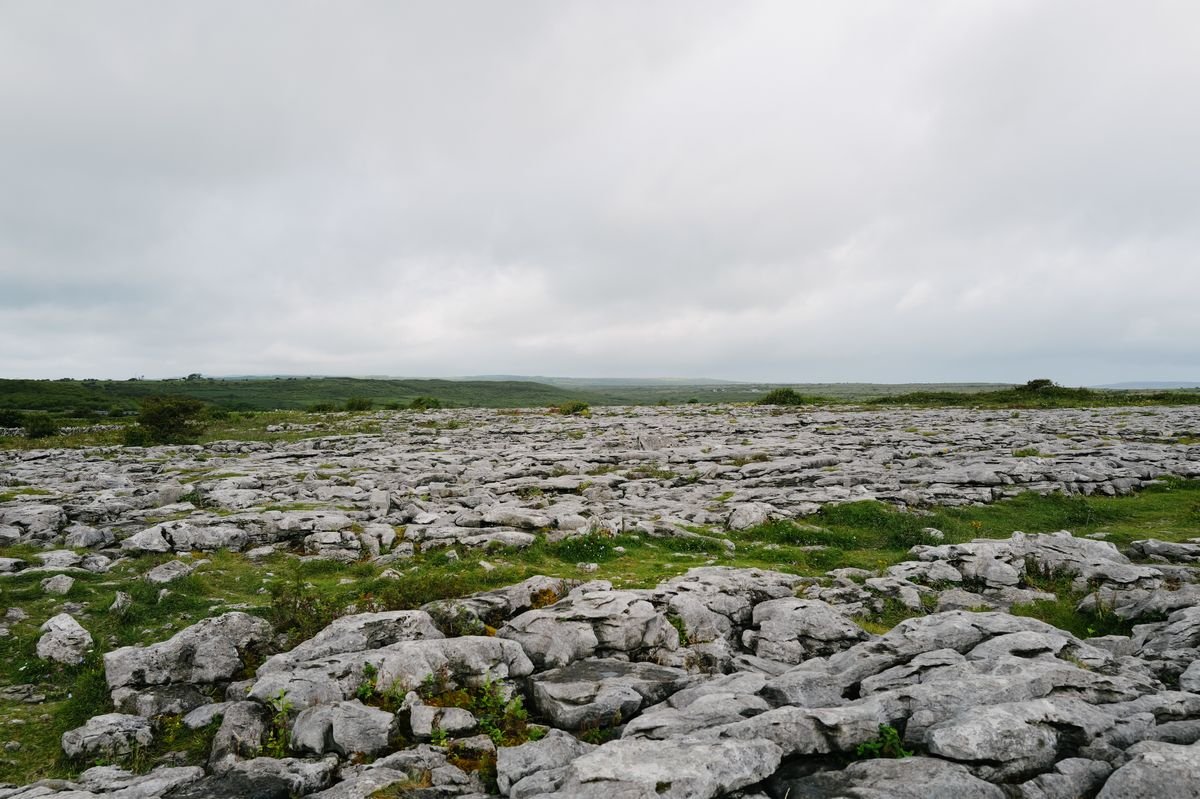
The Burren is the smallest of the six national parks in Ireland at around 3,700 acres, and it looks like nowhere else in the country. It’s a huge sheet of cracked limestone pavement in County Clare, gray rock running to the horizon, with wildflowers pushing up through the gaps.
The name comes from the Irish “Boíreann,” meaning a rocky place, which is about as accurate as place names get. A Cromwellian surveyor once described it as a country with not enough wood to hang a man, water to drown him, or soil to bury him. Stand on the pavement and you’ll see exactly what he meant.
What to see in the park
Mullaghmore is the centerpiece, a spiral hill of terraced limestone that ends up on every Burren postcard. There are looped walking trails from the park information point at Corofin, and they range from short strolls to longer climbs over open rock.
The wildflowers are the real reason to come. Arctic, alpine, and Mediterranean plants grow side by side here, which happens in almost nowhere else on earth. They’re out from late May into June, so if flowers are your thing, that’s when to time it.
Just up the R480 is the Poulnabrone Dolmen, a portal tomb that’s been standing for roughly 5,800 years, older than the pyramids at Giza. It sits right beside the road, costs nothing to visit, and it’s one of the most photographed ancient sites in Ireland.
Combining it with the Cliffs of Moher
The Burren sits right next to the Cliffs of Moher, so the two pair up easily into one day out in Clare. You can walk a Burren loop in the morning, then drive 20 minutes to the cliffs in the afternoon. If you’re not driving, you can book a Burren and Cliffs of Moher guided tour on GetYourGuide that covers both in a day from Galway.
From Galway: Full-Day Cliffs of Moher and Burren Guided Tour
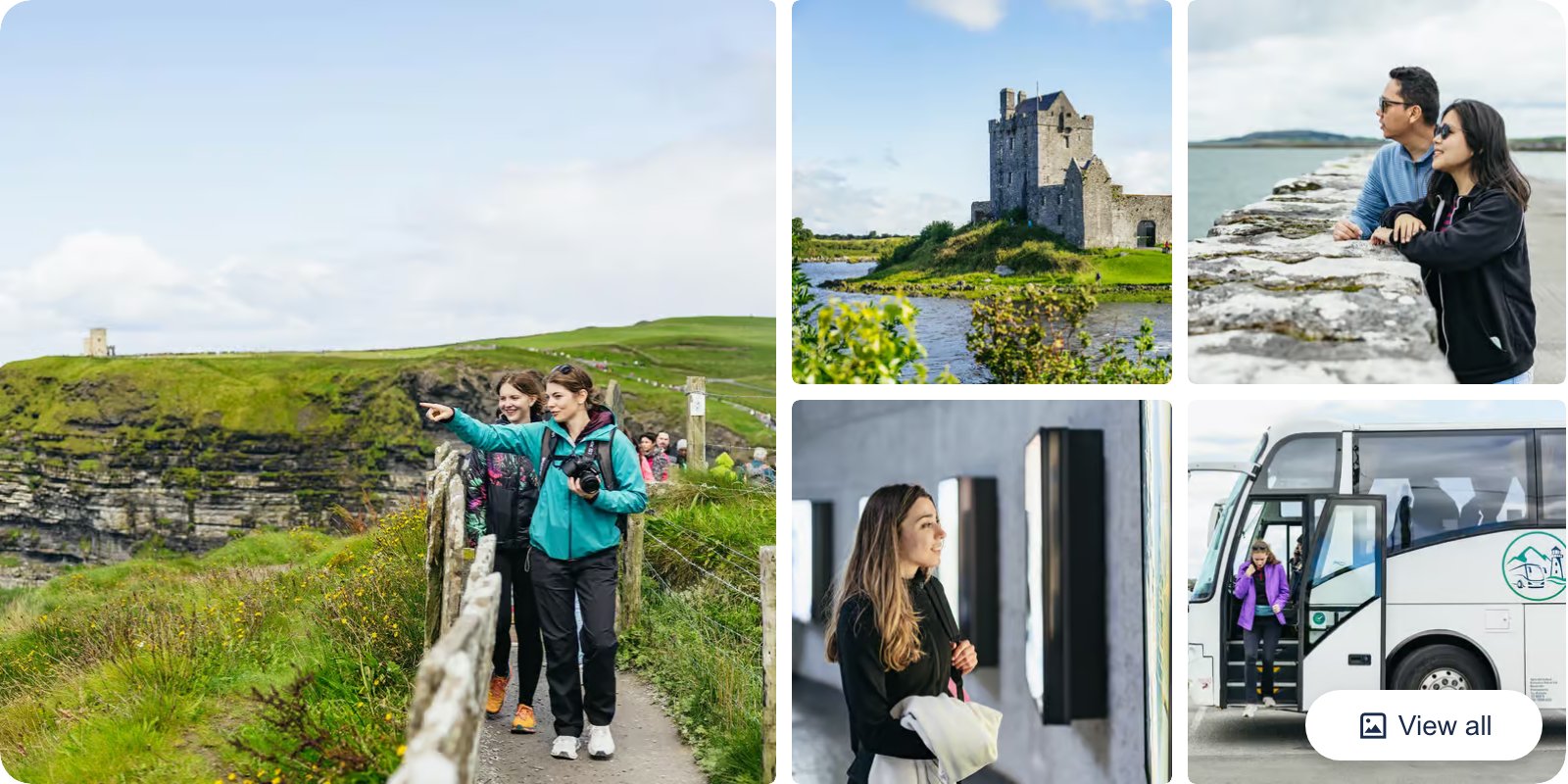
This full-day run from Galway pairs the Burren with the Cliffs of Moher, with stops at Dunguaire Castle and the coast road through Clare. It’s the easy way to see both in one go if you don’t have a car.
👉 See what’s included on the Burren and Cliffs of Moher tour
Entry to the park is free, and the trails are open year-round. Wear proper shoes with grip, because wet limestone is slick, and the pavement is uneven enough to roll an ankle if you’re not paying attention.
Things to Do Near the National Parks
- 15 Best Things To Do in Wicklow, Ireland
- 33 Best Things To Do in Galway, Ireland
- 21 Unique Things To Do in Kerry, Ireland – The Kingdom County
- The Best Things to Do in Donegal, Ireland
Connemara National Park
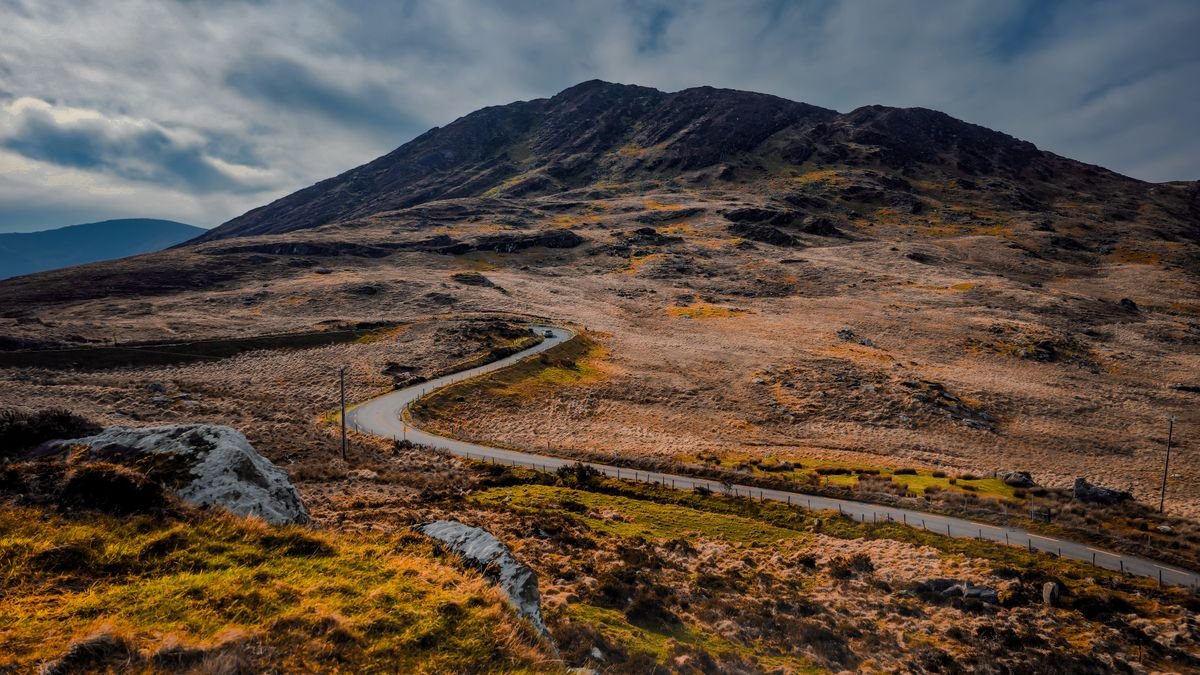
Connemara National Park is out on the west coast of County Galway, around 2,000 hectares of bog, heath, grassland, and mountain near the village of Letterfrack. The Twelve Bens range backs it, and the land runs down toward the Atlantic.
Skipping the Cliffs of Moher and heading north into Connemara instead was the best call we made on our last trip. We had two days out here and could have used a week.
The Diamond Hill walk
The main walk in the park is Diamond Hill, a looped trail of about 7km that climbs to 442 meters on a stone and boardwalk path. From the top you get the Twelve Bens on one side and the coast on the other.
Start at the visitor center in Letterfrack, where there’s free parking, a café, and the trailheads. Entry to the park and the walks costs nothing, and the boardwalk makes the lower loop doable even in wet weather.
If you’re coming from Galway without a car, you can book a Connemara National Park day trip on GetYourGuide, which takes in the park and Kylemore Abbey in one run.
From Galway: Connemara and Connemara National Park Day Trip
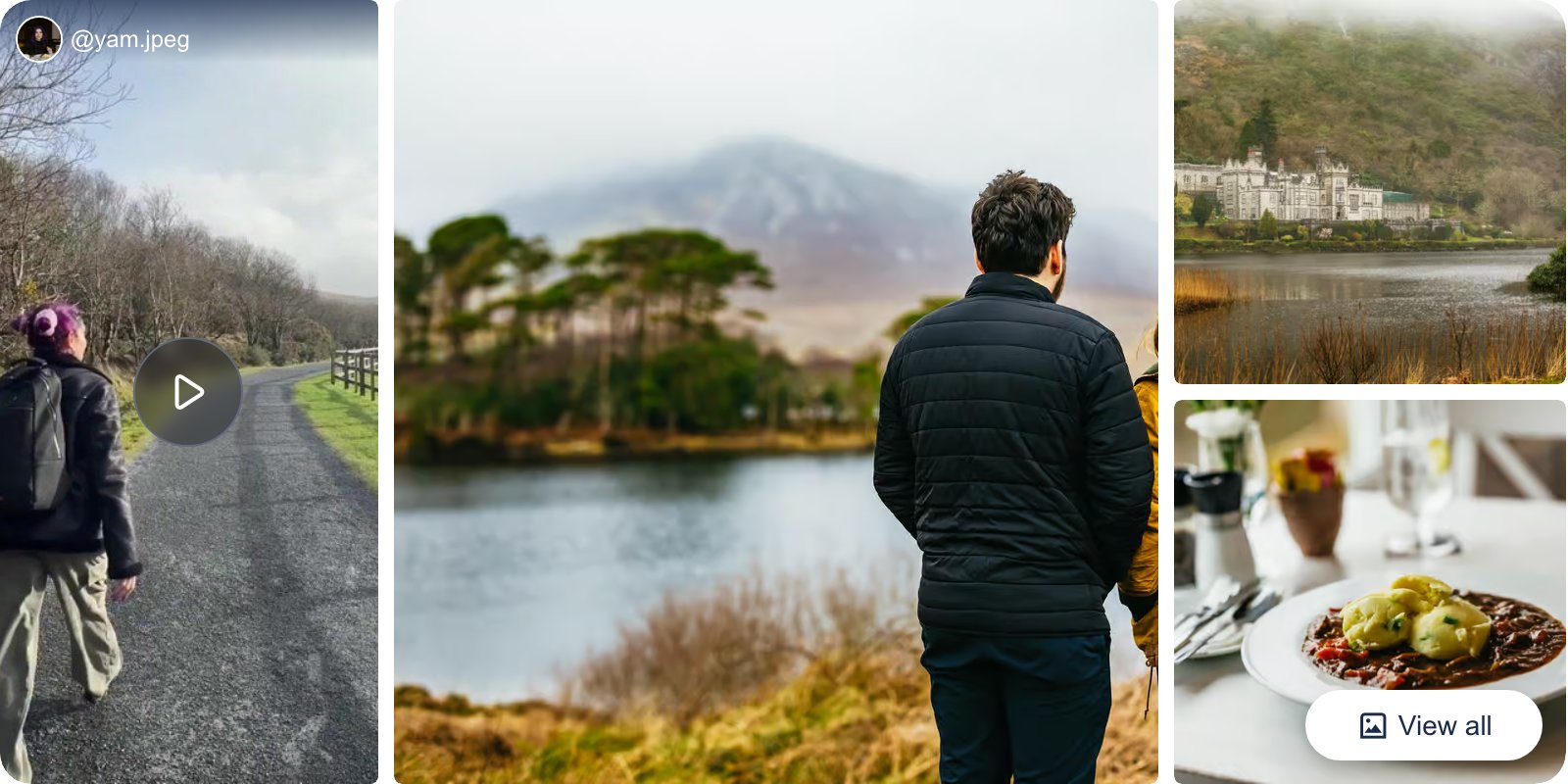
This day trip runs from Galway through Connemara, with walking time in the national park and a stop at Kylemore Abbey on the lake. You get the boglands, mountains, and the abbey in one loop without driving the narrow roads yourself.
👉 Check the Connemara National Park day trip availability and reviews
Around the park
Just up the road is Kylemore Abbey, a Victorian manor on a lake with a walled garden. It’s privately run and not free, but we stopped for the lake reflection shot and walked the Victorian garden, and it was worth the stop.
We based ourselves in Clifden, the main town out here, and camped at Clifden Eco Beach with the van facing the Atlantic. Guy’s Seafood Bar in town did the best chowder of our whole trip.
I swam off the beach there in late September, and the water was clearer and bluer than I expected for that time of year. If you’re driving the west coast, give Connemara two nights and don’t rush it.
👉 See our full visitor guide to Kylemore Abbey.
Glenveagh National Park
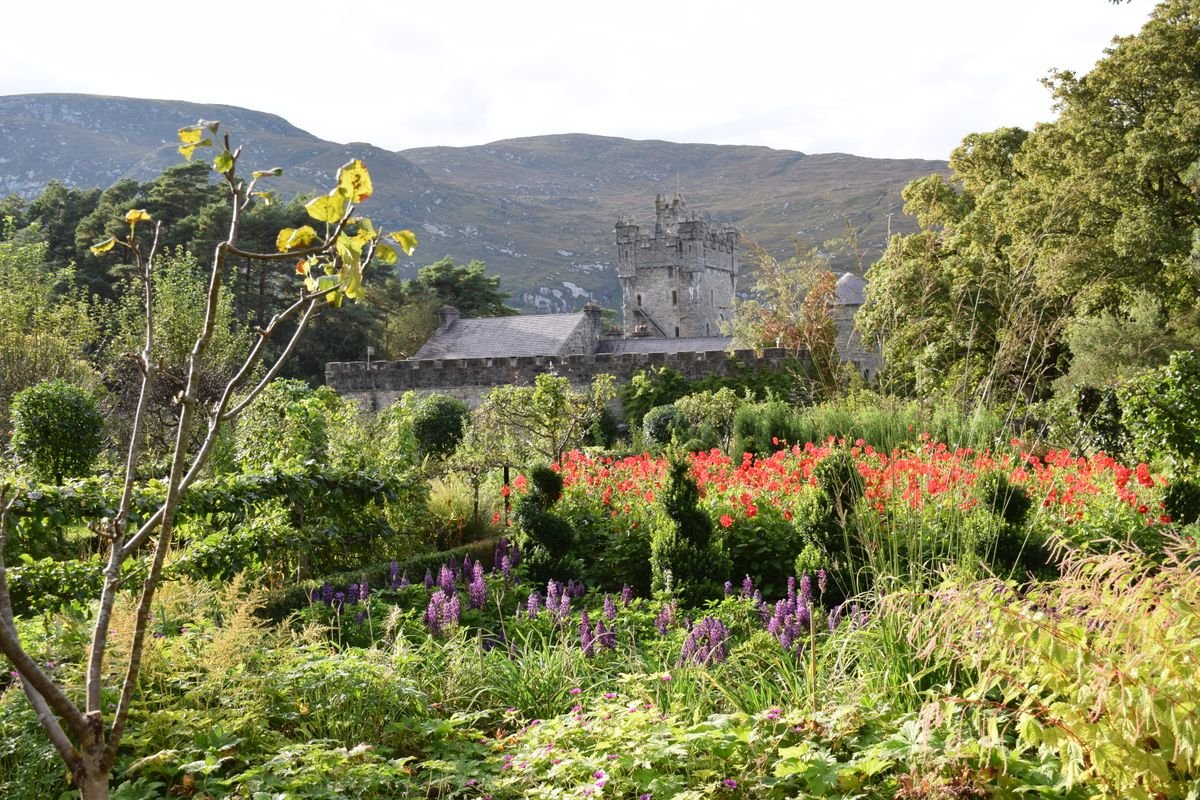
Glenveagh is the second largest of the six national parks in Ireland, around 16,000 hectares of mountains, lakes, and bog up in the northwest corner of County Donegal. It’s the most remote of the lot, and that’s the whole appeal.
Most Ireland itineraries never make it this far north, which is exactly why it’s worth the drive. You get the Derryveagh Mountains, a long glacial lake, and a Victorian castle, with a fraction of the crowds you’d hit at Killarney.
Glenveagh Castle and gardens
The castle sits right on the shore of Lough Veagh, a granite Victorian pile built in the 1870s. To reach it you park at the visitor center and take a shuttle bus along the lake, or walk the 3.5km lakeside road if you’d rather stretch your legs.
Entry to the park and grounds is free. The castle itself runs guided tours for a separate ticket, so check current pricing on the day, but the walled gardens around it are some of the best kept in the country and worth the visit on their own.
The history here is darker than the gardens let on. The land was cleared in the Derryveagh Evictions of the 1860s, when the owner turned 244 tenants off their farms. It’s worth reading up on before you go, because it’s a big part of why the place looks the way it does.
Hiking and wildlife
The park has a large red deer herd, and it’s one of the places golden eagles were reintroduced to Ireland after dying out here a century ago. You won’t be guaranteed a sighting, but the open valley gives you a real shot at both.
For hikers, this is serious country. The marked lakeside walks are easy, but the surrounding peaks are exposed and unmarked, and Mount Errigal, the highest mountain in Donegal, sits just outside the park boundary. Don’t take the high ground on lightly here.
Glenveagh works best as part of a wider Donegal trip rather than a day dash from anywhere else. It’s a long way north, but if you’re after the wildest and quietest of the national parks in Ireland, this is the one.
Plan Your Ireland Road Trip
- A Photographer’s Definitive Ireland Road Trip
- Wild Atlantic Way Itinerary – Ireland’s Most Epic Road Trip
- 9 Best Places On The Wild Atlantic Way Route
Wild Nephin (Ballycroy) National Park
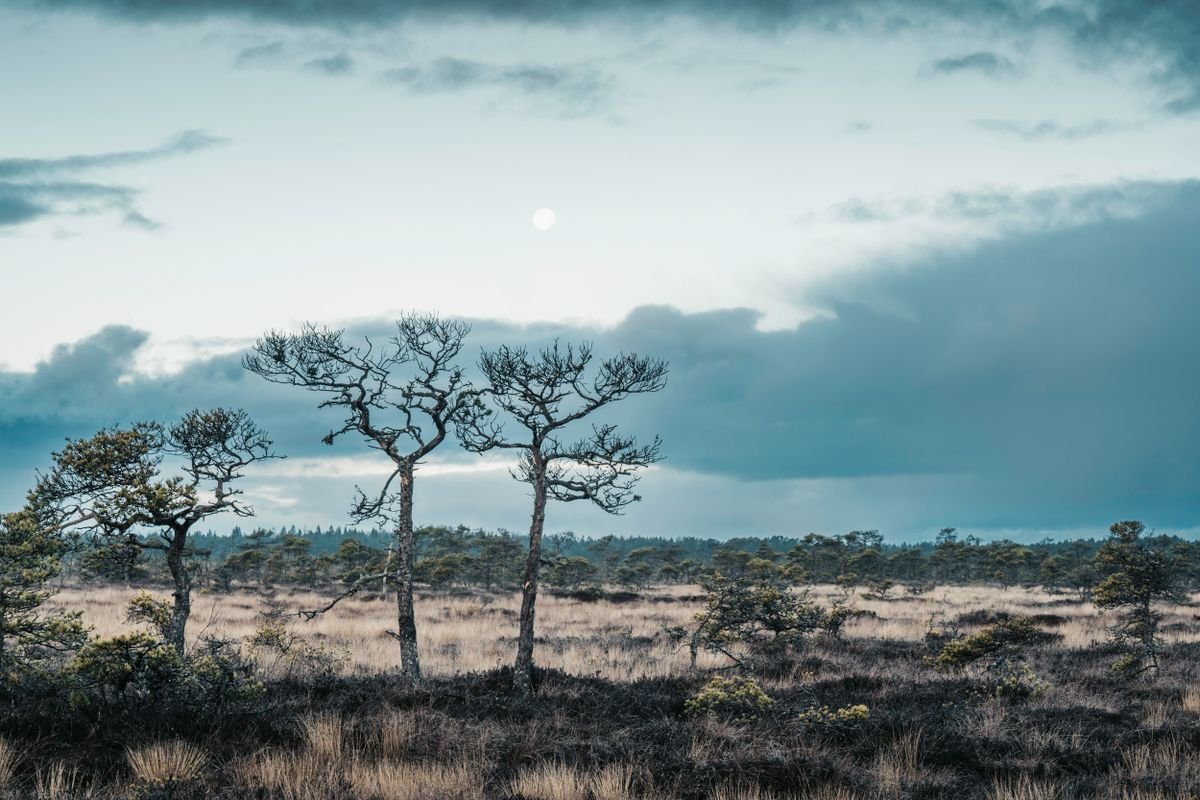
Wild Nephin is out on the Atlantic coast of County Mayo, around 15,000 hectares of blanket bog, mountain, and coastline. It was called Ballycroy until a few years ago, when it merged with the neighboring Wild Nephin wilderness area and took the new name.
This is the emptiest of the six national parks in Ireland. The Owenduff bog at its heart is one of the last intact blanket bogs left in western Europe, and the Nephin Beg range behind it is some of the least-walked country in Ireland. You can go a long way out here without passing another person.
A Gold Tier Dark Sky Park
The whole park sits inside the Mayo Dark Sky Park, one of only a handful of Gold Tier reserves in the world. There’s almost no light pollution for miles, which makes it one of the best places in the country to see the Milky Way.
Come on a clear, moonless night, bring something warm, and give your eyes 20 minutes to adjust. On a good night you’ll see more stars here than just about anywhere else in Ireland.
Walks and the Bangor Trail
Start at the Ballycroy Visitor Centre on the N59, where Ginty’s Loop is a short boardwalk out over the bog with the mountains in front of you. It’s an easy walk and a good intro if you only have an hour.
For something serious, the Bangor Trail runs about 25km through the Nephin Beg mountains. It’s an old drovers’ route with no facilities, no shelter, and no phone signal once you’re in, so it’s for experienced hikers with the right gear, not a casual afternoon.
Entry is free. Wild Nephin won’t suit everyone, as there’s no castle and no big-ticket sight to tick off, but if you want bog, mountains, and a night sky with nothing in it, this is the one to drive for.
Best Time to Visit Ireland’s National Parks
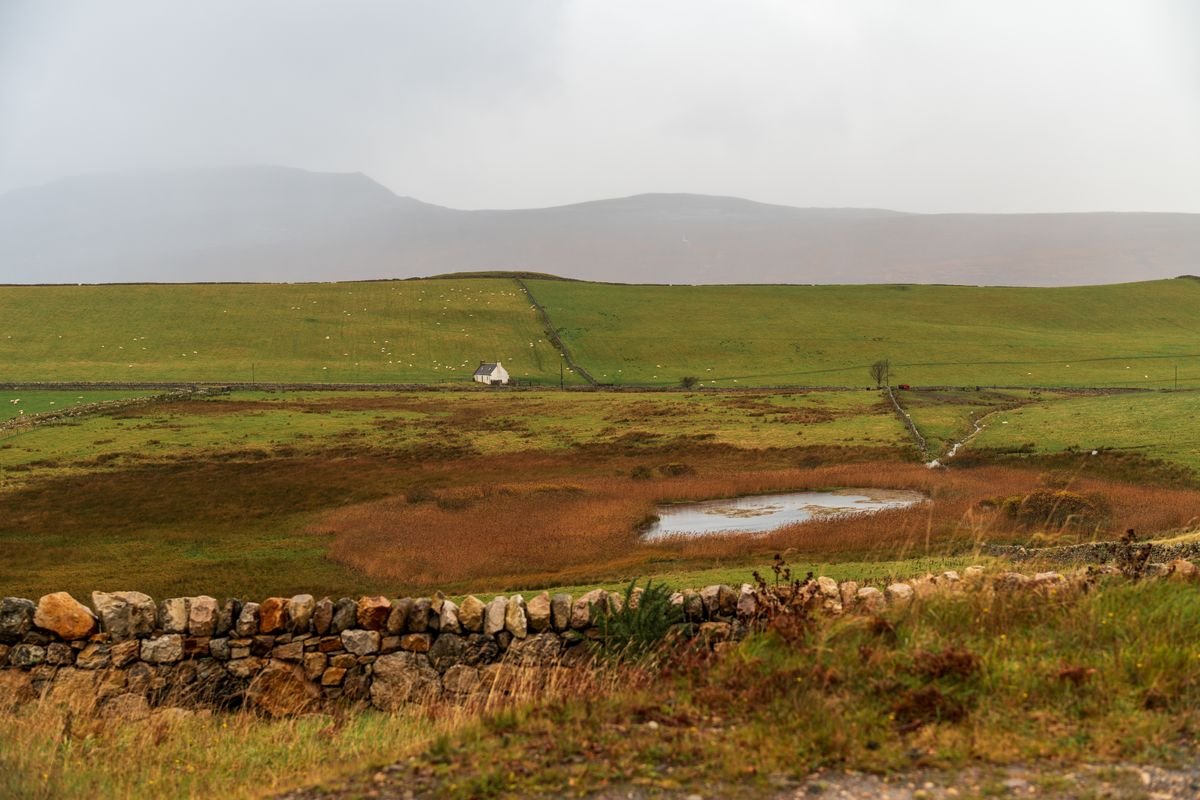
We drove the parks in late September and early October, well into shoulder season, and it was the right call. The trails were quiet, the campsites were near empty, and we still got enough dry spells to do everything we wanted. If I had to pick one window for the national parks in Ireland, it’s spring or autumn.
Spring and autumn are the sweet spot
April to early June and September into October give you the best mix of fewer crowds and workable weather. The big sites like Glendalough and Muckross still get busy on weekends, but midweek you can have a lot of the trails to yourself.
Late spring is also when the Burren wildflowers are out, so if that’s high on your list, time it for late May into June. Autumn trades the flowers for color in the oak woods at Killarney and Glenveagh, and the lowest visitor numbers of the year.
Summer: long days, more people
July and August give you the longest daylight, often light until 10pm, which is a real advantage for big hikes like Diamond Hill or the Spinc. The trade-off is crowds and full parking lots at the popular parks, especially Killarney and Wicklow.
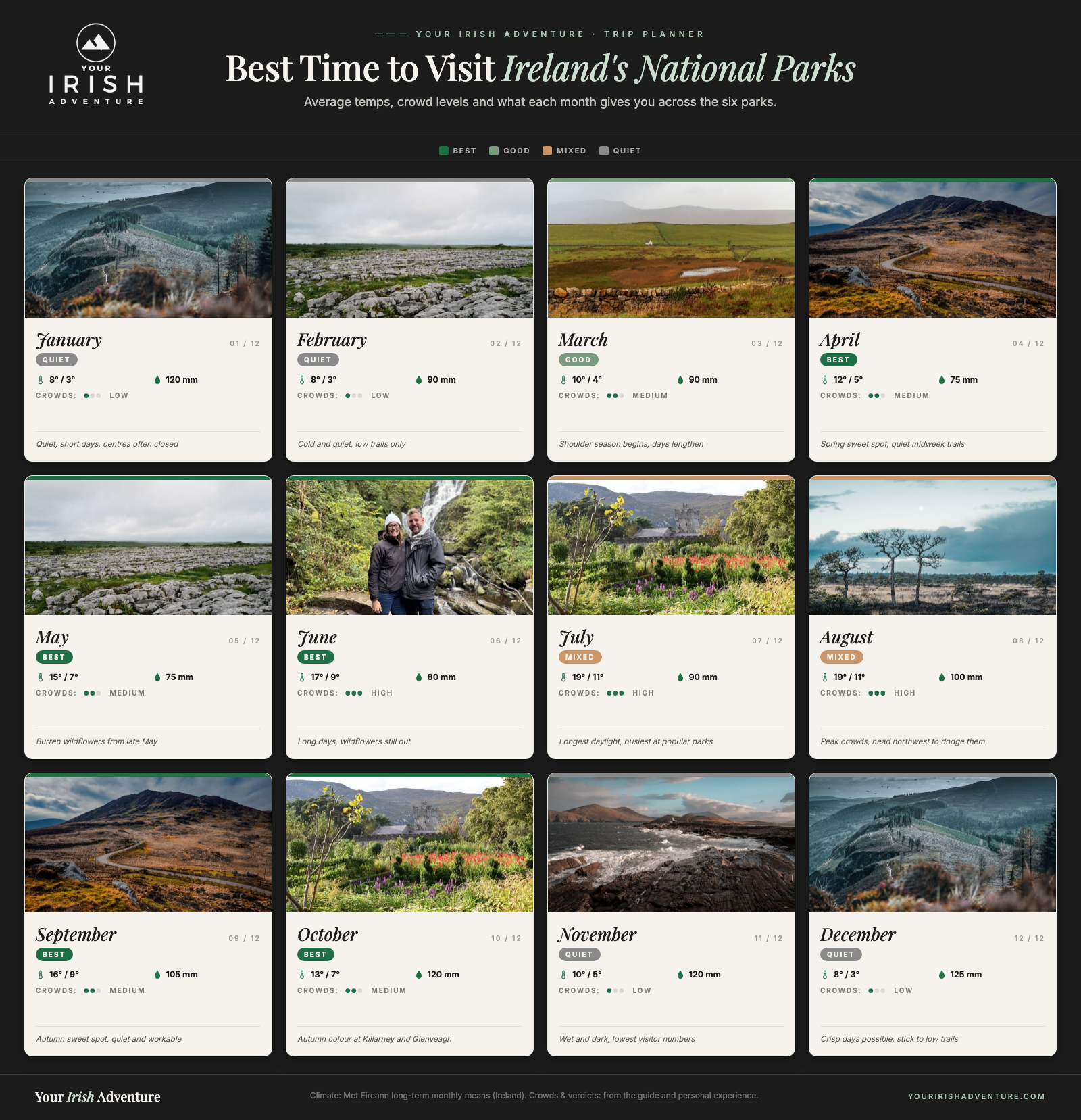
The remote parks barely notice the summer rush. Wild Nephin and Glenveagh stay quiet even in August, so if you’re set on July or August, point your trip northwest and you’ll dodge most of the crowds.
Winter and the weather reality
The parks stay open and free year-round, and a crisp winter day in Wicklow or the Burren can be excellent. The catch is short daylight, closed visitor centers and cafés, and exposed high ground that turns dangerous fast. Stick to the marked low trails in winter.
Whatever month you pick, plan for rain. We had a full day of heavy rain at Muckross and still had a good time, but only because we packed for it and kept a backup plan. Pack proper waterproofs, expect a soaking at some point, and don’t build your trip around blue skies.
Where to Stay Near the National Parks
None of the six parks have hotels inside them, so you base yourself in a nearby town and drive in. We travelled by campervan and stayed at campsites, but every park here works just as well from a B&B or hotel, and for most first-timers a rental car plus a guesthouse is the simpler way to do it. It’s worth comparing car hire deals on Discover Cars before you lock in a base, since the parks out west and north are hard to reach without your own wheels.
Here’s where I’d base myself for each one, working roughly south to north.
Wicklow, Killarney, and the Burren
For Wicklow Mountains, you don’t really need to move at all. It’s an hour from Dublin, so you can day-trip it from the city. If you’d rather wake up at the park, the village of Laragh, a few minutes from Glendalough, has guesthouses and pubs and puts you ahead of the day-trip crowds.
For Killarney, the town itself is the obvious base, which is where we stayed two nights on our last trip. It’s loaded with hotels, B&Bs, and food, and it’s a short hop to the Muckross Estate. You can check availability on Booking.com for the town, and book ahead in summer, because it fills up.
For the Burren, base yourself in Doolin or Ballyvaughan. Doolin is the better pick if you want to pair the park with the Cliffs of Moher, since it’s the closest village to the cliff walk and has trad sessions most nights.
Connemara, Glenveagh, and Wild Nephin
For Connemara, Clifden is the main town and the easiest base, with plenty of places to stay and eat. Letterfrack, right at the park visitor center, is smaller and quieter if you want to roll out of bed onto the Diamond Hill trail.
Glenveagh is the trickiest of the lot, since it’s deep in Donegal. Letterkenny is the biggest town within reach for hotels and supplies, and the Dunlewey and Gweedore area sits closer to the park if you want to be near Errigal and the mountains.
For Wild Nephin, look at Newport or Mulranny on the Mayo coast. Both are small, both have good places to stay, and both keep you close to the Ballycroy Visitor Centre and dark enough skies to make the stargazing worth it.
One general tip: the parks out west and north have far fewer beds than the demand in summer, so if you’re going in July or August, book your base town well in advance.
Here are five places I’d book in those base towns, picked on real guest scores and review counts, one for each main park region.
Killarney Lodge (Killarney)
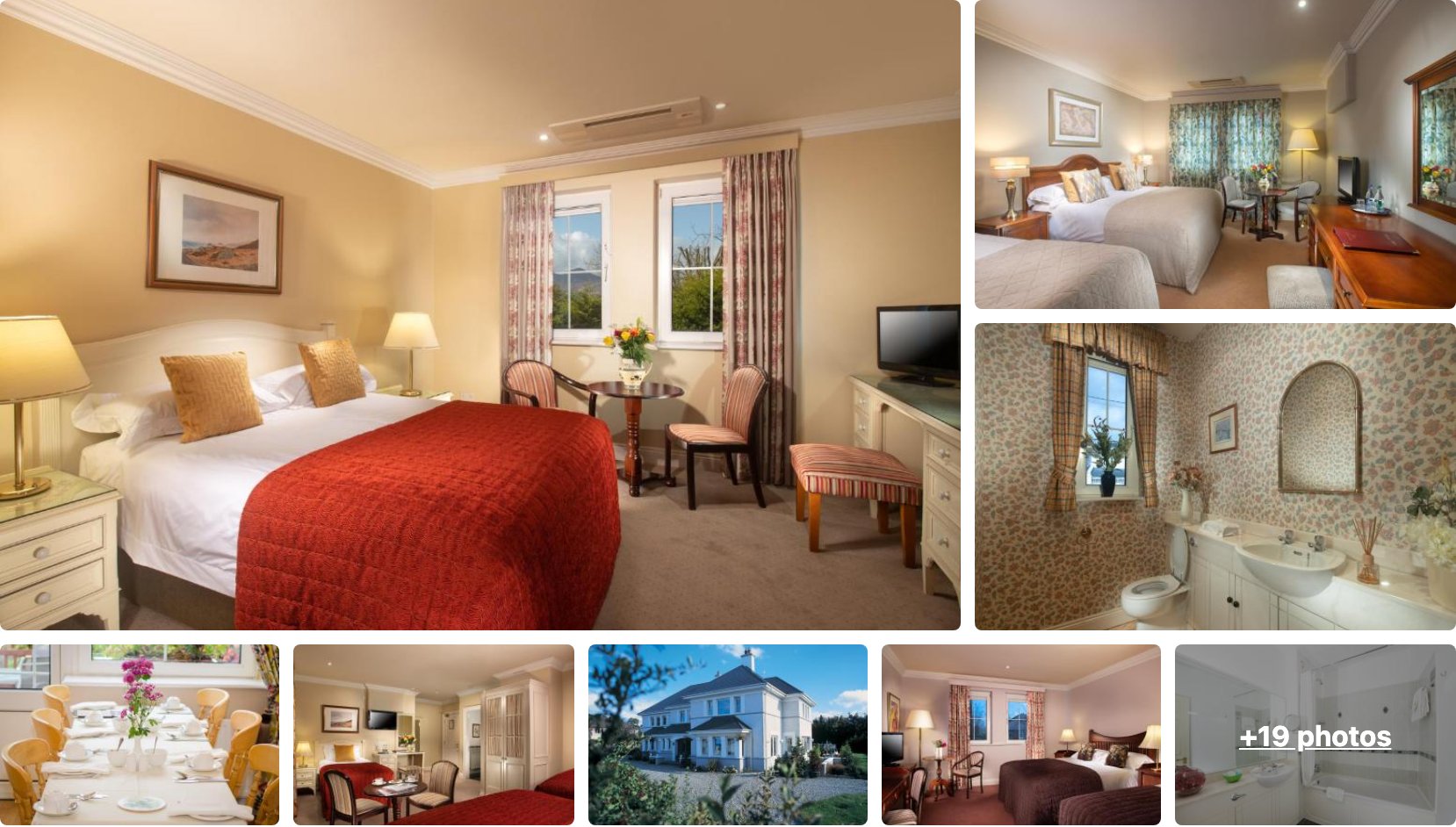
Killarney Lodge is a guesthouse a four-minute walk from the town centre, which puts you within easy reach of Killarney National Park and the Muckross Estate. It scores 9.6 on Booking.com across more than 1,000 reviews, with the central spot and big breakfast getting most of the praise.
👉 View Killarney Lodge Availability and Pricing
Mountain Aven Guest House (Doolin)
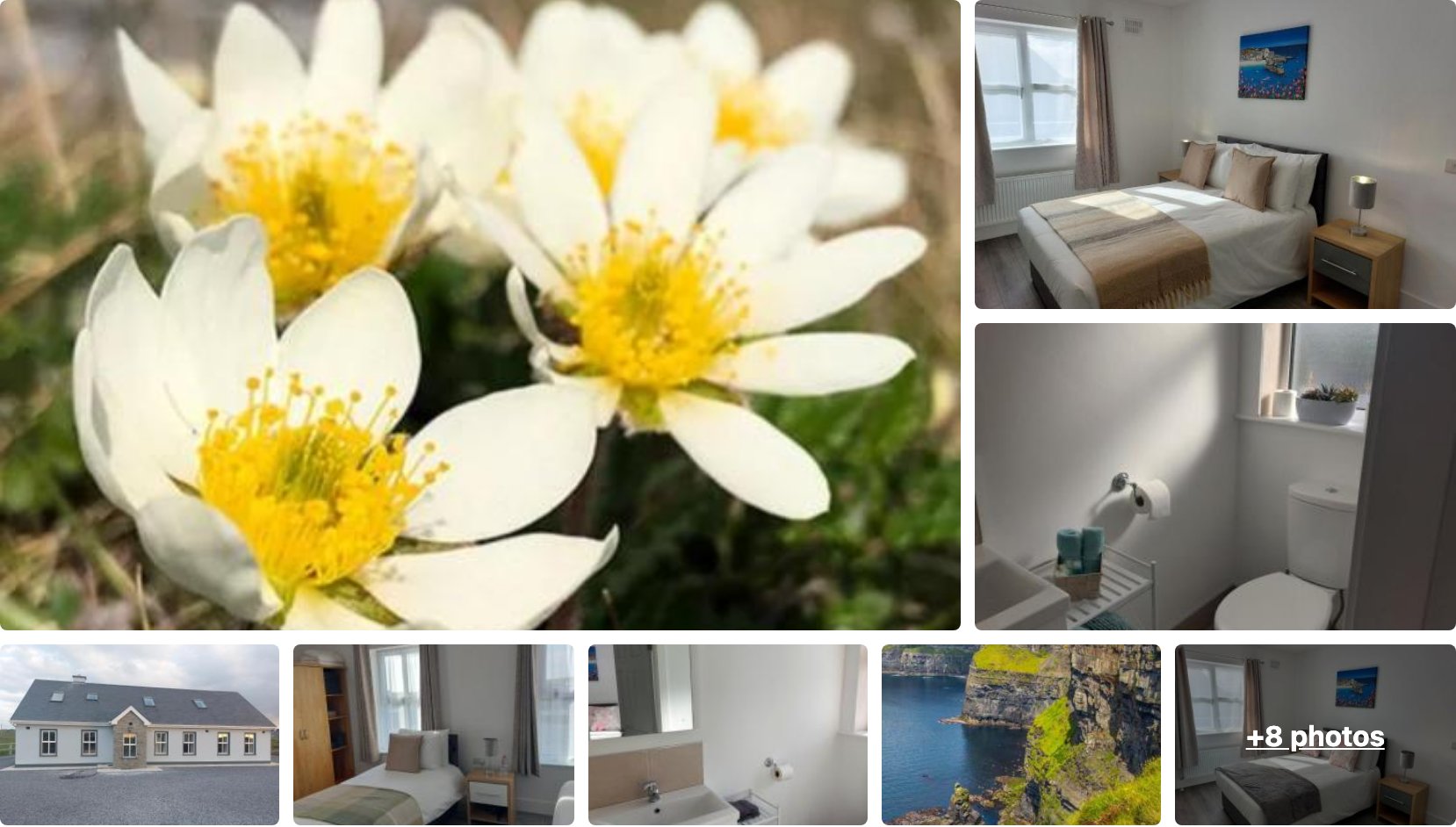
Mountain Aven Guest House sits just outside Doolin village, the best base for pairing the Burren with the Cliffs of Moher. It holds a 9.7 on Booking.com from over 1,100 reviews, which makes it one of the most reliably rated places in the area.
👉 View Mountain Aven Guest House Availability and Pricing
Clifden Bay Lodge (Clifden)
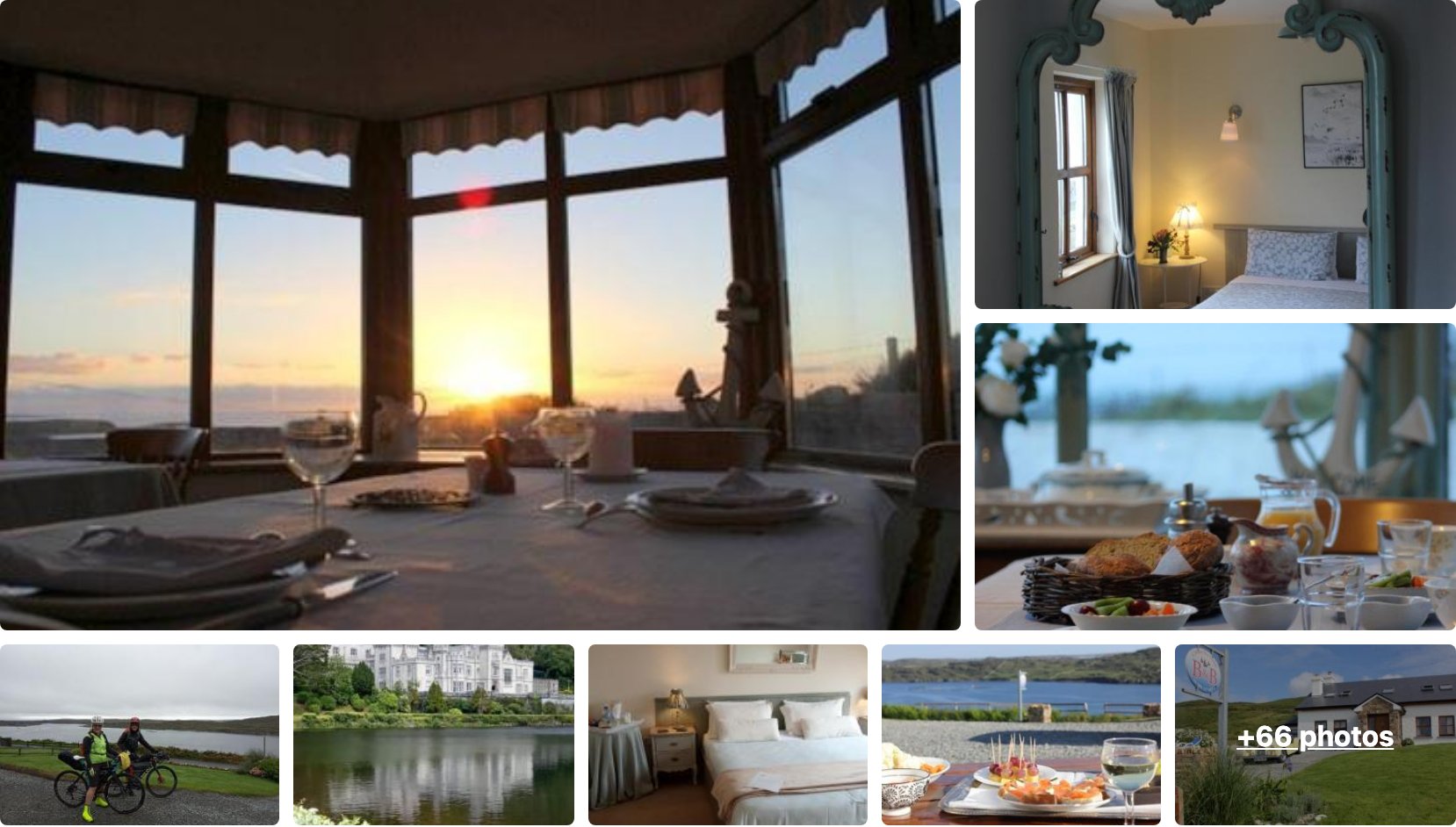
Clifden Bay Lodge is a short drive from Clifden on the Sky Road, a handy base for Connemara National Park and the Diamond Hill trail. It scores 9.6 on Booking.com across nearly 470 reviews, and the sea-view breakfast room is the photo most guests come back to.
👉 View Clifden Bay Lodge Availability and Pricing
Ballyraine Guesthouse (Letterkenny)
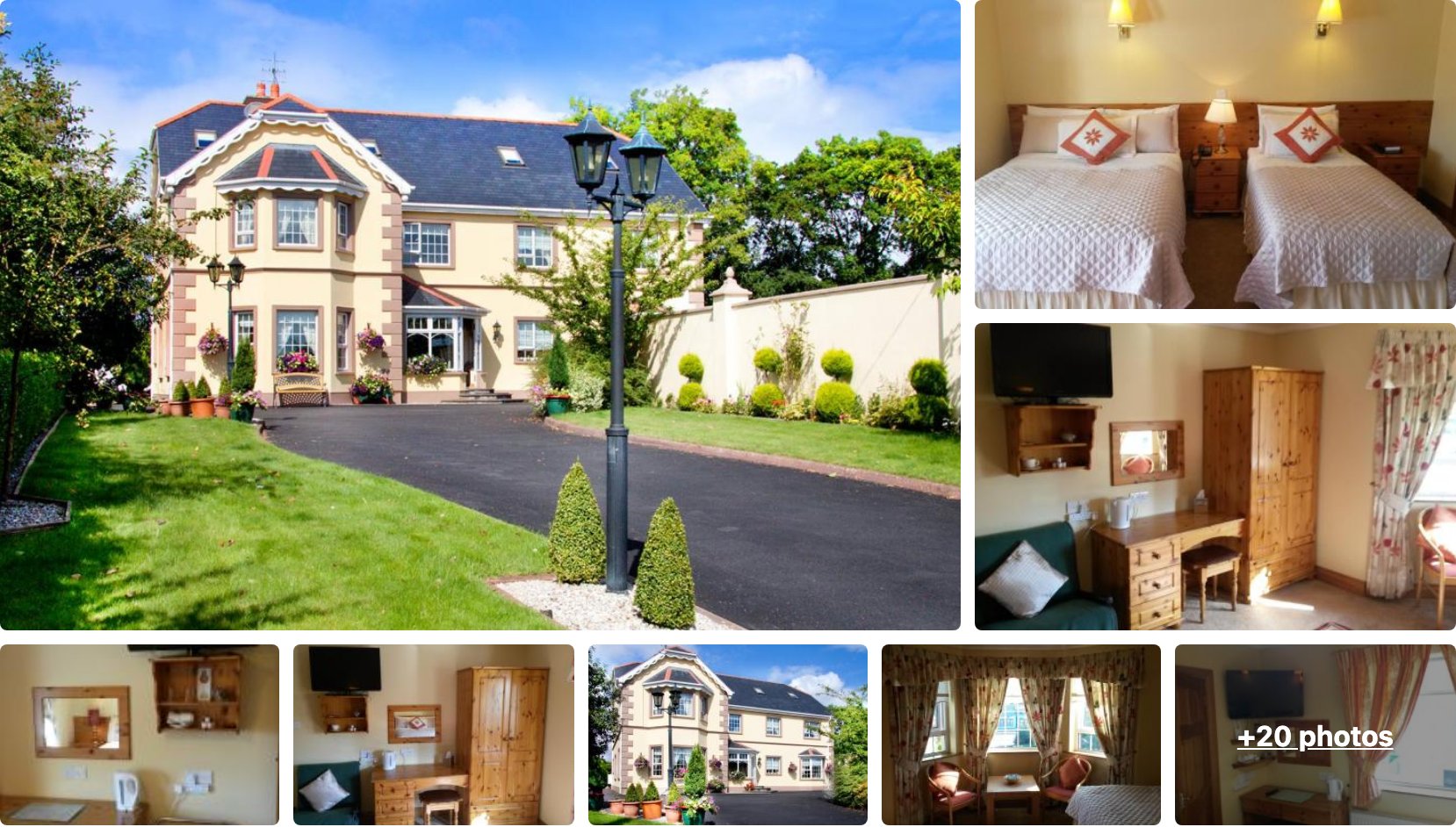
Ballyraine Guesthouse is a short way out of Letterkenny, the main town within reach of Glenveagh National Park and the Donegal mountains. It scores 9.6 on Booking.com across 150-plus reviews, a solid in-town pick for supplies and a bed before the long drive to the park.
👉 View Ballyraine Guesthouse Availability and Pricing
Plougastel House B&B (Westport)
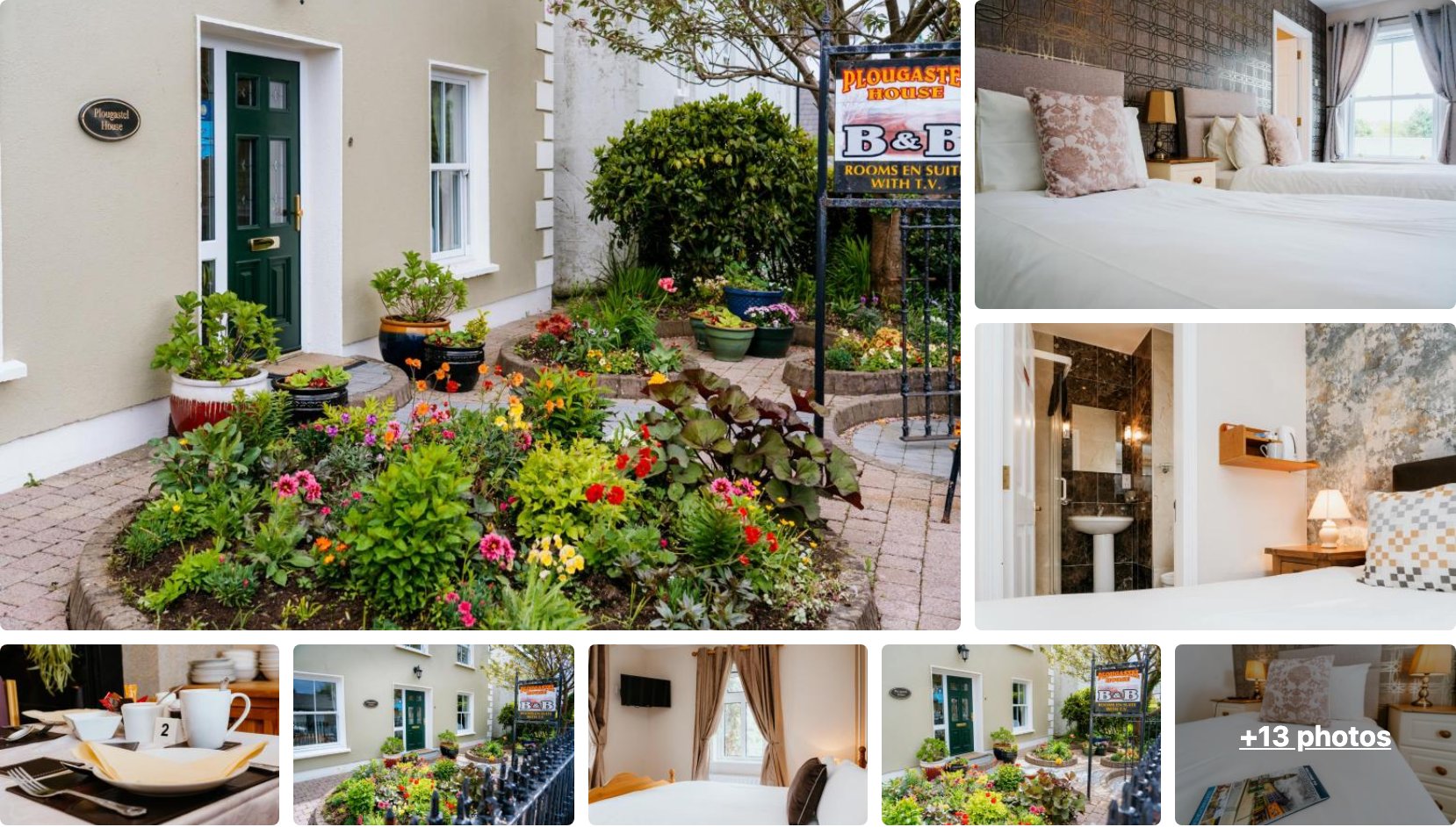
Plougastel House B&B is a couple of minutes from the centre of Westport, the easiest large town for reaching Wild Nephin out on the Mayo coast. It scores 9.6 on Booking.com across more than 500 reviews, and Westport itself has the food and pubs the remote park towns don’t.
👉 View Plougastel House B&B Availability and Pricing
Tips for Hiking in Ireland’s National Parks
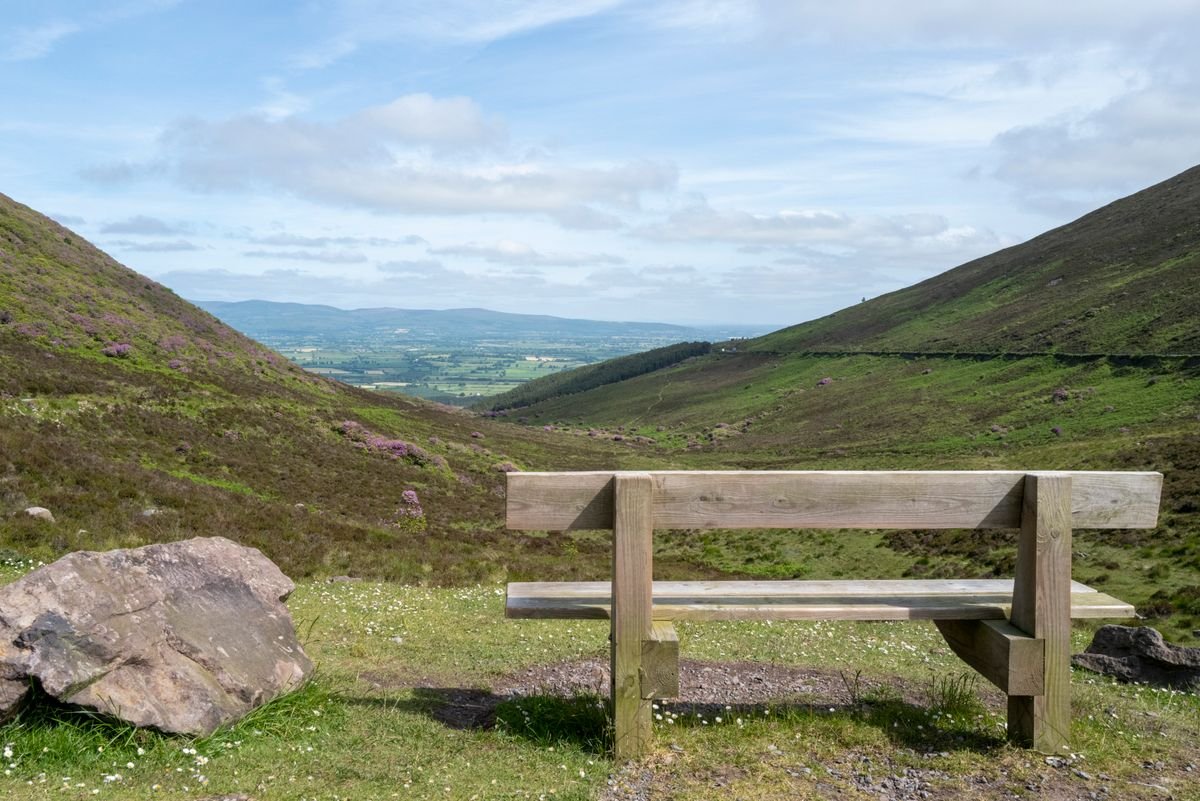
The walking in the national parks in Ireland runs from flat boardwalks to unmarked mountain ground, and the gap between the two is bigger than it looks on a map. On our last trip we stuck to the marked trails at every park, and for a first Ireland visit that’s the right call.
Here’s what I’d sort out before you set off.
Boots and layers, not just a rain jacket
Get proper boots with grip. Wet limestone in the Burren is slick, bog out west is soft and ankle-deep in places, and sneakers will be soaked through within a mile. Waterproof boots and a good pair of socks make every walk on this list more pleasant.
Layer up rather than relying on one big coat. The weather shifts fast, and it’s always colder and windier on the high ground than down at the parking lot.
A base layer, a fleece, and a waterproof shell over the top covers most days, and you can shed a layer as you climb.
Know which trails are marked and which aren’t
The marked loops at Glendalough, Muckross, Diamond Hill, and the Burren are well signed, surfaced, and hard to lose. You don’t need a map or much experience for any of them, just decent footwear and a few hours.
The high peaks are a different game. Lugnaquilla, the Twelve Bens, the Nephin Beg range, and the tops around Glenveagh are largely unmarked, exposed, and prone to fog that rolls in with no warning.
Those need navigation skills, the right gear, and ideally someone who knows the ground. If that’s not you, stay on the marked trails and you’ll still see the best of each park.
Daylight, supplies, and telling someone
Check the sunset time before a long walk, especially in spring and autumn when the light goes earlier than you expect. Getting caught on a mountain in the dark is how a good day turns into a rescue.
Carry water, food, and a charged phone, and don’t count on a café at the trailhead, because the remote parks have none. Phone signal drops to nothing in the bog and the mountains, so on any serious route tell someone where you’re going and when you’ll be back.
The marked low trails are forgiving, but the wild country out here is not, and the parks being free doesn’t make the mountains any safer.
Where to Stay Around Ireland
- The Best Places to Stay in Ireland
- Where to Stay in Westport: Best Hotels & Accommodation
- Tips For Camping In Ireland And What To Bring
Frequently Asked Questions
How many national parks are there in Ireland?
There are six: Wicklow Mountains, Killarney, the Burren, Connemara, Glenveagh, and Wild Nephin. They’re spread across the country, from just south of Dublin out to the west and northwest coasts, and each one covers a different kind of landscape.
Are Ireland’s national parks free to visit?
Yes, all six are free to enter, and so are the trails and visitor centers. A few attractions inside or beside them charge a ticket, like the castle tour at Glenveagh or Kylemore Abbey near Connemara, but the parks themselves cost nothing.
Which national park in Ireland is the best?
Killarney is the most popular and the easiest to fill a few days in. Connemara was our favorite of the two we did properly, mostly for the N59 drive and sleeping by the Atlantic. If you want the quietest and wildest, it’s Glenveagh or Wild Nephin.
Do you need a car to visit the national parks?
For most of them, yes. Wicklow can be done as a day trip from Dublin by bus or tour, but the parks out west and north are hard to reach without your own wheels. A rental car gives you the freedom to drive between them at your own pace.
Which national park is best for hiking?
For marked day hikes, Connemara’s Diamond Hill and the Spinc at Glendalough are the two I’d point a first-timer at. For serious unmarked mountain country, it’s Glenveagh and Wild Nephin, but those need real experience and the right gear.
Can you camp in Ireland’s national parks?
You can’t camp inside the parks themselves, so you stay at a campsite or guesthouse nearby and drive in. We used campsites like Fleming’s White Bridge near Killarney and Clifden Eco Beach for Connemara, and both put us a short hop from the park gate.
In short
- Wicklow Mountains is the largest park at 50,000 acres, about an hour south of Dublin.
- Glendalough has nine marked trails, two glacial lakes, and a 6th-century round tower founded by St Kevin.
- The Spinc is a boardwalk climb above Glendalough’s Upper Lake, the route most hikers want.
- Killarney holds Torc Waterfall and the Muckross Abbey ruins, down in County Kerry.
- Connemara’s N59 runs through 7,000 acres of bog and mountains; visit Glendalough early or midweek to dodge crowds.
Final Thoughts on Ireland’s National Parks
Six parks, all free, and every one of them a different version of Ireland. You won’t fit all six into one trip unless you’ve got two or three weeks and a lot of driving in you, so the smart play is to pick the two or three that line up with the route you’re already doing.
If you’re starting in Dublin, do Wicklow on day one and ease into it. If you’re driving the southwest, Killarney and the Burren slot in without a detour. And if you’re going all the way west, build the trip around Connemara, because that drive alone is worth the flights.
The two we did on our last loop only made us want to go back for the other four. Glenveagh and Wild Nephin are top of my list for next time, mostly because they’re the ones almost nobody bothers to drive that far for.
Pack for rain, stick to the marked trails unless you really know what you’re doing, and go in spring or autumn if you can. Do that, and the national parks in Ireland will give you the best free days of your whole trip.
Like it? Pin it!
Save this guide for later