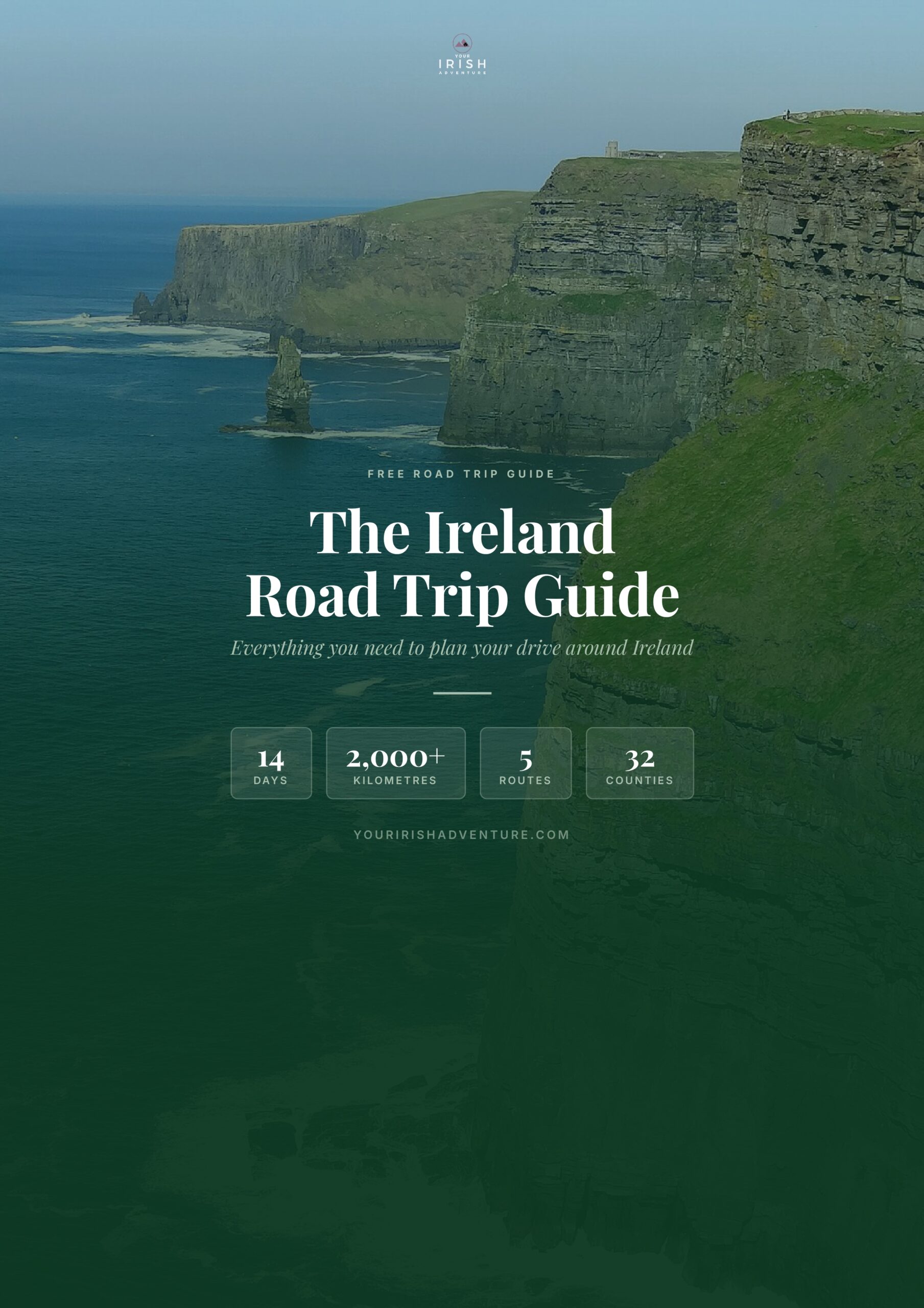
If you’d rather hand off the driving, the hotels, and the daily logistics to someone else, the best group tours of Ireland make a strong case for it. CIE, Trafalgar, and Insight all run bus trips that cover the big hits, from the Cliffs of Moher to the Ring of Kerry, on a set schedule with everything booked for you.
We didn’t take one ourselves. We spent about two weeks driving Ireland on our last trip, in shoulder season, and hit most of the same stops these tours run. So while we can’t tell you what the tour bus wifi is like, we can tell you which places actually earn a full stop and which ones a tour bus blows through in twenty minutes.
That’s really the whole game with a group tour. You’re paying to skip the planning, and the operator you pick decides how good the hotels are, how rushed the days feel, and how much of Ireland you actually get to touch.
Below I’ll break down how to choose the right operator, put the main tour companies side by side, and give you a straight CIE vs Trafalgar vs Insight verdict, plus what all of this actually costs.
Quick Answer:
The best group tours of Ireland come from three big operators: CIE Tours, Trafalgar, and Insight Vacations. CIE is the Ireland specialist and best value for a first trip, Insight is the premium pick for better hotels, and Trafalgar sits in between on price. All three run 7 to 12 day bus trips hitting the Cliffs of Moher and Ring of Kerry.
More Ireland Itineraries and Road Trips
- A Photographer’s Definitive Ireland Road Trip
- Wild Atlantic Way Itinerary – Ireland’s Most Epic Road Trip
- 14 Days in Ireland: The Ultimate 2-Week Itinerary
How to Choose the Right Ireland Tour Operator

Every one of these companies will show you the Cliffs of Moher and pour you a Guinness in a pub with live music. The brochures look almost identical. What actually separates them is the stuff the marketing doesn’t lead with, so that’s what you should be shopping on.
Here’s what really changes the trip, in the order I’d weigh it.
- Group size. A 40-person bus and a 24-person small-group tour are two different vacations. Bigger groups mean longer stops for everyone to get on and off, more time waiting, and less room in the pubs and restaurants you land in.
- Pace and stop count. Count the nights per town, not the sights per day. A tour that sleeps two nights somewhere lets you actually see it. One that changes hotels every single night is a highlight reel from a bus window.
- Hotel quality and location. A hotel in the center of Galway or Killarney is worth a lot more than a bigger one stuck out by a highway, where you’re stranded after dinner.
- What’s actually included. Read which meals, entries, and activities are in the price versus sold as optional add-ons once you’re there. That gap is where the real cost hides.
Match the tour to how you like to travel

Be honest with yourself about pace before you book. If you want to cover the whole island in a week and don’t mind early starts, a fast big-bus tour does exactly that and does it well. If you’d rather sit in one town for two nights and get a feel for it, pay up for a small-group trip with fewer stops.
The mistake is booking the packed 12-stops-in-8-days itinerary because it looks like better value, then spending the trip exhausted and watching Ireland go by at 60 miles an hour. More stops is not more Ireland.
Read the day-by-day, not the highlights
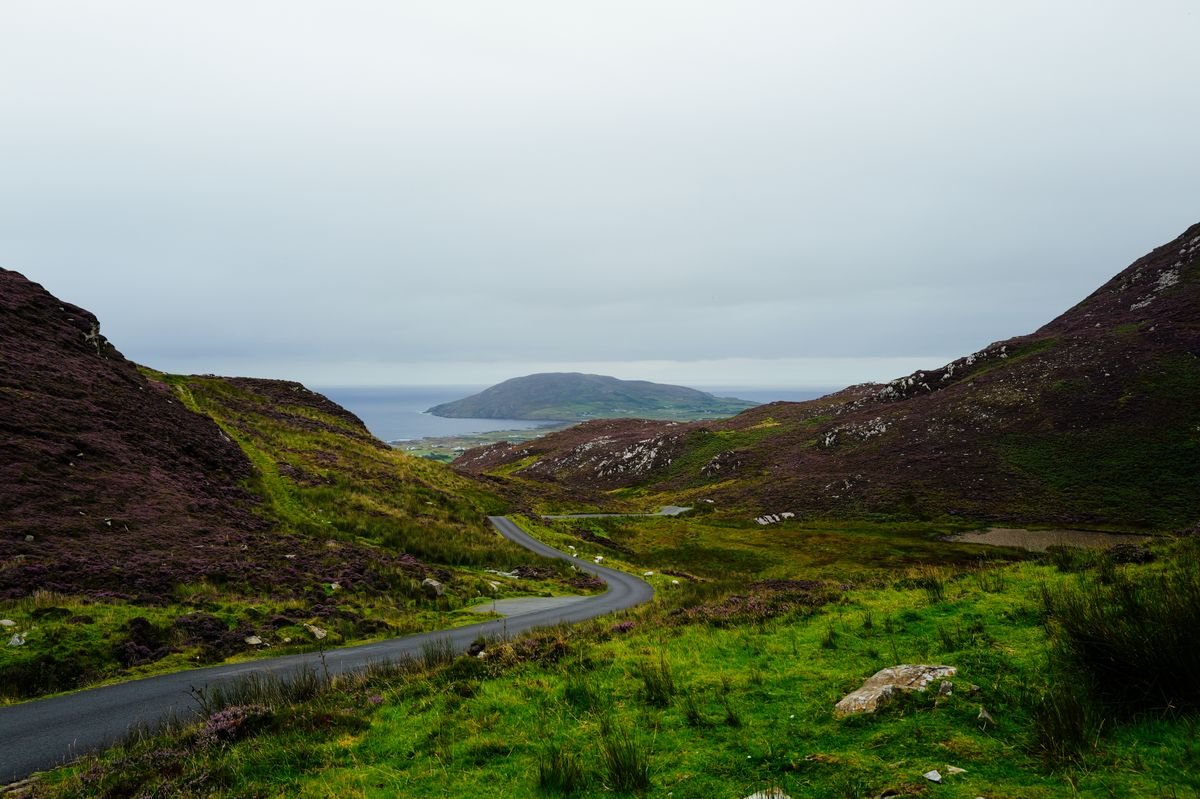
The single most useful thing you can do is open the detailed daily itinerary and look for the weasel words. “Photo stop” means you’re not getting off the bus for long. “View the” means from the road, not up close. “Free time to explore” is good, and the more of it, the better.
Some stops earn a full day and some don’t, and a tour bus doesn’t always agree with you on which is which. Knowing the route ourselves, I’d want real time in Galway, Dingle, and Kilkenny, and I wouldn’t lose sleep over a rushed twenty minutes at a spot that’s mostly a parking lot and a viewpoint. If your tour only gives you a night in Dingle and you want to get out on the water while you’re there, you can book a Dingle boat tour on GetYourGuide for the free afternoon.
Check the season too. A tour running in shoulder season means thinner crowds at the big sites and easier pub tables, which makes even a rushed stop feel less like a scrum.
Ireland Group Tours Compared at a Glance
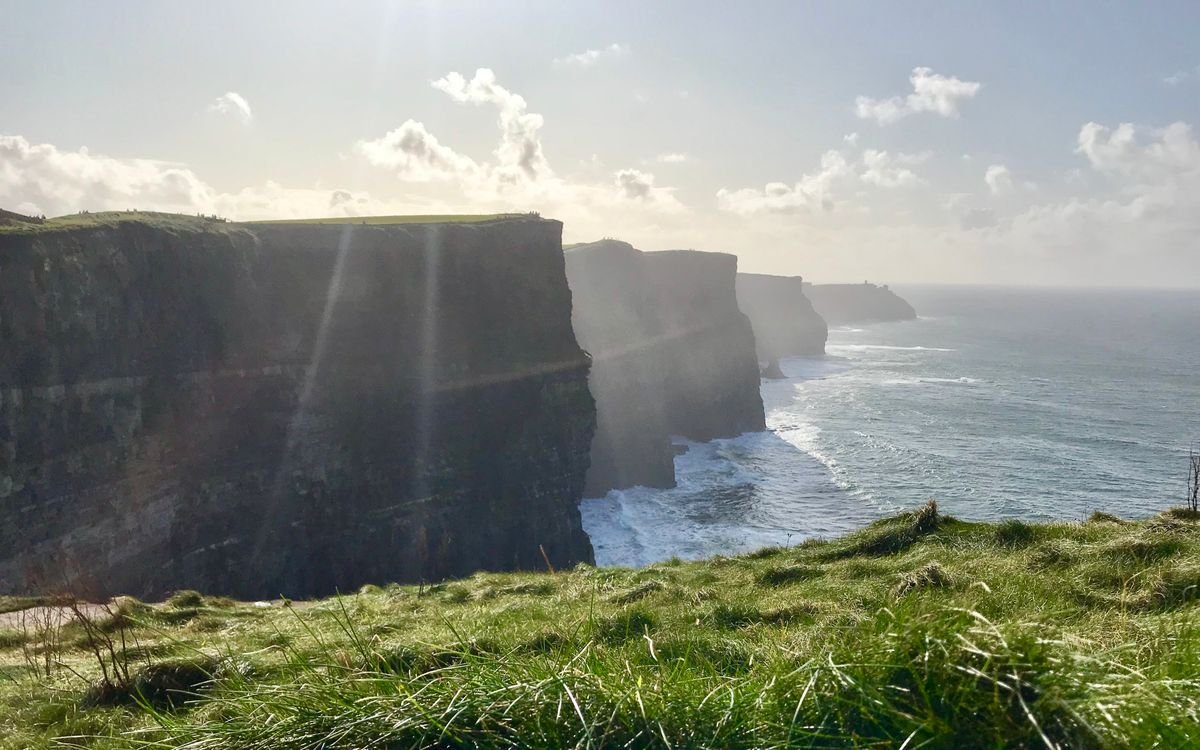
All three of these companies run good tours. None of them is a bad choice. The difference is where they sit on price, group size, and how much they polish the edges. Here’s the quick version before I get into the head-to-head.
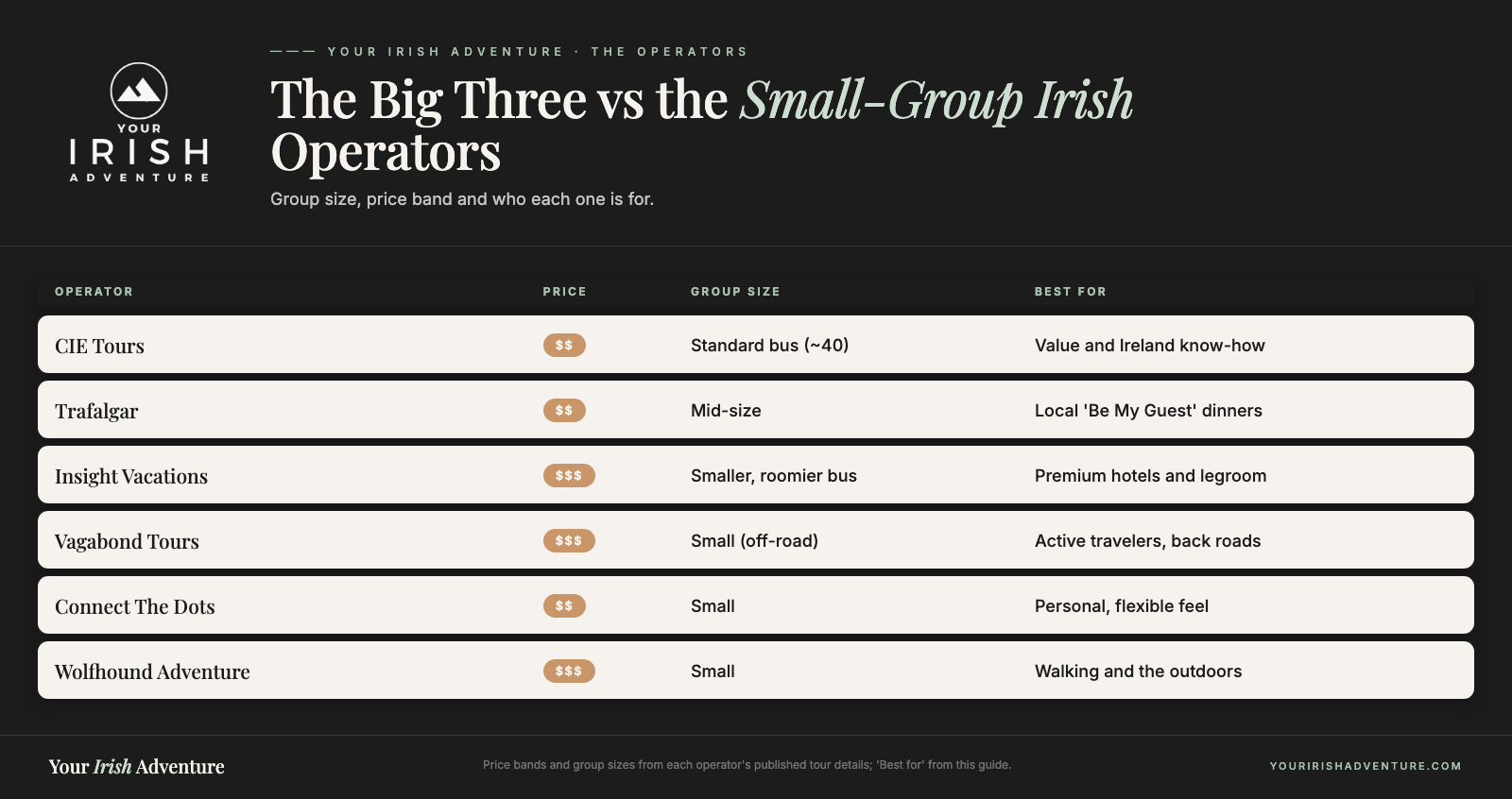
- CIE Tours. The Ireland specialist. This is what they do, and they’ve done it for a long time. Standard-size buses, a lot included in the base price, and strong value for the money. If you want the classic full-island loop without paying a premium, this is the default pick.
- Trafalgar. The big global operator doing Ireland as one of many countries. Mid-size groups, well-run logistics, and their “Be My Guest” meals that put you in a local home or farm for dinner. Sits in the middle on price and polish.
- Insight Vacations. The premium end. Fewer seats on the bus so everyone gets more legroom, smaller groups, and better hotels in better locations. You pay more, and you get a slower, roomier trip for it.
The short read: CIE for value and Ireland know-how, Trafalgar for a balanced middle, and Insight if you’ll pay up for space and nicer hotels. Same big sights on all three, different comfort and different bill.
One thing to actually compare, not just skim past, is the base price versus what’s included. A cheaper CIE tour with more meals and entries built in can cost less overall than a mid-price tour where half the good stuff is sold as an optional extra once you’re there.
Things to Do in the Towns Your Tour Passes Through
- 22 Best Things To Do in Dublin
- Best Things To Do In Cork (City & Day Trips)
- 21 Unique Things To Do in Kerry, Ireland – The Kingdom County
The Best Group Tours of Ireland, Operator by Operator
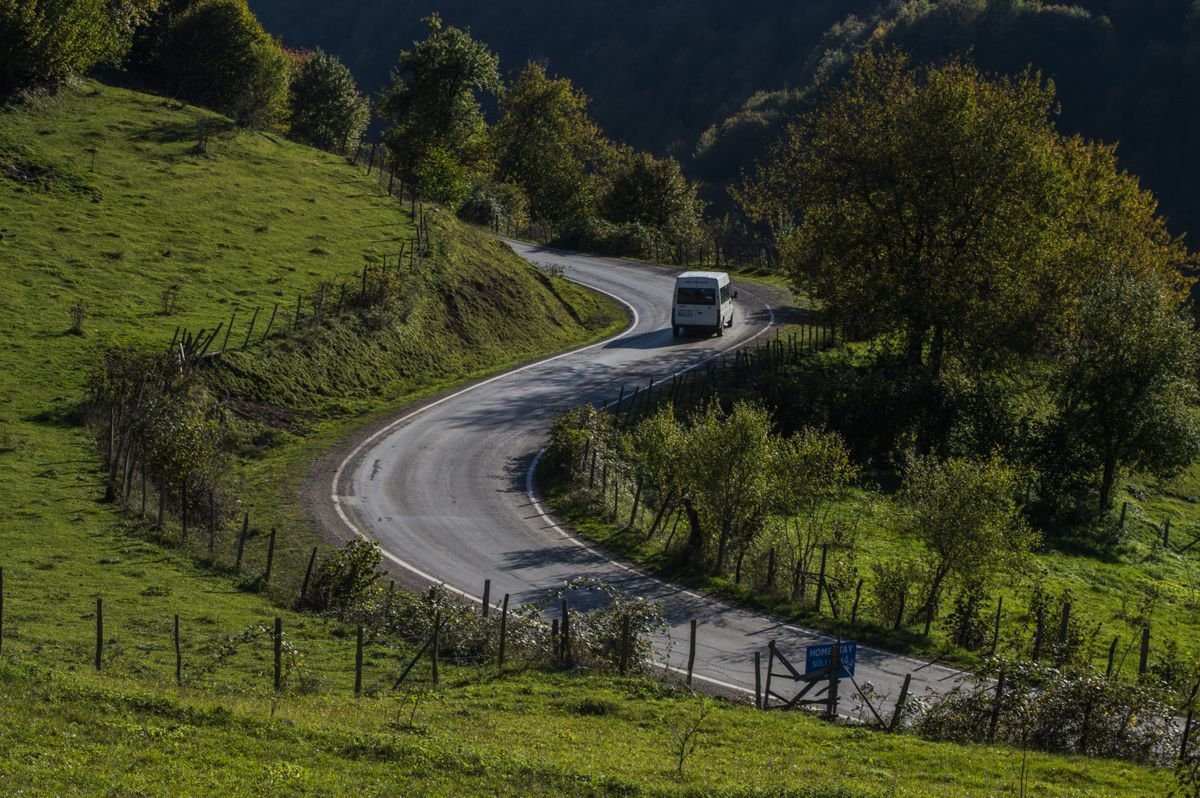
Here are the operators actually worth your money, split into two camps. The big three run the classic full-island bus tours. The smaller Irish companies do a different thing entirely, and for the right traveler they beat all three. I’ll tell you who each one is for.
CIE Tours
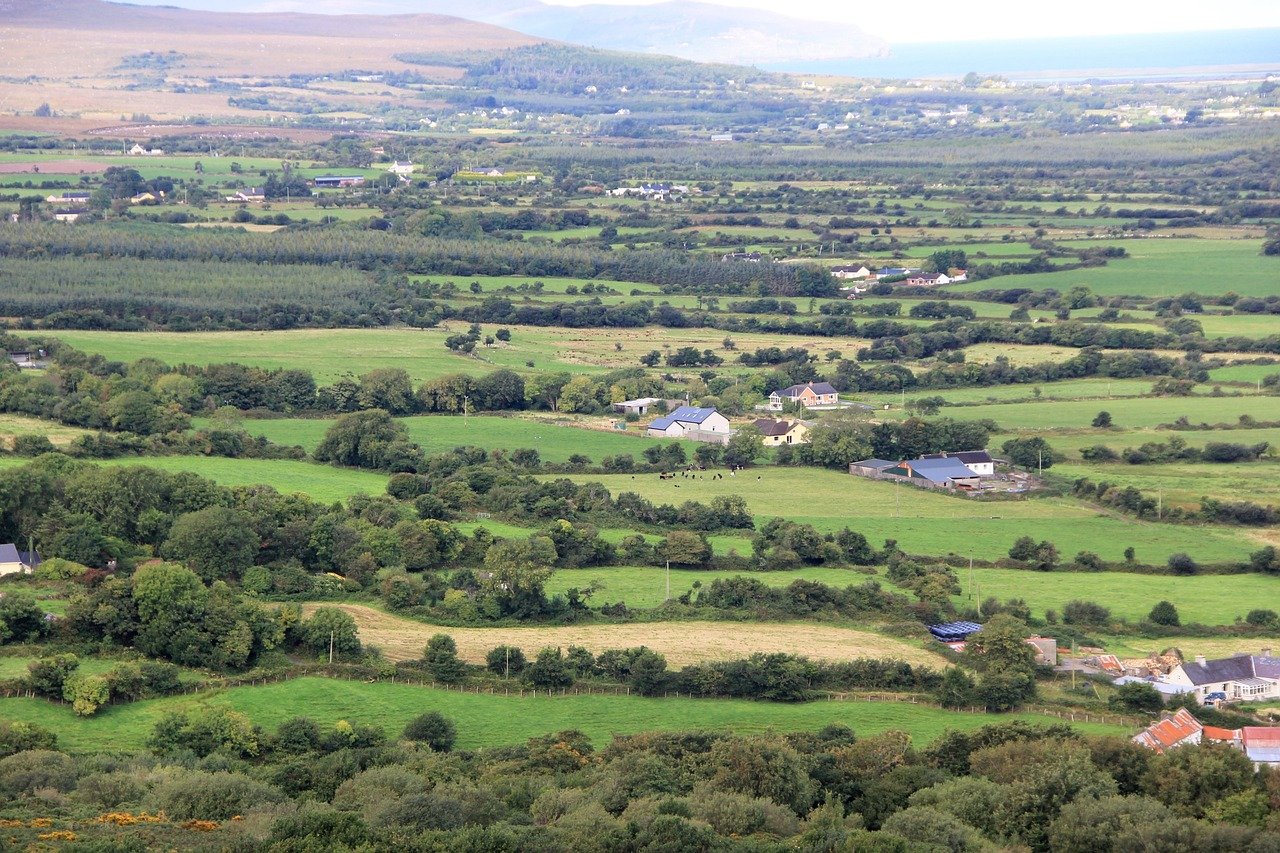
CIE is the Ireland specialist and it’s the one I’d default to. They’ve run these routes for decades, so the timing is dialed in and the base price includes a lot of meals and site entries that the others sell as extras.
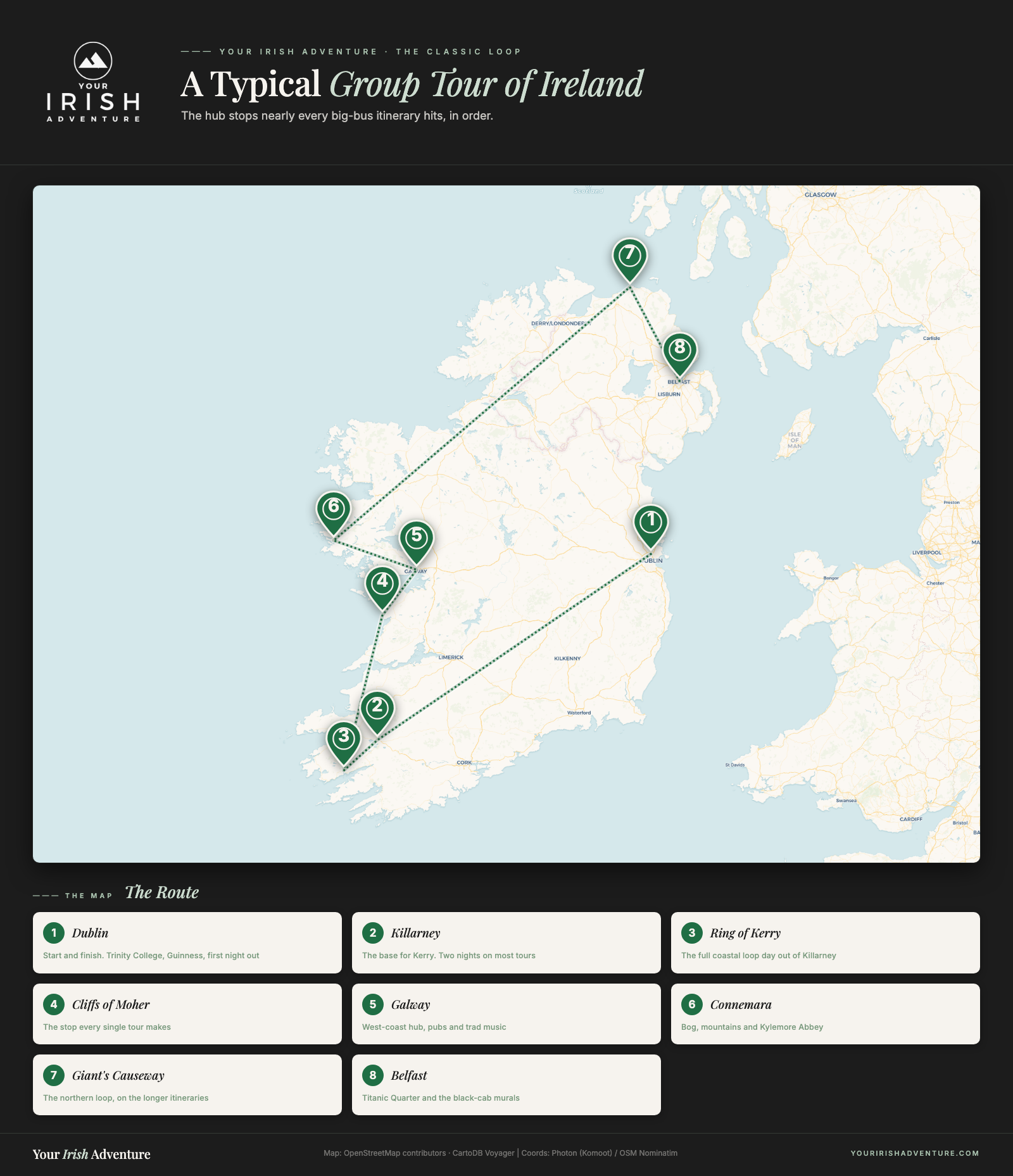
Groups are standard bus size, so don’t expect a boutique feel. But for the classic loop through Dublin, Killarney, Galway, and the Cliffs of Moher without paying a premium, CIE is the value pick. If you’re not sure where to start, start here. If you only have a couple of days in Dublin and want that same Cliffs run without committing to a full tour, you can book a Cliffs of Moher day tour from Dublin on GetYourGuide and do it in a single day.
Trafalgar
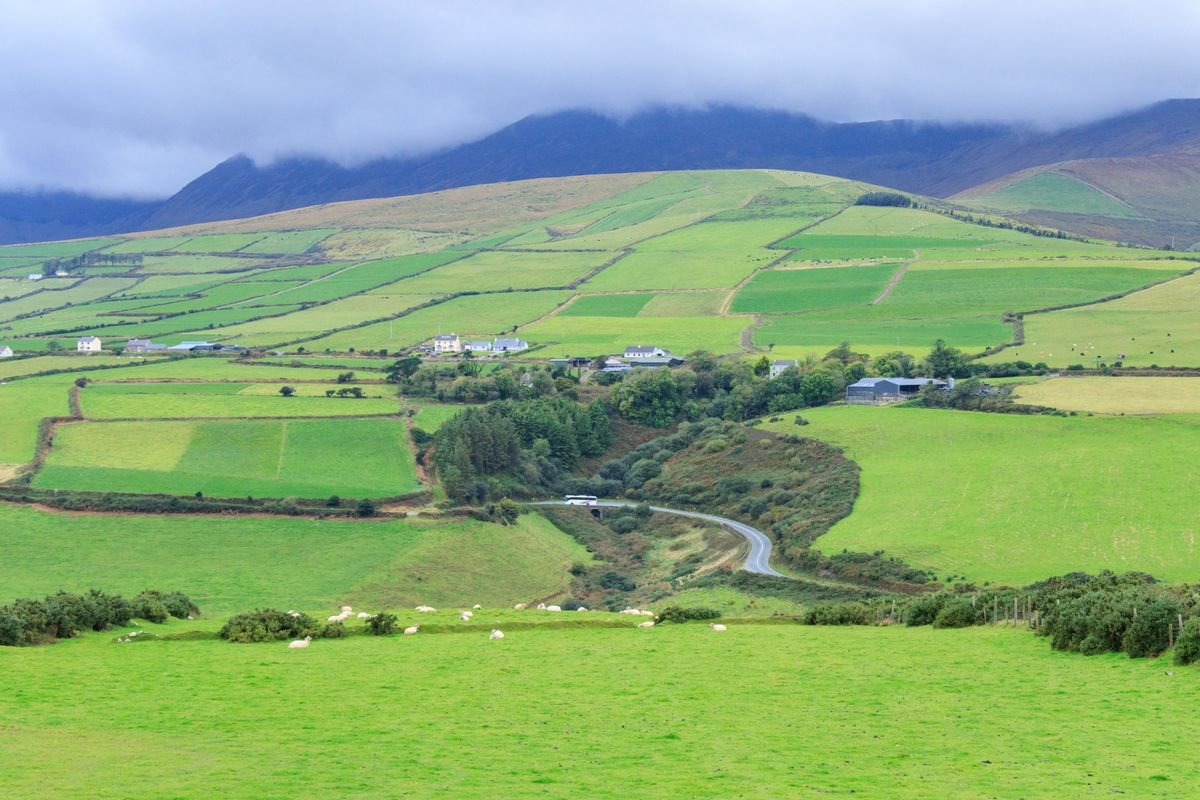
Trafalgar is the big global operator running Ireland as one country in a huge catalog. The logistics are smooth and the groups sit in the mid-size range, so it’s a comfortable middle between CIE’s value and Insight’s premium.
Their signature is the “Be My Guest” dinner, where the group eats in a local home or on a working farm. That’s the kind of stop you can’t easily book yourself, and it’s the main reason to pick Trafalgar over CIE at a similar price point.
Insight Vacations
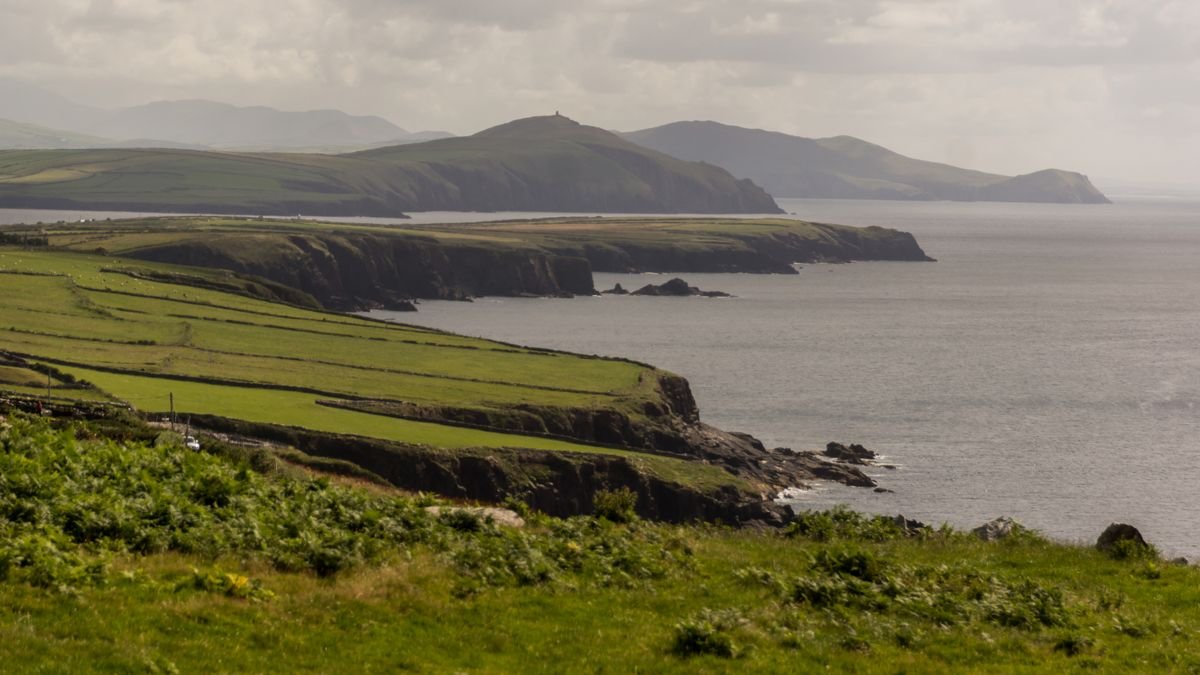
Insight is the premium end of the big-bus world. They pull seats off the bus so everyone gets more legroom, keep groups smaller, and book better hotels in better spots, which matters a lot when you want to walk out after dinner instead of being stuck by a highway.
You pay more for all of it. If your budget stretches and you’d rather do the same big sights at a slower, roomier pace, Insight is worth the jump. If you’re watching the total, CIE gets you to the same cliffs.
Vagabond Tours
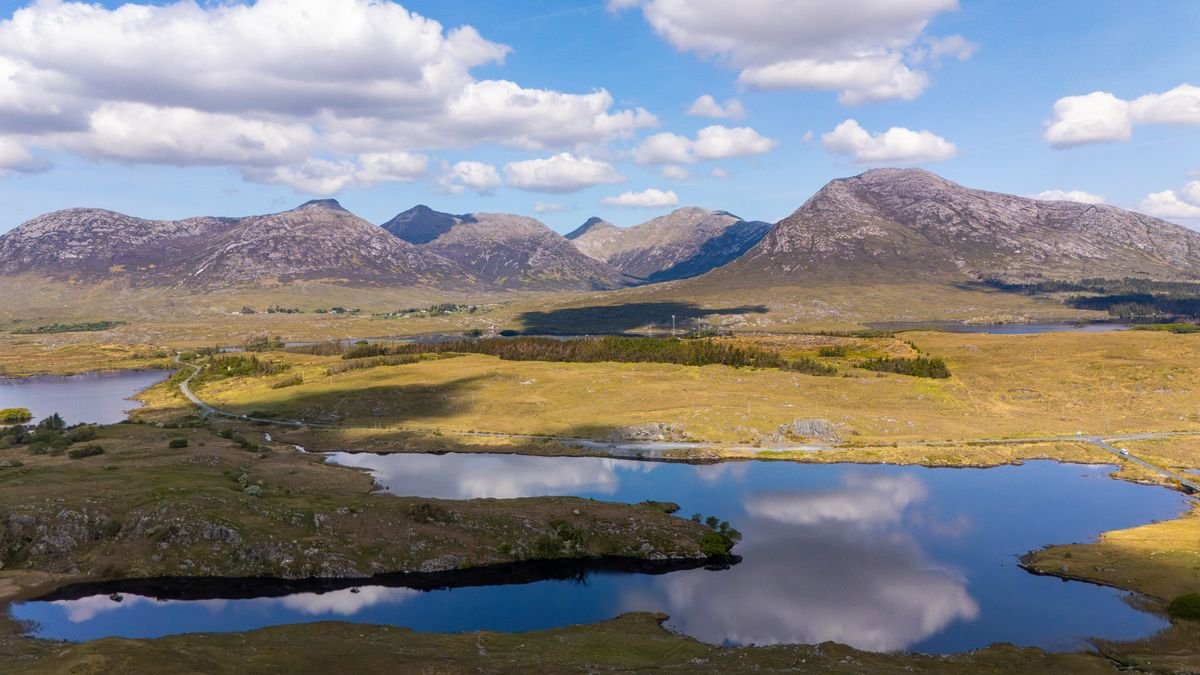
Now we’re out of the big-bus camp. Vagabond is an Irish-owned operator running small groups in custom off-road vehicles, and they go where the big buses physically can’t. Think back roads, hikes, and coastline instead of the standard parking-lot viewpoints.
This is the one I’d point an active traveler to. If sitting on a 40-seat bus sounds like a slow death and you’d rather be outside walking a headland, Vagabond is the pick. They also run a more relaxed line for people who want the small group without the hiking. If you just want to sample the small-group feel for a day before committing to a full trip, you can book a small-group Ring of Kerry tour on GetYourGuide and see how the pace suits you.
Connect The Dots Tours
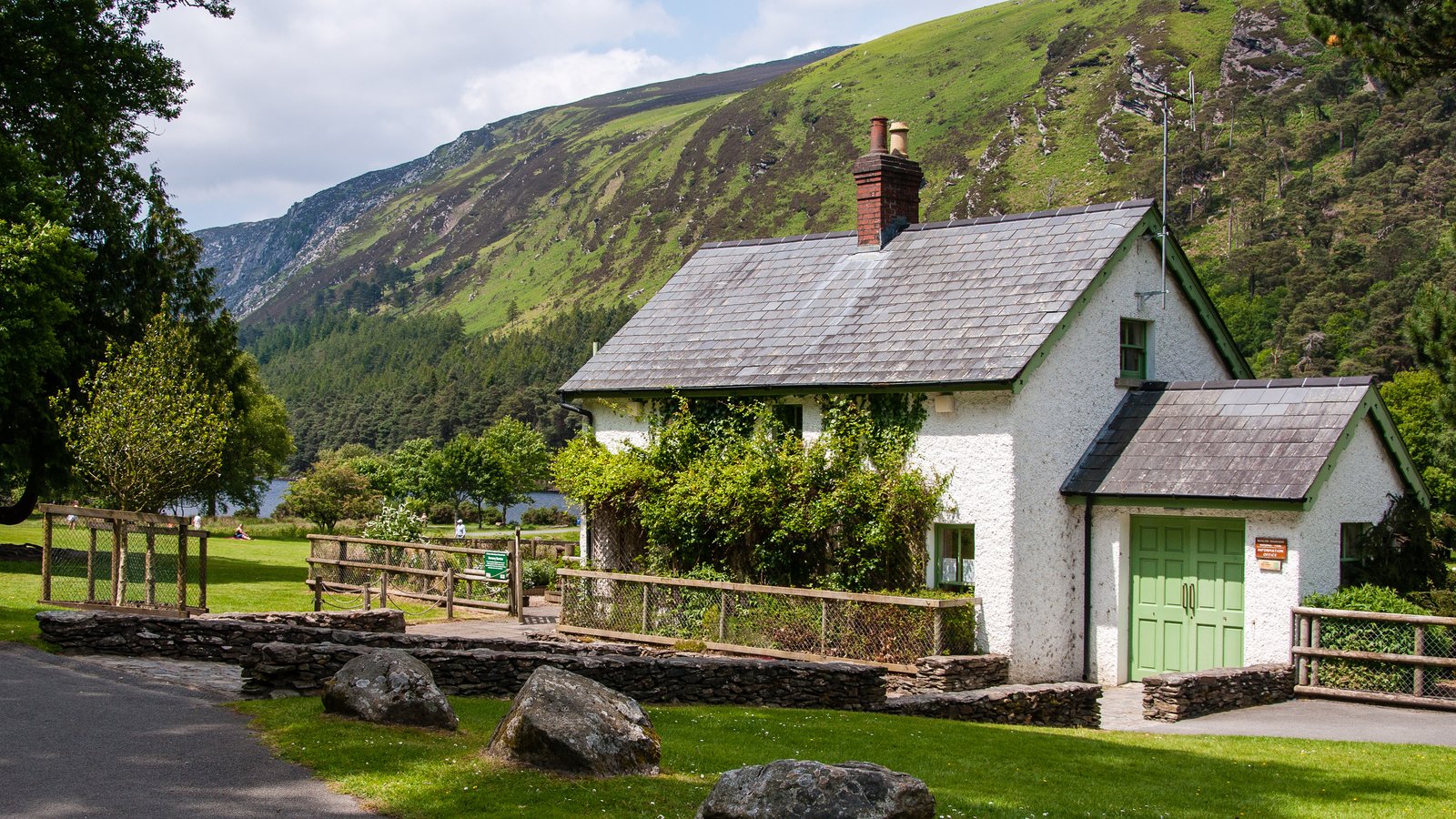
Connect The Dots is a smaller independent Irish operator built around little groups and a more personal, flexible feel. You’re not one of forty people filing on and off a bus, so days can bend a bit to what the group actually wants to do.
Go in knowing the trade-off. A small operator won’t have the polished machine that CIE or Trafalgar runs, but you get a guide who can read the room and a trip that doesn’t feel factory-made. That’s a fair swap for a lot of people.
Wolfhound Adventure Tours
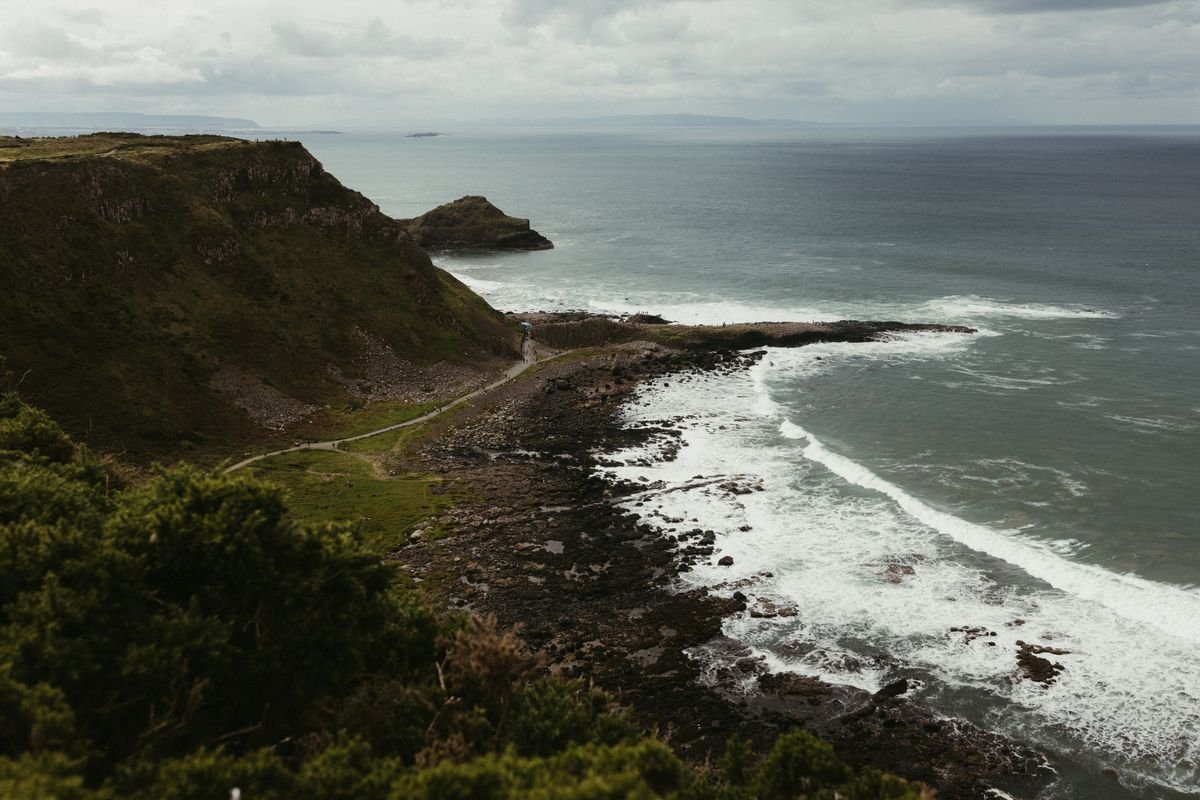
Wolfhound is the other small-group Irish adventure option, leaning toward the outdoors, walking, and getting into the landscape rather than photographing it from a lay-by. Same broad idea as Vagabond: little groups, active days, local guides.
If you’re torn between the two, it comes down to the specific itinerary and dates. Pull up the exact trip from each, compare the day-by-day the way I laid out earlier, and book whichever one puts real time where you want it.
CIE vs Trafalgar vs Insight: Which Should You Pick?
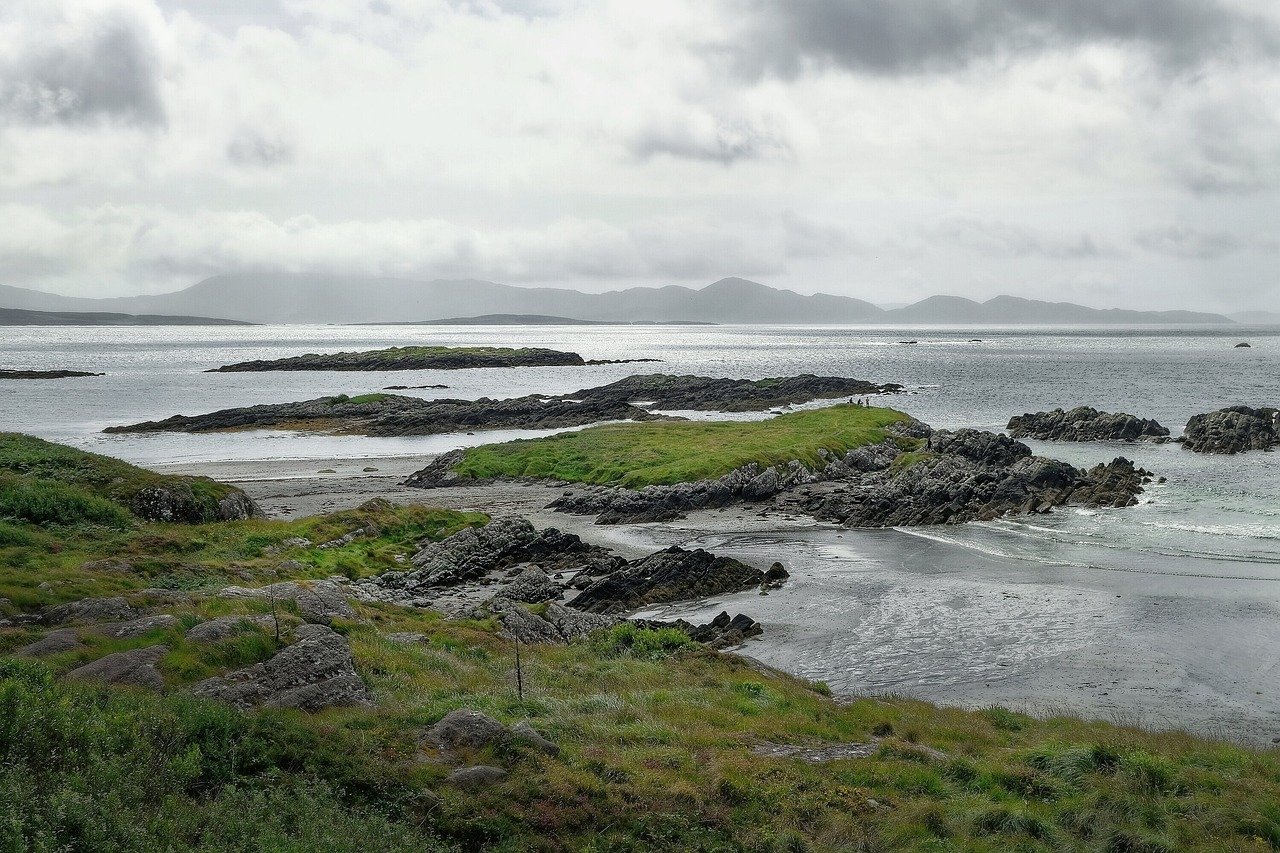
All three get you to the same cliffs, so this comes down to your budget and how much you care about elbow room. Here’s my straight call on each, and who should book it.
Pick CIE if the total price matters most. It’s the Ireland specialist, the base fare has the most meals and entries baked in, and you’re not paying for a global brand’s overhead. For most first-time visitors doing the classic loop, this is the one I’d book. It’s the default for a reason.
Pick Trafalgar if you want the local dinners. It costs a bit more than CIE and sits in the comfortable middle on group size and polish. The reason to pay the difference is the “Be My Guest” meal in a local home or farm, which you can’t book on your own. If that sounds like your kind of night, Trafalgar earns the bump.
Pick Insight if your budget stretches and you hate feeling packed in. Fewer seats on the bus, smaller groups, and better hotels in better spots. You’re paying a real premium for a slower, roomier version of the same trip. If comfort is what you’re buying and the price doesn’t sting, it’s worth it.
If I had to hand one answer to a friend with no strong preference, I’d say book CIE and put the money you save toward two extra nights in Ireland. But none of these is a wrong pick. The one that lines up with your budget and your tolerance for a full bus is the right one.
Whichever way you lean, do the one thing that actually decides it: pull up the exact dated itinerary from each, compare the day-by-day, and book the trip that puts real time in the towns you care about.
Planning Your Trip to Ireland
- Best Time to Visit Dublin: Month-by-Month Guide
- Visiting Ireland in Spring: The Complete Guide
- Scenic Towns and Villages in Ireland: 18 Best Picks
What Group Tours of Ireland Cost

Group tour pricing is confusing on purpose. The number on the brochure is rarely the number you actually pay, so the only fair way to compare CIE, Trafalgar, and Insight is to look at the cost per day and what that day includes.
As a rough guide, a classic big-bus tour runs around $150 to $250 per person per day. CIE sits at the lower end, Trafalgar in the middle, and Insight at the top. Small-group Irish operators like Vagabond cost more per day again, since you pay for fewer people and back roads a big bus can’t reach.
What’s built into the price
The base fare almost always covers your hotels, your transport, a guide, and breakfast. After that it splits. Some tours build in most dinners and all the big site entries. Others quote a lower headline price and then sell those same dinners, tastings, and entries as optional extras once you’re on the ground.
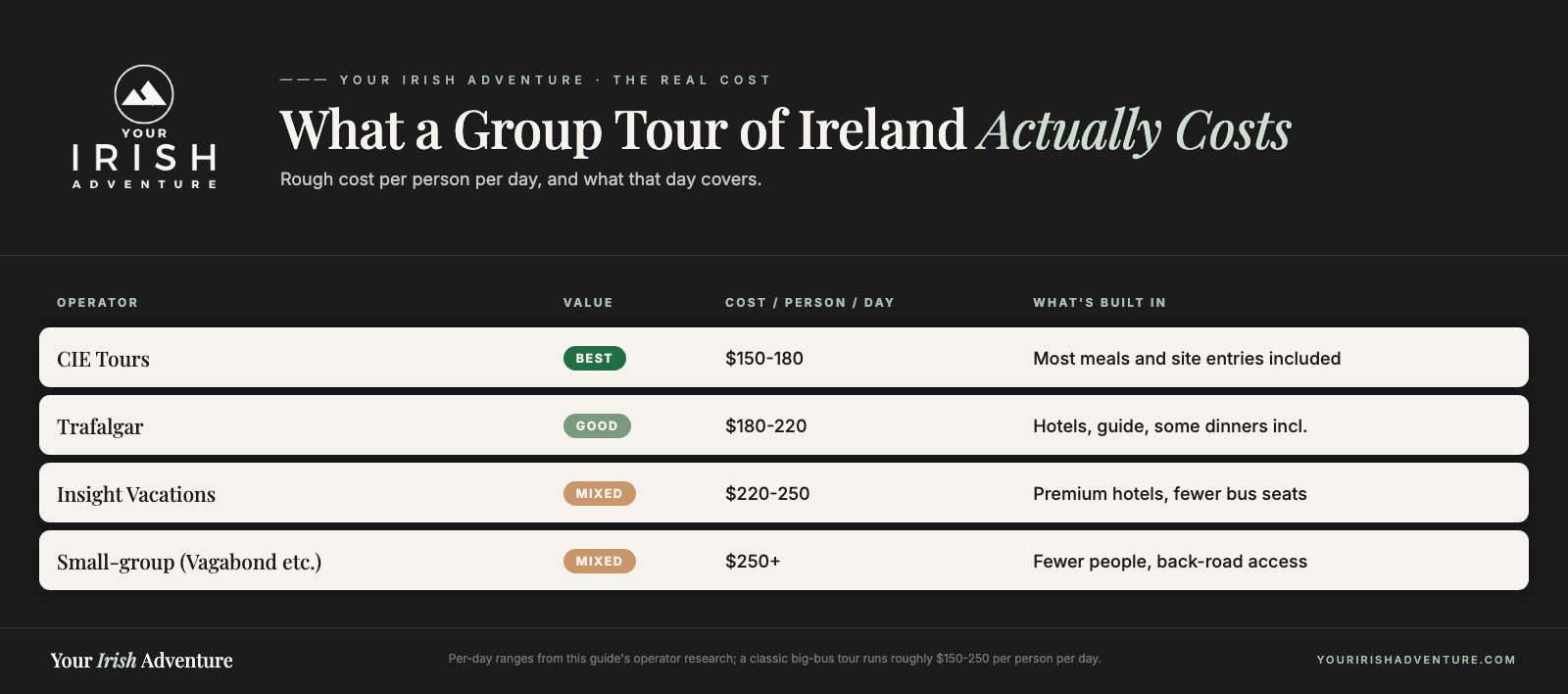
This is where CIE usually wins on real cost. A tour that looks pricier up front can be cheaper by the end if it isn’t nickel-and-diming you for a meal every night. Add up the optional extras before you decide anything is a bargain.
The costs the brochure hides

Two things reliably get left off the sticker price, and they add up fast over a week or ten days.
- Tips. A gratuity for your driver and guide is expected at the end, and on some tours it’s a suggested amount per person per day. Budget for it so it doesn’t surprise you.
- The single supplement. If you’re traveling solo, most operators charge extra for your own room, and it can be a big number. It’s the single most common reason a solo tour costs way more than the advertised per-person rate.
- Your own spending. Lunches, pints, and anything you buy in a gift shop are on you, plus optional excursions on the free afternoons.
My take on value: a tour that costs more but includes the dinners and entries is usually the better deal, because you skip the daily math and the hunt for a restaurant in a town you don’t know. Compare the all-in number, not the headline, and book the one that’s cheaper once everything’s actually in the cart.
Where to Stay
If you’d rather book your own nights around the tour, or bolt a few extra days onto either end, these are the hub towns your group tour will run through. Here are well-rated, central places to stay in each one.
In Dublin
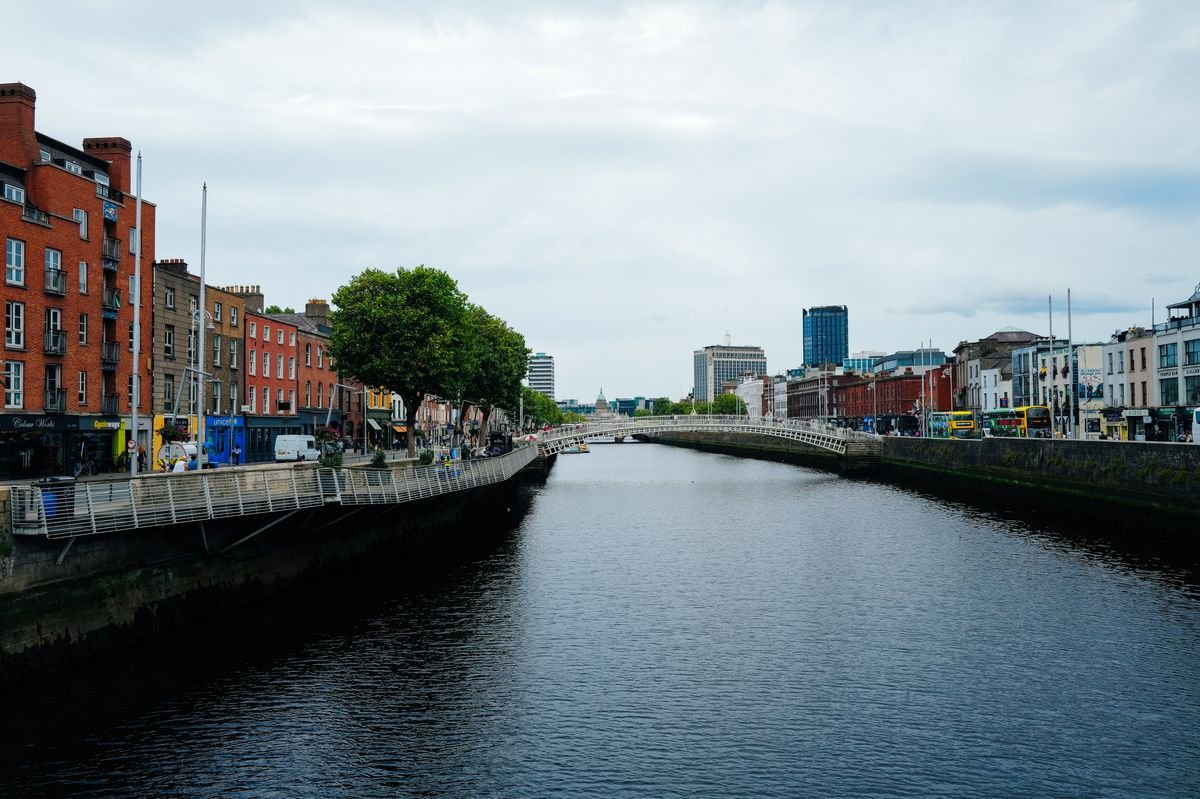
Almost every tour starts and ends here, so it’s worth an extra night or two on the front. Stay central and you can walk to the pubs and the museums instead of taxiing in.
Where to Stay in Dublin
In Galway
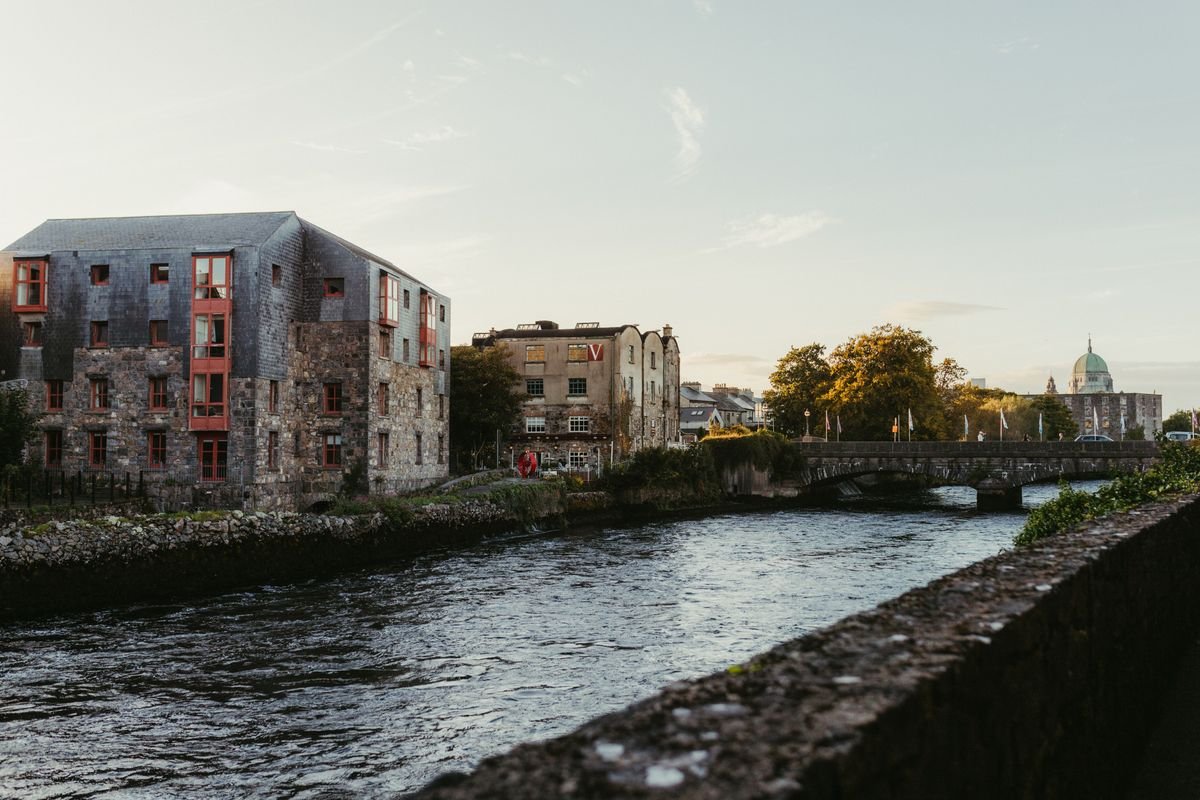
Galway is the west-coast base most tours stop in, and it’s the one town where I’d fight for a second night. Book somewhere close to the Latin Quarter so the trad sessions are a short walk home.
Where to Stay in Galway
In Killarney
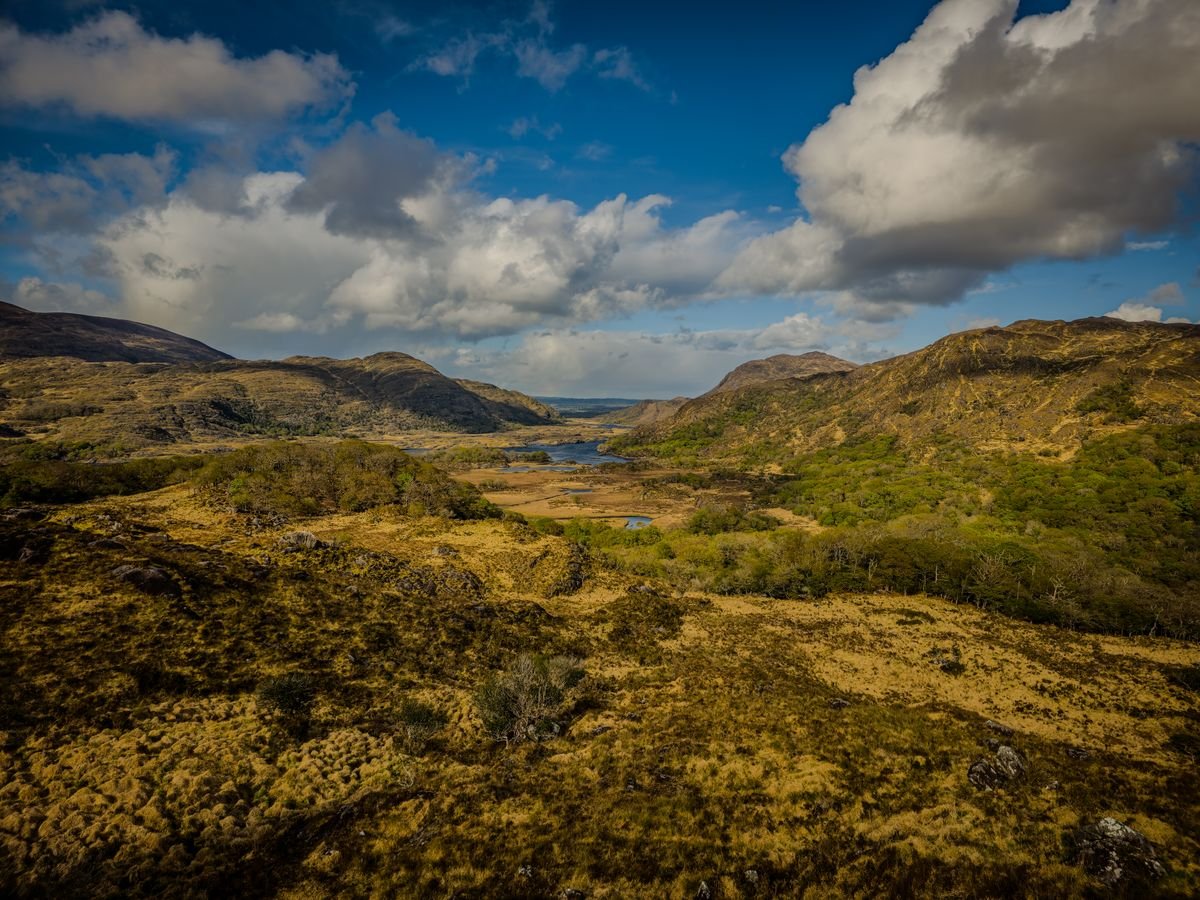
Killarney is the base for the Ring of Kerry and the national park, so tours usually give it a night. Staying in town puts you steps from the restaurants and the trailheads.
Where to Stay in Killarney
Frequently Asked Questions
The questions we get asked most about the best group tours of Ireland, from how long to book to which operator suits a first trip.
How many days do you need for a group tour of Ireland?
Most of the classic itineraries run 7 to 12 days, and that’s about right for a first trip. A week covers the greatest hits at a fast pace. Ten days or more lets you slow down and actually sit in a few towns instead of just passing through them.
When is the best time to take an Ireland tour?
Shoulder season is the sweet spot. Late spring and early autumn give you thinner crowds at the big sites, easier pub tables, and prices below the summer peak. We drove the country in shoulder season and the popular stops felt a lot calmer than they do in July.
Are group tours of Ireland worth it?
They are if you’d rather not deal with driving on the left, booking hotels, and planning a route. You pay a premium over doing it yourself, but you hand off all the logistics and just show up. For a lot of first-time visitors, that trade is worth every cent.
What’s the difference between a big-bus tour and a small-group tour?
A big-bus tour packs 30 to 40 people onto one bus and sticks to the main roads and standard stops. It’s efficient and cheaper per day. A small-group tour runs fewer people, often in smaller vehicles, and can reach back roads and trails a big bus physically can’t.
Do I need to tip on an Ireland group tour?
Yes. A tip for your driver and guide is expected at the end of the trip, and some operators suggest a set amount per person per day. It’s not built into the fare, so budget for it up front and it won’t catch you off guard.
Which company is best for first-time visitors?
For most first-timers doing the classic island loop, CIE is the one I’d book. They’re the Ireland specialist, the base price includes the most meals and entries, and you’re not paying for a global brand’s overhead. It’s the safe default that gets you to all the big sights without overthinking it.
In short
- Small-group tours typically cap at 24 people; standard bus tours run up to 40.
- Hotels centered in Galway or Killarney are worth more than larger highway properties.
- A tour sleeping two nights in one town gives you time to actually see it.
- CIE, Trafalgar, and Insight all route through the Cliffs of Moher and Ring of Kerry.
- A packed 12-stops-in-8-days itinerary covers more ground but leaves little time in any place.
Final Thoughts
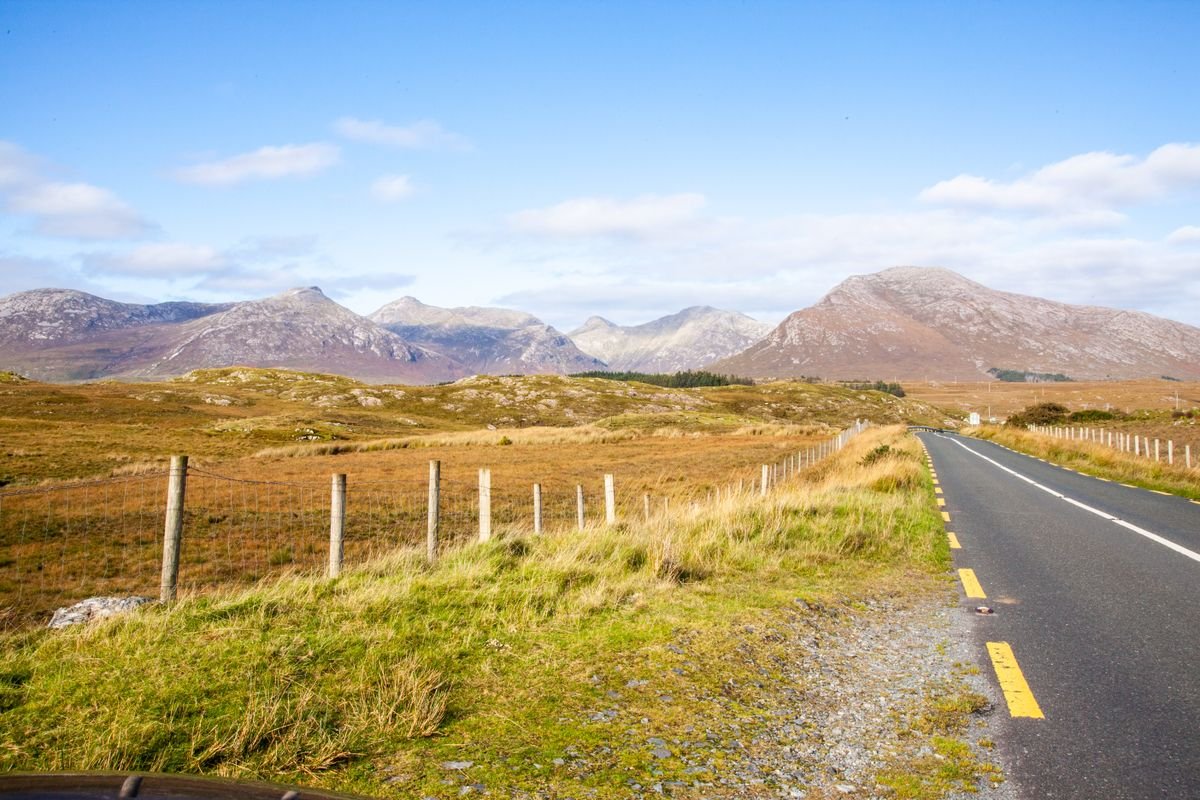
A group tour of Ireland is a straight trade. You give up the freedom to stop where you want, and you get someone else handling the driving, the hotels, and the daily route. For a first trip, when you don’t want to think about roundabouts or road signs, that’s a fair deal.
All three of the big operators do that job well, so you’re not going to ruin your trip by picking the wrong one. You’ll ruin it by booking a pace that doesn’t suit you. Get that right and the rest sorts itself out.
So do the boring homework before you pay. Open the dated day-by-day, count the nights per town, and add up what’s actually included versus sold to you later. The tour that reads best on that spreadsheet is your tour, whatever the brochure cover looks like.
Whichever operator you land on, you’re going to have a good time. Ireland does most of the work. Book the one that puts real hours where you want them, pack for rain, and go.
Like it? Pin it!
Save this guide for later