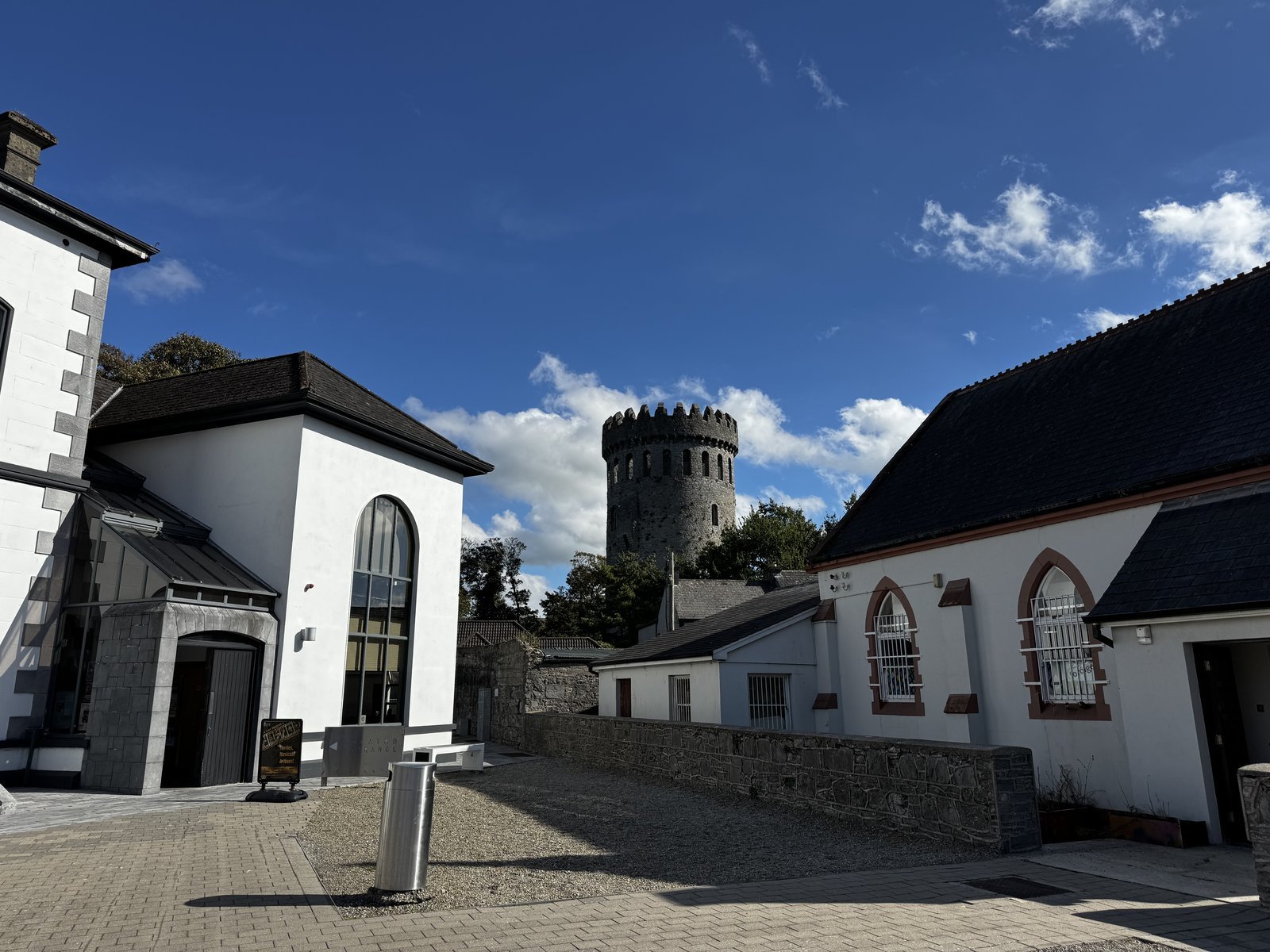
I climbed the wooden spiral stairs to the top of the round tower at Nenagh Castle, looked out through a stone window alcove, and realized the medieval castles in Ireland are far better than the postcard versions I’d expected. Some are ruins on a cliff. Some you can climb. A couple, like Blarney, are touristy and still worth it.
We spent about two weeks driving Ireland on our last trip, and castles kept pulling us off the main road. Below are the ten I’d actually build a route around, plus how to string them into a road trip and what to know before you go.
More Irish Castle Guides
- The Best Castles in Ireland
- Castles Near Dublin: 10 Worth Visiting in 2026
- 5 Top Castles To Visit in Cork (+Castle Accommodation)
- How Many Castles Are In Ireland?
Quick Answer:
The best medieval castles in Ireland include Trim in Meath, the Rock of Cashel and Cahir in Tipperary, Blarney near Cork, King John’s Castle in Limerick, Carrickfergus and Dunluce in Antrim, Ross Castle in Killarney, the Rock of Dunamase, and Redwood Castle. Most are OPW sites, and many of the ruins are free to walk around.
How We Picked These Castles
Ireland has hundreds of castles, but a lot of them are a pile of stones in a farmer’s field with a locked gate. The medieval castles in Ireland on this list are different. Every one here is real medieval fabric you can walk up to, and in most cases walk inside.
We picked them on three things: how much of the original castle still stands, how easy it is to actually visit, and whether it earns the drive. A few are famous. A few are ruins you’ll have mostly to yourself.
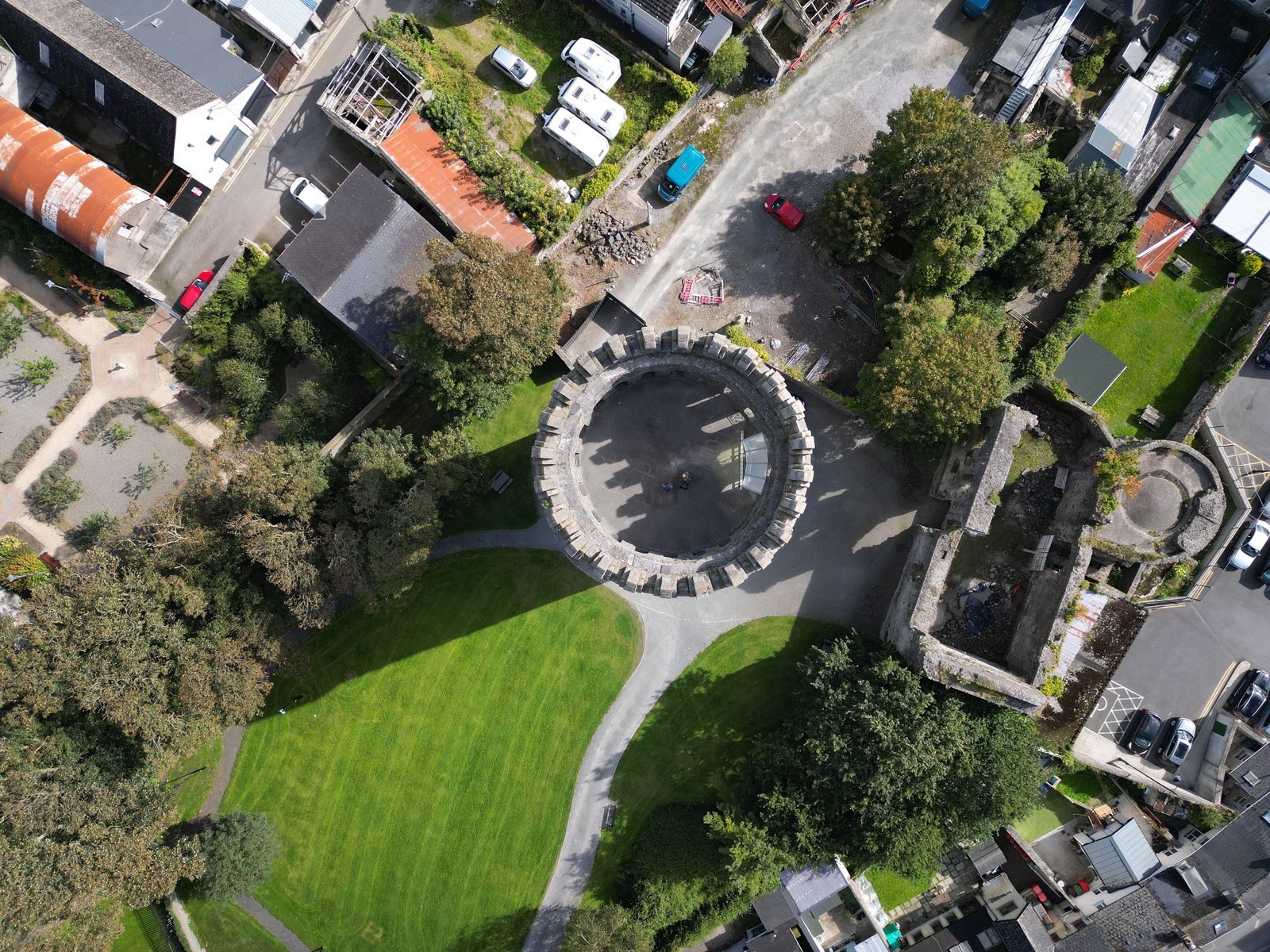
Nenagh in North Tipperary didn’t make the ten, but it’s the kind of stop that proves the point. A lot of people drive straight past it, and you can climb the whole round tower with almost nobody else there.
The Best Medieval Castles in Ireland
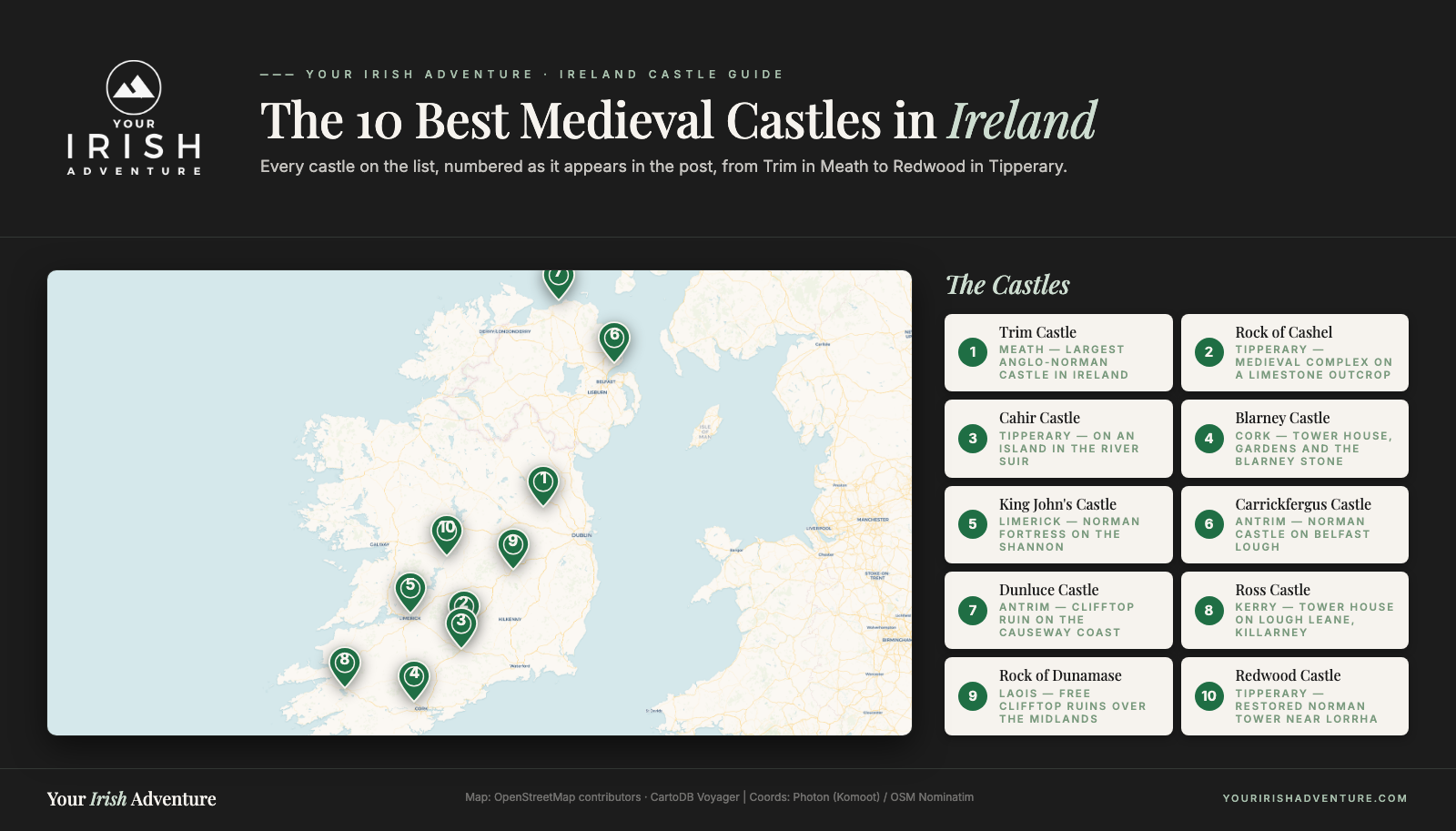
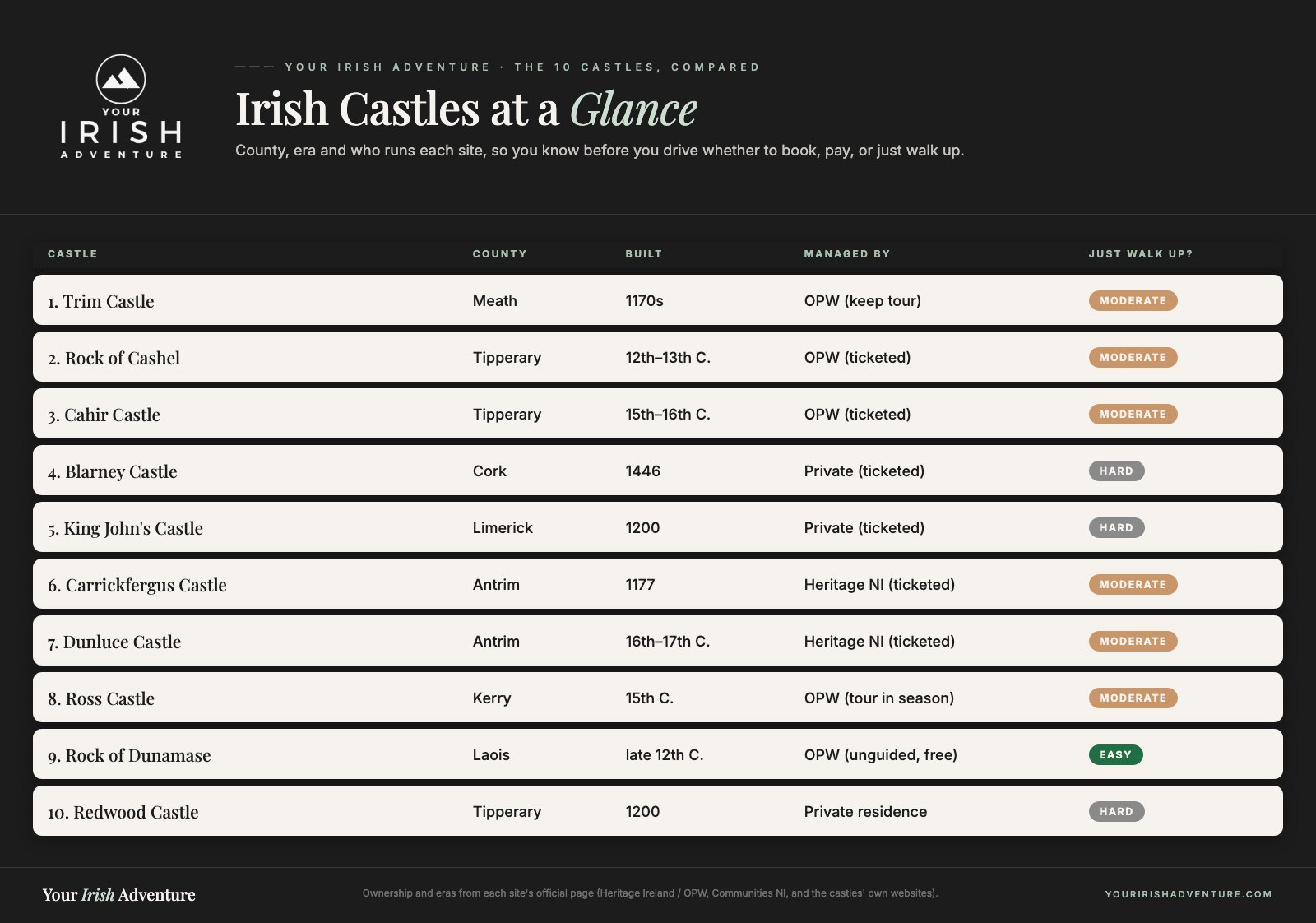
These ten are spread right across the country, from Trim in Meath down to Kerry and Cork and up to the Antrim coast. They run from massive Norman keeps you can climb to clifftop ruins with nothing left but walls and a view. Here’s the list.
Trim Castle, Meath
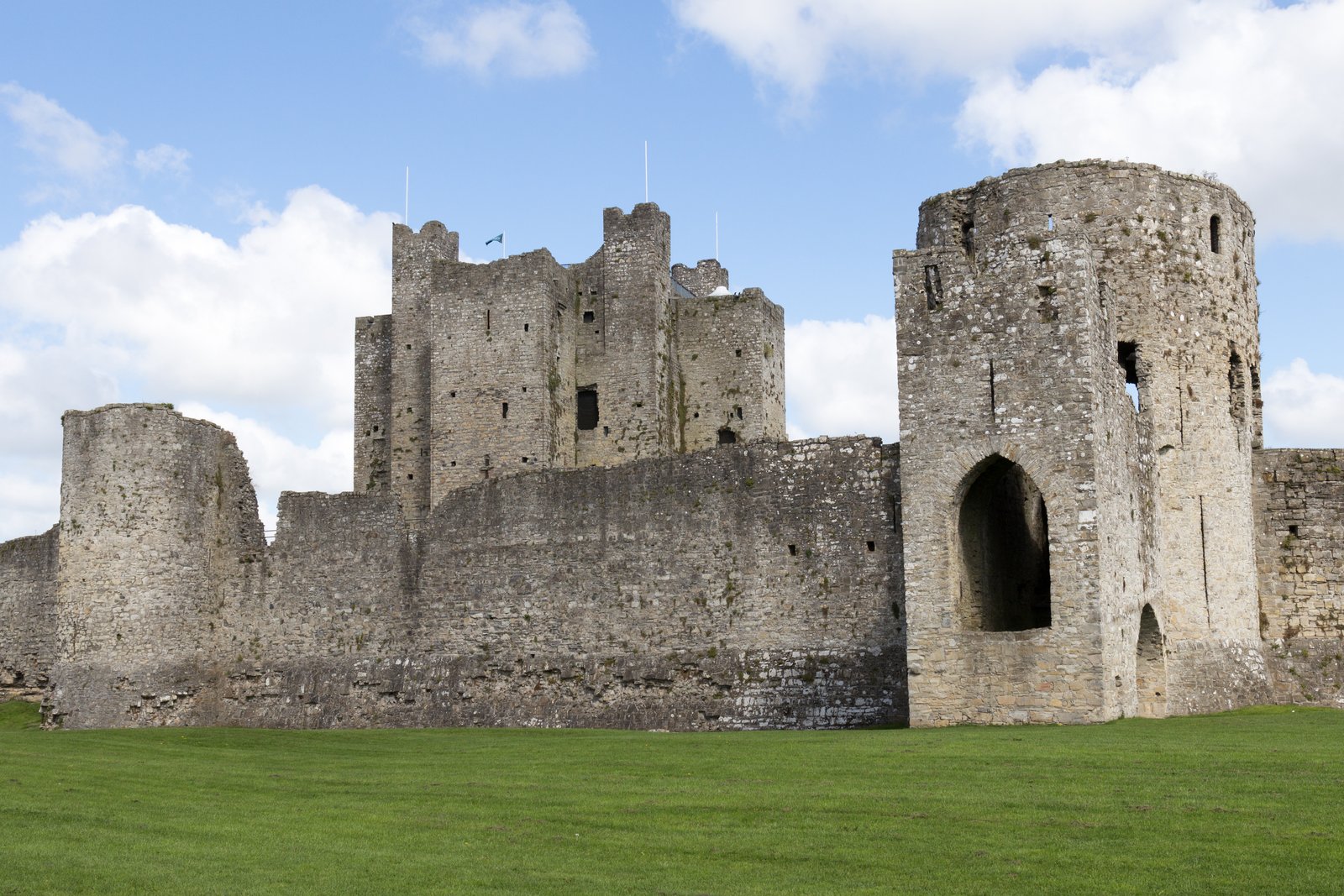
Trim Castle is the largest Anglo-Norman castle in Ireland, and it looks it. Hugh de Lacy started it in the 1170s, and the huge keep at the center has a rare twenty-sided shape you won’t see anywhere else in the country.
You can only get inside the keep on a guided tour, and it’s worth booking one. The guides take you up through the levels to the top, where you look out over the River Boyne and the town of Trim.
Film fans will know it too. Big chunks of Braveheart were shot here in the 1990s, standing in for both Scotland and York. It’s about 45 minutes northwest of Dublin, which makes it an easy first castle on any route.
Rock of Cashel, Tipperary
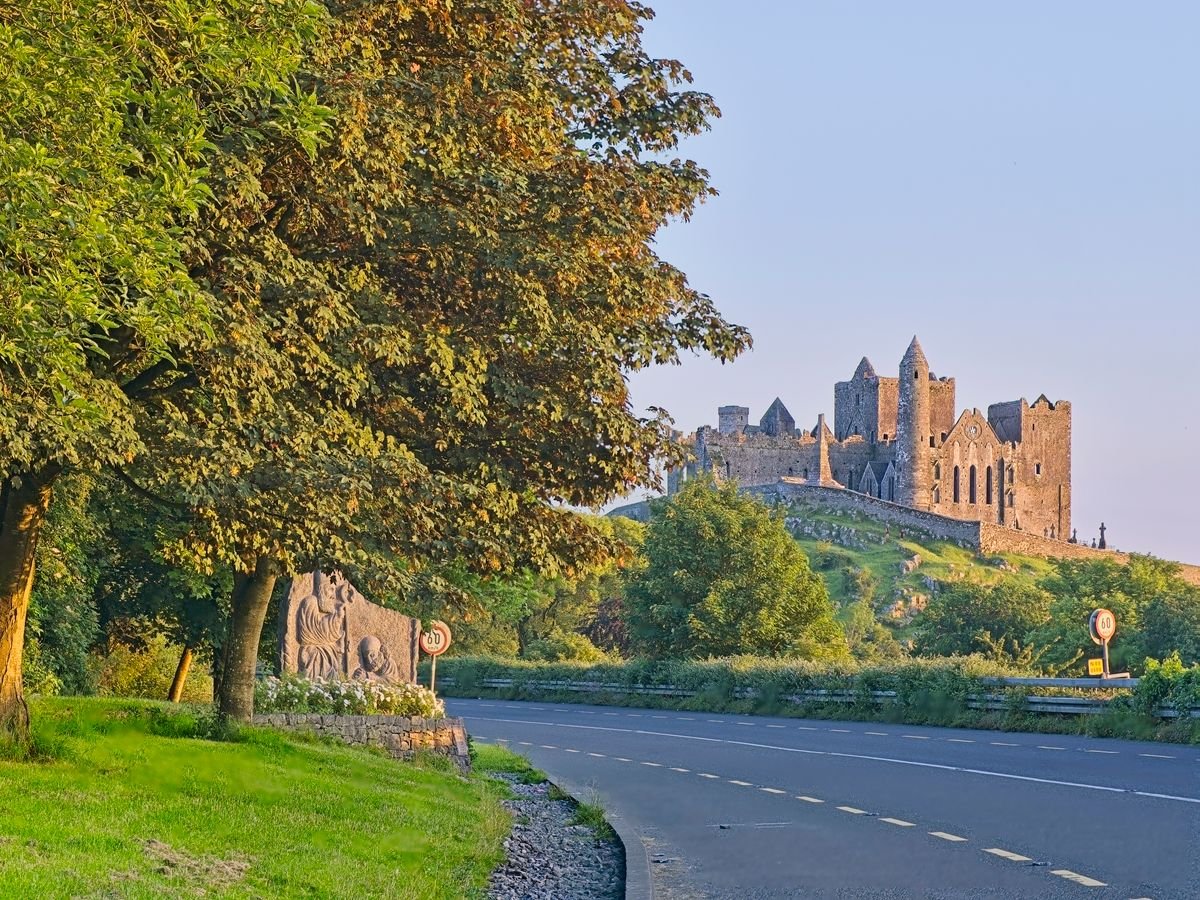
The Rock of Cashel isn’t a castle in the usual sense, it’s a whole medieval complex on a limestone outcrop that rises straight out of the Tipperary plain. You can see it from miles away, and that’s the point of where they built it.
This was the seat of the Kings of Munster before it was handed to the church in 1101. Most of what stands now is 12th and 13th century: a round tower, a Romanesque chapel with faded wall paintings, and a roofless Gothic cathedral.
Give it a couple of hours and take the guided tour if one’s running. Cormac’s Chapel, tucked in behind the cathedral, is the real prize, and you need a guide to get the full story of the carvings inside.
Cahir Castle, Tipperary
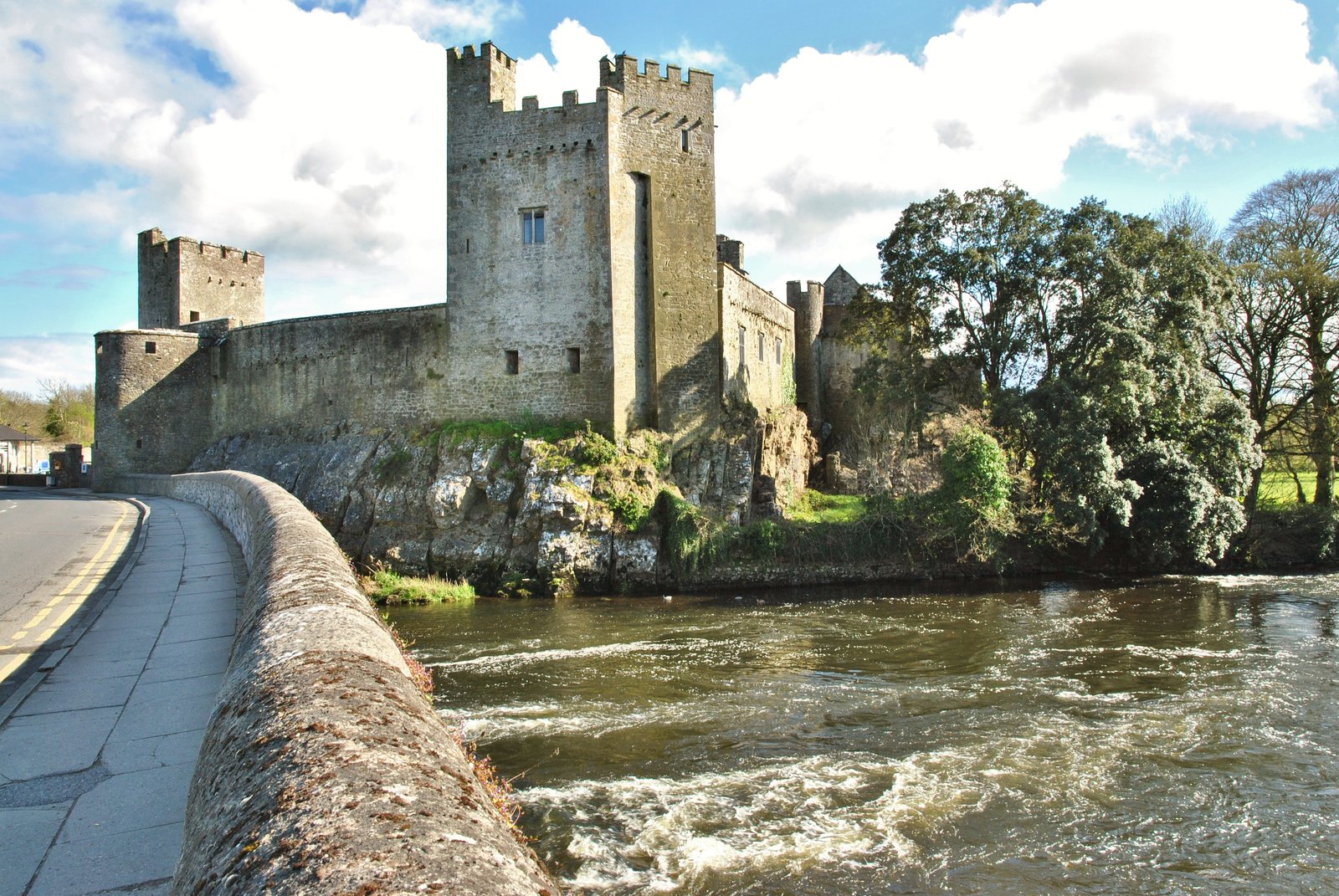
Cahir Castle sits on a rocky island in the River Suir, and it’s one of the largest and best-preserved castles in Ireland. Most of it went up in the 15th and 16th centuries under the Butler family, and it still has its keep, high walls, and defensive towers intact.
What makes it worth the stop is how complete it feels. You can walk the towers, cross the courtyards, and see a working portcullis, one of the few left in the country. There’s a model inside that shows how the whole thing fit together.
It’s an OPW site with a small parking lot right beside it. Cahir sits just off the M8 between Cashel and Cork, so it slots neatly into the same day as the Rock of Cashel.
Blarney Castle, Cork
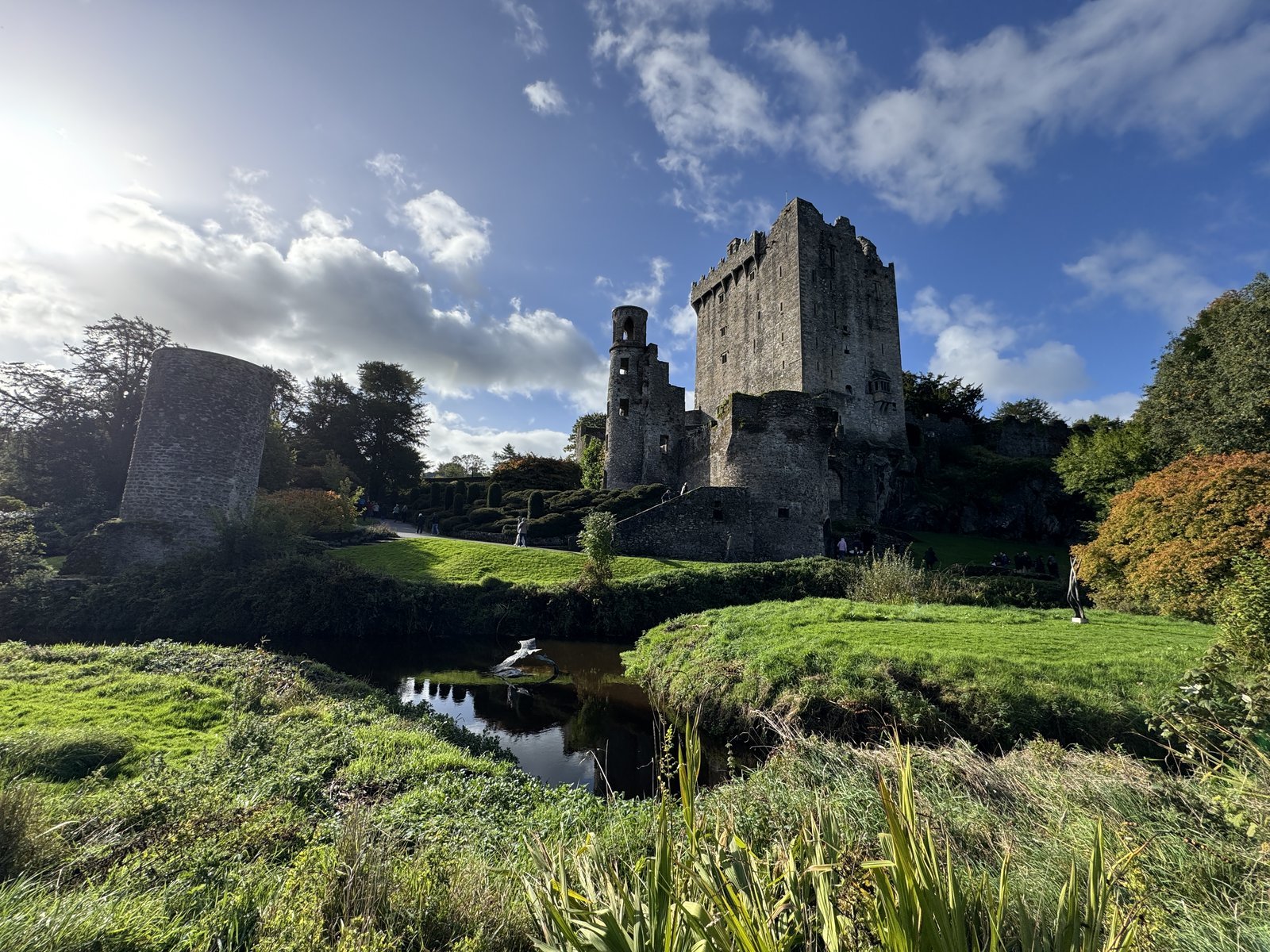
I expected Blarney Castle to be a tourist trap, and I was wrong. The tower house dates to 1446, and yes, I leaned back over the parapet, held the iron bars, and kissed the Blarney Stone. That part is as touristy as it sounds.
The surprise is everything around the tower. The grounds are huge, and we spent longer in the Fern Garden and on the River Bank Walk than we did in the castle itself. The grounds of Blarney House, a Victorian mansion, are part of the ticket too.
Allow two to three hours minimum. The tower is more substantial than photos let on, and the gardens are underrated. There’s a cafe on site, and it’s a 45-minute, 32km drive from Cobh into Cork if you’re linking it with the coast. Without a car, you can book a Blarney Castle day tour from Cork on GetYourGuide that pairs it with Kinsale.
King John’s Castle, Limerick
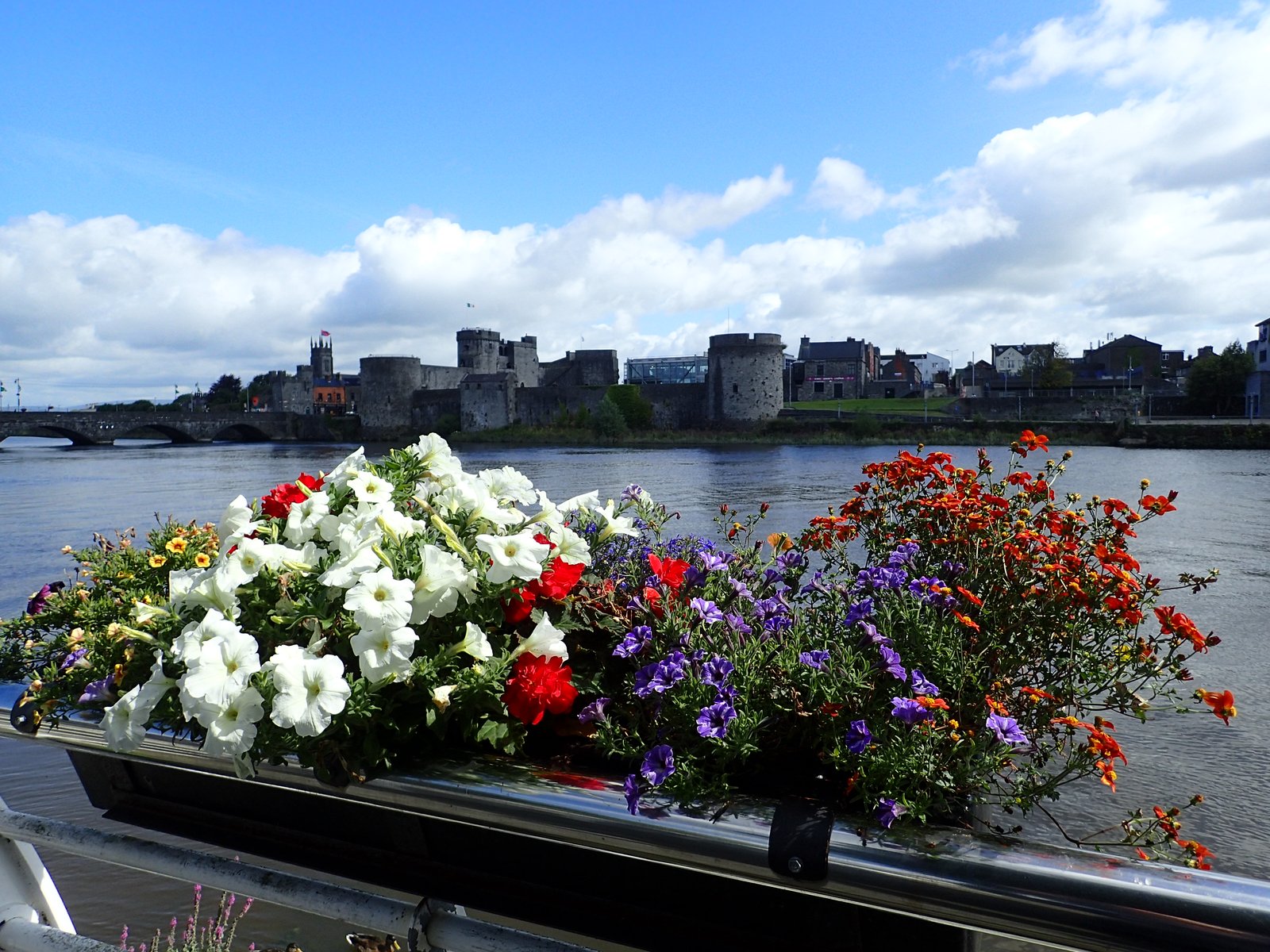
King John’s Castle sits right on the Shannon in the middle of Limerick city, on King’s Island. It’s a Norman fortress from around 1200, with big drum towers and curtain walls looking out over the river.
This is the one to pick if you’re traveling with kids or want the history spelled out. The visitor center is interactive, with touchscreens, projections, and a recreated siege scene, and there are real archaeological digs preserved under glass.
You can climb the towers for views over the river and the city. It’s an easy walk from the center of Limerick, so you don’t even need the car once you’re in town.
Carrickfergus Castle, Antrim
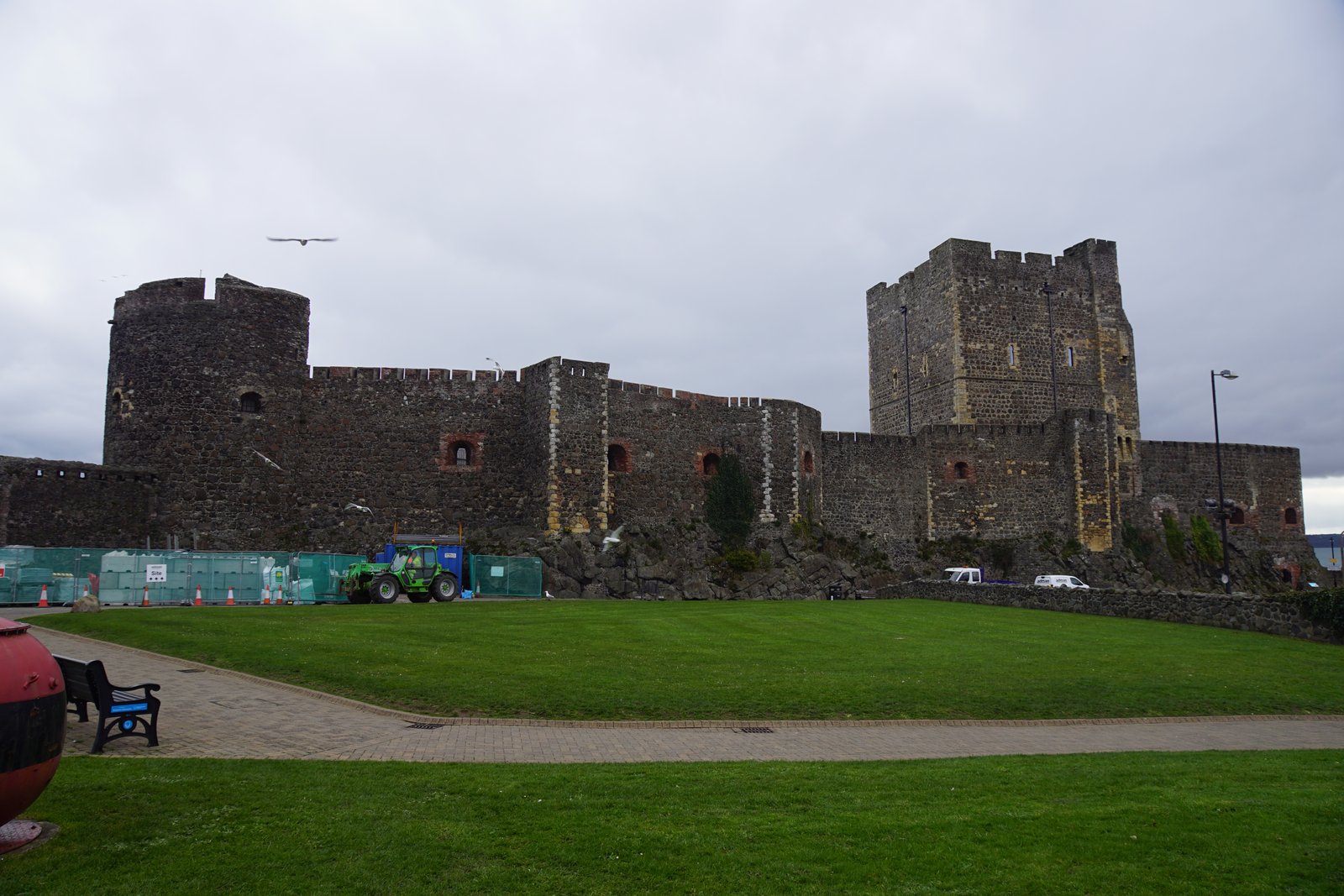
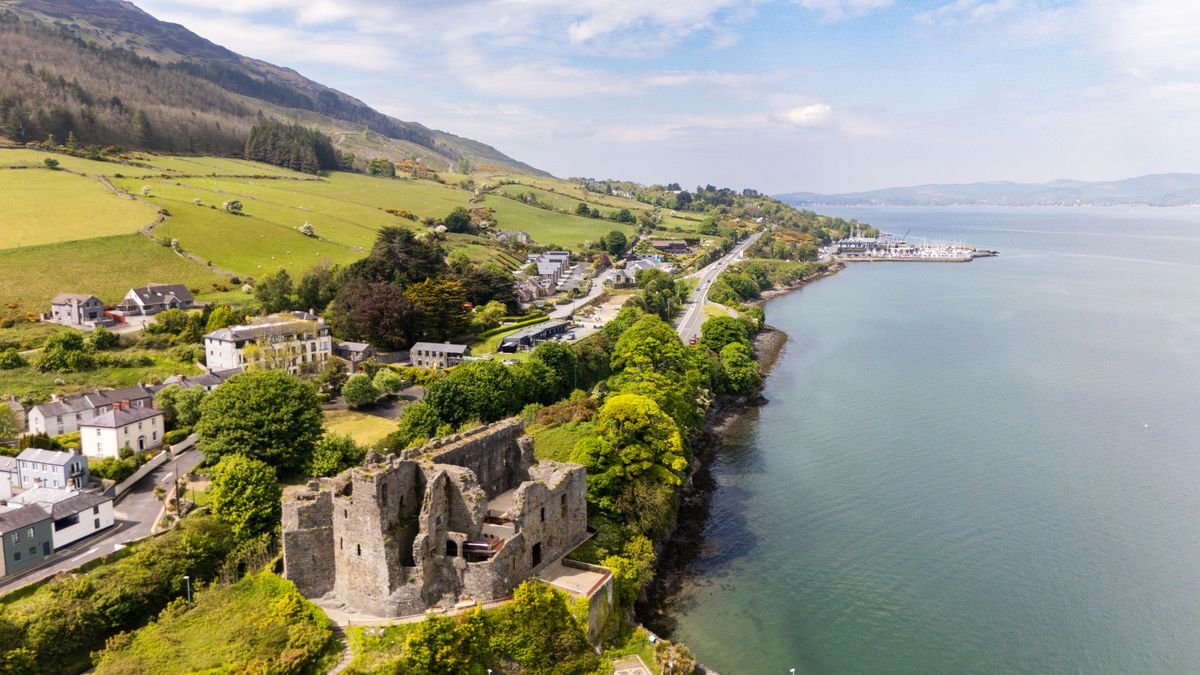
Carrickfergus is one of the best-preserved Norman castles in Ireland, sitting on the shore of Belfast Lough in County Antrim. John de Courcy began it in 1177, and it’s an imposing block of stone that still dominates the harbor.
What sets it apart is how long it stayed in use. The castle was a working garrison right up until the 1920s, so it saw active military service for around 750 years. Inside there are cannons, a keep you can climb, and figures set up to show how the place worked.
It’s about 20 minutes north of Belfast, which makes it an easy add-on if you’re doing the city or heading up the Antrim coast toward the Giant’s Causeway.
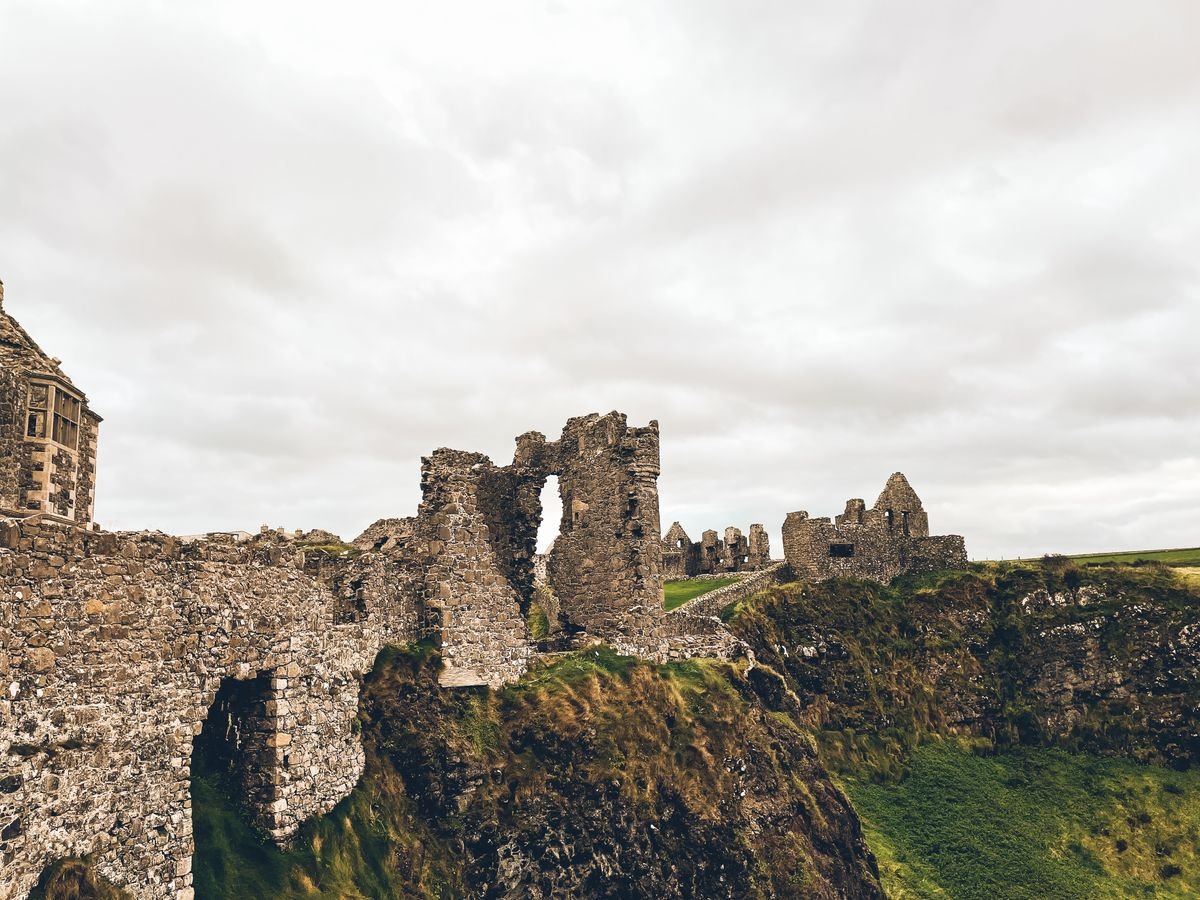
Dunluce Castle, Antrim
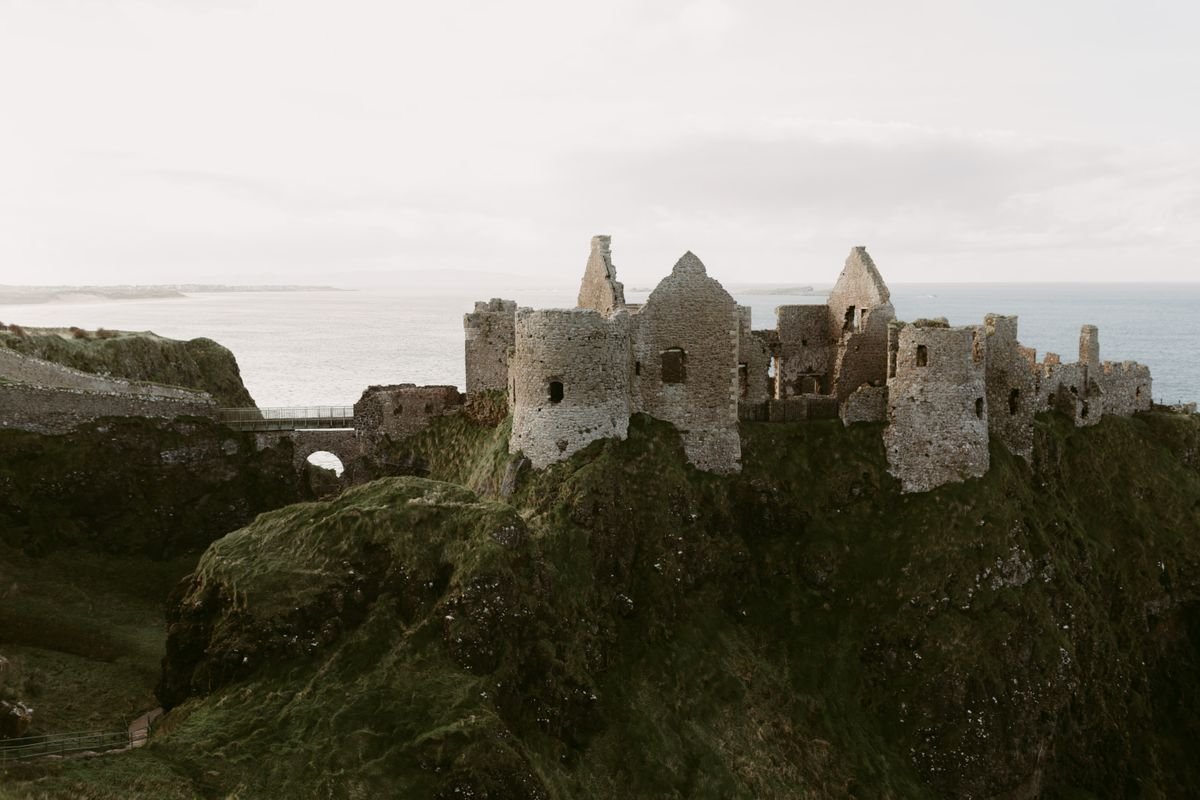
Dunluce is the ruin everyone pictures when they think of a castle on the edge of Ireland. It clings to a basalt outcrop on the Antrim coast with the sea on three sides, and a chunk of the kitchen reportedly fell into the ocean in 1639.
The MacDonnell family expanded it in the 16th and 17th centuries, and the ruins you walk through today are mostly from that period. There’s no roof and no reconstruction, just walls, arches, and a serious drop to the water.
Game of Thrones fans will recognize it as the exterior of House Greyjoy’s Pyke. It sits right on the coast road between the Giant’s Causeway and Portrush, so it’s an easy stop on that stretch. If you’re not driving, you can book a Giant’s Causeway and Antrim coast tour from Belfast on GetYourGuide that runs this whole stretch of coast.
Ross Castle, Kerry
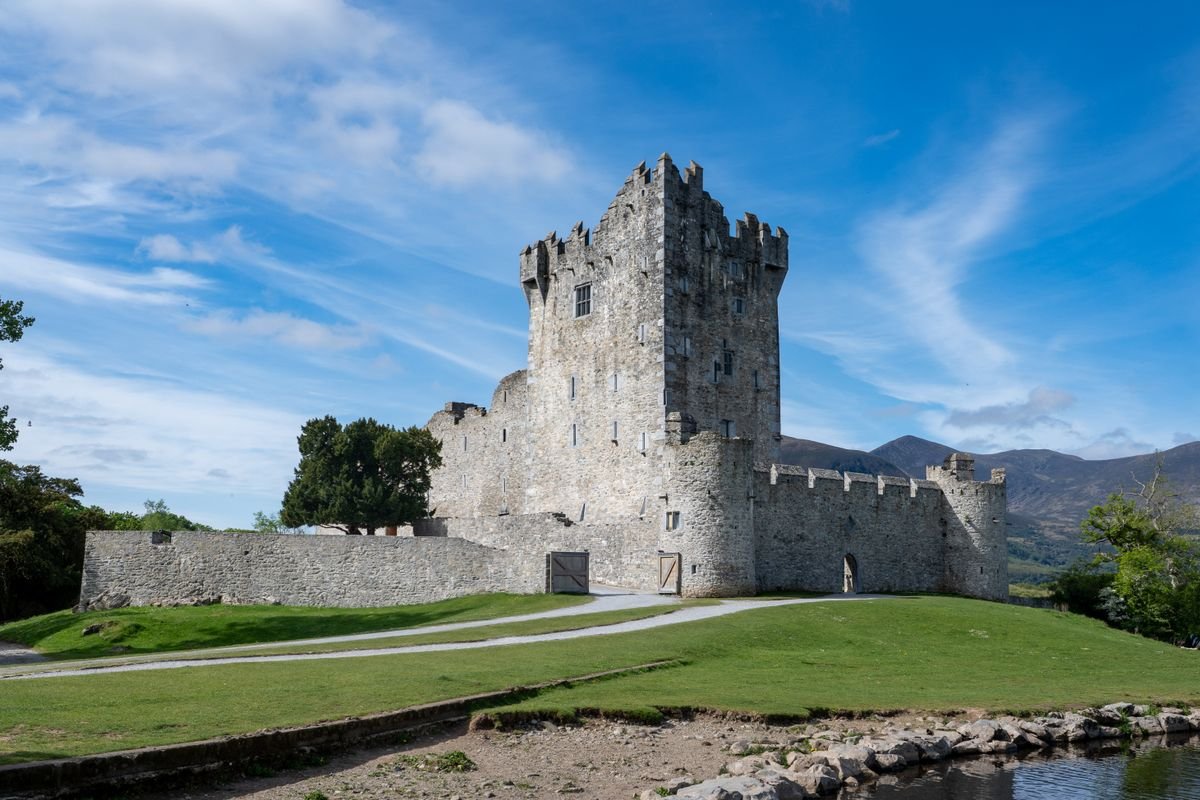
Ross Castle is a 15th-century O’Donoghue tower house on the shore of Lough Leane, and it sits inside Killarney National Park. We spent two nights in Killarney, and even in heavy rain the park is the real thing.
We were around the castle’s stretch of the lake, along with Muckross House, the Muckross Abbey ruins, and Torc Waterfall. The abbey, a 15th-century Franciscan friary, was worth the walk on its own in the mist.
The tower itself is well restored and you can tour inside in season. Combine it with a boat trip on the lake or the walk along the shore, and it’s an easy stop before or after the Ring of Kerry drive.
👉 Read our full guide to Killarney National Park and our visitor guide to Muckross House.
Rock of Dunamase, Laois
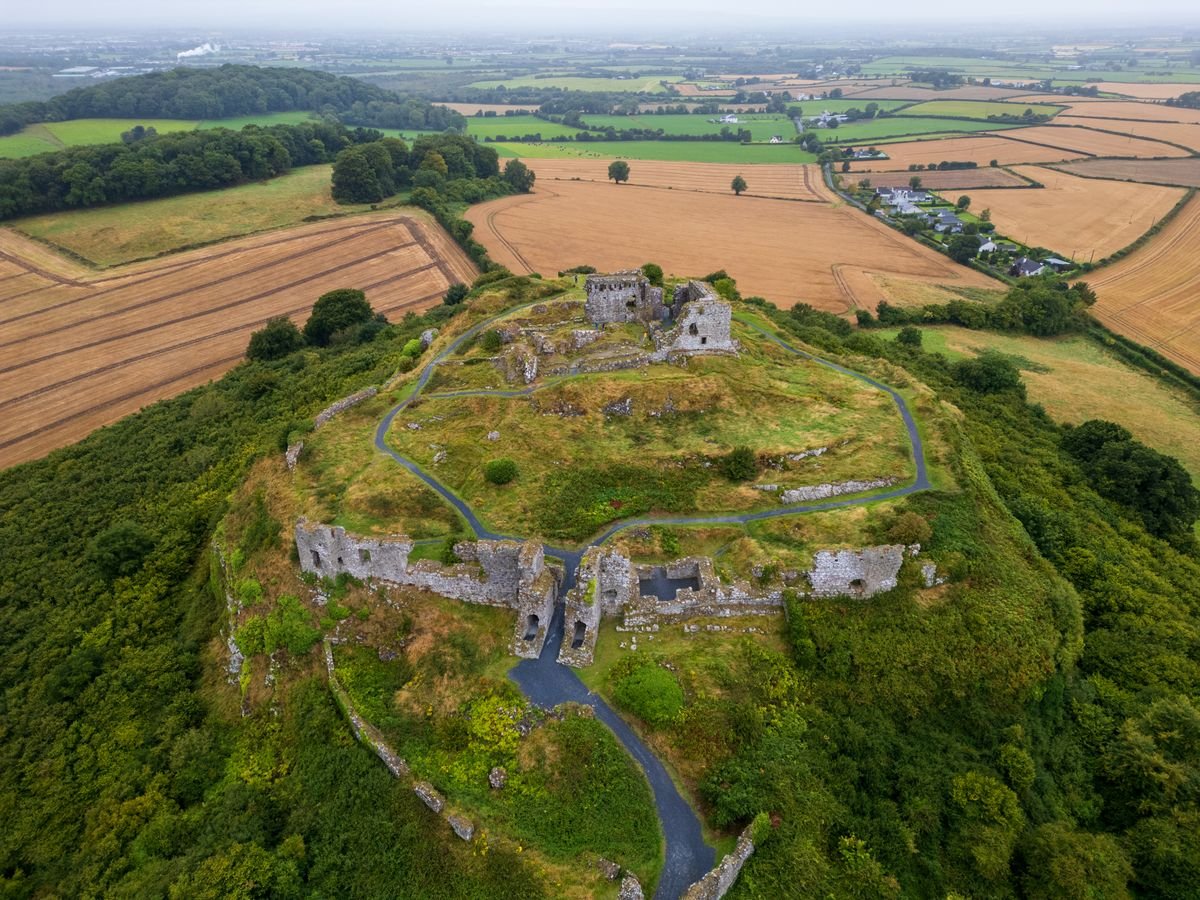
The Rock of Dunamase is a set of ruins on a rocky hill in County Laois, and it’s completely free to visit. The Anglo-Norman fortress here dates to the late 12th century and came into the family of Strongbow through marriage.
There isn’t a lot of intact castle left, but that’s not why you come. You climb up through the ruined gateways and walls to the top, and the views over the midlands stretch for miles in every direction.
It’s just off the M7 near Portlaoise, with no ticket office and no crowds. Pull in, walk up, and you’ll often have the whole hill to yourself.
Redwood Castle, Tipperary
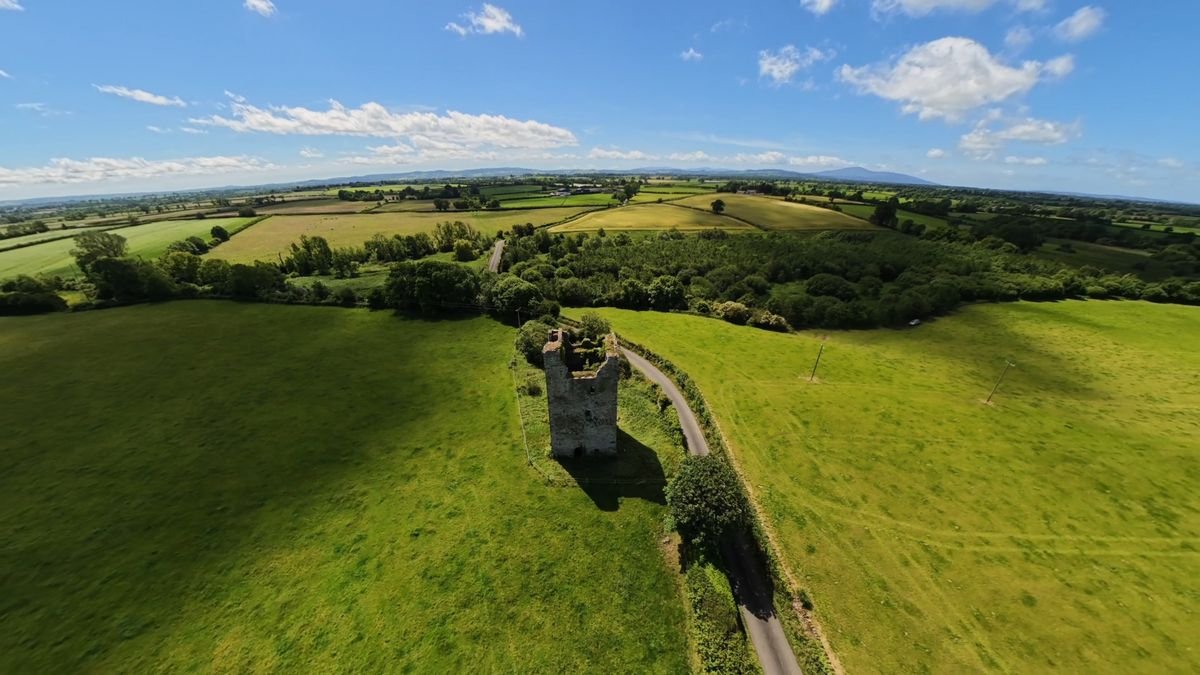
Redwood Castle is the least famous name on this list, and that’s part of the appeal. It’s a restored Norman tower castle from around 1200, out in the quiet northwest corner of Tipperary near Lorrha.
Its story is different from the others. For centuries it was home to the MacEgan family, who ran a famous school of Brehon law here, the old native Irish legal system. The castle was restored in the 20th century and now works as a private residence.
Because it’s private, you’ll want to check ahead for open days or tour arrangements rather than just turning up. It’s a real detour, but if you like your castles without a parking lot full of buses, it’s a good one.
Where to Stay
None of these castles is a hotel, so you’ll base yourself in a nearby town and drive out. Here are the towns worth booking around, grouped by the castles they put you closest to.
For Blarney and Cork
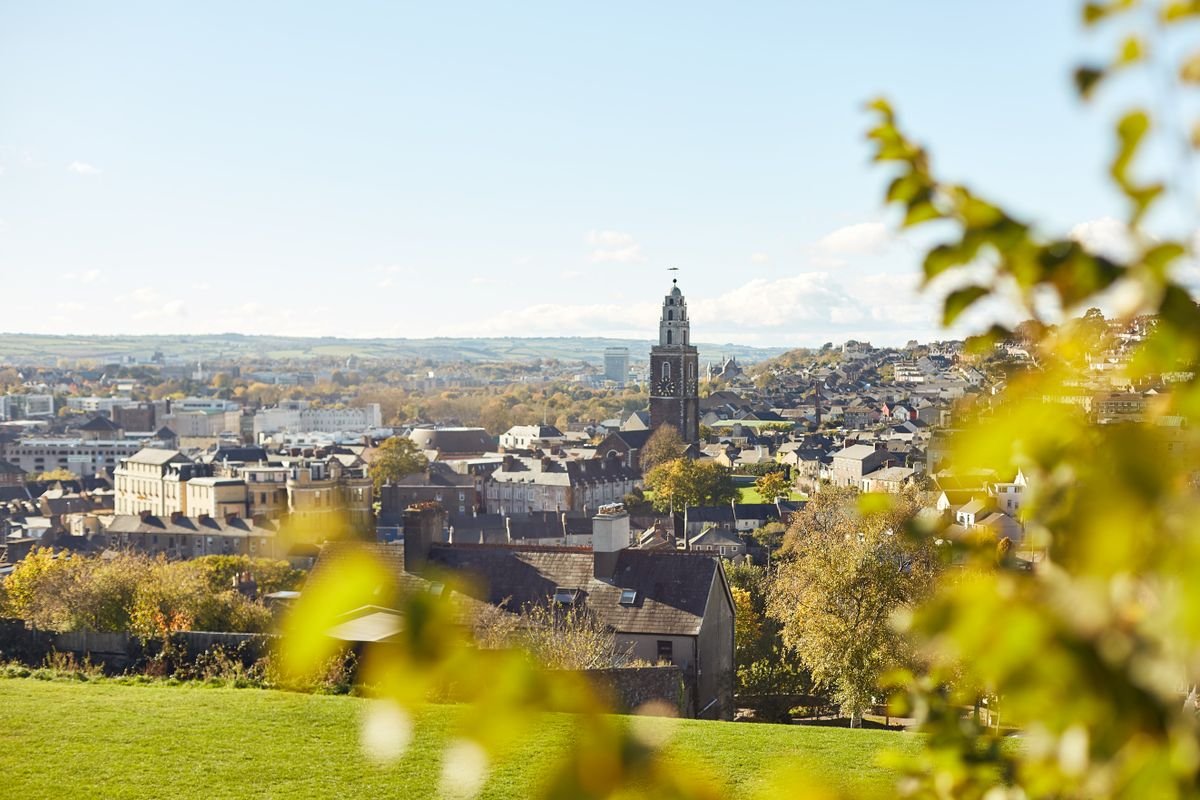
Blarney is a short drive from Cork city, and the village itself has a few good options if you want to be at the castle gates when it opens.
Where to Stay Near Blarney
For Ross Castle and Killarney
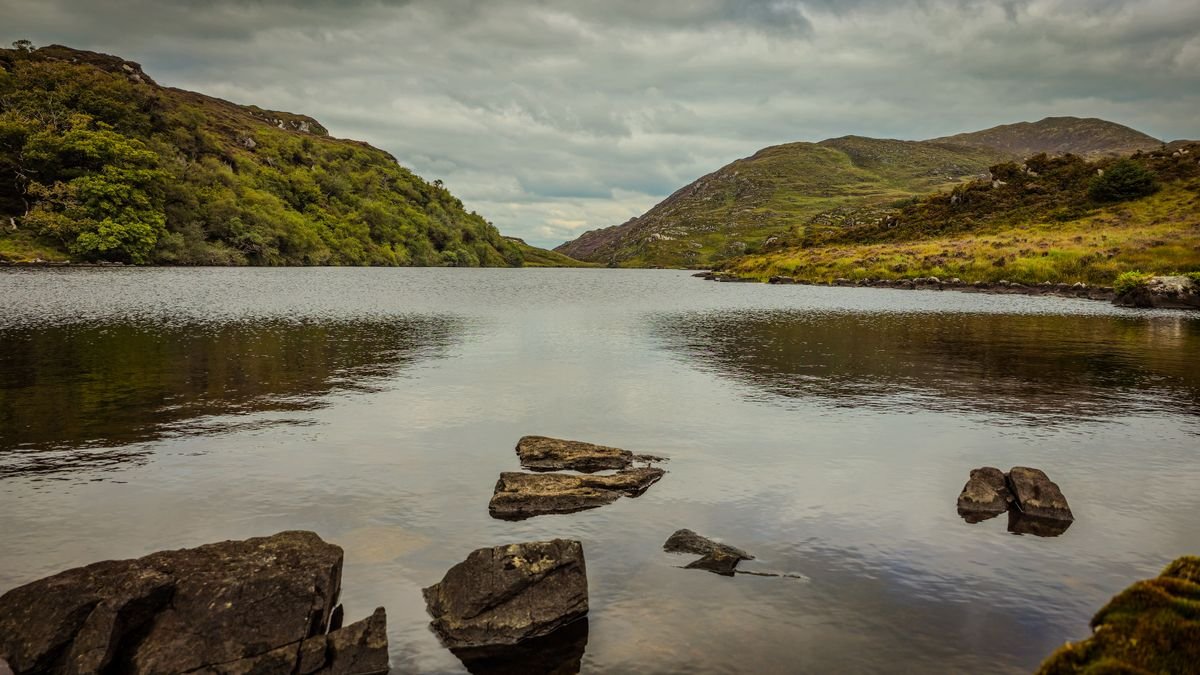
Ross Castle sits inside Killarney National Park, so Killarney town is your base for the whole southwest corner, the Ring of Kerry included.
Where to Stay in Killarney (for Ross Castle)
For the Rock of Cashel and Cahir
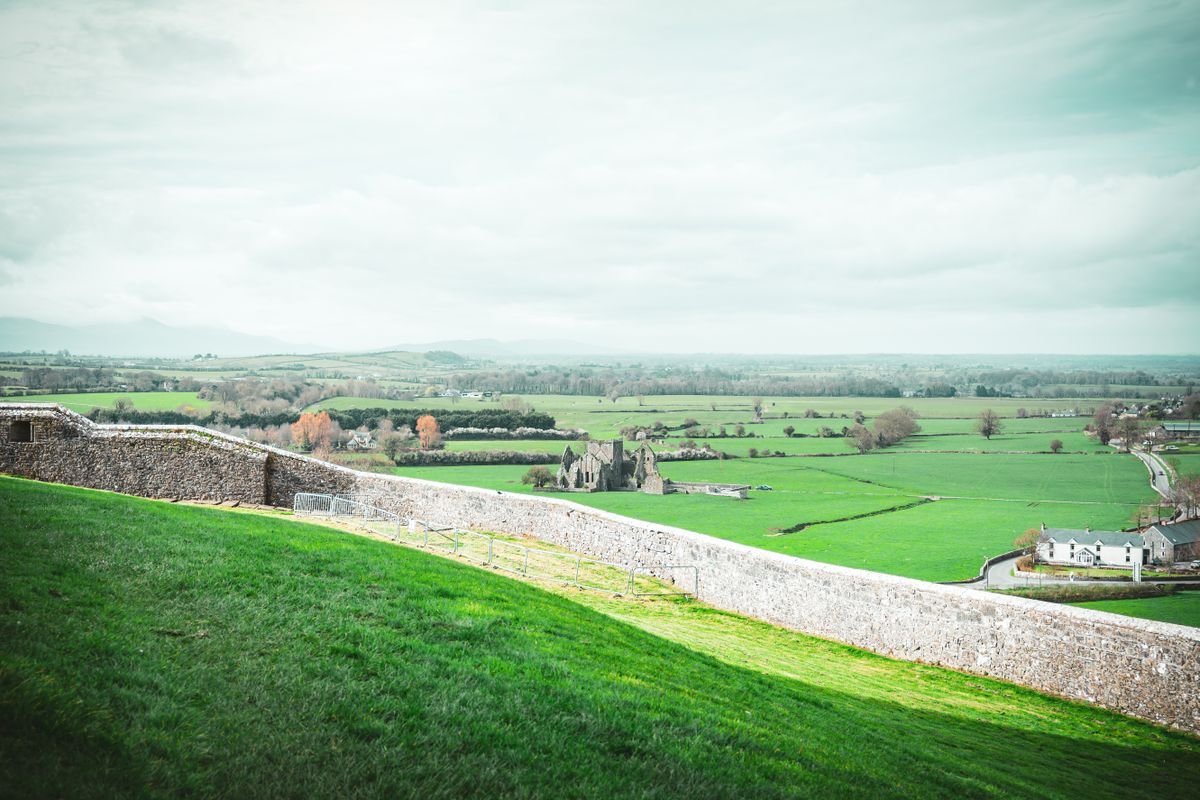
Cashel and Cahir sit a short hop apart on the M8, so one Tipperary base covers both castles in a single day.
Where to Stay Near Cashel and Cahir
For Dunluce and the Antrim Coast
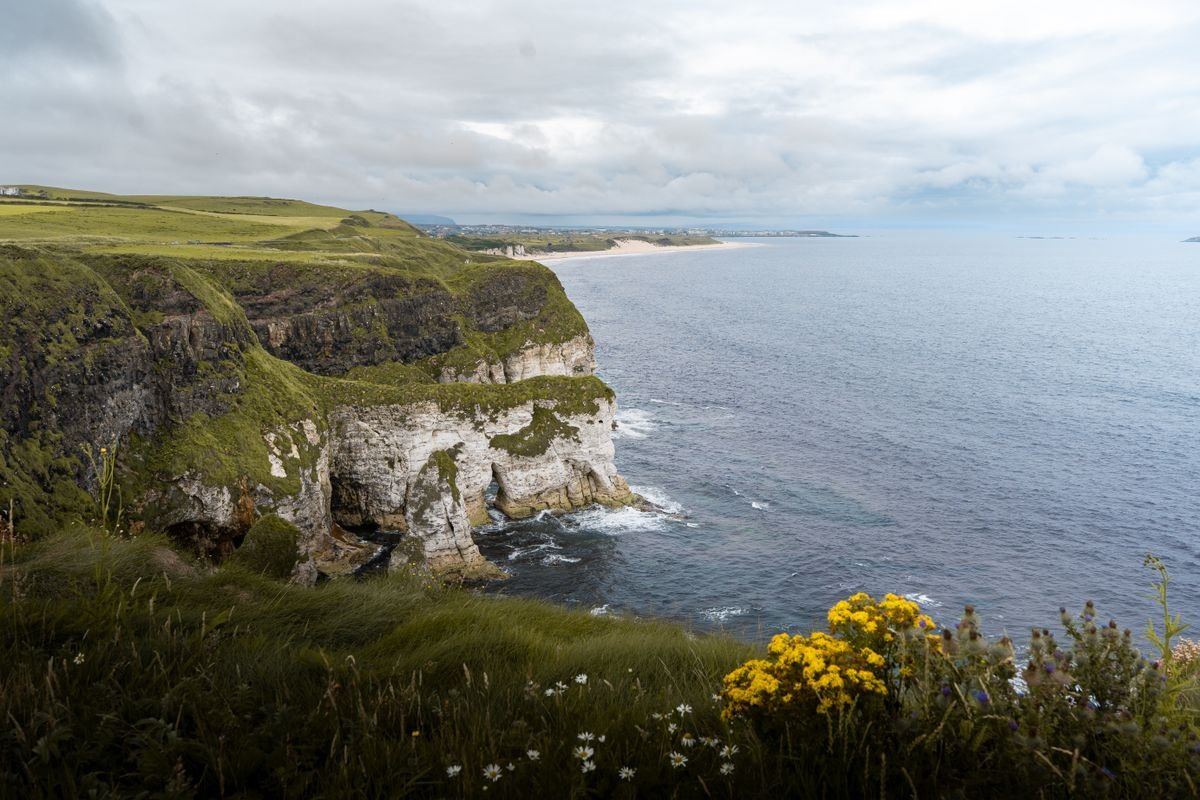
Portrush puts you minutes from Dunluce and the Giant’s Causeway, and it makes an easy base for the whole Causeway Coast stretch north of Carrickfergus.
Where to Stay on the Antrim Coast (Portrush)
Seeing the Castles on an Ireland Road Trip
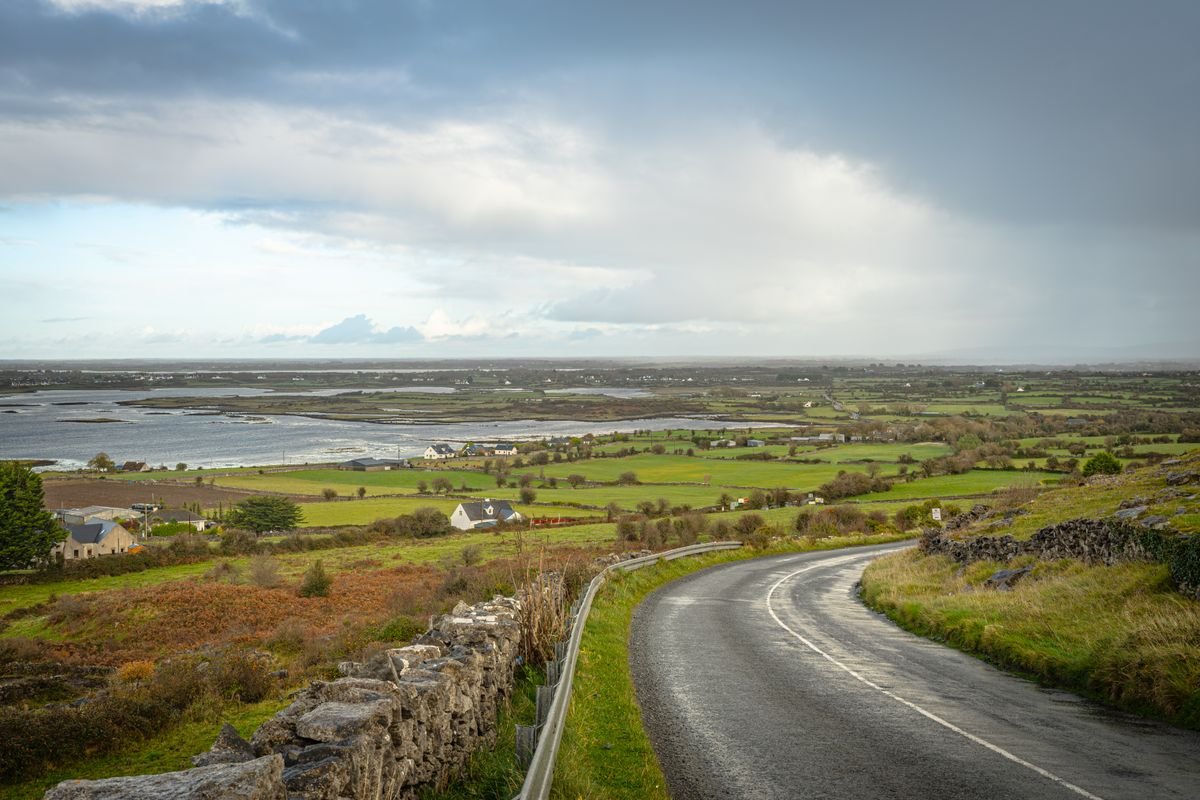
The best medieval castles in Ireland span the whole island, so you won’t hit all of them in one loop. The trick is to group them by region and pick the ones that fit your route, rather than trying to chase every last tower.
If you’re based in the south, Cashel, Cahir, Blarney, and King John’s in Limerick sit within an easy day or two of each other along the M8 and M7. Add Ross Castle in Killarney and Dunamase near Portlaoise and you’ve got a strong southern run.
For the north, pair Carrickfergus and Dunluce on the Antrim coast with the Giant’s Causeway, and start or finish in Belfast. Trim in Meath makes a natural first or last stop out of Dublin.
Renting a Car for the Trip
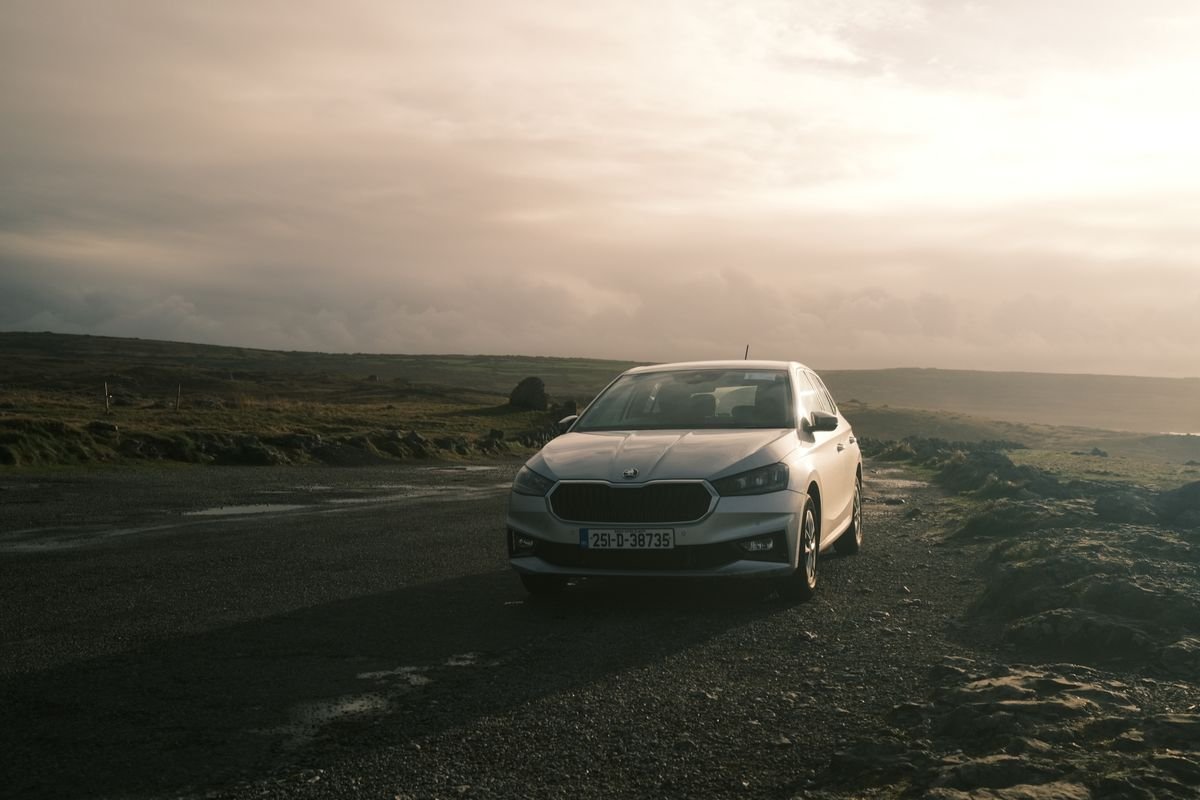
You’ll want your own car for this. Most of these castles are well off the train lines, and a few, like Dunamase and Redwood, are barely reachable without one. Public transport will get you to Limerick or Belfast, but not to a ruin on a hill.
A few things to know before you book. Ireland drives on the left, the rural roads are narrow, and a smaller car is easier on the boreens than you’d think. Automatics cost more and sell out fast, so book early if you don’t drive stick.
Check the insurance excess carefully, and remember that crossing between the Republic and Northern Ireland has no border stops, but you’ll want cover that works on both sides. We compare car hire deals on Discover Cars to line up prices across the Irish rental companies before we book.
More Guides for the Castle Regions
- Where To Stay in Killarney: Best Areas and Accommodations
- Where to Stay in County Cork: Cork City vs West Cork
- 10 Epic Day Trips From Cork (Chosen By a Cork Local)
- 5 Best Day Trips From Belfast, Ireland
Tips for Visiting Irish Castles
A few things we learned the practical way. If you’re visiting several OPW sites in the Republic, the OPW Heritage Card pays for itself fast. It covers Cahir, the Rock of Cashel, and plenty of others for a flat yearly price.
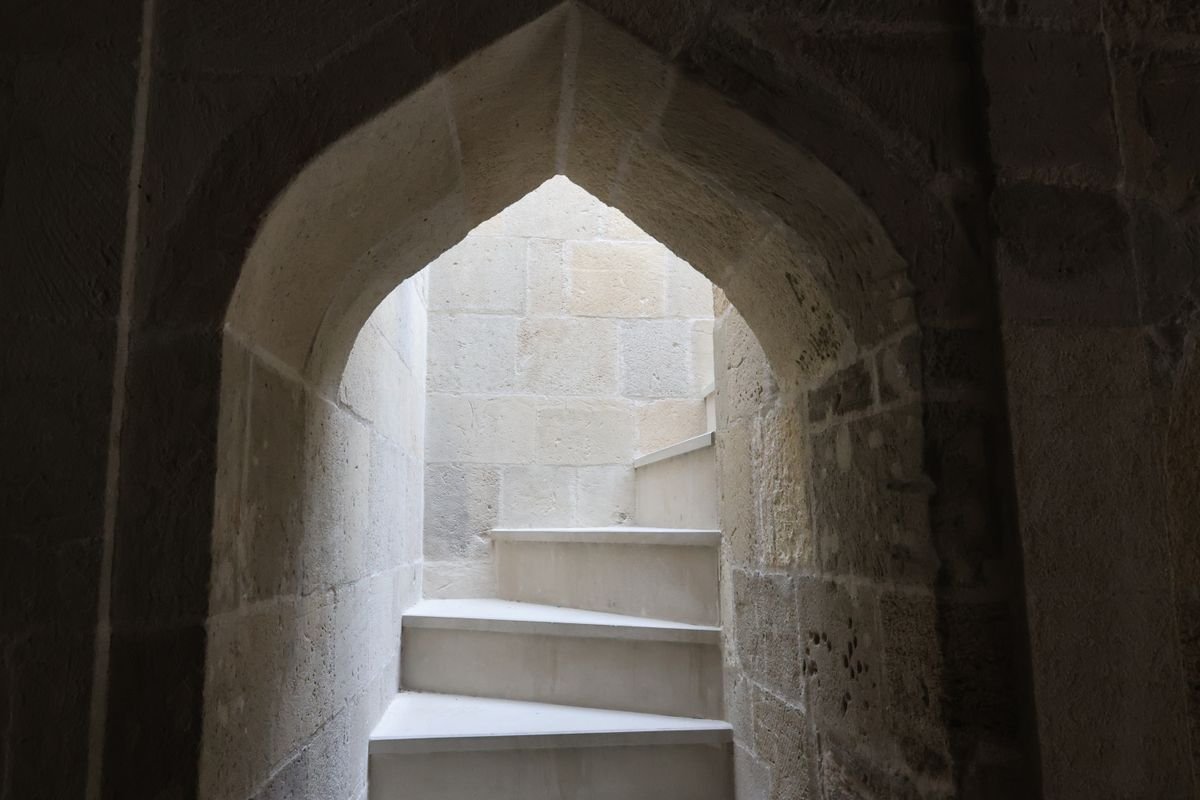
Check opening seasons before you drive. Many castles run reduced hours or close outside the main season, roughly November to March, and the last tour often leaves well before the site itself closes.
Book ahead for the busy ones. Blarney gets long lines in summer, and the guided keep tours at Trim and the Rock of Cashel have limited slots. For the quieter ruins, timing matters less. At Nenagh we had the round tower to ourselves.
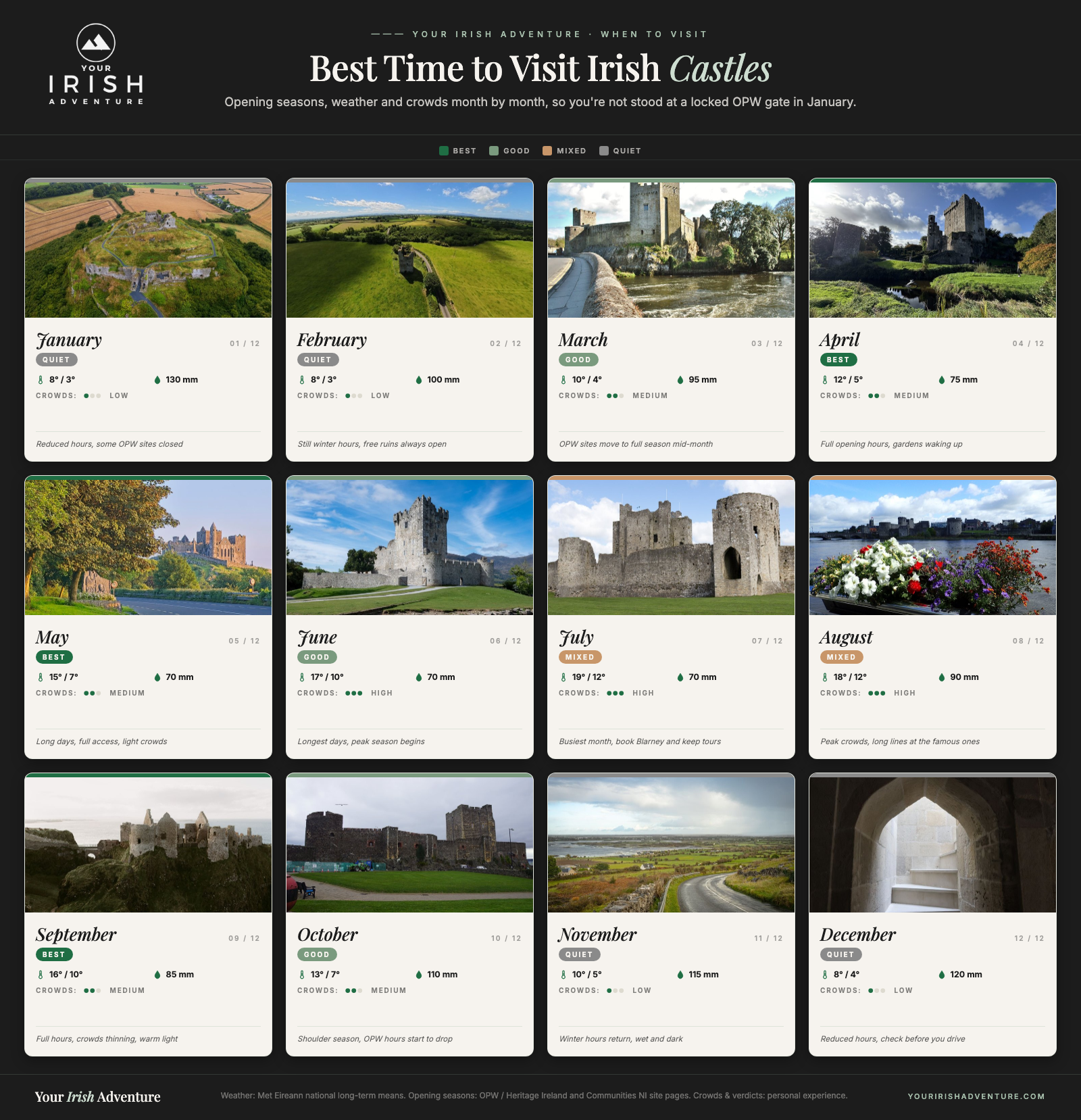
Wear proper shoes. Medieval spiral staircases are narrow, worn, and often wet, and you’ll be glad of grippy soles when you climb a tower like Nenagh’s or Blarney’s.
More Ireland Itineraries and Road Trips
- A Photographer’s Definitive Ireland Road Trip
- 14 Days in Ireland: The Ultimate 2-Week Itinerary
- 10 Days in Ireland: The Ultimate Itinerary
- Wild Atlantic Way Itinerary – Ireland’s Most Epic Road Trip
In short
- Trim Castle in Meath is the largest Anglo-Norman castle in Ireland, built from the 1170s.
- Carrickfergus, begun in 1177, is one of the oldest and best-preserved Norman castles.
- Dunluce and Carrickfergus in Antrim pair well with the Causeway Coast in a day.
- Blarney and the Rock of Cashel are the busiest, so arrive early to skip the queues.
- With your own car you can see five or six castles across a week without rushing.
Frequently Asked Questions
These are the questions people ask most before planning a castle trip in Ireland. Short, straight answers on the oldest castles, staying overnight, and how many you can fit in a week.
What is the oldest castle in Ireland?
Carrickfergus Castle in County Antrim is one of the oldest and best-preserved, begun by John de Courcy in 1177. Trim Castle in Meath was also started in the 1170s. Both are Anglo-Norman, and both go back to the decades right after the Normans arrived.
Can you stay overnight in an Irish castle?
Yes, though not usually in the medieval ones on this list. Ireland has plenty of castle hotels, like Ashford Castle in Mayo and Dromoland in Clare, where the castle has been converted into a luxury stay. The ruins and OPW sites here are day visits only.
Are Irish castles worth visiting?
They are, as long as you pick real medieval ones over the reconstructed attractions. Climbing the keep at Trim or standing on the clifftop at Dunluce is the real thing. Even Blarney, which I went in expecting to dislike, won us over with its grounds.
How many castles can you see in a week?
With your own car, you can comfortably see five or six across a week without rushing. Group them by region rather than zigzagging across the country, and leave a couple of hours for the bigger sites like Blarney and the Rock of Cashel.
Which Medieval Castle Will You Visit First?
You don’t need to see all ten. Pick a region, build a couple of days around it, and let the castles set the route. The south gives you Cashel, Cahir, and Blarney in a tidy loop. The north gives you Dunluce and Carrickfergus on one of the best coast drives in the country.
My pick for a first-timer is the Rock of Cashel for the sheer scale of it, then Blarney to see why the touristy one still earns its crowds. Which one are you starting with?
Like it? Pin it!
Save this guide for later