Ireland in autumn is, for my money, the best version of the country to plan a trip around. The summer crowds thin out from September on, prices drop, the hills go gold and copper, and you still get enough decent weather to actually do things outside.
It’s not all upside, and I’ll be honest about that below. The days get short fast, plenty of seaside spots start winding down for the season, and you will get rained on. None of that is a dealbreaker, but you should know it going in.
There’s also one thing Ireland does in autumn that nowhere else does as well, and that’s Halloween. Samhain started here, and late October is one of the most fun times to be in the country.
So here’s the full rundown: what the temperatures actually do across September, October and November, the real pros and cons, the best things to do this time of year, how Halloween and Samhain play out, where to base yourself, and exactly what to pack so the rain doesn’t ruin your trip.
Quick Answer:
Ireland in autumn runs mild and damp, with September highs near 16°C dropping to about 8°C by November. From September on the summer crowds thin, prices fall, and the hills turn gold and copper. Late October brings Halloween and Samhain, which started here. Daylight shortens fast and you will get rained on, so pack proper waterproofs.
More on Visiting Ireland in Autumn
- Weather in Ireland in October – What’s it REALLY like?
- Weather in Ireland in November: What’s it REALLY like?
- Ireland Packing List For September
- Ireland in November: Weather, Packing, Festivals and More
Average Temperatures Across the Autumn Months
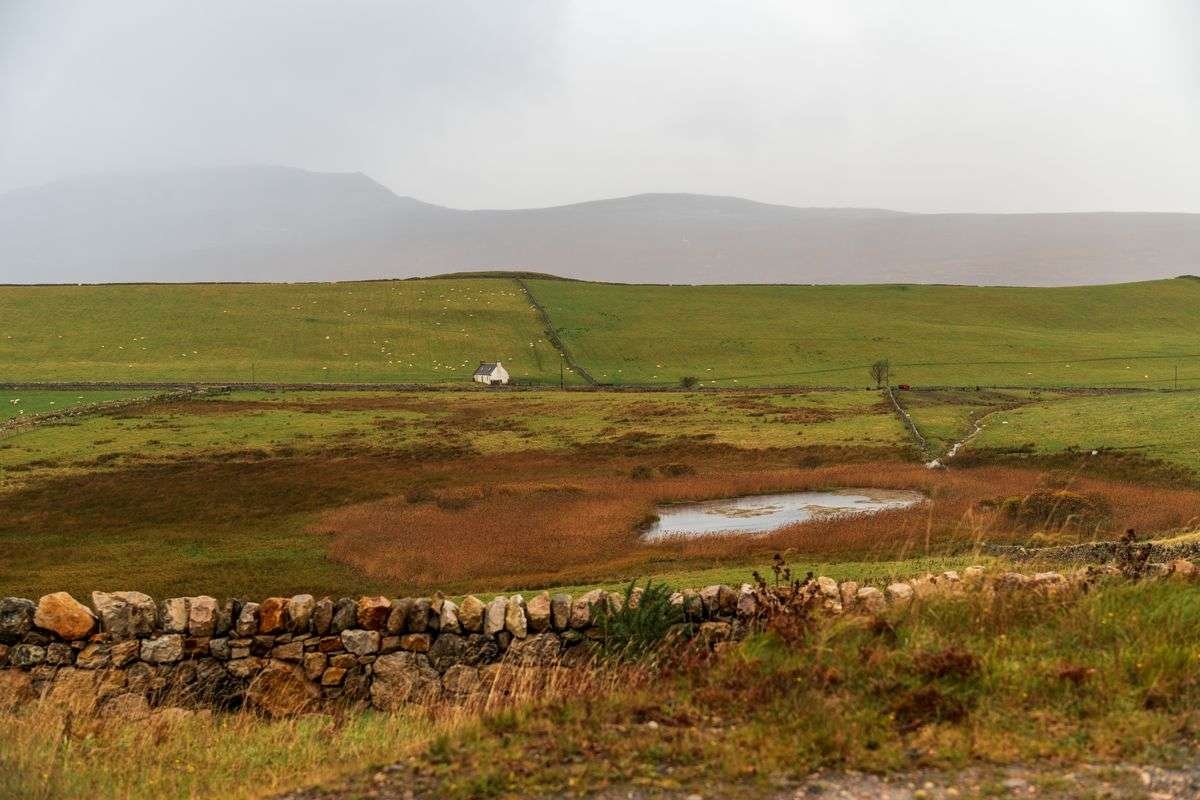
Ireland doesn’t really do extremes, and autumn is no different. You’re not going to get baked or frozen. What you get is mild, damp, and changeable, with the temperature sliding down gently as the season goes on.
The numbers below are rough national averages. The west coast and the south stay a touch milder thanks to the Atlantic, while inland and up north run a couple of degrees cooler, especially at night.
September
September is the warmest of the three and the closest thing to a summer hangover. Daytime highs sit around 16 to 18°C (61 to 64°F), with lows around 10°C (50°F).
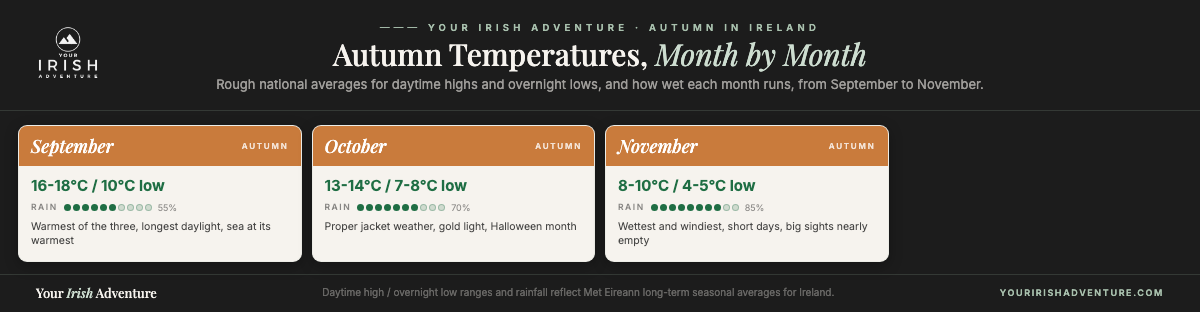
Early September can still feel like late summer on a good day, and the sea is at its warmest after heating up all summer. This is the month with the longest daylight of the three, so you get the most hours to actually do things.
October
October is the sweet spot for me. Highs land around 13 to 14°C (55 to 57°F) and lows around 7 to 8°C (45 to 46°F). It’s properly autumn now, jacket weather, with the trees turning and the light going gold in the afternoons.
You’ll want layers, because a bright morning can turn into a wet, blustery afternoon and back again. This is also Halloween month, so the cooler air and the early dark actually work in your favor.
November
November is where it tips into winter. Highs drop to around 8 to 10°C (46 to 50°F) and lows hover near 4 to 5°C (39 to 41°F), with the odd cold night dipping toward freezing inland.
It’s the wettest and windiest of the three, and the daylight gets short, so plan your outdoor stuff for the middle of the day. Pack for cold and wet and you’ll be fine, and you’ll have a lot of the big sights nearly to yourself.
One thing that holds across all three months: it’s the wind and damp that make Ireland feel colder than the thermometer says, not the temperature itself. A still 10°C day is pleasant. A windy, wet 10°C day will cut through a thin jacket, which is exactly why the packing section later matters.
The Pros and Cons of Visiting Ireland in Autumn
Every season in Ireland is a trade-off, and autumn is no different. So let’s run through it, the good stuff first, then the things you actually need to plan around.
The Pros
The crowds are the big one. The tour buses thin right out after the summer rush, so the famous spots feel like places again instead of parking lots with a view. You can walk a clifftop path or a castle ground without shuffling along in a line.
Prices follow the crowds down. Flights, car rental, and hotels all drop off their July and August peak, and you’ll find rooms in towns that were booked solid a month earlier. Your money goes a lot further in autumn.
Then there’s the look of the place. The trees turn gold and copper, the bracken on the hills goes rust-red, and the low afternoon light makes everything photograph well. Even a quick stop at a roadside viewpoint comes out looking great.
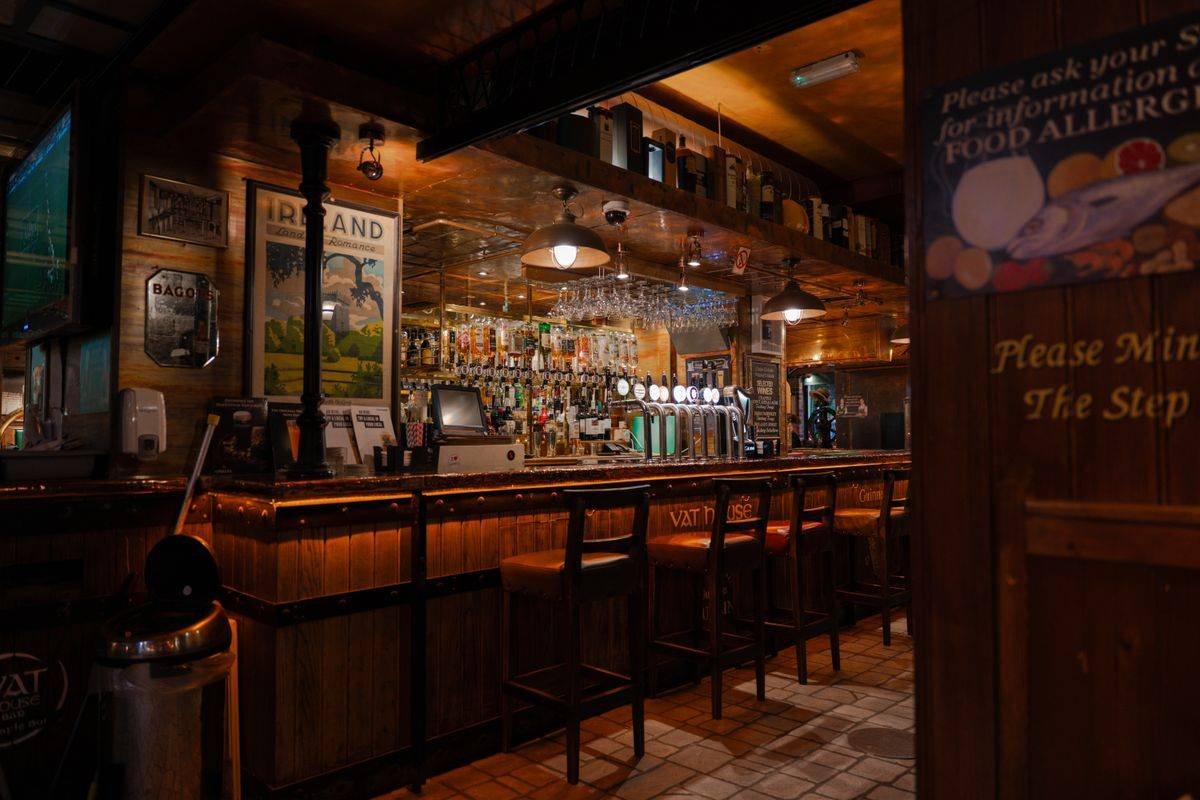
The pubs are better too. Once the weather turns, the fire gets lit, the trad sessions move indoors, and the whole thing feels warmer and more local than it does in peak summer.
And you still get usable weather. September especially can hand you proper days out, so you can drive the coast, hike, and do the outdoor stuff without it being a write-off.
The Cons
The rain is real. It can settle in for a full day, and the wind off the Atlantic makes a damp 10°C feel a lot colder than the number suggests. You’ll get wet at some point, so the trick is to plan around it rather than fight it.
The short days are the thing that catches people out. By late October the light is gone by the early evening, and in November it’s darker earlier still, so you lose hours of sightseeing time and have to be choosy about how you fill the daylight.
A lot of the seasonal stuff also winds down. Some coastal towns, smaller attractions, boat trips, and island ferries cut back their hours or shut for the season, and a few don’t reopen until spring. Check opening times before you make a special trip to any one spot, because nothing’s worse than driving an hour to a locked gate.
None of it is a dealbreaker. Pack for the wet, get an early start, and book the things that actually need booking, and the pros win comfortably. Autumn is still the version of Ireland I’d point a first-timer toward.
Autumn Festivals Around Ireland
- Festivals in Ireland in September: Our Festival Guide
- Exciting Derry Festivals You’ll Love This September and October
- Best Festivals in Ireland in November: Your Irish Festival Guide
Things to Do in Ireland in Autumn
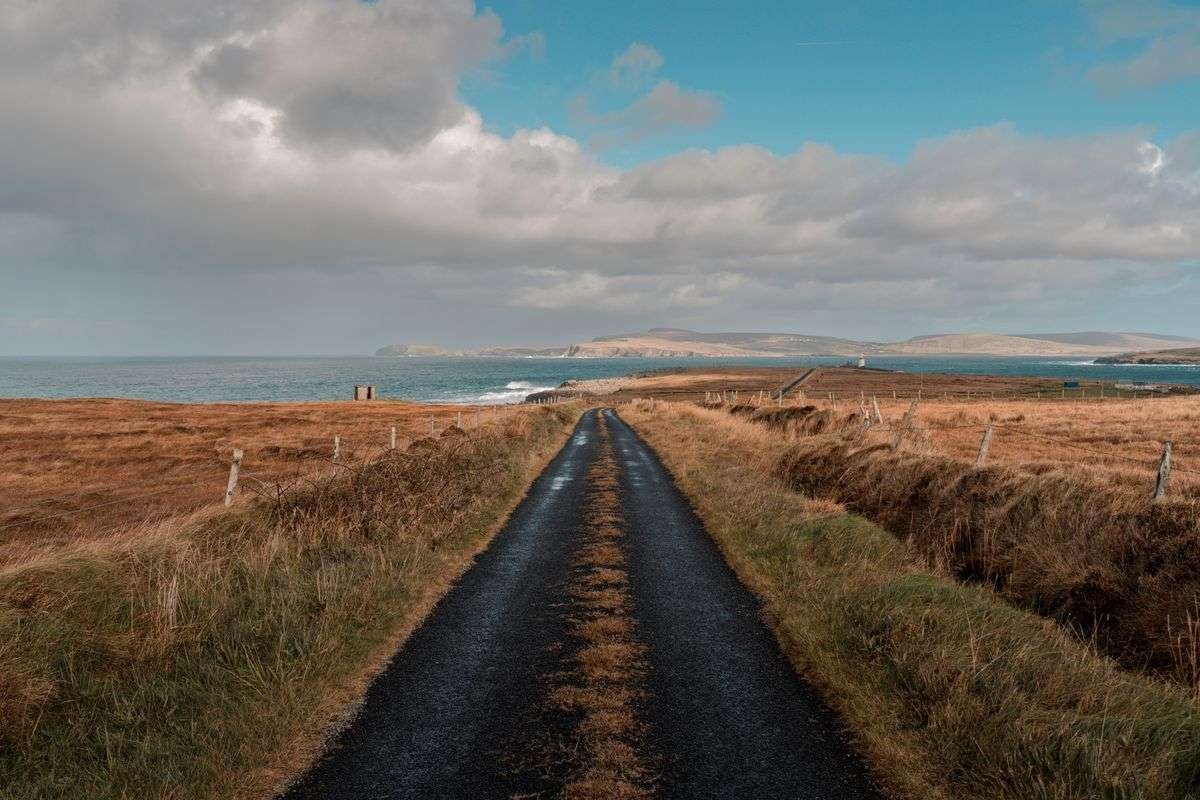
Autumn shifts what’s worth doing. The big outdoor stuff is still on the table, especially in September, but you also want a few indoor backups for the days the rain settles in. Here’s what I’d build a trip around this time of year.
Drive a Coastal Road Trip
The Wild Atlantic Way is the obvious one, and autumn is a good time to drive it. The roads are quieter without the summer traffic, the light is low and gold, and the cliffs and beaches look better with a bit of weather rolling through.
Pick a stretch rather than trying to do the whole thing. Connemara, the Dingle Peninsula, or the Ring of Kerry are each a great few days on their own, and you won’t be fighting tour buses for the viewpoints.
Just plan your driving for the daylight. The light goes early in October and November, and the coast roads are narrow and unlit, so you don’t want to be doing the scenic bits in the dark. You’ll need your own wheels for this, and autumn rates drop off the summer peak, so it’s worth taking a minute to compare car hire deals on Discover Cars before you lock anything in.
Walk Through the Autumn Colors
The big estate woodlands and national parks are at their best right now. Killarney National Park, the Wicklow Mountains, and the forests around the bigger castle estates all turn gold and copper through October, and a walk through them is the cheapest, easiest thing you can do all trip.
Killarney is the standout. The lakes, the oak woods, and the path out to Torc Waterfall all look great with the leaves turning, and a lot of it is flat and easy.
Wear proper waterproof boots, because the trails get muddy once the autumn rain sets in. A path that’s fine in summer can turn into a bog by late October.
Visit Indoor Attractions and Castles
This is where autumn earns its keep. When the rain shuts the outdoor plans down, Ireland has enough castles, distilleries, and museums to fill a wet day easily, and most of the big ones stay open year-round.
Castles are the move. Bunratty, Blarney, and Kilkenny Castle all give you a solid couple of hours under a roof, and a distillery tour like Jameson or Teeling ends with a tasting, which is exactly what you want on a cold afternoon. You can book a Jameson distillery tour on GetYourGuide ahead of a wet day so you’re not turned away at the door.
In Dublin you’ve got the big indoor names, the Book of Kells at Trinity, the Guinness Storehouse, and EPIC the Irish Emigration Museum. Check opening times before you go, because the smaller attractions trim their hours once the season winds down.
Eat at a Harvest Food Festival
Autumn is harvest season, and the food festivals follow. The Galway International Oyster and Seafood Festival runs in late September and is one of the oldest in the country, and there are smaller harvest and food events on across the towns through September and October.
These are worth planning a day around. You get local seafood, cheese, and produce at their peak, usually with trad music and a good crowd, and it’s an easy way to eat well and meet people on a wet weekend.
Dates move year to year, so look up what’s on where you’re headed before you lock in your route.
Browse the Early Christmas Markets
If you’re traveling in November, the Christmas markets start opening toward the end of the month, and they’re a good reason to be in a city as the season turns. Galway’s Christmas Market is one of the biggest, and Dublin, Belfast, and Waterford all run their own.
Expect mulled wine, food stalls, craft stands, and a fairground, all lit up against the early dark, which is one time of year when November’s short days actually work for you.
Most don’t open until the third or fourth week of November, so this is a late-autumn thing only. If you’re over in September or October you’ll miss them, so don’t plan a trip around it expecting them to be running.
Halloween and Samhain in Ireland
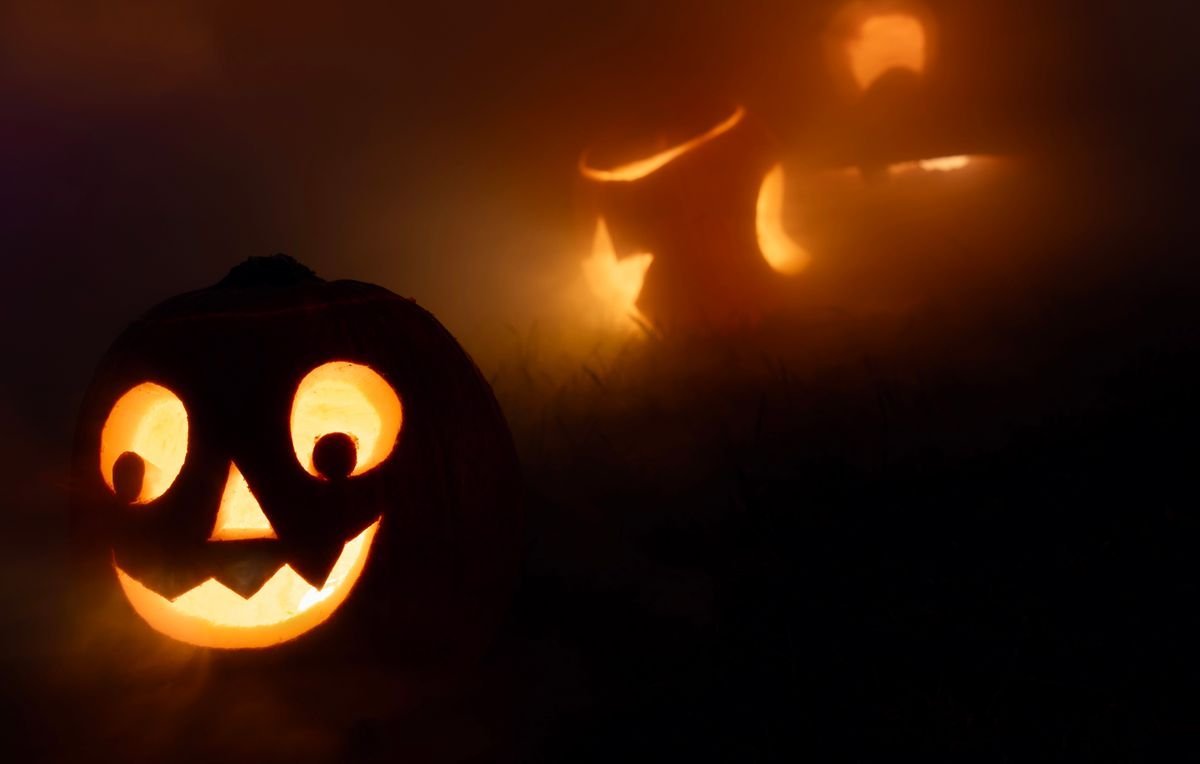
If you’re going to be in Ireland in late October, this is the part to plan around. Halloween isn’t an import here. It started here, and the country leans into it harder than anywhere else.
The whole thing comes from Samhain, the old Celtic festival that marked the end of the harvest and the start of winter. The idea was that the line between this world and the next went thin for a night, so people lit bonfires, wore disguises, and left food out to keep the spirits onside.
That’s where the modern stuff actually comes from. The jack-o’-lantern started as a carved turnip, not a pumpkin, and the costumes trace straight back to those disguises. So when you’re here at the end of October, you’re at the source of it.
Derry’s Halloween Festival
Derry, up in Northern Ireland, throws what’s widely called the biggest Halloween celebration in Europe. The whole walled city dresses up, there’s a huge costume parade through the streets, fireworks over the River Foyle, and tens of thousands of people in the crowd.
If you want the full-on version of Irish Halloween, this is it. Book your accommodation early, because the city fills up and the good rooms go fast for those few days.
Púca Festival
Púca is the newer one, run across County Meath and Louth, right in the part of the country where Samhain was first marked thousands of years ago. It mixes fire ceremonies, food, and live music, and it’s pitched squarely at the ancient roots of the festival rather than the trick-or-treat side.
It’s an easy run from Dublin, so it’s a good option if you’re basing yourself in the city and want a real taste of where this all comes from.
What to Expect Around the Country
You don’t have to hit a named festival to get it. Towns and cities all over the country run their own parades, ghost tours, and spooky events through late October, and the pubs get in on it too.
The food is part of it. Barmbrack is the Halloween one, a fruit loaf with little charms baked inside that are supposed to tell your fortune, and you’ll see colcannon on menus around the same time.
One practical thing to flag: Halloween falls right at the end of October, so the early dark and the cooler evenings I mentioned earlier actually play in its favor. Bonfires and fireworks land a lot better when it’s properly dark by the early evening.
Other Times of Year to Visit Ireland
- Visiting Ireland in Spring: The Complete Guide
- Best Things to Do in Ireland in Summer (Without the Crowds)
- Best Things to Do in Ireland in Winter (2026 Guide)
- Weather in Ireland in December: Is it Worth a Visit?
Where to Stay in Ireland in Autumn
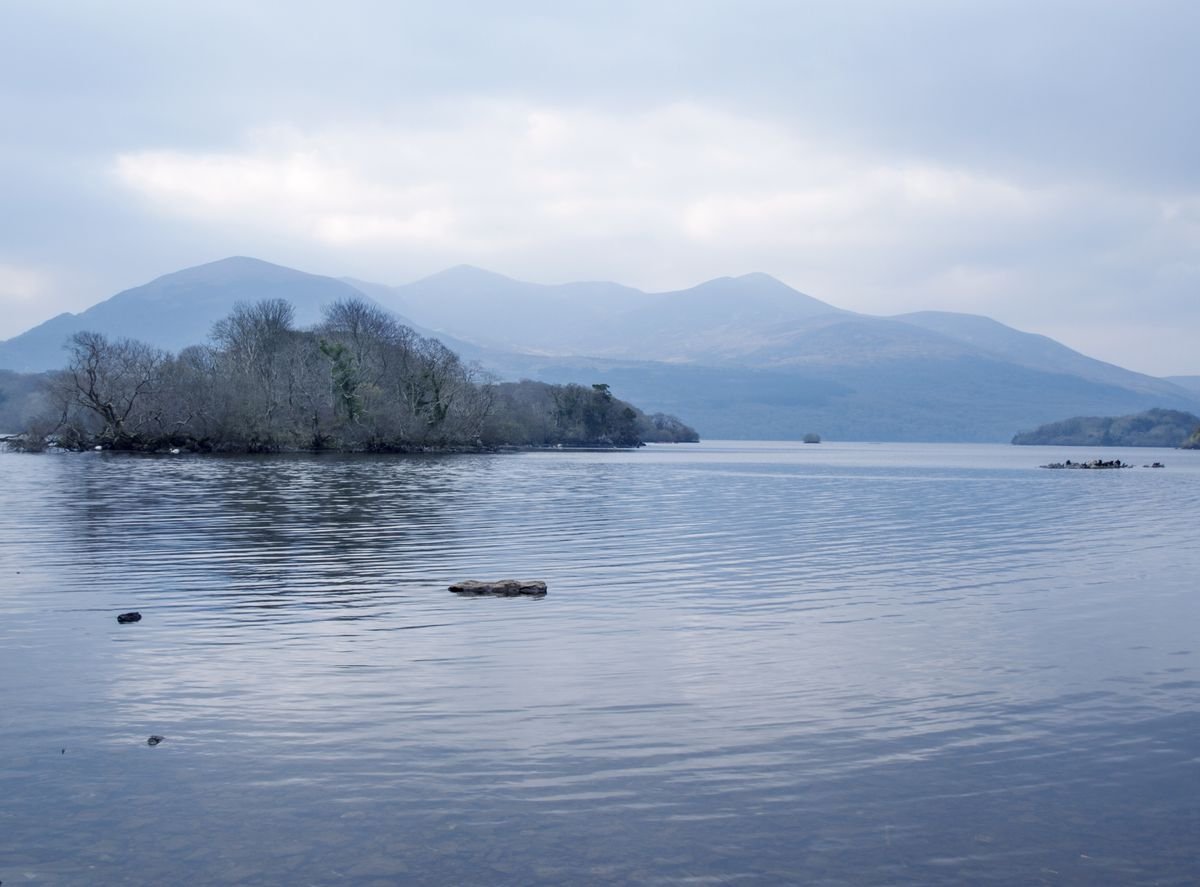
The short days change how you should plan where you sleep. In summer you can chase a new town every night and still get a full day in. In autumn, with the light gone by the early evening, all that packing up and driving eats your daylight, so you want fewer bases and longer stays.
My advice is to pick two or three bases for a week or so and do day trips out from each one. You drive less in the dark, you unpack once, and you get to know a place properly instead of seeing it through a windshield.
Base Yourself in a City for the Indoor Days
For a first autumn trip, a city makes a lot of sense as one of your bases. When the rain settles in for a full day, a city gives you castles, museums, and warm pubs all within walking distance, so a wet day isn’t a write-off.
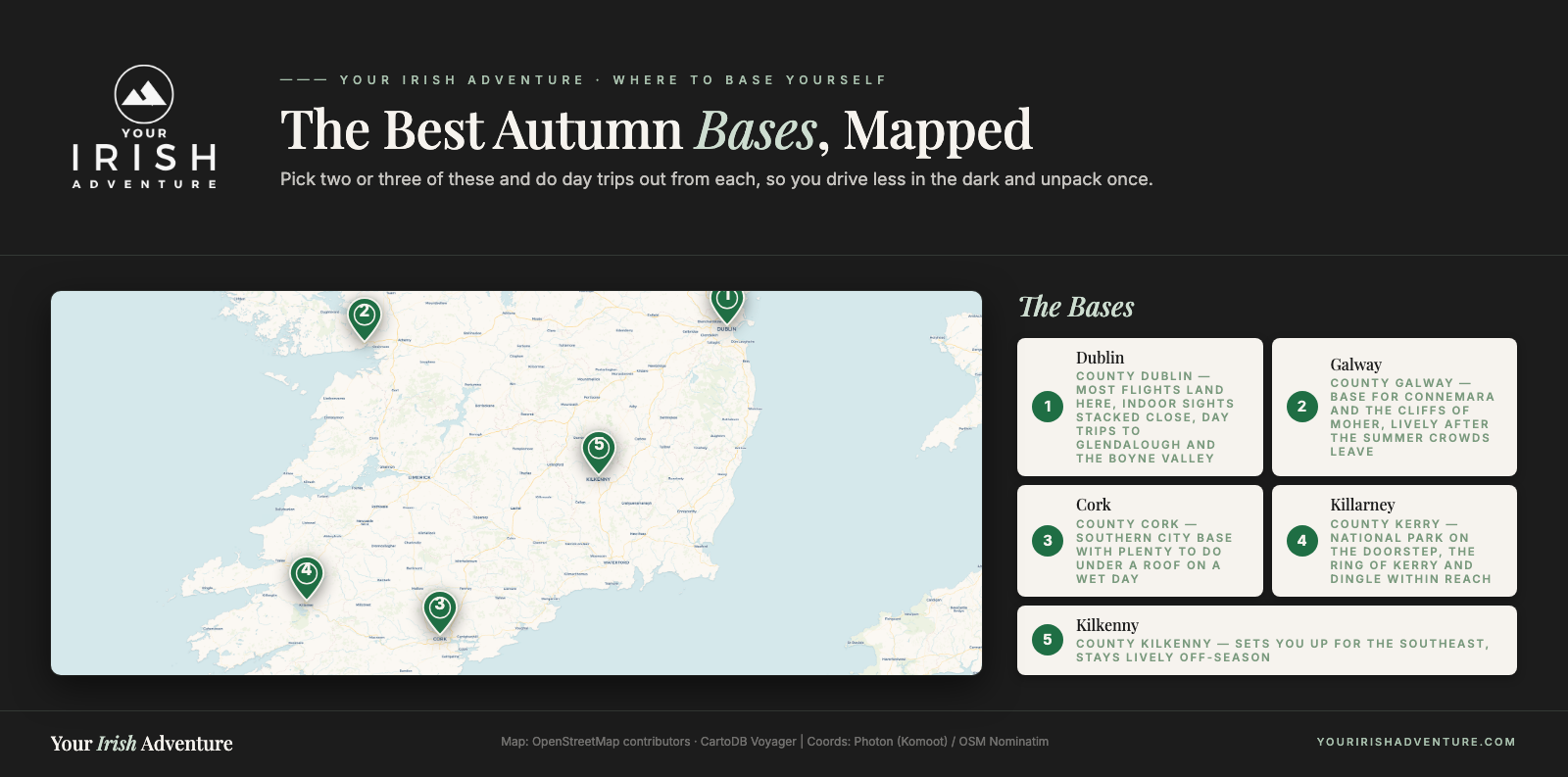
Dublin is the easy one. It’s where most flights land, the indoor sights are stacked close together, and it’s a good jumping-off point for day trips to Glendalough and the Boyne Valley. Galway and Cork work the same way on the west and south, with plenty to do under a roof when the weather turns.
Pick a Town as a Base for Day Trips
For the coast and the countryside, a well-placed town beats a remote cottage in autumn. You want somewhere with pubs and restaurants still open off-season, so you’re not driving 30 minutes for dinner after dark.
Killarney is a great base for County Kerry, with the national park on its doorstep and the Ring of Kerry and Dingle both within reach. Galway covers Connemara and the Cliffs of Moher, and Kilkenny sets you up for the southeast. These towns stay lively after the summer crowds leave, which matters a lot more in November than in July. Killarney is the one I’d base a Kerry week around, and you can check Killarney room rates on Booking.com to see how far the off-season prices drop.
Where to Stay in Killarney: Killarney Lodge

Killarney Lodge is a guesthouse a few minutes’ walk from the town center, which is exactly what you want for the short autumn days: park up, walk to dinner, and have the national park and the Ring of Kerry on your doorstep the next morning. It scores 9.6 on Booking.com across more than a thousand reviews, so it’s a safe one to build a Kerry week around.
👉 View Killarney Lodge Availability and Pricing
A Word on Coastal and Rural Stays
Those remote clifftop B&Bs and island stays that look so good in the summer photos are exactly the places that cut back or shut for the season. Some close from October, and the ferries to the islands run a lighter schedule or stop altogether.
If your heart’s set on one, check it’s actually open before you book the rest of your trip around it. A working town with a pub and a fire lit beats a great-looking spot with a locked door and nowhere to eat, especially once the dark comes in early.
One upside of traveling this time of year: you’ll find rooms in places that were booked solid in summer, and at lower prices. So you can afford to be a bit choosier about where you stay, and you don’t need to lock everything in months ahead the way you would in peak season.
What to Pack for an Irish Autumn
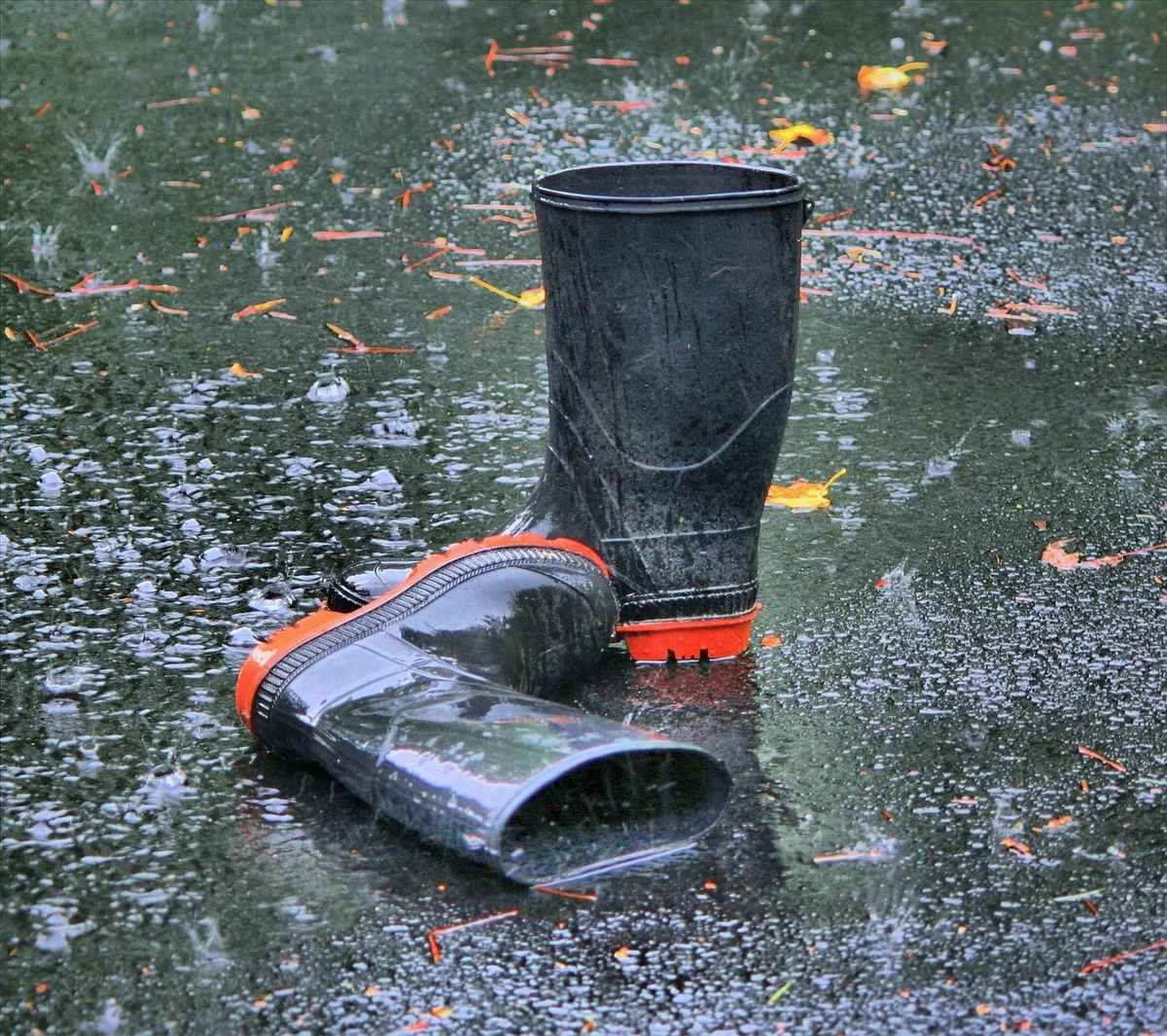
This is the part that makes or breaks the trip. Get it right and the rain stops being a problem. Get it wrong and you’ll spend half your days cold, wet, and shopping for a jacket you should have brought from home.
The whole game in Ireland is layers, because the weather changes fast and it’s the wind and damp that get you, not the temperature. You want to be able to add and shed a layer as a bright morning turns into a wet afternoon and back again.
The Three Things That Actually Matter
If you only nail three items, make it these. They’re the difference between a good trip and a miserable one.
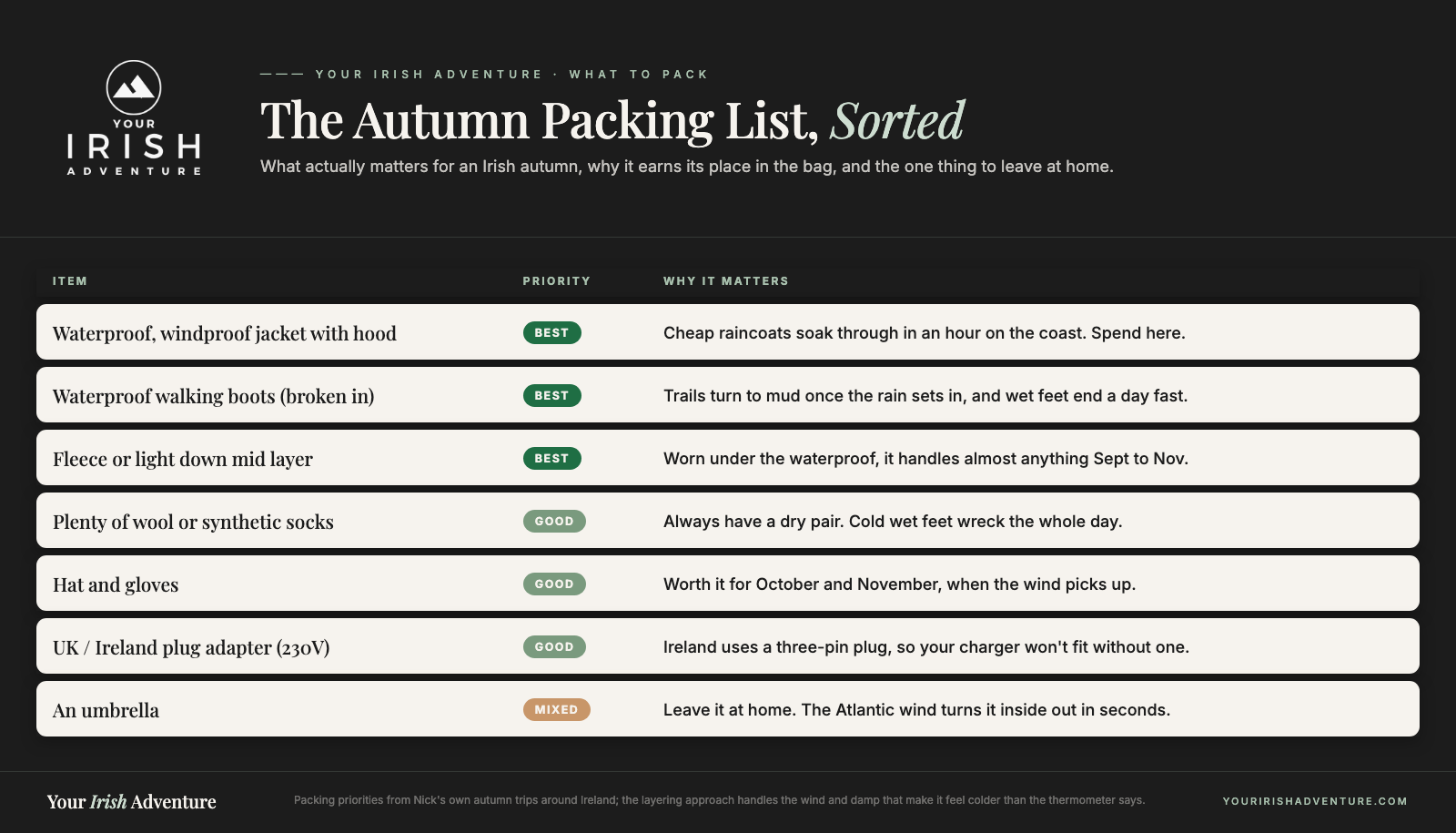
A proper waterproof jacket comes first, and it has to be both waterproof and windproof, with a hood. A cheap fashion raincoat soaks through in an hour on the coast. Spend the money here.
Waterproof walking boots are second. The trails turn to mud once the autumn rain sets in, and wet feet will end a day fast. Break them in before you fly, don’t show up with a stiff new pair.
A warm mid layer is third, a fleece or a light down jacket that you wear under the waterproof. That combination handles almost anything Ireland throws at you from September to November.
The Full Packing List
Here’s what I’d put in the bag for a week or two in autumn:
- A waterproof, windproof jacket with a hood
- Waterproof walking boots, already broken in
- A fleece or light down mid layer
- A few long-sleeve tops and t-shirts to layer underneath
- One warm sweater for the pub and the evenings
- Quick-dry pants, and jeans if you must, but they take forever to dry once wet
- Wool or synthetic socks, more than you think, so you always have a dry pair
- A hat and gloves, especially for October and November
- A small daypack with a rain cover for day trips
- A reusable water bottle and a portable charger
Notice what’s missing: an umbrella. The wind off the Atlantic turns one inside out in seconds, so a good hood does the job an umbrella can’t. Leave it at home.
A Few Things People Forget
Dry socks are the underrated one. Pack more pairs than feels reasonable, because once your feet are cold and wet the whole day goes downhill, and having a fresh pair waiting fixes it instantly.
Bring a UK and Ireland plug adapter, and check your devices handle 230V, because Ireland uses the three-pin plug and your charger won’t fit without one.
Don’t overthink the dress code. Ireland is casual, and even nice restaurants and pubs won’t care what you’re wearing, so pack for warm and dry, not for looking sharp. Get that right and the weather stops mattering, which is exactly what lets autumn be the best time to go.
FAQs About Visiting Ireland in Autumn
A few of the questions that come up most often about an autumn trip, answered straight.
What Is Ireland Like in Autumn?
Mild, damp, and a lot quieter than summer, with temperatures sliding from around 16°C (61°F) in September down toward 8°C (46°F) by November. The trees turn gold and copper and the famous spots feel like places again once the tour buses thin out, but the daylight gets short fast from October on, so check opening times before a long drive.
Is Autumn a Good Time to Visit Ireland?
It’s my favorite time to go and the version I’d point a first-timer toward. The crowds are gone, prices drop off their summer peak, the pubs light the fire and move the trad sessions indoors, and you still get usable weather, especially in September. The trade-off is short days and rain, so start early, book what needs booking, and pack properly.
Is the Weather in Ireland Bad in Autumn?
It’s wet and windy but not as cold as people expect, since Ireland doesn’t do extremes. The thing that gets people is the wind and damp, not the temperature, which is why a waterproof, windproof layer matters more than anything else in the bag. Plan your outdoor stuff for the middle of the day and keep an indoor backup ready.
What Is the Best Month to Visit Ireland in Autumn?
September is the best month, with the mildest weather, the longest days of the three and proper days out still on the table. October is jacket weather with the odd great afternoon plus all the Halloween events, while November is the coldest and wettest, so go in September if usable weather matters most to you.
Is Ireland Good for Halloween?
Yes, Halloween started here as the ancient festival of Samhain, and late October is one of the most fun times to be in the country. Derry runs Europe’s biggest Halloween festival and the Púca Festival lights up the Boyne Valley, with spooky events and festivals running through the end of the month all over Ireland.
What Should I Pack for Ireland in Autumn?
Three things actually matter: a waterproof and windproof jacket, decent waterproof shoes or boots, and warm layers you can add and remove. Pack a UK and Ireland plug adapter, dress casual since even nice pubs and restaurants won’t care, and aim for warm and dry rather than looking sharp.
Plan Your Autumn Road Trip
- Wild Atlantic Way Itinerary – Ireland’s Most Epic Road Trip
- A Photographer’s Definitive Ireland Road Trip
- 7 Best Day Trips From Dublin, Ireland
In short
- September is the warmest month, with highs of 16 to 18°C and the longest daylight.
- October highs sit around 13 to 14°C, lows near 7 to 8°C, full jacket weather.
- Late October brings Halloween and Samhain, the festival that started in Ireland.
- The west coast and south stay milder than the cooler inland and north.
- Pack proper waterproofs, since daylight shortens fast from September on.
Final Thoughts on Visiting Ireland in Autumn
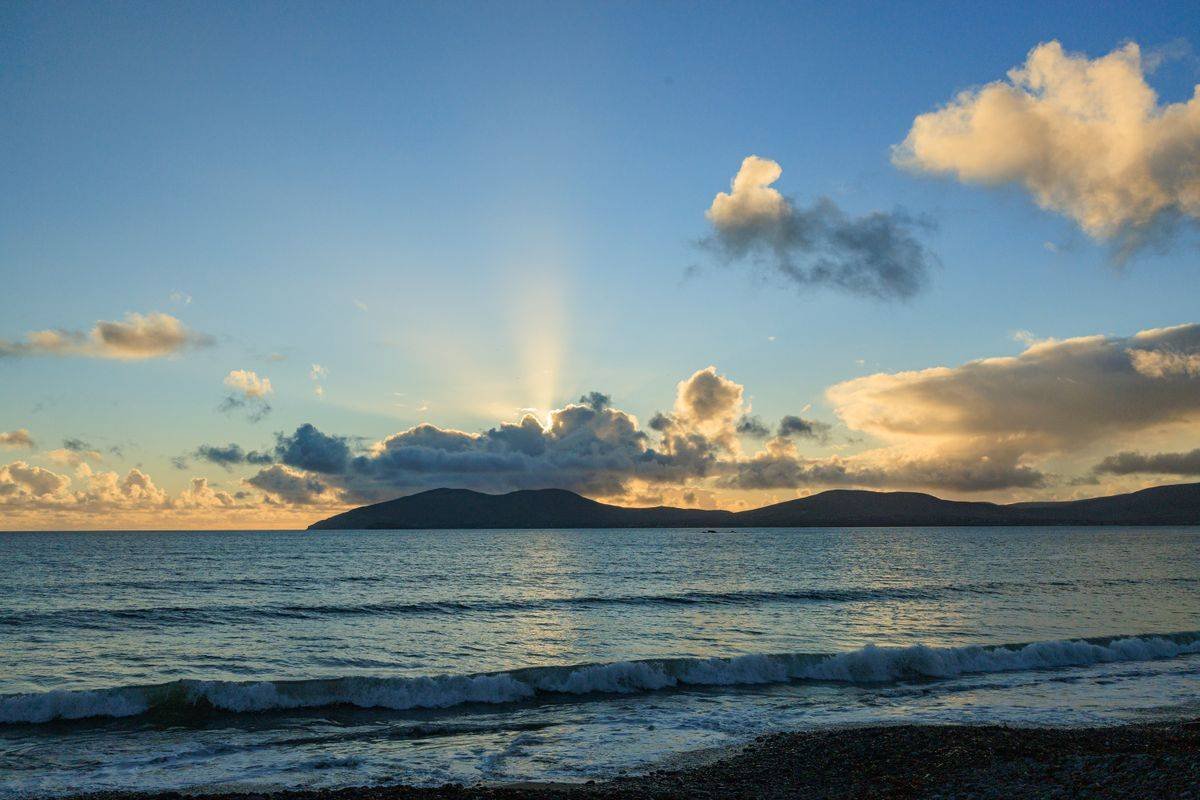
So that’s the case for autumn. The crowds clear out, the prices drop, the hills go gold, and you still get enough good weather to drive the coast and do the outdoor stuff, especially in September.
The trade-offs are real and worth planning around. The days get short fast, the rain settles in, and some seasonal spots shut up shop, so you check opening times, get an early start, and pack a proper waterproof.
Do that and the upside wins easily. Add Halloween and Samhain on top, at the source of the whole thing, and late October is one of the most fun times you can be in the country.
Pick two or three bases, plan your daylight, throw the umbrella away and bring the hood, and autumn is the version of Ireland I’d point a first-timer toward every time.
Like it? Pin it!
Save this guide for later