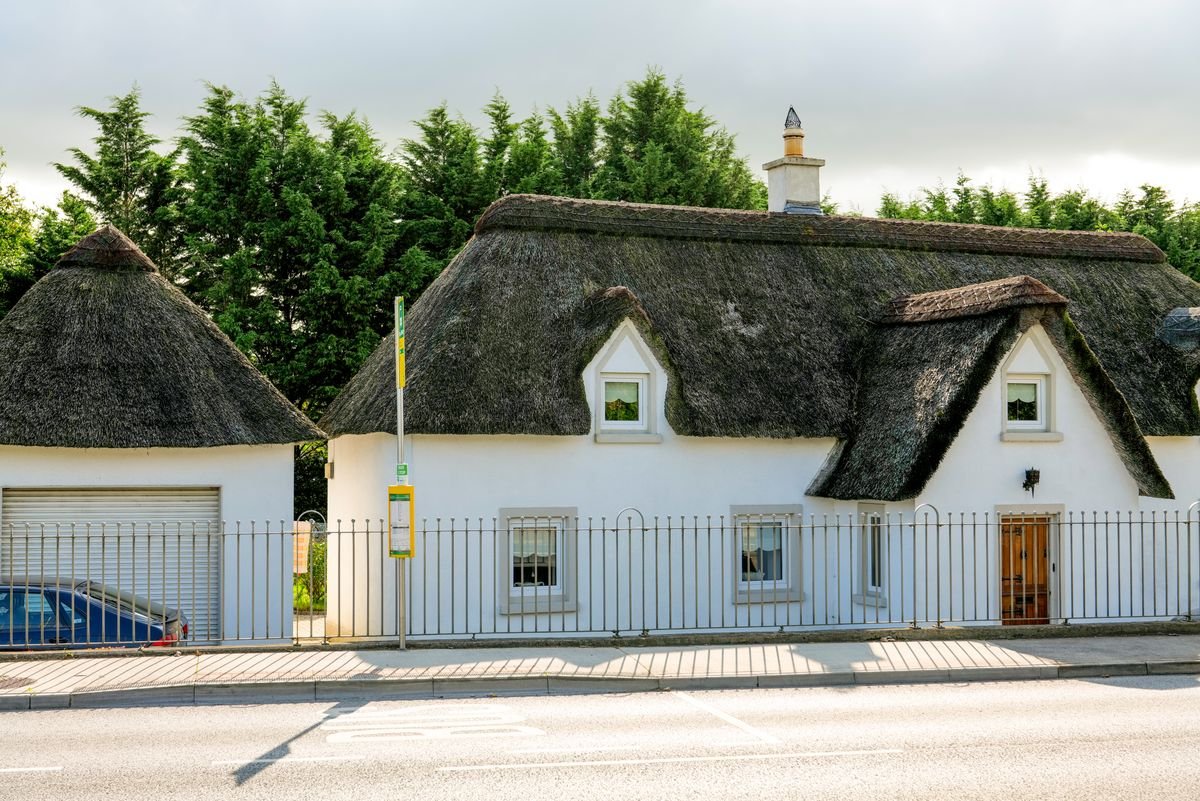
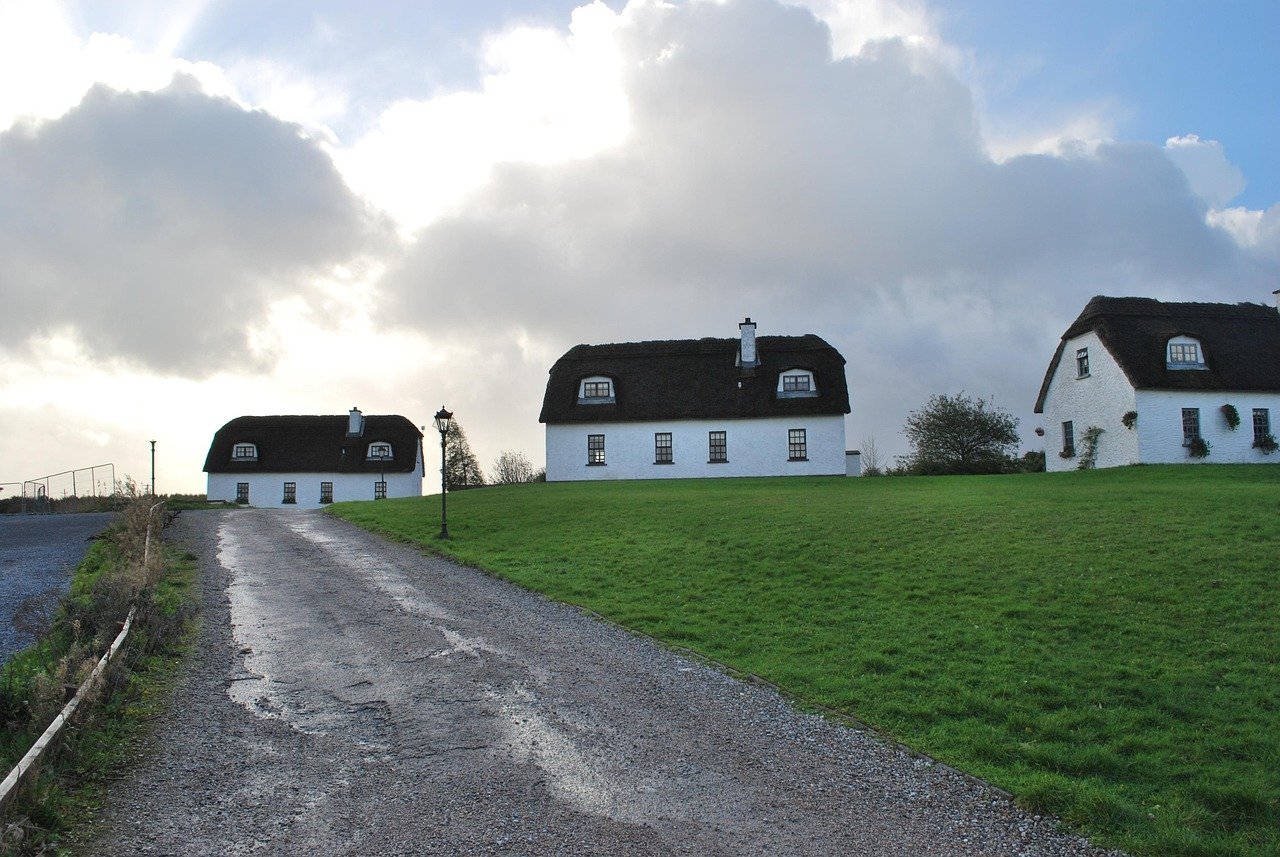
A self-catering cottage is one of the better ways to do Ireland, and after about two weeks driving the country on our last trip, I’d argue it beats a string of hotels for most coastal trips. This roundup pulls together the best cottages in Ireland, the ones in the spots actually worth basing yourself in.
We did our last trip by campervan, but the regions don’t change. We drove through Connemara, down the Clare coast past Doolin, out onto the Dingle Peninsula, and around the Ring of Kerry, so I know which corners of the map are worth waking up in, and which towns make a good base for day trips.
A cottage works the same way a campervan does. You cook your own breakfast, you’re not tied to a checkout time, and you wake up somewhere like the Connemara coast instead of a chain hotel off the highway.
Below is the list, from the famous picture-postcard cottages to the ones I’d actually send you to instead, plus when to book and how to lock one in without overpaying.
Quick Answer:
The best cottages in Ireland sit along the west and south coasts, from Donegal and Connemara to the Ring of Kerry and West Cork. Most are rural self-catering stays, sleep four to eight, and cost roughly 600 to 1,200 euro a week. Book early for summer, bring a car, and pick the region before the cottage.
Where to Stay Elsewhere in Ireland
- The Best Places to Stay in Ireland
- The Best Hotels in Ireland (My Top Picks)
- Wild Atlantic Way Hotels With A Touch Of Luxury
- Where to Stay in County Cork: Cork City vs West Cork
The Best Cottages in Ireland
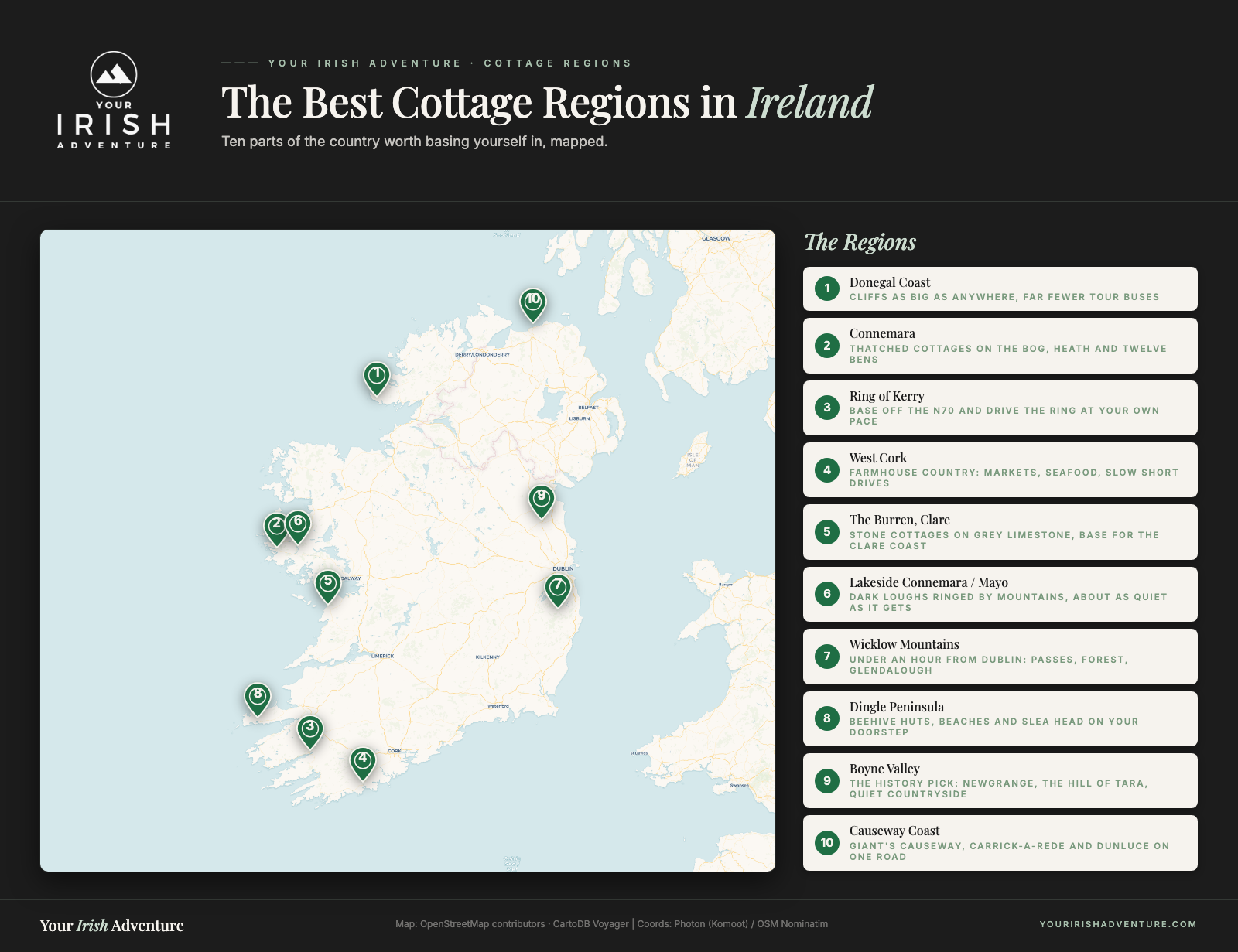
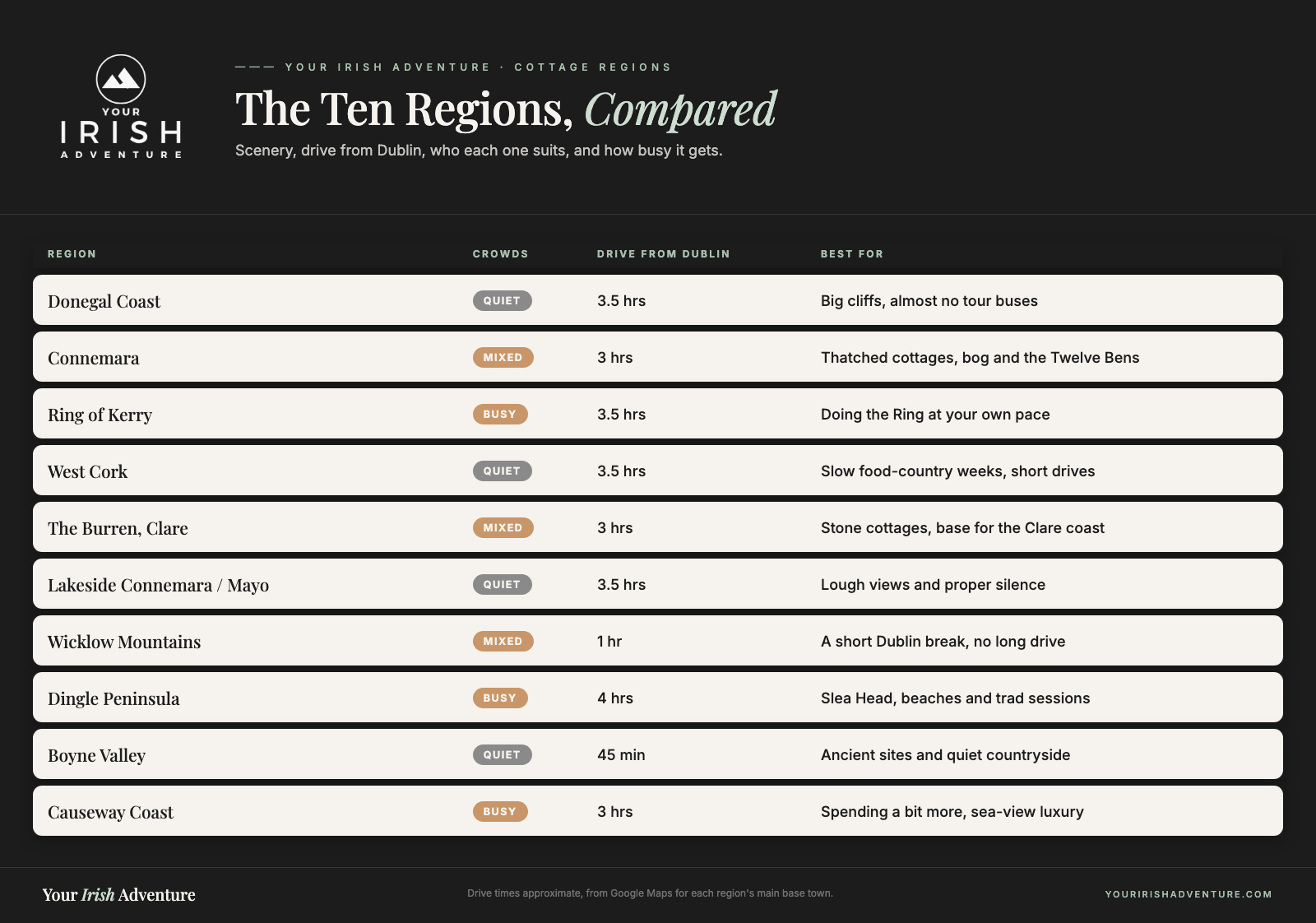
This isn’t a ranked list. These are ten kinds of cottage in ten parts of Ireland, sorted by region, so you can pick the one that lines up with where you actually want to wake up. Some I drove through and can vouch for directly. The rest I’d point you to based on which corners of the country are worth the detour.
A Coastal Cottage in Donegal
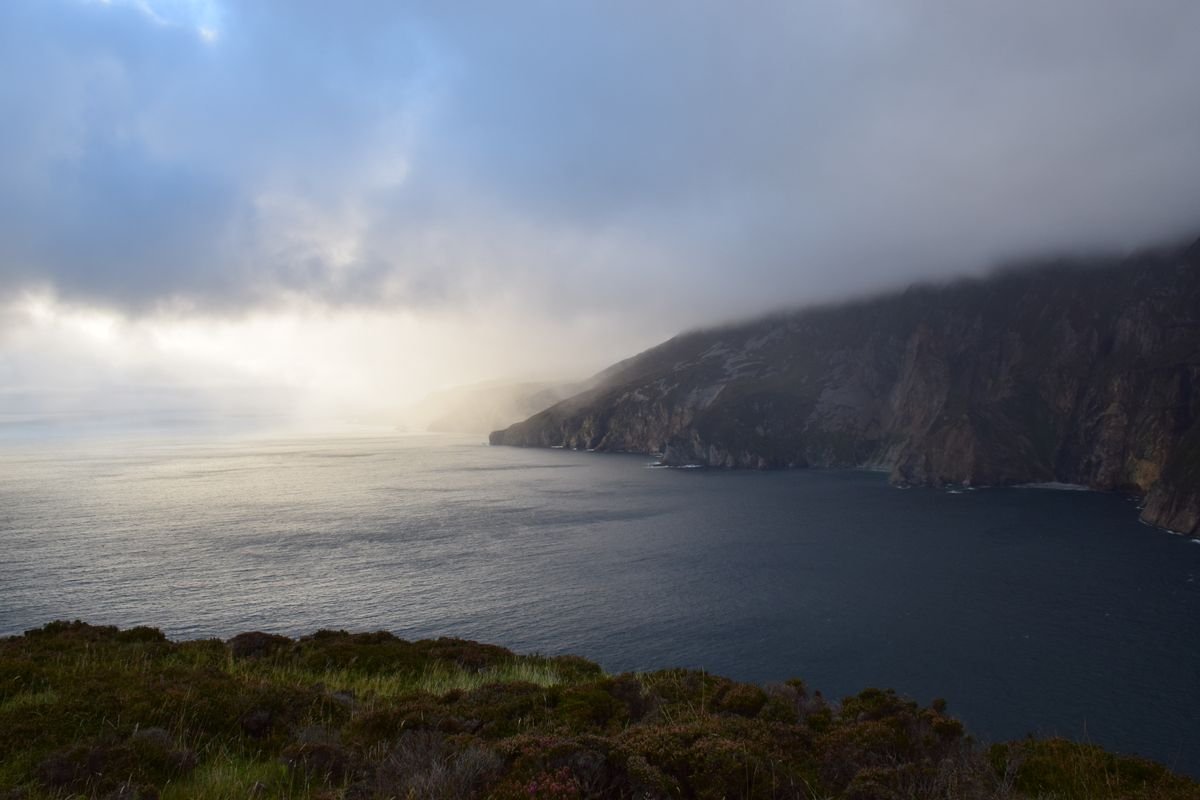
Donegal is the far northwest, and it’s the one I most regret running out of time for. If you want a cottage with sea on three sides and almost no tour buses, this is the county to book. Look around Sliabh Liag or the Fanad Peninsula for cliffs as big as anywhere on the Wild Atlantic Way, with far fewer crowds.
The trade-off is the drive. It’s a long haul from Dublin or the southern coast, so this works best if you’re giving it three or four nights, not an overnight.
A Traditional Thatched Cottage in Connemara
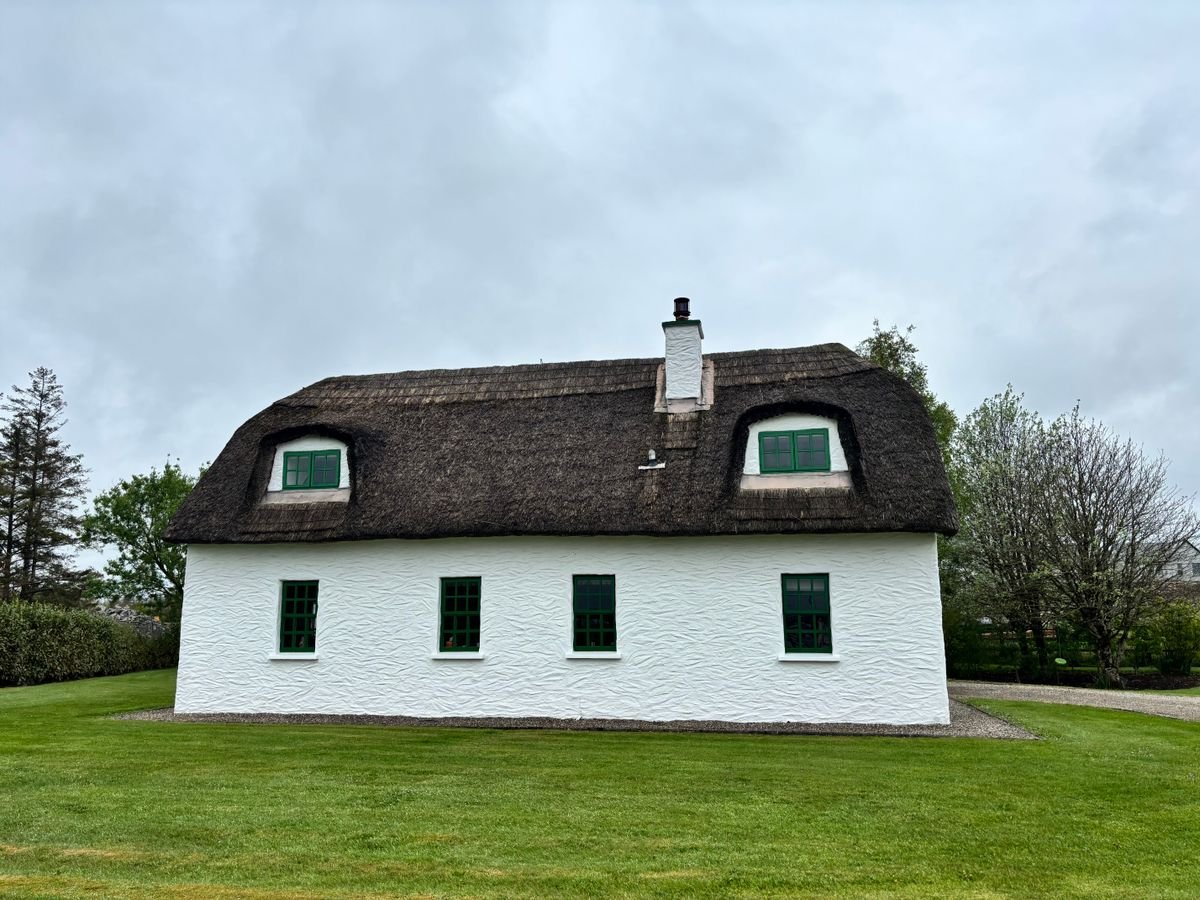
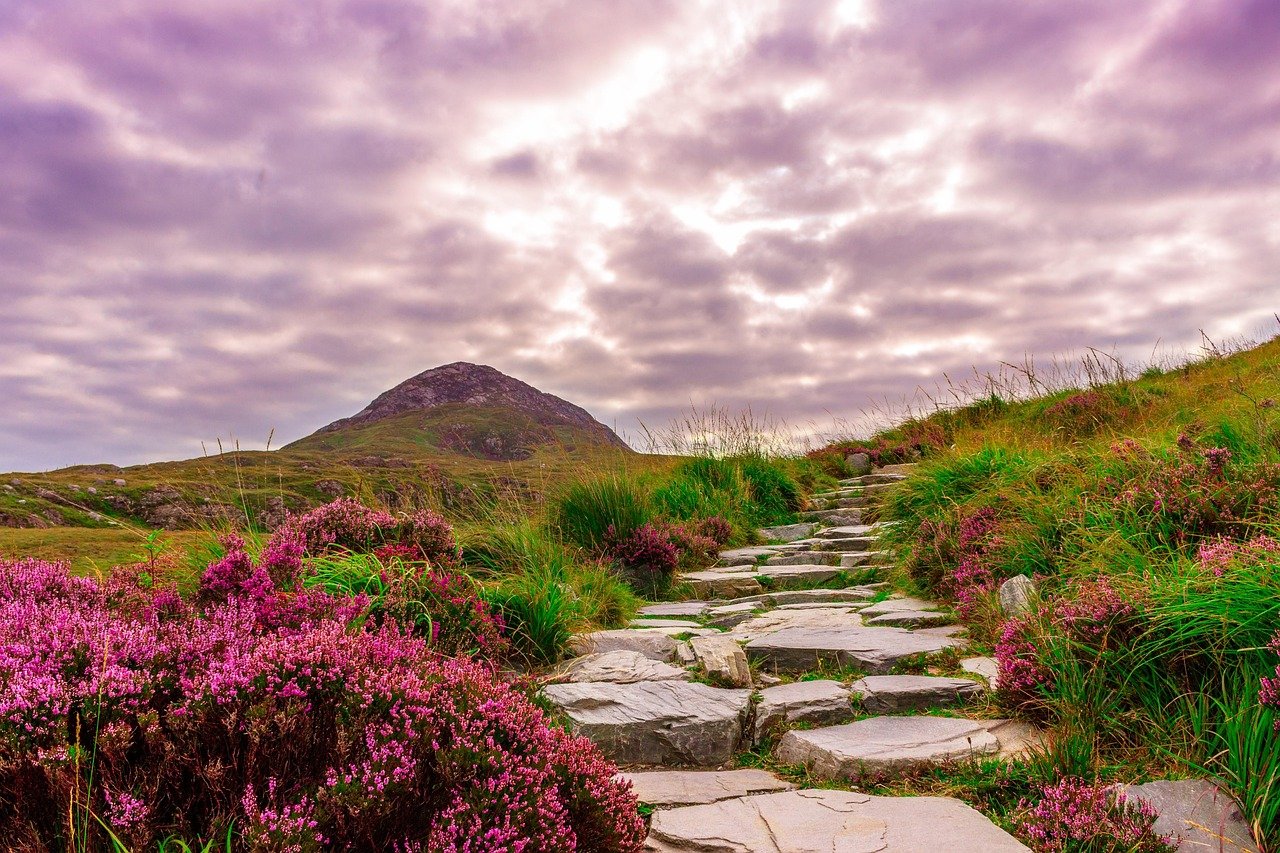
Connemara was the highlight of our whole trip, and the spontaneous call to head north into it instead of doubling back was the best decision we made. A thatched or whitewashed cottage out here puts you in bog, heath, and the rocky Twelve Bens, with the Atlantic never far off.
We parked the van at Clifden Eco Beach Camping for a night, facing the water, and I swam in the Atlantic in late September. It was clearer and bluer than I expected for that time of year. A cottage near Clifden or Roundstone gives you that same coastline with a real roof and a fireplace. You can browse self-catering cottages around Clifden on Booking.com to see what’s free for your dates.
A Cottage on the Ring of Kerry
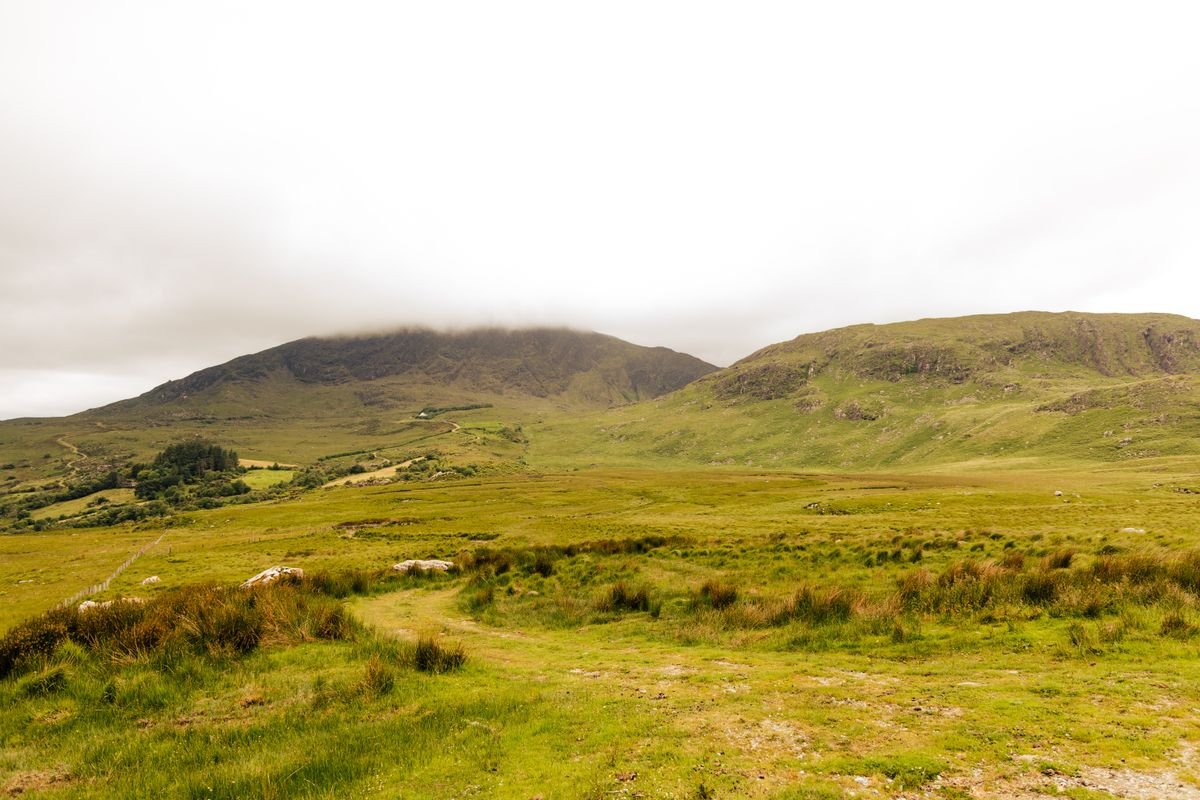
Base yourself off the N70 and you can do the Ring at your own pace instead of trailing a convoy of coaches all day. We drove it under low cloud with a named storm rolling in, so the big viewpoints weren’t at their best, which is exactly why staying nearby helps. You can wait for the weather to break instead of getting one rushed shot.
Look for a cottage near Kenmare or Sneem, and check cottage availability around Kenmare on Booking.com before the summer dates fill up. Kenmare is a colorful little town for an evening pint, and the underrated stop is Staigue Fort, an Iron Age dry-stone ring fort up a narrow boreen that most cars drive straight past. We had it almost to ourselves.
Where to Stay near Kenmare
A Farmhouse Cottage in West Cork
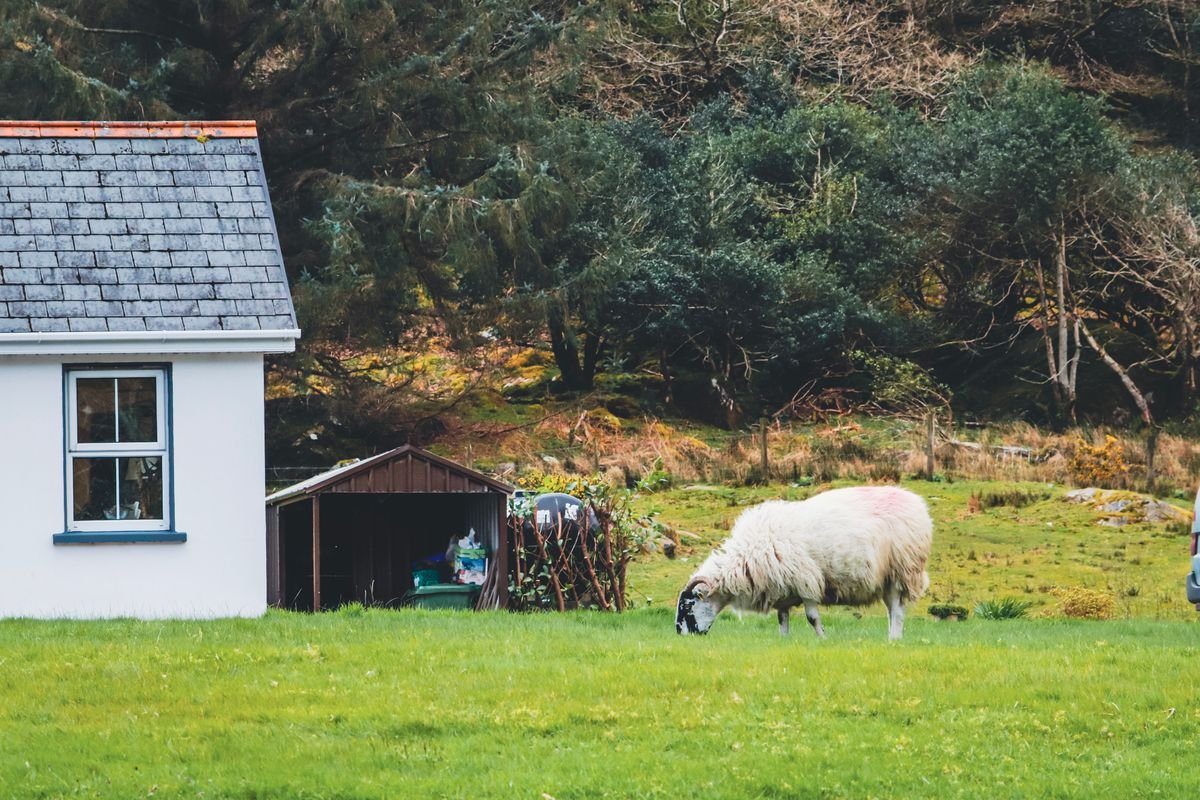
West Cork is the softer, greener end of the southwest, and a working farmhouse cottage is the way to do it. Think Clonakilty, Skibbereen, Baltimore, and the road out to Mizen Head. It’s food country too, with farmers markets, good seafood, and small distilleries.
We only made it as far as Cork city before the storm pinned us down, and it’s high on the list for next time. A farmhouse here suits a slower week of short drives rather than a big touring loop.
A Stone Cottage in the Burren, County Clare
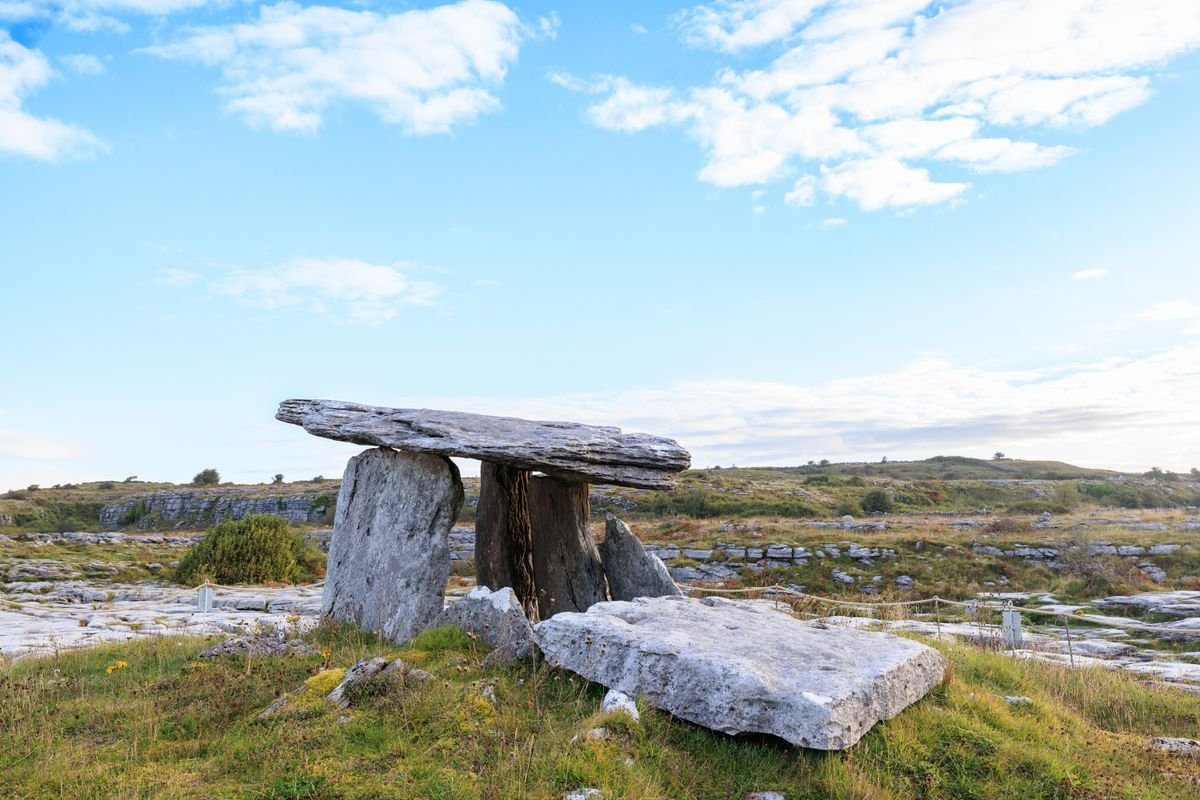
The Burren is a slab of grey limestone unlike anywhere else in Ireland, and a stone cottage fits the landscape perfectly. We came down the R478 off the Burren into Doolin, which makes a great base for this whole stretch of the Clare coast.
From Doolin we hiked the Cliffs of Moher path with cows grazing on the clifftop, then drove out to Loop Head, which impressed us more. It’s wilder, far less visited, and the black sea cliffs photographed better than the Cliffs did. If you’d rather see the cliffs from the water, you can book the Doolin Cliffs of Moher boat tour on GetYourGuide, which leaves right from the village. We ate at Gus O’Connor’s, open since 1832, and camped at Nagle’s by the trailhead.
A Lakeside Cottage in Connemara or Mayo
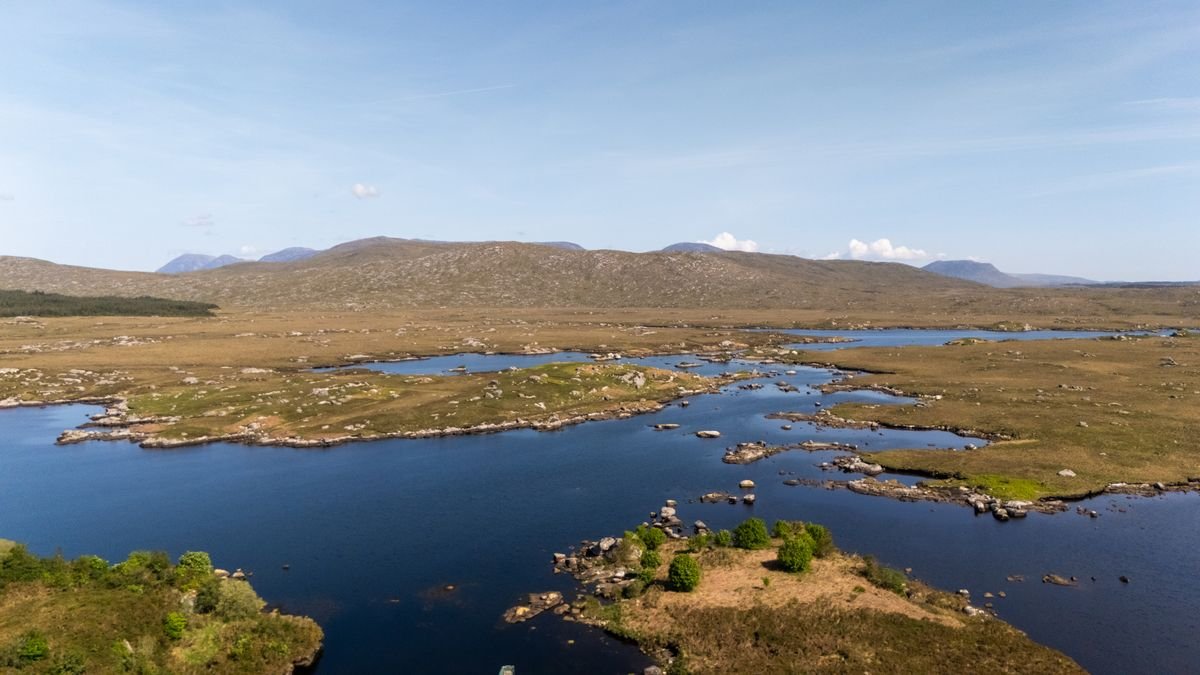
If a lake view beats a sea view for you, this is the pick. Inland Connemara and south Mayo are full of dark loughs ringed by mountains, and a cottage on the water’s edge is about as quiet as Ireland gets.
The shot that sold us on this region was Kylemore Abbey mirrored in the lake in front of it, with the Victorian walled garden behind. A cottage near Lough Inagh or out toward Westport puts you in that kind of scenery without the crowds the Abbey itself pulls.
A Cottage in the Wicklow Mountains
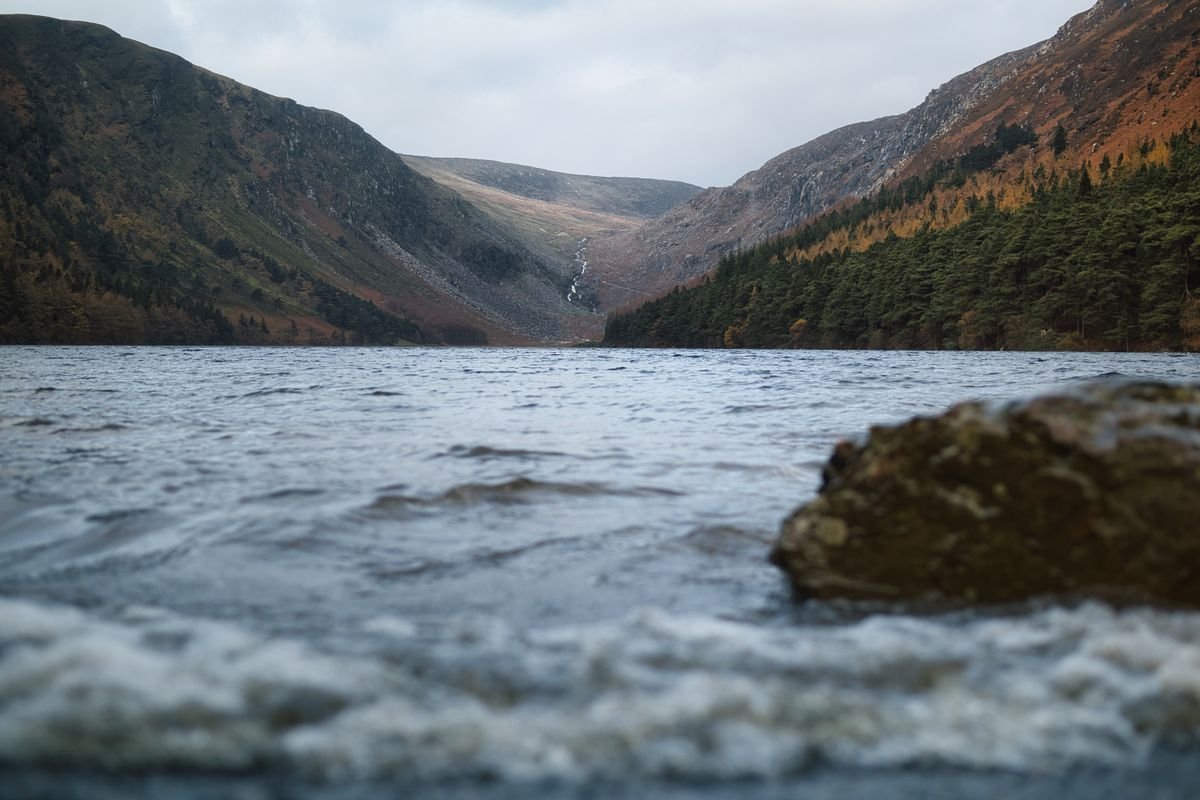
Wicklow is the easy one if you’re flying into Dublin and don’t want a long drive. It’s under an hour from the city and feels a world away, with mountain passes, forest, and the monastic ruins at Glendalough.
A cottage up around Roundwood or Laragh works as a base for day hikes and the Sally Gap drive, and it’s an easy short break if a full Wild Atlantic Way road trip is more than you’ve got time for.
A Cottage on the Dingle Peninsula
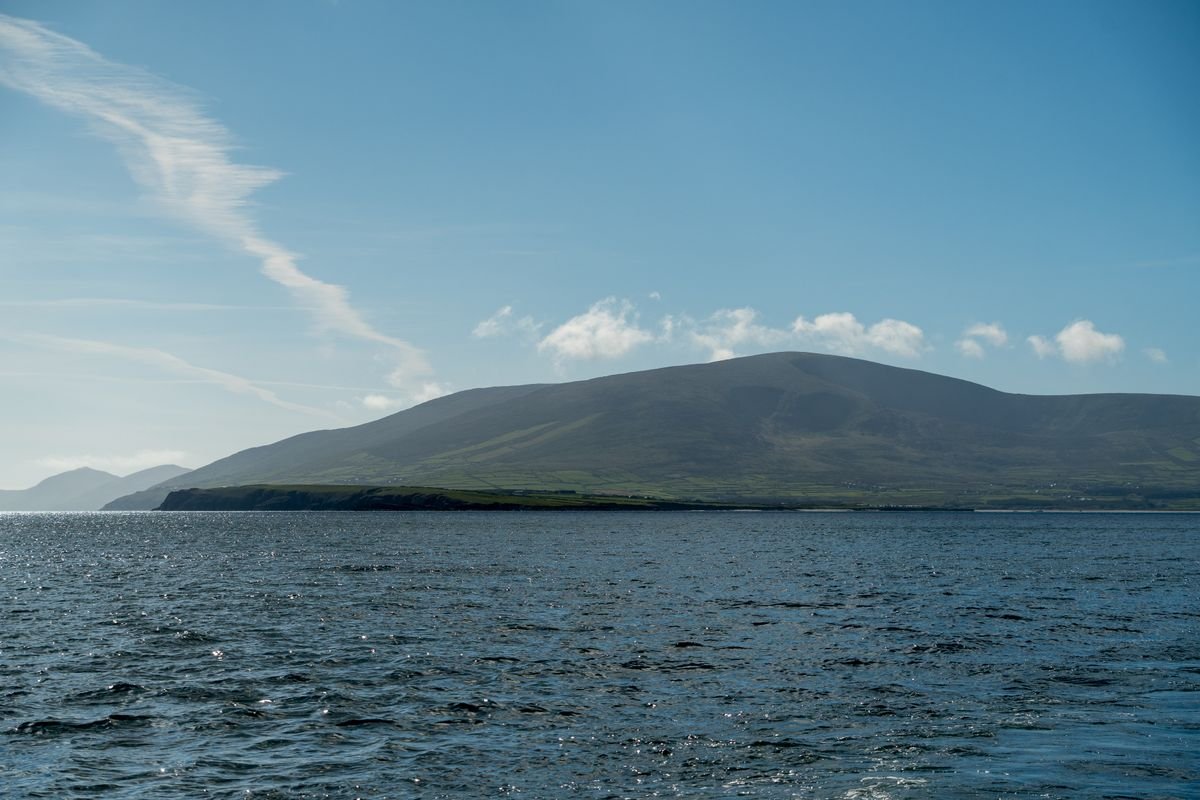
Dingle is the one I’d tell you to give more time than we did. We arrived in heavy rain with work to catch up on, only saw the town at night, and missed the Slea Head Drive in daylight. That’s my biggest regret of the trip, so book a cottage here for at least two nights and don’t repeat my mistake.
What we did nail was Foxy John’s, a working hardware shop with a bar at the back and a trad session going on a tin whistle and guitar. Stay out on the peninsula and you’ve got beehive huts, beaches, and Slea Head on your doorstep.
Where to Stay on the Dingle Peninsula
A Restored Cottage in the Boyne Valley
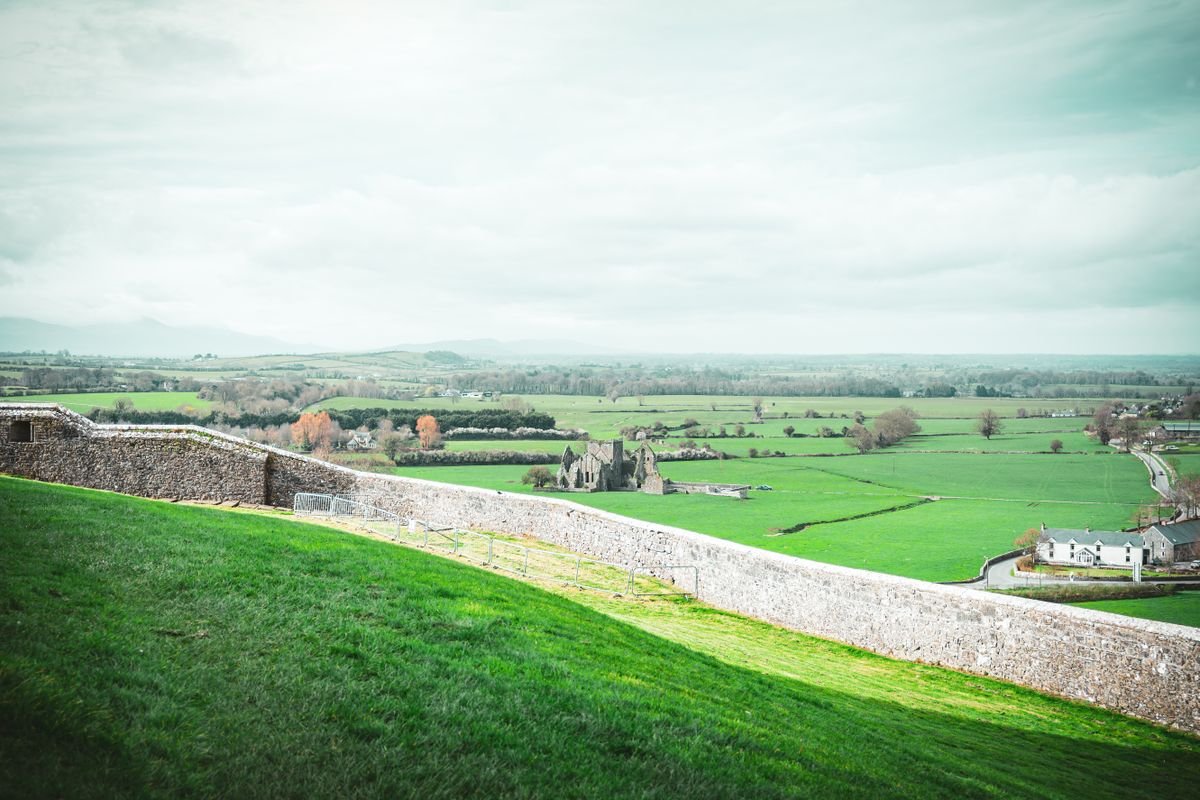
The Boyne Valley, north of Dublin in County Meath, is the history pick. This is where you’ll find Newgrange, a passage tomb older than the pyramids, plus the Hill of Tara and a string of medieval sites.
A restored stone cottage near Slane or Trim suits travelers who care more about ancient sites and quiet countryside than coastline, and it’s an easy drive from the airport.
A Luxury Cottage on the Causeway Coast
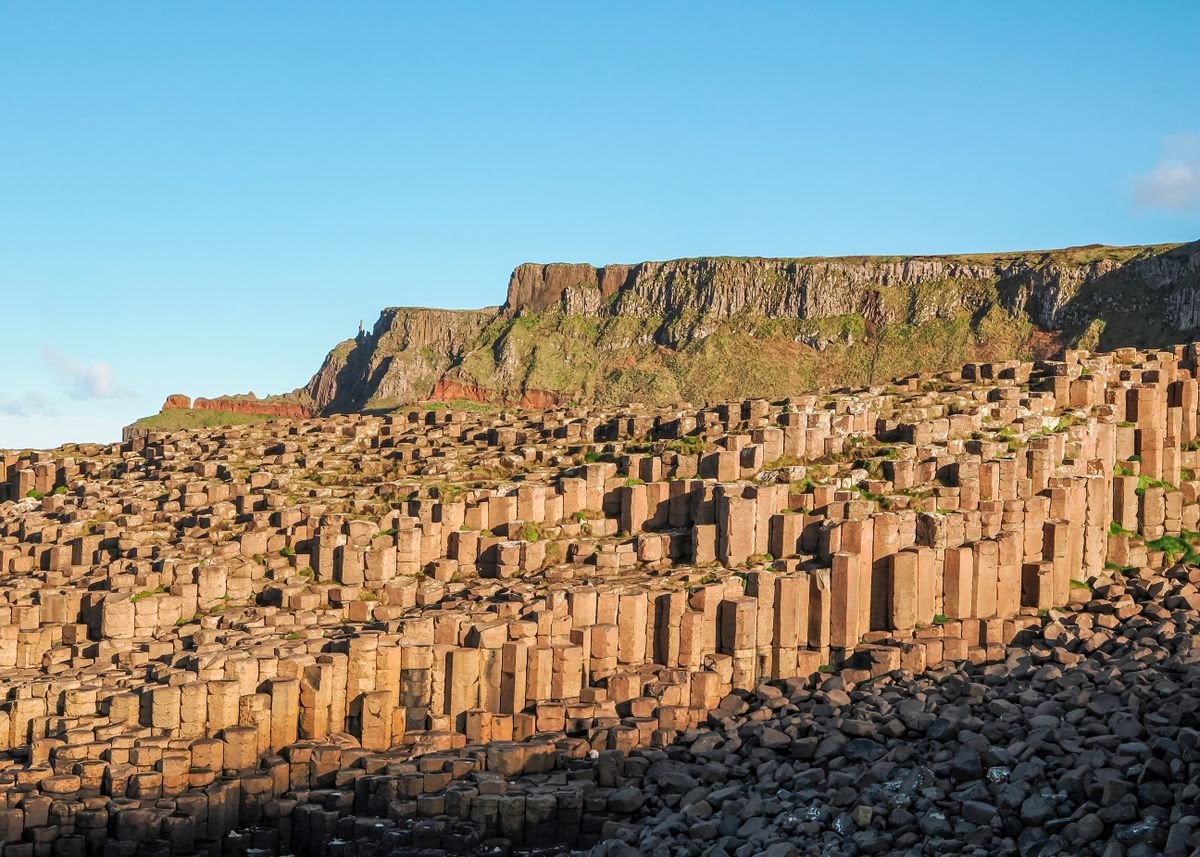
Up in Northern Ireland, the Causeway Coast is where to spend a bit more on the cottage. The Giant’s Causeway, the Carrick-a-Rede rope bridge, and the Dark Hedges are all strung along one short coastal road, with Dunluce Castle perched on the cliffs.
Higher-end self-catering places near Portrush or Ballintoy come with sea views, modern kitchens, and easy access to the whole coast, plus the whiskey at Bushmills nearby. Just remember you’re in the UK up here, so prices are in pounds, not euro.
Best Time to Book an Irish Cottage
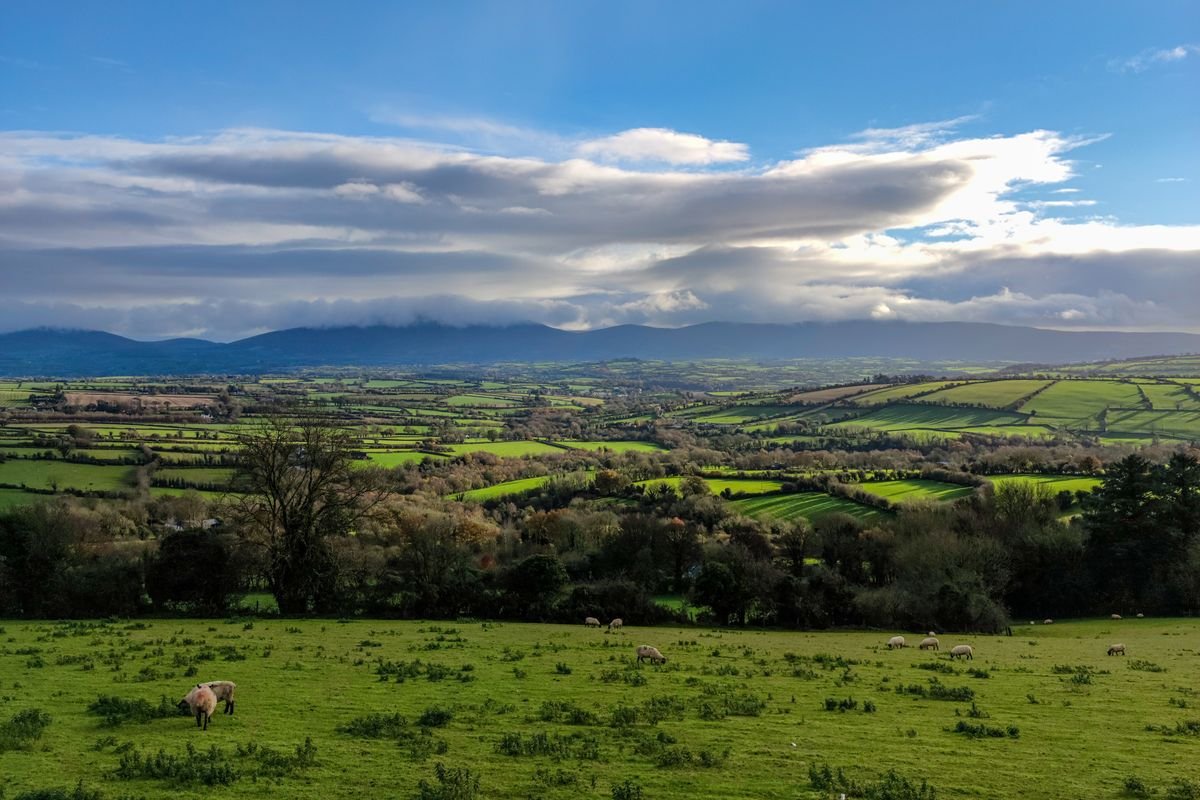
The short version: if you want a specific cottage in a specific spot for the summer, book it six to nine months out. The good self-catering places on the west coast are a limited number of properties, and the popular ones go first.
July and August are peak. Prices are at their highest, the famous spots near the Cliffs of Moher, Dingle, and the Ring of Kerry get booked solid, and you’re competing with every family traveling on the school holidays.
We drove the country in late September, well into shoulder season, and that’s where I’d point you. May, September, and early October give you cheaper rates, far fewer crowds, and cottages you can often grab two or three months ahead instead of half a year.
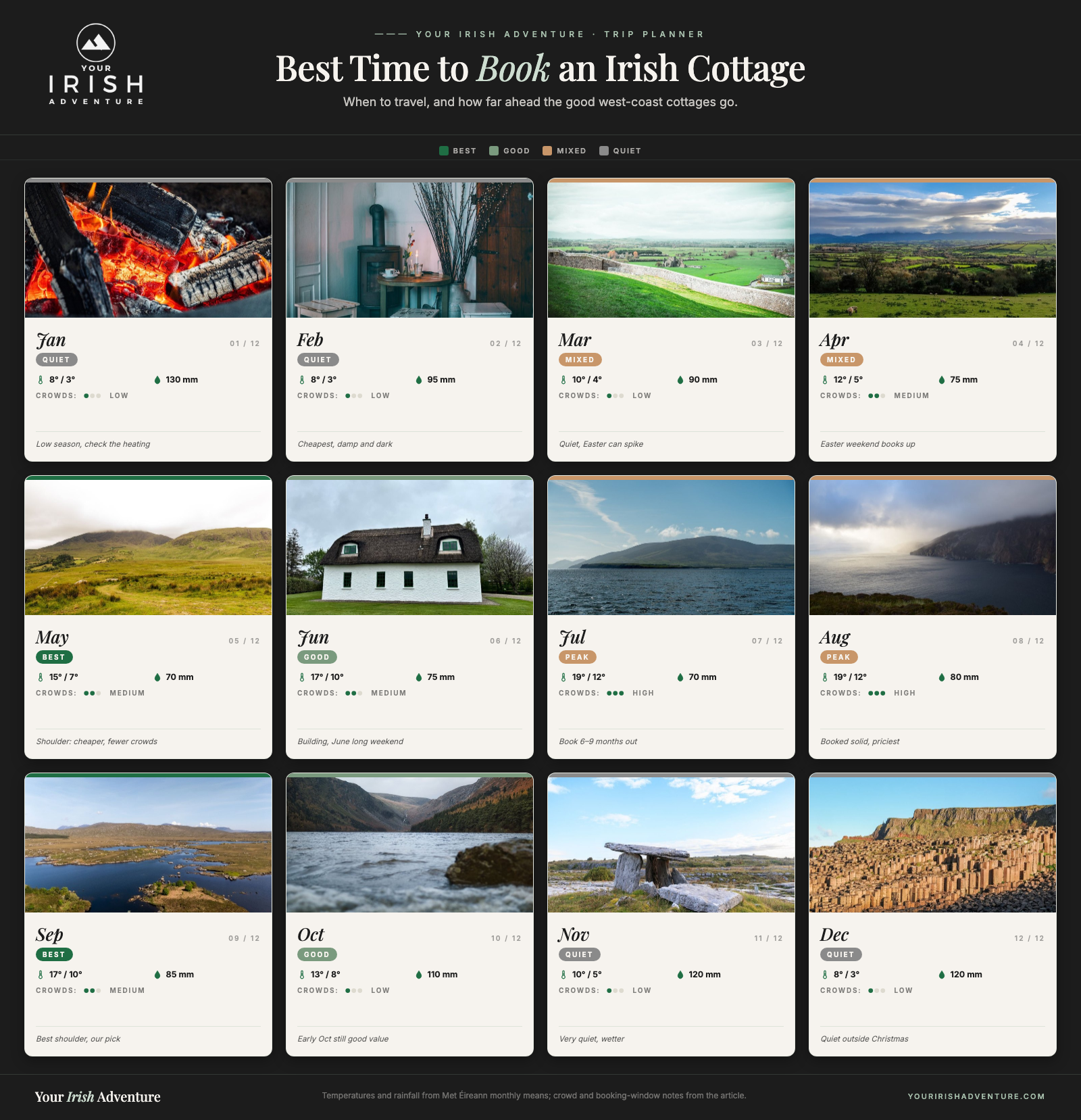
The trade-off in shoulder season is the weather, which is more of a gamble. We caught heavy rain on the Dingle Peninsula and a named storm on the Ring of Kerry, so build a flexible day or two into the plan and don’t pin everything on one viewpoint.
A Few Booking Rules That Save You Money
- Watch the public holidays. Easter weekend, the June and August long weekends, and Halloween week all spike both price and demand, even outside summer.
- Cottages tend to run Saturday to Saturday in peak season. Off-season you’ll find more places that take a flexible three or four nights, which suits a touring trip better.
- Many owners list on Airbnb and on their own site. Check both, because the direct booking is often cheaper once you strip out the platform fees.
- Northern Ireland prices are in pounds, not euro, so factor the exchange rate if you’re basing yourself on the Causeway Coast.
If your dates are fixed around summer, book the cottage before the flights. The flights have far more availability than a good cottage in Connemara or Kerry in August, so lock in the hard part first.
Plan the Drive Between Cottages
- A Photographer’s Definitive Ireland Road Trip
- Wild Atlantic Way Itinerary – Ireland’s Most Epic Road Trip
- 9 Best Places On The Wild Atlantic Way Route
How to Book a Cottage in Ireland
Once you’ve picked a region, the actual booking is straightforward. Irish self-catering cottages live in a few main places, and it pays to know where to look before you start. Sort the car at the same time, because every cottage in this list needs one to reach it. You can compare car hire deals on Discover Cars and lock in the rental before the airport desks sell out in summer.
For traditional and heritage cottages, start with the Irish Cottage Holidays and Trident Holiday Homes listings, both of which specialize in vetted self-catering places across the country. For everything else, Airbnb and Vrbo carry the widest range, especially the modern coastal builds and farm conversions.
What to Check Before You Pay
Heating is the one I’d check first. Plenty of older stone cottages look great in the photos but turn out cold and damp in the shoulder season, so look for central heating or a working stove, not just an open fireplace for show.
Read the location carefully, too. A cottage listed as “Connemara” can be a 40-minute drive from anything, which is fine if that’s what you want and a problem if it isn’t. Pull the address into Google Maps and check the real distance to the nearest town and the sites you’re driving to.
A few other things to confirm before you hand over a deposit:
- Wi-Fi and signal, if you’re working along the way like we were. Rural west-coast cottages can be patchy, so ask the owner directly rather than trusting the listing.
- Whether the road in is a paved lane or a rough boreen. It matters for a small rental car, and it matters more for a campervan.
- The full price with the cleaning fee, deposit, and any oil or electricity charges added on. Some older cottages still meter the heating separately.
- The cancellation terms, which matter a lot given how much the weather can move your plans in shoulder season.
Beyond that, message the owner before you book. A quick reply with real local advice is a good sign, and the smaller family-run places are usually the ones that send you to the right pub and the right beach once you’re there.
Frequently Asked Questions
Are cottages cheaper than hotels in Ireland?
For a couple on one night a hotel can work out cheaper, but for a family or group staying several nights a cottage almost always wins, since you pay for the whole place and cook your own meals. The kitchen is the real saving, and a cottage with a stocked fridge from the local Lidl pays for itself over a week.
Do you need a car to stay in a cottage in Ireland?
Yes. Most cottages worth booking are rural, off the main roads, and nowhere near a bus route, so you need your own wheels. If you’re flying in, sort the rental before you arrive, since the airport desks sell out in summer just like the cottages do.
What’s the difference between a cottage and a holiday home?
Not much in practice. A cottage usually means an older or traditional stone or thatched building, while a holiday home covers anything from a modern coastal build to a farm conversion, and both are self-catering. Read the listing photos rather than the label.
Are old Irish cottages warm enough in autumn and winter?
Some are, some aren’t, so heating is the first thing to check. The west is damp and a pretty stone cottage with only an open fireplace gets cold fast, so look for central heating or a working stove and ask the owner how the place heats up.
Which part of Ireland is best for a cottage stay?
If I had to send you to one region it’s Connemara, where a cottage near Clifden or Roundstone puts you on the Atlantic with the Twelve Bens behind you and far fewer crowds than Kerry. If you’re short on time and flying into Dublin, Wicklow gets you cottage-and-mountains scenery within an hour of the city.
More Where-to-Stay Guides by Region
- Where to Stay in Lahinch: Best Hotels, Lodges & B&Bs
- 7 Best Places to Stay in Dingle, Ireland
- Where to Stay in Kinsale: Best Areas & Hotels
- Where to Stay in Belfast: Best Areas & Hotels
In short
- Donegal’s Slieve League and Fanad Peninsula have cliffs as big as anywhere, with far fewer crowds.
- Give Donegal three or four nights, since it’s a long drive from Dublin or the south.
- For Connemara, book a cottage near Clifden or Roundstone, close to the Twelve Bens and the Atlantic.
- The Atlantic off Clifden was clear and swimmable in late September.
- The guide covers ten cottages across ten regions, sorted by area rather than ranked.
Final Thoughts on the Best Cottages in Ireland
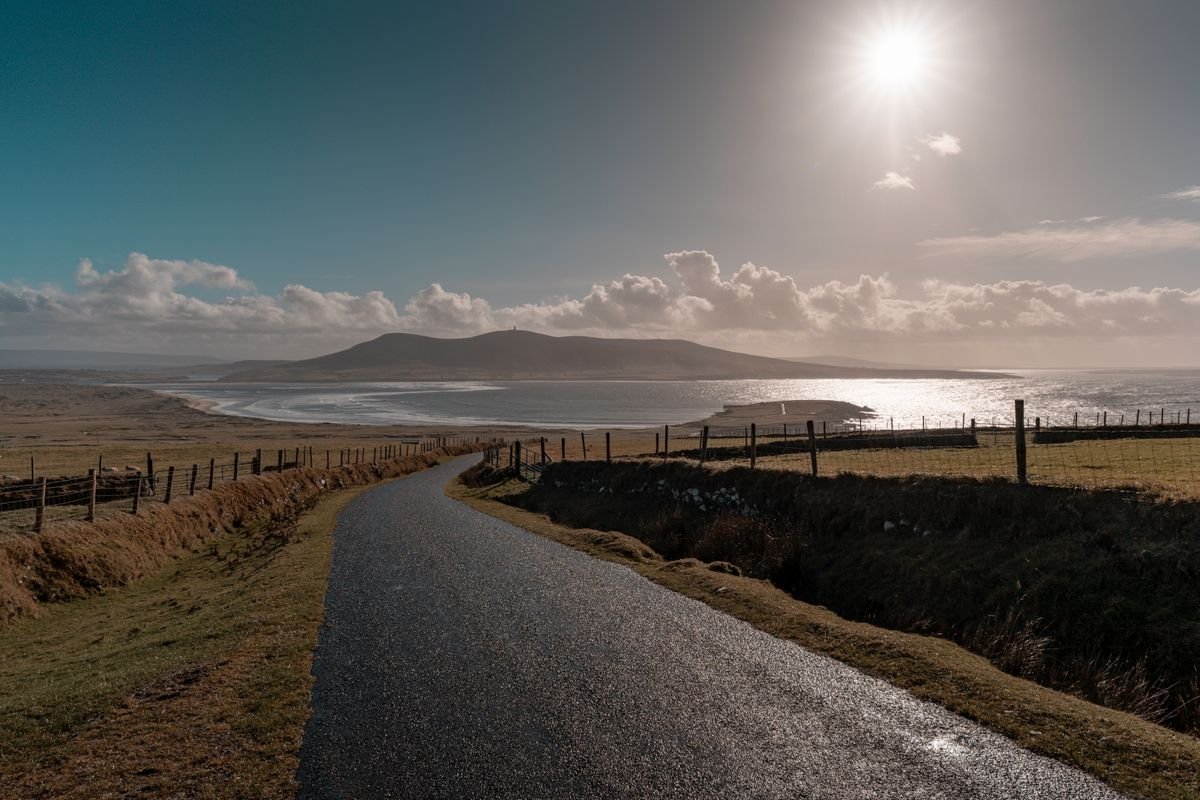
Pick the region first, then the cottage. That’s the whole game. The list above runs from Donegal in the far northwest down to West Cork and across to the Causeway Coast, and there isn’t a bad option in it. What matters is matching where you wake up to the kind of trip you actually want.
If you’ve got the time and you’re chasing the Atlantic, go west. A cottage near Clifden or Roundstone puts you in the best scenery we found, with the Twelve Bens behind you and the sea out front. If you’re flying into Dublin and short on days, Wicklow gets you the feeling within an hour of the city.
Book the cottage before anything else if your dates are fixed, check the heating before you pay, and build a spare day into the plan for the weather. Do that, and a self-catering cottage will beat a run of hotels every time.
Like it? Pin it!
Save this guide for later