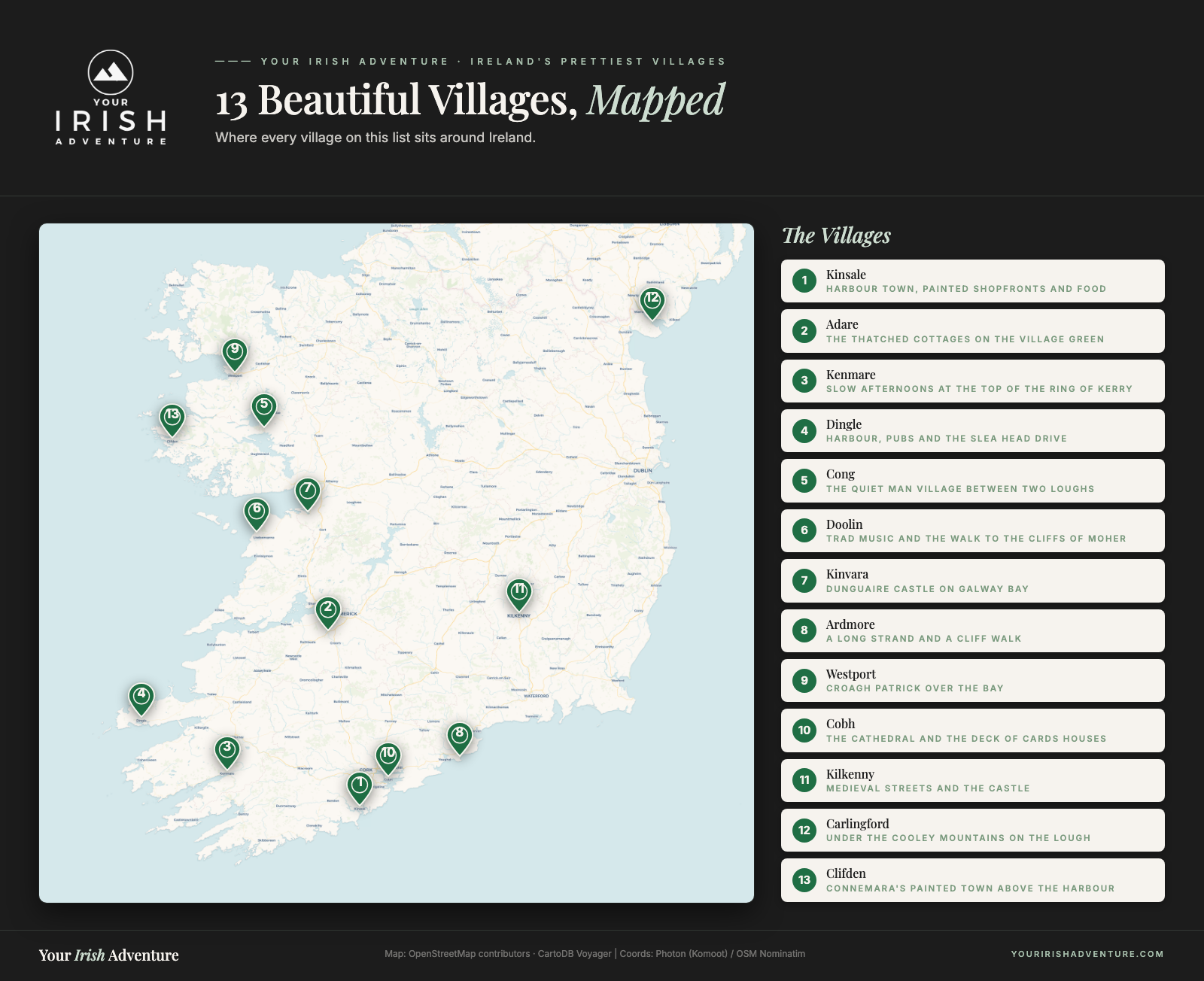
Ireland does small towns better than almost anywhere, and if you’re hunting down the prettiest villages in the country, you’re spoiled for choice. On our last trip we spent about two weeks driving from Dublin to Cork and back up the west coast, and the little places you blow past on the way to the big sights were often the best stops.
Some of these you’ll already know. Adare in County Limerick, with its row of thatched cottages on the main road, is on every list for a reason. Others, like Cong in Mayo or Kinvara on Galway Bay, are the ones we’d actually send you to if you wanted the same feel with fewer tour buses.
We did the trip by campervan, but a rental car works exactly the same on this route and it’s the easier choice for a first trip. Nearly every village below sits on a natural driving loop, so you can string a bunch of them together without much backtracking.
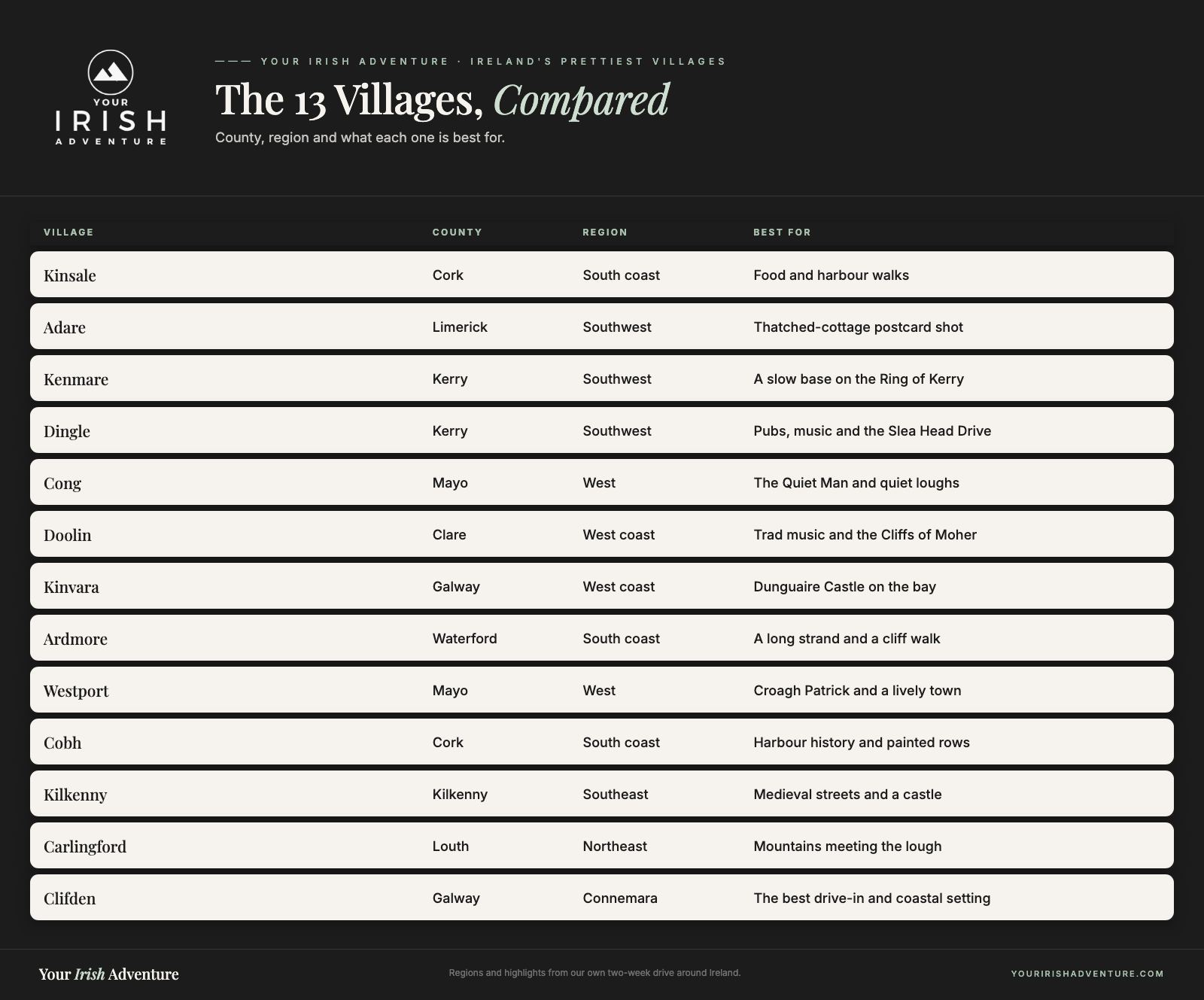
Here’s the list, from the famous ones like Kinsale and Dingle to the quieter picks we rated even higher, plus how to tie them into a road trip around the country at the end.
Quick Answer:
The prettiest villages in Ireland run from Kinsale and Cobh on the Cork coast to Adare’s thatched cottages in Limerick and Clifden in Connemara. Most sit on a natural driving loop, so you can string three or four together in a week. You need a car, and shoulder season, late September into October, is the sweet spot for fewer crowds.
More Places to Visit in Ireland
- Scenic Towns and Villages in Ireland: 18 Best Picks
- The Most Beautiful Towns In Ireland You Need To Visit
- 15 Best Seaside Towns in Ireland To Visit This Summer
Kinsale, County Cork
Kinsale is one we didn’t get to on our last trip, and I’m still annoyed about it. An Atlantic storm rolled into the south coast and pinned us up around Cobh for our last couple of days, and we ran out of time before we could drop down to Kinsale.
So I’ll be straight with you here: this one comes from research and everyone we spoke to, not from us walking the streets. But it lands on almost every “best villages” list in Ireland, and after seeing what the same stretch of Cork coast looks like, it’s easy to understand why.
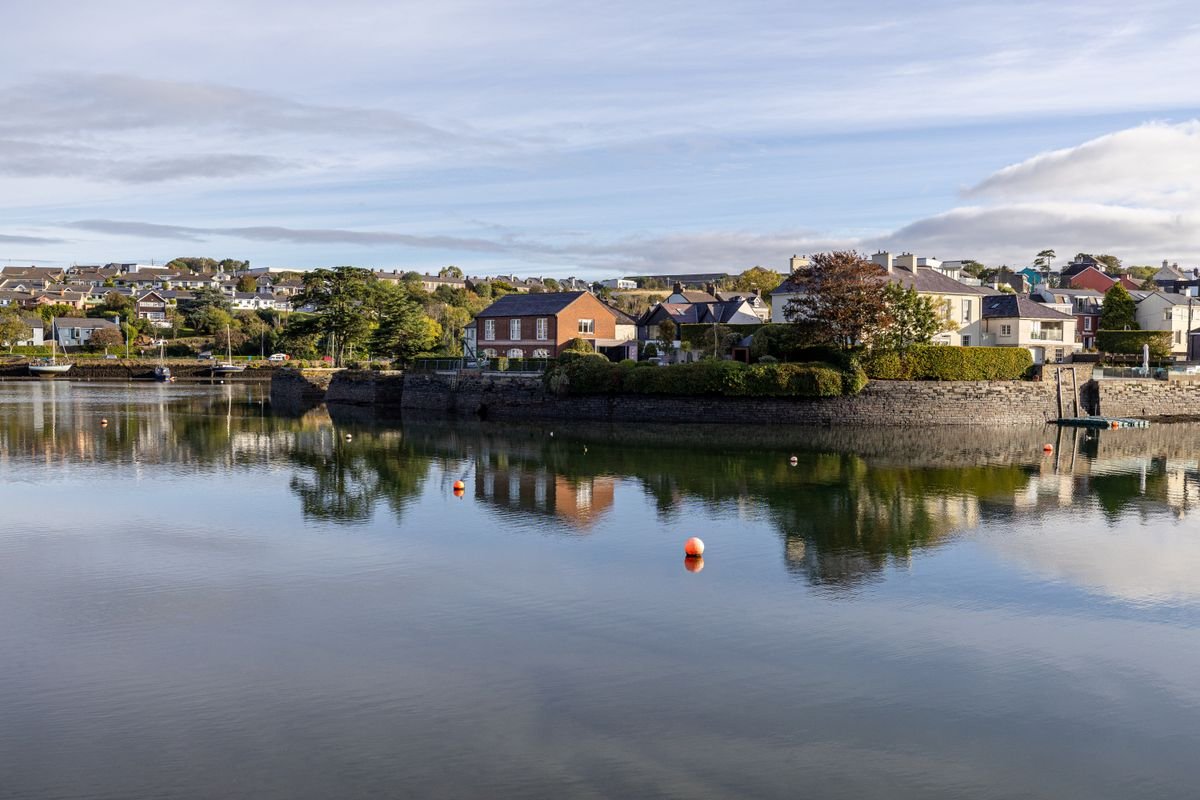
Kinsale sits at the mouth of the Bandon River, about 30 minutes south of Cork city. The town is built around a working harbor, with rows of painted shopfronts in deep reds, blues and yellows stacked up the hillside behind the water.
It has a reputation as the food capital of Ireland, and that’s the main reason a lot of people base themselves here for a night or two. The narrow streets are packed with seafood restaurants, small bars and cafes, and the harbor is full of yachts and fishing boats.
The big sight is Charles Fort, a huge star-shaped 17th-century fortress out at Summercove, about a 20-minute walk along the water from town. James Fort sits across the harbor from it. The Scilly Walk connects the town to the fort along the shore and is the way to arrive.
Further out is the Old Head of Kinsale, a dramatic headland where the Lusitania was sunk offshore in 1915. If you’re driving the south coast between Cork and West Cork, Kinsale is an easy stop and worth at least a night. It’s the one I’d fix first next time we’re over.
Where to Stay in Kinsale
Adare, County Limerick
Adare gets called Ireland’s prettiest village, and for once the label holds up. We only stopped for lunch on our last trip, breaking up a long driving day on the N21 between Limerick and Kerry, but even a quick stop was enough to see why it makes every list.
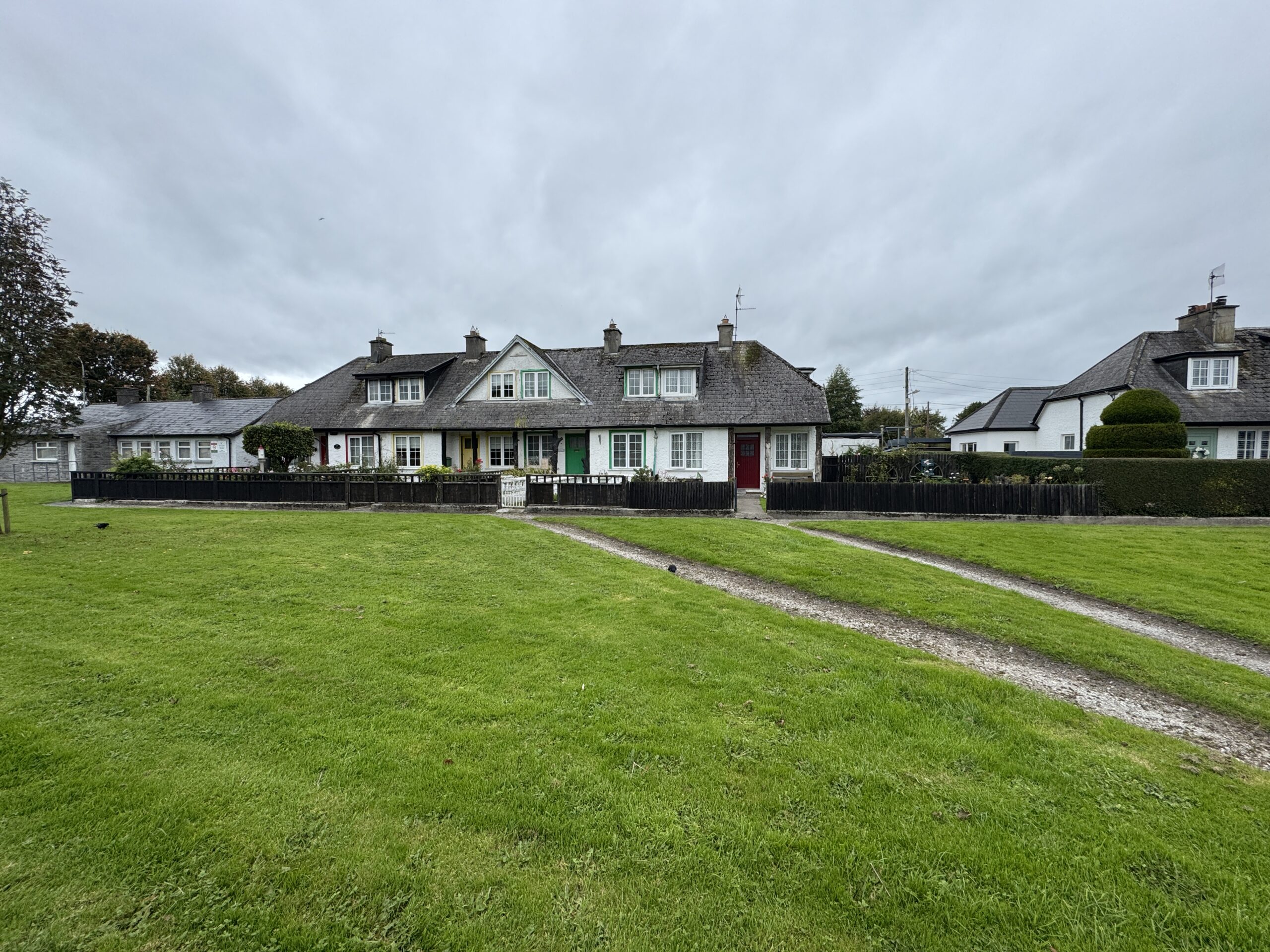
The main street is lined with a row of thatched cottages, and they’re the real thing, properly maintained rather than left to sag. A lot of Irish villages have a nice building or two. Adare has a whole run of them together, which is what makes it stand out.
We ducked into one of the village pubs for a Guinness and a shepherd’s pie, sat by the window and looked out at the cottages across the road. It’s a good spot to reset on a driving day, and the food did the job before we pushed on toward Dingle.
If you want to make a proper stop of it, there’s more here than we had time for. The village has the ruins of a Franciscan friary and an Augustinian priory, both worth a wander, and Adare Manor is a five-star hotel and golf resort if you feel like splashing out on a night.
For the average traveler, though, Adare is a 45-minute to an hour stop, not an overnight. Pull in, walk the main street, grab lunch in a pub, and carry on. On the drive between Clare or Limerick and the Kerry coast, it’s an easy one to work into the route.
Where to Stay in Adare
Kenmare, County Kerry
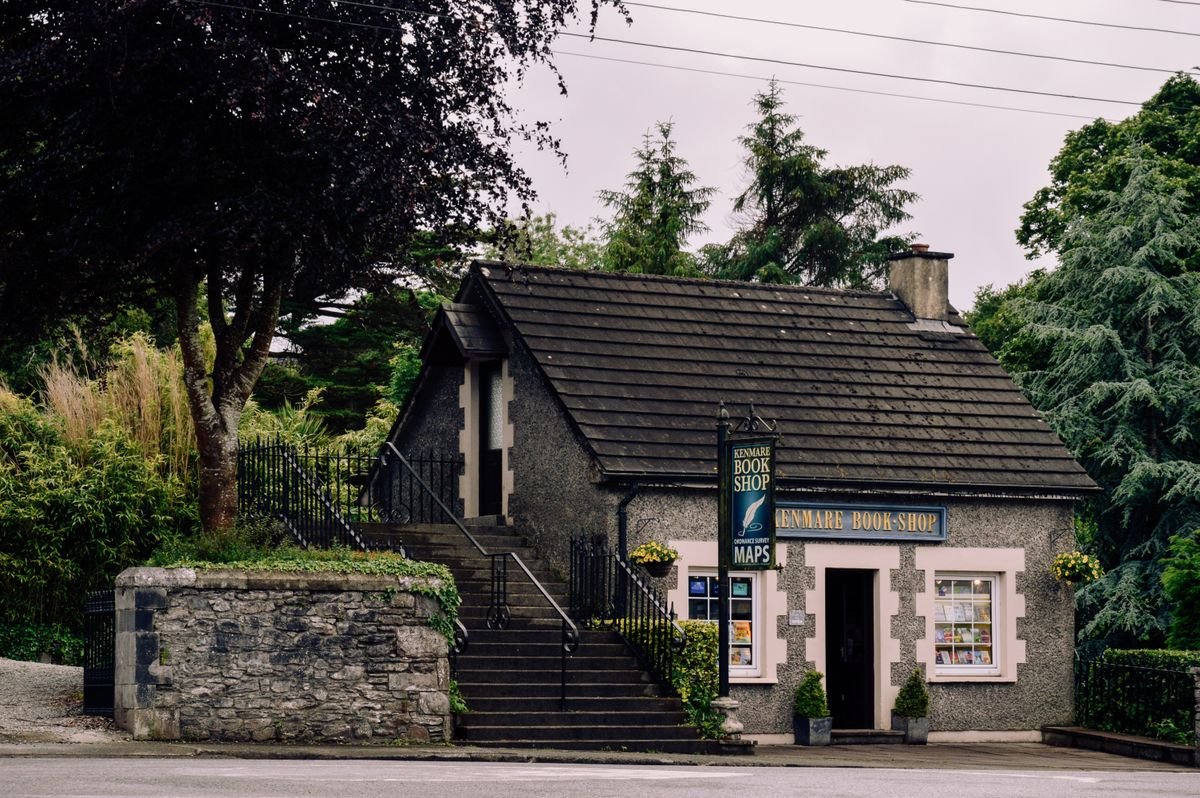
Kenmare sits where the Ring of Kerry and the Ring of Beara meet, at the head of Kenmare Bay in the southwest. We were based up the road in Killarney and dropped down for a stop as we came around the coast, so we only had an hour or so here.
The village is laid out in a neat triangle of streets, with rows of painted shopfronts in reds, greens and yellows. It’s an easy place to walk. We had a drink at O’Connor’s, and The Coachman’s is the other pub people point you toward.
I’ll be honest with you: parts of the main street felt a bit touristy, with some gift shops leaning into the Ring of Kerry crowds. The village is pretty, but that’s not the reason I’d tell you to stop.
The reason is the Kenmare Stone Circle, a Bronze Age ring of fifteen standing stones a couple of minutes’ walk off the main street. It’s free, it’s usually calm, and a lot of visitors walk straight past it. Standing in a stone circle that’s been there thousands of years, right behind the shops, is the thing I remember from Kenmare.
An hour is about right for Kenmare. Walk the three main streets, see the stone circle, have a pint, and carry on. If you’re driving the Ring of Kerry or heading over to Killarney, it’s an easy one to fold into the route.
Where to Stay in Kenmare
Dingle, County Kerry
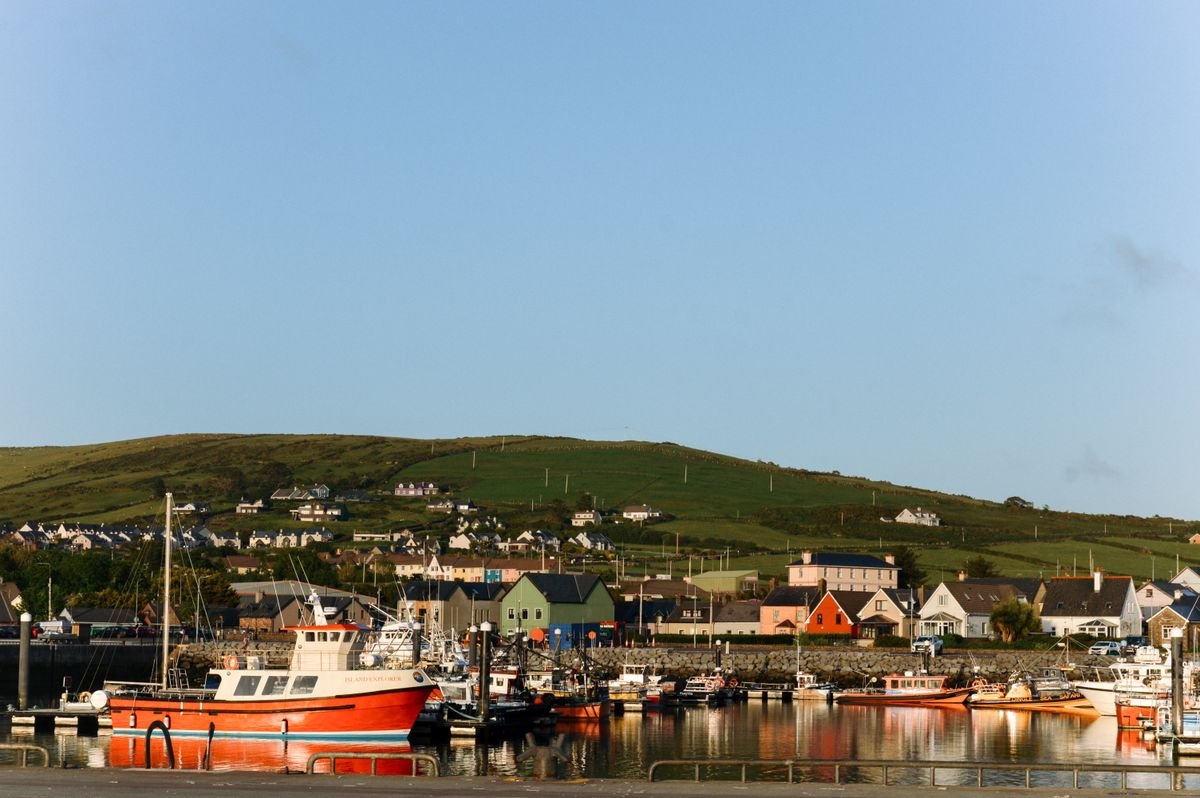
Dingle is the one that got away on our last trip, and I’ll tell you why up front. We drove in from Doolin, about two hours west, and hit heavy rain the whole way. By the time we got there it was dark and we still had work to do, so we only saw the town at night.
That’s my biggest regret of the whole route. Dingle sits out on its own peninsula in the southwest, a working fishing harbor with a run of painted shopfronts and one of the best coastal drives in the country right on its doorstep. We saw almost none of that in daylight.
What we did do was find Foxy John’s, and that alone was worth the stop. It’s a hardware shop by day, an actual one selling tools and bits, with a small bar tucked in at the back. We had pints while a guitar and tin whistle duo ran a trad session a few feet away. It’s one of the most unusual pubs in Ireland and you should go.
We also had a drink at The Dingle Pub before heading back. We parked the campervan at the Rainbow Hostel just outside town, which let us leave the van and taxi in for about ten minutes, handy if you’re driving something big.
Here’s my advice, and it comes from getting it wrong. Give Dingle at least two nights and treat it as more than a village stop. The Slea Head Drive loops around the tip of the peninsula past beehive huts, beaches and cliffs, and we only saw it in the dark, which is why I can’t tell you about it properly.
Do it in the light, walk the harbor, and drink at Foxy John’s whenever you get there. Dingle earns a place on this list even from what little we saw, and it’s high on the list for the next time we’re over.
Where to Stay in Dingle
Cong, County Mayo
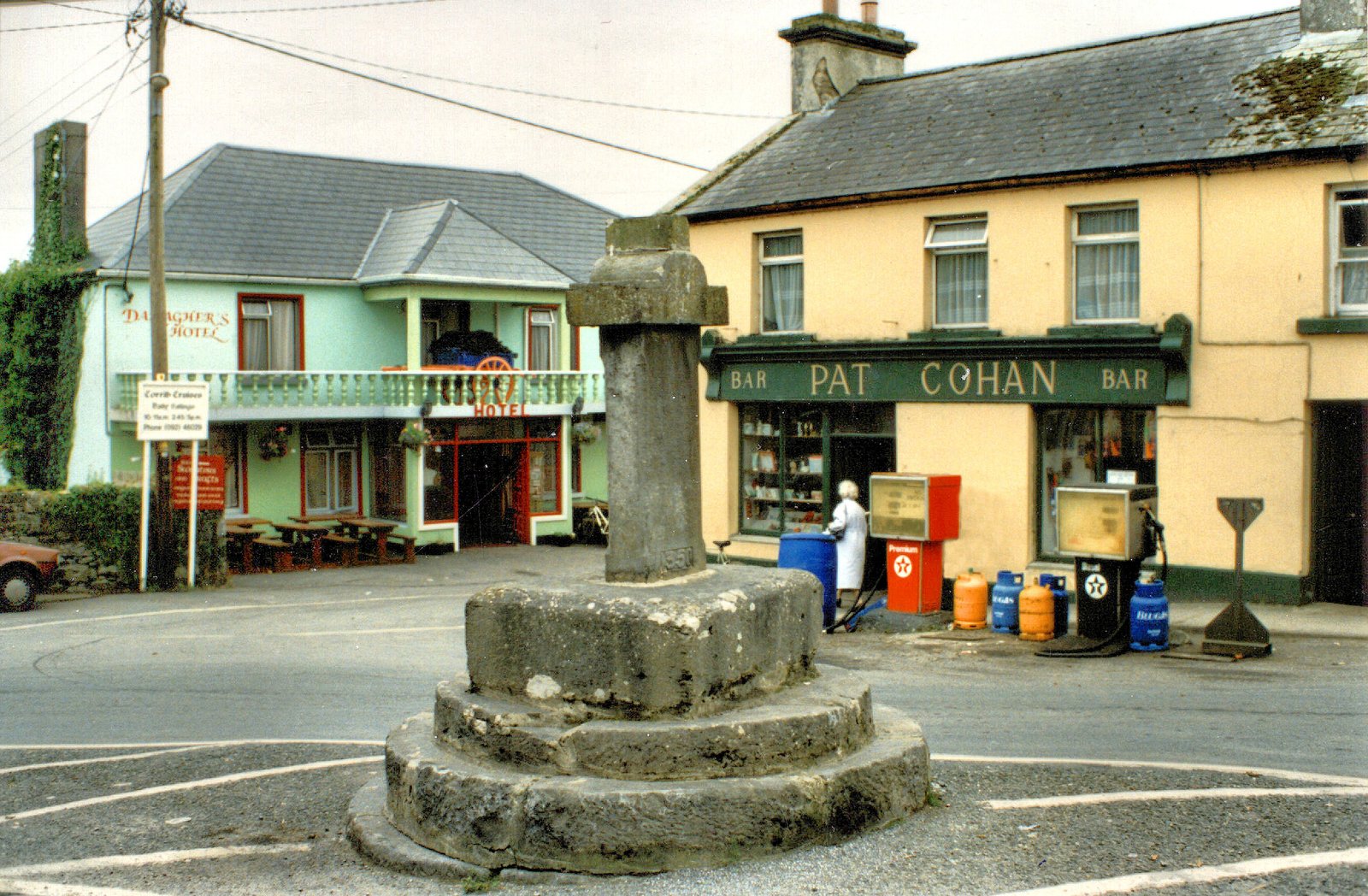
Cong is another one we didn’t reach on our last trip, so I’ll tell you straight that this comes from research and not from us walking it. It sits between Lough Corrib and Lough Mask, right on the Mayo and Galway border, about 40 minutes north of Galway city.
Cong is best known for the film. “The Quiet Man,” the 1952 one with John Wayne and Maureen O’Hara, was shot here, and the village has traded on it ever since. There’s a Quiet Man museum in a replica of the cottage from the movie if you’re a fan.
Even if you’ve never seen it, the village itself is the draw. The main pull is Ashford Castle, a huge estate on the edge of Cong that’s now a five-star hotel. The grounds and woodland trails are open to walk for a fee, and you don’t have to be a guest to see them.
In the village proper are the ruins of Cong Abbey, a 12th-century Augustinian site with carved stone doorways and cloisters you can wander for free. Down by the river is the Monk’s Fishing House, a small stone hut built out over the water so the monks could fish straight from inside.
The whole area is threaded with rivers and underground streams running between the two lakes, so short walking loops from the village take you along the water and through the woods. It’s a slower stop than a coastal village, more about the grounds and the setting than the pubs.
If you’re driving between Galway and Connemara or heading up toward Westport, Cong is an easy detour and worth a couple of hours. It’s on my list for the next time we’re over, mostly for the Ashford Castle grounds and the abbey.
Plan the Drive: Ireland Road Trip Itineraries
- Wild Atlantic Way 5 Day Itinerary: Kinsale to Doolin
- Wild Atlantic Way Itinerary – Ireland’s Most Epic Road Trip
- A Photographer’s Definitive Ireland Road Trip
- 9 Best Places On The Wild Atlantic Way Route
Doolin, County Clare
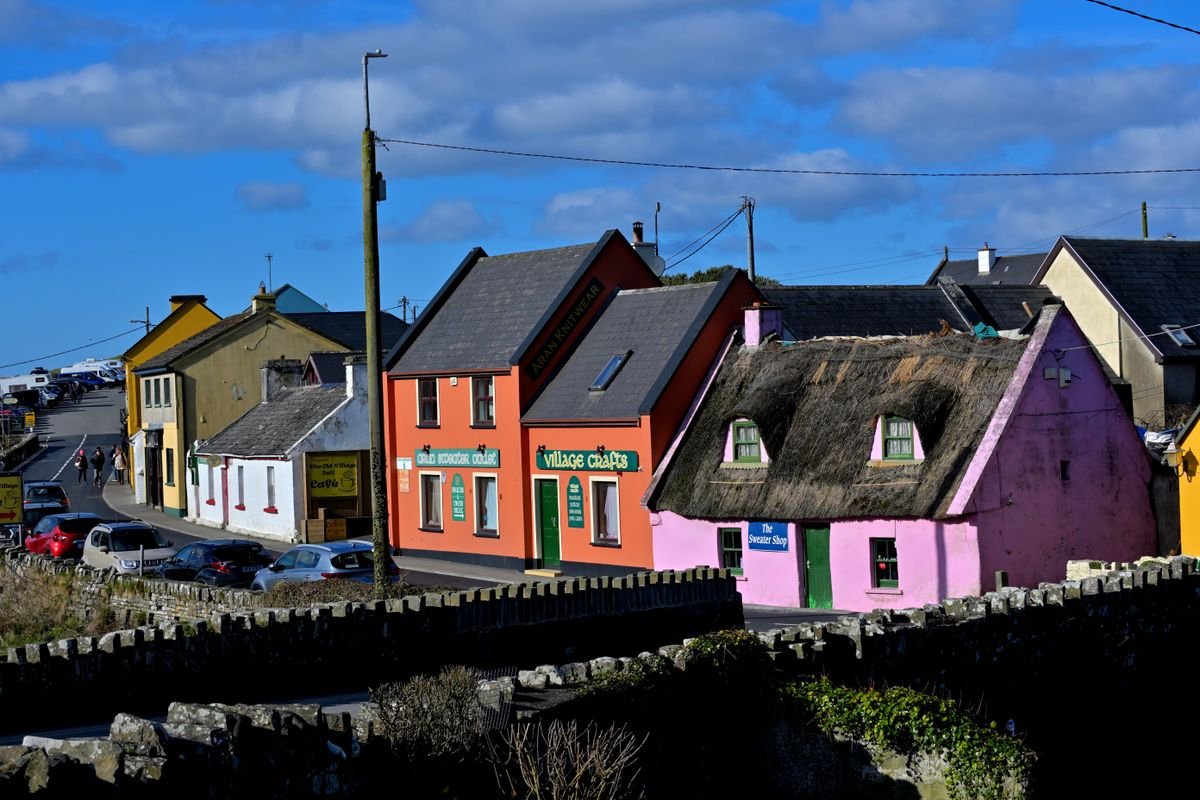
Doolin is the one village on this list we actually stayed in on our last trip. It’s a small place strung out along a road on the Clare coast, not a tight run of painted shopfronts like the others. What it’s known for is two things: traditional music, and being the closest village to the Cliffs of Moher.
A lot of travelers come through here as a jumping-off point. It’s the ferry port for the Aran Islands and the start of the Cliffs of Moher coastal walk, so plenty of people use it as a base for a night rather than a destination in itself.
We camped at Nagle’s Camping & Caravan Park, a short walk from both the pubs and the cliff trailhead. If you’re driving the coast, it’s a handy spot to park up and leave the car, and it put us right where we wanted to be for the walk in the morning.
The three pubs are the heart of the village, and Gus O’Connor’s is the one to hit. It’s been open since 1832, and we had fish, chips and mussels there after a day on our feet. It’s a solid spot for a post-hike pint with music most nights.
The main reason to be here is the Cliffs of Moher path that runs from the village. We walked it out of Doolin, a narrow trail hugging the cliff edge with a sheer drop to the ocean on one side and cows grazing on farmland on the other. We hiked about two hours out and turned back.
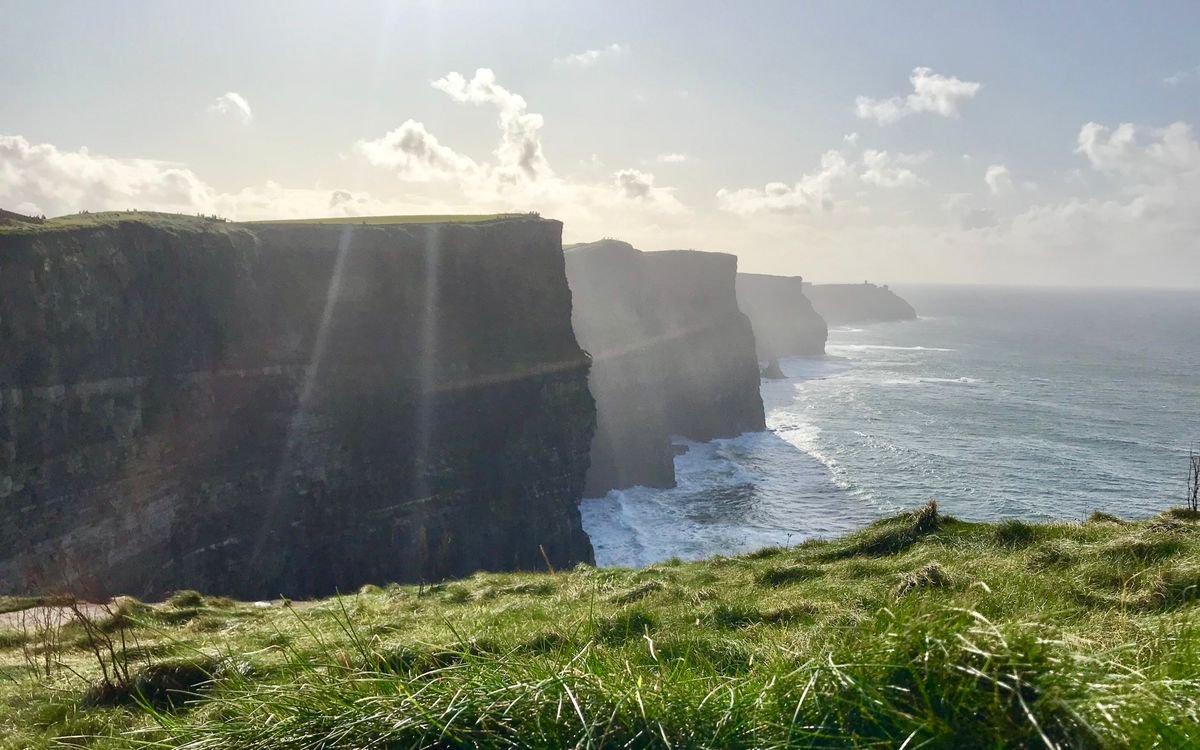
The Doolin approach has way fewer people than the main viewing platform, and you earn the cliffs on foot instead of stepping out of a parking lot. We caught it on a Monday in late September, well into shoulder season, and the weather was overcast, fine for walking but not ideal for photos.
That afternoon we drove out to the Loop Head Peninsula, less visited and full of black sea cliffs, and it was the highlight of our day. For a spot on this list, Doolin earns its place more on setting than on its streets. Stay a night, walk the cliff path in the morning, eat at Gus O’Connor’s, and use it as a base for the coast.
Where to Stay in Doolin
Kinvara, County Galway
Kinvara is one we didn’t stop in, so I’ll be straight with you: this comes from research and from being based just up the coast, not from walking its streets. We stayed at O’Hallorans Caravan Park in Salthill and taxied into Galway from there, and Kinvara sits at the head of the same bay, about 30 minutes south.
It’s a small fishing village on the southern shore of Galway Bay, right where the coast road bends toward the Burren. The harbor is the heart of it, with a run of painted shopfronts along the water and hills rising behind.
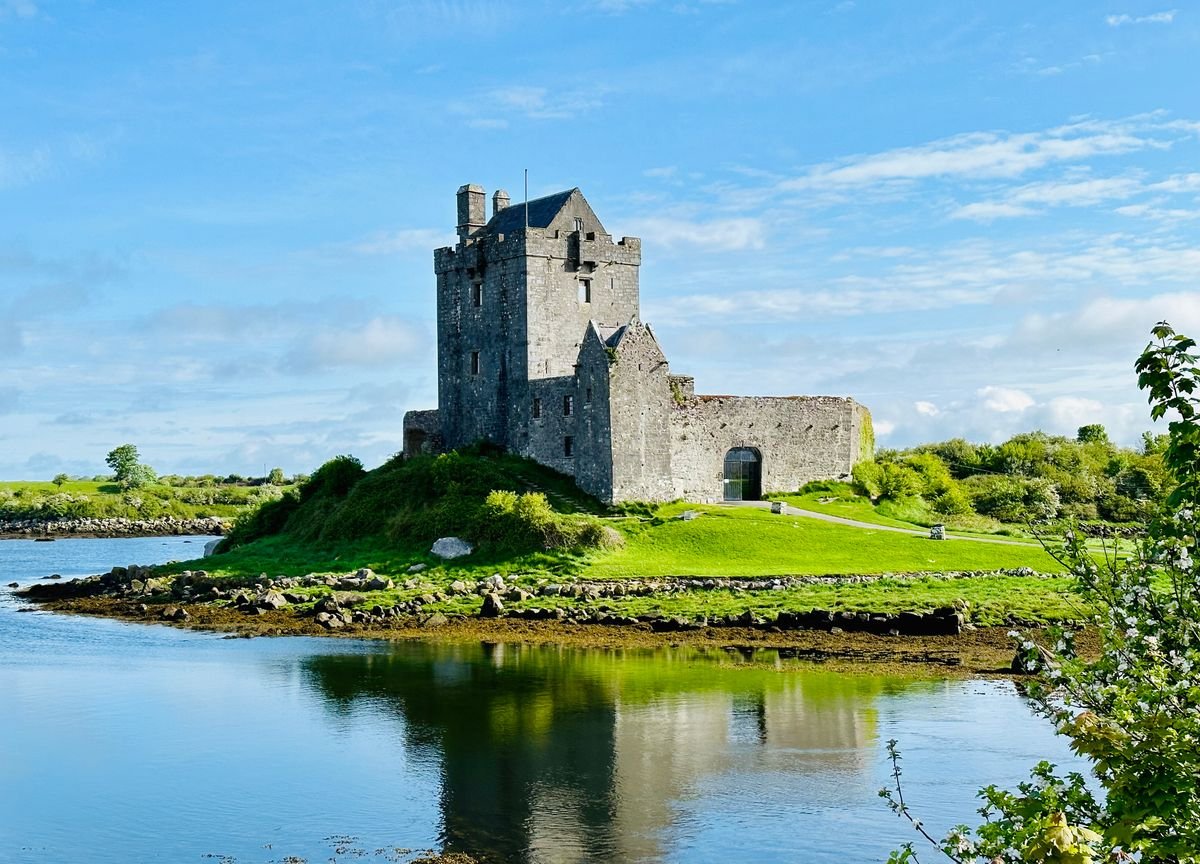
The big draw is Dunguaire Castle, a 16th-century tower house that sits out on a small point at the edge of the village, right on the water. It’s one of the most photographed castles in Ireland, and the setting on the bay is the reason. You can tour the inside in the warmer months.
Kinvara is also tied to the Galway hooker, the traditional brown-sailed working boat of this coast. In summer the village runs Cruinniú na mBád, a gathering of the boats, when the hookers sail into the harbor under sail. If you’re here off-season you’ll miss that, but the boats are part of the place year-round.
The village has a handful of pubs and a slow, working-harbor feel rather than a busy tourist strip. It’s a shorter stop than somewhere like Doolin, more about the castle, the boats and the bay than a night out.
If you’re driving the coast road between Galway city and the Burren or the Cliffs of Moher, Kinvara is an easy stop for an hour or two. Walk the harbor, see Dunguaire on the water, and carry on. It’s one I’d fold into that stretch next time we’re over.
More Irish Castles Worth the Detour
- The Best Castles in Ireland
- The Best Medieval Castles in Ireland
- 5 Top Castles To Visit in Cork (+Castle Accommodation)
Ardmore, County Waterford
Ardmore is another one we didn’t reach on our last trip, so this comes from research rather than us walking it. The storm that pinned us up near Cobh ate our last couple of days, and Ardmore sits further east along the Waterford coast than we got.
It makes the list on history alone. St. Declan is said to have founded a monastery here in the 5th century, before St. Patrick arrived, which gives Ardmore a fair claim to being Ireland’s oldest Christian settlement.
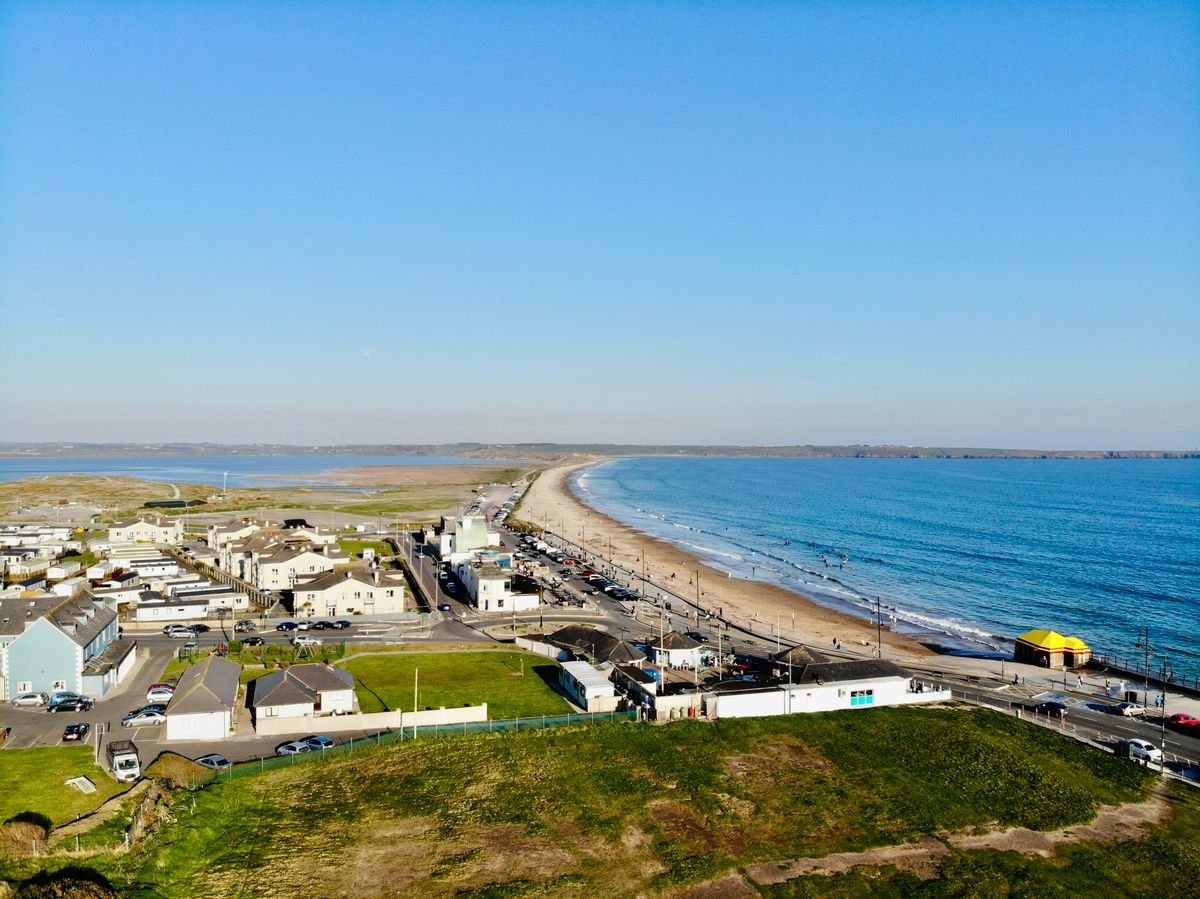
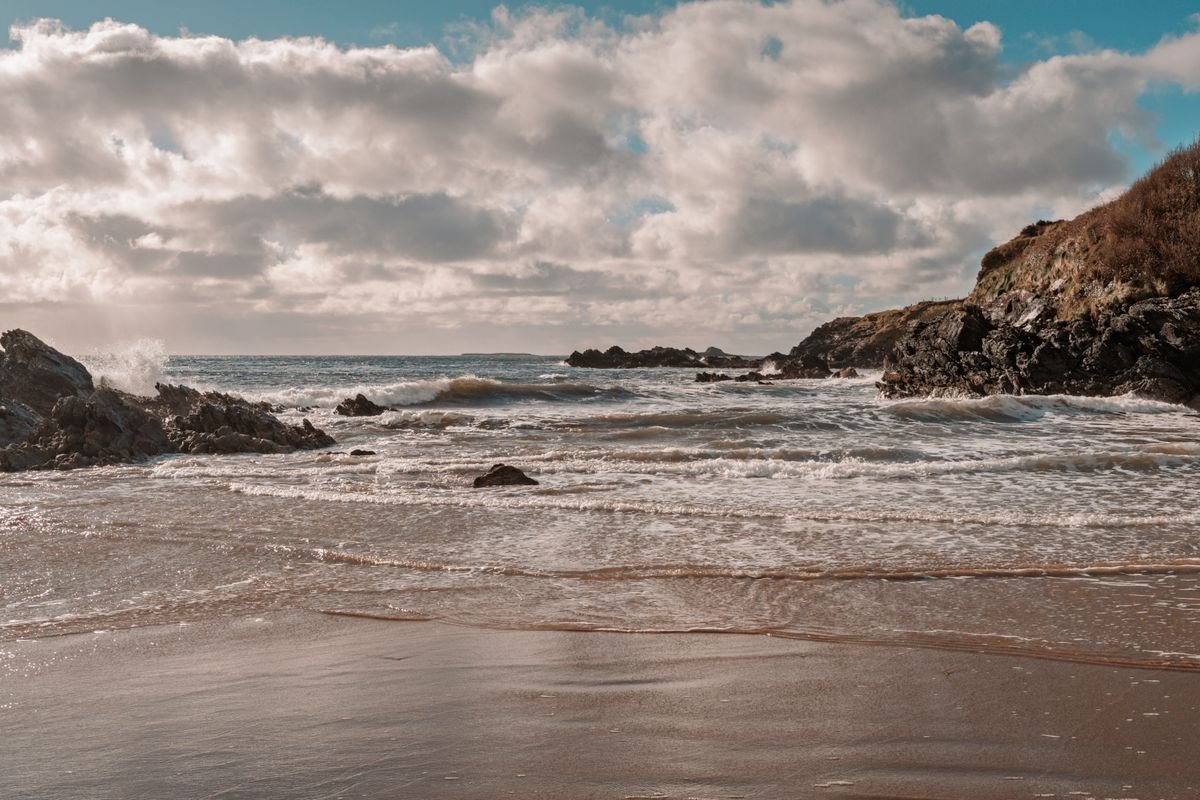
The village itself is a small run of houses above a long sandy beach on the south coast, about an hour east of Cork city. The setting is the draw: a curved bay, a wide beach, and green headland rising at the end of it.
Up on the hill behind the village are the old monastic remains. The round tower stands about 30 meters tall and is one of the best preserved in the country, with the ruins of St. Declan’s Cathedral and its carved stone panels alongside it.
The other reason people come is the Ardmore Cliff Walk, a loop of about four kilometers around the headland. It runs past St. Declan’s Well, an old coastguard station and the rusted wreck of a crane ship grounded on the rocks below.
The Cliff House Hotel sits right on the headland if you want to stay the night, and the Copper Coast runs west from here if you’re chaining stops along the water.
If you’re driving the south coast between Cork and Waterford city, Ardmore is worth a couple of hours for the beach, the tower and the cliff walk. It’s on my list for the next time we’re over.
Westport, County Mayo
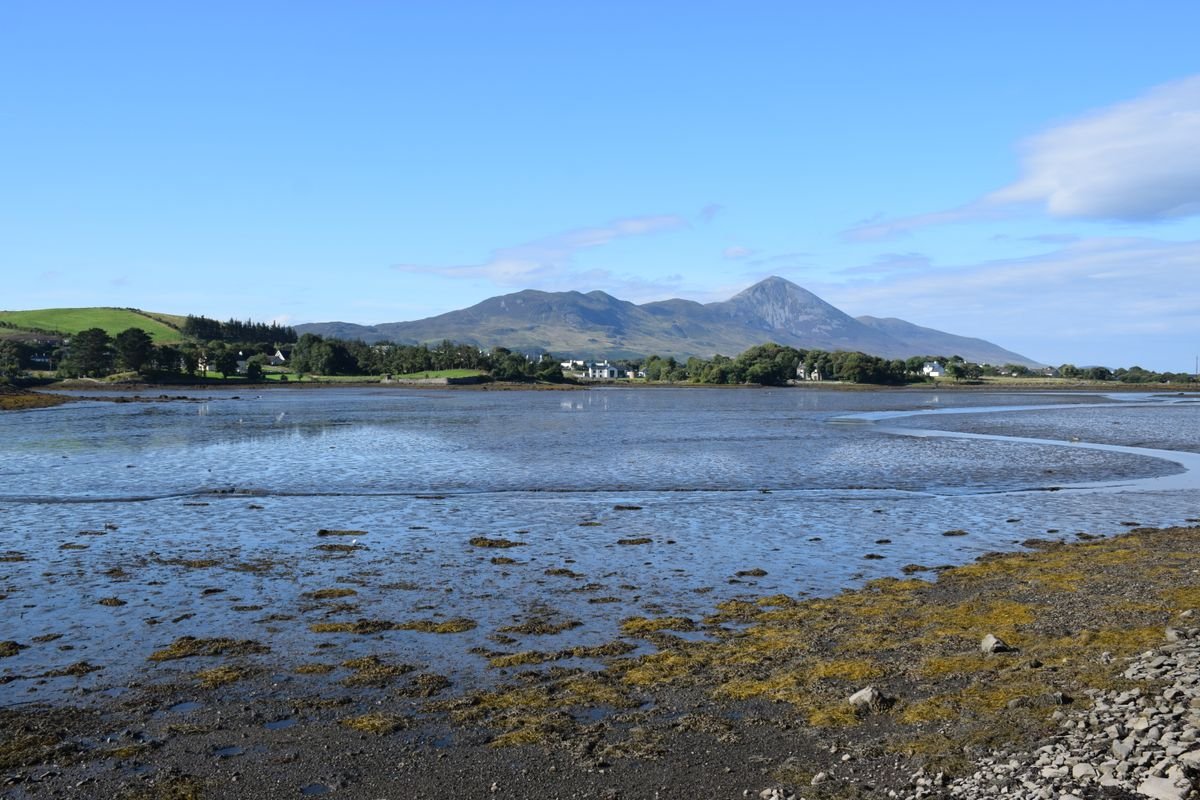
Westport is another one we didn’t reach on our last trip, so I’ll tell you straight that this comes from research and not from us walking it. It sits on Clew Bay in the northwest of County Mayo, about an hour north of Cong if you’re heading that way.
What sets Westport apart from most Irish villages is that it was planned. An architect named James Wyatt laid it out in the 18th century, so instead of streets that grew up any old way, you get a tidy Georgian town with a proper design behind it.
The centerpiece is The Mall, a tree-lined street that runs along both banks of the Carrowbeg River, with stone bridges crossing it. There’s also an octagonal town square, and the painted shopfronts and pubs are what land it on the pretty-village lists.
The pub people point you toward is Matt Molloy’s on Bridge Street. It’s owned by the flute player from The Chieftains, and the back room runs a trad session most nights. If you only have time for one drink here, that’s the one.
Just outside town is Westport House, a Georgian estate with grounds you can walk, and rising above Clew Bay is Croagh Patrick, the cone-shaped mountain thousands of pilgrims climb every year. The Great Western Greenway also starts here, a 42-kilometer traffic-free cycle path out to Achill Island.
Westport is more of a base than a quick stop. If you’re exploring Mayo, Clew Bay or climbing Croagh Patrick, it’s worth a night or two rather than an hour. It’s on my list for the next time we’re over, mostly for the greenway and a session at Matt Molloy’s.
Where to Stay in Westport
Cobh, County Cork
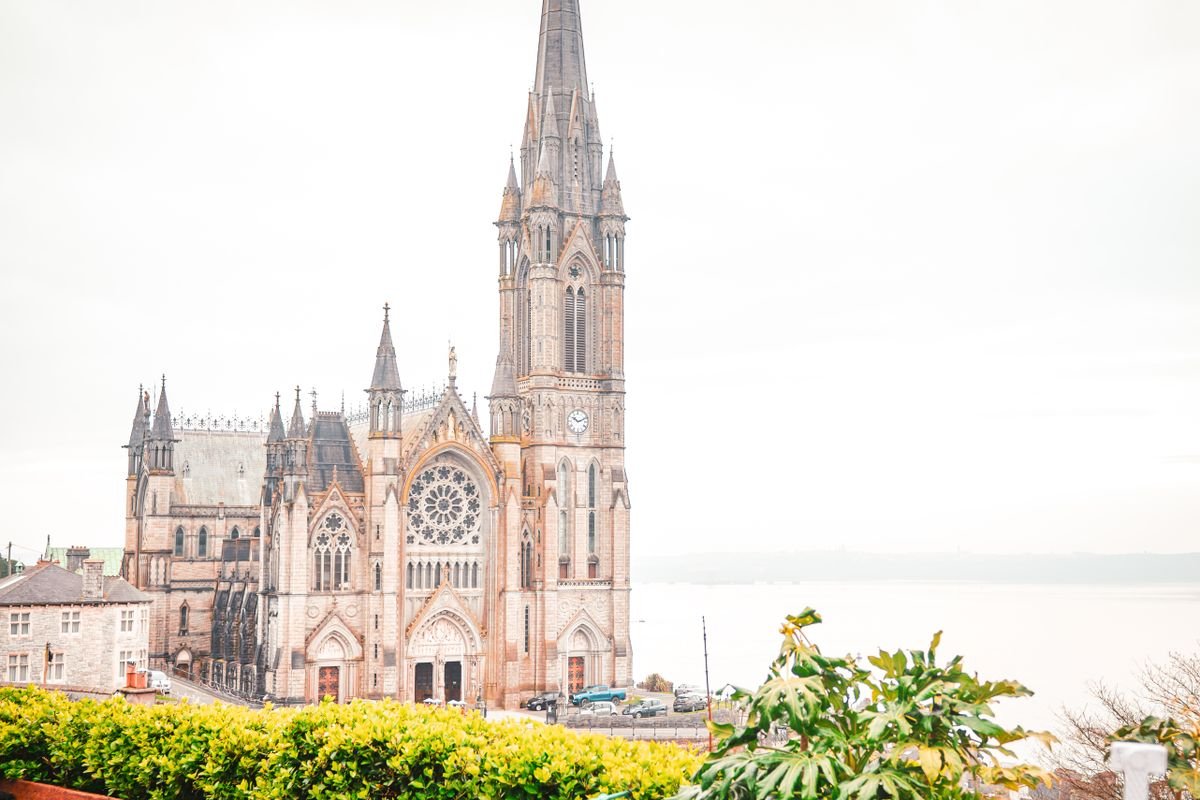
Cobh is the one place on this stretch we actually reached, and it’s the storm I keep mentioning finally catching up with us. We drove in from Killarney, about 108 kilometers and an hour and twenty, and a named Atlantic storm blew into the harbor at the same time we did.
We parked at Five Foot Way Campervan Parking, right on the water at €10 a day, and then spent hours inside the van as it rocked and the sailboats in the harbor pitched around in front of us. It wasn’t the arrival we’d planned.
Then at four in the afternoon the clouds pulled apart and we got blue sky out of nowhere. We took the break and walked straight up to Spy Hill, which is the view Cobh is famous for.
From up there you look down over the Deck of Cards, a row of tall terraced houses in different colors climbing the hill, with the spire of St. Colman’s Cathedral rising behind them. It’s the shot you’ve seen on every Ireland list, and it earns it.
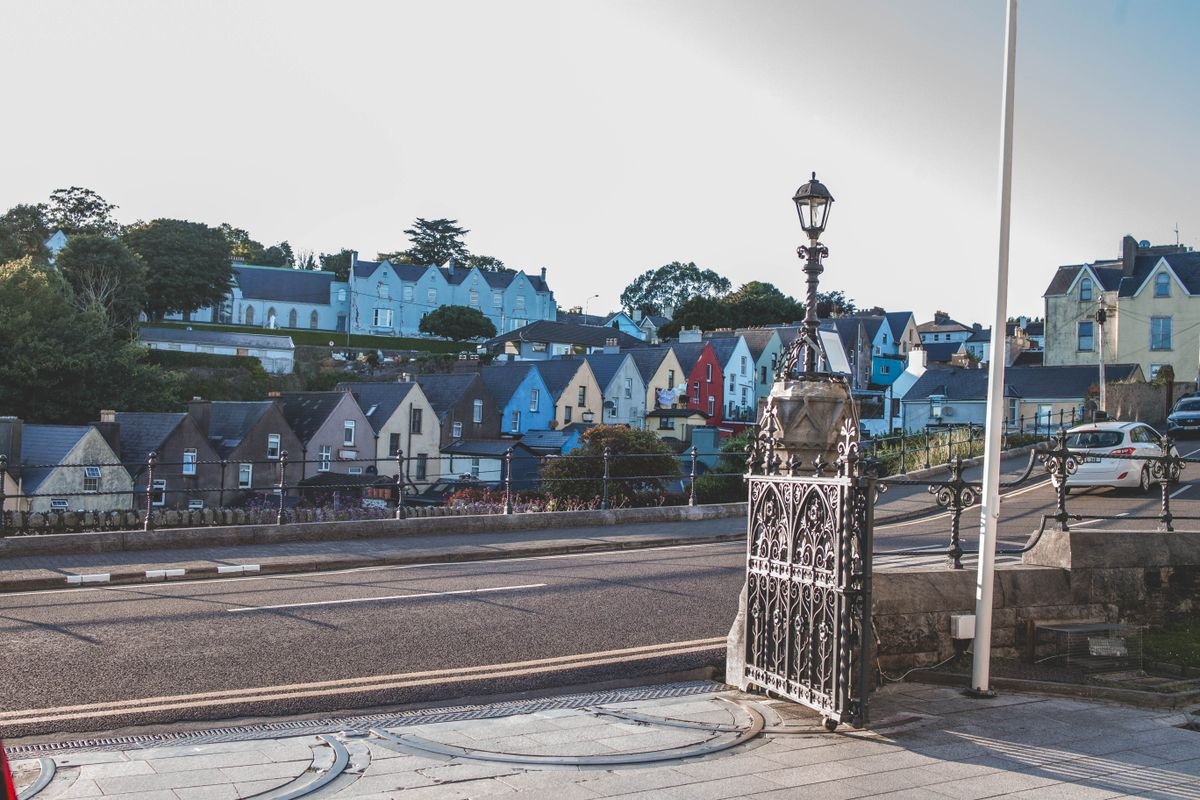
After that we wandered the steep streets down toward the water, West View, Westbourne Place and Khyber Pass, which are almost too steep to be roads. The town sits above a big natural harbor and was the Titanic’s last port of call in 1912, which is the history a lot of people come for.
We had drinks at Kelly’s Bar, which is the one I’d point you to, and stopped at Ryan’s as well. A word of warning: a lot of places were shut when we were there, maybe because of the storm, and the food at Azure Harbour Bistro was mediocre despite the reviews. Book ahead or plan to eat in Cork.
If you’re driving the south coast, Cobh is worth a night for the Spy Hill view, the colored houses and the harbor history. Go up to Spy Hill first, then walk the steep streets down. Even with a storm parked over it, it made this list on the strength of that one afternoon.
Where to Stay in Cobh
Kilkenny, County Kilkenny
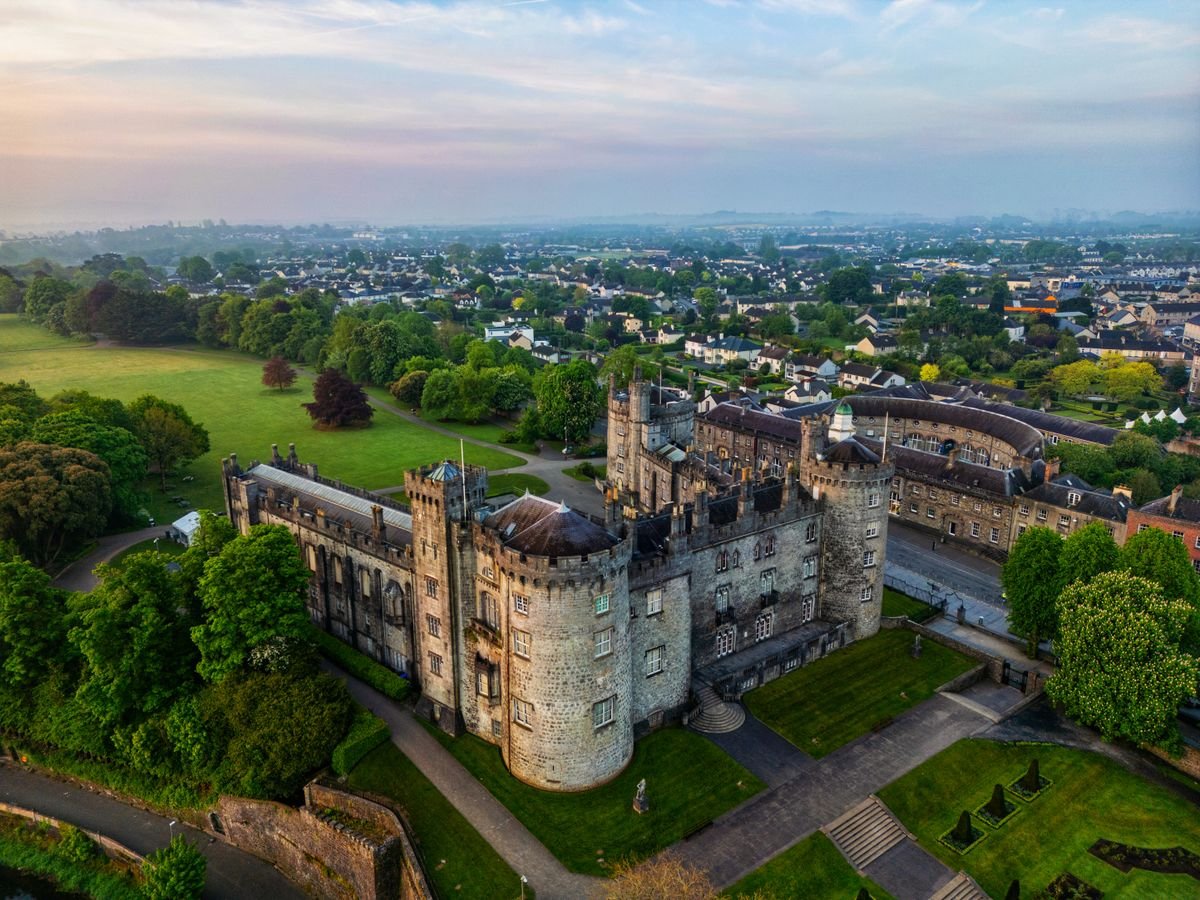
Kilkenny is one we actually stayed in on our last trip, and it was our first stop heading south out of Dublin. It’s about two and a half hours down, which makes it an easy first night when you’re leaving the city and pointing toward the coast or the southwest.
We camped at Tree Grove Campsite, a 30-minute walk from the castle along the canal. If you’re driving, it’s a handy place to park up and leave the car, and the walk in along the water is the way to arrive rather than fighting for a spot in town.
That Canal Walk is a river trail that runs into the center, and it drops you right at Kilkenny Castle. The castle is one of the most impressive in the country, sitting above its own parkland. The grounds are free to walk, but you need a ticket to see inside.
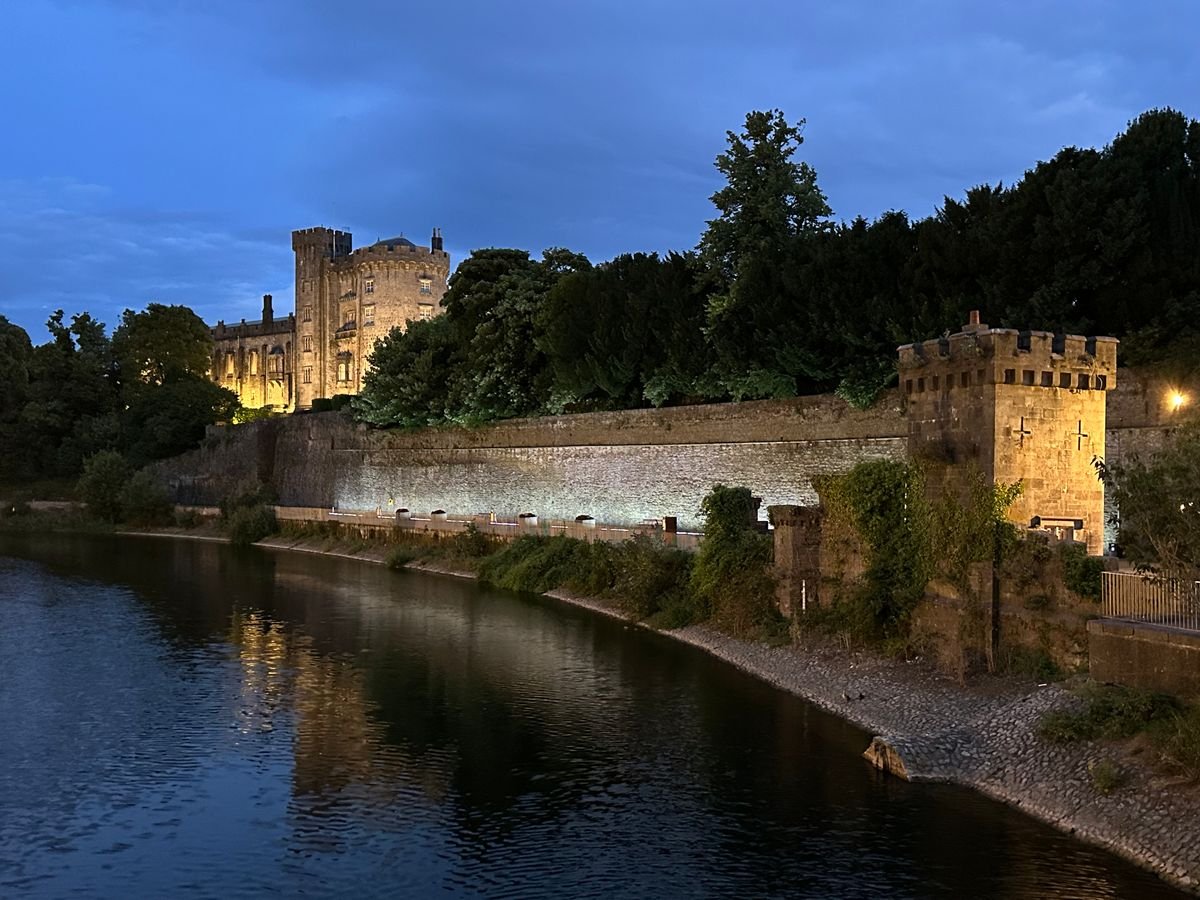
We paid to go in, and one of the rooms I found most interesting had a set of giant Irish elk antlers on display, wider than I am tall. The Smithwick’s Experience in town is worth an hour too if you want the beer history alongside the castle.
The old center is a tight grid of medieval streets, and the one to find is the Butter Slip, a narrow covered alleyway of worn stone steps between two of the main streets. It’s the most photogenic corner of Kilkenny, especially in the evening.
We got coffee at The Bald Barista and spent the evening at The Pumphouse over Guinness and live music. We’d wanted to eat at Matt the Millers but it was closed when we were there, so if you’re after a steak, the Butcher Restaurant is the one people point you toward.
Kilkenny is compact enough to cover in a day, and we only had the one night. If you have the time, it’s worth two, with enough pubs, history and streets to fill them. As a first stop out of Dublin, it’s an easy one to work into the route.
Where to Stay in Kilkenny
Carlingford, County Louth
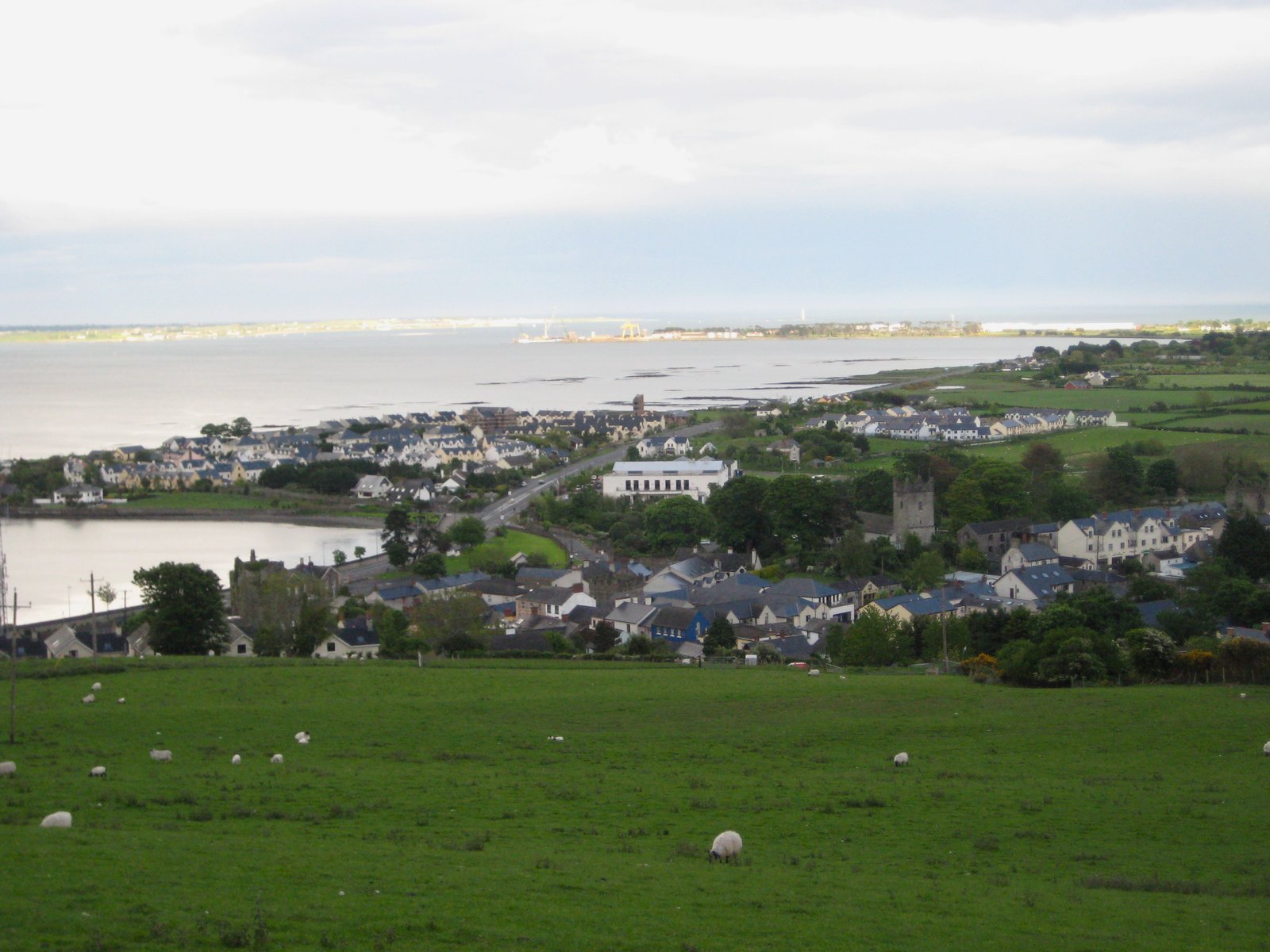
Carlingford sits way up in the northeast, on the shore of Carlingford Lough at the foot of the Cooley Mountains, close to the border with Northern Ireland. We didn’t get up this far on our last trip, so I’ll say it plainly: this one is from research, not from us walking the streets.
It’s a medieval village, and that’s the pull. The old center is a tight run of narrow lanes and stone buildings, with the lough on one side and the mountains rising straight up behind it. About an hour and a half north of Dublin, tucked onto its own peninsula.
The landmark is King John’s Castle, a ruined 12th-century fortress on a rock above the harbor, named for the king who’s said to have stayed here in 1210. You can walk up to it and around the outside for the view over the lough.
The village keeps more of its medieval bones than most. The Mint and Taaffe’s Castle are old fortified townhouses standing right in among the shops, and the Tholsel is a surviving stone gate that was once part of the town walls. You can walk between all of them in a few minutes.
Carlingford is also known for its oysters, pulled straight from the lough, and it runs an oyster festival in summer. The rest of the year the pubs and seafood spots along the lanes are the reason people stay for a night rather than an hour.
If you’re after more than a wander, the Cooley Mountains behind the village have walking trails, and there’s an adventure center here running kayaking and climbing. It’s an easy detour if you’re driving between Dublin and Belfast or up the east coast. It’s on my list for the next time we’re over.
Clifden, County Galway
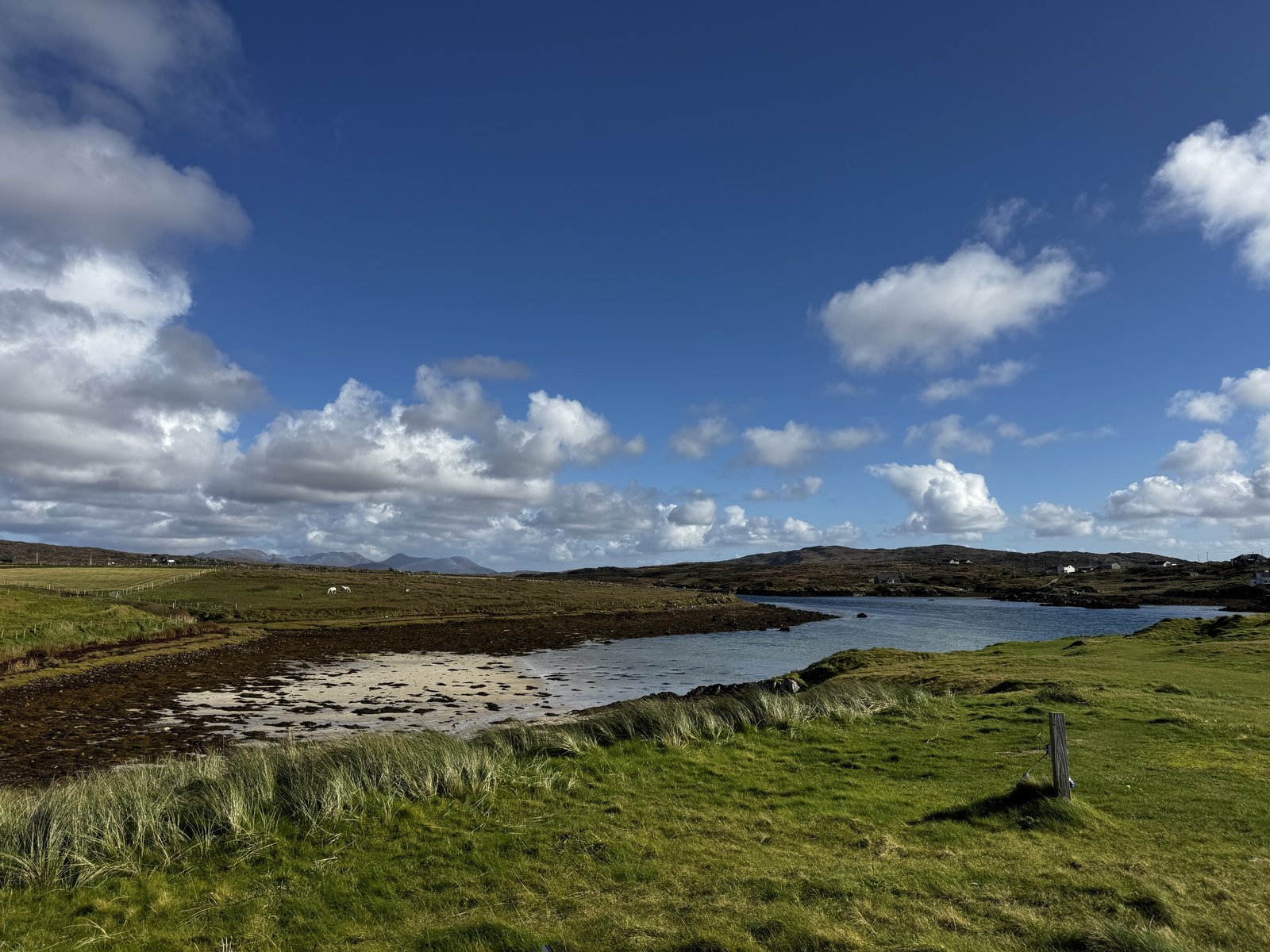
Clifden is the one on this list where we actually stayed put for a night and slept right on the water. It’s the main town of Connemara, out on the far west coast of Galway, and we drove in on the N59 from Galway city, about an hour and a half of some of the best road in Ireland.
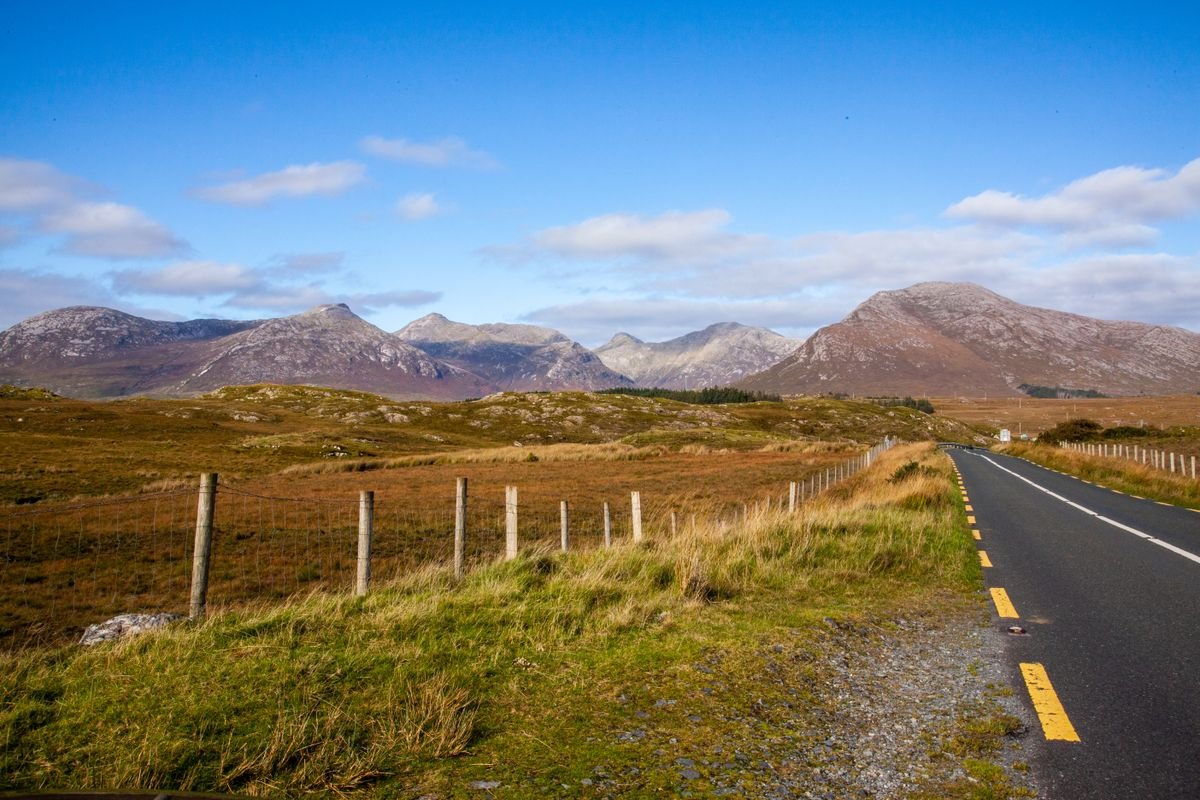
That drive is half the reason to come. The N59 runs through Connemara National Park, past bog, heath and the rocky Twelve Bens, and we kept pulling over at the lay-bys just to look. Skipping the Cliffs of Moher crowds and heading north into Connemara was the best call we made on the whole trip.
Clifden itself is a small town of painted shopfronts on a hillside above a narrow harbor, with the mountains behind it and the Atlantic in front. We stocked up at the Lidl and ate at Guy’s Seafood Bar, where the chowder was the best thing we ate anywhere in Ireland.
We camped just outside town at Clifden Eco Beach Camping & Caravanning Park, with the van parked facing straight out at the ocean. If you’re driving the coast, it’s worth the detour for the setting alone.
I swam in the Atlantic there in late September, and the water was clearer and bluer than it had any right to be that time of year. That evening we lit a bonfire on the beach and cooked dinner watching the sun drop into the sea. That’s the night I remember from the whole route.
The Sky Road loops out of Clifden around the headland for the coastal views, and we ran out of time to drive it, which is my one regret here. If you’re doing Connemara, base yourself in or near Clifden for a night, drive the N59 in daylight, and eat the chowder at Guy’s. It’s the highlight of this list for a reason.
Where to Stay in Clifden
Planning a Trip Around Ireland’s Villages
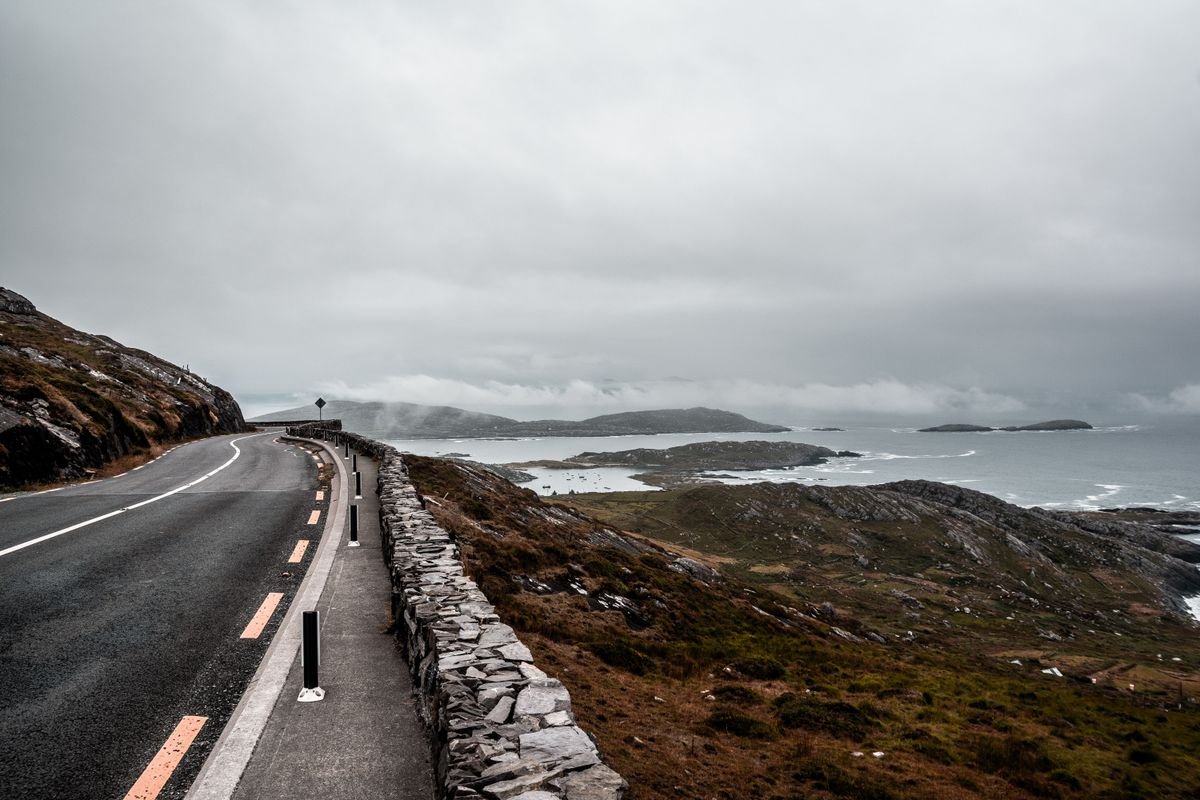
We drove a big loop of Ireland on our last trip, Dublin down to Cork and out along the west coast, and the thing that stood out is how many of these villages fall on the same roads. You don’t chase them one by one. You point at a region and they line up along the route.
The first call is your wheels. We were in an Indie Campers campervan, but for a trip like this you’ll probably just want to rent a car, and every village on this list works the same way by car. It’s worth a few minutes to compare car hire deals on Discover Cars before you lock anything in. A car is simpler to park in the smaller towns and more flexible if the weather turns.
Then group the stops by area instead of scattering them. The southwest gives you Kenmare, Killarney and Dingle in one run. The west links Doolin, Kinvara, Clifden and Connemara. The southeast chains Kinsale, Cobh, Ardmore and Kilkenny along the coast and back up to Dublin.
Don’t try to see all of them in one go. We covered a lot in about two weeks and still ran out of time for Dingle in daylight, so pick a couple of regions and let yourself slow down rather than ticking off a list.
Work out which are quick stops and which earn a night. Adare and Kenmare are an hour each. Doolin, Kilkenny and Clifden are worth a night, and a base like Westport or Dingle wants two. Overnight in the ones with pubs and music, day-trip the rest.
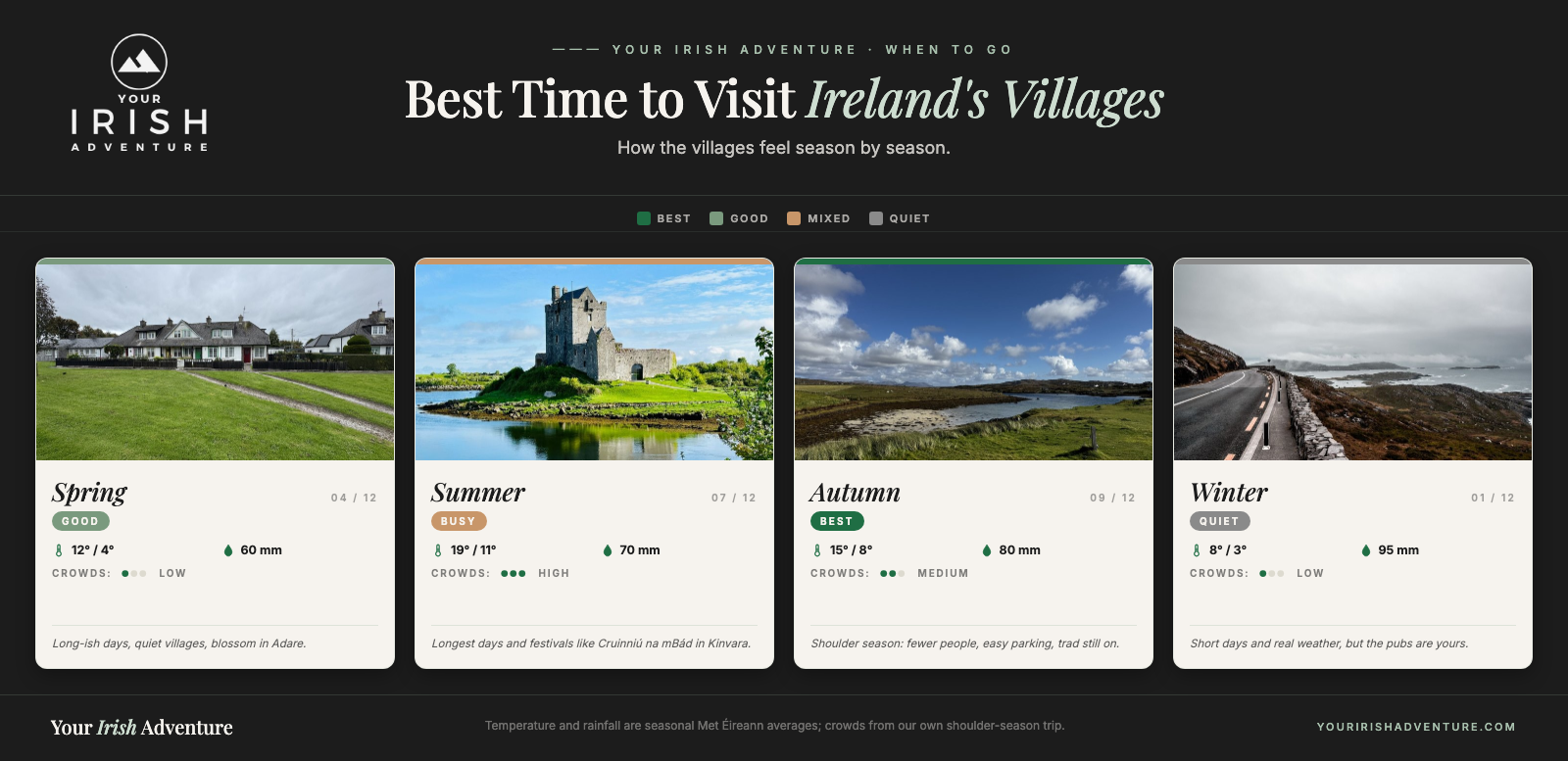
On timing, we drove it from late September into October, well into shoulder season, and it was the right call. Fewer people, easier parking, and the pubs still had trad most nights. The trade is shorter days and real weather, so build in slack for a wet afternoon like the one that pinned us down.
Last thing: leave room to change your mind. Our best night of the whole trip came from ditching a plan and heading north into Connemara instead. Book the beds you need on Booking.com, keep the days loose, and let the villages you stumble into do the rest.
Where to Stay Around Ireland
- Where to Stay in Kinsale: Best Areas & Hotels
- Where to Stay in Westport: Best Hotels & Accommodation
- Where to Stay in Doolin: Best Areas & Hotels
- Where to Stay in County Cork: Cork City vs West Cork
In short
- Adare in County Limerick is the classic pick, known for its row of thatched cottages.
- Kinsale and Cobh in Cork bring painted harbor shopfronts and easy south-coast stops.
- Clifden in Connemara pairs a painted town with the Sky Road and Twelve Bens.
- You need a rental car; most villages link on natural regional driving loops.
- Shoulder season, late September into October, means fewer crowds and easier parking.
Frequently Asked Questions
What is the prettiest village in Ireland?
Adare in County Limerick is the usual pick, and the label holds up thanks to its run of well-kept thatched cottages on the main street. If you want a harbor and painted shopfronts instead, Kinsale or Cobh will win you over, and for pure setting, Clifden out in Connemara is the one I’d send you to.
How many of these villages can you see in a week?
In a week, pick two regions and cover three or four villages properly rather than racing the whole list. A good week is Kenmare, Dingle and Killarney on one run, then Doolin, Kinvara and Clifden on the next. We had two weeks and still ran out of daylight for Dingle.
Do you need a car to visit Ireland’s villages?
A car is the way to do it. Public transport reaches bigger towns like Kilkenny, Westport and Cobh, but the coastal villages and the drives that make them worth it, like the Slea Head Drive out of Dingle, really want your own wheels. A rental car is easier to park than a campervan.
What is the best time of year to visit?
Shoulder season is the balance I’d point you toward. We drove it from late September into October and it was the right call: fewer people, easier parking, and trad in the pubs most nights. Summer gives longer days and festivals, but the popular villages get busy and beds book up fast.
Which village was your favorite?
Clifden, without much of a contest. It’s the drive in on the N59, the painted town above the harbor, and a night we camped on the beach with the van facing the Atlantic. The chowder at Guy’s Seafood Bar was the best thing we ate anywhere in Ireland. Fit one village in, make it that one.
Final Thoughts
If there’s one thing our last trip drove home, it’s that Ireland’s villages aren’t really a checklist. They’re what fills the gaps between the big-name stops, and half the time they end up being the part you remember.
Some of these we walked ourselves. Others come from research and from everyone we talked to along the road, and I’ve told you straight which is which in each section, because I’d rather be honest than pretend we saw it all.
Don’t try to hit every one. Pick a couple of regions, book the beds you actually need, and leave the days loose enough to pull over when something looks worth it. That’s how we ended up on a beach outside Clifden with a bonfire going, and it beat anything we’d planned.
Ireland is a small country with a lot packed into it. Give the villages the time the famous sights usually hog, and they’ll pay you back. We’ve still got Dingle in daylight, Kinsale and half this list waiting for the next time we’re over, and I’m looking forward to it.
Like it? Pin it!
Save this guide for later