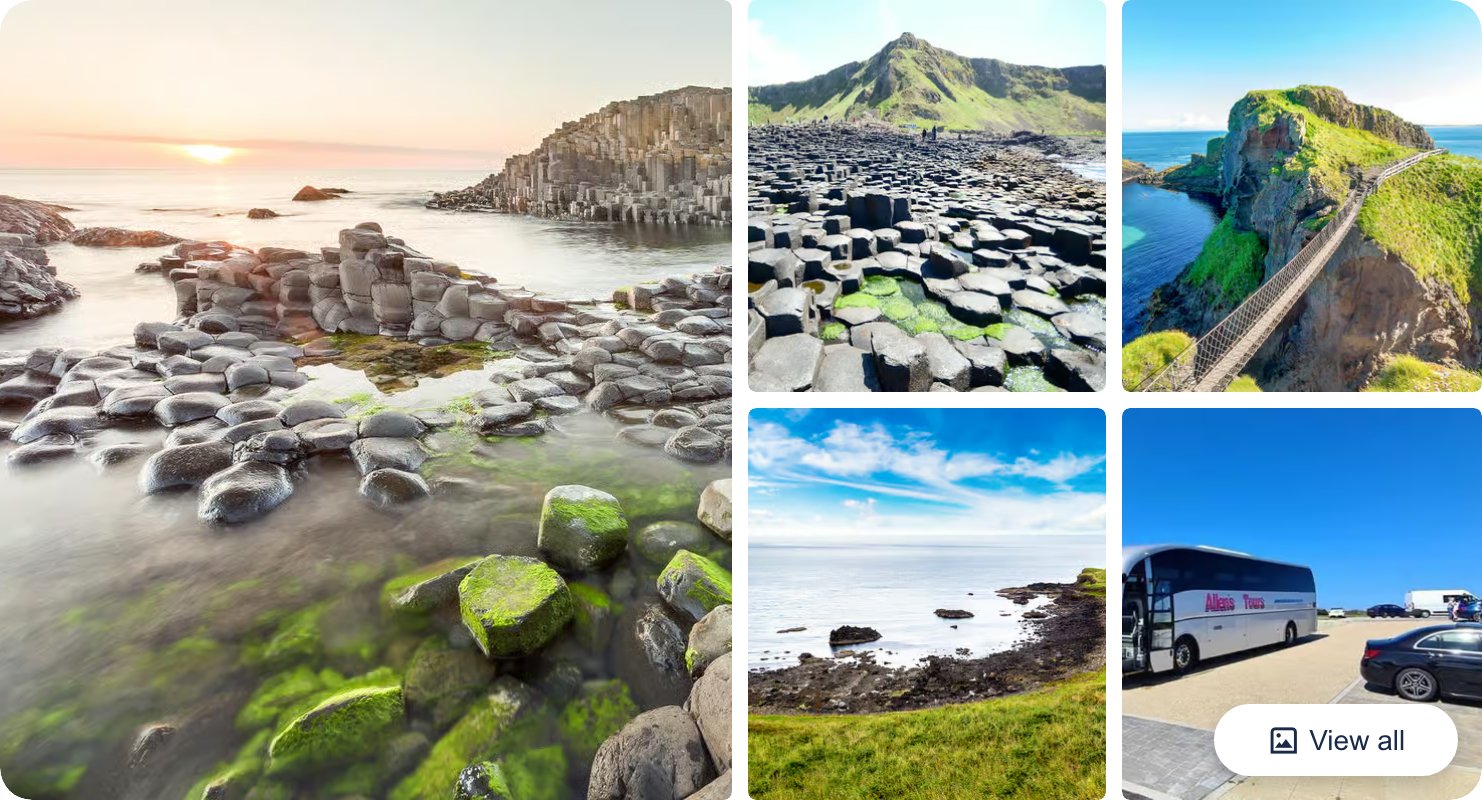
About 40,000 basalt columns step down into the sea at the Giant’s Causeway, most of them six-sided, packed so tight you can hop across the tops like a staircase someone built and then abandoned. That is the one everybody knows, but it is barely the start of the things to do in Antrim.
This is the corner of Northern Ireland where the Causeway Coastal Route runs past ruined cliff-top castles, a rope bridge strung 100 feet above the water, and a tunnel of beech trees that Game of Thrones made famous. Bushmills has been distilling whiskey here since 1608, which makes it the oldest licensed distillery in the world.
You could see the headline sights in a long day from Belfast, but Antrim rewards you for slowing down. The Glens, Rathlin Island, and the small harbor towns are the parts most day-trippers blow past. Here is what is actually worth your time.
More Northern Ireland Travel Guides
- The Most Beautiful Seaside Towns in Northern Ireland
- Game of Thrones Filming Locations in Northern Ireland Map
- Secret Castles in Northern Ireland – Game Of Thrones Territory
- 7 Best Northern Ireland Golf Courses
- 27 Fun Things To Do in Belfast, Ireland
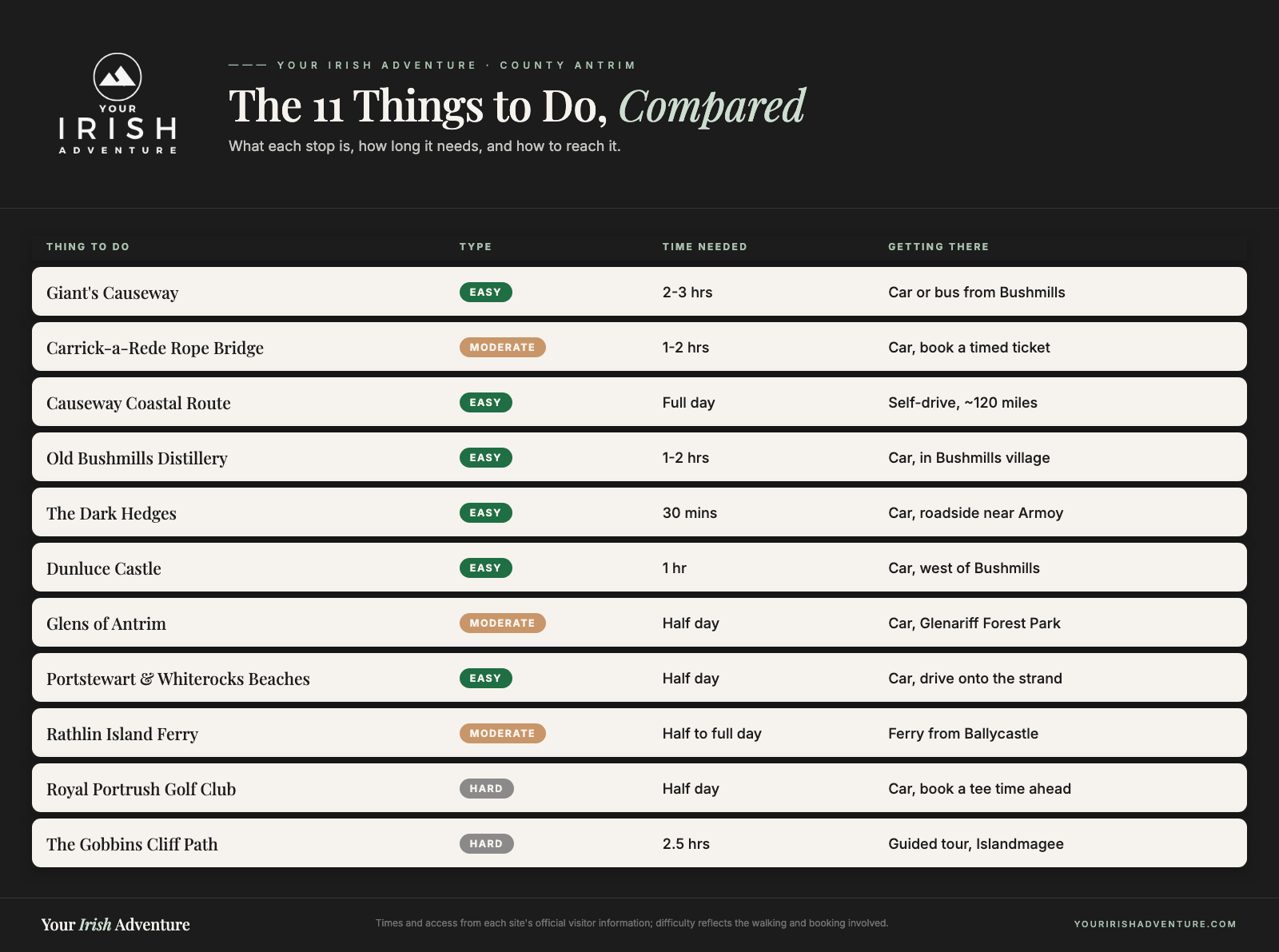
The best things to do in Antrim cluster along the Causeway Coast: walk the Giant’s Causeway, cross the Carrick-a-Rede rope bridge, tour the Old Bushmills distillery (licensed since 1608), and drive the Causeway Coastal Route past Dunluce Castle and the Dark Hedges. Give it two days.
Where to Stay in County Antrim
Base yourself near the coast and most of the county is within 20 minutes. These three are the best-rated bookable spots along the route, one in Portrush, one in Ballycastle, and one out by Bushmills for the headline Causeway sights.
Malvern House, Portrush
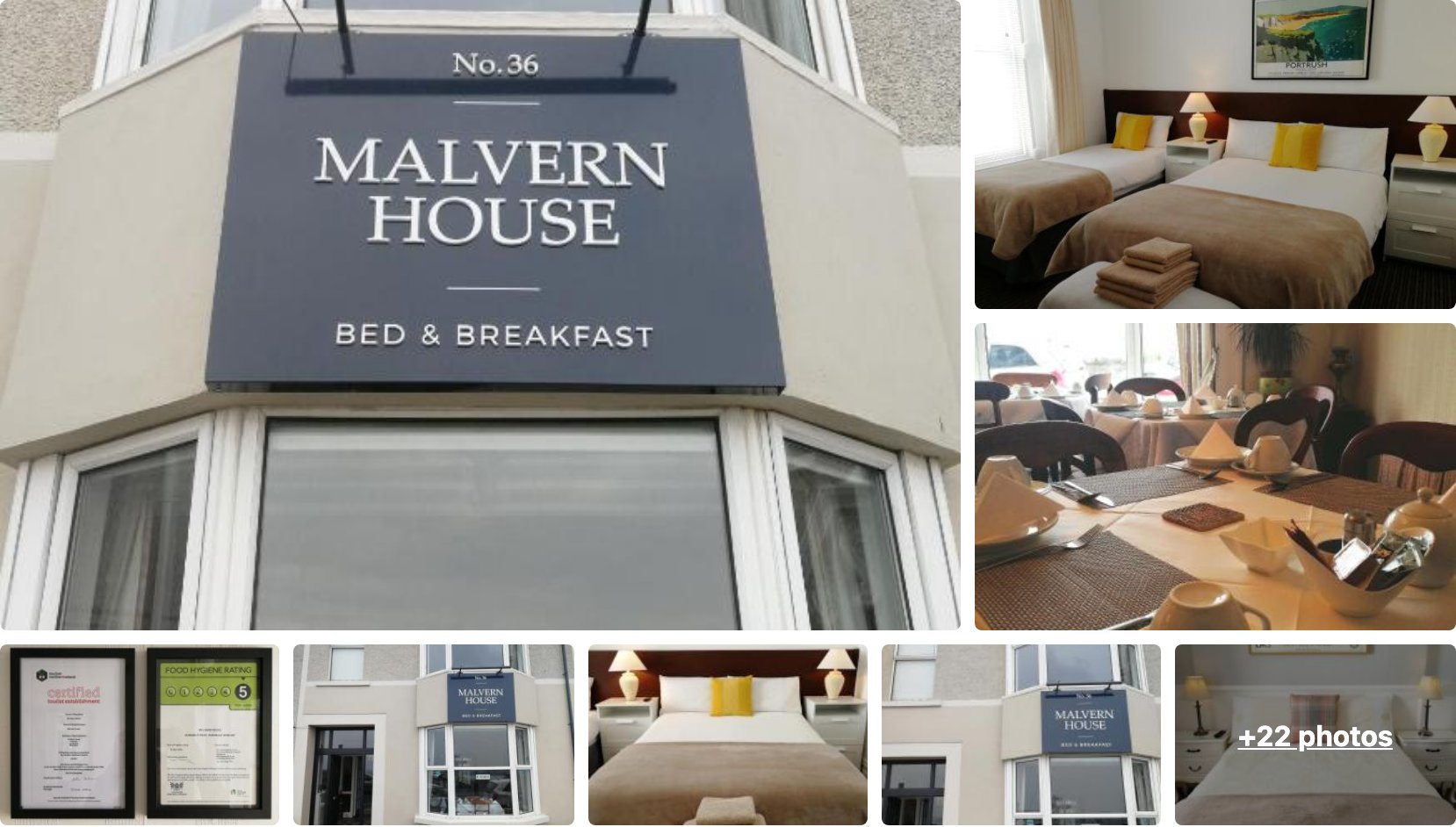
Malvern House is a bed and breakfast 40 meters off the centre of Portrush, which puts the harbour restaurants, the beach, and Royal Portrush on your doorstep. Guests rate it 9.8 across 340 reviews, and the cooked breakfast comes up again and again.
It is the practical pick if you want to be in town and walk to dinner. Portrush is the best base for the whole north coast, so book ahead in summer.
👉 View Malvern House Availability and Pricing
Glass Island, Ballycastle

Glass Island is a 9.7-rated bed and breakfast a few minutes’ walk from Ballycastle centre, and at 454 reviews it has the longest track record of anything on this list. The rooms run modern, with walk-in showers and a proper sit-down breakfast.
Ballycastle is the right base for the eastern end of the county, the Glens, and the Rathlin Island ferry, which leaves from the harbour here. It is the spot to pick if puffins or the quieter coast are the plan.
👉 View Glass Island Availability and Pricing
Carnbore House, Bushmills

Carnbore House is a country bed and breakfast a short drive outside Bushmills, scored 9.8 across 258 reviews. The rooms are large, the breakfast is a sit-down affair, and you wake up in the open countryside rather than a town centre.
This is the one to book if the Giant’s Causeway, Dunluce, and the distillery are your priority, since all three are within ten minutes. You trade walk-to-dinner convenience for space and quiet.
👉 View Carnbore House Availability and Pricing
The Best Things to Do in County Antrim
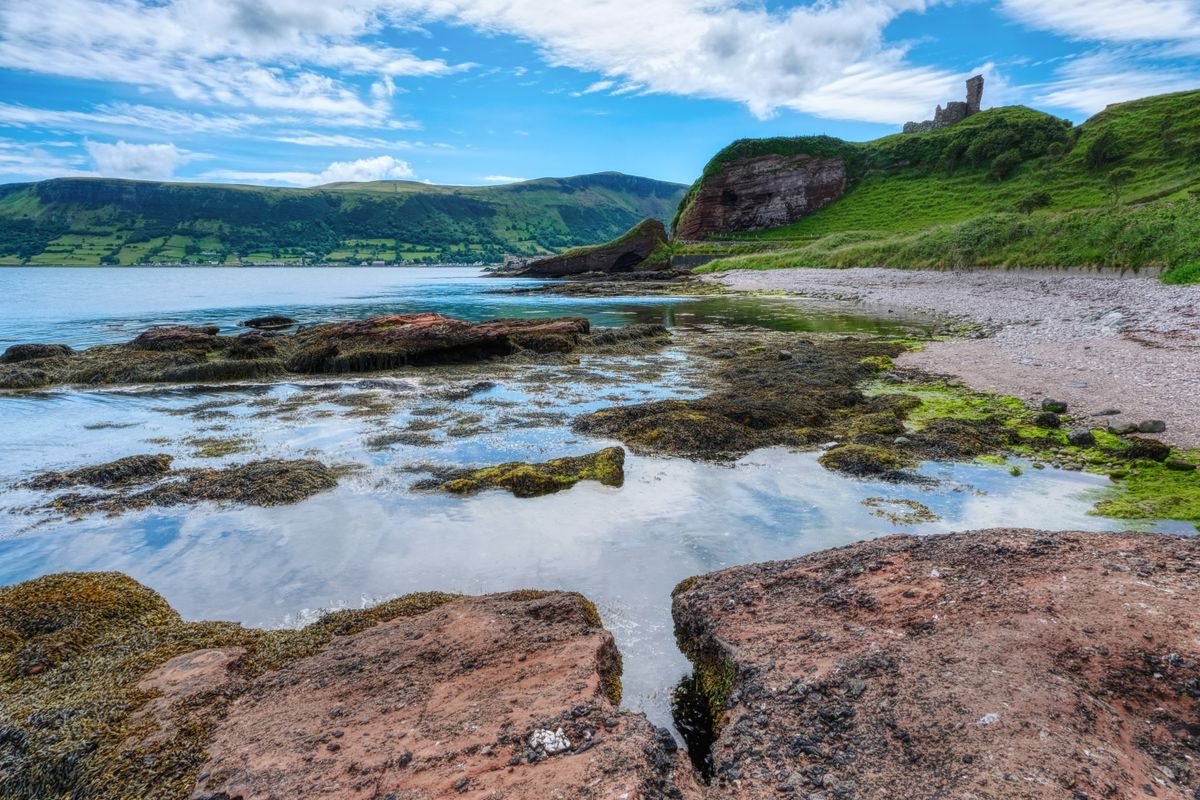
Antrim isn’t really a place for one big sight and a quick photo. The best of it is strung along the coast, and the more you slow down the more it gives you. Here is what is actually worth your time, starting with the famous stuff and getting into the parts day-trippers blow past.
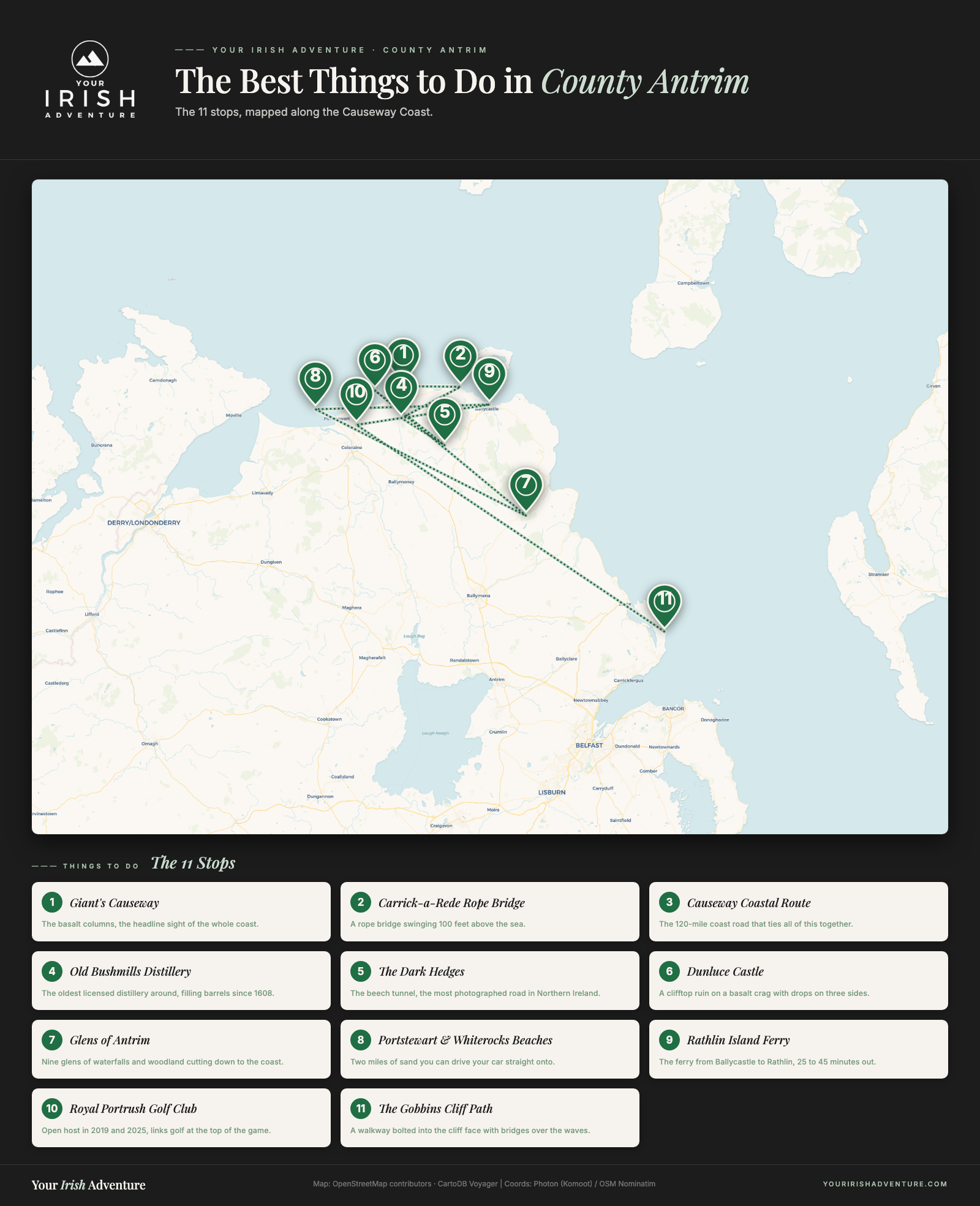
Walk the Giant’s Causeway
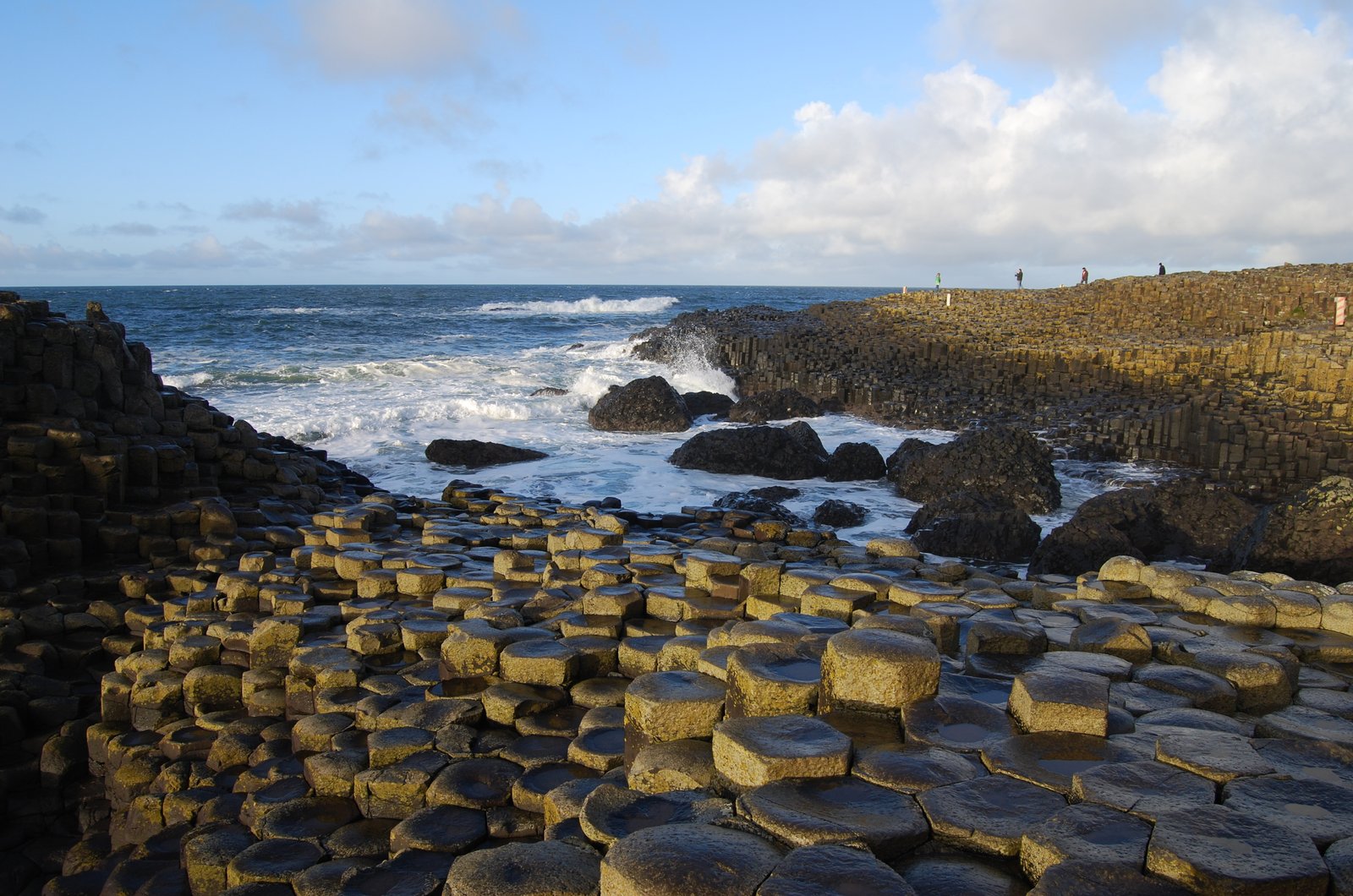
The legend says the giant Finn McCool built the columns as stepping stones to Scotland. The truth is a 60-million-year-old volcanic eruption that cooled into the shapes you see now, and honestly the geology is wilder than the myth.
Skip the visitor center fee if you just want the rocks. The clifftop path is free, and the blue and red walking trails loop you past the Organ pipes and the Amphitheatre without the line. Get there early or late in the day to beat the tour buses, which arrive in waves from late morning. If you would rather leave the driving to someone else, you can book a Giant’s Causeway day tour on GetYourGuide from Belfast.
Cross the Carrick-a-Rede Rope Bridge
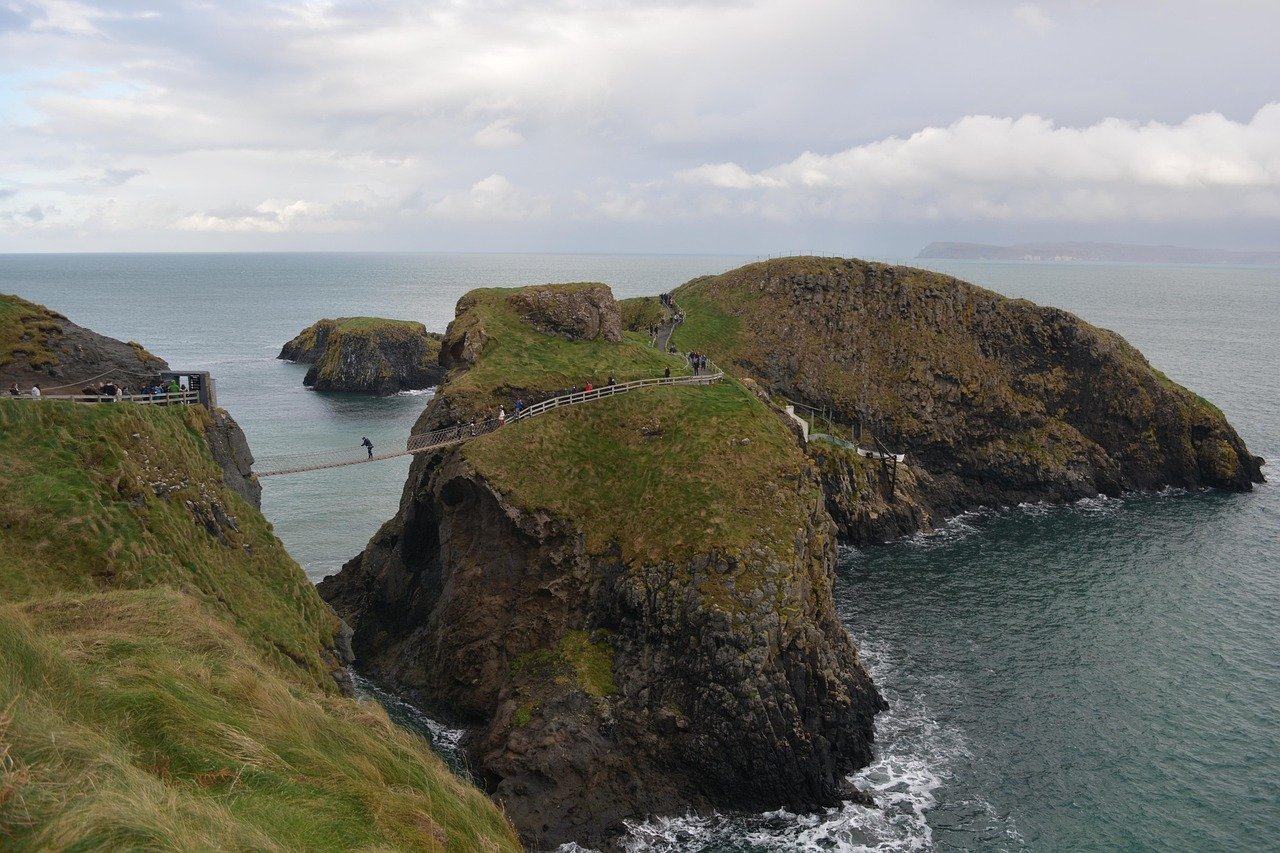
Fishermen first strung a bridge across this gap 350 years ago to reach the salmon. Now it’s a National Trust attraction, and the crossing is short, maybe 20 meters, but the drop to the rocks and water below does the talking.
Book a timed ticket online in advance, because they cap numbers and it sells out in summer. The walk in from the parking lot is about 1km along the cliffs, and that stretch alone is worth it even if heights aren’t your thing.
Drive the Causeway Coastal Route
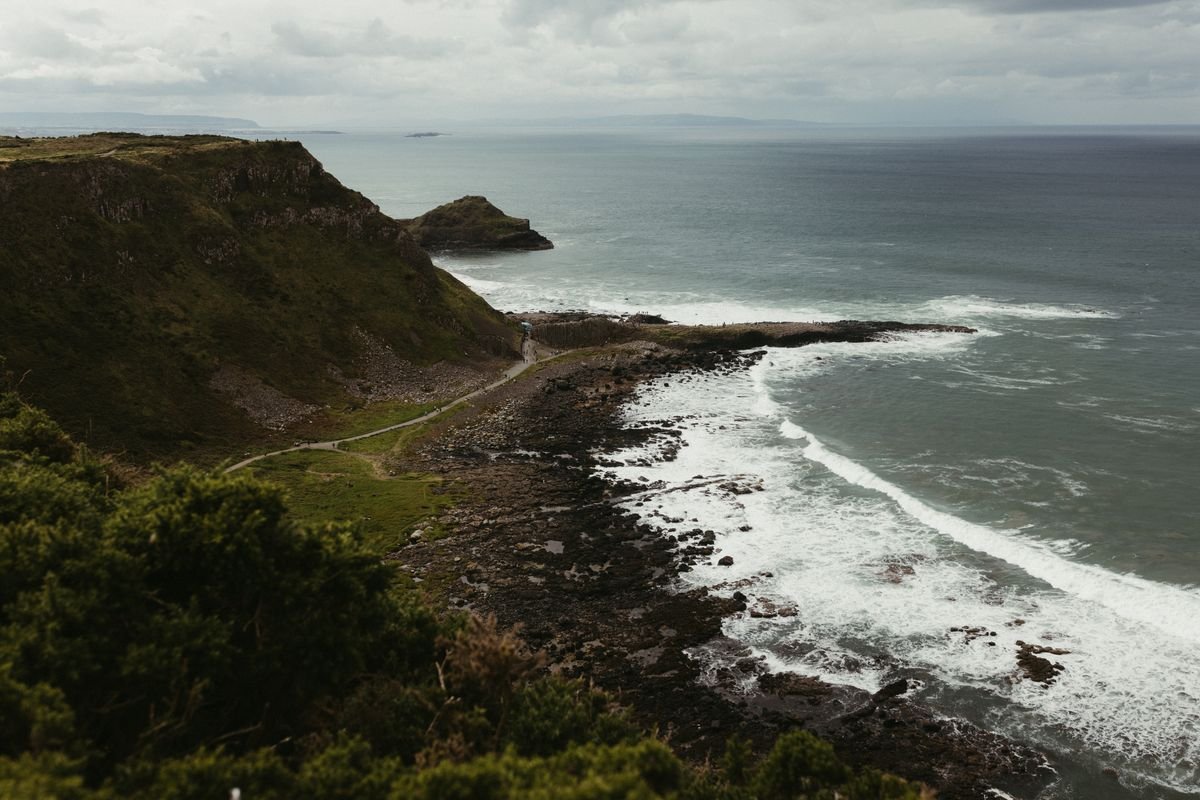
This is the thread that ties the whole county together, running roughly 120 miles from Belfast up to Derry. If you only do one thing in Antrim, make it this drive.
The stretch between Larne and Ballycastle is the standout, hugging the cliffs with the sea on one side and the Glens climbing on the other. Rent a car and give yourself a full day, longer if you stop properly. You will want to stop.
Tour the Old Bushmills Distillery

The distillery still pulls its water from Saint Columb’s Rill, the same stream it used centuries ago, and the standard tour walks you through the mash, the copper stills, and the warehouse before the tasting at the end.
Book ahead, especially on weekends. The whiskey is triple distilled, which makes it smoother than a lot of Scotch, and even if you’re not a big whiskey drinker the working-distillery smell and the cask warehouses are worth the hour.
Walk the Dark Hedges
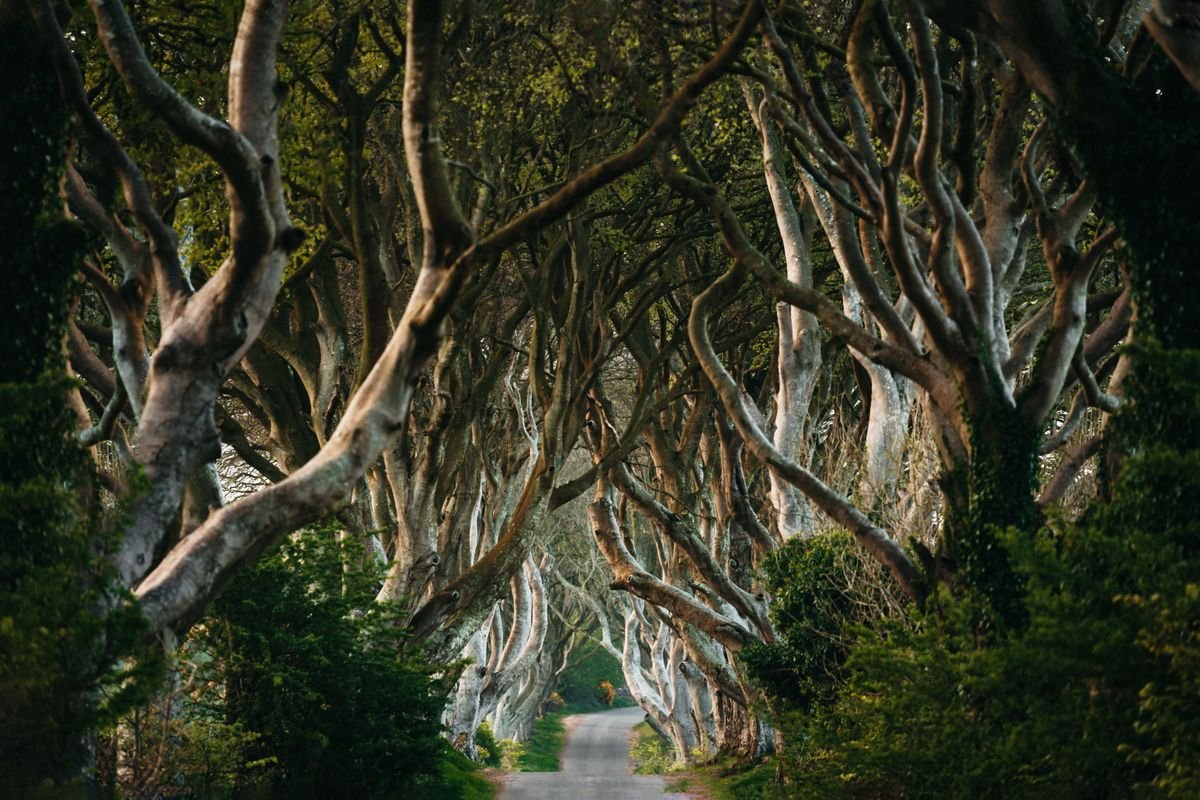
Two rows of beech trees were planted here in the 1700s to impress visitors arriving at a country house. They’ve grown into each other overhead, and the road through them is the one Game of Thrones used for the Kingsroad.
Be straight with yourself about this one. It’s a short avenue of trees and it gets packed, so go at sunrise if you want a clear shot. The road is closed to traffic now, so park at the nearby hotel and walk the last few minutes in.
Explore Dunluce Castle
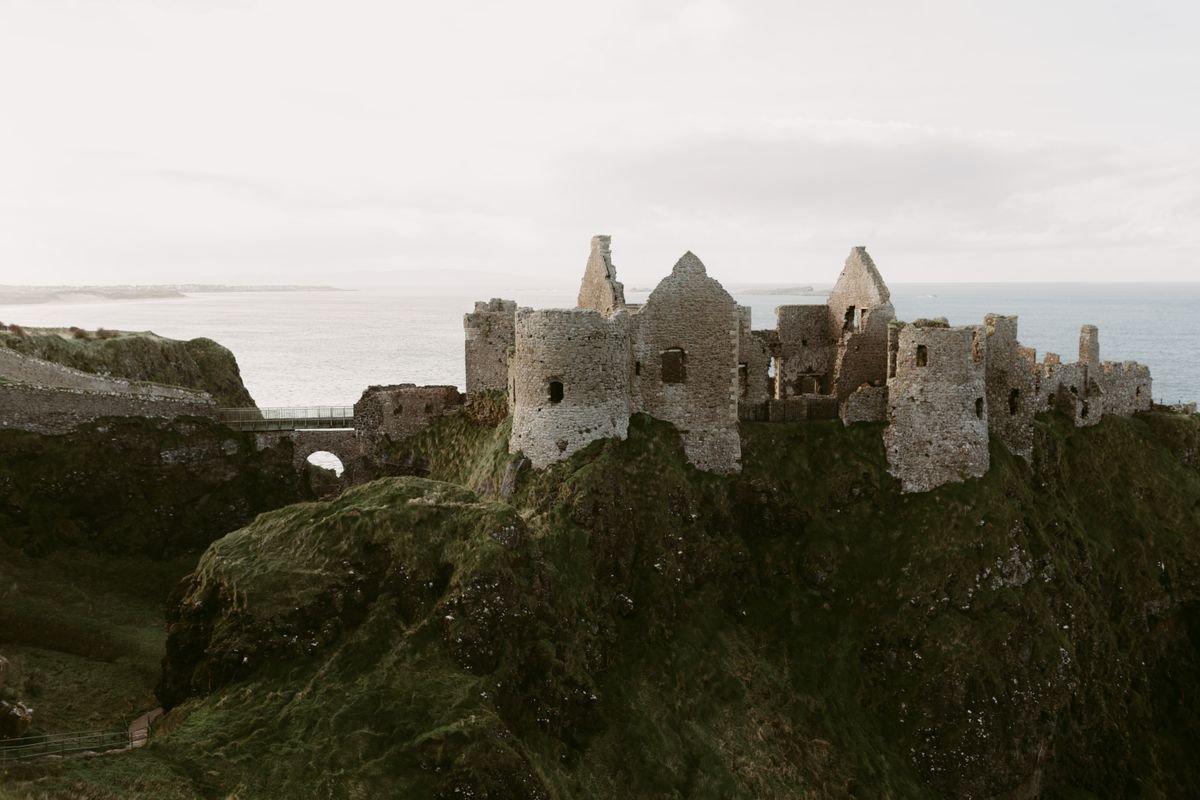
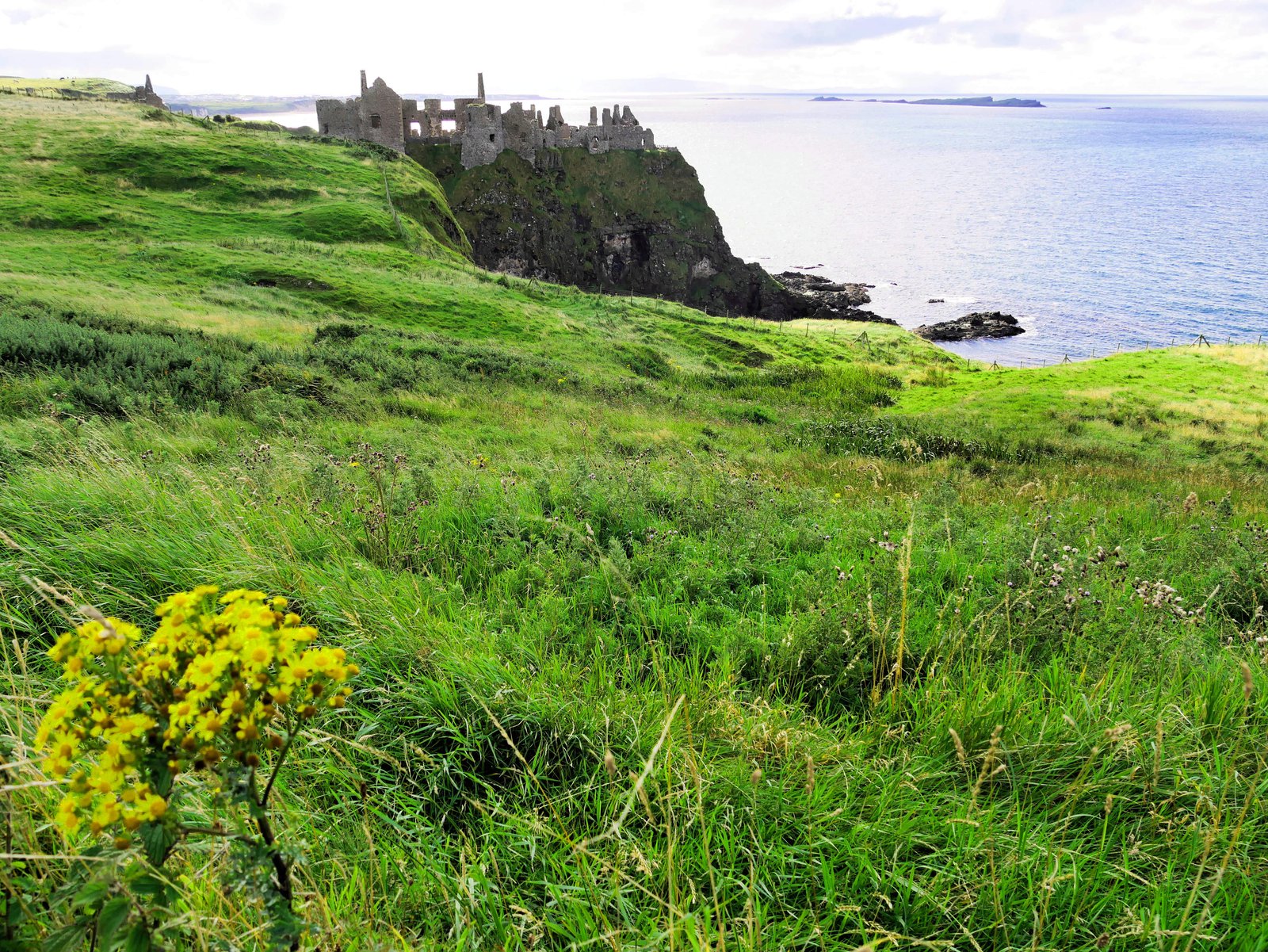
Dunluce sits on a basalt crag with sheer drops on three sides, and part of the kitchen reportedly collapsed into the sea during a storm in 1639, taking the cooks with it. The ruins have been empty ever since.
It’s one of the most dramatic castle settings in Ireland, and the entry fee is small. Even from the road the silhouette is the sort of thing you slow down for, but pay the few euro and walk the grounds.
Spend a Day in the Glens of Antrim
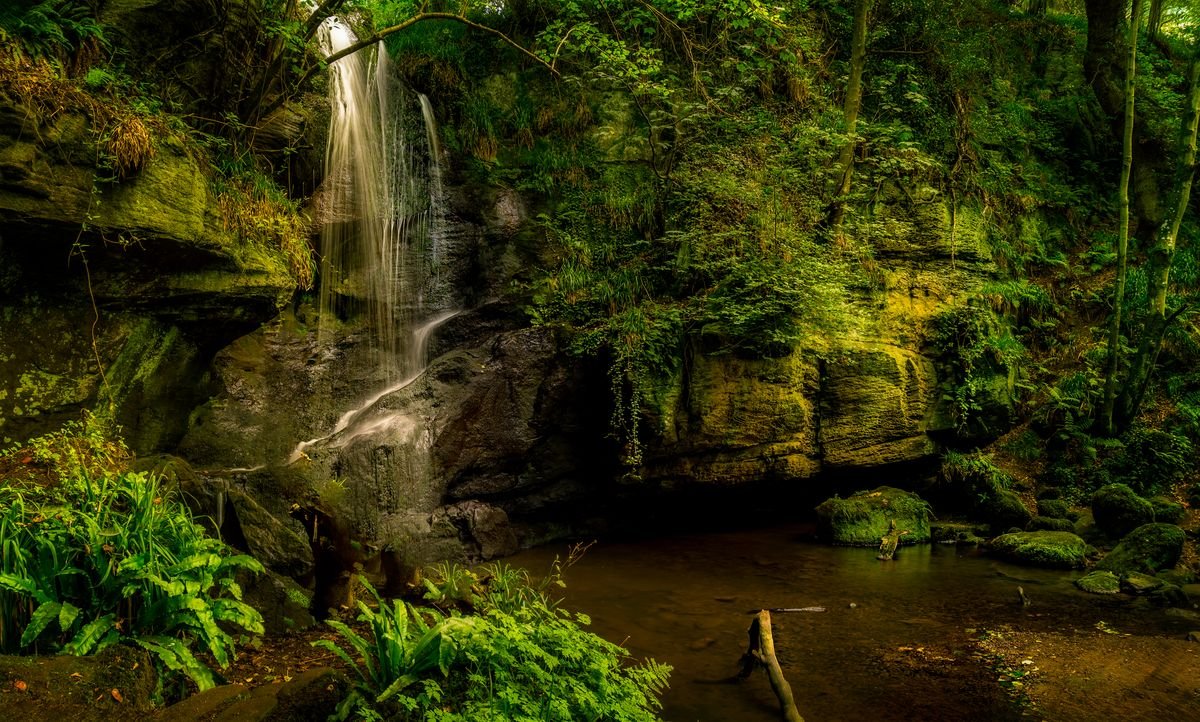
There are nine Glens cutting down to the coast, each its own valley of waterfalls, woodland, and farmland. Glenariff is the one to start with, and for good reason, with its waterfall walk through the forest park.
This is the part of Antrim the coast road traffic blows straight past. Base yourself in Cushendall or Cushendun for a night and you get the Glens, the harbor villages, and a slower side of the county that the headline sights don’t show you.
Relax on Portstewart and Whiterocks Beaches
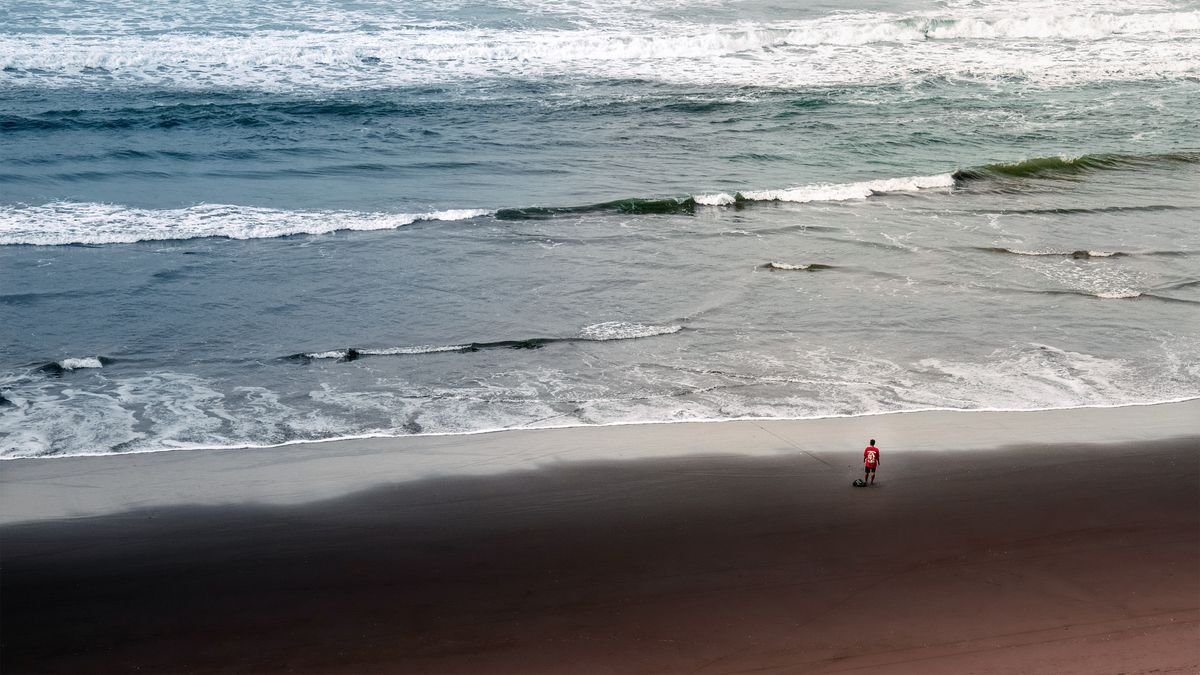
Portstewart Strand is two miles of sand backed by dunes, and you can drive your car right onto it, which is half the fun. It’s run by the National Trust and the surf school there is busy most of the summer.
Whiterocks, just along toward Portrush, is the prettier of the two, with limestone cliffs the sea has carved into arches and caves. Both are proper swimming and walking beaches, not just photo stops.
Take the Rathlin Island Ferry
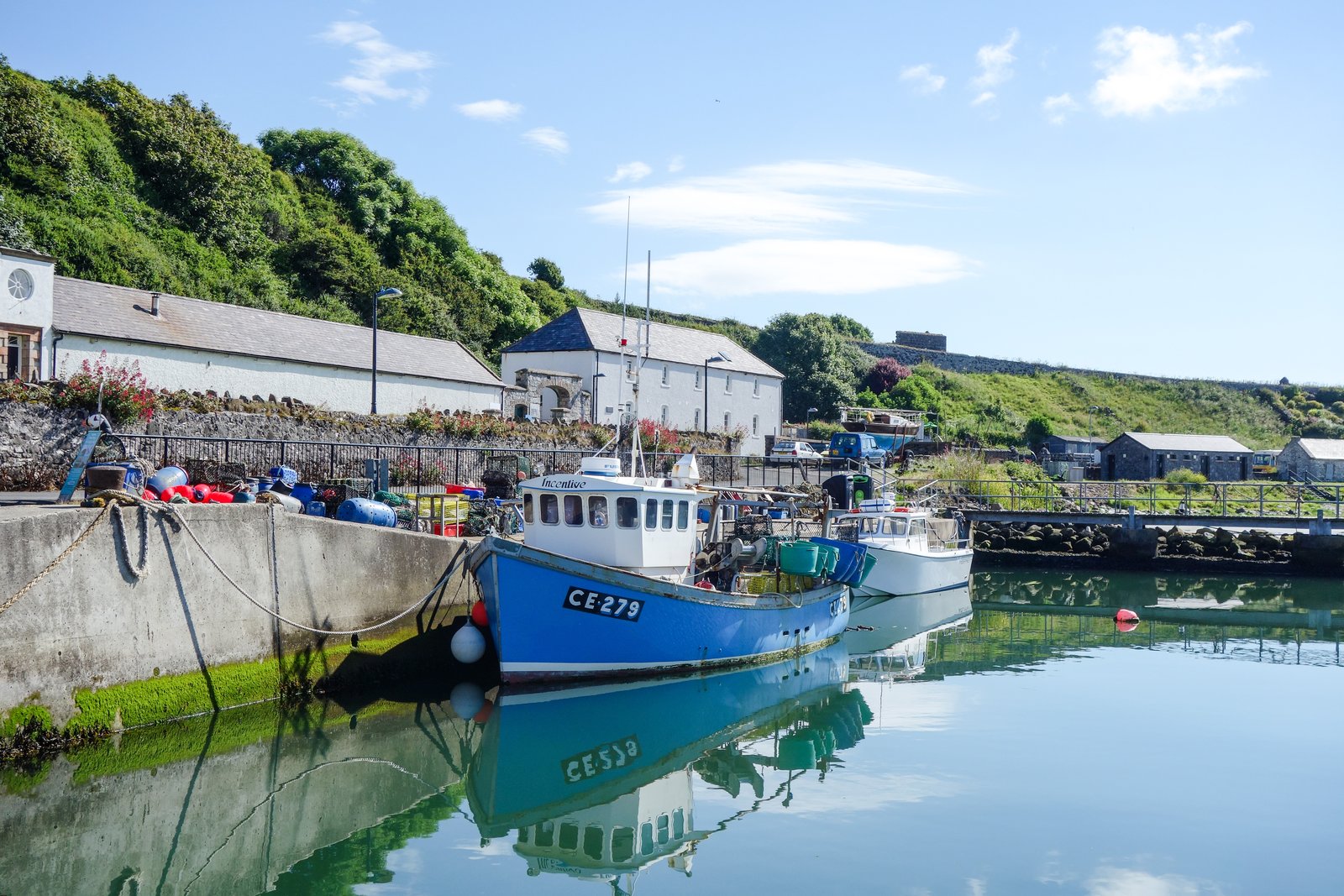
The ferry from Ballycastle takes about 25 to 45 minutes depending on which boat you catch, and it lands you on the only inhabited offshore island in Northern Ireland. Roughly 150 people live here year-round.
Come for the puffins. The RSPB seabird center on the far side of the island packs in puffins, guillemots, and razorbills from around April to July, and the upside-down lighthouse there is a real oddity. Book the ferry ahead in summer.
Play a Round at Royal Portrush Golf Club
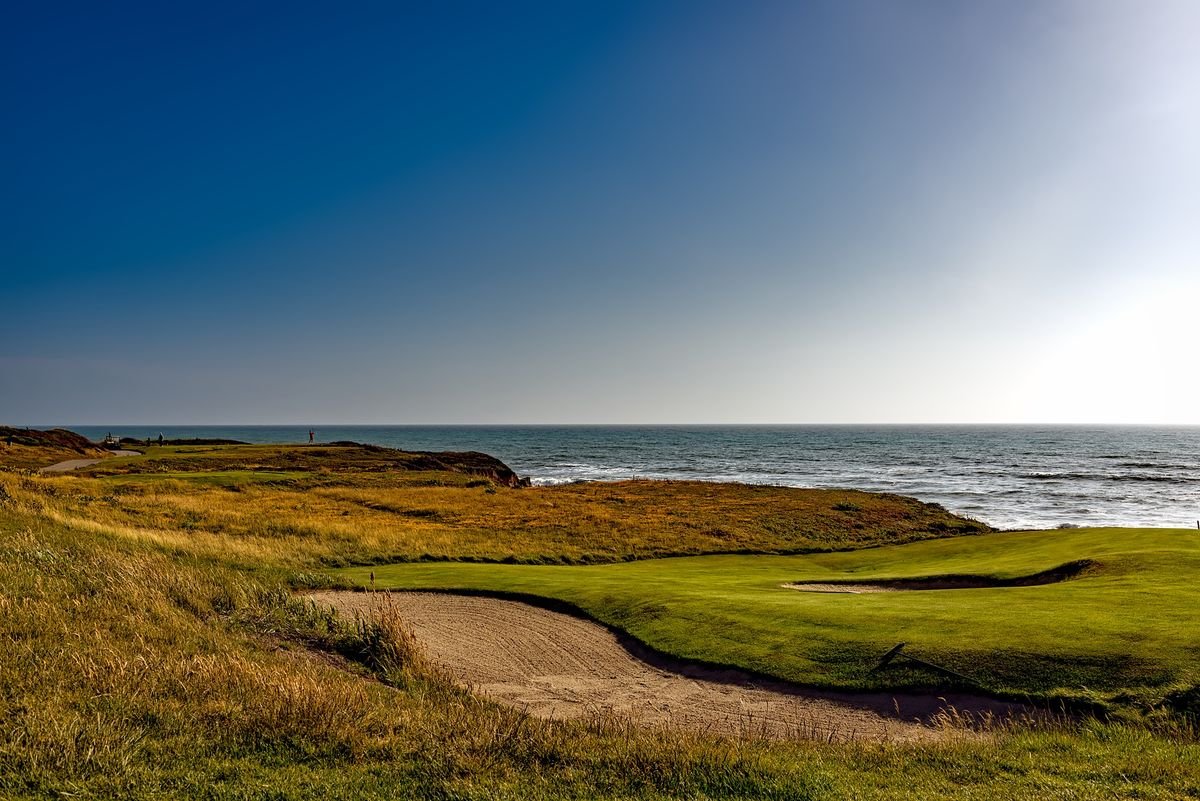
Royal Portrush hosted the Open Championship in 2019 and again in 2025, which tells you exactly where it sits in the golf world. The Dunluce Links runs through the dunes with the Atlantic in view on most holes.
Green fees are steep and tee times book up months out, so plan early if this is your thing. If it isn’t, the clifftop views around the course are free to walk and the town itself is a good base for the whole coast.
Walk the Gobbins Cliff Path
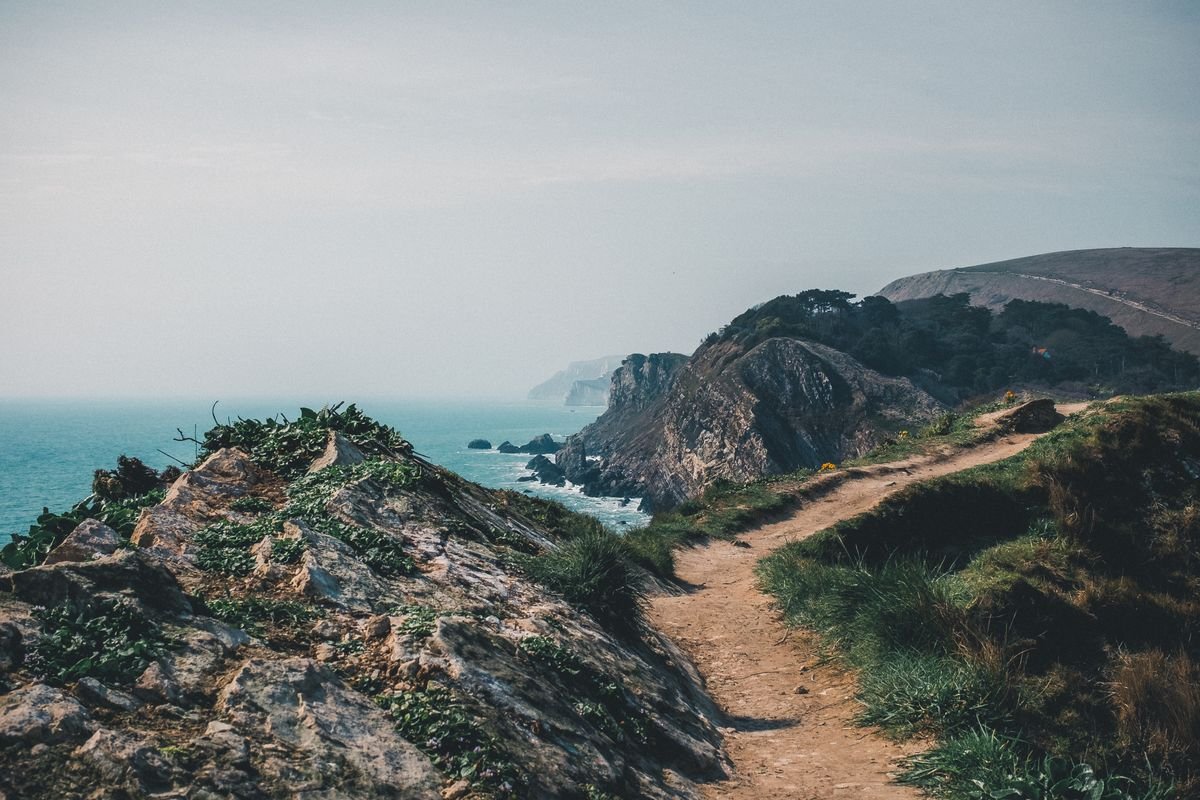
The Gobbins is a walkway bolted into the cliff face below Islandmagee, with bridges and tunnels right at the waterline. An Edwardian engineer built the original in 1902, and it was rebuilt and reopened in recent years.
You can only do it on a guided tour, it’s about 2.5 hours, and you need decent shoes and a reasonable level of fitness. Book in advance and check the weather, because they close it when the sea gets rough. It’s one of the most unusual walks in the country.
A Suggested County Antrim Itinerary
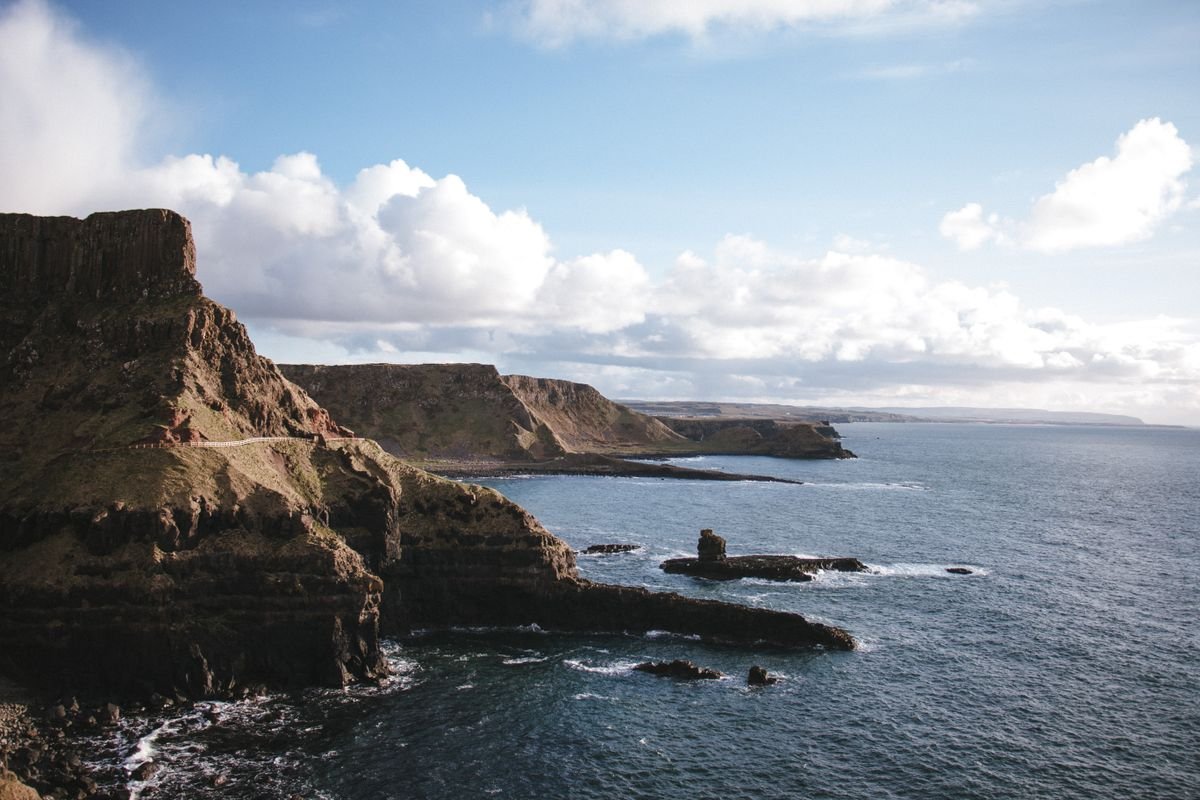
You can see the big sights in a single rushed day, but two days is the sweet spot. Base yourself in Portrush or Bushmills and you are within 20 minutes of most of the coast. Here is how I would split it.
Day One: The Causeway Coast Highlights
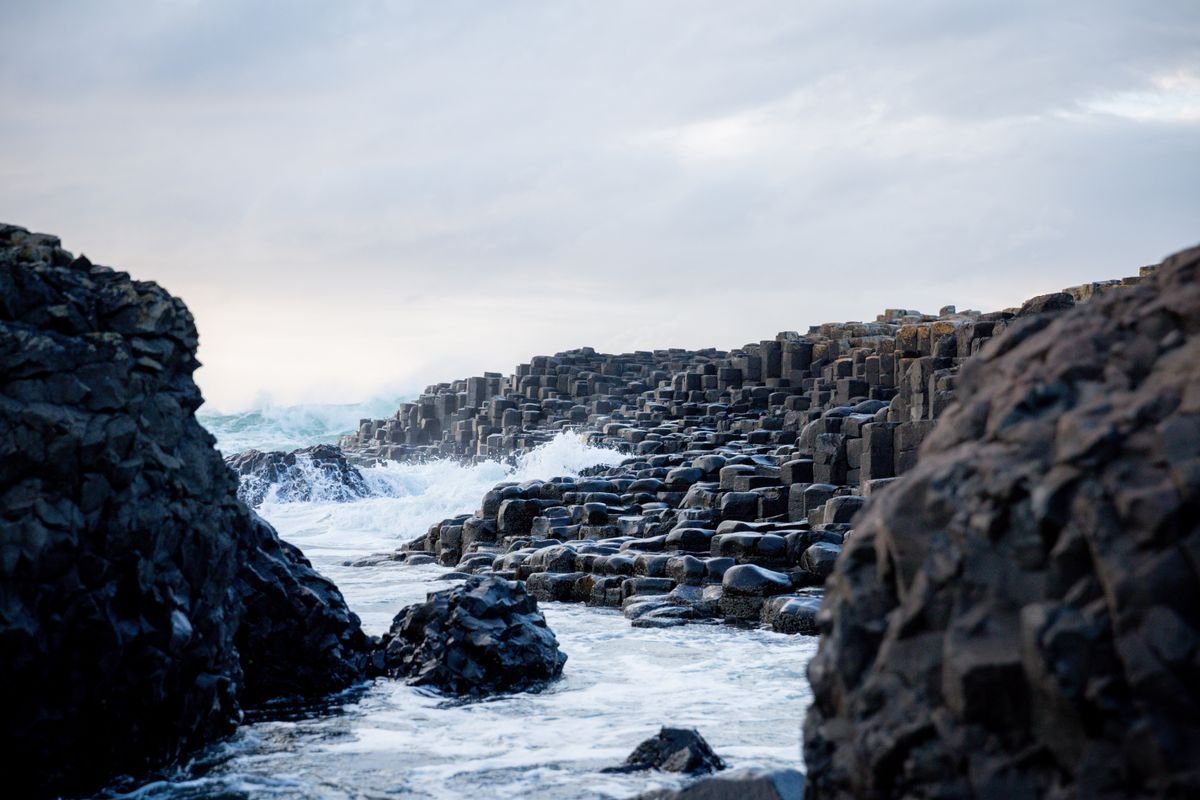
Start early at the Giant’s Causeway, before the tour buses roll in from late morning. Walk the free clifftop trail down to the columns, give it an hour or two, then drive five minutes to Dunluce Castle for the ruined silhouette on the crag.
Tour Old Bushmills around midday and time it so the tasting lines up with lunch in the village. From there it is a short hop to the Dark Hedges, though that one is a quick photo stop more than a half-day.
Finish at Carrick-a-Rede if you booked a timed afternoon ticket. The cliff walk in catches the late light well, and you will have hit the headline run in one tight loop without feeling like you sprinted it.
Day Two: Castles, Glens and Beaches
Day two is the slower side of the county, and for a lot of people it ends up being the better day. Drive south into the Glens of Antrim and start with the Glenariff waterfall walk through the forest park, then drop down to Cushendun or Cushendall for a harbor lunch.
If you have an extra day, the Ballycastle ferry over to Rathlin Island is worth building in for the puffins between April and July. Otherwise loop back along the coast and finish on the sand at Portstewart or Whiterocks, which are proper swimming beaches and a good place to end a trip.
Golfers should swap in a Royal Portrush tee time on day two, but book it months out. That is the whole county in two days, and you will leave wishing you had given it three.
Things to Do in Other Parts of Ireland
- 33 Best Things To Do in Galway, Ireland
- 22 Best Things To Do in Dublin
- Best Things To Do In Cork (City & Day Trips)
- 21 Unique Things To Do in Kerry, Ireland – The Kingdom County
- 21 Amazing Things To Do in West Cork This Summer
Best Tours of County Antrim
If you are short on time or not keen on driving the coast road yourself, a guided day tour from Belfast covers the headline sights in one go. Here are three worth booking.
Giant’s Causeway and Carrick-a-Rede Small Group Tour from Belfast
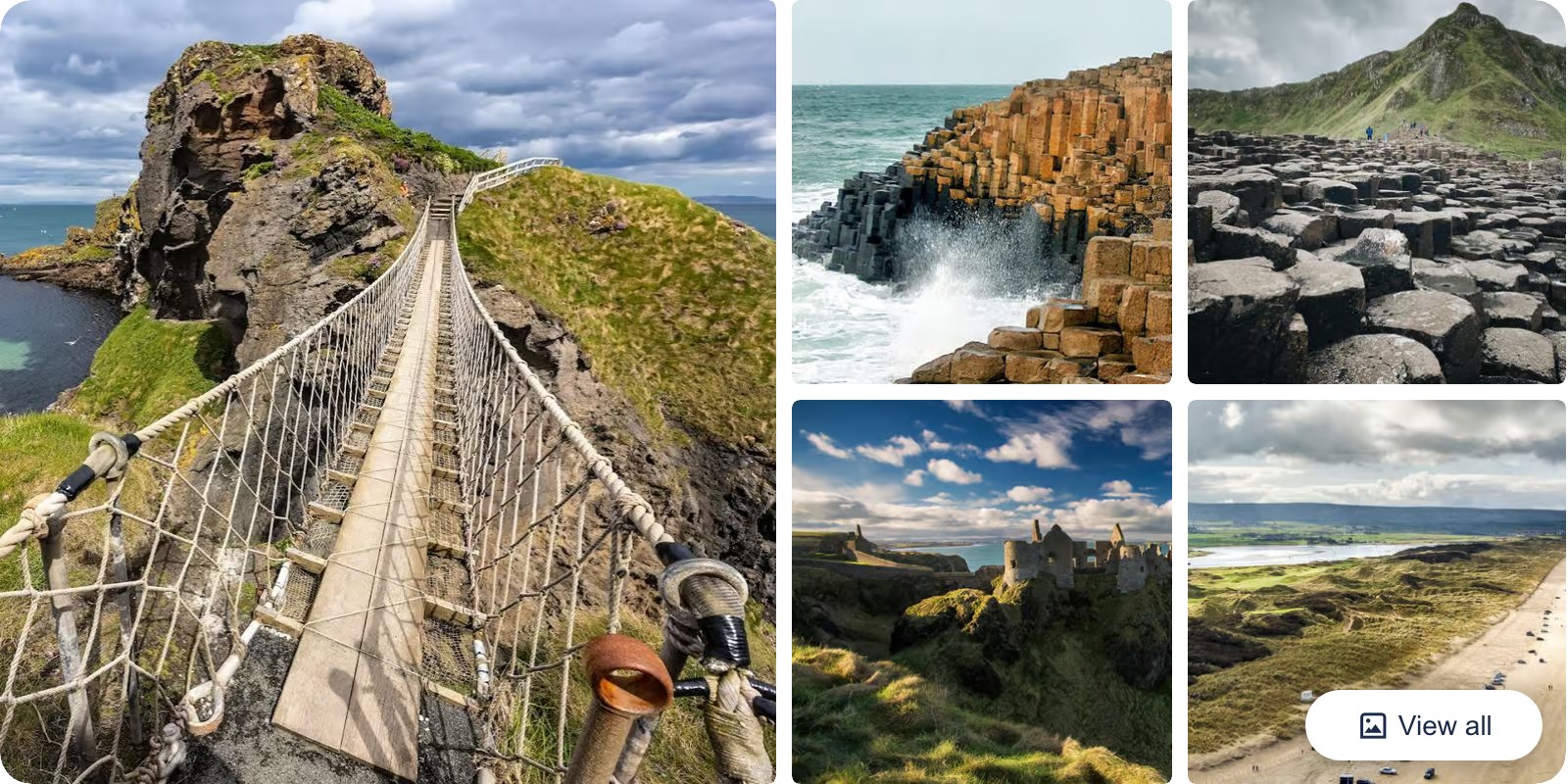
This small-group day trip runs out of Belfast and ties together the Giant’s Causeway, the Carrick-a-Rede rope bridge, and Dunluce Castle, with stops along the Causeway Coast in between. It is a full day, roughly 9 to 10 hours door to door, so you cover the big three without the driving.
👉 Check Giant’s Causeway and Carrick-a-Rede Small Group Tour from Belfast Availability and Reviews
From Belfast: Giant’s Causeway Guided Day Tour With Castles
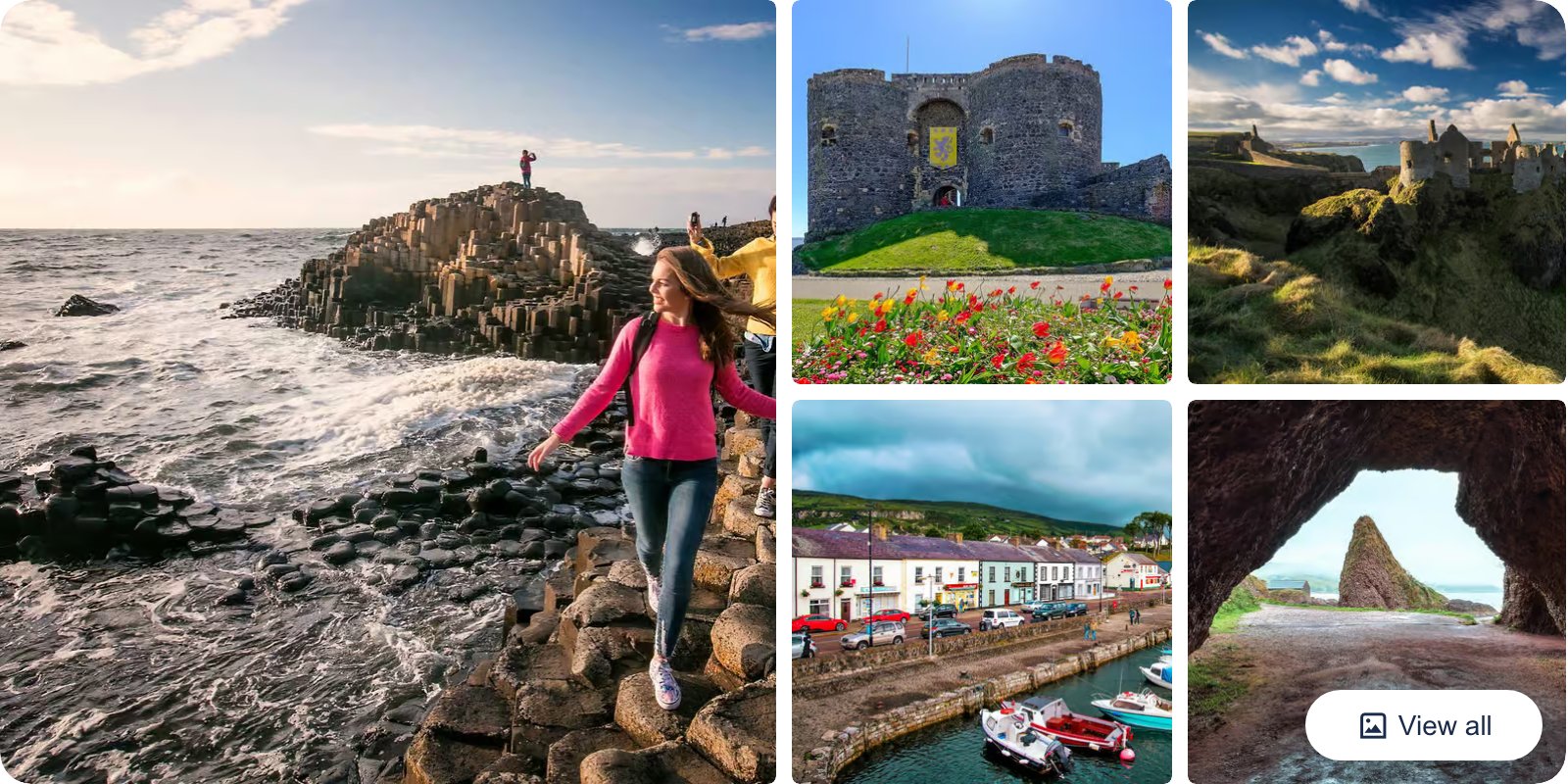
This guided day tour leans into the castles, pairing the Giant’s Causeway with Carrickfergus Castle and the cliff-edge ruins of Dunluce, plus harbour villages along the way. Pickup is in Belfast and you are back the same evening, so it works as a single packed day if the coast is all the time you have.
👉 Check dates and prices for the Giant’s Causeway Guided Day Tour With Castles
From Belfast: Giant’s Causeway and Game of Thrones Day Tour
This one pairs the Giant’s Causeway with the Thrones filming spots, so you get the Dark Hedges and a few coastal locations from the show alongside the headland and the Carrick-a-Rede area. It runs as a full day out of Belfast and is the pick if anyone in the group came to Antrim for the TV as much as the rocks.
👉 See what’s included on the Giant’s Causeway and Game of Thrones Day Tour
Where to Eat in County Antrim

The food along this coast is better than you would guess from the size of the towns. It leans heavily on seafood, which makes sense when half the county is pointed at the Atlantic.
Harry’s Shack on Portstewart Strand is the one to plan around. It’s a wooden hut right on the National Trust beach, the menu is short and seafood-led, and it gets busy, so go early or be ready to wait.
In Portrush, the Ramore complex on the harbor is the local default. It’s several spots under one roof, from a wine bar to a burger joint, and it does cheap, fast, no-frills plates that the crowds clearly approve of.
For something slower, the Bushmills Inn does proper sit-down dinners by an open fire, which is exactly what you want after a cold day on the coast. Babushka, a tiny cafe out on the Portrush harbor wall, is the spot for a daytime bite with the sea right there.
Save room for ice cream. Morelli’s in Portstewart has been scooping since 1911 and is an institution on this stretch of coast. Get a cone and walk the promenade, that’s the move here.
Best Time to Visit County Antrim
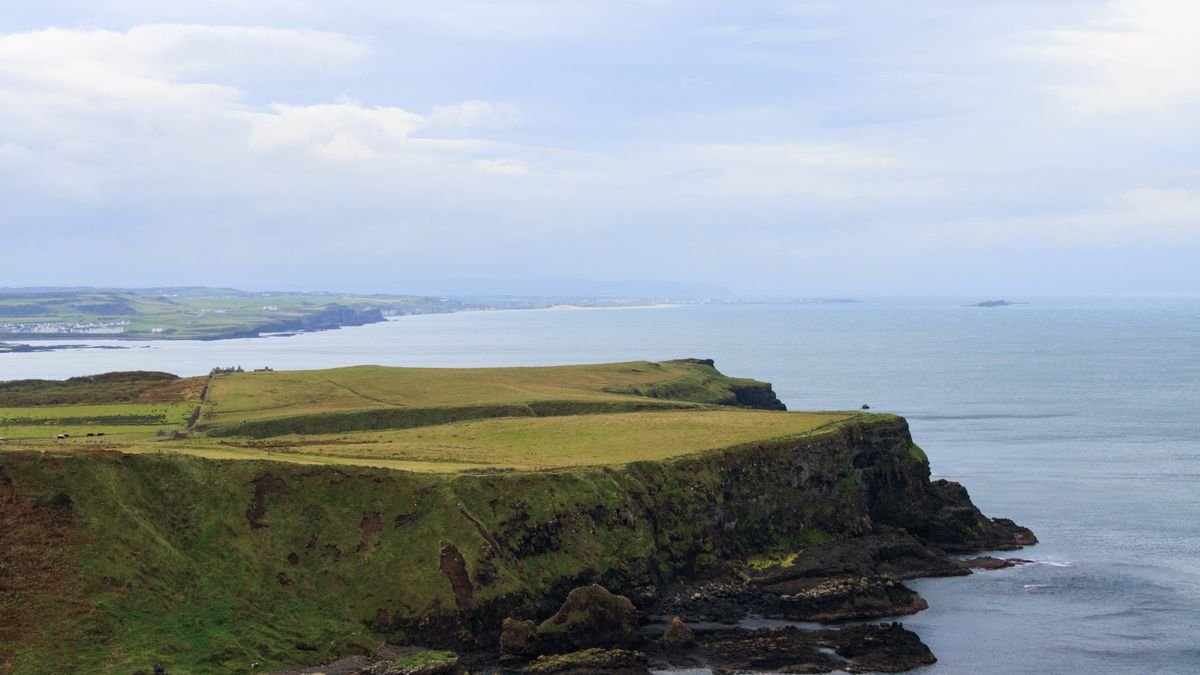
The short answer is late spring through early fall, roughly May to September. That is when the days are long, the ferries to Rathlin run on a full schedule, and the coast is at its best for driving and walking.
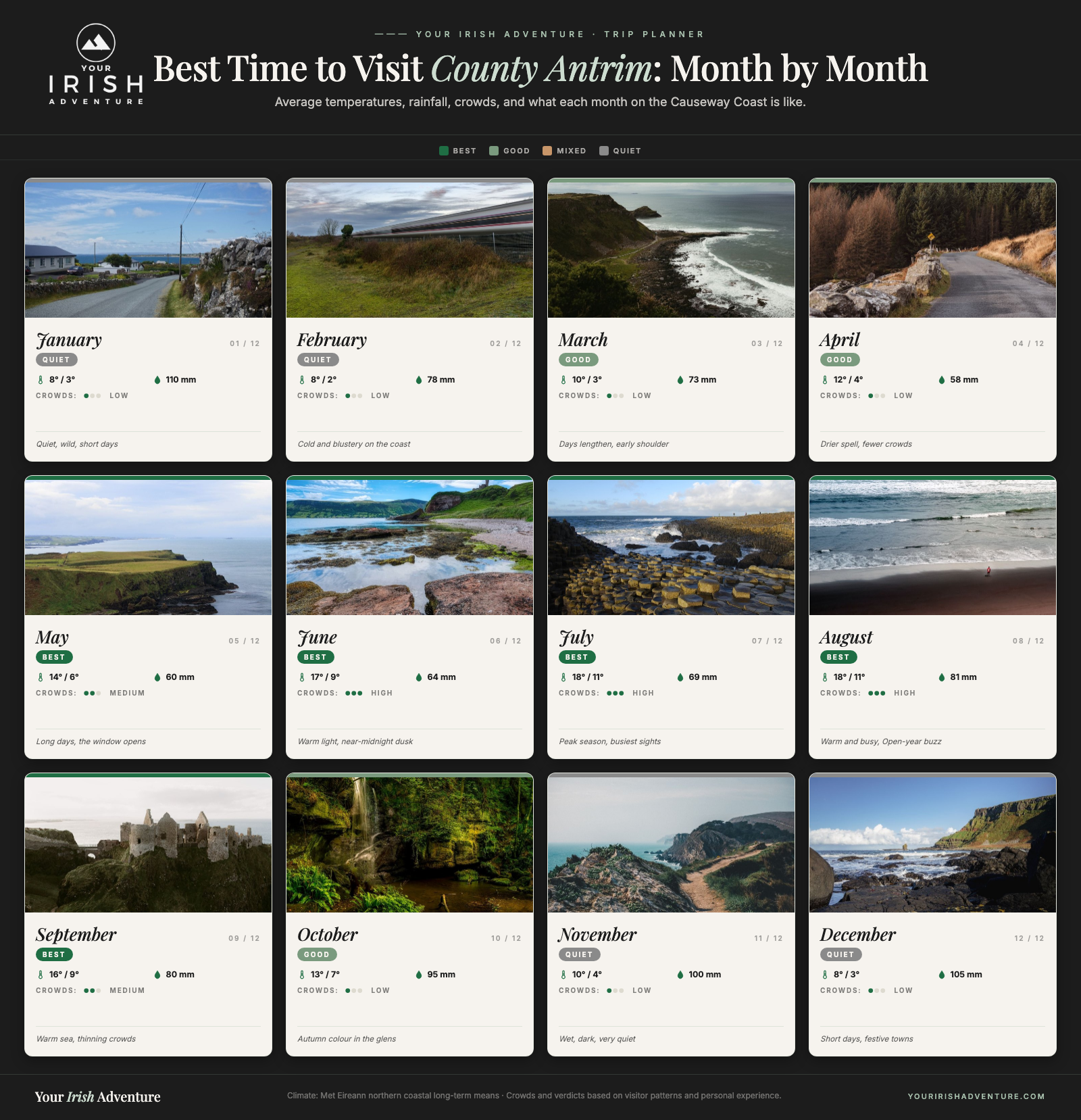
July and August are the warmest and busiest. Expect highs around 18C, the Carrick-a-Rede tickets selling out, and the tour buses stacking up at the Giant’s Causeway from late morning. If you come in peak summer, do the headline sights early and book the timed ones well ahead.
I would aim for the shoulder months instead. May, June, and September give you most of the daylight and far fewer people, and a weekday in those months at the Causeway or the Dark Hedges is a different experience from a July weekend.
If puffins are the goal, you are locked into April to July. That is the window the RSPB seabird center on Rathlin is worth the ferry, so plan the trip around it.
Winter is quiet for a reason. The light is gone by mid-afternoon, the Gobbins closes often when the sea is rough, and a few smaller attractions cut their hours. The coast is still good for a moody day out, but you trade a lot for the empty parking lots.
One thing holds true any month: pack for rain and wind off the Atlantic, even in July. The weather here turns fast, and the people who have a bad time are usually the ones who showed up in shorts expecting it to hold.
Where to Stay Elsewhere in Ireland
- Where to Stay in Belfast: Best Areas & Hotels
- Where to Stay in County Cork: Cork City vs West Cork
- Where to Stay in Westport: Best Hotels & Accommodation
- Where to Stay in Doolin: Best Areas & Hotels
- Where to Stay in Kinsale: Best Areas & Hotels
Getting to and Around County Antrim
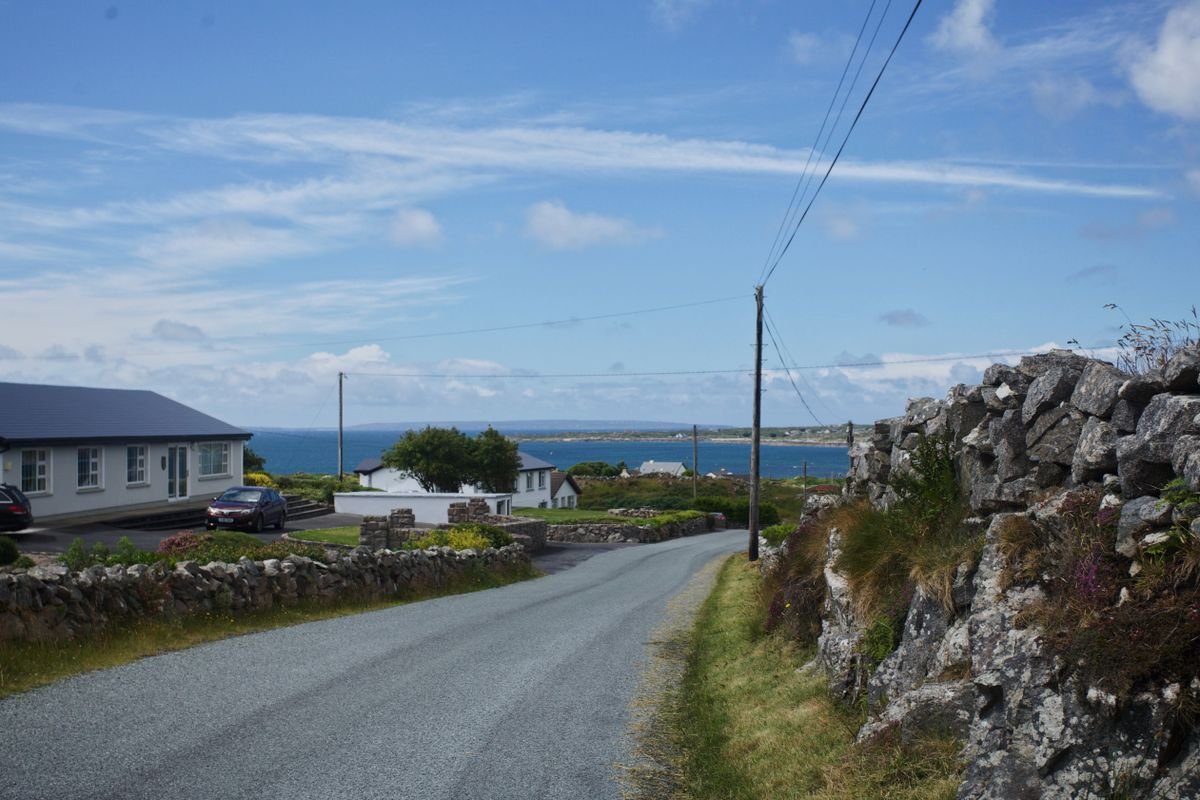
Belfast is the easy way in, and it’s where you’ll probably land. Belfast International is the bigger of the two airports and sits about 30 minutes from the city, while George Best Belfast City is closer to the center if your flight goes there.
Dublin is the other option, and plenty of visitors do it. The airport is roughly 2 hours’ drive from the Causeway Coast, and the motorway run north is straightforward, so don’t rule it out if the flights are cheaper.
From Belfast it’s about an hour and 15 minutes up to Portrush or Bushmills, which puts you within 20 minutes of most of the coast once you’re based there.
Renting a Car Is the Move
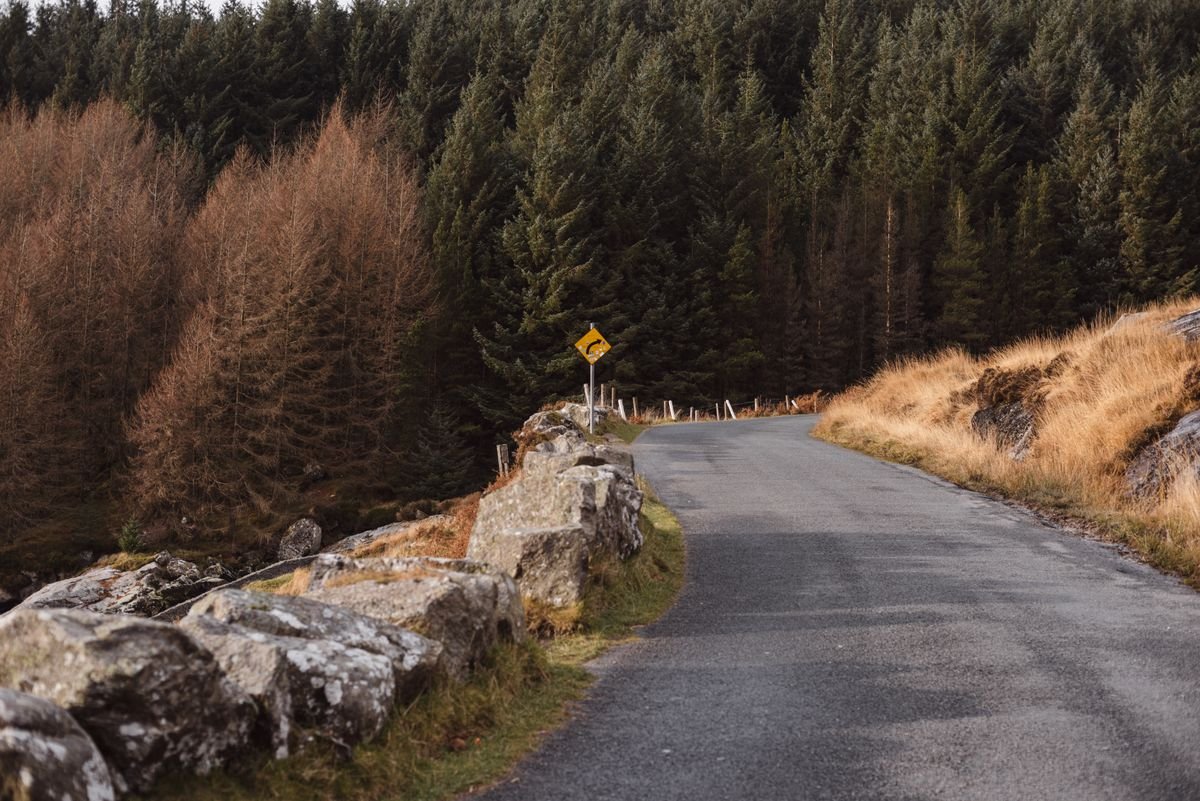
Antrim is built for a car. The whole point of the Causeway Coastal Route is the stopping, and the Glens, the harbor villages, and the quieter beaches are a real hassle to reach any other way.
Pick the car up at the airport and compare car hire deals on Discover Cars before you land, and remember Northern Ireland drives on the left and uses pounds, not euros. The coast roads are narrow in places, especially down in the Glens, so take your time on the single-track stretches.
If You’re Not Driving
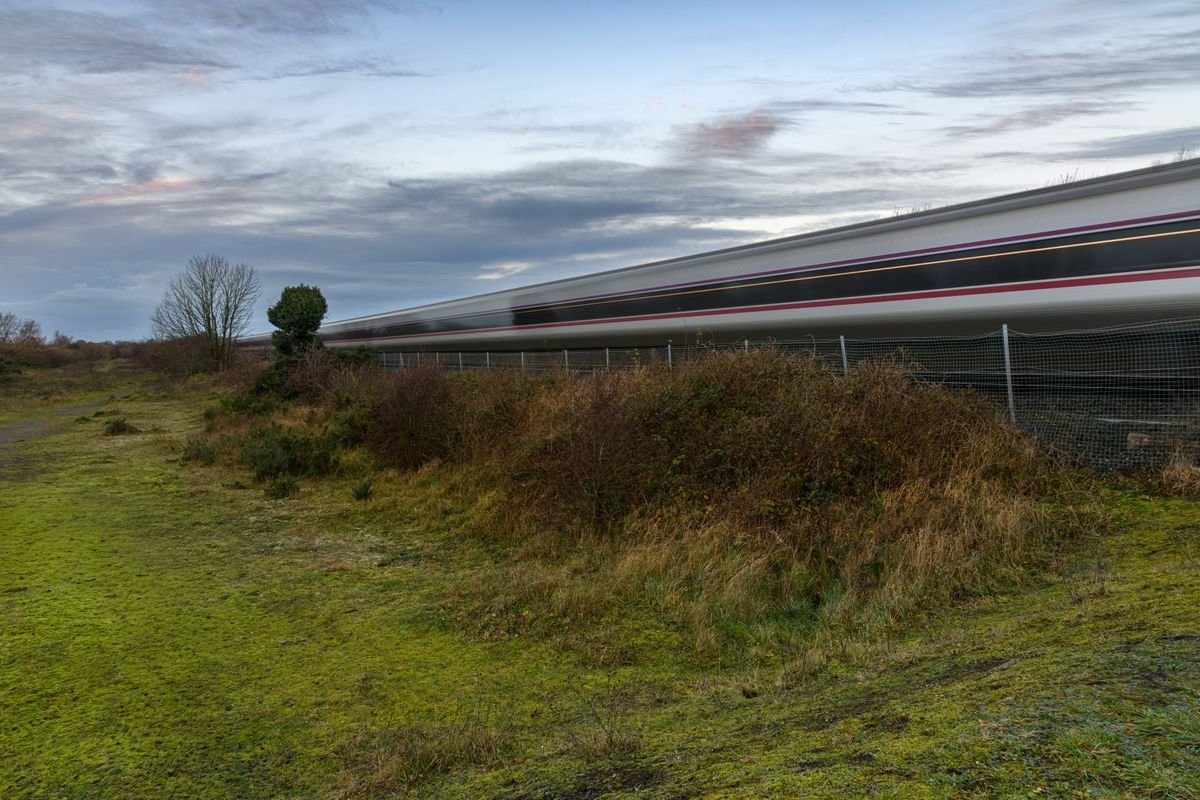
You can do it without a car, but you’ll work for it. Translink runs trains and buses from Belfast up to Coleraine and Portrush, and the seasonal Causeway Rambler bus links the main sights between Coleraine and Carrick-a-Rede in summer.
The other option is a day tour out of Belfast. It hits the Giant’s Causeway, the Dark Hedges, and a couple of the headliners in one go, which is fine if you’re short on time but means you see the county at someone else’s pace. You can book a Game of Thrones and Giant’s Causeway tour on GetYourGuide if that is the route you go.
In short
- The Giant’s Causeway is County Antrim’s headline sight, about 40,000 basalt columns on a UNESCO coast.
- Old Bushmills has distilled whiskey since 1608, the world’s oldest licensed distillery.
- The Carrick-a-Rede rope bridge swings about 100 feet above the sea near Ballycastle.
- Two days covers the Causeway Coast highlights, the Glens, and the beaches at a relaxed pace.
- A hire car is the easiest way to drive the Causeway Coastal Route at your own pace.
Frequently Asked Questions
Common questions about visiting County Antrim, answered.
Is County Antrim worth visiting?
Yes, easily. The Giant’s Causeway alone pulls people from all over the world, and that is before you get to the castles, the rope bridge, the Glens, and one of the best coastal drives in Europe. What makes it worth the trip is how much is packed into a small stretch. You can stand on 60-million-year-old basalt columns in the morning and watch puffins off Rathlin in the afternoon. Few places hand you that kind of range in an hour’s drive.
Is two days enough for County Antrim?
Two days covers it well. One day for the headline Causeway Coast sights and a second for the Glens and the beaches gets you the real shape of the county without sprinting. You can do the big stuff in a single rushed day if that is all you have, but you will spend it in the car and miss the slower side completely. Three days is the version where you actually relax into it. Two is the practical sweet spot.
Do you need a car in County Antrim?
You don’t strictly need one, but it makes the trip about ten times easier. The Causeway Coastal Route is built around stopping where you want, and the Glens and harbor villages are a real chore to reach on public transport. If you can’t drive, you have two decent fallbacks: the Translink trains and the seasonal Causeway Rambler bus in summer, or a day tour out of Belfast that hits the main sights. Both work, they just run on a fixed schedule and skip the quieter corners that make Antrim worth slowing down for.
Final Thoughts
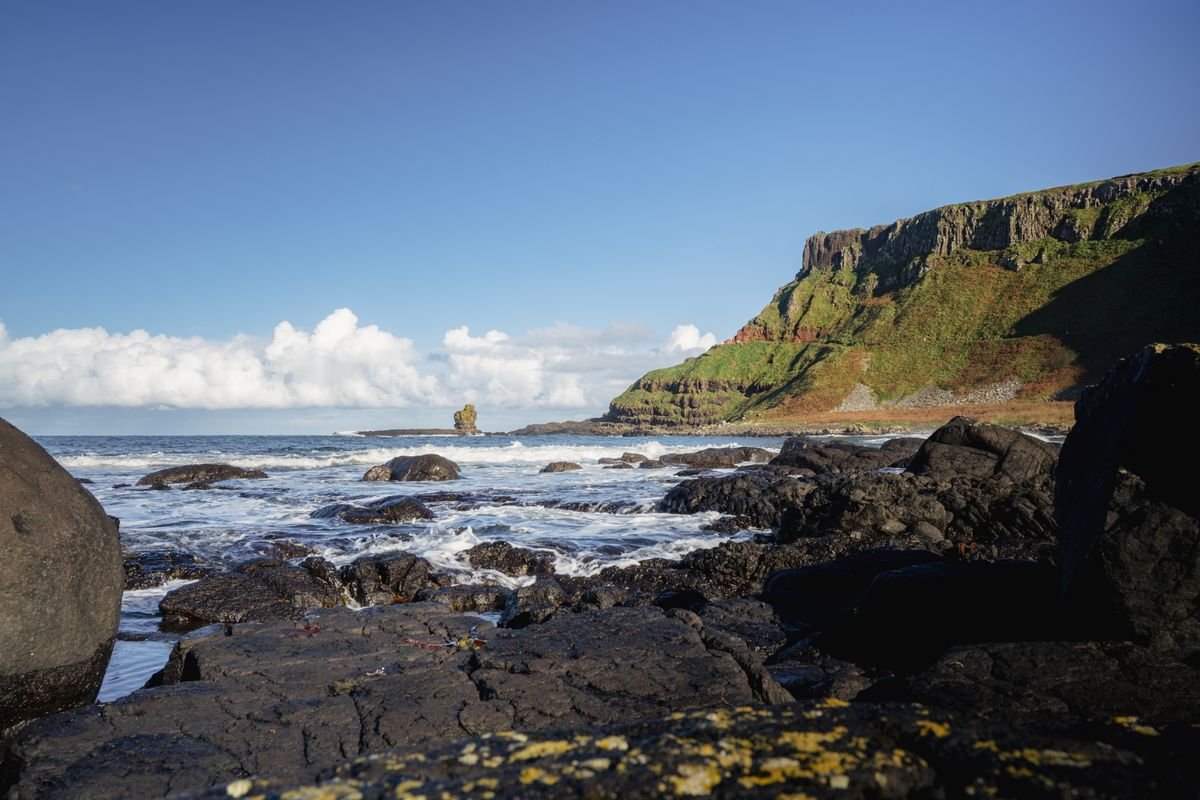
Antrim is one of those rare stretches where the famous sight and the less-visited corners are about equally good. The Giant’s Causeway earns the crowds, but the Glens, Rathlin, and the harbor villages are the parts you will keep thinking about after.
So here is the honest verdict. Rent a car, give it two days minimum, and base yourself in Portrush or Bushmills so you are never far from the coast. Do the headline sights early to dodge the buses, and book the timed ones ahead.
This isn’t a place you tick off in a rushed day trip from Belfast, even though plenty of people try. It’s a coast to slow down on, and the more you do, the more it gives you. Go in May, June, or September if you can, and leave room for the parts the day-trippers skip.
More Ireland Itineraries & Road Trips
- Wild Atlantic Way Itinerary – Ireland’s Most Epic Road Trip
- The Ring Of Kerry Drive: Itinerary, Highlights & Tips
- 14 Days in Ireland: The Ultimate 2-Week Itinerary
- 10 Days in Ireland: The Ultimate Itinerary
- 3 Days in Ireland: The Perfect Itinerary
Like it? Pin it!
Save this guide for later